



If your skin leans pink, rosy, blue-beige, or porcelain, ash tones can do something most warm shades cannot: they can make your face look calmer, cleaner, and a little sharper around the eyes. That’s the real trick with ash hair color ideas for cool skin tones. You’re not chasing “gray” for the sake of gray. You’re looking for tones with blue, violet, or smoky beige undertones that sit next to cool skin without fighting it.
The bad ash jobs are easy to spot. They go muddy. They look flat under indoor light. Or they turn the hair into a color that seems chosen from a box instead of matched to a face. Good ash color has depth. It usually keeps one foot in a natural base and one foot in smoke, silver, or taupe, which is why it can look polished on pale skin, fair olive skin with cool undertones, and deeper complexions with blue-red undertones.
There’s also a practical side to this. Cool shades often fade in a way that shows brass faster than people expect, especially if the hair was lifted to blonde first. So the best choices are not only pretty on day one; they also make sense as the roots grow, the toner softens, and the color settles. A smart ash shade should still look intentional after a few washes. That’s the standard.
1. Silver Ash Blonde for Cool Skin Tones
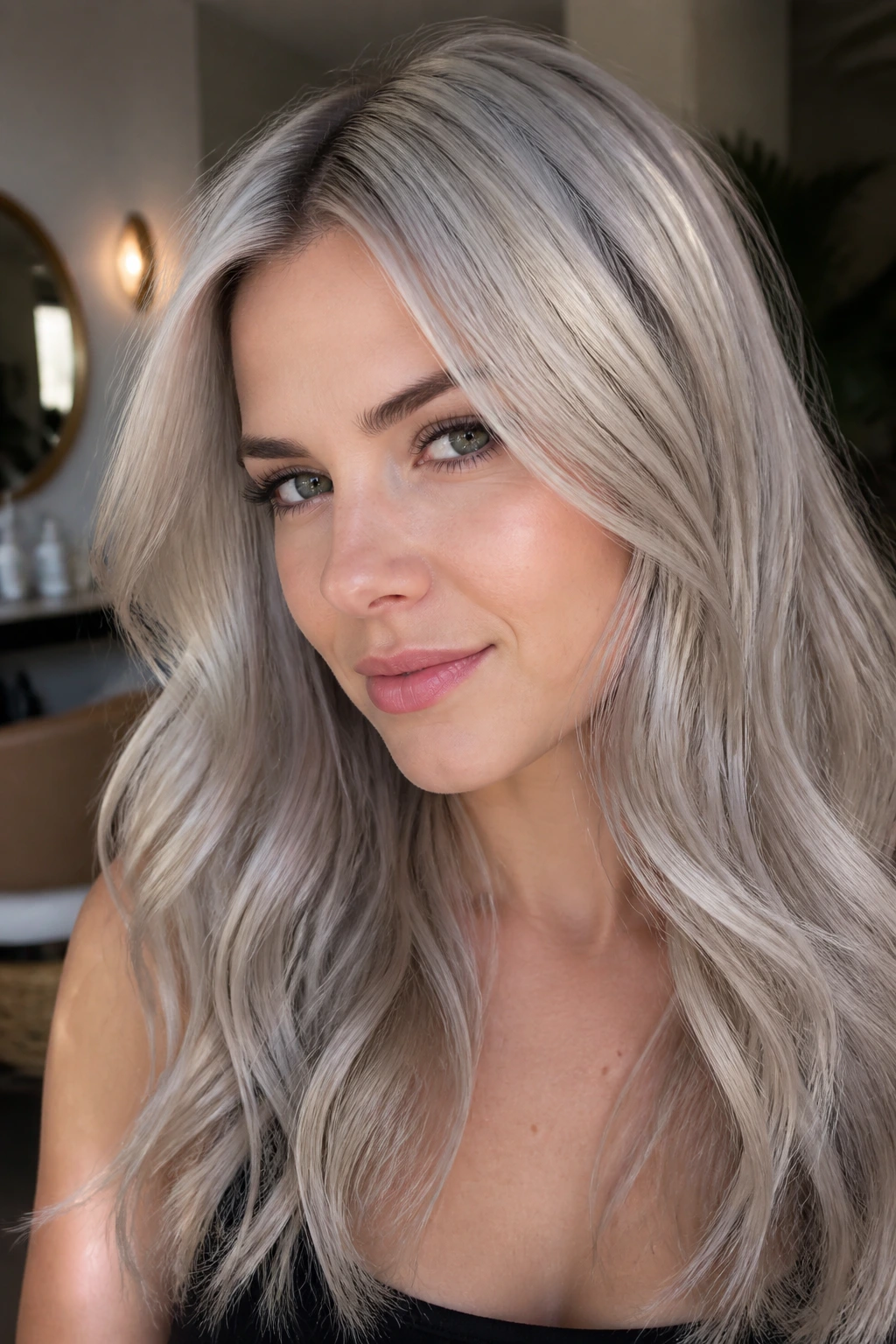
Silver ash blonde is the one that gets the most attention, and for good reason. On cool skin tones, it can make the whole face look brighter without adding yellow warmth that turns the complexion sallow. The key is a true silver-beige finish, not a flat gray cap. You want light, reflective hair with a cool veil on top.
What Makes It Work
Silver ash blonde sits best on hair that can lift to a pale yellow base first. If the hair is still orange or gold, the toner will fight it and you’ll end up with beige muddiness instead of silver clarity. That’s why this shade works best when the underlying lift is clean and even.
Ask for level 9 to 10 blonde with a silver-ash toner and soft root shadow. That root shadow keeps the color from looking wig-like. It also gives the blonde somewhere to “land,” which matters more than people think.
- Best on fair to medium cool skin with pink or blue undertones
- Works well with straight, wavy, or softly curled hair
- Needs purple or blue-violet shampoo every 1 to 2 washes
- Looks sharp with silver jewelry and cool-toned makeup
Best tip: keep the finish glossy. A dull silver blonde can look chalky fast.
2. Mushroom Brown With Ash Undertones
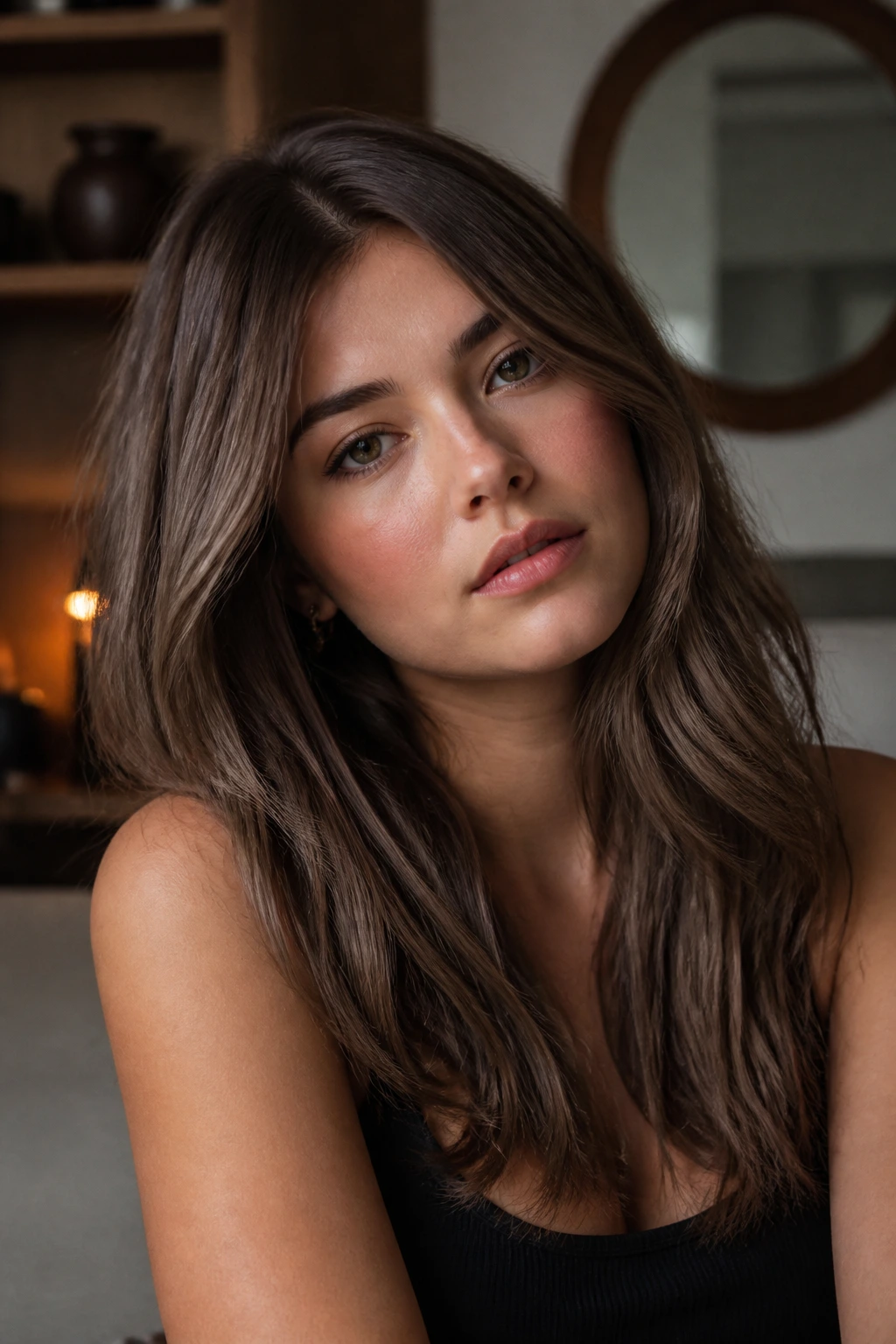
Mushroom brown is one of the easiest ash hair color ideas to wear if you want something cool but not icy. It has that soft mix of taupe, beige, and muted brown that feels expensive in a quiet way, even though I hate that phrase and rarely use it. More useful: it looks believable. It doesn’t shout “I just left the salon.” It just makes the hair look dense and softly shaded.
What makes mushroom brown so good on cool skin tones is the lack of red. A lot of brunette shades pull copper or chestnut when they fade, and that’s where the whole thing goes sideways. Mushroom brown stays in the gray-brown lane, so it plays nicely with pale skin, gray eyes, and cool hazel tones.
How to Ask For It
Tell your colorist you want level 6 or 7 brown with ash and beige ribbons, not warm caramel. If your base is dark, this shade often works best as a gloss over highlighted pieces rather than one flat color. That gives it movement.
It’s also a smart choice if you wear minimal makeup. The color does not need a lot of help. It just sits there and looks right.
3. Icy Platinum Ash Blonde
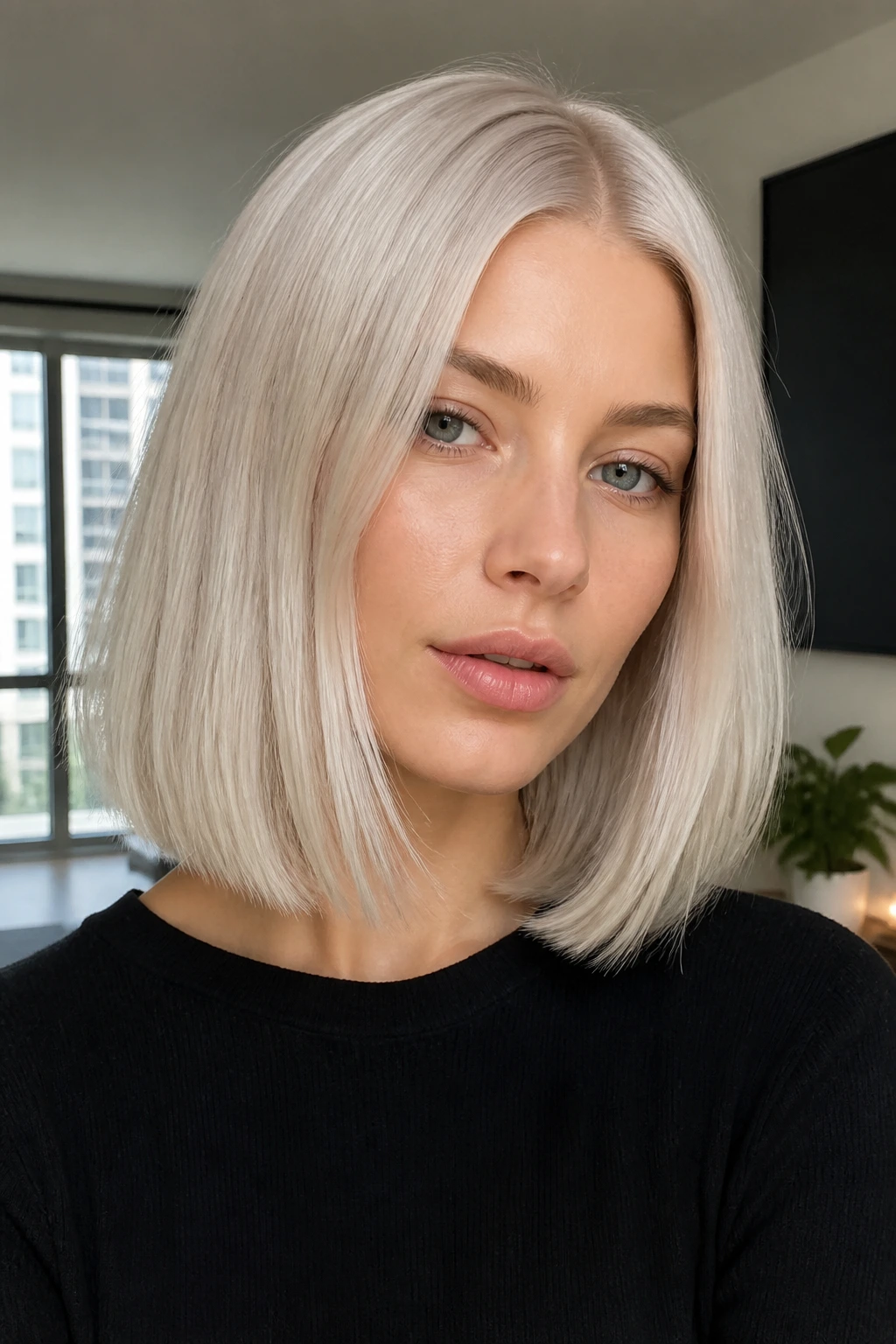
Icy platinum ash blonde is for people who want high contrast and are willing to babysit the color a bit. On cool skin, it can look crisp and clean, especially if the eyebrows are naturally dark or softly defined. On the wrong undertone, though, it can go harsh in a hurry. There’s no hiding with platinum.
The shade starts with a clean lift all the way to pale yellow, then gets toned down with a cool violet-silver formula. If the hair still has gold inside it, the platinum will not stay icy. It will drift toward beige, then yellow, and then the whole point is gone.
The Salon Reality
This is not a casual maintenance color. Roots show fast. Toner fades. Hair can feel dry if it was lifted aggressively. But when the cut is right and the tone is kept sharp, the result can be stunning on cool skin because the color acts almost like light around the face.
A short bob, blunt lob, or long layers with a silky finish tend to suit this shade best. Air-dried texture can work too, but you need to keep the ends neat. Frayed ends make platinum look tired.
4. Ash Beige Blonde That Softens Cool Skin Tones
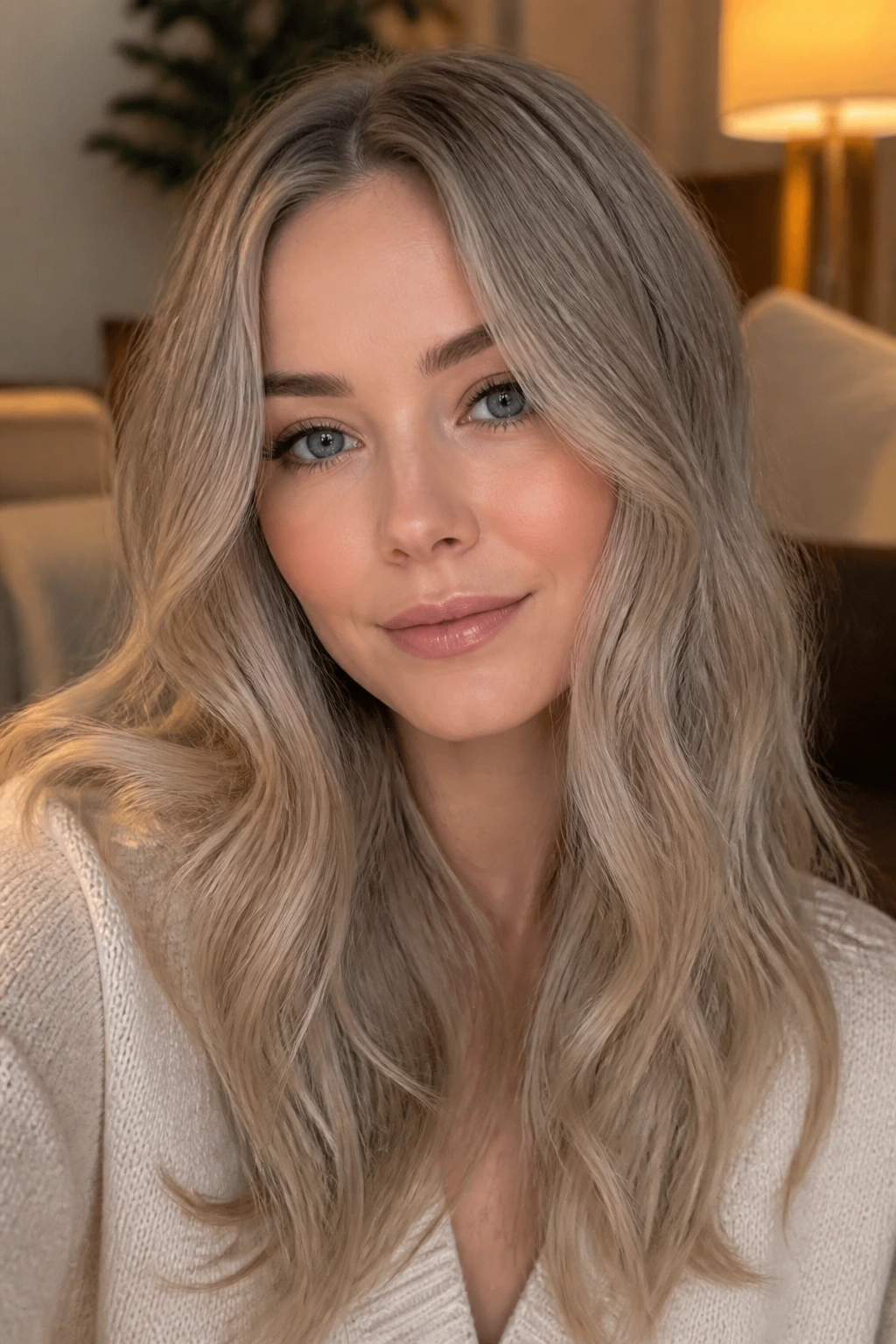
Ash beige blonde is softer than silver, which is exactly why a lot of cool-toned people end up liking it more after trying something brighter first. It still lives in the cool family, but the beige note keeps the hair from looking stark. If silver ash blonde is a sharp white shirt, ash beige blonde is a brushed wool sweater in a neutral color.
This shade is useful if your skin is cool but you do not want the hair to look icy or fashion-heavy. It gives brightness near the face without the strong metallic edge. On very pale skin, that can be a relief. On medium cool skin, it keeps the color from washing the face out.
A Good Salon Formula
Ask for a beige-blonde base with ash lowlights or a root melt that fades into neutral blonde lengths. The lowlights matter. They break up the brightness and keep the shade from tipping into yellow once it starts to age.
It also helps if the hair has a soft wave. Beige tones reflect light in a gentler way than silver, and the movement keeps the color from reading one-note.
- Best for people who want brightness without severe contrast
- Nice match for cool undertones with blue, pink, or lilac cast
- Easier to maintain than icy blonde
- Works well with gloss refreshes every 6 to 8 weeks
5. Slate Gray on Short Hair or Long Layers
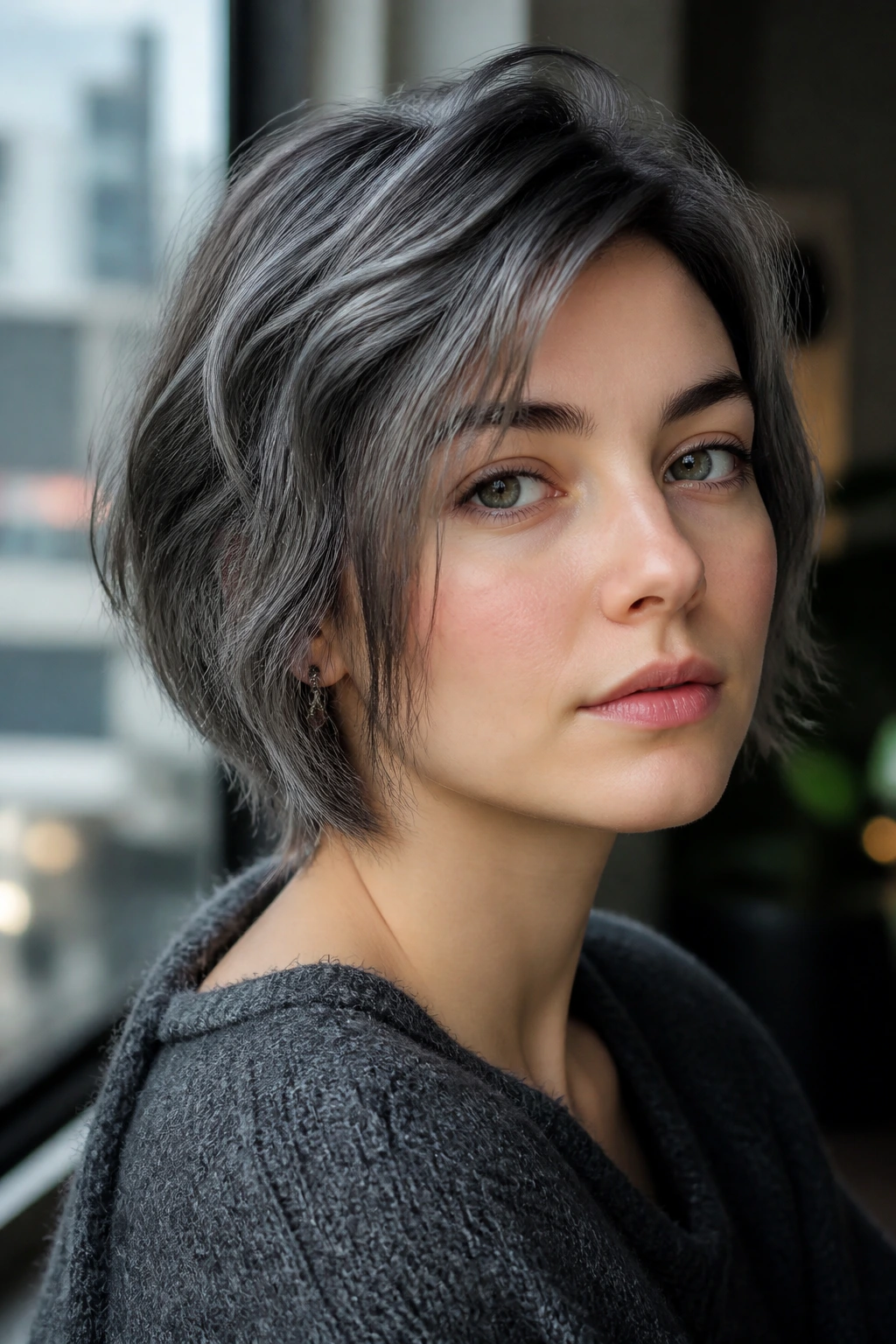
Slate gray is a bolder move, and I like it best when the cut has shape. A one-length bob, a shag with texture, or long layers with blunt ends can carry this shade. On cool skin tones, slate gray can look sleek instead of costume-like, which is usually the fear people have when they hear “gray hair color.”
The shade sits between charcoal and silver. It has depth, not just brightness. That depth matters because pure light gray can look washed out next to very fair skin, while slate keeps a little shadow inside the color. The result feels more grounded.
Why It Stands Out
If you want a color that looks intentional from 10 feet away, this is one of the strongest options on the list. It does need clean pre-lightening first, though. Otherwise the gray can pick up leftover gold and go smoky green, which nobody asked for.
A gloss finish helps a lot. Satin texture is good too. Slate gray loves shine, but not the greasy kind. Think polished, not wet.
This is also one of the better ash choices for short cuts because the shape shows off the shift from dark root to smoke at the ends. On longer hair, it needs a little more styling discipline.
6. Charcoal Brunette With Ash Depth
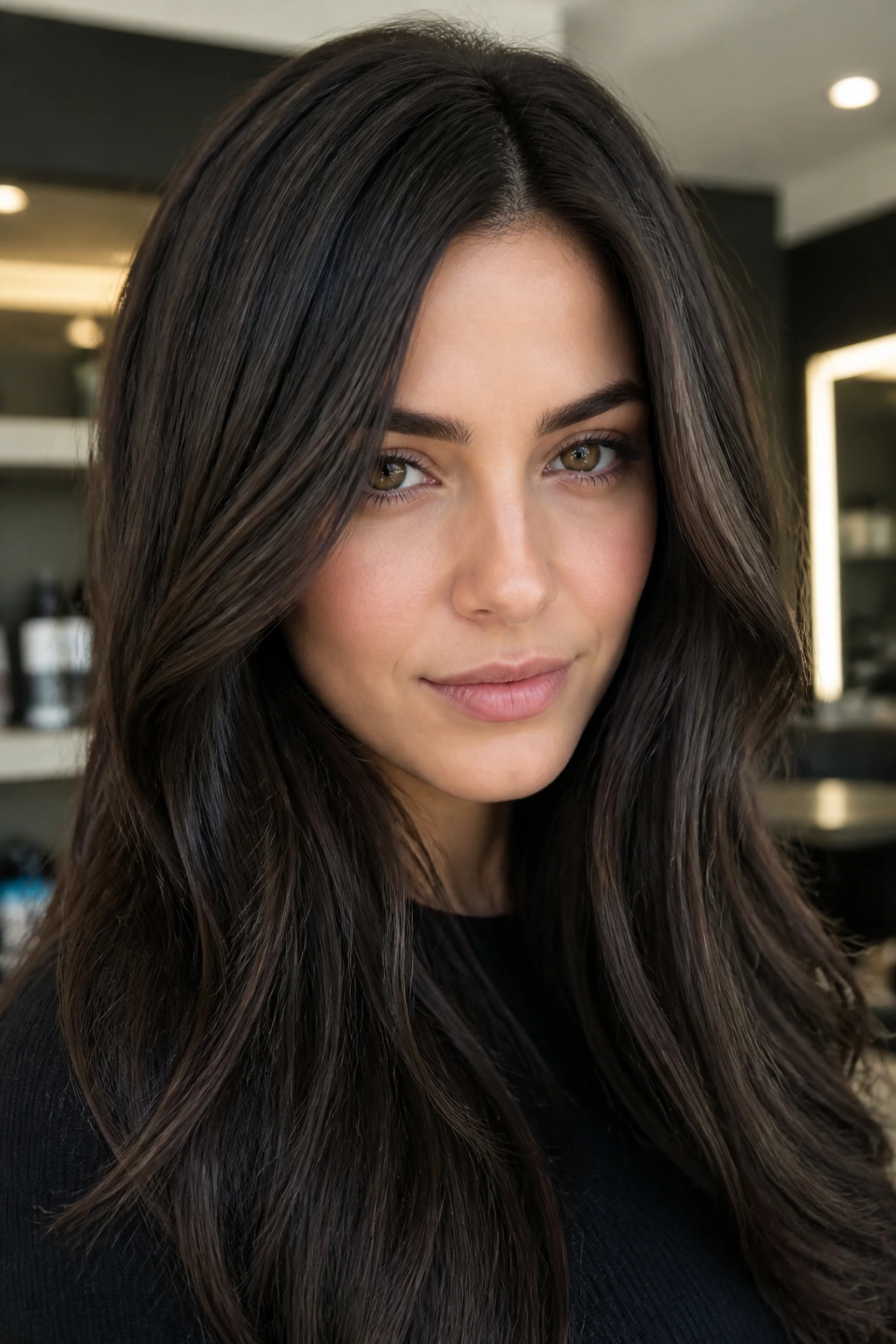
Charcoal brunette is what I recommend when someone wants dark hair but hates red tones. It is deeper than mushroom brown and less trendy-looking than jet black, which makes it easier to live with. On cool skin tones, charcoal can sharpen the jawline and make the whites of the eyes stand out a touch more.
The color works because it is not a flat black. There’s a soft gray-brown cast inside it, so the hair still looks dimensional in daylight. That matters on cool skin, where too much warmth can pull the face off balance. Charcoal keeps the whole look cool without flattening it.
Where It Fits Best
If your hair is naturally dark brown, this is a smart upgrade. You can often get there with a cool gloss, not a full bleach job. That means less damage and less maintenance.
A blunt bob, long glassy lengths, or a sharp pixie all suit this shade. It looks especially good when the finish is smooth. Frizz can make charcoal read as dull, and dull is not the goal here.
7. Ash Brown Balayage With Cool Dimension
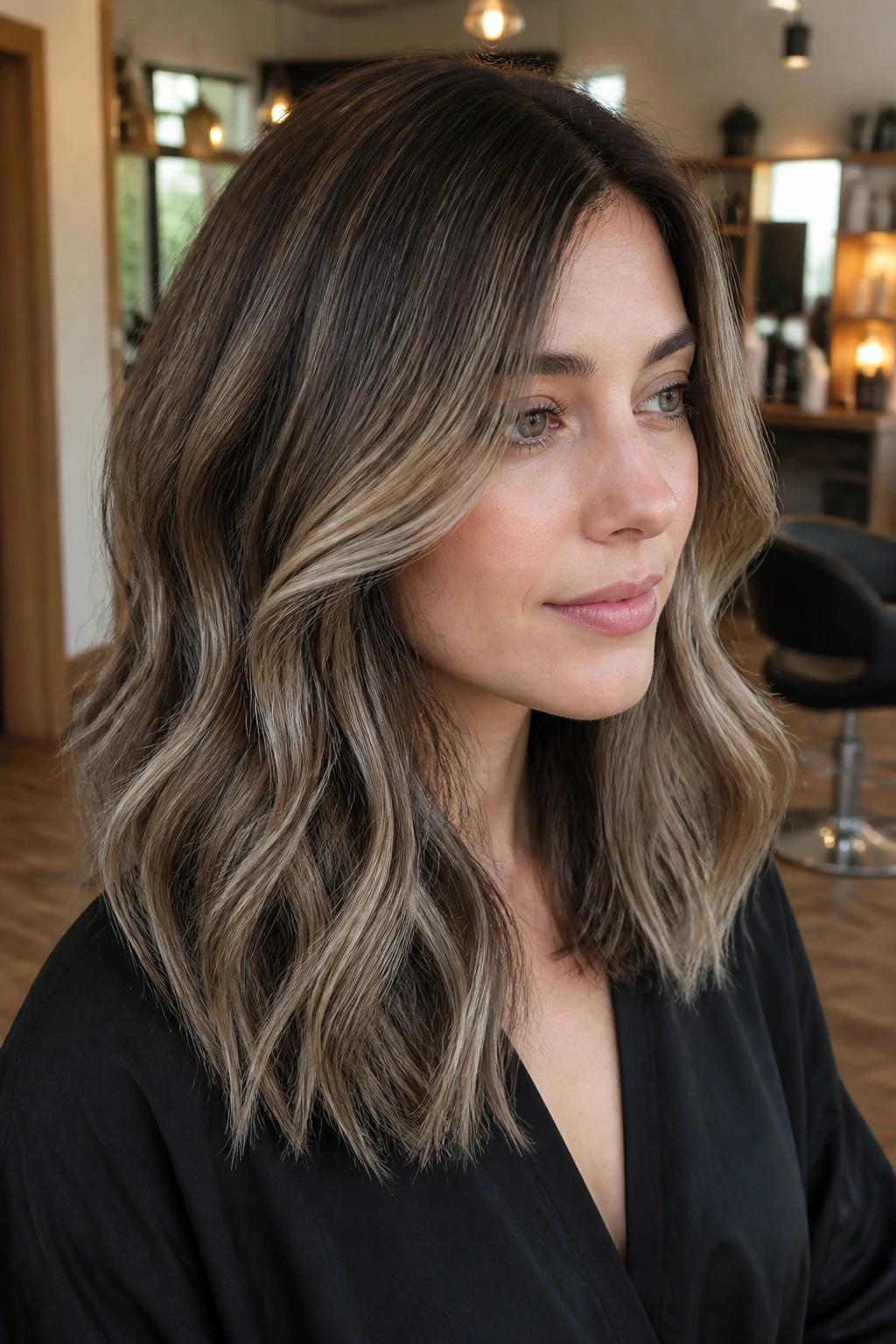
Ash brown balayage is the shade for people who want movement more than a single color block. The hand-painted placement lets the ash pieces sit where light would naturally hit the hair, so the result feels softer and less staged. On cool skin tones, that matters because the hair frames the face instead of competing with it.
The best version uses cool brown ribbons, not caramel. Caramel can warm up too fast and take the whole look away from ash territory. A cool balayage stays in the brown-gray range, which is why it grows out so well. The root stays deeper, the lighter strands fade slowly, and you do not get that obvious stripe line people dread.
How It Usually Looks Best
This is a strong choice for medium-length hair with waves. The wave pattern breaks up the ribbons and makes the ash finish look richer. Straight hair can work too, but the contrast is more obvious.
A colorist might paint lighter pieces around the face and through the mid-lengths, then tone everything with a smoky brown gloss. That little gloss step is where a lot of people lose the plot. Skip it, and the balayage often reads warm after a few washes.
8. Blue-Black for Deep Cool Contrast
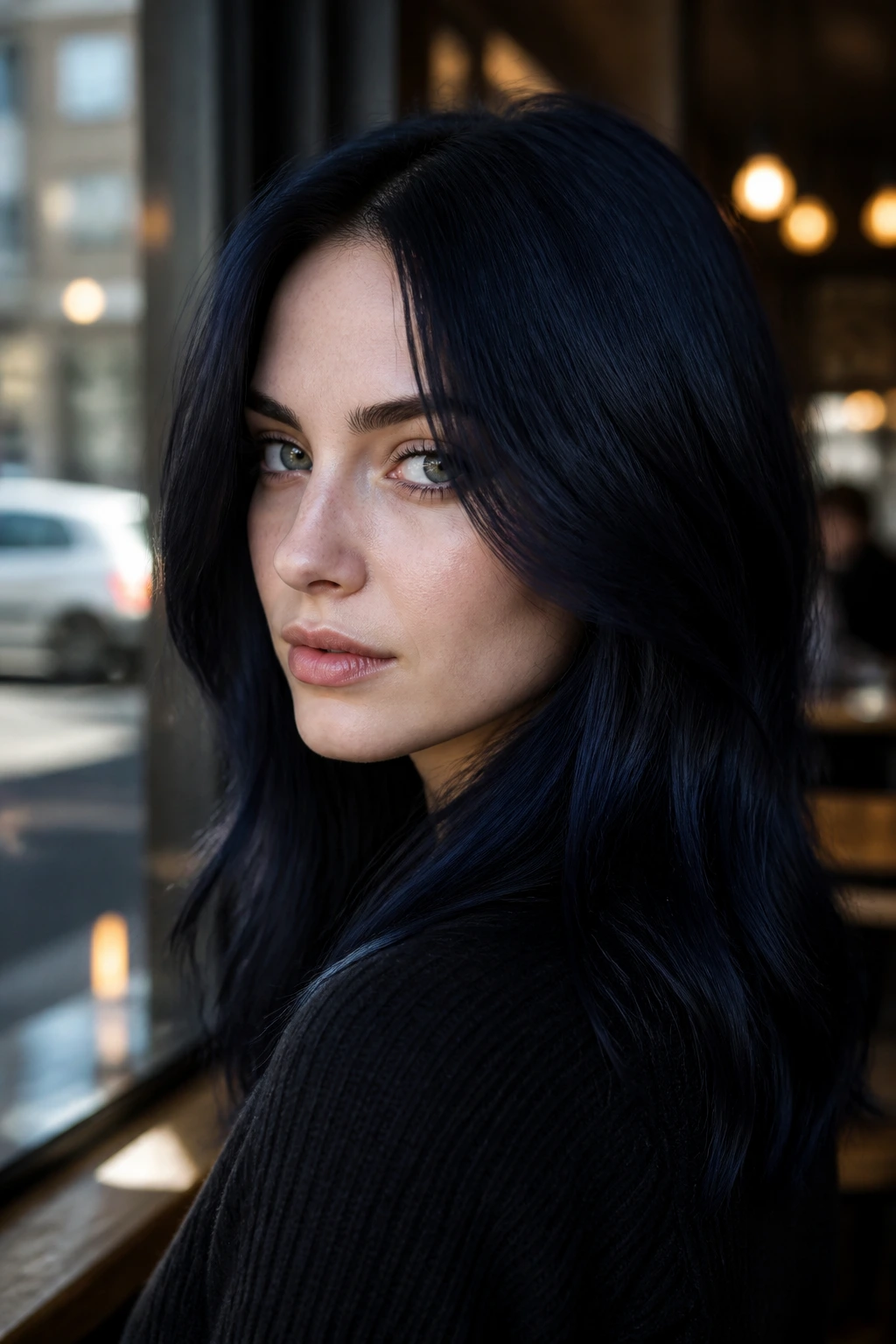
Blue-black is dark hair with a cool, inky cast that can look almost navy in the sun. It is not the same as plain black. Plain black can be harsh and a little flat; blue-black has depth and a reflective edge that cool skin can handle well. If your undertones lean blue or pink, this shade can make the complexion look cleaner.
The reason it works is simple: the blue reflects back into skin that already has cool undertones. That doesn’t mean it makes the face blue. It means the hair and skin sit in the same temperature range, which tends to look balanced. On pale skin, it can be dramatic. On deeper cool skin, it can look elegant without effort. I know, that word again. Still true.
A Good Match For
- Dark brows and lashes
- Oval or heart-shaped faces
- People who want low upkeep after the initial color
- Straight or softly curved styles with shine
This shade is one of the easiest to maintain from the salon chair, because the fade is subtle. The risk is buildup. Too much pigment can make the hair look opaque, so a gloss or semi-permanent formula often works better than a hard, permanent black.
9. Pearl Ash Blonde for Cool Skin Tones
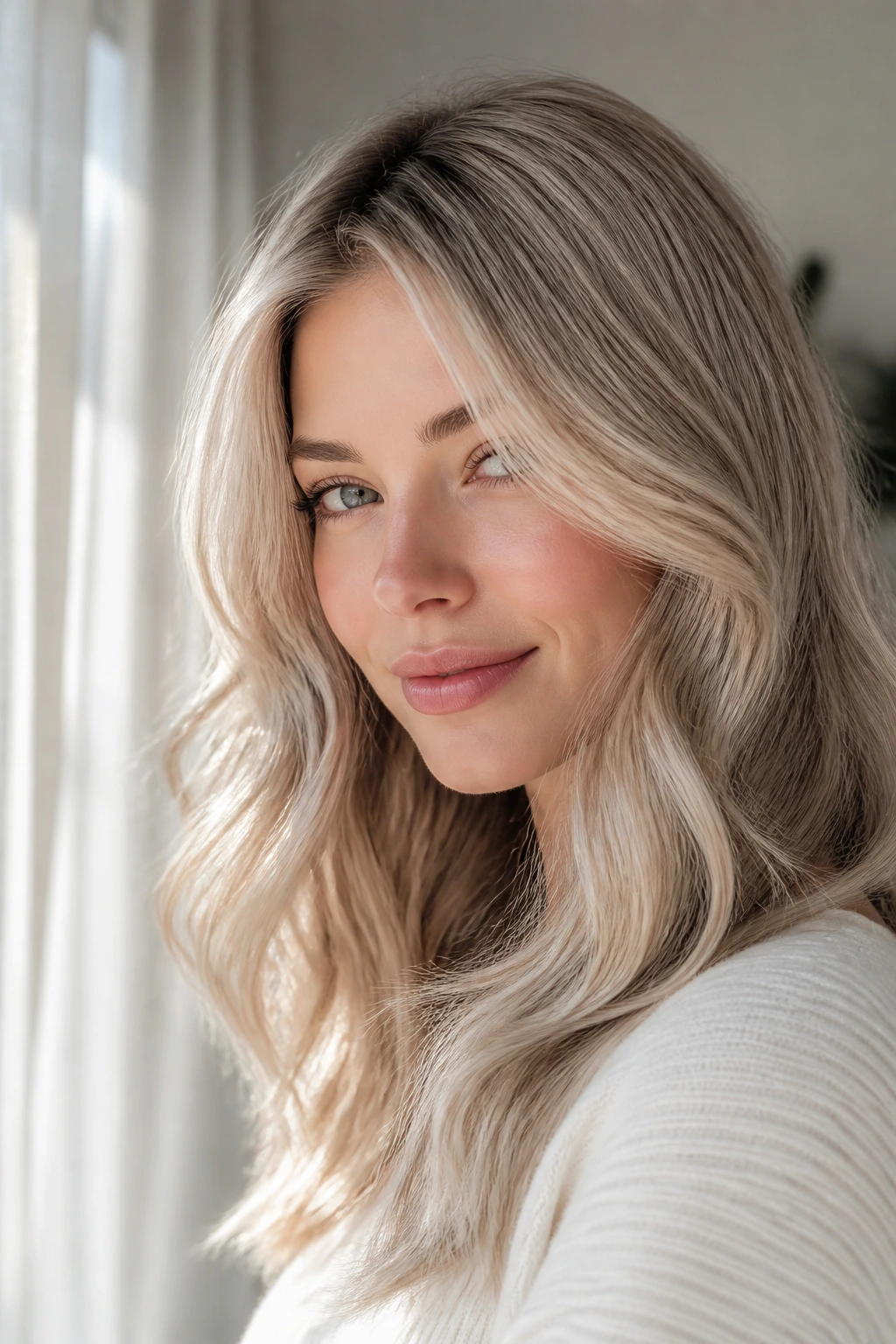
Pearl ash blonde sits between silver and beige, and that little middle ground is the reason it works so well on cool skin tones. It has a soft sheen rather than a hard metallic edge, which makes it easier to wear if you want something bright but not severe. Think polished shells, not chrome.
Why It Flatters
The pearl note softens the ash. That matters on very fair skin, where a strong silver can sometimes make the face look a touch too pale. Pearl ash blonde keeps the brightness but adds enough softness that the skin still looks alive.
It is also kinder to fine hair than some of the harsher icy shades. Because the tone is not ultra-cold, the hair can look fuller and less brittle. That’s a subtle thing, but it changes how the whole head reads.
A salon formula often uses pale blonde highlights, a pearl toner, and maybe a whisper of lavender or blue-violet to steer the color away from yellow. The root can stay a shade deeper for contrast. That contrast is useful. It keeps the color from turning into one big pale blur.
If you like soft makeup, this shade is easy to wear. Rose blush, taupe eyeshadow, and a cool nude lip tend to work well with it.
10. Taupe Ash Bronde
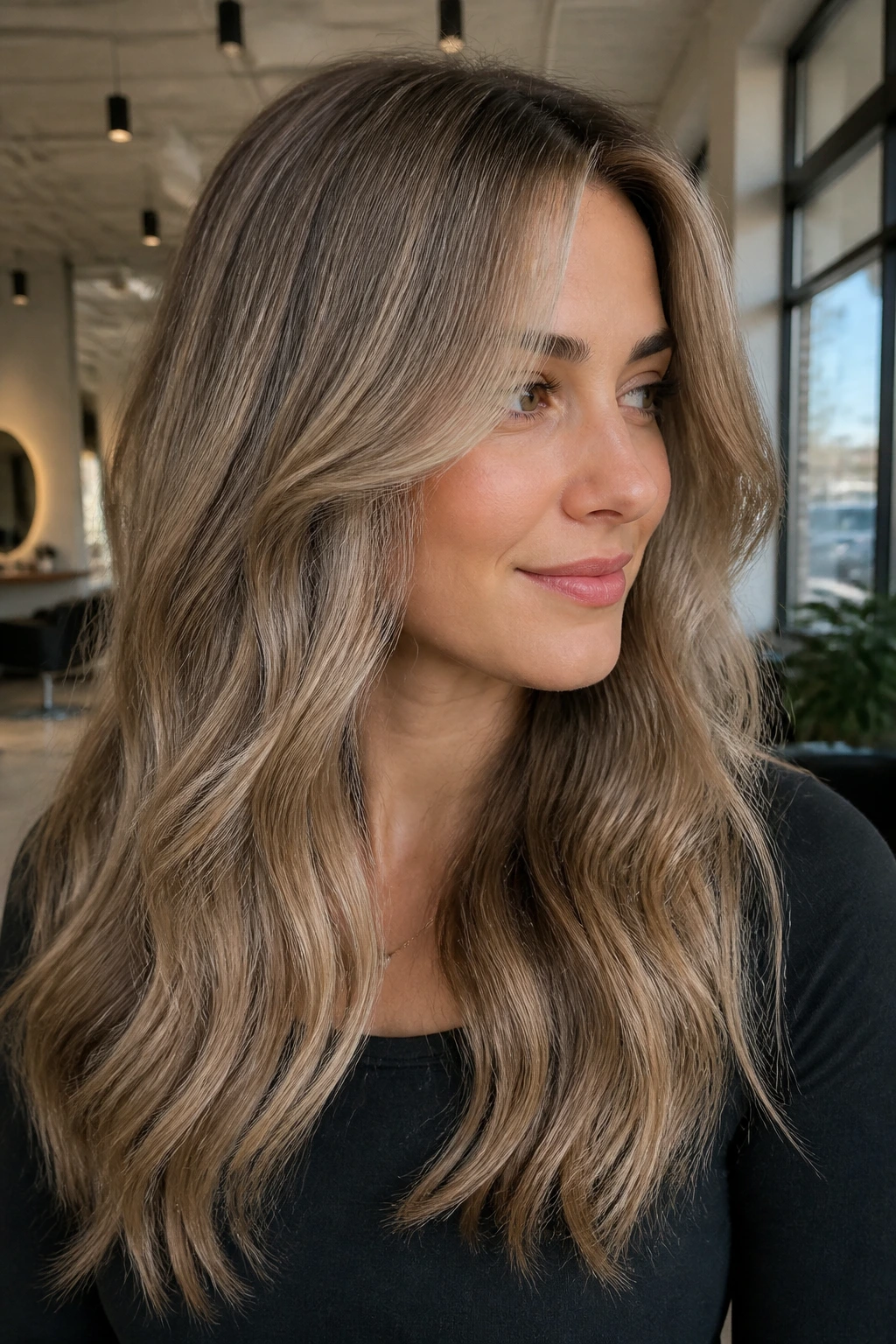
Taupe ash bronde is one of those shades that looks easy but is actually doing a lot of work. Bronde sits between blonde and brown, and the taupe keeps it cool instead of honeyed. On cool skin tones, that’s a good thing because the color adds light without introducing warmth that can turn the face pinker or more flushed.
I like this shade for people who have naturally dark blonde or light brown hair and want a change that still feels believable. It is not trying to be a fantasy color. It just cleans up the tone and makes the hair look expensive in a practical way. Yes, practical. There’s nothing wrong with hair that cooperates with your life.
What to Request
Ask for neutral-to-ash lowlights, not beige-gold highlights. A root melt helps if you want the grow-out to stay soft. The best taupe bronde has a dusty finish, almost like the color of dried stone.
This shade usually looks best in soft layers or loose waves, because the movement shows the different brown and blonde pieces. It can go flat on ultra-straight hair unless the cut has texture.
11. Steel Silver Highlights Around the Face
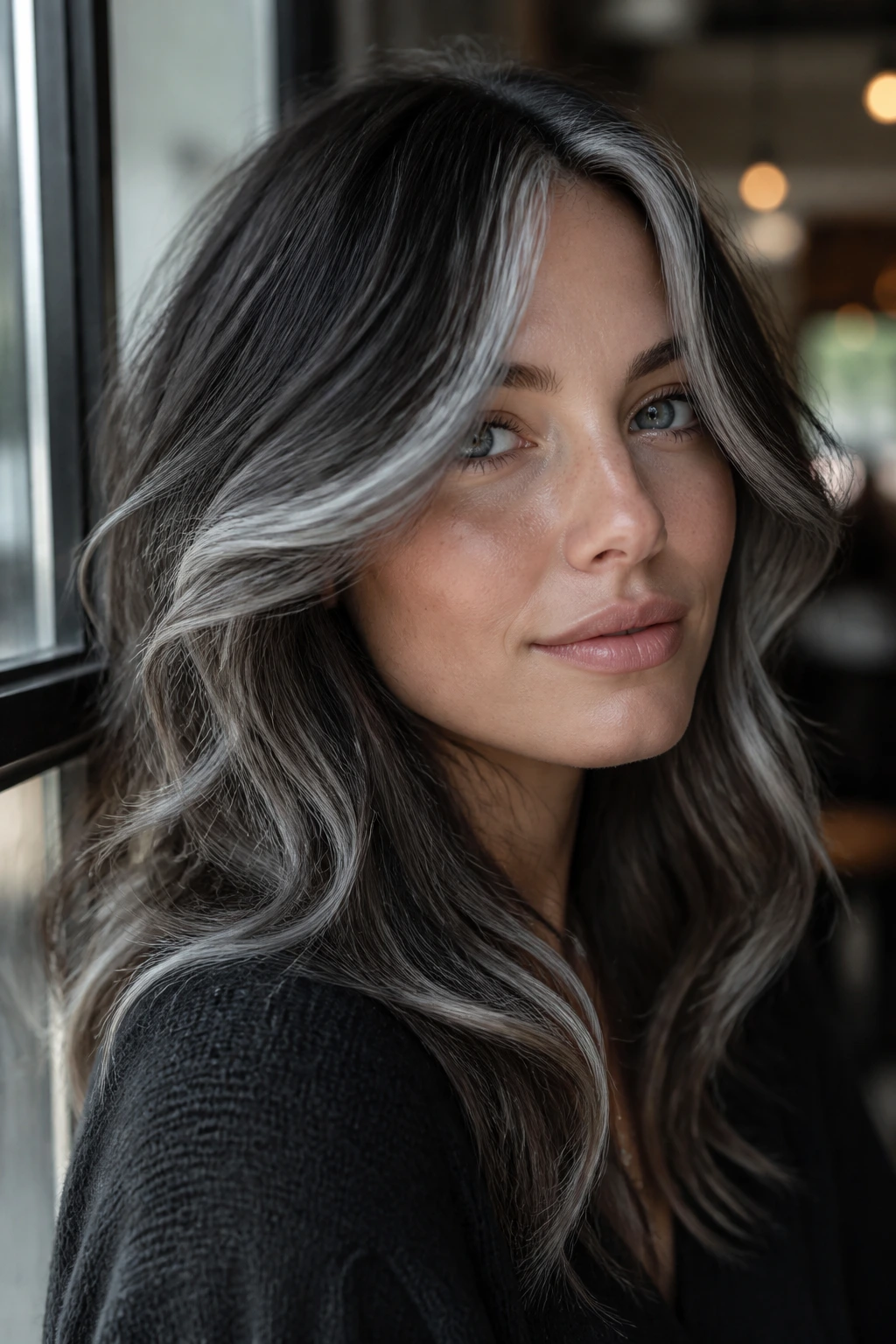
Steel silver highlights are for anyone who wants ash hair color ideas without committing to an all-over lightening job. The face-framing pieces do the heavy lifting. They brighten the complexion, pull attention to the eyes, and let the rest of the hair stay deeper and easier to manage.
The “steel” part matters. These highlights are cooler and more metallic than soft beige blonde. That makes them a good match for cool skin tones, especially if the base color is dark brown, mushroom brown, or charcoal brunette. You get contrast without losing the ash effect.
Where They Shine Most
This look is strong on layered cuts, curtain bangs, and shoulder-length hair with movement. The lighter strands around the face can be as thin as a few millimeters or as bold as chunky ribbons, depending on how much contrast you want. Thin highlights feel more modern to my eye, but bold streaks can work if the haircut is sharp.
A good colorist will place the lightest pieces where the hair naturally parts and curves toward the cheekbones. That is the whole point. The color should frame the face, not sit on top of it like a sticker.
- Strong choice for first-timers testing ash tones
- Easier to grow out than full platinum
- Works well with dark roots
- Needs toning, but not as often as all-over blonde
12. Smoky Lilac Ash
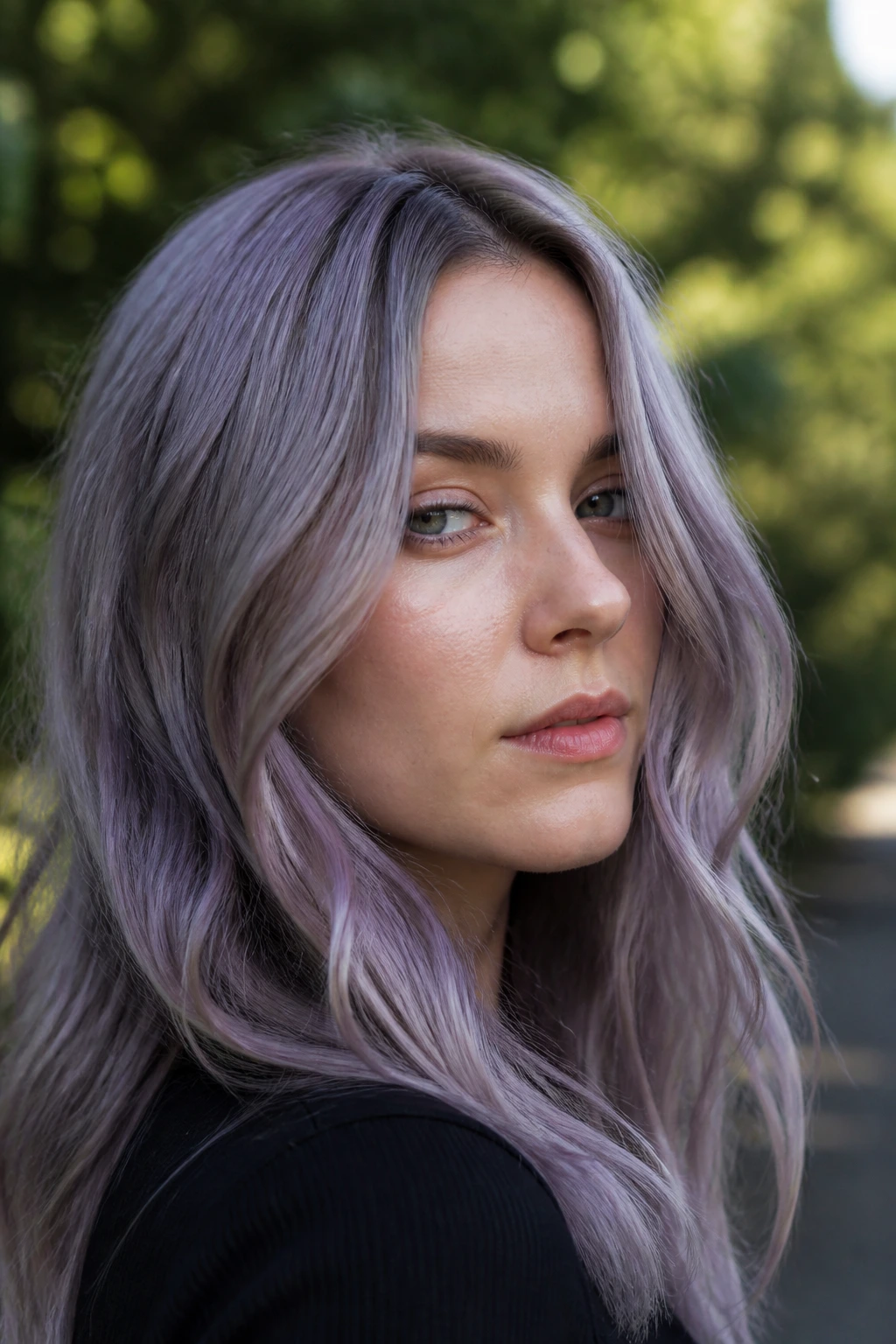
Smoky lilac ash is the playful shade on this list, but it still reads cool and controlled. The lilac note gives the hair a soft violet haze, and the ash base keeps it from turning sugary or too pastel. On cool skin tones, that violet cast can make the complexion look smooth and fresh.
This color works because purple sits opposite yellow on the color wheel, so it helps cancel unwanted warmth in the hair. That’s why the finish often looks cleaner than a plain pastel pink would. Pink can pull warm. Lilac stays cooler and usually feels kinder to cool undertones.
Who It Suits
It suits people who want a little personality without going full neon. Medium-length cuts, long bobs, and layered hair all show off the smoky dimension well. If the hair is very long, the color can look dreamy in waves; if it’s short, it feels sharper.
Maintenance is a real factor. Pastels fade fast, and ash-lilac is no exception. But the fade is part of the charm if you like soft, muted color. A diluted color-depositing conditioner can help stretch the tone between salon visits, especially on porous hair.
13. Cool Espresso Ash for Dark Brunettes
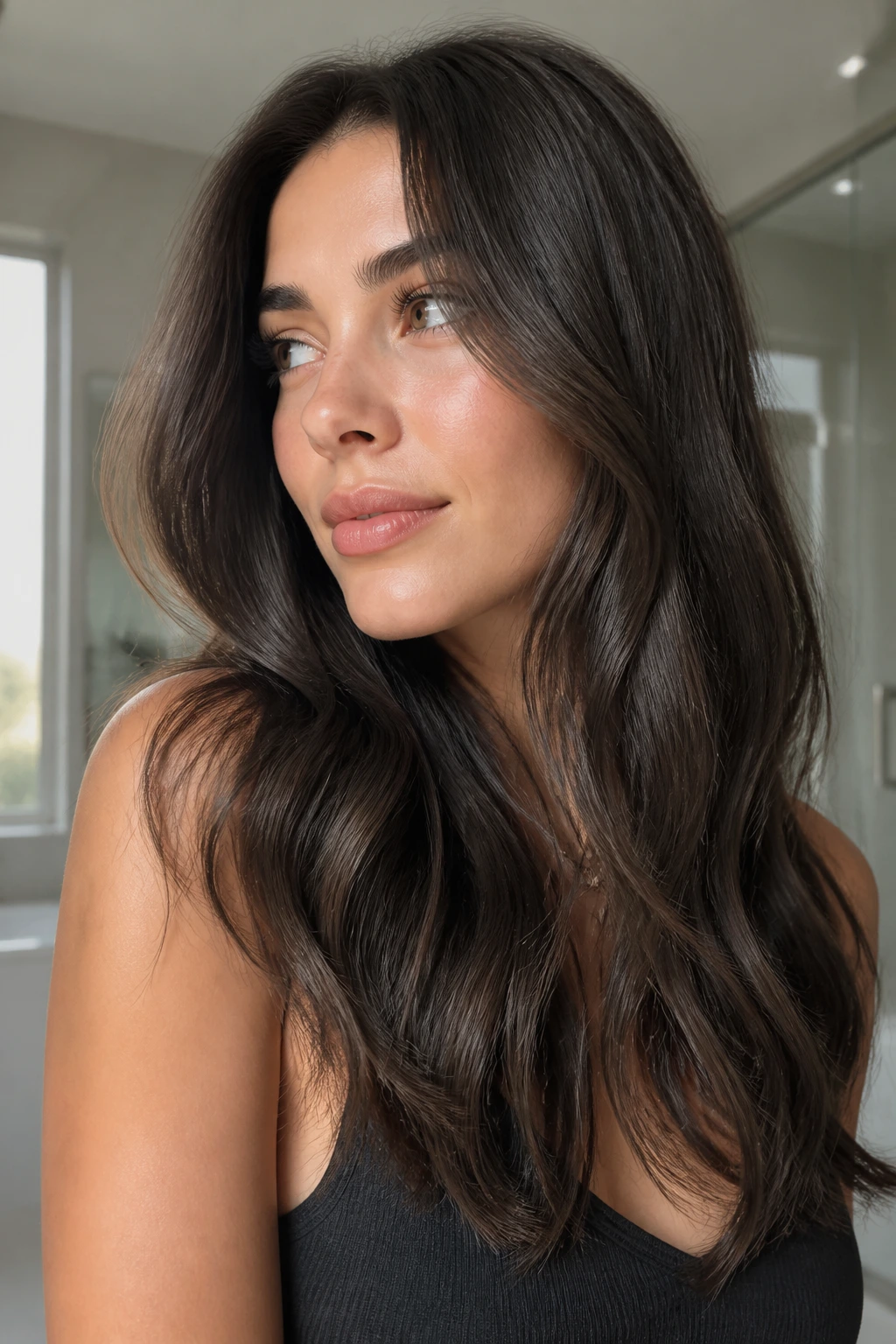
Cool espresso ash is the dark brunette answer for people who want richness without copper. It looks almost like fresh coffee with a gray undertone, and on cool skin tones it can make the complexion look more even. The shade is subtle, but subtle does not mean boring. It means the color is doing its job quietly.
This is a smart pick if your natural hair is already dark and you want to deepen it without turning black. The ash note keeps the brown from reading red in sun or indoor light. That matters more than most people realize, because some brunettes only look cool in a dim room and then flash orange outside. Not here.
Styling Notes
Cool espresso loves shine. A smoothing blow-dry, a clean center part, or soft bends through the ends all help it look more polished. Matte texture can make it feel heavier than it is.
It also pairs well with medium to dark cool skin tones because the contrast is there, but not screaming. If your brows are deep and your eyes have a cool ring around the iris, this shade can make those features pop in a calm way. The effect is more “put together” than dramatic.
14. Dusty Silver Ombré
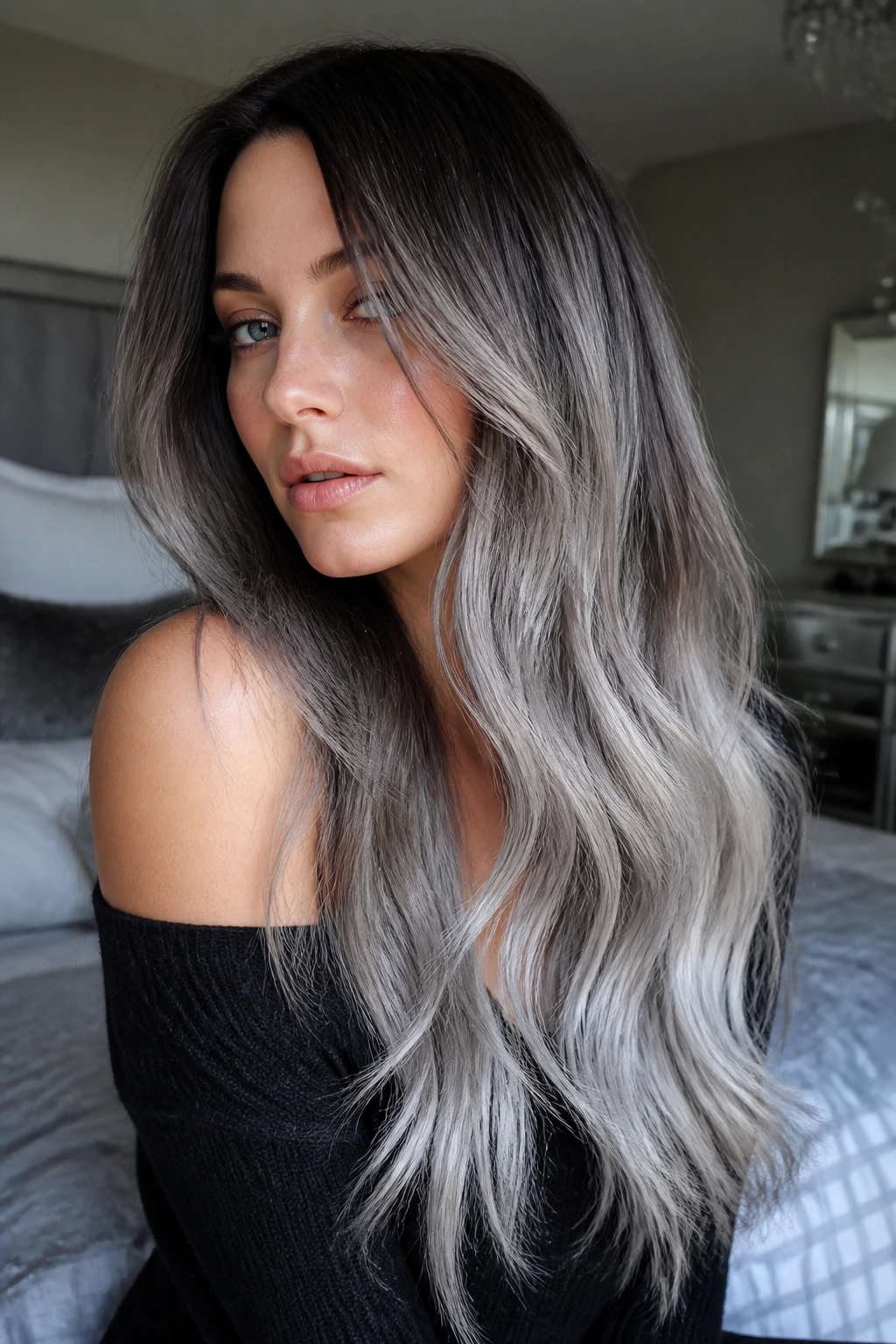
Dusty silver ombré gives you a darker root, a smoky middle, and a silver finish at the ends. It’s one of the best ash hair color ideas for people who like a little edge but do not want the upkeep of solid platinum. The fade from dark to light also gives the eye somewhere to travel, which is why it looks good on longer hair.
The dusty part is what makes the color wearable. Pure silver can feel sharp. Dusty silver has a softened, muted quality that works with cool skin tones without making the face look washed out. If your complexion is pale, that softness matters even more.
How It Wears in Real Life
This shade makes sense on hair with some length, because you need room for the gradient to show. Shoulder-length hair can work, but mid-back lengths tend to look best. The ends carry the lightest color, so waves or loose curls can show off the shift from root to silver.
A shadow root is almost required. Without it, the ombré can feel too abrupt. With it, the grow-out looks deliberate. That’s the part people forget when they fall in love with the photos.
15. Ash Rose Brunette
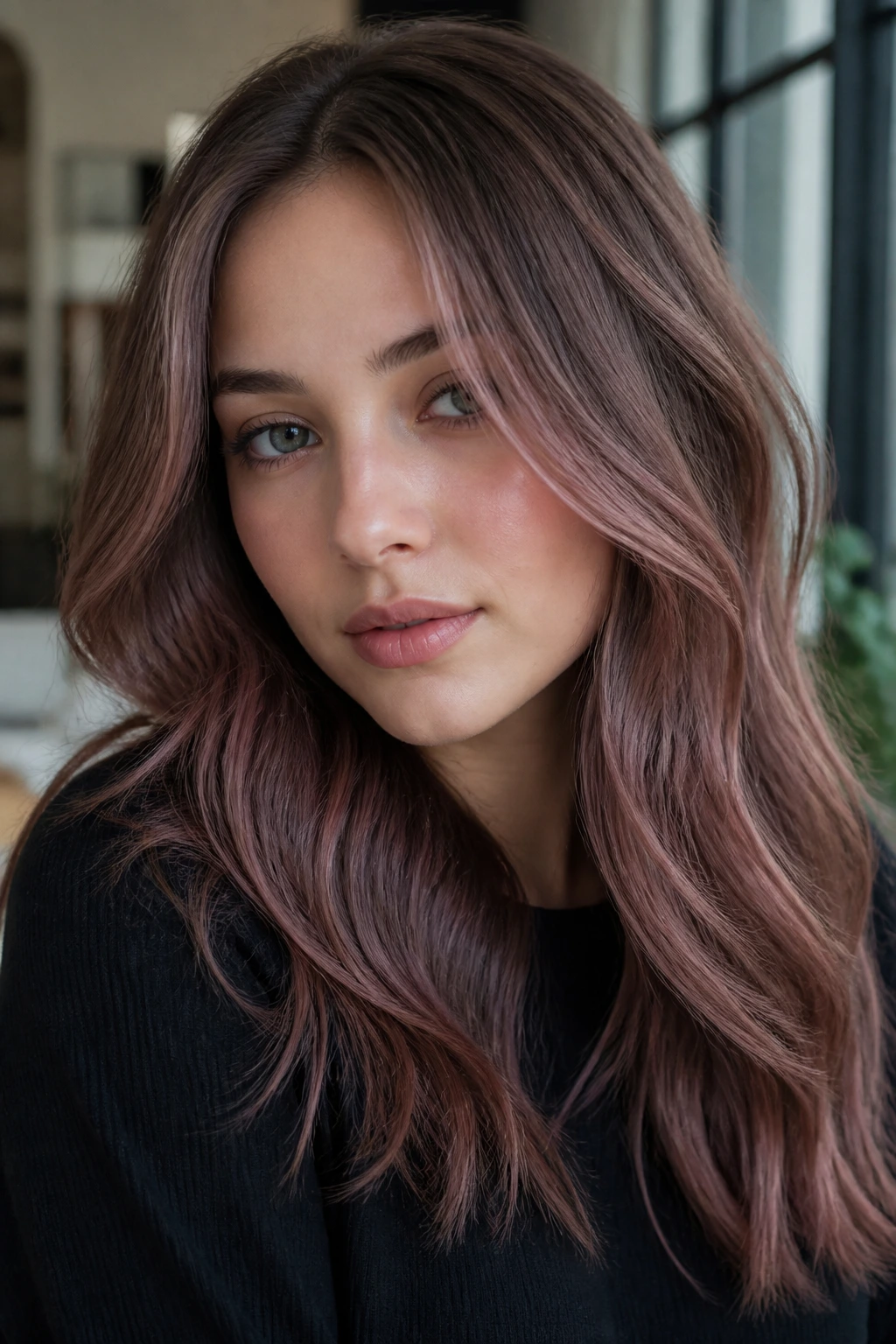
Ash rose brunette is for people who want a little color but not a loud fashion shade. It mixes muted rose tones into a brunette base, then cools everything down with ash so the pink stays dusty instead of warm. On cool skin tones, that can look soft and flattering, especially if your skin already has a pink cast.
The trick is restraint. Too much rose and the hair starts to read warm berry. Too much ash and the pink disappears. The sweet spot lives in the middle, where the color looks like rose smoke rather than candy.
Why It Works
This shade is especially good on layered brunettes with movement. The darker pieces keep it grounded, while the rose accents catch the eye without taking over. It can look very good in soft curls because the bends show the tonal shift.
If you like muted lipstick shades, this hair color tends to make sense with your makeup drawer. Mauve, dusty plum, and cool nude tones all sit in the same family. That makes the whole look feel connected without needing much effort from you. And yes, effort matters here. A color like this can look messy if the undertone drifts warm.
16. Soft Ash Highlights on Dark Hair
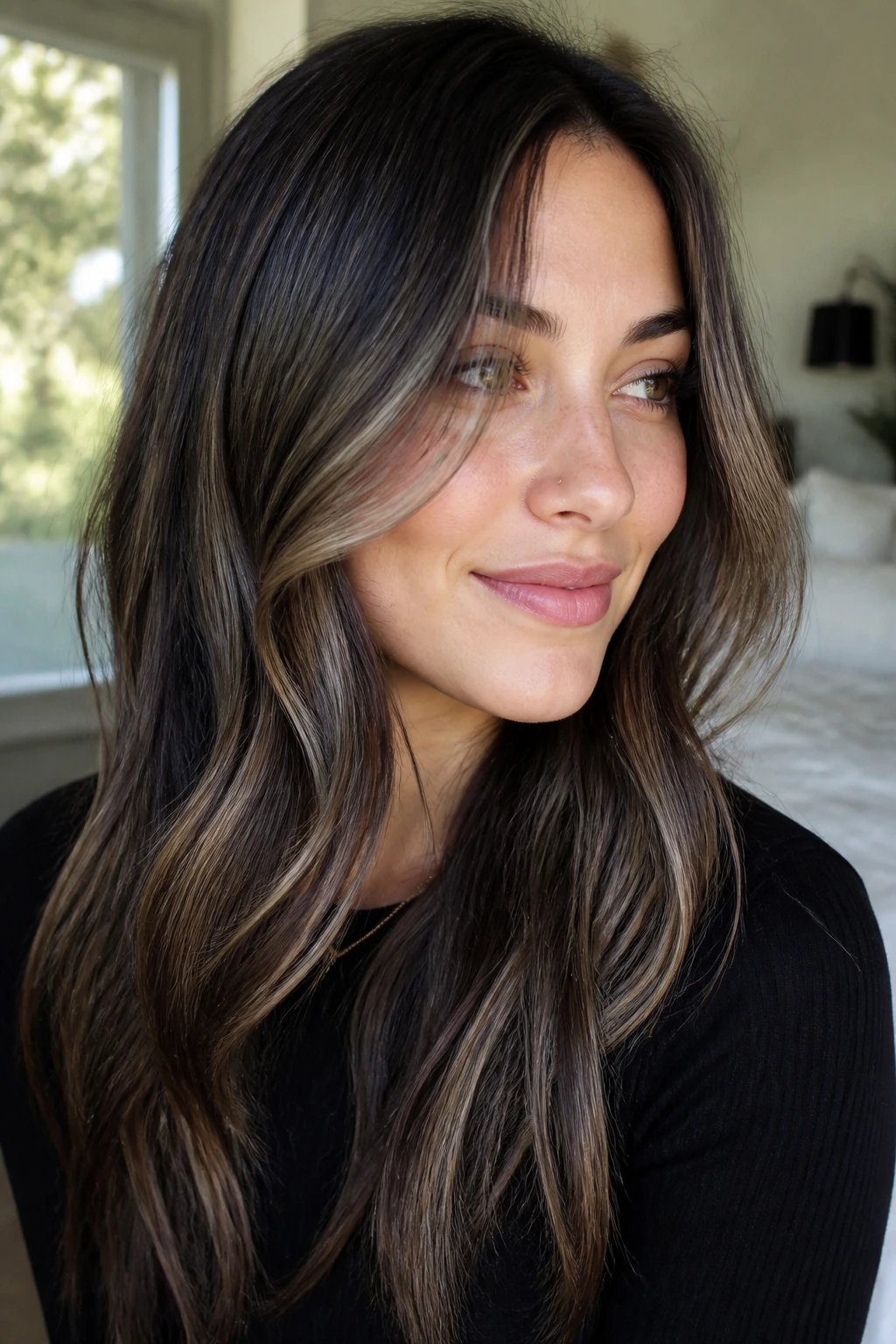
Soft ash highlights are the easiest way to test ash color if you are nervous about a full change. You keep the base dark and weave in cool-toned pieces that sit just a shade or two lighter. On cool skin tones, those pieces can brighten the face without asking the entire head to go lighter.
This approach is especially useful for hair that tends to pick up red. A dark base with ash babylights can knock down that warmth and make the hair look cleaner. It also gives dimension, which is often missing in one-tone dark hair. The highlights do not need to be chunky. In fact, too much chunk can make the whole thing look dated.
A Low-Drama Option
This is one of my favorite choices for people who wear their hair up a lot. A ponytail or claw clip still looks interesting because the ash highlights show through at different angles. That is a small thing, but small things matter when you’re actually living in the haircut.
- Great for first ash color attempts
- Less risky than full blonde
- Works on straight, wavy, or curly hair
- Grows out with a soft line instead of a harsh stripe
Ask for fine babylights around the hairline and through the top layers. That keeps the face bright without turning the whole head into a highlight map.
17. Frosted Brown Ombré
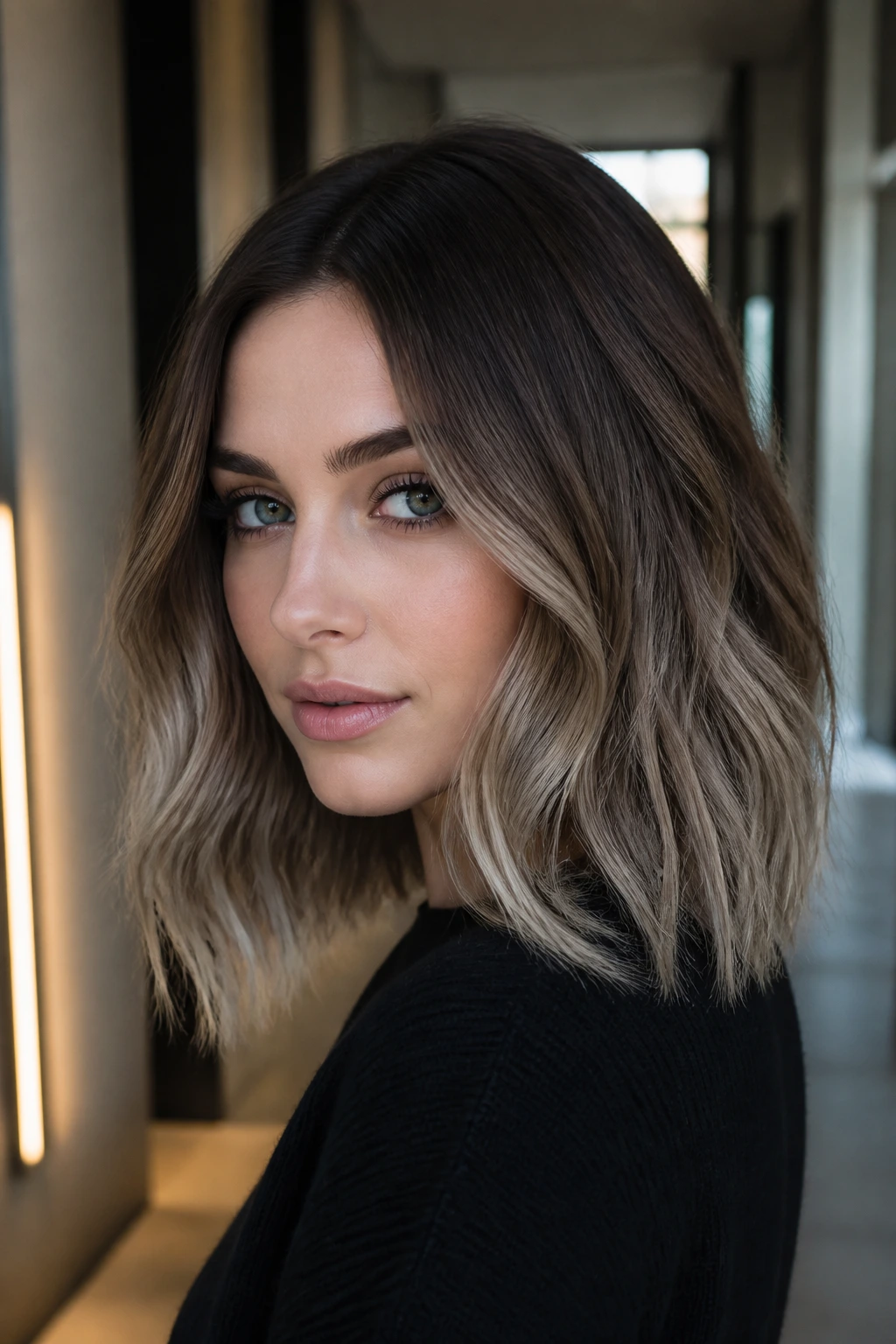
Frosted brown ombré feels a little more wintery, but the look itself is timeless. The root and mid-lengths stay brown, while the ends soften into a frosted ash finish. On cool skin tones, the frosted ends can lift the whole look without making the hair look too blonde or too gray.
The reason this works is the gentle transition. If the color jumps too fast from brown to silver, the eye sees a hard line. Frosted ombré avoids that by moving gradually through cool taupe and light ash. It also makes longer hair look thicker because the darker root gives depth near the scalp.
Best Use Cases
This shade shines on hair with natural wave or a loose curl pattern. The movement breaks up the gradient and keeps the ends from looking too heavy. A straight blowout can work too, but then the ombré needs to be blended carefully.
It’s a solid choice if you like your hair darker near the face and lighter around the bottom. That placement can feel easier on cool skin than an all-over light blonde, especially if your features are fine or delicate. The ends do the brightening work. The root does the grounding.
18. Cool Mushroom Blonde for Cool Skin Tones
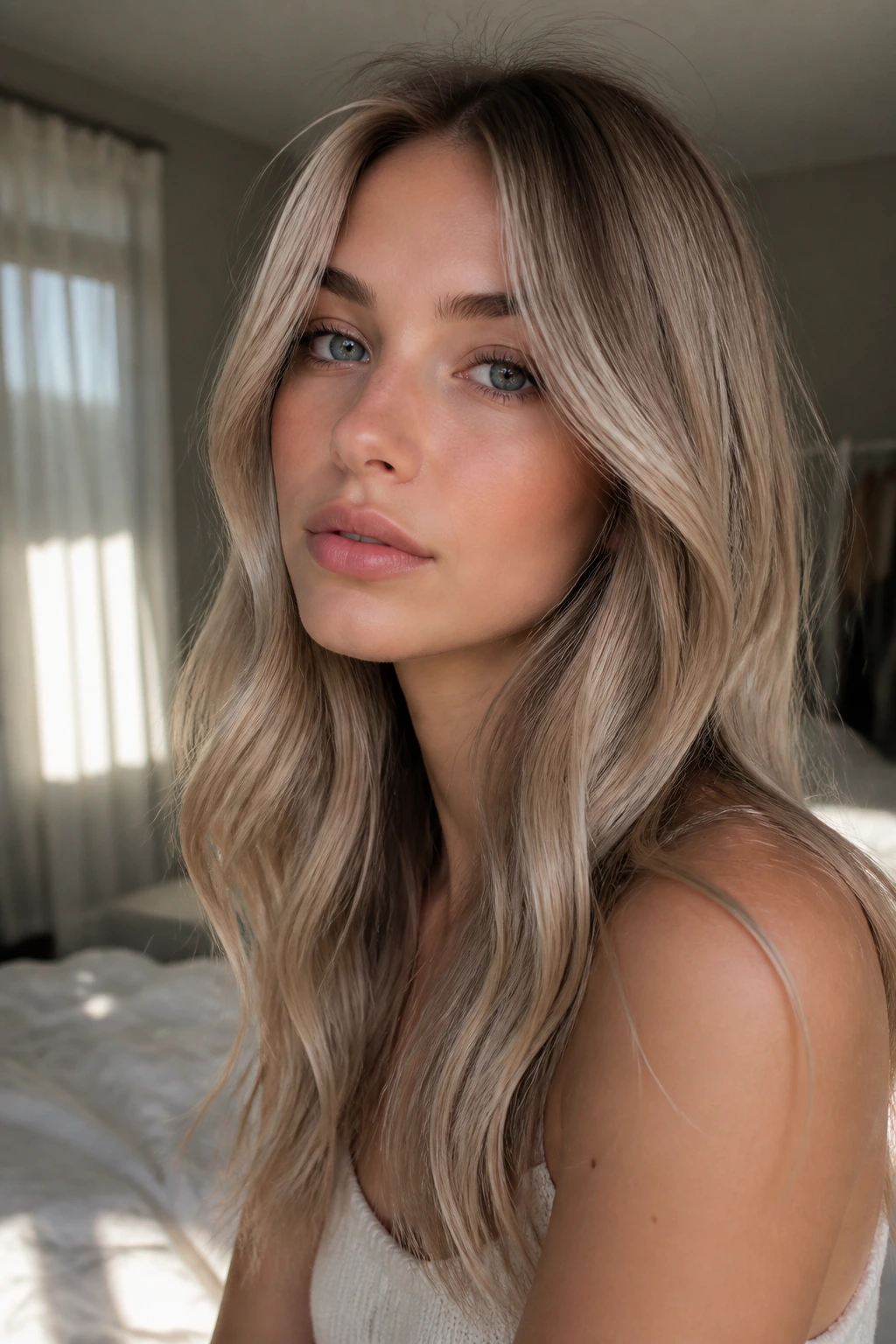
Cool mushroom blonde lives in that smart middle zone between beige and ash, and it is one of the easiest shades for cool skin tones to wear without drama. It has enough lightness to brighten the face, but the gray-beige base keeps it from turning yellow or orange. That’s a win if you’ve ever looked at a sunny blonde and thought, that is not my color.
What to Ask At the Salon
Ask for a cool beige-blonde base with ash lowlights and a neutral gloss. If your hair lifts warm, your colorist may need to tone twice or add a smoky glaze after the main service. That sounds fussy, but it’s the difference between mushroom blonde and a tired honey blonde that just got colder by accident.
This shade works well on medium-length cuts, soft layers, and blunt bobs. It also suits people who do not want to spend every morning fighting brass. You will still need toning products, but the maintenance is gentler than platinum or silver.
It’s a nice color if you want blonde that looks like it belongs on you, not on someone else’s vacation photo.
19. Graphite Shadow Root
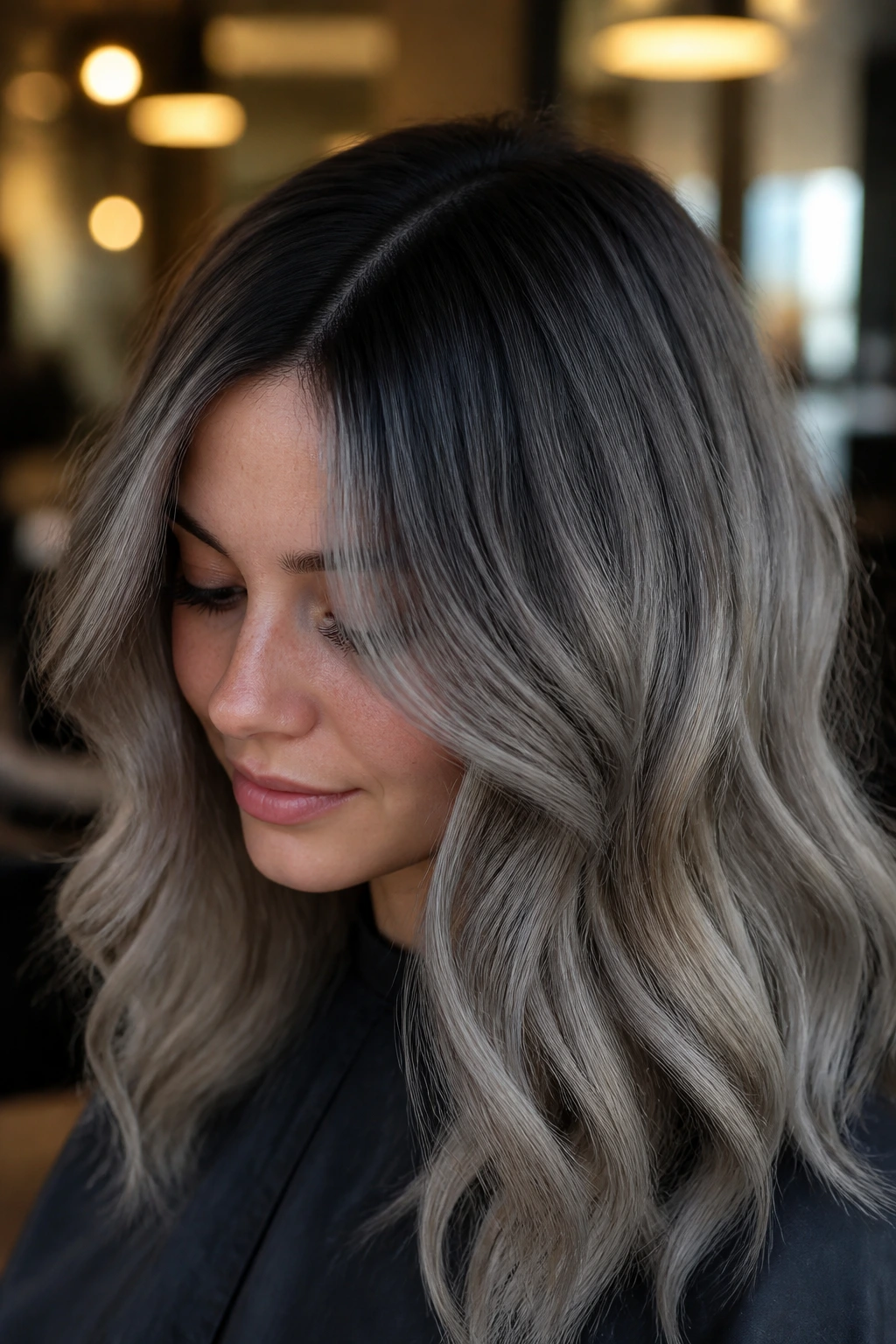
Graphite shadow root is for people who want darkness at the top and cool smoke through the rest of the hair. The root is deep and almost steel-colored, then it softens into ashier lengths. On cool skin tones, that contrast can be fantastic because it frames the face and keeps the color from reading too soft.
The shadow root also solves a practical problem. Roots grow. That’s not a flaw; that’s hair. When the base starts dark and cool, the grow-out looks deliberate for longer. Graphite is especially useful on balayage, silver ombré, or light ash blonde because it gives the lighter pieces a solid anchor.
Why I Prefer It on Longer Hair
Long hair gives the root melt room to breathe. You can actually see the transition from graphite to ash, which is where the interest lives. On shorter cuts, the effect can still work, but it needs a sharp shape to keep the color from swallowing the haircut.
This is a good shade if you like a moody finish without going full black. It has more depth than silver and more edge than brown. That middle ground is where cool skin often looks best.
20. Smoky Silver Money Piece for Cool Skin Tones
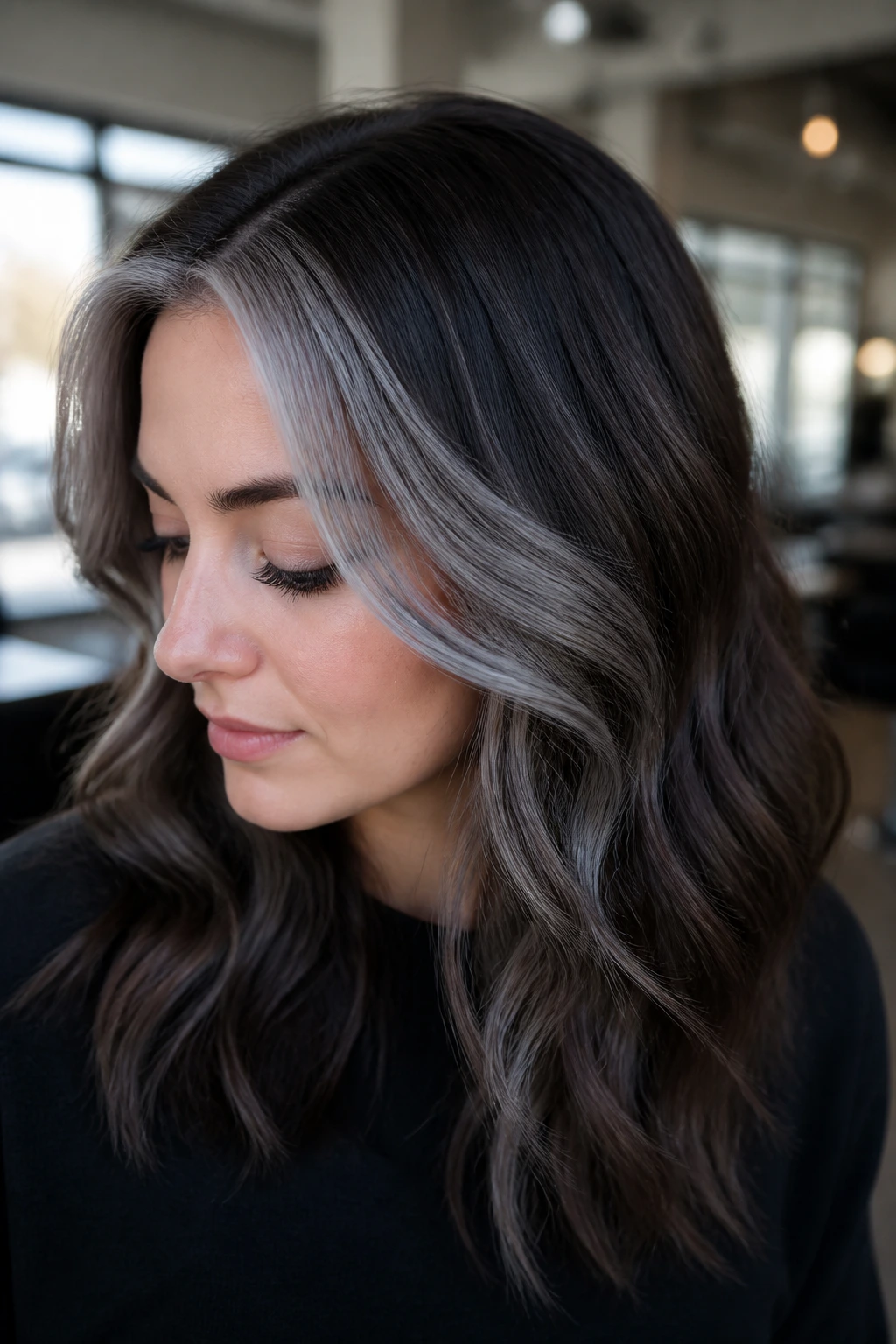
A smoky silver money piece is the easiest way to get a bright ash look without changing the whole head. You keep the base darker, then place silver-toned face-framing pieces around the hairline, part, and temple area. On cool skin tones, that little stripe of light can wake up the face fast.
Why It’s So Useful
The money piece pulls light straight to the front, which means you get impact where people actually look first. It also lets you experiment with silver ash color before committing to an all-over blonde or gray. That makes it a good test run if you like the idea of ash but not the idea of heavy maintenance.
This look works especially well with layered cuts, curtain bangs, and shoulder-length hair. The contrast between the dark base and the silver front pieces gives the face a crisp frame. If your brows are cool-toned or naturally dark, the whole thing feels balanced instead of harsh.
- Best for trying ash color with less upkeep
- Easy to combine with balayage or shadow roots
- Works on straight, wavy, and curly hair
- Can be refreshed with toner on the front pieces alone
If you want the safest first step into ash hair color ideas, this is probably it. Start with the money piece, live with it for a bit, and see how your skin reacts in daylight, under warm bulbs, and in a mirror with no filter at all.
