



The best hair color ideas for natural hair are the ones that work with the curl pattern instead of fighting it. A shade that looks tame on straight hair can look alive on coils, because every bend in the strand throws a little shadow and a little light.
That’s the fun part. Honey blonde can read softer on a wash-and-go than it does on a silk press. Copper can flare up in sunlight and then settle down indoors. Even a plain brown can look richer once it lands on tight curls and gets broken up by texture.
There’s a catch, though. Natural hair tends to show color differently depending on porosity, previous dye, shrinkage, and how much lift the hair can safely take, so a flattering shade is not always the loudest one on the swatch ring. A strand test saves regret. So does asking for a gloss, a demi-permanent, or highlights placed where your curls actually part and fall.
Skip the box dye. It’s a fast way to get a flat result or fried ends. If you want a change that still feels like your hair, the shades below are the ones I keep coming back to.
1. Honey Blonde Curls
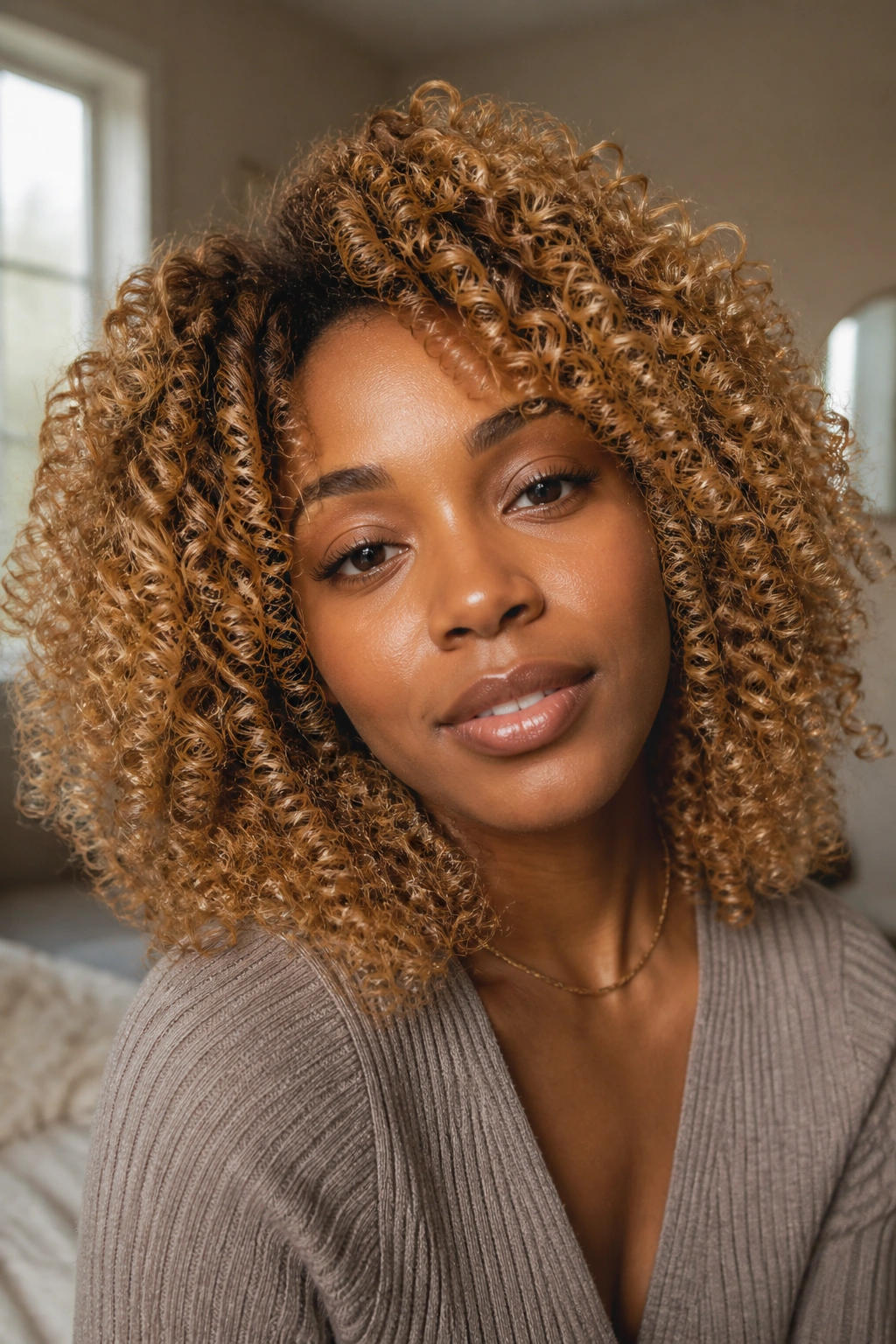
Honey blonde is the shade people choose when they want warmth, brightness, and a little glow without jumping straight into platinum territory. On natural curls, it tends to look richer than it does on straighter hair because the curl pattern breaks up the color and keeps it from reading too harsh.
Why It Works
Honey blonde usually flatters deeper bases because it stays golden, not icy. If your starting color is around a level 3 to 5, a honey tone often feels more wearable than a pale blonde, especially on twist-outs and defined wash-and-gos. It also plays nicely with warm undertones in the skin.
- Ask for a level 7 or 8 honey blonde, not a beige blonde that goes muddy on dark hair.
- Keep the lightest pieces around the face and crown for the biggest payoff.
- Use a gloss between color services if the blonde starts looking dull or flat.
- Twists and braid-outs show this shade beautifully because the lighter pieces separate in the curl pattern.
My vote: keep the roots a little deeper so the grow-out looks soft instead of obvious.
2. Copper Penny
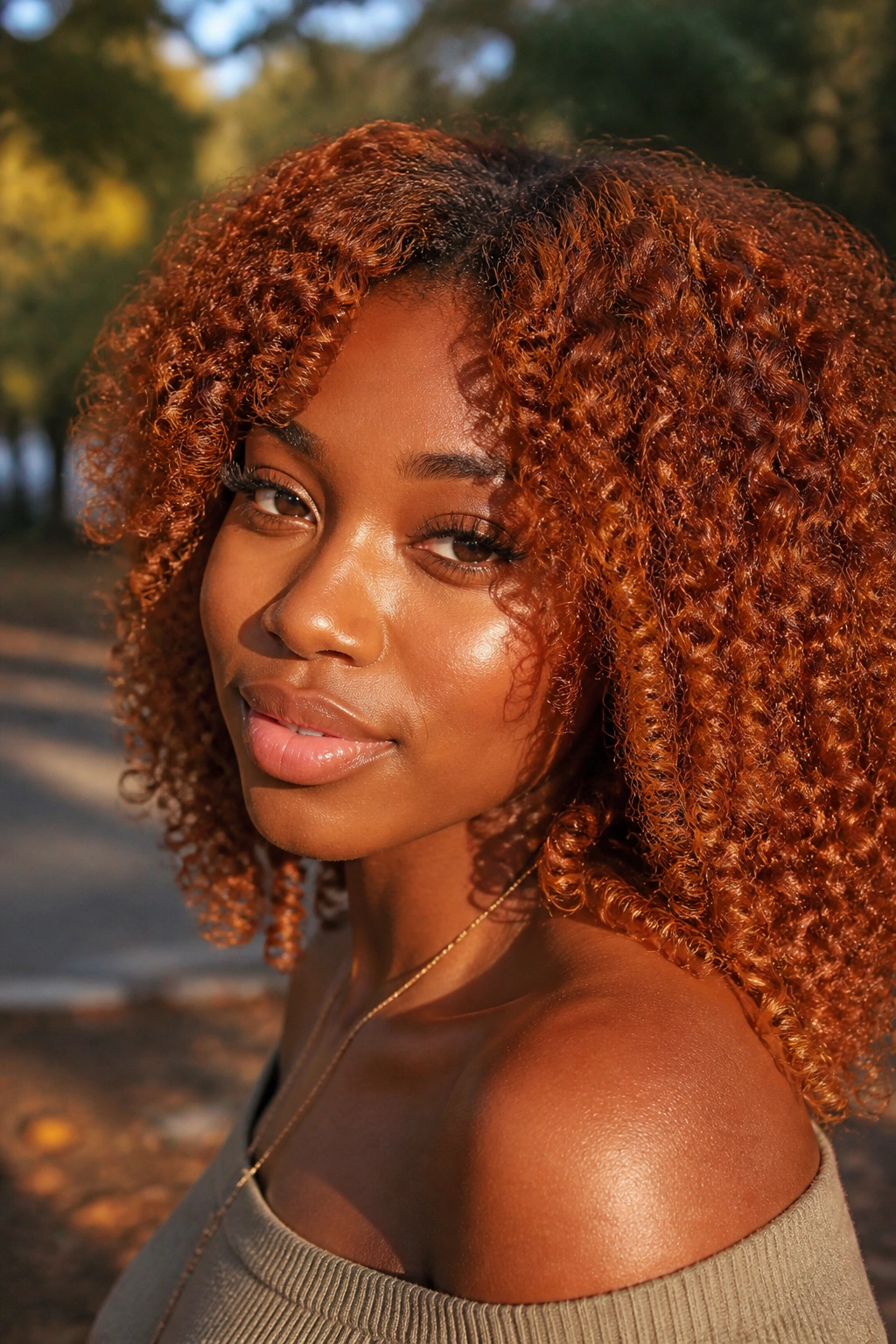
Copper penny is bold in the right way. It has more fire than cinnamon and more shine than burgundy, and on natural hair it can look alive even when the hair is pulled into a puff, braids, or a chunky twist-out.
A lot of people think copper needs a full bleach job. Not always. On darker natural hair, a copper glaze or a softer copper-brown can give you that warm metallic feel without taking the hair all the way up. The result is less cartoonish and more expensive-looking, for lack of a better word.
If your skin runs warm or neutral, copper can be a very easy yes. It’s the kind of shade that makes gold jewelry, brown lips, and dark lashes all work together without much effort. And if you wear your hair stretched, the color reads even more clearly because the light catches the strand surface in a longer line.
3. Burgundy Wine
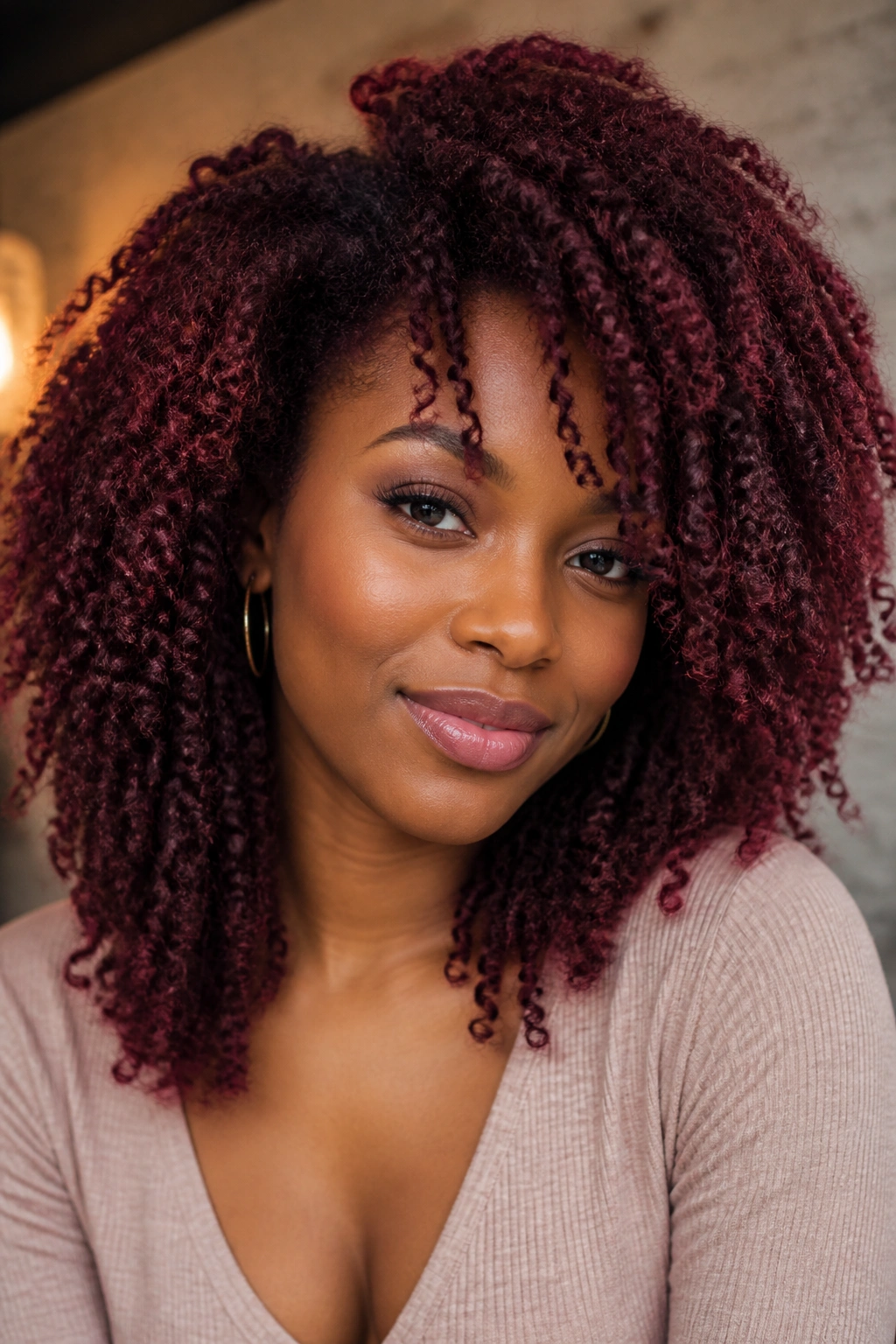
Burgundy wine is one of those shades that looks serious in the best way. It’s red, but not shouting. On curls, it can move between deep plum and dark wine depending on the light, which makes it a smart choice if you want color that changes a bit during the day.
What Makes It a Strong Pick?
Can burgundy work on natural hair without looking too bright? Absolutely, if the red stays deep. A level 4 or 5 burgundy tends to sit nicely on dark coils, and a demi-permanent formula often gives enough richness without forcing a dramatic lightening step.
How to Wear It
Try it on a defined twist-out or on locs with a little sheen. The shade gets more interesting when the texture is separated instead of smoothed down. If you want a safer version, ask for burgundy only on the mid-lengths and ends. That gives the color some movement without putting all the attention at the roots.
4. Cinnamon Brown
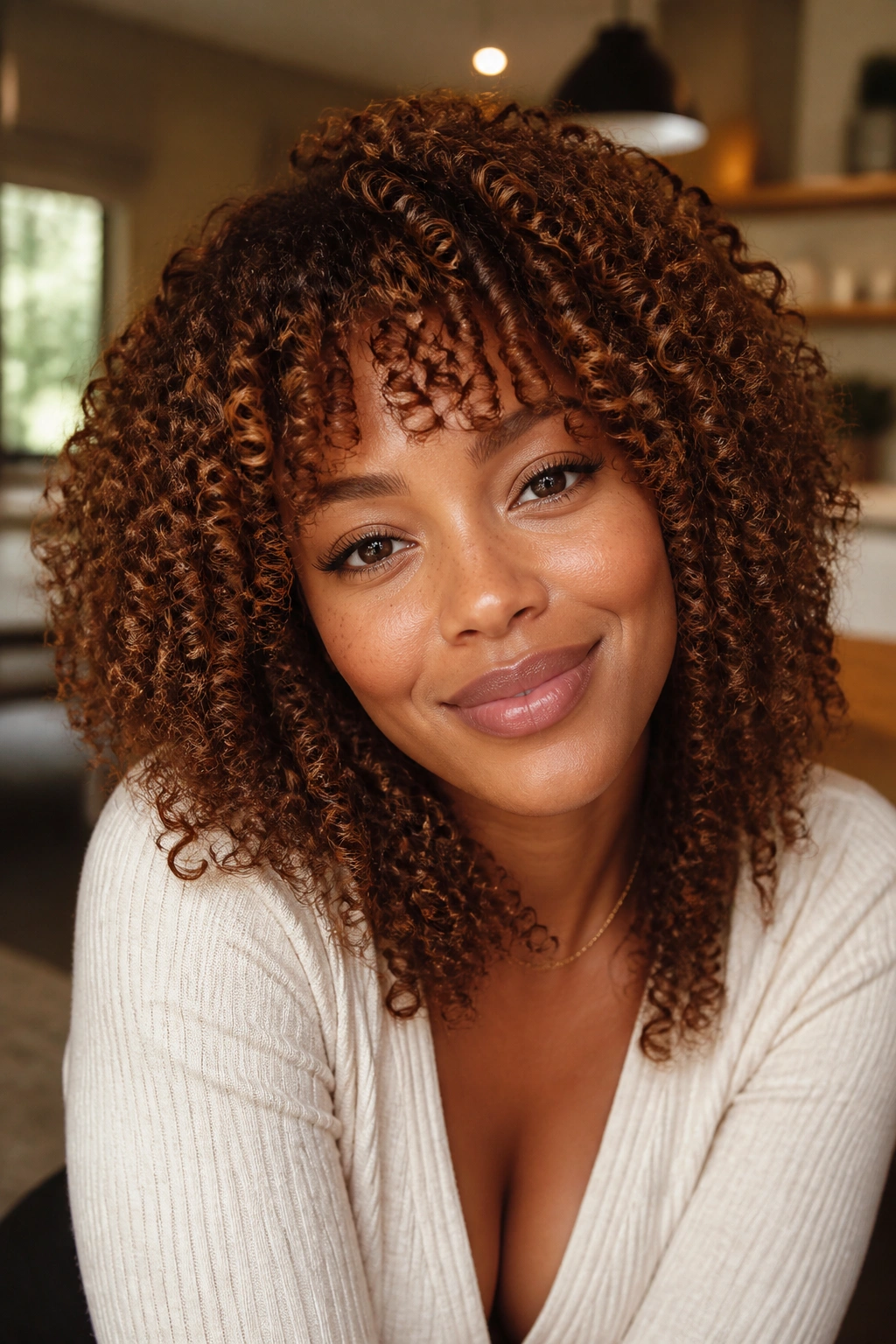
Cinnamon brown is for someone who wants warmth but not a full red moment. It lands between brown and spice, which makes it easy to wear on natural hair that already has some depth.
A friend of mine once described this shade as “brown with a little spark,” and that’s not far off. It has enough red-orange in it to feel lively, but it still reads as a brown first. That matters on coily hair, because too much orange can go brassy fast if the base isn’t lifted evenly.
- Best on medium to deep brown bases
- Looks softer when the curls are big and fluffy
- Works well as a full-head gloss or as scattered highlights
- Grows out neatly, which is a gift if you hate obvious lines
The nice thing here is that you do not need a major transformation. A cinnamon glaze can be the difference between “nice hair” and “that hair has depth.”
5. Caramel Balayage
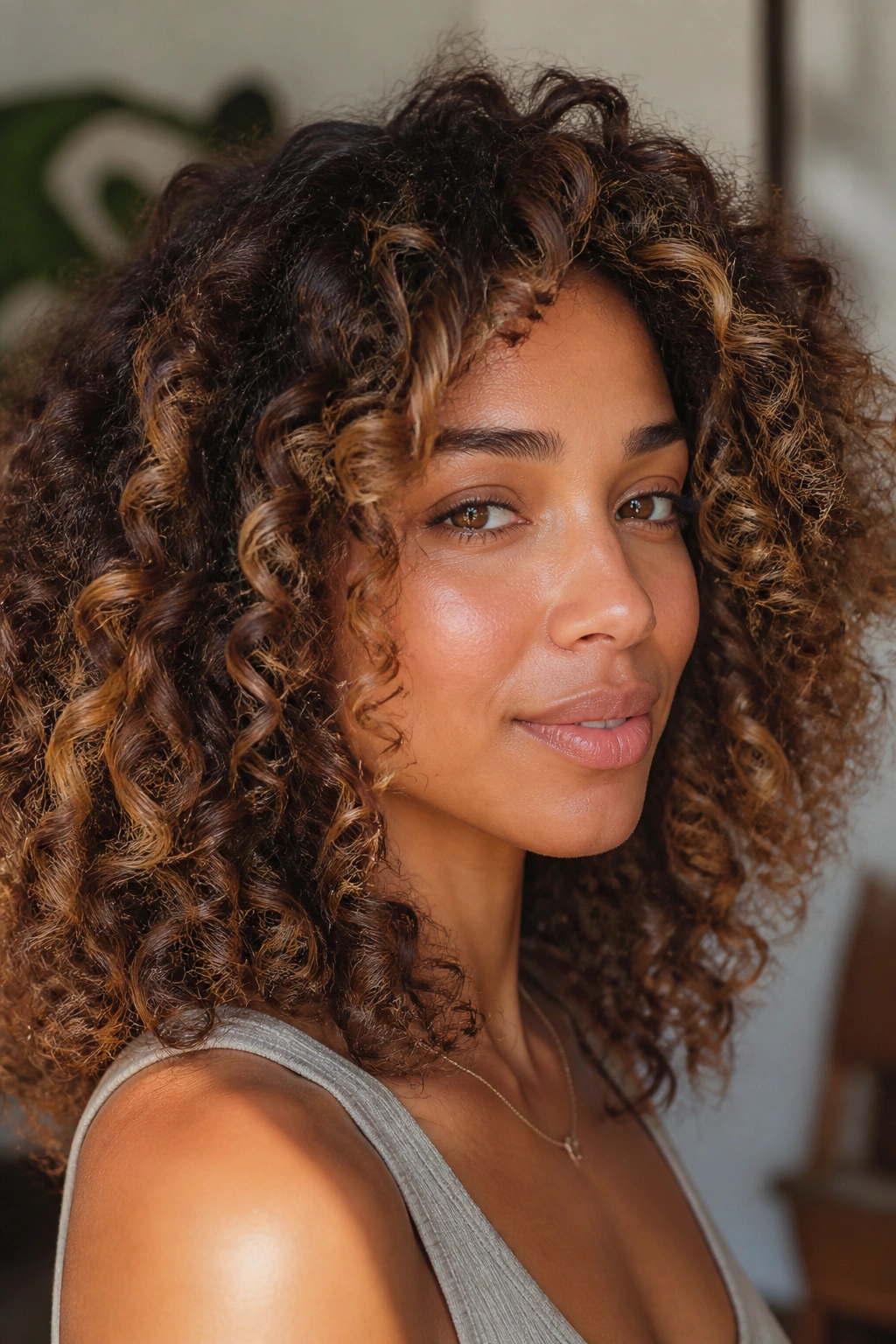
Caramel balayage is one of the easiest ways to add dimension to natural hair without making it look stripy. The hand-painted pieces sit where the curls naturally fall, so the lighter strands appear and disappear as your hair moves.
What I like about this option is that it works with shrinkage instead of against it. On a wash-and-go, the caramel may show in small flashes. On stretched hair, it spreads out and looks more obvious. That flexibility is useful, especially if you switch between styles during the week.
The key is placement. You want caramel pieces that sit 1 to 2 levels lighter than your base, not a bright blonde ribbon that fights the rest of the hair. Around the face and on the top layers, the shade can brighten your whole look. Underneath, it gives depth when the hair lifts and separates. It’s a low-drama way to make curls look more expensive without using that word too much.
6. Jet Black Gloss
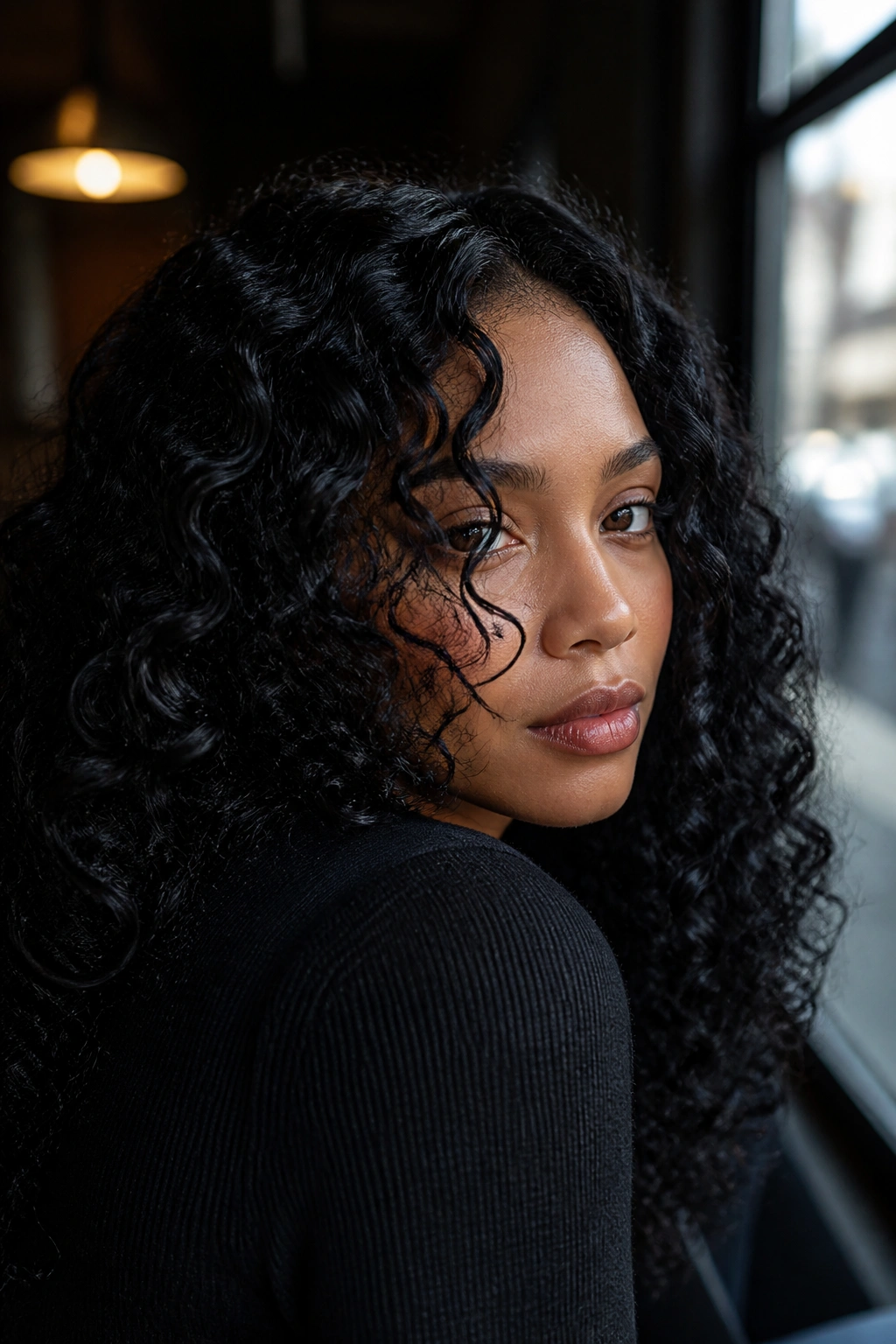
Jet black sounds simple, and that’s exactly why it works. On natural hair, a rich black gloss can make coils look denser, shinier, and more defined, especially if the hair has faded to a brownish cast from sun or previous color.
Unlike flat permanent black, a gloss keeps the result softer. You still get depth, but the hair doesn’t pick up that harsh, inky edge that can make curls look stiff in some lighting. If you already have thick, full hair, jet black can be almost dramatic enough on its own. If your hair is finer, it gives the illusion of more body.
It’s also one of the easier shades to maintain because roots blend in better than they do with lighter colors. If your goal is a neat, polished look rather than a loud color story, this one makes a lot of sense. No bleach drama. No elaborate toner chase. Just a dark, clean finish.
7. Chestnut Brown
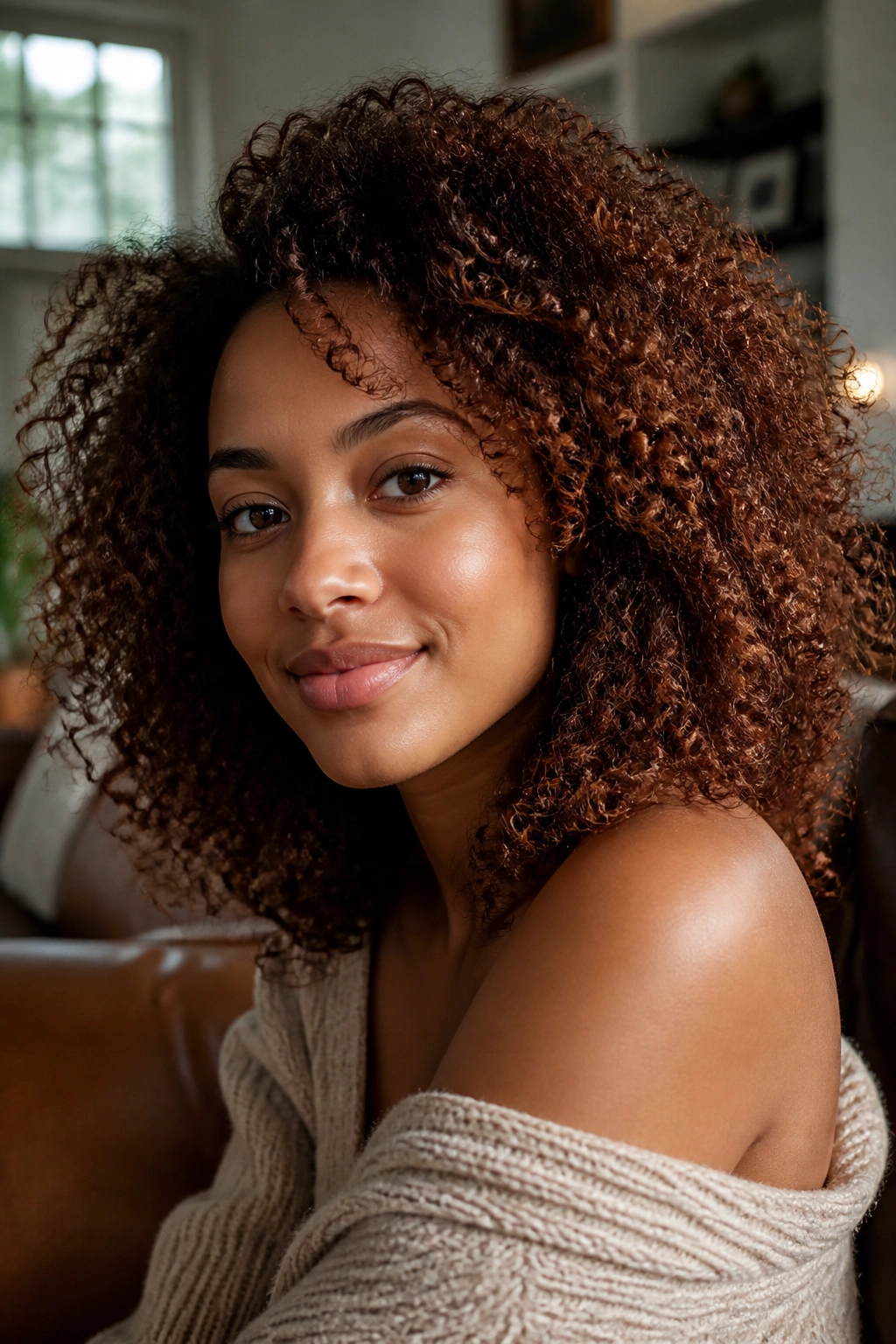
Chestnut brown is the shade people skip because they think brown means boring. That’s a mistake. Chestnut has warmth, depth, and enough red-gold in it to keep natural hair from looking muddy.
What Makes It Different
Chestnut sits between chocolate and auburn, so it gives you movement without making the hair look red. On a twist-out, the lighter brown pieces can sit on top of the darker base and create a very soft contrast. It’s subtle, but not bland.
Quick Details
- Works well as a full-head demi-permanent color
- Flatters 3b through 4c textures because the curl pattern adds natural variation
- Needs less upkeep than blonde or copper
- Looks especially good on layered cuts and tapered shapes
If you want something that looks polished at work and easy on the weekend, this is one of the safest bets in the whole list.
8. Auburn
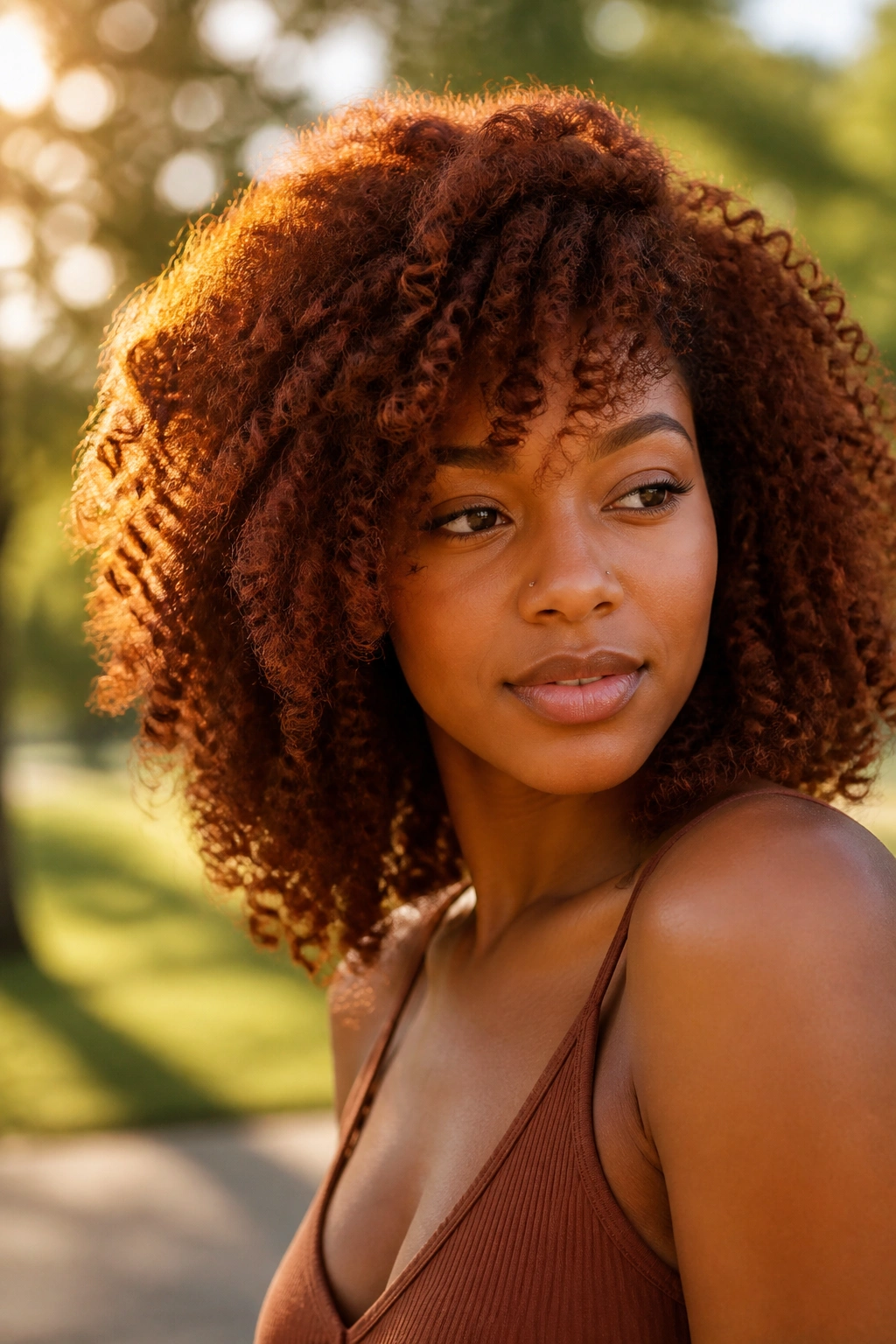
Auburn is the shade that makes people look twice without quite knowing why. It sits in that sweet spot between red and brown, which means it feels rich instead of loud.
The thing about auburn on natural hair is that curls make the color do more work. A loose coil can show the brown side in shadow and the red side in light, so the whole head looks layered even when the dye formula is simple. That’s why auburn often looks better on textured hair than on straight hair. The movement is built in.
If you like styles such as braid-outs, stretched curls, or a soft blowout, auburn gives those looks some extra warmth. I’d lean toward a deeper auburn for darker skin tones and a slightly brighter version if you want the red to come forward. Either way, it’s a shade with presence.
9. Rose Brown
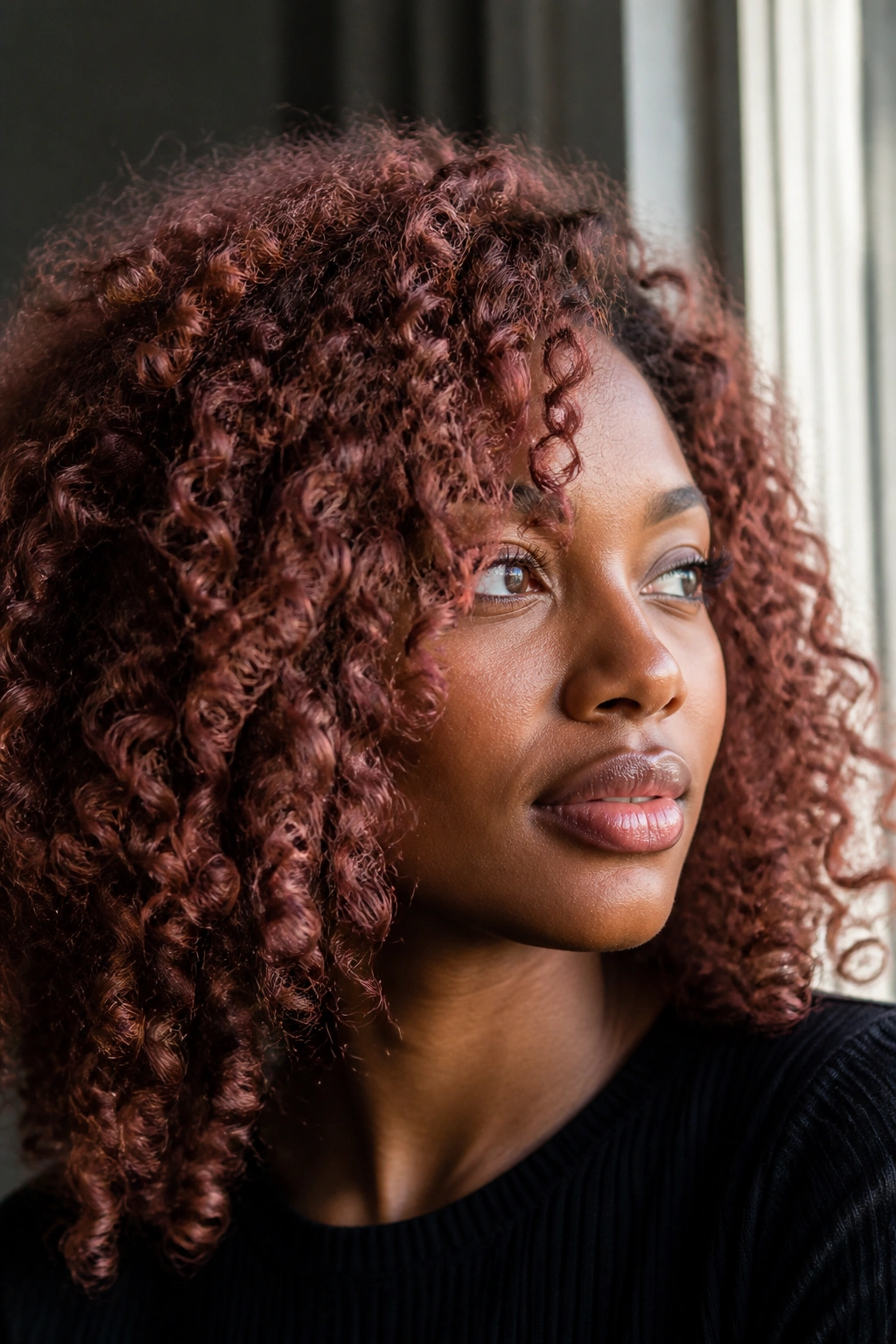
Can pink-brown work on natural hair without looking candy bright? Yes, if the pink stays muted. Rose brown is basically a warm brown base with a dusty blush cast, and that soft edge is what keeps it wearable.
How to Wear It
On a defined curl pattern, rose brown can look almost smoky until the light hits it from the side. That makes it a nice option if you want something different but not flashy. It also pairs well with braids, because the color shows up in the weave of the style instead of sitting flat on top.
What to Ask For
Ask for a brown base with rose or blush undertones, not a vivid pink. A semi-permanent color or tinted gloss is usually enough if your hair is already light enough. If it’s dark, a gentle lift first helps the rose tone show at all.
The shade feels fresh, but not juvenile. That balance is harder to find than people think.
10. Mushroom Brown
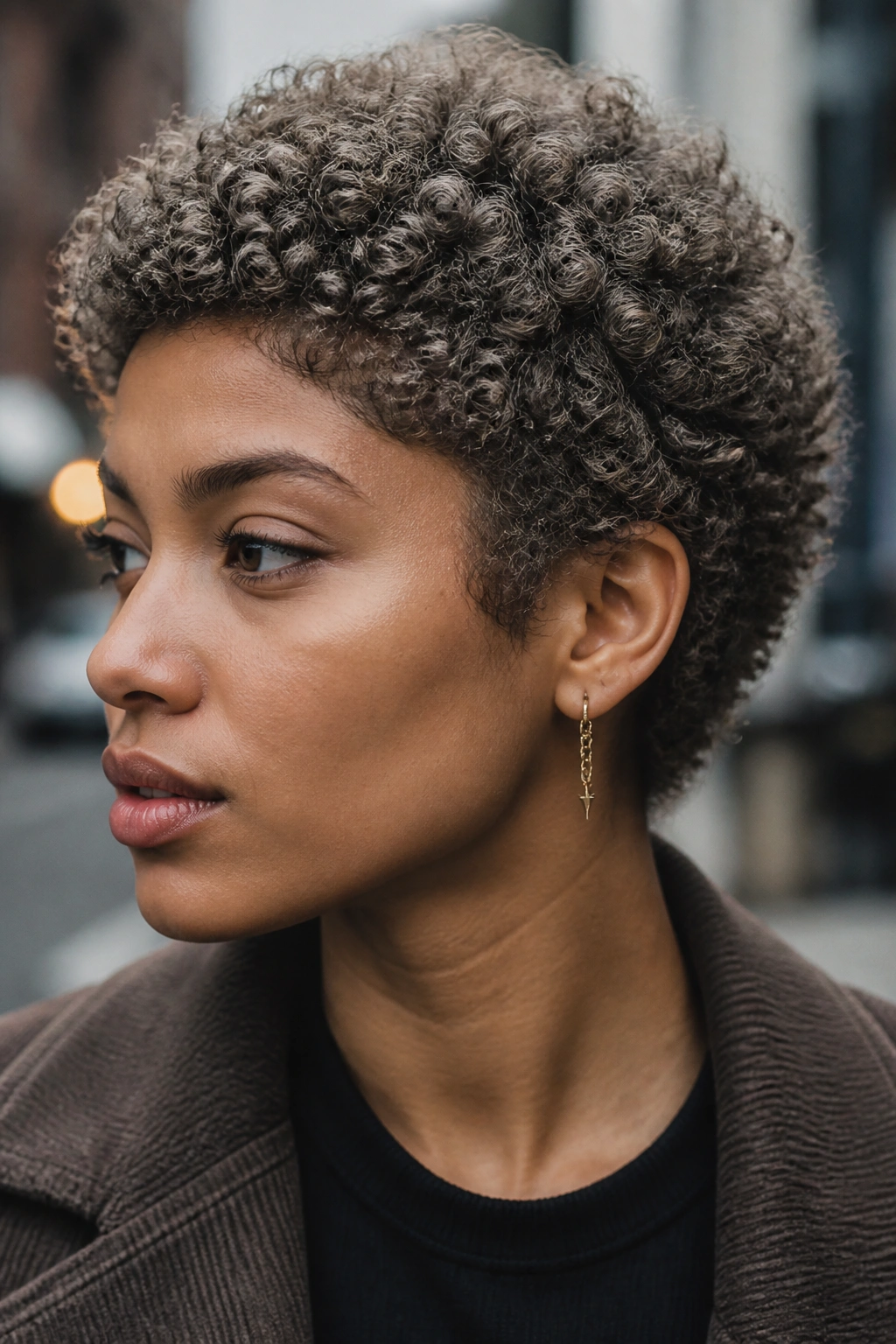
Mushroom brown is the cool, earthy cousin in the brown family. It has a soft taupe base, a little ash, and not much red or gold, which is what gives it that muted look.
On natural hair, mushroom brown works best when the color placement is controlled. If the hair is lifted unevenly, the shade can go patchy or look too warm in random spots. That’s why it tends to shine on professional color jobs with careful toning, especially when the goal is a smoky finish rather than a bright one.
- Best for people who want a cool-toned brown
- Looks clean on short natural cuts and curly bobs
- Needs toning upkeep if the hair pulls orange
- Matches silver jewelry and cooler makeup shades nicely
It’s a quiet shade, but not boring. Quiet can be the point.
11. Plum Violet
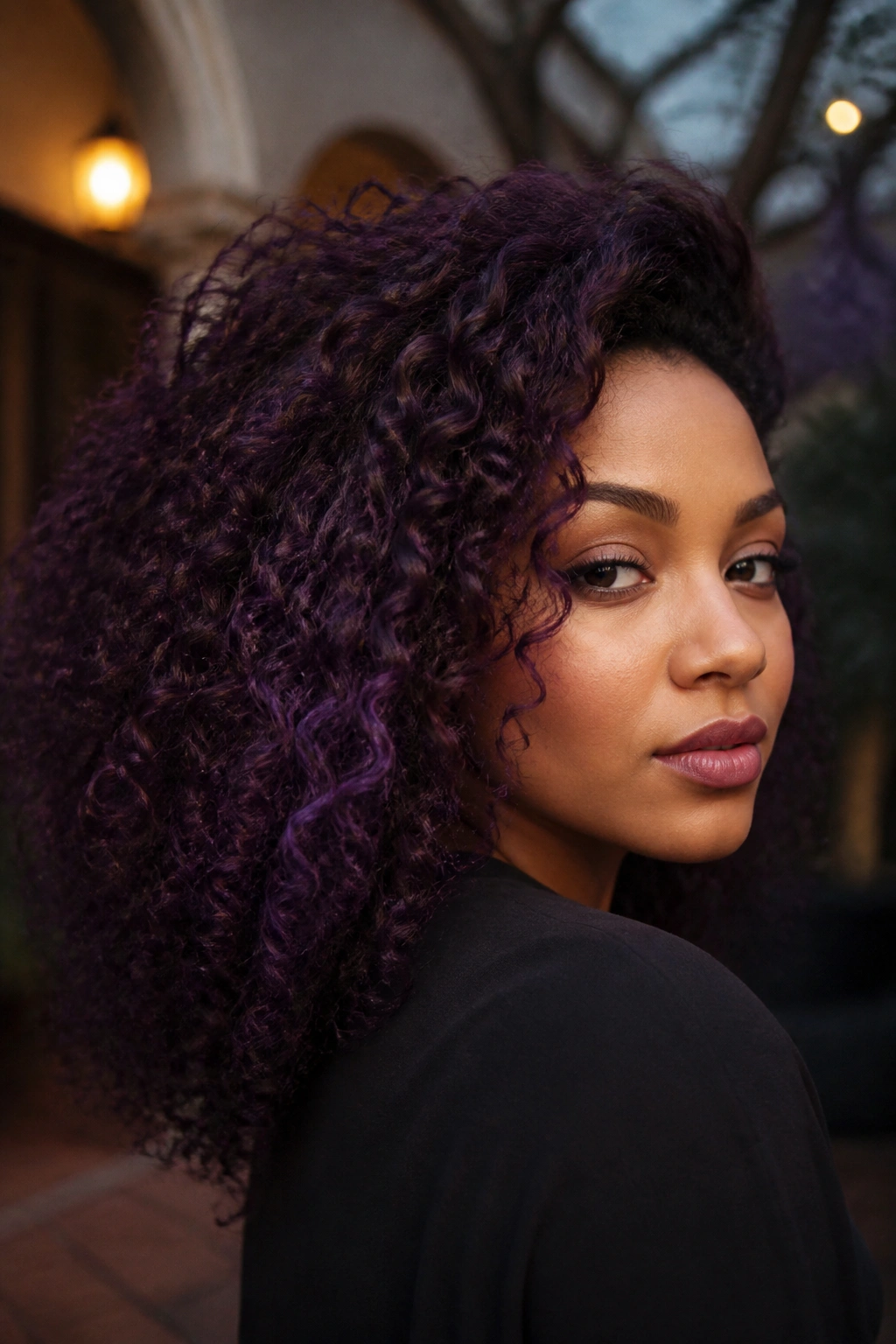
Plum violet is where dark hair gets a little theatrical without tipping into costume territory. The plum keeps it grounded, while the violet gives it an edge that shifts under different light.
I like this shade on natural hair because it hides and reveals itself in layers. A twist-out will show more violet on the outer curls, while the deeper plum stays tucked underneath. That kind of contrast is doing half the styling work for you.
If you want to keep it wearable, choose a plum that leans burgundy rather than neon purple. On darker hair, a tint or gloss can add the right amount of color without requiring a harsh lift. If your hair already has some lightness from old color, the violet tone will show even faster. Either way, it’s moody in a good way.
12. Mahogany
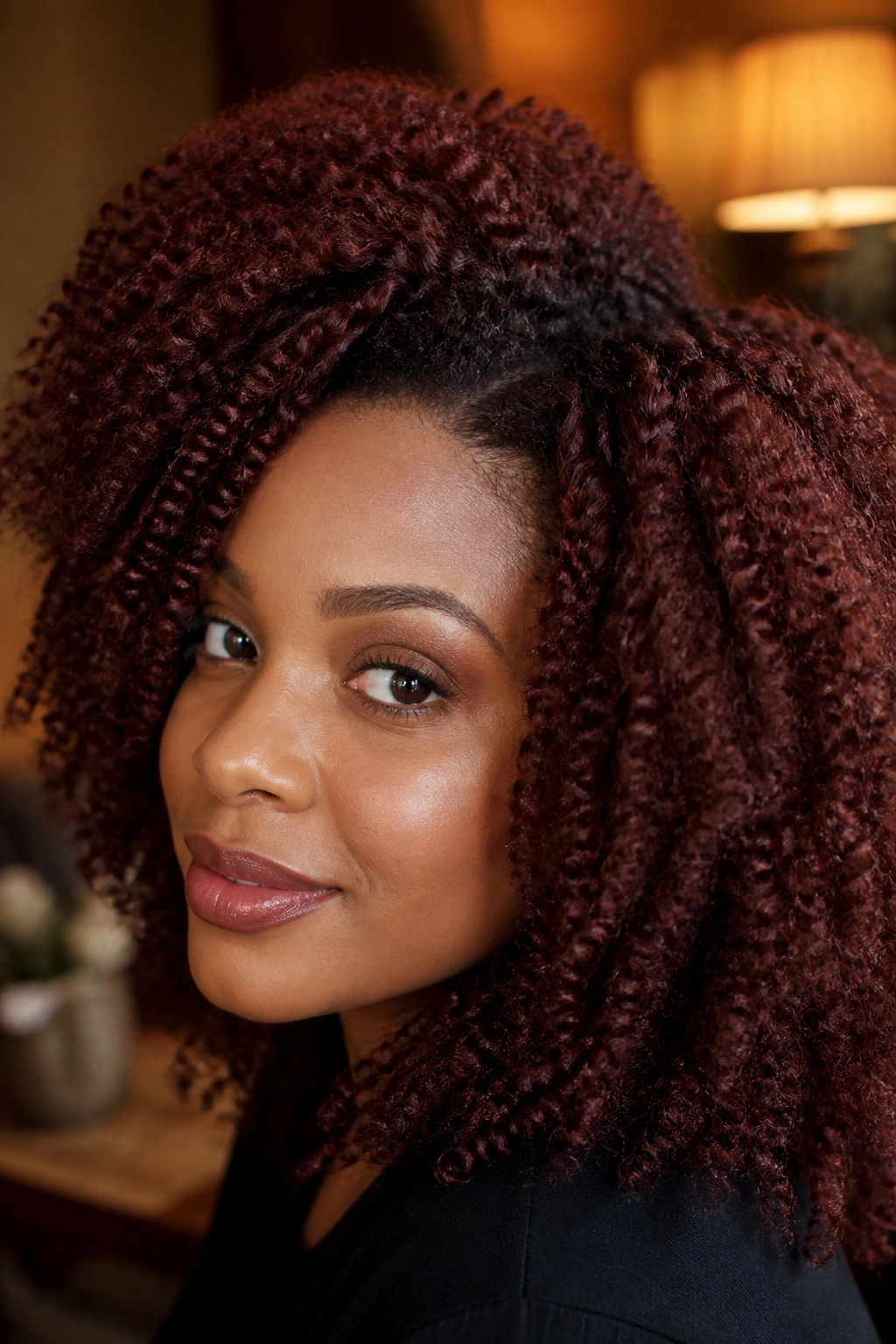
Mahogany is one of the richest color choices for natural hair because it has red-brown depth without drifting too orange. It’s the shade I’d point someone to if they like burgundy but want something a little more grounded.
Unlike Burgundy, This Is Warmer
Mahogany sits closer to brown than burgundy does. That means it can feel softer around the face and easier to wear day after day. It’s especially good on dense curls, where the color has room to move without looking flat.
Best For
- Natural hair with a dark base
- People who want red tones without a bright red finish
- Twist-outs, silk presses, and stretched puff styles
- Medium to deep complexions, though it can work across the board
If you want a red that doesn’t shout, this is the one. It has enough character to feel styled, but not so much that you’ll tire of it fast.
13. Ginger Spice
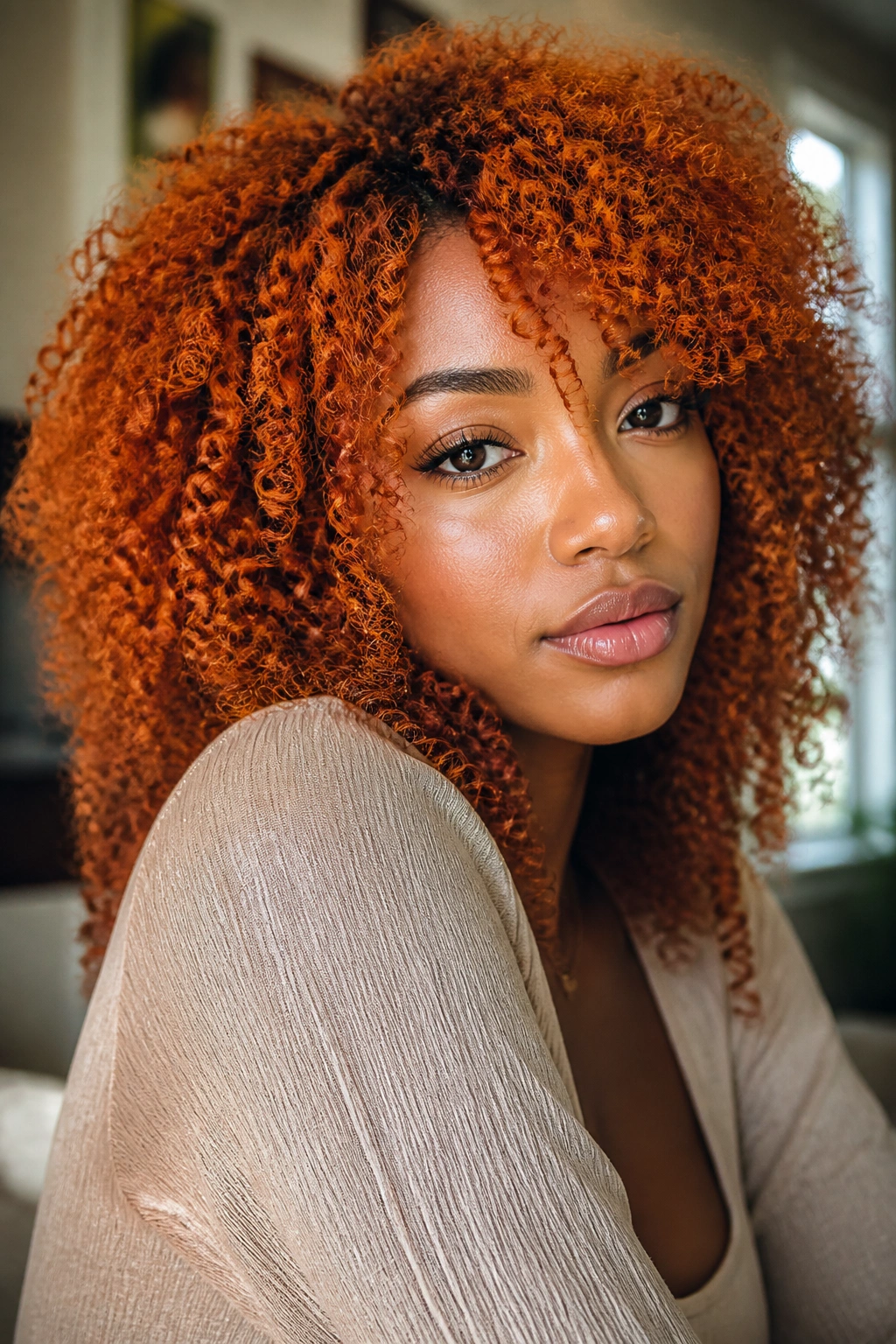
Ginger spice is not shy. That’s exactly why some people fall hard for it. It has a brighter orange-red feel than copper, and on natural hair it can make every curl look a little more alive.
Why It Pops
The warmth in ginger shows up fast against dark roots and deeper skin tones, so it tends to read bold even when the hair is only lifted a few levels. On a shrunken wash-and-go, the color can look almost flame-like in spots. On stretched hair, it spreads out and becomes more obvious from root to tip.
Quick Notes
- Usually needs more lightening than burgundy or mahogany
- Looks best when the curls are defined, not frizzy
- Can be refreshed with a warm gloss every 4 to 6 weeks
- Works beautifully with tapered cuts and curly shags
It’s a head-turner. There’s no pretending otherwise.
14. Blue-Black
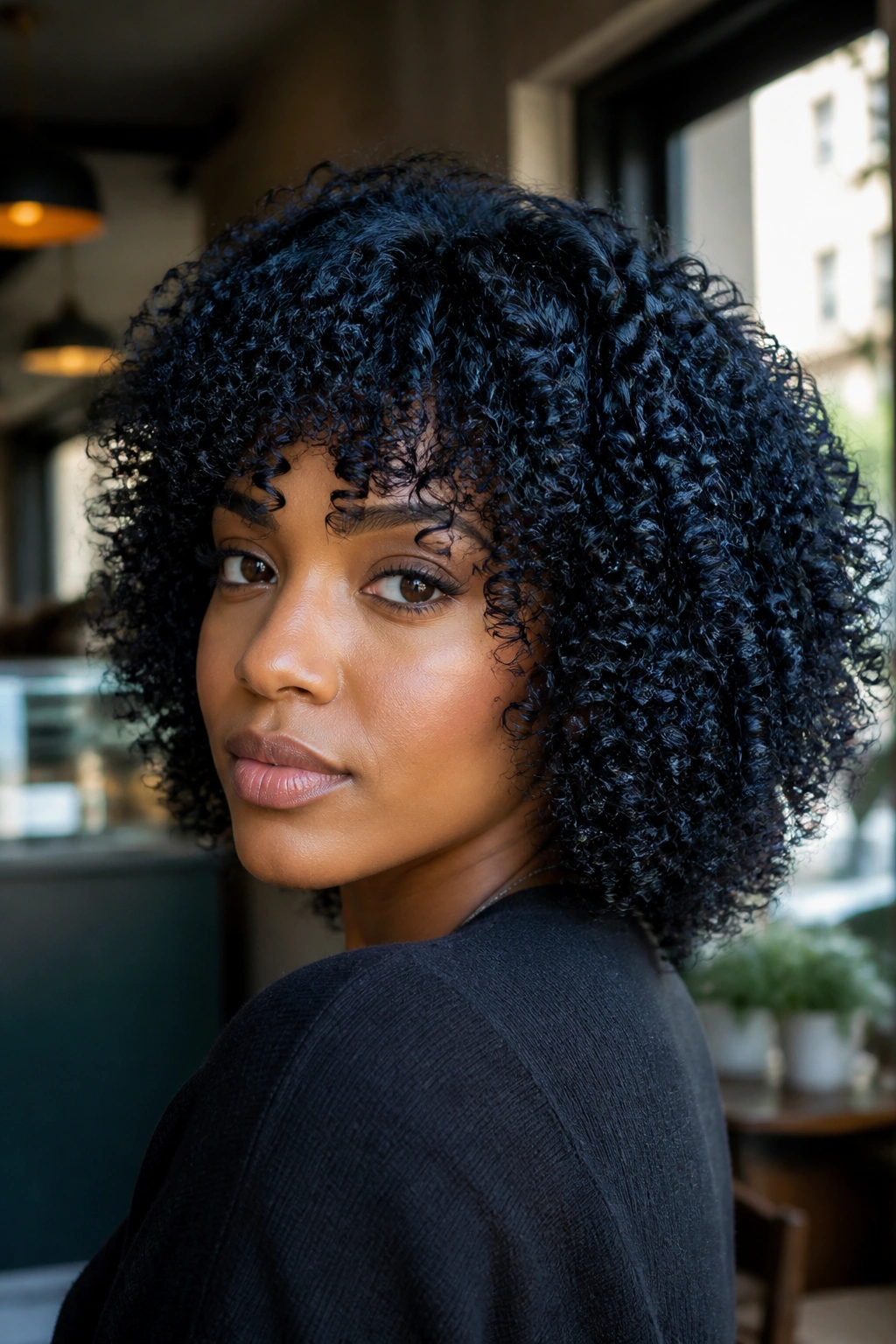
Blue-black is one of those shades that looks simple until light hits it. Then the blue cast shows up, and suddenly the hair has a cool shine that plain black never gives you.
A lot of people choose black when they want low maintenance, but blue-black gives a little more character. It’s still dark enough to feel classic, yet it has that icy edge that works well on textured hair with strong curl definition. The blue reflection helps the style look deliberate instead of flat.
If your skin tone leans cool or neutral, this shade can be especially flattering. It also pairs well with red lipstick, silver hoops, and clean edges around the hairline. One warning: if your hair is porous, blue tones can fade faster than black pigment. That’s manageable, but it’s worth knowing before you commit.
15. Golden Bronze
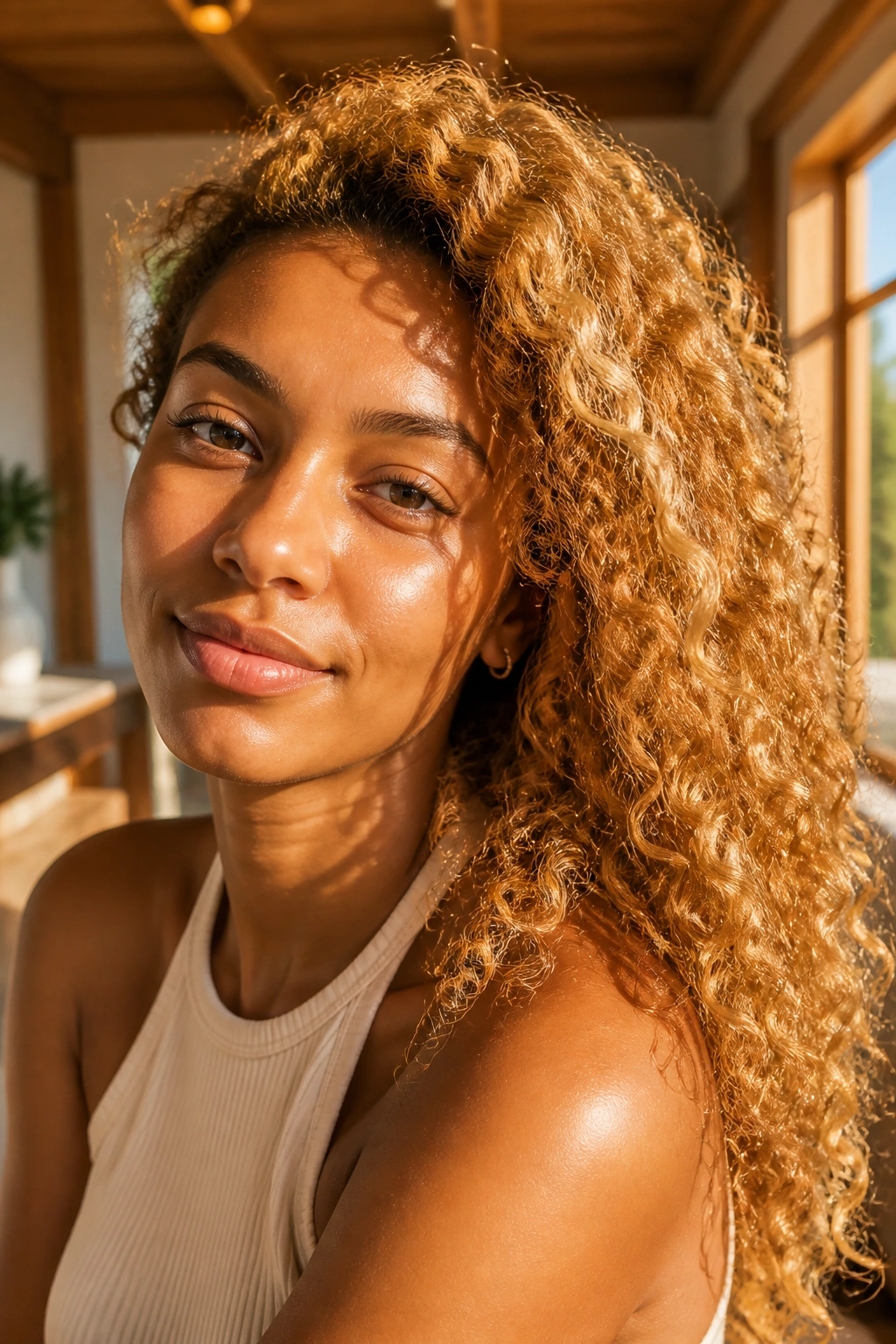
Golden bronze sits right between blonde and brown, which is why it flatters so many curl patterns. It has enough warmth to glow, but not so much lightness that it washes the hair out.
Why does it work so well on natural hair? Because bronze reflects light without needing a lot of contrast. The curls do the rest. A bronze balayage on a curly bob can look sunlit. On a puff, it reads richer and more dimensional. On locs, the metallic tone can show up in a very controlled way.
How to Use It
- Ask for a warm bronze glaze rather than a pale blonde
- Keep the darkest pieces near the roots for contrast
- Use it on layered cuts if you want the movement to show
- Good choice for anyone who wants warmth without orange
It’s one of those shades that looks polished without trying too hard.
16. Face-Framing Money Piece
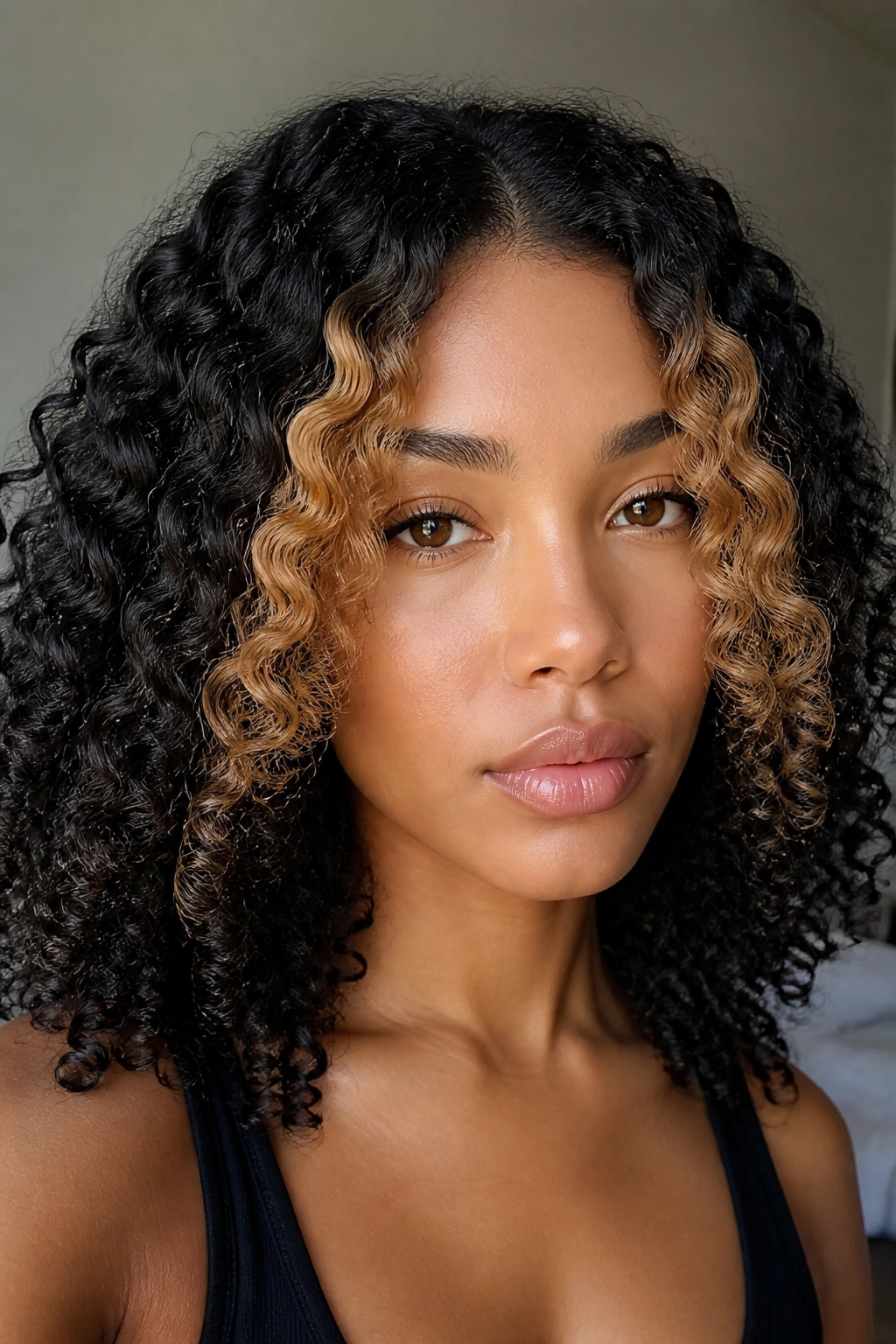
A money piece is the quickest way to change the mood of natural hair without coloring the whole head. Two face-framing sections, usually about 1 to 1.5 inches wide, can shift the whole look.
The trick is placement. If the lighter strands sit too far back, they get lost in the curls. Too close together, and they can look stripey. Around the hairline and temple area is where they do the most work, especially on a side part or a high puff. I like this option for anyone who wants a color change but not a full maintenance schedule.
What to Ask For
- Lighter face-framing pieces that are 2 levels brighter than the base
- A soft blend at the root, not a hard line
- A gloss over the rest of the hair so the contrast feels balanced
- Extra hydration on the front pieces, since they often take the most heat and sun
It’s a small change with a big payoff. Sometimes that’s the smartest move.
17. Toffee Ribbons
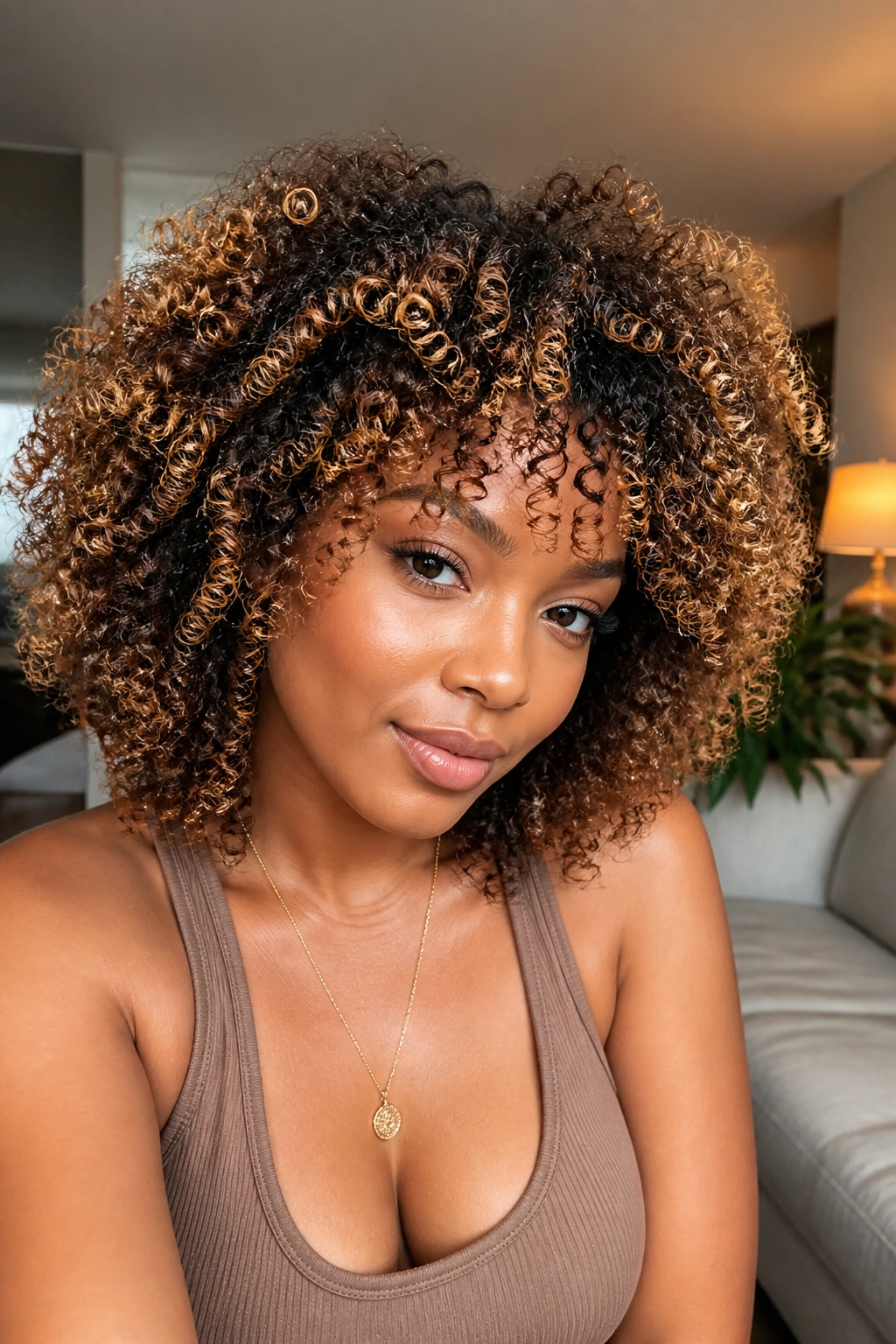
Toffee ribbons are the brown-gold streaks that make curls look fuller without making them look dyed in a harsh way. They sit between caramel and honey, which is why I reach for them when someone wants warmth but not a full blonde shift.
The nice thing about toffee is that it reads soft on thick coils. Instead of fighting the texture, it settles into the curl pattern and turns each bend of hair into a little highlight. On a layered cut, that matters even more because the lighter pieces can show through from underneath.
I also like this shade for people who wear their hair in braids or twist-outs a lot. The ribbons can be concentrated on the top layer and around the perimeter, so the color shows without taking over the whole head. It feels lived-in rather than overly done. That’s the sweet spot.
18. Espresso Brown
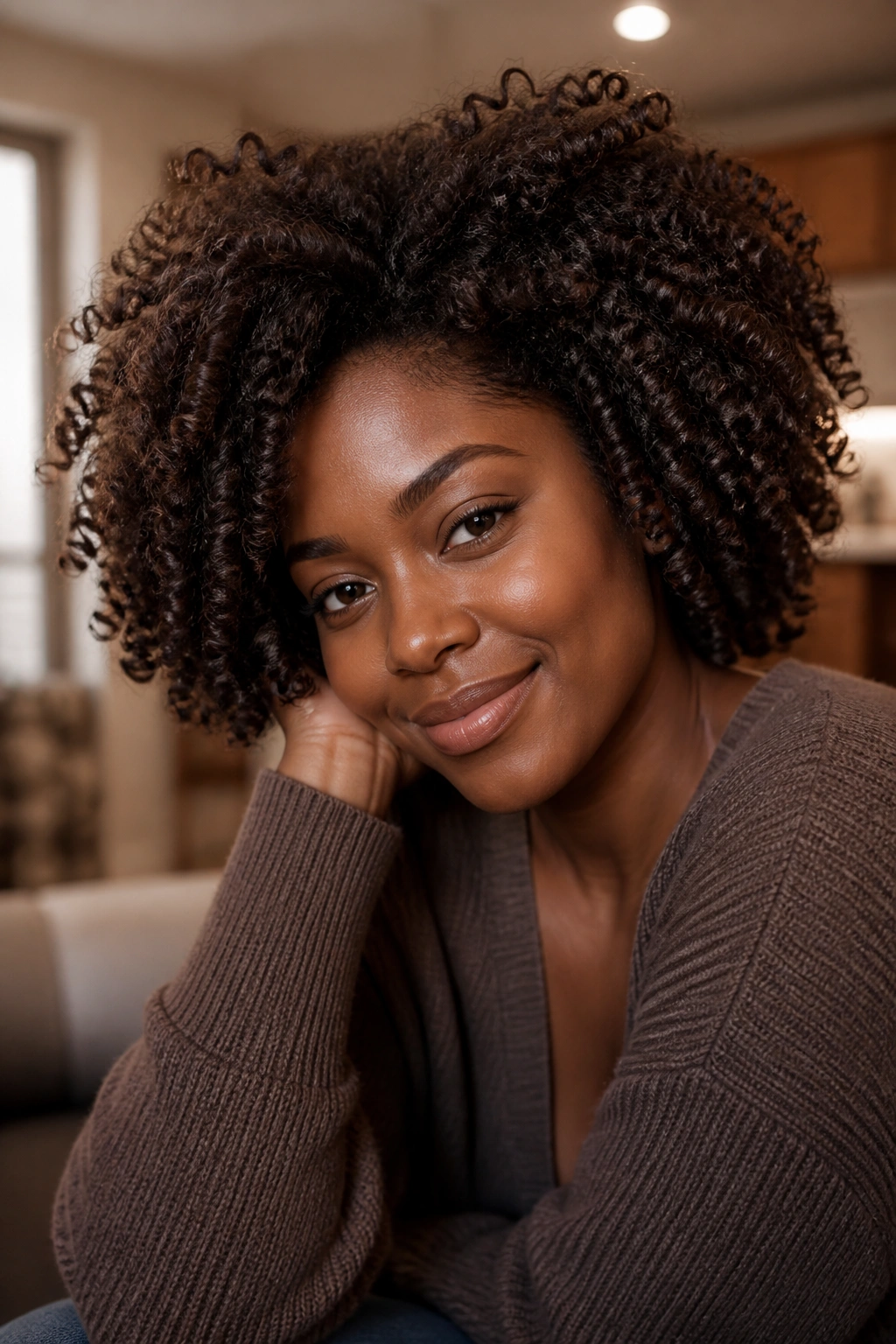
Espresso brown is the shade for anyone who wants dark hair with a little more richness than plain black. It has depth, shine, and a chocolate edge that makes natural curls look dense.
Why It Beats Flat Black for Some People
Unlike jet black, espresso brown gives you some movement in indoor light. It catches the eye without screaming for attention. If your hair is already dark and you don’t want to lighten it, this is a very smart way to add polish without changing the overall feel of your color.
Best Uses
- Great for natural hair that has faded ends
- Good choice for long, dense curls that need shape
- Works well with a gloss or demi-permanent formula
- Can make braid-outs look smoother and more even
If black feels too harsh and brown feels too ordinary, espresso usually lands in the middle. Clean. Dark. Easy.
19. Auburn Ombre
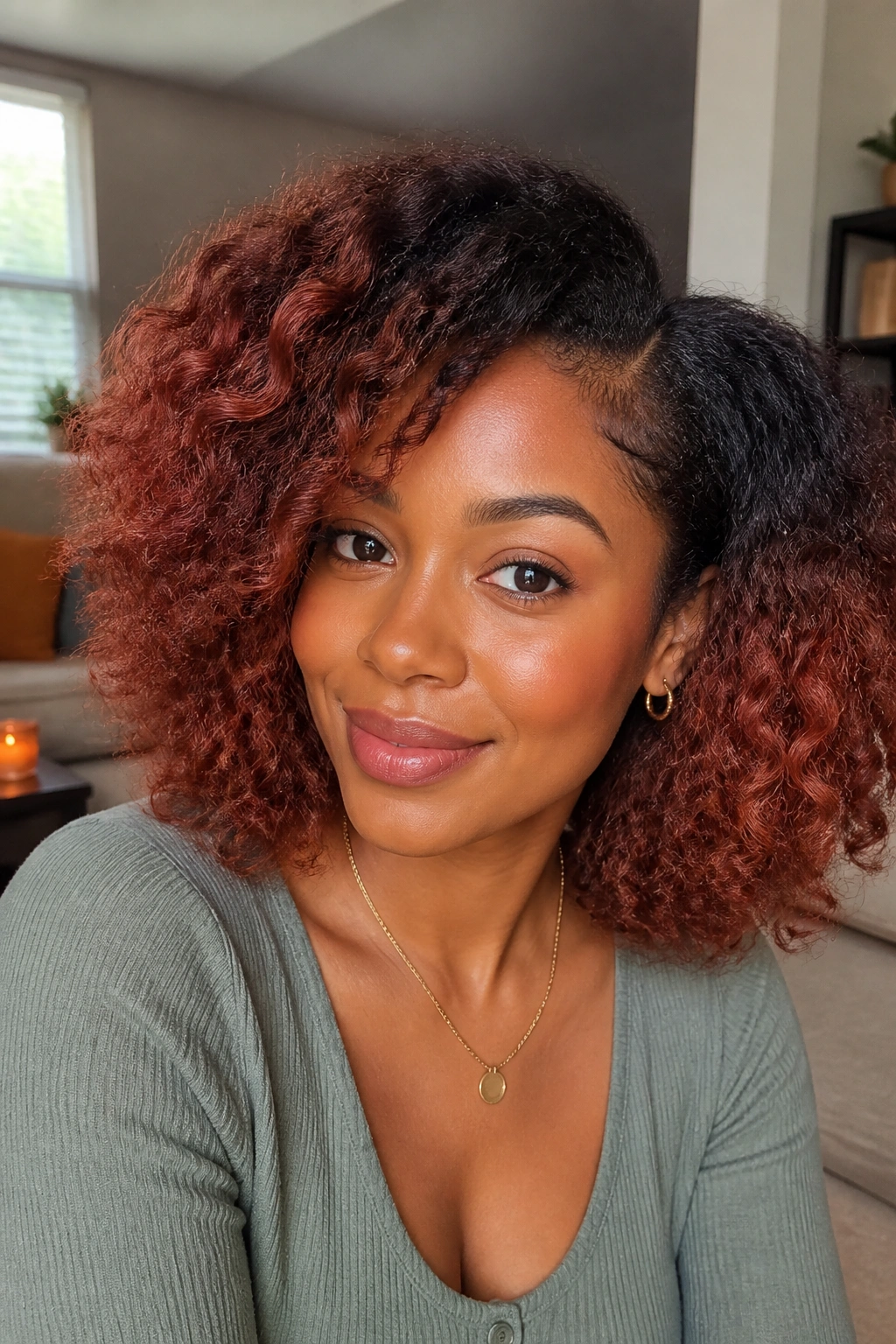
Auburn ombre gives you dark roots and red-brown ends, which is a useful setup if you want something bold but not high-maintenance at the scalp. The fade does the work.
Where to Start the Fade
On shoulder-length natural hair, I’d usually keep the transition around 2 inches below the roots. On longer hair, the shift can start lower so the color has room to move. The goal is not a hard line. It should melt, not stripe.
Quick Facts
- Great for people who wear curls loose and stretched
- Easier to maintain than full red from root to tip
- Looks good with layered cuts because the lighter ends separate
- Can be refreshed with a color-depositing mask on the lighter sections
The ombre effect helps shrinkage too. Even when the hair pulls up, the color still has a visible story.
20. Violet Tips
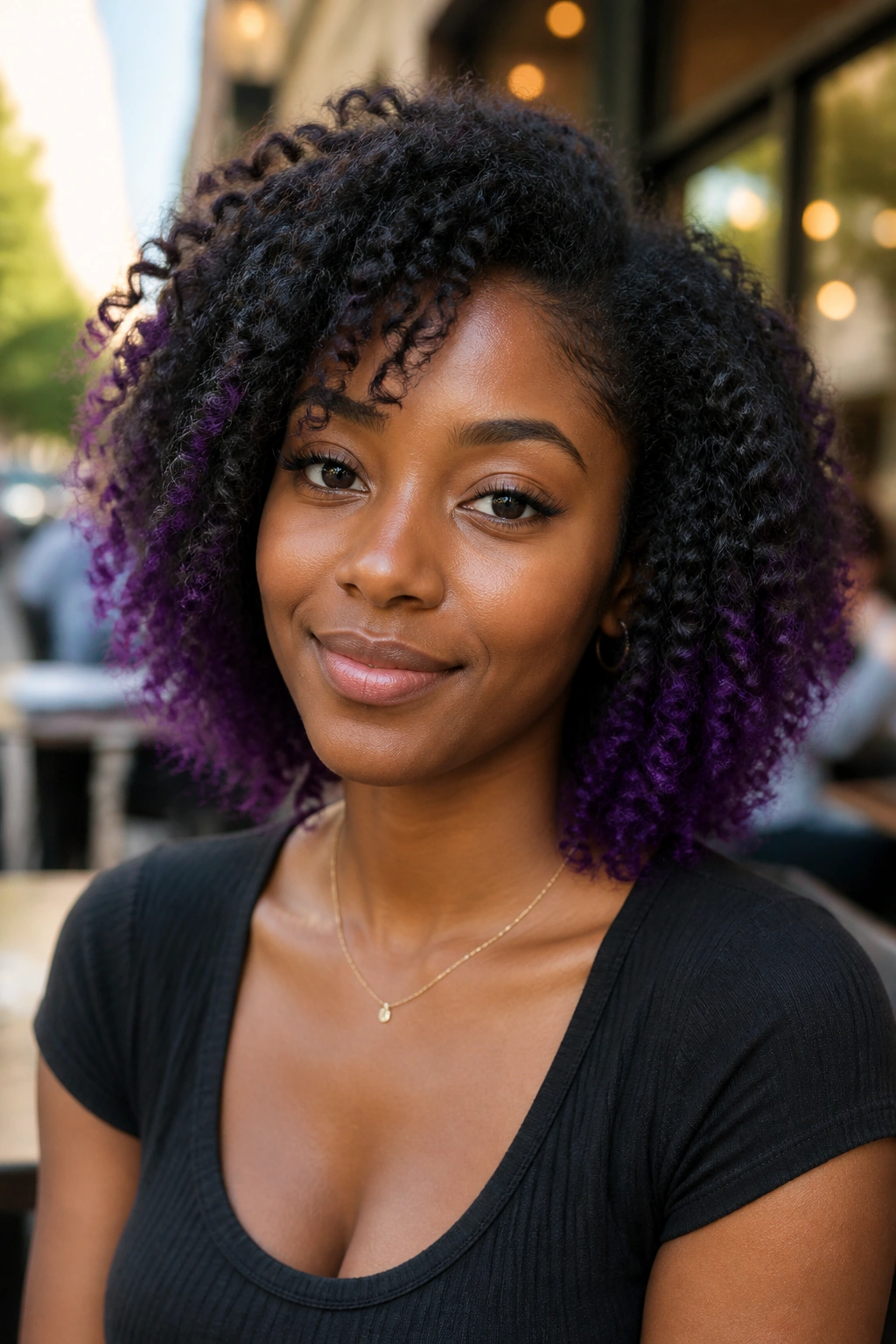
Violet tips are a smart choice when you want color but don’t want to repaint the whole canvas. On natural hair, especially if it’s in braids, twists, or locs, the ends do enough talking on their own.
The purple family is useful because it can feel playful or moody depending on how deep you go. A bright violet tip gives energy. A darker violet reads richer and more grown. If your hair is darker, the ends may need pre-lightening to show clearly; if the hair is already lightened, a direct dye can be enough.
What I like here is the flexibility. You can keep the roots natural, leave the body of the hair alone, and still get a visible color shift every time the hair moves. That makes it one of the easier bold ideas to live with.
21. Smoky Ash Brown
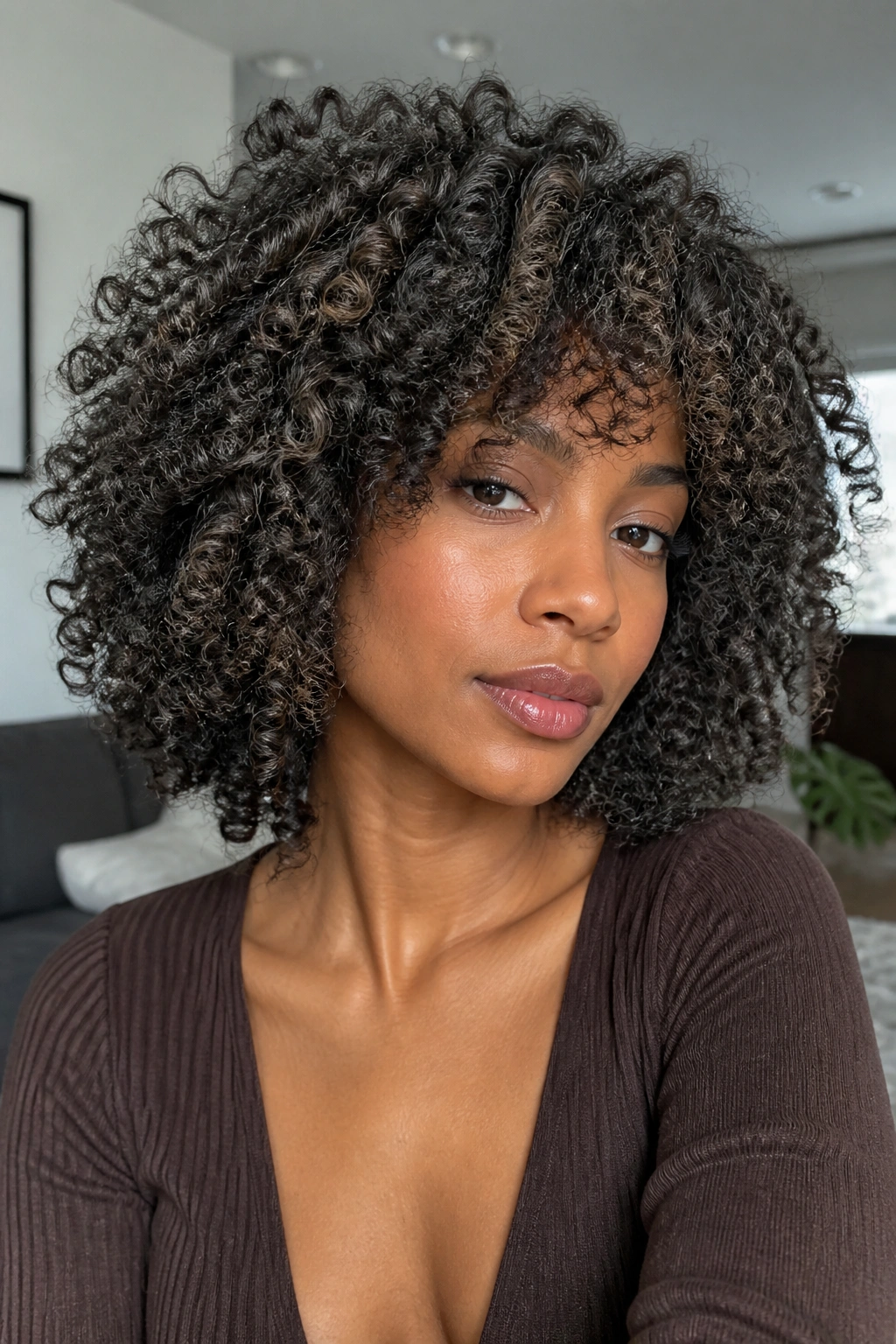
Smoky ash brown is for people who like cool tones and hate brass. It’s a brown with a grayish cast, which makes it feel quiet and sleek rather than warm or sunny.
Can this work on natural hair? Yes, but the starting base matters a lot. If the hair pulls orange, ash brown can turn muddy unless the undertone is controlled. That’s why it often looks best after a gentle lift and a proper toner, especially on curls that hold color unevenly.
How to Wear It
A soft wash-and-go shows the cool tone well because the curls create tiny shifts of light. A stretched style gives a smoother, more even look. If you want ash brown without the flatness, ask for a dimensional version with a few darker pieces left in place. That keeps the color from looking like one solid helmet. Nobody wants that.
22. Red Velvet
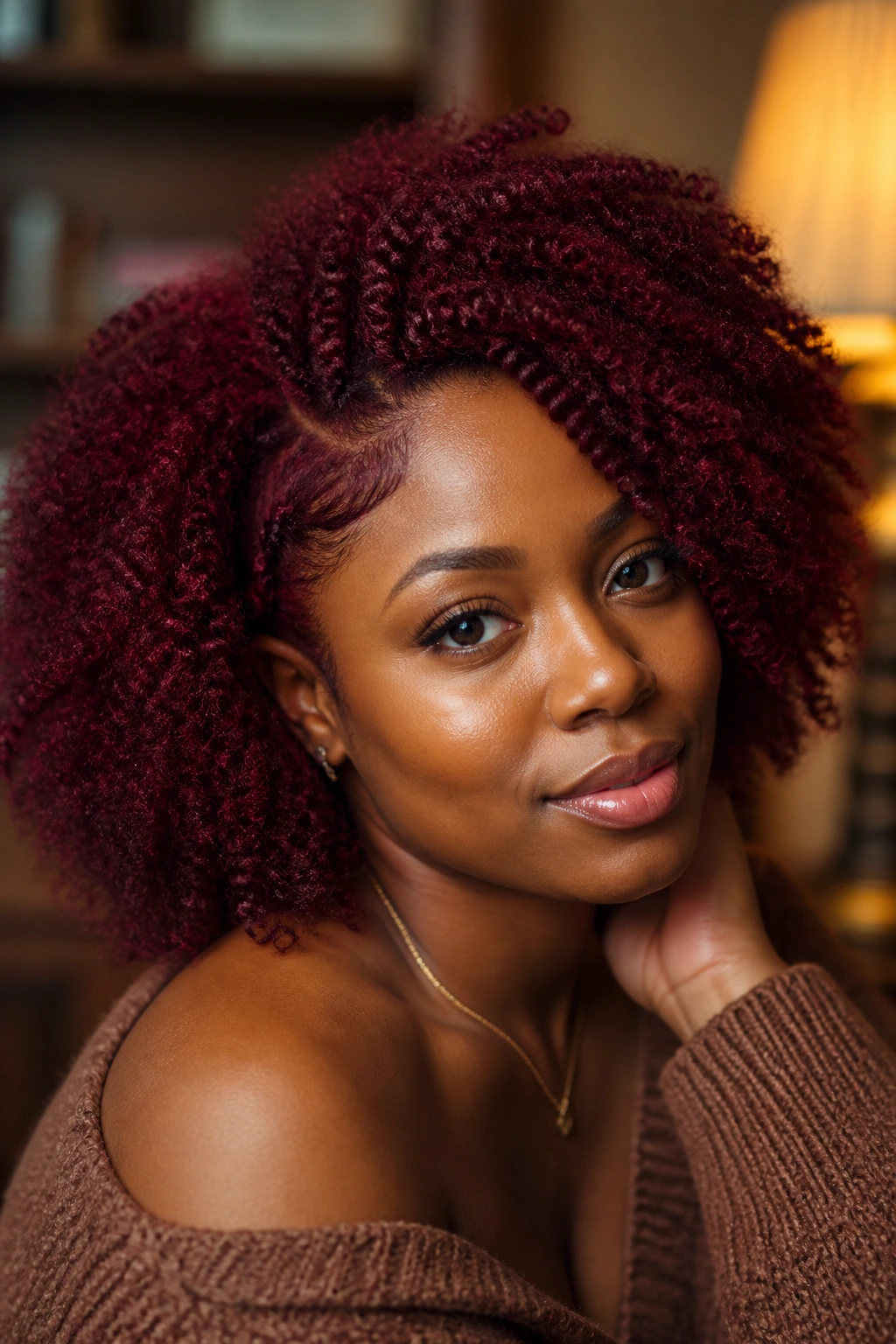
Red velvet is deeper than copper and richer than auburn, which makes it a good middle ground for someone who wants red with a little luxury in the tone.
It has that dark dessert feeling to it—soft, deep, almost brown until the light opens it up. On natural hair, that shift is what makes it work. Curls naturally reveal some parts and hide others, so the color never looks flat for long. If you wear a big afro, red velvet can look plush. If you wear a defined twist-out, it feels sharper and more intentional.
- Best on dark bases with a small lift
- Flattens less than bright red
- Works on short cuts, long curls, and locs
- Can be kept rich with a red-brown gloss every few weeks
It’s bold, but not loud. That’s the whole appeal.
23. Turquoise Peekaboo
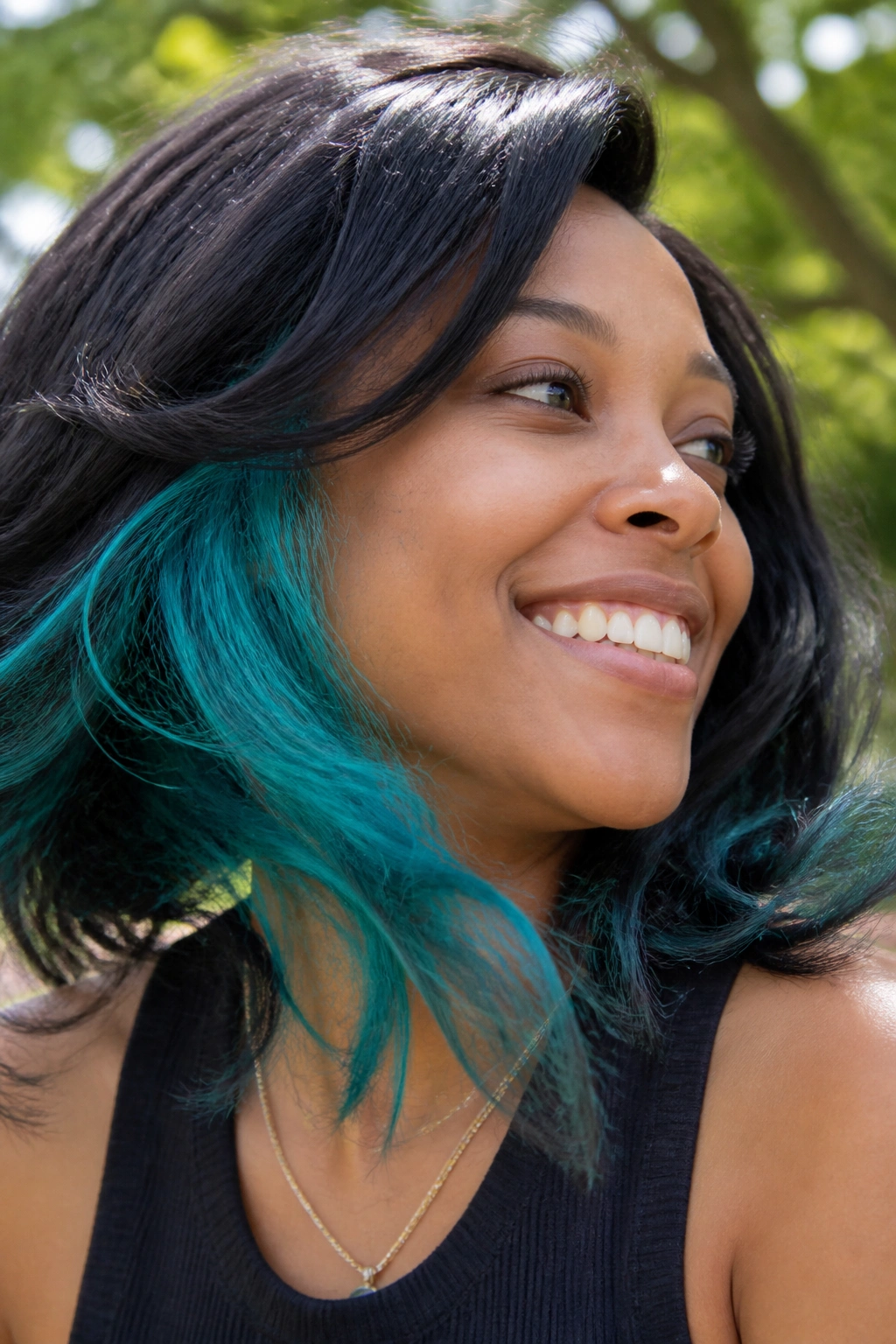
Turquoise peekaboo color is for the person who likes a hidden surprise. The top layer stays natural or dark, while a turquoise panel sits underneath and flashes when the hair moves, lifts, or gets pinned up.
I like this idea on natural hair because it gives you control. You can wear it loosely, and the color stays tucked away. Pull the hair into a bun, puff, or half-up style, and the turquoise shows off. On braids, it can be worked into a few sections instead of the whole head, which keeps the look playful instead of overwhelming.
The turquoise itself can range from bright pool water to a deeper teal. If your hair is very dark, the brighter version needs more lift. On lighter or previously colored hair, the shade takes faster. Either way, this is a fun one if you want color that feels personal rather than obvious.
24. Bronde Coils
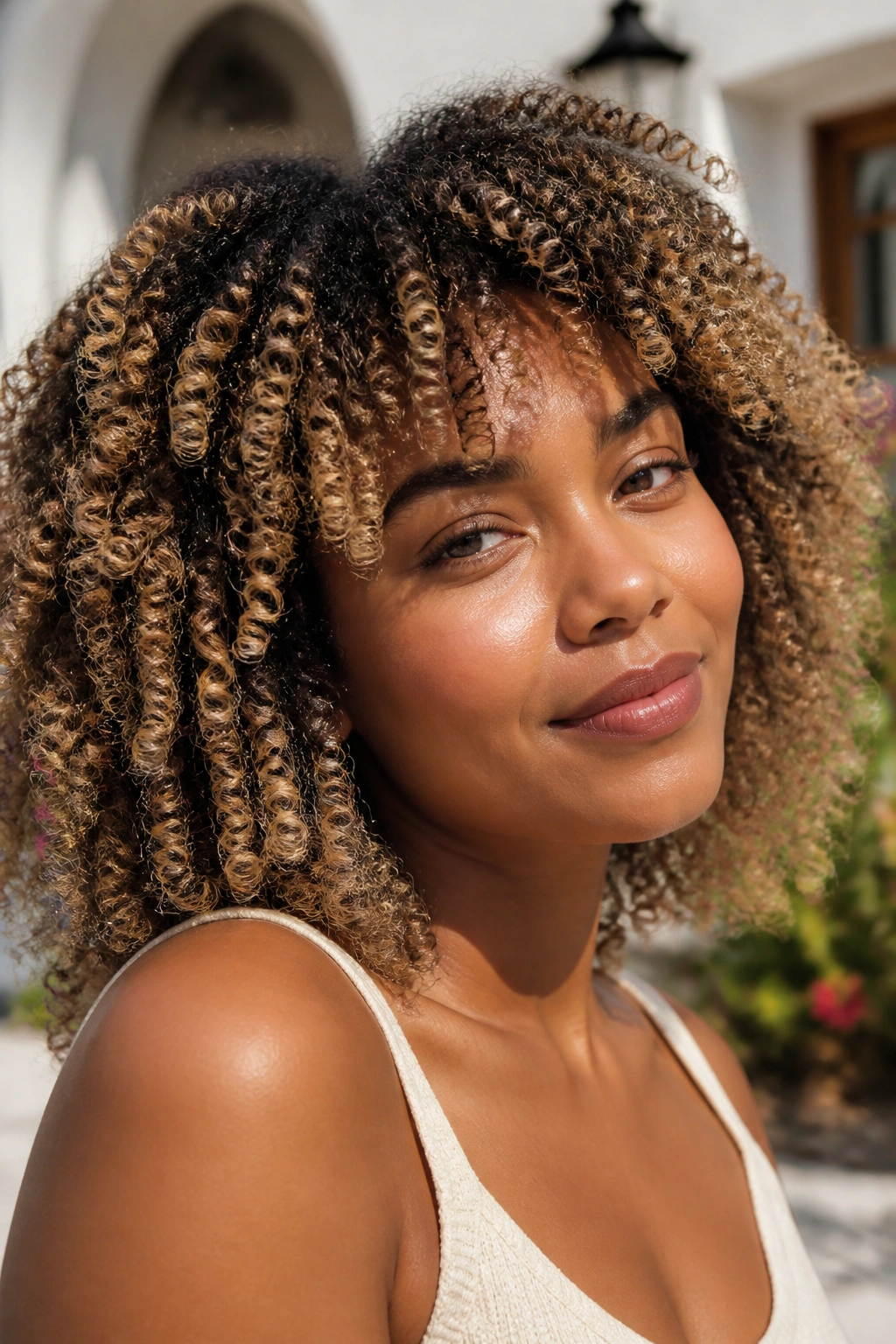
Bronde is brown-blonde territory, and on natural hair it can be a very smart compromise. It gives you brightness without committing to full blonde, which matters when you want movement more than drama.
Unlike Full Blonde, This Stays Softer
Bronde coils usually keep a darker root and blend into beige-brown mid-lengths and lighter ends. That makes the grow-out easier to live with, and it also suits curl patterns that need contrast to show texture. On some heads, bronde can look almost sandy. On others, it lands closer to honeyed brown.
Best For
- People who want lightness but not a hard blonde look
- Layered curls and rounded shapes
- Balayage or color-melt placement
- Medium maintenance, not low maintenance, let’s be honest
If you’ve been curious about blonde but not ready for the full jump, this is the cleaner path.
25. Chocolate Cherry
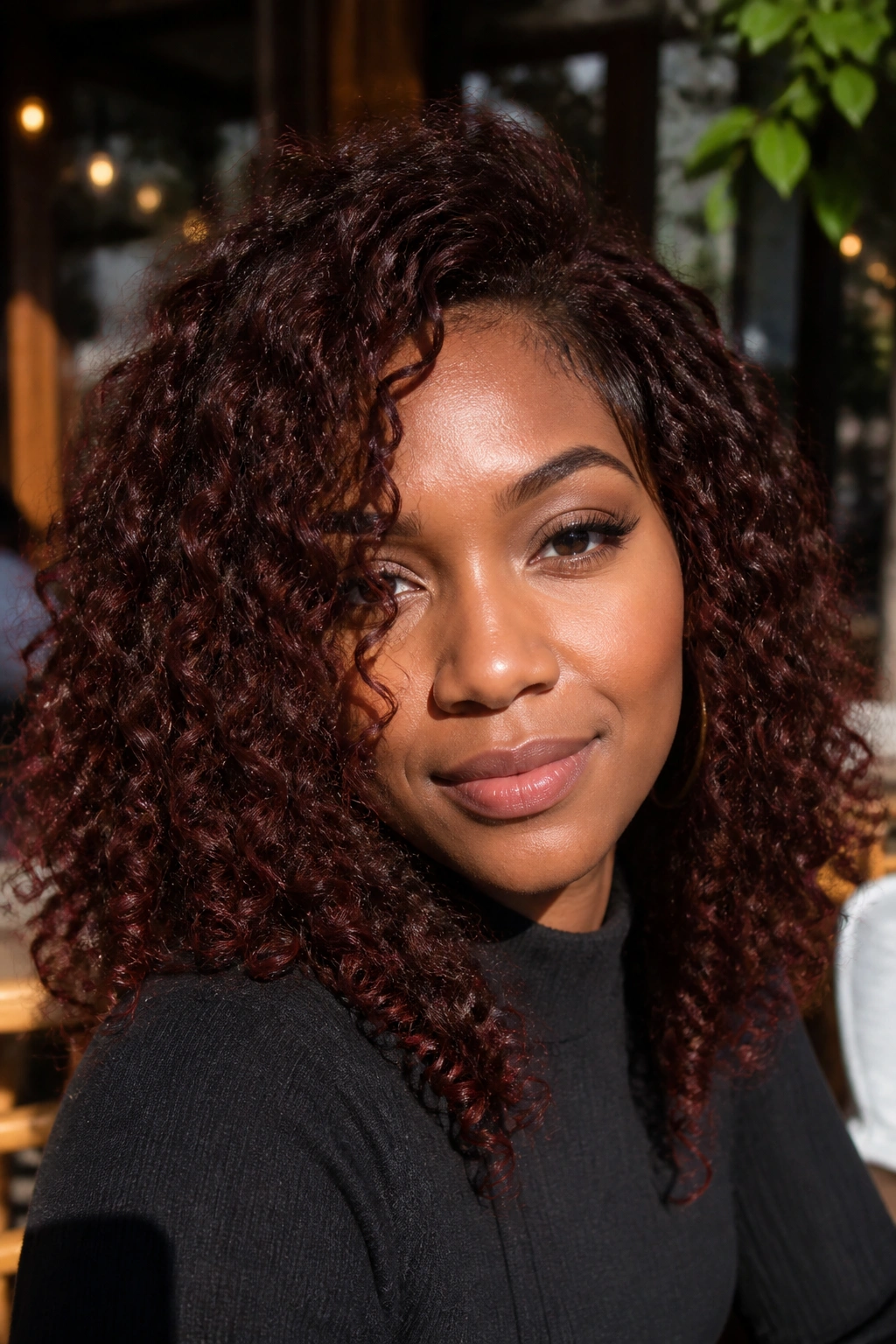
Chocolate cherry is one of the more wearable dark red ideas because the brown base keeps the red from reading too bright. It feels rich, dark, and a little bit sweet without getting sugary.
Why It Flatters Dark Hair
The cherry undertone peeks through the chocolate base when the light hits it. That means the color can stay subtle most of the time and then show off in sunlight or under warm indoor lighting. On natural curls, that shift is especially nice because the texture creates little pockets where the red can hide and appear.
Quick Notes
- Good choice if you want red without copper
- Works well on medium to deep brown bases
- Looks polished on braid-outs and puff styles
- Can be refreshed with a red-brown gloss before the ends fade
It’s one of those shades that ages well over a grow-out period, which is worth a lot.
26. Peach Rose Gold
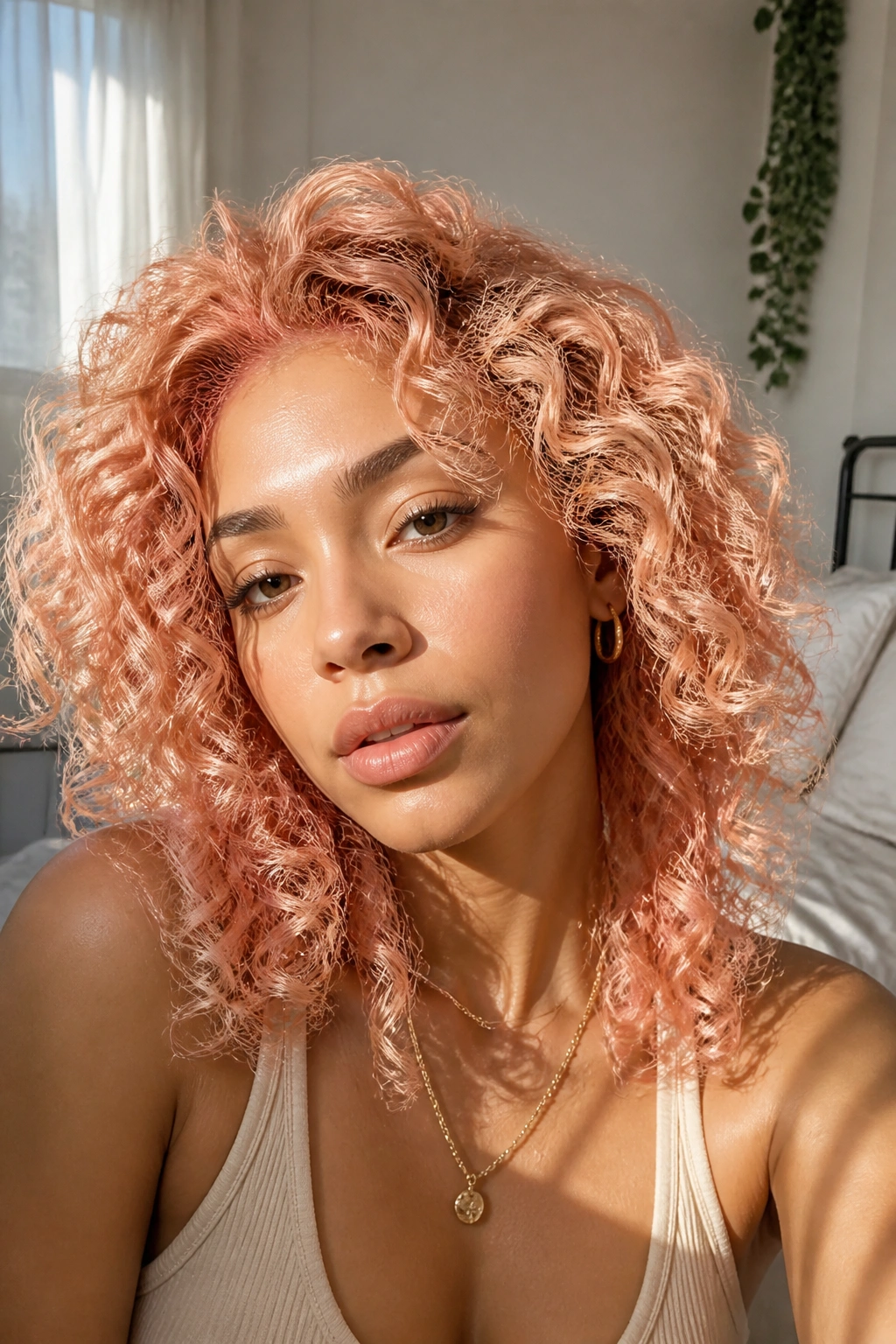
Peach rose gold is the softer, fruitier cousin of rose brown. It needs enough lift to show, which means it usually works best on pre-lightened natural hair, but the result can be lovely if you want something pastel without going full cotton-candy.
The peach keeps the shade warm. The rose keeps it from going orange. Together, they make a color that sits somewhere between playful and polished. On curls, the tone can look different from strand to strand, so it never feels like one flat block of color. That’s a good thing here.
If you’re trying this, keep the finish soft and creamy rather than neon. A color-depositing conditioner or a tinted gloss can help maintain the tone between salon visits. The downside is fade, and yes, pastel shades fade fast. That’s the trade-off. The upside is that they look unreal on defined curls while they last.
27. Mink Brown
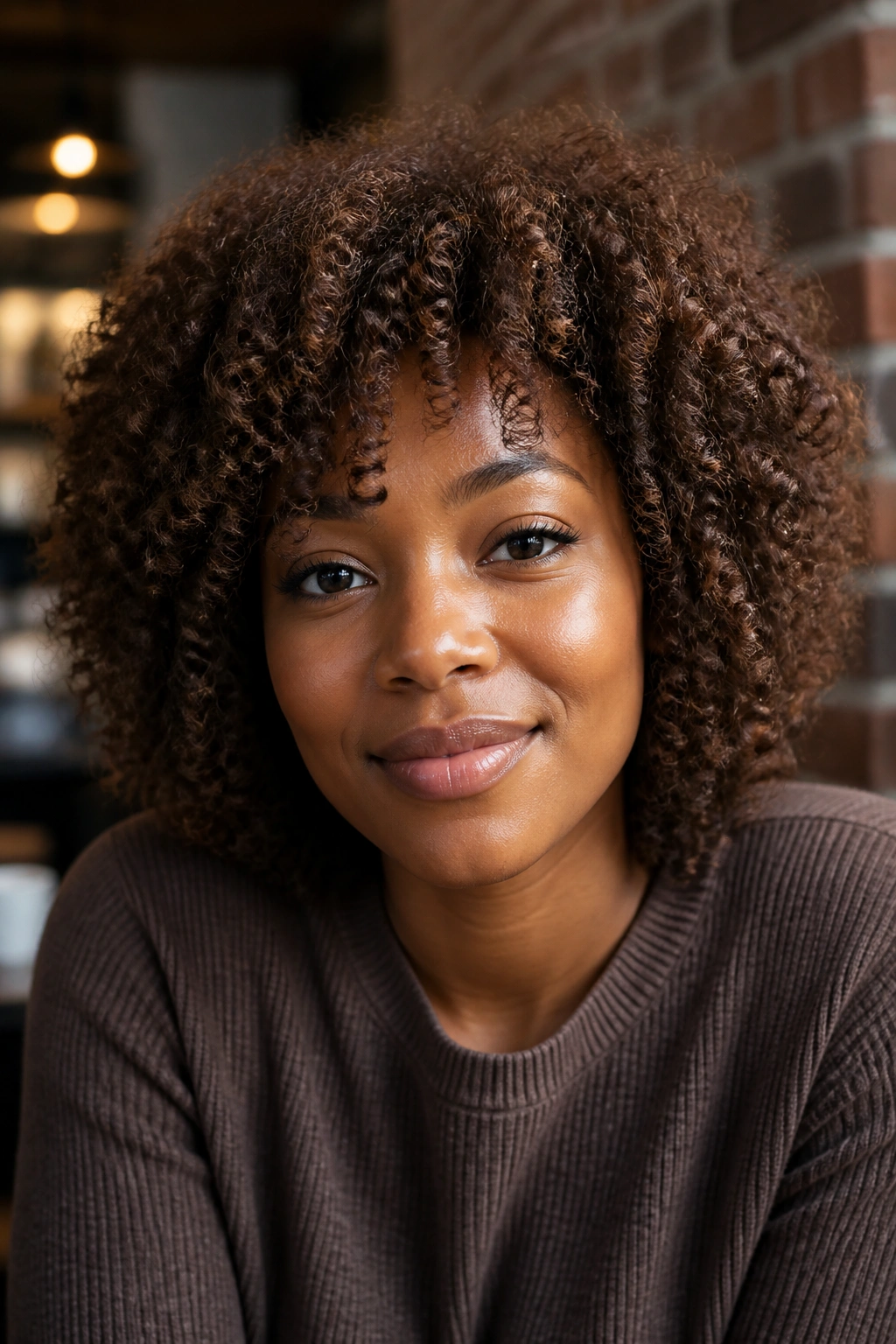
Mink brown is a neutral brown that avoids both the red family and the gold family. It’s understated, but not dull, and on natural hair that neutrality can be a relief.
How It Differs From Chestnut and Espresso
Chestnut has warmth. Espresso has darkness. Mink sits in the middle and keeps the tone clean. That makes it a strong choice if you want brown hair that won’t fight your makeup, your clothes, or your skin undertone. It’s the kind of shade that disappears into a professional setting and still looks rich on a weekend.
If you have a layered cut or a big curly shape, mink brown keeps the focus on the silhouette. The color supports the style instead of shouting over it. Ask for a neutral brown gloss or a soft demi-permanent formula if you want that balanced finish. It’s calm in a way that still feels intentional.
28. Emerald Ends
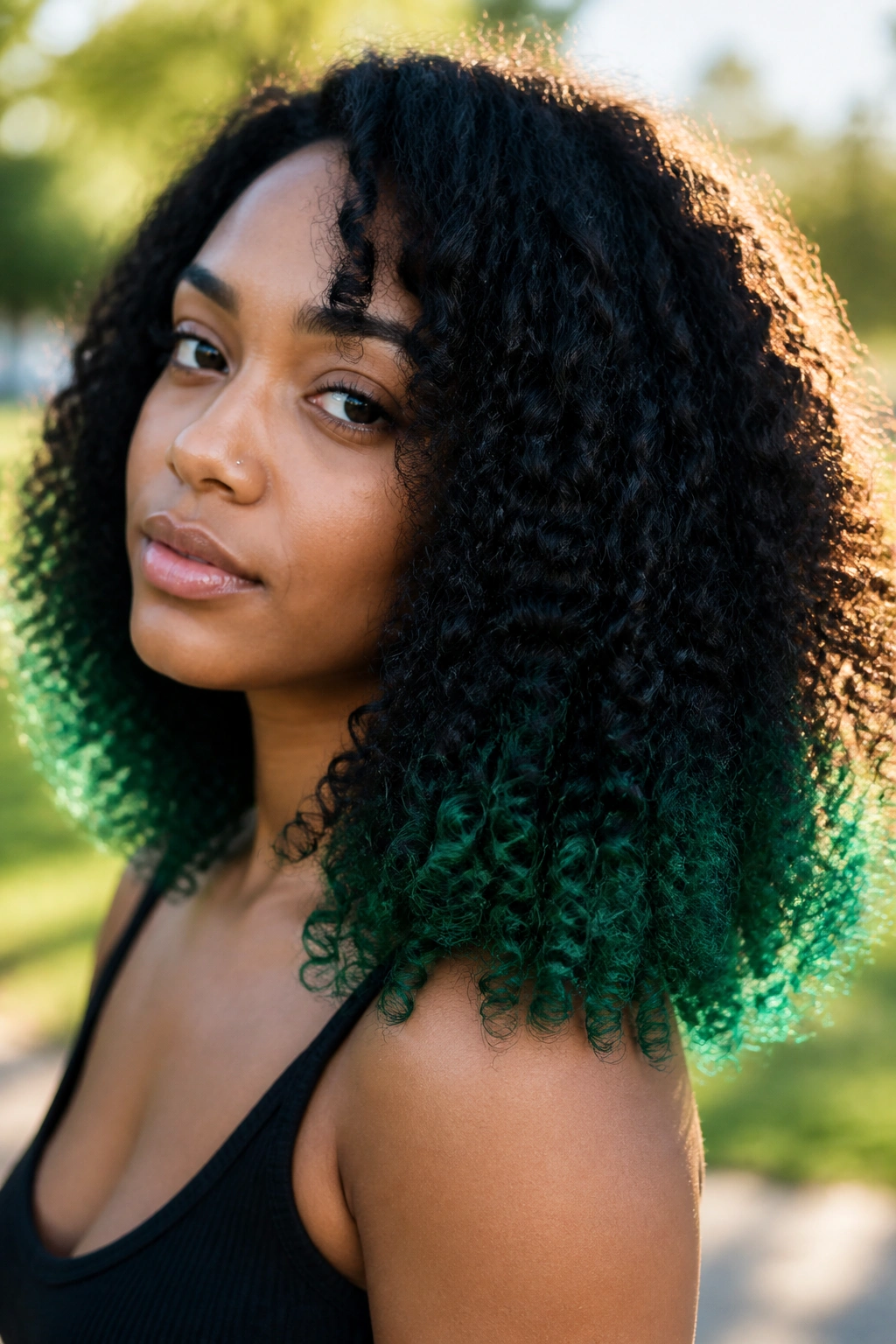
Emerald ends are a bold choice, but they work better than you might think on natural hair because the color is concentrated at the bottom. That keeps the statement controlled.
A dark green tone reads especially well on braids, twists, and layered curls because the ends move independently. On loose hair, emerald can peek out when the curls separate, which gives the style a little surprise. If you want something creative without coloring the whole head, this is one of the best places to start.
- Strongest on pre-lightened ends
- Can be worn as a full dip-dye or just on a few sections
- Looks sharp with black, brown, or deep burgundy roots
- Needs gentle cleansing to keep the green from dulling too fast
It’s not the safe pick. That’s why it’s memorable.
29. Champagne Blonde
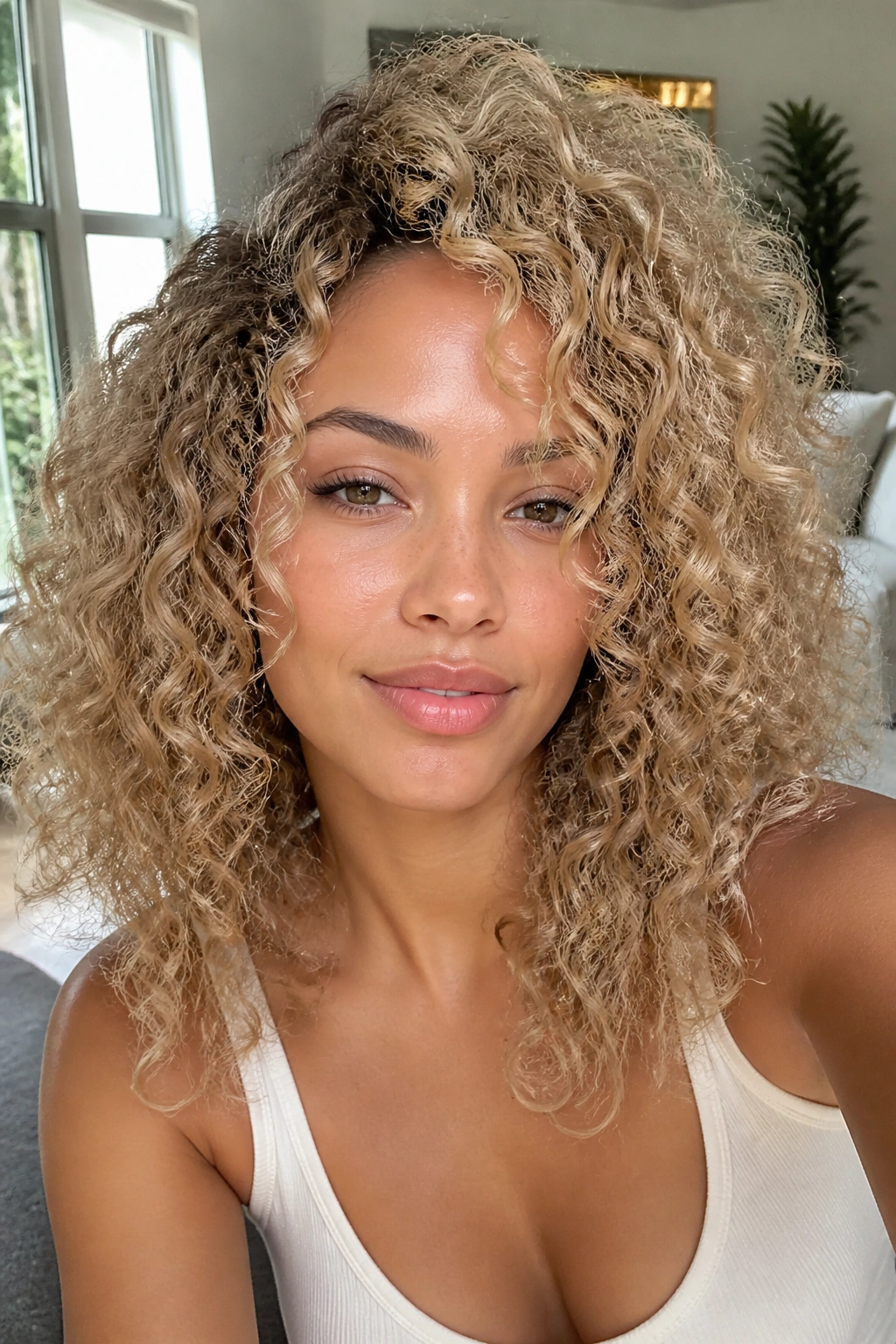
Champagne blonde is lighter and cooler than honey blonde, but softer than icy platinum. On natural hair, that middle ground matters because it keeps the blonde from looking harsh against textured strands.
The shade tends to work best when the hair is lifted evenly and then toned into a soft beige-gold. That keeps the finish creamy rather than brassy. On a curly bob, champagne blonde can make the shape look airy. On long coils, it gives a bright, clean effect without the starkness of a white-blonde finish.
What to Expect
- More upkeep than darker shades
- Better with regular moisturizing masks
- Looks especially good when the curls are defined
- Can be broken up with deeper roots for a softer grow-out
If honey blonde feels too warm and platinum feels too loud, champagne usually sits in the sweet spot.
30. Black Cherry
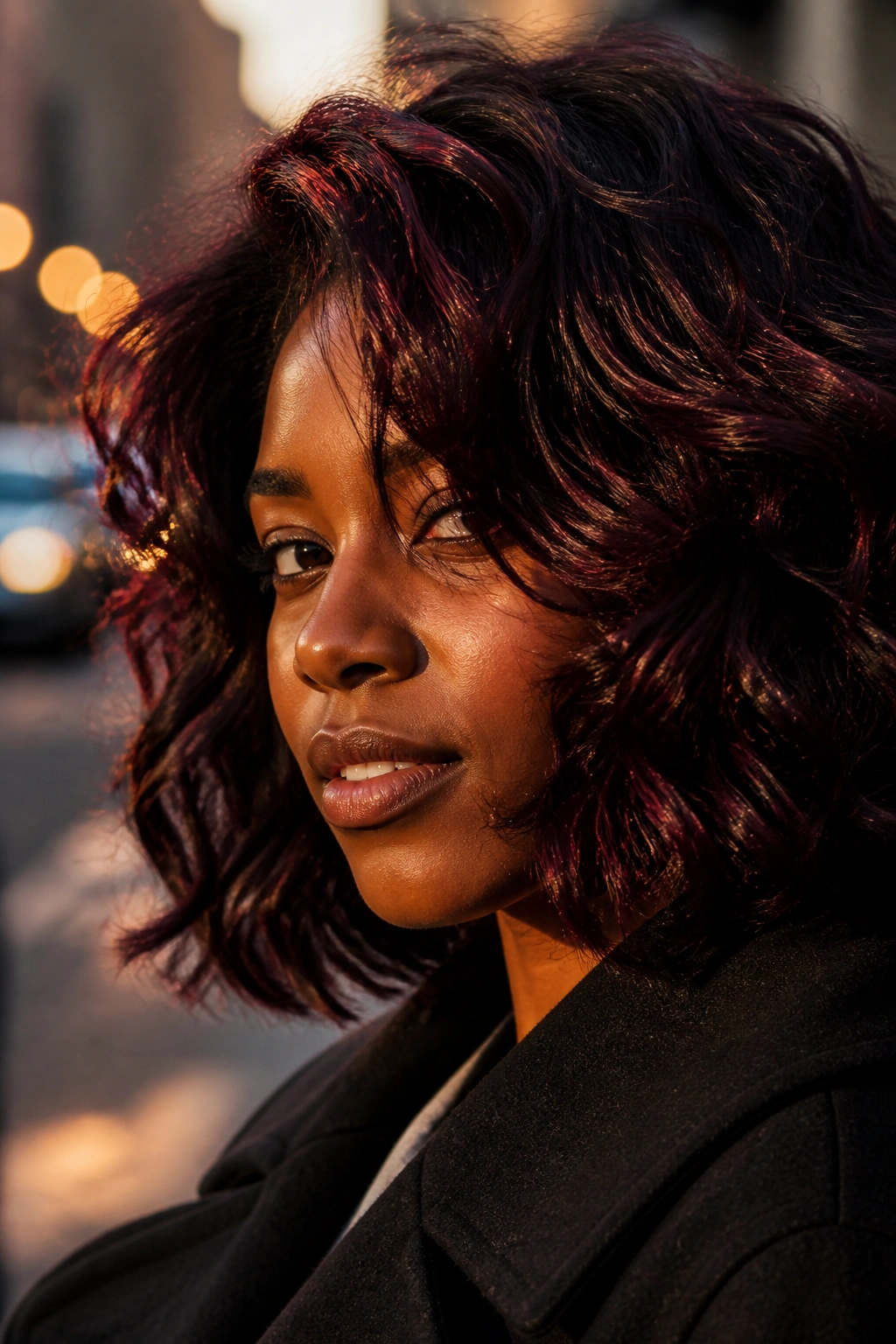
Black cherry is the shade for someone who wants dark hair first and color second. From a distance it can look almost black, but close up it reveals a deep cherry-red reflection that gives the hair a little mystery.
Unlike burgundy, which often leans openly red, black cherry keeps the red tucked in. That makes it useful if you want color that feels private. On natural hair, the tone shows well in sunlight, around the hairline, and on the outer layers of a rounded shape. It also works on locs and twist-outs because the texture helps separate the dark and red notes.
If you want one deep shade that stays elegant on its own and still gives you a flash of color when you move, this is the one I’d keep on the shortlist. It’s moody, yes. It’s also easy to wear.
