



If your curls look full on wash day and then settle into something flatter by lunch, the problem is usually not lack of product. It’s shape. Voluminous curls for curly hair come from the way the hair is cut, lifted, dried, and arranged while it sets — not from smothering it with more cream and hoping for the best.
The sneaky part is that curl volume is not one thing. A tight coil can look huge when the roots are stretched and the outline is rounded. A looser curl can look bigger with a side part, a clipped crown, or a cut that removes weight from the wrong places. Small changes. Big payoff.
Frizz gets blamed a lot, and sometimes unfairly. A little halo around the hair can be part of the look. Flat roots with puffy ends? That usually reads as heavy, not full. The sweet spot is lift at the scalp, movement through the middle, and curls that still feel soft when you touch them.
So these 28 ideas lean hard on shape, placement, and smart styling. Some are quick fixes. Some ask for scissors. Some are the kind of thing you can do in ten minutes before leaving the house. Pick the ones that fit your texture, then steal the tricks that make the crown do a little more work.
1. Sky-High Puff with a Smooth Hairline
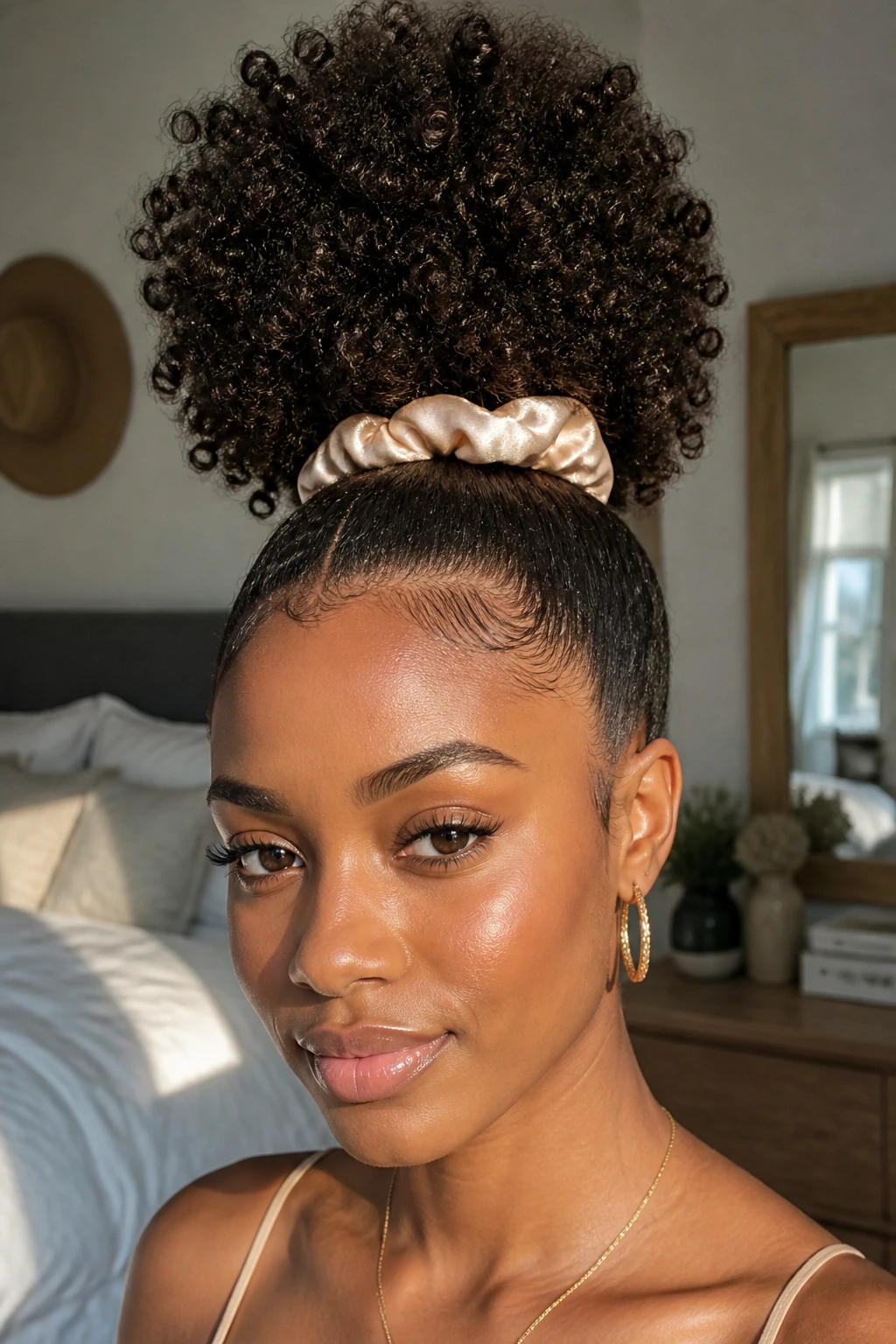
A high puff is the fastest way to fake serious volume on curly and coily hair. It pulls the eye upward, keeps the sides clean, and lets the curls or coils fan out where they look fullest.
The trick is to gather the hair at the highest point of the head, not at the middle of the back. Use a soft brush or your hands with a little gel only on the hairline, then secure with a satin scrunchie so the puff sits up instead of drooping.
- Works best on hair with enough density to fill the puff from root to tip.
- Looks strongest when the crown is lightly lifted with a pick after it’s secured.
- A small edge brush can keep the front neat without flattening the shape.
Do not pull the ponytail too tight. A tight base makes the puff look smaller, not bigger.
2. Side-Part Curl Cascade with Lifted Roots
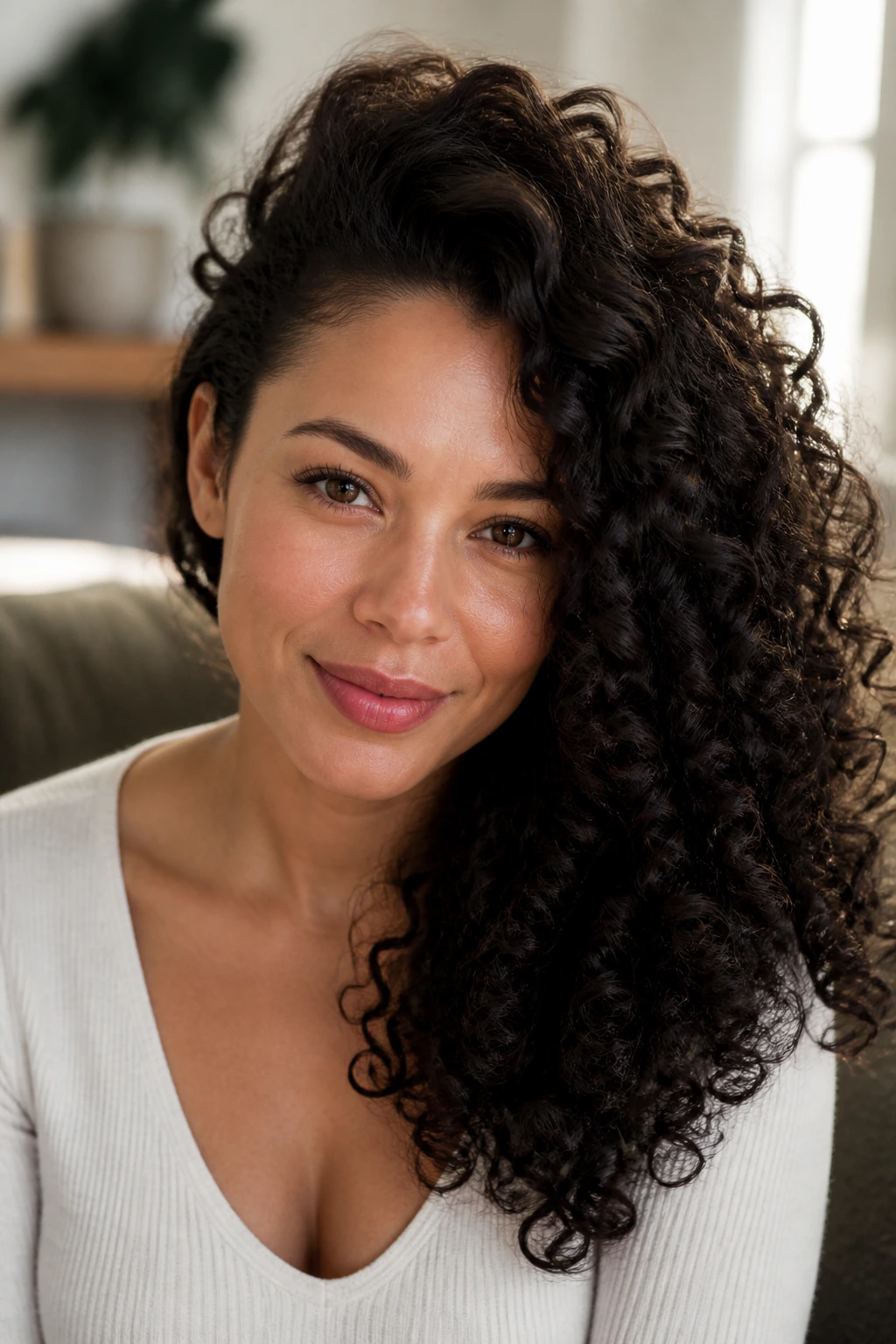
Why does a side part make curls look bigger so fast? Because it shifts weight. One side gets a taller root line, the other side gets a longer curtain of curls, and the whole head starts looking more dimensional.
Use your natural part as a guide, then move it an inch or two deeper than usual. Clip the heavier side at the roots while the hair dries, or diffuse it first with the part in place so the crown keeps that lifted bend.
A side part also changes how the face reads. It softens a round shape, breaks up a square jaw, and gives shoulder-length curls something to do instead of hanging straight down. That last part matters more than people think.
Keep the front pieces loose. If you over-smooth them, the whole style goes stiff and the volume disappears.
3. Half-Up Crown Lift with Face-Framing Pieces
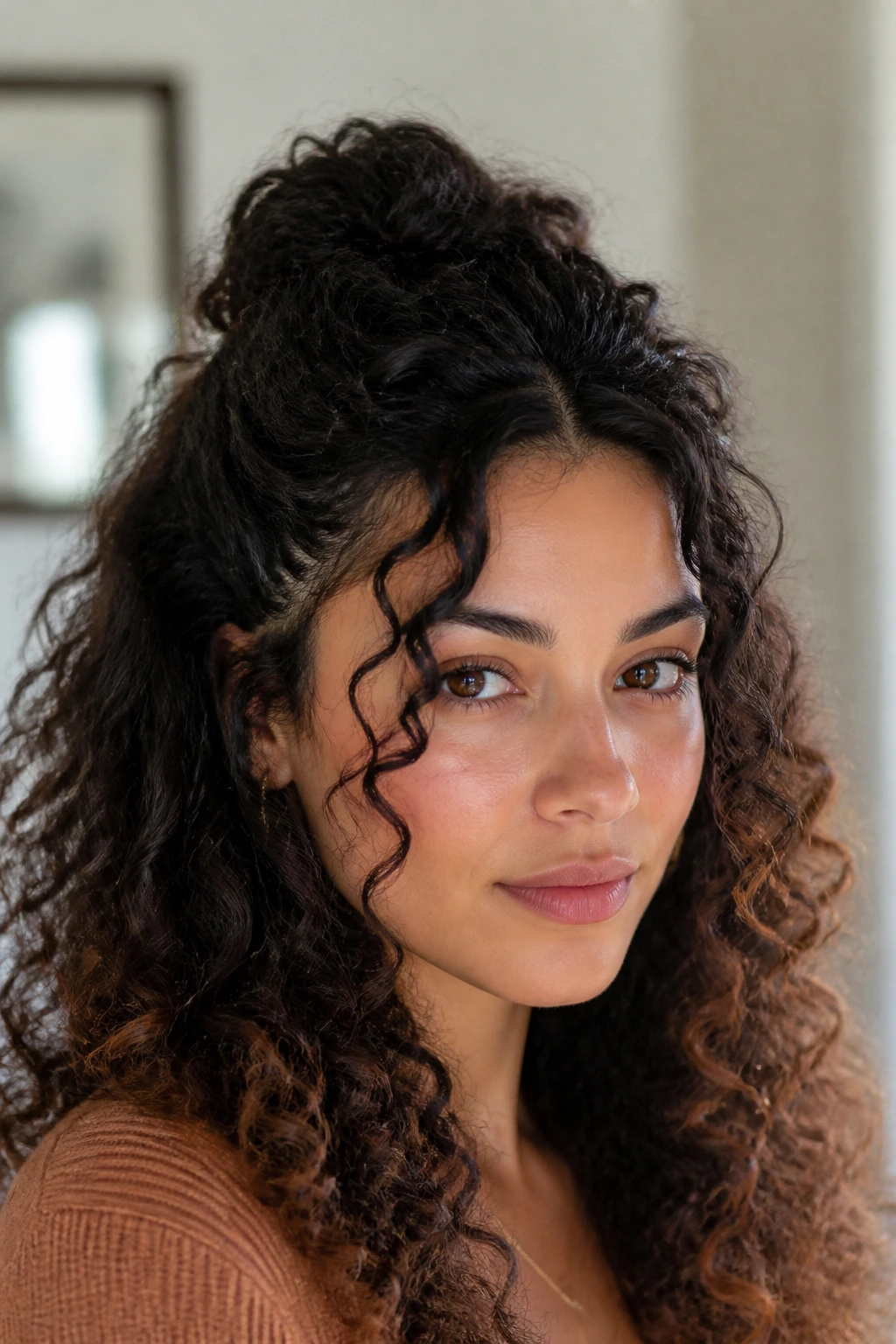
This is the style that saves curls when you want height without losing length. Pulling only the top section back gives the crown a little architectural help while the rest of the hair stays full and free.
Where the Clip Goes
Place the clip or tie about 2 to 3 inches back from the hairline, then lift the section slightly before securing it. If you grab too much hair, the style turns heavy. If you grab too little, it looks flimsy and accidental.
Leave a few curls out around the temples and cheekbones. That tiny detail keeps the top from feeling too neat, which is usually what kills the shape.
A small claw clip works well here because it lifts instead of compressing. A barrette can work too, but only if the teeth do not press the top flat.
4. Diffused Forward Volume
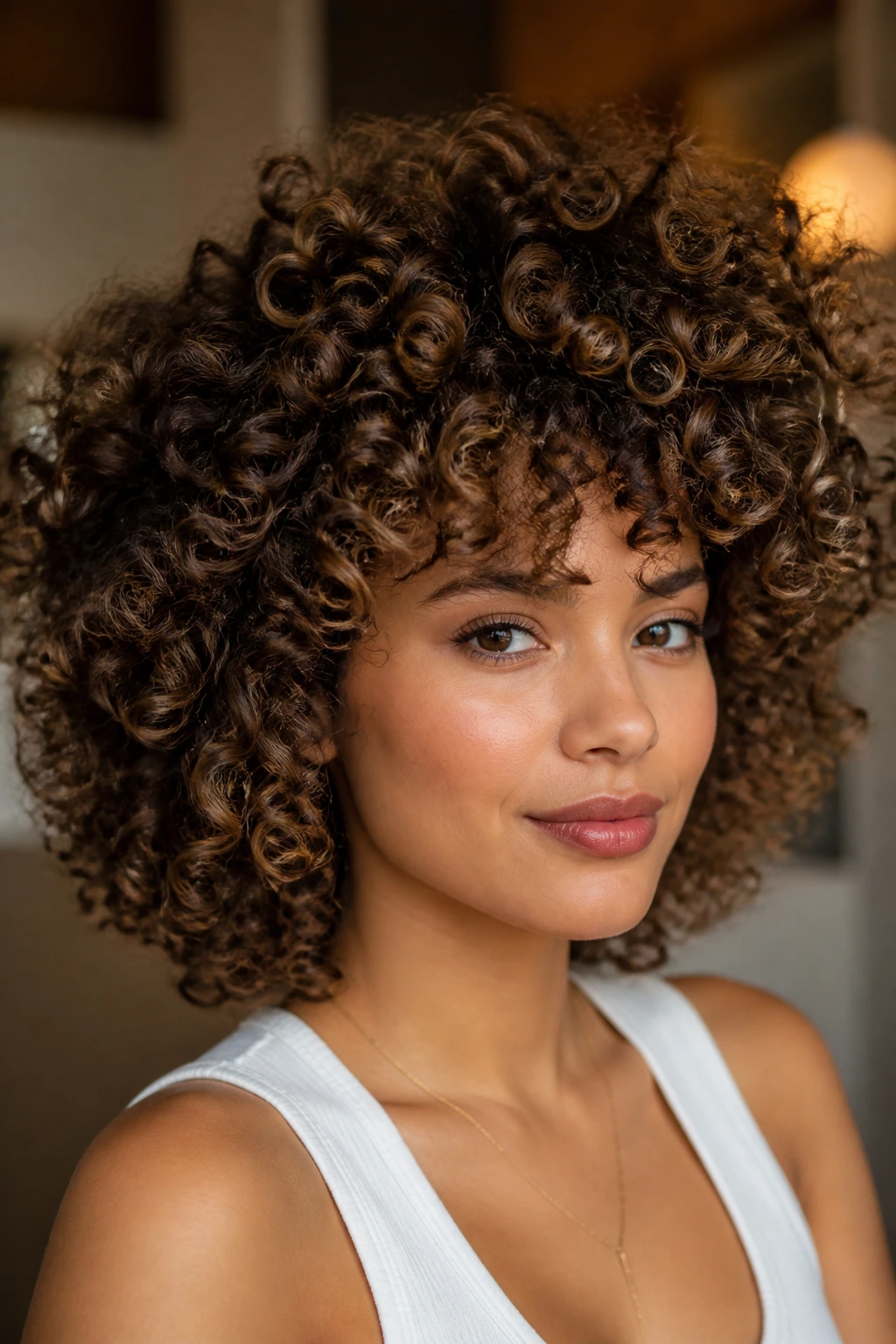
Stop drying curls only downward. That habit can drag the crown flat and leave all the fullness near the ends, which is the opposite of what most people want.
Bring the hair forward while diffusing, especially at the root line and around the temples. Hover the diffuser close to the scalp on low heat, then cup the curls in small sections instead of blasting them from underneath. The roots get support, the curl pattern stays intact, and the top looks taller once it’s dry.
It sounds odd. It works.
I like this move on medium-length curls that need width around the face. Flip the head back only near the end, after the cast is set. If you flip too early, the roots can collapse again, and then you’re back where you started.
5. Pineapple with Fluffed Roots
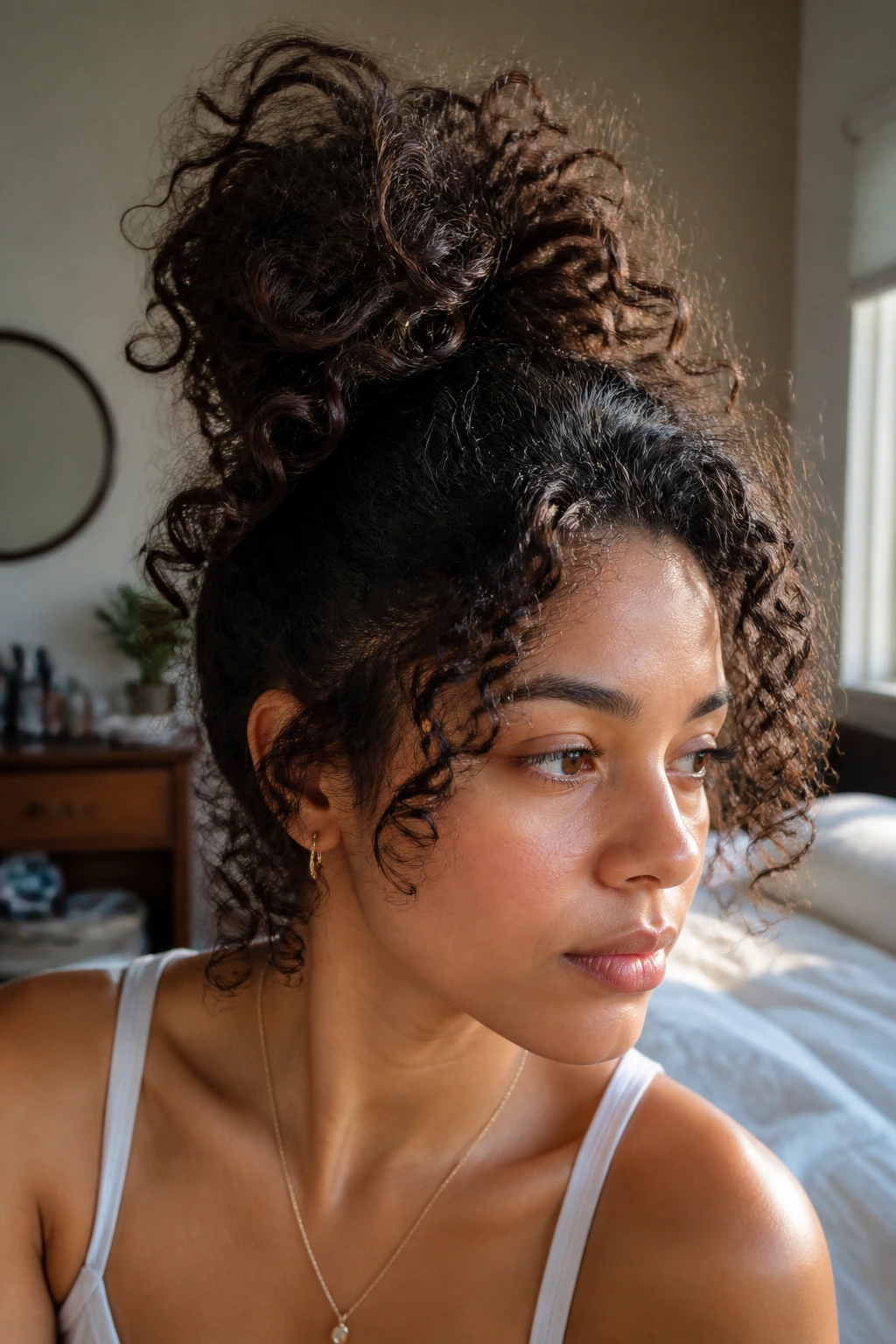
A pineapple is not just a sleep trick. Worn on top of the head with the right amount of looseness, it gives curly hair a playful lift that reads as volume rather than control.
Use a loose satin scrunchie and gather only the top half or upper two-thirds of the hair. The goal is a soft mound at the crown, not a tight bundle. When you take it down, shake the roots with your fingers first, then separate only the biggest clumps. That keeps the shape airy.
A pineapple works especially well on curls that flatten overnight. It gives them a second life without forcing a full restyle, which is a nice trade when the morning is already busy.
The one thing to avoid is pulling the base too high and too tight. That’s how you get a weird bump instead of volume.
6. Rounded Afro Shape with Soft Perimeter
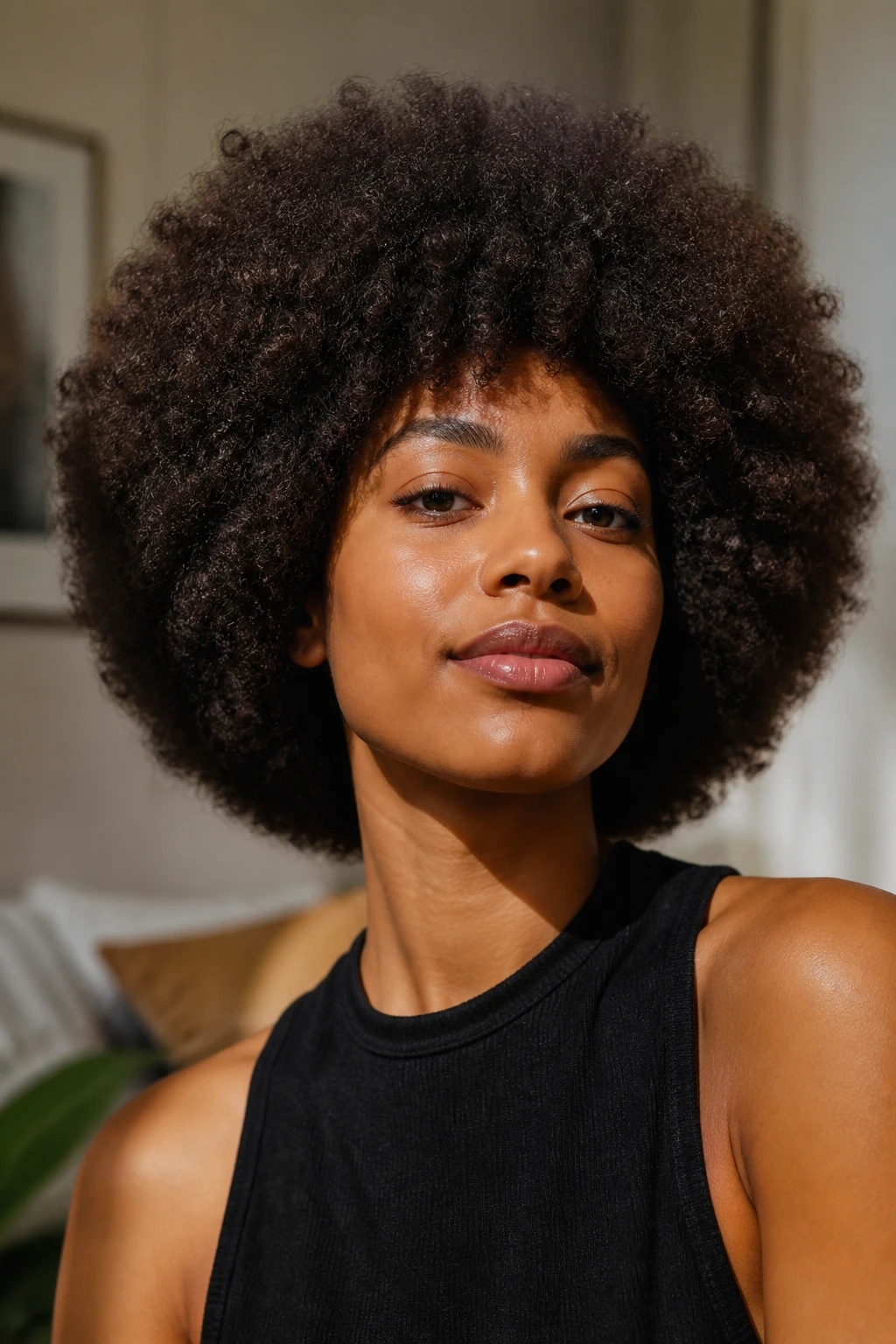
A rounded afro is one of those styles that looks simple until you realize how much skill sits inside it. The shape matters more than the length. You want a soft dome, not a triangle, and the edges should feel full from every angle.
Ask for or maintain a cut that removes bulk where the hair naturally bulges too much and leaves enough length at the perimeter to keep the outline plush. A light trim every 8 to 10 weeks helps the shape stay even, especially on coily hair that grows outward as much as downward.
How to Keep the Silhouette Round
Use a pick only at the roots, never through the full length. Once you break up the base, let the curls fall back into place and stop there. Over-picking is how round turns puffy in a messy way.
This shape is at its best when it looks touchable. Not stiff. Not helmet-like. Just full.
7. Deep Side Flip-Out
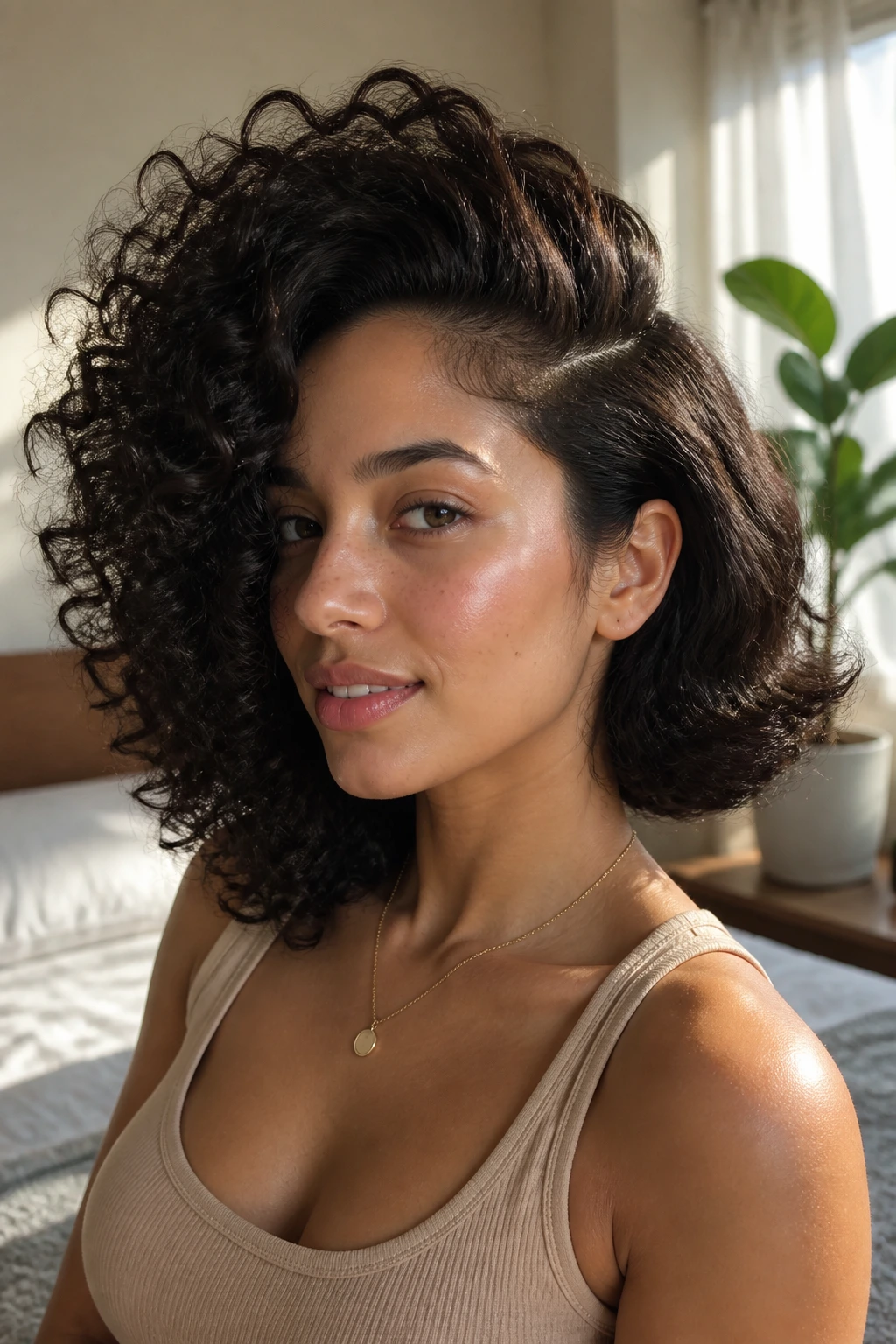
A deep side flip-out gives curls a little drama without asking for a full makeover. One side carries more volume, the other side gets tucked and lifted, and the shape suddenly feels intentional.
Start by moving the part to a spot that sits well past the center of your brow. Then use your fingers to flip the heavier side outward at the ends, either with a diffuser or by twirling a few front pieces away from the face. The flip at the bottom helps the style read as bigger than it really is.
This is one of those looks that looks better after you stop fiddling with it. The hair wants a little looseness here.
If your curls are very springy, pin the tucked side behind the ear for ten minutes while the top settles. That one small pause can make the volume hold.
8. Twist-Out with Root Pick-Out
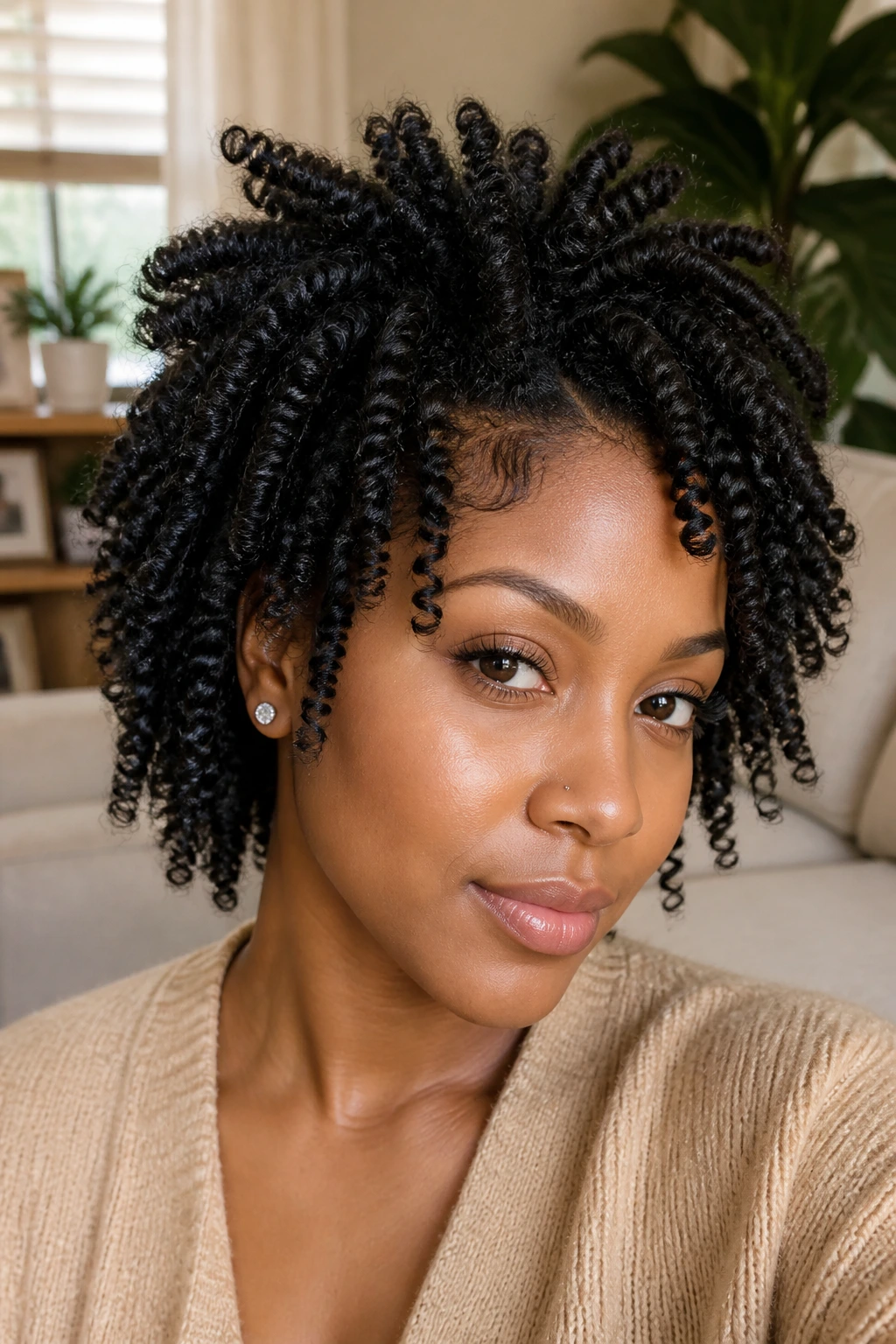
A twist-out gives curl definition, but it can go flat at the scalp if you leave it untouched. The fix is boring and effective: pick the roots, not the ends.
Use two-strand twists in sections about 1/2 inch to 1 inch wide, depending on density. Smaller sections give tighter definition. Bigger sections give a wider, fluffier result. Let the hair dry all the way through before unraveling, or the shape will collapse and frizz in the wrong places.
The Part That Makes It Bigger
Separate the twists only once, then stop. After that, slide a pick into the roots and lift just enough to create space. You do not need to comb the ends. They already did their job.
A twist-out can look narrow if the crown is ignored. Give the top a little attention and the whole style looks twice as full.
9. Bantu-Knot-Out with a Brushed Crown
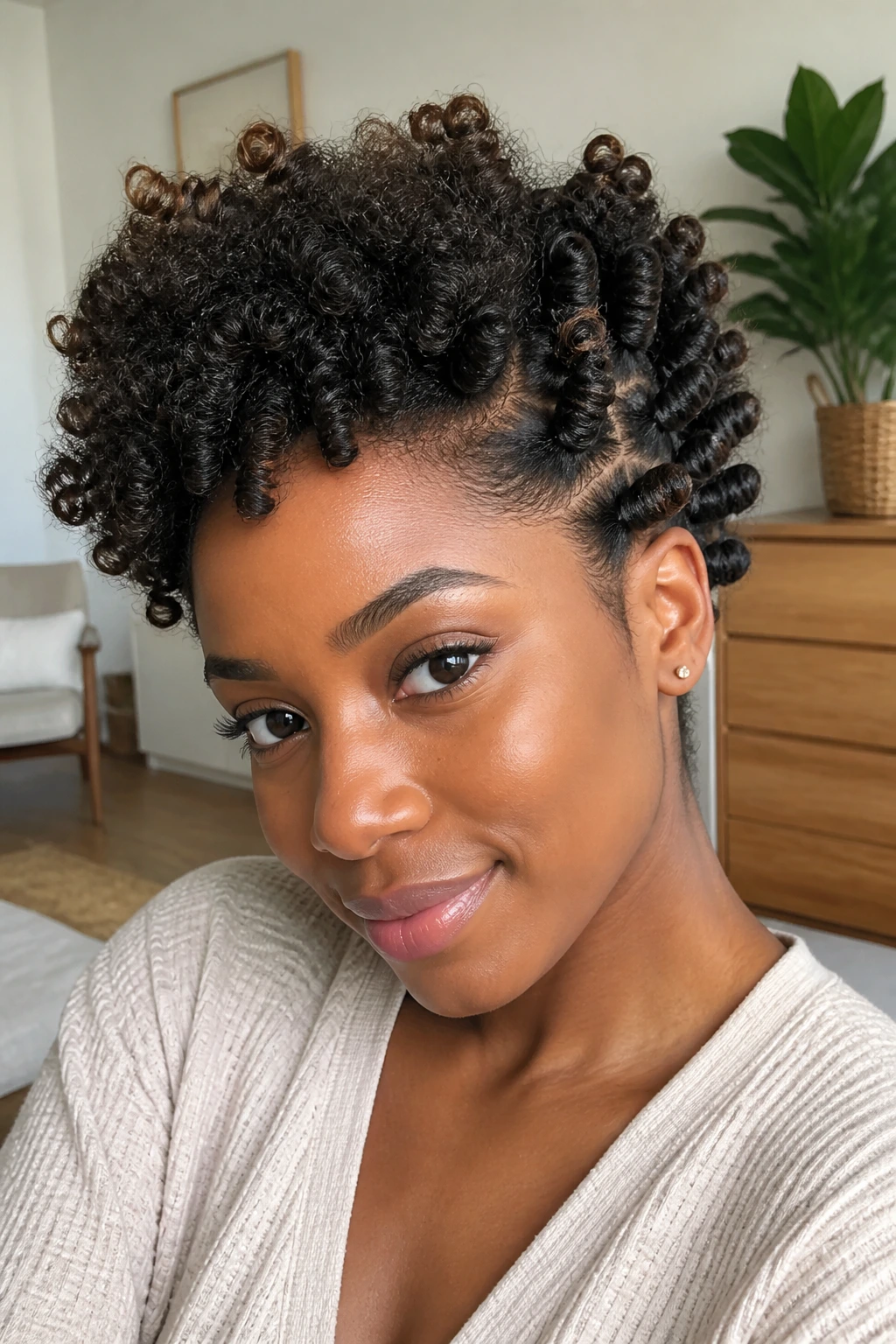
Bantu-knot-outs are built for volume because they create spring at the ends and soft expansion at the roots. The set itself does the work. Your job is not to flatten it before it has a chance to shine.
Make the knots in sections that match your curl density. Smaller knots produce tighter, more defined pieces. Larger knots create a looser, puffier look. Once the hair is fully dry, unwind gently and brush only the crown with your fingertips or a small pick.
What Makes the Shape Work
The crown should stay a little looser than the sides. That contrast is what gives the style lift. If every part of the head is smoothed down evenly, you lose the whole point.
This style is good for coils that need definition but still want some air around the head. It’s neat, but not flat. That balance is the charm.
10. Finger-Coiled Halo
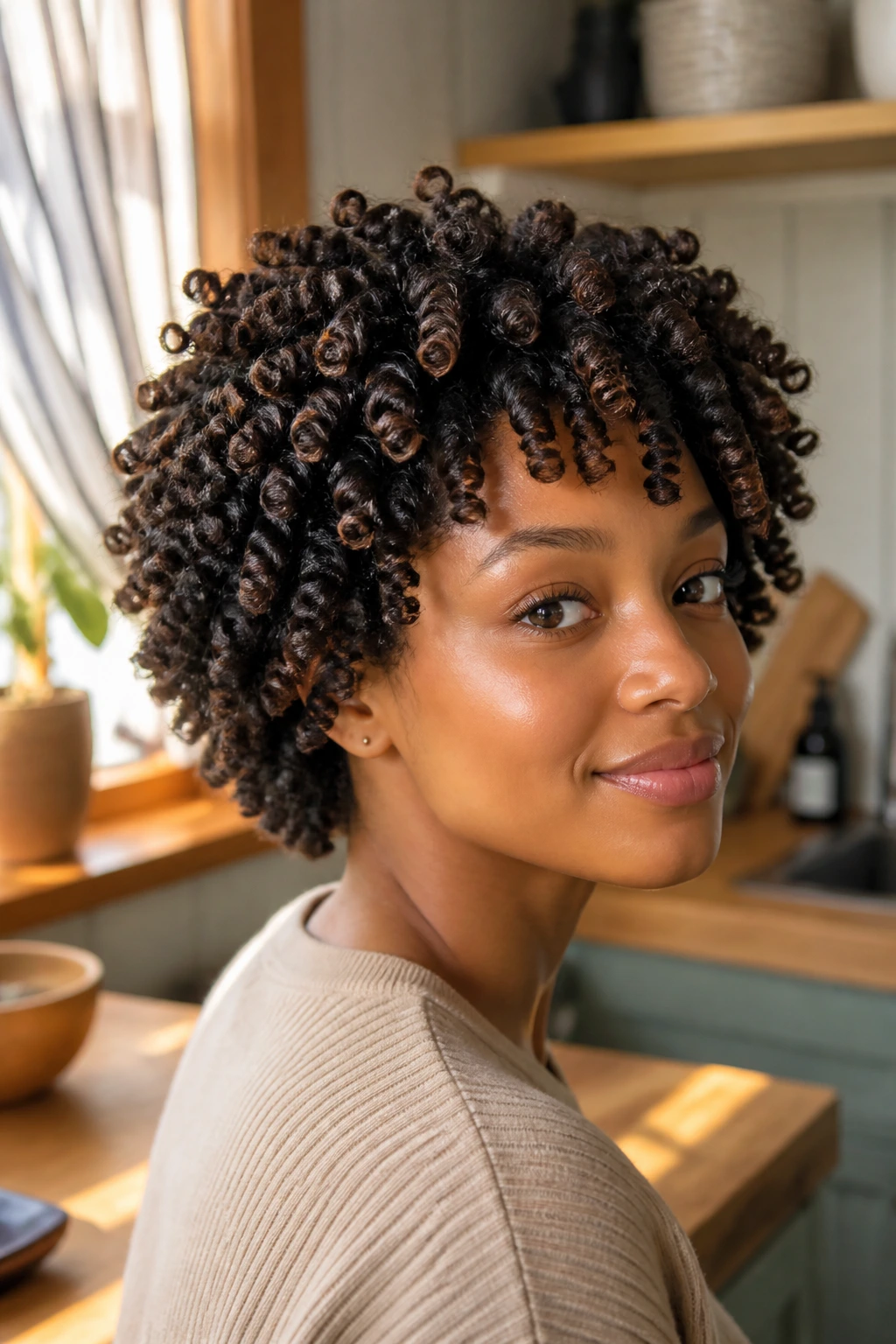
Finger coils get dismissed as a small-style look, which is a shame. Done with a bit of room at the roots, they can make the head look rounded and full, almost like a halo of defined texture.
Work in sections that are a little larger at the crown and a little smaller near the temples and nape. That uneven sizing creates a better outline. If every coil is the same size, the style can feel too tidy and the top loses presence.
The best part is the shape after the coils dry. Separate them lightly at the base, then lift with your fingers instead of combing through the length. The definition stays, but the style spreads out enough to look fuller.
It’s a precise look, not a stiff one. That matters.
11. Curly Curtain Bangs with a Tall Crown
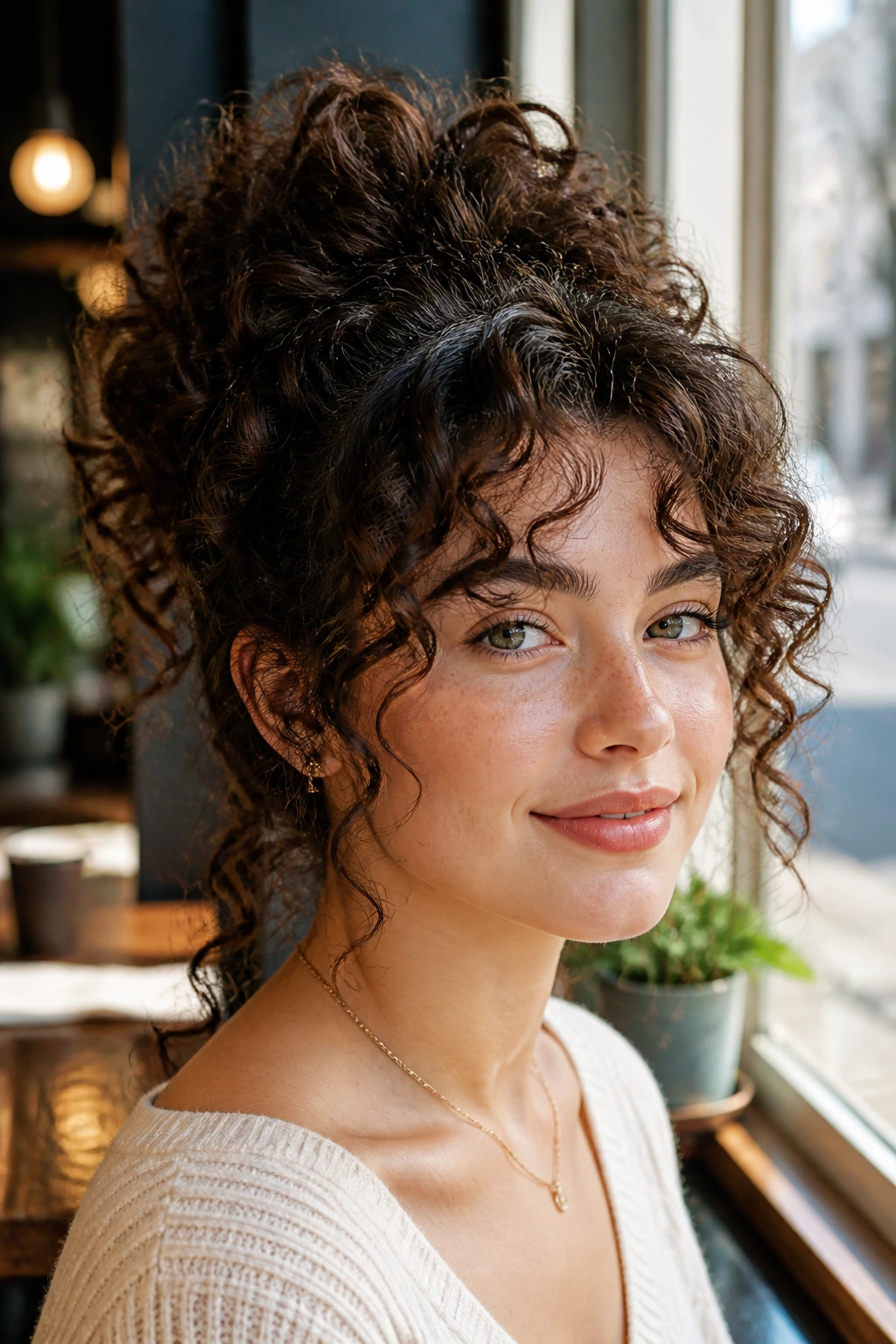
Curtain bangs change the whole mood of curly hair because they pull attention to the center and sides of the face without chopping off the volume around the top. A blunt fringe can eat up height. Curtain bangs usually do the opposite.
Why the Balance Works
The shortest pieces should hit around the cheekbone or just below the brow arch, depending on curl shrinkage. That keeps the front light and lets the crown remain the tallest point. The effect is subtle when the hair is damp and obvious once it dries.
This style works especially well on layered curls that need a little movement near the front. It softens the face and leaves enough bulk behind it to keep the style from looking thin.
If you have tighter coils, ask for longer curtain pieces than you think you need. Curl shrinkage is not polite about this.
12. Tapered Cut with Long Top
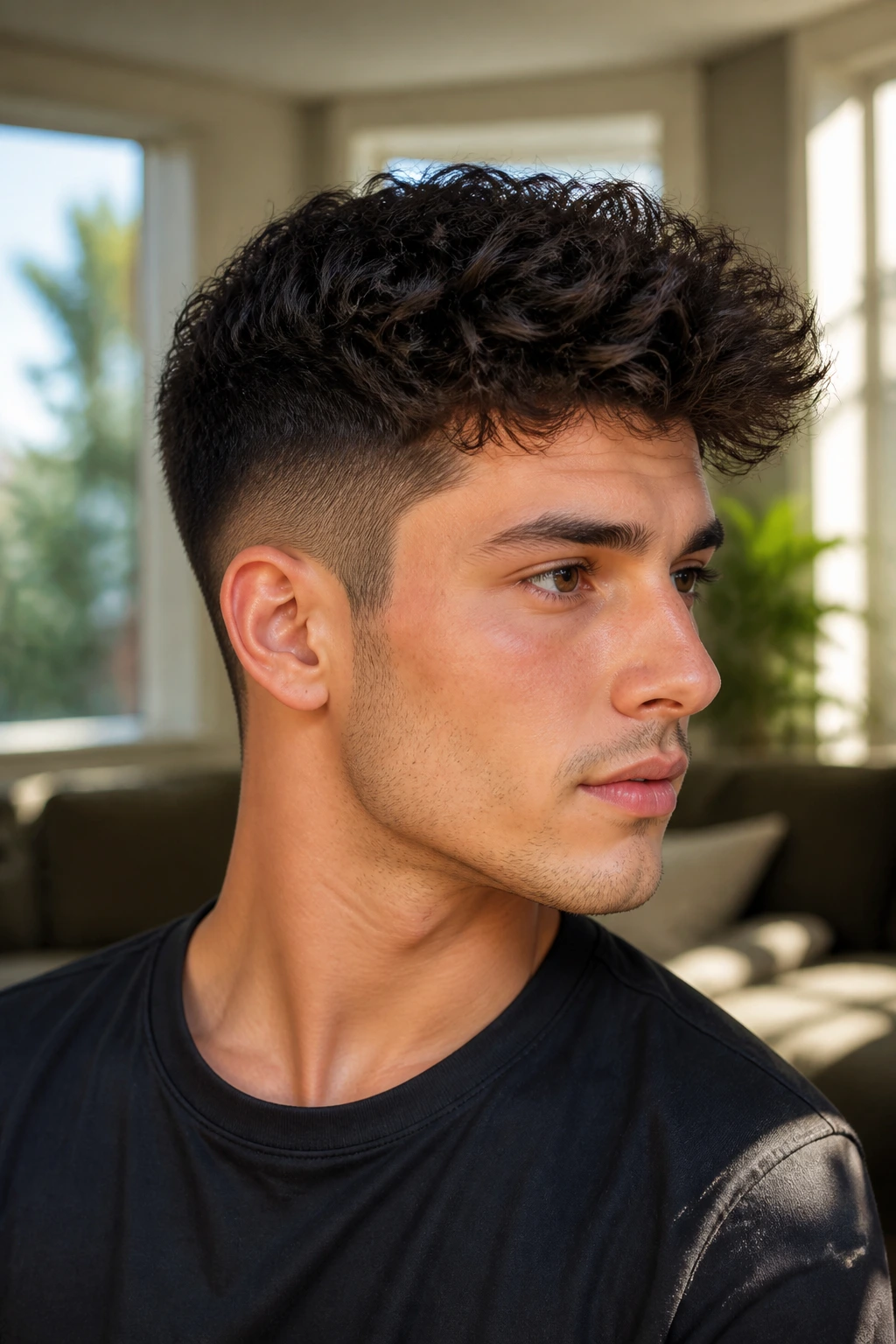
A tapered cut is one of the easiest ways to get volume without fighting the hair every morning. Shorter sides and back make the top look taller, even when the curls themselves are not huge.
Ask for the nape and sides to sit close to the head while the top stays several inches longer. On coily hair, that contrast can be dramatic. On looser curls, it creates a clean shape that still feels soft. The whole cut depends on proportion.
- Best if you want height without a lot of daily styling.
- Useful for coils that shrink a lot and need shape, not length.
- Easy to refresh with a pick and a little water on the roots.
The blunt truth: this cut is doing half the volume work for you. That’s why it’s such a smart one.
13. Wash-and-Go with Root Clipping
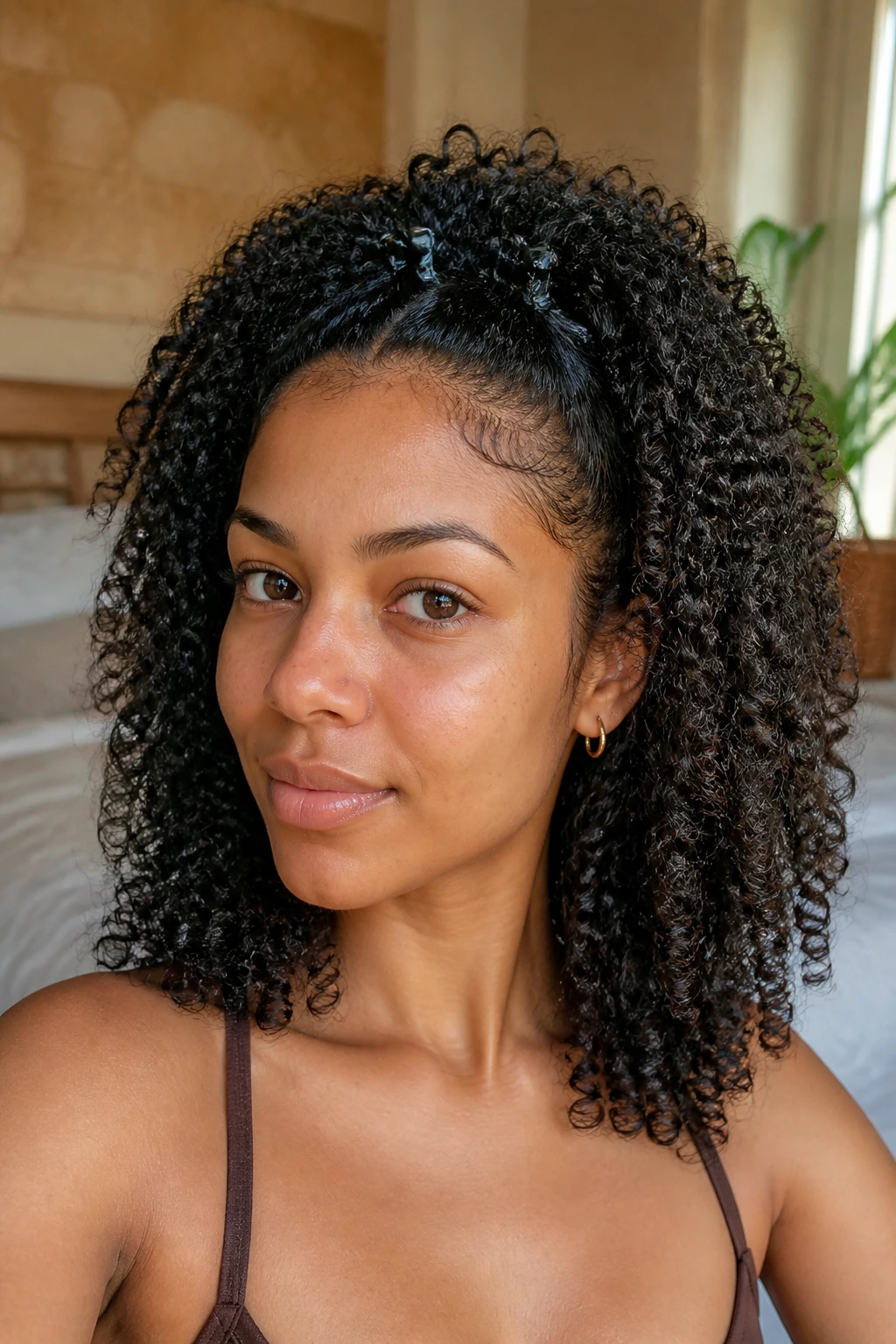
A wash-and-go can look flat if you let the roots dry against the scalp. Root clipping fixes that in a way that feels almost unfair.
Apply your styler, then place small clips at the crown and along any areas that tend to collapse. The clips should lift the hair away from the scalp, not pinch it shut. Once the hair is about 70 percent dry, remove the clips so the shape can finish drying in place.
Do not clip soaking-wet hair for hours. That can leave odd dents and make the top dry in a weird line. A few clips used at the right moment are enough.
This works especially well on medium-density curls that need lift at the top but still want definition through the ends. Clean, simple, and worth the fuss.
14. Stretched Twist-Out Bob
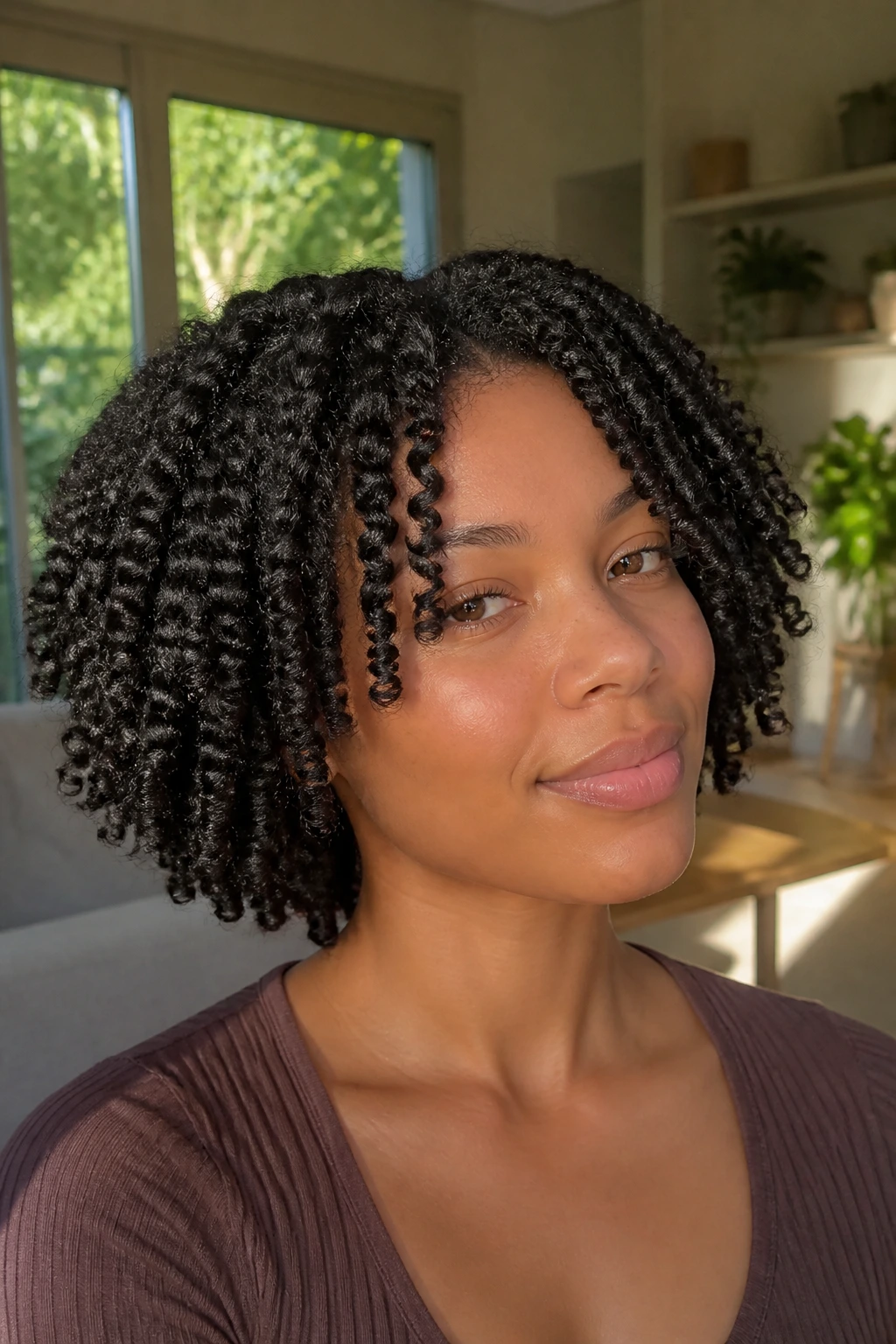
A twist-out bob looks expensive when the roots are stretched just enough to show shape without killing movement. The bob length keeps the volume concentrated, which makes the whole cut feel fuller than longer hair often does.
You can stretch the roots with banding, large twists, or a low-tension blow-dry on cool air. The point is not straightness. The point is space. When the hair is not clinging too close to itself, the curl pattern has room to puff out.
The best versions of this cut fall around the jaw or just above the shoulders. That length gives the curls enough body to bounce without getting dragged down by too much weight.
It’s a nice middle ground. Not tiny, not huge, just full in the right places.
15. Faux Hawk Volume
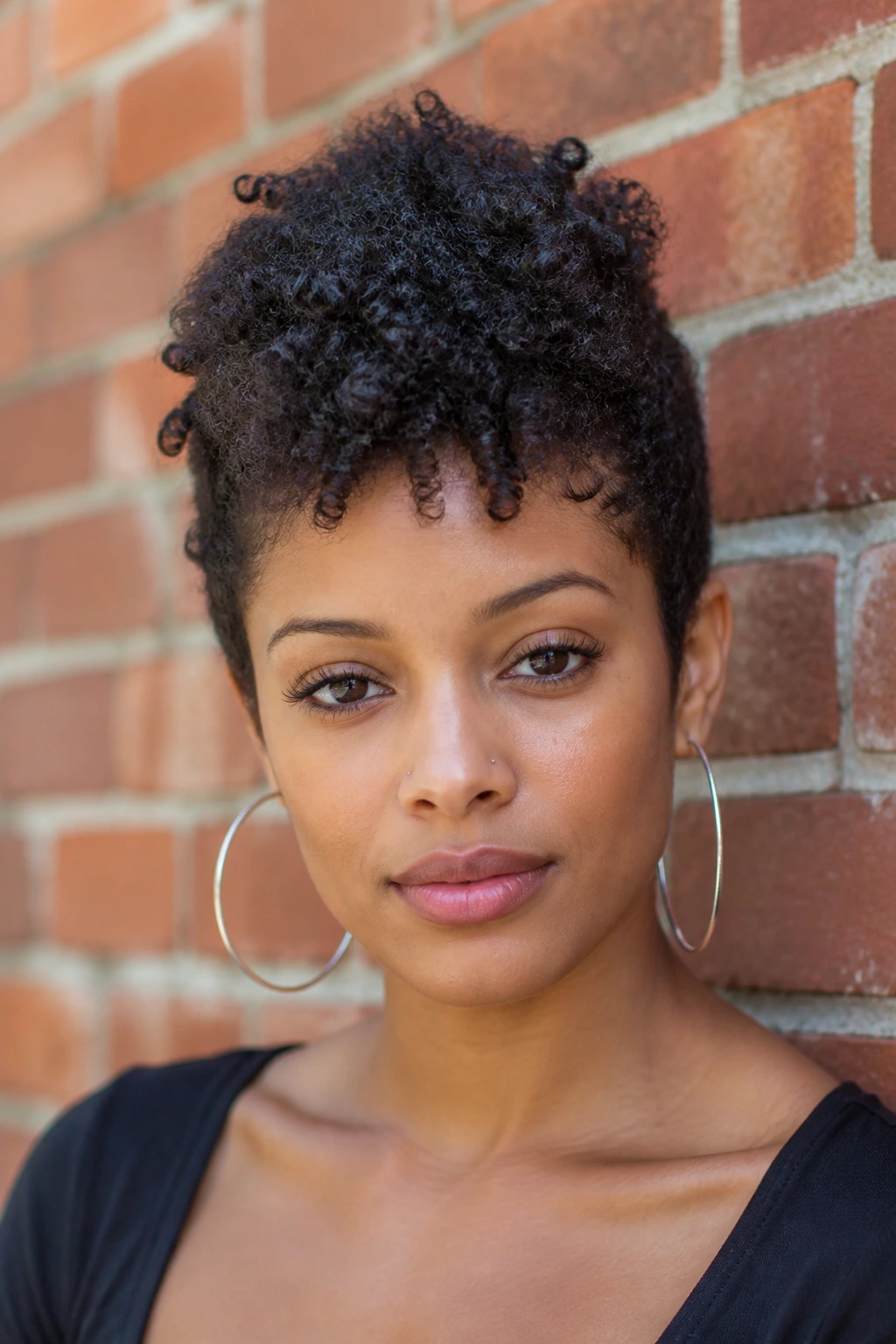
A faux hawk is a cheat code for volume because it pushes the sides inward and lets the center ridge take over. You get height without needing a shave or an undercut.
Pin the sides up and back in small sections, then leave the center strip loose and lifted. The ridge should run from the hairline to the crown, with enough curl or coil on top to keep it soft. Six to eight bobby pins usually do the job, depending on density.
The Center Ridge Matters
If the middle section is too flat, the style turns into a pinned-back look instead of a faux hawk. Lift the roots first, then pin. That order saves the shape.
This one is good when you want something sharper than a regular puff but still want the hair to feel curly, not slicked down.
16. Space Buns with Puffy Ends
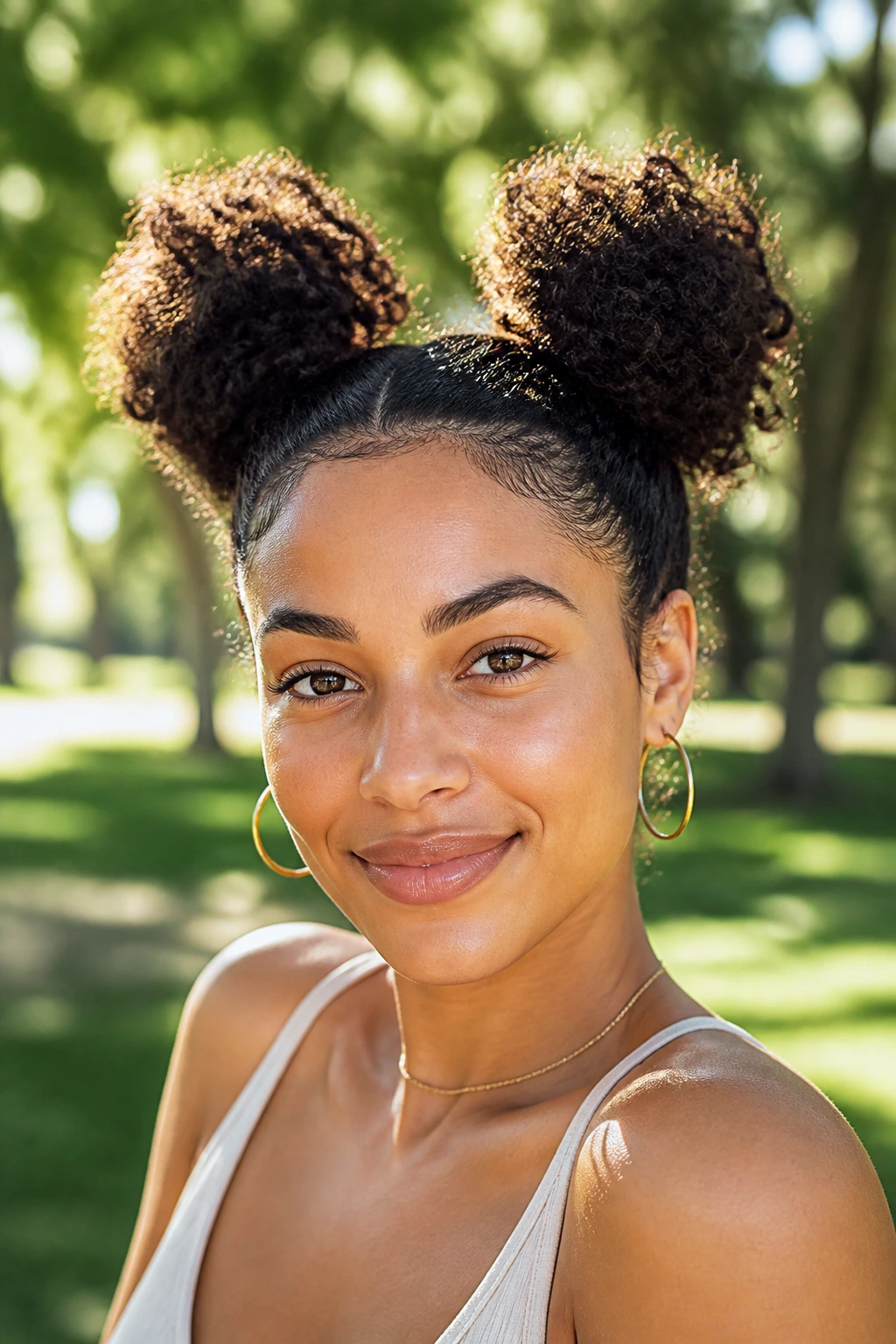
Space buns are fun, sure, but the version with volume has a cleaner logic than people give it credit for. The buns sit high, the ends stay soft, and the shape keeps the crown from collapsing.
Divide the hair into two sections and place the buns a little above the ears, not down at the nape. Leave the ends loose enough that they can puff and fold naturally. If you make the buns too small, the whole style looks tiny. If you make them too tight, the texture disappears.
This style is a nice choice for second- or third-day curls that need a reset without a full wash. It also keeps the neck clear, which matters more than anyone admits when the day gets long.
A few loose curls around the temples help a lot. Tiny thing. Big difference.
17. Flipped-Over Side Part
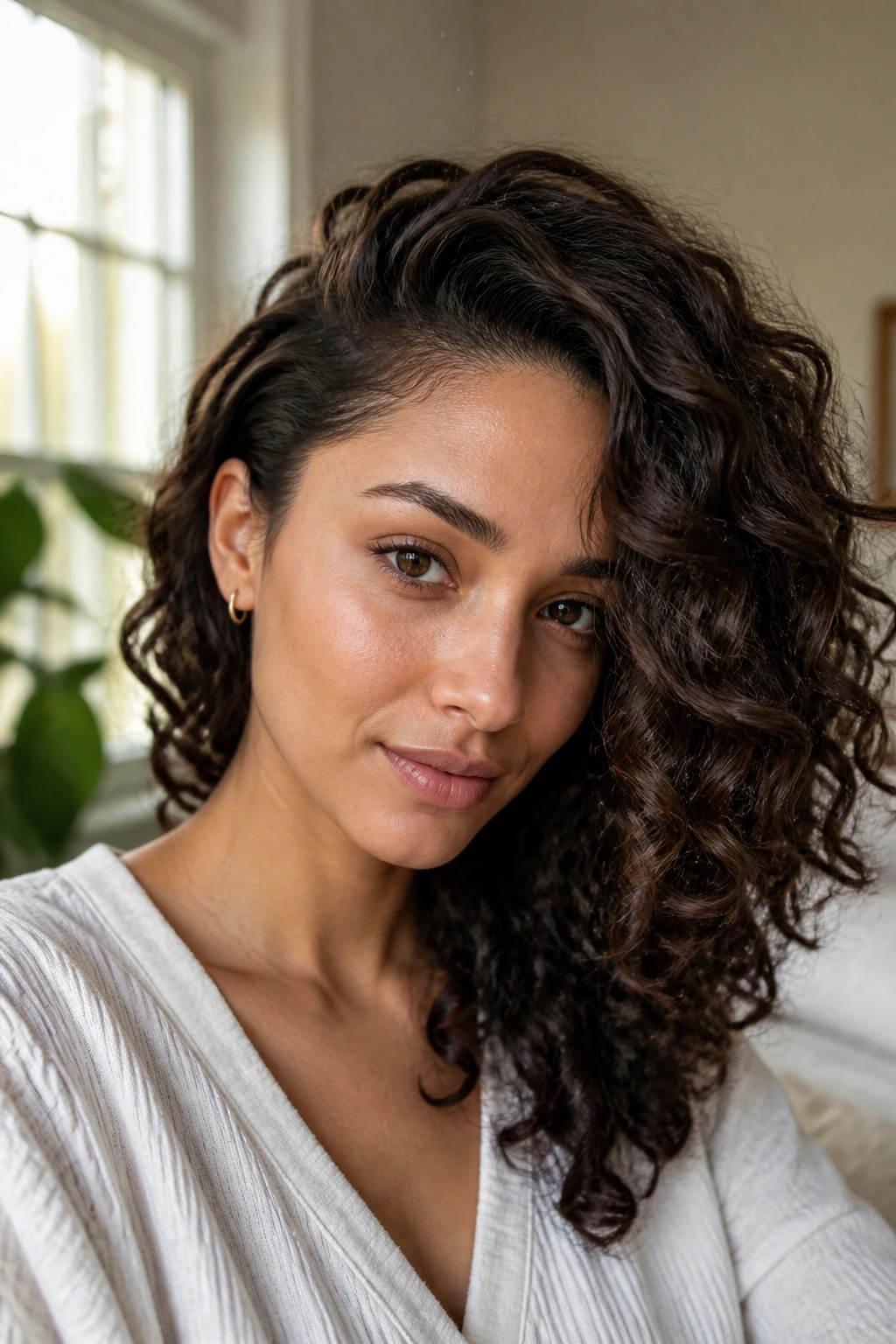
A flipped-over side part is the lazy genius move in this whole list. It takes less time than almost anything else here and can rescue curls that have gone flat on one side.
Move the part to the opposite side while the hair is dry, then let the roots settle for ten minutes before touching them again. The old part line lifts, the new side gains height, and the hair suddenly looks fuller because the shape changed, not the product load.
- Works well on day 2 and day 3 curls.
- Needs a little root lift at the new part.
- Looks best when one side is tucked slightly behind the ear.
This is the kind of style you use when the mirror says, “not enough.” A part shift can answer that faster than a full restyle.
18. Curly Lob with Internal Layers
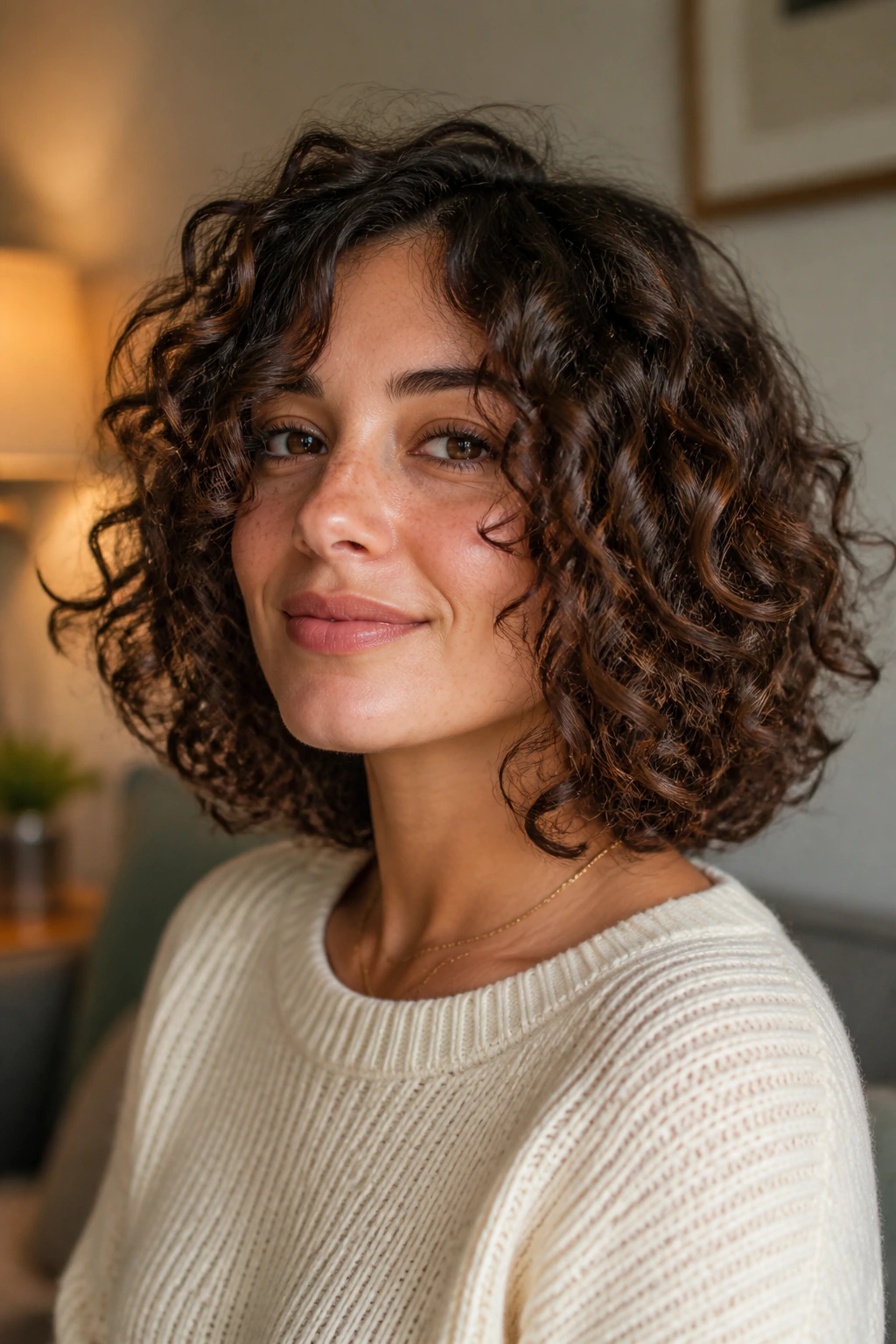
A curly lob gets much better when the layers live inside the shape instead of chewing up the edges. That keeps the outline full while removing just enough weight to let the curls stack.
A one-length lob can look sleek, but it can also sit heavy and block the curl pattern from expanding. Internal layers, placed around the mid-shaft, give the hair room to rise without turning the bottom wispy. That’s the sweet spot.
The cut should sit somewhere between the chin and collarbone, depending on shrinkage and density. Any shorter and the shape can spring too high. Any longer and the weight starts to fight the volume.
This is a tidy, modern shape for curls that want movement but not a lot of fuss. It wears well because the cut is doing the lifting.
19. Crown Braid with Loose Ends
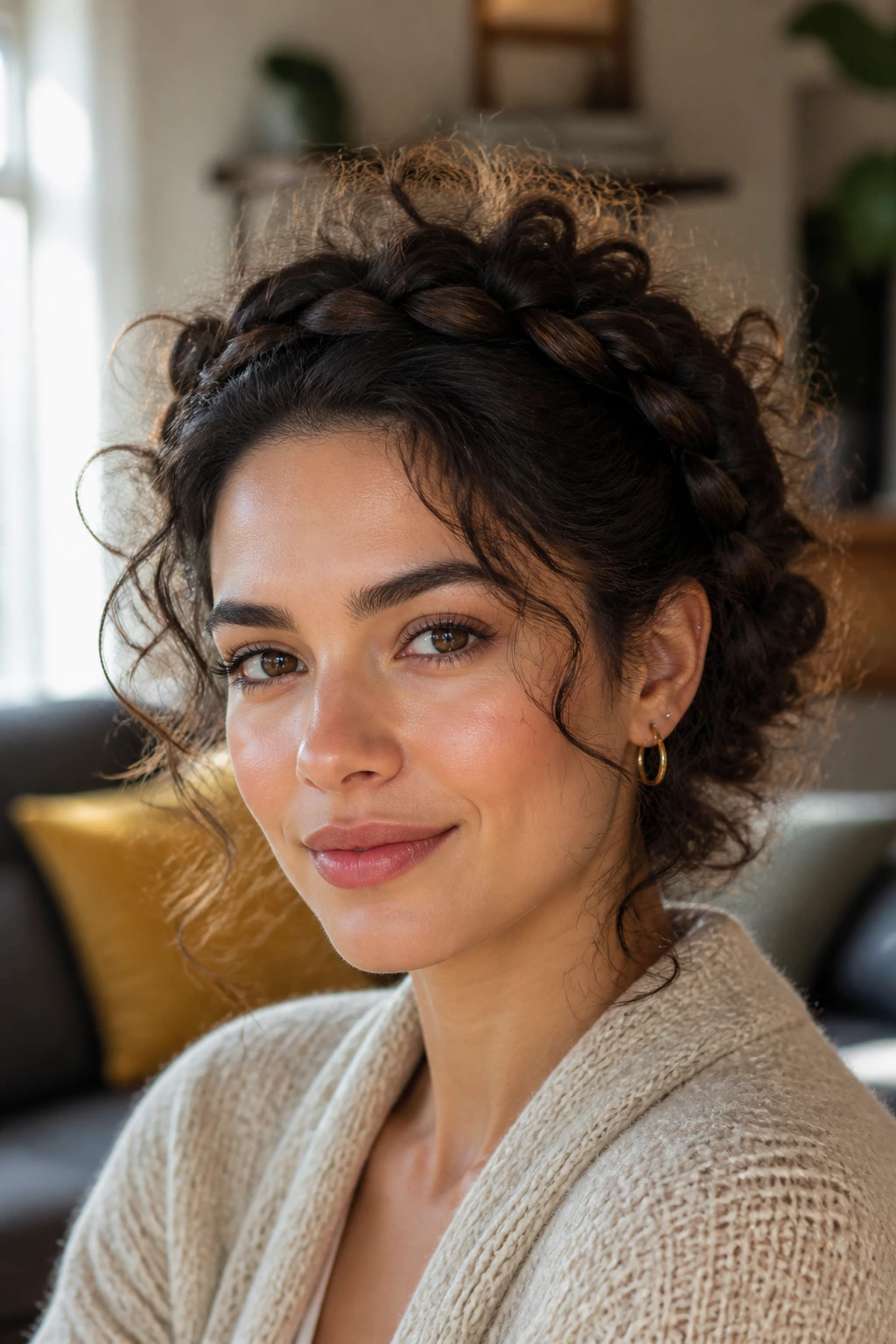
A crown braid gives the top of curly hair a little lift without stealing the curl pattern from the ends. Braid the front or side section across the head, then leave the rest loose and full.
Where the Braid Starts
Begin the braid about 1 to 2 inches behind the hairline so you keep some softness at the front. If it starts too far forward, the style can feel tight and small. If it starts too far back, you lose the crown effect.
The loose ends should not be overly defined. Let them stay a little wild. That contrast between the controlled braid and the fluffy finish makes the whole style feel richer.
This one reads almost dressed up without trying hard, which is a rare thing. And rare is useful.
20. Stretch-and-Fluff High Ponytail
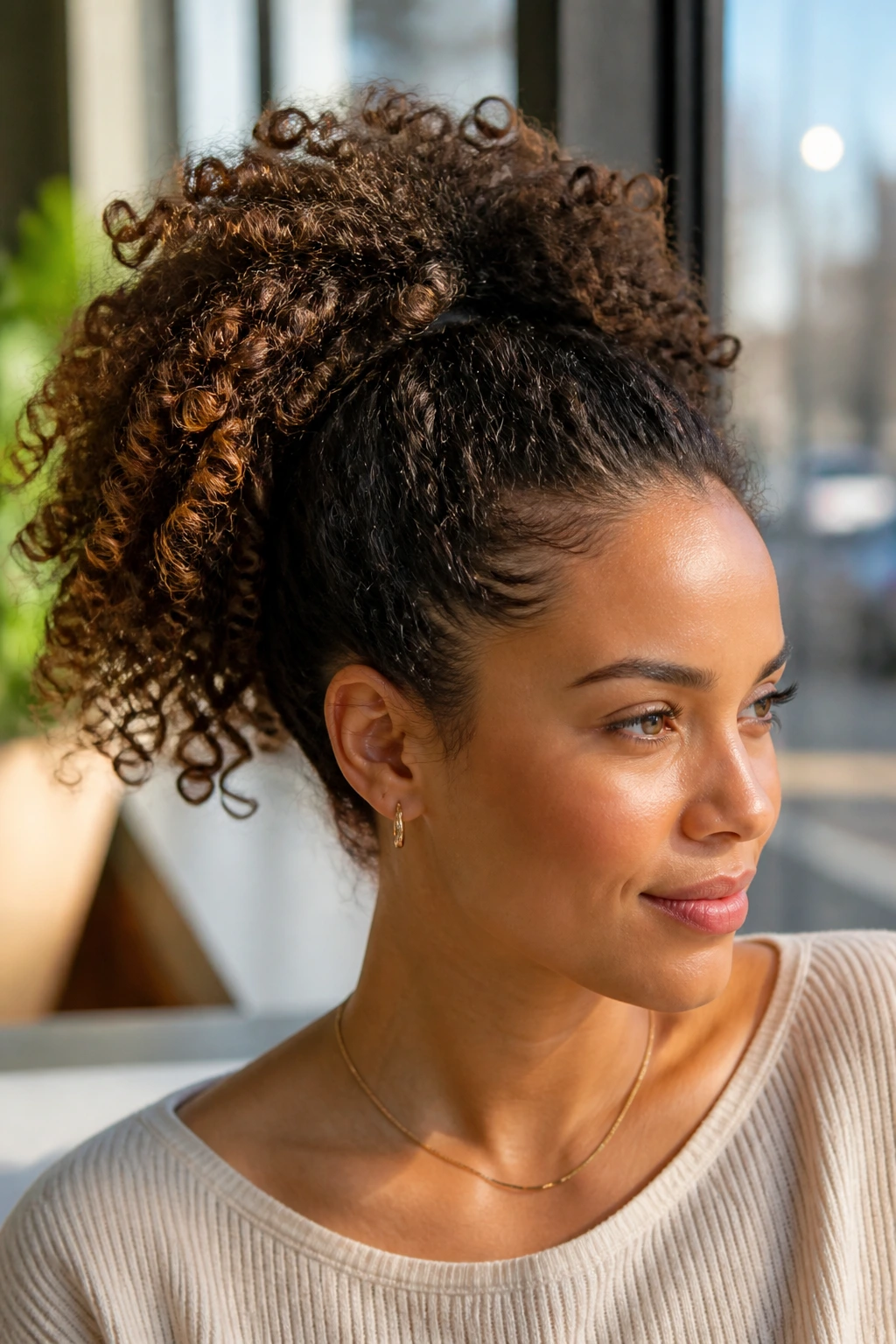
Can a ponytail look full on curly hair? Absolutely, if you stop slicking it to the skull. The magic is in the stretch.
Band the roots or lightly blow-dry the crown on cool air first, then gather the ponytail high and leave a little lift at the base. Once it’s secured, tug gently at the crown and fluff the tail with your fingers. The ponytail should arc outward, not hang like a rope.
A high ponytail with volume works on curls that need shape fast. It keeps the face open, adds height, and gives the illusion of more hair because the eye sees a bigger silhouette.
A soft wrap of hair around the base can make it look finished without flattening it. Small detail. Worth doing.
21. Rod Set with Brushed-Out Ends
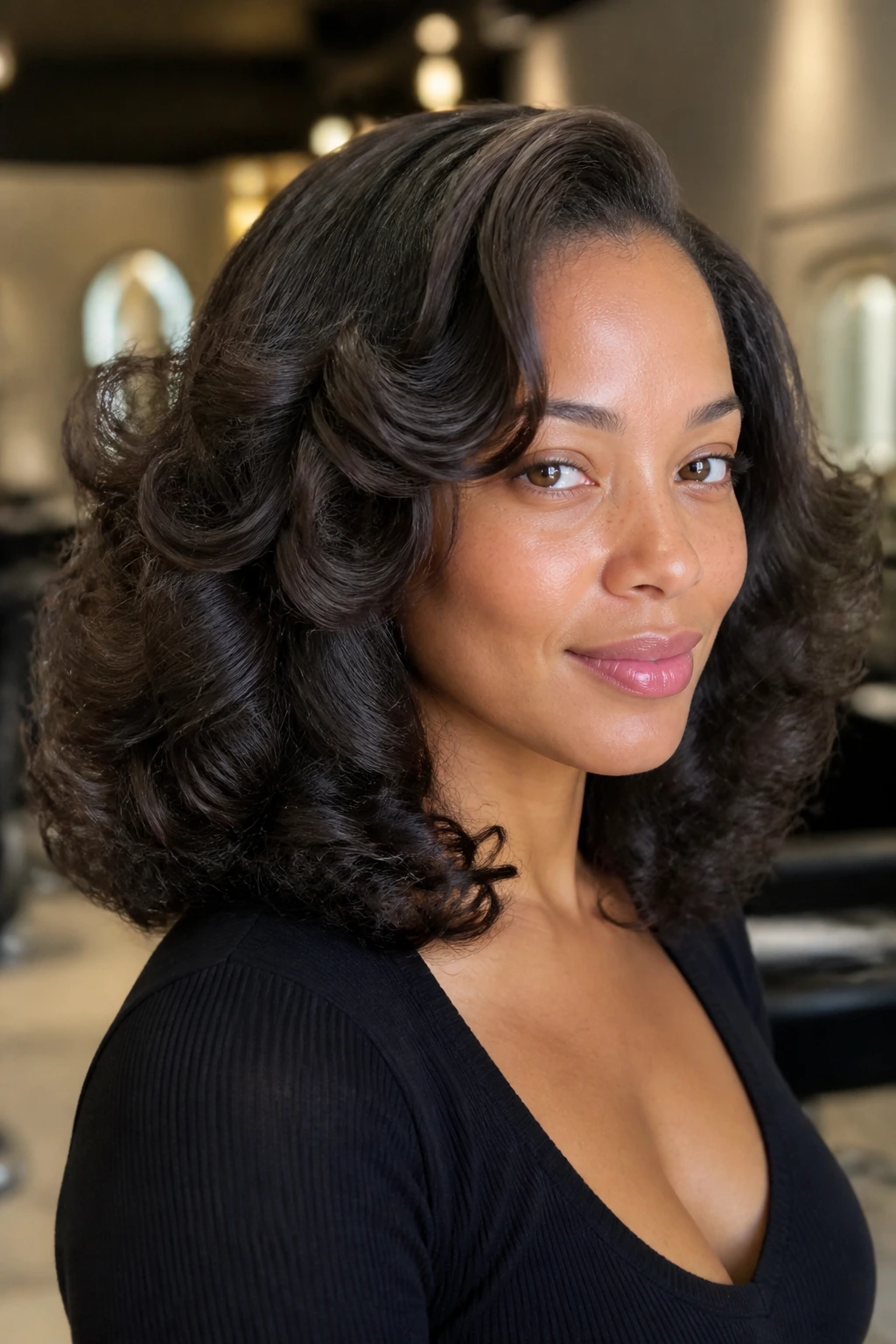
A rod set gives a very clean curl pattern, but it does not have to stay tiny. Once the hair is fully dry, you can brush the outer layer a little and let the ends bloom.
Use flexi rods or perm rods on sections about 1/2 inch to 3/4 inch wide, depending on how tight you want the curl. Dry the hair completely. Not mostly. Completely. Rod sets hold their shape best when they cool down before you touch them.
The finished look has a smooth root area, springy mid-lengths, and soft ends that fan out. That combination can look fuller than looser styling because the curl pattern is so even.
If the hair feels damp when you remove the rods, stop and wait. Rushing this style ruins the volume.
22. Deep Center-Part Spiral Shape
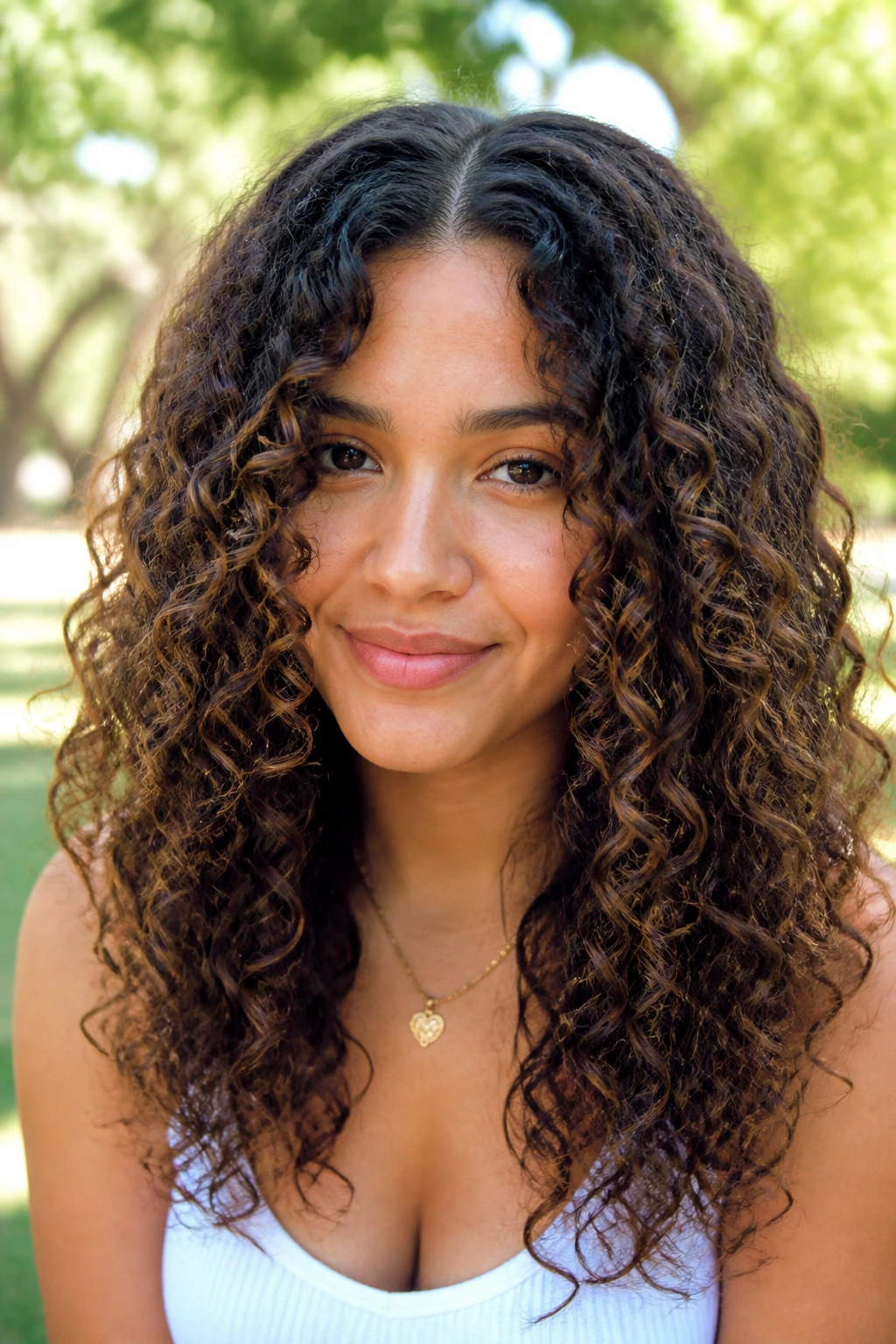
A center part can feel flat on curly hair if the layers are wrong. Put the right shape under it, though, and it turns into a waterfall of balanced volume.
This style works well when the curls are cut so both sides mirror each other, with enough weight removed around the crown to keep the part from collapsing. The center line gives the face symmetry, and the curls on both sides build outward instead of fighting each other.
It’s a good look for oval and heart-shaped faces, but I like it on round faces too, because the vertical line can lengthen everything a bit. The curls should fall like curtains, not like a curtain rod.
A few root clips at the top while drying can keep the center from sinking.
23. TWA with Sculpted Shape
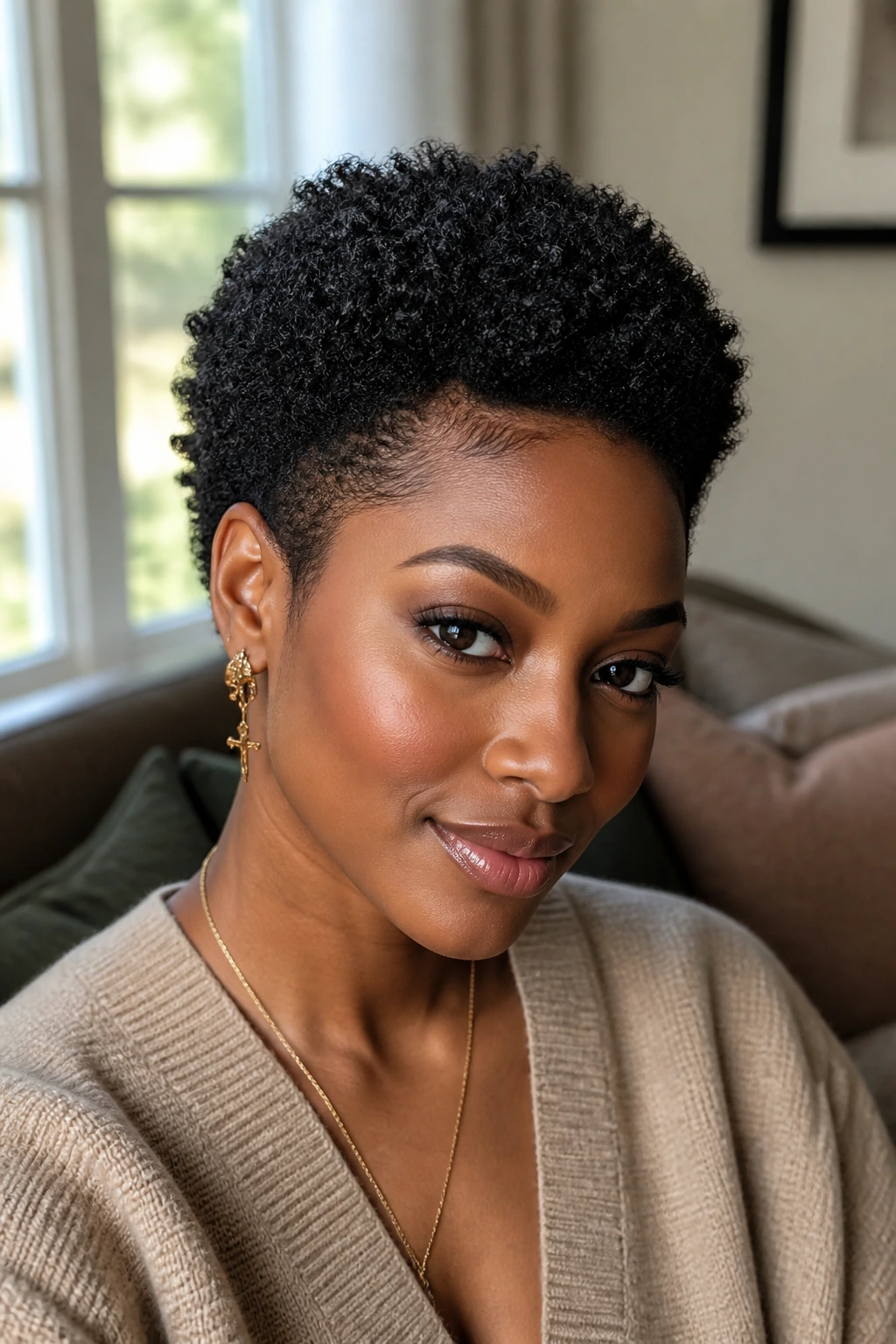
A teeny weeny afro can be packed with volume if the cut is shaped with intention. Short does not mean small. It means the silhouette has to work harder.
What to Ask For at the Chair
Keep a little more length on top, taper the sides if you want height, and ask for a shape that follows the head without clinging too hard to the scalp. On tight coils, even half an inch of difference can change the outline.
Use a pick at the roots after styling, then stop. Overworking a TWA is how you lose the clean shape and end up with a cloud that sits in the wrong places.
This style looks best when it is crisp around the edges and soft at the top. That contrast is where the volume lives.
24. Layered Long Ringlets
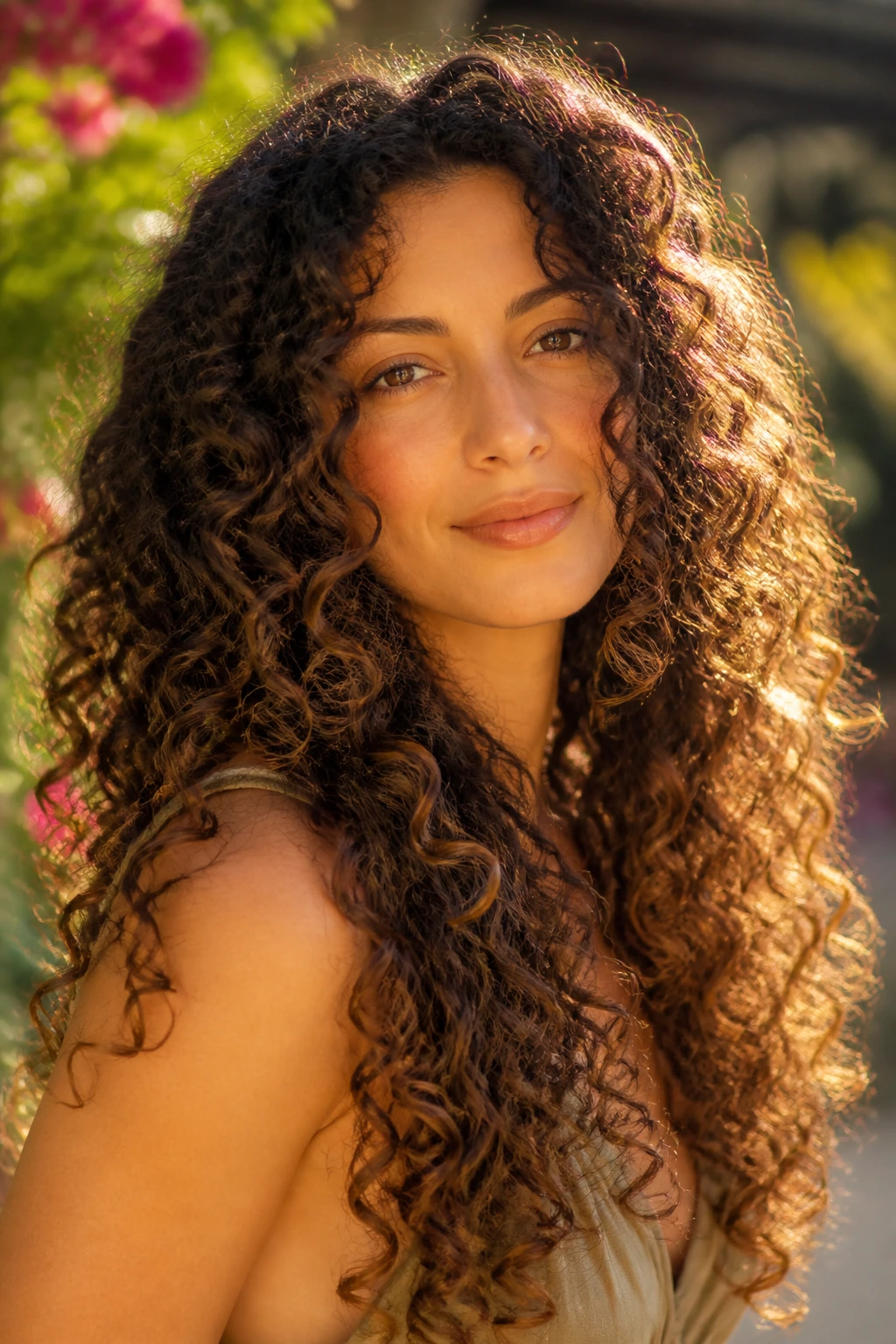
Long curls need help if they’re going to look full instead of weighed down. Layers are that help, but only when they’re placed with some restraint.
Keep the shortest layers below the cheekbone or collarbone so the crown still has mass. If the layers start too high, the hair can get stringy at the ends. If they start too low, the curls stay heavy and lose lift near the roots.
This is one of those cuts that seems simple until you compare it to a one-length shape. The layered version bounces more, opens around the face, and feels lighter in motion. The other one can still be nice, but it usually needs more coaxing.
Long curls like room. Give them room.
25. Curly Shag with Airy Crown
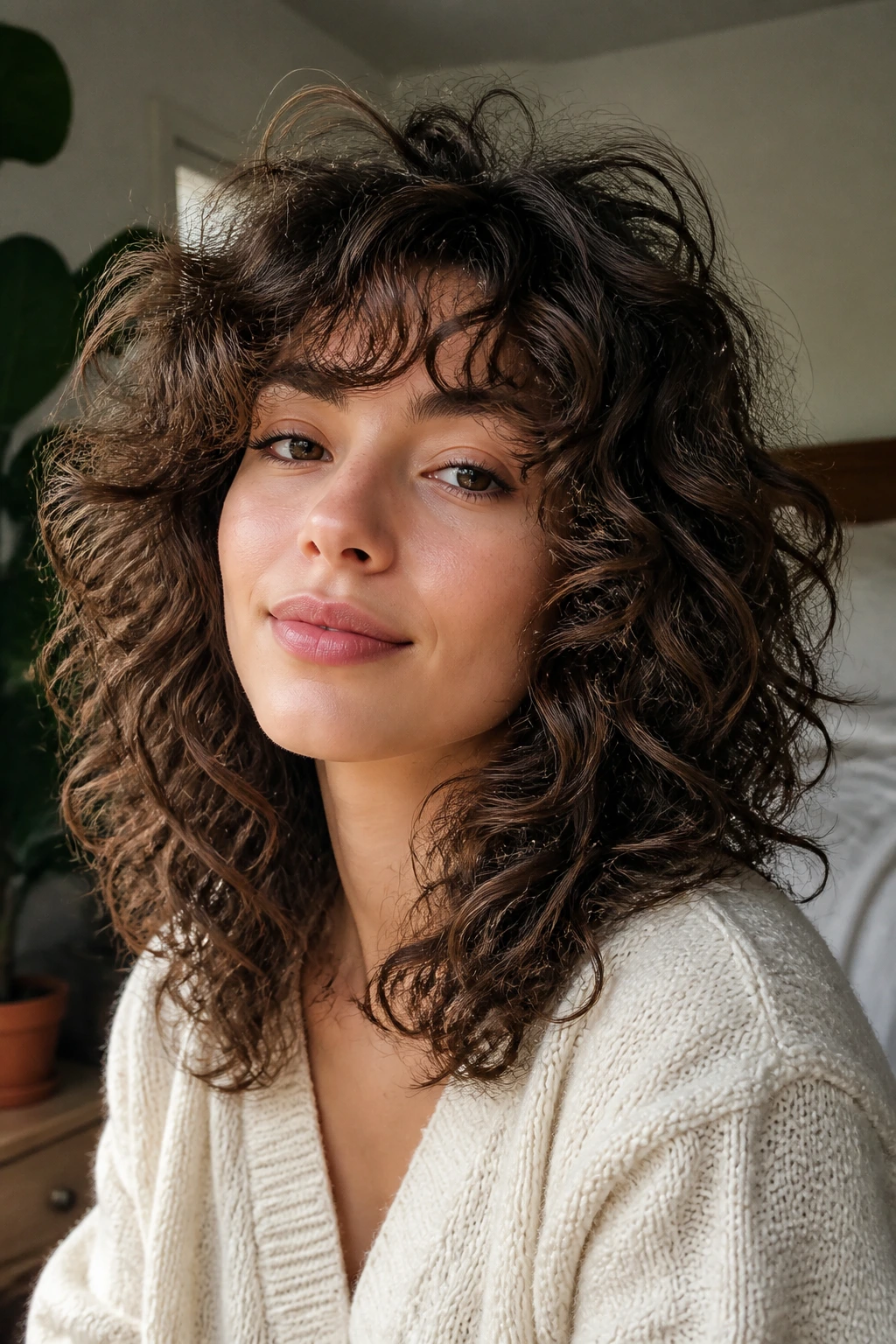
The shag and curly hair get along because both like a little mess. Choppy layers, a light fringe, and an airy crown make this cut feel full from the first wash.
- Ask for crown layers that remove weight without carving the top too short.
- Keep the fringe soft so it blends into the front pieces.
- Let the perimeter stay uneven enough to keep the shape loose.
A curly shag looks best when it is not over-brushed. Fingers, pick, diffuser, done. If you smooth it too hard, the cut loses its whole point and starts looking like a helmet with opinions.
This is the cut for people who want volume that moves instead of volume that sits still.
26. One-Side Tuck with Big Top Volume
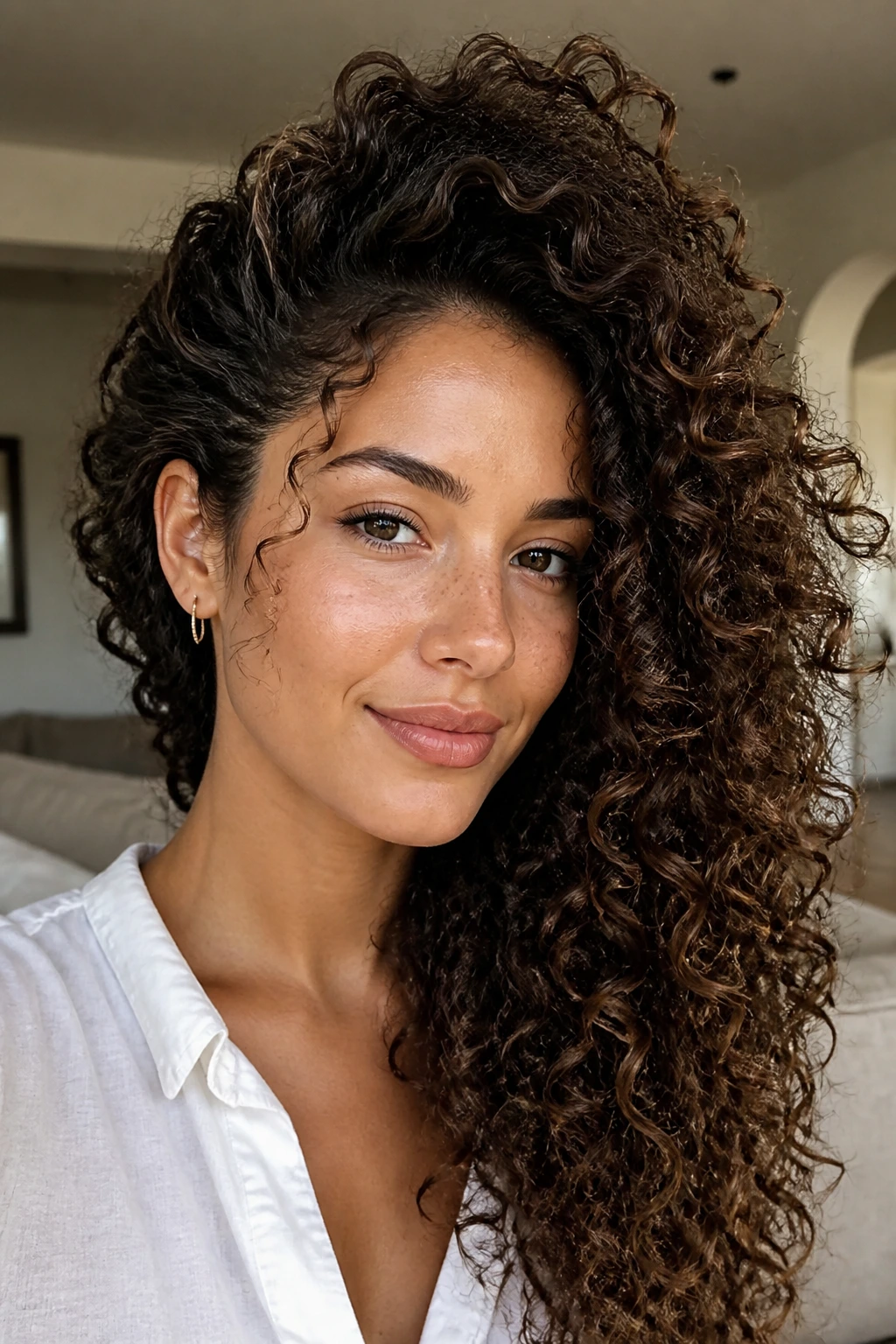
Why does a tucked side make curls look fuller up top? Because the eye stops reading width on both sides and starts focusing on the crown and the open half of the style.
Tuck one side behind the ear and pin it low with two bobby pins if needed. Then use your fingers to lift the top section and let the other side fall a little wider. The imbalance is deliberate. It gives the hair shape and keeps the style from reading as heavy.
How to Keep the Tucked Side Soft
Leave one front curl loose near the temple. That tiny piece prevents the tucked side from looking too sharp. It also keeps the style from turning into a formal updo when you wanted something relaxed.
This look works especially well on medium and long curls that need a little lift but not a full pinned style.
27. Braid-Out with Brushed Crown
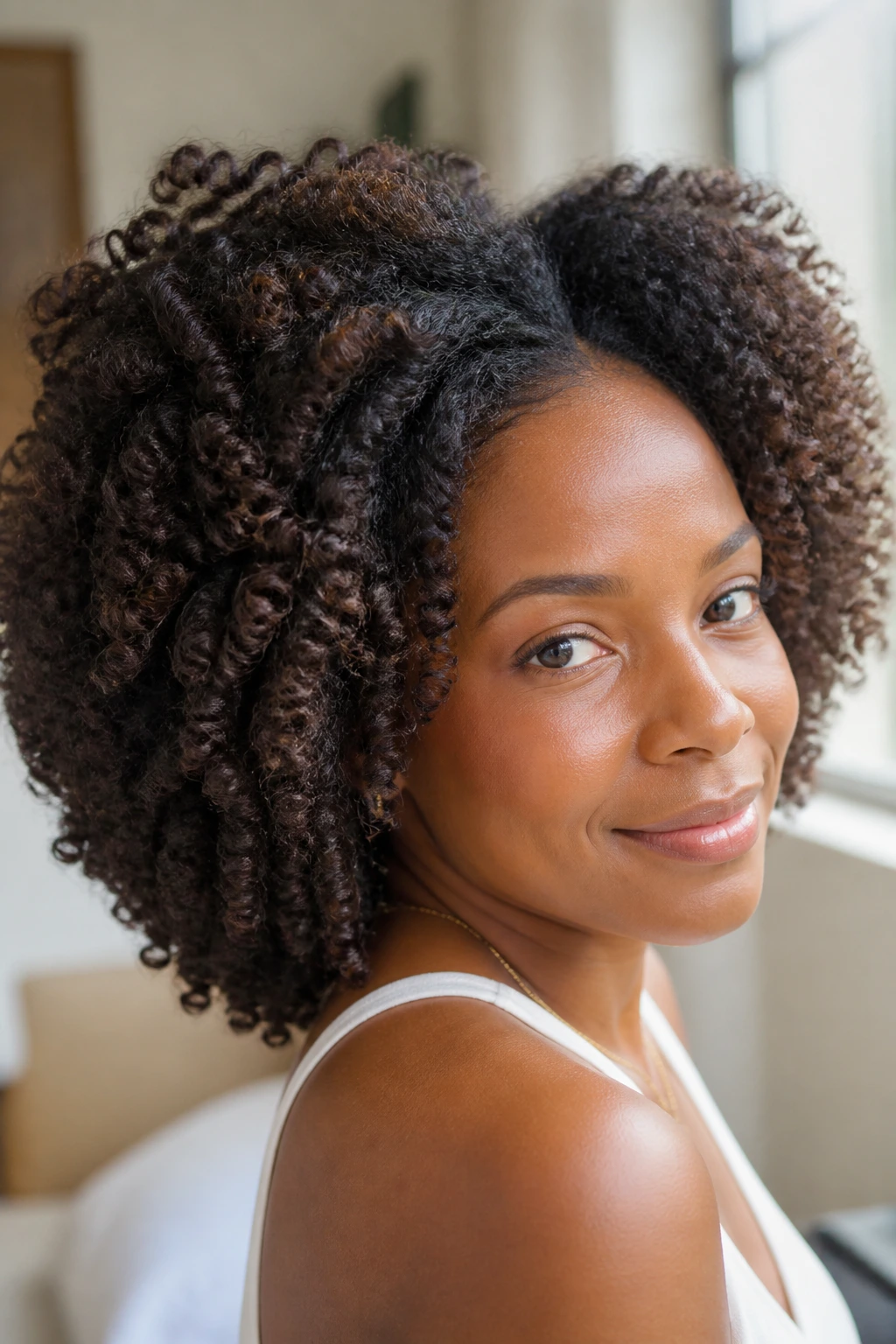
A braid-out gives a wider wave pattern than a twist-out, which is why it often reads as fuller. The texture spreads out a little more once it’s unraveled.
Use three-strand braids in sections around 1/2 inch to 1 inch wide. Smaller braids give tighter waves. Bigger braids give broader, puffier texture. Let the hair dry fully, then separate each braid once and use your fingertips to fluff the crown.
The crown should stay the least defined part of the style. That’s not a flaw. That is the point. If the top is too neat, the whole braid-out can look flat and narrow.
I like braid-outs when I want body without a sharp curl pattern. They feel softer than coils, looser than twists, and a little more open.
28. Pinned-Back Crown Roll with Loose Ends
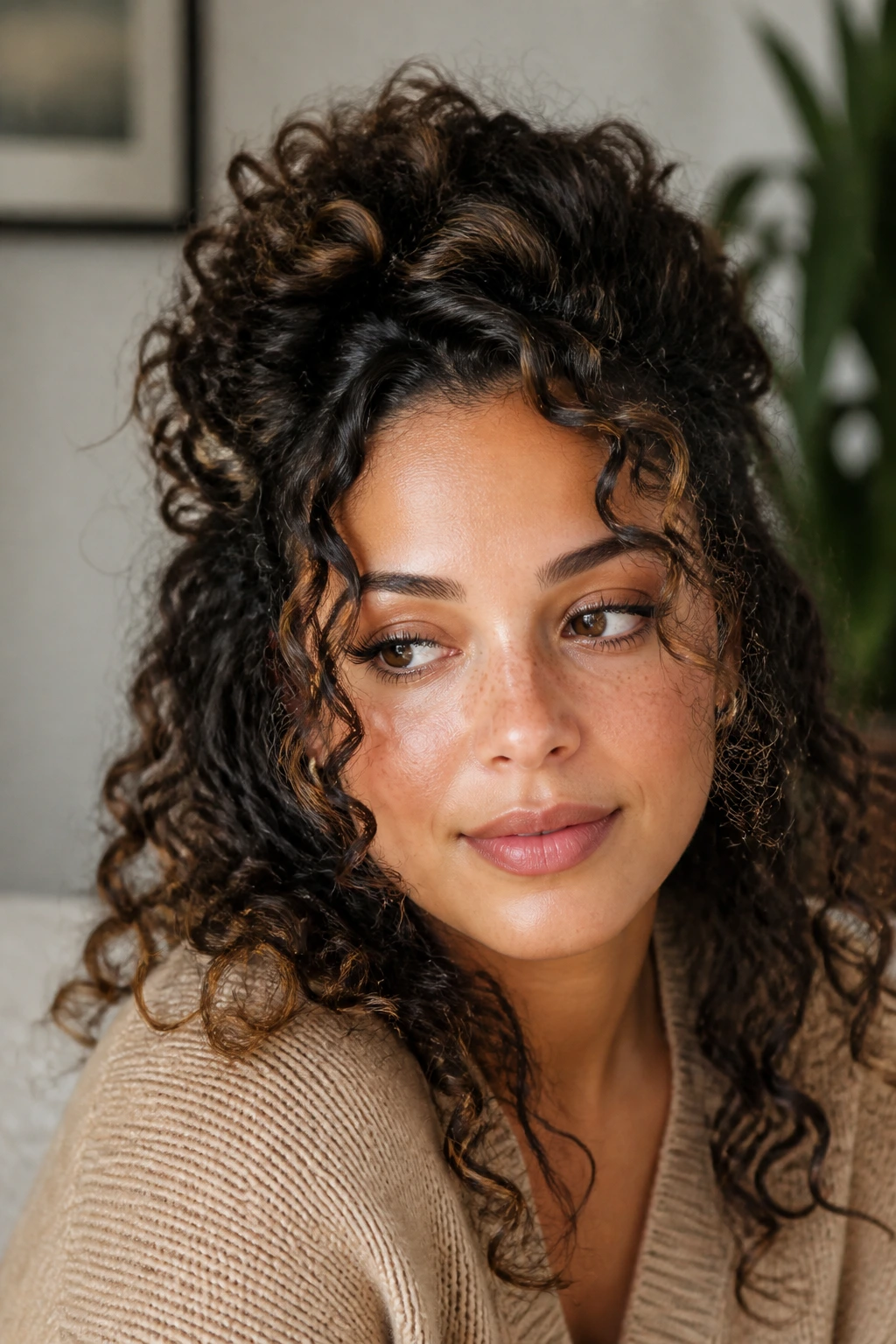
A pinned-back crown roll gives curly hair a little old-school polish without flattening the texture. Roll or twist the front sections back from the temples, pin them into a soft ridge, and leave the rest loose.
The ridge should sit just behind the hairline, not halfway back on the head. That placement keeps the volume where people can see it. If you pin too far back, you lose the lift and the look turns plain.
This style is handy when you want volume around the face and crown but need the front out of the way. It has a bit of shape, a bit of softness, and enough structure to feel finished.
A tiny mist of water on the front pieces before rolling can help them stay pliable. Not soaked. Just flexible.
Final Thoughts

Big curls do not have to mean big frizz, and they do not have to mean a lot of work either. The strongest looks here all do the same thing in different ways: they build lift at the roots, keep the outline round, and leave the ends with room to breathe.
If your curls keep falling flat, start with shape before you start shopping. A side part, a better cut, or a clipped crown often helps more than another bottle of styling cream. That’s the annoying truth and the useful one.
The best volume usually looks a little effortless and a little engineered at the same time. That’s the sweet spot.
