



Mahogany curls can change the whole mood of curly hair. On tight coils, the shade reads warm and wine-dark; on looser spirals, it leans chestnut with a red edge that shows up when the hair moves. It’s a shade with range.
That range is the reason I keep coming back to it. A good mahogany tone doesn’t sit flat on curls the way it can on straight hair. It bends with the curl pattern, darkens in the shadowy spots, and flashes a little red-brown where the strands separate. The result feels richer than a single-tone brown and calmer than a bright red. In other words, it has some drama, but it doesn’t shout.
There’s also a practical side people sometimes miss. Curly and coily hair already does a lot visually, so the best mahogany looks are the ones that respect the shape instead of fighting it. A blunt cut can make the color feel heavy. Soft layers, a clean silhouette, and the right finish can make the shade look polished, lived-in, and expensive without trying too hard.
The sweet spot is pretty simple: pick a curl shape that gives the mahogany room to move, then decide whether you want the color to read deeper, warmer, or more plum-toned. That’s where the fun starts.
1. Classic Mahogany Wash-and-Go
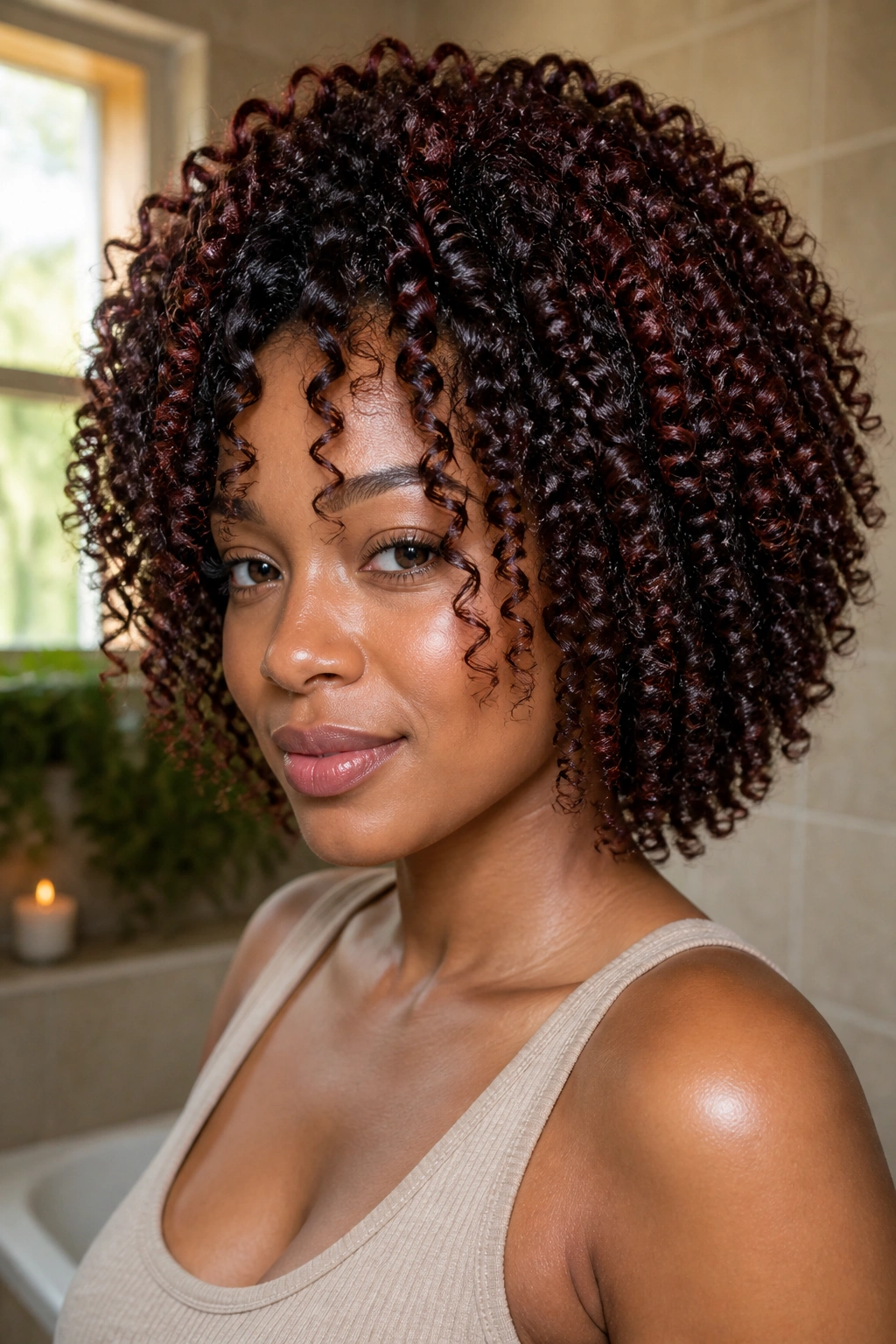
A wash-and-go is the cleanest way to show off mahogany on curly hair. There’s nowhere for the color to hide, which is exactly why it works. Every curl clump becomes a little ribbon of red-brown, and the whole head looks layered even when the cut is simple.
Why It Flatters Tight Curl Patterns
On 3B to 4B curls, mahogany tends to look deeper at the root and brighter on the outer curve of the curl. That tiny shift gives the hair movement before you even touch it. If your curls already spring into a defined pattern, the color does half the work for you.
The trick is keeping the finish soft, not stiff. A gel cast that’s too hard can make the shade look flat. A flexible hold cream plus a light gel gives you definition without turning the whole style into a helmet.
- Use small curl sections so the mahogany reads in ribbons, not as one solid block.
- Diffuse on low heat for 10 to 15 minutes if you want a little lift at the root.
- Choose a slightly deeper root shade if your ends are porous or lighter.
Best tip: keep the shine light and controlled. Mahogany looks richer when the curl pattern stays visible.
2. Mahogany Twist-Out With Soft Stretch
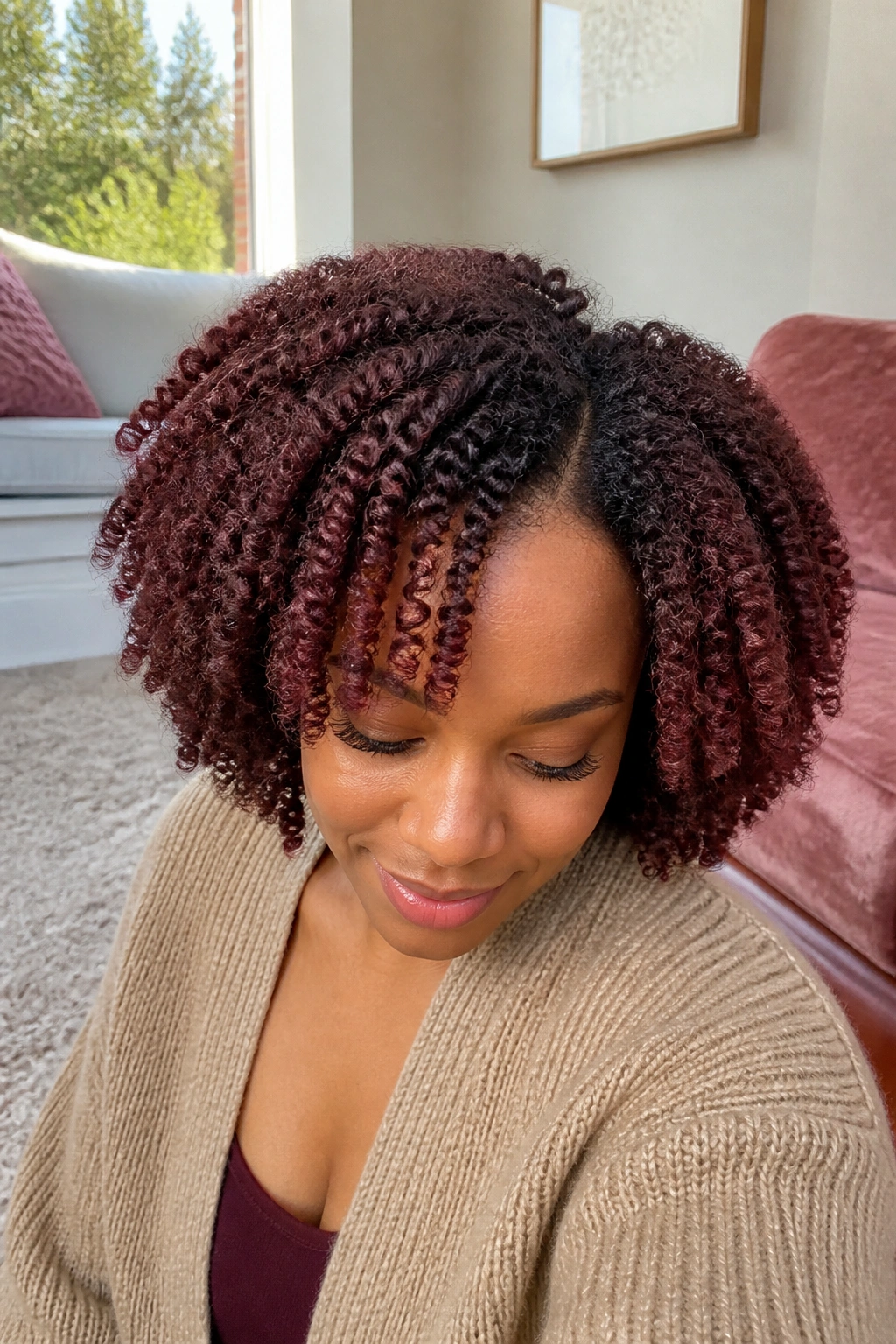
A twist-out can make mahogany look richer than a straight color job. The reason is simple: stretched curls show more of the strand, so the red-brown tone travels farther across each twist and reads as a longer color ribbon. That creates depth without needing extra highlights.
I like this style on medium to dense hair because it gives shape without collapsing into a puff. Two-strand twists work best when they’re set on damp hair and allowed to dry all the way through. If you undo them too early, the twist-out turns fuzzy fast, and mahogany can start to look dusty instead of glossy.
The finish should feel soft, not sticky. Use a cream with enough slip to smooth the twist, then separate with lightly oiled fingers once the hair is dry. You want visible definition at the crown and slightly looser ends. That contrast keeps the color from looking too uniform, which is where a lot of dyed curl styles go wrong.
3. Chin-Length Mahogany Curly Bob
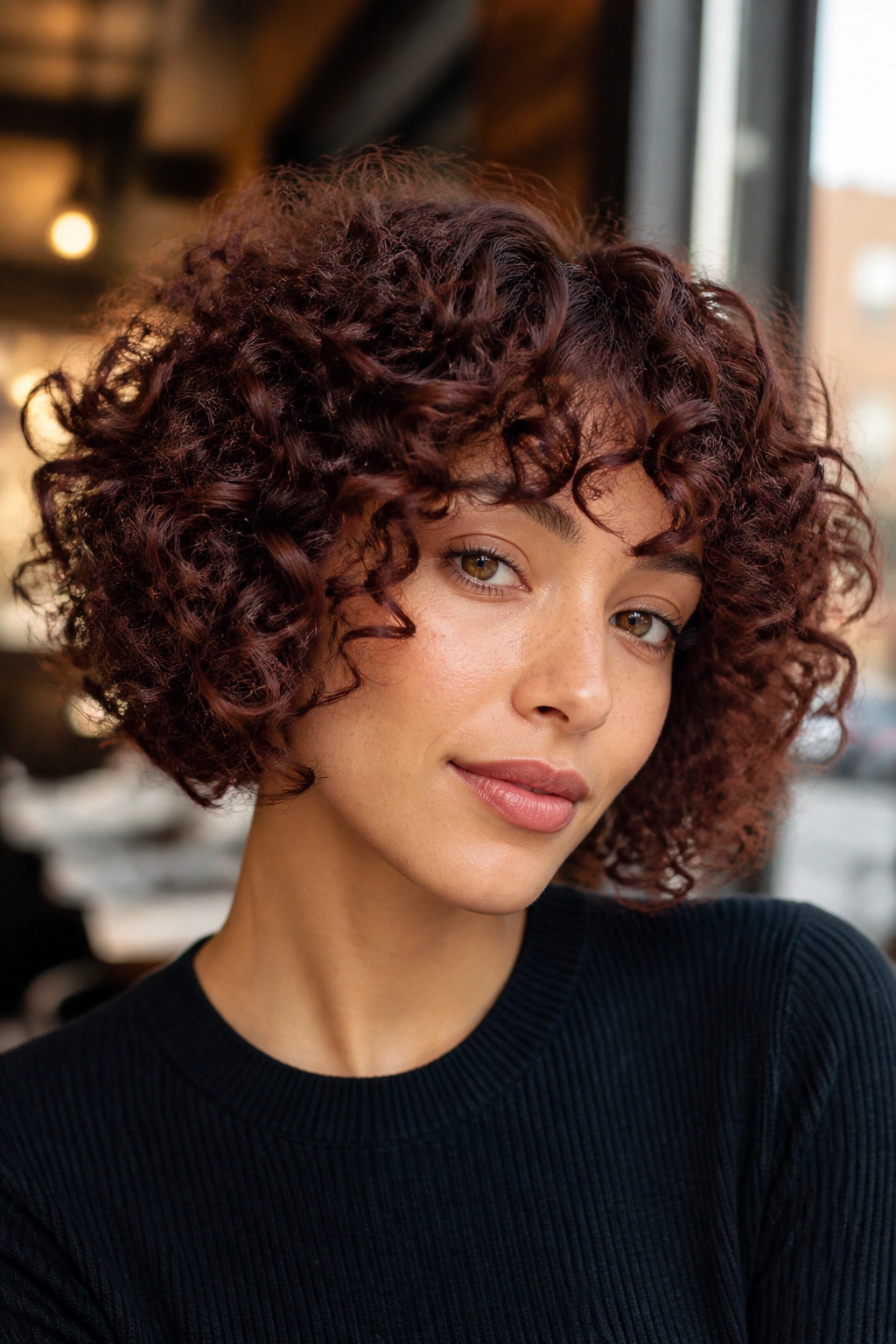
Why does a chin-length cut work so well with mahogany curls? Because the color lands right where people look first. The jawline, the cheekbones, the front pieces — all of it sits in the same visual zone, so the shade reads immediately instead of drifting into the background.
A bob also keeps the curl pattern compact. That matters more than people admit. Long curls can be gorgeous, but a tighter shape lets mahogany look denser and more intentional, especially if your hair has a mix of loose spirals and tighter coils in the same head. The cut evens out the silhouette.
Styling Notes
- Keep the bottom line clean so the bob doesn’t puff outward.
- Ask for light internal layers if your curls stack heavily at the sides.
- Let the front fall half an inch longer than the nape if you want a softer frame.
A chin-length mahogany bob has a neat little attitude. It looks put together on rough hair days, which is half the appeal.
4. Tapered Mahogany Coil Cut
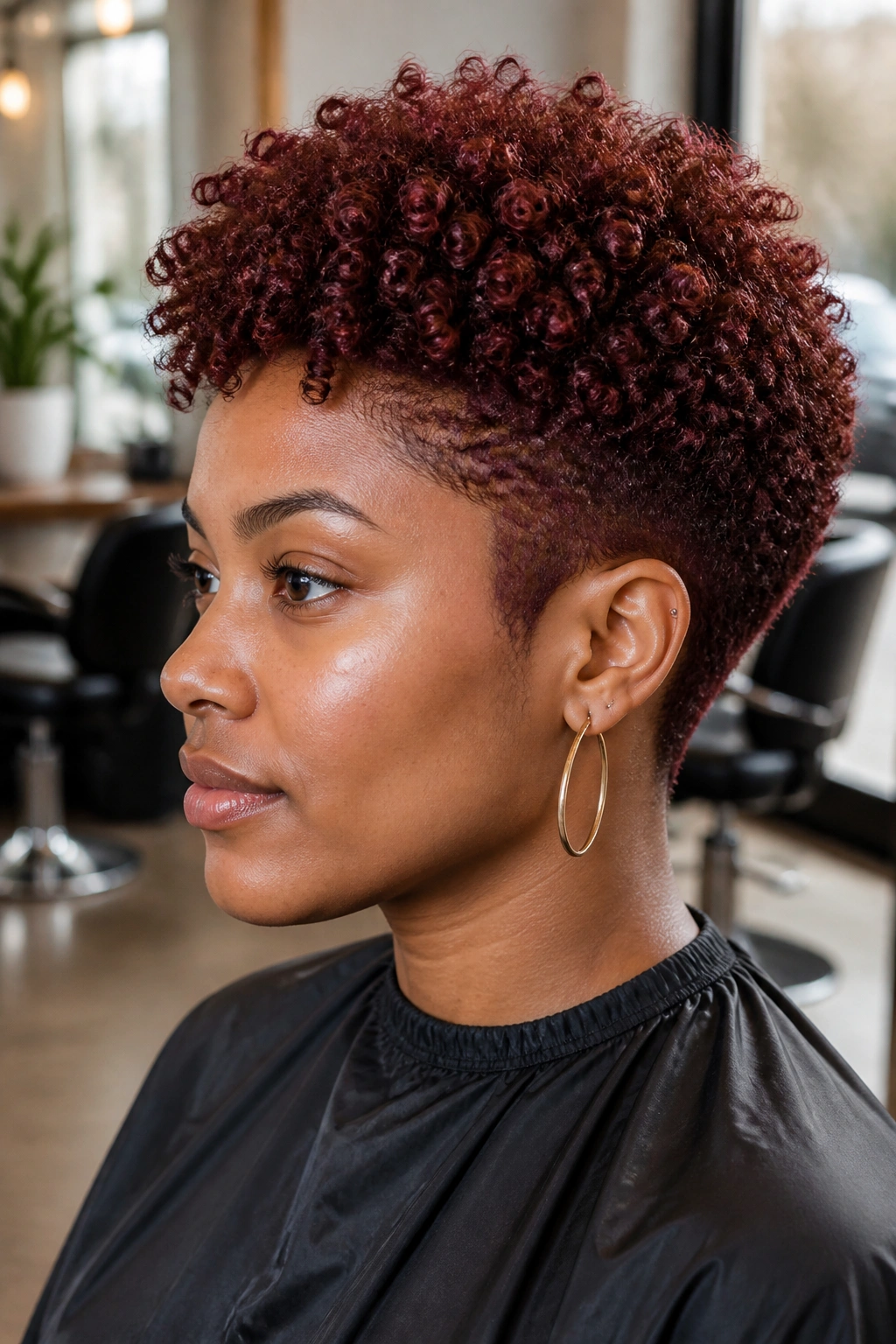
Picture a tapered cut with the sides close and the crown left full. That shape makes mahogany look bold without making the color itself louder. The eye goes straight to the top, where the coils catch the deepest brown tones and the red glints sit just on the surface.
This is one of those styles that looks especially good when the curls are healthy and springy. A tapered shape can expose dryness fast, so moisture matters. But if the hair is hydrated, the cut gives you height, definition, and a clean neckline all at once. It’s sharp in the best way.
- Leave the top 3 to 4 inches fuller than the sides.
- Keep the nape neat so the shape feels deliberate.
- Ask for a soft edge around the temples if you do not want the cut to look harsh.
What I like most here is the contrast. The cut is tidy; the color is rich. Together, they do more than either one would alone.
5. Deep Mahogany Afro
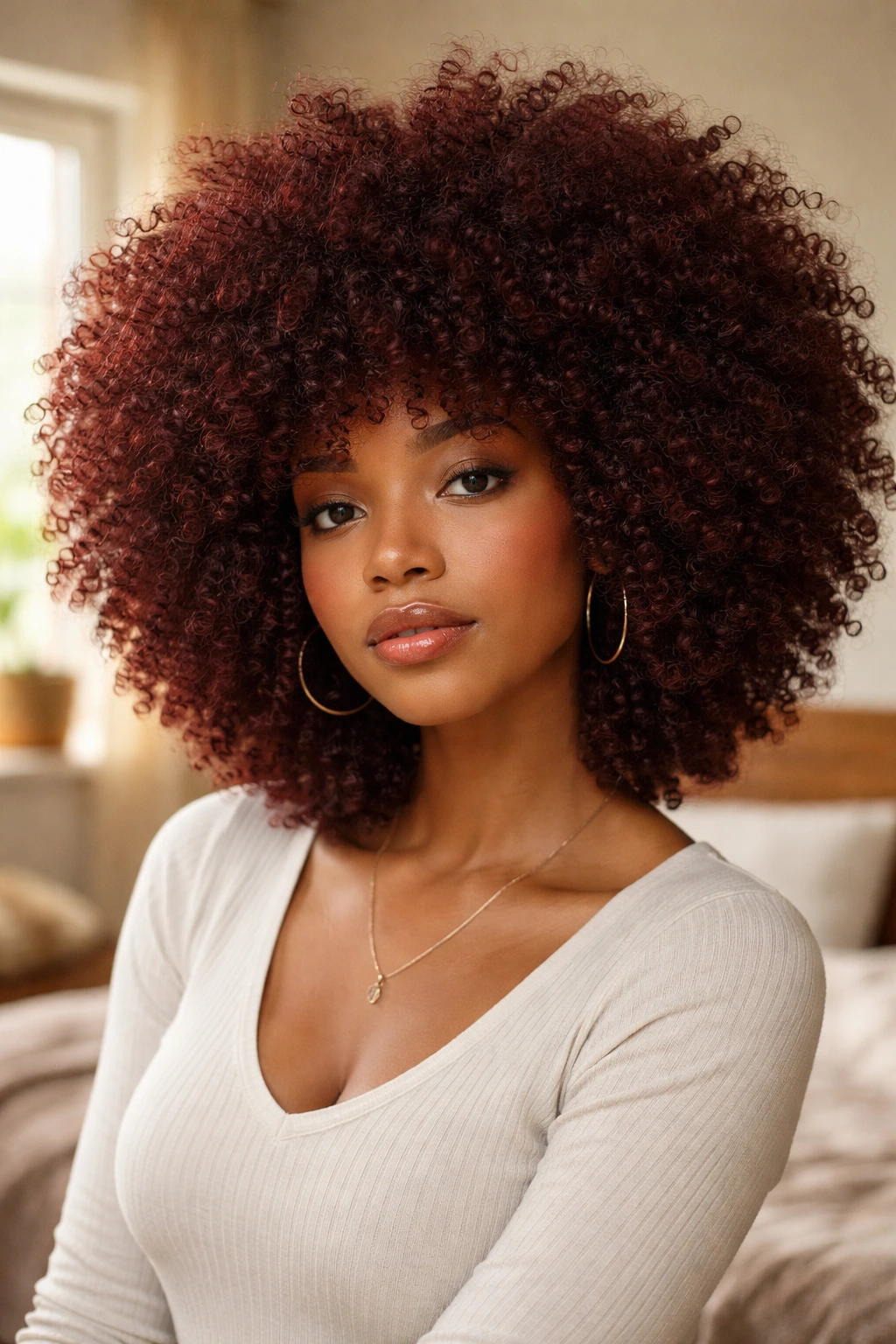
A deep mahogany afro is what happens when volume and color stop competing. The shape does the talking first. Then the shade sneaks in and makes the whole thing feel warmer, denser, and more layered than a plain brown afro ever could.
This works especially well if your hair is thick or has a strong shrinkage pattern. The rounded shape gives mahogany a lot of surface area, which means the shade can show different tones in different zones. Near the crown, it may look almost espresso. Toward the outer halo, the red-brown warms up. That shift is the good stuff.
A big afro needs a clean outline or it can drift into a vague cloud. I like a light pick at the root, not all the way through the ends, and a trim that keeps the top rounded instead of flat. One inch off the right spots can do more than a half hour of styling.
It’s a simple style, really. That’s why it works.
6. Mahogany Curls With Copper Money Pieces
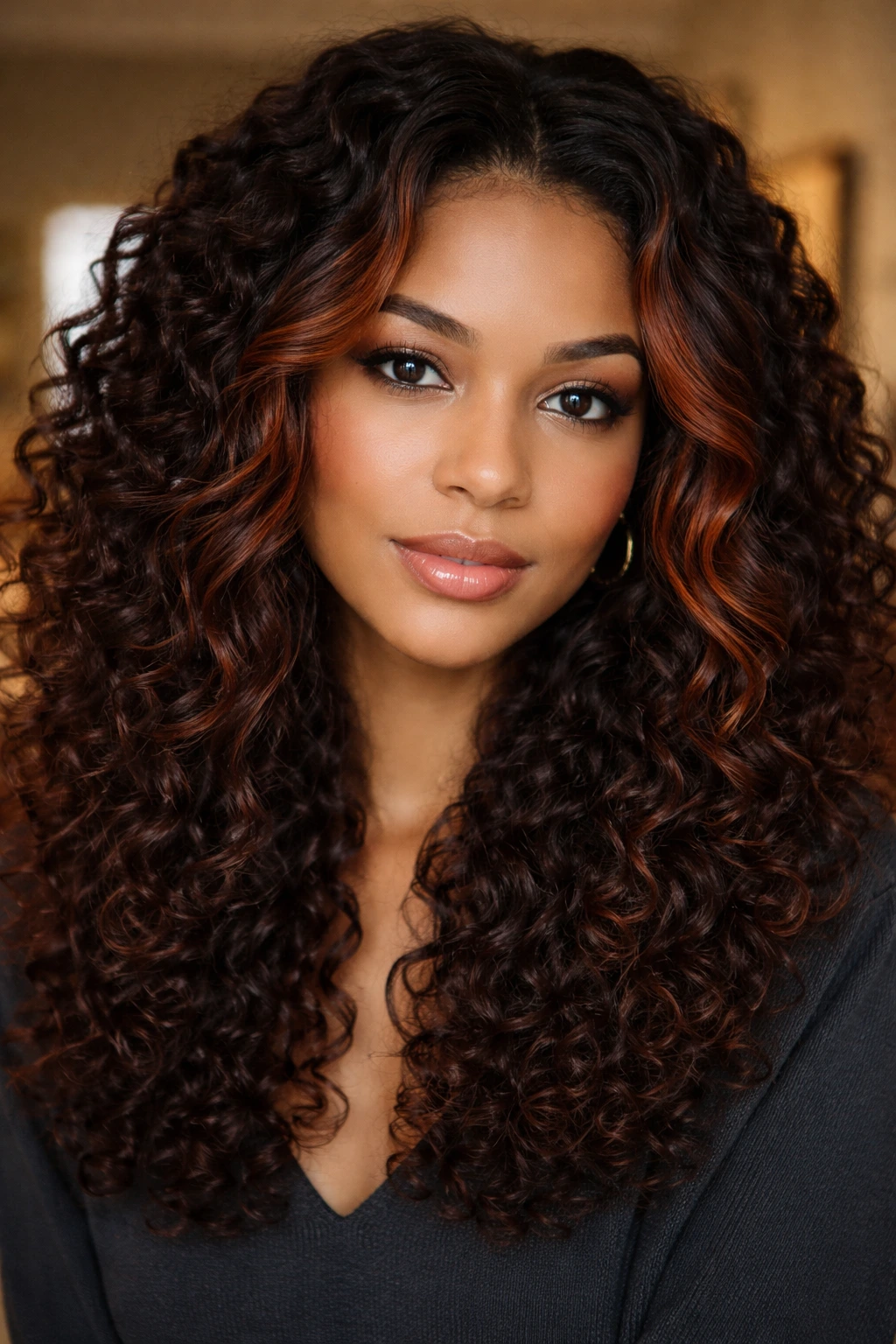
A full-head mahogany dye is one thing. Face-framing copper pieces are another. The second option gives you brightness near the eyes and keeps the rest of the hair darker, which is a nice move if you want the color to feel lively without turning the whole head into a warm red-brown cloud.
The placement matters. Thin pieces placed too close together can look stripey, and curly hair is merciless about that. I prefer two pieces on each side, about 1/2 inch to 1 inch wide, starting roughly 1 to 2 inches back from the hairline. That keeps the brightness where it can do some work.
This style is also easier to live with between salon visits. The roots are less obvious because the contrast is intentional, not accidental. If you’re nervous about copper, this is the version to try first.
For anyone with darker curls who wants a little lift around the face, this is the move I’d pick before anything more dramatic.
7. Layered Mahogany Shag
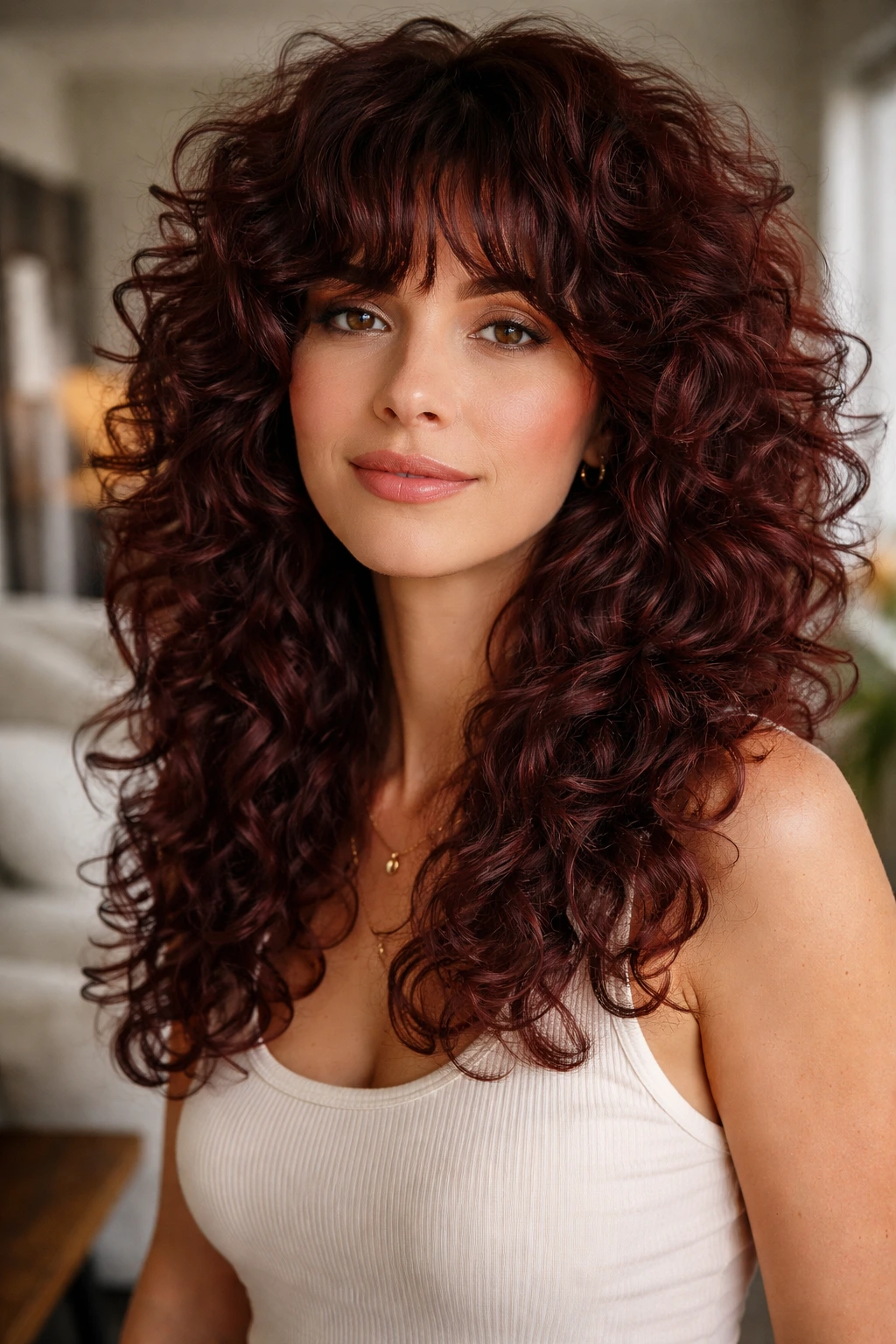
The shag changes the whole mood. Instead of one round shape, you get movement from the crown down, and mahogany follows those layers like a line drawn across the hair. On curly textures, that means the shade can look edgy, soft, and a little undone all at once.
Where the Layers Matter
The shortest pieces belong near the crown and upper sides. That keeps the top from collapsing. If the layers start too low, the haircut loses its shape and the color just looks chopped up. A good shag should still feel connected from root to end, even when the pieces move separately.
- Keep the fringe curls a little shorter so they bounce above the brow.
- Leave the bottom layers longer to keep the style from getting too fluffy.
- Ask for minimal thinning if your hair is fine; shag and thinning are not the same thing.
I love this cut on people who wear air-dried curls a lot. It looks lived-in on purpose, which is harder to fake than people think.
8. Mahogany Pineapple Updo
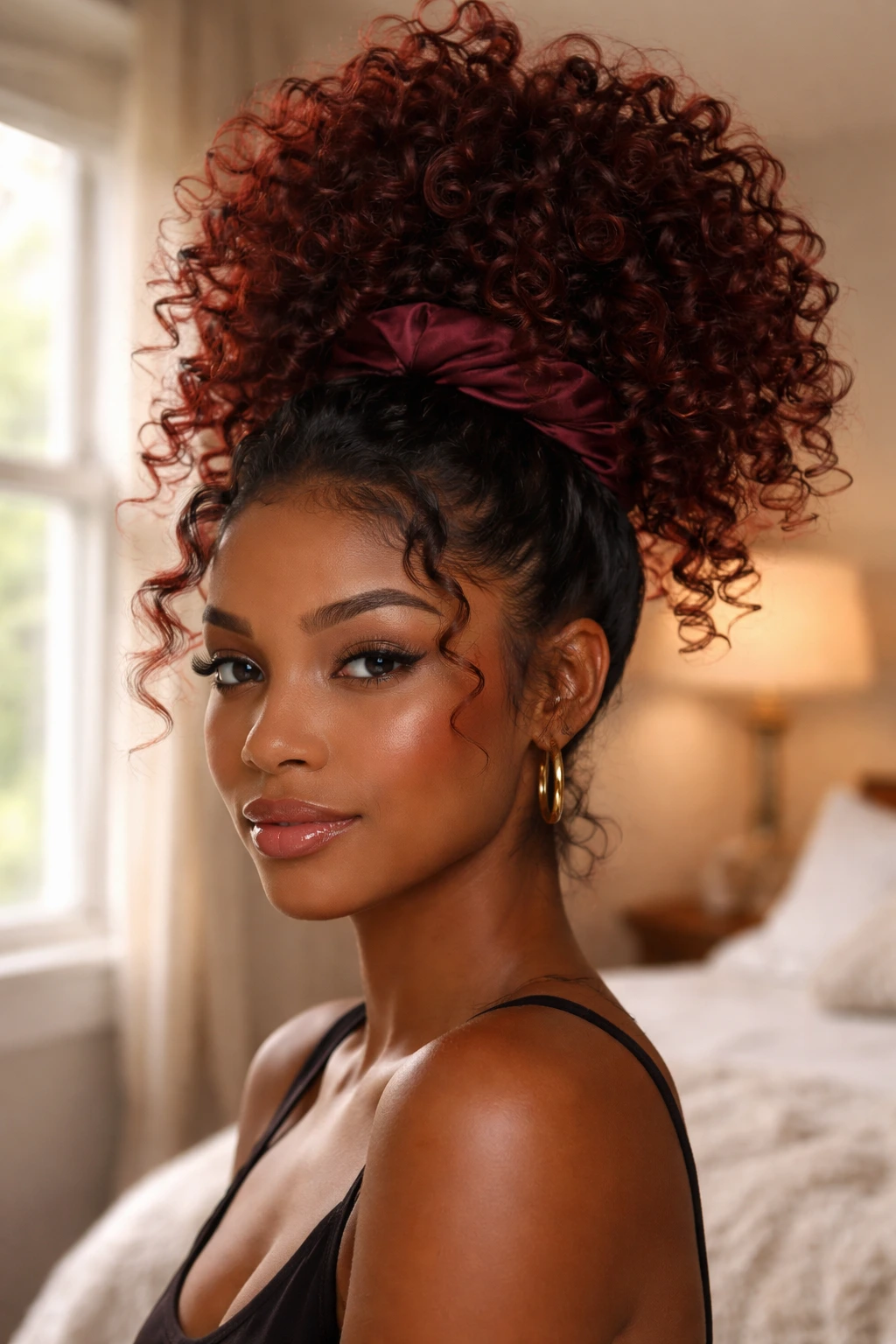
A high pineapple is the easiest way to make mahogany curls look lively on day three. It lifts the hair up and away from the face, which puts the darker root zone and the warm ends in the same frame. You get height, shape, and a little drama without restyling the whole head.
What sells this look is the contrast between the gathered crown and the loose curls at the top. The mahogany shade is more visible when the hair sits high, because the curl layers stack instead of spreading out. A satin scrunchie helps a lot here. So does not over-smoothing the front. A few soft edges near the hairline keep the style from looking too severe.
I also like this for medium-length curls that need a reset between washes. The pineapple protects the ends and gives the style a second life. If the back is a bit flattened, a quick fluff with your fingers fixes most of it.
Simple. Fast. Useful.
9. Face-Framing Mahogany Layers
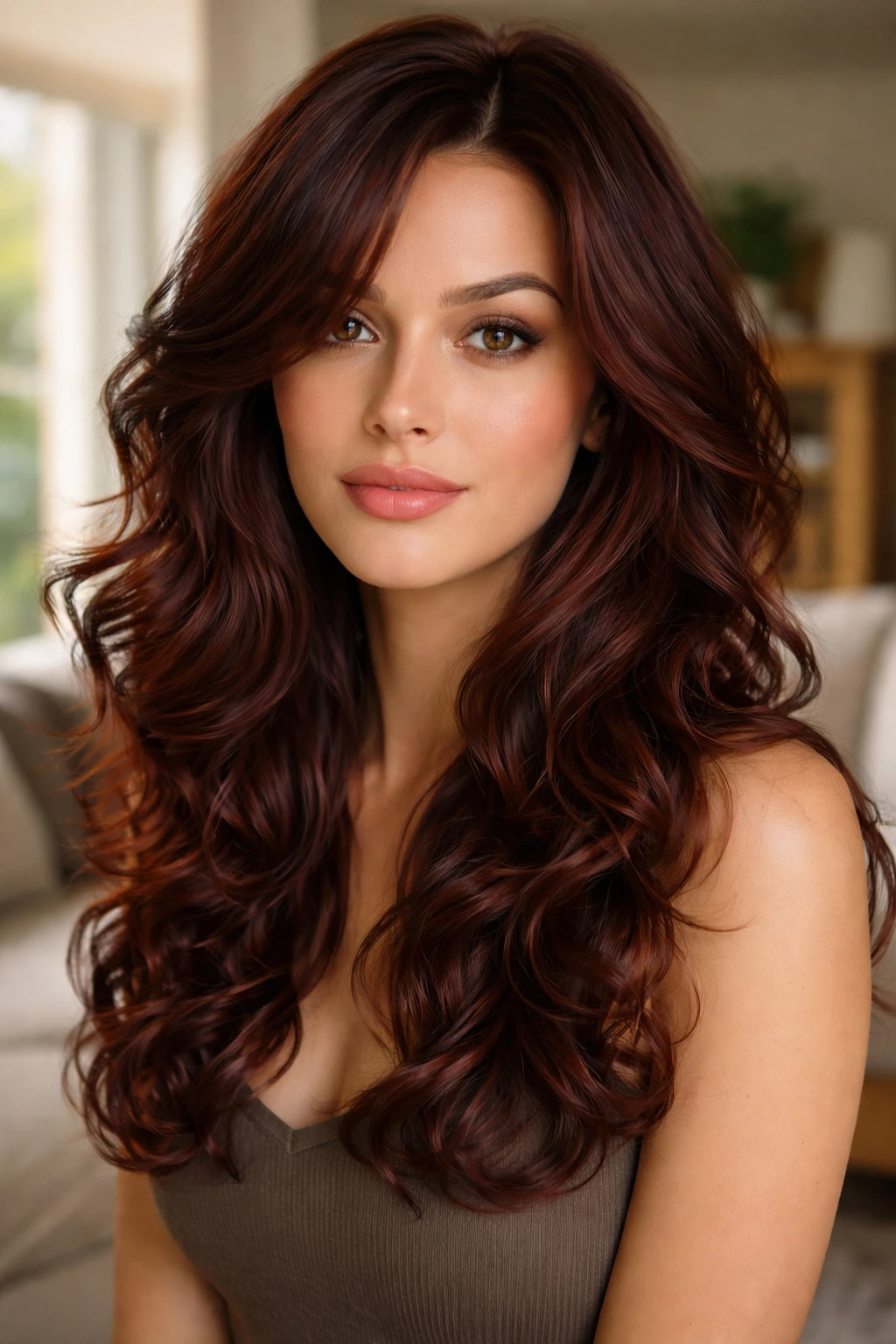
Why do face-framing layers work so well in mahogany curls? Because they keep the color near the skin, where warm brown-red tones make the most sense. You don’t need a lot of hair cut away. You need the right pieces cut in the right place.
The best version usually starts around the cheekbone or just below it, then falls longer toward the collarbone. That shape softens the face and lets the front curls move. On curly hair, a blunt face frame can feel heavy fast, so the layers should be cut dry or with the curl pattern fully mapped out. Wet curly hair lies.
How to Ask for the Cut
- Ask for front layers that start at cheekbone level.
- Keep the longest pieces near the collarbone.
- Avoid aggressive thinning near the front.
- Bring your curls in their natural state if you can.
This is the kind of cut that looks understated until you see it from the side. Then it suddenly makes sense.
10. Mahogany Braid-Out With Soft Definition
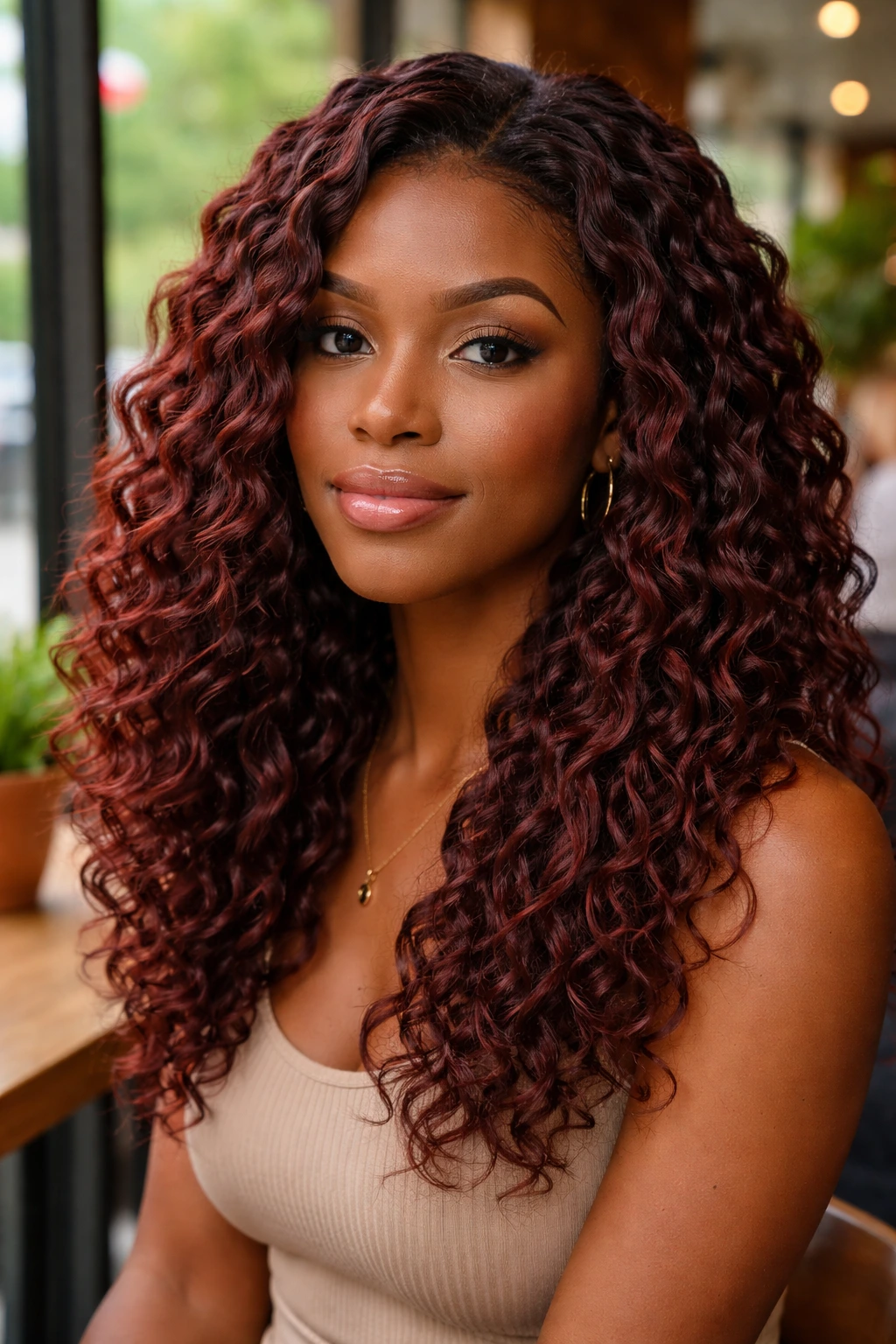
A braid-out gives mahogany curls a broader, softer pattern than a twist-out. The braid lines create a more open wave, which is useful if you want the shade to read as dimensional instead of tightly coiled. It’s one of my favorite ways to show off color on hair that shrinks a lot.
The main rule is patience. The braids need to be fully dry before take-down, or the pattern falls apart within an hour. Six to ten braids usually work for medium-density hair, though thicker hair may need more. I like medium-sized braids rather than tiny ones because they keep the shape from getting too frizzy.
A little oil on your fingers during separation helps the strands slide apart instead of roughing up the cuticle. That matters with mahogany, since a dry finish can make the color look muted. The shine should feel soft, not wet.
If you like a fuller, less uniform curl pattern, braid-outs wear mahogany well.
11. Plum-Toned Mahogany Curls
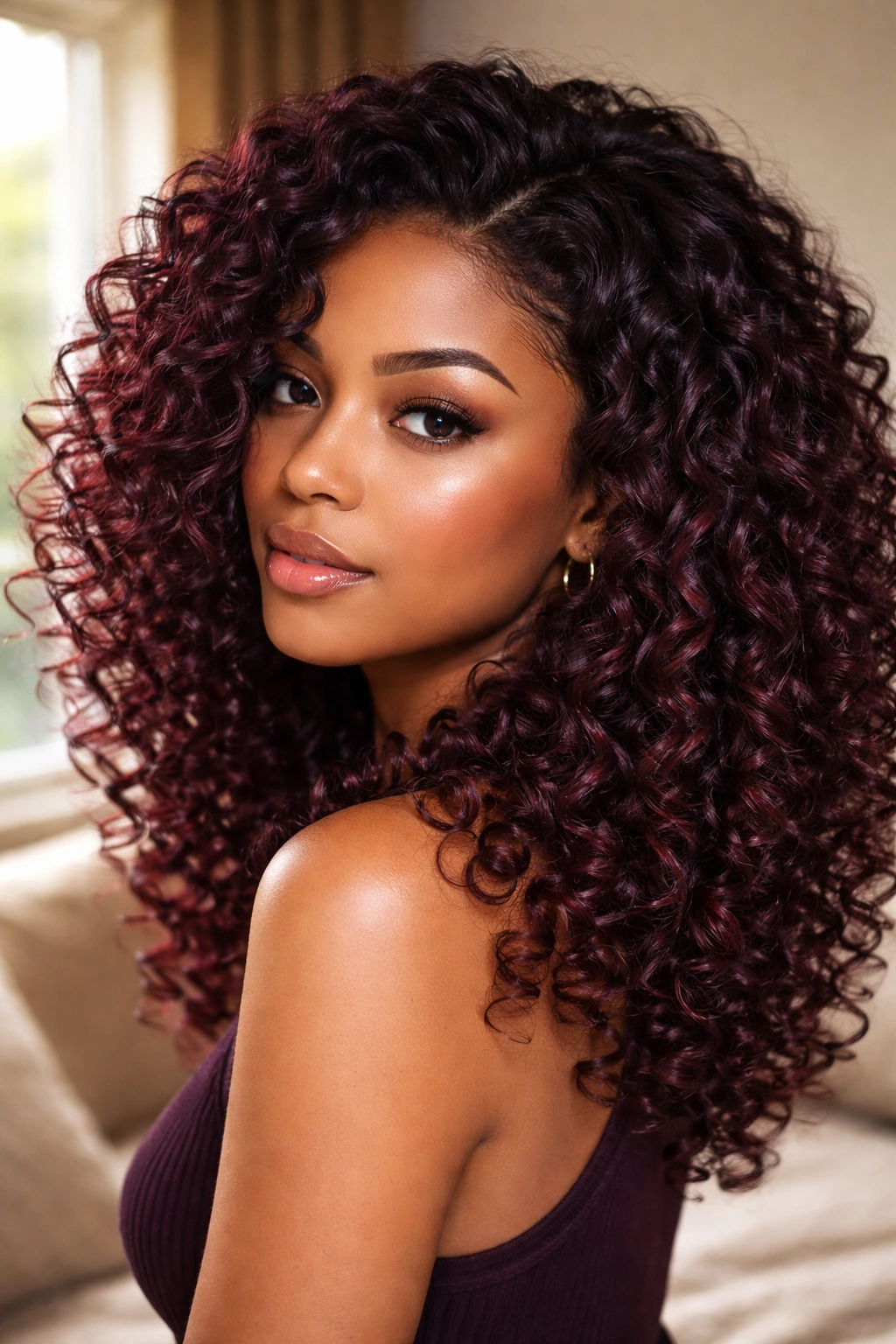
Plum-toned mahogany is for people who want the color to feel deeper and moodier. The shade leans cooler, with more burgundy and less copper, so the curls read like dark wine instead of warm chestnut. It’s a subtle difference, but on textured hair, subtle goes a long way.
I think this version works best when the base color is already fairly dark. On lighter hair, plum can drift toward violet in a way that feels too obvious. On deep brown or black curls, it stays elegant and layered. A gloss with red-violet or violet-brown tones usually gives the right result. Not neon. Never neon.
The finish here matters almost more than the cut. Healthy curls make the plum tone look intentional; dry curls make it look flat. A leave-in with good slip and a light sealant on the ends keep the shade from turning dusty between washes.
If your wardrobe leans black, cream, gray, or deep green, this version fits without fighting anything.
12. Mahogany Curls With a Side Part
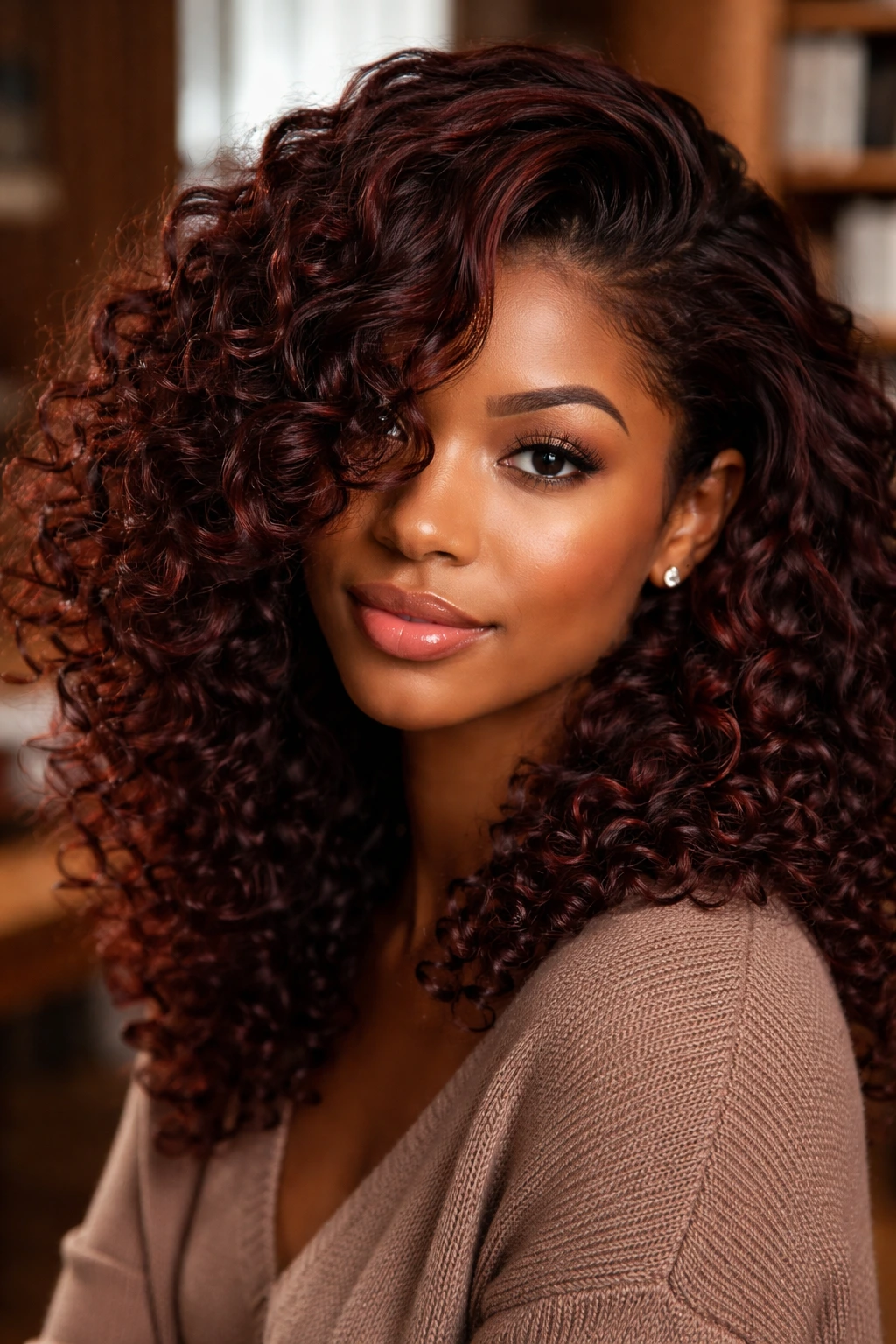
Center parts can make mahogany curls feel symmetrical. A side part gives the shade a little swing. That difference sounds small on paper, but on real hair it changes how the light sits on the curl pattern and how the whole style frames the face.
A deep side part works especially well when the hair has volume at the root. It creates a lifted side and a fuller sweep on the other, which makes mahogany look layered instead of evenly distributed. I’d choose this if your curls tend to sit flat on top and puff out at the sides. The part line gives them a direction.
This style is easy to customize. A 2 to 3 inch side part can be enough if you want a softer shift. Go deeper if you like a more dramatic frame. Just keep the roots supported with a light mousse or root-lift foam so the style does not collapse by midday.
It’s not flashy. That’s the point.
13. Collarbone-Length Mahogany Lob
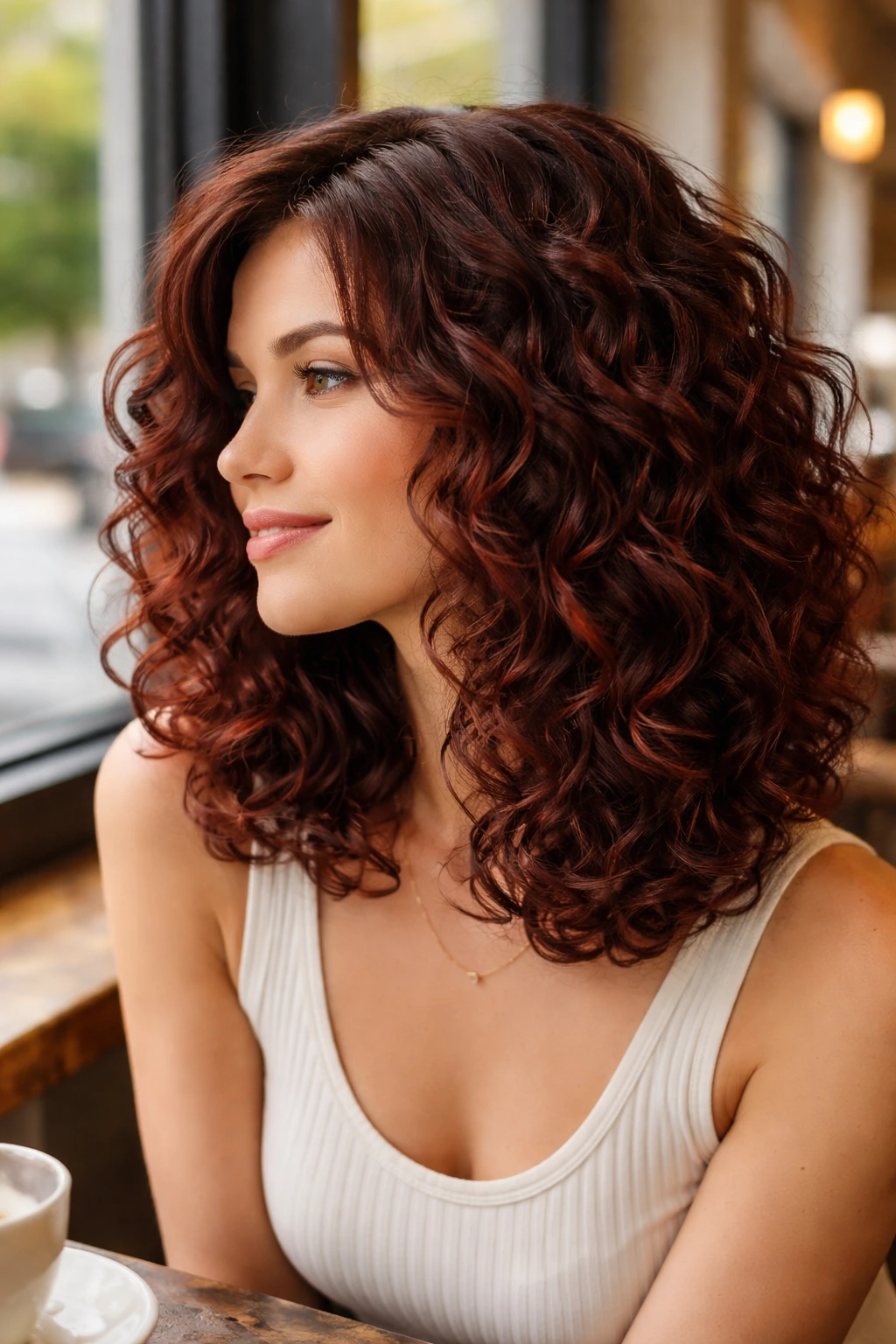
The lob is the cut I reach for when someone wants movement and easy upkeep in the same sentence. At collarbone length, mahogany curls have enough room to show shape, but not so much length that the color gets lost in the weight. The result feels neat and a little airy.
Why the Length Works
The collarbone hits a sweet spot for curl shrinkage. Hair can spring up and still land in a visible, flattering range around the neck and shoulders. That matters with mahogany, because the color reads best when there’s enough surface to show the shift from brown base to red-brown edge.
- Keep the front slightly longer than the back for flow.
- Ask for soft layers if your curls are dense.
- Trim every 8 to 12 weeks if the shape grows out fast.
A lob also plays well with both casual and dressy styling. That flexibility is handy, and honestly, a little underrated.
14. Mahogany Finger Coils
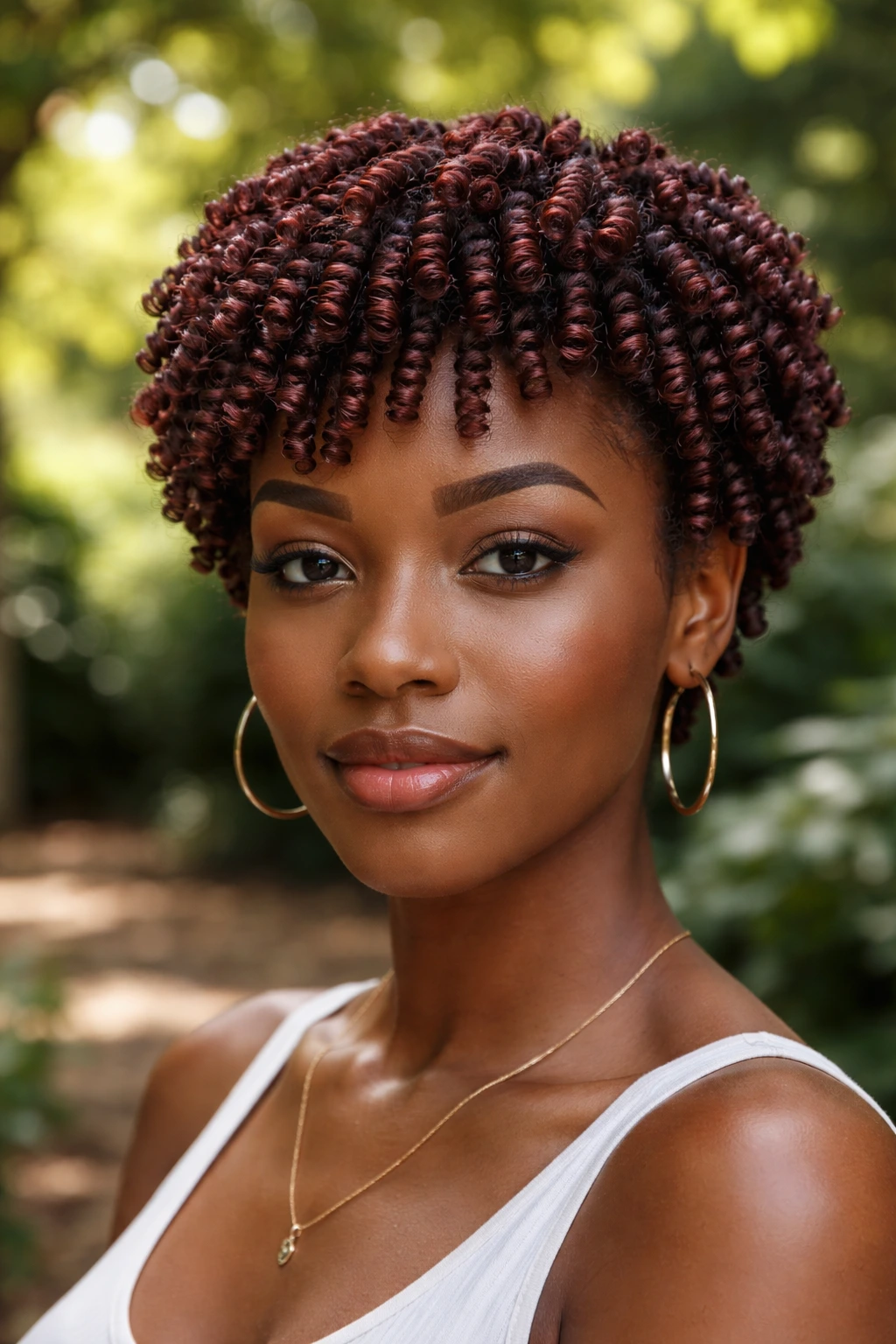
Finger coils are the most precise way to show mahogany on short natural hair. Every coil becomes a small, defined strand of color, and the finish looks crisp without needing much length. If you’ve ever wanted the shade to read clearly from root to tip, this is one of the sharpest ways to do it.
The styling part is slow, yes. That’s the tradeoff. You work in small sections, usually around 1/2 inch each, and coil each one in the same direction so the pattern stays consistent. A strong-hold gel or a cream-gel combo helps the coil hold its shape while it dries.
What I like most is how the color shows on the curve of each coil. The outer ridge catches the red-brown tone, while the inside stays darker. That tiny split gives the hair depth without a highlight scheme. It’s almost fussy in the best way.
If your hair is short, dense, or transitioning, finger coils can make mahogany look neat instead of chaotic.
15. High Mahogany Curly Ponytail
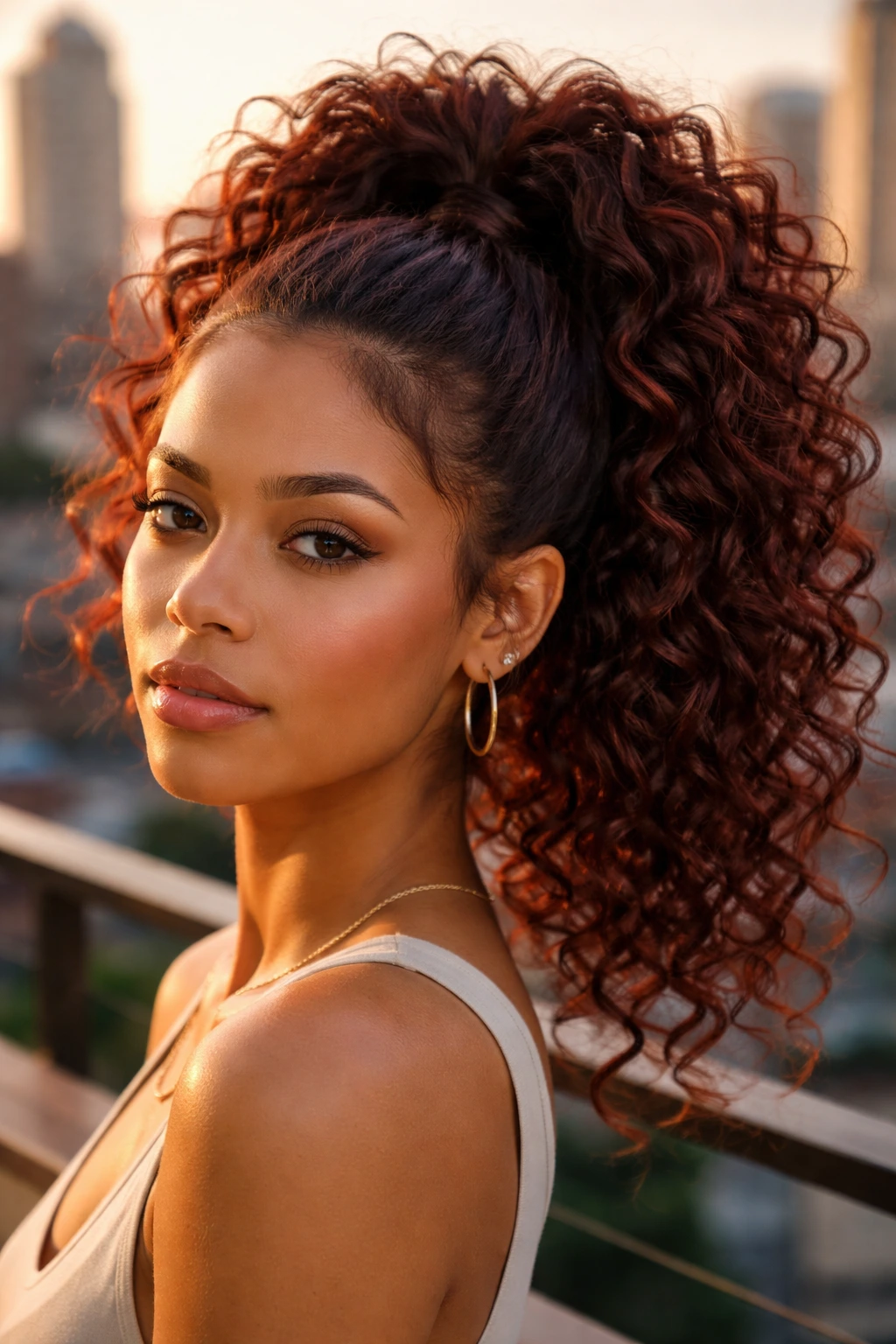
A high ponytail is a good choice when you want mahogany curls to feel lifted instead of spread out. It pulls the shape upward, shows the color at the crown, and keeps the ends visible where they can swing a little. There’s nothing fancy about that. It still works.
The style looks best when the front is smoothed just enough to sit cleanly, but not flattened into submission. Too much tension around the hairline can make the look stiff, and curly hair never looks happiest when it’s being forced into a straight line. A wrapped section of hair around the band makes the base look cleaner without adding bulk.
If you want more drama, let a few curls stay loose around the face. If you want polish, keep the edges tidy and the ponytail dense. Either way, the mahogany shade looks especially rich when the ponytail sits high enough to show the underside of the curls.
Quick, useful, and easy to wear. That’s the appeal.
16. Mahogany Halo Puff
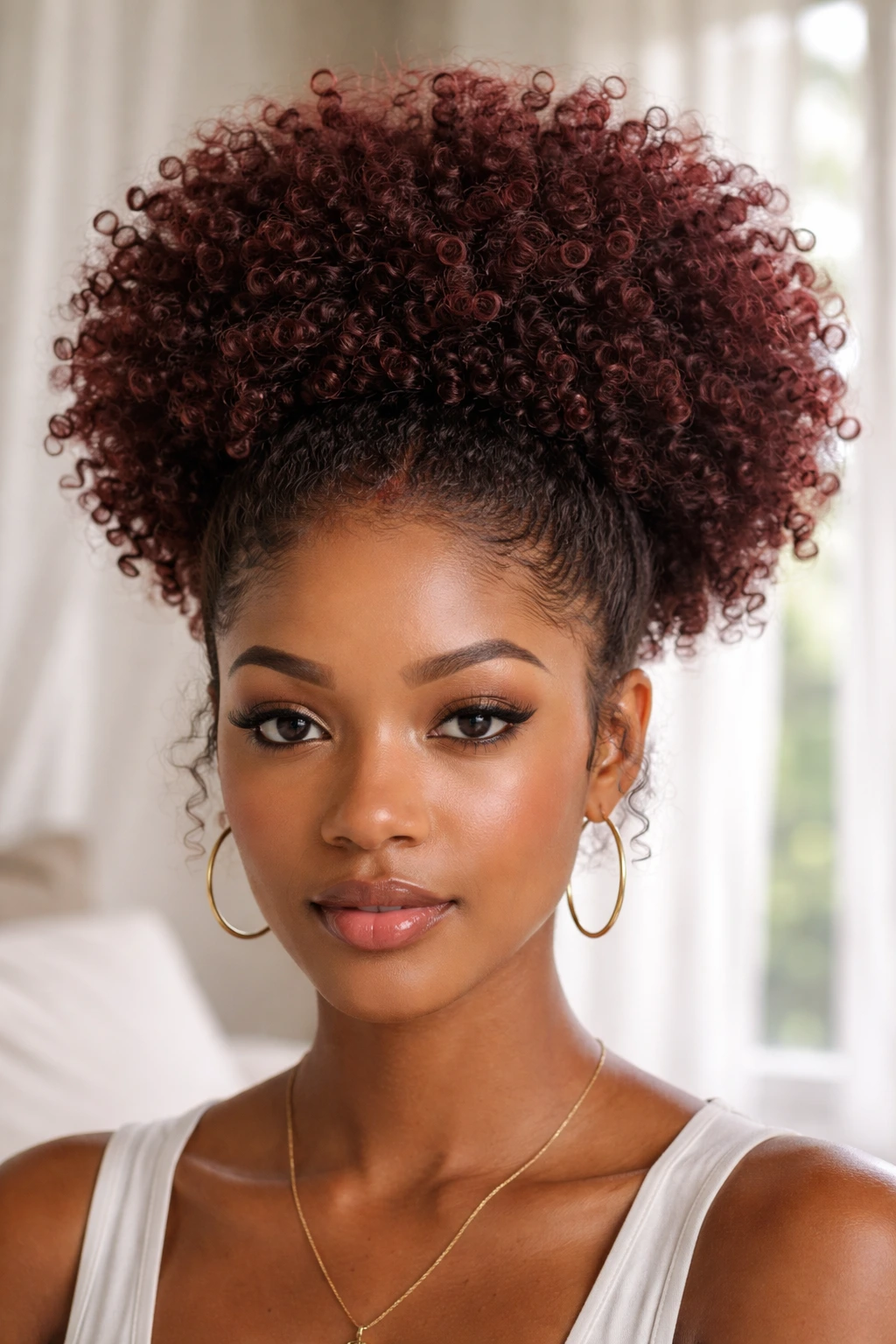
A halo puff has a softer outline than a sharp ponytail. The hair sits higher and rounder, which makes mahogany look fuller around the crown and temples. If your curls shrink a lot, this style gives you shape without forcing length that isn’t really there.
The best version starts with a clean stretch at the root, then a gather that doesn’t crush the curl pattern. You want the puff to feel airy, not compressed. A satin scarf for 10 minutes after you set the front helps smooth the base without making the hair stiff. That little pause matters more than people think.
- Place the puff at the crown, not the top of the forehead.
- Leave the frontline slightly soft for a rounded frame.
- Use a wide, gentle band to avoid dents.
This is a good style for thick hair, but it can work on fine hair too if you build the puff with a little root stretch first. The result is soft, not lazy.
17. Asymmetrical Mahogany Cut
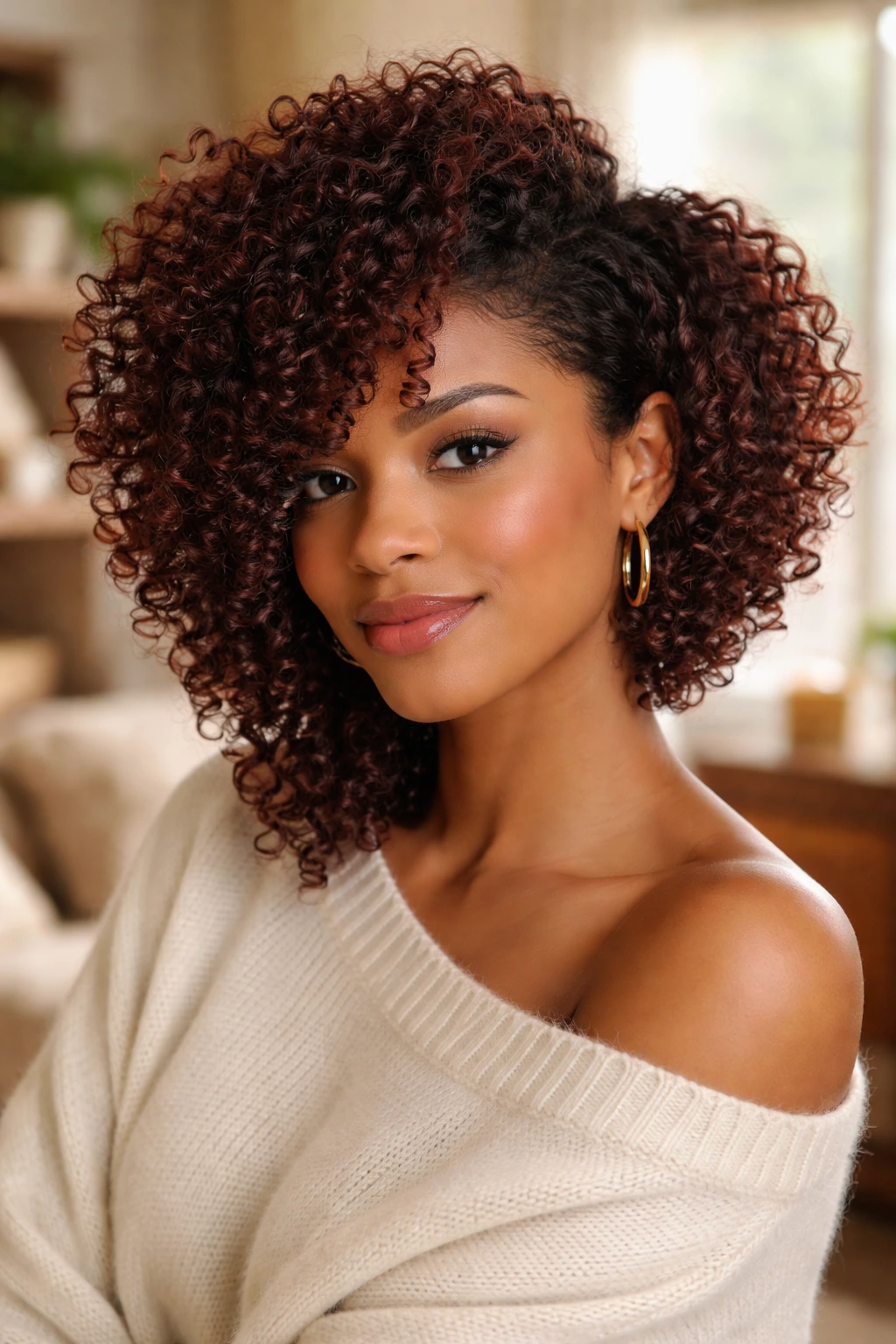
An asymmetrical cut gives mahogany curls a built-in point of interest. One side sits slightly longer than the other — often by 1 to 2 inches — and that uneven line makes the color look more dynamic from every angle. It’s a bolder shape, but not a loud one.
The reason it works on curly hair is simple: curls already move differently from side to side. An asymmetrical cut leans into that instead of trying to make both sides behave the same way. The shorter side keeps the face open. The longer side gives the shade a swing when you turn your head.
I’d pick this for someone who likes hair that looks styled even when it’s just been washed and shaken out. It also does a good job hiding a little grow-out between salon visits, which is a nice side benefit. The cut keeps its edge longer than a blunt shape does.
If you like structure and a little mischief, this is the one.
18. Mahogany Curls With Lowlights
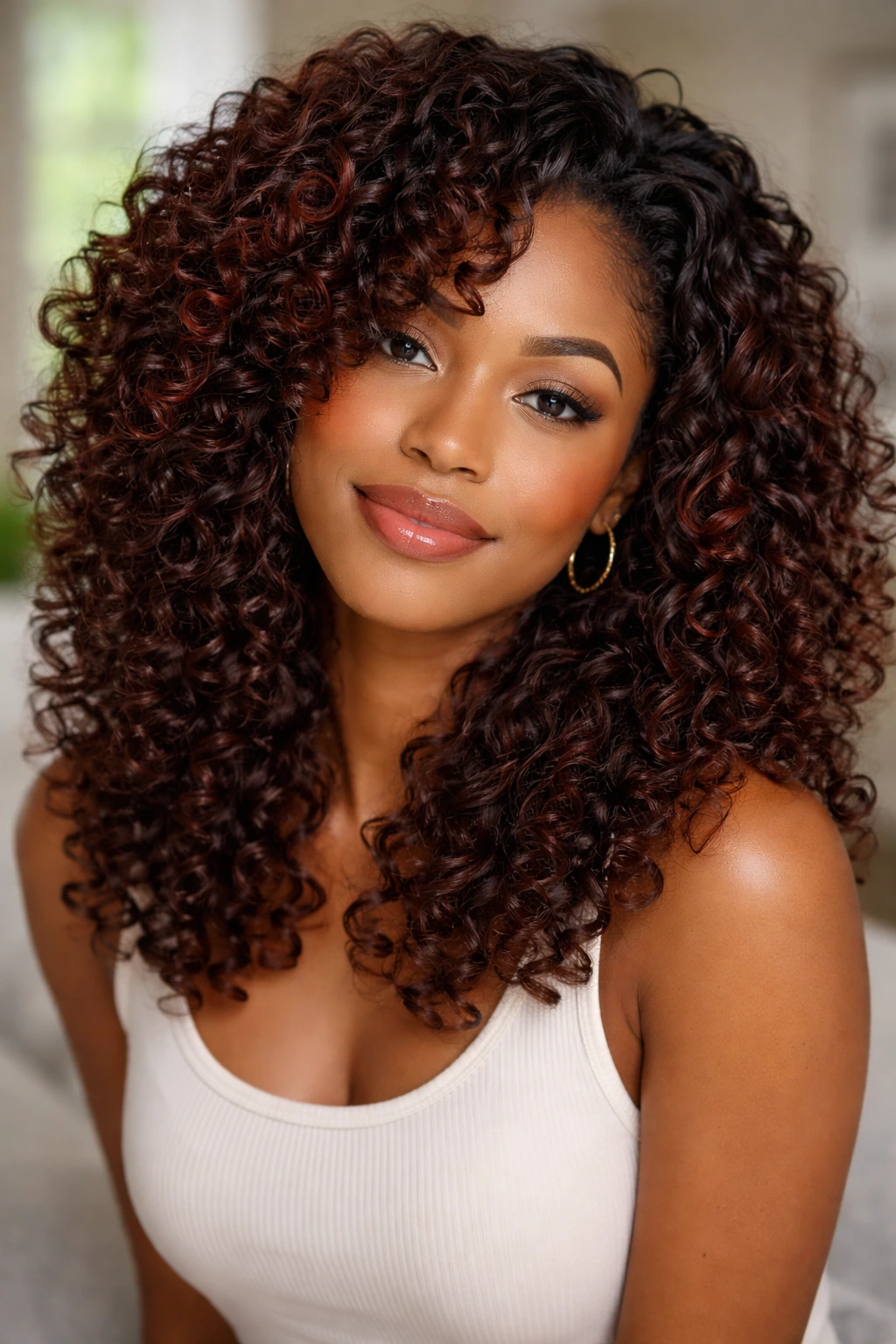
Mahogany can go flat if every strand is the same tone. Lowlights fix that problem by dropping in a deeper shade underneath and around the perimeter, so the curls don’t read as one solid color block. The hair looks fuller, not darker for the sake of being darker.
This is one of the smarter options for dense curls that need depth. A lowlight that sits 1 to 2 shades deeper than the mahogany base creates shadow where the hair would naturally be shaded anyway. That makes the style look believable. It also helps the curl pattern stand out because the lighter pieces sit on top of the deeper ones.
I prefer lowlights to be placed with restraint. Too many and the whole head gets busy. A few well-placed ribbons under the top layers do more work than a full foil map. Curly hair does not need a lot of help to look dimensional. It needs the right help.
If you want the shade to feel rich and thick, lowlights are hard to beat.
19. Wet-Look Mahogany Curls
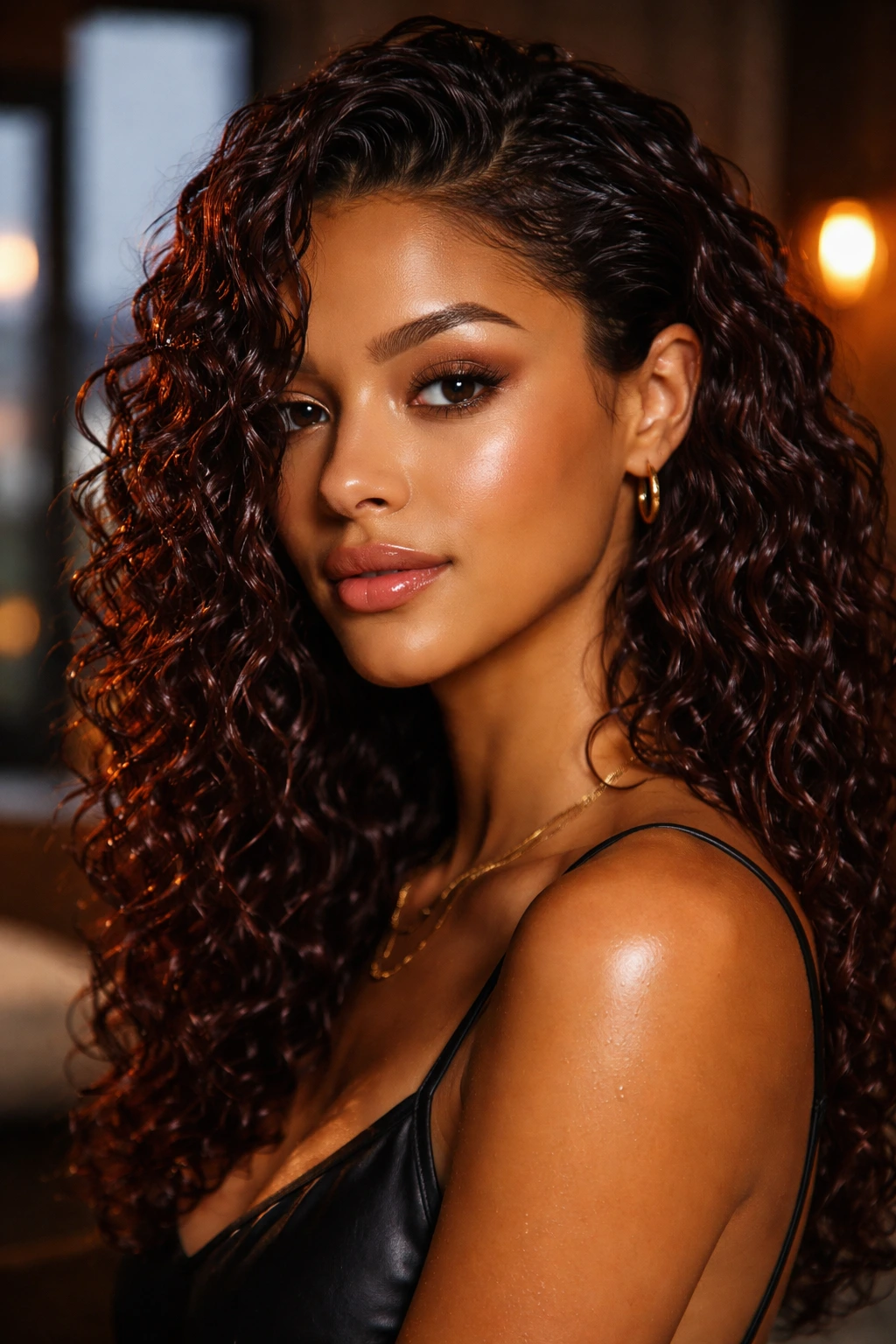
Wet-look curls are a sharp contrast to fluffy, airy mahogany styles. The finish is glossy, controlled, and a little slick at the surface, which makes the red-brown tone look darker and more concentrated. On the right curl pattern, that can be striking.
Keeping the Shine Without the Crunch
The goal is shine, not stiffness. A strong gel cast gives the shape hold, but a little serum over the top keeps the curls from looking chalky once they dry. If the product layer is too heavy, the hair starts to separate in strands that look greasy instead of defined. Nobody wants that.
- Apply gel on soaking-wet or very damp hair.
- Smooth in small sections so the curl clumps stay neat.
- Finish with one light pass of serum, not a puddle.
This style suits evenings, dressed-up events, or any time you want your mahogany curls to look deliberate and polished. It is not a carefree look. That’s okay. Not every style needs to be.
20. Mahogany Crown Braid With Curls Left Out
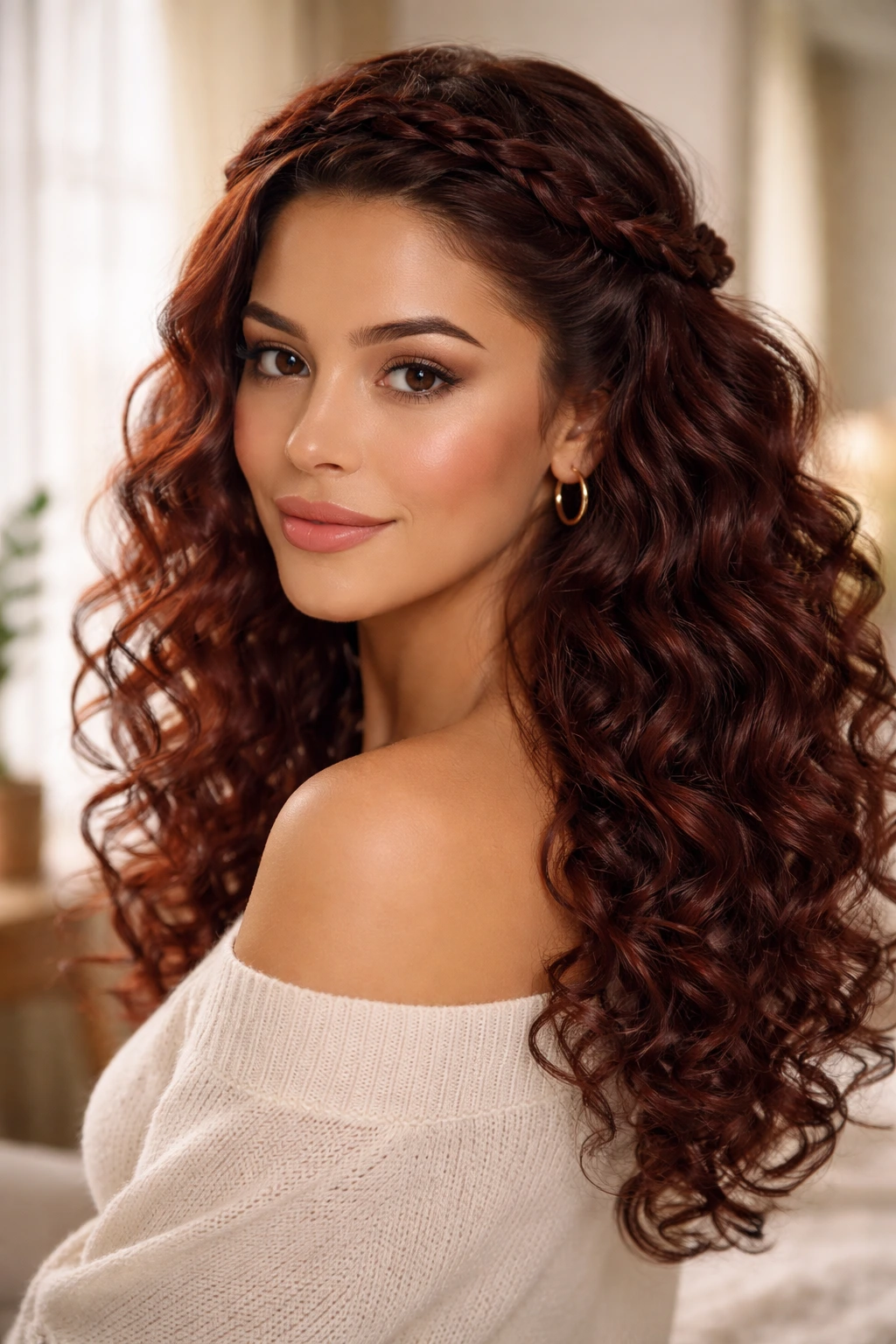
A crown braid across the front gives mahogany curls a frame, and leaving the back loose keeps the hair from looking too restrained. That combination works well because the braid creates structure while the curls show off the color. You get both the shape and the movement.
The braid itself does not need to be wide. A band about 1.5 inches across is enough to guide the eye. If it gets too thick, it swallows the front and makes the whole style feel heavy. The loose curls at the back should stay soft and separate, not brushed into a puff.
What makes this style stand out is the contrast between woven and free hair. The braid reads as clean, while the curls read as textured and warm. Mahogany loves that split. It keeps the color from blending into one mass.
This is a strong choice for weddings, dinners, or any day you want your hair to look more finished than usual.
21. Cinnamon-Mahogany Ombré
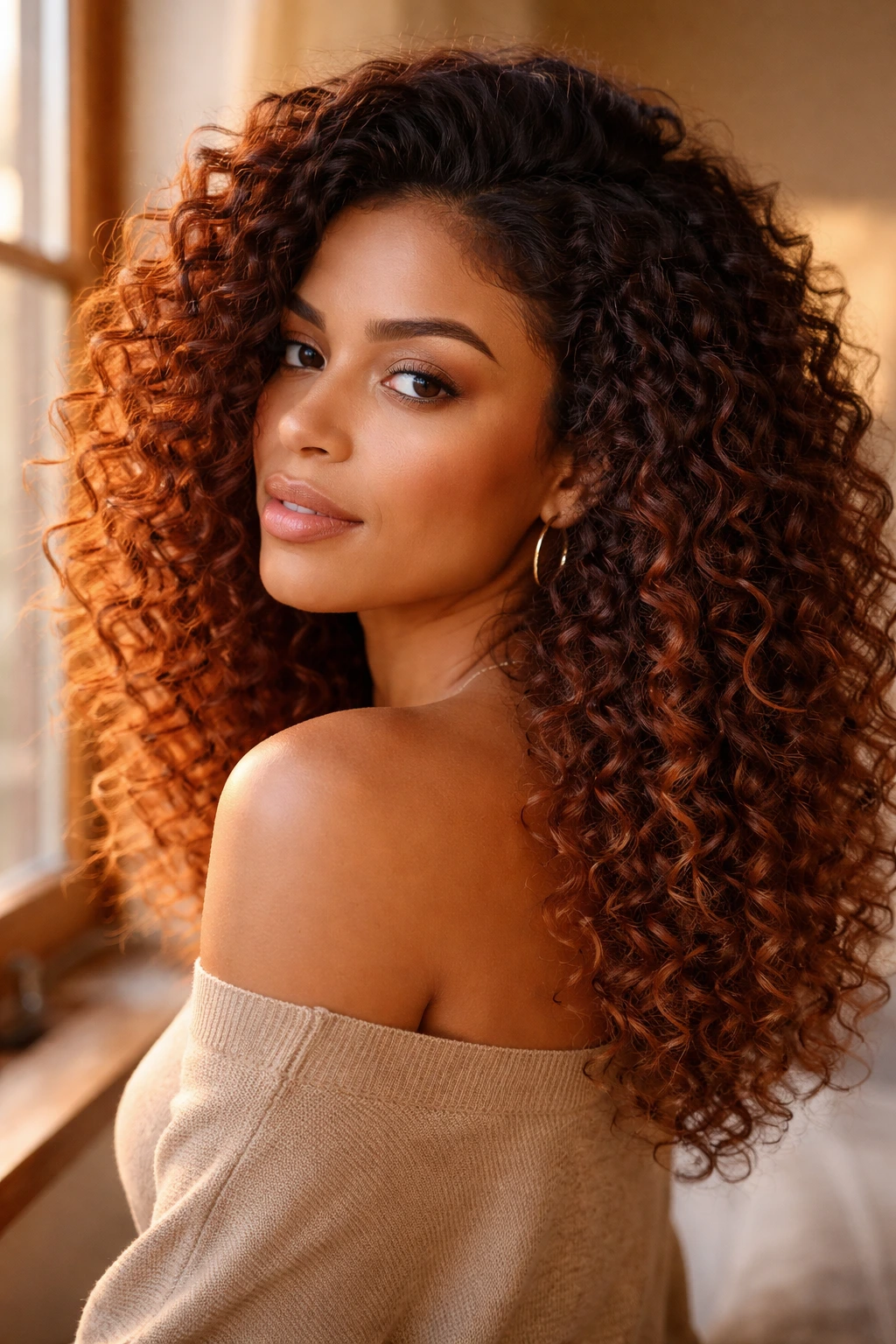
Does mahogany have to stay the same all the way down? Not at all. A cinnamon-toned ombré lets the roots stay deeper while the ends warm up into a red-brown glow. On curly hair, that fade looks natural because the curl pattern already breaks up the transition.
The key is where the shift begins. I like the color change to start below the mid-lengths, often around the lower ear or a touch lower, so the hair keeps enough depth near the face. If the fade starts too high, the style can lose its shape and start looking washed out. Curly hair needs a base.
Where the Fade Should Start
- Start the lighter tone below the cheekbone for a softer look.
- Keep the root area at least 2 shades deeper.
- Use a gloss between color sessions to keep the ends from going dull.
This is a good option if you want warmth without committing to an all-over lighter finish. It feels lived-in and a little sun-touched, but not beachy in a cliché way. Better than that.
22. Rounded Mahogany Afro With Clean Edges
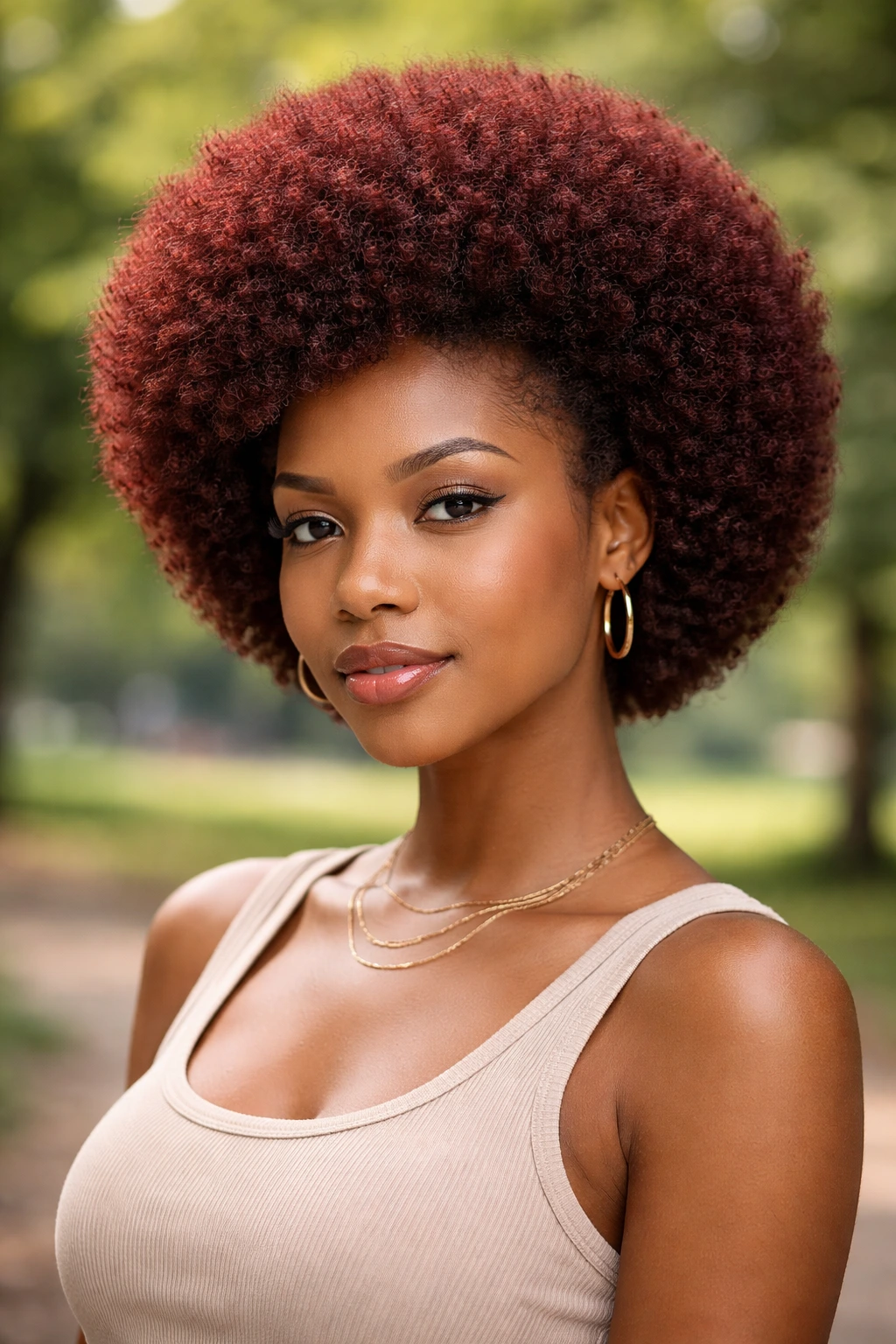
A rounded afro with clean edges makes mahogany look deliberate from every angle. The shape is soft, but the outline is neat, and that balance matters. A rough edge can make the color feel messy. A clean one makes the whole style read as polished.
This cut is strongest when the top is full and the sides are shaped into a clear oval. The nape should stay tucked in, not square, and the temples should be softened enough that the face doesn’t get boxed in. That matters more than most people realize. The silhouette changes the way the color sits on the hair.
- Trim the nape every few weeks so the shape stays tidy.
- Keep the top rounded, not flat.
- Avoid over-picking the ends if you want the outline to stay smooth.
The charm here is that the style looks strong without looking hard. Mahogany gives the afro warmth; the shape gives it discipline.
23. Mahogany Curls With Curtain Bangs
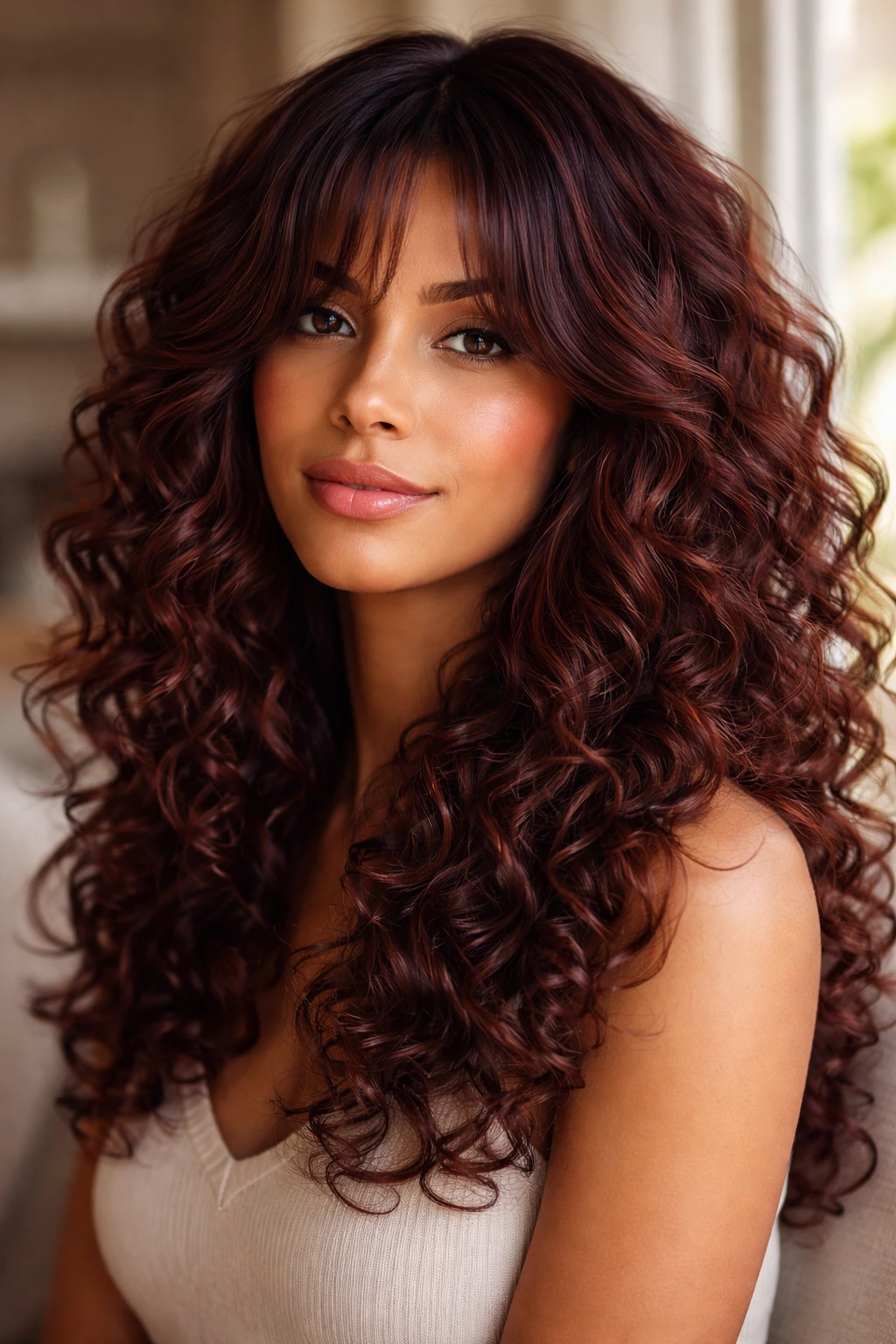
Curtain bangs can be tricky on curly hair, but when they’re cut well, they make mahogany look softer and more face-focused. The front curls split away from the center and sweep toward the cheekbones, which gives the color a little motion right where people notice it first.
The cut has to respect shrinkage. Dry cutting is usually the safer route, because wet bangs can spring up too high and sit awkwardly above the brow. I like bangs that start a little longer than you think you need. Curly hair tends to surprise people in the mirror.
The best part is how the bangs frame the rest of the curl pattern. They break up a heavy front section and keep the mahogany from feeling like one solid mass around the face. If the hair is dense, a few shorter pieces around the temples help the bang line blend. If the hair is fine, keep the fringe light so it does not disappear.
It’s soft, flattering, and a little old-school in a good way.
24. Half-Up Mahogany Space Puffs
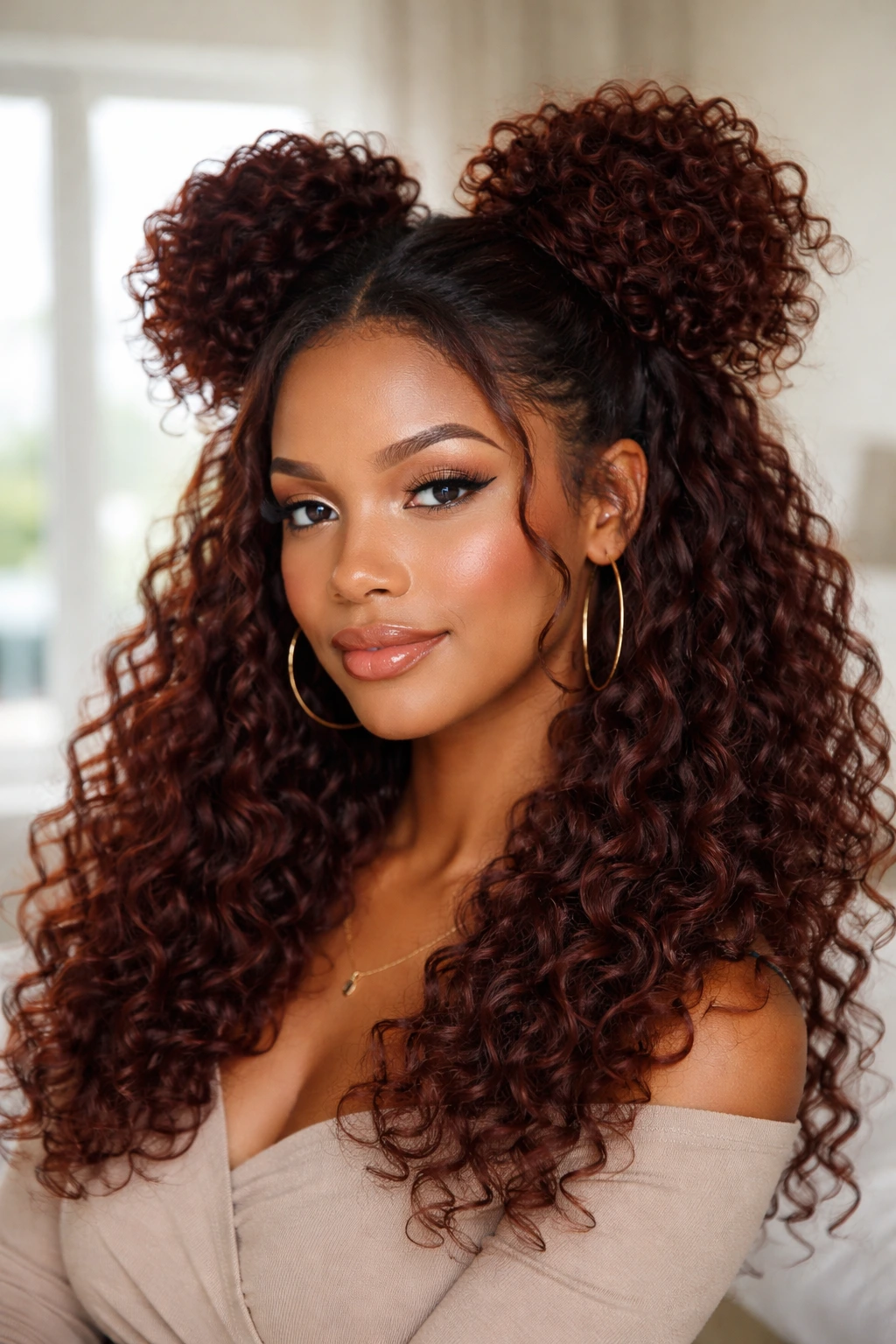
Half-up space puffs turn mahogany curls into something playful without making the hair look childish. The style works because the top section gets lifted and divided, while the rest of the curls stay loose and visible. The color shows up twice: once in the puffed crown, once in the lengths below.
The spacing matters. Put the puffs too far apart and the style starts to look off-balance. Keep them close enough to sit around the crown, about 2 inches above the temples, so the shape feels intentional. If the base is slicked down too tightly, the style loses the softness that makes it work.
This is a strong pick when you want a little height and don’t want a full updo. It holds well on medium to thick curls, and it gives the front a neat finish while leaving the rest loose. A few face-framing curls make the whole thing less stiff.
It’s the kind of style that looks easy, which is exactly why people notice it.
25. Glossy Mahogany Ringlets for Formal Wear
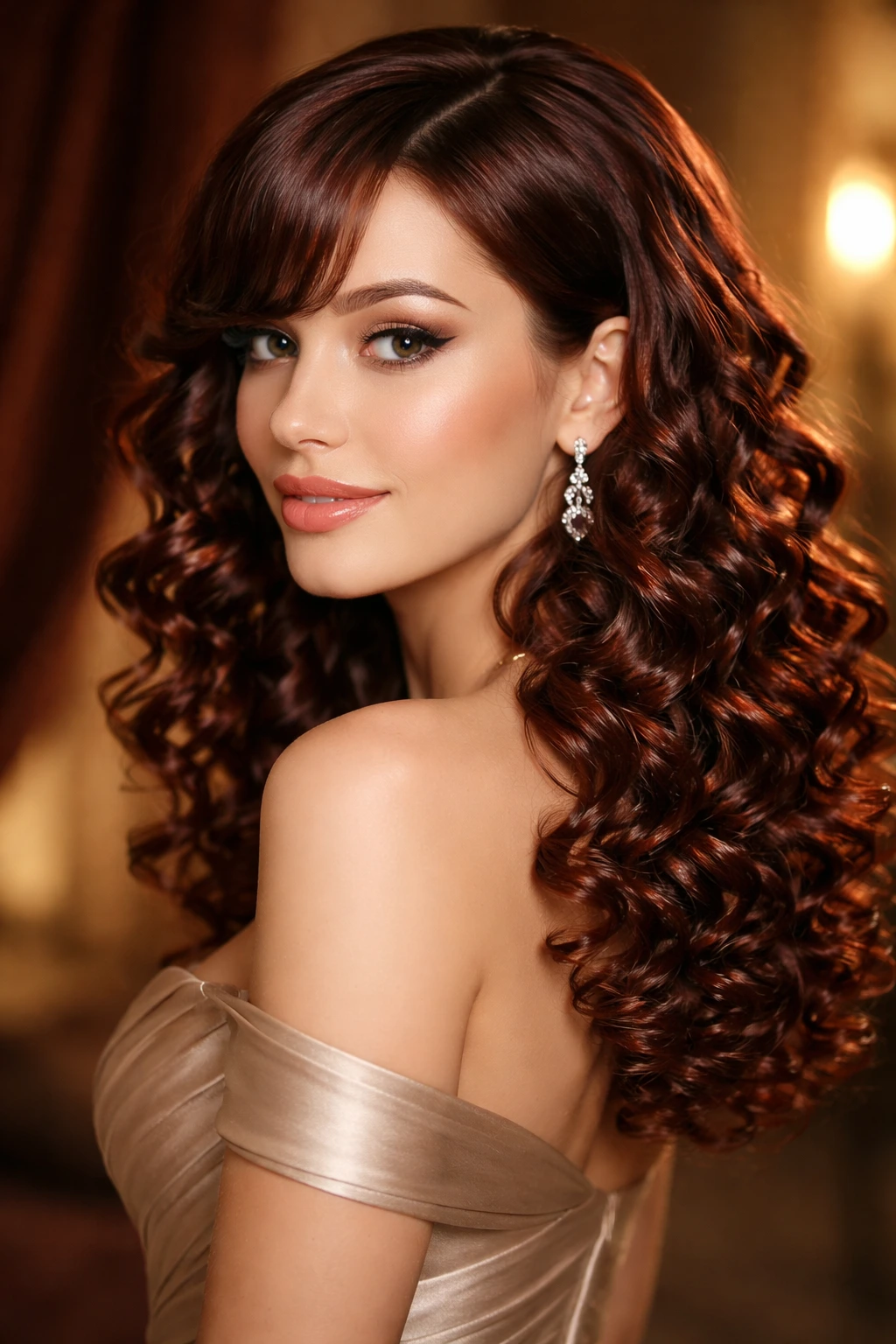
Glossy ringlets are the dressiest version of mahogany curls, and they work because the shape is controlled from root to tip. Instead of a free-form curl pattern, you get deliberate loops that sit close together and reflect the red-brown shade in a cleaner way. It’s a little old Hollywood, but not costume-y.
A rod set or flexi-rod set of about 3/8 inch to 1/2 inch usually gives the right size ringlet on medium textures. If the rod is too large, the style turns into waves and loses that polished edge. If it’s too small, the curls can look busy. The middle ground is where mahogany looks sharpest.
Where the Shine Comes From
A light mousse under the setting lotion helps the curl hold its shape without getting crunchy. Once the hair is dry, separate only a little. Too much separation kills the neat line of the ringlets. A side sweep at the front can make the style feel a touch softer and keeps the look from feeling too formal.
This is the version I’d save for events, portraits, or any moment when you want mahogany curls to look fully dressed.
Final Thoughts
Mahogany curls work because they respect texture instead of flattening it. The shade has enough depth to sit inside a curl pattern, and enough warmth to keep the hair from looking one-note. That combination is harder to pull off than people think.
The smartest choice is usually the one that matches your curl shape first and your color goal second. A sharp bob, a soft shag, a rounded afro, or a stretched twist-out will all make mahogany behave differently. That’s the real fun here. The same color can look calm, fiery, moody, or glossy depending on the cut and finish.
If you’re unsure where to start, try the easiest version of the look you already wear most often. A small color shift around the face, a deeper gloss, or a cleaner shape around the edges can tell you a lot before you commit to anything bigger.
