



Long haircuts for curly hair can look rich and balanced, or they can tip straight into pyramid territory, and the difference usually comes down to shape more than length.
Length alone does not help.
Curly hair has its own math. A strand that looks shoulder-grazing when wet may spring up several inches as it dries, while dense hair can hide weight until the bottom turns into a blunt shelf. That’s why a good long curly haircut isn’t about taking off a lot of hair. It’s about placing layers, controlling bulk, and keeping the outline from fighting the curl pattern.
The best cuts respect how curls actually live on the head. They move. They compress. They clump. They behave differently at the crown than they do around the neckline, and a stylist who understands that will talk about shrinkage, density, and face shape before they ever reach for the scissors. That conversation matters more than the trendy name of the cut.
Some of the styles below are soft and low-maintenance. Others bring a lot of shape and bounce. A few are better if you want volume at the crown, while others keep thick curls from swallowing your face. The trick is matching the haircut to the curl pattern you actually have, not the one you wish you had.
1. Long Layers That Release Weight Without Killing Length
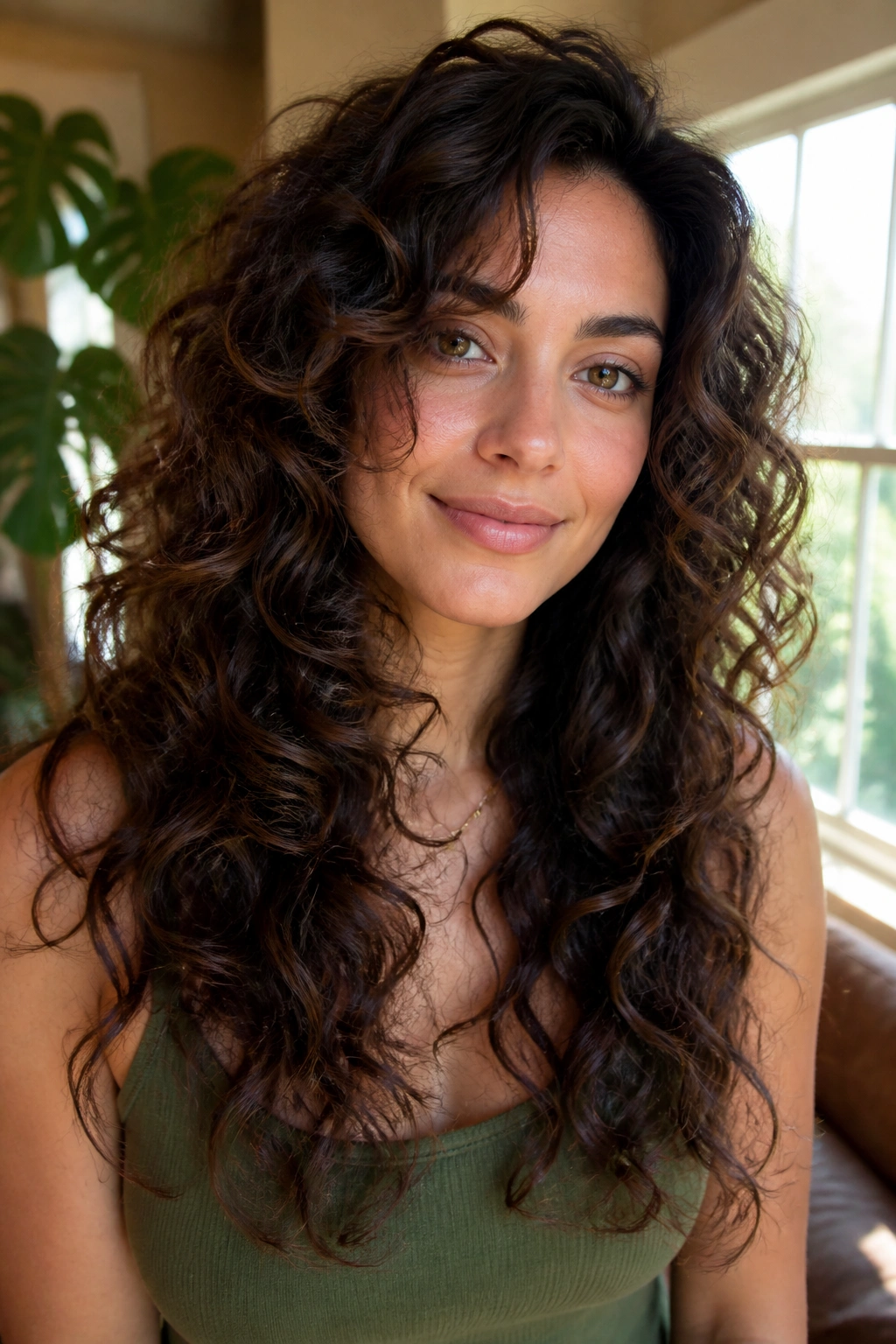
Long layers are the safest starting point for curly hair because they keep the shape moving while preserving the feel of long hair. If your curls tend to balloon at the sides or hang heavy at the bottom, this cut gives the whole shape a little air.
Why it works
Layers stop the ends from forming one blunt curtain. That matters a lot on curls, because a heavy bottom can make the whole cut look flat at the crown and wide at the hem. With long layers, the curl pattern can stack more naturally.
A good version of this cut keeps the shortest layers around the cheekbone or jawline, then lets the rest fall in longer steps. Too many short layers, and the cut gets busy fast. Too few, and you are back to square one.
Ask for:
- Long, blended layers that start below the chin
- Soft shaping around the face
- A perimeter that still feels full at the ends
- A dry check on how the curls fall together
Best for: medium to thick curls that need movement, not drastic change.
2. The Curly Shag That Keeps Long Hair From Looking Heavy
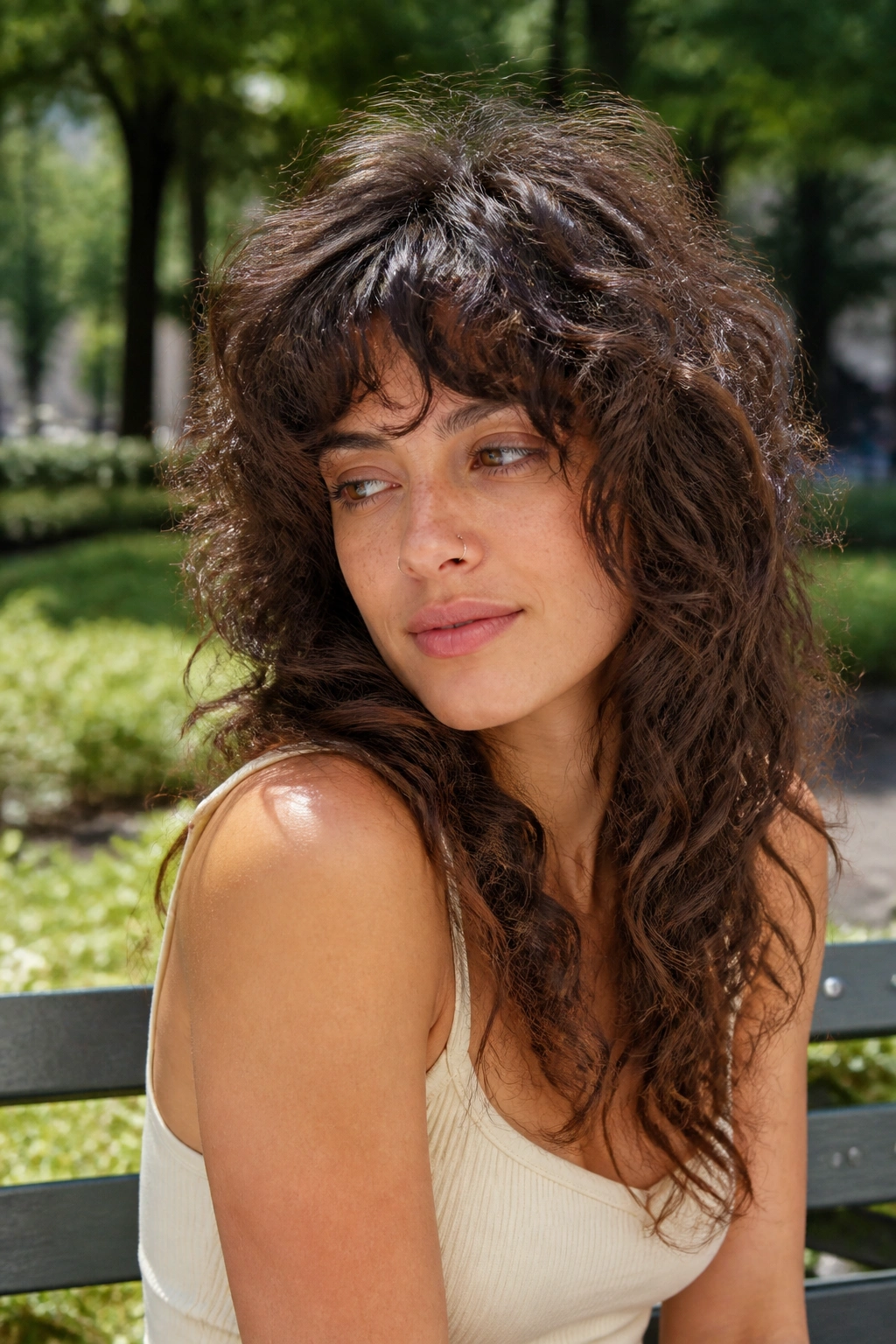
The curly shag has a scruffier edge, and I mean that in the good way. It gives long curls a lived-in shape, with shorter layers around the crown and face that stop the style from collapsing into a single block.
Do not confuse it with a choppy mess. A good curly shag still has a plan. The crown gets lift, the sides stay soft, and the bottom keeps enough weight so the hair doesn’t puff out like a triangle. On looser curl patterns, the shag can bring out texture that usually hides under longer lengths.
It also suits people who want volume without endless styling. A diffuser helps, sure, but the cut does a lot of the work. If you like hair that looks better with a little mess in it, this is one of the smartest long curly haircuts to try.
3. Butterfly Layers for Curl Volume Around the Face
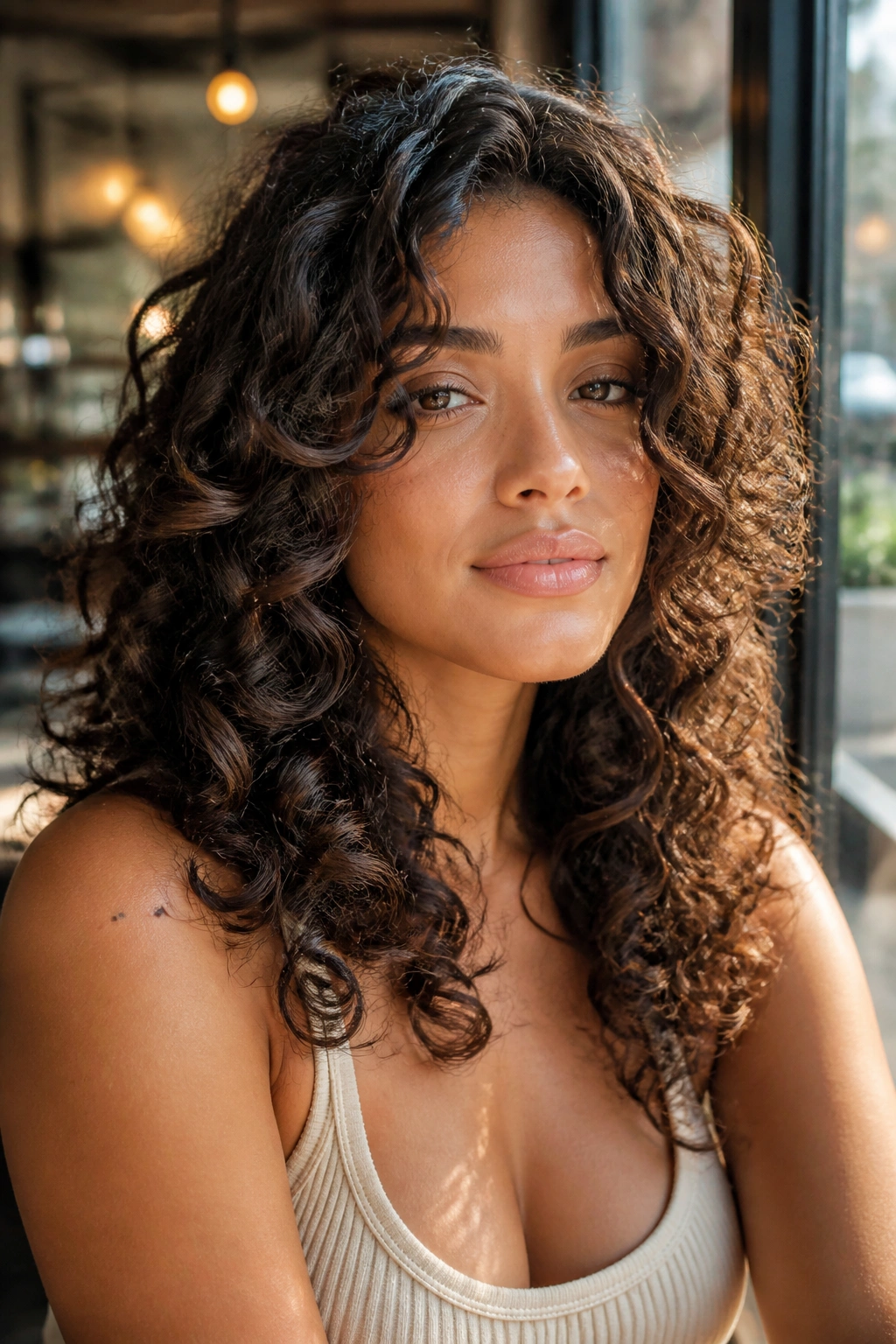
Butterfly layers are a strange name for a cut that actually makes a lot of sense on curly hair. The idea is simple: keep the overall length, then build shorter layers near the front so the curl pattern opens up around the face.
That front movement matters. It keeps long hair from feeling like a single heavy sheet, and it gives the illusion of more volume without taking inches off the back. When curls are dry, those lifted front layers can frame the cheekbones in a way that feels polished without trying too hard.
This cut works especially well if your curls are loose enough to separate into soft pieces. On tighter curls, the same idea still works, but the face-framing layers need to be a little longer so they don’t spring up above the chin.
4. The U-Shaped Curly Cut for a Soft, Full Outline
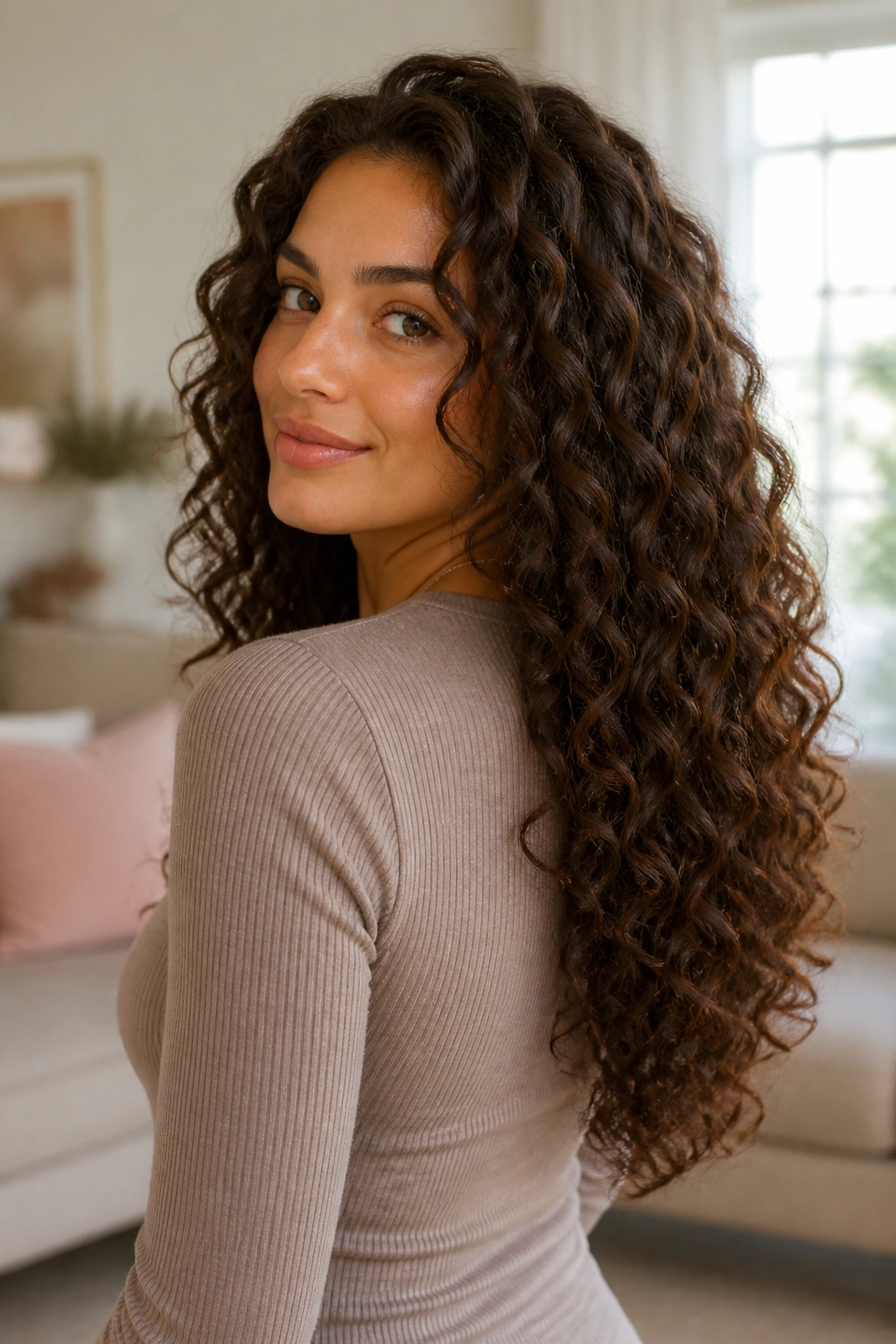
A U-shape sounds subtle, and that’s exactly why I like it. The back keeps a rounded line that feels soft and feminine, while the sides stay long enough to drape naturally over the shoulders.
This shape is a quiet fix for hair that looks flat when cut straight across. The curved perimeter helps the hair fall in a way that feels more intentional, especially if your curls have a lot of bounce and want to stack on themselves. It also keeps the ends looking full instead of pointy.
What to ask your stylist
- Keep the perimeter in a gentle U, not a harsh dip
- Blend layers into the curve instead of cutting the shape in pieces
- Check the silhouette from the side, not only the back
- Dry-finish the cut so the curve follows the real curl spring
The U-shape is one of those cuts that doesn’t shout. It just makes the hair sit better.
5. The V-Shaped Cut for Length That Feels Dramatic but Controlled
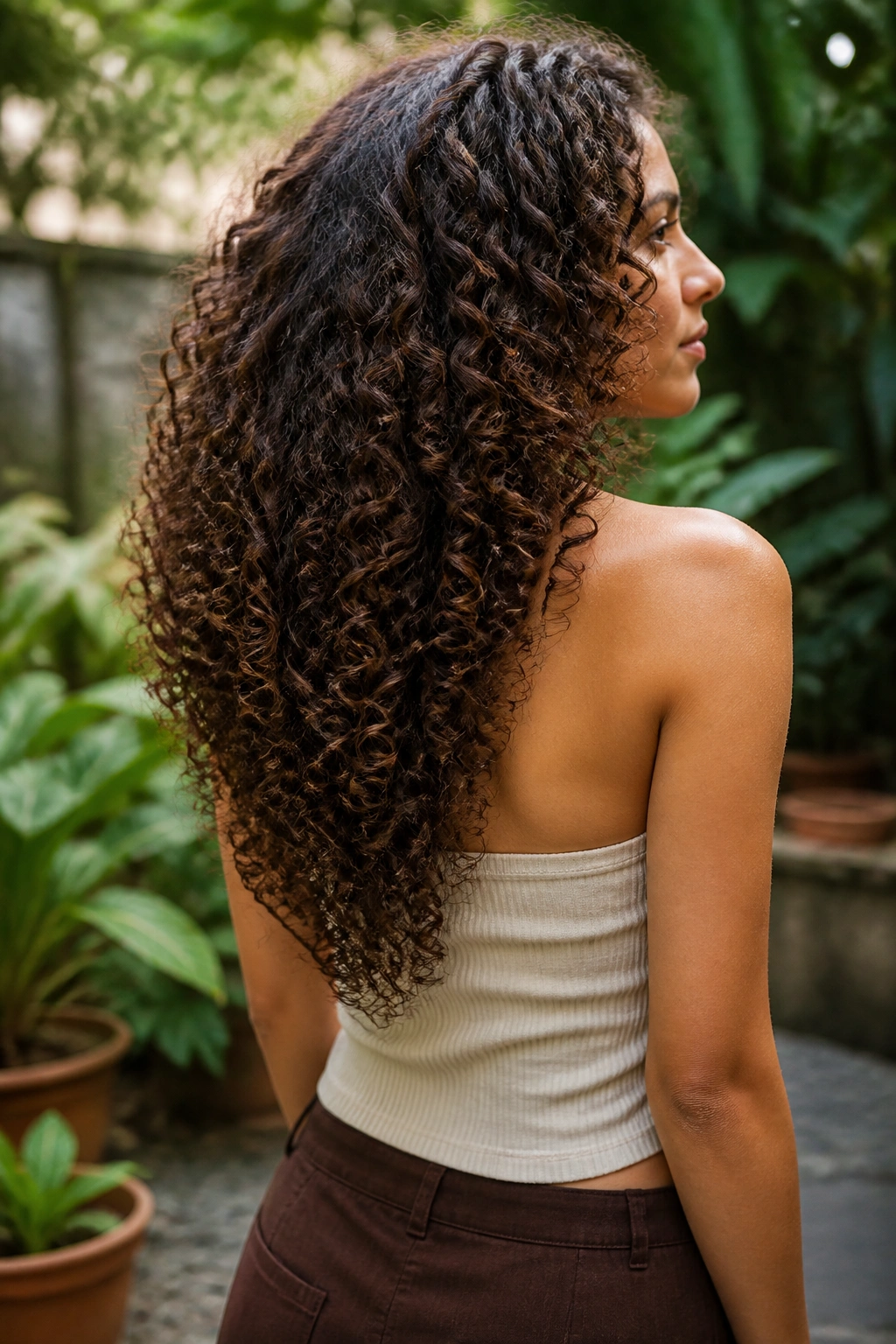
If you like a little more edge, the V-shaped cut gives long curly hair a sharper fall at the back while keeping the sides longer than a traditional layered lob would. It can look gorgeous on thick curls because the point in the back helps the hair move instead of hanging like a curtain.
The catch? It needs balance. On very fine curls, a deep V can thin out the ends too much. On denser curls, though, it creates a strong shape that feels sleek without actually flattening the texture.
I usually think of this cut as good for people who wear their hair down a lot. The shape looks best when the curls are separated and the ends are allowed to move. If you pin your hair up most of the time, you might never see what this cut can really do.
6. Curl-by-Curl Shaping for a More Exact Long Curly Cut
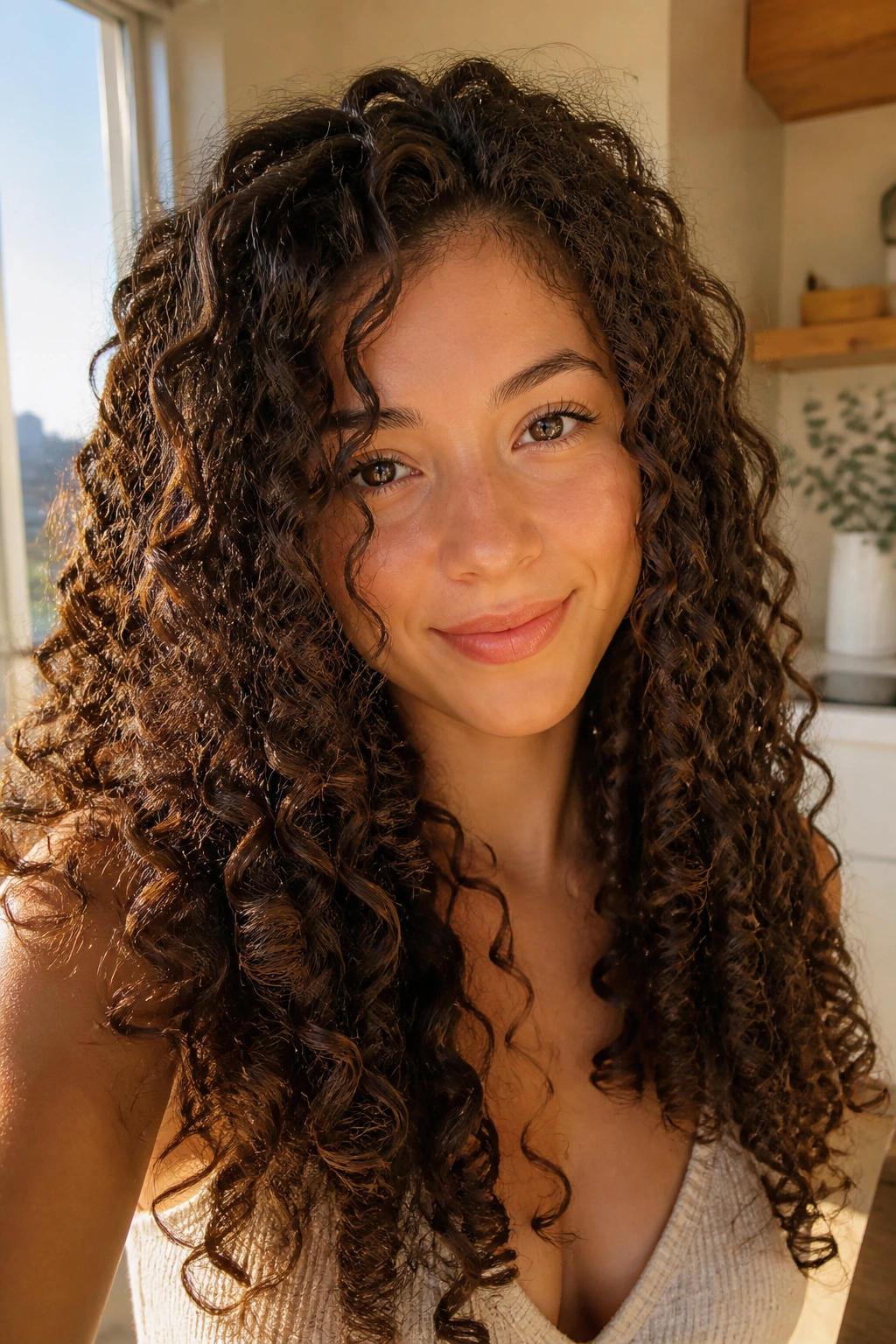
A curl-by-curl cut sounds fussy, but on the right head of hair, it’s worth it. Instead of cutting a curly mass as if it were straight, the stylist looks at each curl family and shapes it where it naturally lives.
That approach is especially useful if one side of your hair grows differently from the other, or if your curl pattern changes from the nape to the crown. Straight-on trimming often misses those differences. Curl-by-curl shaping sees them.
Why people love it
- It respects shrinkage
- It works with uneven curl patterns
- It can reduce triangle shape without over-thinning
- It usually gives cleaner face framing
The downside is time. This is not a quick in-and-out trim. Still, if you’ve spent years fighting a haircut that looked fine in the chair and odd the next day, this method can feel like a relief.
7. Long Face-Framing Layers That Open Up the Front
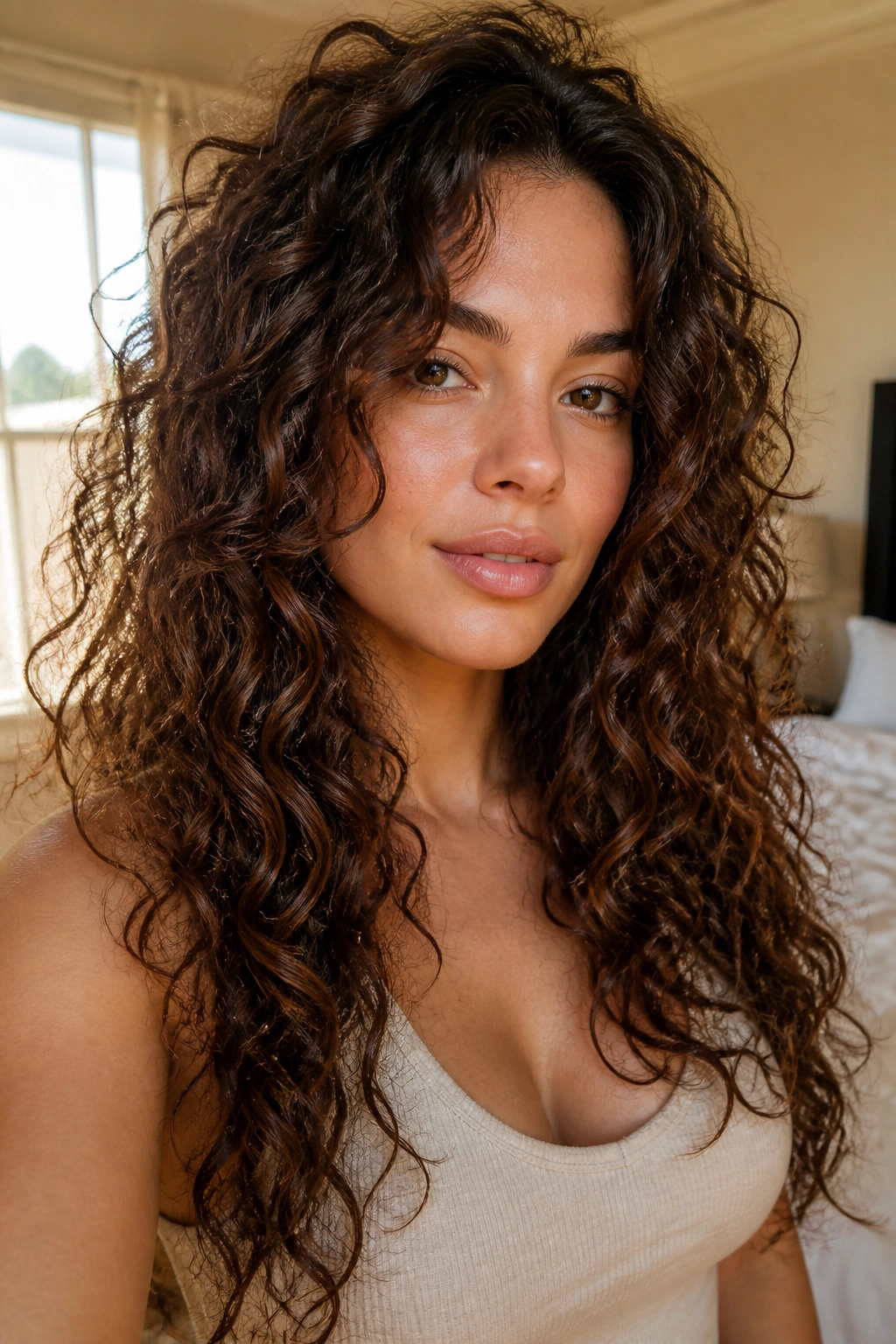
Face-framing layers are not a tiny detail on curly hair. They can change the whole mood of the cut. A few well-placed pieces around the cheekbones, jaw, or collarbone can pull the eye upward and make long curls feel lighter around the face.
The best versions do not start too high. That’s the mistake people make. Short layers at the cheekbone can turn into a puffed-out halo if the curls are tight or dense. A better cut eases the pieces down, then lets them curve in naturally.
This is the haircut I recommend to people who want a small change with a big visual payoff. You keep your length, you keep your ponytail, and you get a more open shape around the front. Easy win.
8. The Curly Wolf Cut for Long Hair With Real Attitude
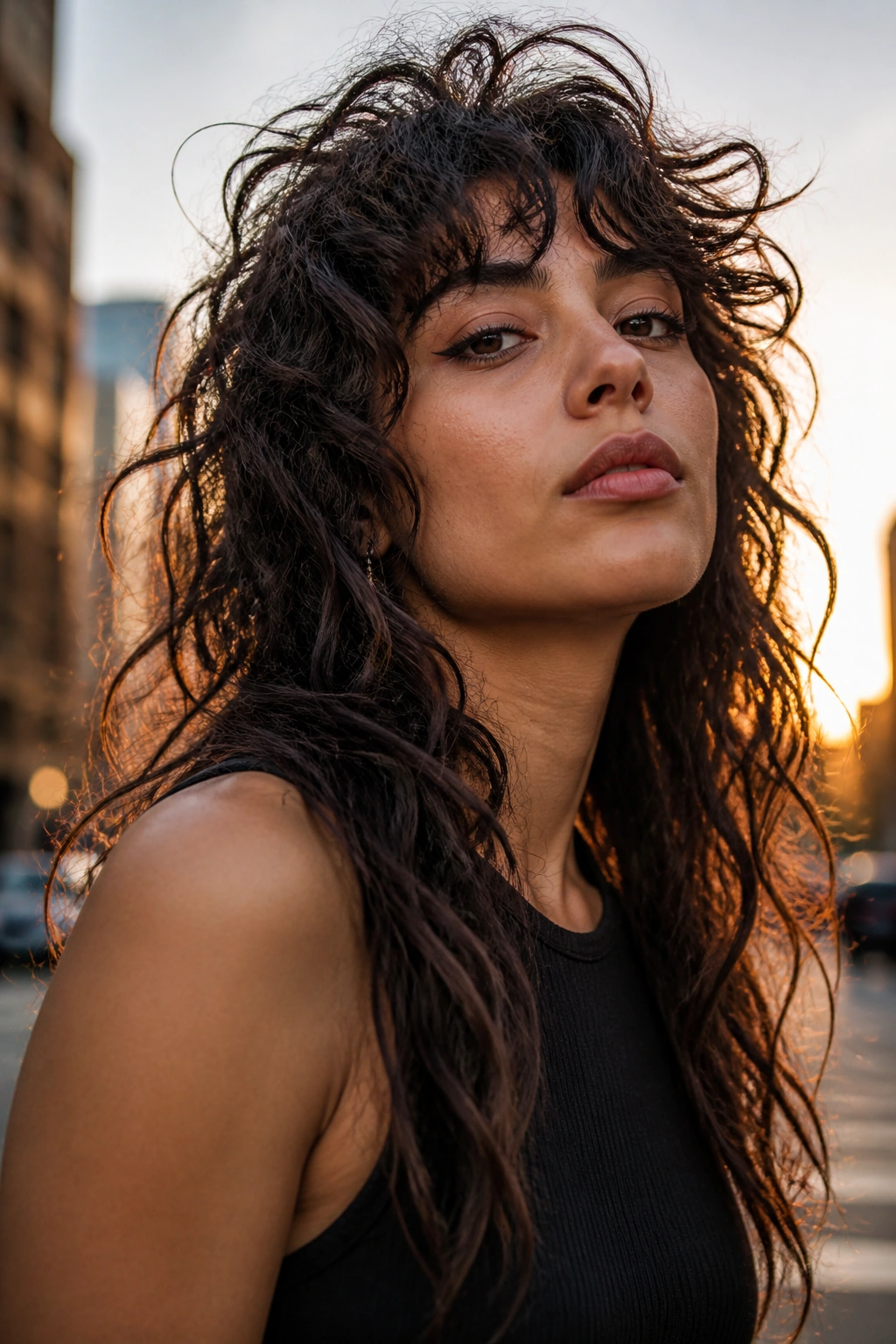
The curly wolf cut sits somewhere between a shag and a mullet, which sounds chaotic until you see what it does for curls. It gives the crown some lift, keeps the middle airy, and lets the bottom stay long enough to feel dramatic.
It works because curls can handle disconnection better than straight hair can. Those shorter layers at the top and around the sides don’t look choppy in the same way. They look energetic. That said, the wolf cut is not for someone who wants sleek and polished. It has a bit of edge, and it wears that edge proudly.
If your curls are limp at the roots or your hair feels too heavy by noon, this cut can bring the shape back to life. It’s especially good when you like second- or third-day hair and don’t mind a little wildness.
9. Long Curls With Curtain Bangs That Blend Instead of Stop
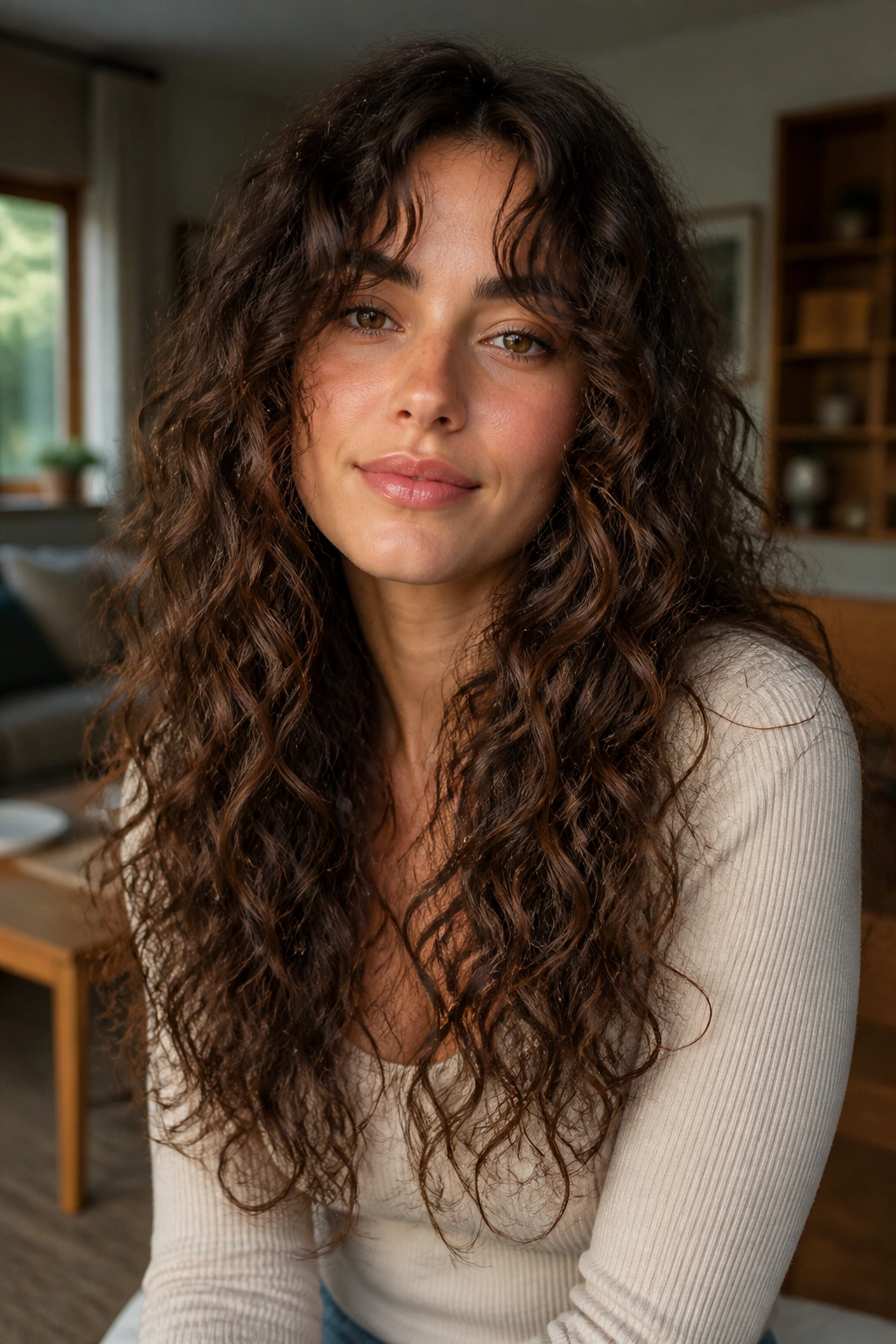
Curtain bangs on curly hair can be lovely when they’re cut with enough length to move. Too short, and they spring straight up into a little fringe that fights the rest of the haircut. Too long, and they disappear.
The sweet spot is usually somewhere around the cheekbone or lip, depending on how much your curls shrink. Once they’re dry, they should part softly down the middle and frame the face without feeling rigid. That middle split helps long curls feel lighter, especially if your face is narrow or your forehead feels visually crowded by one-length hair.
How to make them work
- Keep the bangs long enough to curl.
- Ask for soft blending into the front layers.
- Style them with a light gel or cream so they don’t frizz apart.
- Trim them often enough that they do not drift into your eyes.
Curtain bangs are a commitment, but they’re one of the prettiest ways to break up long curly hair.
10. The Rounded Long Curly Cut That Makes Curls Feel Cushiony
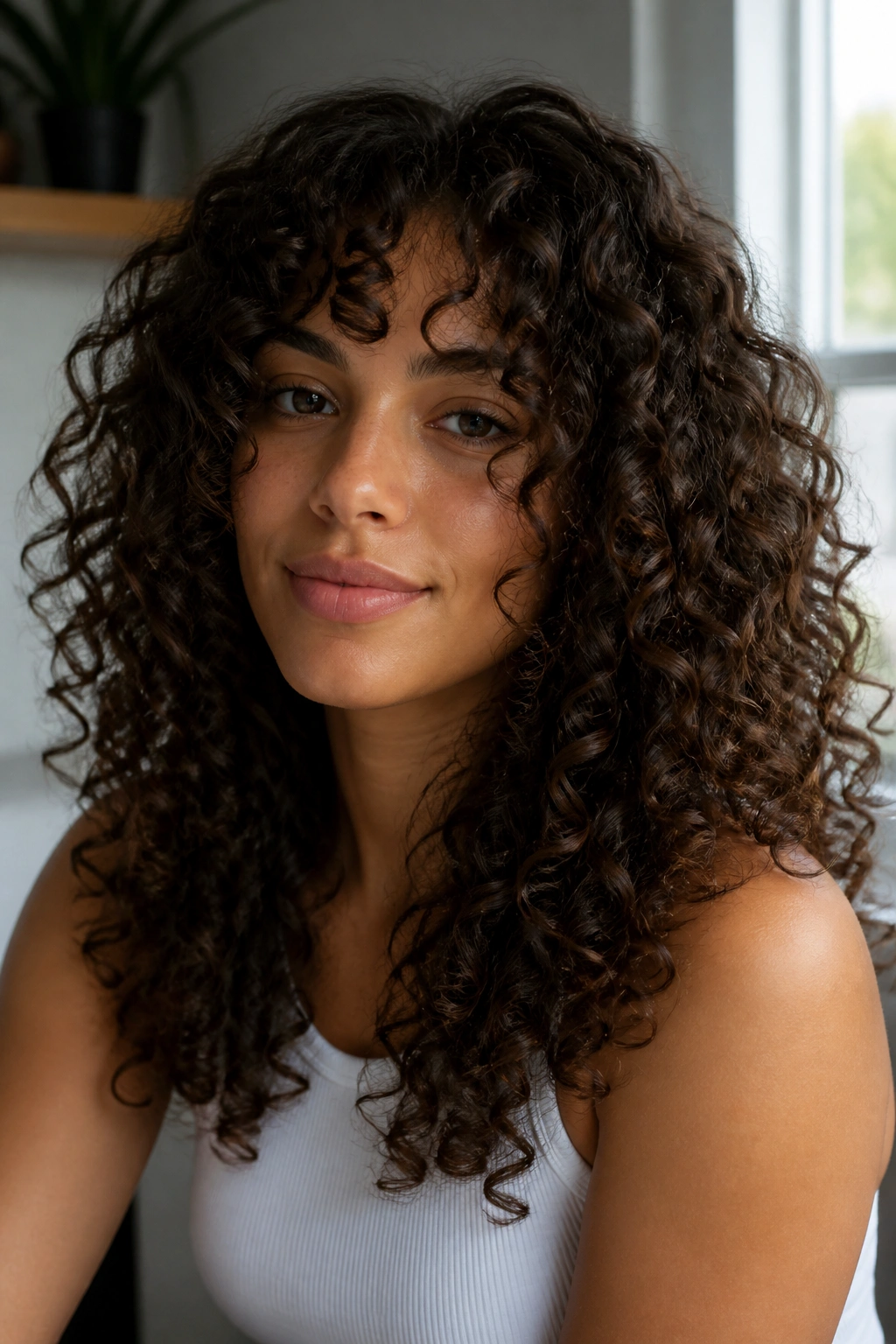
A rounded curly cut gives the hair a dome-like silhouette, fuller through the sides and softer at the bottom. It’s a smart move if you want volume that feels balanced instead of top-heavy or triangular.
The shape is especially useful on medium-to-thick curls that expand when dry. A straight perimeter can exaggerate width, while a rounded outline tucks the hair in a little and makes the overall shape look more finished. It can also help if your ends tend to feel stringy.
What it does best
- Keeps the silhouette soft
- Makes the ends look denser
- Works well with natural volume
- Reduces the “heavy shelf” effect
This is one of those cuts that looks better the more it lives in the air-dry-and-go world. Diffuse it if you want extra lift, but the real magic is in the silhouette.
11. Invisible Layers for Thick Curls That Need Hidden Removal
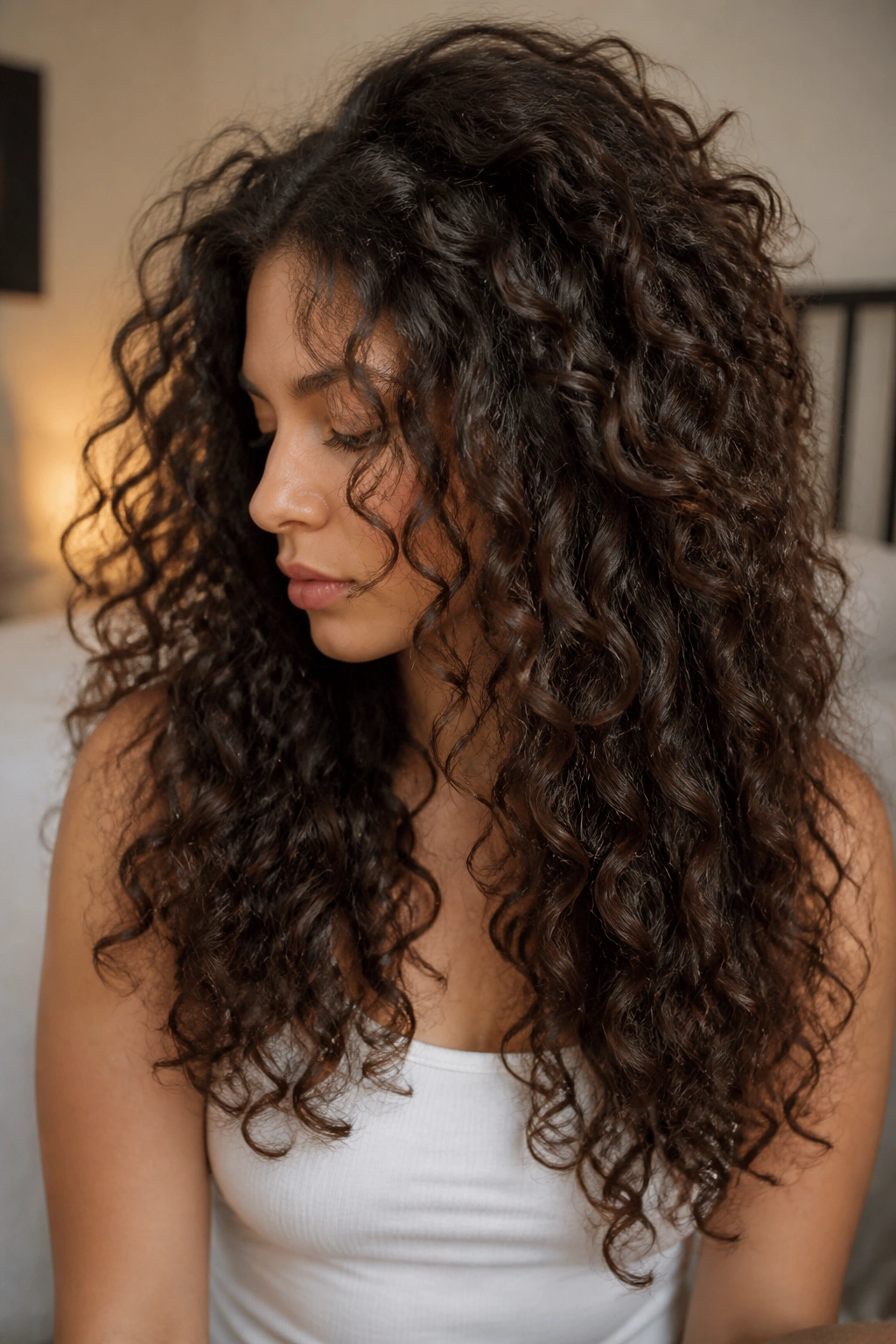
Invisible layers are one of my favorite answers for thick curly hair because they remove bulk without broadcasting it. The outer shape stays polished, while the weight is thinned from inside the cut.
That matters if you want long hair but hate the way it sits like a blanket. Internal layers can let the curl pattern spring up more freely, especially around the crown and mid-lengths, without carving obvious steps into the surface. A good cut like this still leaves enough density at the ends to keep the length looking rich.
People sometimes ask for thinning shears and get a weird result. I’d be careful there. On curls, blunt thinning can leave fuzzy ends that frizz in humid air. Hidden layering done by a careful stylist usually gives a cleaner finish.
12. A Deep Side Part That Changes the Whole Shape
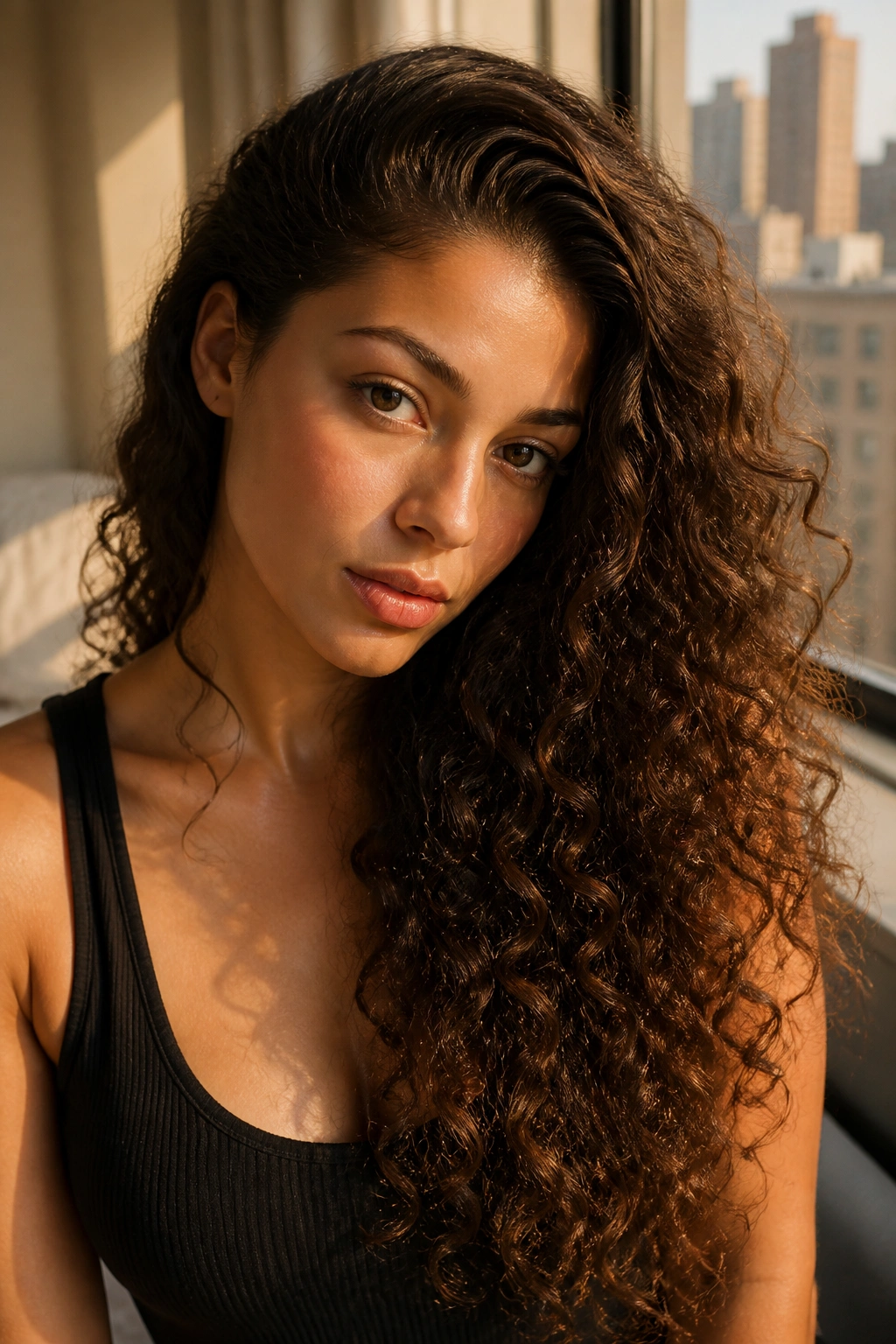
A side part can completely change long curly hair without touching the length at all. The shift is subtle on paper. In practice, it can give you better lift on one side, more shape around the face, and a little extra drama where the curls fall.
This works especially well with long layers because the part lets the curls stack differently. One side gets more volume at the root, the other side drapes with a softer sweep. It can also help if your face shape benefits from asymmetry, which is more common than people think.
If your hair feels flat at the crown, try this before you rush to cut it shorter. A sharper side part with the right layering can wake the whole style up. Sometimes the problem is not the cut. It is the part.
13. Long Curls With a Soft Fringe for a Gentler Front
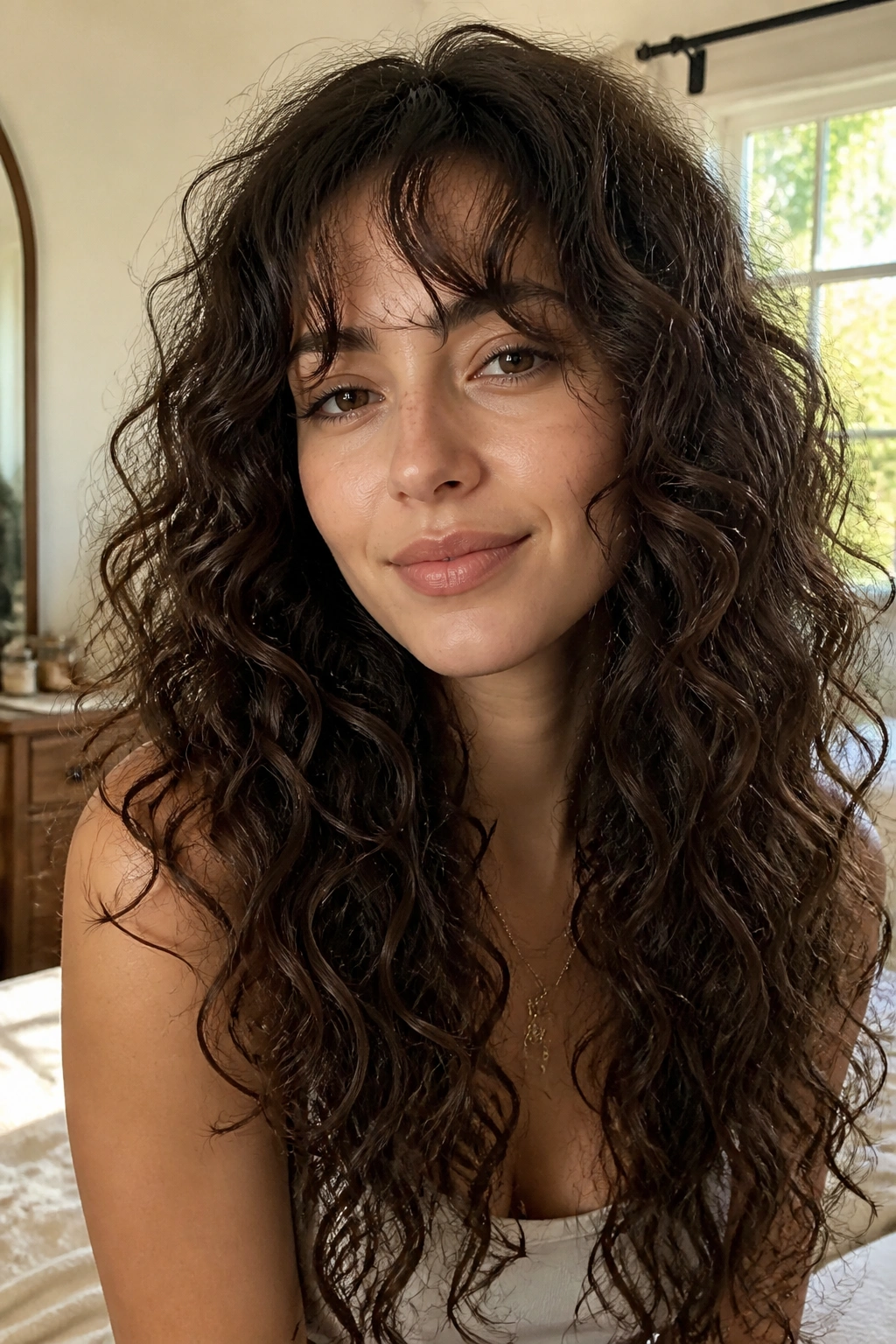
A soft fringe sits somewhere between bangs and face framing. It’s less committed than a full bang line, but it still gives the front of the haircut some personality. On long curly hair, that can make a big difference.
The best version is airy, not thick. You want pieces that bend and separate, not a curtain that sits on the forehead like a block. That’s why this style tends to work best on curl patterns that clump naturally and don’t frizz apart the second you step outside.
It’s a nice option if you want your haircut to feel a little more styled without losing the ease of long curls. And if the fringe grows out, it usually folds into the front layers without looking awkward for very long. That is a practical detail people forget to mention.
14. Tapered Ends for Dense Curls That Need a Cleaner Fall
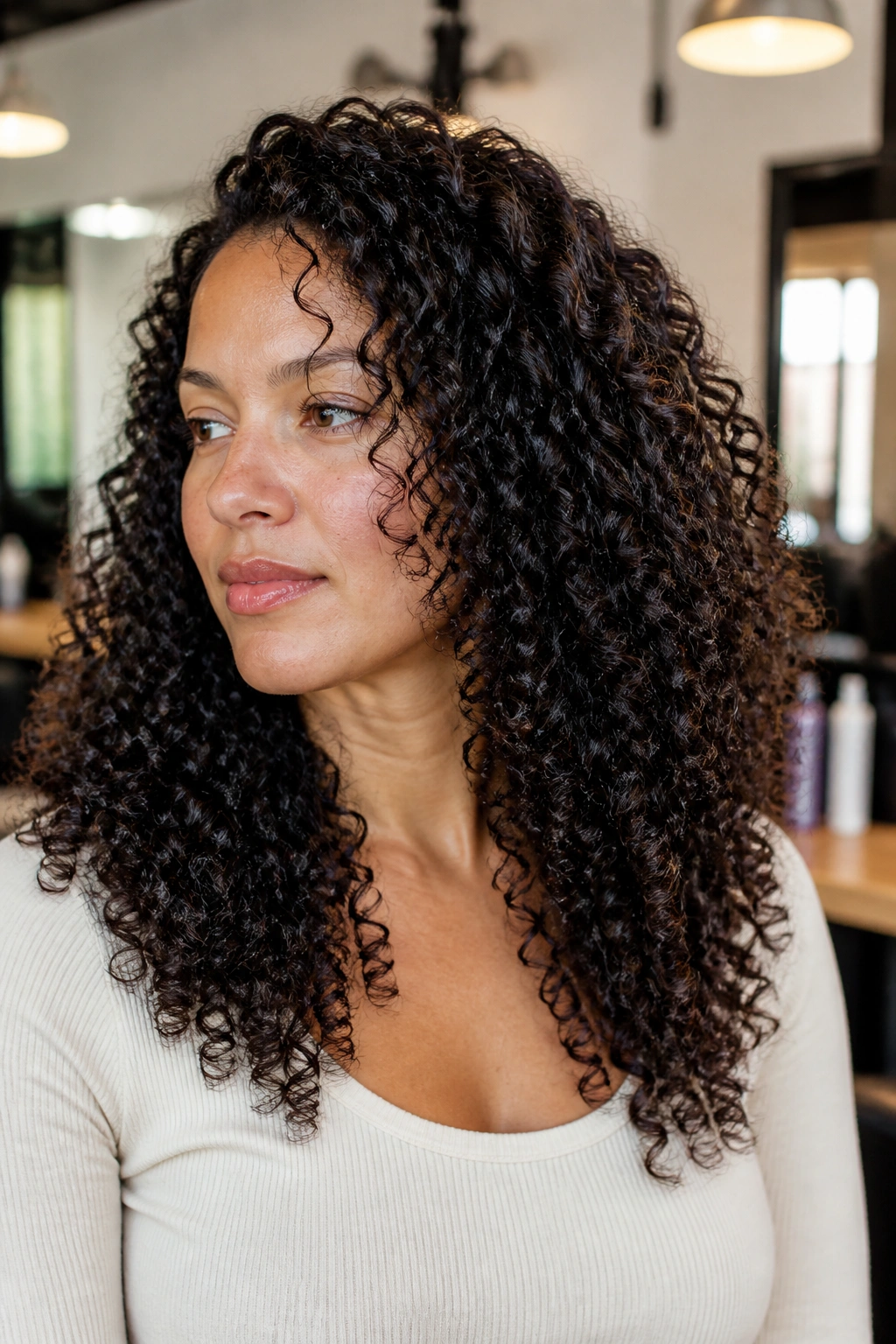
Tapered ends can be a lifesaver when dense curls pile up too much at the bottom. Instead of cutting a blunt edge, the stylist shapes the ends so they narrow slightly and stop the hair from sitting like a heavy shelf.
The point is not to make the hair thin. The point is to make the bottom edge move. Dense curls need room to bounce, and a small taper can keep the whole haircut from feeling boxed in. On very thick hair, this can also make detangling less annoying because the ends don’t clump into such a hard line.
I’d use this on hair that feels bulky no matter how much moisture you put into it. If the ends are wide but the crown is already full, tapering the perimeter can clean up the silhouette fast.
15. Internal Debulking for Long Curly Hair That Feels Too Heavy
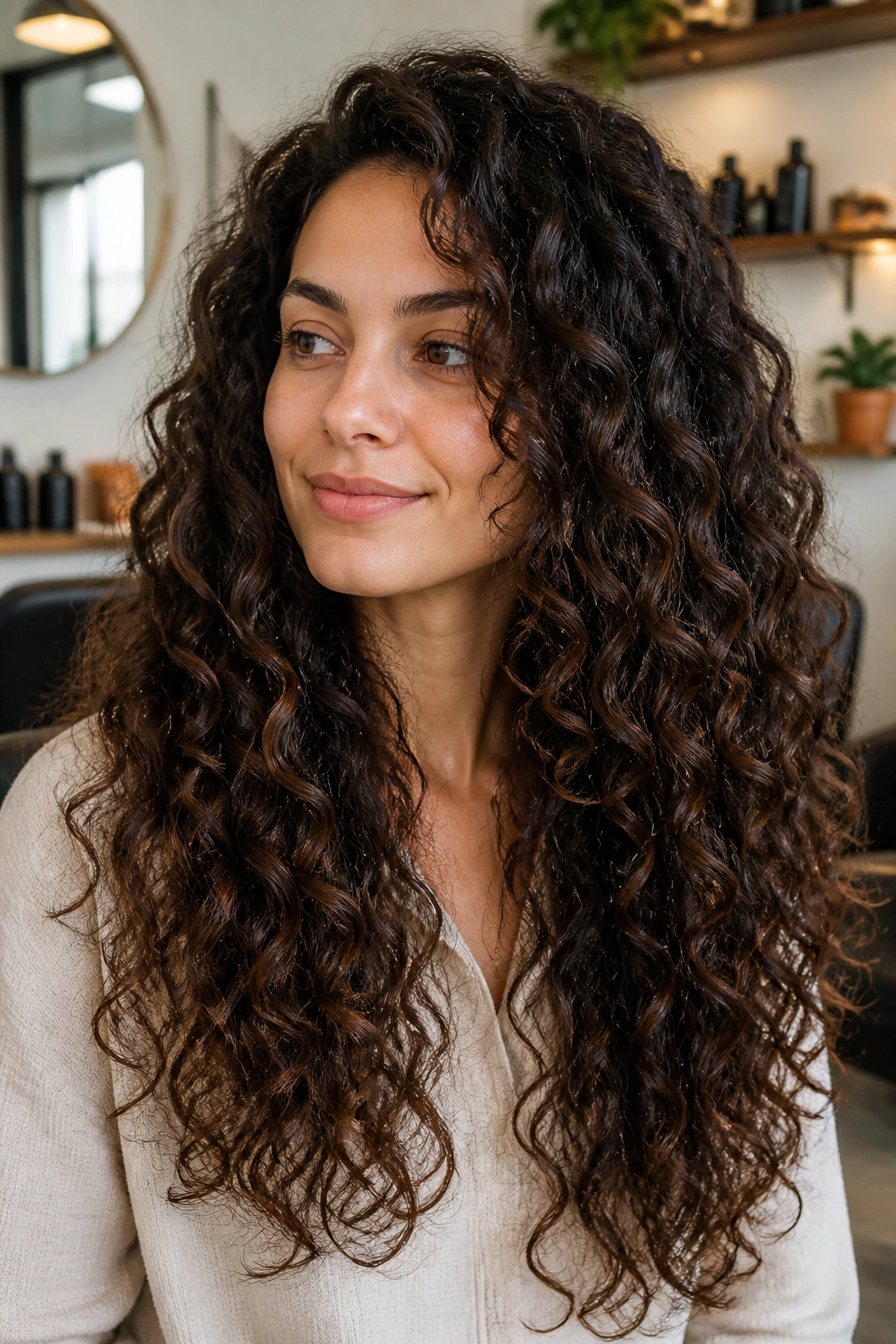
Internal debulking is one of those technical fixes that sounds boring and turns out to be useful. The outer length stays intact, but the inside of the cut is opened up so the curls can move instead of stacking in one dense mass.
The big warning is this: not every version of debulking is kind to curly hair. Over-thinning can leave stringy pieces that frizz and separate in a bad way. Good internal shaping removes weight where it’s causing the problem and leaves the outside strong enough to hold the line.
When it helps most
- Hair feels hot and heavy at the neck
- Curls clump into a flat block underneath
- The top looks small compared with the bottom
- Drying takes forever because the hair is packed too tightly
If you have thick curls and hate that “too much hair, too little shape” feeling, this is worth asking about. Ask carefully, though. Not every stylist means the same thing by it.
16. Long Layers for Loose Waves and Open Curl Patterns
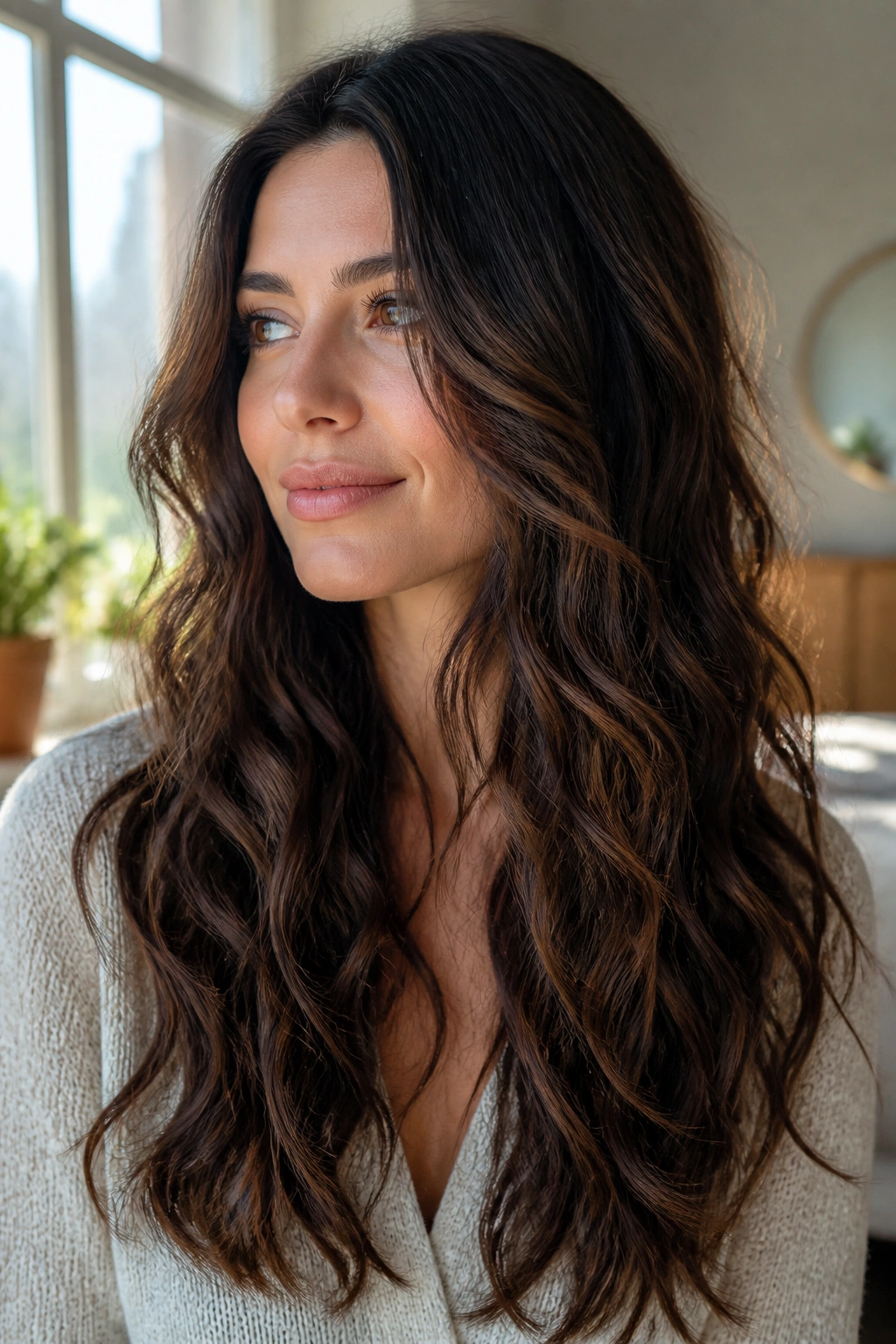
Loose waves and soft curls need a different touch than tight coils do. Too much layering can make them look stringy. Too little, and they can fall flat fast.
A long layered cut for 2A to 3A hair usually keeps the shape simple: enough movement around the face, a little lift through the mid-lengths, and enough weight at the bottom to stop the hair from puffing out. On hair that barely reaches the curl stage, this is often the haircut that finally makes the texture show up.
I like this one because it is honest. It doesn’t pretend every wave needs a wild shape. It just gives the hair enough structure to look deliberate on a good day and forgiving on a rushed one.
17. A Shaped Crown That Gives Long Curls More Lift
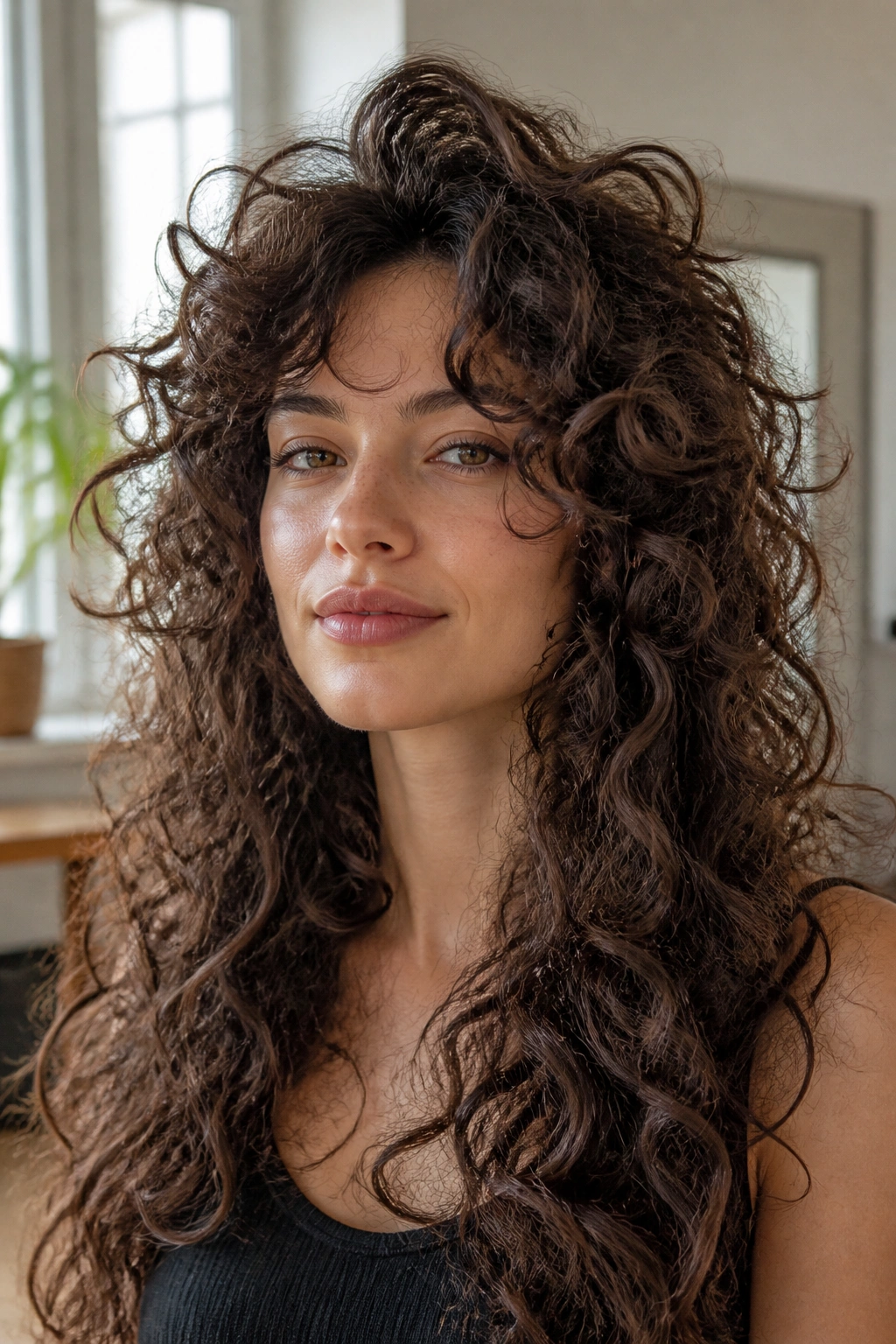
Sometimes the problem is not the ends. It’s the top. Long curly hair can get weighed down at the crown, and when that happens the whole style collapses into a low, flat shape no matter how nice the ends are.
A shaped crown solves that by keeping more height near the roots and easing the weight through the top layers. It helps the curl pattern rise instead of sliding straight down. On dense or heavy hair, the difference can be dramatic in the mirror.
What I like here is the way it changes the silhouette without making the haircut look obviously layered. You get lift, but you do not get the choppy look that some people want to avoid. If your hair always looks better on day one than day three, crown shaping can buy you a little more shape in between washes.
18. Long Layers for High-Shrinkage Curls
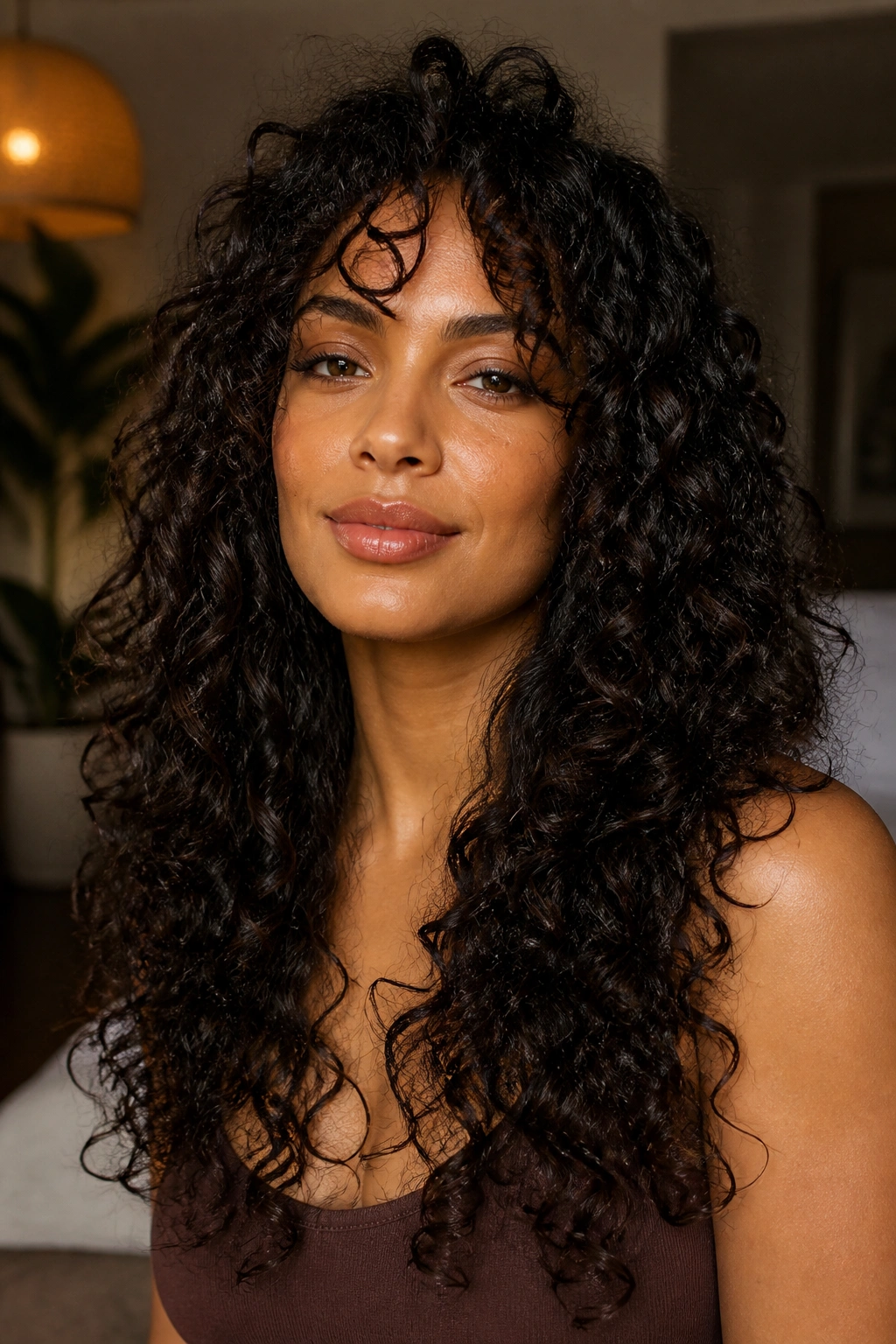
High-shrinkage curls need a haircut with patience. When the hair springs up a lot after drying, the wrong layer placement can turn a long style into a short one in a hurry. That is where careful long layers matter.
The trick is to keep the shortest pieces longer than you think you need, especially around the front and crown. Curls that shrink a lot will still get shape from the cut, but they will not suddenly jump into unplanned bangs or a choppy top layer. That mistake is common, and it is frustrating.
A stylist who understands shrinkage will usually cut a bit longer, then shape again after the hair dries. That extra check is worth it. Otherwise you are guessing, and curly hair punishes guessing.
19. The Oval Curly Shape That Balances the Whole Head
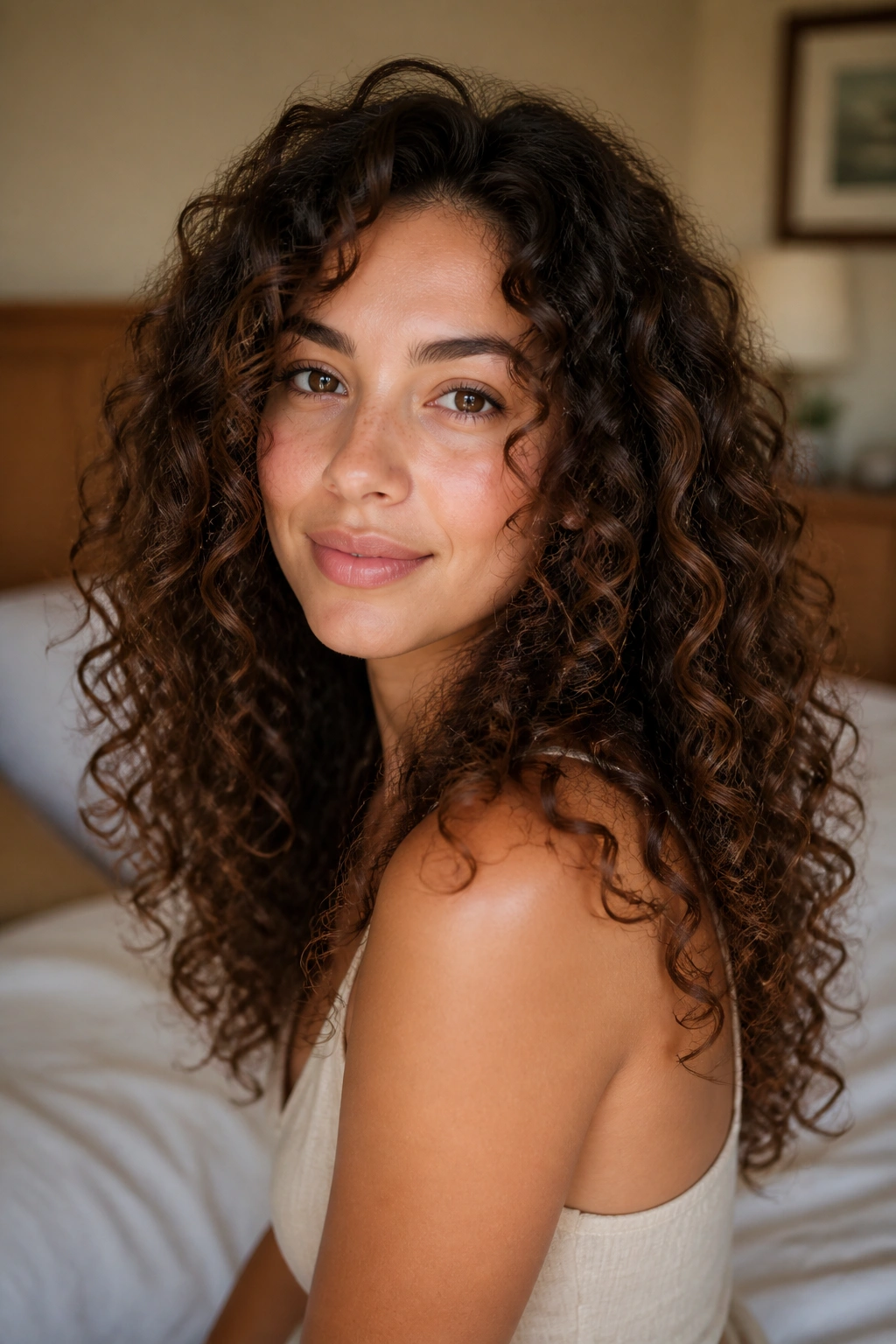
An oval shape gives long curly hair a balanced outline that feels soft at the top, fuller through the middle, and rounded at the bottom. It is a calm haircut. Nothing sharp, nothing boxy, nothing fussy.
This shape works well when you want the hair to look even from every angle. It also handles face shape nicely because the curves stay away from any one hard line. On longer curls, that can make the whole style feel easier to wear, especially if you like your hair down most days.
The oval silhouette is one of those cuts that can look plain in the chair and lovely once the curls dry. That is not a flaw. It just means the haircut is doing its job quietly.
20. The Clean-Perimeter Long Cut for Curls That Need a Strong End Line
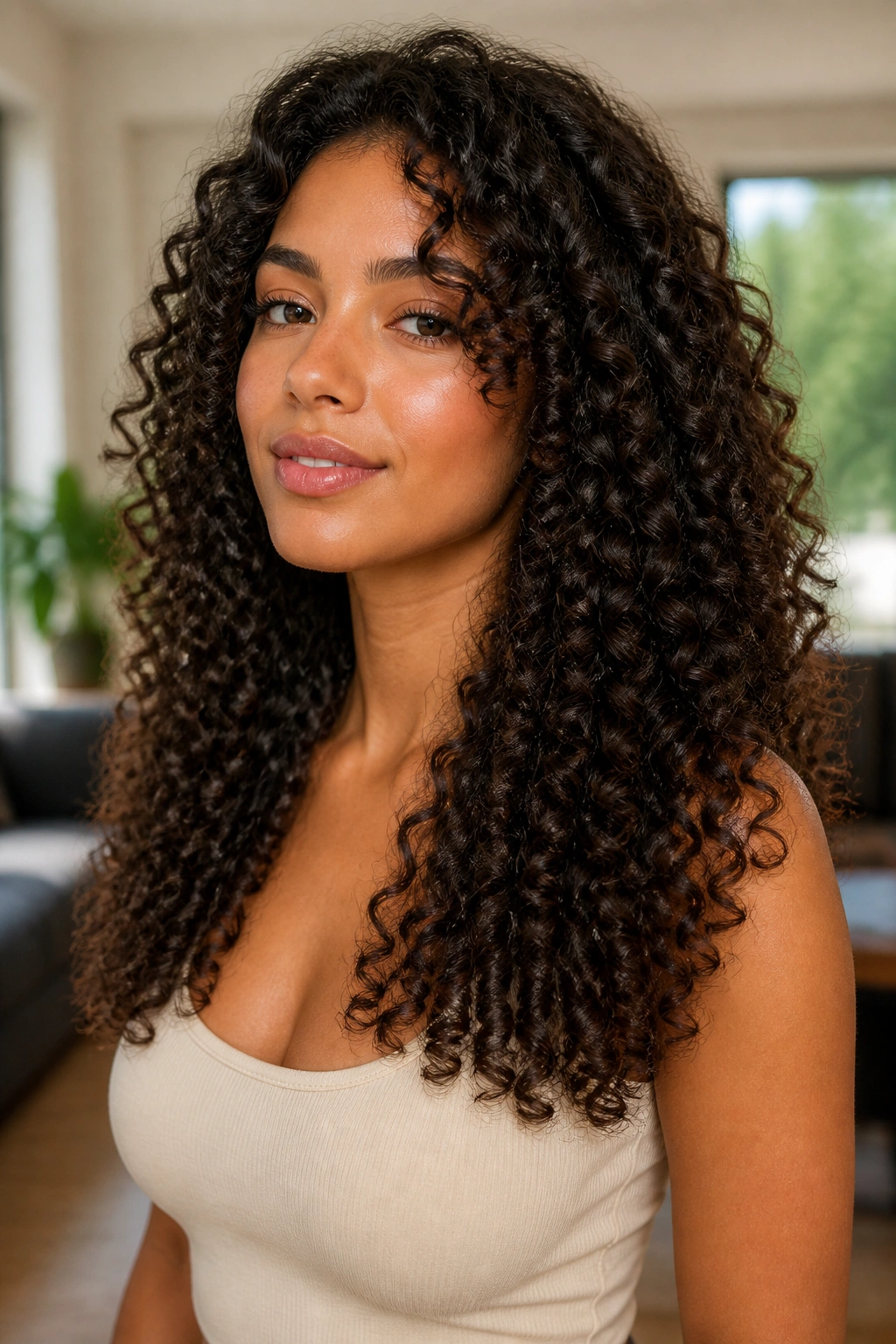
A clean perimeter is the right answer when your curls are already full and you do not want the ends to get wispy. Instead of shredding the bottom into too many layers, the stylist keeps a clear, strong outline and lets the texture do the talking.
This cut can look expensive in the simplest possible way. The bottom edge stays thick, the length reads clearly, and the curls fall as one complete shape. It is especially good if you wear your hair naturally a lot and want the ends to look healthy rather than feathery.
It is not the most dramatic option on this list, and that is why I trust it. Some curls need fewer tricks and a cleaner line. If your hair is already balanced and you mostly want it to grow out well, this is the haircut I would point you toward first.
