



Thick curly hair has a personality of its own. When the shape is right, it looks rich, soft, and expensive in the best possible way. When the shape is wrong, it can balloon at the sides, collapse at the crown, or turn into a triangle that makes you stare at your mirror a little too long.
That’s why thick hairstyles for curly hair need a different kind of thinking. You are not trying to flatten the hair. You are deciding where the weight should live, how much room the curls need, and whether the style should feel polished, loose, or tucked away. A style that works on fine curls can look skimpy on dense hair. A style that works on dense hair can look like too much on finer texture. Hair has opinions.
The good news is that thick curls give you options. Lots of them. Big volume can become a rounded shag, a high puff, a twist-out with real shape, a side-swept ponytail, or a clean low bun that still looks full from every angle. The trick is matching the cut or style to the curl pattern, the density, and the amount of effort you want to spend that morning.
Some of these styles are quick. Some need a bit of product and a few pins. A few are more about the cut than the set. All of them are built for hair that doesn’t want to be ignored.
1. Long Layers That Let Thick Curls Move
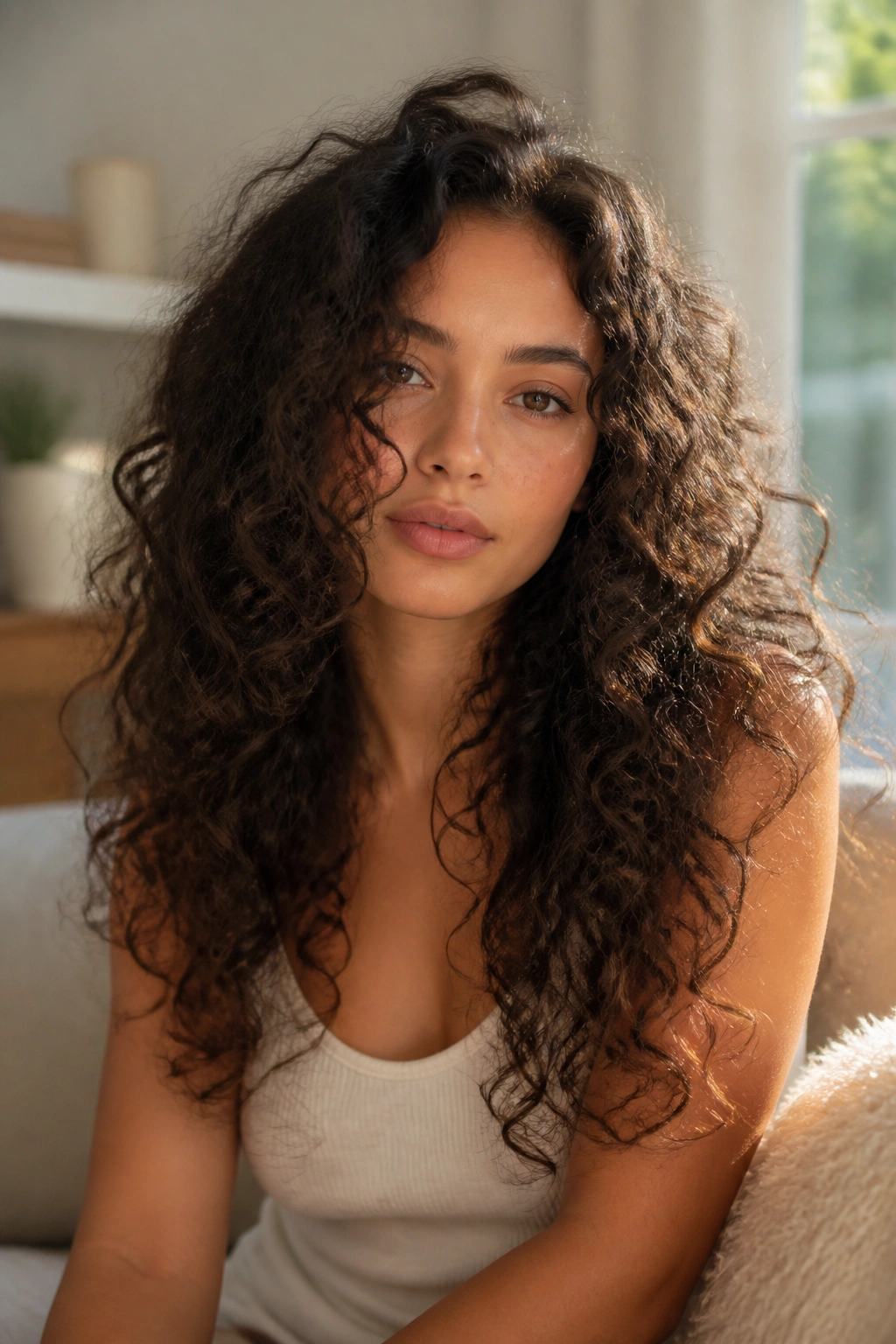
Long layers are the quiet hero of thick curly hair. They keep the length you want, but they stop the ends from acting like one heavy block. That matters more than people think. Dense curls can look shorter than they are when the weight piles up at the bottom, and layers break that up so the whole shape feels lighter.
Why It Works
A good layered cut lets the curls fall in separate levels instead of stacking into a square. You still get fullness, but the outline looks softer. That shape also helps curl clumps stay defined, because the hair has room to sit without fighting itself.
For styling, keep it simple: a leave-in, a curl cream, and a strong-hold gel on soaking-wet hair. Scrunch, then either air-dry or diffuse with the head side to side so the roots do not pancake. The whole point is movement, not stiffness.
- Ask for layers that start below the chin if your hair is very dense.
- Use a wide-tooth comb only when the hair is wet and coated.
- Dry fully before touching the cast.
- Refresh with water and a small squeeze of gel, not a full rewash.
Best tip: if your curls feel bulky at the ends, you probably need more internal layering, not more product.
2. Rounded Curly Shag
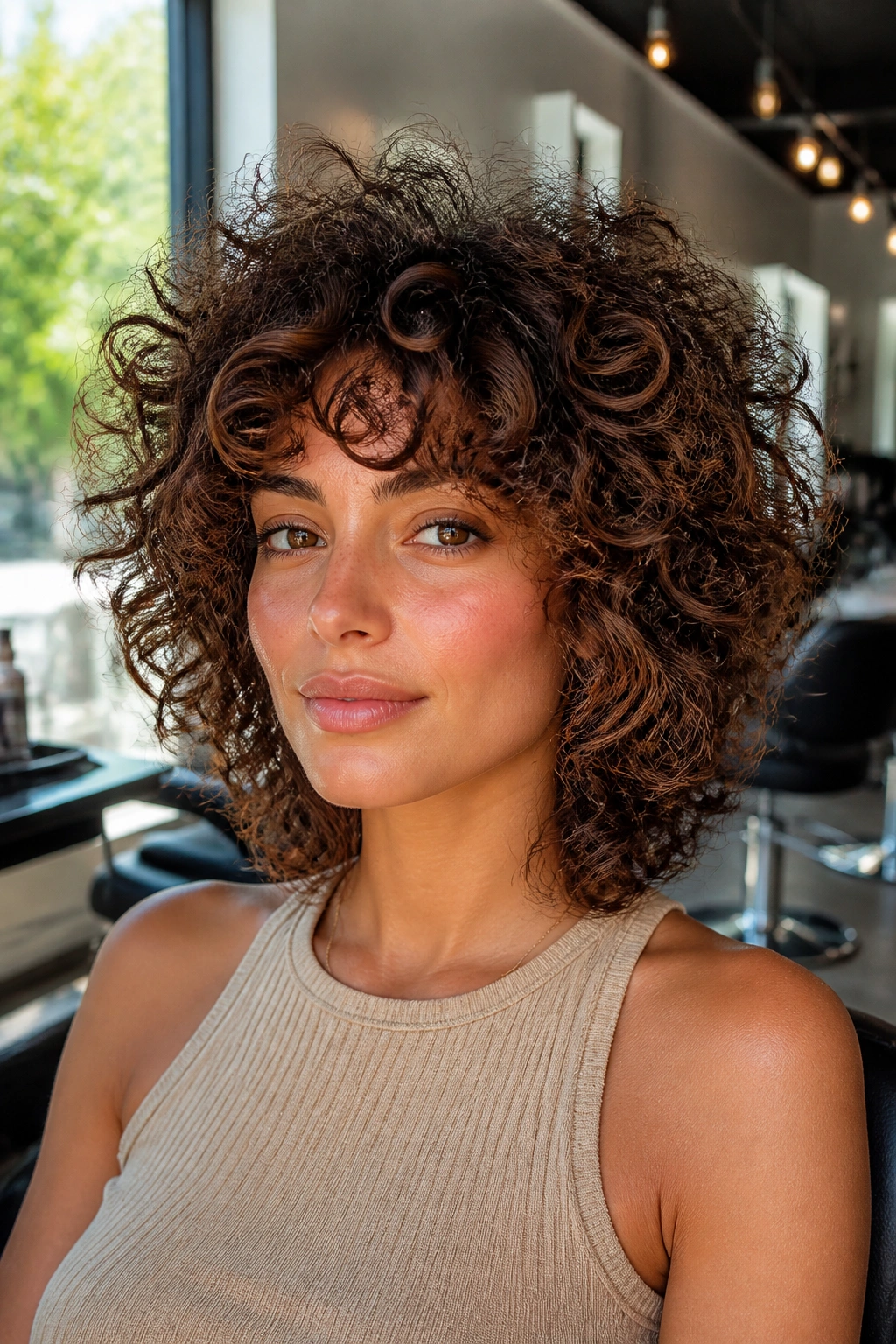
Why does the shag work so well on thick curls? Because it removes bulk without making the head look flat. That sounds simple, but it’s the whole trick. A rounded shag keeps volume where you want it — around the crown and cheekbones — while softening the heavy edges that can make dense curls look boxy.
The shape is especially useful if your curls tend to puff at the sides and then hang long at the bottom. A shag takes some of that weight off the interior, so the curls bounce instead of dragging. It also plays nicely with a little frizz. Not wild frizz. Just the soft halo that makes curly hair look alive.
How to Wear It
Keep the top defined with mousse at the roots and a cream through the mid-lengths. If you want a more lived-in finish, scrunch lightly when the hair is about 80% dry, then leave it alone. The mistake people make is trying to smooth every curl into the same exact shape. That kills the shag.
A rounded shag is for someone who wants shape first and perfection second. Good call.
3. Curly Lob With Face-Framing Layers
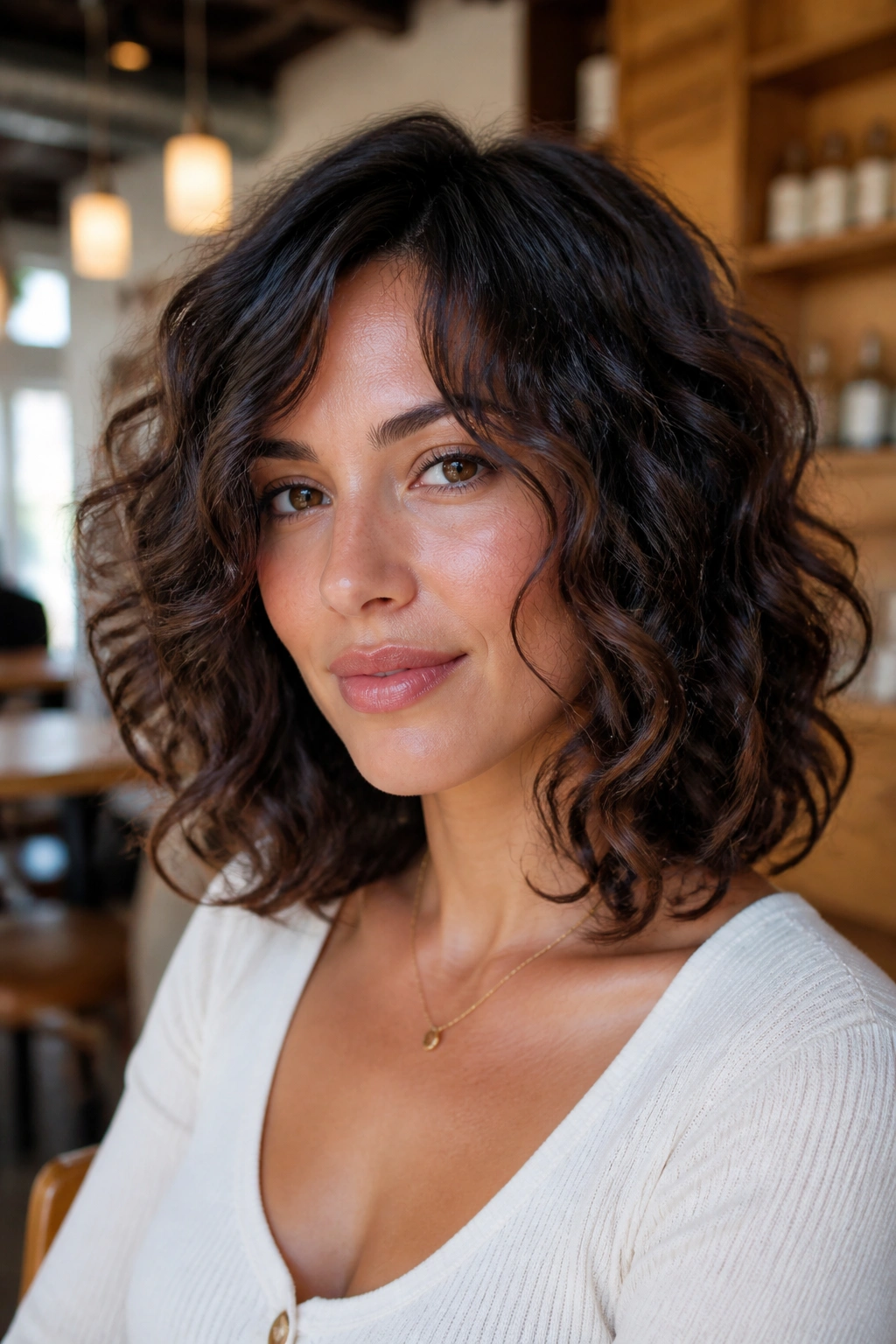
If your curls hit the shoulders and keep flipping inward at the wrong places, a curly lob can be the fix. It sits long enough to feel substantial, but short enough to stay airy. On thick hair, that length is a sweet spot because it gives the curls room to spring without swallowing your neck.
This style gets even better when the front is cut with face-framing pieces that start near the cheekbones. Those pieces pull the eye upward and stop the whole cut from feeling blunt. They also help if your hair is dense around the jaw. A few carefully placed layers can do more than a heavy thinning job ever will.
The lob looks good in a center part, but I like it best with a slightly off-center part. That tiny shift changes the balance and keeps the curl shape from feeling too symmetrical. Small changes matter on thick hair.
- Ask for a soft perimeter, not a sharp shelf.
- Keep the front pieces a little longer if your curls shrink a lot.
- Diffuse with the face-framing pieces clipped away from the cheeks.
- Use a light gel so the ends stay defined, not fuzzy.
4. High Puff With Clean Edges
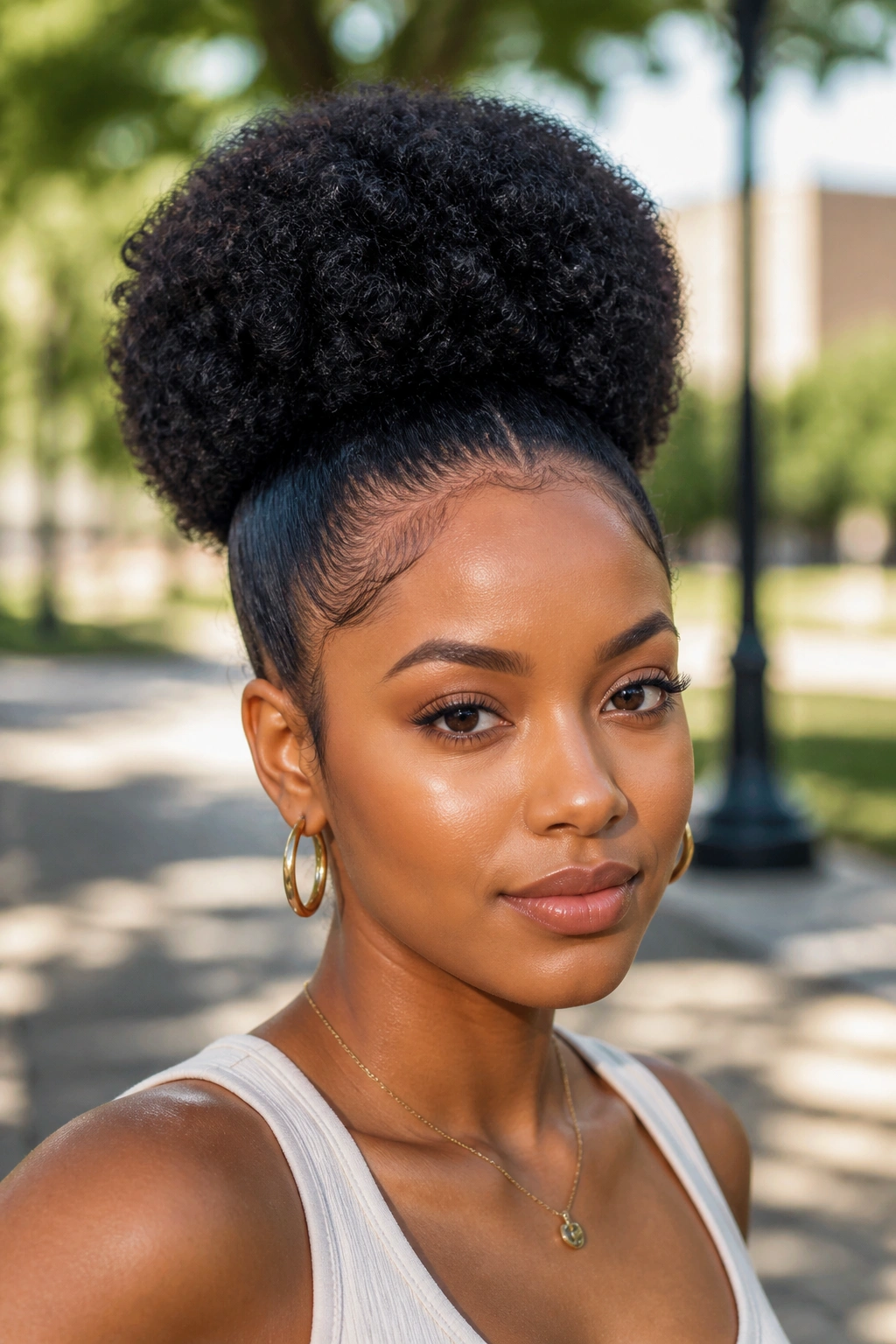
A high puff is one of those styles that makes thick curly hair look like you meant every bit of the volume. It pulls the curls up and away from the face, which opens up your features fast. The best part is that it does not require a full set of perfect curls, just enough stretch at the roots to gather the hair.
The style works because dense curls already have the body to hold height. You are not building volume from nothing; you are just giving it a place to live. Smooth the front with a little gel or edge control if you like a cleaner finish, then secure the puff with a wide elastic or puff cuff. A tiny scrunchie will dig in. Bad idea.
Pull the puff a little forward if you want a rounder silhouette. Place it higher if you want a more lifted shape. Either way, keep the base loose enough that the scalp does not ache by noon. A high puff should look bold, not painful.
5. Half-Up Crown Twist
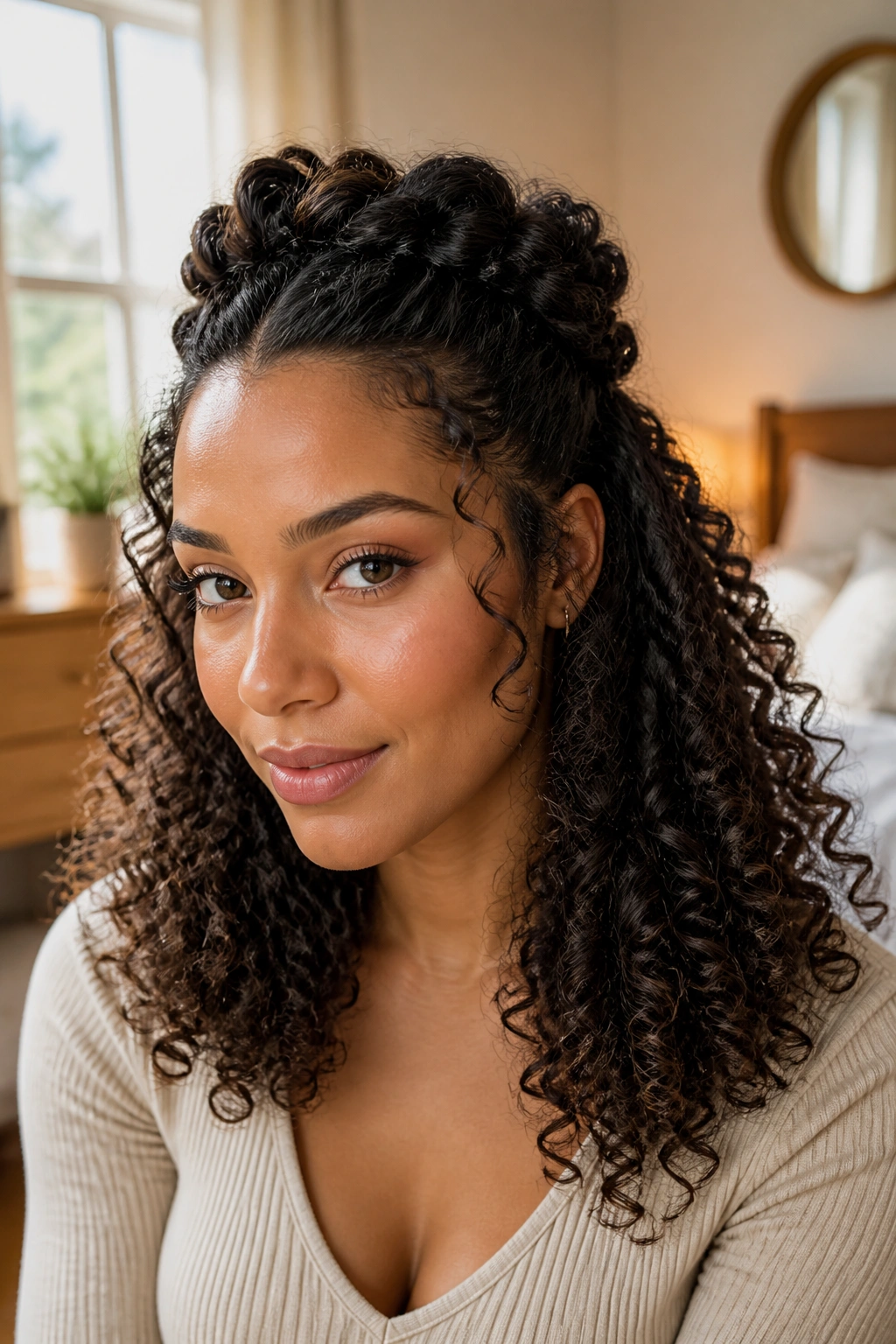
A half-up crown twist gives thick curls structure without hiding the length. That’s the charm of it. You get the polished feeling of an updo, but the lower curls stay visible and full, which matters when you have dense hair and do not want to lose the whole point of having it.
This style works best when the front sections are twisted back from each temple and pinned near the center crown. You can keep the twists smooth or let them puff a little. Both work. Thick curls usually look better with a bit of softness anyway, because the contrast between the twisted top and the loose bottom adds shape.
It’s also a good day-two style. If the top feels a little flat, mist the roots lightly and massage them with fingertips before twisting. Do not soak the curls. You want lift, not damp clumps.
If you like a style that says “put together” without looking stiff, this is one to keep in rotation.
6. Pineapple Updo for Day Two Curls
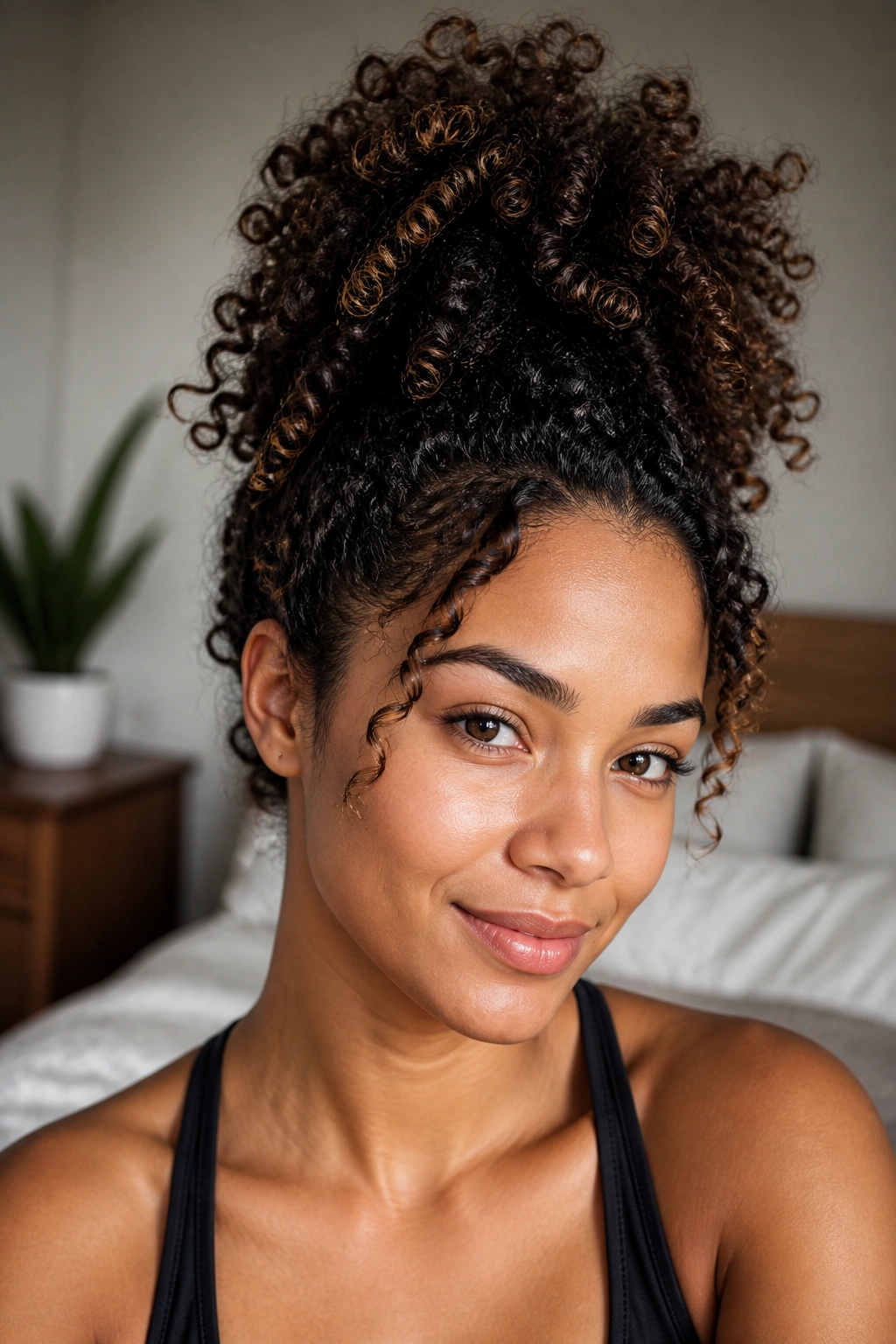
The pineapple gets written off as a sleep style, which is a shame. On thick curly hair, it can look casual, easy, and a little playful when worn high and loose during the day. The trick is not to crush the curls into one tight ball. You want height, shape, and enough slack that the curl pattern still shows.
This style is especially good when the roots need help but the ends still look decent. Gather the hair at the crown with a satin scrunchie, then let the curls fan out instead of forcing them through a tiny elastic. If your hair is long enough, the ends will spill over the top and make the whole thing feel fuller.
A pineapple also works when you are in a rush and your hair is trying to do too much at once. It controls the volume without flattening it. That is harder than it sounds.
Use a little leave-in on the front pieces, smooth the edges with your hands, and stop there. The style looks best when it still feels relaxed.
7. Curly Curtain Bangs With Long Length
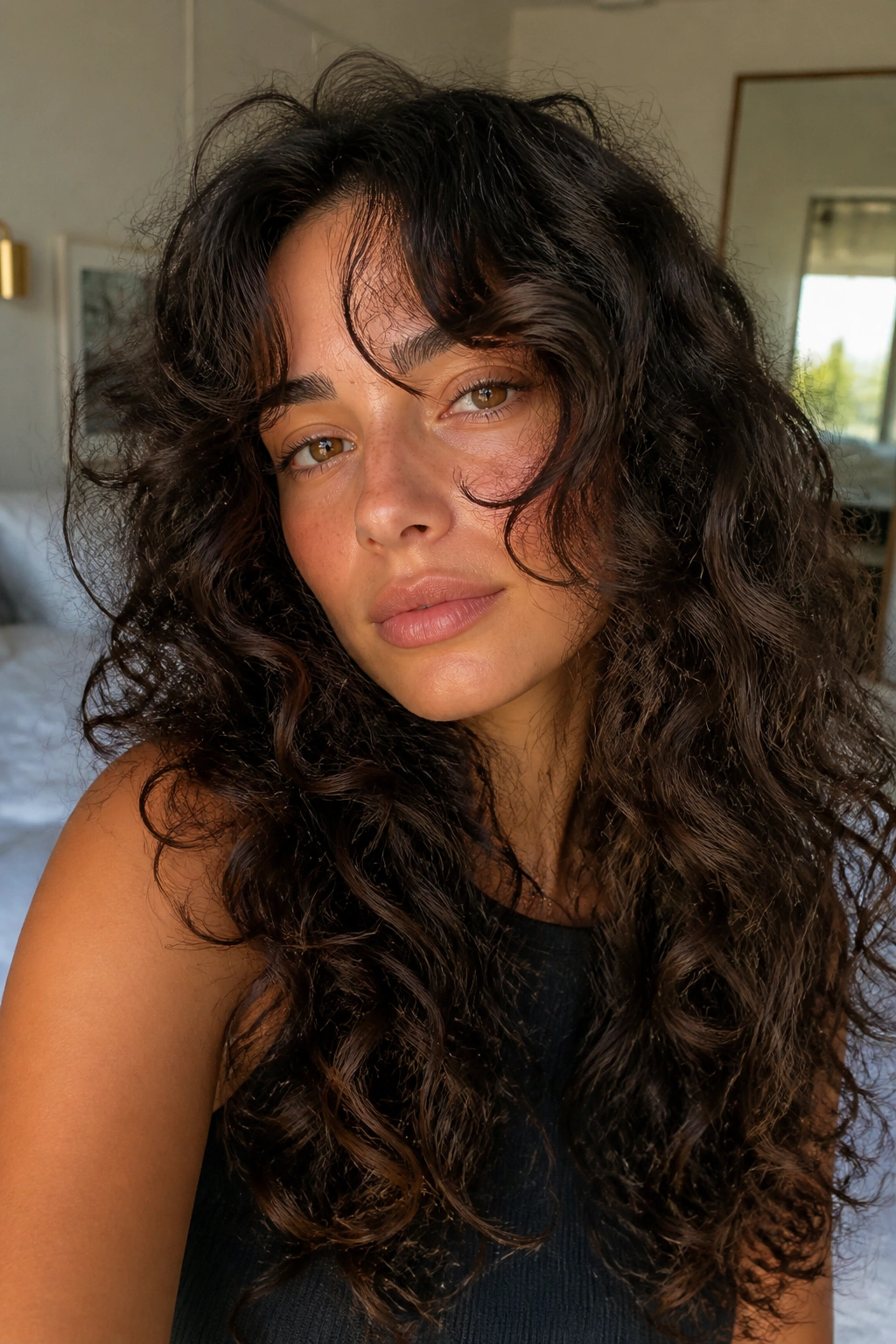
Can thick curls handle bangs? Absolutely — if the cut respects shrinkage. Curtain bangs are one of the smarter choices because they split away from the face instead of sitting like a heavy wall across the forehead. On dense curls, that matters. A blunt bang can look too thick fast.
The shape should start long enough to graze the cheekbones when dry, not when wet. That distinction saves a lot of regret. Curly bangs usually bounce upward more than expected, and a stylist who cuts them too short can leave you with a fringe that lives in the middle of your face.
How to Wear It
Ask for the bangs to blend into the front layers, not sit separate from them. That keeps the whole haircut from feeling chopped up. On styling days, twist each side away from the face while it dries so the bangs fall in a soft curtain rather than a triangle.
This is a good choice if you want movement around the face without giving up length everywhere else. It’s flattering, but more importantly, it behaves.
8. Deep Side-Part Cascade
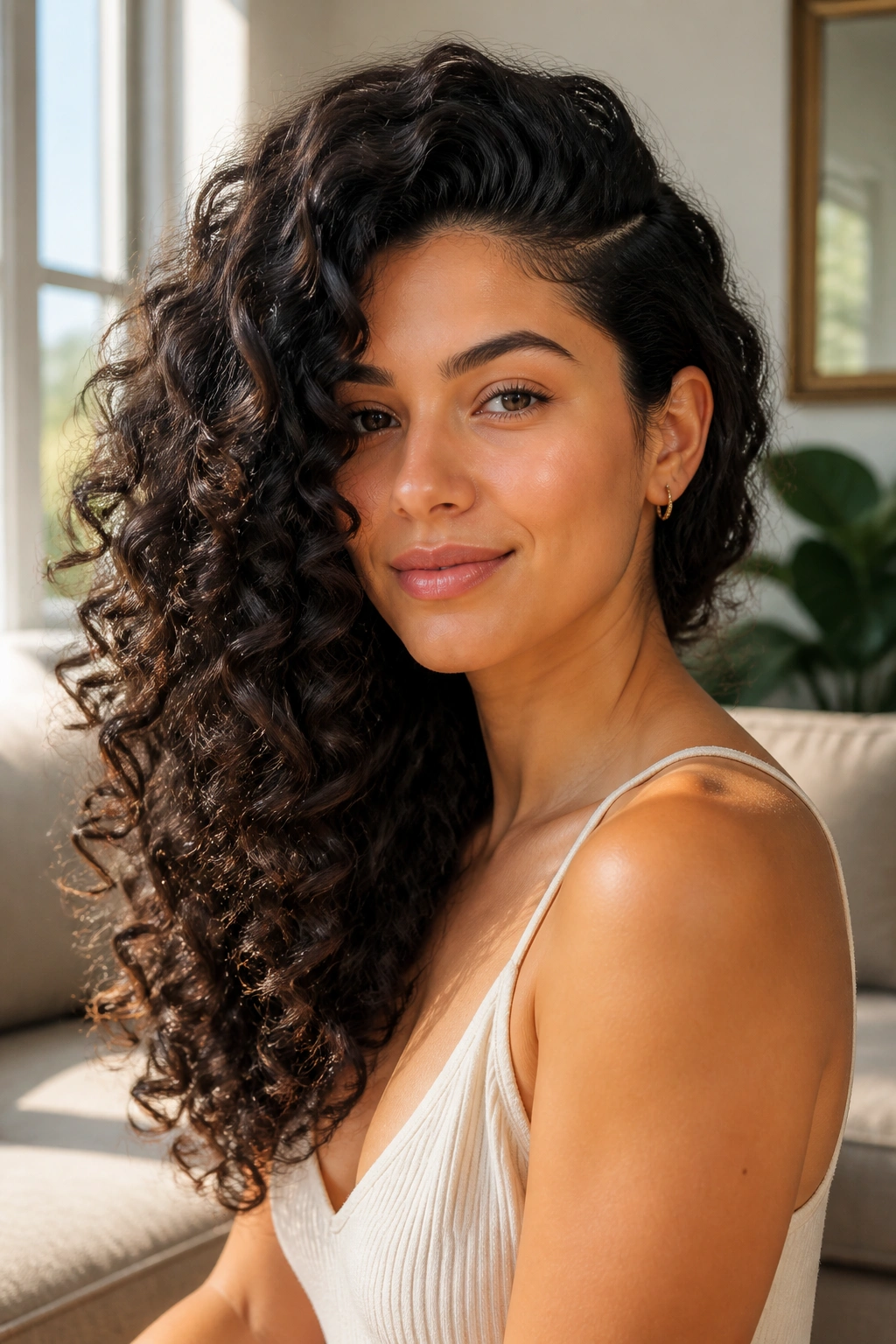
A deep side part changes the whole mood of thick curls. It creates instant asymmetry, which is useful when the hair has too much equal weight on both sides and starts looking boxy. The part pushes the curls over in one direction, and that small shift gives the style a little drama without making it fussy.
This works especially well on shoulder-length to long curls. You get one side that falls full and rounded, and another that lifts a bit at the root. That contrast keeps thick hair from sitting like a helmet. It also helps the face look a little longer, which many people appreciate with dense curls.
If the roots on the heavier side feel stubborn, clip them at the crown while drying. A small root clip does more than people expect. Then tuck one side behind the ear and leave the rest loose. It’s a simple move, but it changes the line of the whole haircut.
A deep side part is one of the easiest ways to make thick curls feel styled instead of simply worn.
9. Tapered Curly Cut With Lifted Crown
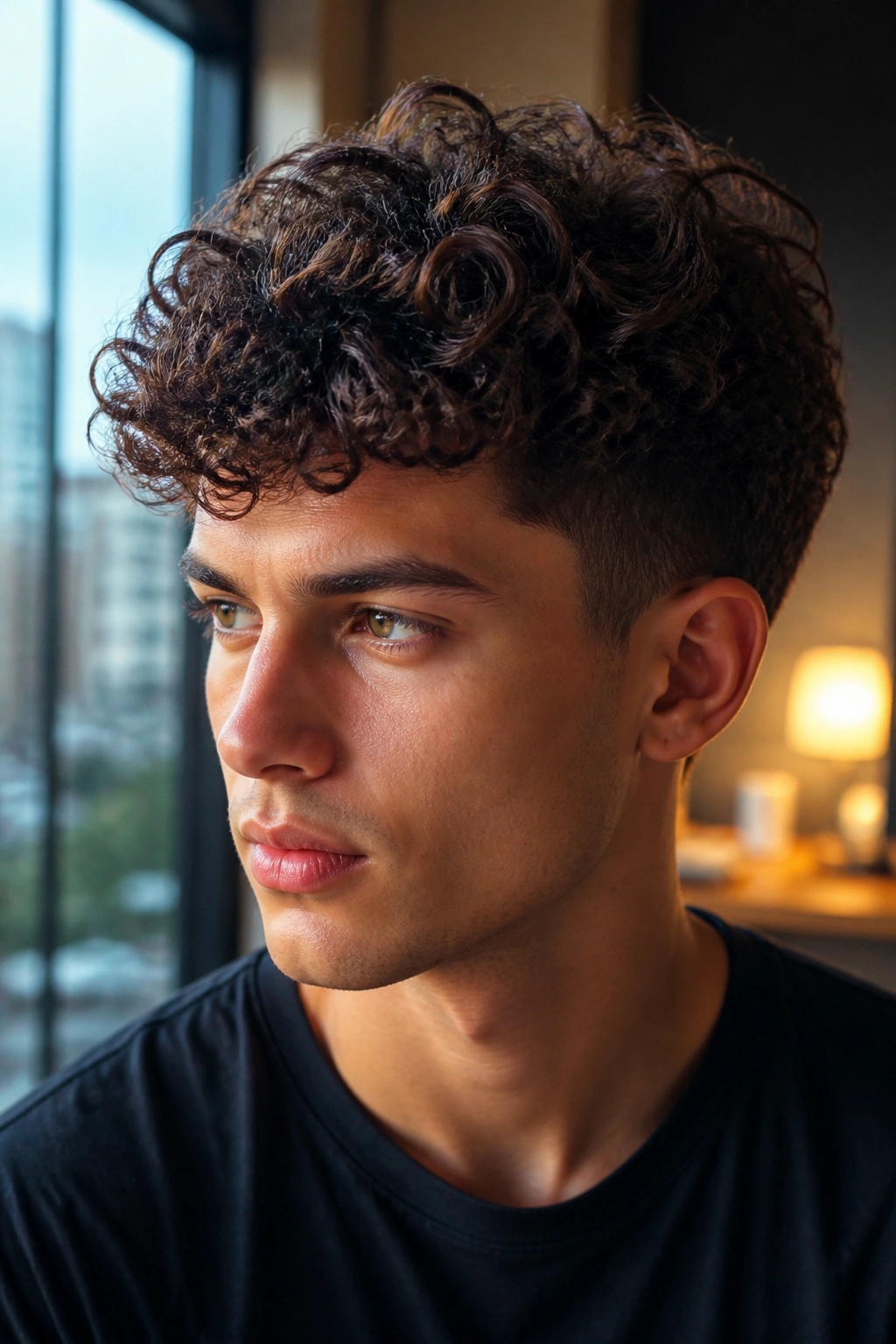
A tapered cut can make thick curly hair look fuller, not thinner. That surprises people. The reason is simple: removing bulk at the nape and sides lets the eye read the crown more clearly, so the top feels lifted and the shape becomes cleaner.
This cut is especially good if your curls bunch up around the neckline or balloon out at the back. A taper trims the silhouette where the weight wants to collect, then leaves more height on top. The result is sharp without feeling severe. It’s a strong look.
You’ll want a stylist who understands curly geometry, because tapering curly hair is not the same as taking a clipper to it and hoping for the best. The top should still have room to expand, and the perimeter should blend in a way that follows the curl pattern. Clean shape, not aggressive thinning.
This style fits people who like a little edge and do not mind a cut that needs regular shaping. It looks best when the curls are defined and the crown is given some lift with mousse or foam.
10. Chin-Length Curly Bob With Internal Layers
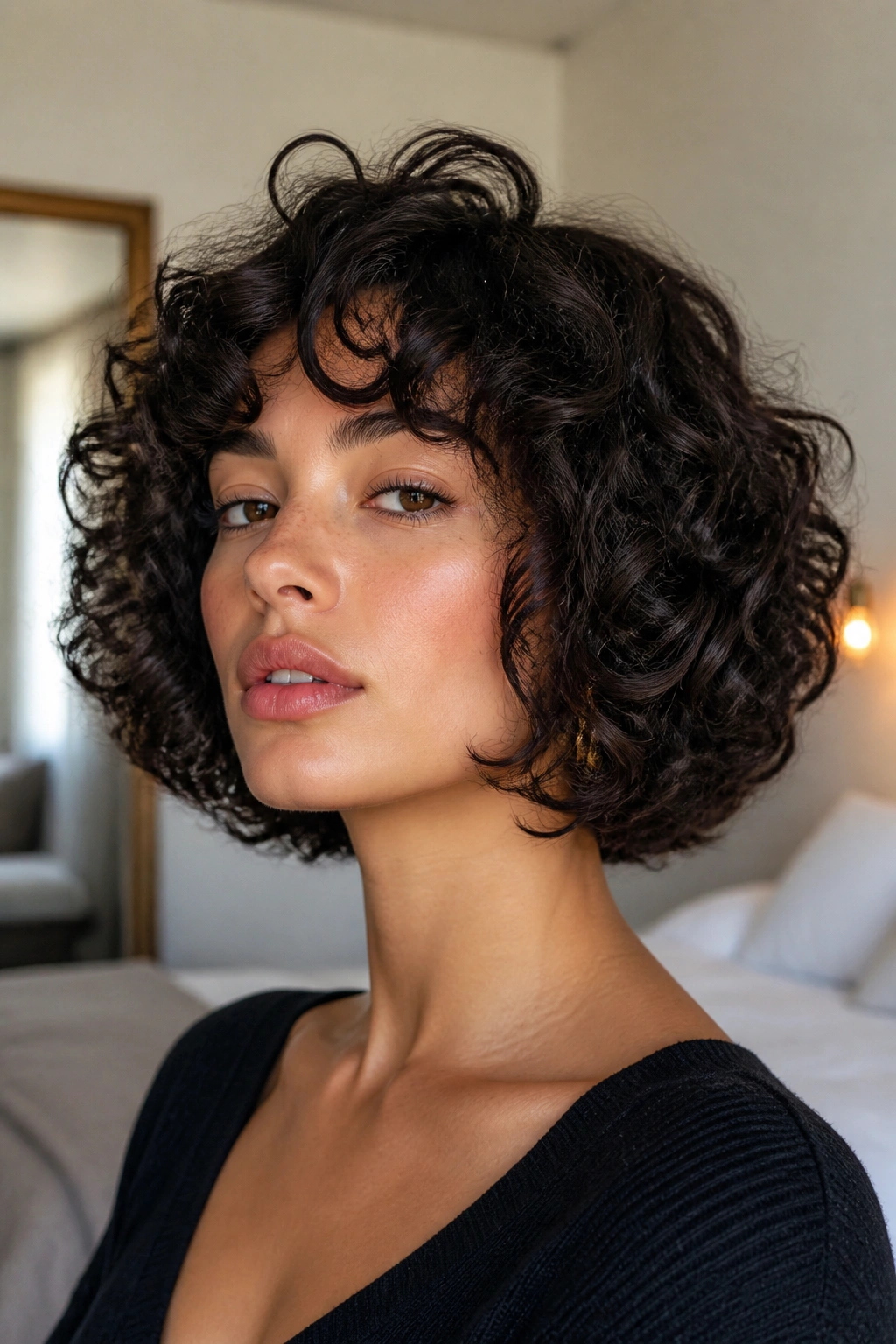
A chin-length curly bob is not the same thing as a blunt bob. On thick hair, the blunt version can turn into a little square box if the density is high enough. Internal layers solve that problem by taking weight out from inside the shape while keeping the outside line crisp.
That makes the bob feel intentional. The curls still bounce at the jaw, but they do not sit there like a helmet. The cut is especially flattering if you want your cheekbones and jawline to show more. It opens the face without needing a lot of styling tricks.
Ask for the perimeter to sit at the chin or slightly below, depending on shrinkage. If your curls spring up a lot, a chin-length cut when wet may land much higher when dry. That is the kind of detail that saves a haircut.
- Best if you like a neat outline.
- Good for dense curls that need shape fast.
- Works well with a side part or center part.
- Needs regular trims to keep the line from fuzzing out.
A curly bob can look modern and easy. It just needs the right interior shape.
11. Double Space Buns
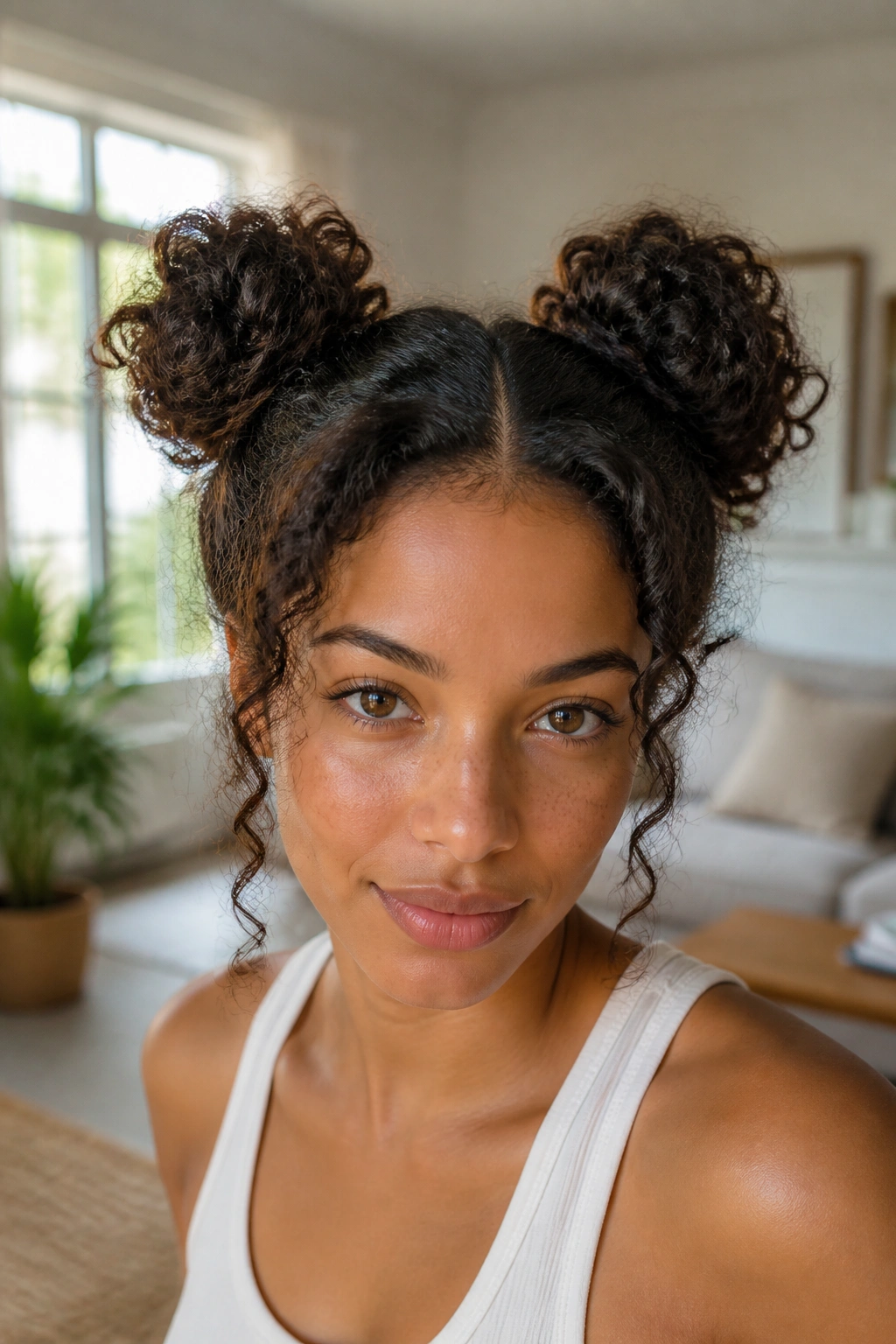
Double space buns are playful, but they are also practical on thick curly hair. When the hair is dense, splitting it into two buns keeps the weight from pulling everything down. You end up with a balanced look that feels secure and a little cheeky at the same time.
The neatest version starts with a center part and two high ponytails placed above the temples. Twist each one loosely, wrap it around itself, and pin with bobby pins that match your hair color. Leave a few curls out if you want the style to feel softer. A perfect bun can look stiff on curly hair. A few escaped ringlets fix that.
This style does not need every curl to be freshly defined. Day-two texture is fine. Actually, it often helps. The hair grips better, and the bun shape holds longer without slipping.
Wear the buns high if you want the face to look more open. Wear them a little lower if you want a softer, rounder outline. Either way, make the part clean. That part carries a lot of the visual weight.
12. Braided Crown Half-Up
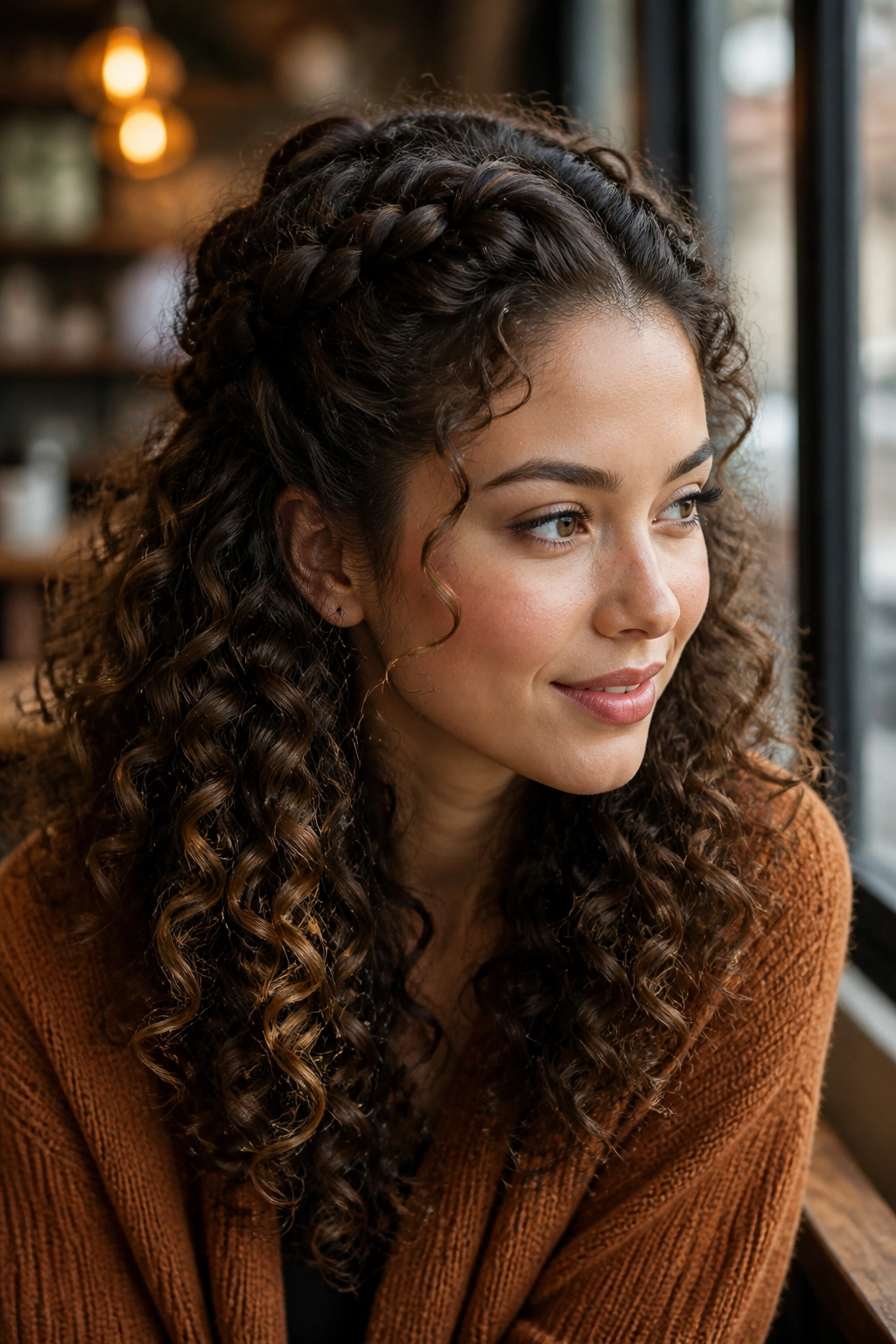
Want your curls off your face without flattening the whole head? A braided crown half-up style does that job well. The front sections are braided or twisted back toward the crown, while the rest of the hair stays loose and full. It is a neat compromise, and thick curls love a compromise that keeps volume intact.
This style is useful on hair that grows heavy around the temples or falls into the eyes by lunch. The braid or twist creates structure where you need it, and the loose back keeps the overall shape soft. It also hides a lot of the “my curls are not cooperating” panic that tends to happen on busy mornings.
How to Wear It
Use two small sections from the front hairline and braid them back toward the crown, then secure them with pins under the loose curls. If braiding feels too tight, twist instead. The goal is control, not tension.
A little shine cream on the braided sections keeps them from looking dry. Leave the ends loose and defined. That contrast is what makes the style work.
13. Low Curly Chignon
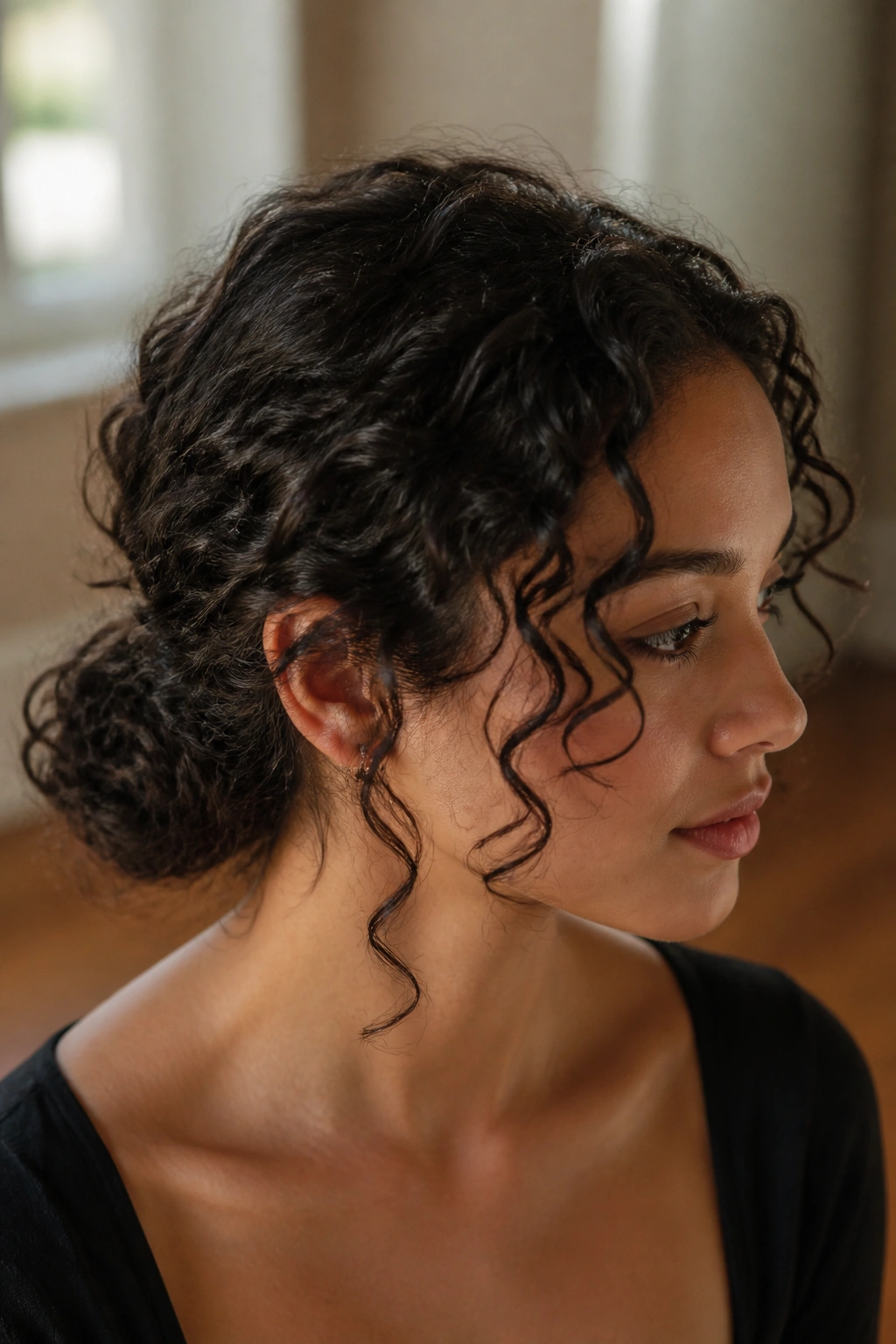
A low curly chignon has a quiet kind of elegance, but it is not delicate. Thick curls give it depth and shape, which keeps the bun from disappearing against the head. The style sits at the nape, where the density can be gathered without making the crown look flat.
The best version starts with a low ponytail or a loose gather at the back. Twist the curls into a soft bun, then tuck the ends in instead of forcing every strand to disappear. A few loose pieces at the hairline help. If everything is scraped back too tightly, the style loses its warmth.
This is the sort of look that works for dinner, events, or any day when you want your curls to feel controlled but still recognizable. No need to iron them into submission.
- Use a light gel at the roots for grip.
- Keep a few front curls out near the cheekbones.
- Pin from the underside so the pins do not show.
- Finish with a mist of flexible hold spray.
That last step matters more than people think. Thick curls can unravel a weak bun fast.
14. Chunky Twist-Out With Soft Ends
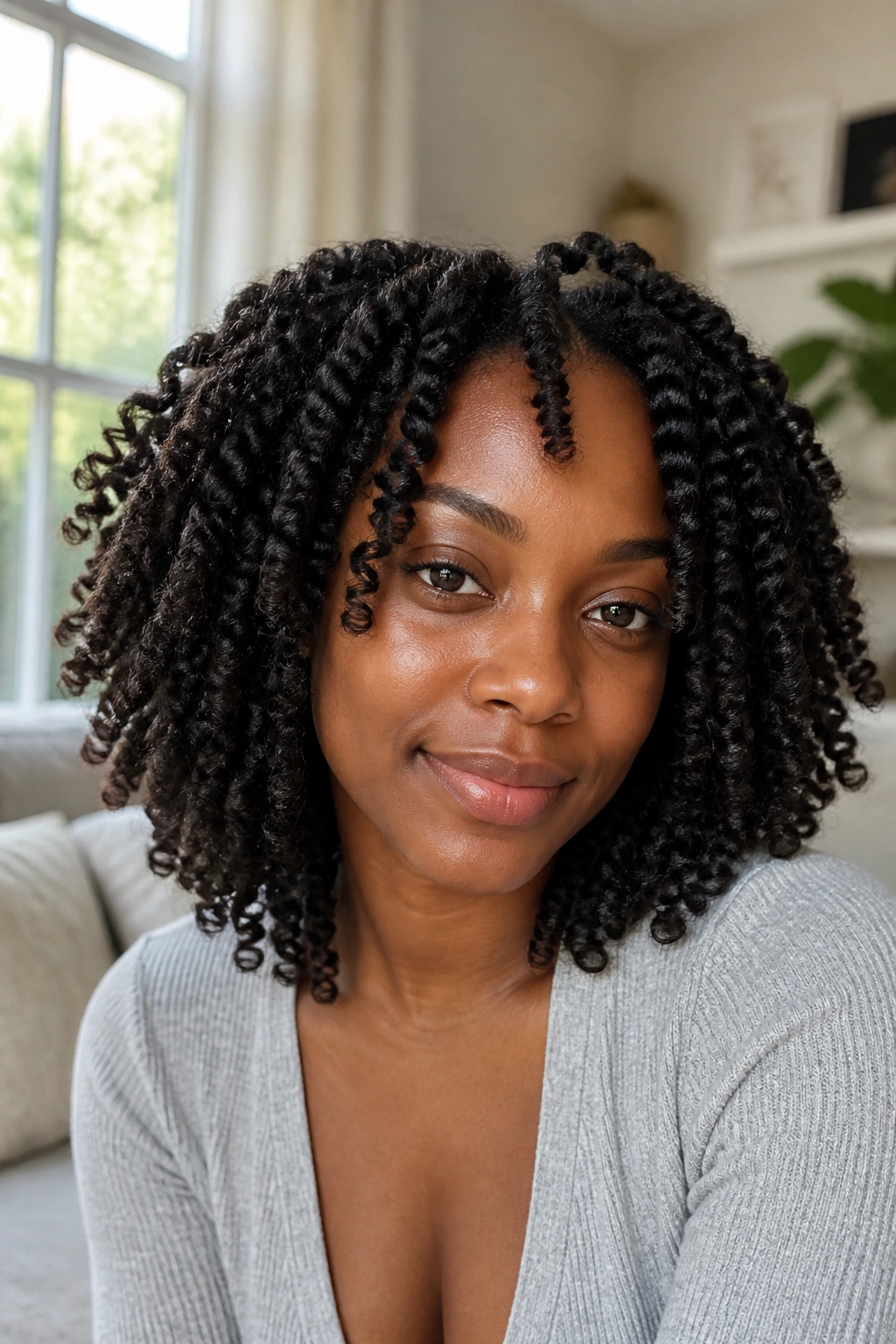
A chunky twist-out is one of the best ways to stretch thick curly hair without killing the shape. The larger twist sections create bigger, more separated curl clumps, so the finish looks defined instead of fuzzy. It also gives the hair a little more length, which can be useful if shrinkage is dramatic.
The style works because the twist pattern guides the curl as it dries. You are not guessing where the hair will fall. You are telling it. Use medium-to-large sections, smooth each one with a cream or butter that has some slip, and make sure the twists dry all the way through before you take them down. Damp twists lead to frizz. Every time.
After unraveling, separate only once or twice. More separation usually means more puff. Sometimes that is fine, but if you want soft definition, stop early.
A chunky twist-out looks best when the ends are not overly manipulated. Let them keep a little softness. That keeps the style from looking stiff or overworked.
15. Full Rounded Afro
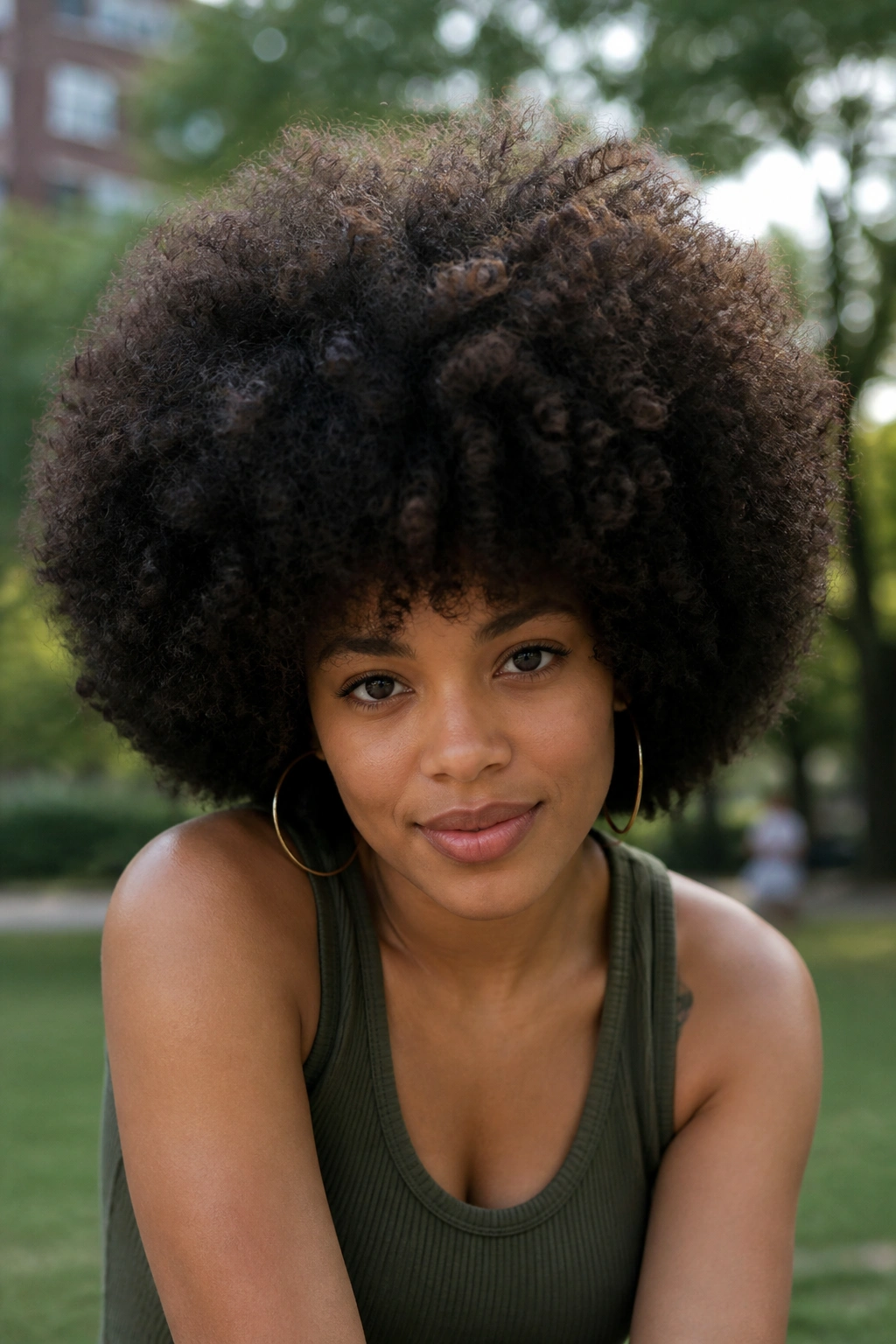
A full rounded afro does not apologize for thickness. It celebrates it. That is why it works so well on curly hair with a lot of density. Instead of stretching the curls down or hiding the volume, the style shapes the hair into a clean sphere or soft oval that lets the natural body do the talking.
The key is balance. You want the sides shaped enough that the cut feels intentional, but not so much that the hair loses its fullness. Rounded sides and a slightly higher top usually work better than a square outline. A square shape can make dense curls feel heavy. The round version feels alive.
This style is especially good if your hair likes to shrink and puff in its own direction. You can pick the roots, shape with a wide-tooth pick or fingers, and leave the curl pattern alone where it wants to stack naturally. That softness is the point.
A rounded afro asks for confidence, but not fussiness. It is one of the few styles where overthinking tends to make it worse.
16. Curly Pixie With Height on Top
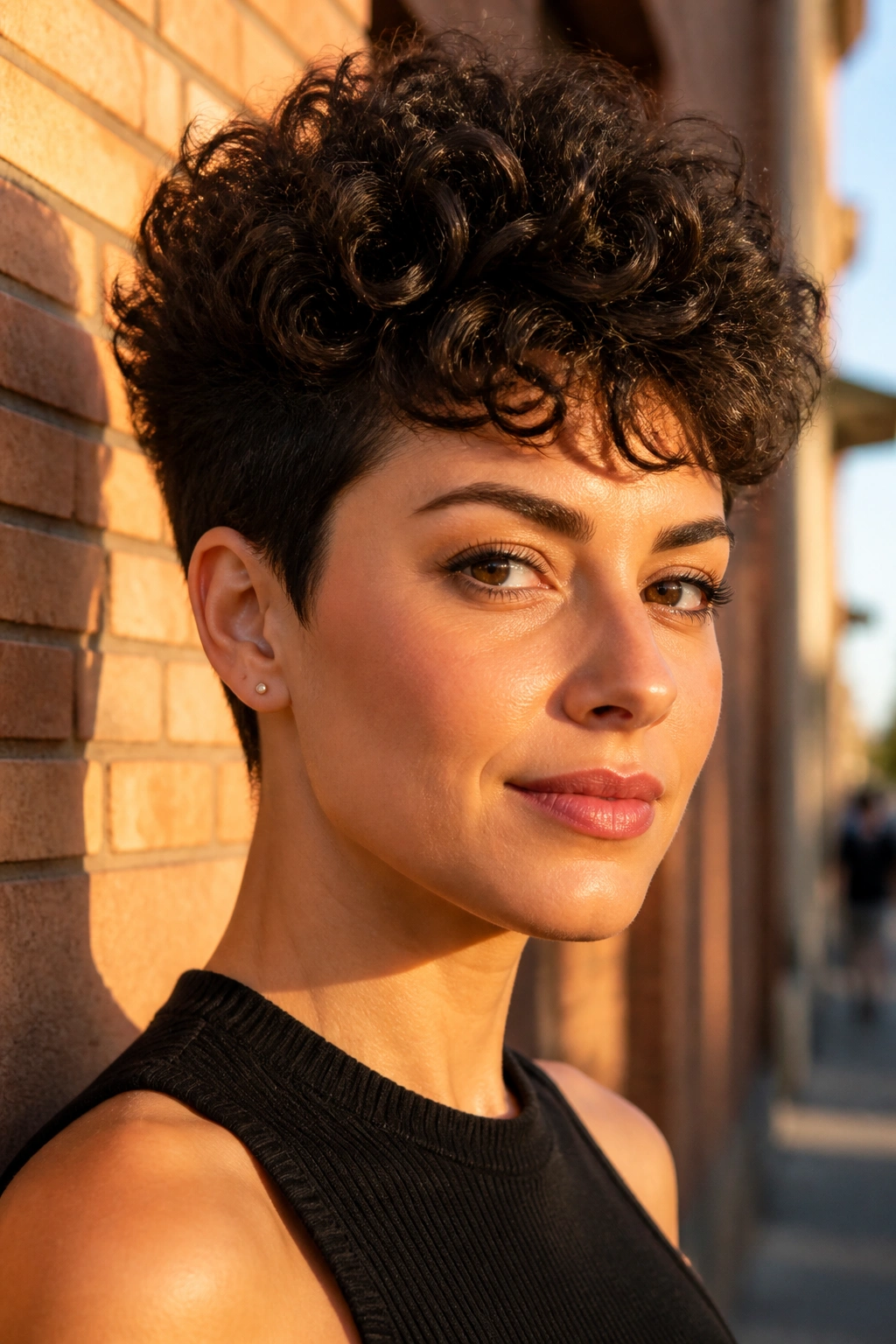
A curly pixie can look sharp on thick hair, but only if the top keeps enough length to hold shape. If the sides are trimmed close and the crown is left a little longer, the cut gets lift instead of turning into a flat crop. That contrast is what makes the style work.
Dense curls are useful here because they can hold volume even when the overall length is short. The top can be finger-styled with cream or foam, and the sides can stay neat without looking shaved down to nothing. It is a clean look with some personality.
You will want trims more often than with longer styles. Short curls grow out fast in shape, even when the actual length changes slowly. A curly pixie that loses its outline starts looking accidental. That is the part people forget.
This cut suits anyone who wants less hair on the neck and a lot more shape up top. It’s crisp, easy to style, and a little bolder than people expect.
17. Messy Top Knot With Loose Tendrils
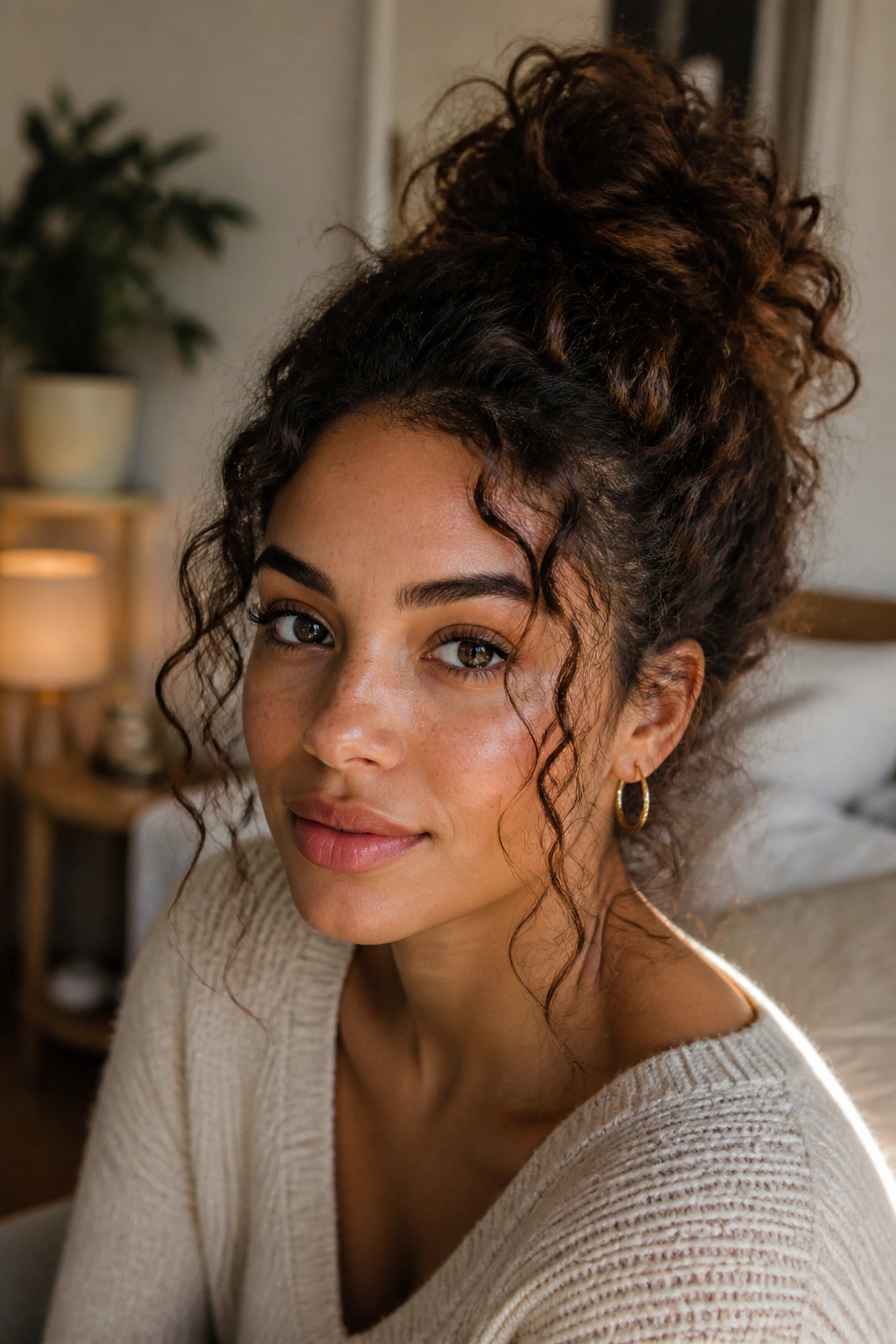
A messy top knot is useful because it gives thick curls a place to go when you do not feel like managing all of them. High, loose, and a little undone — that’s the sweet spot. If the knot is too tight, it stops looking casual and starts feeling like a pulled-back school-day bun.
The best version keeps volume at the crown and leaves a few tendrils around the face and ears. Those little pieces matter. They keep the style from looking severe, and on thick curly hair, they make the bun feel soft instead of stripped back. Use a satin scrunchie or a coil tie that does not snag the strands.
If your hair is very dense, twist the top section loosely before wrapping it. That gives the knot more grip and keeps the bun from ballooning in the wrong direction.
How to Keep It Soft
Pull the knot apart slightly after pinning it. Do not overdo it. You want texture, not a nest. A little edge control at the hairline can sharpen the look if that’s your thing, but leave the rest loose.
18. Side-Swept Curly Ponytail
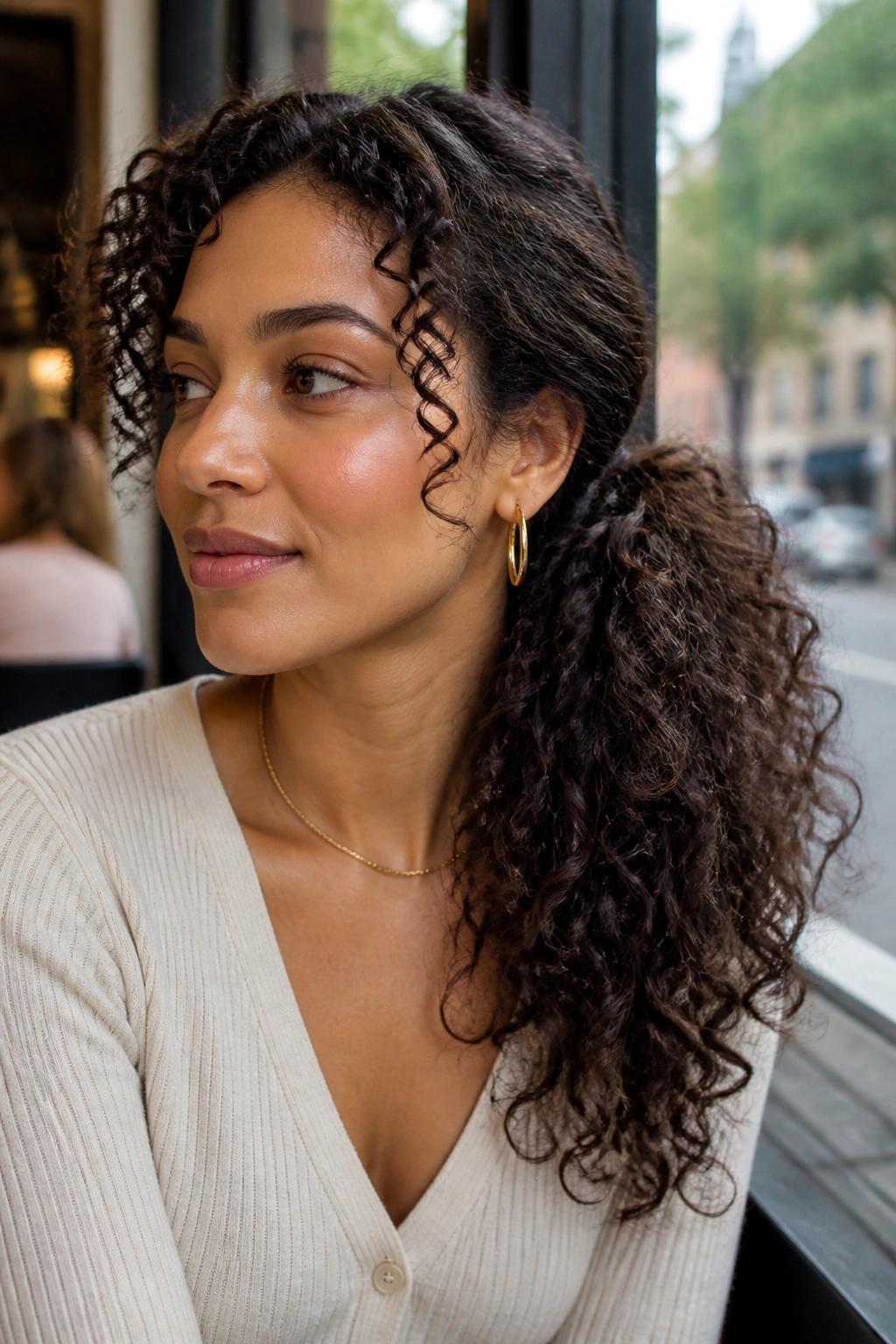
A side-swept ponytail gives thick curly hair a bit of motion without forcing the curls into a stiff line. The weight sits over one shoulder, which makes the style feel relaxed but still styled. That angle is flattering on dense hair because it breaks up the mass and lets the curl pattern show from a different side.
Start with a deep side part, then gather the ponytail just behind one ear or slightly lower at the nape. If you want the top smoother, use a small amount of gel or cream before pulling it back. Don’t brush so hard that the roots lose all life. That flat, helmet-like finish is exactly what you want to avoid.
- Wrap a small curl around the elastic to hide it.
- Use a medium hold spray to keep flyaways from puffing up.
- Leave the front piece loose if the face needs softness.
- Pin the lower side if it slips out during the day.
The side-swept ponytail feels polished, but not stiff. That is why it works.
19. Curly Faux Hawk
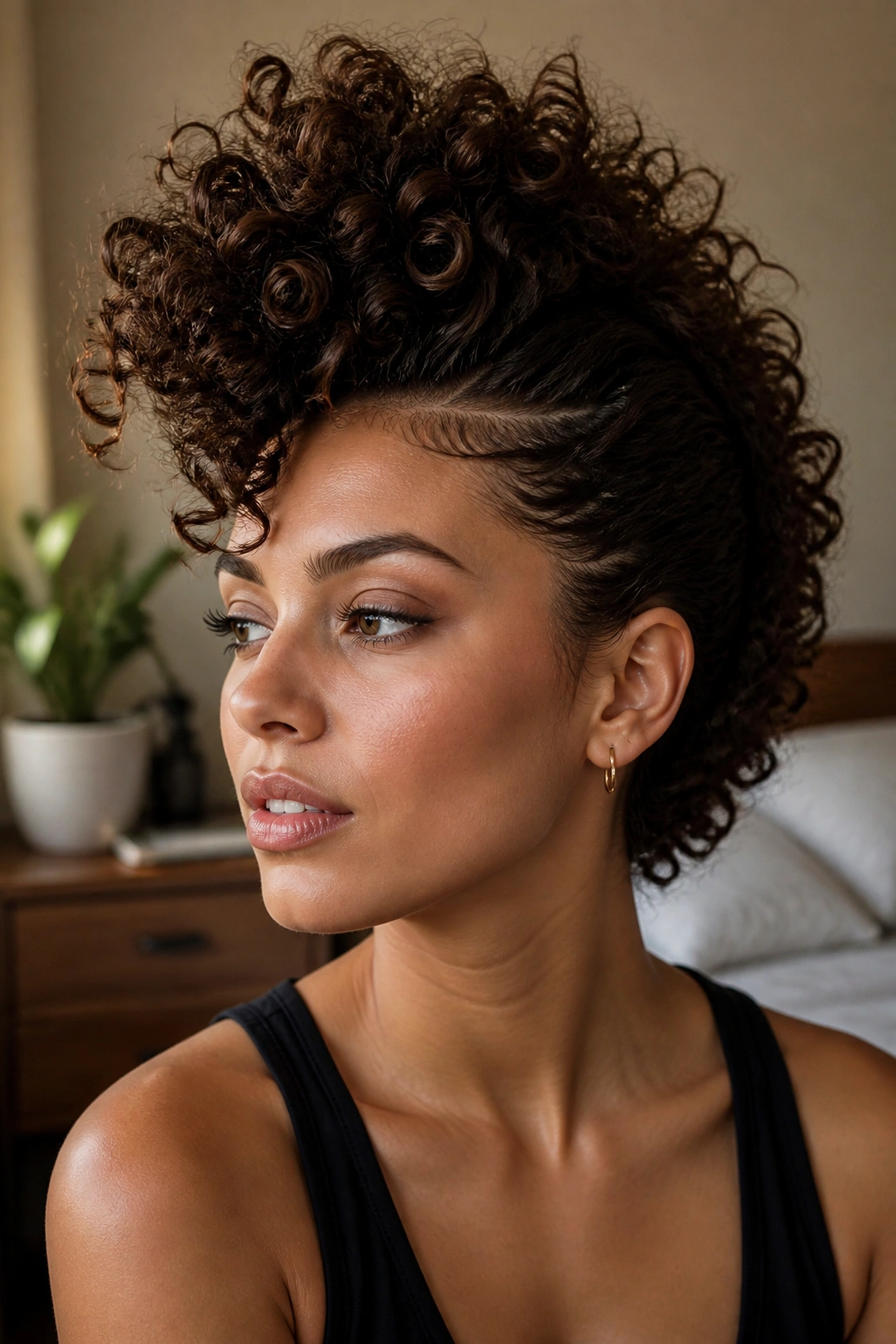
A curly faux hawk looks dramatic in the best way because thick hair already gives you the height you need. The sides are pinned or smoothed back, and the center section stays full, so the eye goes straight to the middle of the head. It is a bold shape without a haircut commitment.
This style works especially well when the curls have some definition but do not need to be perfect. You can clip the sides up with bobby pins, use a bit of gel near the temples, and let the center line stay as big as it wants. If the hair is very dense, the faux hawk can look surprisingly sculpted with very little effort.
A few tiny braids on the sides can make the style hold better. So can a strong grip clip hidden under the top section. The aim is to keep the sides controlled while the center stays loose and visible.
It’s a good style when you want movement, shape, and a little attitude. Thick curls give it the body it needs.
20. Bantu Knot-Out With Definition
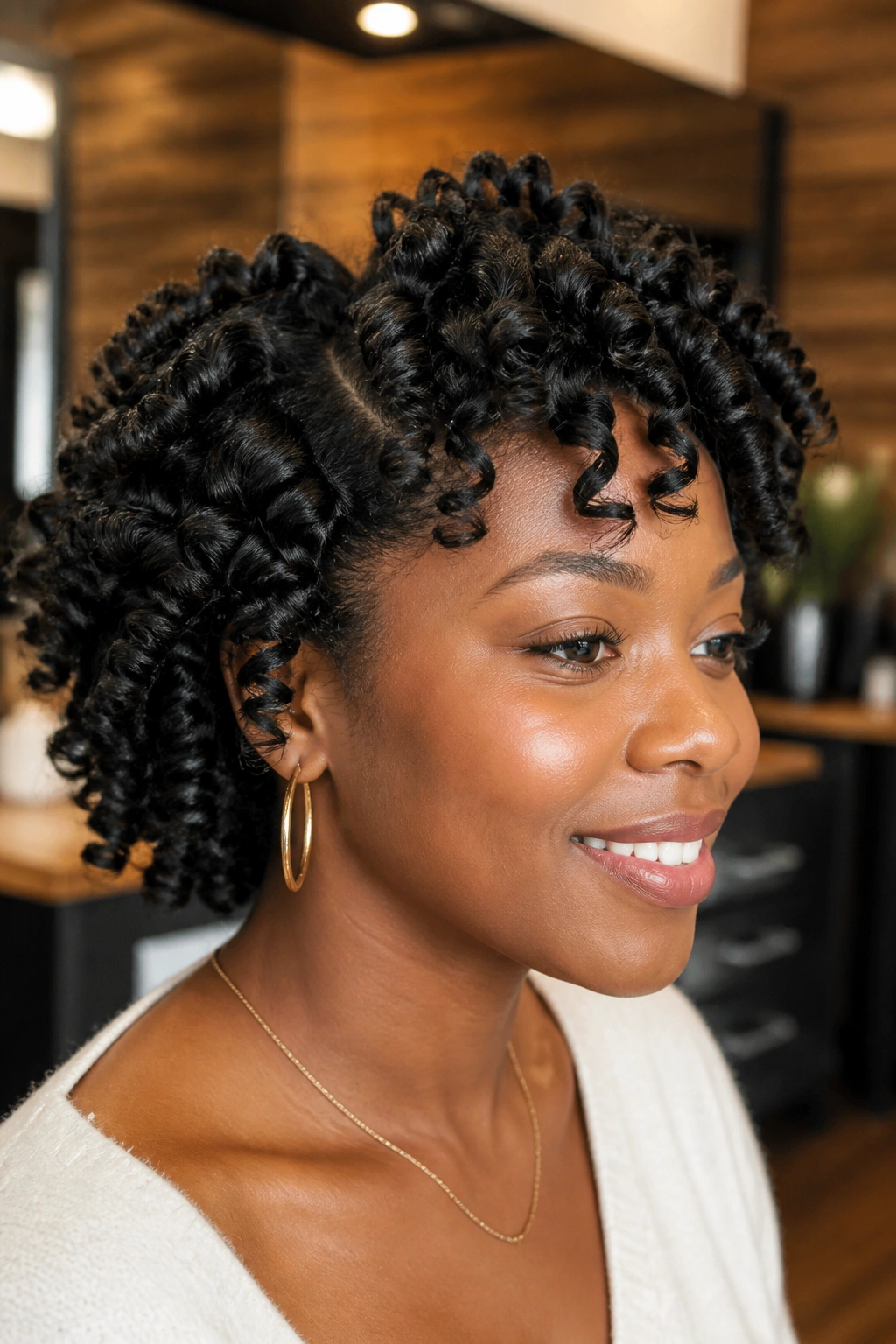
A Bantu knot-out gives thick curly hair tighter definition than a basic twist-out, and that difference matters. The knot shape creates a tighter curl pattern, which means more separation and a little extra lift at the roots. The finish can look polished, springy, and full of texture.
The method asks for patience. Section the hair cleanly, smooth each part with product, wrap it into a small knot, and let it dry completely before taking it down. If the knots are even slightly damp, the curl pattern falls apart and turns frizzy. That is the downside. Time matters.
Compared with a twist-out, a knot-out usually gives more coil and less stretch. So if your hair already shrinks a lot and you want more visible shape, this is a strong choice. If you want length, twist-outs often win.
Who It Suits
It suits people who like defined curls, a little root lift, and a style that holds its shape for a few days. Use a light oil on the fingertips during takedown, not on the whole head.
21. Twin Puffs
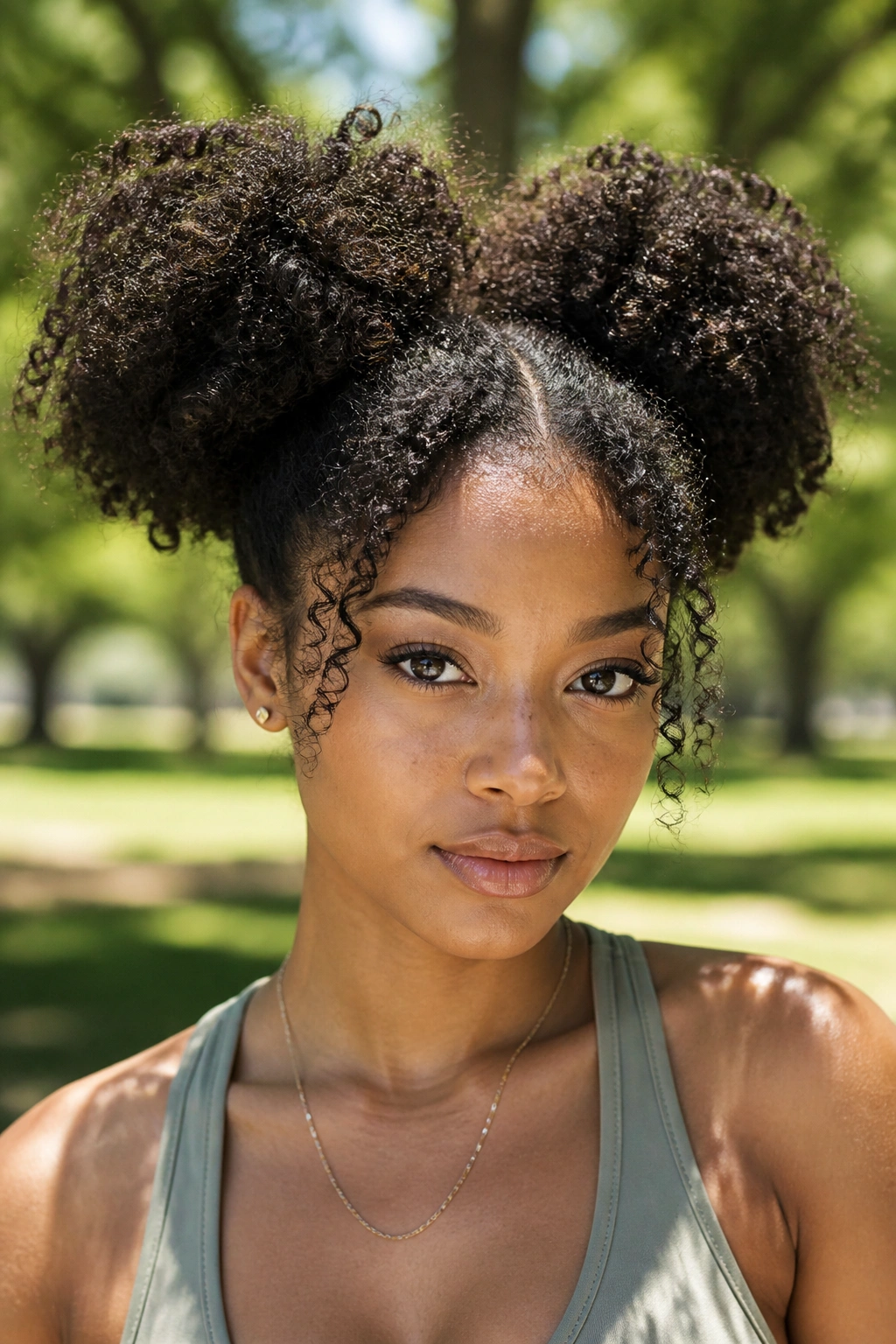
Twin puffs are fun, practical, and much more flattering on thick curly hair than people give them credit for. Splitting the hair into two puffs lowers the overall weight, which keeps the style from collapsing by noon. It also creates a balanced look that frames the face nicely.
The part should be clean, and the puffs should sit high enough to show shape without pulling the scalp too hard. If one puff sits much lower than the other, the style can look accidental. A little symmetry goes a long way here. Use soft elastics and fluff the puffs with your hands until they look full enough.
This is one of those styles that works for errands, casual days, and even playful dressier looks when the hairline is smoothed a bit. The face-framing effect is useful too, especially if your curls are dense around the cheeks.
Twint puffs are simple, but they do not read as simple when the texture is good. That is the nice part.
22. Waterfall Half-Up Style
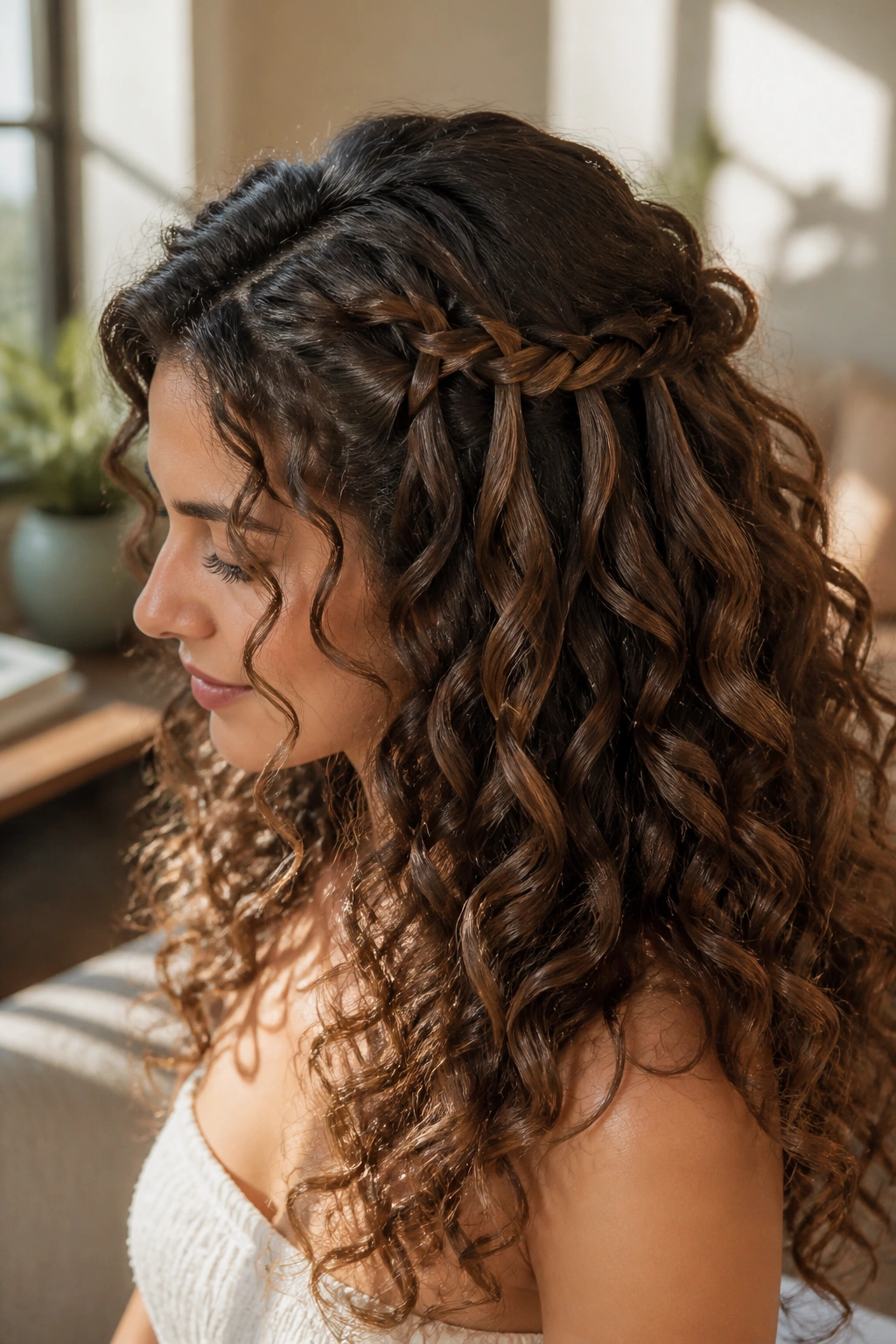
A waterfall half-up style keeps thick curls visible while pulling some of the hair away from the face. The top section is twisted or braided in a way that lets pieces drop through, so the style feels airy instead of locked down. On dense curls, that airiness matters because too much pinned hair can make the head look bulky.
The style is a nice middle ground when you want something prettier than a basic half-up, but less formal than a full updo. It also works well on long curls that need a little control near the forehead and temples. The rest of the hair stays loose, so the shape still feels generous.
How to Secure It
Use small, hidden pins under the braid or twist so the crown stays neat. A decorative clip can work, but only if it has enough grip for thick hair. Thin clips slide. They always do.
Let the lower curls fall naturally. If you separate them too much, the style loses the soft waterfall feel and starts looking busy.
23. Side Bun With Face-Framing Pieces
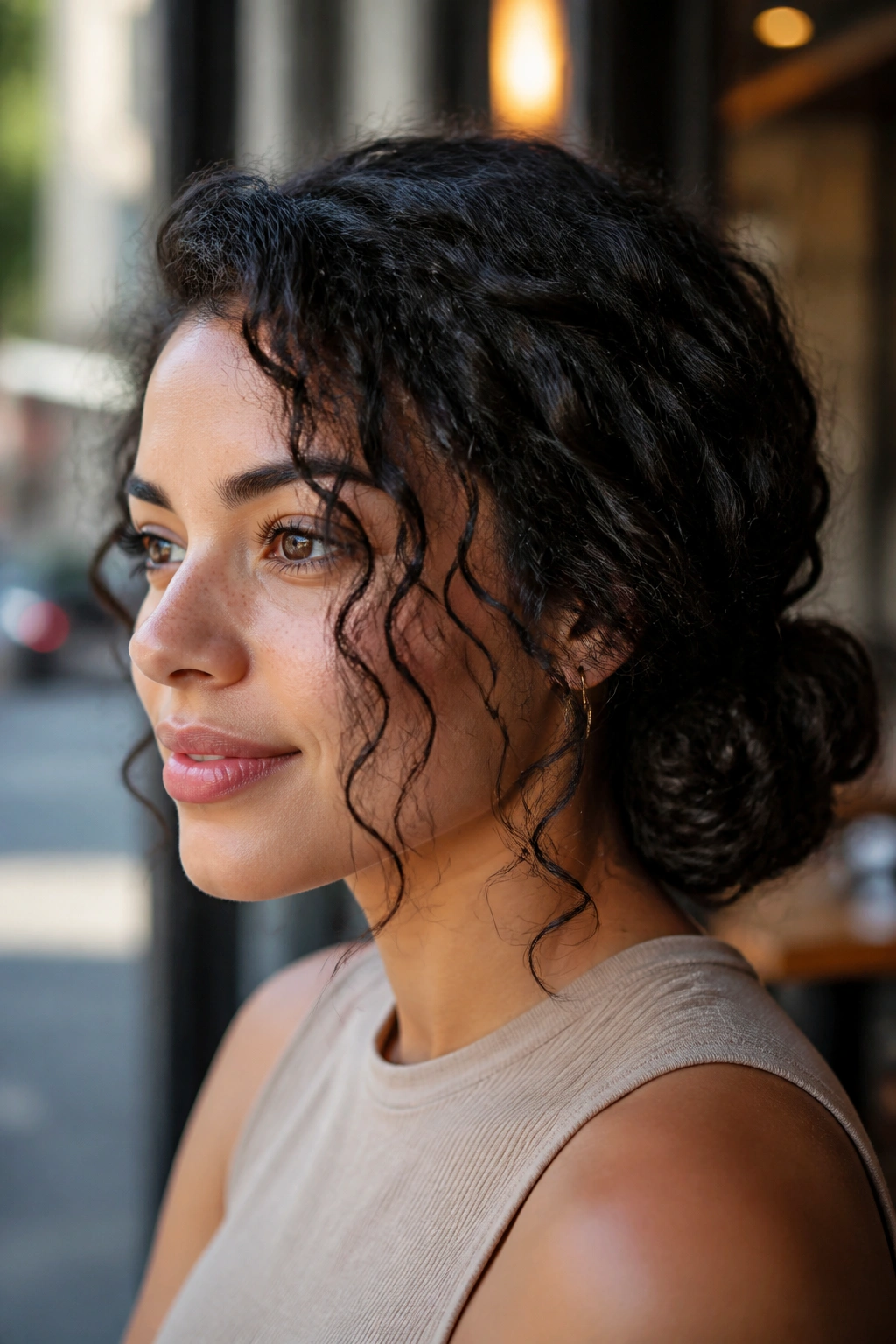
A side bun gives thick curly hair a softer shape than a centered bun. By moving the bun to one side, the style feels less severe and more fluid. It also gives you room to leave out a few curls around the face, which helps balance all that density at the back.
This style works best when the bun sits low, near the ear or just below it. If it sits too high, the side angle loses its effect. Sweep the hair over gently, twist it into a loose bun, and pin underneath so the ends do not stick out in odd directions.
- Leave one or two curls out near the jaw.
- Use pins instead of one tight elastic if the hair is very dense.
- Smooth only the top section if you want a cleaner line.
- Add a side part for a little extra shape.
The face-framing pieces make this style feel intentional instead of just pinned up. That is what saves it.
24. Sleek Roots, Curly Ponytail
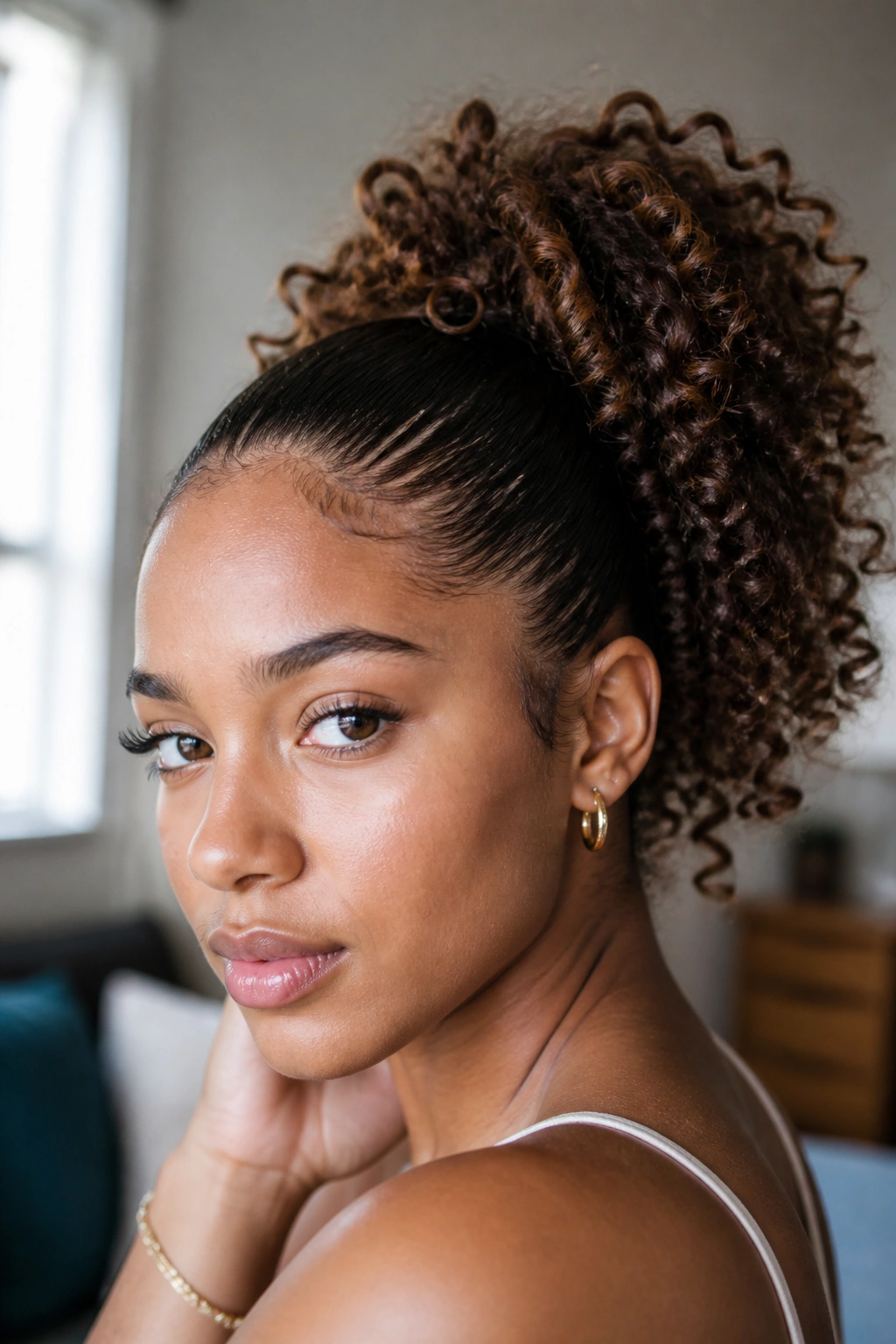
A sleek-roots ponytail is one of the easiest ways to make thick curls look sharp without losing their texture. The top gets smoothed back, while the ponytail itself stays curly and full. That contrast is the whole point. Clean roots, curly tail. Simple. Effective.
It works because dense curls can hold a strong ponytail shape once the base is secured properly. Brush the front back with a little gel or styling cream, then gather the hair at the crown or mid-back of the head. Use a firm elastic that does not stretch out after one wear. If the ponytail is heavy, add a second elastic underneath for support.
Wrap one curl or a small strand around the base to hide the tie. That tiny detail makes the style feel finished. If the roots puff up later, smooth them with damp fingertips instead of piling on more product.
This ponytail is useful when you want polish without hiding the fact that your hair is thick. I like that about it.
25. Scarf-Wrapped Curly Updo
A scarf-wrapped updo works because the scarf does more than decorate. It helps hold the shape, keeps the style from looking plain, and adds a controlled line around a lot of curly volume. On thick hair, that support matters because the weight of the curls can make a regular bun sag or spread out.
The updo itself can be as simple as a low tuck or a loose roll at the back. Once the hair is pinned, wrap a silk or satin scarf around the head and knot it at the nape, or just above it if you want the wrap to show more. A scarf that is too narrow can cut into the shape. One that is too stiff can feel fussy. A medium-width scarf usually behaves best.
This style is nice when your curls need a break from constant handling. It keeps the hair contained without making the whole look severe. And it does a good job of hiding the fact that the bun underneath is not perfect.
That last part is useful. Life is useful.
26. Twist-and-Clip Half-Up Style
A twist-and-clip half-up style is one of those small-effort looks that pays off on thick curly hair. You take two front sections, twist them back, and clip them together at the crown with a strong claw clip. The rest stays loose and full, so the curl pattern still has room to breathe.
The shape works because the clip holds the top without flattening the sides too much. A big enough clip matters here — something with a solid jaw, not a flimsy little accessory that slides out after ten minutes. Thick hair will expose weak hardware fast.
I like this style when the curls are day-two or day-three and the roots need a little control. The twists make the top look deliberate, and the loose lengths keep it from feeling overdone. You can also pull a few curls free near the face if you want the style softer.
It is fast, decent-looking, and far less awkward than trying to force all the hair into one compact clip.
27. U-Shape Long Layers With Defined Ends
Why does a U-shape work so well on thick curly hair? Because it keeps the length in back while easing some of the bulk at the sides. The line curves gently downward, so the cut feels softer than a straight-across shape. That matters when the hair is dense enough to create a heavy wall.
The U-shape also helps the curls stack in a way that feels natural. The back keeps its length, the sides do not puff out too hard, and the overall silhouette feels balanced. You still get the drama of long hair, but with more movement near the front and mid-lengths.
How It Helps Thick Length
Ask for the cut to be checked dry, or at least rebalanced after the curls shrink. That step makes a difference. Curly hair lies about its length when it is wet, and a bad guess can leave the front too short.
If you want the ends to stay defined, pair this shape with a lightweight cream and a gel cast. Heavy butter at the ends can make long curls collapse.
28. Halo Braid With Curly Length
A halo braid gives thick curly hair a soft frame around the face while leaving the length free to do its own thing. The braid moves around the hairline like a crown, which keeps the front controlled and lets the rest of the curls stay loose. It’s a smart style when you want the hair off your face but do not want to bury the volume.
This one works especially well on dense curls because the braid has enough texture to stay put. Fine hair can struggle with a halo braid looking too small or too tight. Thick curls fill it out, so the braid looks intentional and full. A little frizz is fine here. It adds softness.
- Start the braid just behind one ear and wrap it around the hairline.
- Pin the braid under the loose curls where it ends.
- Keep the lower curls defined, not brushed out.
- Use a flexible hold spray so the braid stays in place.
A halo braid feels polished without pretending to be strict. That’s why it works so well on curls with body.
Thick curly hair rewards shape more than control. The styles that last are the ones that work with the density, not against it. If one cut or updo feels too flat, too wide, or too busy, the answer is usually not more product. It’s a better outline, a smarter part, or a little less fighting.
And that’s the real advantage here. Once the shape makes sense, the hair starts doing half the work for you.
