



Round faces and long curls are a good pair, but only when the shape is handled with a little care. The goal is not to hide your face; it’s to guide the eye with length, movement, and lift in the right places. When people ask for long curls for round faces, what they usually want is the same thing: softness around the cheeks without letting the whole style spread outward like a halo.
Short layers in the wrong spot can do the opposite. So can a blunt, heavy shape that stops right at the widest part of the face. Curl pattern matters too. Loose waves, springy ringlets, and tight coils all behave differently once they dry, and shrinkage changes everything.
That is why the smartest curly cuts and styles build vertical lines. A deep side part, a face frame that starts lower, or a little crown height can make a bigger difference than another inch of length ever will. The styles below lean into that idea, with options for loose curls, dense coils, and everything in between.
1. Long Curls with a Deep Side Part for Round Faces
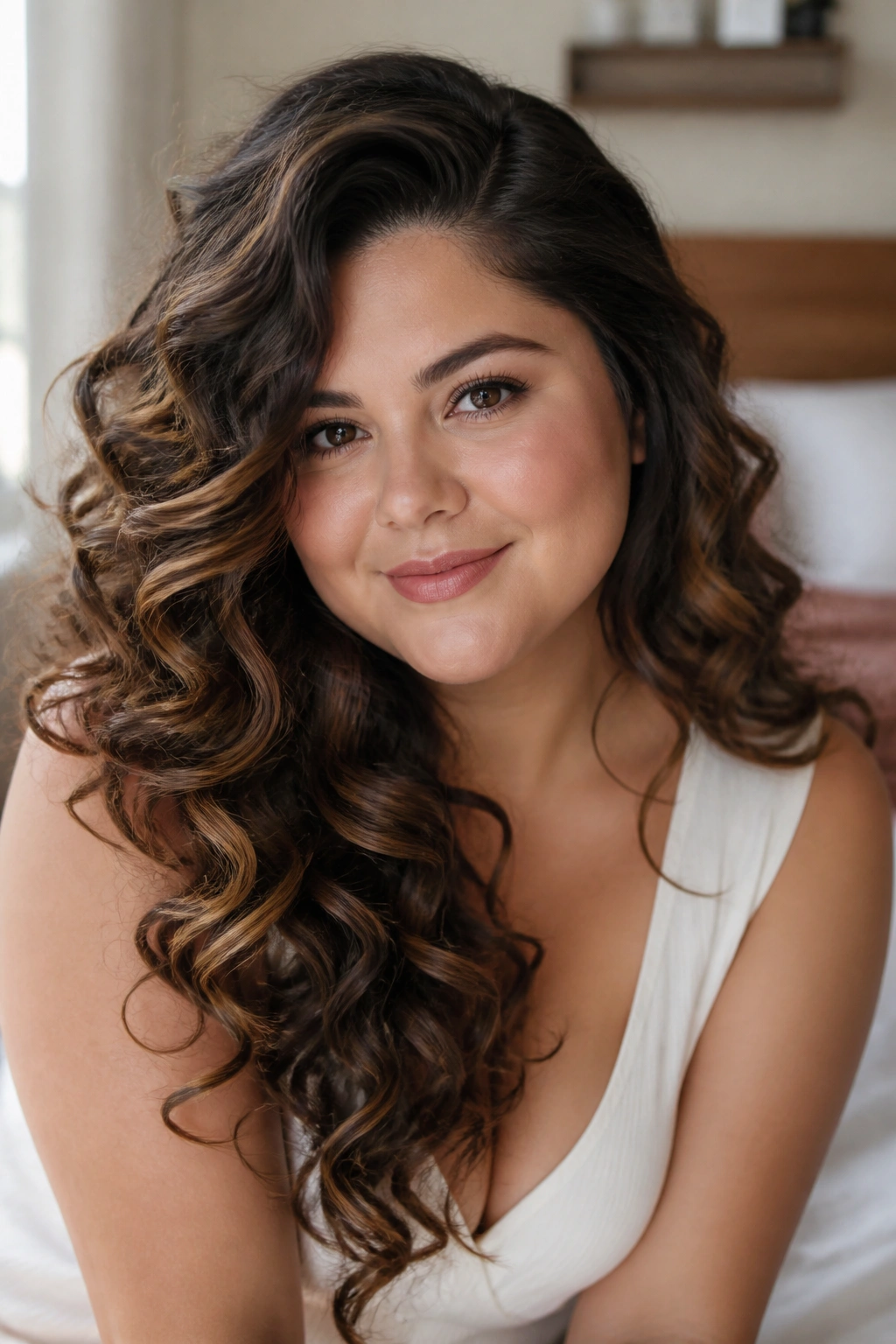
A deep side part is the fastest way to pull a round face downward visually. It creates a diagonal line across the forehead, adds lift on one side, and keeps the curl mass from sitting evenly across the cheeks.
I like this option because it does a lot of work without asking you to change your texture. The curls stay soft and feminine, but the shape feels sharper. Ask for the part to sit about 1½ to 2 inches off center, then keep the front layers long enough to graze below the cheekbone. Anything shorter can puff out at the widest point of the face.
What to ask for
- A side part placed slightly behind the natural part line
- Face-framing pieces that start below the cheekbone
- Long layers through the back, not the crown
- A soft taper at the ends instead of a blunt edge
Pro tip: Tuck the smaller side behind one ear and let the other side fall forward. That tiny asymmetry does more than people think.
2. Face-Framing Layers That Start Below the Cheekbones
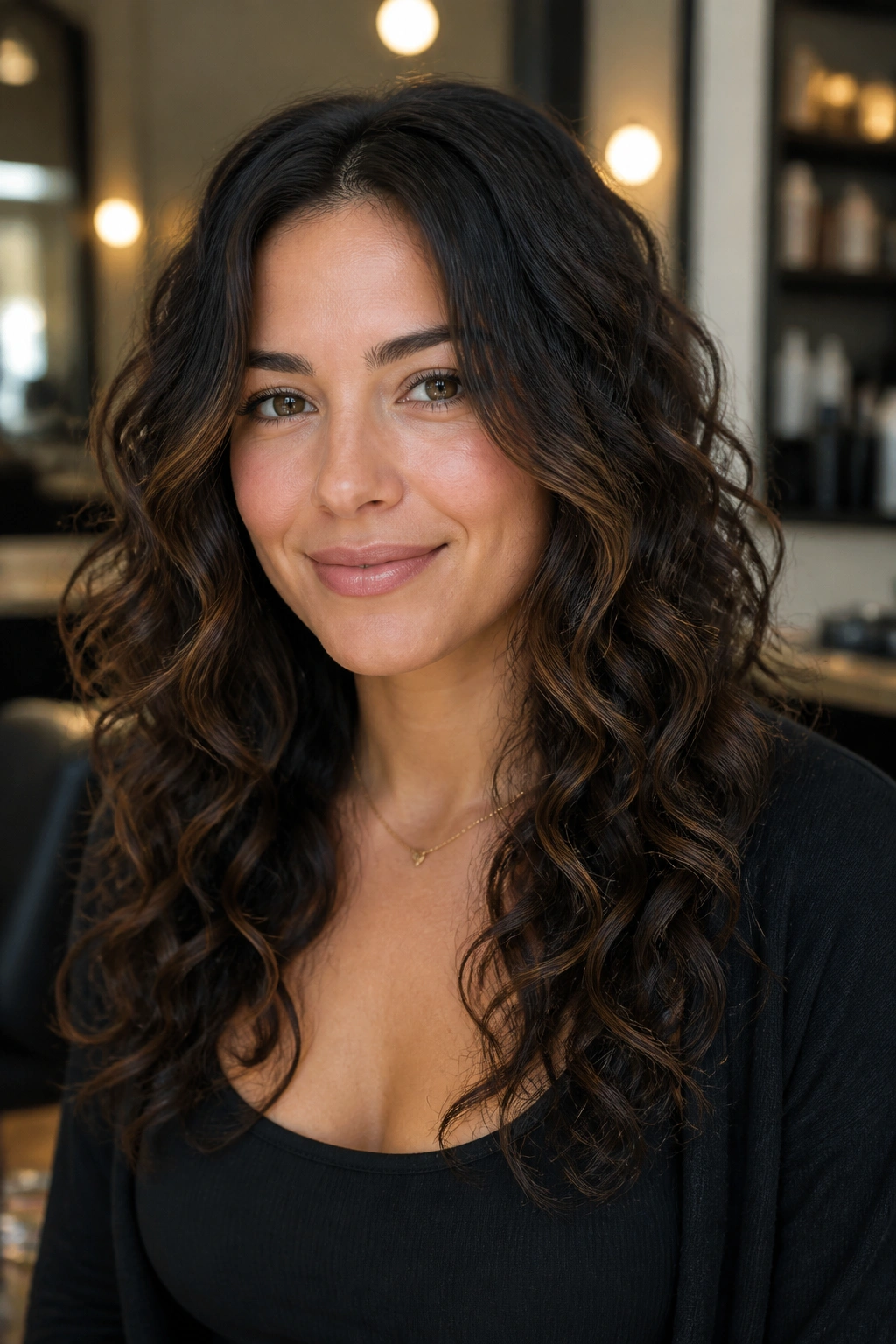
Why do some curly cuts make a round face look softer while others make it look wider? The answer usually sits in the front layers. If the shortest pieces land at cheek level, they put a spotlight on the fullest part of the face. If they start lower, the eye drops first and the whole silhouette looks longer.
This is one of those cuts that sounds simple and turns out to be incredibly useful. The layers should skim the jaw, then move into the collarbone area so the curl pattern can fall instead of ballooning outward. It works on loose spirals and tighter coils alike.
The sweet spot
A good face frame should feel like it opens the face, not chops it up. Keep the first shortest piece around the mouth or just below it if your curls spring up a lot. For tighter textures, that might mean asking for a longer starting point than you expect.
What not to do
- Don’t let the shortest layer sit right at the cheek
- Don’t thin the front too aggressively
- Don’t forget shrinkage if your hair springs up 30 to 50 percent
3. Curtain Bangs That Blend Into Long Curls
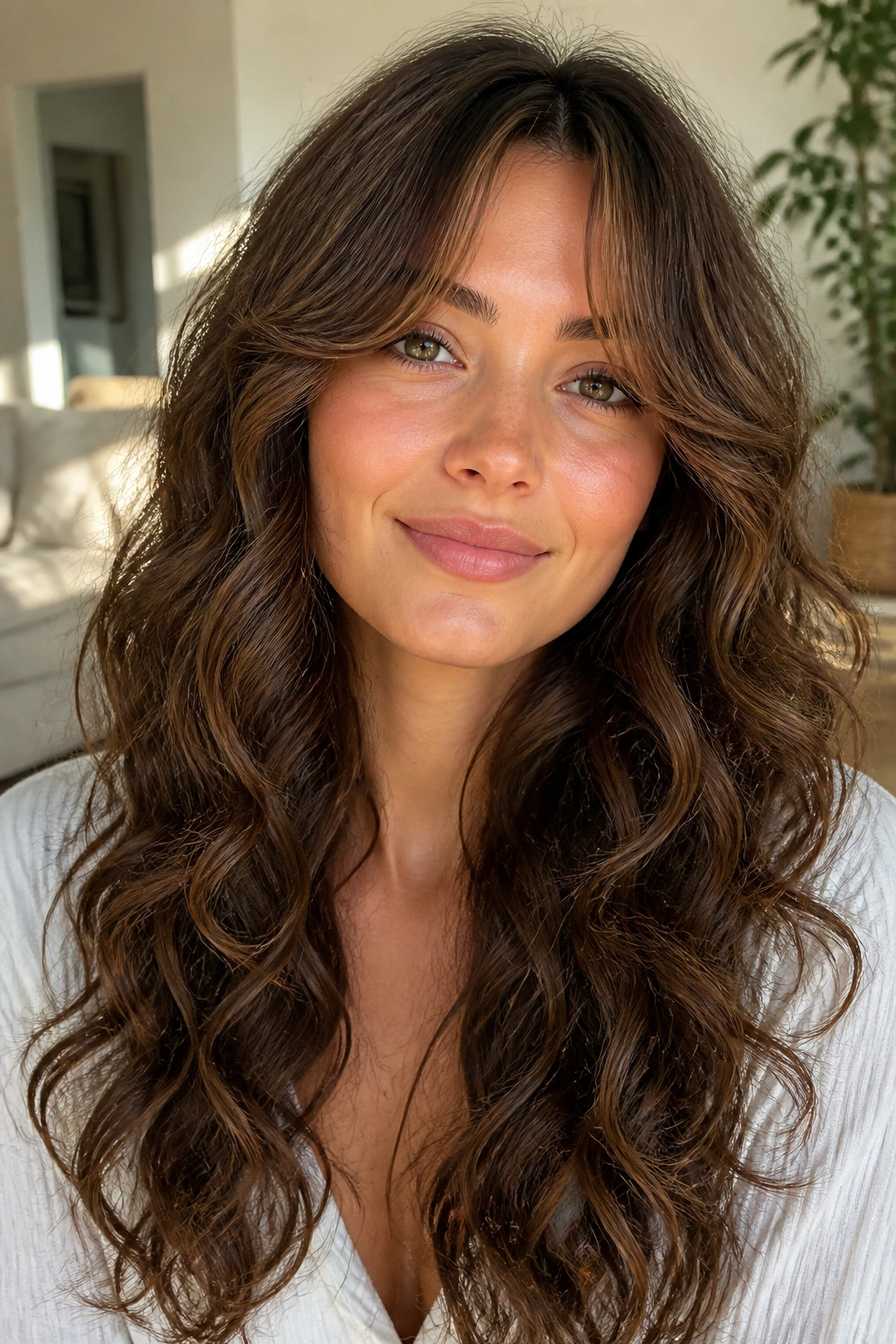
Curtain bangs can work on round faces, but only when they stay light and move with the curl pattern. Heavy, dense bangs can make the face look shorter. Soft curtain bangs, split at the center and longer at the sides, do the opposite. They open the face and keep the eye moving downward.
Imagine the bangs almost melting into the front layers. That’s the effect you want. The shortest point should sit around brow level or slightly below, while the outer corners slide into the curl shape near the cheekbone or jaw. The whole point is flow, not a hard line.
If your curls are tight, keep the bangs longer than you think you need. They shrink more than people expect, and a bang that lands at the brow when wet may end up halfway up the forehead once it dries. Nobody wants that surprise.
4. Half-Up Crown Lift with Loose Length
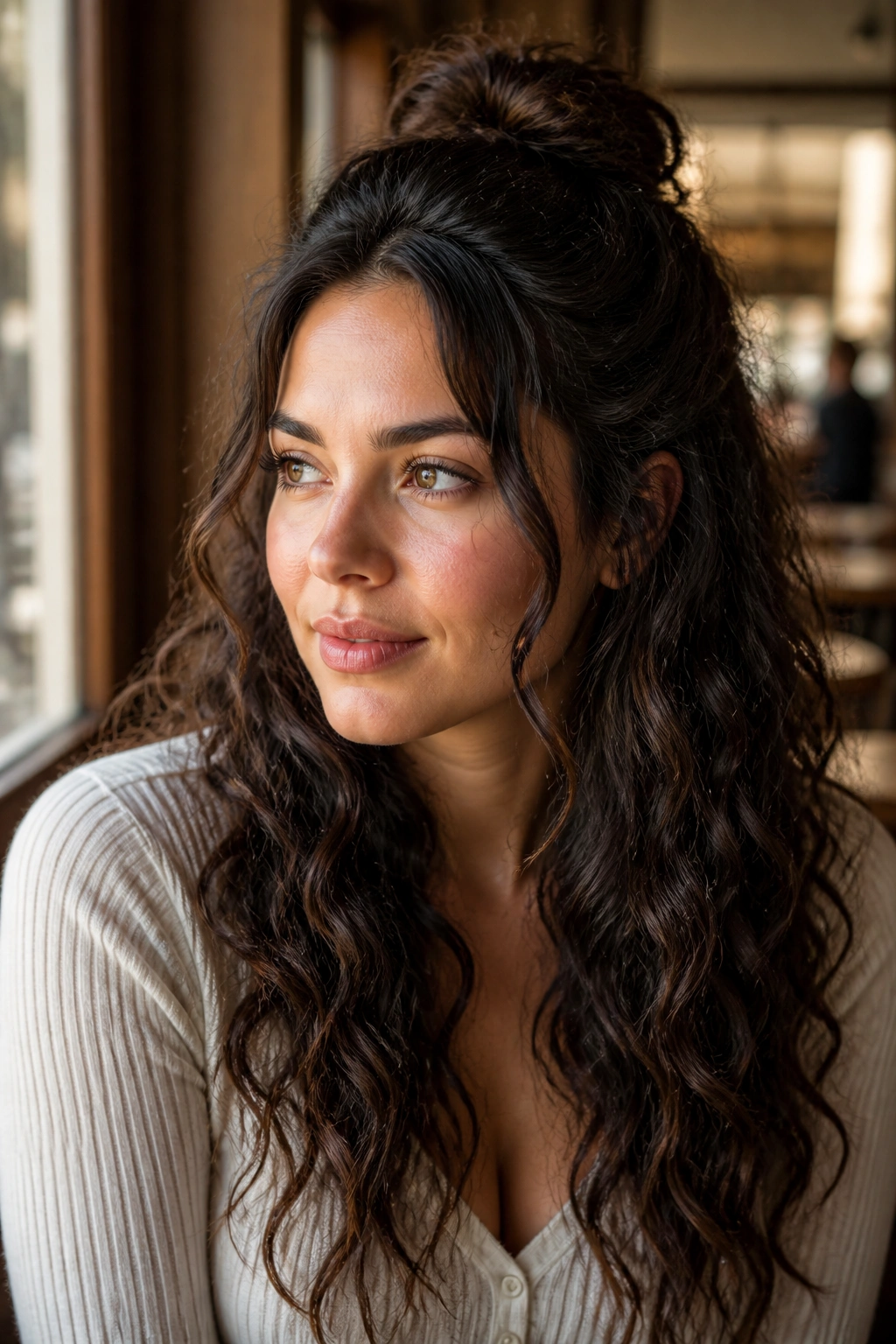
A half-up style gives round faces one very useful thing: height. Pulling the top section up and back lifts the eye line, while the curls below stay free and long. It’s a small trick, but it changes the whole balance of the style.
This works especially well on days when your roots feel flat and the sides feel too full. Gather the top section from temple to temple, then secure it loosely at the crown with a clip or small elastic. Leave a little puff at the front instead of smoothing everything flat. Flatness is not your friend here.
A few strands around the face keep it from looking severe.
- Leave two curl pieces out in front
- Keep the top section loose, not tight
- Place the clip at the crown, not the back of the head
- Fluff the roots with your fingertips after pinning
That little bit of lift makes the face look longer without stealing any length from the curls.
5. Center Part with Soft Tapered Ends
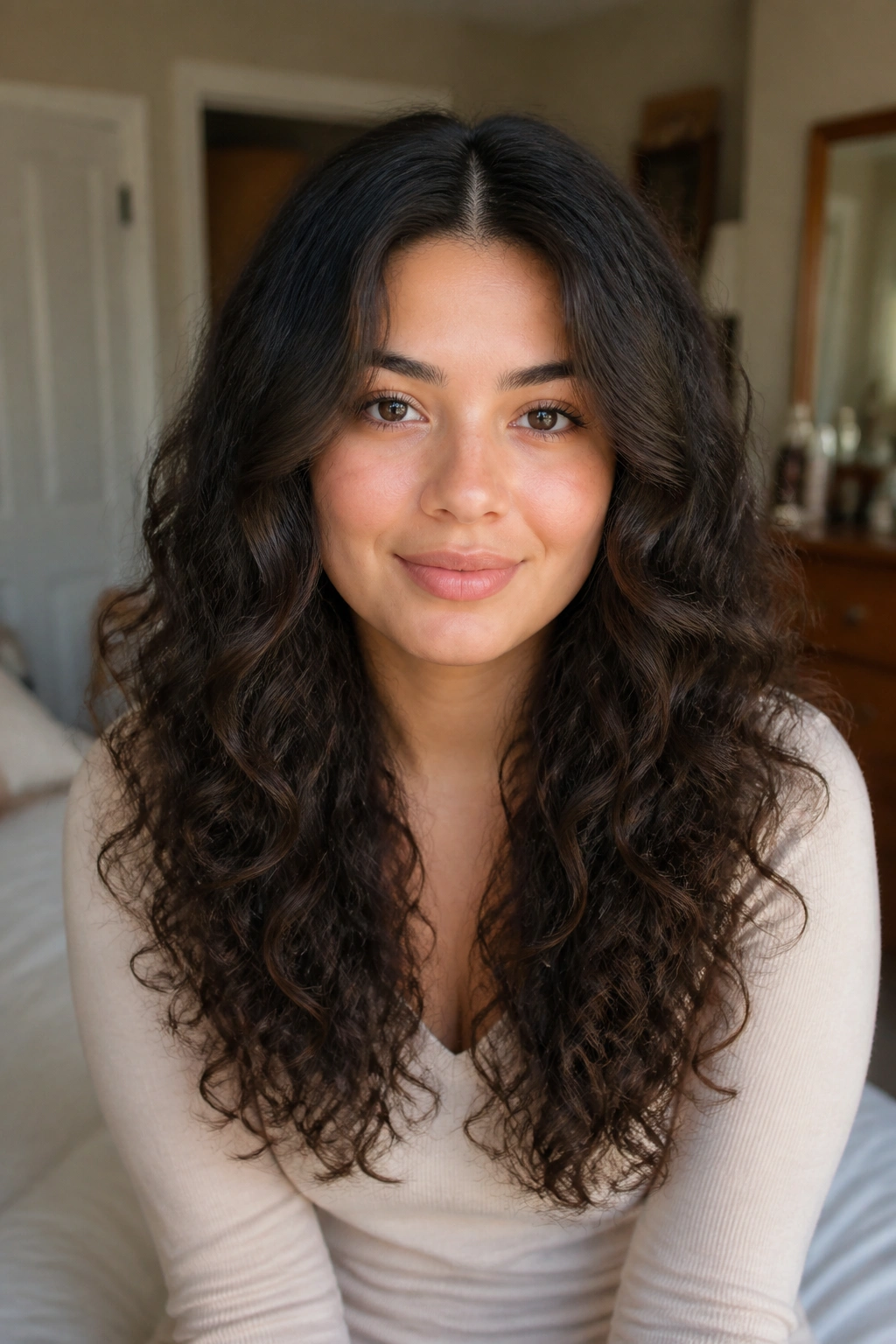
A center part gets blamed for a lot, and half the time it is innocent. On a round face, a center part can work beautifully when the curl pattern has enough length and the ends are tapered instead of blunt. The vertical line of the part creates balance, and the tapered finish keeps the shape from turning boxy.
The trick is density control. If the sides are too bulky, the center part can widen the face. If the hair falls in long, broken-up ribbons, it looks sleek and intentional. I especially like this on curls that clump well and hold a defined pattern through the ends.
Ask for the perimeter to be softly rounded or lightly U-shaped, not cut straight across. That keeps the bottom edge from sitting like a shelf.
6. Long Curly Shag with Extended Length
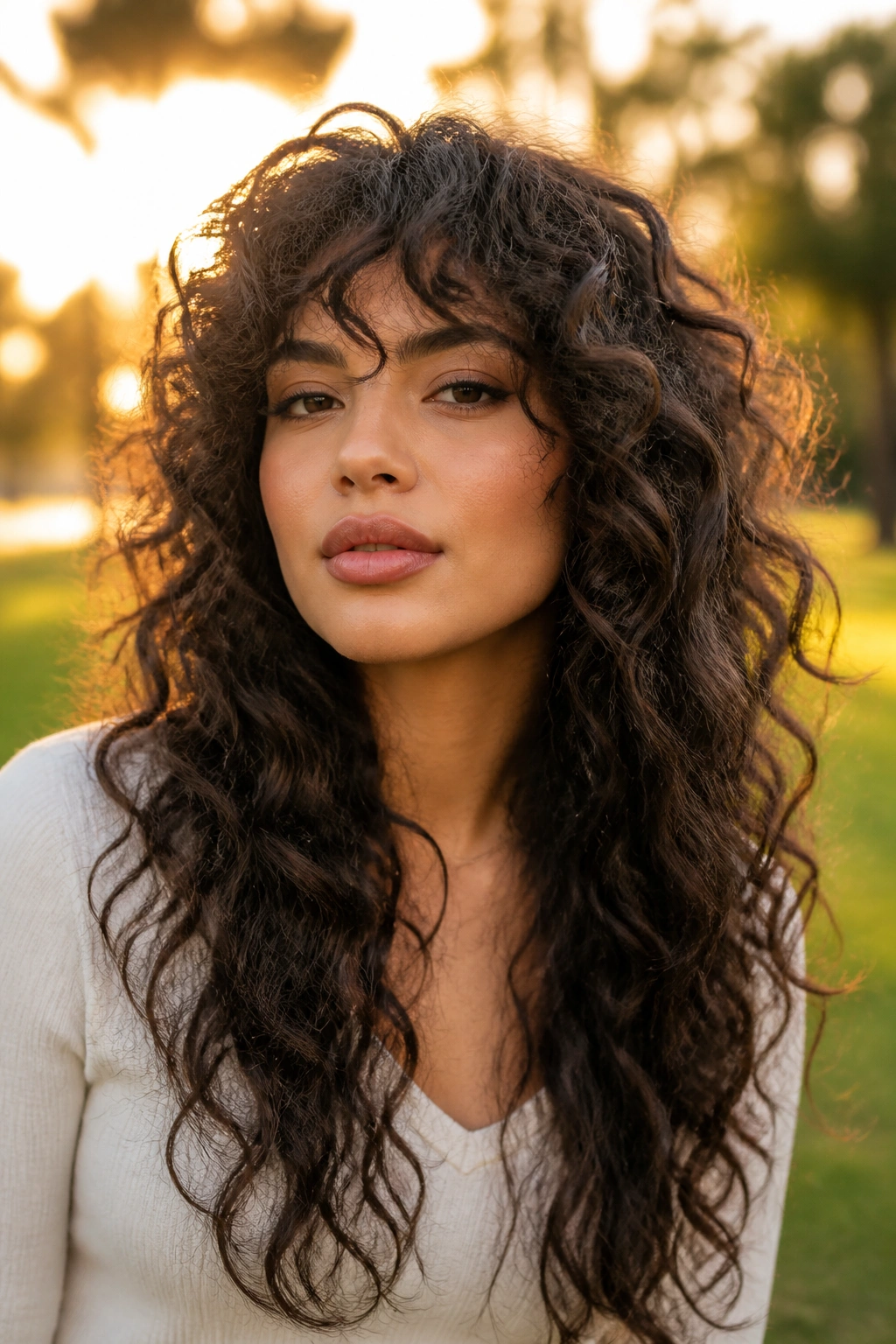
A curly shag can look fantastic on a round face when the length stays long. The short version can get too airy around the cheeks. The long version keeps the movement but leaves enough weight to pull the silhouette downward.
This cut is all about internal shape. You get crown lift, broken-up layers, and a bit of edge, but the longest pieces still fall well past the chin. That matters. Without that extra drop, the style can turn wide fast.
Why it works
The shag creates movement higher up while keeping the perimeter long. That means the top does some of the visual work, and the sides do not have to carry all the width. It’s a smart cut for dense curls that love to expand.
What to ask for
- Long layers with plenty of length left at the bottom
- Soft face framing, not a chunky front shape
- A dry haircut if your curl pattern is strong and springy
One warning: If your hair already feels fluffy at the sides, keep the shortest layers a little longer than the stylist first suggests.
7. Brushed-Out Glam Curls
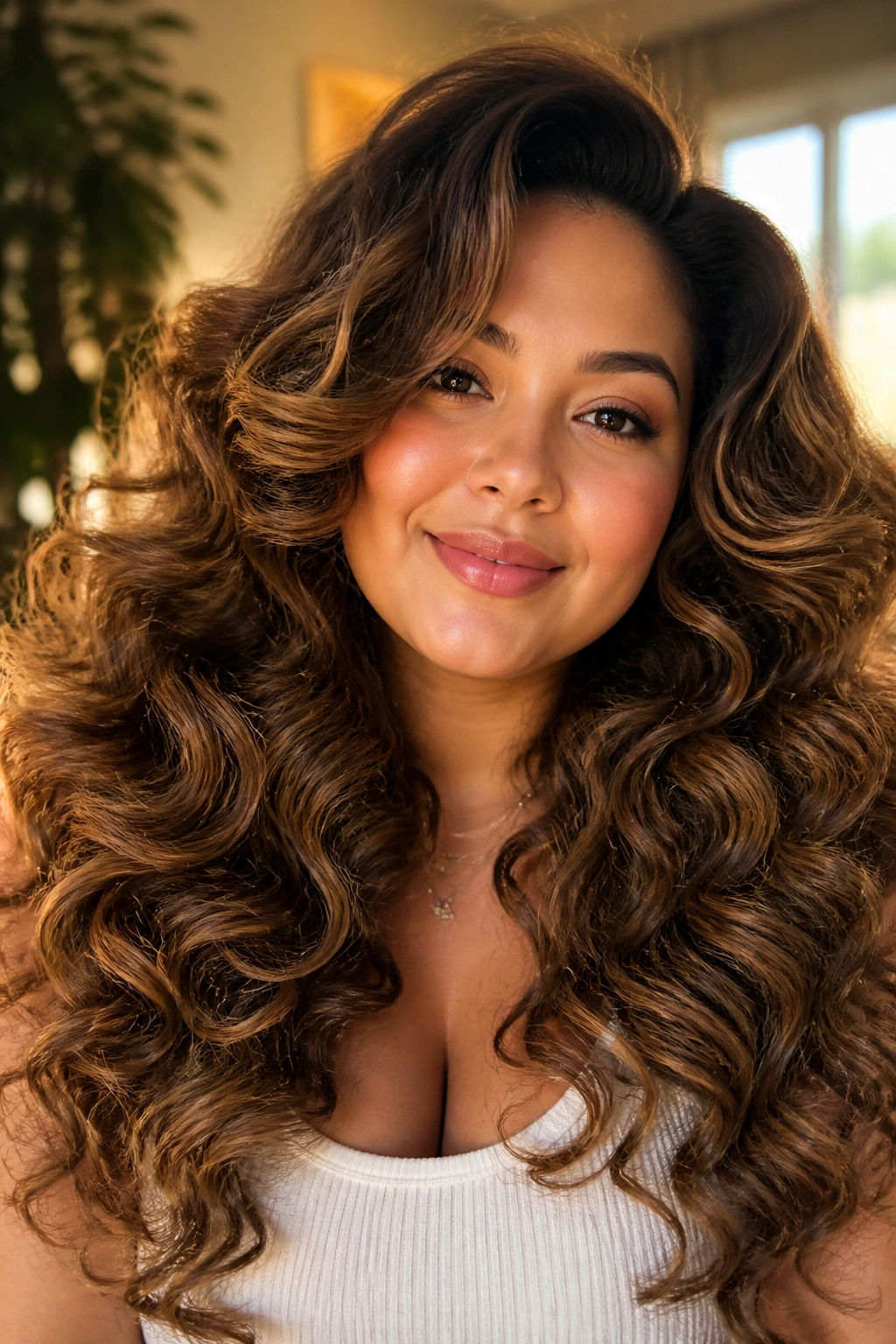
Brushed-out curls look softer and longer because the individual curl clumps merge into flowing ribbons. That soft sweep is useful on a round face. It cuts down on the “wide at the cheeks” feeling and gives the style a smoother line from crown to ends.
This style wants patience. Let the curls dry completely. Then add a tiny bit of oil or serum to your hands and brush gently with a soft bristle brush or wide paddle brush. Start at the ends and work upward. If you brush too soon, the curls frizz into a cloud and the whole point is gone.
The finished look is polished, but not stiff. The shape reads longer because the pieces move together instead of standing apart. It’s a good choice for dressier days, though I wouldn’t call it low-maintenance. It asks for a light touch.
8. Corkscrew Ringlets with Narrow Front Pieces
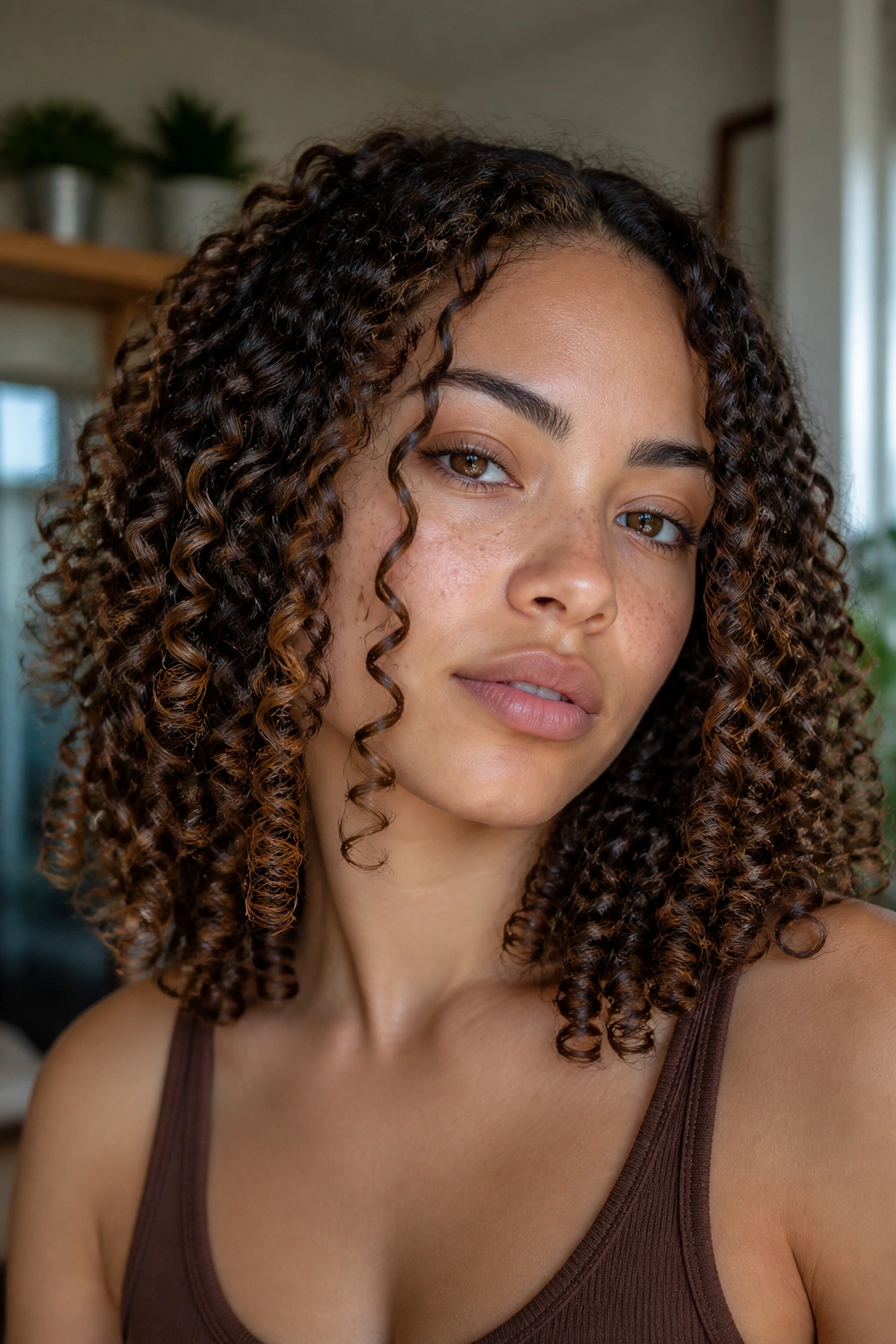
Tight ringlets can flatter a round face when the front stays narrow and the length stays long. Thick front sections create too much width. Narrow ones fall in cleaner vertical lines and bring the face into focus.
The front pieces matter
Keep the front strands slim, then let them spiral from about cheekbone level down to the collarbone or below. Those thin ribbons act like visual guide rails. They frame the face without pushing it outward.
This style is especially nice if you love definition. It puts the curl pattern on display instead of blowing it out. Use a light styling cream or gel on soaking-wet hair, then separate only after the curls are fully dry.
How to keep the shape clean
- Use small, even sections
- Avoid heavy products that clump the front pieces together too much
- Dry with a diffuser on low heat or air-dry fully before touching
A narrow front makes a bigger difference than most people expect.
9. U-Shaped Long Cut
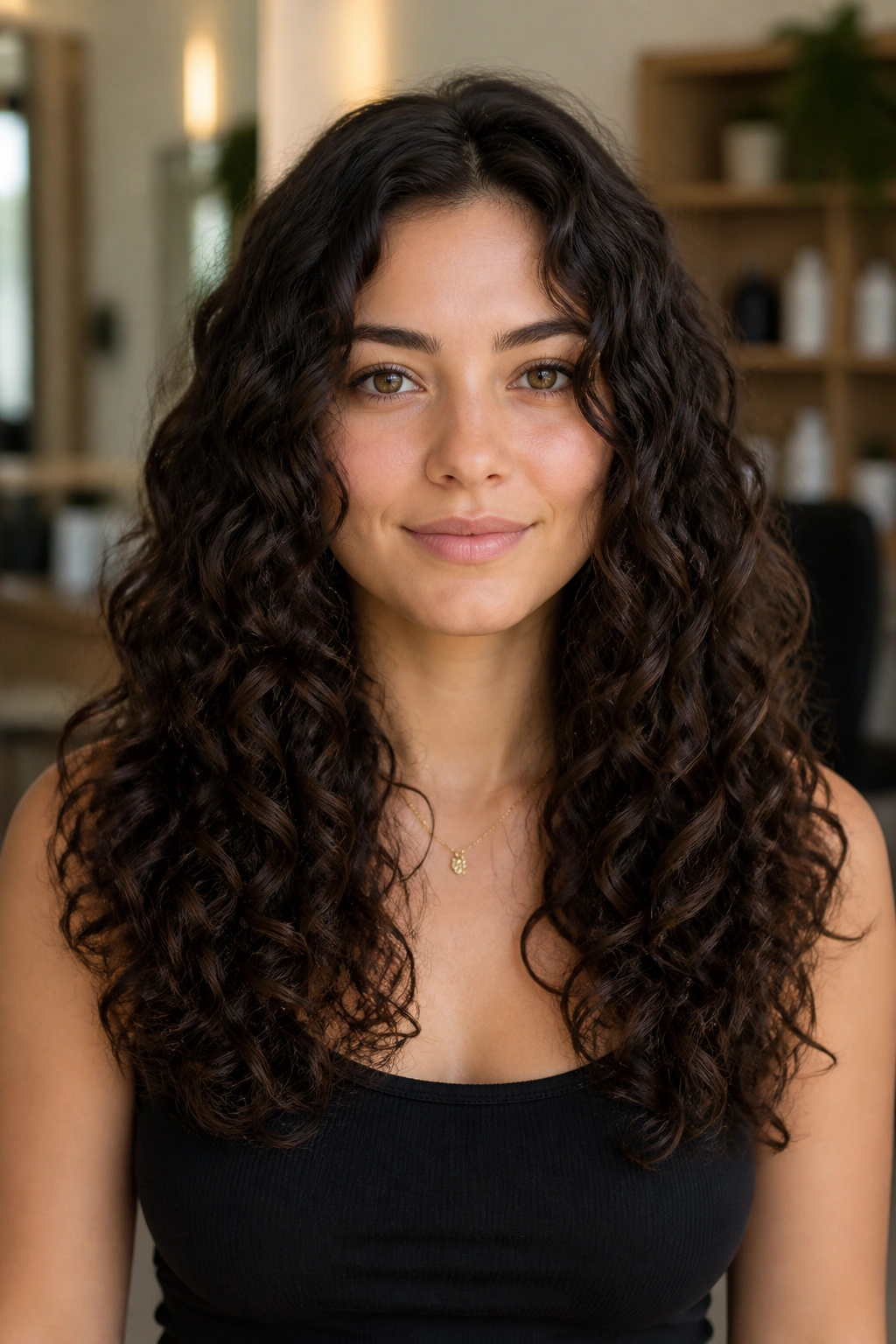
A U-shaped cut is one of my favorite answers for round faces because it quietly adds length. The back stays fuller, while the sides taper in a little, which keeps the silhouette from spreading across the cheeks.
The shape is subtle. That’s the beauty of it. You get long curls that fall with a soft curve instead of a blunt bottom edge, and the eye naturally follows the arc downward. On curly and coily hair, this also helps avoid that broad triangle shape that can happen when everything is cut evenly.
A dry cut is usually the safer move here. Curls do not lie flat, and wet cutting can hide how much spring the hair has. If your texture is especially tight, ask the stylist to check the shape after drying before trimming the perimeter any shorter.
10. Side-Swept Fringe with Low Side Volume
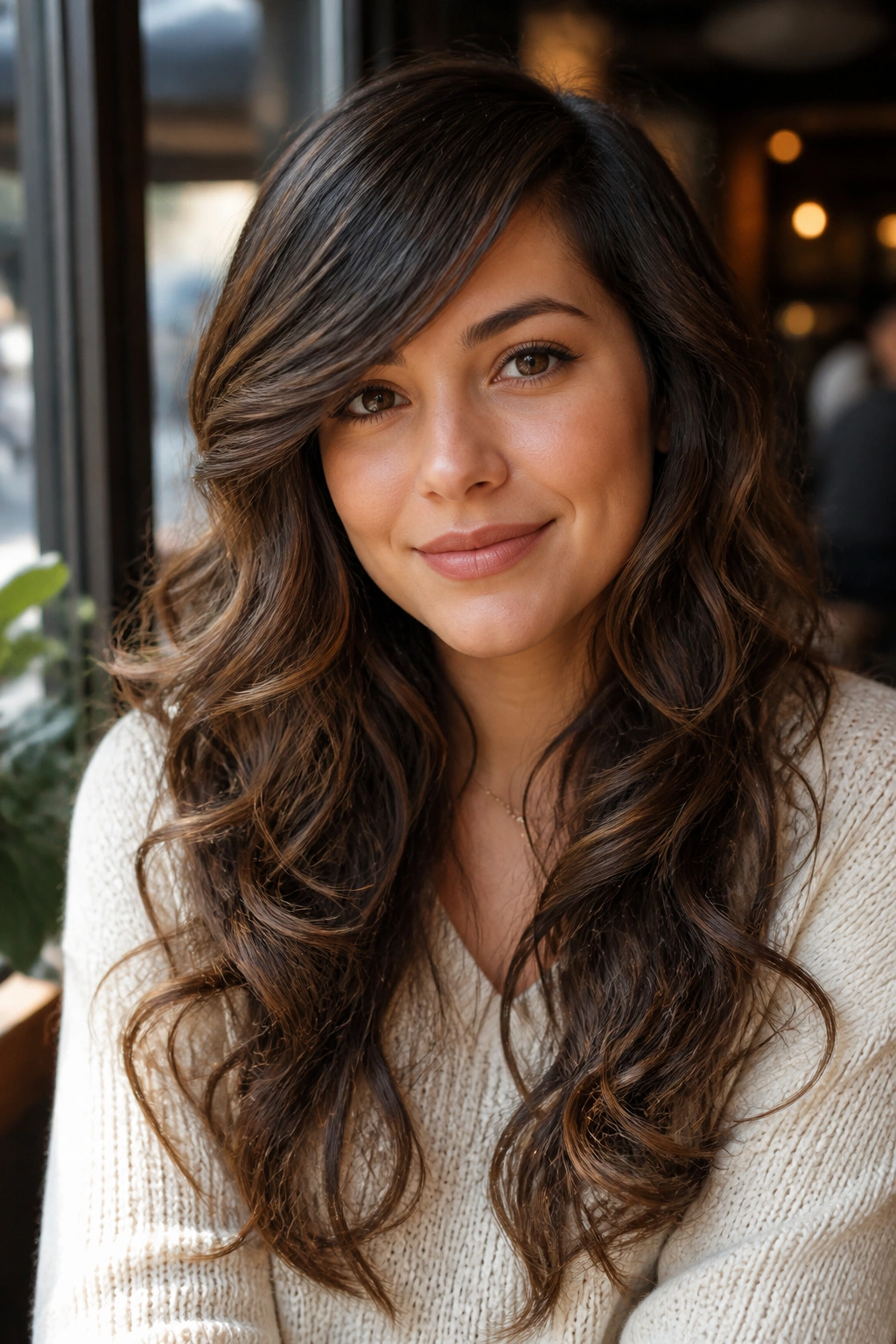
A side-swept fringe works because it breaks the face into angles. Round faces tend to look best with a little diagonal movement, and a soft fringe swept across the forehead gives exactly that. Keep the side volume low, though. Too much puff right at the temples makes the face look wider, not slimmer.
This is a nice choice if you want some bang energy without a full fringe. The pieces can start near the brow and drift into the longer layers on one side. The rest of the hair should fall below the cheekbone so the fringe feels connected, not separate.
If your curls are loose, finger-coil the fringe in the direction you want it to fall. If they’re tighter, set the section with a small roller or a twist while it dries. A little direction goes a long way.
11. Long Coils with Stretched Roots
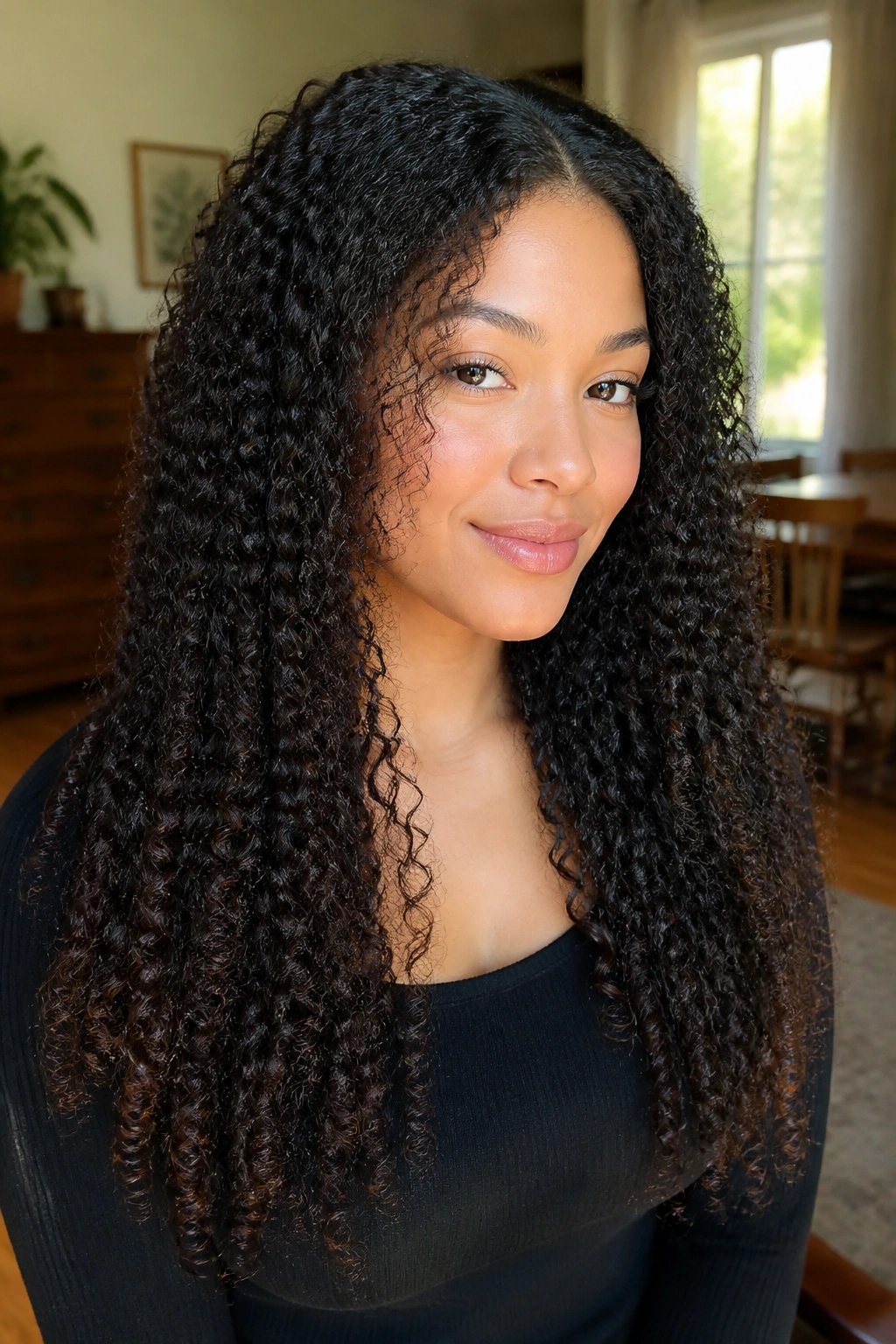
Coily hair often needs a little stretch if you want the length to show. Without it, the hair can shrink upward and sit closer to the cheeks than you want. Stretched roots solve that problem while still letting the curl pattern live on the ends.
The best version keeps the roots elongated and the ends defined. Banding, root clipping, or a loose blow-dry with a diffuser can all work. What matters is keeping the root area from puffing too wide. The ends should still spring, because that’s where the curl gives the style shape and life.
No need to stretch everything flat. That usually kills the texture and makes the hair look narrower in the wrong way. A little root stretch, a little end definition, and suddenly the face looks longer without losing the curl character.
12. Twist-Out Length
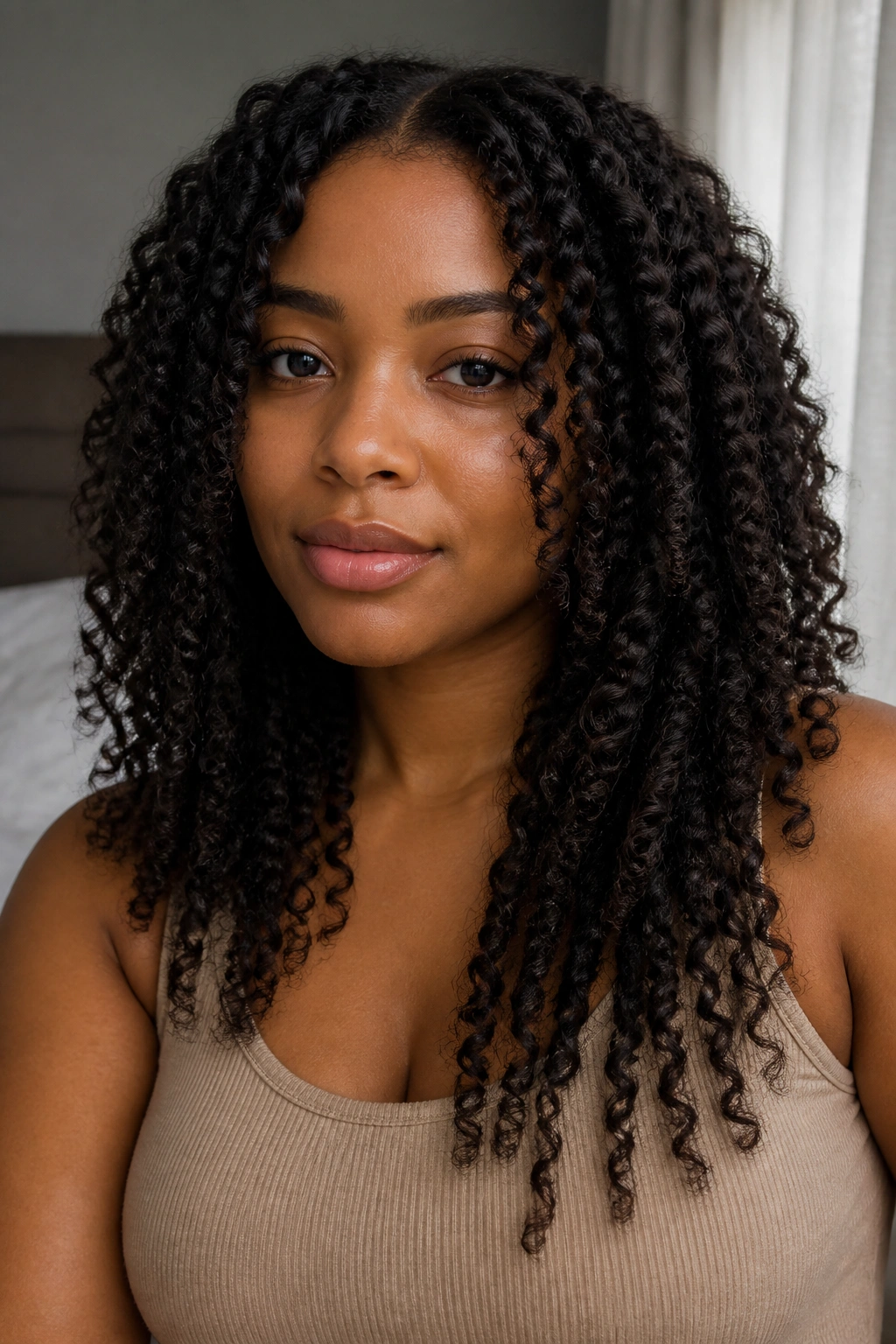
A twist-out gives long curls a ropey, drawn-out look that flatters round faces nicely. The twists create direction, and when they’re taken down, the curls hold a vertical rhythm instead of spreading in every direction.
I prefer medium-sized twists for this shape. Tiny twists can make the hair bloom too much, while huge twists may leave the top too flat. Somewhere in the middle gives the best balance. Aim for enough sections to keep the curl pattern neat, but not so many that the result turns fuzzy at the sides.
A few useful details
- Set the twists while the hair is damp, not dripping
- Use an off-center part if the middle feels too symmetrical
- Separate only when the hair is fully dry
- Pinch a little oil on your fingertips before unraveling
That last step helps the curls keep their shape instead of fraying at the ends.
13. Pineapple-Inspired High Crown Style
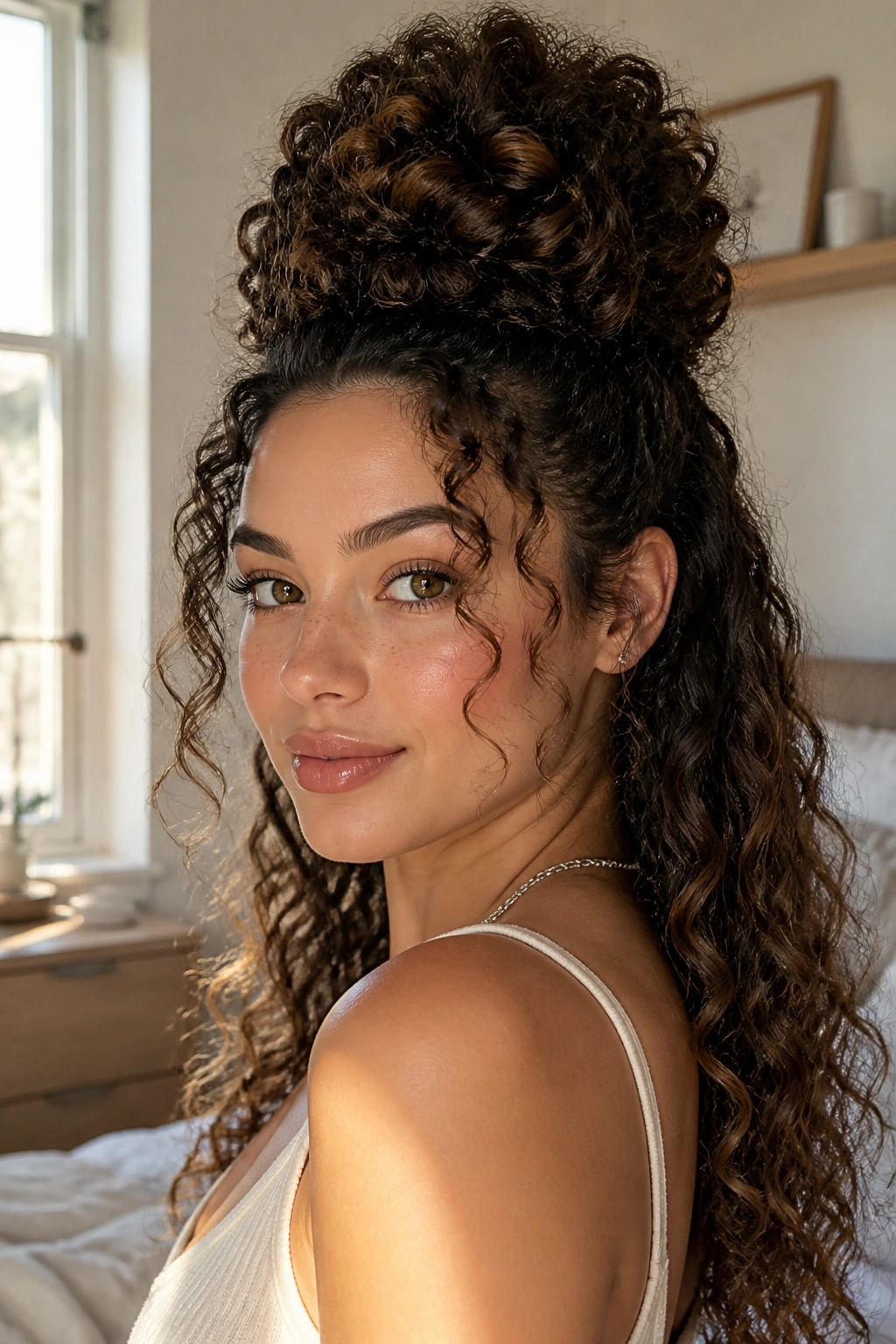
A high crown style lifts the eye upward right away. On a round face, that upward movement is gold. It keeps the curls off the cheeks and adds a tall shape without forcing the length to disappear.
Think of it as a daytime version of the pineapple, not the bedtime one. Gather the upper section high and loose, then let the lower curls fall down the back and shoulders. Leave a few soft tendrils around the temples so the style still feels relaxed. Tight pulling is not the point.
This works well on second- and third-day curls when the lower sections still have shape but the roots need help. A few bobby pins or a decorative clip can hold the top in place. The style feels casual, but the silhouette is doing real work.
14. Waterfall Layers Around the Face
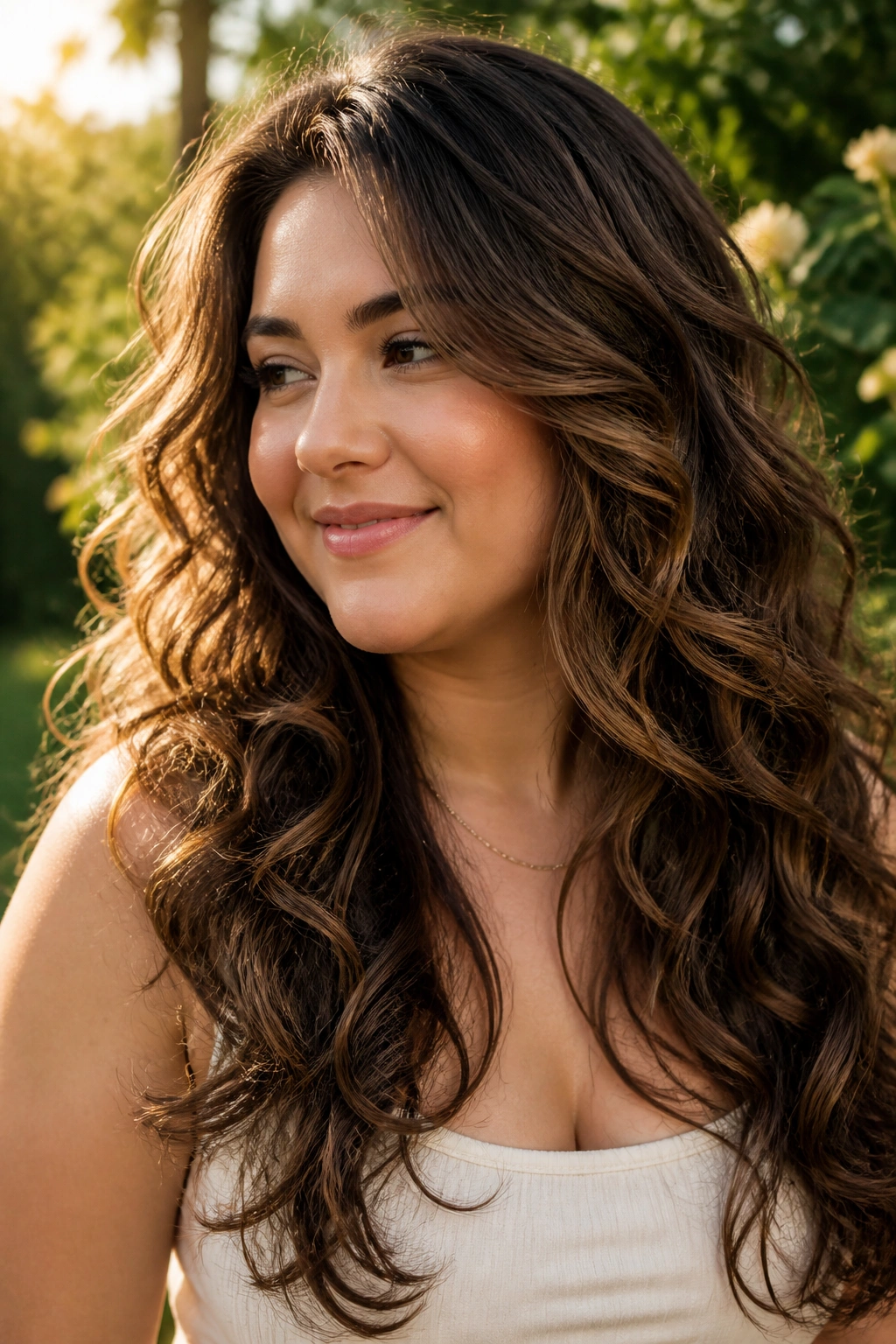
Waterfall layers create a slow cascade instead of a hard step. That matters on round faces because hard steps can cut the face horizontally. A soft cascade keeps the attention moving downward.
The best waterfall layer starts high enough to add movement, but low enough to stay away from the widest cheek area. I usually like pieces that begin around the mouth or just below and then fall in staggered lengths. The result is soft, broken-up motion rather than one heavy curtain of hair.
This shape looks especially good on thick curls because it removes weight while keeping length. Ask for point cutting or a gentle slide cut if your stylist works dry and understands curls. Blunt scissor lines are not your friend here.
15. Invisible Layers for Dense Curls
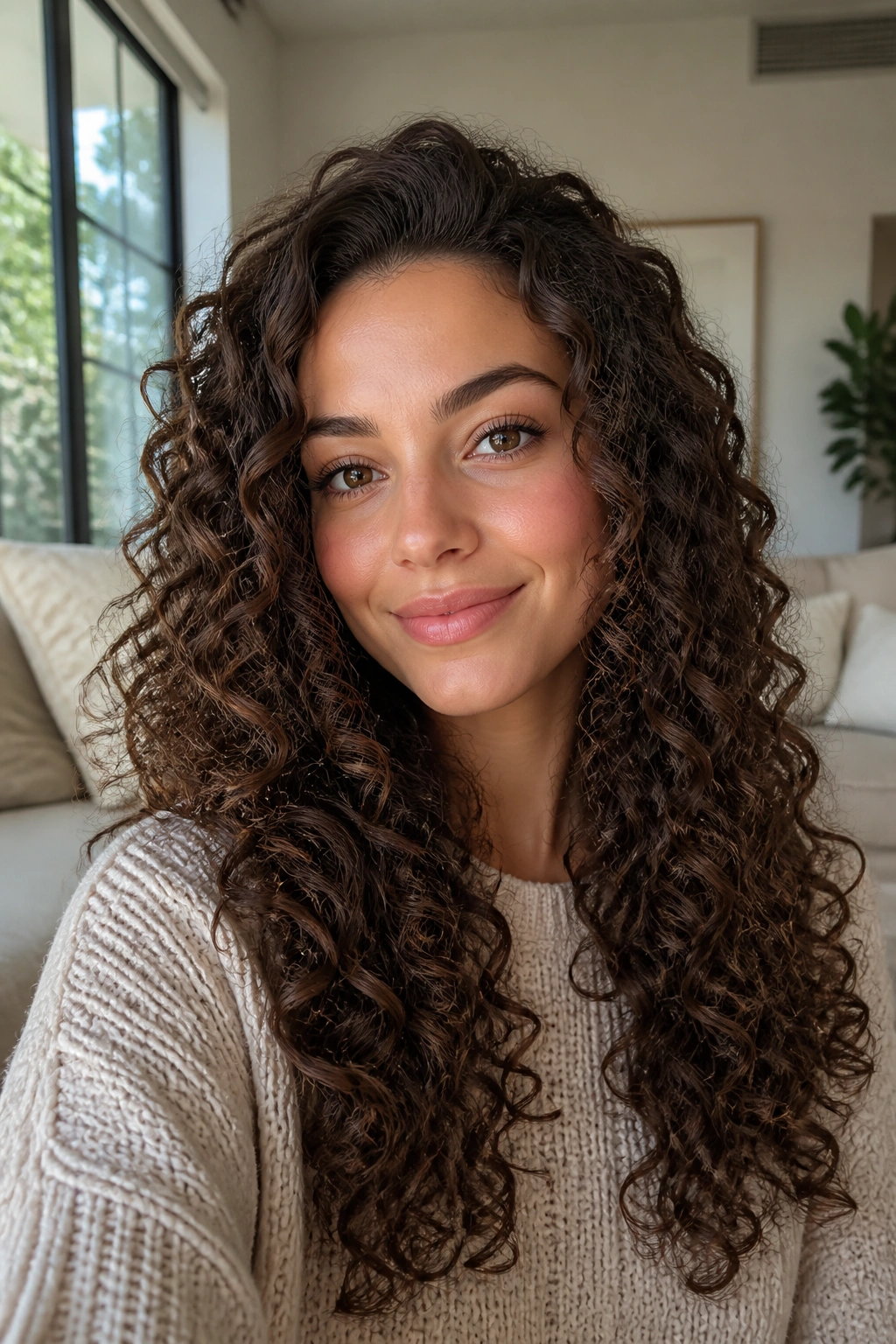
Invisible layers are the quiet hero of long curly hair. They sit inside the shape, remove bulk, and let the outer layer fall more smoothly. On a round face, that means less width at the sides and more length in the overall line.
Why they matter
Dense curls can build a lot of volume fast. If all that volume sits at cheek level, the face looks fuller. Internal layers move some of that weight higher or lower so the outside shape reads cleaner. You keep the length, but the silhouette stops looking heavy.
What to ask for
- Internal layers instead of obvious chops
- A perimeter that stays long
- Soft shaping around the front, not chunky pieces
- A dry shape check after the curls spring back
This is one of those cuts that looks easy from the outside and very thoughtful underneath. That’s the whole point.
16. Braided Crown with Cascading Curls
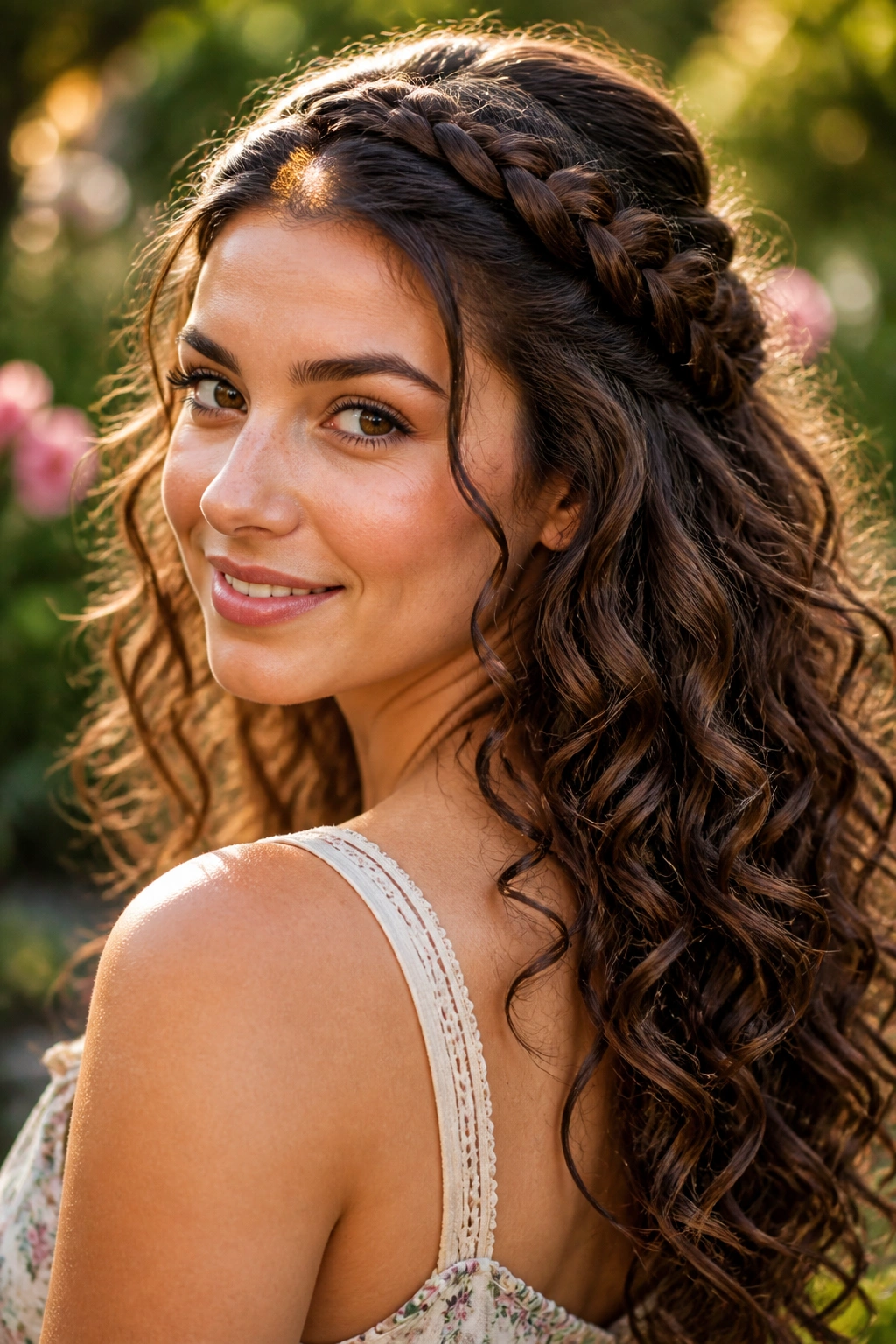
A braided crown is a neat trick when you want the face to look more vertical. The braid lifts the eye line across the top of the head, while the curls below stay loose and long. That split in the shape makes a round face feel longer right away.
The braid does not need to be elaborate. A small French braid starting at one temple and running across the crown is enough. Leave the rest of the hair open. Let the curls spill from behind the braid instead of packing everything into the top half.
This style is especially good for events, hot weather, or any day when you want hair off the cheeks without pulling it all back. It feels a bit romantic, a bit practical, and never too precious.
17. Defined Wash-and-Go with Root Clipping
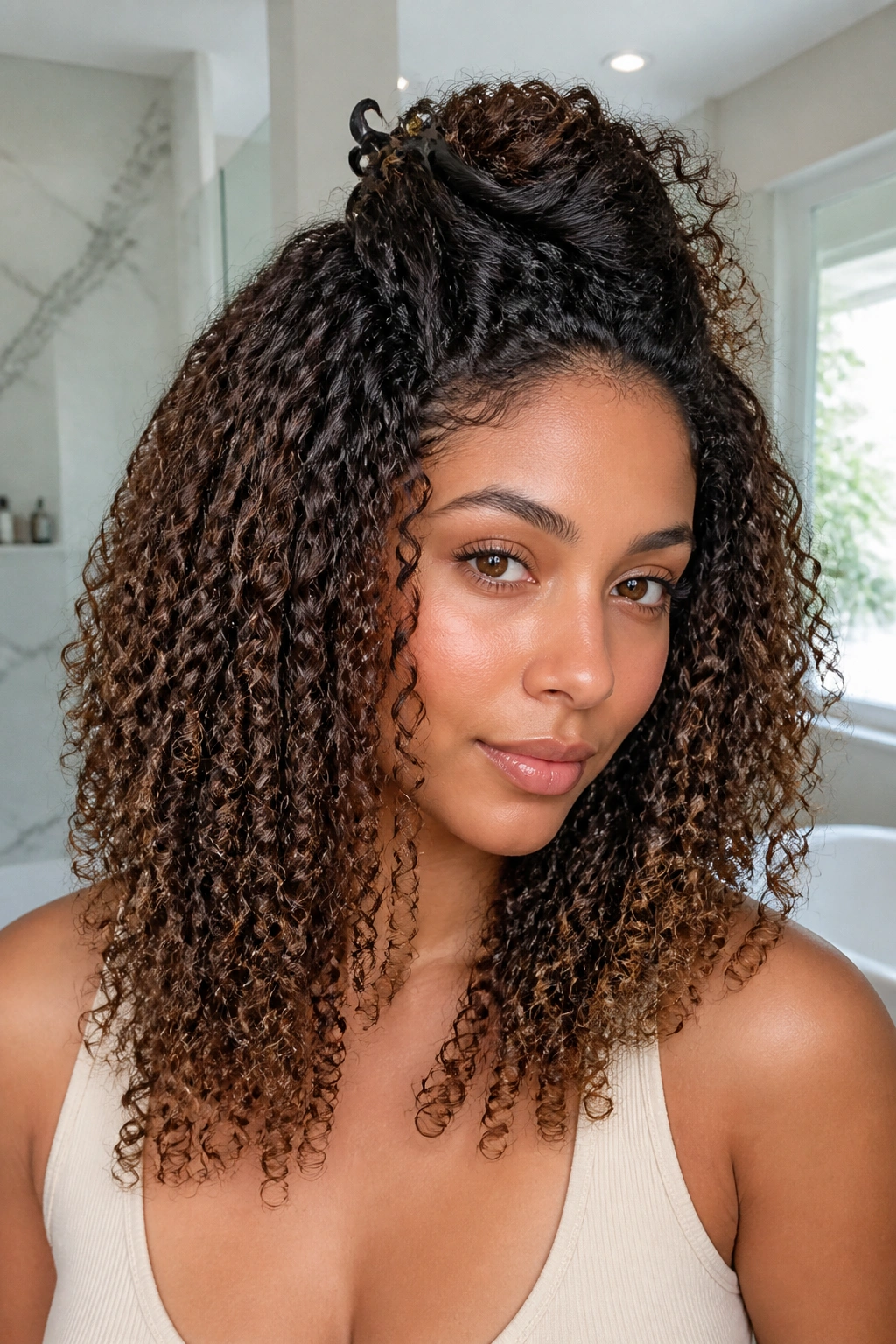
A well-done wash-and-go can be very flattering on a round face if the crown gets lift and the sides stay controlled. Root clipping helps the top dry with more height, which keeps the curls from sitting too low around the cheeks.
The shape starts at the roots
After applying your styling cream and gel, clip the roots at the crown in 3 to 5 small sections. Dry with a diffuser on low or medium heat until the hair is at least 90 percent dry. The clips should come out when the roots hold their shape, not when they’re still wet and floppy.
Watch for this mistake
If the side sections dry too puffed out, the whole style widens the face. Keep those sections clumped, and do not over-separate before the cast is fully set.
A defined wash-and-go gives round faces clean lines without losing curl texture. That’s a good trade.
18. Old-Hollywood Long Curls
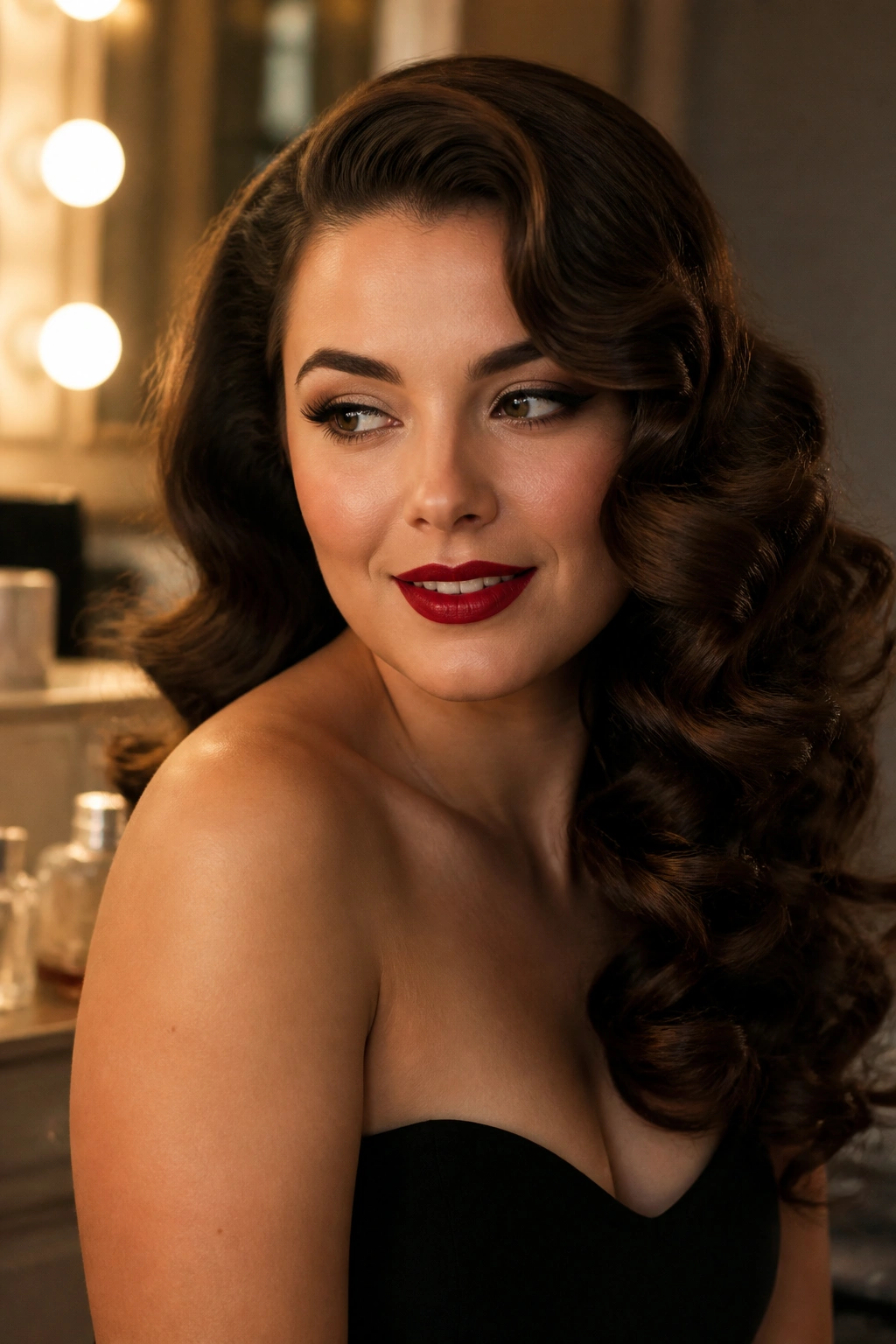
Old-Hollywood curls are smooth, directional, and a little dramatic in the best way. On a round face, the side sweep and polished wave pattern help the eye move in one clean path. That creates length.
This style works best when the curls all fall in the same direction on one side. You get that classic curve from the part down through the ends, and the style reads more elongated than full. It is not a fussy look, but it does like precision. The curls should be glossy, with the ends tucked in softly rather than puffing outward.
I like this one for formal settings because it photographs well without needing a lot of decoration. A single barrette or a narrow comb can be enough. Keep the volume at the top, not the sides, and the shape takes care of itself.
19. Long Curly Shag with a Soft Wolf Cut Edge
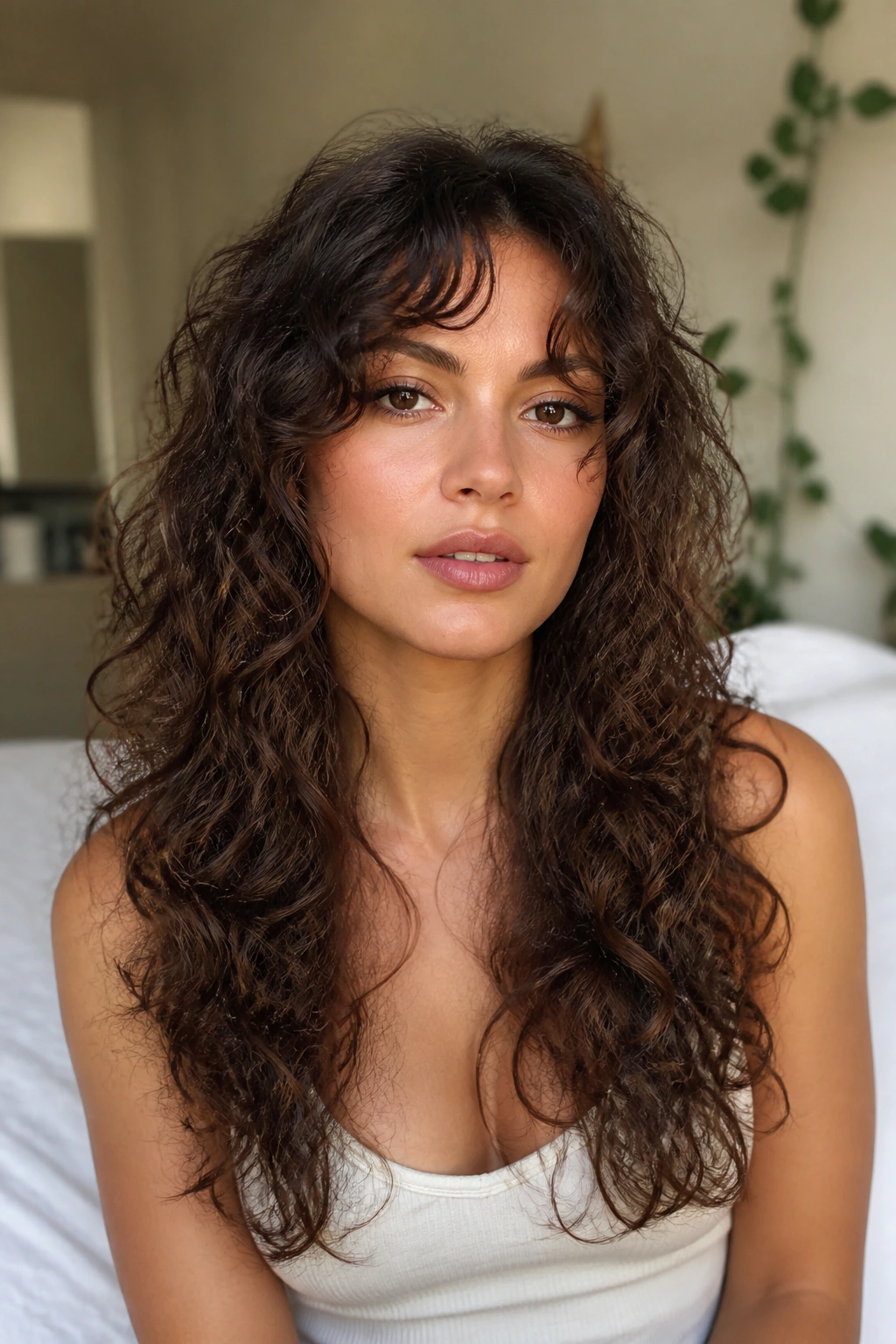
A long shag with a soft wolf cut edge is for people who want attitude without giving up length. The crown layers add lift, the face frame breaks up width, and the long back keeps the face from feeling boxed in.
The important part is restraint. A strong wolf cut can get wild fast on a round face if the layers are too short around the temples. Keep the shortest pieces long enough to skim past the cheekbone, and let the rest of the texture do the talking. The shape should feel edgy, not cropped.
Best for
- Dense curls that need movement
- Medium to thick hair that gets flat at the crown
- People who like texture more than polish
If you like a little grit in your haircut, this is a strong choice.
20. Big Volume Below the Cheekbones
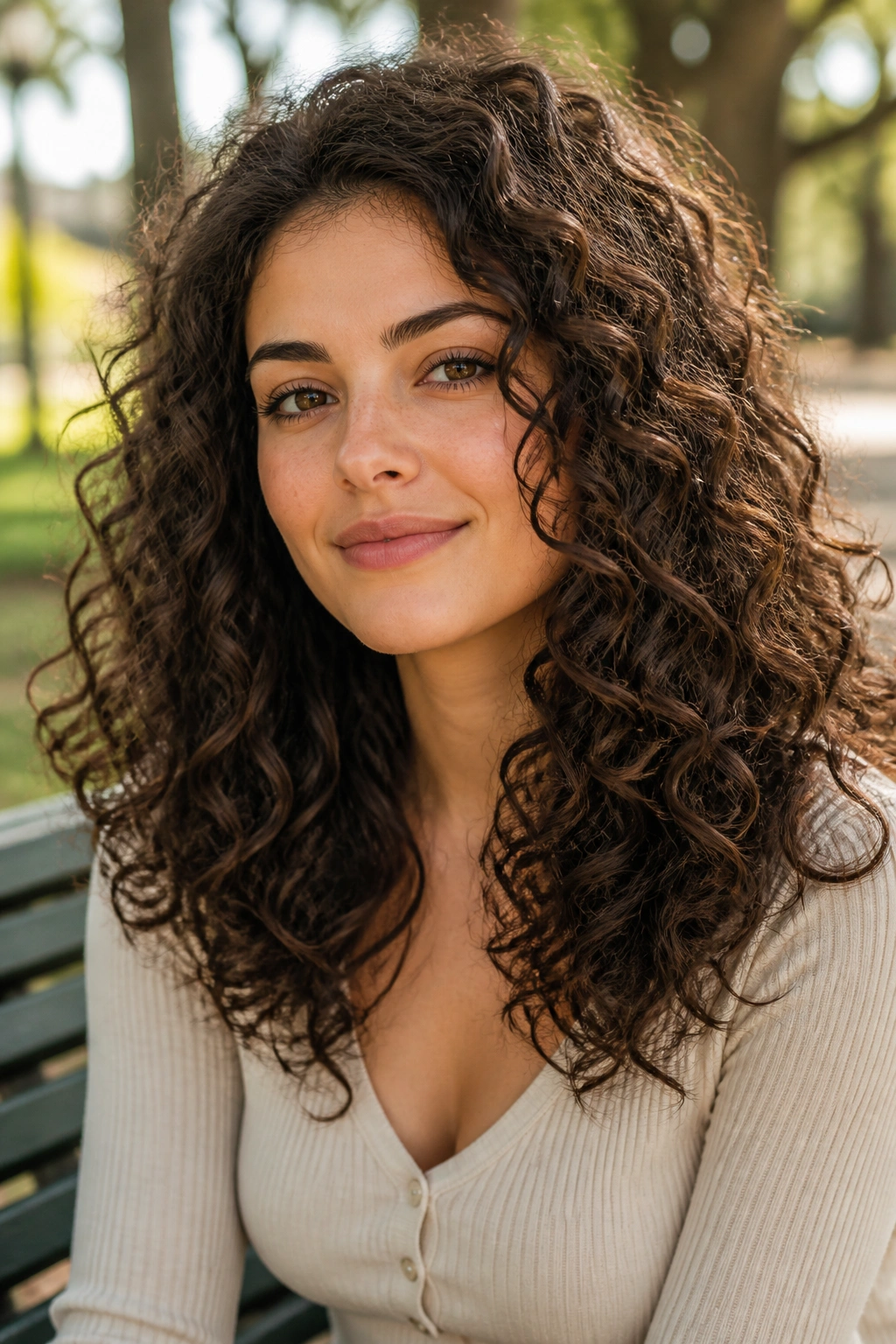
Big curls are not the problem. Bad placement is. The volume should sit lower on the face, around the mouth, jaw, and collarbone, not at the temple line. That lower balance gives round faces room to breathe.
A diffuser can help, but placement matters more than tools. Lift the roots at the crown, keep the sides from puffing outward, and encourage the curl clumps to fall downward as they dry. Think “tall and narrow,” not “wide and fluffy.”
- Lift the crown 1 to 2 inches with clips
- Keep side sections clumped
- Separate curls only after they dry
- Use a light hand at the temples
That shape looks generous without being heavy. There’s a difference.
21. Twists-and-Curls Mix
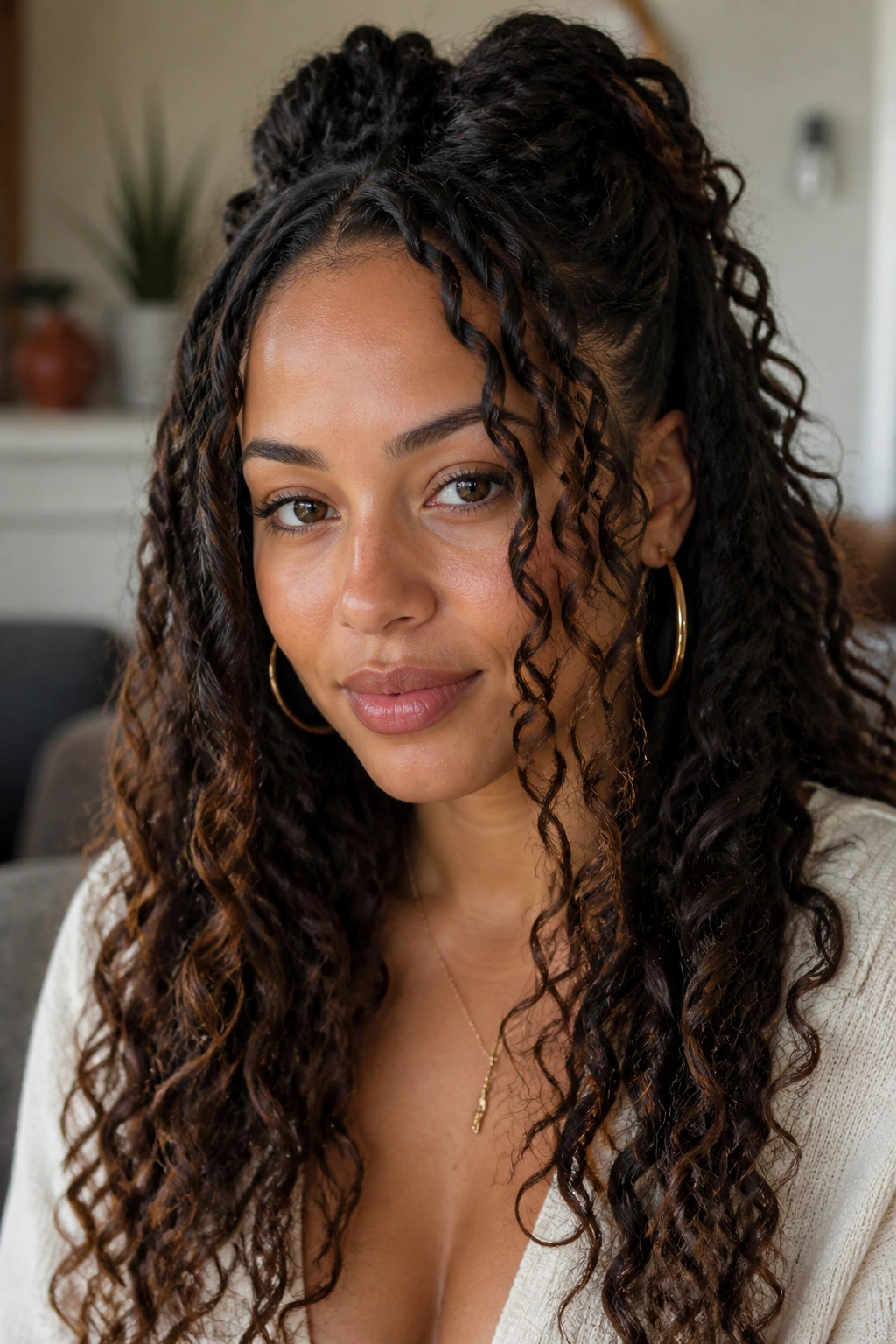
Why choose one texture when two can do the job? A mix of twists and loose curls gives the hair shape control at the top and softness through the length. On a round face, that combination creates vertical flow without turning the style stiff.
This works well with coily hair that wants definition but also needs some stretch. Twist the upper and mid-length sections for structure, then let the ends fall in a looser curl pattern. The eye sees movement from top to bottom, which helps elongate the face.
The mix can be subtle or obvious. A few front twists can frame the face while the rest stays free. Or you can alternate twist patterns through the whole head. Either way, the contrast keeps the silhouette from looking flat or overly wide.
22. Long Coily Layers with a Side Part
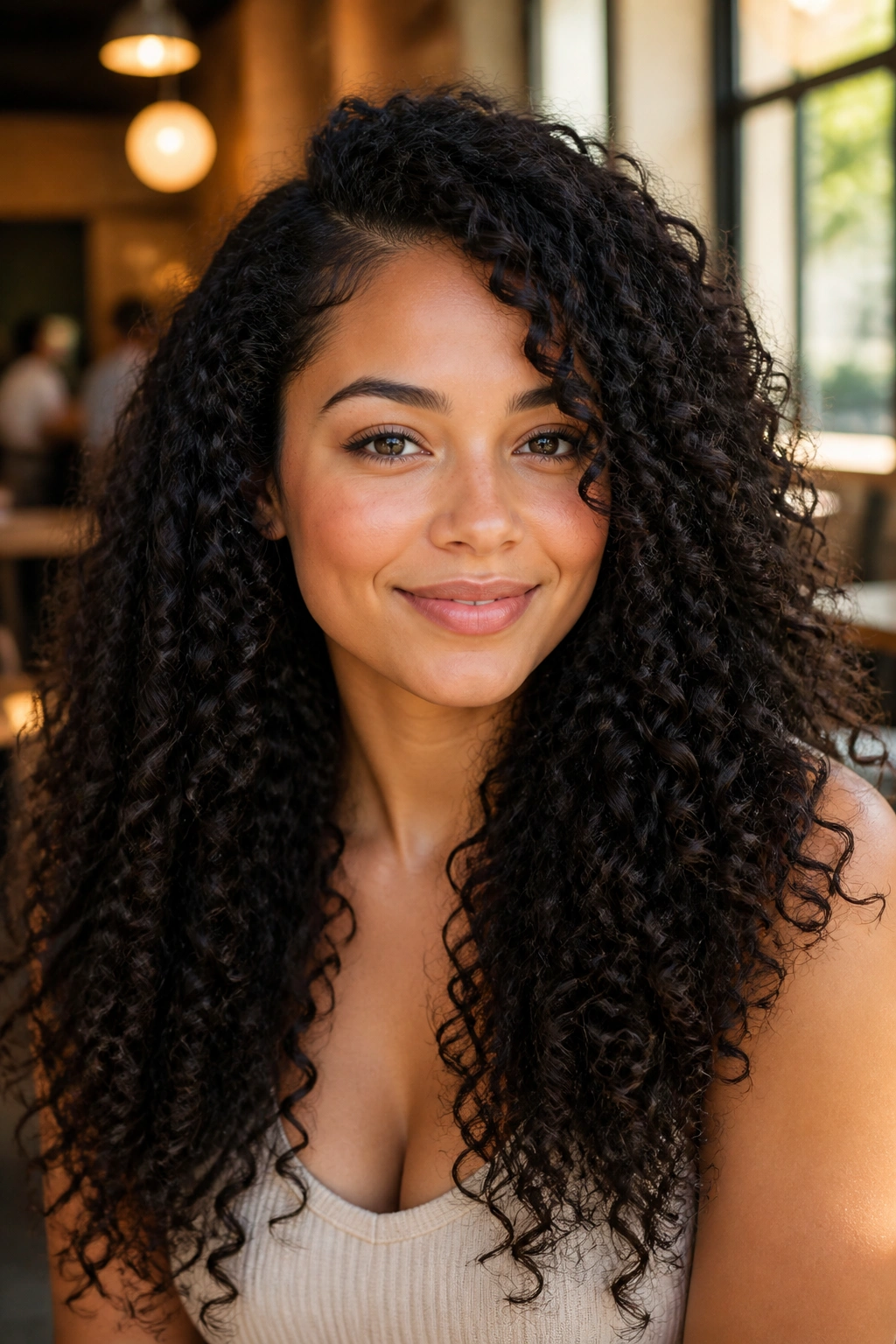
Coily hair has a lot of personality, and a side part lets that personality frame the face in a softer way. The side part breaks the symmetry that sometimes makes round faces look broader, while long layers stop the shape from becoming too square.
A dry shape cut works well here because coily texture shrinks so much. The stylist should see the natural fall before taking off too much length. Internal shaping matters more than chopping the outside. If the perimeter is too full, the coils can build width at the cheek line.
This style is clean, flattering, and low drama in the best sense. It keeps the coils proud, just not spread out in the wrong place.
23. Rod-Set Curls
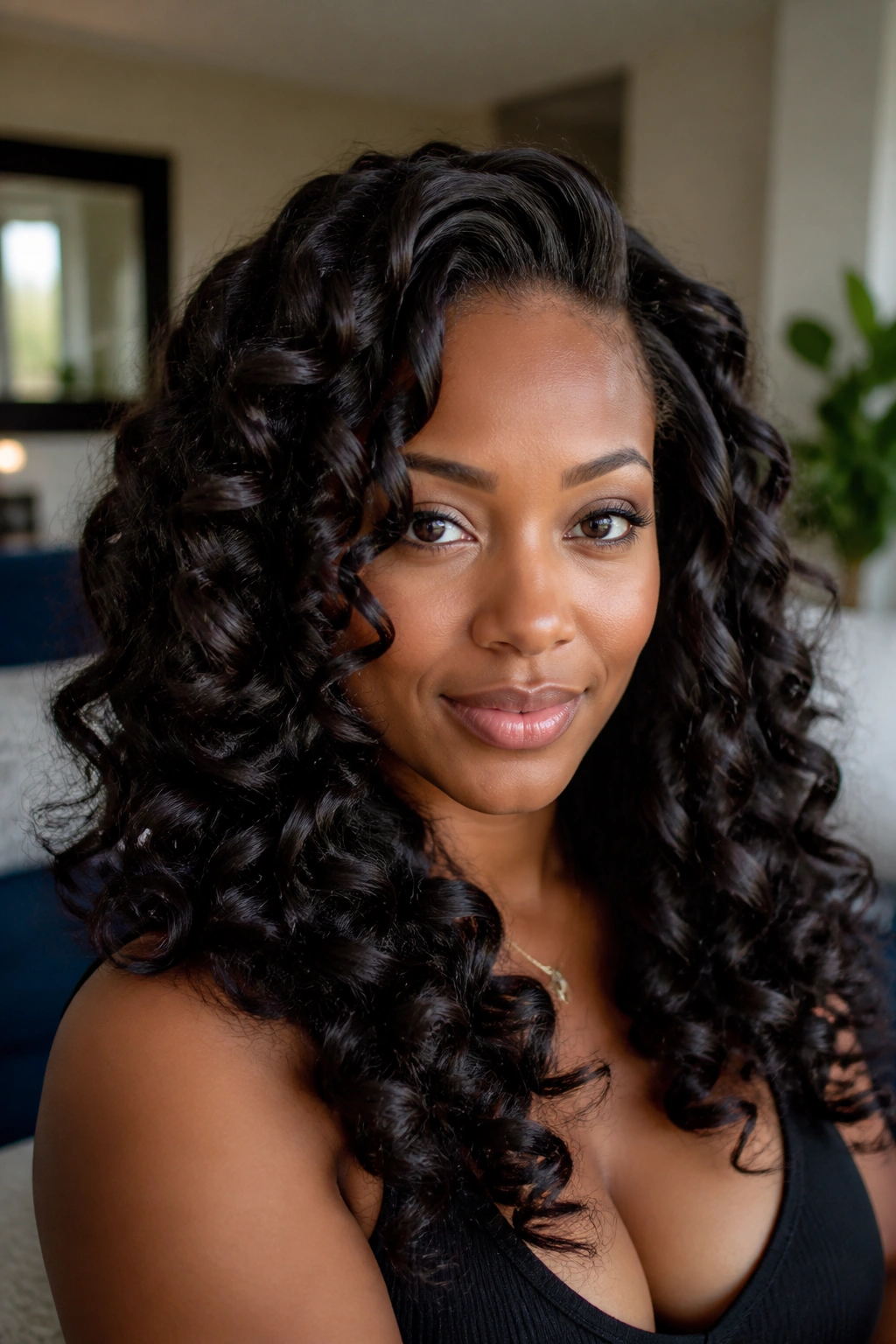
Rod sets give long curls a smooth, uniform curl pattern that can look surprisingly elegant on a round face. Because the curls are shaped by the rod, they fall in neat spirals and create a long, clean line.
Rod size matters
Use smaller rods if you want tighter definition and more lift. Use medium rods if you want a softer shape with more length showing. A rod that is too large can flatten the curl pattern, while one that is too small can make the hair look too tight around the face.
Where to set the front
Wrap the front pieces away from the face so they fall like soft ribbons. That tiny direction change helps the face look more oval. Keep the set fully dry before taking it down. Damp rods unravel into frizz, and frizz spreads outward.
Rod sets are a little old-school, and I mean that as praise.
24. Air-Dried Stretched Curls
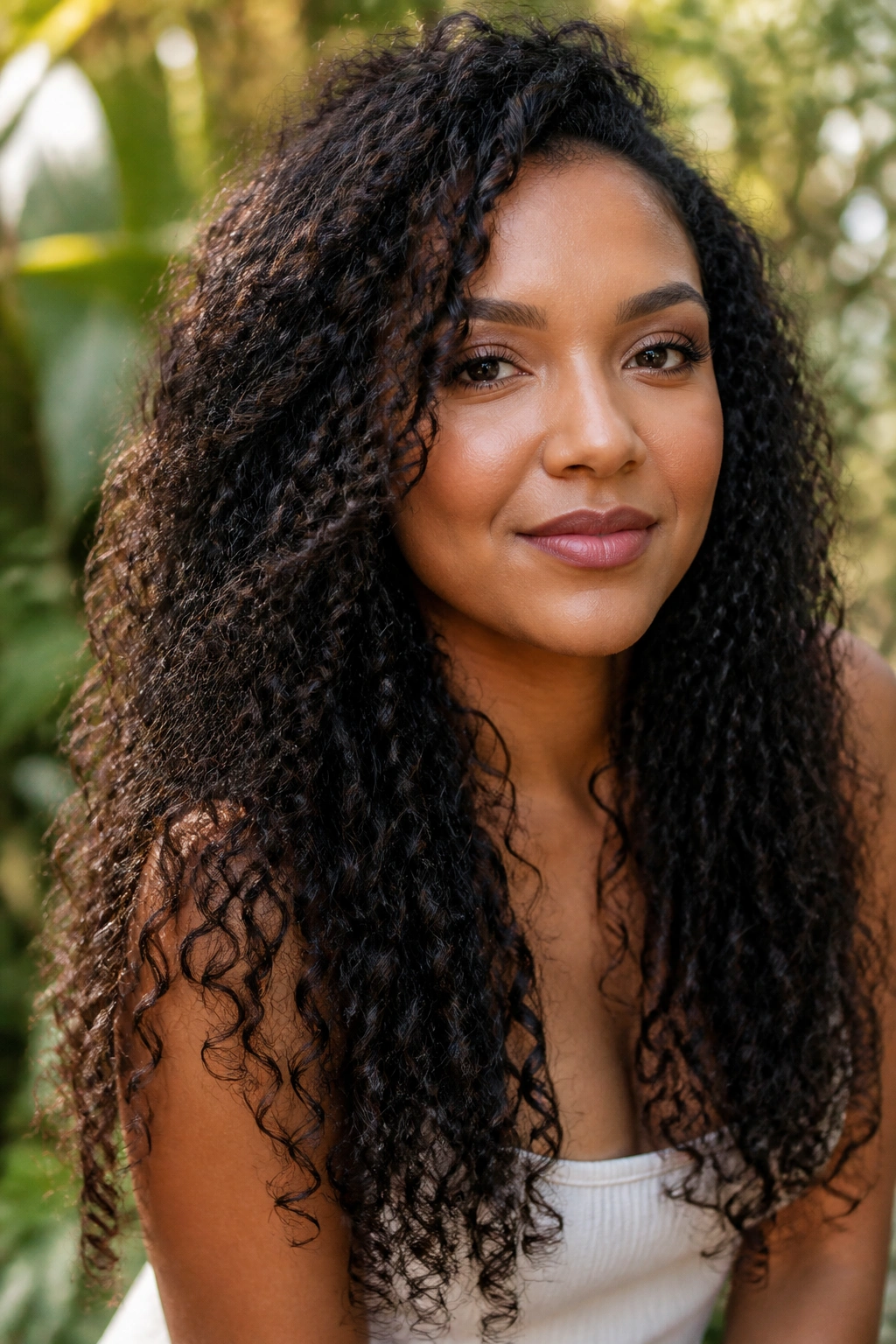
Air-dried stretched curls are one of the easiest ways to keep length visible. The hair dries with the pattern intact, but the root area stays a little elongated, so the face does not feel crowded by volume.
Banding, loose twists, or soft plaits all work here. The point is to create gentle stretch while the hair dries. You are not trying to flatten the curl. You are trying to help it fall with gravity instead of shrinking straight back up.
This is a good weekday style because it does not need a hot tool every time. It also keeps the texture honest. The curls still look like curls, only longer and cleaner around the cheeks.
25. Curved Neckline Shape
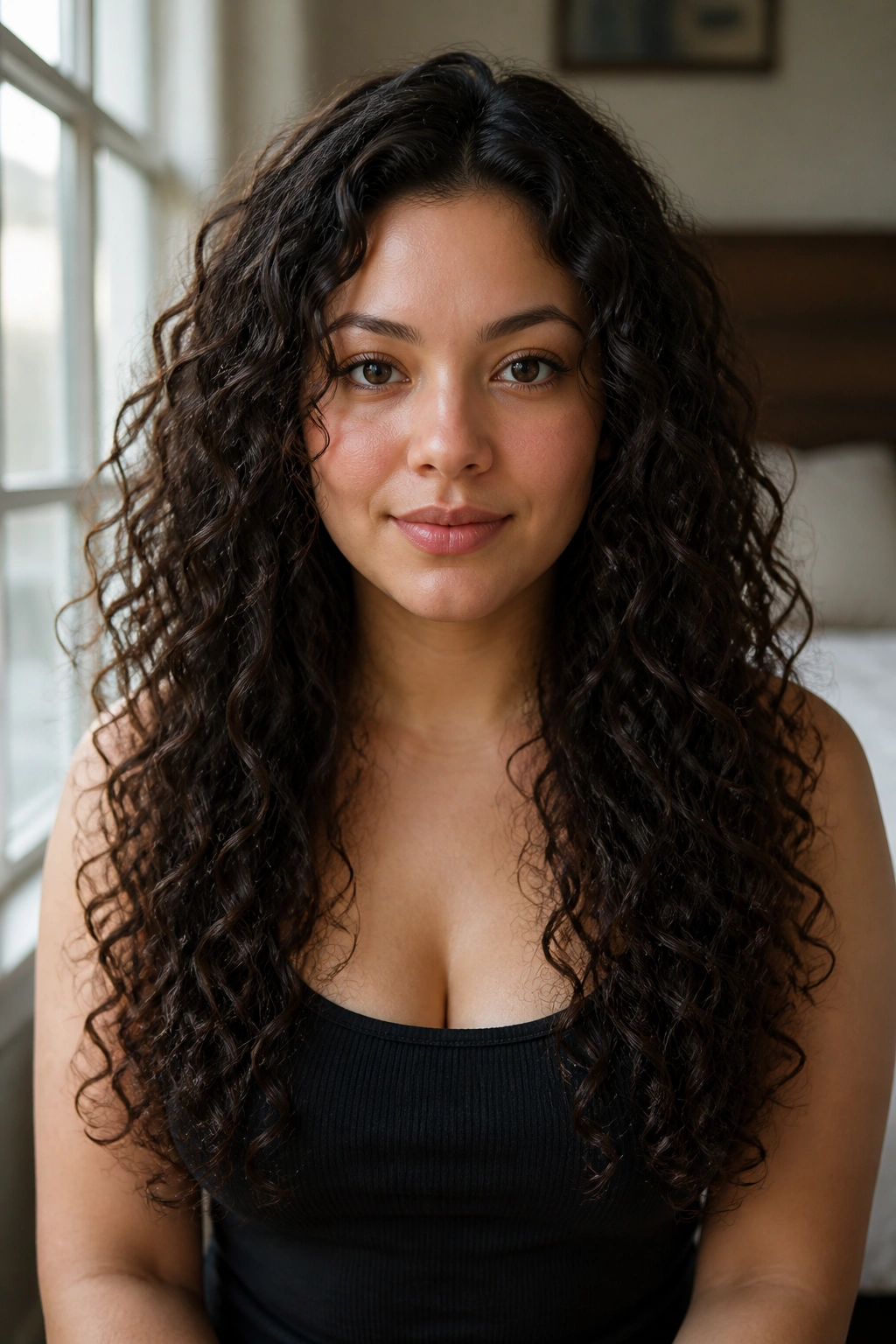
A curved neckline shape gives the haircut a gentle sweep instead of a hard bottom edge. That curve helps round faces because the eye follows the line down and around rather than stopping at one blunt point.
The best version is long in front, softly rounded in back, and never heavy at the sides. It’s a quieter shape than a shag or wolf cut, but it does the same kind of balancing work. If your curls are thick, this shape keeps them from forming a wide wall at the bottom.
It also grows out nicely. That matters more than people admit. A good curly shape should still make sense after a few inches of growth.
26. Halo Braid Accent on Loose Curls
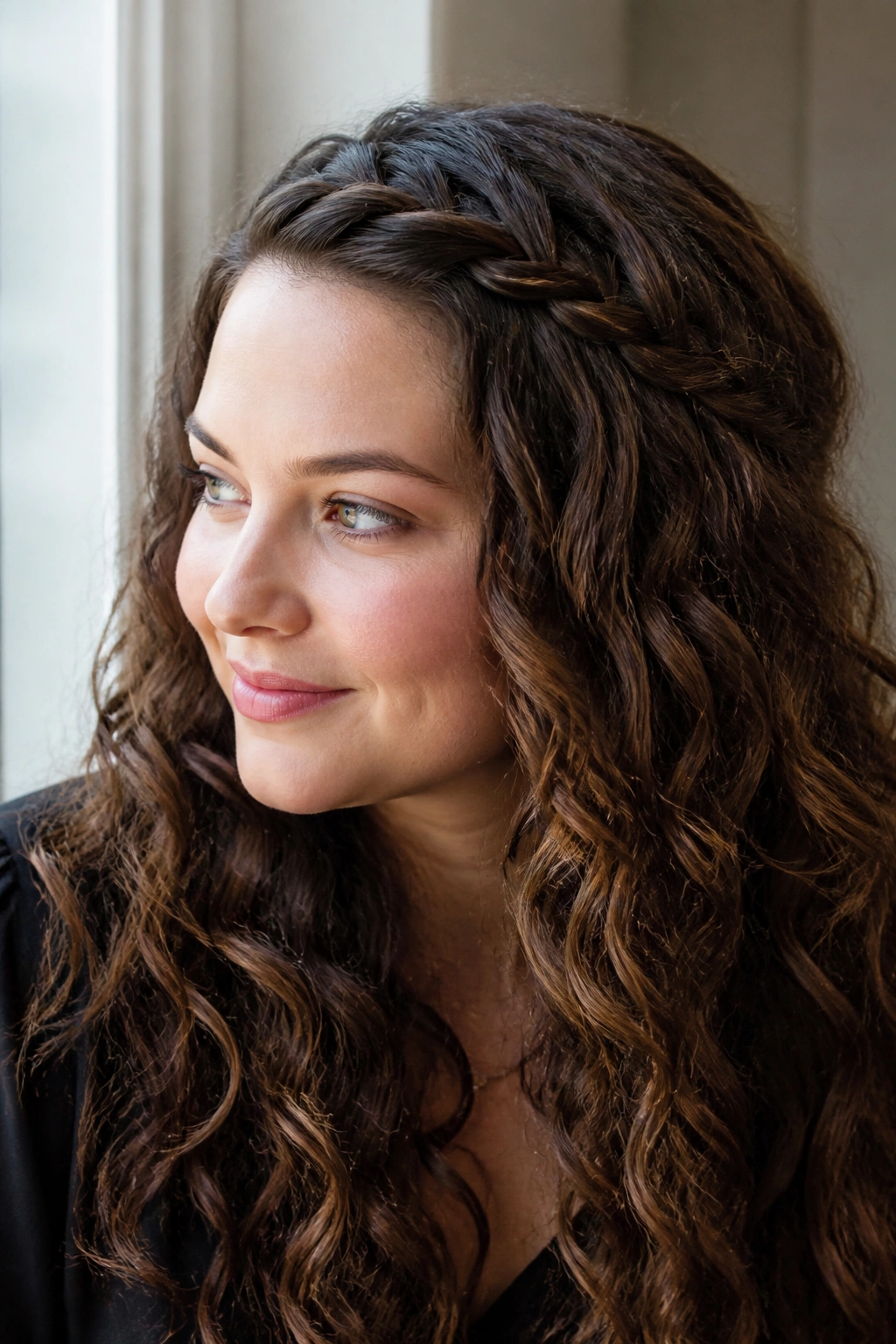
A halo braid at the front or along one side keeps the curls off the cheeks and pulls attention upward. That upward movement is the whole reason this style flatters a round face so well.
The braid can be tiny. It does not need to wrap the whole head. Even a small braided accent from one temple to the crown can change the way the curls sit. Leave the rest of the hair loose and long so the braid acts like a frame, not a helmet.
This is a smart option when you want something prettier than a plain clip but less formal than a full updo. It’s practical, too. Hair stays put better, and the shape stays open around the face.
27. Glossy Defined Spiral Curls
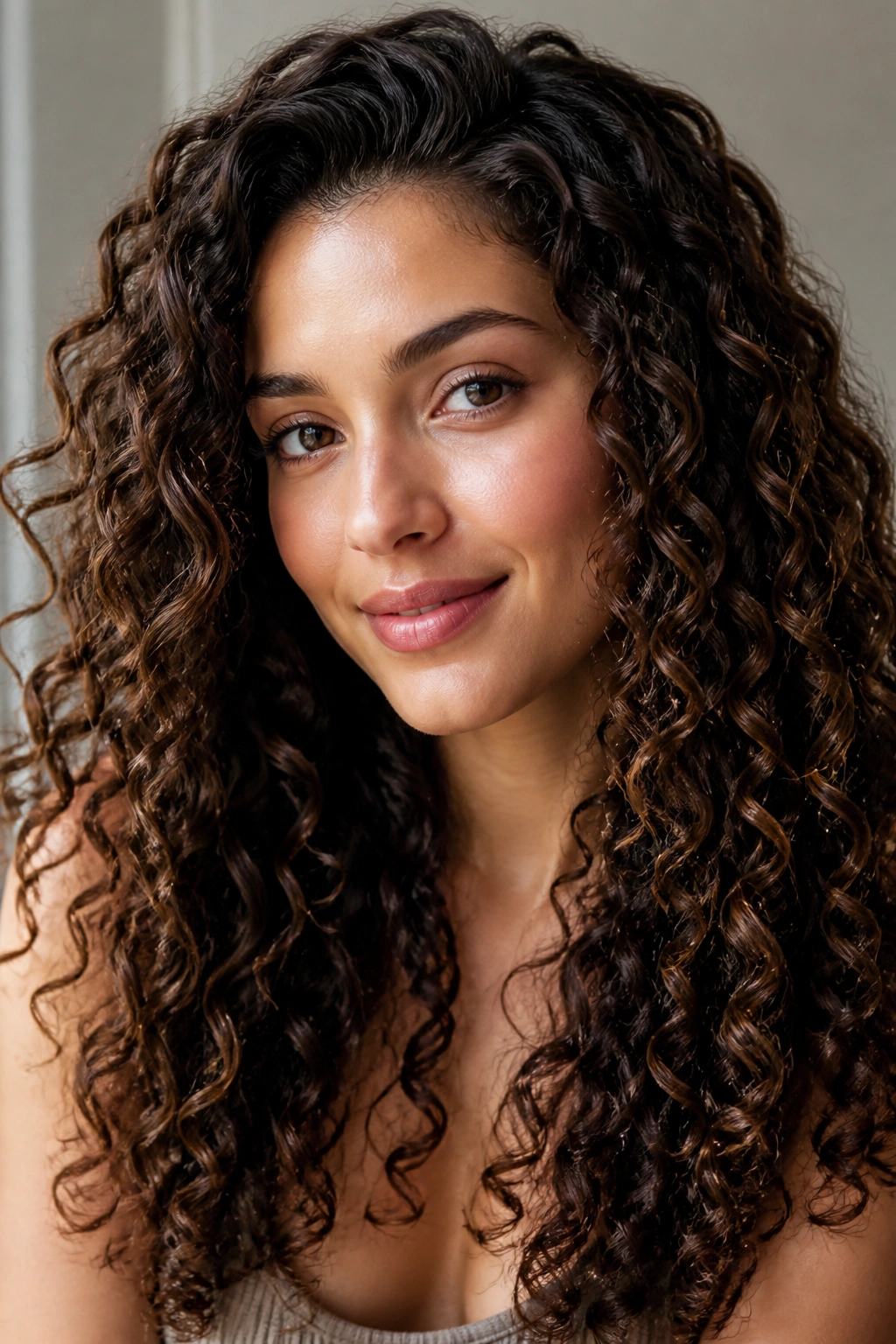
Glossy spiral curls are all about control. When the curls are defined and shiny, they fall in cleaner vertical lines. On a round face, that clarity matters. Soft clumps look longer than fuzzy bulk.
The styling mix should be simple: leave-in, cream, and a gel that gives a firm cast. Once the curls dry, break the cast gently with a little oil on your hands. The result should feel smooth and springy, not crunchy. Finger-coil a few front pieces if they refuse to cooperate. Just a few. Too many can look stiff.
This style is a favorite when the hair is healthy and the curl pattern is strong. It shows off the texture instead of fighting it.
28. Soft Layered Length with No Blunt Edge
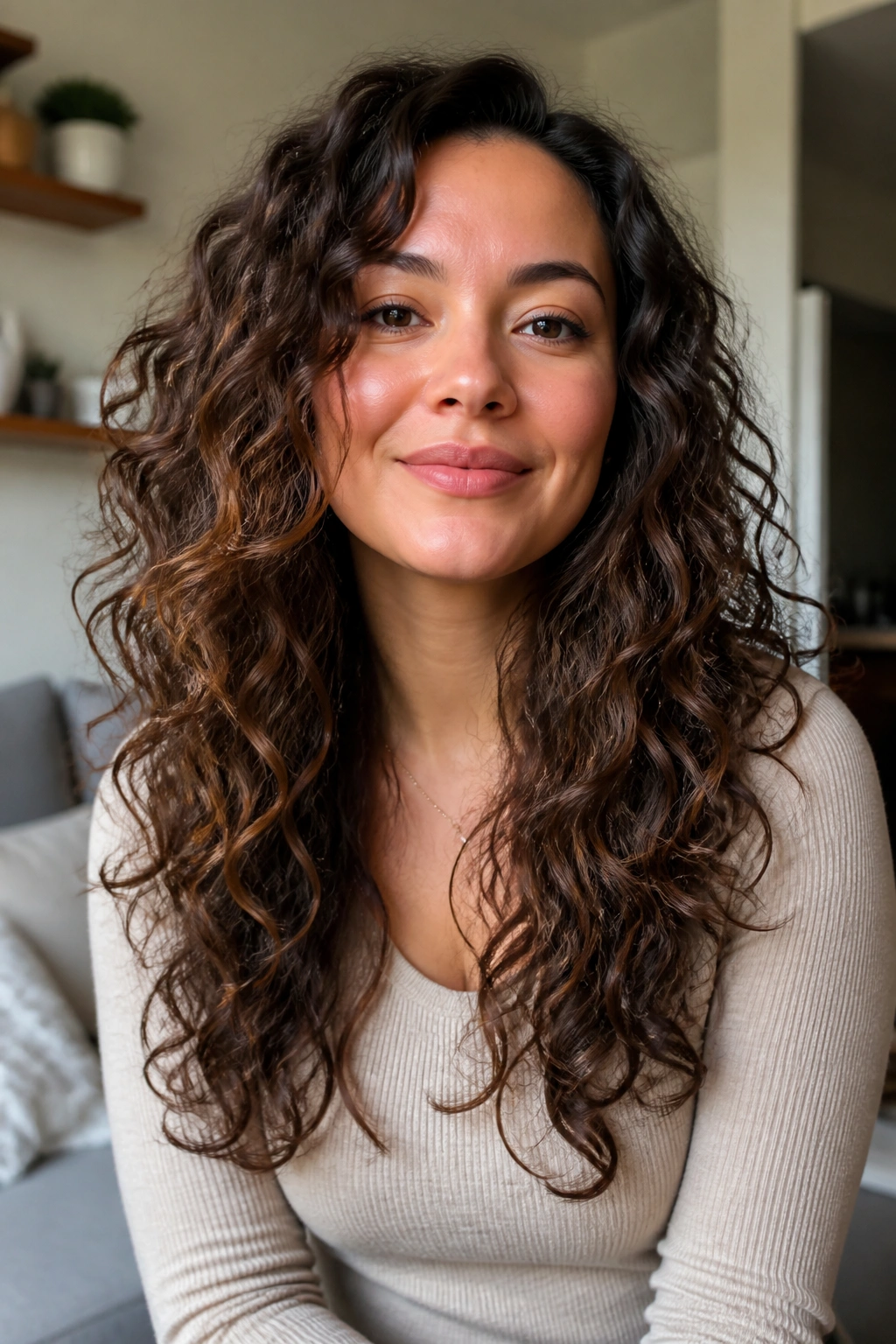
If you want one cut that is hard to ruin, this is it. Soft layered length with no blunt edge gives long curls movement, keeps the sides from looking heavy, and avoids the boxy finish that can widen a round face.
The perimeter should look feathered, not chopped. The layers should be long enough to blend, not short enough to jump out at the cheeks. That means the stylist needs to respect curl shrinkage and leave real length in the front. The payoff is a shape that works with many curl types and grows out cleanly.
I like this option for anyone who wants flexibility. You can wear it center-parted, side-parted, half-up, clipped back, or brushed out. It bends with your routine instead of forcing one exact look.
Final Thoughts
Long curls do a lot for round faces when the shape is thought through. The best versions keep the width away from the cheekbones, build a little height at the crown, and let the length fall in a clean line.
One blunt edge can undo all of that. One good layer can fix half of it.
If your curls already have a lot of volume, start by changing the part or moving the shortest front pieces lower. If your hair shrinks hard, stretch the roots a bit and keep the ends defined. Small shape changes usually matter more than a full haircut overhaul, and that’s the part people tend to miss.
