



Curly hair does not want to be bullied into one shape. It wants room, moisture, and a little bit of respect, which is why the best styles usually work with the curl pattern instead of trying to flatten it into something it was never meant to be.
That is the part people miss. A style can be neat and still look soft. It can be polished and still have movement. The difference usually comes down to small choices: where you part it, how much you stretch it, whether you let the roots stay full, and whether you stop touching it before the gel dries.
There’s also the practical side. A style that looks cute in the bathroom mirror and collapses under humidity, hat hair, or a quick grocery run is not much of a style. Curly and coily hair tends to reward looks that keep friction low, keep ends tucked away when needed, and make use of what the hair already does well. That’s why some of the strongest options here are low-effort, some are a little dramatic, and some are the kind you wear when you want your curls to do the talking.
The useful part is that you do not need to pick one identity and stick with it. Some days call for definition. Some days call for volume. Some days call for a style that survives a nap, a scarf, and the back seat of a car. Start with the curl look that matches the day, not the fantasy version of the day.
1. Wash-and-Go Ringlets With a Soft Side Part
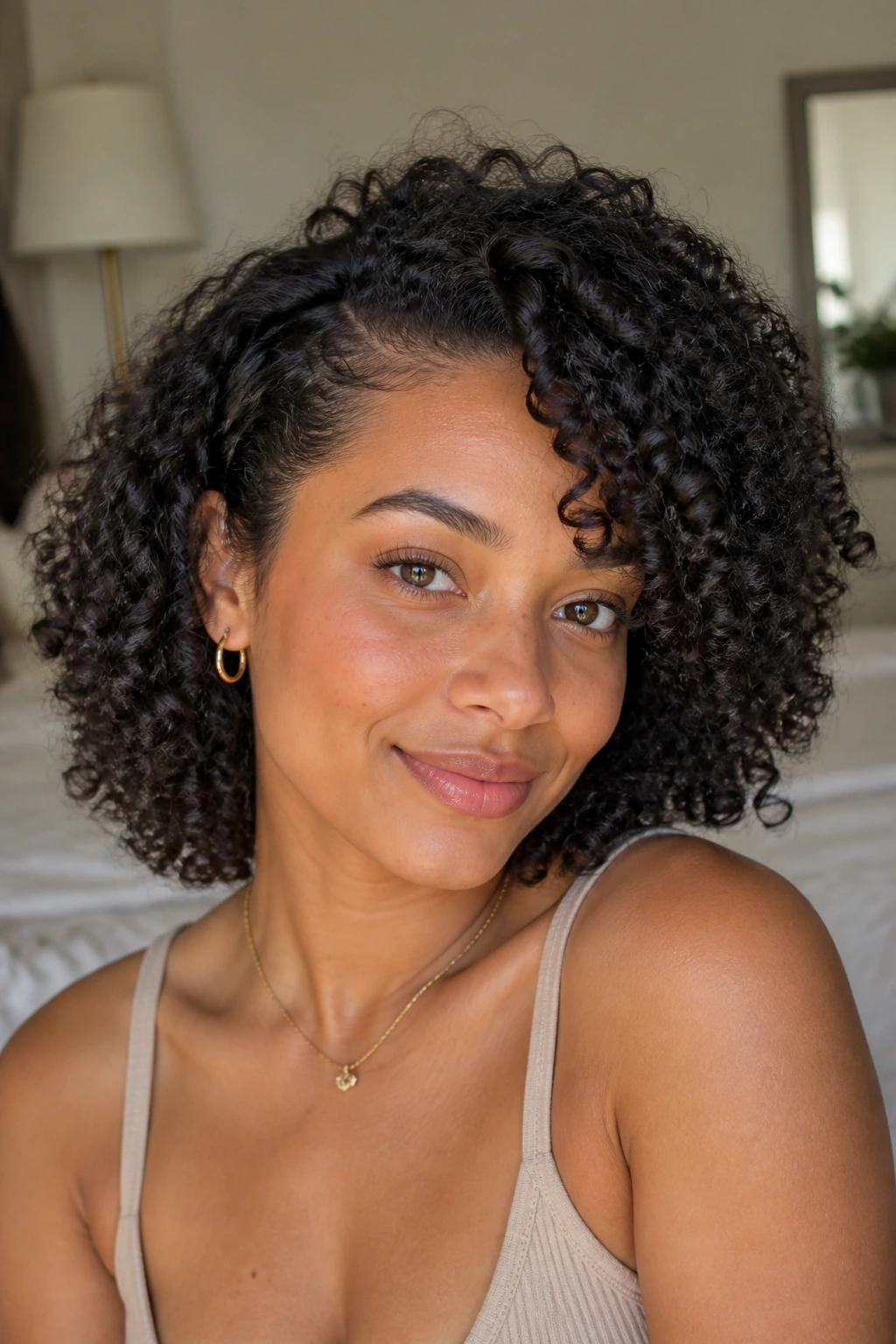
If your curls already know how to coil, this is often the cleanest place to start. A wash-and-go lets the curl pattern show off on its own terms, and the side part gives it shape without making the whole style feel too stiff.
Why It Works
The side part changes the balance right away. It gives one side a little more lift at the root, which makes the whole shape feel fuller without adding extra product. On looser curls, that split can keep the style from looking flat at the crown. On tighter coils, it stops the silhouette from turning into a round, even dome unless that is the look you want.
Use a light leave-in conditioner, a curl cream, and a firm or medium-hold gel on soaking-wet hair. Rake the product through in sections, then scrunch from the ends up. Once the gel is in, stop fiddling. Seriously. The less you disturb the curl clumps while they dry, the cleaner the ringlets usually look.
Quick Facts That Matter
- Best for short to long curly hair
- Works especially well on defined curl patterns and dense coils
- Needs low-touch drying to avoid frizz
- Looks sharper when you part while the hair is still wet
- A diffuser helps, but air-drying works too
Pro tip: clip the roots at the crown for the first 15 to 20 minutes of drying if your curls tend to sit flat there.
2. High Puff With Loose Face-Framing Curls
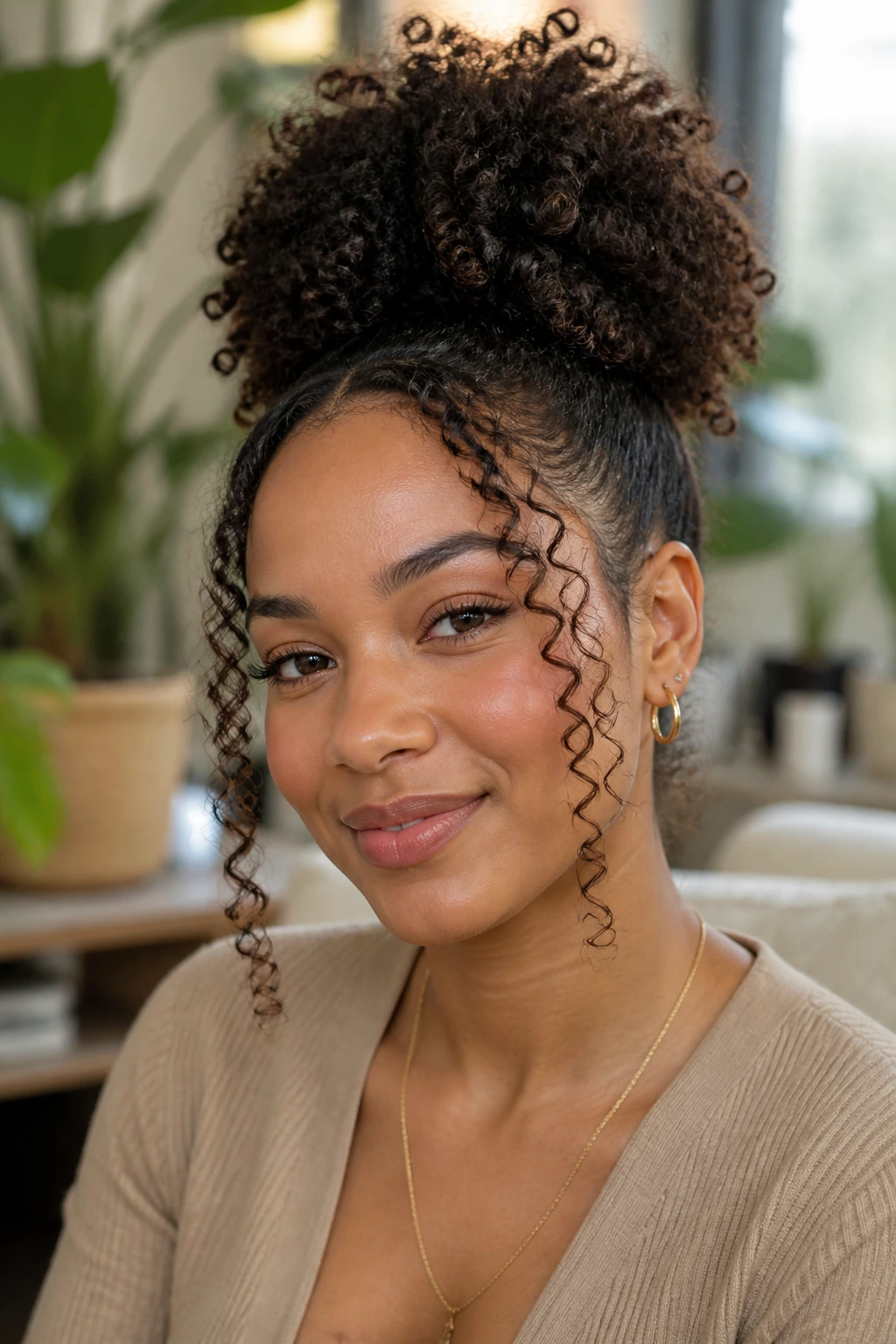
A high puff fixes a bad hair day fast. It also does something sneaky: it turns shrinkage into part of the style instead of treating it like a problem.
This look works best when the hair is gathered high but not yanked tight. Use a satin scrunchie or a soft elastic, then leave a few curls loose around the temples and cheeks. Those front pieces matter more than people think. They soften the puff, break up the outline, and keep the style from feeling too severe.
The trick is tension. If you pull the sides too hard, the puff looks smaller and the scalp feels sore by the end of the day. If you keep the base snug but not cramped, the puff gets height without the headache. A little edge control at the front can tidy the hairline, but too much makes the style look hard.
This is one of those styles that works on fresh hair and second- or third-day hair. If your curls are a little older, mist the lengths lightly and smooth in a pea-sized amount of leave-in before gathering everything up.
3. Twist-Out Curls With Soft Volume
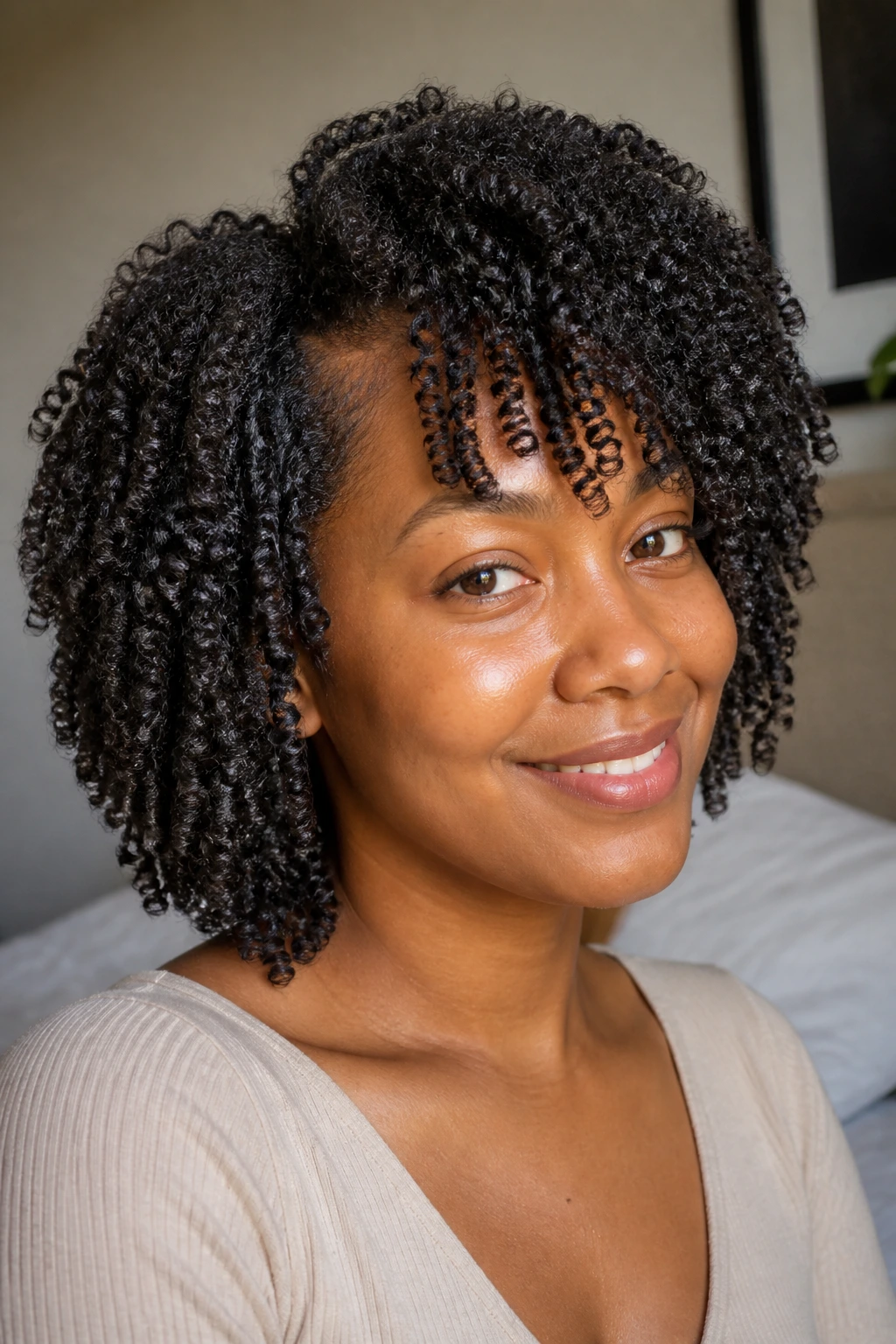
Need curls that look set, but not helmet-stiff? A twist-out is the answer a lot of people reach for when they want shape, stretch, and softness all at once.
What Makes It Different
A two-strand twist creates a curl pattern that is a little more stretched than a wash-and-go. That means more visible length, a softer outline, and less chance of the hair shrinking into a tight ball. It also gives you more control over the final shape, because the size of the twists decides the size of the curl clumps.
Do the twists on damp, not dripping, hair if you want more hold and less drying time. Use a butter or cream with enough slip to keep the strands smooth, then add a small amount of gel to the ends. The ends are where twist-outs get frizzy first, and they need the extra help.
How to Get the Most From It
- Make the parts clean and even if you want a tidy finish
- Make them messier and larger if you want bigger, softer volume
- Dry completely before unraveling, or the shape will collapse
- Separate each twist with oiled fingers, not rough hands
- Sleep with a satin bonnet so the twists do not snag
One thing to watch: if you take the twists down too early, the curl pattern can go fuzzy fast.
4. Braid-Out Waves for Stretch and Body
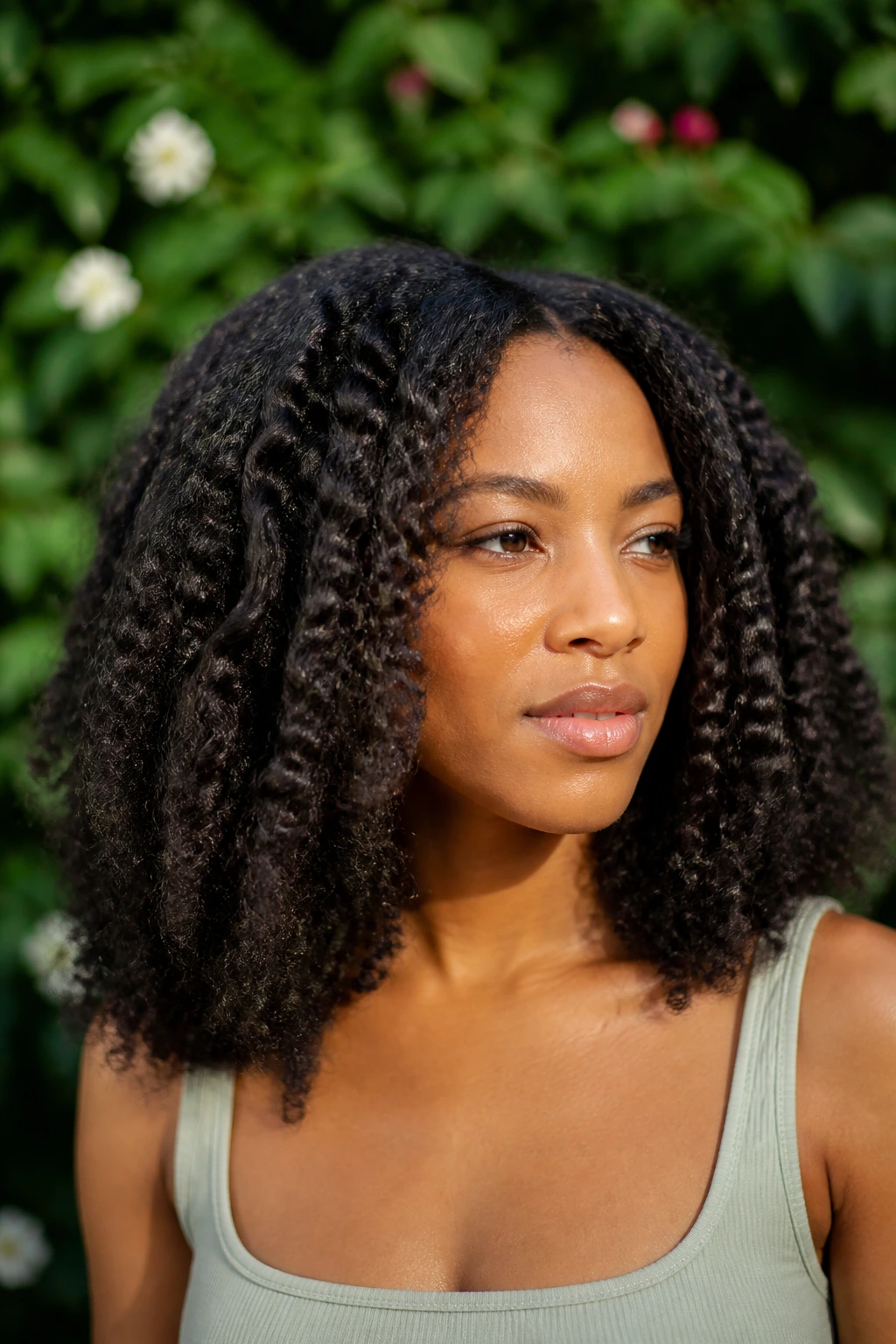
The morning after a braid-out is where the payoff shows up. The braid pattern leaves the hair with a looser wave than a twist-out, and that makes the whole style feel airy, a little lived-in, and much easier to fluff.
Braid-outs are useful when you want stretch without straightening. They can also help coarse curls lay a bit longer around the shoulders, which is nice if shrinkage usually steals half your length. Use three-strand braids if you want a soft wave, or make the braids chunky if you want broader bends and faster dry time.
The set matters. Damp hair is the sweet spot. Soaking-wet hair takes forever to dry, and dry hair does not grip the pattern well enough. A leave-in and a creamy styler are usually enough, though a little gel at the ends helps keep the braid ends from puffing out.
- 6 to 12 braids usually cover a medium head of hair
- Smaller braids give more definition
- Larger braids give more volume
- Fully dry hair is non-negotiable
- Separate gently to keep the wave pattern clean
That loose, stretched wave is the whole point.
5. Finger Coils for Tight Definition
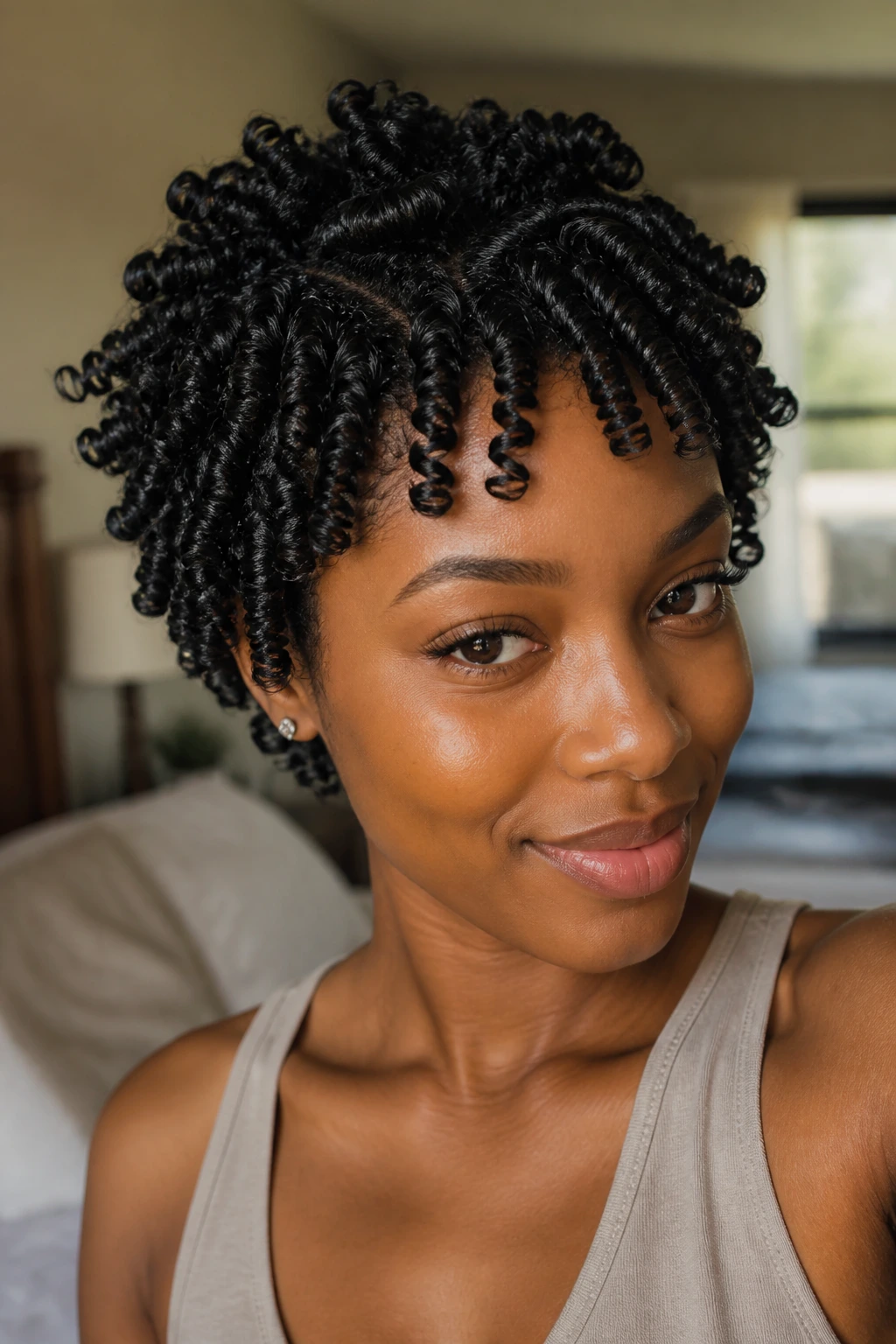
Finger coils are for the days when you want every curl to behave. They take time. They also look deliberate in a way that almost nothing else does on short to medium curly hair.
You coil a small section around your finger until the strand starts to wrap on its own, then let it dry in that spiral shape. The method is slow, and yes, your arms will complain if you do a full head. But the result is hard to argue with: crisp definition, tidy curl clumps, and a style that can last several days if you do not disrupt it too much.
The best finger coils use small sections, a creamy base, and a strong-hold gel. If the product is too light, the coils loosen before they dry. If it is too heavy, they sit stiff and dull. Somewhere in the middle is the sweet spot, and you usually find it faster on hair that has already been cleansed and detangled well.
Finger coils work especially well on tapered cuts, short natural styles, and anyone who wants a cleaner shape around the face. They are less useful if you want big volume right away. That is not the point here. The point is precision.
6. Bantu Knot-Out Curls With Lift
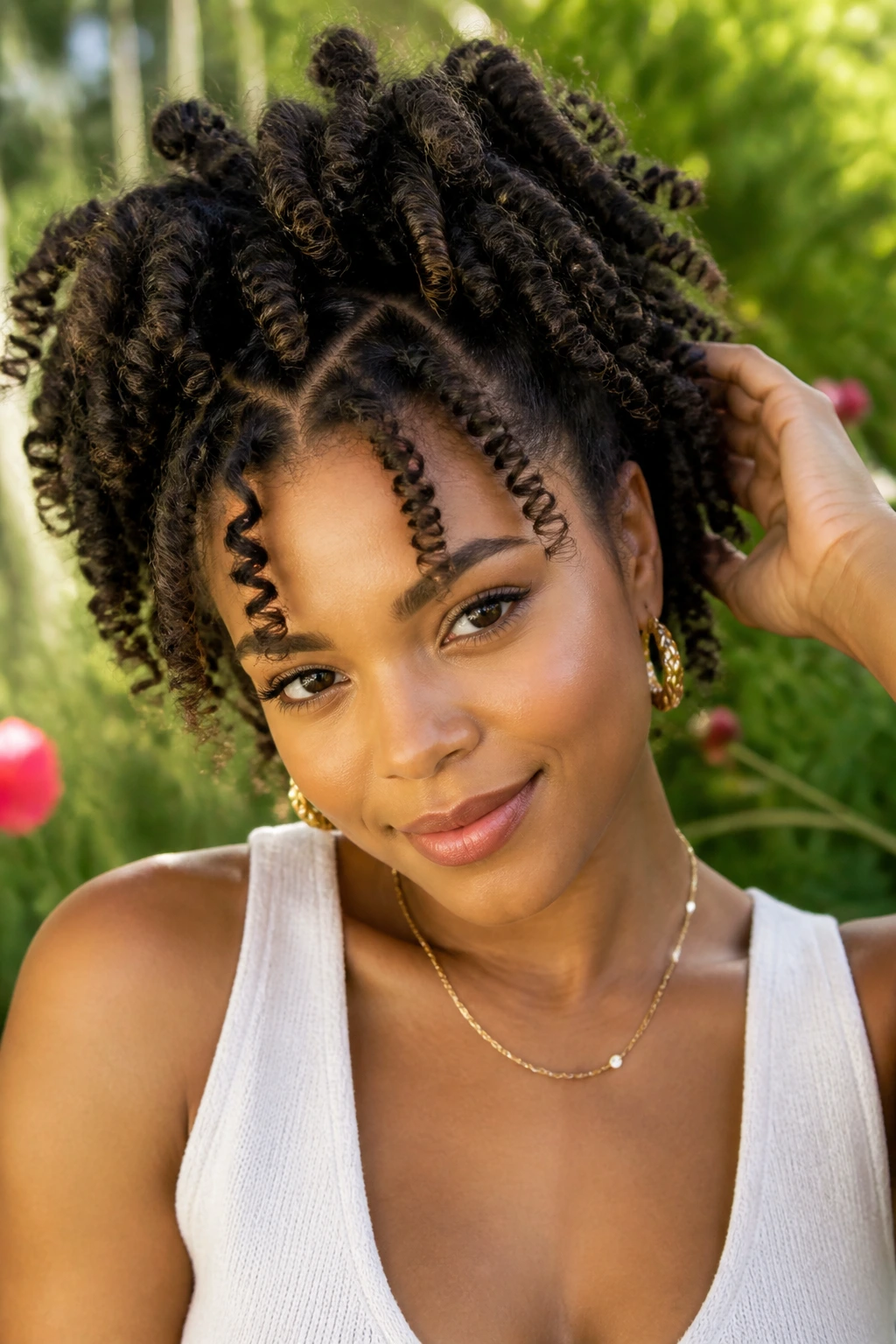
Bantu knot-outs give a different kind of spring than braid-outs. The curl looks tighter, the roots stand up more, and the whole style gets a little more height without needing a pick or a blow-dryer.
What Makes It Different
Unlike a braid-out, which reads as soft and stretched, a knot-out tends to create a more rounded, bouncy curl. That makes it useful for hair that needs some body near the scalp. It also helps if your curls collapse at the crown the second you leave the house.
Set the knots on damp hair and keep the sections even. Smaller knots give tighter curls, while chunky knots give a looser finish and less dry time. Secure each knot flat against the head, especially if your hair is dense. If the base is loose, the knot opens before it has a chance to dry properly.
Best Ways to Wear It
- Use 8 to 20 knots depending on hair length and thickness
- Sleep with a satin bonnet or scarf so the knots stay smooth
- Separate the curls only when they feel fully dry
- Fluff the roots gently after unraveling
- Pair the style with hoop earrings or a clean neckline for balance
This is one of those looks that can feel a little extra in the best way.
7. Half-Up, Half-Down Curls With a Soft Crown
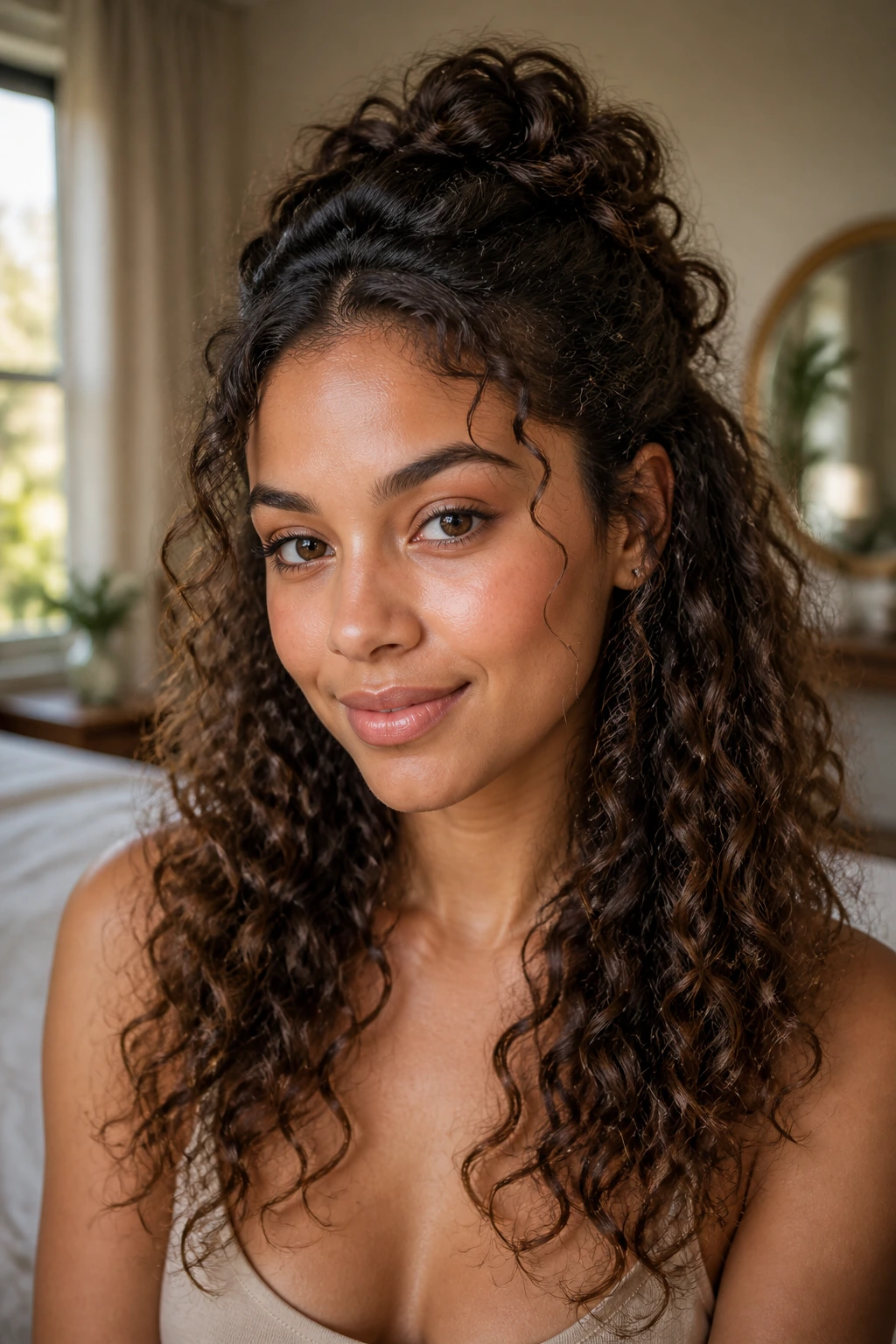
A half-up, half-down style keeps the face open without stealing the length. That balance is why people keep coming back to it, whether the curls are loose, tight, short, or long.
The top section gives you room to play. You can pull it into a puff, a mini bun, a clip, or a loose twist, while the bottom half stays free and full. That second part matters. The loose lengths keep the style from feeling too formal, and they make the whole thing look lighter.
This look is useful on day-two hair when the roots need a little help but the ends still look decent. Mist the front lightly, smooth in a touch of cream, and pin or tie the top section where it feels most flattering. Do not pull the upper half too tightly back unless you want a face-lift effect. Some people do. Most do not.
The shape works especially well with layers because the bottom curls stack in a nicer way. If the hair is one heavy length, the style can tip downward and lose its bounce.
8. The Pineapple Puff for Day-Old Curls
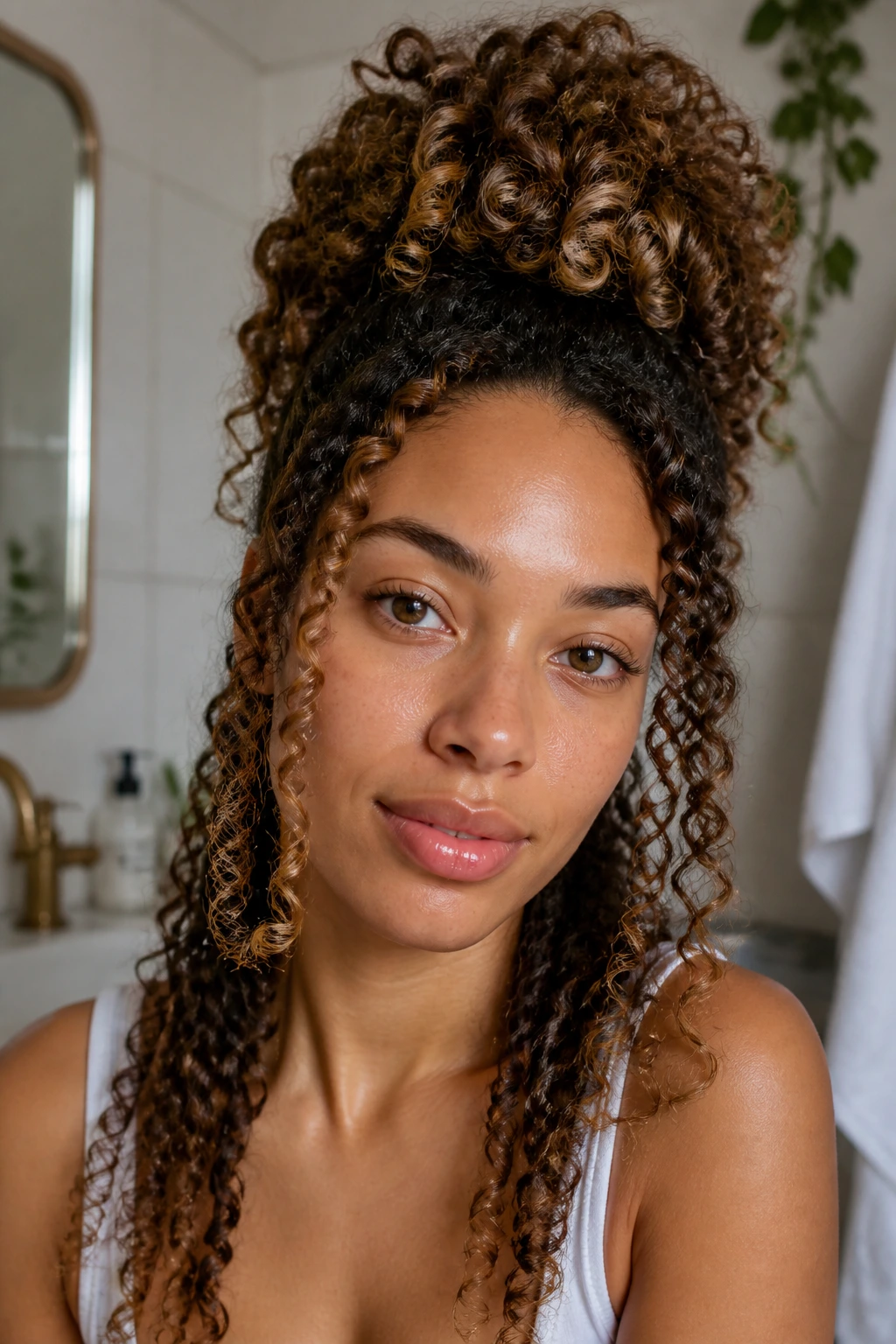
The pineapple is less a style and more a rescue plan. You gather the curls high on the crown, let the length fall forward, and suddenly the shape reads intentional instead of tired.
This is one of the best ways to protect curls overnight, but it also works as a daytime quick fix. A loose satin scrunchie, a silk scarf, or a stretchy band can hold the hair up without flattening the curl pattern too much. The point is to keep pressure off the sides and back of the head, where curls tend to get crushed first.
The pineapple is especially handy for medium and long curly hair. Shorter hair can still do a mini version, but the effect is softer and less dramatic. If the curls are a little dry, mist the ends before tying the puff up. If they are already frizzy, a tiny bit of gel on the perimeter can keep the outline cleaner.
Keep an eye on this
- Use loose tension so the roots do not dent
- Keep the tie above the highest point of the head
- Sleep on satin if you want the style to last
- Shake out the curls in the morning, do not rake through them
No need to overthink it.
9. Curly Bangs With Chin-Length Pieces
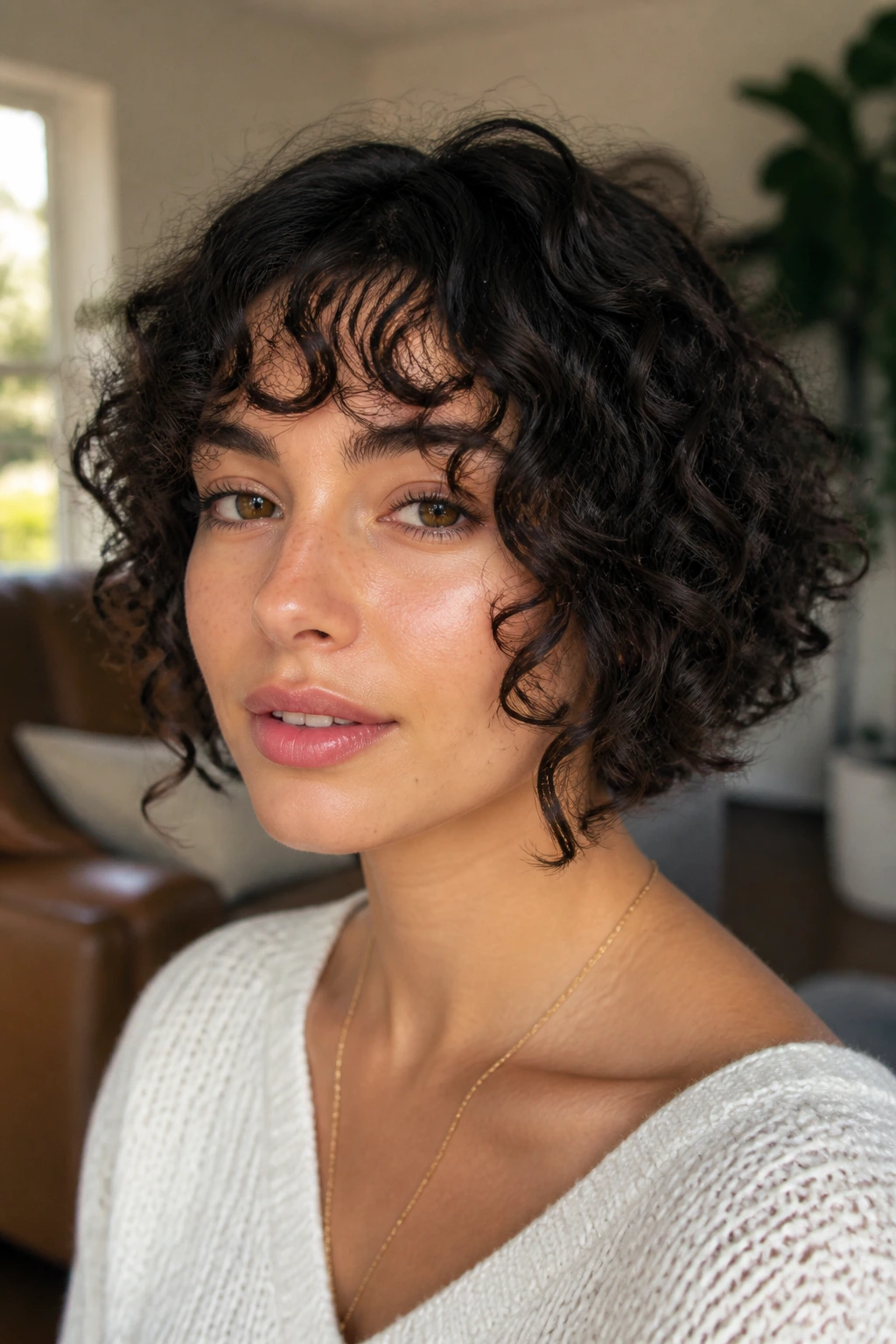
Why do curly bangs work when straight bangs often fall apart? Because curly hair has built-in shape, and bangs can ride that shape instead of fighting it.
The haircut matters here. Curly bangs should usually be cut dry, in their natural state, so the shrinkage is not a surprise later. A good curly fringe sits longer than you think it should when wet. That is normal. If it looks perfect while wet, it may end up too short once it springs up.
Chin-length face-framing pieces help the bangs blend into the rest of the cut. Without them, the fringe can look too separate and a little boxy. With them, the whole front of the hair softens. That makes a huge difference on round faces, heart-shaped faces, and anyone who wants their curls to frame the eyes without swallowing the forehead.
How to wear them well
- Style bangs with lighter product than the rest of the hair
- Diffuse the front section on low heat
- Trim only when dry and in natural curl
- Avoid heavy oils at the root, which can make the fringe sit flat
- Use a tiny amount of water to reshape, not soak it
The cut does most of the work here. The styling just keeps it honest.
10. Stretched Curls With a Diffused Finish
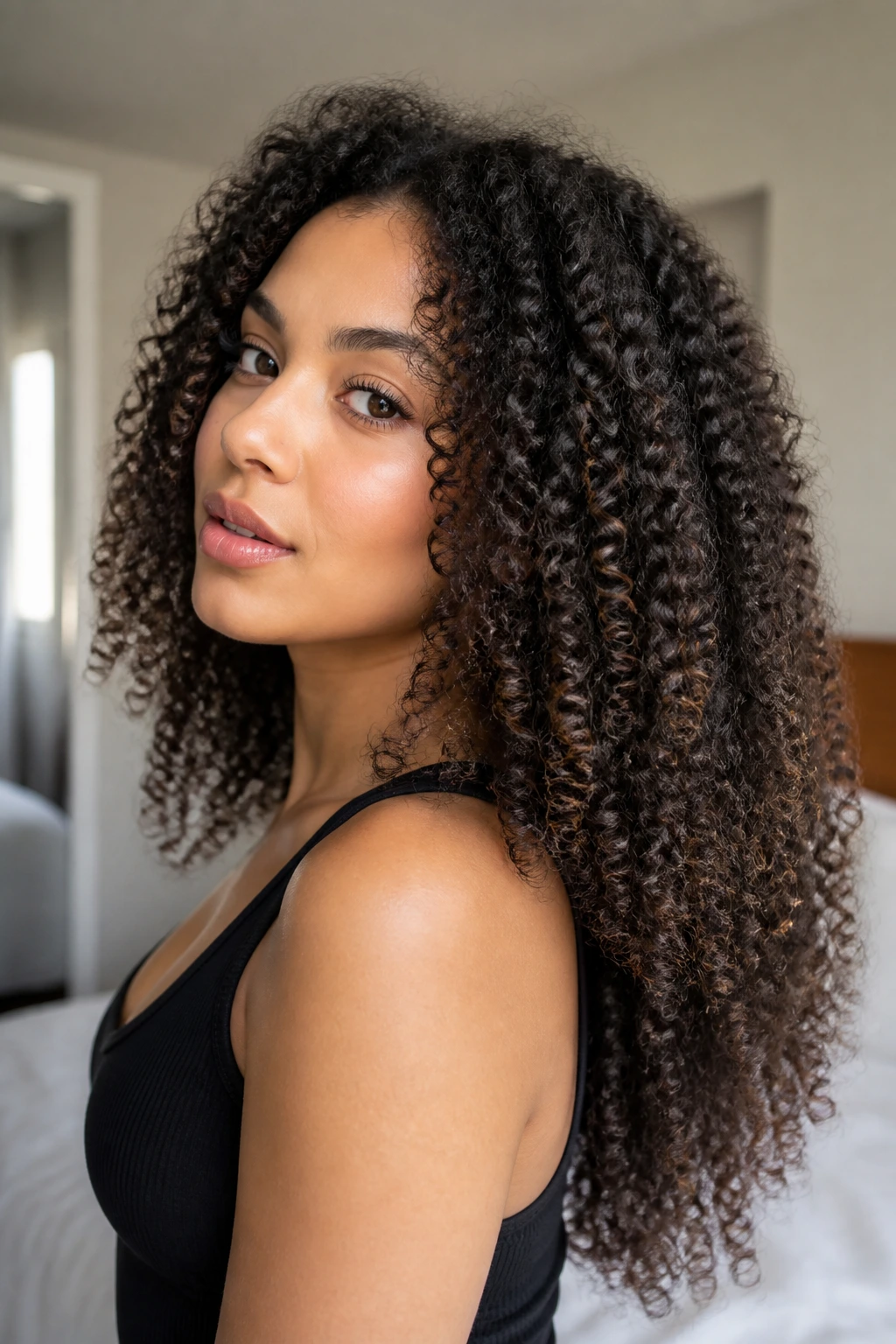
Stretched curls change the whole mood of textured hair. They keep the curl pattern visible, but the silhouette feels longer, softer, and less compact than a fully air-dried set.
A diffuser is the cleanest way to get there without making the hair puffy. Hover the dryer near the roots first, then cup sections into the bowl and let the air move through on low heat. High heat tends to rough up the cuticle and make frizz show up early. Low and slow is the better habit, even if it takes a little longer.
The goal is not a blown-out look. The goal is to preserve the curl while stretching the root area just enough that the hair falls with some length. If you want a bit more polish, finish with a cool shot to set the shape. If you want softer volume, stop diffusing while the hair is still a little damp and let the rest air-dry.
This is a strong option for people whose curls shrink hard and seem to disappear at the shoulders. The stretch gives the style a more balanced line.
11. Faux Hawk Curls With Pinned Sides
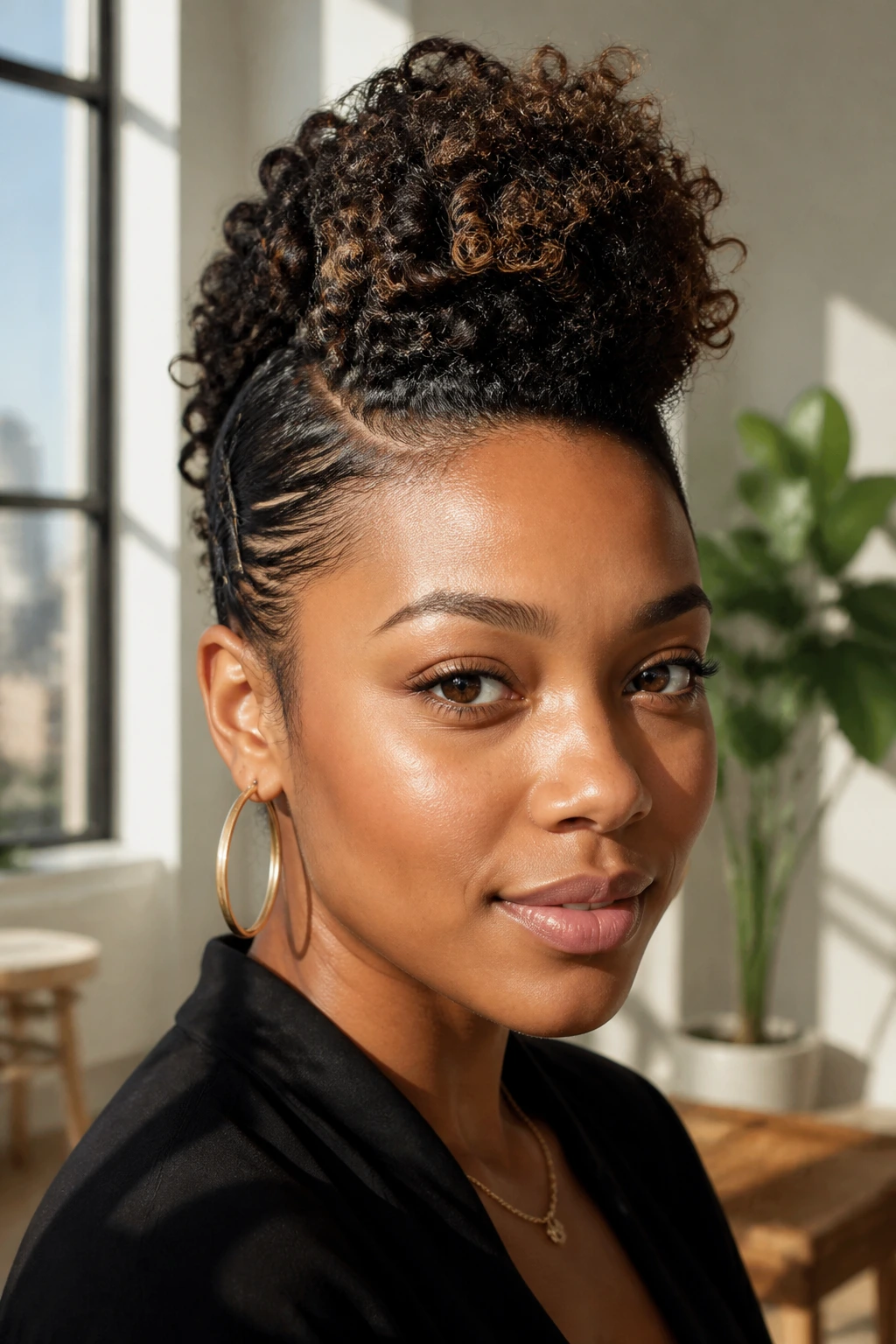
A faux hawk keeps the center loud and the sides quiet. That is why it feels a little edgy without going full costume, and why it works so well on curls that already have natural lift.
The basic move is simple: gather or pin the sides back and leave the middle section full, tall, and textured. You can do it with bobby pins, small twists, or a few hidden clips under the curls. The center strip becomes the star, and the texture gets to look dramatic instead of messy.
This style is a gift for people who want height at the crown. It also gives a nice shape to medium-length curls that need a little help standing up. Keep the pins tucked under the hair so they do not flash through the style, and spray lightly at the sides if you need grip. Too much product on the pinned areas can make the hair look greasy before the day is over.
What to watch for
- Leave enough hair in the middle for real volume
- Pin the sides flat, not tight
- Use texturizing spray or mousse if the hair slips
- Keep the top a little loose so it doesn’t look helmet-like
A faux hawk works best when it looks controlled, not frozen.
12. The Low Puff With Tucked Ends
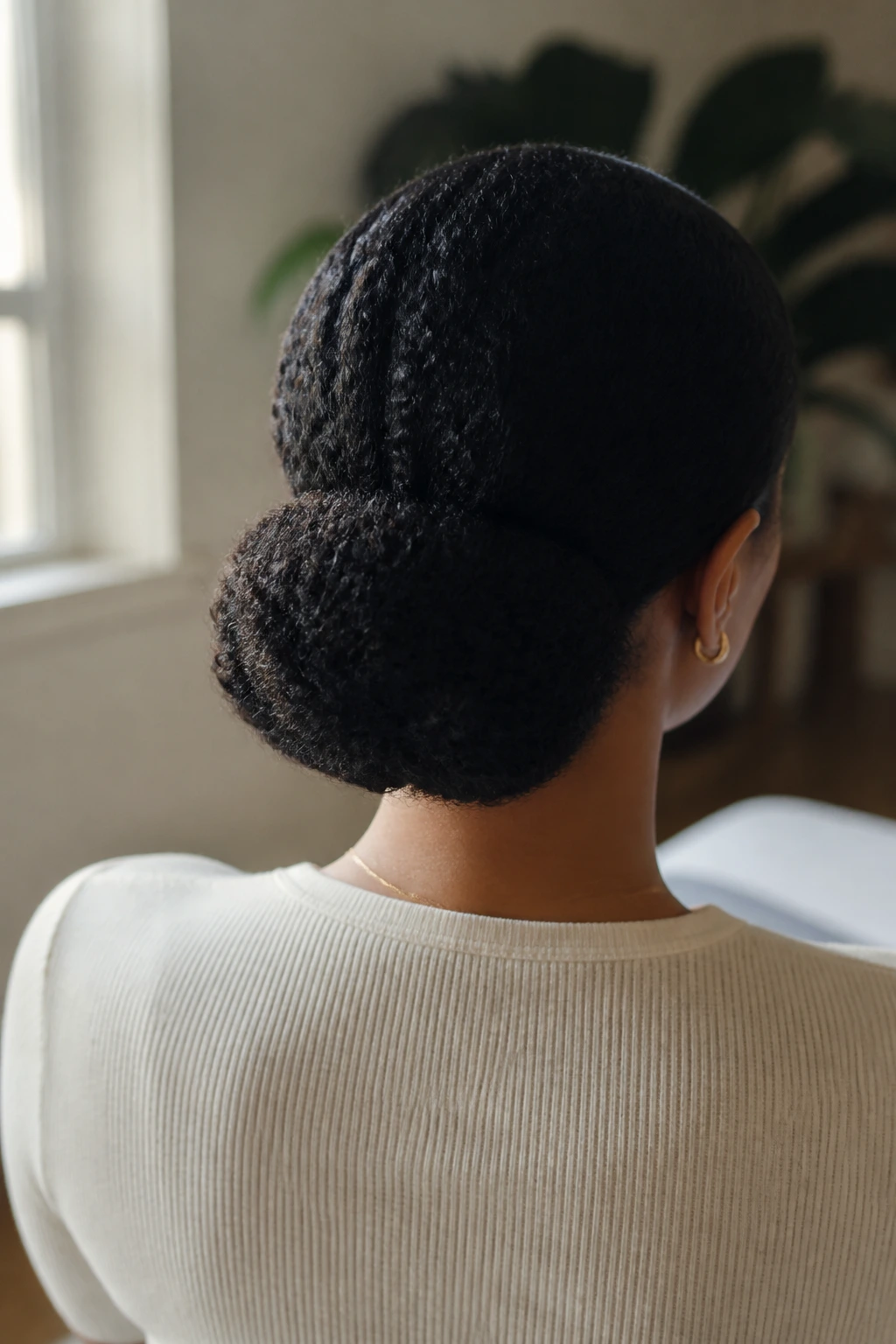
A low puff is the kind of style that looks calm even when the week is not. It sits at the nape or just above it, which makes it comfortable, easy to refresh, and less likely to fight with headphones, scarves, or coats.
What makes it different from a high puff is the mood. The low version feels quieter. It can look clean enough for a meeting and soft enough for a casual dinner, which is a nice range for one simple style. Tuck the ends into the puff, or let a few coils spill out if you want more shape around the neck.
Use a wide elastic or a satin-friendly tie so the base does not snag. A small amount of cream at the roots can smooth the top without flattening the rest. If the hairline tends to frizz, edge control can help, but do not build a wall of product around the perimeter. That usually shows more than it helps.
This one is especially kind to coils that need rest. Less pulling. Less fuss. Better odds of staying comfortable all day.
13. Wet-Look Defined Curls
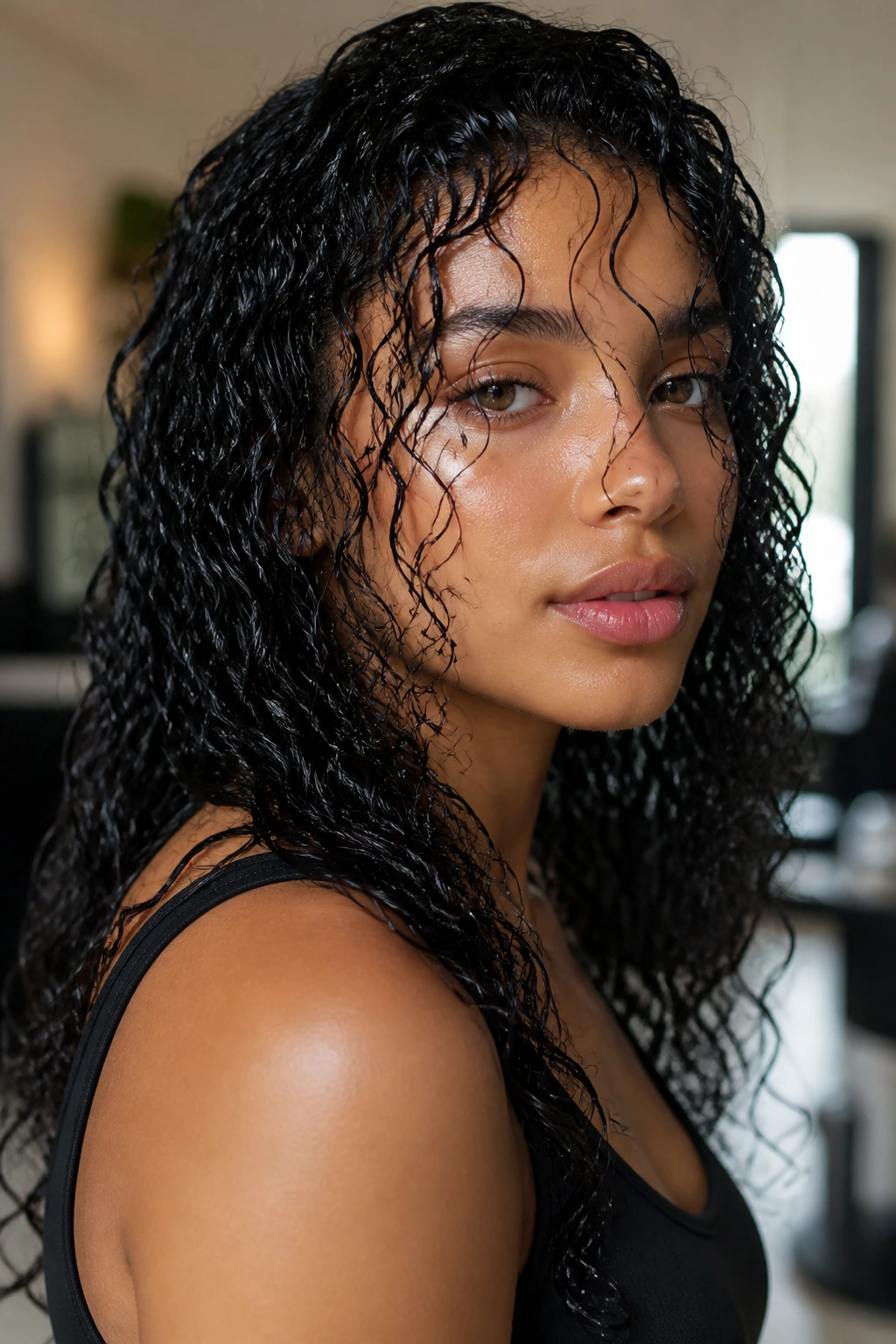
Wet-look curls can look sharp, not sloppy, when the gel is doing its job. The style reads glossy, sculpted, and a little dramatic, which is useful when you want the curls to feel intentional from root to tip.
The trick is product loading. Start with soaking-wet hair, then use a strong-hold gel in small sections so the curl clumps stay together while they dry. If the hair starts to fluff before the gel sets, the finish turns fuzzy instead of sleek. That is the whole game here. A clean wet look depends on restraint.
You do not need much else. A leave-in is fine underneath, but heavy cream can fight the shine and make the style seem dull. After application, scrunch lightly and leave the hair alone. If you want faster drying, diffuse on low heat without disturbing the clumps. The curls will harden a little before they soften. That part is normal.
This style works especially well on short to medium curly hair, and on days when you want the face and neckline to look clean without losing texture.
14. Accessorized Curls With Clips, Scarves, and Headbands
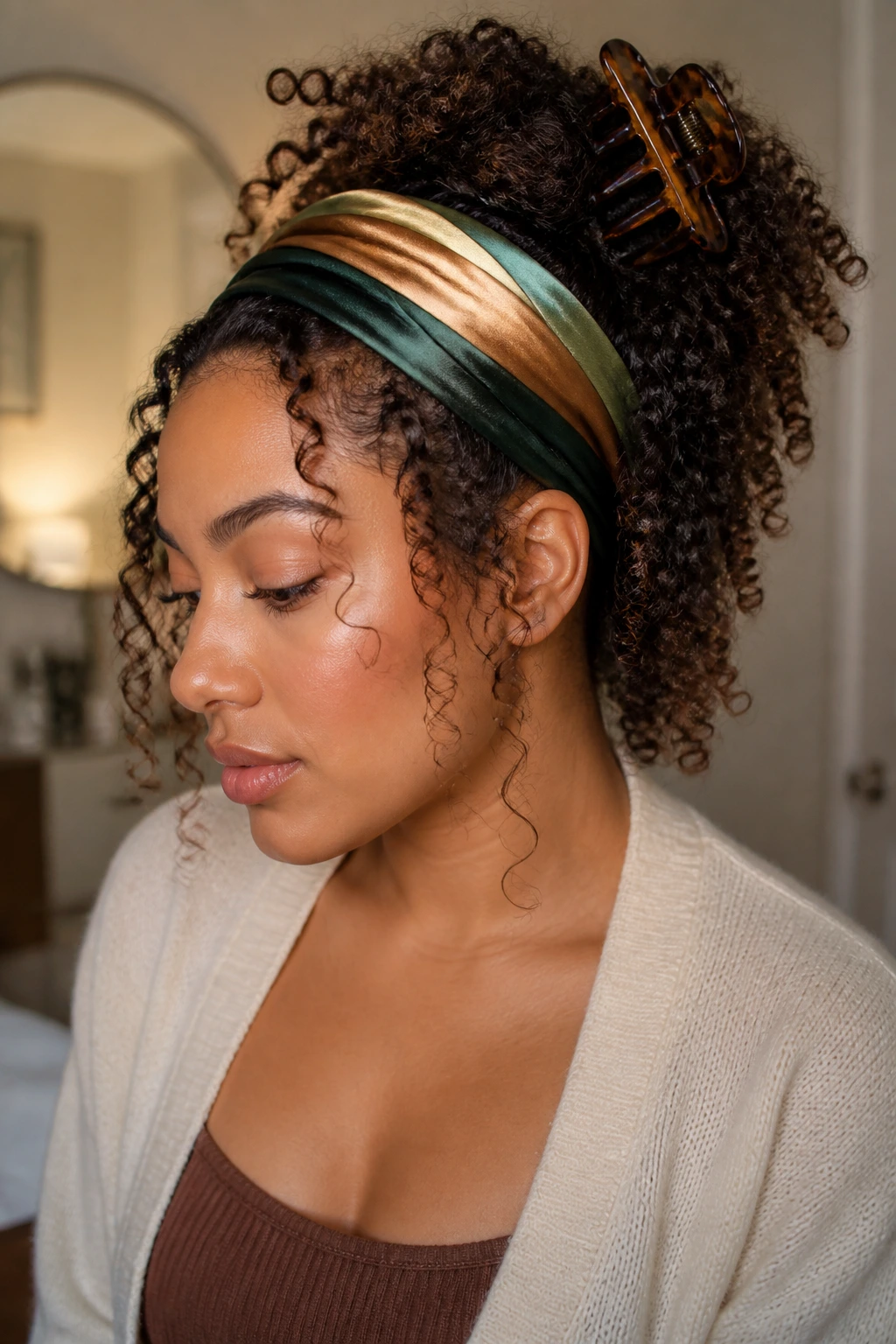
Clips and headbands can rescue a style that feels one day too old. They are not a cheat. They are a tool, and on curly hair, they often do more than a whole extra round of styling.
A wide satin headband can smooth the front while leaving the ends free. A claw clip can hold up the top half of a dense curl mass without flattening the back. Small barrettes can pin away one side if the shape needs a quick reset. The point is not decoration for decoration’s sake. The point is to solve a shape problem quickly and make it look deliberate.
Best accessories to keep around
- Satin-lined headbands for frizz-prone roots
- Claw clips for medium and long curls
- Snap clips for parting changes
- Silk scarves for sleep and daytime coverage
- U-pins or small bobby pins for hiding loose sides
Do not use tight plastic bands that snag the cuticle. Curly hair remembers that kind of thing. A softer accessory tends to sit better, and it leaves the curl pattern cleaner when you take it out.
15. Deep Side Sweep With Big Volume
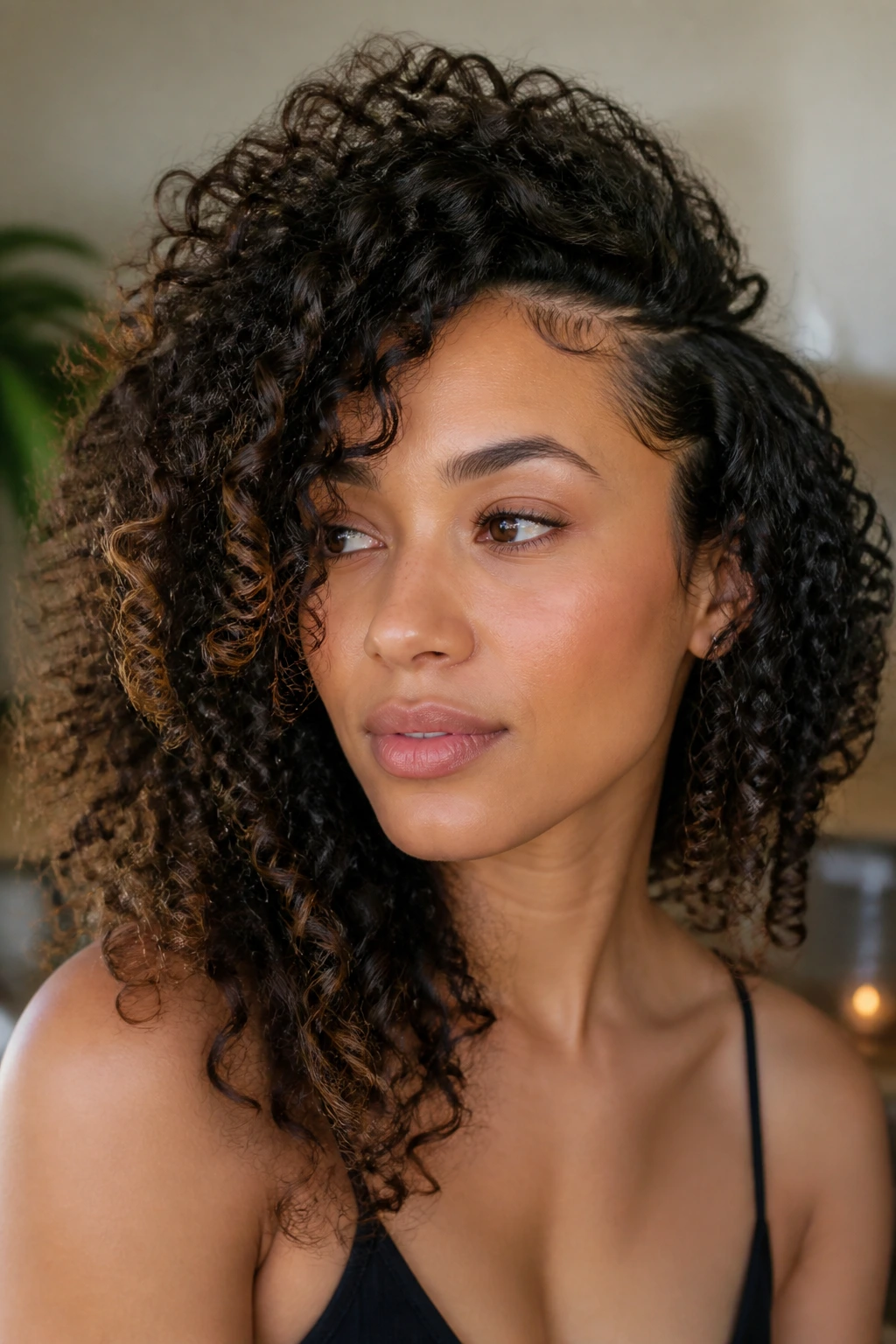
A deep side sweep gives curly hair a little drama without asking for a lot of extra work. The whole style changes the moment the part moves far off center. One side gets more height, the other side gets more frame, and the curls suddenly look styled instead of just loose.
This is one of my favorite ways to make layers behave. The hair falls across the forehead and cheek in a way that softens strong jawlines and creates a fuller silhouette on top. If your curls usually split down the middle and feel a bit flat, a deep side part can wake them up fast.
A root-lifting mousse or light foam helps here, especially at the crown. Flip the hair over for a minute while it dries, then switch back to the side part once the roots have a little memory. That tiny move makes more difference than people expect.
The style works on everything from shoulder-length curls to longer spirals. It is especially good for people who want volume but do not want to tease or backcomb the hair.
16. Chunky Flat-Twist Crown
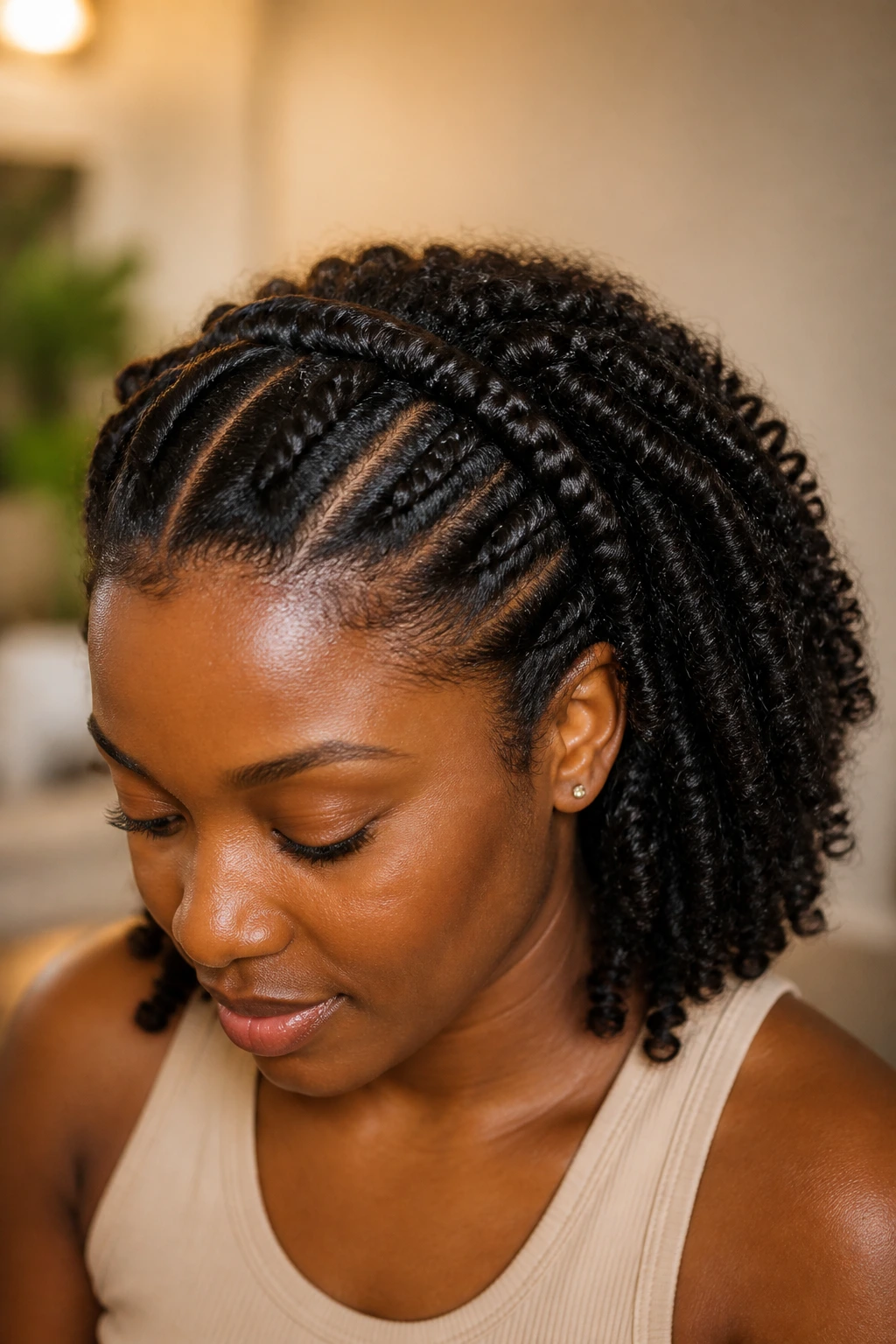
A chunky flat-twist crown sits between an updo and a loose style. The twists hug the head, which keeps the face open, while the rest of the hair stays full and textured.
That middle ground is why people reach for it when they want structure without losing too much softness. You can twist across the front hairline and curve the sections toward the back, then leave the remaining curls free or tuck them into a puff. It works on medium to long hair, and it can also buy you a few extra days between full wash days.
How to make it stay put
- Start with moisturized, detangled hair
- Use a rat-tail comb for clean sections
- Add a dab of gel at the roots for grip
- Pin the ends underneath the crown
- Mist lightly if the twists start to fray
There is a reason this style shows up in salons and on real life heads. It keeps the top neat while letting the length still look like hair, not a bundle of pins. That balance is rare.
17. Flexi-Rod Set Curls
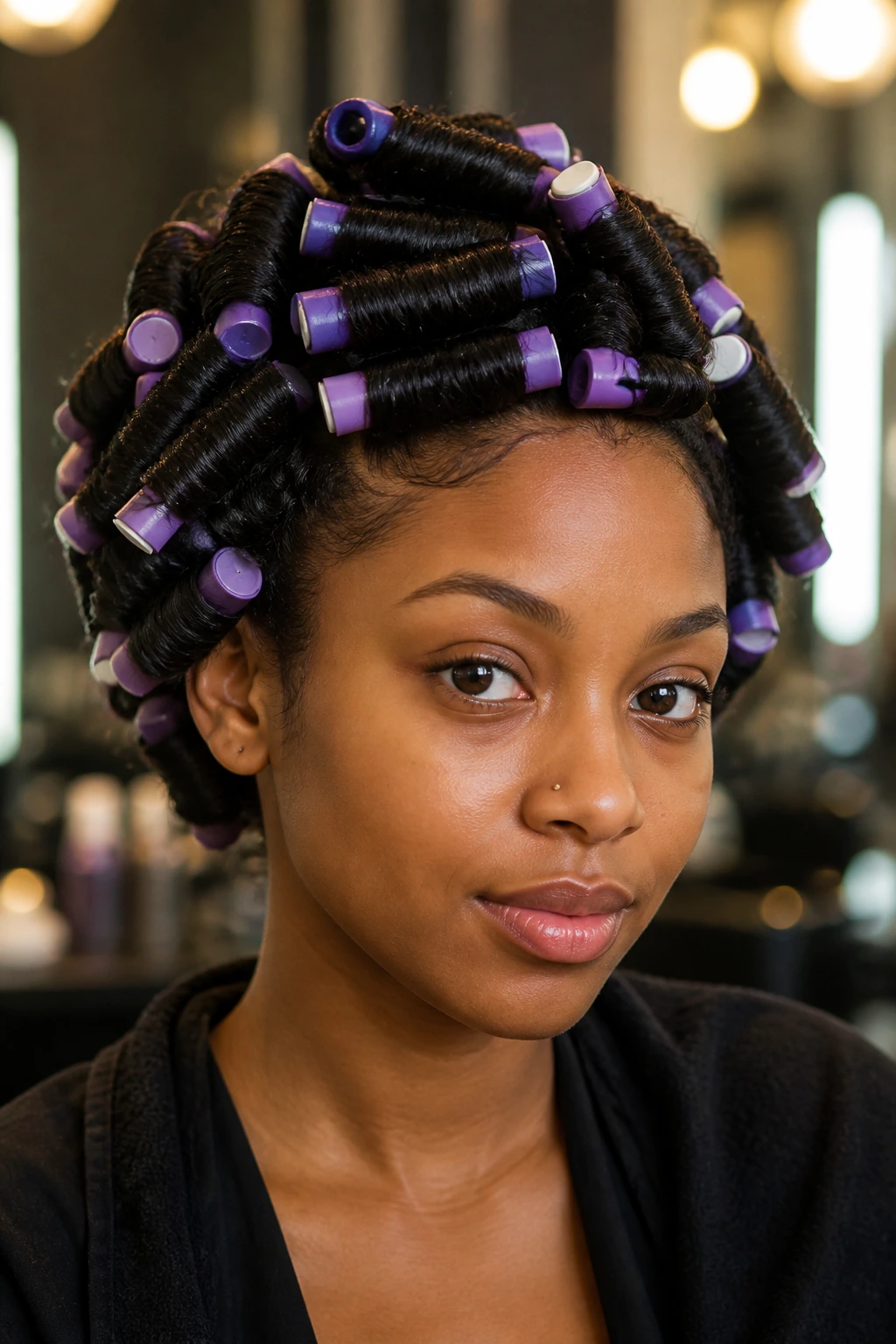
Flexi-rod sets are still one of the best ways to get matching curl size. If your natural curl pattern is uneven, or you just want a more uniform finish for an event, rods make the shape more predictable.
The Science Behind the Shape
The rod diameter controls the curl. Small rods make tighter spirals. Larger rods make looser bends. Hair wrapped on a rod dries with that shape baked in, which is why the sectioning and drying stage matter so much. If the hair is too wet, the set can take forever and the roots go flat. If it is too dry, the wrap feels rough and the curls do not smooth out well.
Use medium-sized sections and keep the tension even from root to end. A setting lotion or lightweight foam can help, but too much product leaves the curls sticky. The rods should sit snug, not painful. If your scalp hurts, they are too tight.
How to use it
- Wrap on damp, not soaking-wet, hair
- Dry completely before removing the rods
- Separate only after the curl has cooled
- Sleep on a satin bonnet to protect the set
- Add shine sparingly after the curls are out
Rod sets take patience. They also repay it.
18. A Tapered Cut on Coily Texture
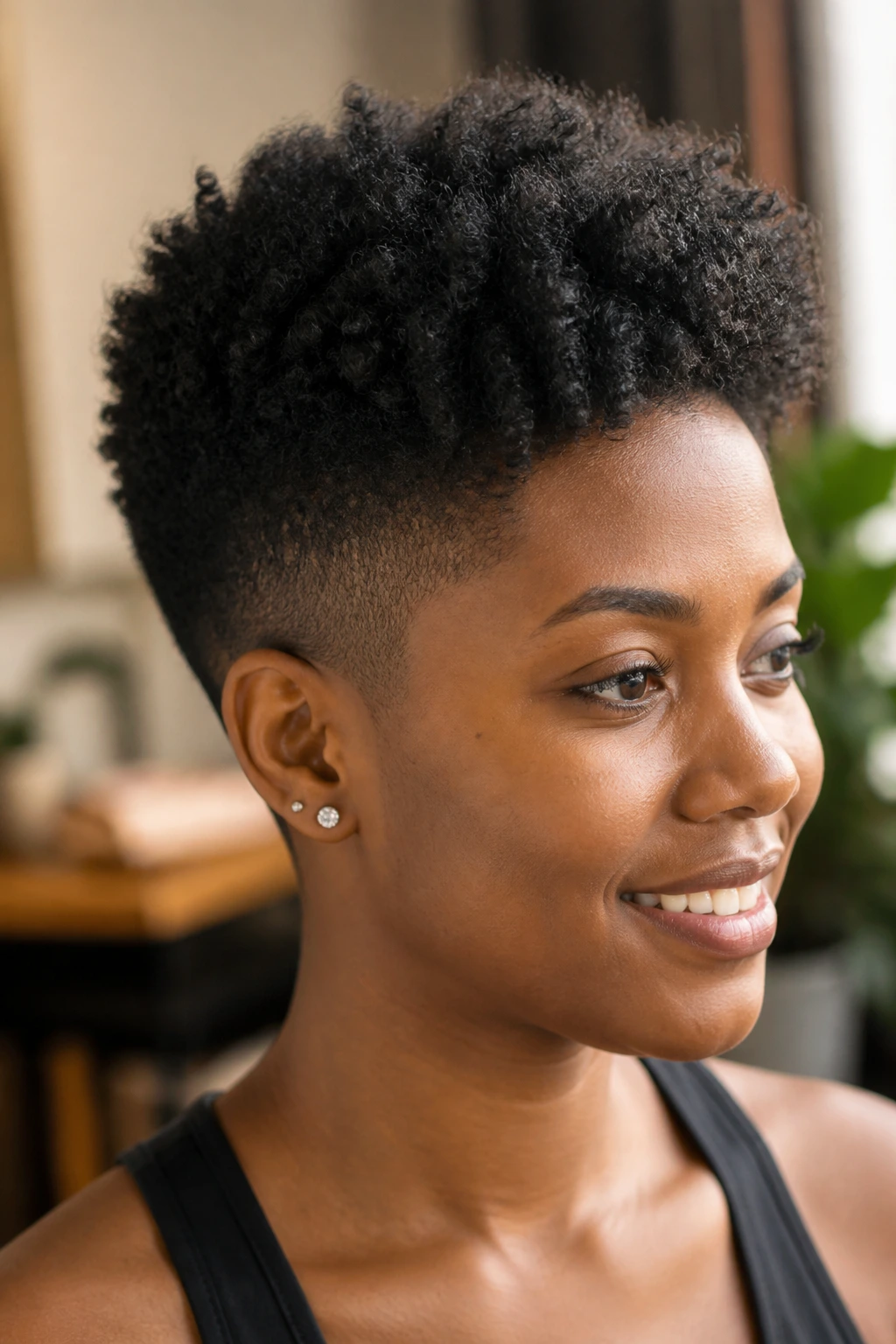
A tapered cut can make coils look intentional before you add any product at all. The shorter sides and back give the head shape, while the top keeps enough length for movement, height, and a little styling range.
This cut is especially kind to dense coily hair because it removes bulk where you do not need it. That can make daily styling faster and reduce the heavy, triangle-like outline that some full-length shapes develop. A good taper frames the face, shows off the neck, and gives the coils a cleaner silhouette.
If you wear this cut, the styling choices get simpler. A sponge twist, a pick-out, a coil-defining cream, or even a tiny bit of glossing product can change the whole mood. The cut does a lot of the work already, which is why it can feel freeing. Less hair to fight. More shape on purpose.
Ask your stylist to leave enough length on top for the curl pattern to read clearly. Too much reduction at the crown can make the shape feel flat. Too little and the taper loses its point.
19. Halo Braid With Loose Curl Ends
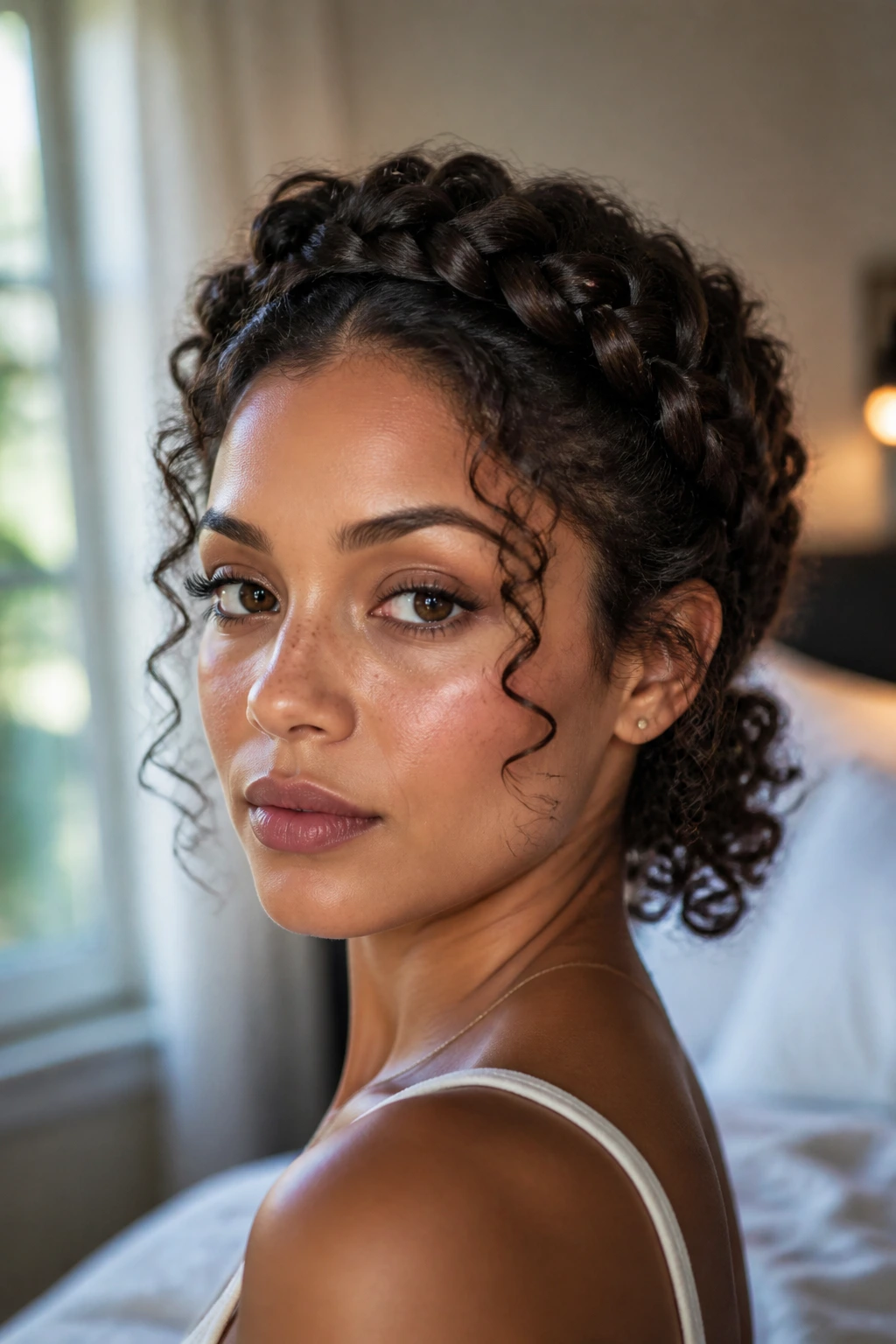
A halo braid with loose ends gives you the neatness of braids and the softness of free curls. That mix is useful when you want hair off the face but do not want a fully pinned-up look.
The braid travels around the head like a crown, then the remaining curls stay out at the back or side. That loose finish stops the style from feeling stiff. It also gives the eye somewhere softer to land, which matters when the braid itself is already making a strong shape.
This look plays well with medium and long curly hair. Start by smoothing the front and braiding or twisting around the hairline. Leave the ends curly on purpose. If you tuck every single strand away, the style gets too formal too fast. A few free curls keep it relaxed.
A few details that help
- Use bobby pins hidden under the braid
- Keep the braid close to the head for stability
- Add a little mousse to the front if flyaways are high
- Let the loose ends keep their natural texture
- Finish with a light mist of shine spray if needed
It is tidy, but not severe. That is the sweet spot.
20. Side-Swept Curly Bob With Layered Ends
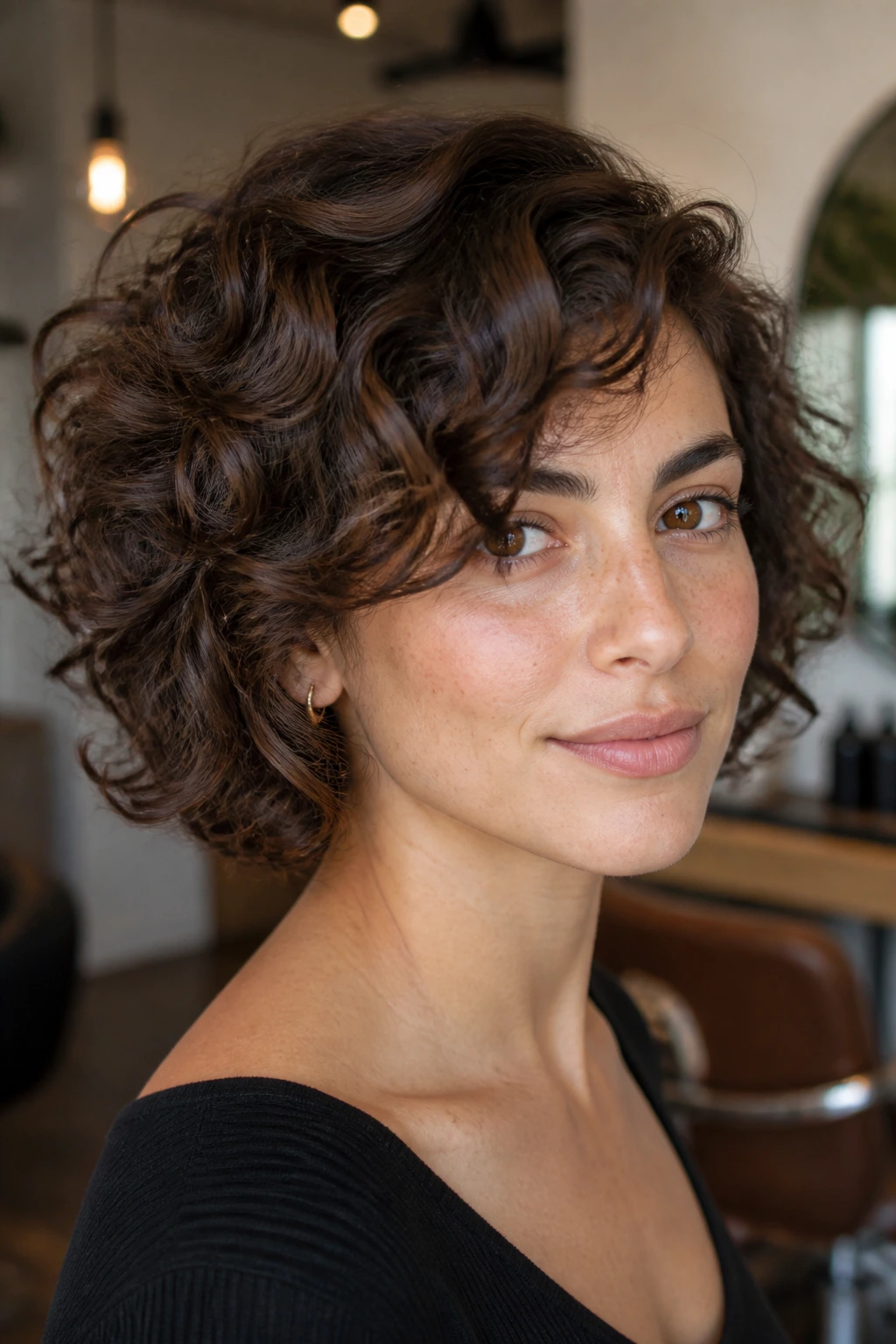
A side-swept curly bob is one of the few short cuts that rarely feels boring. The side sweep gives the shape movement, and the layers keep the ends from turning into a wide triangle.
This style works because the shorter length lets the curl pattern show up cleanly, while the side part keeps the top from sitting too evenly. If the bob has no layers, it can puff outward in a way that feels heavy. Layers break that up. They let the curls stack instead of ballooning.
The styling is simple. Define the curls with leave-in and gel, flip the part to one side, and diffuse the roots until they are about 80 percent dry. Then stop touching it. That last part matters more than people think. A curly bob can go from sharp to fuzzy if you keep combing through it after it sets.
This is a good cut for anyone who wants easy mornings and enough shape to look finished without a lot of extra work. It is also one of the better choices when you want the face to stay open and the neck to feel lighter.
The Bottom Line
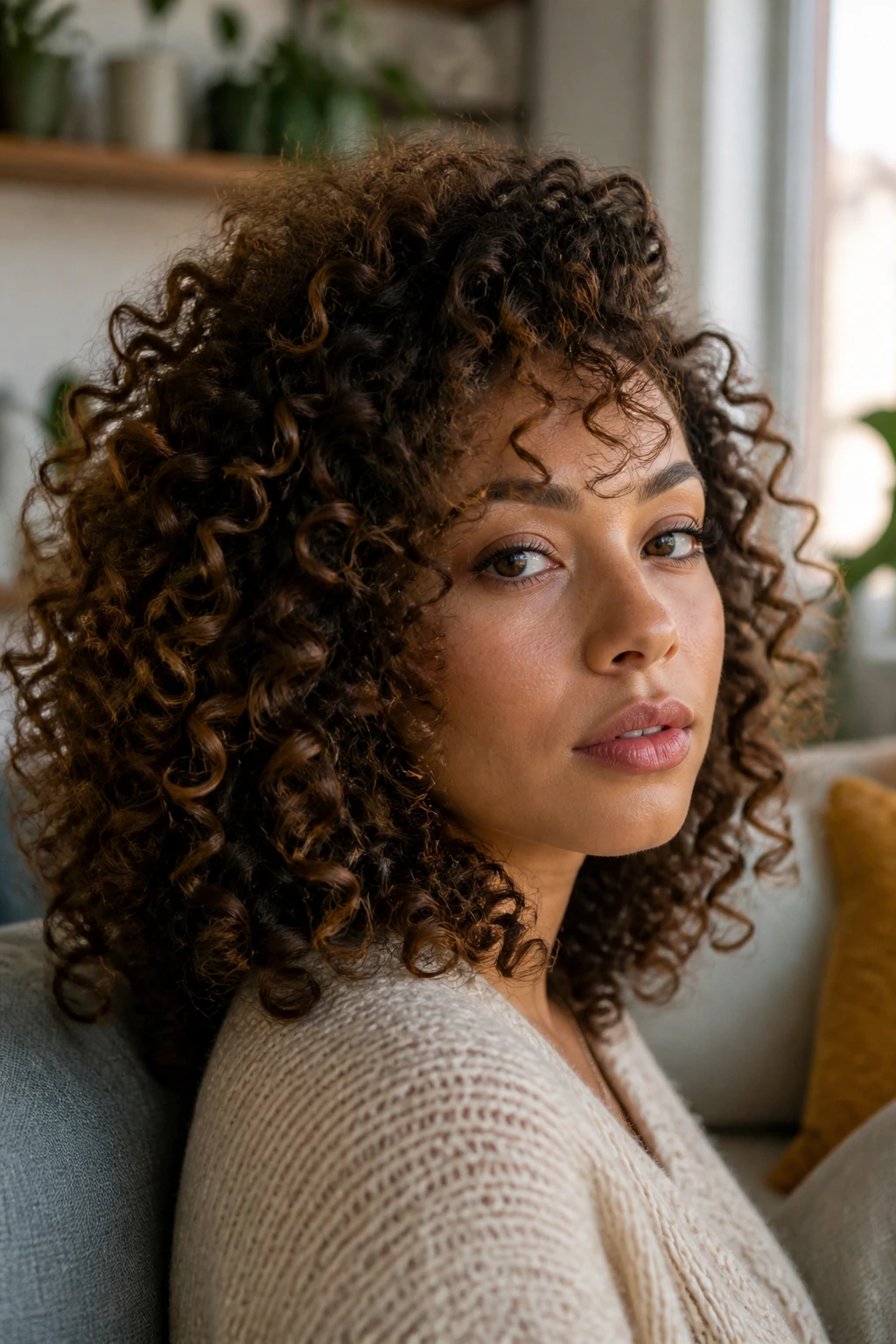
Curly hair does not need to be forced into one look to be polished. A wash-and-go, a puff, a braid-out, a rod set, and a tapered cut all serve different jobs, and that is the point. Some styles give you lift. Some give you stretch. Some keep the hair out of the way and still let the texture show.
The smartest choice is usually the one that matches the curl mood you already have. Fighting shrinkage all day is exhausting. Working with it is easier, and the result usually looks more like a real person touched the hair, which is the whole appeal.
If there is one habit worth keeping, it is this: pick a style based on how much handling your curls can tolerate that day. Low-touch styles last longer. Higher-shape styles ask for more product and more patience. Either way, the curls get to stay curly, which is the part that never gets old.
