



Short hairstyles for curly hair can be a blessing or a mess. Cut them with the curl pattern in mind, and they spring up with shape, movement, and a lot less daily fuss. Cut them like straight hair, and the whole head can balloon at the sides while the back goes flat.
The big mistake is assuming “short” means one thing. A chin-length bob, a tapered crop, and a curly pixie all behave differently once shrinkage kicks in, and shrinkage can steal 1 to 3 inches before anyone even reaches for a diffuser.
I care a lot about where the weight sits: at the crown, around the jaw, or low at the nape. That one decision changes whether curls look airy, boxy, or almost architectural. And on curly hair, the outline matters more than people think.
So the styles below move from soft and easy to sharper, more sculpted shapes, with a few oddballs in between. Some flatter round faces, some make dense coils easier to live with, and some are there because curls get more interesting when the haircut has a little attitude.
1. Curly Pixie Cut
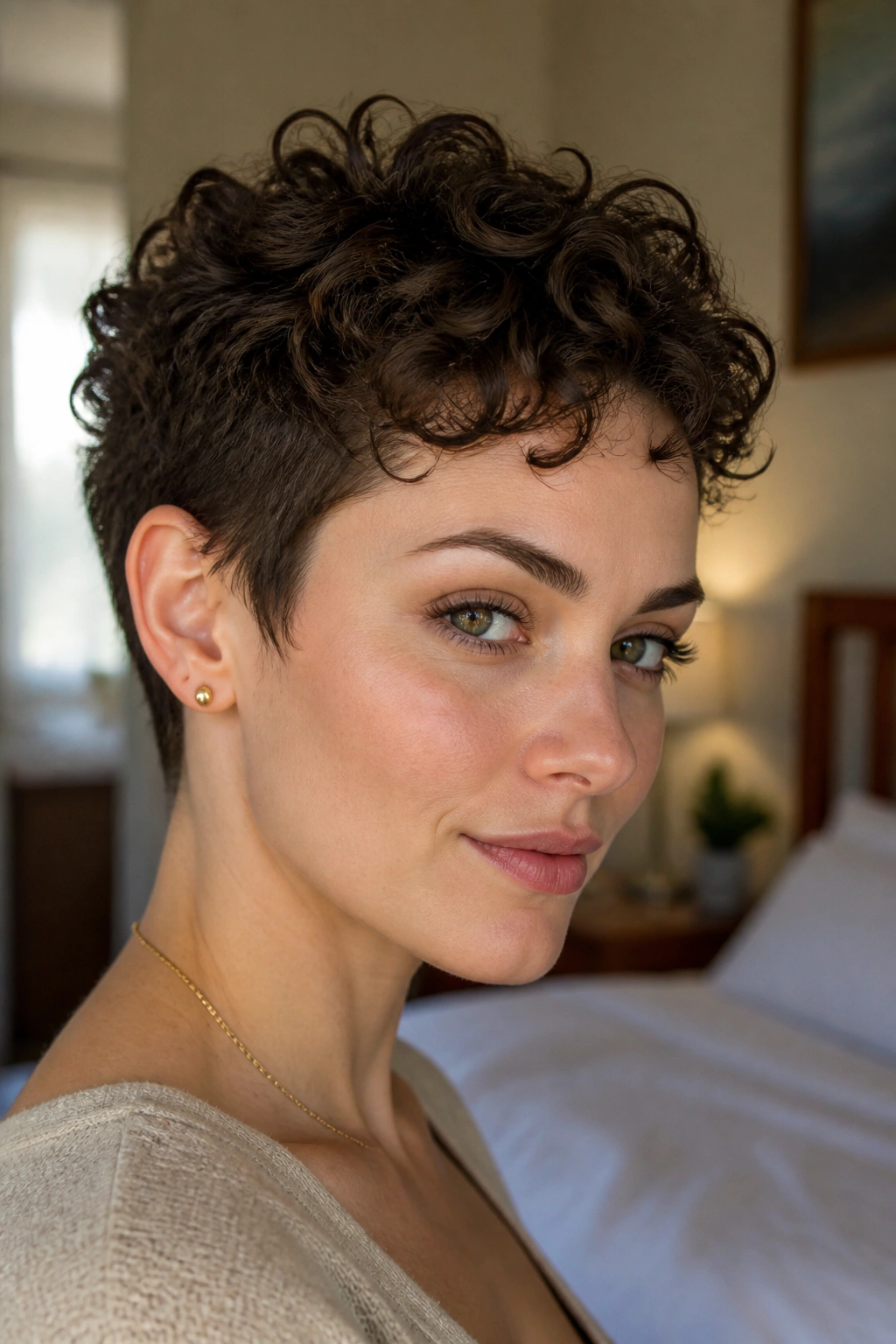
A curly pixie cut works because it lets the curl do the decorating. You do not need much length for it to look full; you need enough length on top for the curl pattern to show and enough cleanup at the sides so the shape doesn’t puff out like a little cloud.
Why the Pixie Works on Curls
The sweet spot is usually 2 to 4 inches on top with shorter sides and a soft nape. That gives the curls room to spring up without swallowing the face.
- Best on 2C to 3C curls when you want definition without a lot of weight.
- Ask for point-cut ends so the perimeter doesn’t look heavy.
- Keep the top a little longer than the crown if your curls shrink hard.
- Use a pea-sized curl cream and a small dab of gel, then air-dry or diffuse.
A pixie like this looks especially good when the hairline is neat and the temples are cleaned up. It feels modern, but not fussy. And that’s the charm.
Pro tip: if your curls collapse by midday, leave a touch more length at the crown than you think you need.
2. Tapered Curly Crop
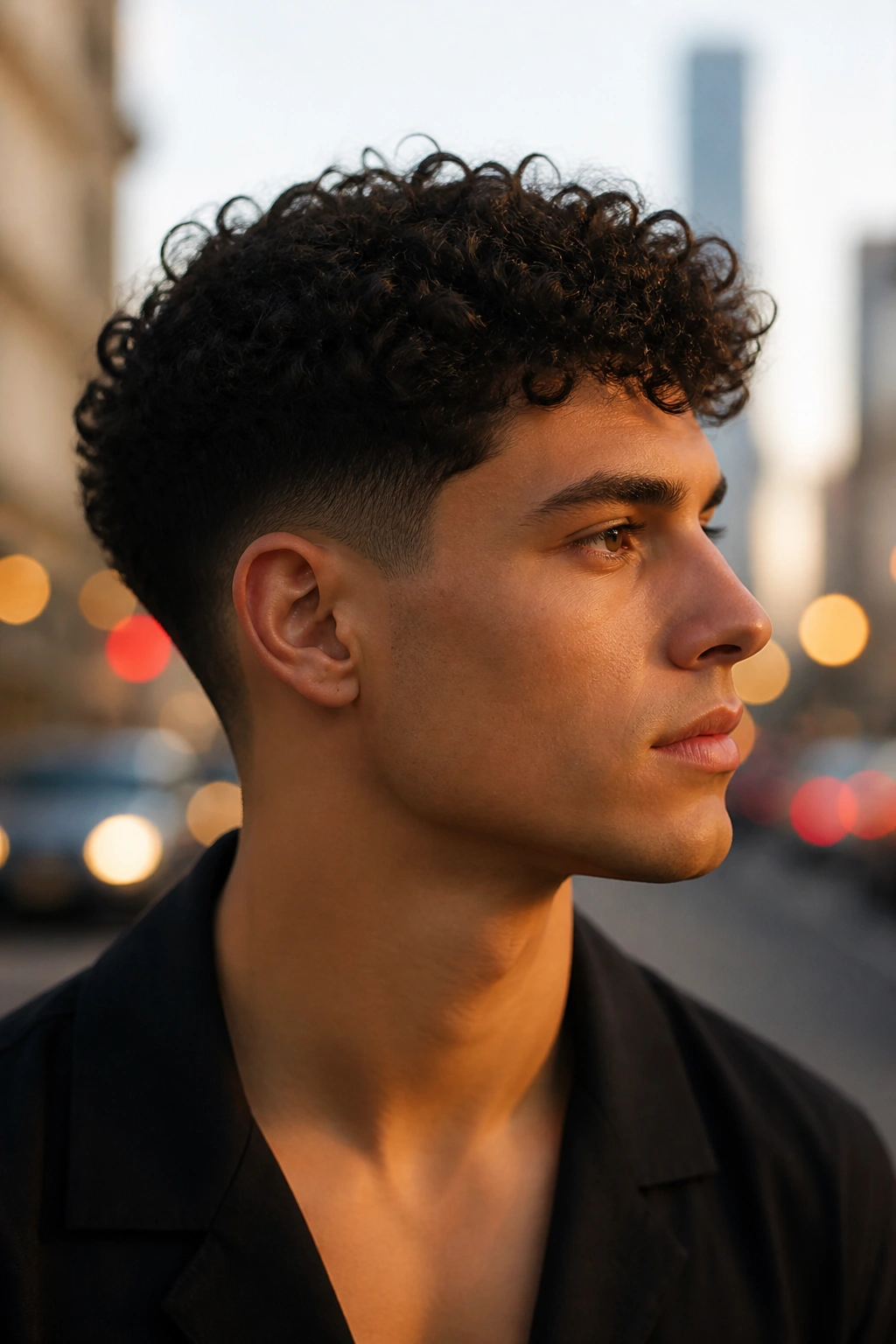
A tapered crop is the quiet fix for hair that grows wide before it grows down. The taper at the sides and nape pulls the outline in, which helps dense curls stop taking over the whole head.
This cut is especially useful if you’ve got coarse coils or thick, springy curls that love to stack up. The shape stays close near the ears, then opens up higher on top, so the head looks balanced instead of round and boxy.
I like this cut for people who want low drama in the morning. A little leave-in, a little gel at the ends, and you’re done. If you want, you can finger-coil the front pieces only. That tiny extra step makes the whole shape look intentional.
What matters most is the taper. If it’s too aggressive, the top can look like it’s floating. If it’s too soft, the sides bulk up again and you lose the point of the cut. The good version has a clean nape, a tidy outline around the ears, and enough length on top to keep the curls visible.
3. Chin-Length Curly Bob

Why does a chin-length curly bob look so good on curls? Because it hits the face at the exact place where curls can frame instead of hide it. Too long, and the shape can drag down. Too short, and the curls may spring up faster than you planned.
The Shape Problem It Solves
A good chin-length bob keeps the perimeter near the jaw while letting the interior move. That means the hair still feels airy, but you don’t get the triangle effect that happens when the bottom gets too wide.
What to Tell Your Stylist
- Keep the front slightly longer if you want softness around the cheeks.
- Ask for internal layers, not choppy layers everywhere.
- Avoid a blunt bottom line if your curls are tight or dense.
- Let the stylist cut it in a way that respects your shrinkage.
This is one of those cuts that looks polished without trying too hard. It can be sleek when brushed and diffused, or loose and casual when you let it dry on its own. Either way, the jawline gets a clean frame, and that does a lot of work on its own.
4. Curly Shag
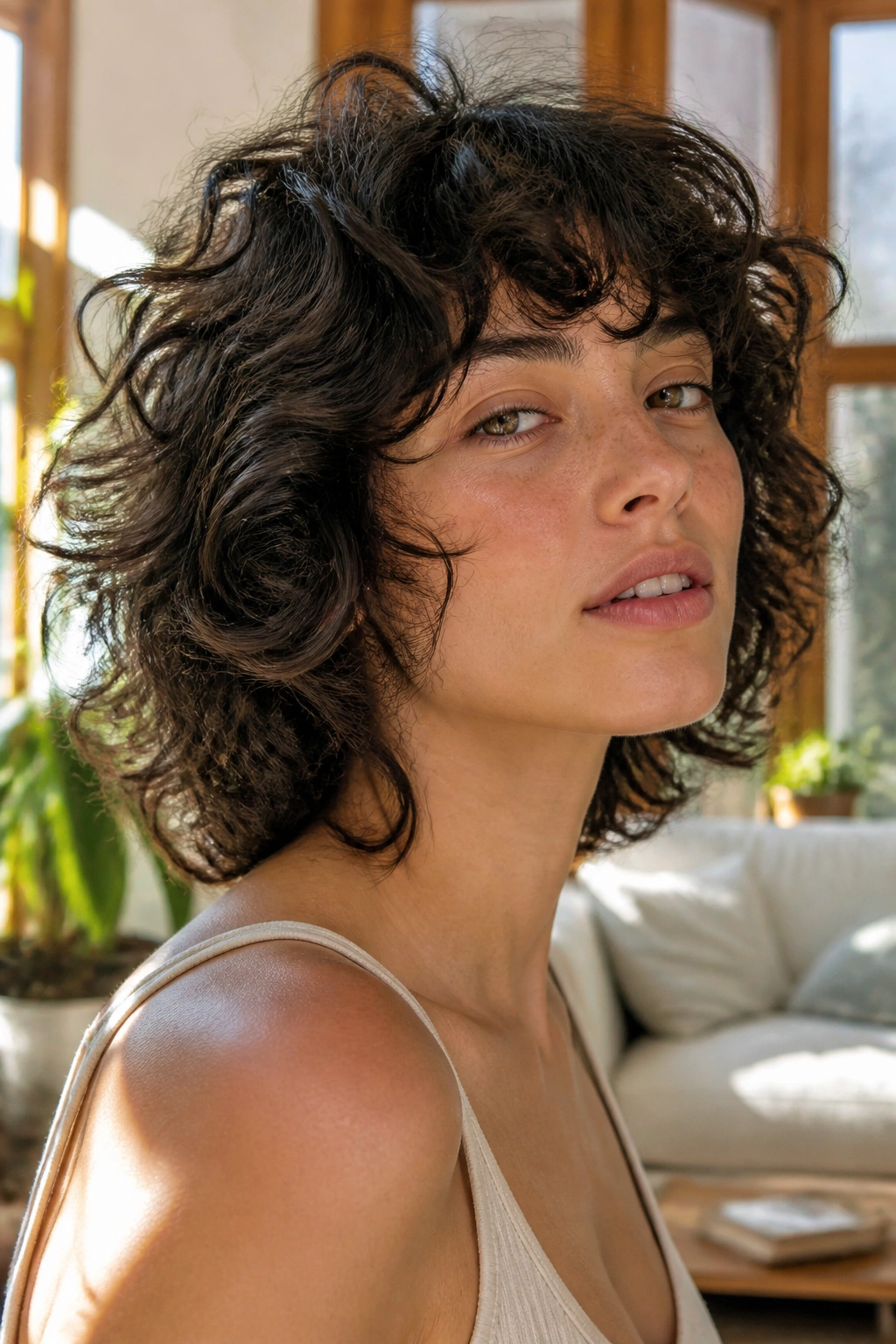
You know the look: the curls sit heavy at the bottom, then puff at the sides by midafternoon. A curly shag fixes that by taking weight out of the crown and breaking up the bulk around the face.
The shag works because it gives each section a little room. Shorter layers on top keep the height from collapsing, while the longer pieces around the cheeks soften the whole thing. It is a cut that likes movement. Still air and a stiff brush are not its friends.
What Makes It Different
- Best on medium to dense curls that need shape more than length.
- Ask for layers that start high on the crown if your hair gets flat on top.
- Great for air-drying with mousse and a light gel cast.
- Needs a stylist who understands curly shrinkage, not just scissors.
I like the shag when curls need attitude. It looks a little undone in a good way, like the hair had a life before you walked in the room. That’s hard to fake with products alone.
5. French Bob for Curls
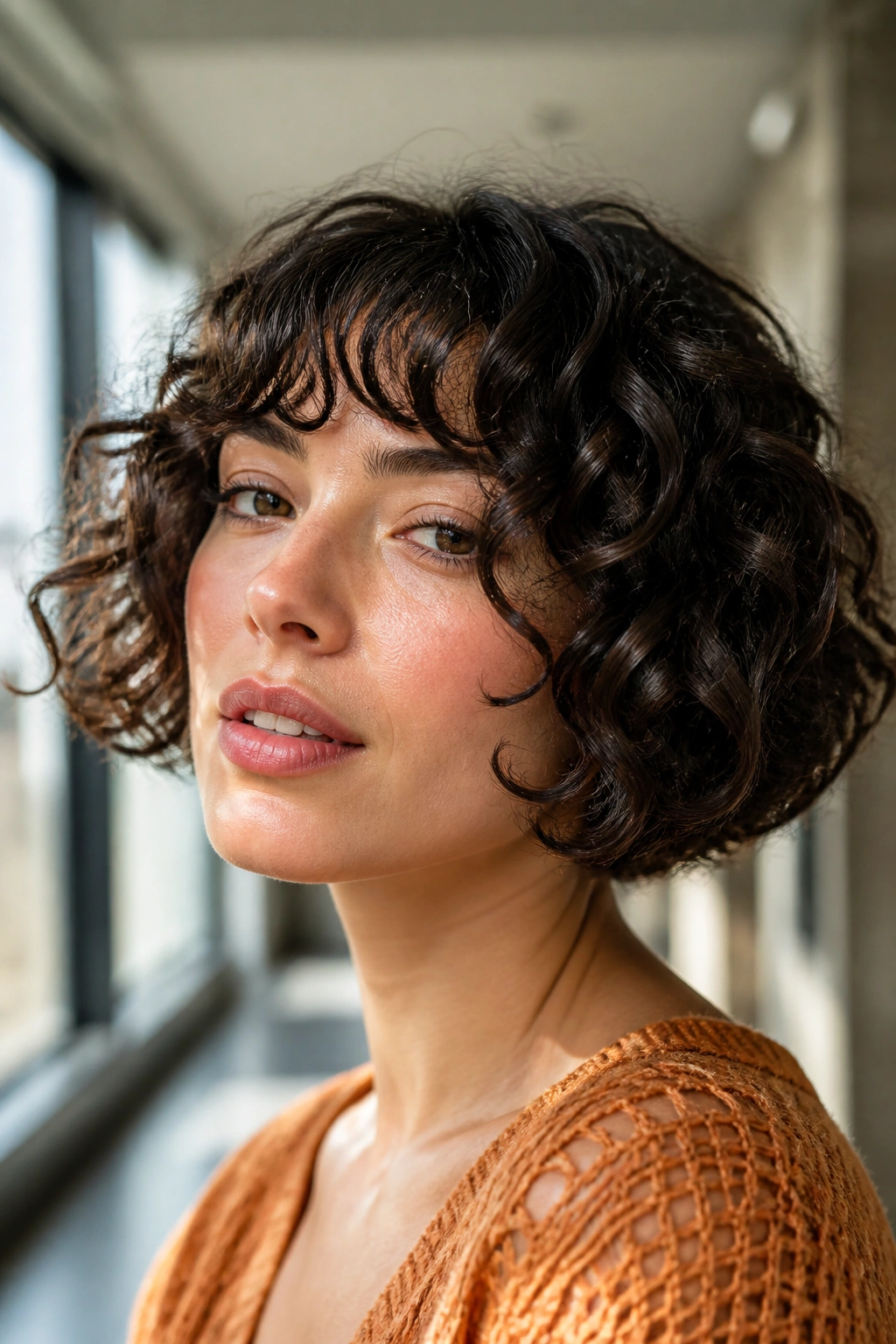
A French bob on curly hair is all about the perimeter. The cut usually lands around the jaw, sometimes just under it, with enough softness to keep the curls from reading stiff or boxy. The style works because it uses shape instead of length to make the statement.
The version I trust keeps the ends clean and the layers light. If the curls are too heavily shredded, the bob loses that neat little outline that makes it feel French rather than merely short. You want the curls to sit like a frame around the face, not scatter in five directions.
This cut loves a side part or a slightly off-center part. It also likes a bit of bend in the fringe area. A little forehead curve can stop it from feeling severe. If you’ve ever wanted hair that looks smart without looking too polished, this is a strong option.
A blunt French bob can work on waves and looser curls. Tighter curls usually need a softer edge and a touch more length so the shrinkage doesn’t jump the line.
6. Soft Curly Mullet
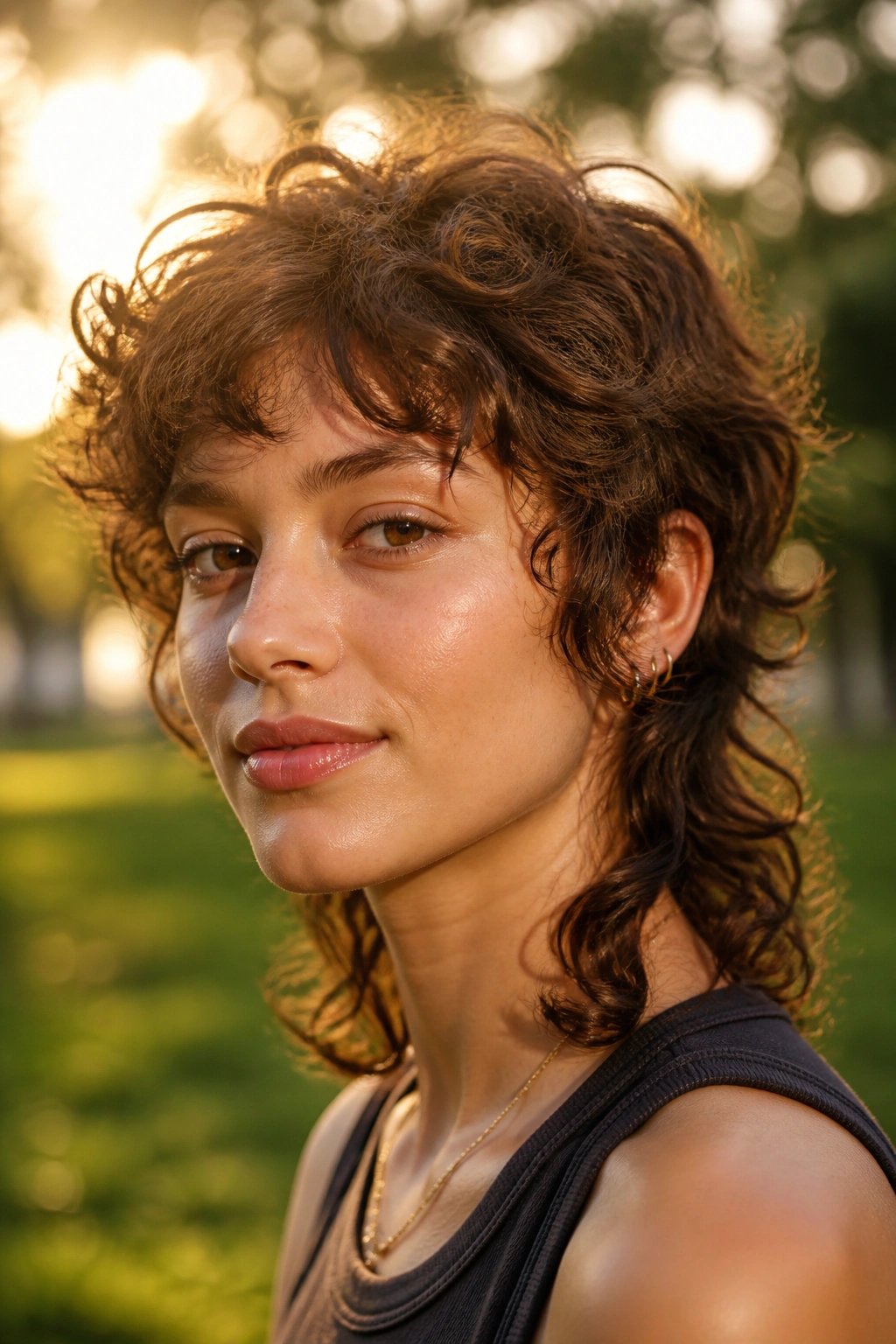
A soft curly mullet is not the punk version from old band photos. It’s gentler than that, with curls kept shorter around the face and a little more length left at the nape. The result feels lived-in instead of theatrical.
Unlike a hard mullet, this version keeps the sides soft. That matters. Too much contrast can make curly hair look chopped up in the wrong way, especially if the curl pattern changes from front to back. A softer mullet lets the texture do the talking while the silhouette stays readable.
Where the Length Stays
The front usually lands around the cheekbone or jaw, while the back can reach a bit lower at the neck. That difference creates movement without dragging the style into full mullet territory.
This cut is good for people who want edge but not a lot of styling work. Scrunch in a light cream, diffuse for a few minutes, and let some pieces fall where they want. It’s a little messy, a little cool, and much easier to wear than it sounds.
7. Teeny Weeny Afro
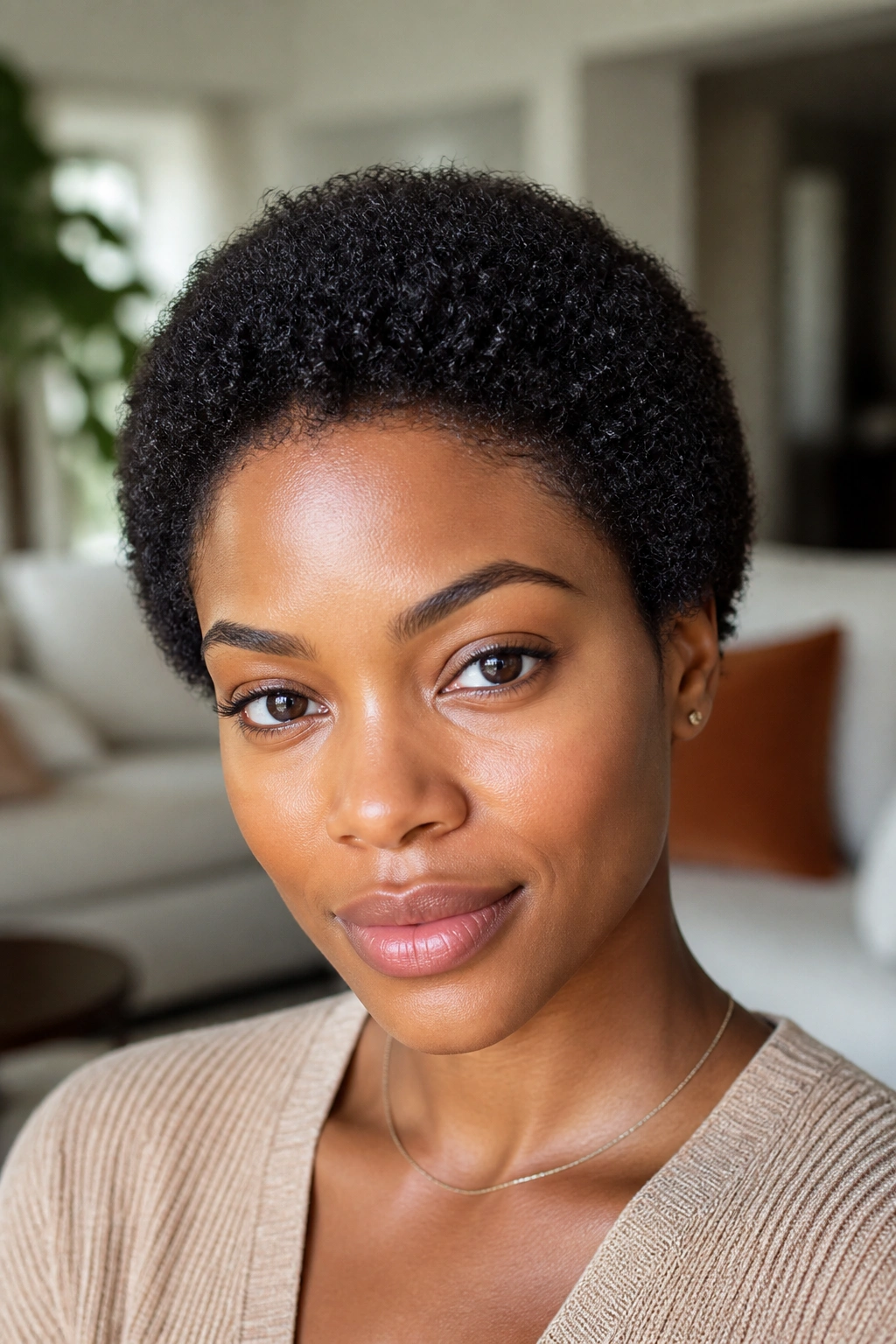
A TWA is not a compromise. It’s a shape in its own right, and when the outline is good, it looks clean, sharp, and expensive without trying to look polished in a straight-hair way.
The beauty of a TWA is that it shows the curl pattern without asking it to pretend. Tight coils, zig-zag texture, soft fuzz, a crisp hairline — it all reads beautifully when the cut is even and the edges are respected. A shape-up around the temples and nape can make a huge difference here.
What Helps It Look Intentional
- Keep the silhouette rounded or softly squared, not uneven.
- Use a small amount of moisturizing cream so the hair stays supple.
- Refresh with water and a few drops of oil if the coils start to look thirsty.
- Book regular edge cleanups if you like a neat outline.
A TWA grows out well too, which is a big plus. The shape changes, but it doesn’t usually fall apart the way some longer short cuts do. That makes it one of the easiest short curly looks to live with once you know what shape you want.
8. Asymmetrical Curly Bob
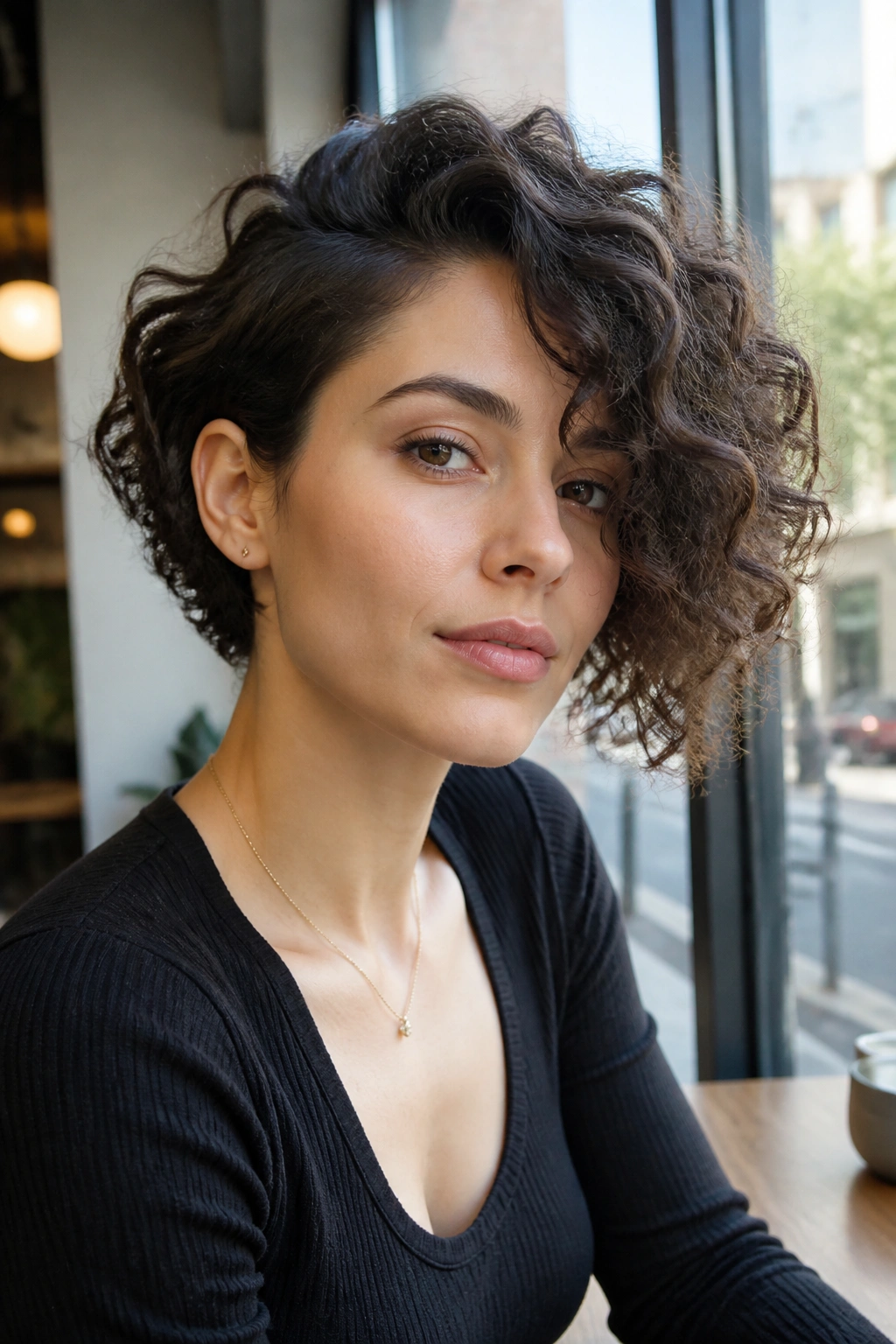
One side a little longer can save a bob that feels too safe. An asymmetrical curly bob uses a small difference in length — sometimes just an inch or two — to give the cut motion and direction.
The nice thing about this shape is that it doesn’t need loud styling. The asymmetry does the work. A deep side part can make one side sit closer to the face while the other side falls away more loosely, which helps curls look layered even when the cut itself is simple.
It’s especially good if your curls are medium density and you want the haircut to look sharper than a standard bob. Round faces tend to like this cut because the diagonal line creates length. Strong jawlines can wear it too; the result just shifts from soft to more graphic.
What I’d watch for is balance. If one side is too long, the cut starts looking accidental. The best versions look deliberate from every angle, even when the curls move around during the day.
9. Bixie Cut
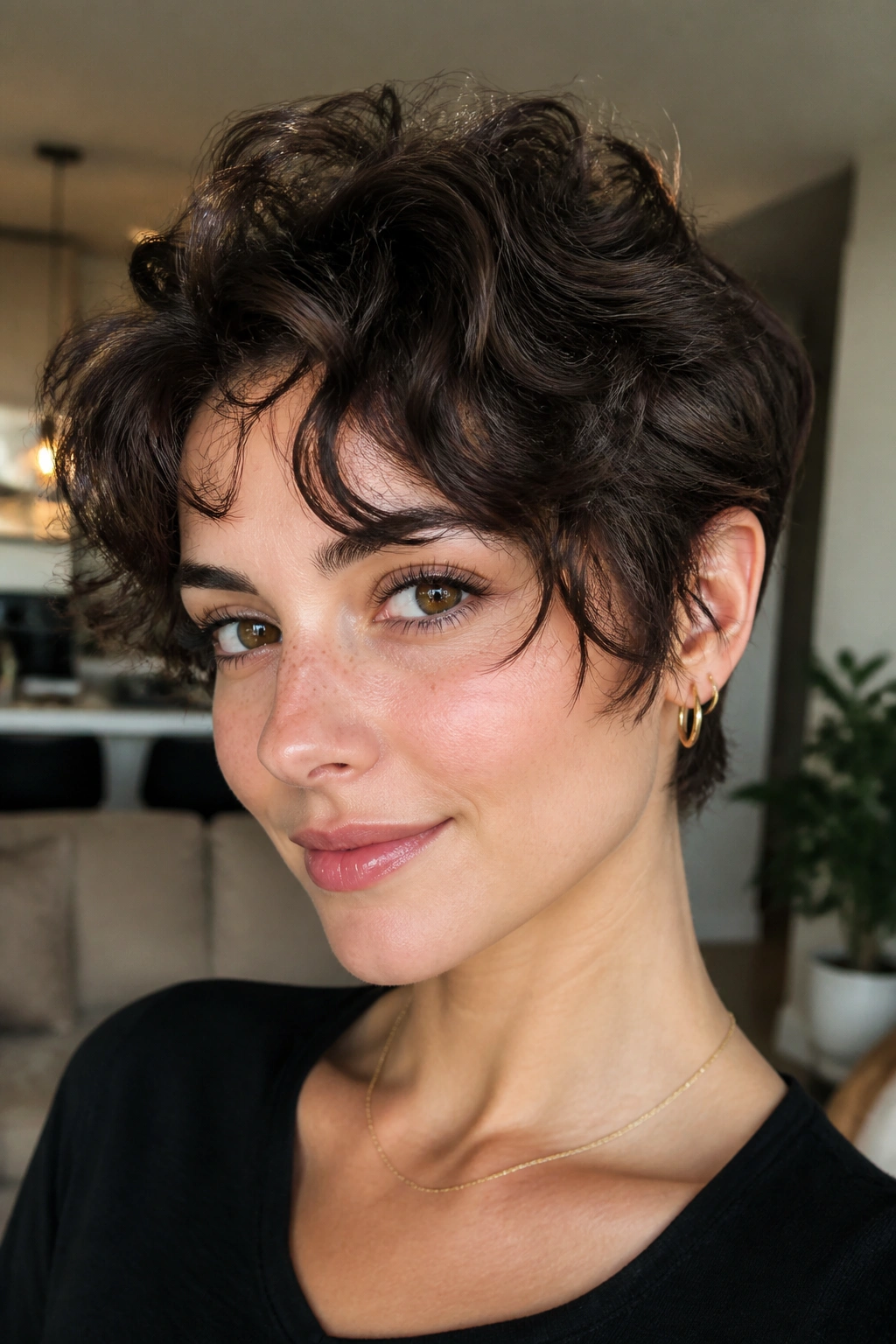
If you want more softness than a pixie and less weight than a bob, the bixie earns its keep. It sits in that in-between space where the neck gets some breathing room, but the front still has enough length to frame the face.
The cut usually has a short back, longer top layers, and fringe or face-framing pieces that keep it from feeling too cropped. On curls, that matters. A bixie can turn awkward fast if the top is too short, because the curl spring will make it ride up.
I like this style for looser curls and bendy waves that need a little shape without being chopped to pieces. It also grows out better than a classic pixie, which is useful if you don’t want to visit the salon every five minutes.
This one has a touch of ease to it. It looks good when the curls are a bit messy, and that makes it forgiving on rushed mornings. A small amount of mousse at the roots and curl cream through the ends usually does the job.
10. Curly Bob with Curtain Bangs
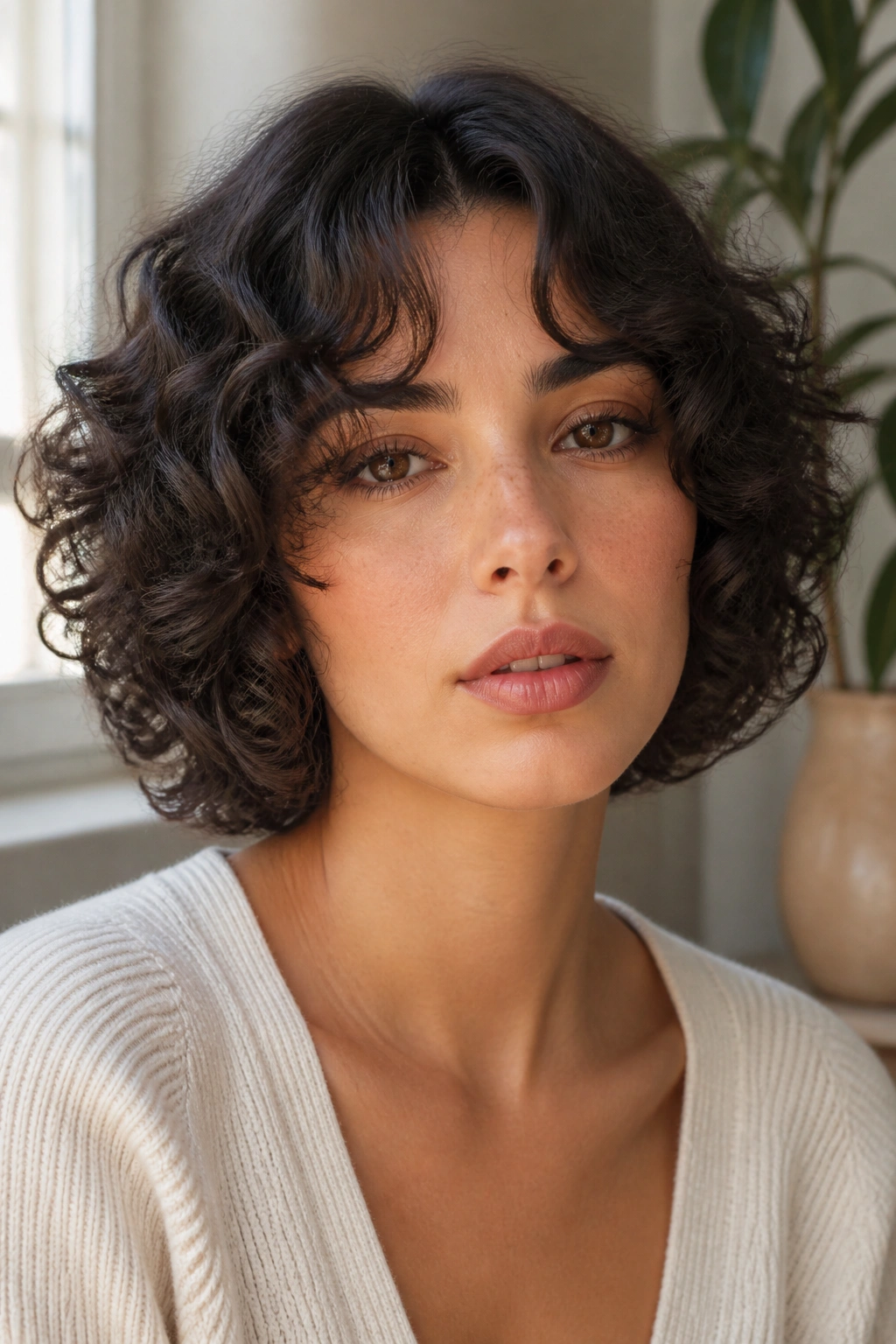
Curtain bangs on curls can look gorgeous when they’re cut with shrinkage in mind. The bangs split at the center, sweep to each side, and open up the face instead of sitting like a heavy wall across the forehead.
The trick is length. Curly bangs often spring up more than you expect, so they usually need to start longer than straight bangs would. A bang that lands at the cheekbone when wet may end up far shorter once it dries. That’s not a flaw. It’s the whole game.
This cut works well if you want softness around the eyes and cheekbones. It also gives you options. On wash day, the bangs can be defined and separate. On the second day, they can get brushed aside or clipped back without ruining the whole look.
I’d avoid this if your curls are extremely tight and you do not want to stretch the front at all. Otherwise, it’s a smart way to keep a short bob from feeling too blunt or too plain.
11. Stack-Cut Curly Bob
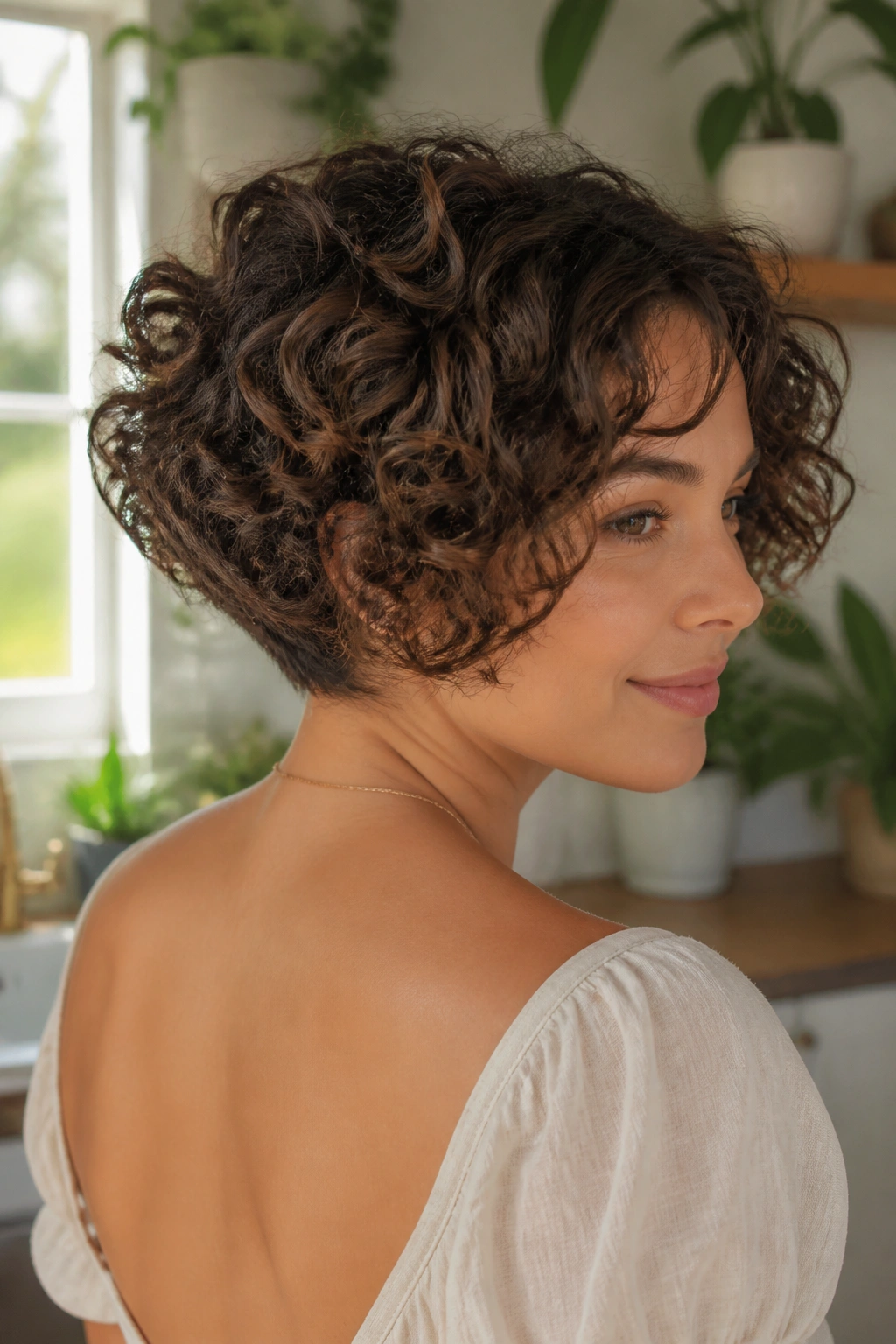
A stack-cut curly bob is one of the easiest ways to make thick curls look controlled without flattening them. The back is graduated, so the hair lifts upward instead of hanging in a solid block.
Why the Stack Matters
The stacked shape removes weight from the nape and builds a rounder silhouette through the back of the head. That gives the bob a little lift, especially if your curls tend to collapse near the roots.
- Best for dense 3B to 4A curls that need structure.
- Ask for a graduated back, not a sharp wedge.
- Keep the front a bit longer if you want more softness around the jaw.
- Use a diffuser to lift the roots while drying.
A bad stack cut looks like a helmet. A good one looks airy and shaped, with the back curving neatly and the curls sitting in layers instead of a shelf. That difference is everything. If you like a bob that feels a little more formal and a little more architectural, this is the one to look at.
12. Undercut with Curls on Top
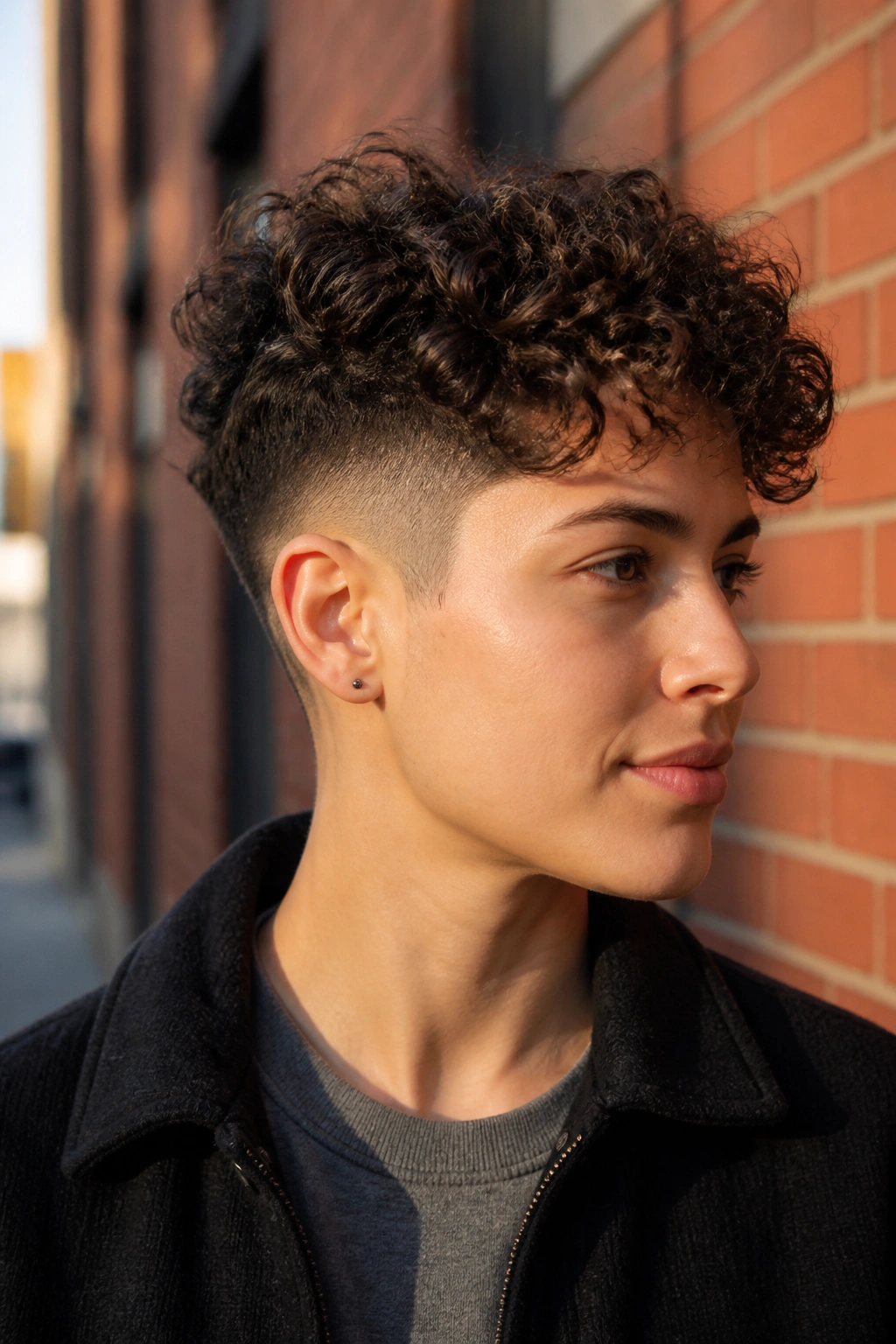
An undercut with curls on top solves the most annoying part of thick curly hair: the bulk underneath. Shaving or clipping the lower section removes a huge amount of hidden density, so the top curls can sit lighter and move better.
Some people do a full undercut. Others keep it hidden at the nape or one side. I like the hidden version because it gives you flexibility. Wear the hair down for a clean shape. Pull it back or tuck it up, and the undercut shows itself a little more.
Who Should Consider It
This cut makes sense if your curls feel hot and heavy around the neck or if the bottom keeps puffing wider than the top. It’s also handy for people who want to keep length on top without dealing with a giant triangle.
The trade-off is obvious: it grows out fast and needs maintenance if you want the clean contrast to stay sharp. If that sounds annoying, skip it. If you love the cooler, lighter feel, it’s one of the most practical short curly options around.
13. Jaw-Length Crop with Baby Bangs
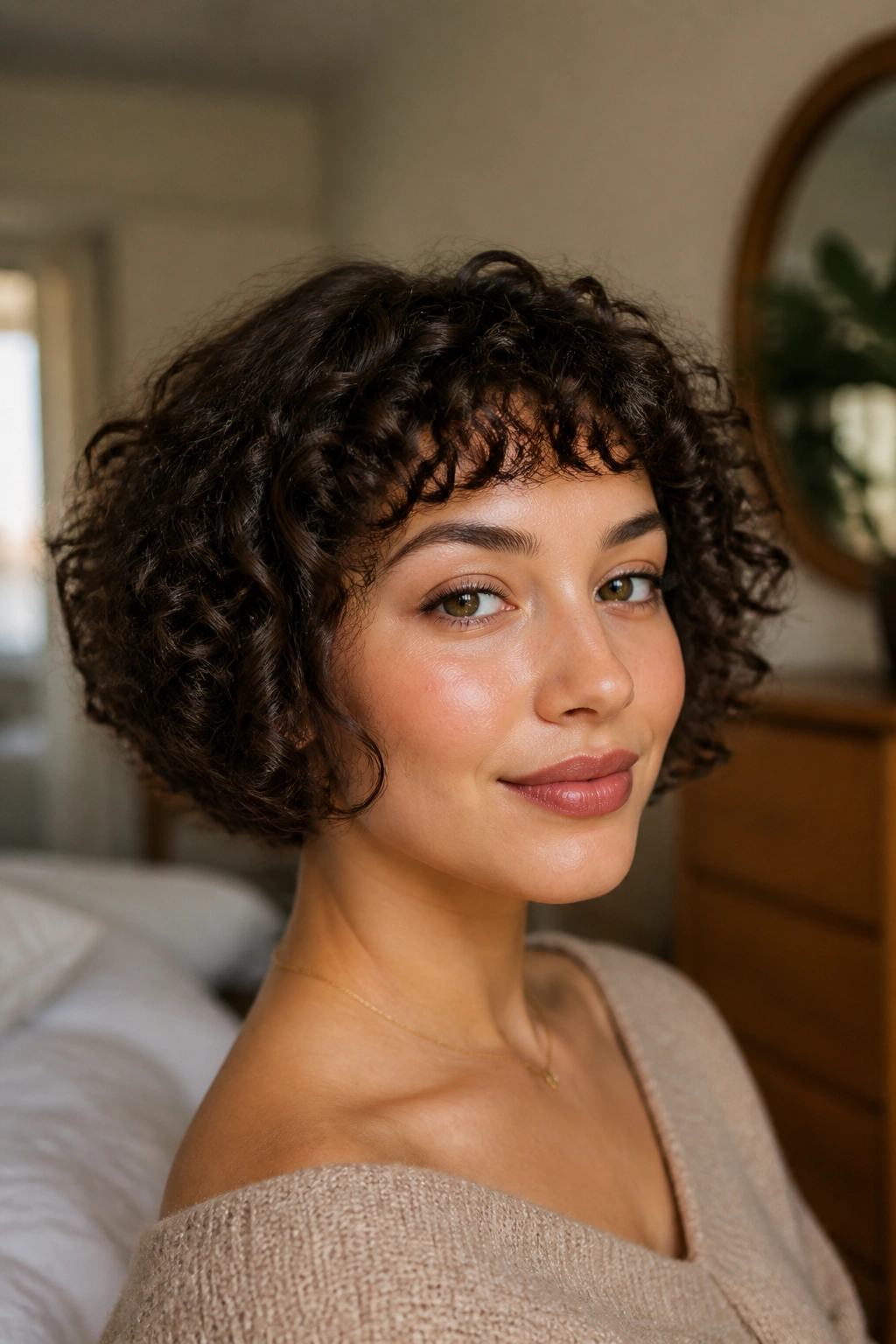
Can baby bangs work on curls? Yes, if the cut is planned around shrinkage. That’s the catch. On curly hair, a tiny fringe can bounce up fast, so the initial length and curl pattern matter a lot.
The look is bold. The forehead stays open, the bangs sit high, and the rest of the crop stays close to the head. It can feel a little artistic, a little editorial, and a little bit daring — which is why some people love it and others back away slowly.
What I find useful here is the contrast. Short bangs on a jaw-length crop create a clear frame around the face. If the curls are loose enough, they soften the fringe so it doesn’t look too severe. If the curls are tighter, the bangs can turn into a little springy line across the front, which has its own charm.
This cut is not for everyone. It asks for confidence and a stylist who knows how much shrinkage to build in. When those two things line up, it’s hard to ignore.
14. Layered Crop with Side-Swept Fringe
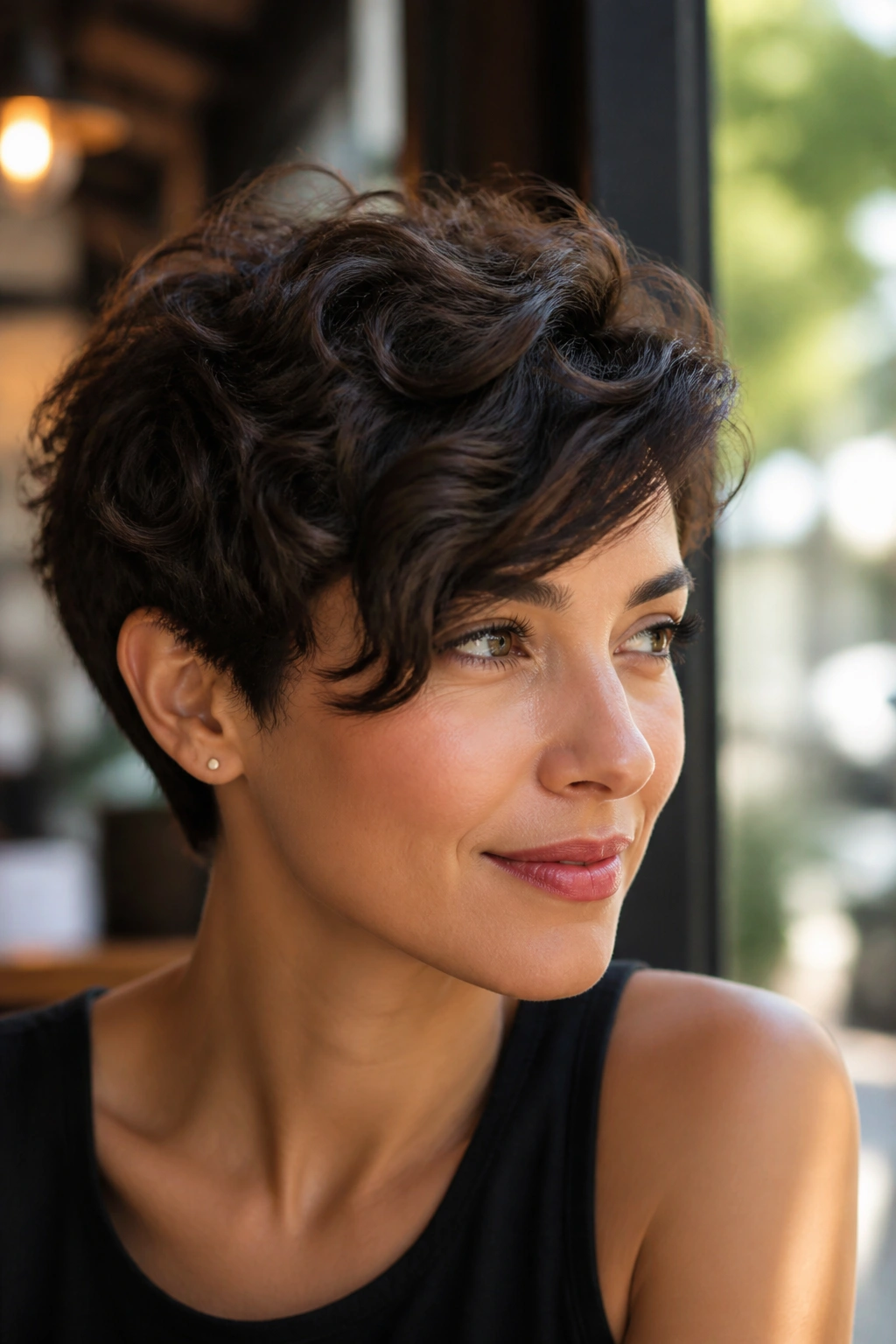
Some people want their forehead open but still want movement at the front. A layered crop with a side-swept fringe handles that nicely because it keeps the fringe long enough to sweep, tuck, or let fall naturally.
The style works best when the front pieces are cut on a diagonal. That angle lets the curls fall away from the face instead of sitting in one heavy chunk. It’s also a useful grow-out cut, which matters more than people admit. A fringe you can move around is easier to live with than one that has to be perfect every day.
A Few Things That Help
- Keep the fringe long enough to graze the cheekbone when dry.
- Add soft layers through the crown so the top doesn’t sit flat.
- Use a light gel on the front pieces if they split too fast.
- Clip the fringe to one side while drying if you want a cleaner sweep.
This is one of the more forgiving short hairstyles for curly hair because it gives you options without looking plain. Some days the fringe acts like a side bang. Other days it disappears into the rest of the cut. That flexibility is worth a lot.
15. Curly Mop Top
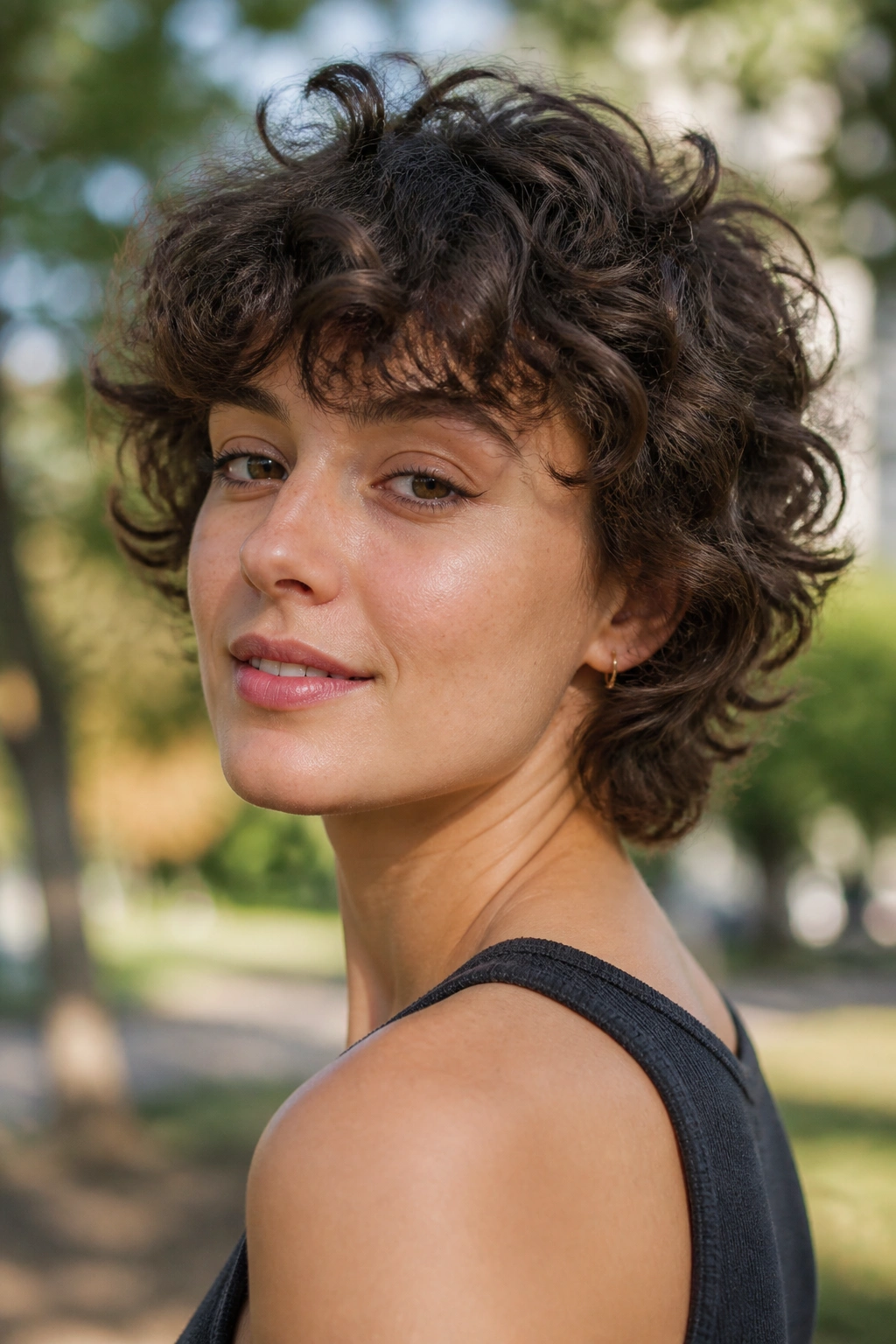
A mop top sounds casual, which is why I like it. On curly hair, it becomes a rounded, slightly floppy shape that keeps volume up top and lets the curls fall wherever they want around the sides.
This cut usually has a soft perimeter and enough length on top to create a full silhouette. It is less layered than a shag and less rigid than a bob. The whole point is a relaxed shape that feels easy, almost unfussy, while still looking like someone made a decision.
It tends to suit looser curls and waves best, especially when the hair wants to puff into a circle instead of lying down. A little weight through the ends can help the look stay grounded. Too much layering and you lose the mop-top softness. Too little and it can go helmet-shaped. Hair is funny that way.
I’d reach for this if you like soft edges and a low-key finish. It’s one of the more wearable choices on days when you don’t want your haircut announcing itself before you do.
16. Modern Bowl Cut for Curls
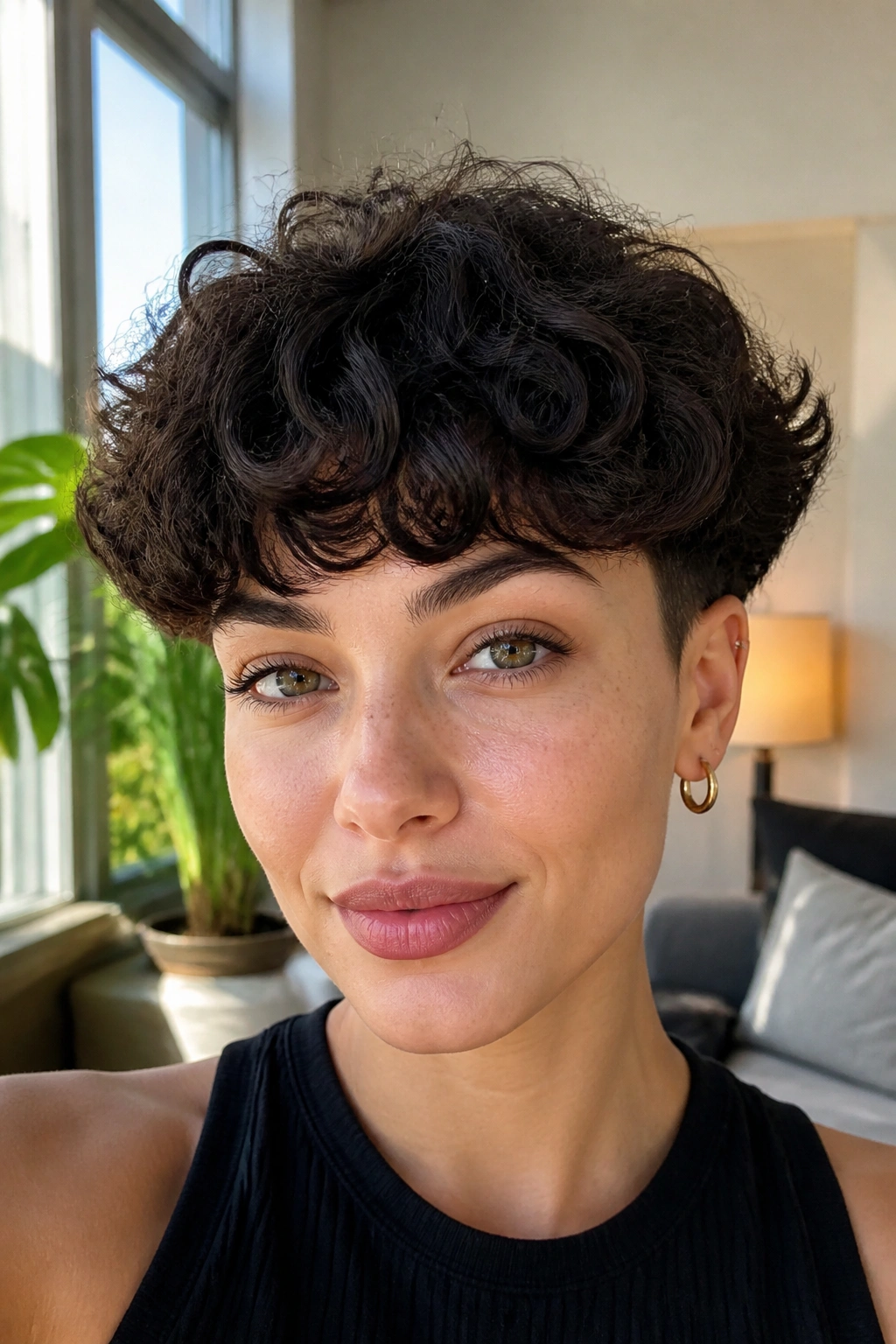
A bowl cut for curls only looks wrong when the perimeter is cut like a helmet. The modern version keeps the arc, but it softens the line and lets the curls break up the shape.
That is the whole trick. Instead of a hard, pasted-down ring around the head, you get a rounded outline with internal layers that stop the weight from sitting too heavy. On ringlets or defined waves, that can look sculpted in a very good way.
What Makes It Feel Current
The fringe is usually softer, not a straight shelf. The sides blend more gradually. And the top is cut so the curls have room to spring up a little instead of collapsing into one flat dome.
This is a strong choice if you like structure and a bit of weirdness. It doesn’t try to hide the fact that it’s a bowl-inspired cut. It just refuses to look dated. That confidence is the point, really.
17. Curly Faux Hawk
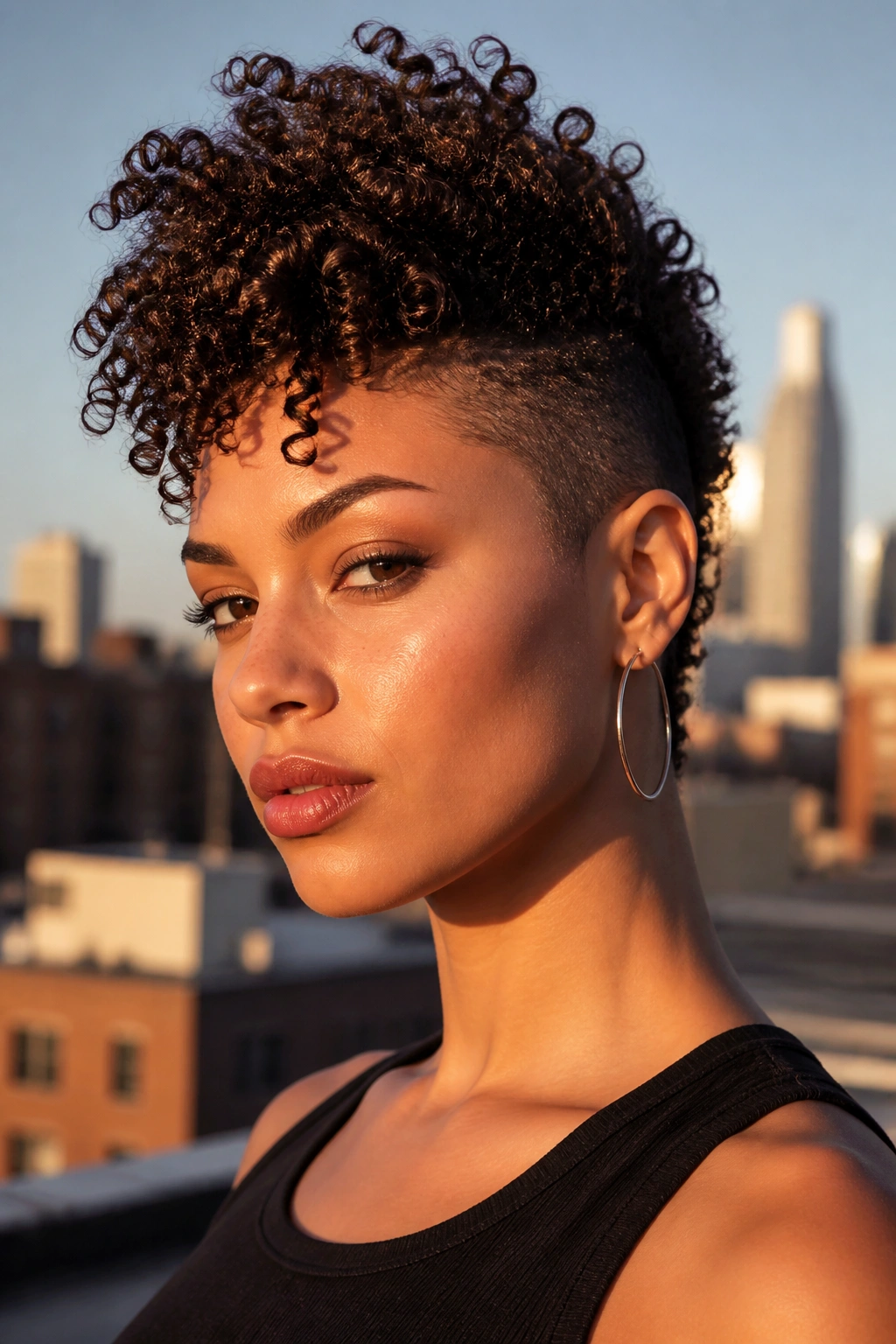
A curly faux hawk gives you drama without committing to a full shave. The sides are kept tight or slicked close, while the center strip stays longer and more visible, which lets the curls rise up through the middle of the head.
It works because curls already want to lift. The cut simply guides that energy into one area. If your hair has a natural ridge or crown swirl, even better. The style builds itself faster than people expect.
Styling usually takes a little product and a little direction. A strong-hold gel at the roots and a diffuser can help the top stand up instead of flopping outward. Finger-shaping the center while the hair is damp makes a bigger difference than people think.
This one is for someone who likes a sharper silhouette. It can read playful, edgy, or clean depending on how closely the sides are cut. The shape says something before you do.
18. Neck-Length Layered Cut with Crown Volume
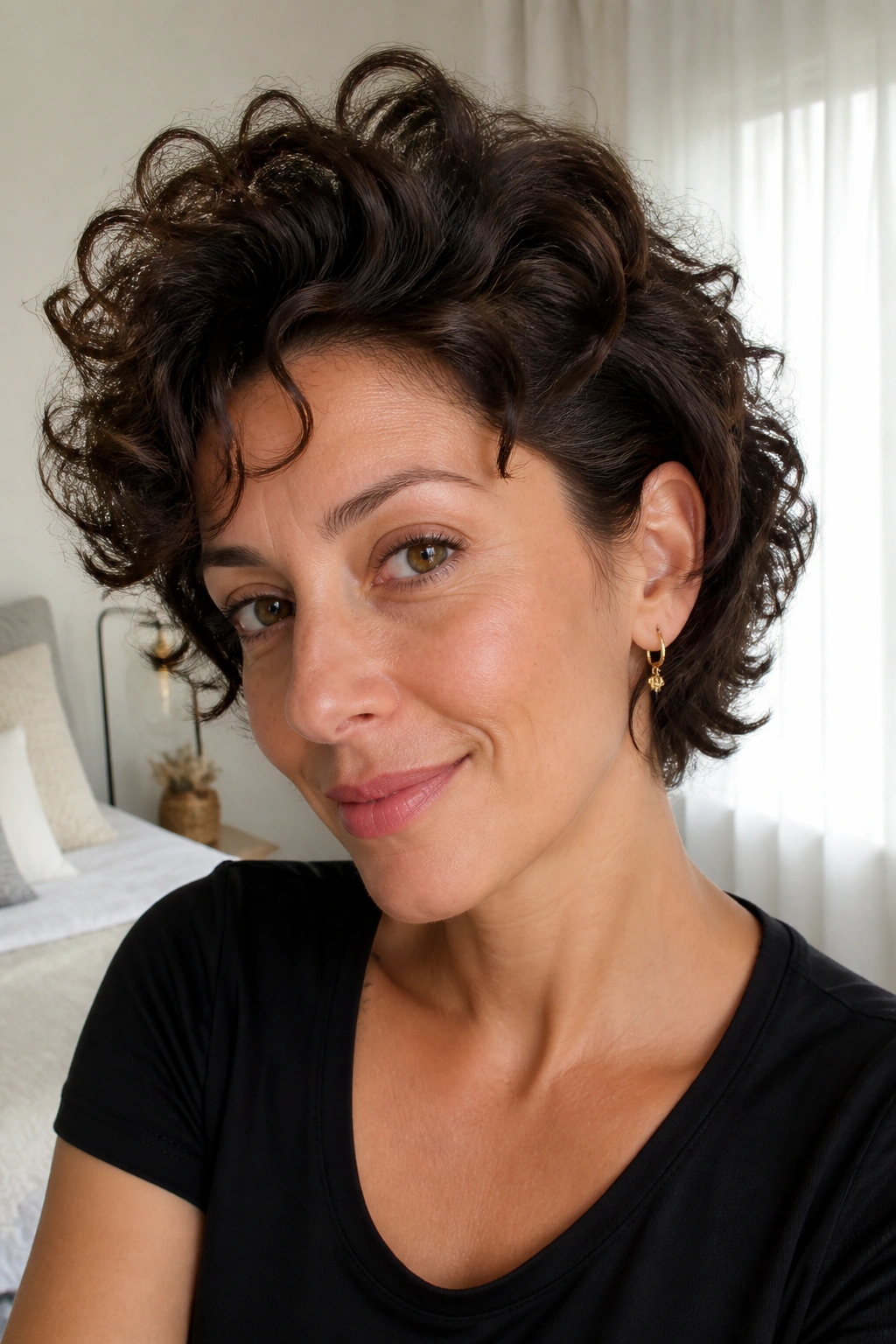
Fine curls that collapse at the roots need a shape that starts higher than most people think. A neck-length layered cut with crown volume does that by building lift through the top while keeping the sides and nape controlled.
Why the Crown Matters
If the crown is too heavy, the whole cut droops. If it’s too short, the hair can spike up. The sweet spot is a set of layers that let the top float while the neck stays neat.
This style is especially useful if your curls go flat when air-dried. A mousse at the roots, root clips for ten to fifteen minutes, and a diffuser on low heat can keep the top from collapsing. You do not need a huge amount of product; you need the right kind of support.
I like this cut because it makes a short shape feel taller. That sounds simple, but it changes the whole profile of the head. Instead of a wide line, you get a lifted one.
19. High-Top Fade with Curls
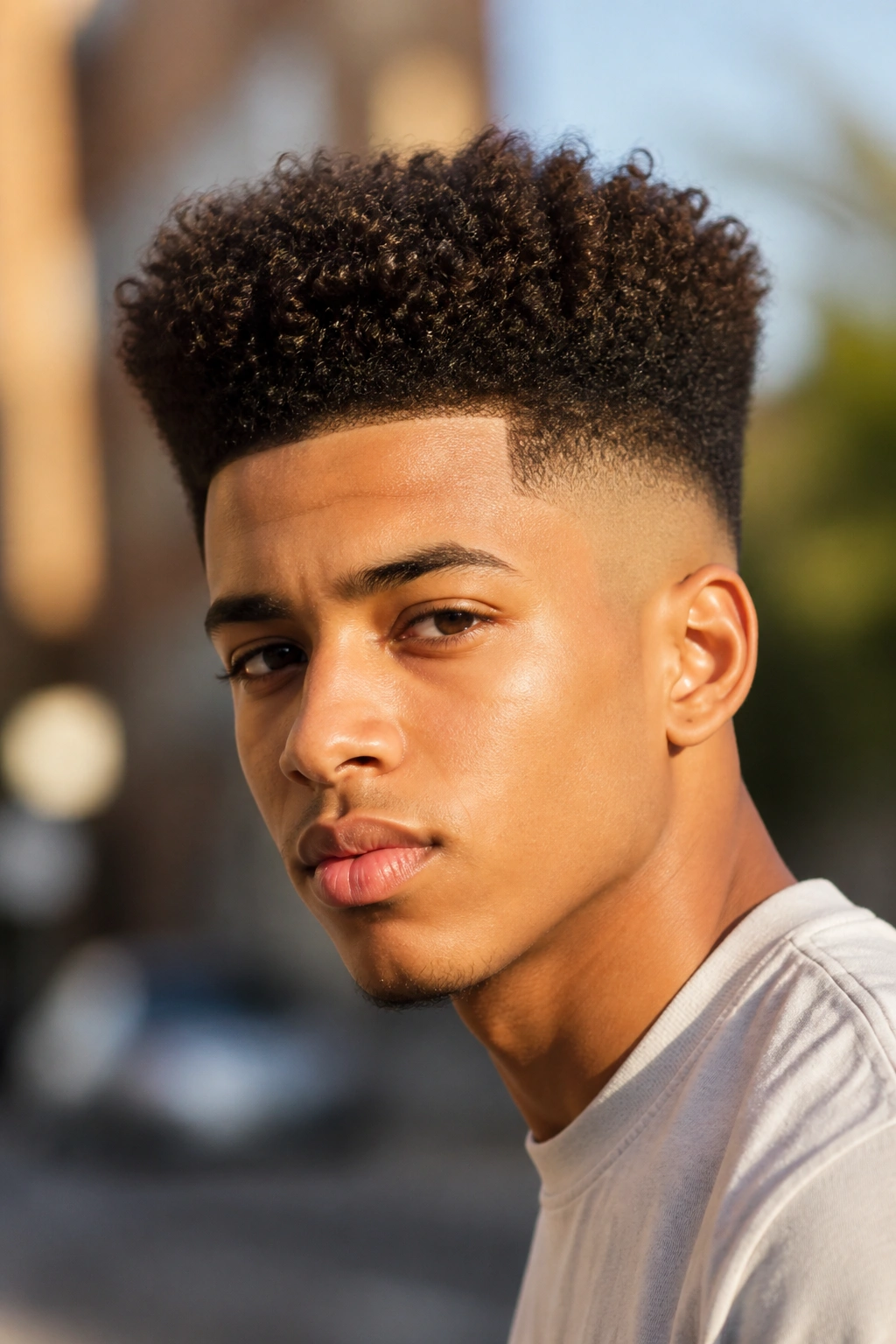
A high-top fade with curls is all about vertical shape. The sides taper down cleanly, while the top stays tall enough to show off the curl pattern and the natural structure of coily hair.
This cut has presence. It works because it uses contrast in a smart way: tight sides, full top, clean edges. If the top is shaped well, the curls stack into a strong silhouette that looks neat even when the texture is soft.
What to Ask For
- A clean fade on the sides and back, blended into the top.
- Enough length on top — usually 2.5 to 4 inches depending on curl tightness.
- A shaped hairline if you like crisp edges.
- Moisture for the top, because dry coils lose definition fast.
The high-top fade suits tighter curls and coils especially well. It is one of the few short styles that can look both polished and playful at the same time. When it’s done right, the shape holds its own without much help.
20. Rounded Wash-and-Go Crop
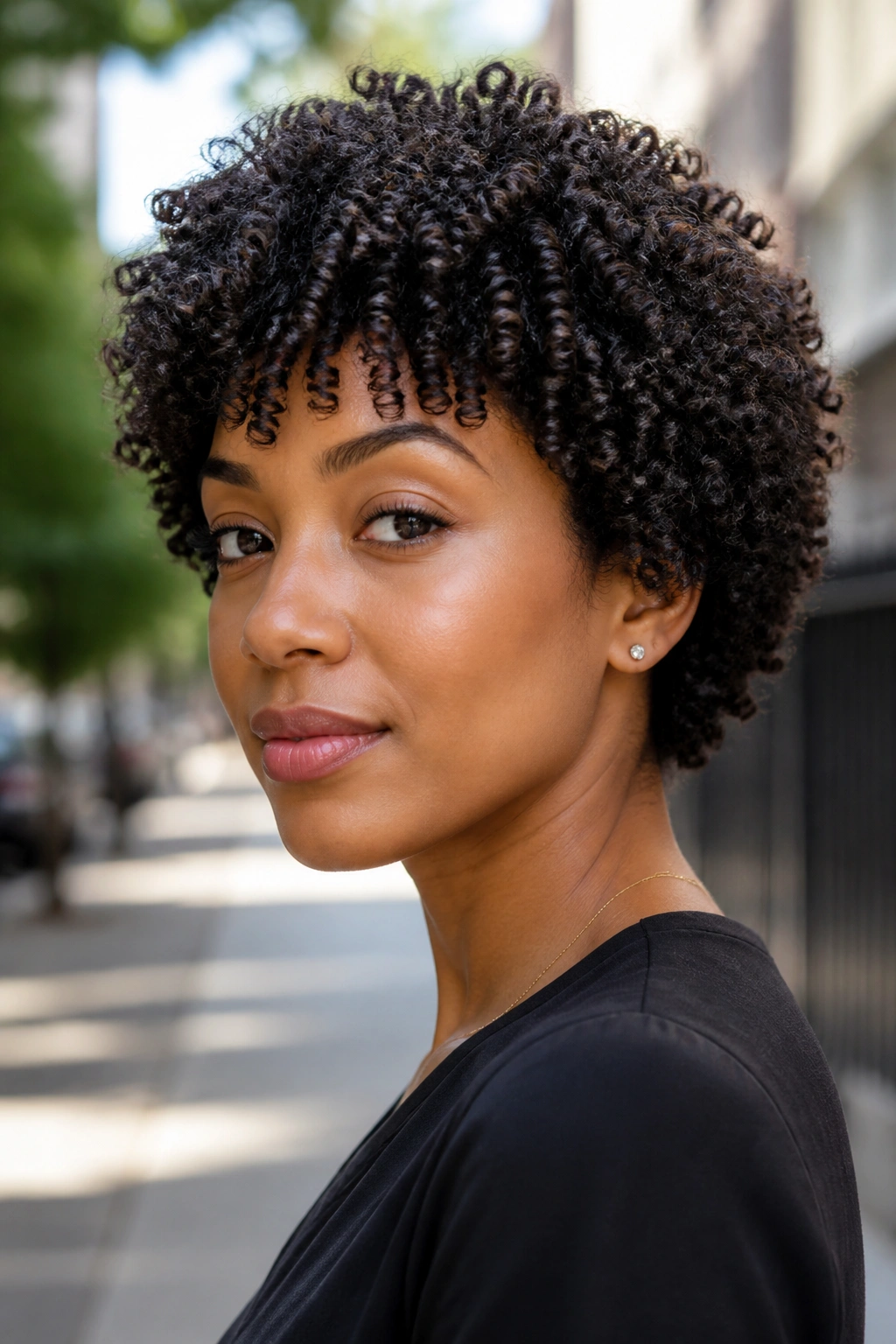
A rounded wash-and-go crop is the haircut equivalent of saying, “I am not doing the most.” The cut does the heavy lifting, so the curl pattern can dry into a neat, compact shape with very little extra work.
The outline is usually even, with only subtle layers to stop the hair from ballooning at the sides. That makes it a nice choice for people who air-dry often and don’t want to fight their hair every morning. It also works well if your curl clumps nicely on its own.
The key is consistency. The shape should read rounded from all angles, not only from the front. If the back is left too heavy, the cut loses its easy feel. If it’s thinned too much, the curls can separate in odd spots.
This is the style I’d point to for someone who wants short hair but hates daily styling. It’s quiet, practical, and surprisingly handsome on the right curl pattern.
21. Side-Part Chin-Length Bob
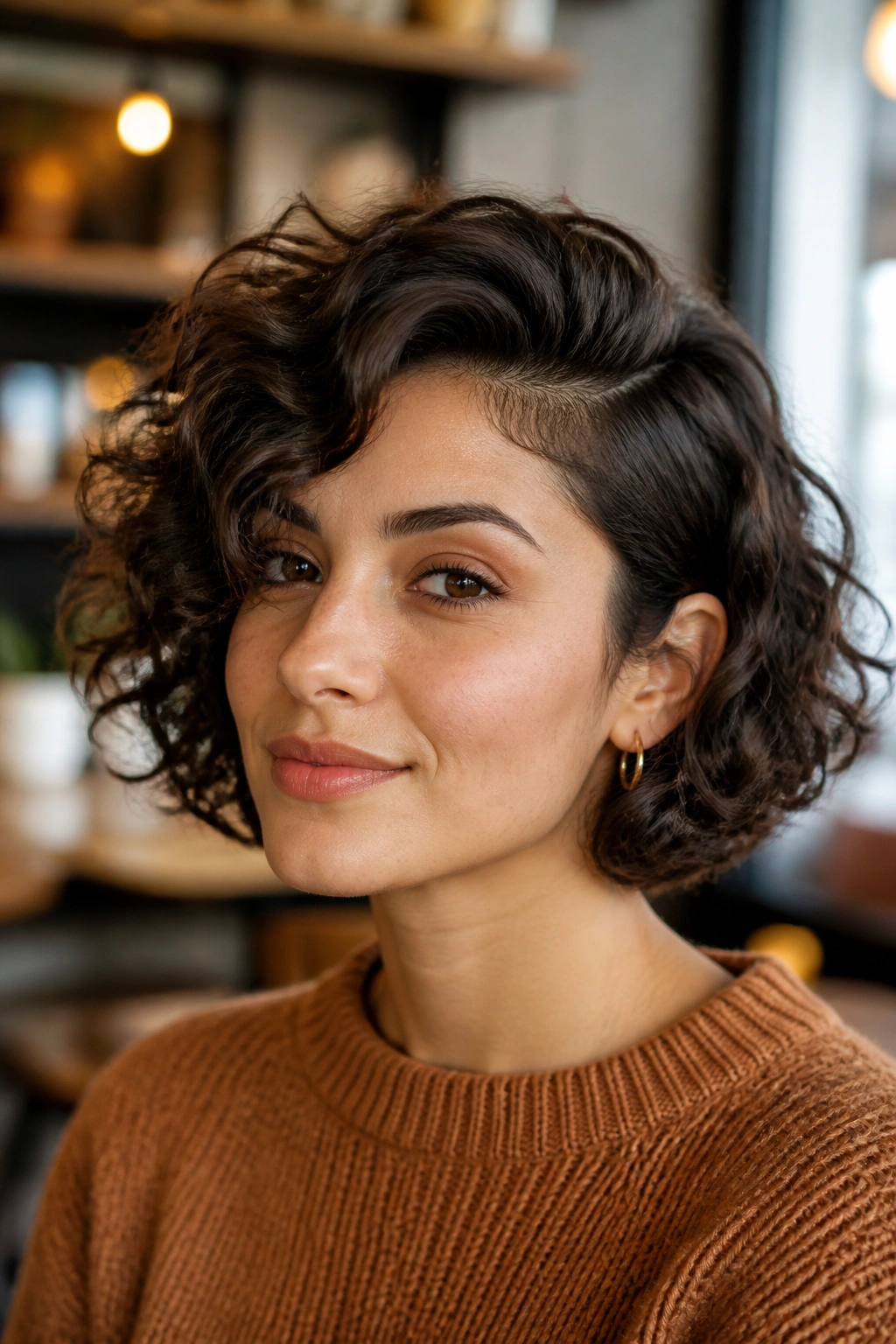
A deep side part can do more for curly hair than people give it credit for. On a chin-length bob, the part changes the weight distribution enough to create lift at the roots and a nicer fall through the lengths.
The cut itself can be even. That’s the nice part. The side part does the visual work by creating height on one side and a softer sweep on the other. It can make fine curls look fuller and thick curls look a little more elegant without losing their bounce.
Why the Part Matters
A side part also gives you a place to tuck one side behind the ear, which opens the face in a clean, easy way. The haircut feels different without needing a dramatic cut line.
I like this option for people who want polish but not stiffness. It moves with the head, it works with loose curls or springy ringlets, and it can be dressed up or down without changing the actual cut. That kind of flexibility is hard to beat.
22. Curly Wolf Cut
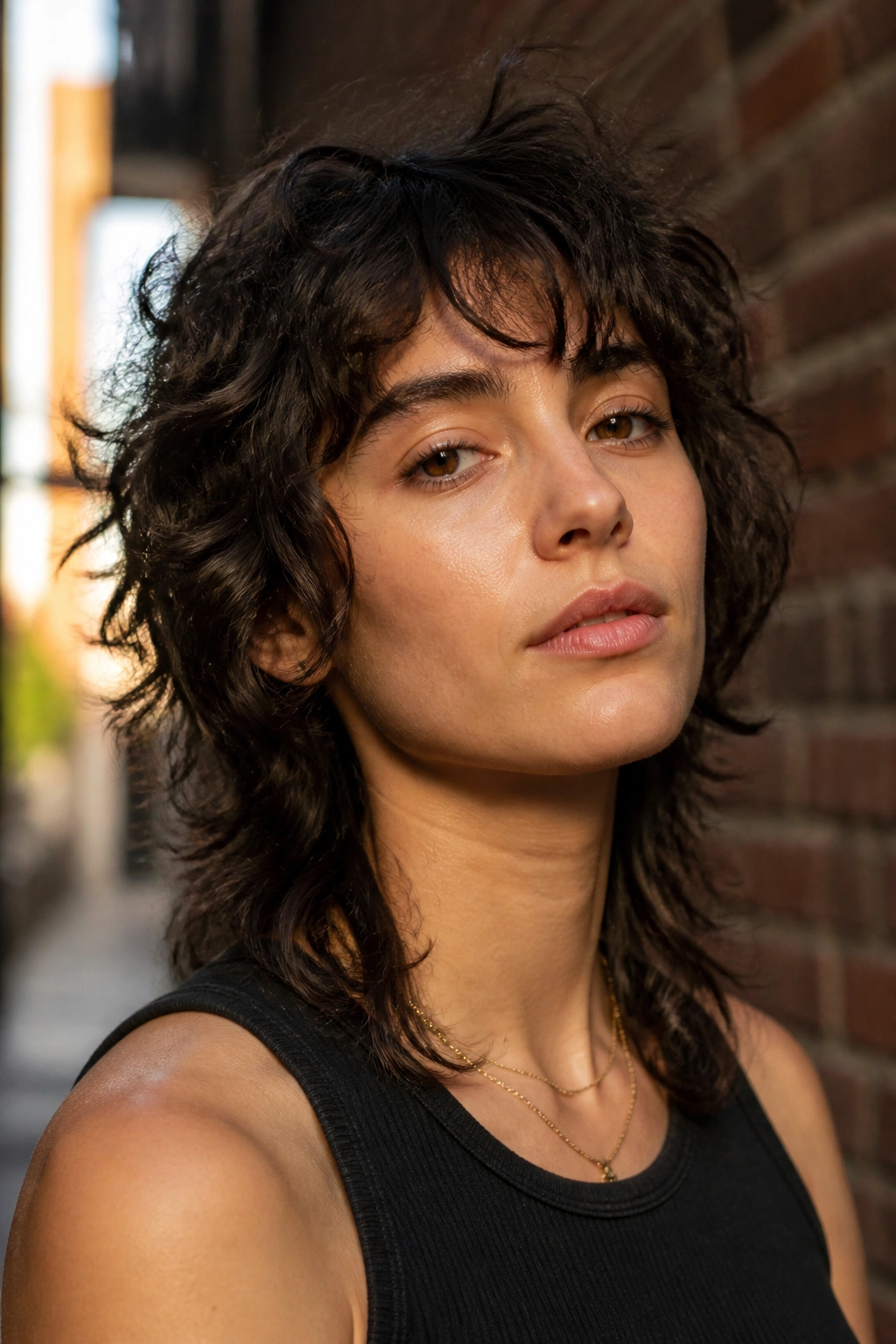
The curly wolf cut sits between a shag and a mullet, but it has its own personality. It’s messier than a shag, softer than a hard mullet, and full of piecey movement through the crown and ends.
What makes it work on curls is the layering. The top gets enough lift to keep the head from looking flat, while the ends stay long enough to create that lived-in, slightly wild outline. It’s the kind of cut that looks better with a little frizz than with too much control.
This is a good choice if you want your curls to feel modern without looking too neat. It works on many curl types, though tighter curls usually need a little more careful shaping so the layers don’t stack too aggressively. If the cut is too choppy, the silhouette gets jumpy fast. If it’s too soft, you lose the whole point.
A curly wolf cut is what I’d pick when someone wants movement first and polish second. It has a bit of edge, a bit of softness, and enough shape to keep the whole thing from drifting into chaos.
