



A round face doesn’t need more width. It needs curls that know where to land.
That’s the real trick with long curls for round faces: the shape is doing half the work before you even touch a brush. Curls that sit at cheek level can make the face read fuller. Curls that fall below the jaw, sweep off-center, or build a little height at the crown change the whole line of the face. Small move. Big difference.
Curly and coily hair adds another layer, because shrinkage changes where the ends actually fall. A style that looks waist-length when it’s wet may sit much higher once it dries, and that’s where a lot of bad advice falls apart. The cut, the part, and the way the curls are set all matter more than people think.
Some looks lean soft and romantic. Some are sharper. A few are downright practical for wash day or second-day hair. All of them are about giving a round face a little more vertical line without fighting the curl pattern you already have.
1. Long Curls for Round Faces with a Deep Side Part
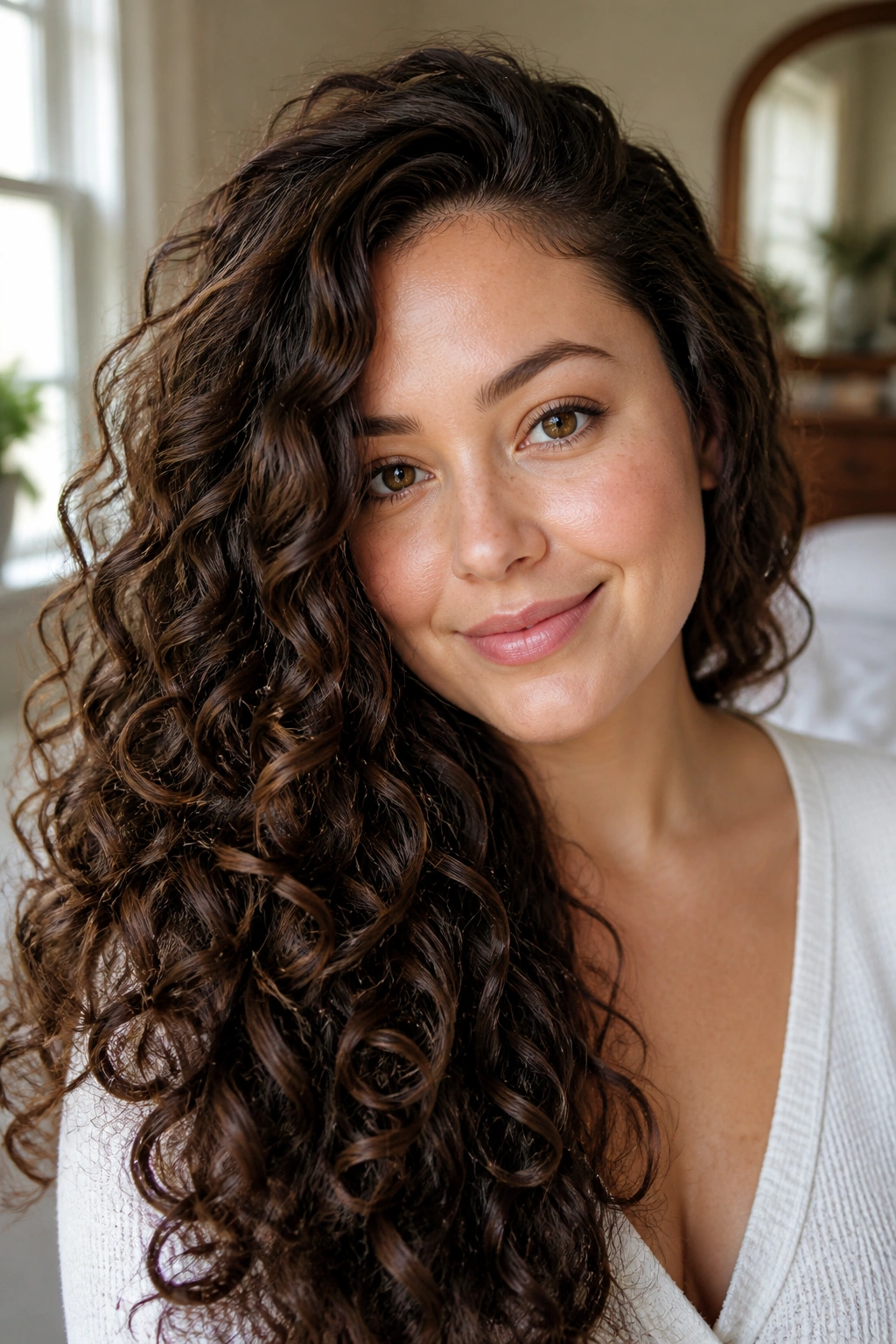
A deep side part does more shape work than most people give it credit for. It breaks up the symmetry of a round face and creates a diagonal line, which is exactly what you want when the goal is to make the face feel a little longer.
Why It Works
When the part sits a few inches off center, the eye stops moving straight across the widest part of the face. It moves down and over instead. That tiny shift makes a big visual difference, especially on dense curls that like to balloon at the sides.
How I’d Wear It
- Place the part on the side that feels a little flatter at the root.
- Clip the heavier side at the crown while it dries for 10 to 15 minutes.
- Keep the front curl pieces loose, not tucked hard behind the ear.
- Use a diffuser on low heat so the roots keep a little lift.
Best tip: if your curls collapse toward the part, pin the root at an angle while the hair cools. It helps the style keep that lifted bend instead of falling flat and wide.
2. Long Layers That Start Below the Chin
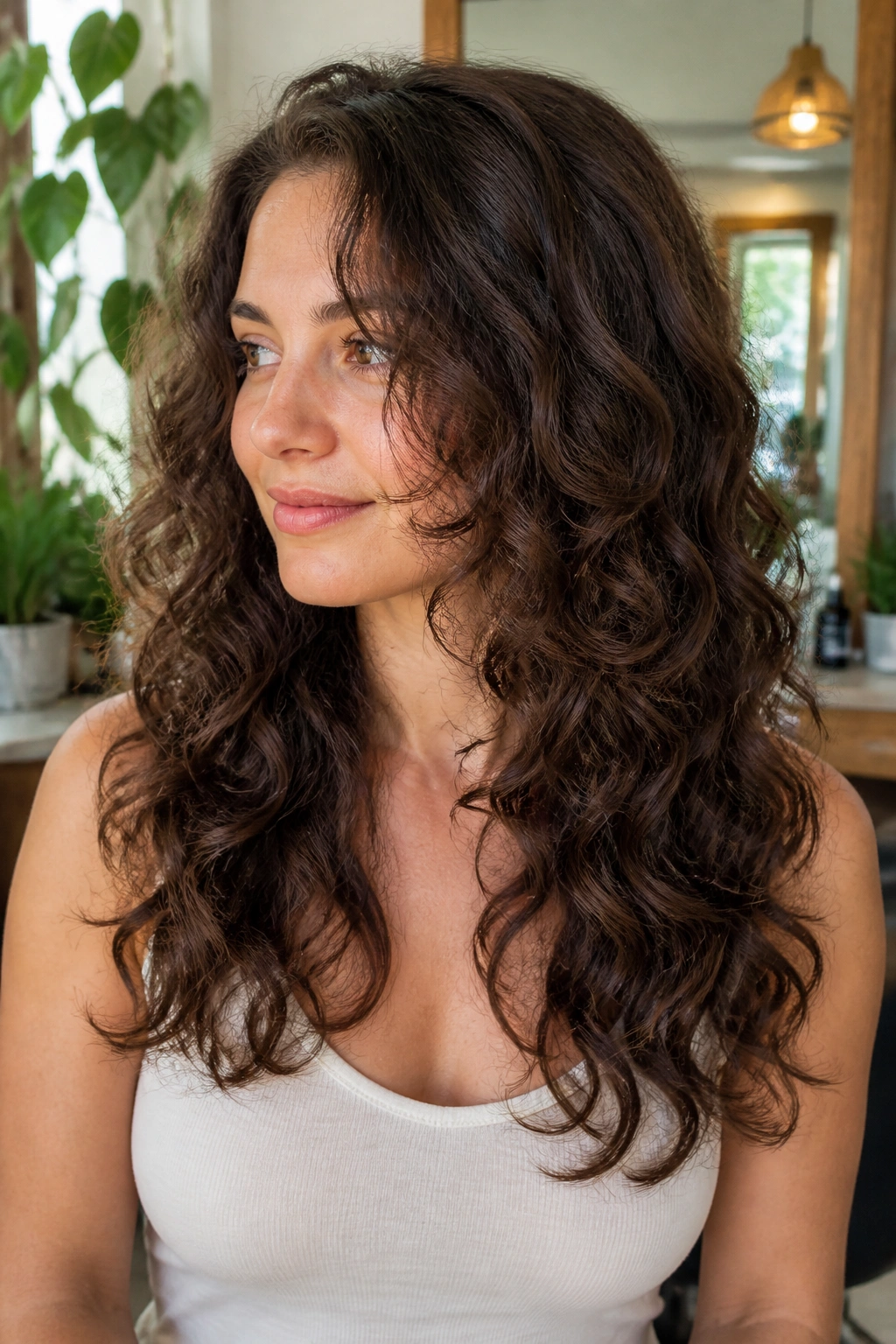
Below-the-chin layers are one of the safest bets for round faces. They keep fullness in the hair without letting the widest point of the curl land right beside the cheeks.
That matters more on curly hair than on straight hair. A curl that’s cut too high tends to bounce right back up and puff outward, which can turn a pretty shape into a triangle nobody asked for. When the first layer starts lower, the curl has room to fall, bend, and move.
I also like this cut for people who hate over-styled hair. It looks good air-dried, diffused, or set in a loose twist-out. The layers do the work, which is the part I like most.
Ask for a dry cut if your curl pattern changes a lot from wet to dry. That way the stylist sees the real length and the real shape, not a guess.
3. Curtain Bangs That Open the Forehead
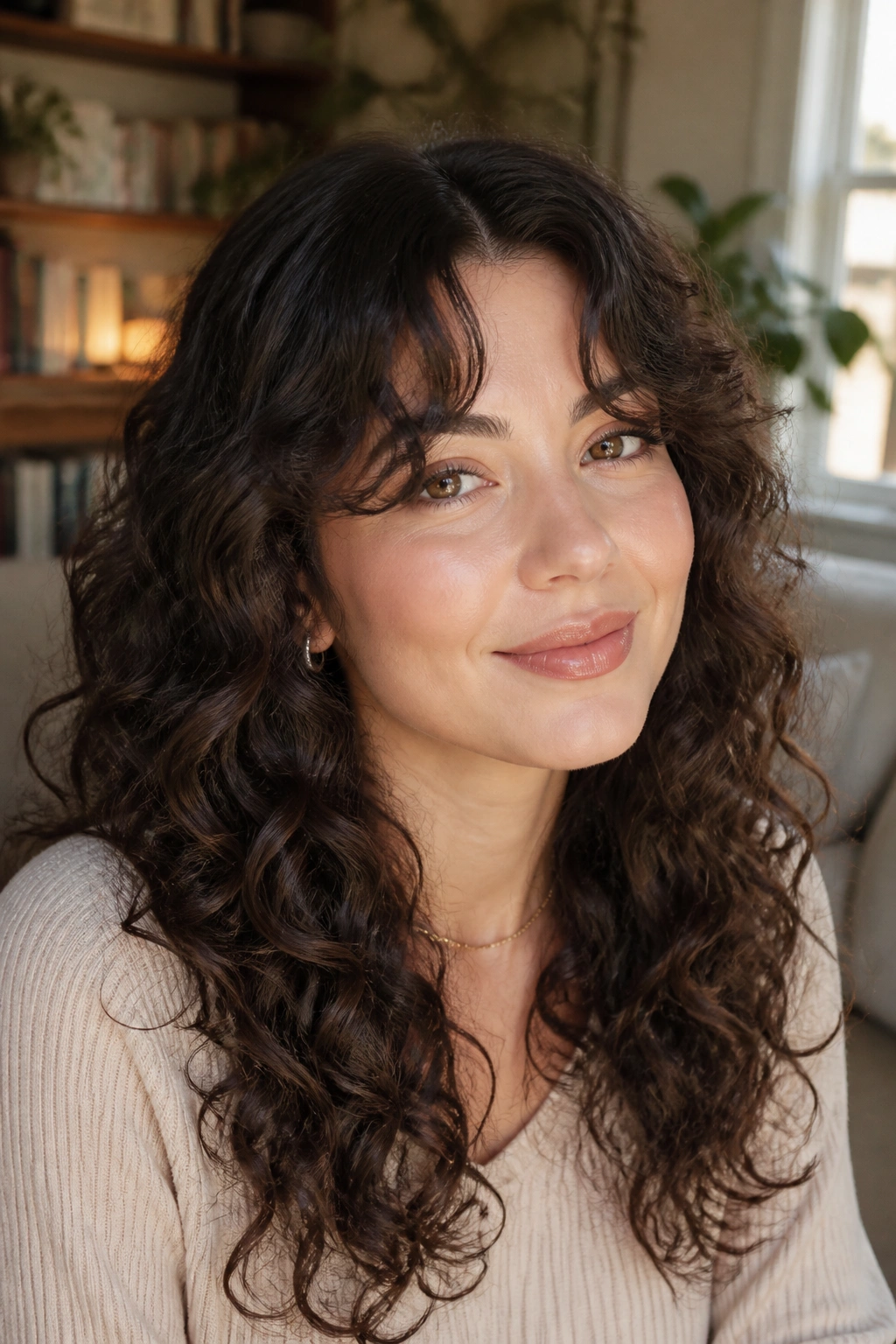
If your curls fall into your face all day, curtain bangs can be the cleanest fix. They open the forehead, soften the hairline, and stop the sides from reading too heavy around the cheeks.
Keep Them Airy
The mistake here is cutting the bangs too blunt or too short. On a round face, that can make the top half of the face look crowded. Keep the shortest piece around eyebrow level when stretched, and let the outer pieces drift toward the cheekbone or lip.
Curtain bangs also need a little discipline on wash day. Twist each side away from the face while damp, then clip them up and out of the way until they set. If you let them dry clumped together, they can fall in a flat curtain instead of that soft split shape you wanted.
- Cut them longer than you think at first.
- Keep the section narrow, not heavy.
- Refresh with a water mist and a pea-size curl cream.
- Avoid brushing them straight down unless you want extra width.
They can be gorgeous. They can also be fussy. Worth it, though.
4. The Curly Butterfly Cut
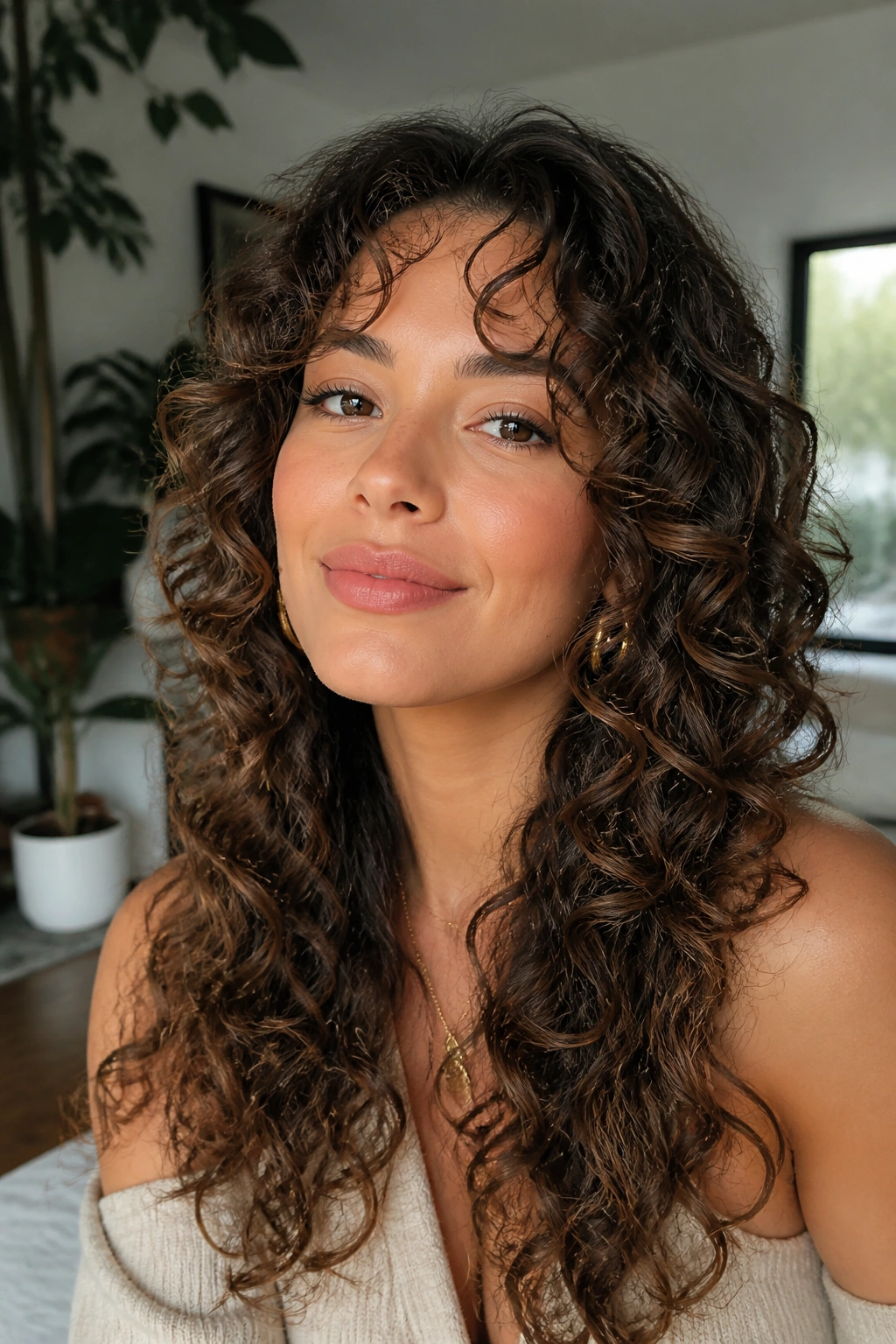
The butterfly cut works because it gives you two things at once: lift near the top and length through the rest of the hair. On a round face, that split of movement is gold. It keeps the silhouette from sitting like one big circle.
The shorter top layers create motion near the cheekbones, but they don’t have to sit right on top of them. That’s the whole point. The longer lower layers keep the eye moving down, which makes the face feel less wide.
What I like most is how alive it looks when the curls separate. It doesn’t have to be perfect. In fact, too-perfect curls can make the shape feel stiff. A little frizz at the ends, a little bend in the layers, a little irregularity — that’s where the cut starts looking expensive instead of overworked.
For tighter curls, ask for the layers to be shaped on hair that’s stretched out, not fully shrunken. That keeps the crown from turning into a puff ball.
5. Long Curls for Round Faces in a Crown-Lift Half-Up Style
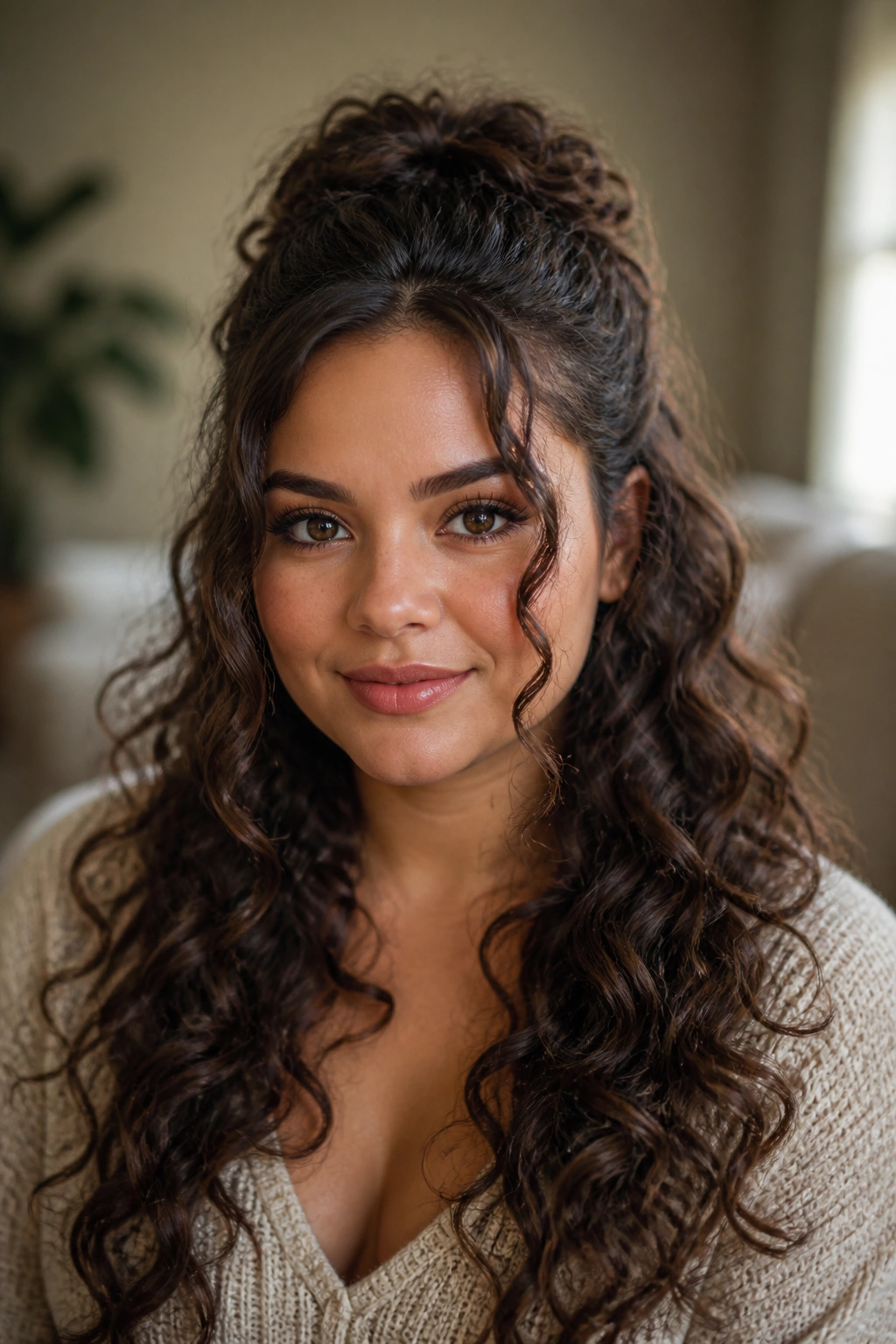
Need a style that opens the face in five minutes? This is the one I reach for when hair is cooperating just enough, but not enough to pretend I’m doing anything fancy.
The crown-lift half-up keeps volume up top and lets the lengths fall below the jaw, which is where the face starts to look longer. It’s especially good on day-two curls that need a little rescue. The top section hides any flat roots, and the loose back section still shows off the length.
How to Do It
- Section off the top third of your hair, from temple to temple.
- Secure it at the crown with a satin scrunchie or small clip.
- Leave two front curl pieces out on each side.
- Gently pull the crown up a bit before securing so it doesn’t sit flat.
What to avoid: pulling the half-up section tight and low. That can drag everything sideways and make the face look wider instead of taller.
It’s a cheat, but a good one.
6. The V-Cut That Draws the Eye Down
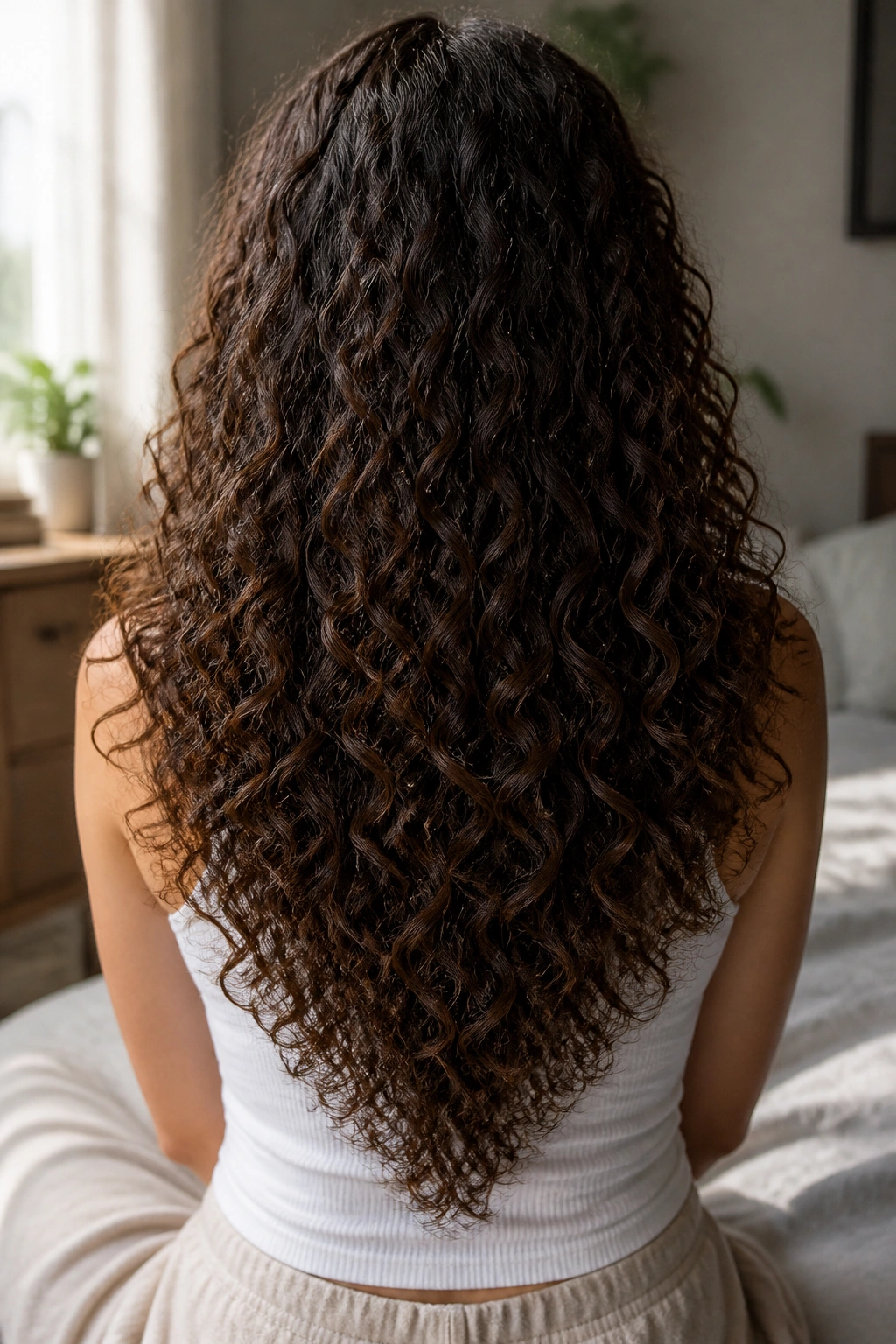
A V-cut is one of those shapes that sounds dramatic and usually isn’t. The point sits at the back, the sides taper softly, and the whole outline pulls the eye downward. That downward line is the real win for round faces.
It’s a better choice than a blunt hem when your hair is thick or your curl clumps are large. A straight bottom line can sit heavy and boxy on curls. A V gives the hair a little direction. It also keeps long curls from feeling like one giant curtain.
The catch is that thin ends can show faster in a sharp V. If your hair is fine or your ends are fragile, ask for a soft V instead of a pointy one. That keeps the shape flattering without making the last few inches look sparse.
On curly hair, I’d always rather see a softer edge than a severe one. Severe gets old fast.
7. Invisible Layers for Waist-Length Coils
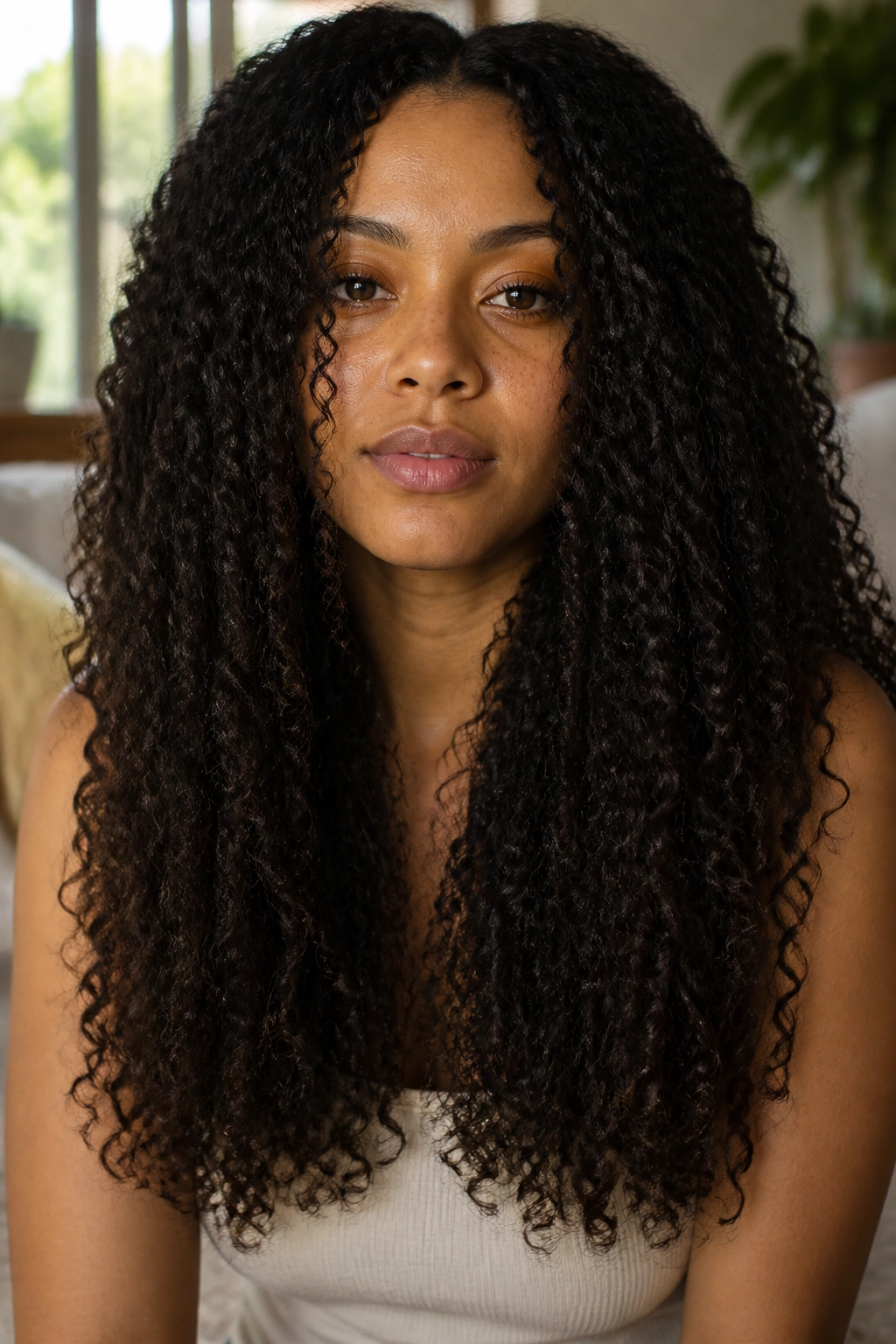
Invisible layers are a clever fix for thick coils that need movement without losing length. The point is to remove weight from the inside of the shape, not chop a bunch of obvious steps into the outside line.
What to Ask For
Ask your stylist to take bulk out underneath and leave the perimeter long. On coily hair, that often means cutting on stretched hair or working in small sections so the shrinkage doesn’t surprise anyone later.
Why It Helps
- The hair sits closer to the head near the sides.
- The length still drops below the chin and collarbone.
- The shape feels lighter without looking thin.
- The curls move instead of stacking outward.
This is a smart option if your hair always feels too wide at the cheeks but you do not want a heavily layered cut. It’s subtle. That’s why it works.
I’ve seen this shape save a lot of people from the dreaded “big triangle” look. Not by magic. By weight control.
8. Long Curls Swept Over One Shoulder
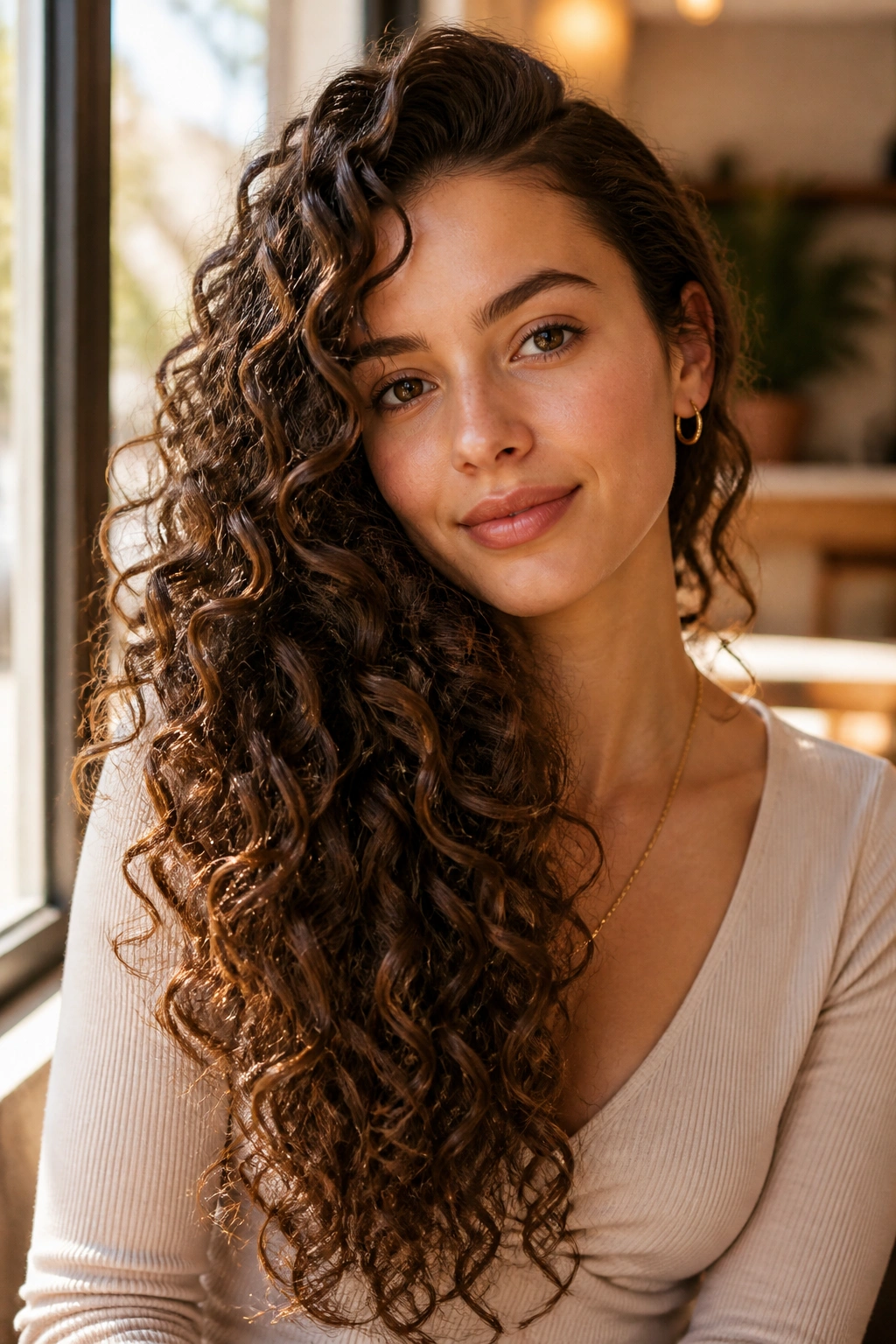
A one-shoulder sweep is pure shape control. It creates a diagonal from the part to the collarbone, and diagonals are your friend when a face needs more length.
This style has a little attitude without trying too hard. The hair sits across one side, which pulls the eye away from the widest part of the face. It also works well with big curl clumps because you’re not trying to force the curls into perfect balance. Let them pile over one shoulder and be done with it.
A couple of pins at the nape usually do the job. If the hair is slippery, cross two bobby pins where the curls start to fall. That little X keeps the style from sliding around all evening.
A drop of shine serum on the ends helps too. Not much. Two or three drops is enough for most long curls. More than that and the shape can go flat fast.
9. Twist-Out Length With Softly Elongated Ends
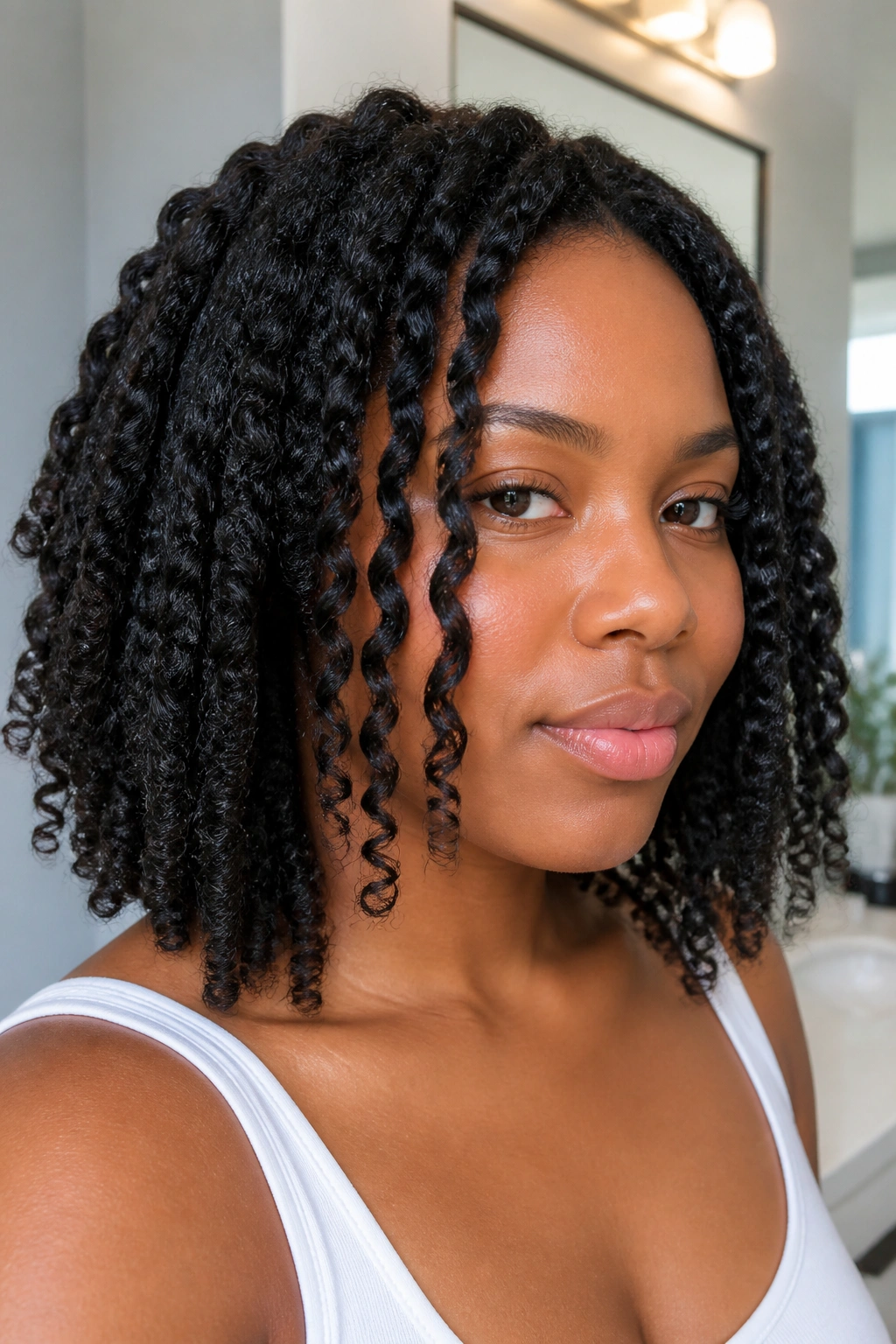
A twist-out can look wide if the twists are too short, too tight, or unraveled before they’re dry. Get those three things right, and it becomes one of the best long styles for a round face.
The trick is length. Not fake length. Real length created by setting the hair in sections that stretch the curl just enough to fall under the jaw and past the cheeks. The ends matter too. I like a little extra elongation at the bottom so the silhouette doesn’t stop abruptly at the widest part of the face.
If your hair is coily, banding the ends of each twist or setting them on small perm rods keeps them from shrinking back into a puff. That small detail changes the line of the whole style.
Best for
- Type 4 hair that needs stretch
- Wash-and-go fatigue
- People who want a soft, textured finish instead of a strict curl pattern
The unraveling matters more than people admit. Do it gently, with oiled fingertips, or the twist-out frays before you even leave the bathroom.
10. Center Part Curls with Cheekbone Layers
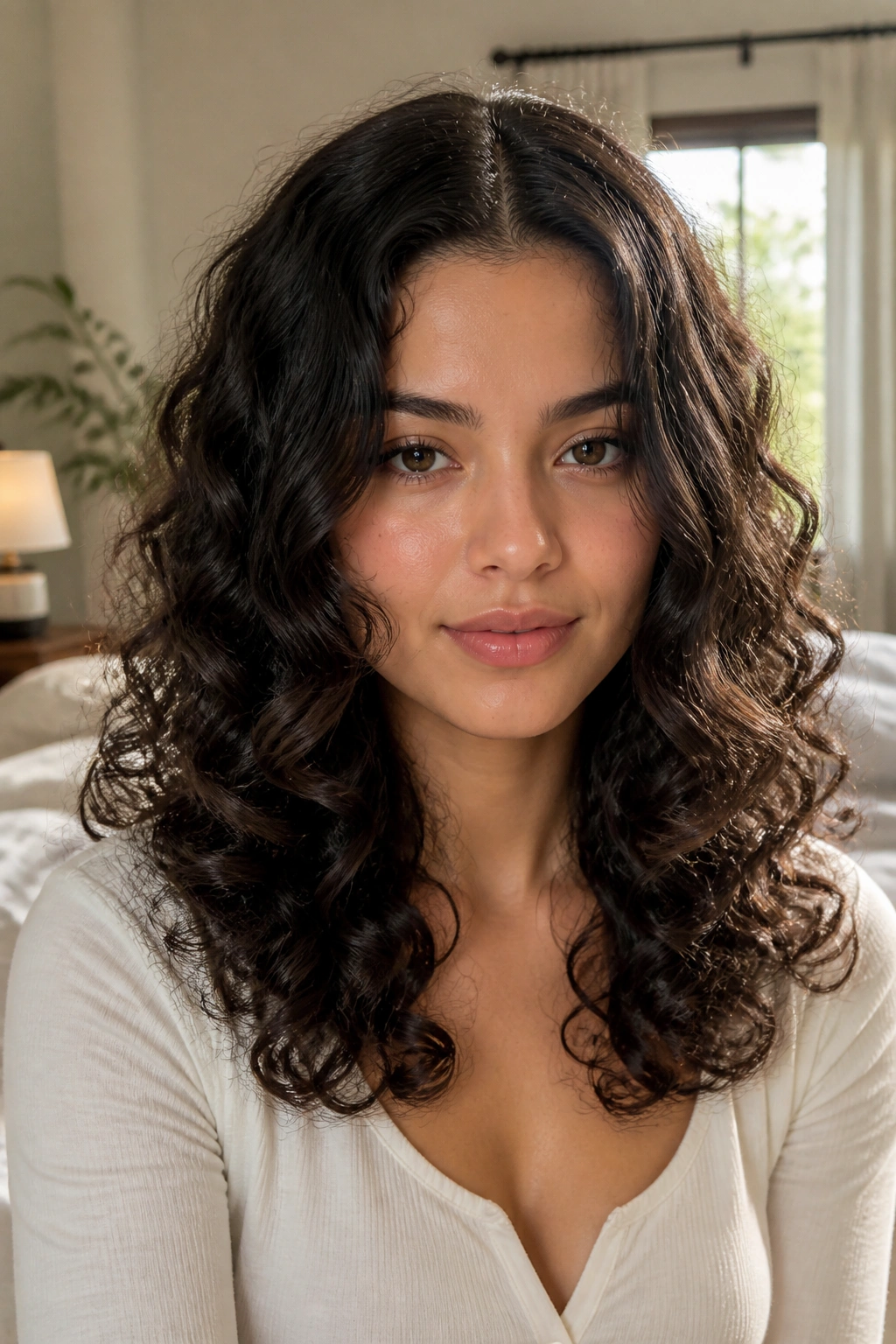
A center part on a round face is not a bad idea. It’s a bad idea when the hair falls evenly to the cheeks and stops there. Different thing.
When the face-framing layers start below the cheekbone, a center part can look clean and elegant. It creates a straight line down the middle, then lets the curls move outward lower on the face instead of at the widest point. The effect is calm, not severe.
When to Wear It
- Your curls have enough length to drop past the jaw.
- The front layers begin around lip or chin level.
- Your crown has a little lift, not a flat top.
- The curl pattern holds a soft S-shape or spiral.
A flat center part with heavy sides can make a round face feel broader. A center part with controlled layers does the opposite. That’s the difference.
If you’re unsure, start with a loose center part and nudge it a half inch off center. Sometimes that tiny shift is all it needs.
11. Braided Roots and Flowing Length
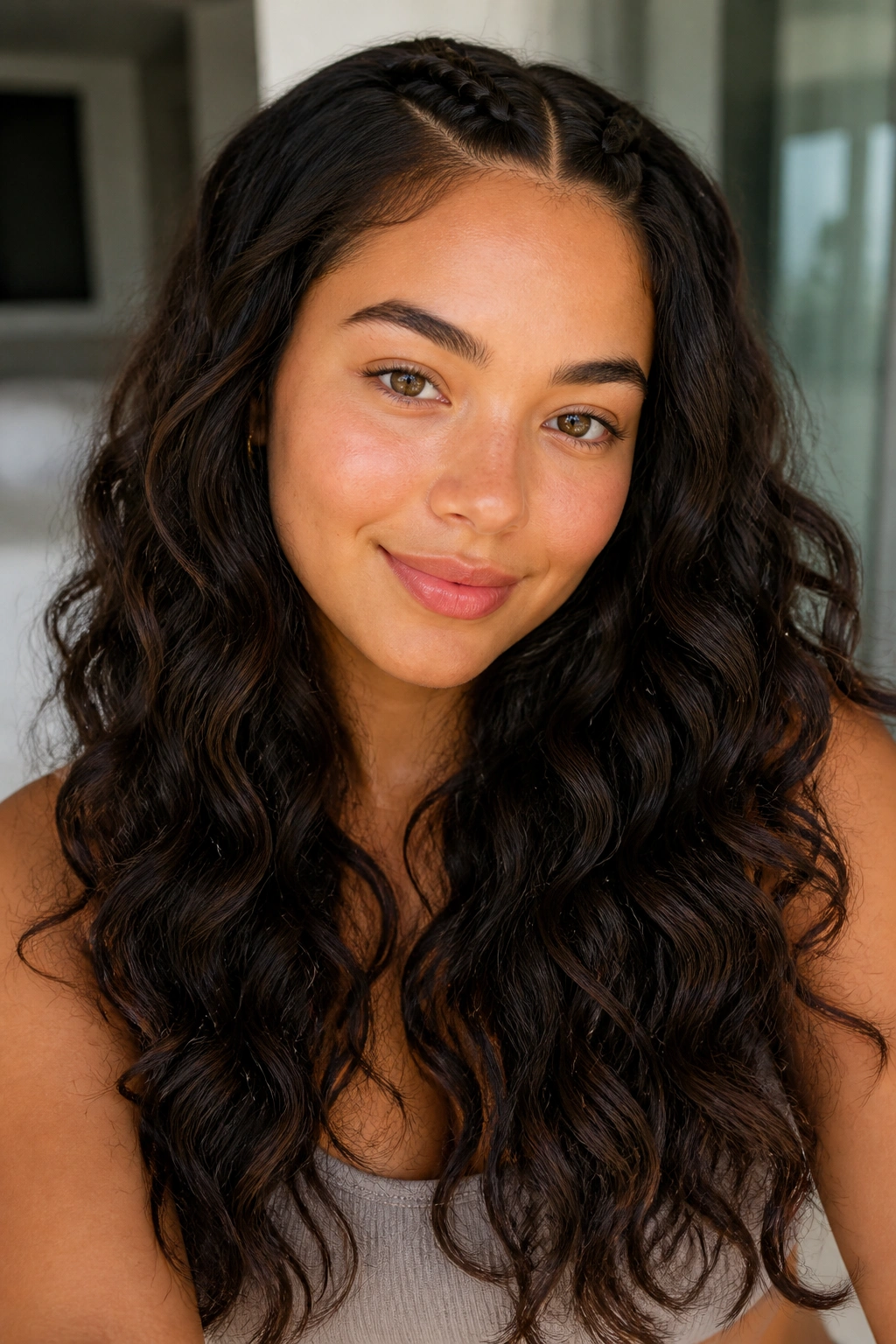
If your roots puff faster than the rest of your curls, braided sections at the front can be a smart fix. They control width near the face without hiding the length you actually want to show off.
The best part is how practical it is. Two small braids on each side, or even flat twists along the hairline, hold the front pieces close while the rest of the curls drop below the chin. The face looks more open, and the style feels less heavy around the cheeks.
I like this on humid days because the braided root stays neat longer than loose curls do. The ends can stay curly, coily, or even slightly stretched. There’s room to play.
A little edge control at the front is fine, but don’t slick the braids down so hard that the top goes flat. The whole point is control, not helmet hair.
12. U-Cut Long Curls
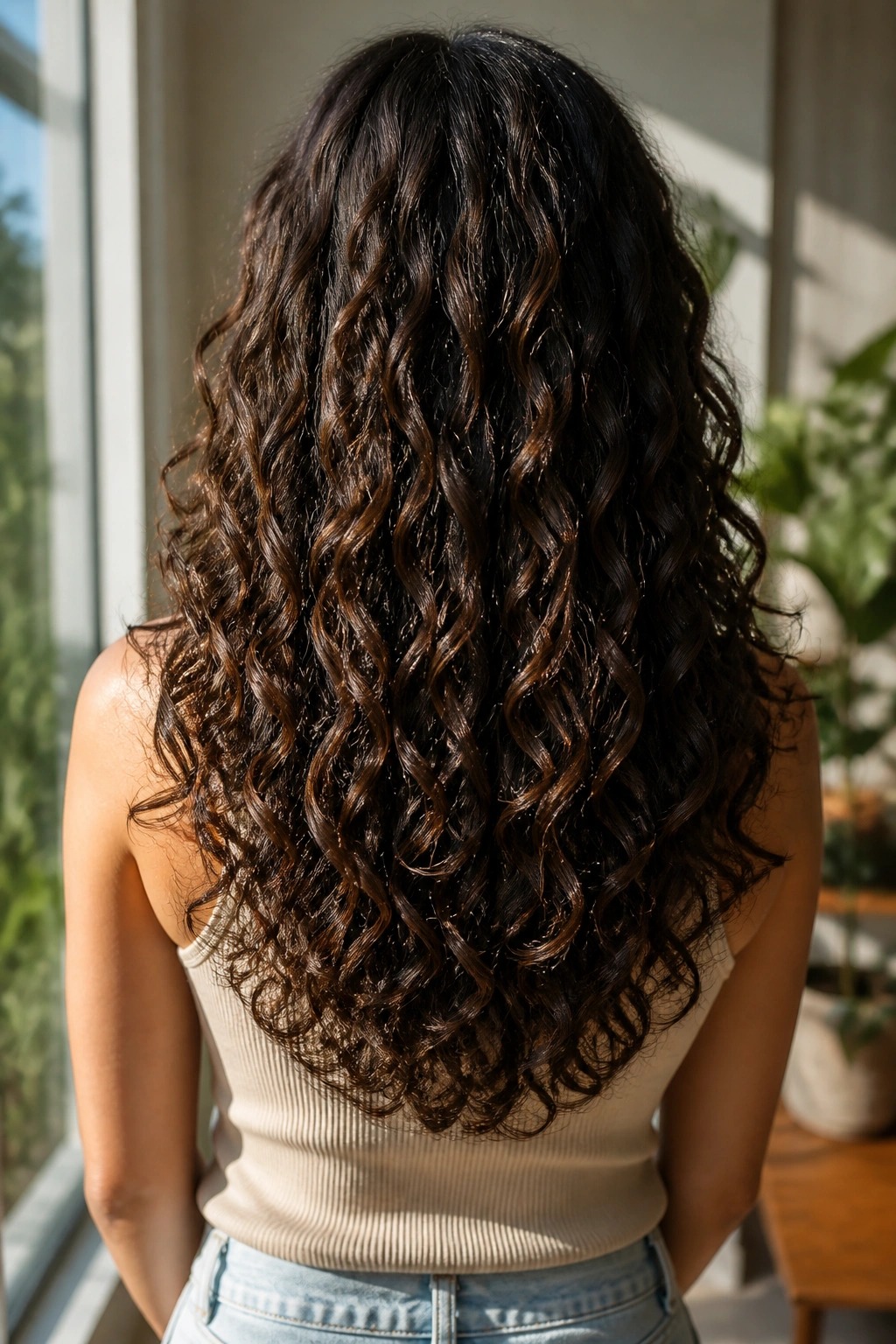
A U-cut is softer than a V-cut, which is why it works so well when you want shape without a sharp point at the back. The perimeter curves gently, and that curve helps long curls fall in a smoother line.
For round faces, that smoothness matters. It keeps the hair from looking boxy at the bottom, but it doesn’t pull attention to one dramatic point either. The result is balanced and easy to wear.
This is one of those cuts that looks boring in a salon mirror and great in real life. The reason is movement. Curly hair doesn’t sit still, so the soft U ends up looking richer and fuller once it starts to move.
If your hair is very dense, ask for gentle debulking inside the shape. If your hair is fine, skip that and keep the line fuller. Too much thinning on fine curls can leave the ends looking wispy, and nobody needs that.
13. Wash-and-Go Volume with Clipped Roots
A wash-and-go can work beautifully on a round face when the root area is controlled. If the hair expands outward at the sides, you get width. If the crown lifts first, you get height.
That’s where clipping helps. Small section clips at the crown and near the temples keep the roots standing up while the hair dries. The result is less puff around the cheeks and more length through the middle of the face.
Simple Setup
- Apply styler in small sections, about 1 to 2 inches wide.
- Clip the root area upward after each section is smoothed.
- Dry until the hair is at least 80 percent set before removing the clips.
- Shake the roots loose with your fingers, not a brush.
A mousse-gel combo works well here if your curls like hold. The gel keeps the clumps neat. The mousse keeps them soft. Nice pair. Not sticky, if you use a light hand.
This style lives or dies on root shape. The ends can be gorgeous, but if the roots spread sideways, the whole look loses its line.
14. Long Curls with a Deep Zigzag Part
A zigzag part sounds playful because it is, but it’s also practical. The broken line softens the width of the forehead and keeps the top from looking too flat or too rigid.
On round faces, straight center parts can sometimes feel a little too clean. A zigzag breaks that up. It also helps if your hairline is uneven, because the part blends into the natural texture instead of fighting it.
I like this best with defined spirals or softly separated ringlets. The zigzag gives the top a little energy, then the curls take over from there. If the curls are long enough to fall below the collarbone, the style reads light and shaped, not busy.
Use a rattail comb to make the part in small bends. Keep the zigzag shallow, around a quarter inch. Too much zigzag starts looking fussy. A little is enough.
15. Stretched Braid-Outs That Keep Length in View
A stretched braid-out gives coily hair a longer line without stripping out all the texture. That’s why it lands so well on round faces. The face gets a little visual length, but the hair still looks like hair, not blown-out fluff.
How to Keep the Shape
Braid the hair in medium sections, not tiny ones. Tiny braids create too much shrinkage and can make the curl pattern busy around the face. Medium braids give a smoother, longer wave when you take them down.
What Makes It Work
- Fully dry hair is non-negotiable.
- A light oil on your hands helps with separation.
- Pull the root slightly upward as you unravel.
- Fluff only the crown, not the sides.
This style has a nice in-between feel. Not as tight as a twist-out. Not as loose as a blowout. It sits in that sweet spot where length is visible, but the texture still looks intentional.
If you want even more length, band the ends before braiding. It’s a small thing, but it keeps the bottom from snapping back up.
16. Face-Skimming Ends Without Bangs
Sometimes the best move is to leave the forehead alone. No bangs. No curtain pieces. Just long curls that start with a clean part and then skim the sides of the face without sitting on top of it.
That sounds plain, and it is. Plain can be good. On a round face, too many short pieces around the cheeks can make the shape feel crowded. If the front curls begin a little lower — lip, chin, even collarbone — the face stays open and the length of the hair becomes the main event.
This works especially well when the curl pattern has enough spring to frame the face naturally. You do not need to force it. A curl that bends outward at the cheek and then drops below the jaw already does part of the job.
One rule: don’t overlayer the front just because you want “movement.” Movement is fine. Chopped-up ends near the face are not always better.
17. High Half-Up Puff with Curled Lengths
What if you want your face open, but you’re not in the mood for a full updo? A high half-up puff handles that nicely.
The top section gets gathered at the crown, which pulls the eye upward. The rest of the hair falls long and curly, often past the shoulders, so the lower half still gives you that lengthening effect. On a round face, that combination works because the shape doesn’t stop at the cheeks.
Quick Setup
- Smooth only the front two inches with a gel or edge styler.
- Gather the top section high, not low.
- Use a satin scrunchie so the base doesn’t dent.
- Leave the bottom curls loose and fluffy.
This look is excellent for coily textures that need a little structure without losing personality. It’s also a good rescue style when the back has more volume than the front. The puff balances the whole thing.
A low half-up tends to widen the face. A high one does the opposite. That’s the whole game.
18. Soft Shag Layers for Loose Spirals
A long shag can sound like a lot, but on loose spirals it’s one of the easiest ways to avoid a heavy, round outline. The layers break up the mass of hair and keep the curls from sitting in one giant ring around the face.
The reason it works is simple: the lengths are uneven on purpose. That unevenness creates movement high and low, so the eye never lands in one place for too long. On a round face, that keeps the shape from reading as too circular.
I prefer this cut when the curls are bouncy and not too tight. Think 3b to 3c texture, maybe with some tighter pieces underneath. If the hair is extremely dense, the shag can get big fast, so the stylist needs to keep the layers controlled.
Lightweight mousse, a touch of gel at the root, and a diffuser on low heat usually do enough. Heavy creams can weigh the layers down and make the whole thing sit in a lump. Not the look.
19. Side Ponytail Curls That Fall Below the Collarbone
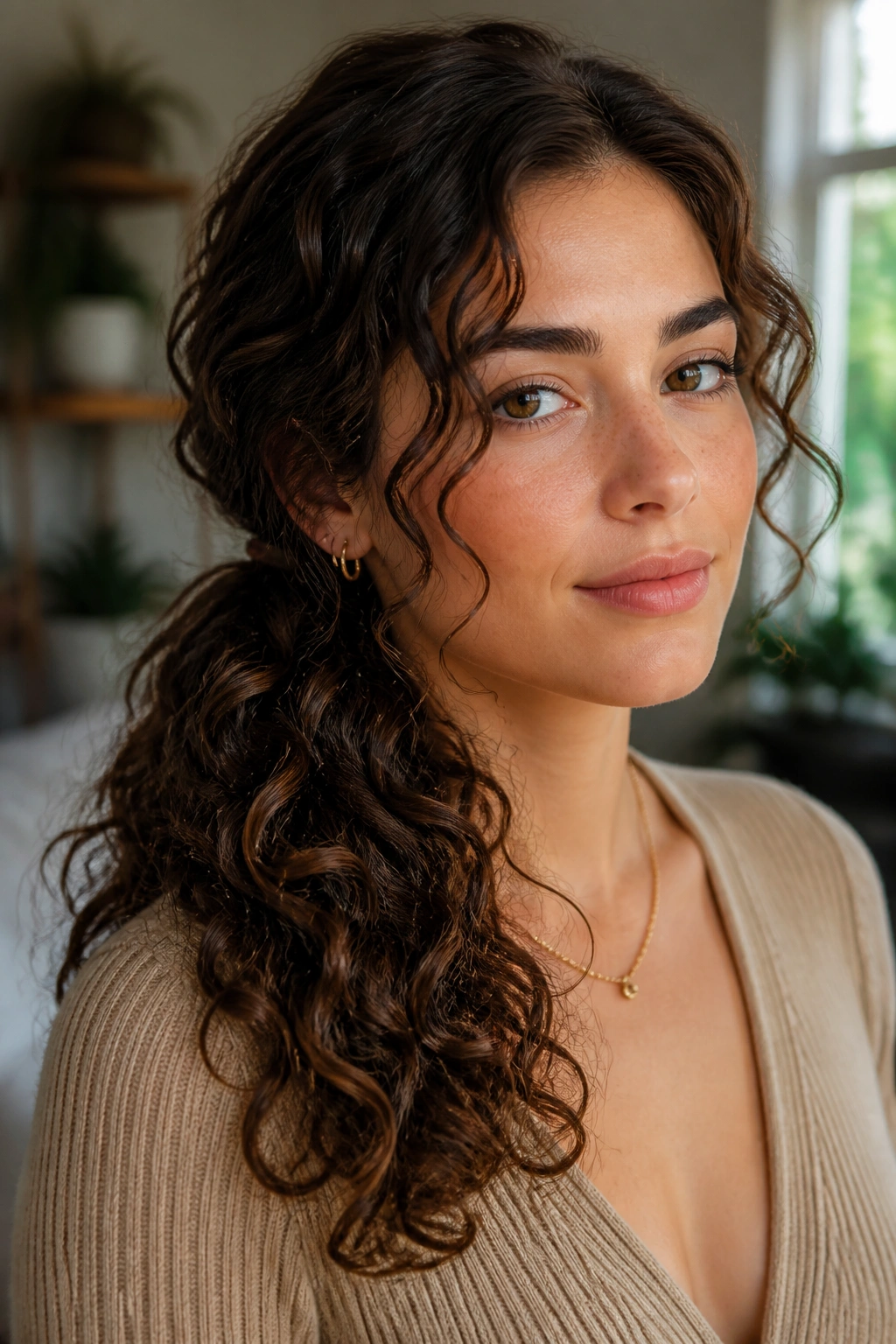
A side ponytail is one of those styles people forget about until they need one. On a round face, it works because it creates a line that moves down and across, not straight out from the cheeks.
The ponytail should sit low and loose. Tight and high can pull the face upward in a strange way, and that’s not the goal here. Let a few face pieces stay out. Let the curls sit over one shoulder. The silhouette ends up longer and softer.
I like this style for long curly hair that’s already had a full week. It hides frizz well and still shows the curl pattern. Add a ribbon, a wrapped strand of hair, or even a simple coil around the elastic if you want it to feel finished.
A side pony is also kinder to stretched curls than a standard low pony. The angle gives the hair more shape. The face gets a little lift from it too.
20. Pinned-Back Temples with Long Cascading Curls
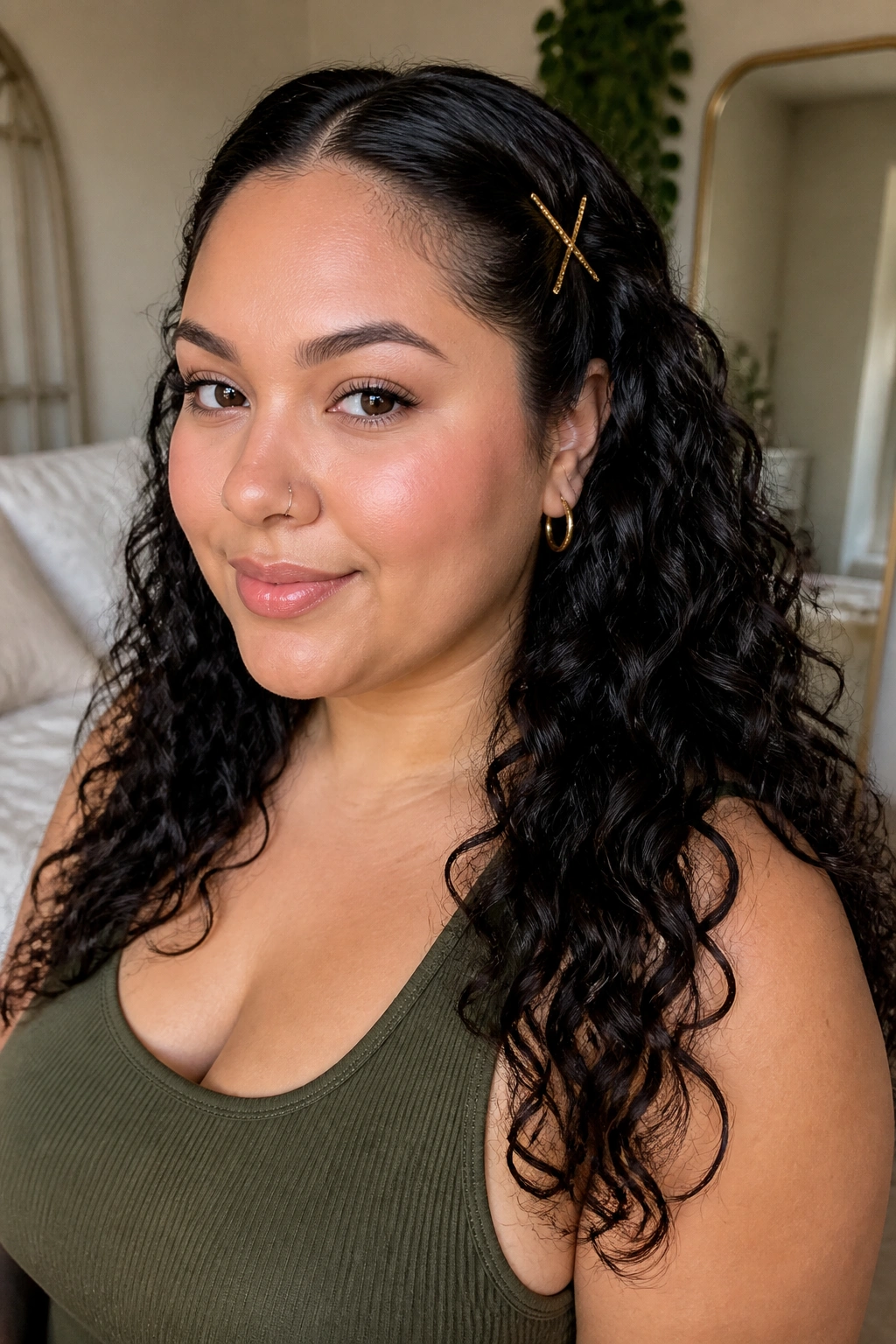
Pinned-back temples are a small fix with a big payoff. Pulling just the temple sections away from the face opens the cheeks and forehead while leaving the length free to do its thing.
That’s the useful part. You don’t have to commit to a full updo, and you don’t have to wear hair in your face all day either. Two crossed bobby pins on each side can hold the section neatly without making the style look stiff.
This is one of my favorite moves for curl patterns that clump well. The loose back can be dense, shiny, and long, while the front stays controlled. It also works when your hair is between wash days and the crown needs less handling than the ends.
If you want the pins to disappear, tuck them under a small twist of hair instead of pushing them flat against the scalp. It looks cleaner and holds better. Tiny detail. Huge difference.
21. Rod-Set Ringlets With Blended Layers
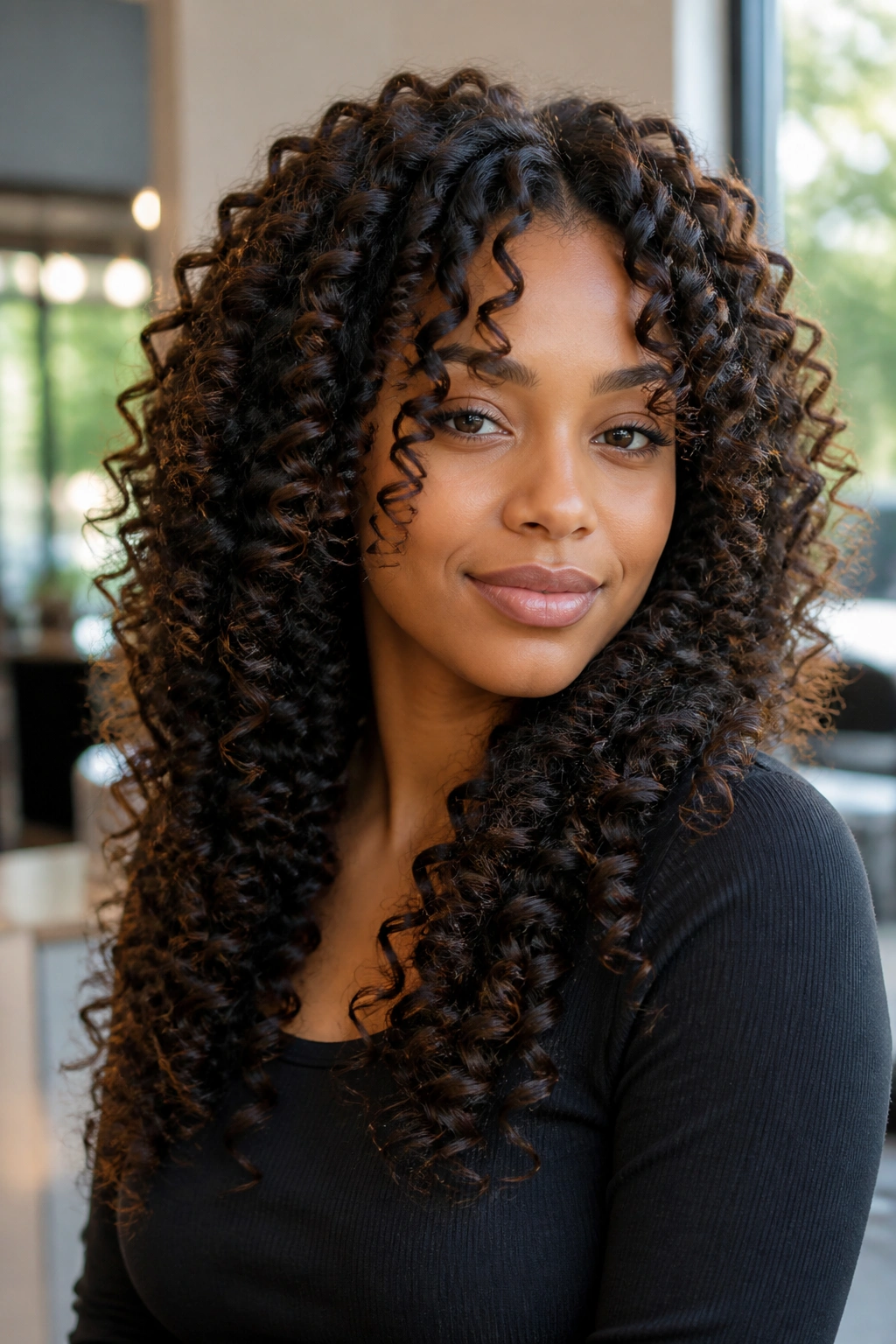
A rod set gives you structure, and structure is useful on a round face. The curl size is deliberate, which means you can decide exactly where the volume starts and how it falls.
How to Shape It
Use smaller rods around the face if you want tighter definition there, then move to medium or larger rods through the back. That keeps the front close and controlled while the rest of the length feels full and soft.
What to Watch
- Hair must be fully dry before the rods come out.
- Separate only after the curls are cool.
- A small amount of oil on the fingertips helps reduce frizz.
- Don’t rake through the front too much, or the face shape widens again.
This set holds shape for days when it’s done well. It also gives you a clean end result, which can be nice if your natural curl pattern tends to do its own thing at the cheeks.
It’s a little more work than a wash-and-go. Worth it if you want control.
22. Long Curls With a Low Puff and Free Face Pieces
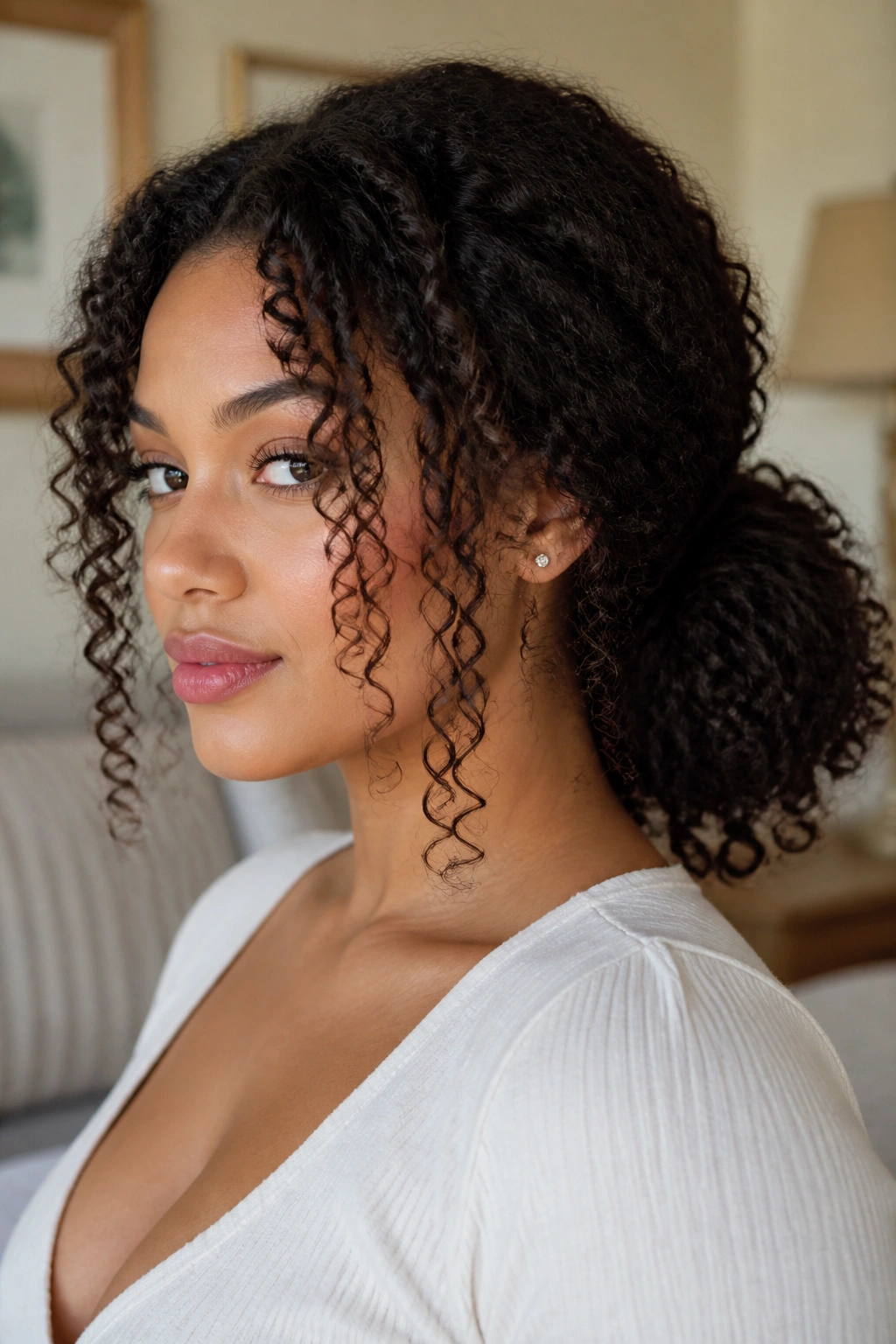
A low puff can look much longer than people expect. The trick is that it sits below the cheek line, which leaves the upper face open and gives the curls a place to fall without crowding the sides.
This style works especially well on coily hair because it respects shrinkage instead of fighting it. The puff stays low and soft, while a few face pieces stay loose at the front or temples. That combination keeps the face from reading too wide and still lets the texture shine.
I like it when the hair is rich and dense. A low puff can handle that density better than a tight ponytail can. If you want a little more polish, wrap a small section of hair around the base and pin it underneath. It hides the elastic and keeps the shape neat.
The face pieces matter more than people think. Keep them long enough to reach the jaw or collarbone when stretched. Too short, and they turn into fringe. Too short is the wrong move here.
Final Thoughts
Round faces and long curls make a good pair when the shape is handled with a little care. The goal isn’t to hide the face. It’s to give it cleaner lines, a bit of lift, and curls that fall where they can do the most good.
If you’re stuck between two looks, pick the one that changes where the bulk sits. That one decision usually matters more than curl size, product brand, or whether the part is half an inch left or right.
And if your hair has a mind of its own — which curly and coily hair often does — work with that instead of fighting it. The best long curls for round faces are the ones that still feel like your hair when you’re done.
