



Short curls for round faces work best when the cut stops fighting the face and starts shaping around it. That sounds obvious, but a lot of bad haircut advice still leans on one blunt idea: keep the length long and hide everything. Short curls can do better than that. They can open up the cheekbones, add lift at the crown, and bring the eye upward instead of letting it sit squarely on the widest part of the face.
The tricky part is shrinkage. A curl that hangs at the jaw when wet may spring up to the cheek when dry, and that little jump changes the whole silhouette. A good curl cut takes that into account. A great one is often dry-cut, or at least checked dry before the last half-inch comes off.
Round faces usually look strongest with shape, not bulk. A blunt line at cheek level can push width outward. A side part, a tapered nape, a longer front, or a little asymmetry can make the same curls read softer and longer without losing that lively, springy texture people actually want.
So the goal is not to flatten the curl pattern or stretch it into something it is not. It is to give the curls somewhere useful to go. Some styles do that with height. Some do it with diagonals. A few do it by clearing the sides and letting the top do the talking.
1. Curly Pixie for Round Faces
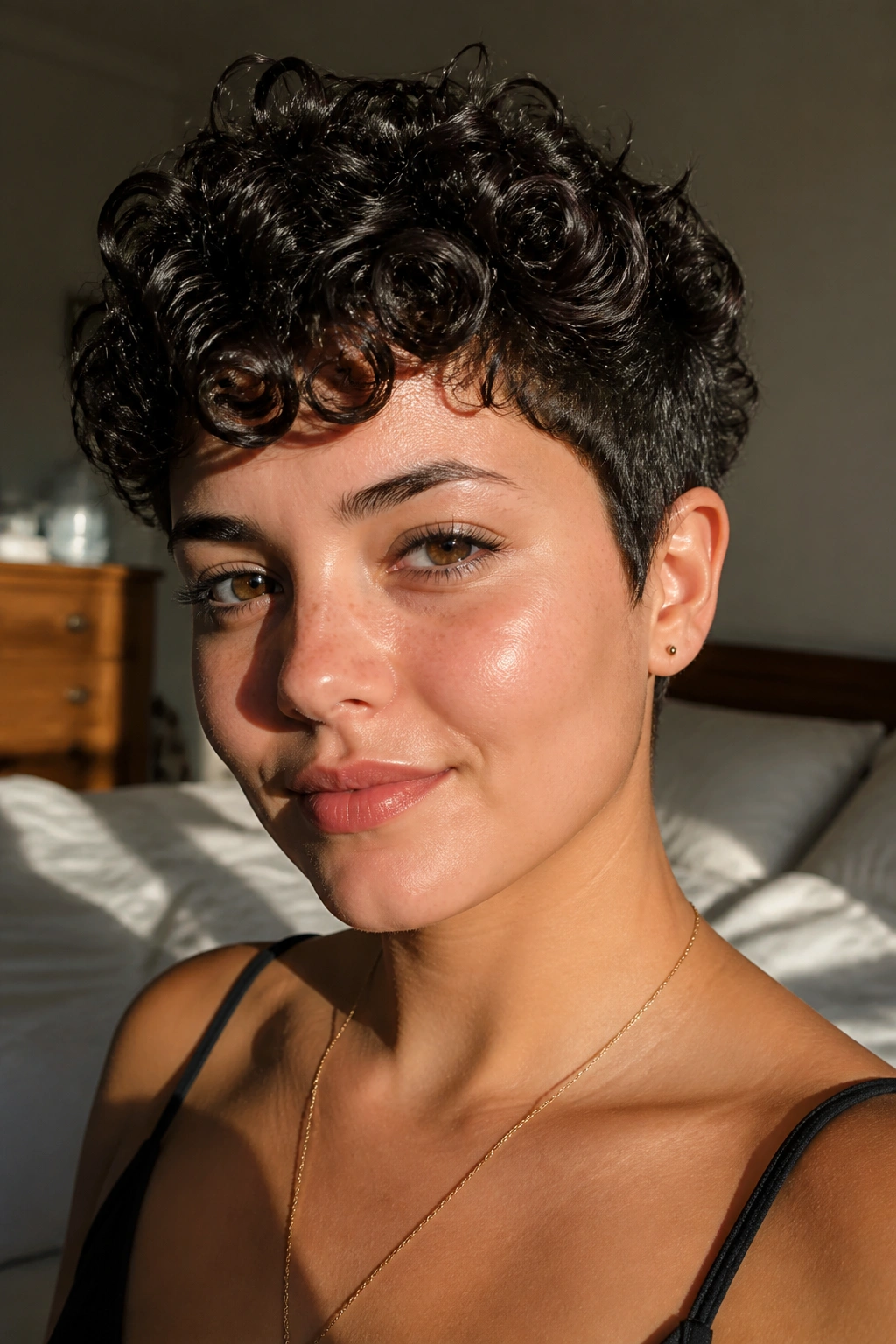
A curly pixie is one of the cleanest ways to make a round face look a touch longer without piling weight around the cheeks. Keep the sides tight, leave the top pieces a little longer, and let the curls rise instead of puffing outward.
Why It Works
The shape draws the eye up. That is the whole point.
When the top has 2 to 4 inches of curl length and the sides are trimmed closer to the head, the face stops reading as wide. The cut also gives you room to play with texture on top, which is where curls usually look happiest anyway. I like this best on loose curls and soft coils that have some bounce but do not collapse flat when trimmed short.
Quick Notes
- Ask for shorter sides and a longer crown.
- Keep the outline soft, not helmet-shaped.
- Point-cut the ends so the top does not look boxy.
- Use a lightweight mousse or foam, not a heavy cream that drags the shape down.
Pro tip: If your curls shrink a lot, have the stylist check the cut dry before taking off more length. That extra look can save you from ending up too short around the temples.
2. Tapered Coily Crop
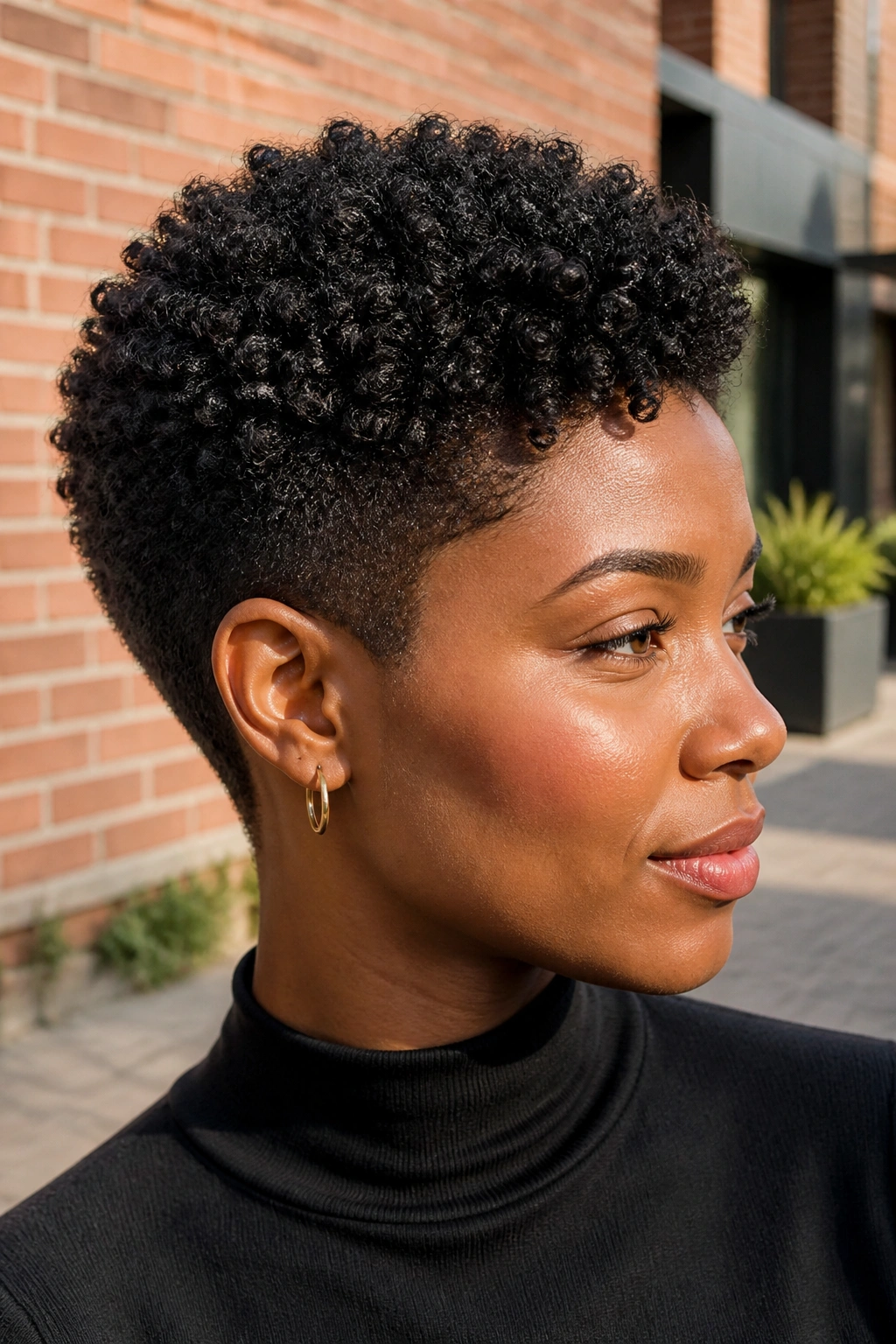
A tapered coily crop is the no-nonsense answer for tighter coils that need structure. The sides and nape are cut close, sometimes almost faded, while the top keeps enough length to stack upward and show off the curl pattern.
It works because it removes width where round faces already have plenty of it. The eye lands on the top shape, not the widest point of the cheeks. That change sounds small. It isn’t.
This is the cut I’d point to for anyone who likes low fuss mornings. A little leave-in, a touch of curl gel, finger fluff, done. If you want softness at the front, leave a few temple pieces just long enough to bend toward the cheekbone. If you want something sharper, keep the sides tighter and let the top stay compact.
One thing: don’t let the taper climb too high if your curls are dense. You want a clean outline, not a shaved look that exposes too much scalp near the temples unless that is the mood you want. Some people love it. Some do not. There is no fixing that with product.
3. Side-Parted Curly Bob for Round Faces

Why does a side part matter so much on a round face? Because it breaks the symmetry that makes width feel louder. A center part can work on some curl patterns, but a strong side part usually gives the face a diagonal line to follow, and diagonals are flattering in a way straight lines often are not.
The length should hover around the jaw or just below it, with the front pieces a little longer than the back. That keeps the bob from sitting exactly at the fullest part of the cheeks. If the curls are springy, the cut can land a bit longer than you think and still sit neatly once dry. If the curls are loose, you can keep it closer to chin length without the silhouette getting too round.
How to Style It
Pick your part while the hair is damp, then clip the roots on the heavy side for 10 to 15 minutes while it dries. That little pinch at the root changes the whole profile. Finish with a diffuser on low heat or just air-dry and scrunch once the cast forms.
A side-parted curly bob is one of those styles that looks polished without trying too hard. That matters more than people admit.
4. Asymmetrical Bob With One Longer Side

Picture this: one side tucks neatly behind the ear, the other side skims the chin. The face instantly reads longer. That is the power of an asymmetrical bob.
The uneven line creates movement without needing extra length everywhere, which is useful if your curls are thick and prone to widening out. A difference of 1 to 2 inches between the two sides is enough. You do not need a dramatic fashion cut unless you want that sharper edge. A small shift can do the job quietly.
- Keep the nape a little shorter than the front.
- Ask for the longer side to land near the chin.
- Avoid heavy interior layering at the cheek.
- Use a curl cream only at the ends if the hair swells fast.
There is a fine line here. Too much asymmetry and the cut starts to look accidental; too little and the face-framing effect disappears. I like this shape most when the longer side sweeps across the cheek instead of sitting straight out from it. That small angle matters.
5. Curly Bixie
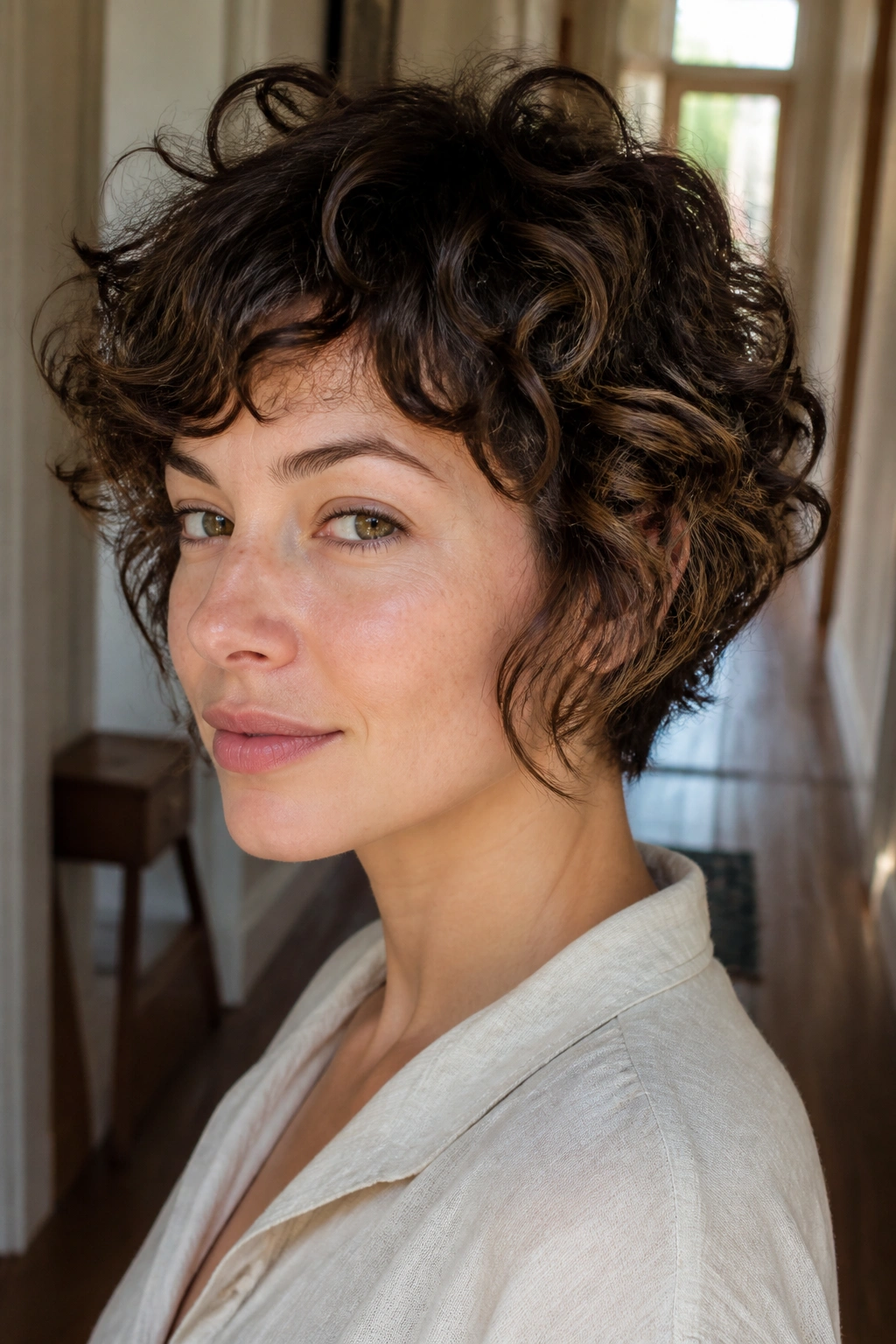
A bixie sits between a bob and a pixie, and that middle ground is exactly why it flatters round faces so often. You get some length around the front, some lift at the crown, and enough softness to avoid the hard blocky feel a chin-length cut can create.
This one has range.
The best version keeps the nape neat and short while leaving the front pieces long enough to brush the cheekbone or just touch the jaw. That little bit of extra front length keeps the face from feeling boxed in. It also gives curls a chance to fall in a gentle curve rather than puffing into a full circle.
A bixie works especially well if your hair is dense and you are tired of fighting bulk. It also looks good with coarser textures because the shorter shape gives the curl pattern room to stand up on its own. I would not over-layer it. Too many slices can make the top frizzy and thin at the same time, which is a frustrating combo.
If you like a cut that feels playful but still grown-up, this is a strong one.
6. Chin-Length Curly Shag for Round Faces

A chin-length curly shag does what a blunt bob often won’t: it breaks the shape up. That matters on a round face, because the eye no longer sees one single rim of hair sitting at the widest point. Instead, it sees layers, movement, and a little air between the pieces.
Unlike a straight bob, the shag gives curls room to stack vertically. That vertical lift is the trick. When the top layers are shorter and the face-framing pieces start a bit below the cheekbone, the cut makes the face read longer without losing softness. It also handles humidity better than a precision bob, which is useful if your curls swell the moment the weather turns damp.
What Makes It Different
The shape should feel a little undone, but not sloppy. There is a difference.
- Shorter layers at the crown for lift.
- Longer pieces around the jaw to elongate the face.
- Soft ends, not blunt ends.
- A little fringe is fine, as long as it stays airy.
If you want a curly style that looks like it has movement even on a quiet day, this is a strong choice. It is one of the few short cuts that can look better after a few hours of wear.
7. French Bob With Soft Fringe
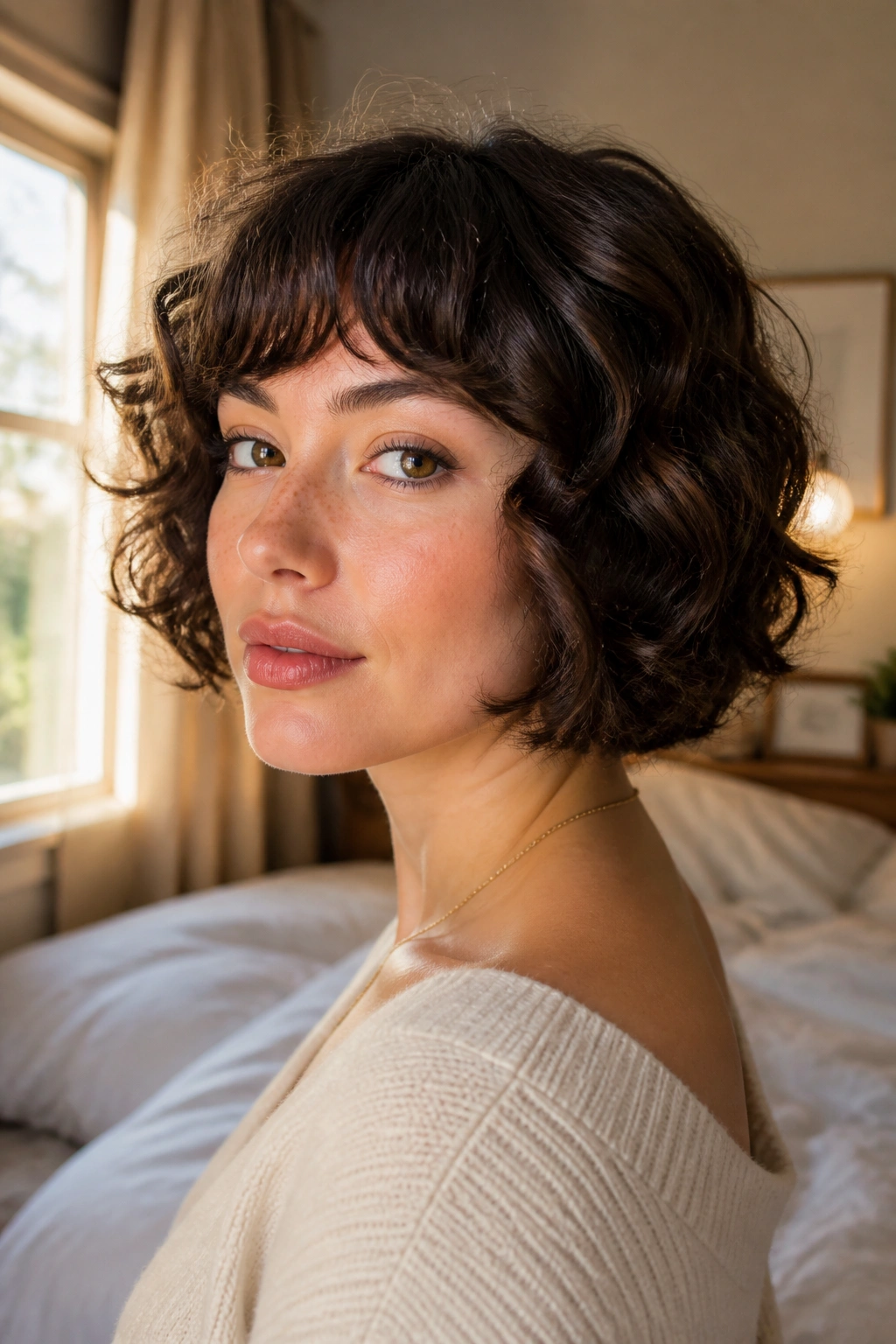
A French bob with a soft fringe can be lovely on a round face, but only if the fringe stays light. A heavy, straight-across bang at cheek level can pull the face wider. A piecey fringe that kisses the brows and breaks apart a little at the ends does the opposite.
Why It Works
The cut sits short, but the softness keeps it from feeling boxy. That matters.
A good version usually lands right around the lip or just under the cheekbone when dry, with a fringe that skims the brow line instead of sitting like a curtain. If your curls are springy, ask for a touch more length in the fringe than you think you need. The shrinkage can be sneaky. It always is.
Quick Shape Cues
- Keep the back slightly shorter than the front.
- Ask for textured bangs, not a blunt band.
- Use a light gel on the fringe so it separates cleanly.
- Let a few curls fall loose near the temple.
The French bob looks chic when it feels a little imperfect. That is part of the appeal. On a round face, the rougher texture keeps it from becoming too full through the middle.
8. Stacked Coily Bob With a Taller Crown
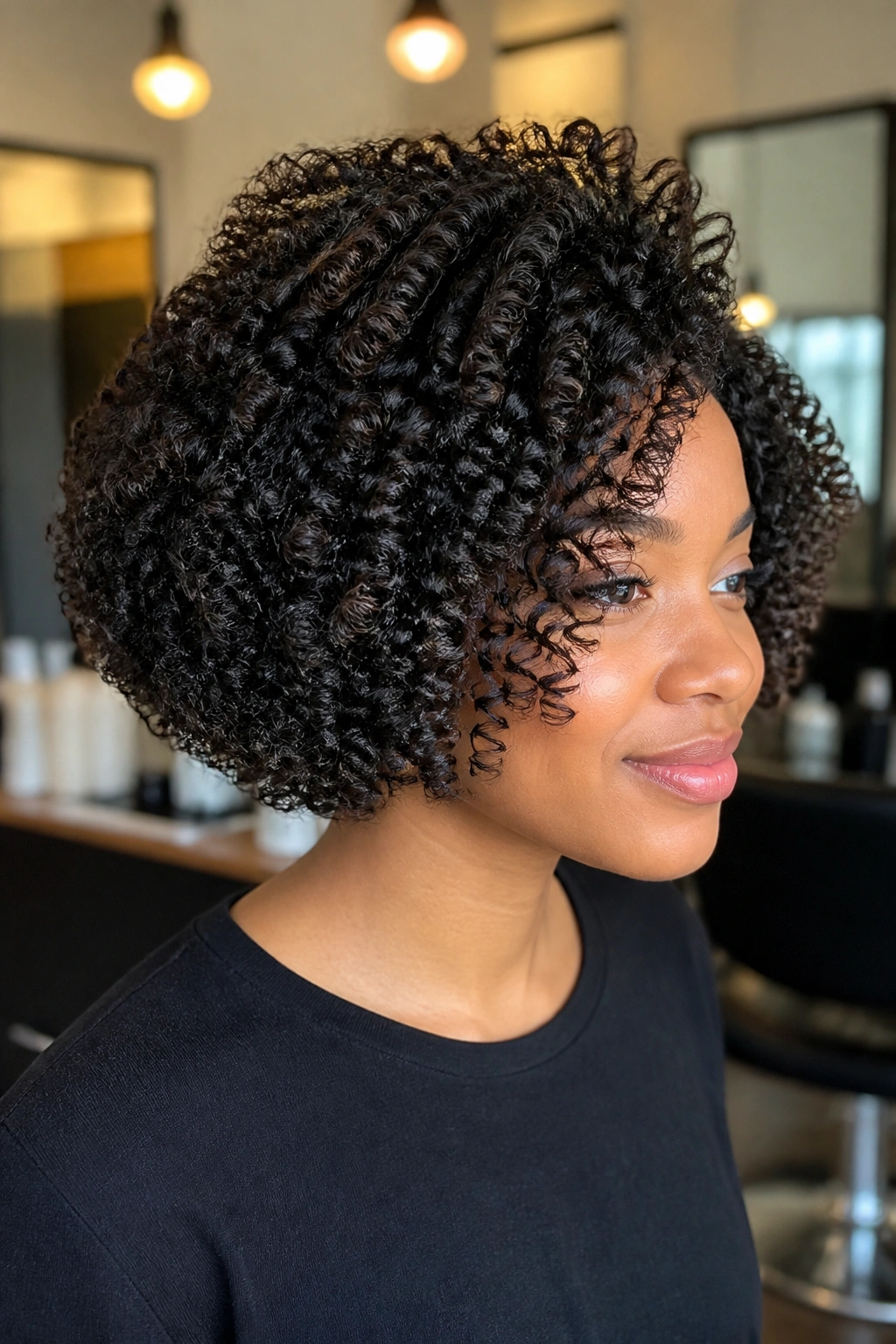
A stacked coily bob is one of the smartest ways to add shape without adding width. The back is built a little shorter, the crown is lifted, and the front edges stay controlled enough to avoid that mushroom effect nobody asked for.
The height at the crown changes everything. Once the top has room to rise, the face reads longer and leaner, even if the hair itself is dense. I like this cut for tighter coils that naturally want to sit upward. The shape looks intentional fast.
A good stacked bob should not flare out at the cheek. That is the mistake. Ask the stylist to keep the stack contained and to leave the front pieces longer than the back by a small but visible amount. A difference of even an inch can make the silhouette feel cleaner.
This is also one of the easier short styles to refresh with a pick or fingers. You do not need to over-manage it. The haircut is doing the heavy lifting.
9. Jaw-Skimming Crop With Face-Framing Pieces
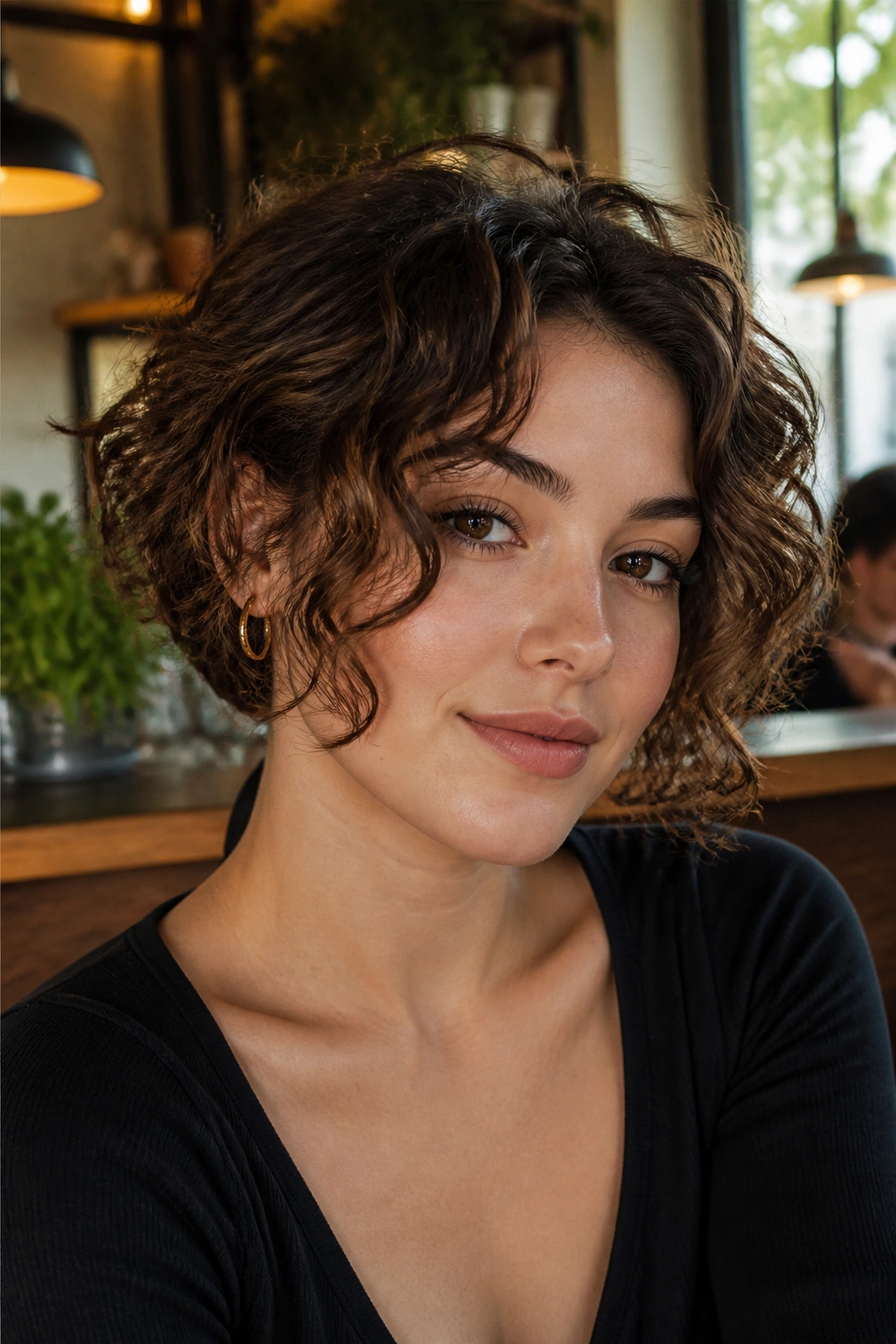
Why does jaw-skimming length work so well on round faces? Because it drops the eye just below the cheeks without dragging the whole look downward. That tiny shift is enough to make the face feel more oval.
The face-framing pieces matter here. Keep them a little longer than the rest of the perimeter so they bend around the cheek instead of ending right at the widest part. If your curls have a springy pattern, the stylist should check where the dry length lands before finishing the front. Wet curls lie.
What to Ask For at the Chair
- Perimeter length that sits at or just below the jaw.
- Front pieces a touch longer than the back.
- Soft internal layering to stop bulk.
- A dry check before the last trim.
This cut is a good middle ground if you want something short but not tiny. It has enough hair to feel feminine, textured, and easy to wear, while still doing the quiet face-shaping work a round face often needs.
10. Short Curly Mullet
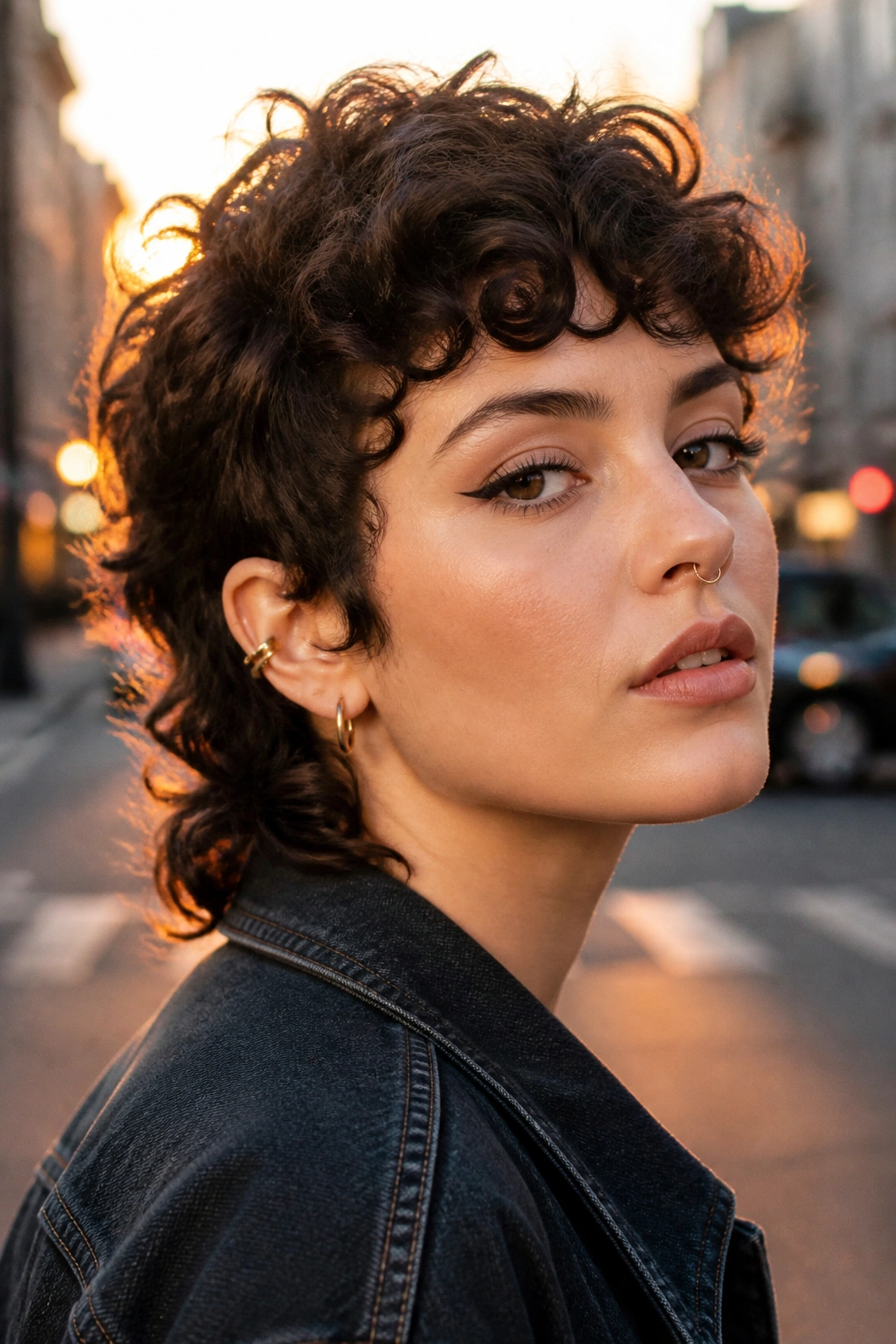
A short curly mullet sounds bolder than it usually looks in real life. On curls, it can be surprisingly wearable because the layers help the hair move instead of puffing into one solid shape. The shorter front and sides keep the face open, while the slightly longer nape adds a vertical line that round faces often benefit from.
The cut works best when the top is textured and the back is only a little longer, not floppy. You want the difference to be visible, not cartoonish. A few curls at the nape can brush the collar, and that is enough. The rest should stay light enough to keep the cheeks clear.
- Keep the fringe soft, not heavy.
- Let the crown hold most of the volume.
- Leave the nape 1 to 3 inches longer than the front.
- Use a diffuser to keep the shape airy.
This is not the style for anyone who wants quiet hair. It has attitude. Still, on a round face, the directional shape can be a gift.
11. Ear-Length Crop With Side-Swept Bang
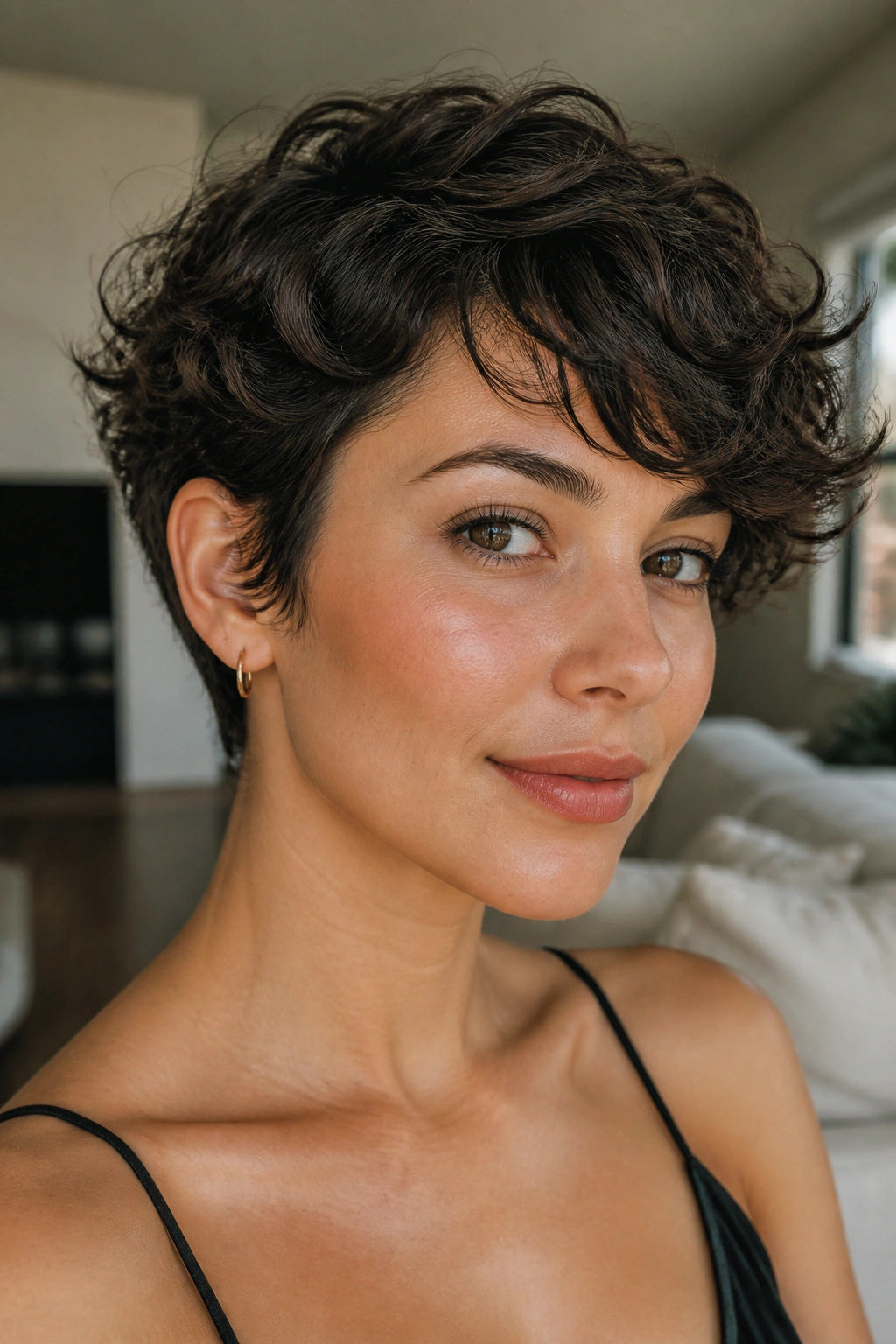
An ear-length crop can look sleeker than a bob if the bangs are handled well. That is the part people miss. When the sides are kept close and the fringe sweeps diagonally across the forehead, the face opens up instead of getting boxed in.
The shorter perimeter clears the cheeks, which is the main event on a round face. The side-swept bang adds a line that moves across the face rather than stopping dead in the middle. That is why this style can look sharp without feeling severe. It has motion built in.
I like this on curls that are not too spring-loaded at the front. If the fringe wants to stand straight up, it takes more work. A light styling cream and a little finger-coiling at the bang usually help. You do not need a ton of product. In fact, too much makes the front collapse and cling.
This one feels neat, almost tailored. Not fussy. Just tidy in a way short curls do not always get to be.
12. Tapered Cut With Temple Length
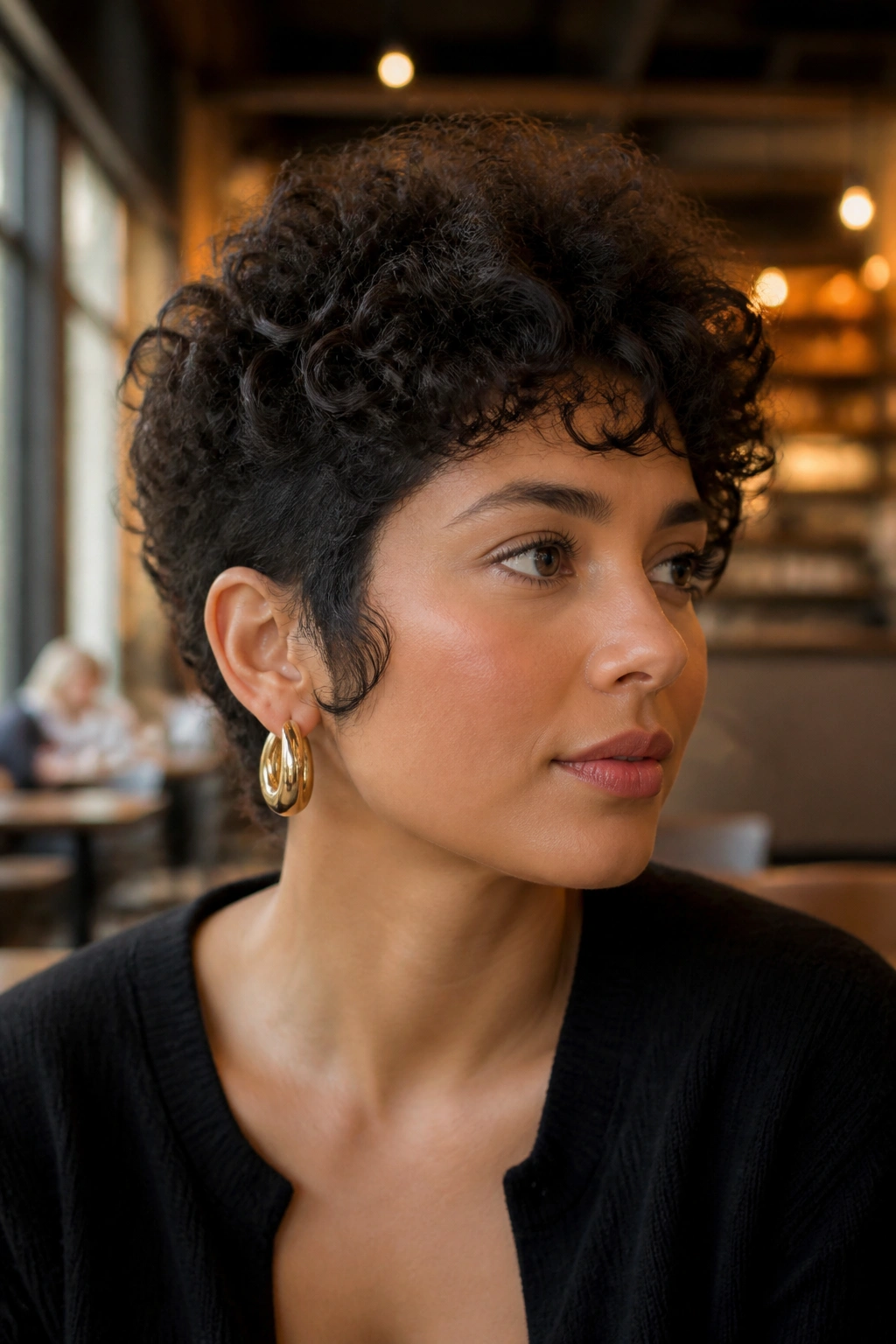
A tapered cut with temple length keeps the sides narrow and gives the top enough room to breathe. That combo is good on round faces because the temples and cheek area stay clean while the upper shape gets all the attention.
Unlike a full halo shape, this cut does not wrap the face in a circle of curls. It opens the sides. That alone can change how wide the face feels in a mirror. If your hair is thick, the taper also takes weight off the bottom without making the whole cut feel thin.
What to Ask For
- Shorter sides and nape, but not shaved bare unless you want that.
- Temple pieces left long enough to curl forward or back.
- A little extra height through the top.
- Internal debulking only where the hair truly puffs out.
This cut is especially good if you wear glasses, earrings, or both. The clean sides give those details room to show. The face does not compete with the hair. I always think that is underrated.
13. Rounded Coily Afro With a Narrow Nape
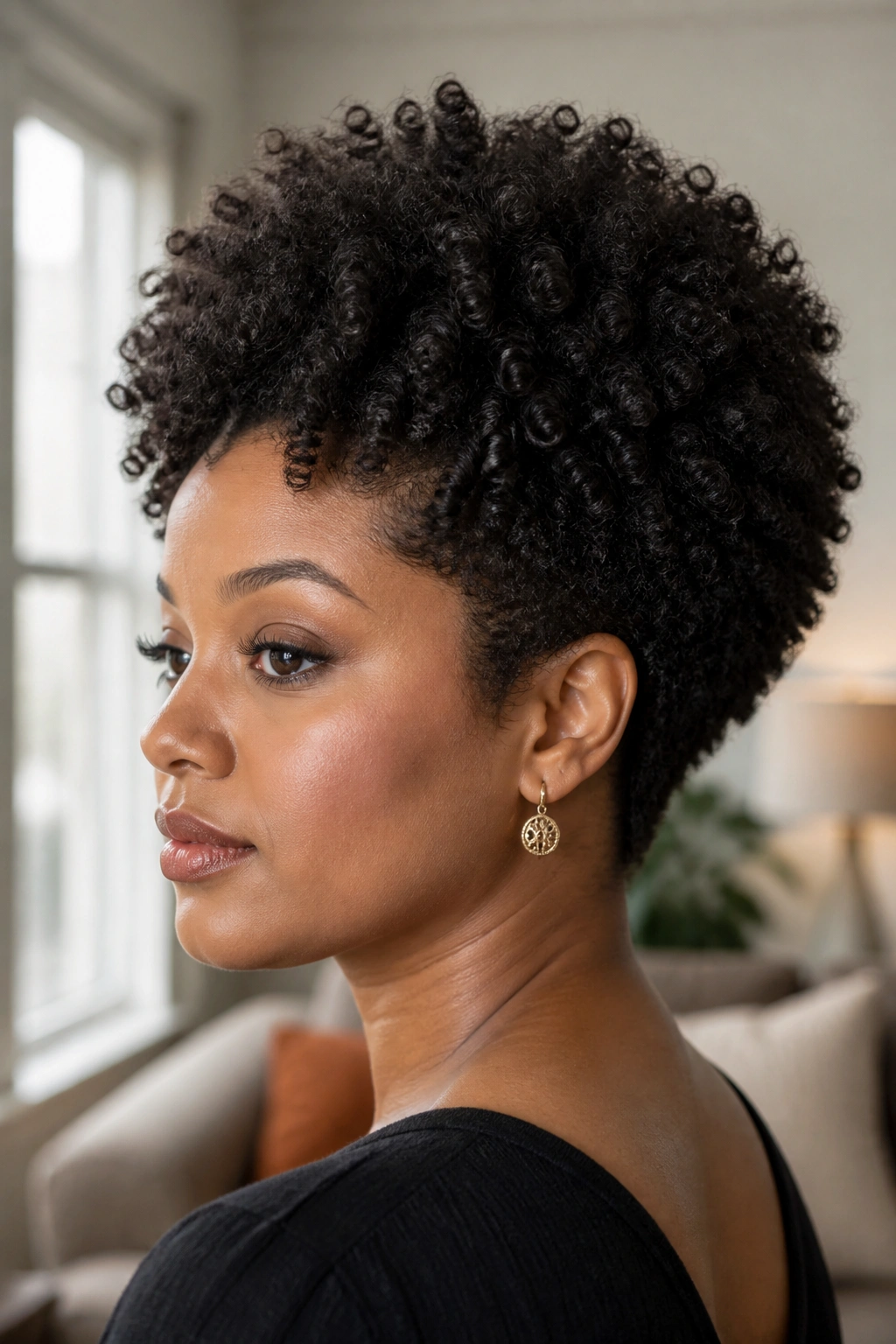
Can a rounded shape work on a round face? Yes, if the silhouette is taller than it is wide. That is the part that changes everything. A coily afro does not have to spread outward like a perfect circle.
The trick is a narrow nape, controlled sides, and a little lift through the top center. That lets the style keep its softness while avoiding the widest part of the cheeks. When the outline is trimmed with intention, the cut reads airy and sculpted instead of bulky. A good shape-up here matters more than people think.
Shape Details That Help
- Keep the crown slightly taller than the sides.
- Let the perimeter curve in, not out.
- Trim the nape close enough to keep the back neat.
- Moisturize first, then shape, so shrinkage is honest.
This is one of my favorite looks for tighter textures because it respects the natural coil pattern instead of forcing it into a bob or pixie. It can be bold. It can also be very clean. That depends on how the shape is built.
14. Curly Wolf Cut Trimmed Short
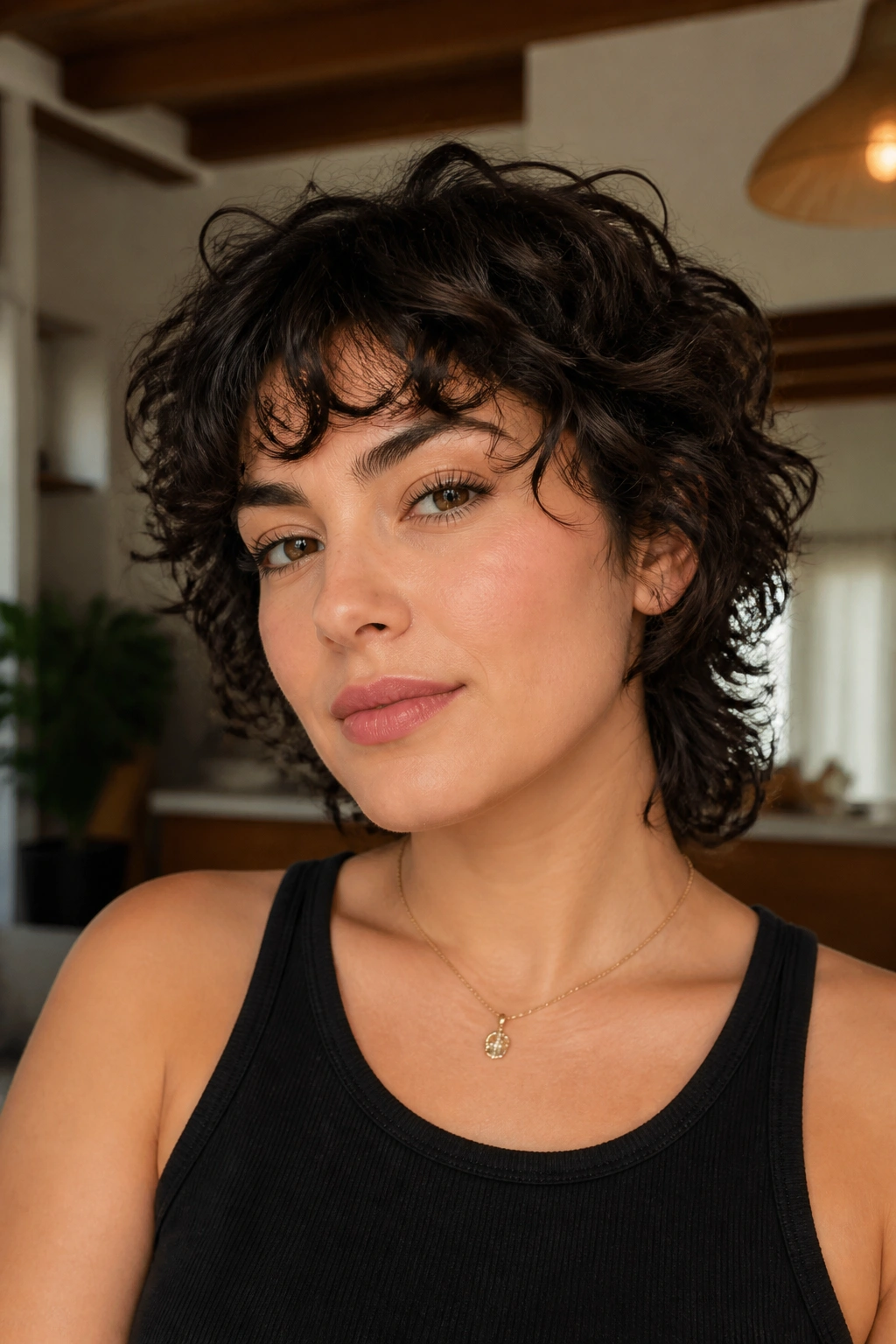
A short curly wolf cut is not too wild when the layers are controlled. It earns its edge from movement, not from chaos. On a round face, that matters because the layered breakup keeps the silhouette from sitting as one full circle.
The upper layers should be short enough to give lift, while the bottom pieces taper toward the neck and jaw. That creates a broken line that keeps the face from looking boxed in. A little fringe helps, too, as long as it stays light and airy. Heavy bangs defeat the point.
This style suits people who like a lived-in shape and do not mind a little styling time. If the curls are loose, the wolf cut can get puffy fast. If the curls are tight, it can look fantastic with very little effort. That is the honest tradeoff. You get movement, but you also need to respect the texture.
For a round face, I would keep the longest pieces around the chin, not lower. Past that, the shape can start to drag instead of lift.
15. Pixie Bob With Tapered Nape

A pixie bob sits in a sweet spot if a pixie feels too short and a bob feels too wide. It gives you the narrow nape and lifted crown of a short cut, plus enough front length to keep the face soft.
The taper in the back matters. It stops the shape from ballooning. The front pieces can land near the cheekbone or chin, depending on how much length you want to keep. I like this one for curl patterns that need a little movement but not a ton of volume at the sides. It’s neat, but not stiff.
What to Ask For at the Chair
Tell the stylist you want the back tighter than the front, with the top textured enough to show the curl pattern. Ask them to keep the perimeter soft and to avoid a blunt shelf. If the curls are dense, ask for internal removal rather than aggressive thinning. That keeps the shape from frizzing out later.
This cut looks especially good when the curls are defined. The line is simple, so the texture gets to be the star.
16. Cropped Coils With Curtain Fringe
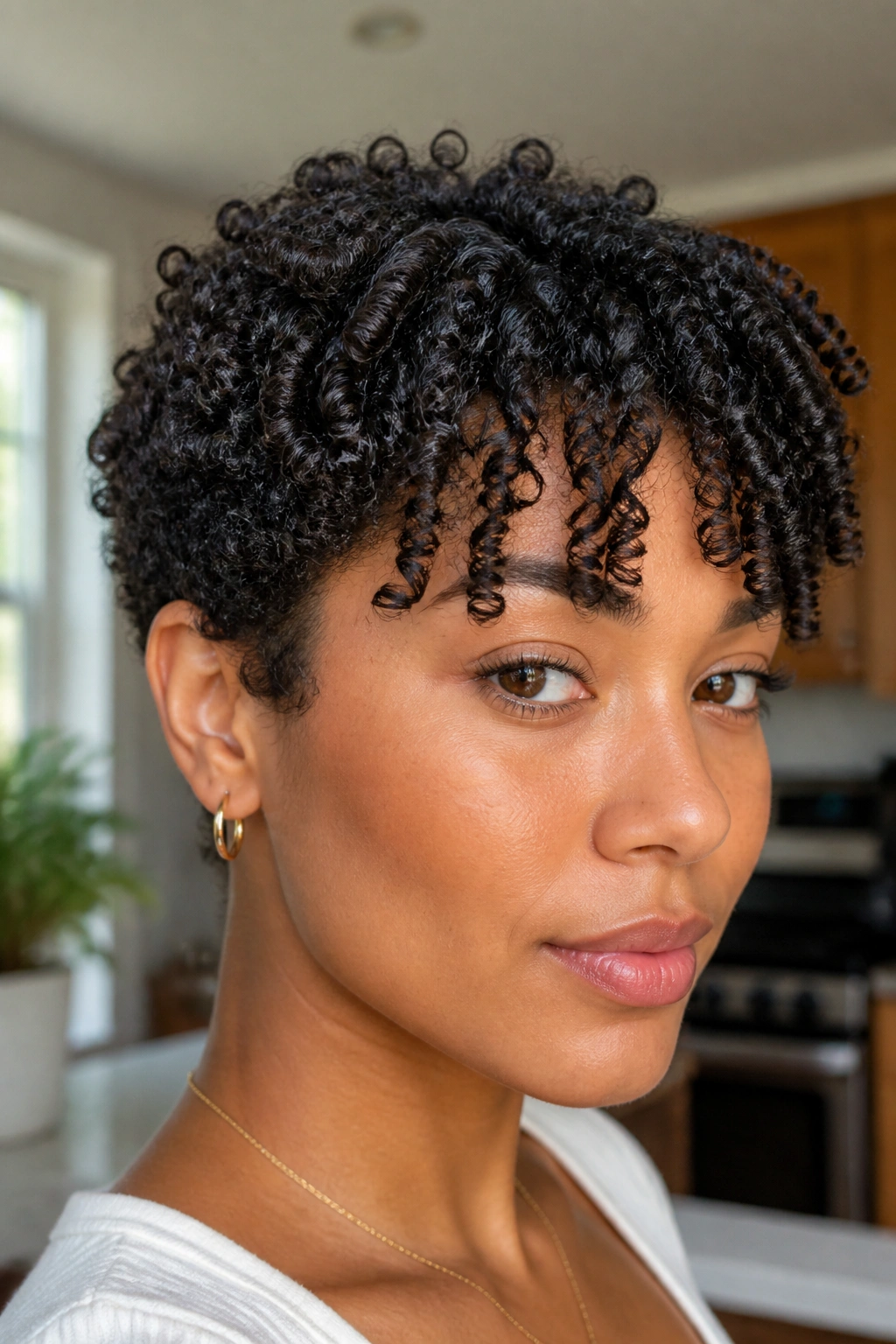
A curtain fringe can be a lifesaver on a round face because it splits the width at the forehead and sends the eye outward instead of straight across. On cropped coils, that little split gives the cut a softer frame.
The fringe should land somewhere around the eyebrow or upper cheek when dry, with enough length to part and fall away from the center. Too short, and it turns into a puff. Too heavy, and it closes the face in. The sweet spot is a fringe that bends instead of sits.
This style works well when the rest of the crop stays tight around the sides. That balance matters. The fringe adds softness up top, and the short sides keep the cheeks clear. You get both at once.
A tiny bit of styling cream at the fringe can help it separate. Do not overload it. Coils usually tell you pretty quickly when they have had enough product.
17. Layered Ear-to-Chin Bob

A layered ear-to-chin bob gives a round face a softer outline than a blunt bob because the ends do not sit in one hard line. The length is short, but the layers keep it moving. That movement is what keeps the face from feeling heavy.
I like this shape for looser curls and soft coils that need a little direction. The layers should not be chopped so high that the hair turns fluffy. They should sit in a way that lets the perimeter curve in toward the chin and away from the cheeks. That subtle bend is the important part.
If you want a short style that feels polished on a workday and a little undone on a weekend, this is a good one. It dries into shape without much coaxing. A diffuser helps, but it is not mandatory. Some cuts ask a lot of you. This one doesn’t.
Leave the front a touch longer if your face tends to read very full in the middle. That tiny adjustment makes the difference between soft and bulky.
18. Short Curly Cut With a Deep Side Part
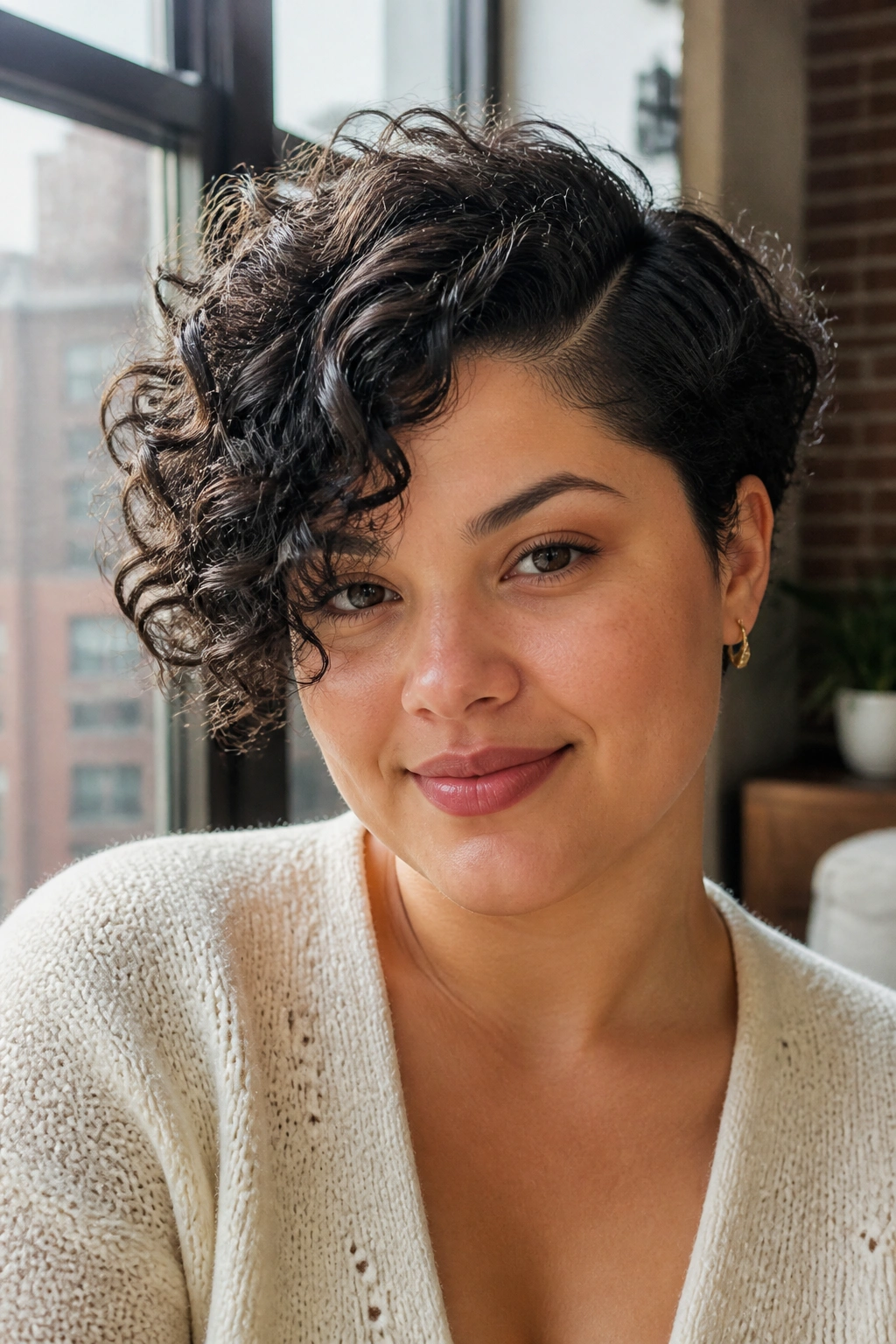
A deep side part is the easiest move in the whole list, and it works because it changes the balance of the face without demanding a dramatic cut. If you want to keep your length but make the face look slimmer, start here.
The part should sit well off center, almost over the arch of one brow. That sends volume to one side and creates a diagonal sweep across the forehead. On curls, the effect is even stronger because the hair naturally wants to hold shape. A deep side part can make a short cut look more deliberate in five minutes than a center part does in an hour.
This is the style I’d hand to someone who is nervous about going too short. Keep the perimeter around the chin or slightly above it, then let the side part do the heavy lifting. If one side feels a little flat, clip the root while the hair dries or use a pick at the crown to lift it.
Simple. Fast. Effective.
Final Thoughts
The smartest short curls for round faces usually do one of three things: they add height, they break symmetry, or they clear the widest part of the cheeks. A cut does not have to be dramatic to work. A one-inch shift in where the curls land can change the whole feel.
I’d pay the most attention to the crown, the part, and the front pieces. Those are the parts that decide whether the style sits on the face or shapes around it. Once those details are right, the rest gets easier.
If you are stuck between two looks, choose the one with a little more movement at the top and a little less bulk at the sides. That is usually the cleaner answer.
