



Round faces are not hard to work with. They’re just honest.
A cut either adds shape or smears it out, and that is the whole game. The styles that flatter a round face usually do one of three things: they create length, they break up width, or they add movement below the cheekbones so the eye keeps traveling downward.
That does not mean you need to hide your face. I’d argue the opposite. The best hairstyles for round faces make the face look balanced, not masked, and the difference is in the details — where the part sits, where the shortest layer falls, how much lift you build at the crown, and whether the ends curve in or kick out.
Hair texture matters too. Fine hair, dense hair, straight hair, curls, coils — they all play by slightly different rules. A blunt line at the chin can be a bad idea on one person and a smart, sharp choice on another if the styling does the right work. That’s why these 18 modern hairstyles are not copied-and-pasted cuts. They’re specific shapes, with specific reasons they work.
1. Collarbone Lob with a Soft Side Part
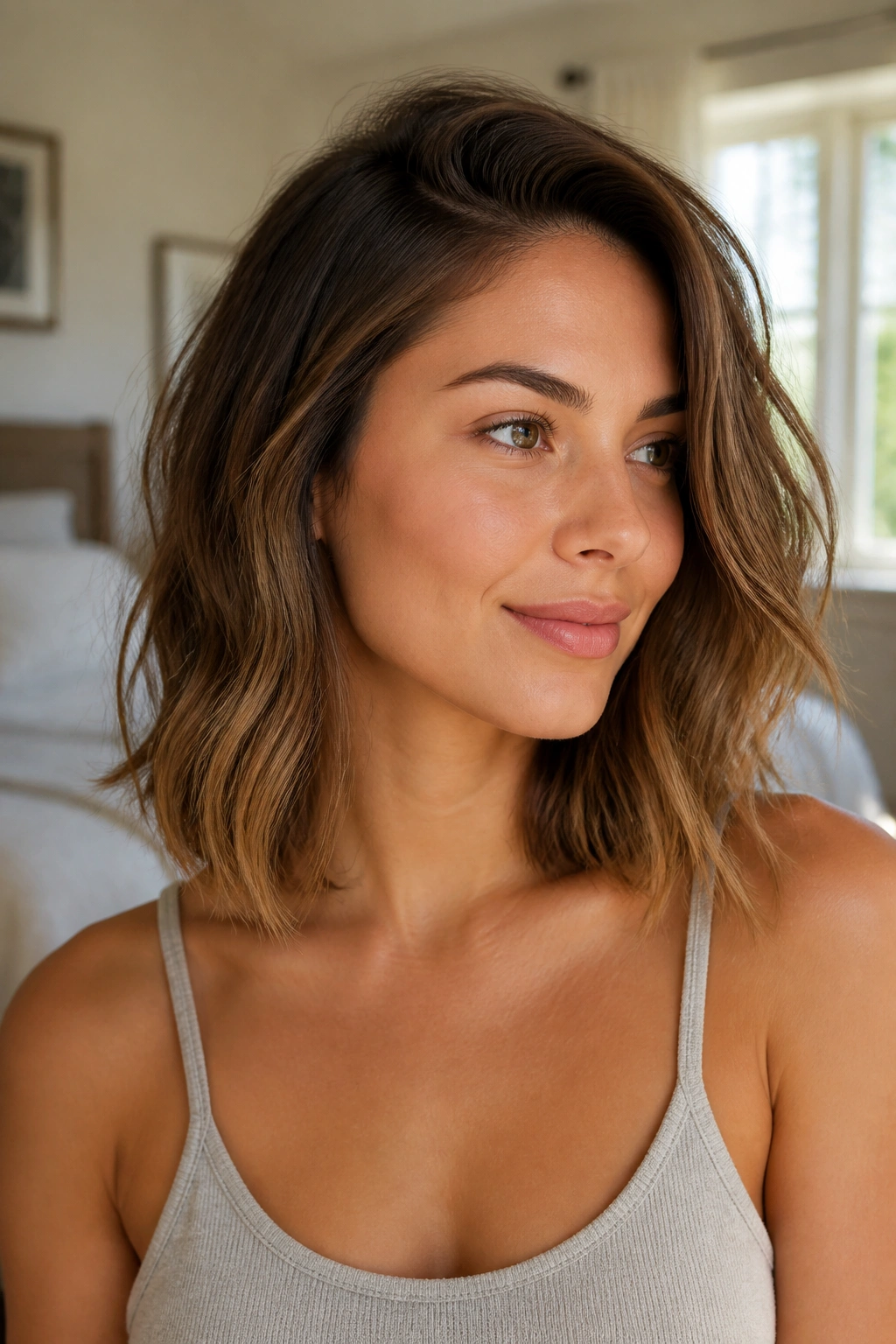
The collarbone lob is one of the easiest wins for round faces because it lands below the jawline. That extra length pulls the eye down, and the soft side part breaks the face into two uneven halves, which keeps everything from feeling too circular.
Why This Shape Works
A lob that hits right at the collarbone gives you movement without sitting on the widest part of the face. If the front pieces are left a little longer than the back — even by an inch or two — the whole cut feels more lifted and less boxy.
Ask for a soft bevel at the ends, not a sharp shelf. On straight hair, that bevel keeps the line from looking heavy. On wavy hair, it stops the cut from puffing out at the sides.
- Best for fine to medium hair that needs shape
- Works well with a blow-dryer brush or a 1.25-inch curling iron
- Easy to grow out without an awkward stage
Skip the chin-length version. That’s the version that usually makes the face look wider.
2. Curtain Bangs with Long Layers
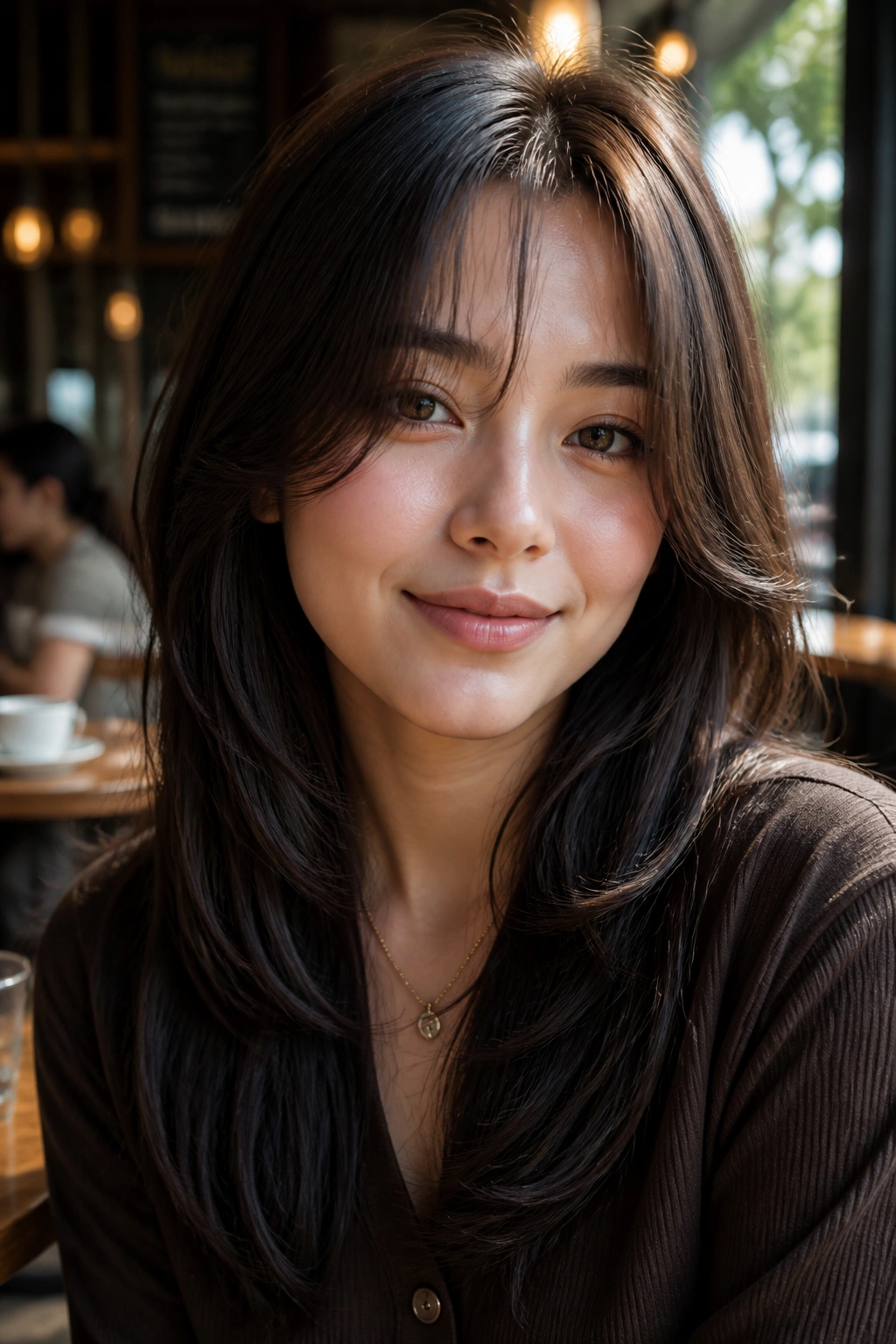
Can bangs work on round faces? Yes — when they open up in the middle and taper out toward the cheekbones. Curtain bangs are one of the few fringe styles that can soften fullness without boxing the face in.
Where the Bangs Should Start
The shortest part of the bang should usually sit somewhere around the brow or just below it, depending on your forehead height. The longer pieces should brush the cheekbone or slip past the lip line. That diagonal movement matters more than people think.
If the bang is cut too short and too full, it acts like a little horizontal bar across the face. Not a good look. A curtain bang should feel airy, with a loose bend, almost like it forgot to be serious.
How to Style Them
Blow-dry them forward first, then sweep each side away from the face with a round brush. A dab of lightweight cream or a touch of mousse keeps them from separating into odd little hooks.
The rest of the cut should stay long and layered. Curtain bangs work best when they have something to blend into.
3. Angled Bob with Longer Front Pieces
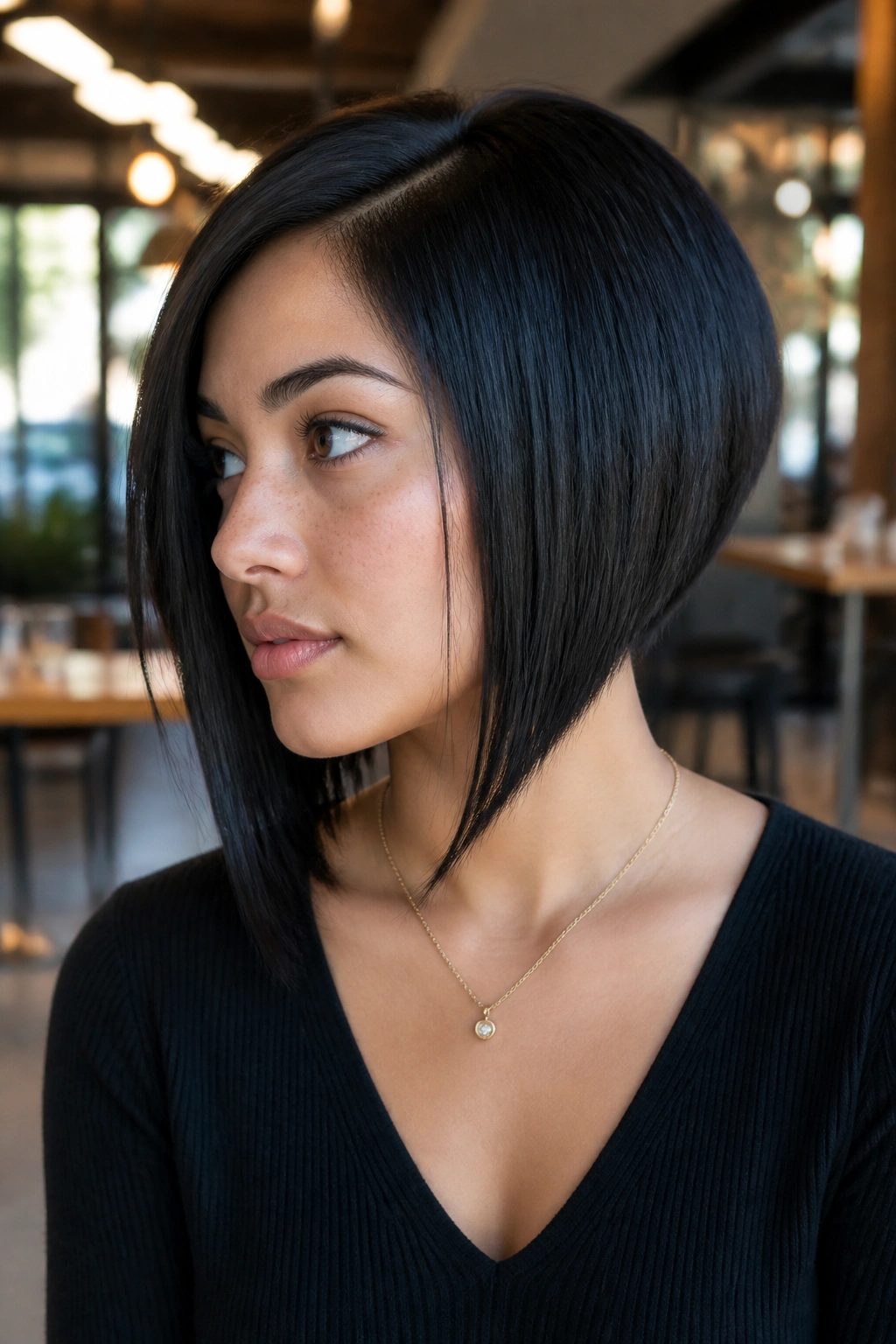
If you want clean lines, this is the sharpest move on the list. An angled bob uses a shorter back and longer front pieces to build a diagonal shape, and diagonals are your friend when you’re trying to flatter a round face.
The front should usually land below the chin. That point is doing a lot of work. It keeps the cut from sitting right on the cheekline, where a blunt bob can make the face look fuller than it is.
What to Ask For
Tell your stylist you want more length in front and a visible angle through the nape. A difference of 1 to 2 inches between back and front can be enough. You do not need a dramatic triangle to get the effect.
This cut looks especially good with a side part and a smooth blowout. If you like a little bend, curl the front sections away from the face with a flat iron and let them cool before brushing them out.
The whole point is directional movement. The eye should go down and forward, not out.
4. Shoulder-Length Shag with Airy Ends
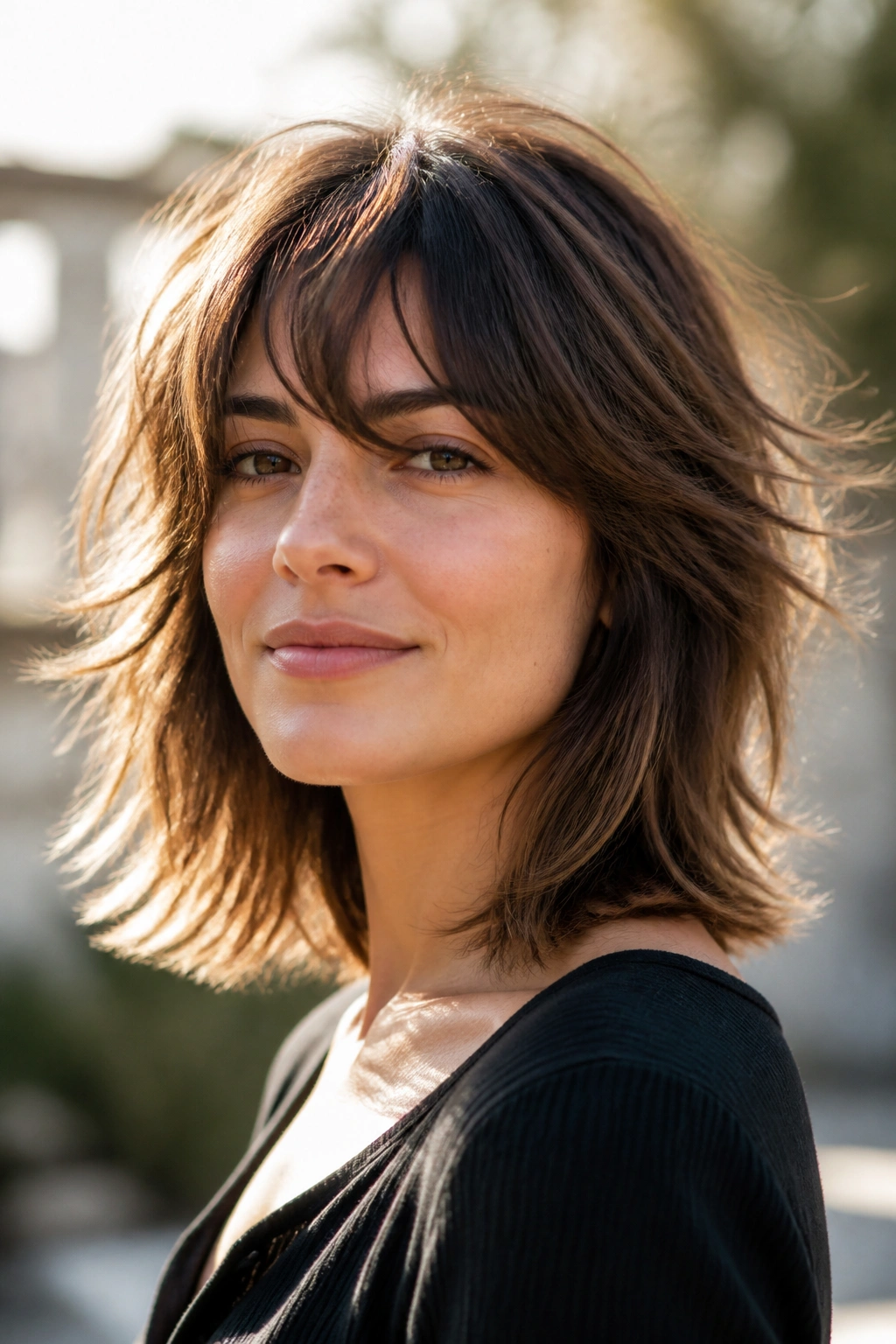
A shag can work on round faces when it is cut with restraint. I’m talking about soft, broken-up layers, not a choppy mess for the sake of it.
The right shag gives you lift at the crown and lightness through the lower half of the haircut. That means the sides do not sit in one puffy line around the cheeks. They move. They separate a little. They feel lived-in instead of helmet-like.
Flat shags are the problem. Not shags.
Styling That Helps
A little texture spray goes a long way here. Rough-dry the roots, then bend random sections with a curling iron so the layers don’t lie flat against the head. You want some irregularity. That is the charm.
This cut is especially good if your hair gets heavy fast. The layer removal takes weight out, which can stop the shape from collapsing into a round puff by noon.
5. Butterfly Cut for Round Faces
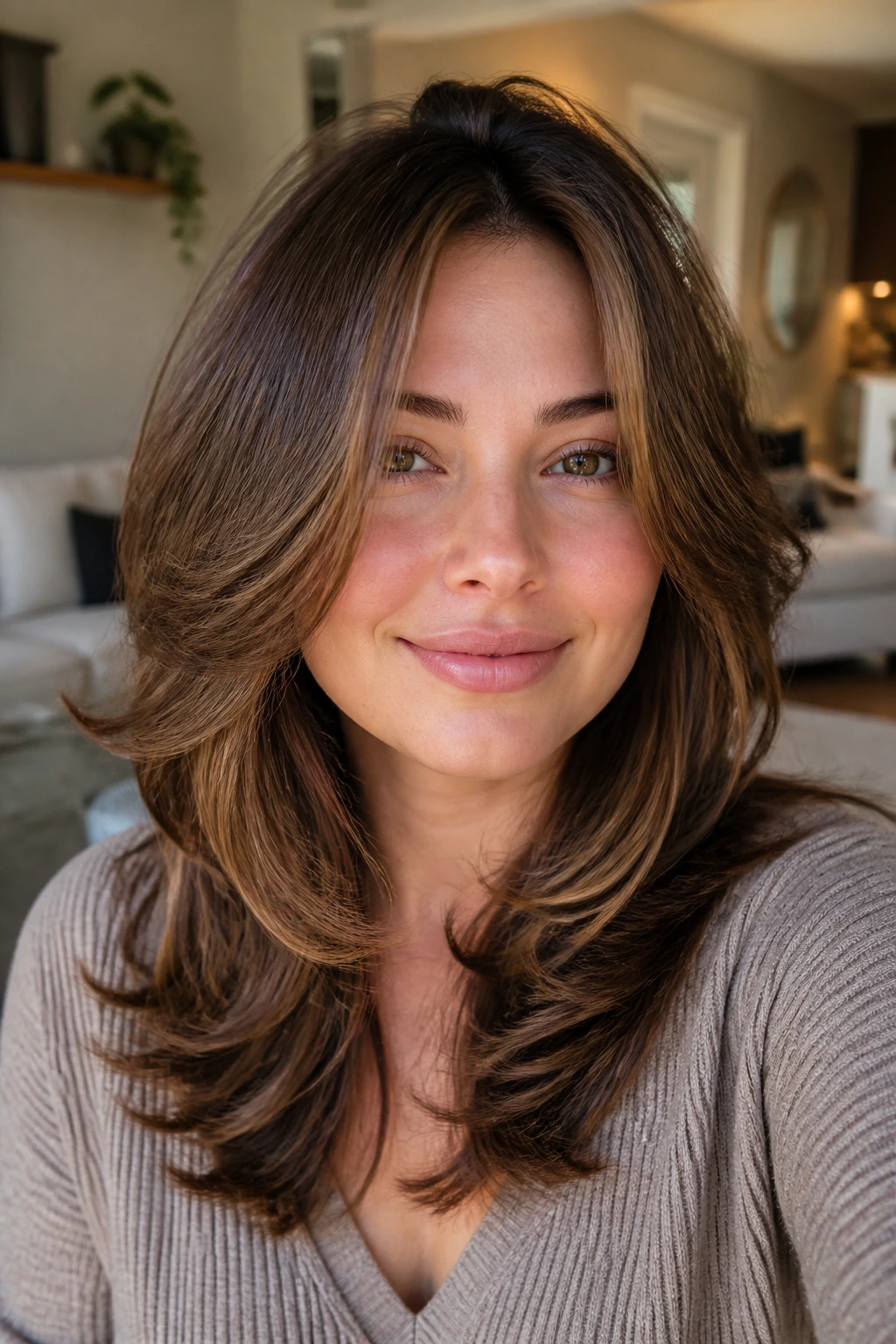
The butterfly cut has become popular for a reason: it gives the illusion of shorter hair around the face while keeping length everywhere else. That mix works beautifully on round faces because it creates vertical movement without sacrificing softness.
The shortest pieces should frame the face below the cheekbone, not right across it. That detail makes the difference between “lifted” and “wider.” The longer layers underneath keep the hair swinging rather than spreading out.
Where the Wings Should Fall
Think of the face-framing pieces as a guide rail. They should skim the outer edge of the cheek and then drop toward the collarbone or chest. If they stop too early, they widen the face. If they’re too short, they can look like a grown-out shag from the wrong decade.
The butterfly cut works best when the top layer is styled with volume and the bottom layer stays smooth. A round brush at the roots and a soft bend through the mids is enough.
- Good for medium to long hair
- Best with layered blowouts
- Needs regular trims to keep the shape crisp
6. Deep Side-Part Waves
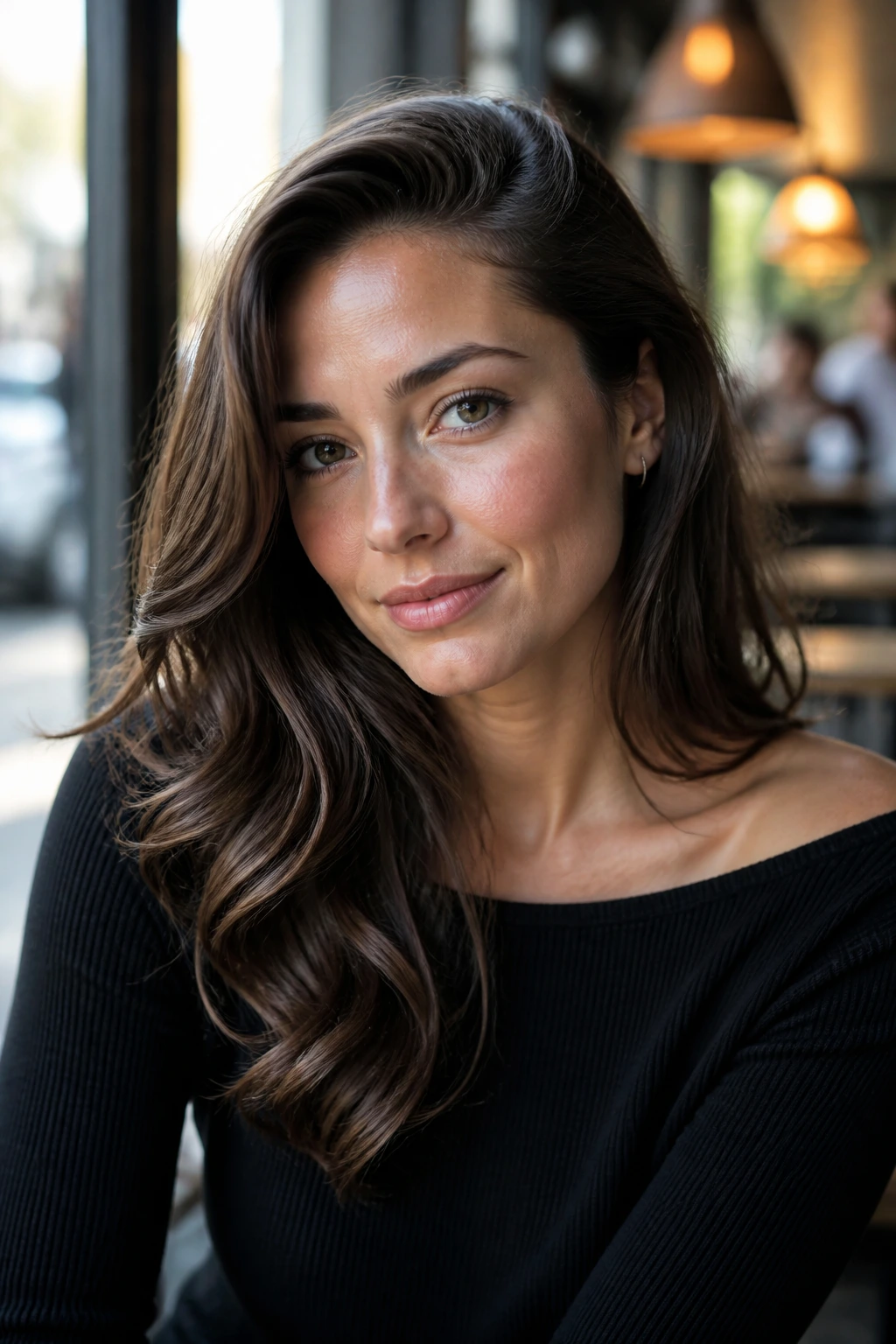
Loose waves change the whole mood. A deep side part shifts the bulk of the hair to one side, which breaks up symmetry and creates a longer line through the face. That simple move can make a round face look more oval without looking forced.
The waves themselves should start below the cheekbone if possible. If every curl begins at the cheek, you add width right where you don’t want it. A softer bend lower down gives the hair room to move.
Volume at the crown matters more than curls at the ends.
A 1.25-inch curling iron works well for this, but a flat iron wave can look even softer. Brush the curls out once they cool. Don’t skip that step. Tight curls read smaller on the face; brushed-out waves read longer and more relaxed.
7. Textured Pixie with Crown Height
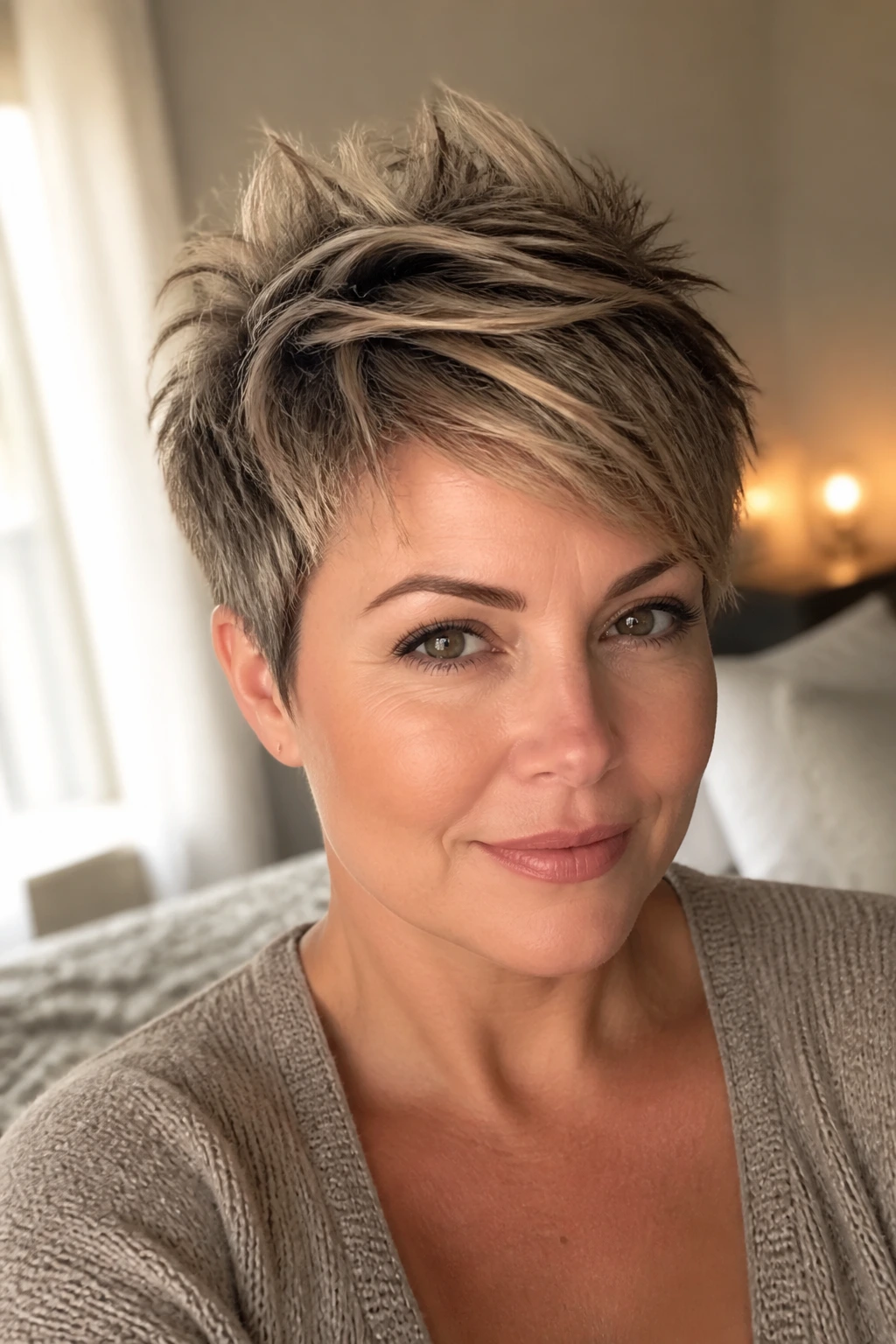
Short hair and a round face? Absolutely. The trick is height on top and restraint on the sides. A textured pixie can make the face look longer if the crown has a little lift and the fringe is swept rather than cut blunt.
The Shape to Ask For
Ask for a tapered nape, soft sides, and enough length on top to piece out with your fingers. The top usually needs to be about 1.5 to 2.5 inches long, depending on your hair density. That gives you room to push it up or over.
A side-swept fringe helps a lot here. It creates an angle, and angles are what keep short cuts from looking too round.
What to Avoid
- A heavy, straight fringe
- Even length all around the head
- Side sections that puff out at the cheek
A tiny amount of matte paste or styling cream is usually enough. You want texture, not stiffness. If the cut looks too polished, it can lose the edge that makes it work.
8. Bixie Cut with Tapered Sides
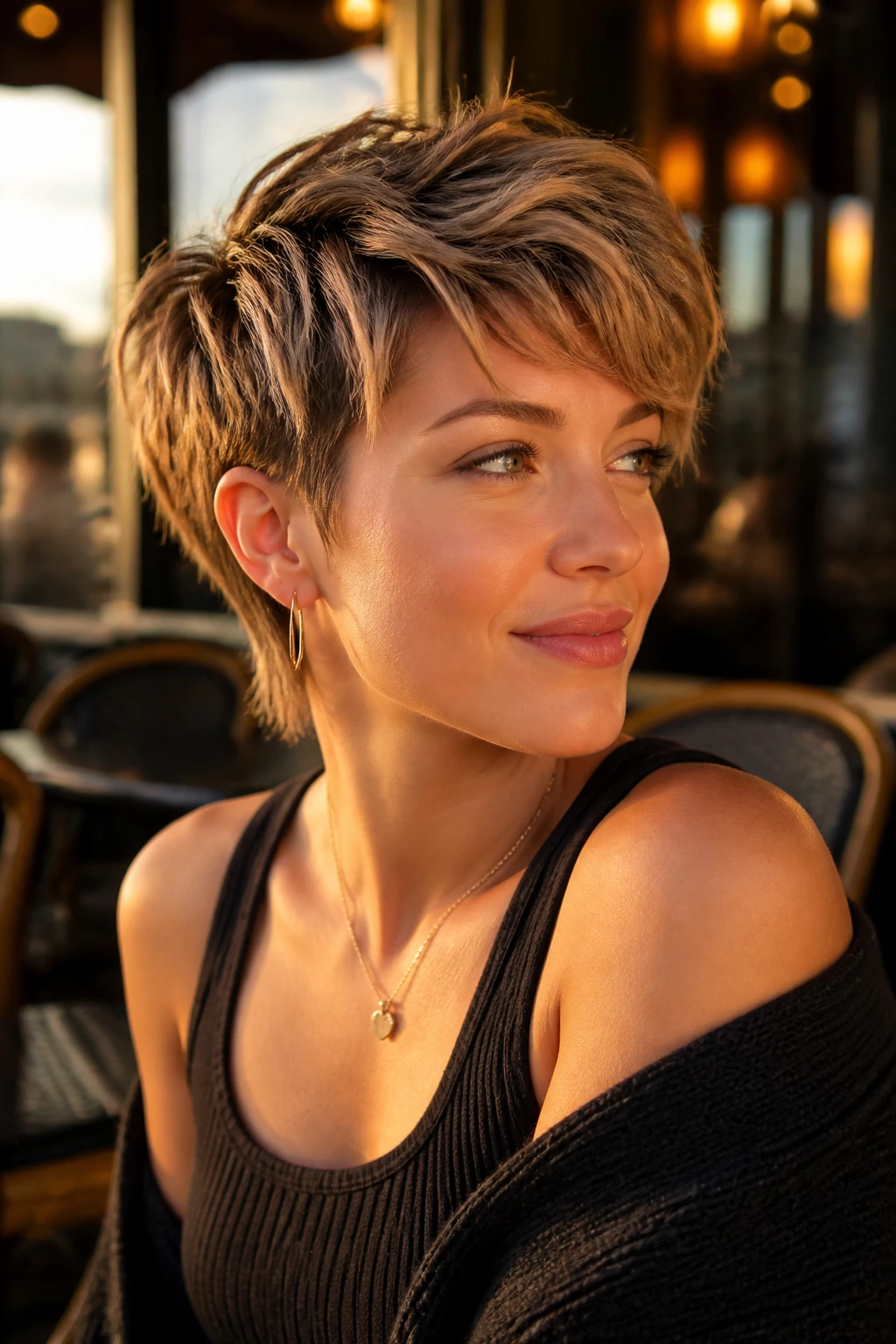
The bixie lives in the space between a bob and a pixie, and that’s exactly why it’s useful. It gives you short-hair energy without going so short that the face becomes the only thing people see.
For round faces, the tapered sides matter. They narrow the shape near the ears and temples, while the top keeps enough length to build height or a loose side sweep. The result feels light, modern, and a little messy in a good way.
A bixie is also forgiving on busy mornings. You can finger-dry it, add a little cream, and go. If your hair bends naturally, even better. That roughness helps the cut keep its shape.
It’s not the sort of haircut that needs perfection. In fact, perfection can make it flat. A bit of separation is what gives it life.
9. French Bob with Worn-In Texture
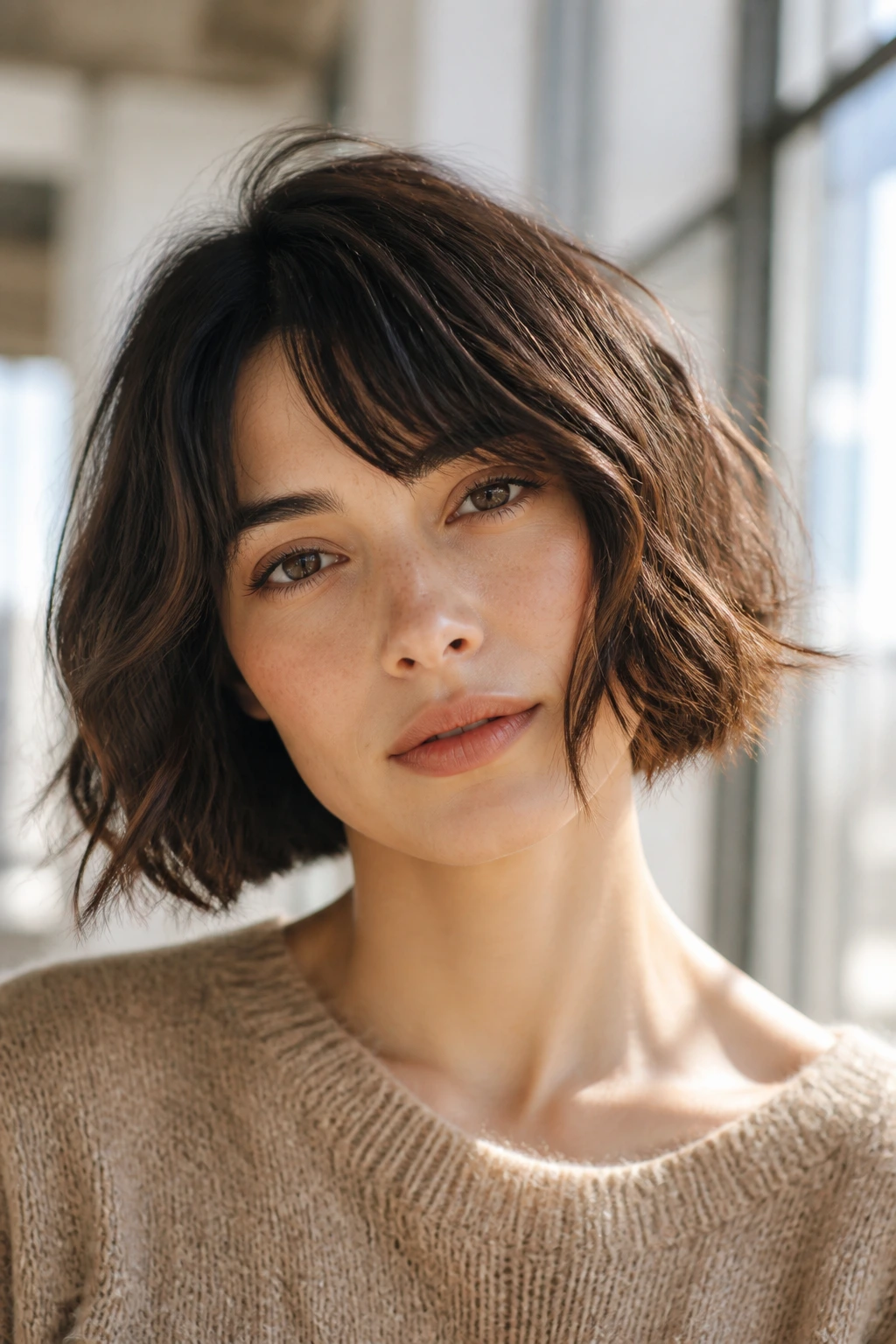
French bobs can turn tricky fast. The classic chin-length, straight-across version often lands right on the widest part of a round face, which is why people sometimes say bobs “don’t work” for them. They do work. They just need a little adjustment.
The version I like sits just below the chin, with broken ends and a soft bend instead of a hard curve. A side part helps too, even if it’s only slightly off center. That tiny shift changes the balance in a big way.
The Version That Works
Keep the line loose. Think worn-in texture, not crisp helmet. A touch of wave, a little movement at the ends, and maybe a cheekbone-grazing fringe if you like bangs. The hair should move when you turn your head.
This cut looks best when it is styled fast and a little imperfect. A flat iron bend through the front and a light mist of texture spray is usually enough. If it’s too slick, it loses the French part and becomes just a short bob.
10. Long Layers That Lengthen Round Faces
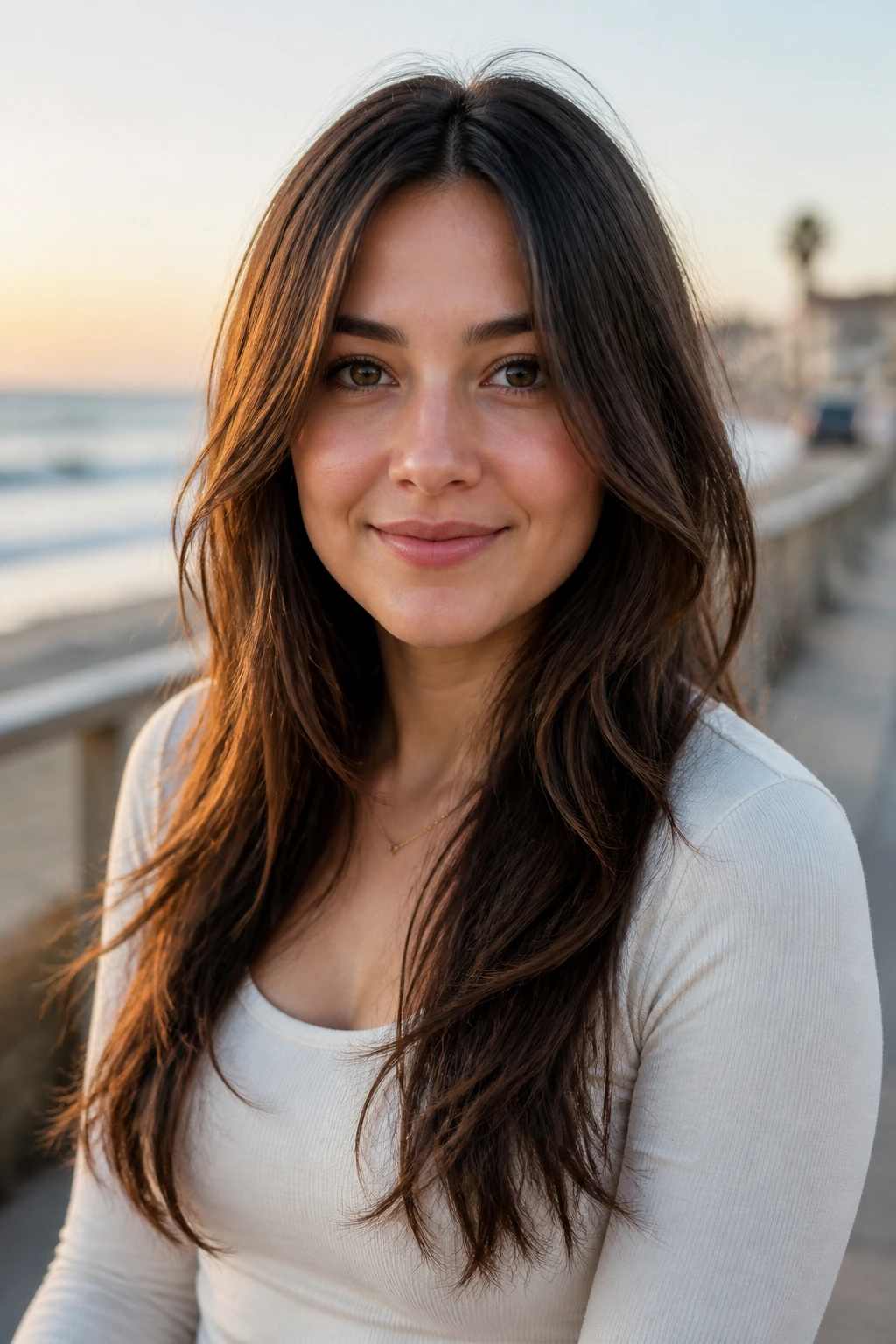
Long hair gets a bad rap when people start talking about face shape, but long layers can be one of the smartest choices for a round face. The important part is where the layers begin. If they start too high, especially around the cheekbones, the hair can flare outward. Not ideal.
Layers that start below the chin keep the shape vertical. They also let the hair move instead of hanging as one solid curtain. That movement keeps the cut from feeling heavy, which is a common problem with one-length long hair.
A middle part can work here if the front pieces are soft and the length is substantial. A slight off-center part works too. The point is that the longest lines should fall down the sides of the face, not across it.
I like this cut on people who want low-maintenance styling. Air-dried waves, a quick blowout, or even a loose braid later in the day — all of it works because the haircut already has enough structure.
11. Sleek High Ponytail with Crown Lift
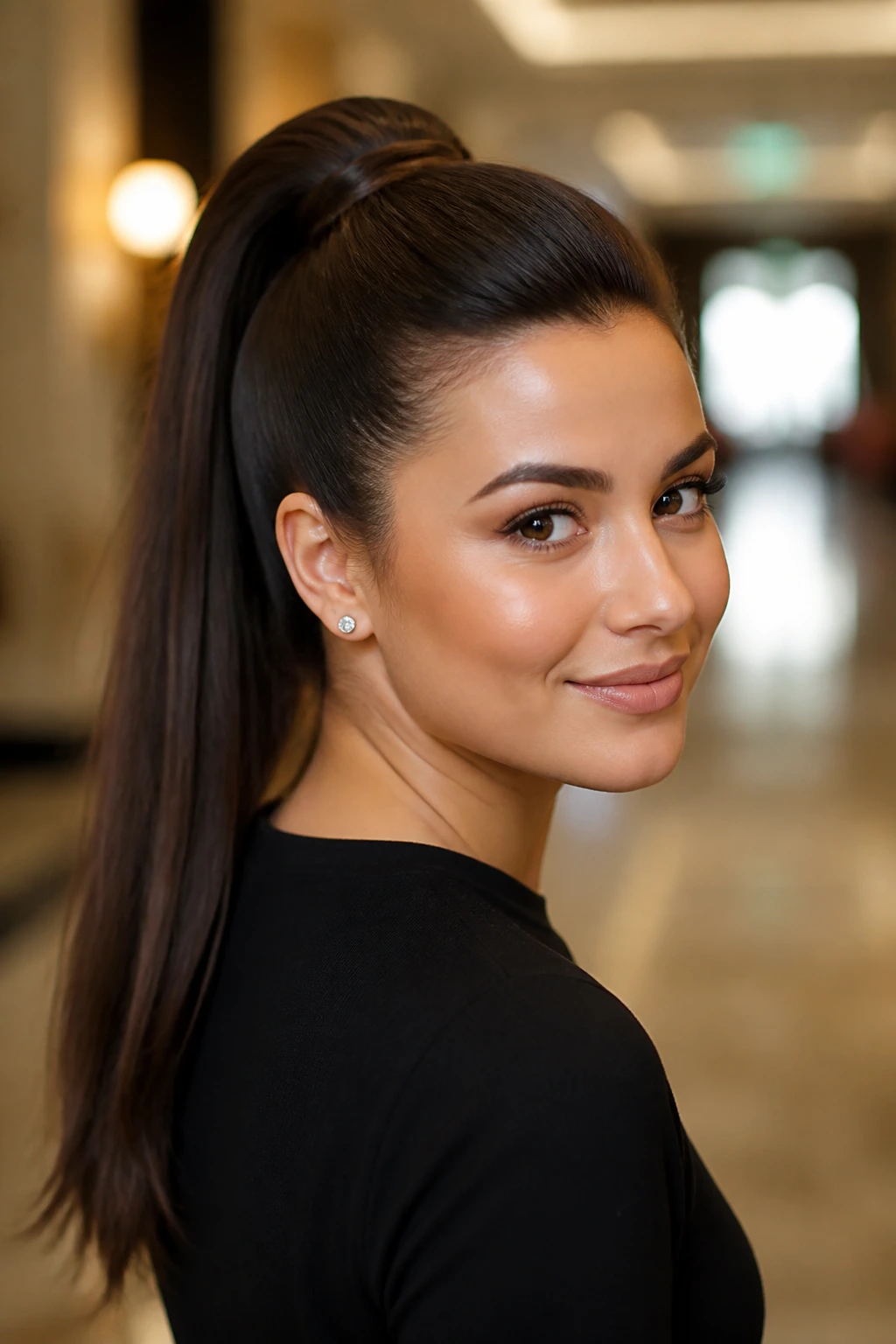
A high ponytail can make a round face look longer in a hurry. The trick is crown lift. If you pull the hair straight back and flatten everything against the scalp, the face can look wider. If you build a little height at the top, the whole silhouette changes.
How to Wear It Well
Tease the crown lightly, or lift the roots with mousse before you tie it back. Place the ponytail above the top of the ears, not low at the nape. That high placement pulls the gaze upward.
Wrap a small section of hair around the elastic so the style looks finished. You can wear the tail smooth, waved, or straight. A slight bend near the ends keeps it from feeling severe.
This style is a good choice when you want your face open but not exposed. It works for weddings, workouts, and plain old “my hair is cooperating today” moments. The height does the shape work for you.
12. Half-Up Knot with Loose Front Strands
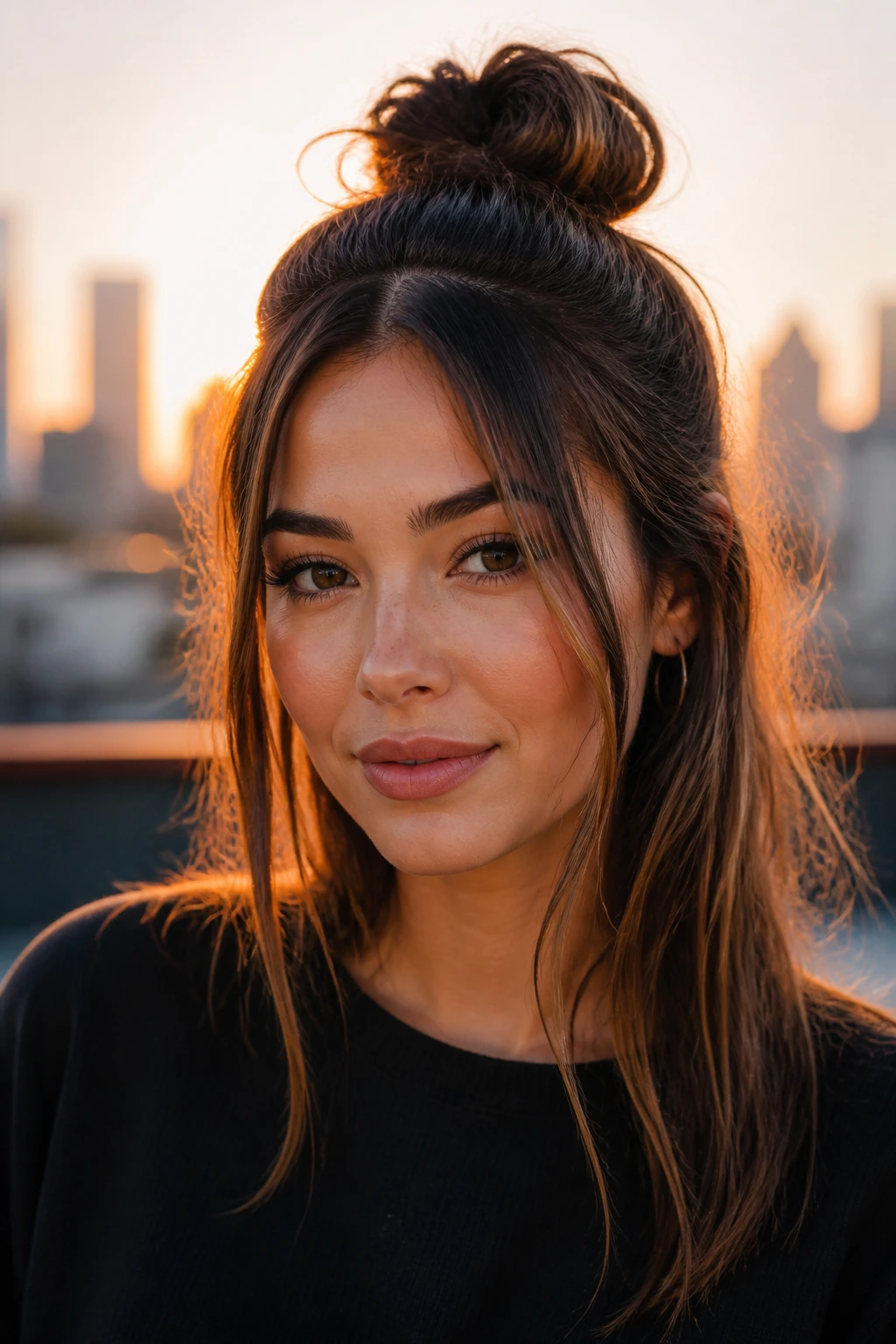
Second-day hair loves a half-up knot. So does a round face. Pulling the top section back creates lift at the crown, while the loose lengths on the sides keep the face from feeling too bare or too broad.
Leave two front pieces out, and let them fall past the cheekbone if possible. Those little pieces are not decorative fluff. They’re doing shape work. They soften the cheeks and give the eyes something vertical to follow.
The knot itself should sit high enough to create lift, but not so high that it becomes a tiny top-heavy bun. Somewhere around the upper crown usually feels right. Secure it with a small elastic, then pin the twist so it looks loose, not staged.
This is one of those styles that looks better when it’s a little undone. Clean is fine. Polished is fine. But too perfect makes it feel stiff, and stiff hair rarely flatters a round face for long.
13. Curly Mid-Length Cut with Rounded Layers
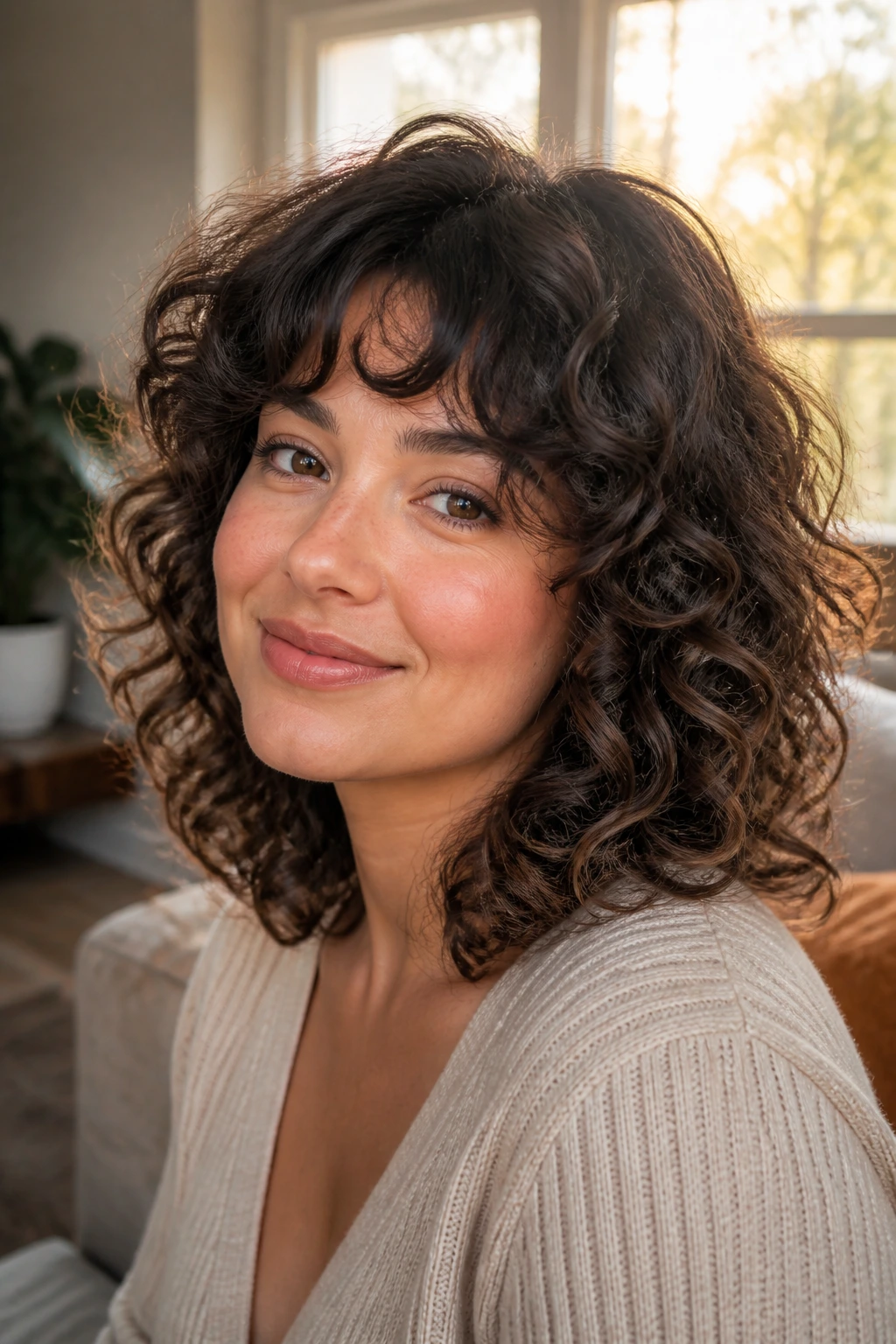
Curly hair changes the rules. A shape that looks slim on straight hair can spread out on curls, so the cut has to respect the natural spring of the curl pattern. Mid-length is often the sweet spot because it gives curls room to fall without piling width around the cheeks.
How to Talk to Your Stylist
Ask for curl-by-curl shaping and layers that remove bulk from the sides more than the ends. The shortest pieces should not sit exactly at the cheekbone unless there’s enough length below them to keep the shape balanced.
A good curly cut for a round face usually has a little height at the top and a longer frame around the jaw or collarbone. The layers should follow the curl’s natural bounce, not fight it.
Styling Notes
- Use a leave-in conditioner first
- Scrunch in gel or curl cream while hair is damp
- Diffuse on low heat, lifting at the roots
- Don’t rake curls apart once they start setting
A curly cut that’s shaped well can look soft and clean at the same time. That’s not easy, and it’s why the cut matters more than any product bottle.
14. Softened Wolf Cut
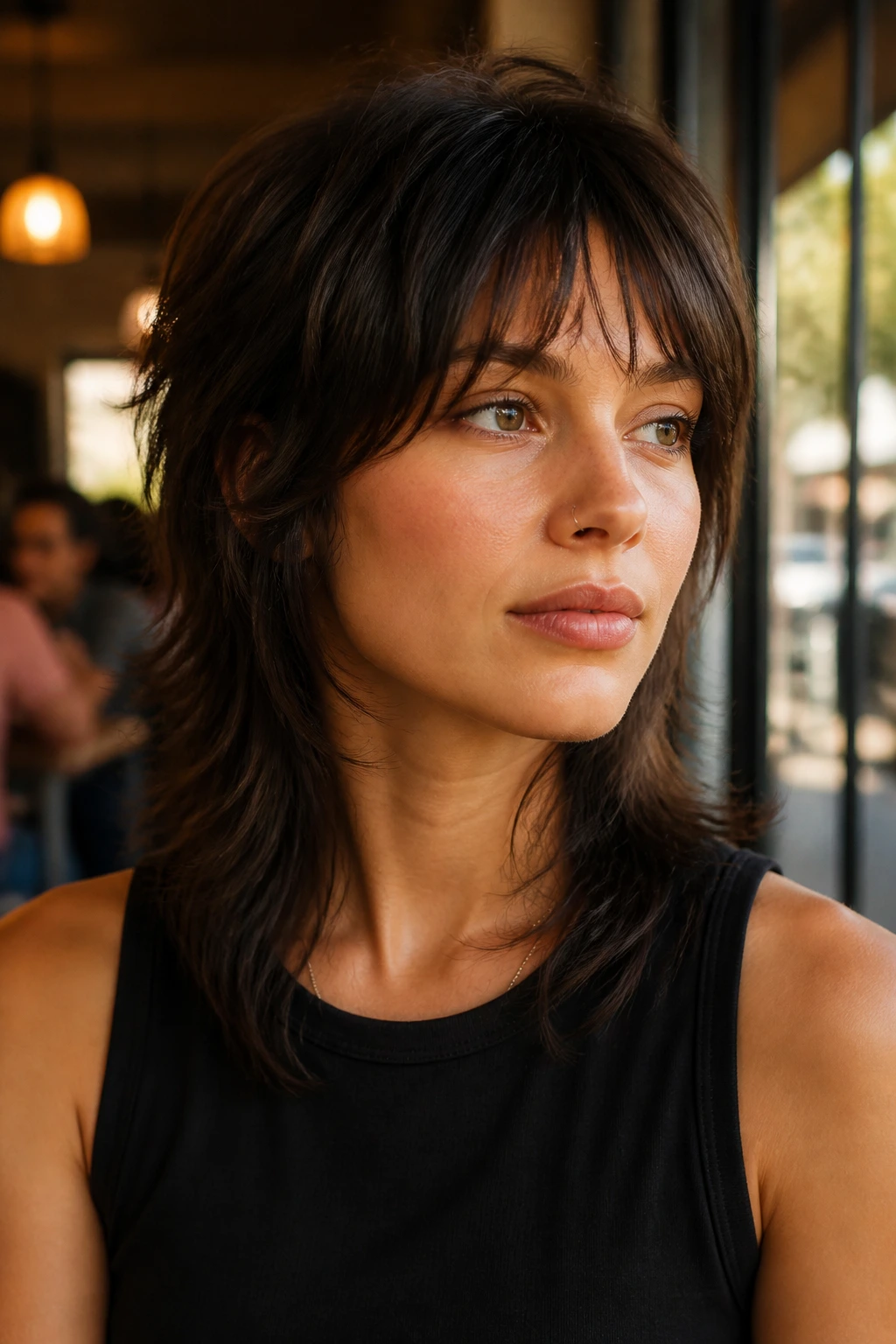
The raw wolf cut can look boxy on a round face if the top is too short and the sides puff outward. A softened version fixes that problem. Keep the top layers longer, let the perimeter stay below the jaw, and avoid creating a wide triangle around the temples.
The messy part is fine. The triangle part is not.
What makes this version work is the contrast between crown lift and loose, broken ends. The style feels modern because it’s a little wild, but the length keeps it from exploding outward. If you have thick hair, this can be a relief because the shape takes out bulk without turning into a mushroom.
Use a texture cream or light mousse, not a heavy wax. Then shake the hair out with your fingers once it’s dry. The goal is separation. You want the layers to show, not glue together.
15. Asymmetrical Lob with One Longer Side
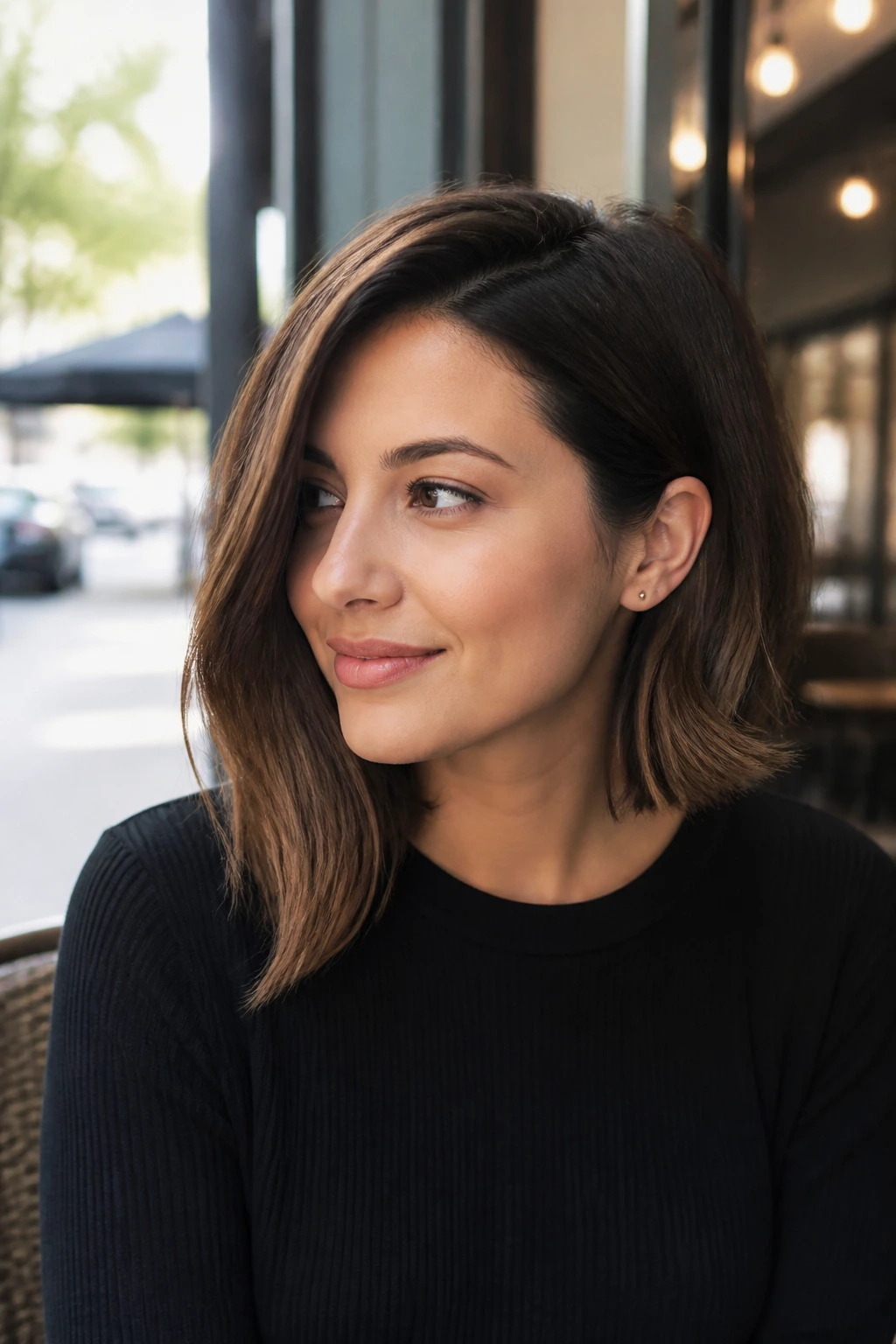
An asymmetrical lob is a small cheat, and I mean that in the nicest way. One side is longer by an inch or two, which creates a diagonal line across the face. Diagonals are flattering because they keep the eye moving.
This cut works especially well if you wear a deep side part. The shorter side can tuck behind the ear, while the longer side drapes forward and stretches the shape. That one simple imbalance does a lot of visual work.
It’s a sharper look than the soft lob, and I like it for people who want something a little more fashion-forward without going full statement haircut. The asymmetry does need precision, though. If the lengths are only barely different, the effect gets lost.
A little bend in the ends helps. Stick-straight hair can flatten the intention of the cut, while a soft curve brings out the line.
16. Blunt Lob, Styled with Bend and Tucked Side
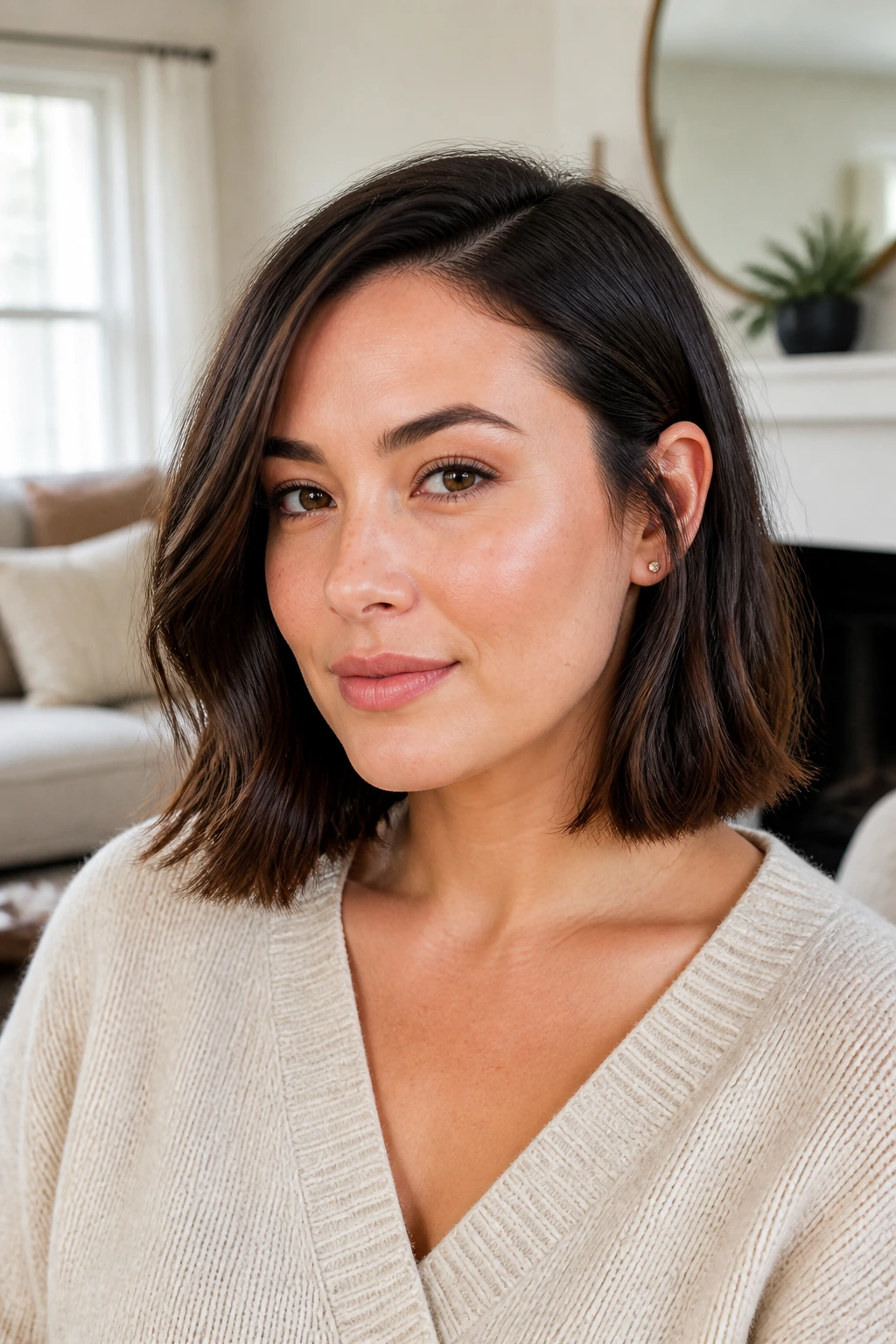
A blunt lob is not off-limits for round faces. The mistake is wearing it too short and too flat. If the line lands below the chin and the styling adds movement, the cut can look sleek instead of wide.
What Makes It Different
Unlike the angled bob, this version keeps one even length. That sounds risky, but the evenness can look fresh when the hair is long enough to skim past the jaw and the styling breaks up the heaviness. A tucked side and a subtle bend through the ends keep the shape from feeling square.
How to Wear It
- Part it slightly off center
- Curl only the front two sections away from the face
- Tuck one side behind the ear for a built-in angle
- Finish with a light spray, not a shellac-like hold
This is the cut for someone who likes structure but doesn’t want obvious layering. It’s clean. It’s modern. And with the right length, it works.
17. Low Bun with a Deep Side Part and Volume
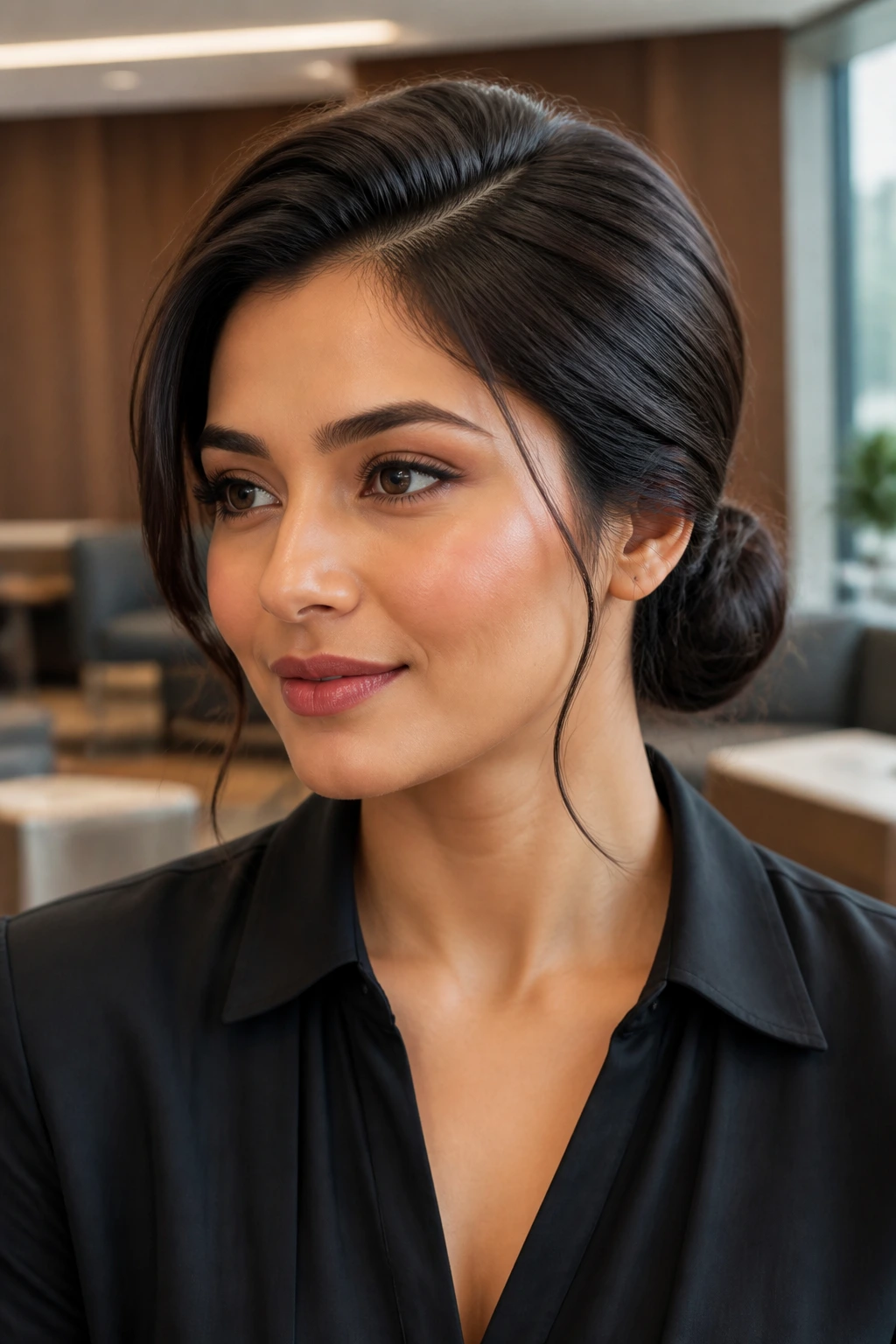
A low bun does more than look neat. On a round face, it can create a long, elegant line if the crown stays lifted and the part is deep enough to break the symmetry.
Pulling the hair slick and flat is where this style goes wrong. That approach presses the face into the frame. Instead, build a little volume at the top, let the bun sit slightly off center, and keep two thin face-framing pieces out near the temples or cheekbones.
Use mousse at the roots before drying if your hair tends to collapse. A few bobby pins crossed under the bun help it stay put without turning the style rigid. If the bun itself is soft and low, the face looks calmer and longer at the same time.
This is one of those styles that works in a meeting, at dinner, or with a dress that needs the neckline open. It’s quiet, but not boring.
18. Braided Crown with Soft Tendrils
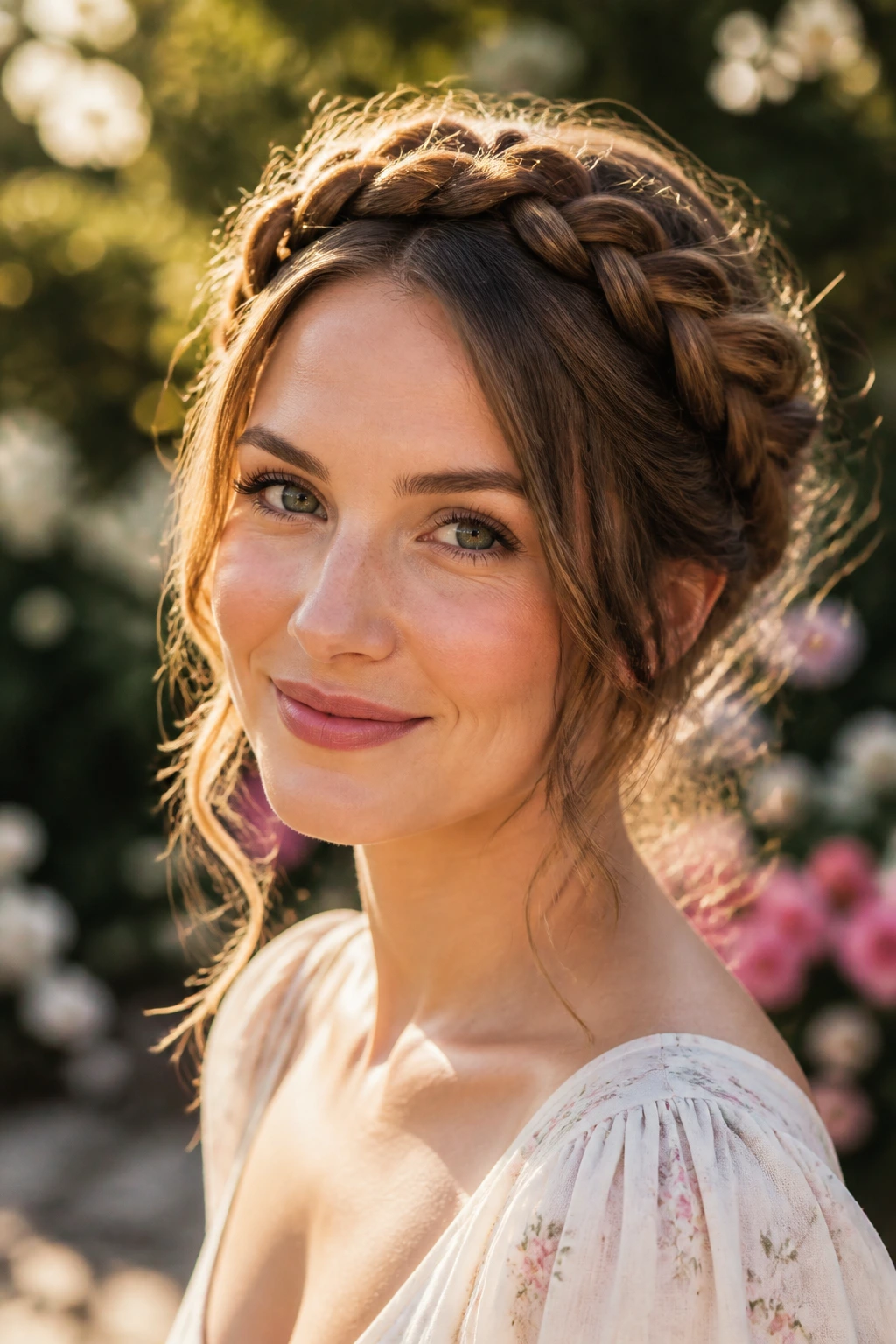
Braids are better when they angle the eye. A braided crown does that naturally because it wraps the head in a curved line, then lifts the hair away from the cheeks. On a round face, the key is not to braid it too tight. Tight braids hug the head and can make the face feel broader.
How to Keep It Modern
Pull the braid apart slightly after it’s secured so it has a little width and texture. Leave a few soft tendrils around the face, especially near the temples and jaw. Those loose pieces stop the style from looking severe.
This works well for longer hair, but you can also fake the length with extensions if you want a fuller braid. A little texture spray beforehand helps the braid grip without slipping.
- Good for weddings and weekends
- Works on straight, wavy, and curly hair
- Better with a side or off-center part than a dead-center braid
The crown braid is one of those styles that looks detailed without needing much fuss. That’s part of its charm.
Final Thoughts
A round face does not need to be “fixed.” It needs a haircut or style that knows where to put the weight. That might mean a side part, a longer front piece, a little crown height, or ends that fall below the cheekbone instead of stopping right on it.
The smartest choice is usually the one that fits your hair texture and your morning routine. A cut that only looks good after 25 minutes with a round brush will not feel as flattering as a shape that still works on a rushed Tuesday.
If you’re sitting between two options, pick the one with more movement and a little less width at the sides. Hair grows. Bad angles do too.
