



Wavy hair has a stubborn little personality. Give it the wrong cut, and it puffs at the sides, caves at the crown, or bends in odd places by lunch. Give it the right shape, though, and a short haircut can do half your styling for you.
That is why short haircuts for wavy hair deserve more thought than a quick trim. Waves do not behave like straight strands, and they do not sit like tight curls either. A chin-length bob, a cropped pixie, and a shaggy cut can all give a different result even when the hair is the same texture.
The small details matter most: where the line hits your jaw, how much weight stays at the nape, whether the top is left longer than the sides, and whether the ends are blunt or feathery. Those choices decide if the cut looks airy and deliberate or heavy and square.
The 25 cuts below cover polished shapes, piecey texture, and a few bolder crops for people who want less length and more attitude. Some need a diffuser. Some look better air-dried with a little mousse. All of them can make waves look far better than a random trim ever will.
1. Chin-Length French Bob
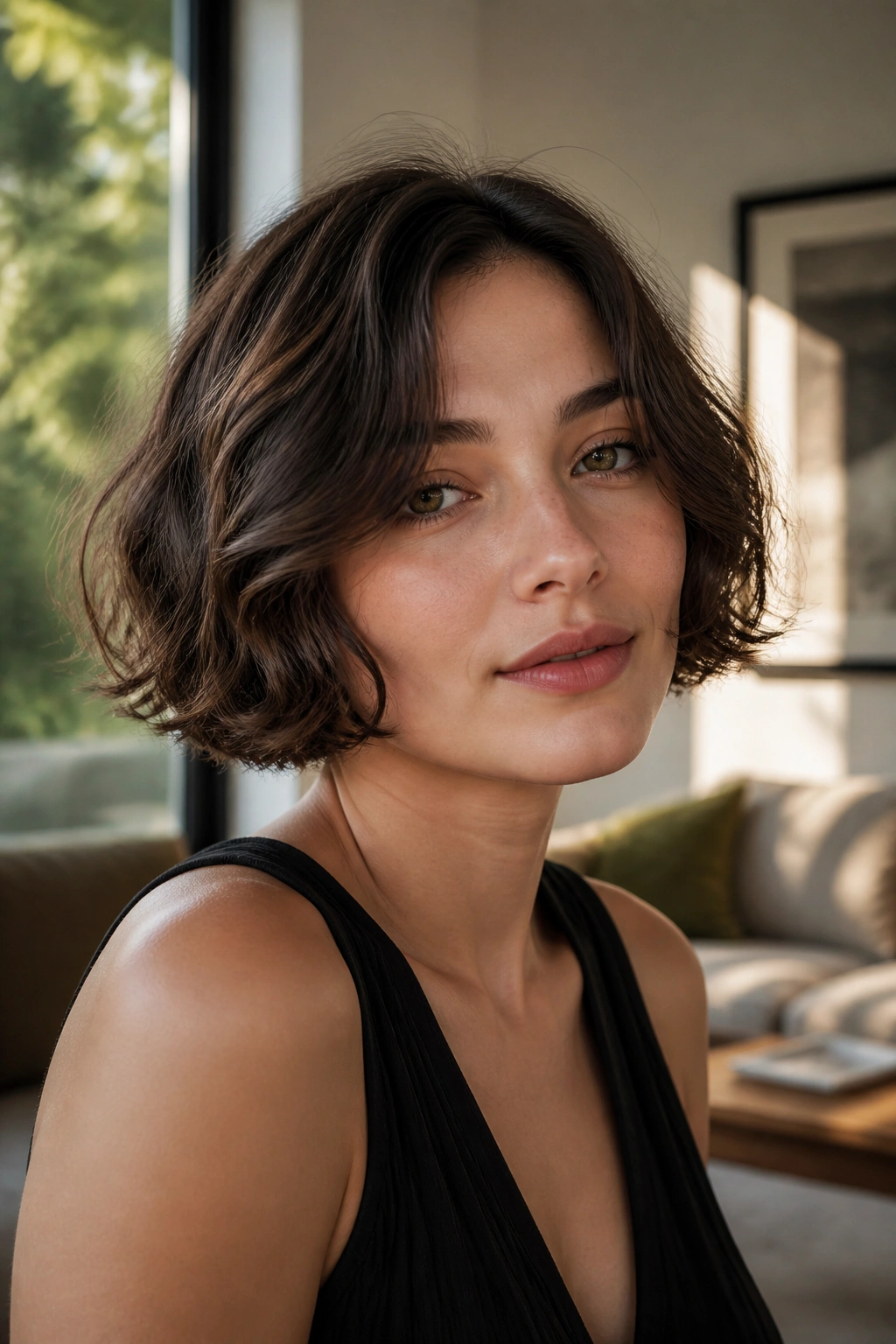
The French bob is one of those cuts that makes wavy hair look like it has a stylistic opinion. It usually lands right around the chin, sometimes a touch lower, and that matters because the wave can bend without getting dragged down by extra length.
Why It Works So Well
A clean line at the chin gives waves a place to stop. Instead of spreading out into a triangle, the hair gets a compact shape with movement in the body and less heaviness at the bottom. If your waves are loose and bendy, this cut tends to look easy rather than fussy.
Best details to ask for:
- Chin length, or just under the chin
- Ends that are blunt but not razor-sharp
- A soft side part or tiny fringe
- Minimal layering through the bottom
Tip: Let it dry a little before judging the shape. Wavy hair often looks bigger when it is damp and settles into a better line once it’s fully dry.
2. Jaw-Length Italian Bob

The Italian bob is a little fuller and a little more glamorous than the French version. It usually sits right at the jaw, with enough weight left in the cut to keep thicker waves from exploding outward.
Unlike a super-short crop, this shape likes body. That is the whole point. The hair has room to swing, but not so much room that it spreads out into a wide, boxy shape. On wavy hair, that balance can be hard to find, and this cut gets close.
It suits people who want polish without stiffness. Ask for a rounded outline and soft internal shaping, not choppy layers everywhere. If your hair is dense, this one can feel lighter after a dry cut and a bit of texturizing near the ends.
3. Textured Pixie With Soft Sideburns
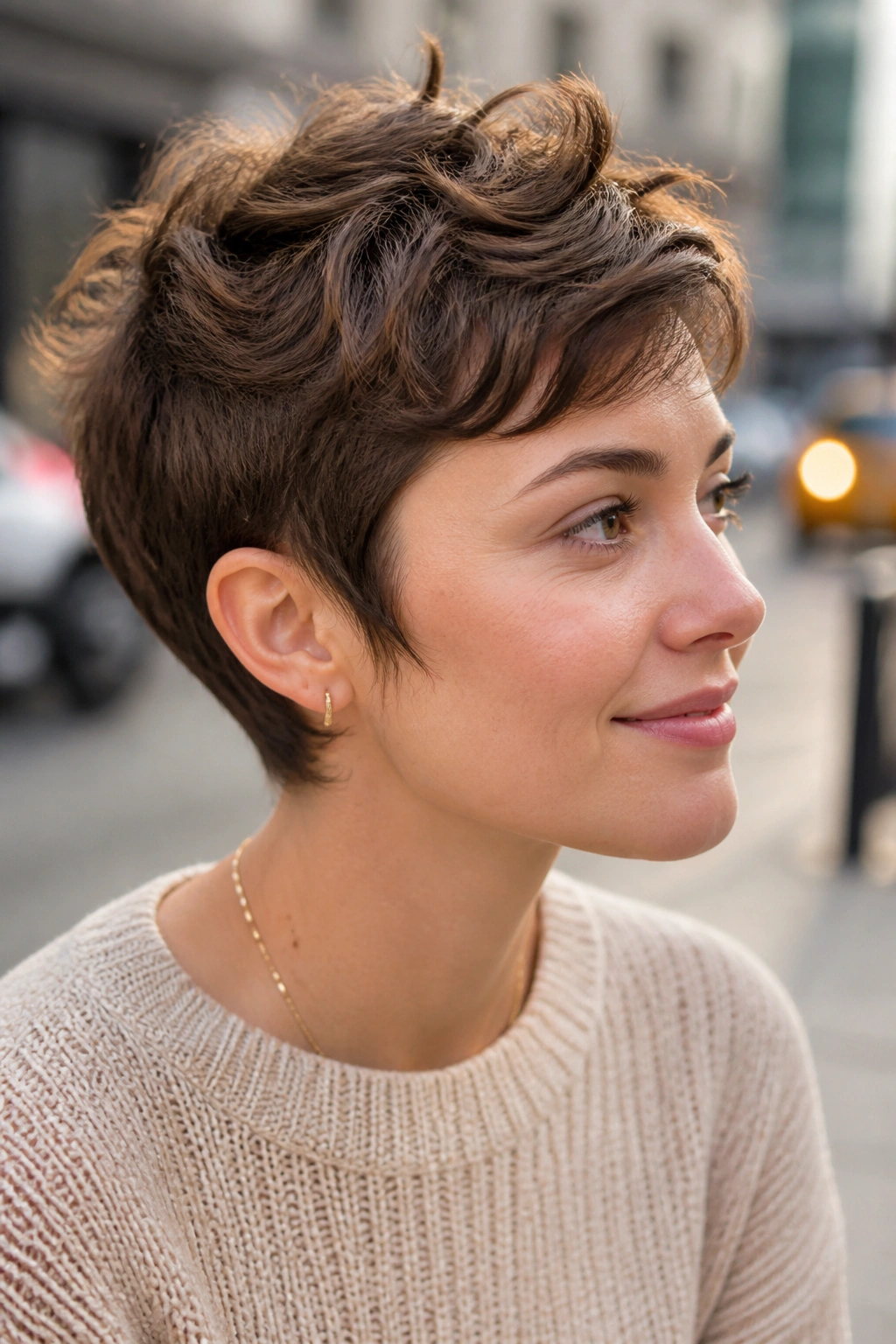
Can wavy hair carry a pixie without looking fluffy? Yes, if the top stays long enough to show the wave. A short pixie with 2 to 3 inches on top gives the bend room to move, while the sides stay neat.
How to Wear It
The sideburn area matters more than people think. A tiny bit of length there keeps the cut from looking severe, and it gives your waves a softer frame around the ears.
- Keep the top longer than the sides
- Ask for a tapered nape
- Use a pea-size amount of styling cream or paste
- Push the front forward, not straight up
A pixie like this is low-fuss, but not zero-fuss. It still needs a quick shaping with your fingers after washing. If you want texture to show, skip heavy oils. They flatten the bend fast.
4. Bixie Cut With Choppy Crown Layers
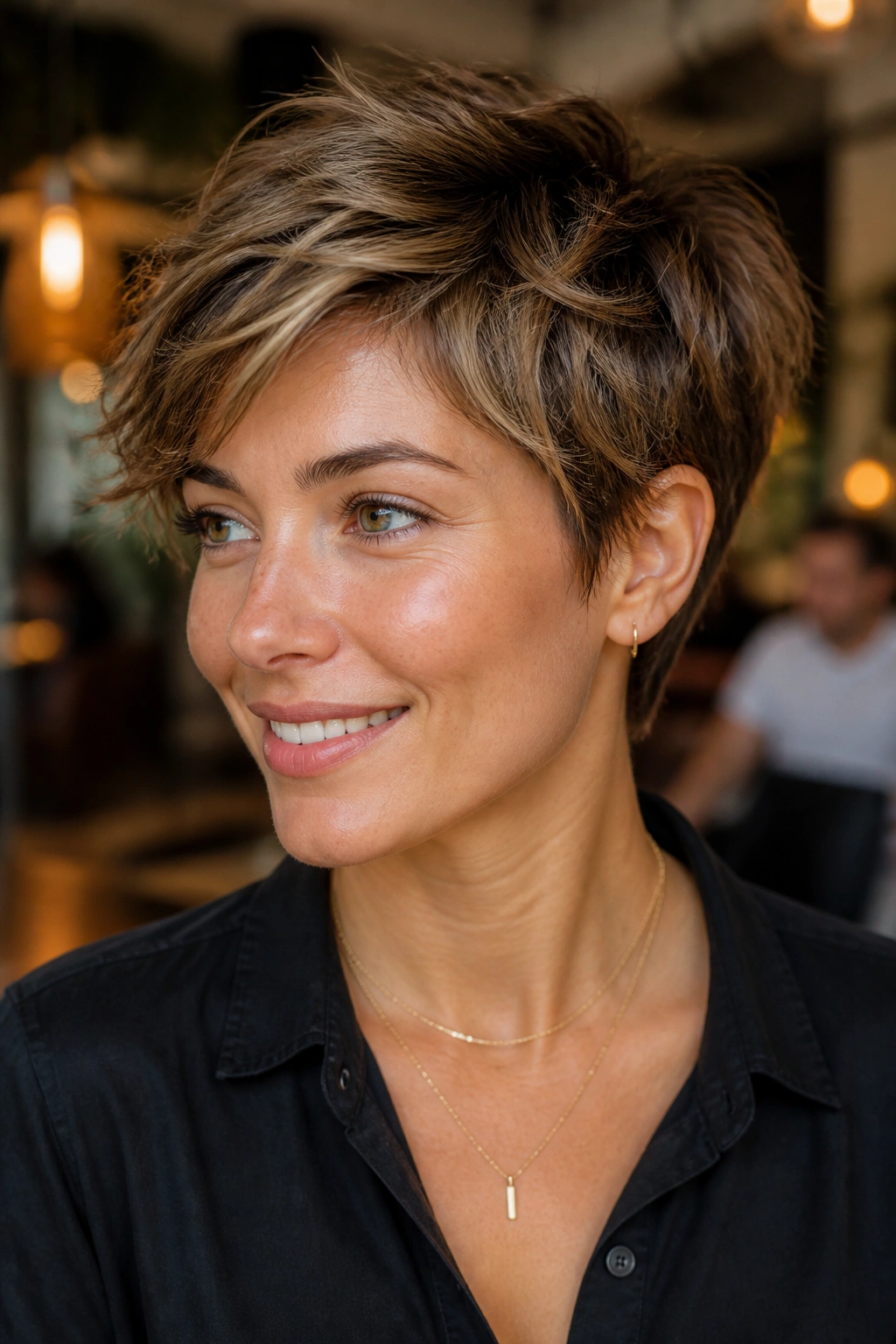
When someone wants to lose length but not commit to a full pixie, the bixie is the sensible middle ground. It sits between a bob and a pixie, with more length through the top and a little more edge around the ears.
The choppy crown layers give waves somewhere to lift. That sounds small. It isn’t. If the top is left too heavy, the whole cut can droop by the afternoon. A bixie keeps the shape lively, especially if your hair has a loose S-wave and a medium density.
Ask your stylist to leave enough length in front for a tiny side sweep. That keeps the cut from looking too cropped on the face. A bixie also grows out in a fairly forgiving way, which is why a lot of people end up keeping it longer than they planned.
5. Soft Shag Bob

The soft shag bob is the cut I like when waves need air, not structure. It usually falls between the cheekbone and the neck, with layers that start high enough to remove bulk but not so high that the shape turns wild.
A good shag bob has movement in the middle and a little softness at the ends. That keeps the hair from sitting in one flat sheet. On wavy hair, the layers can follow the bend instead of fighting it, which is half the battle.
It helps if the front pieces are slightly longer than the back. That small difference frames the face and keeps the cut from puffing around the cheeks. If your waves are thick, this one can remove a surprising amount of weight without making the shape look thin.
6. Asymmetrical Bob
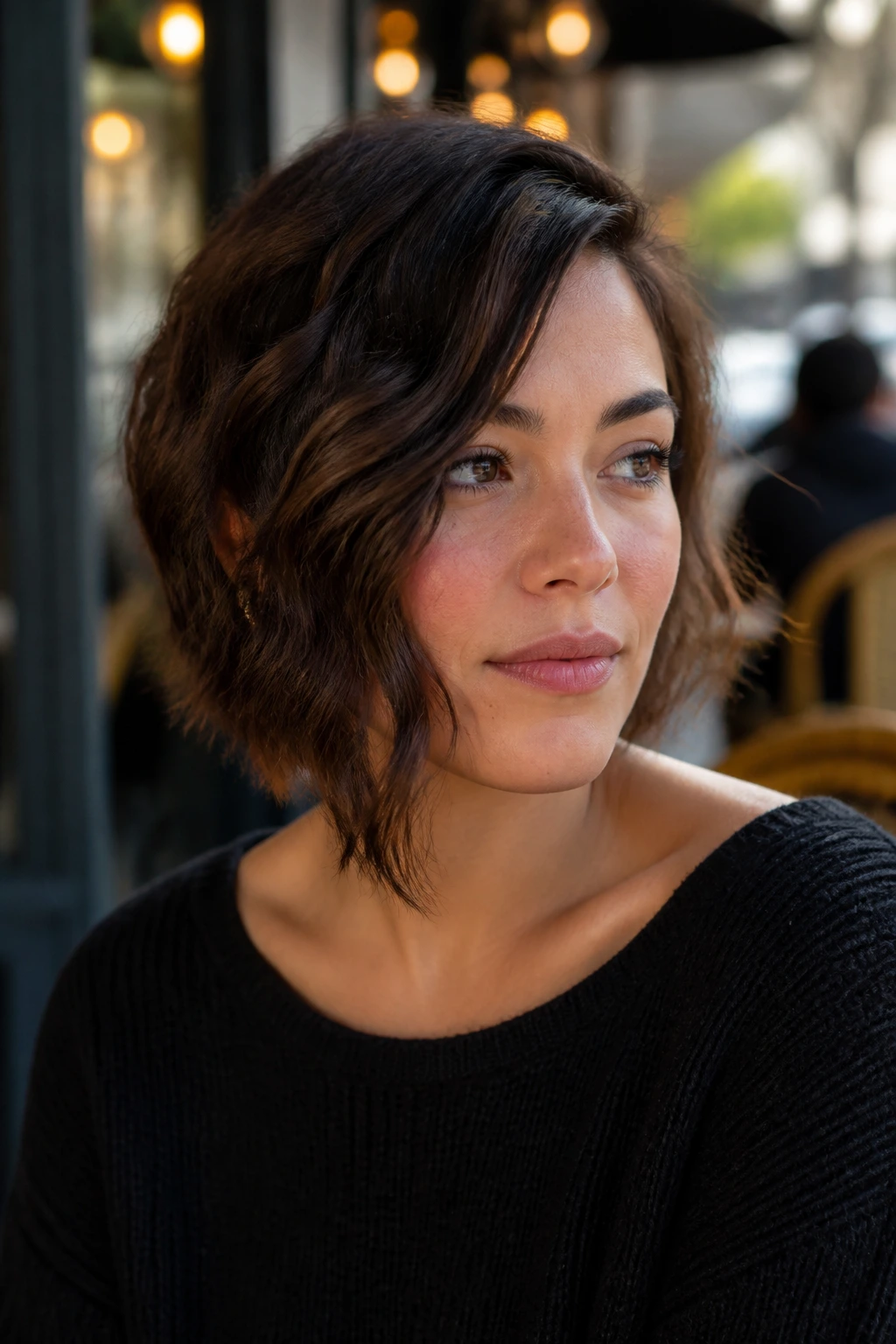
A bob with one side longer than the other sounds dramatic, and sometimes it is. On wavy hair, though, the asymmetry can be subtle enough to feel modern rather than loud. The longer side gives the waves somewhere to fall, and the shorter side keeps the outline sharp.
This cut is especially useful if your hair naturally parts deeply to one side. Instead of fighting that part, the asymmetry works with it. The result usually looks more intentional than a perfectly even bob that keeps flipping the wrong way.
Who does it suit? People who like a clear shape and don’t mind a cut that catches the eye right away. Ask for a difference of about 1 to 2 inches between sides if you want something wearable, not extreme. That small gap is enough.
7. Blunt Bob With Ghost Layers
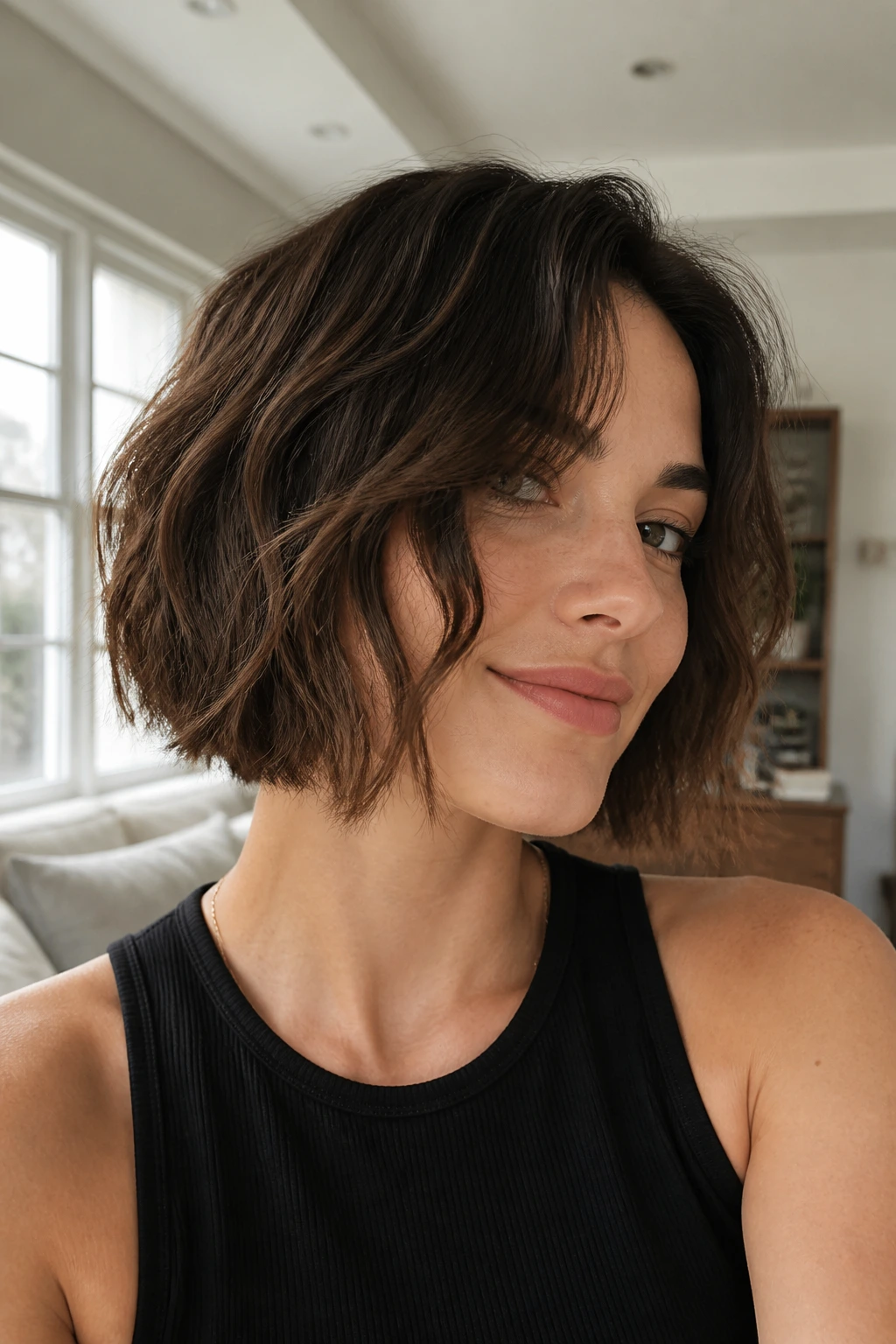
A blunt bob can look heavy on wavy hair unless the inside of the cut gets some quiet help. That is where ghost layers come in. They are internal layers you do not really see, but you feel them when the hair moves.
What Makes It Different
The outer line stays clean, which gives the bob its edge. Inside, a bit of removal keeps the waves from ballooning out. The effect is sharper than a shag and softer than a strict one-length bob.
- Best for medium to thick waves
- Works around chin to jaw length
- Needs a clean blow-dry or air-dry with mousse
- Avoid over-thinning the bottom line
That last point matters. If the ends get too shredded, the bob loses the whole point of being blunt. A little hidden texture is enough. Too much and the cut starts to look tired.
8. Brow-Grazing Fringe Bob
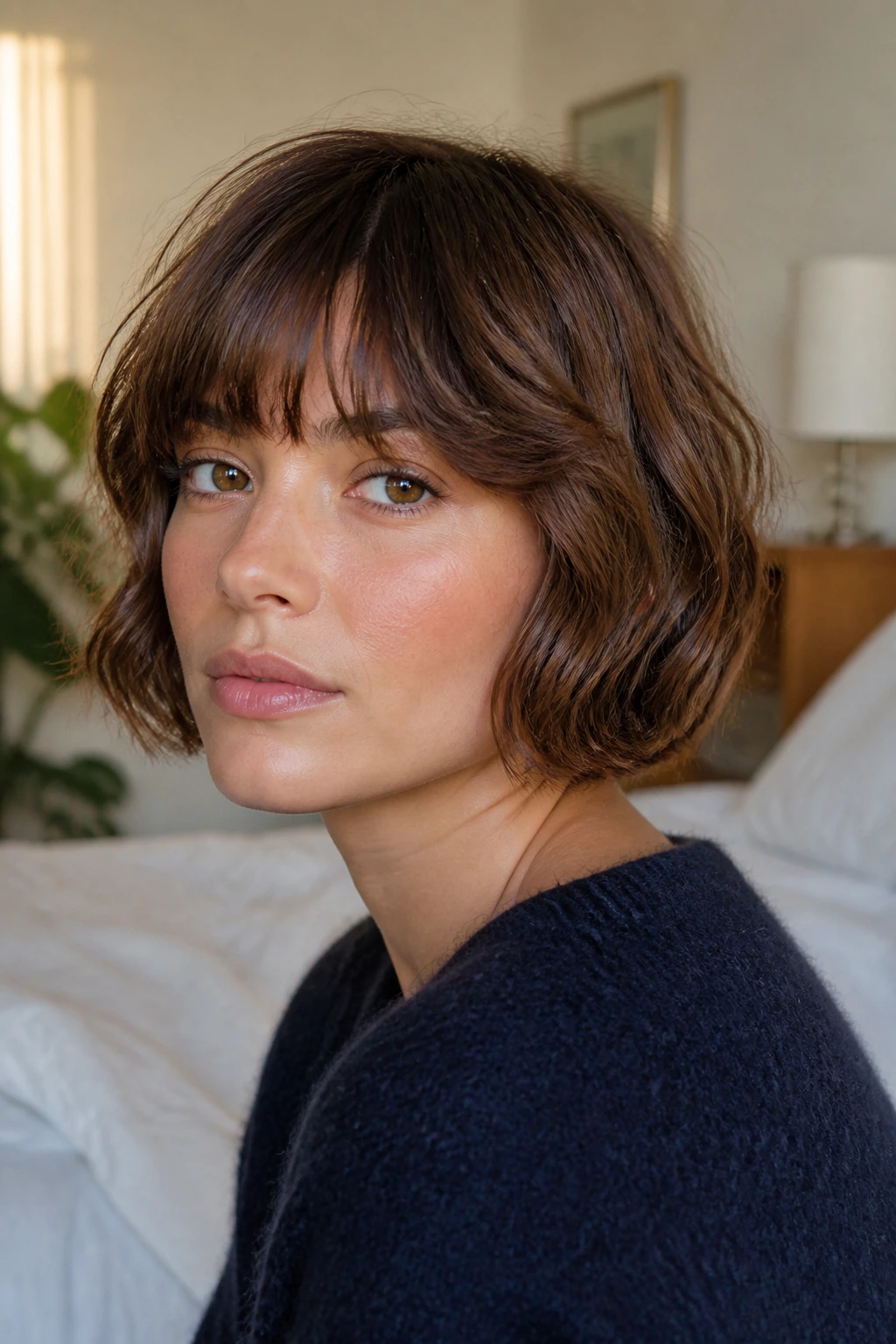
A fringe can change the mood of a wavy bob fast. Cut it too short and it bounces into the wrong place. Leave it around the brows, and it frames the face with a softer, more relaxed line.
The trick is leaving the fringe long enough that it can split naturally. Wavy hair rarely wants to sit in one perfect curtain, and that is fine. A bit of separation at the brow keeps the look modern and prevents the front from puffing up.
This cut works well if you like your hair to look finished even on lazy mornings. A quick mist of water, a dab of styling cream, and a bit of finger-drying is often enough. If the fringe gets oily faster than the rest, dry shampoo at the roots helps, but a small amount goes farther than a cloud of it.
9. Side-Swept Crop
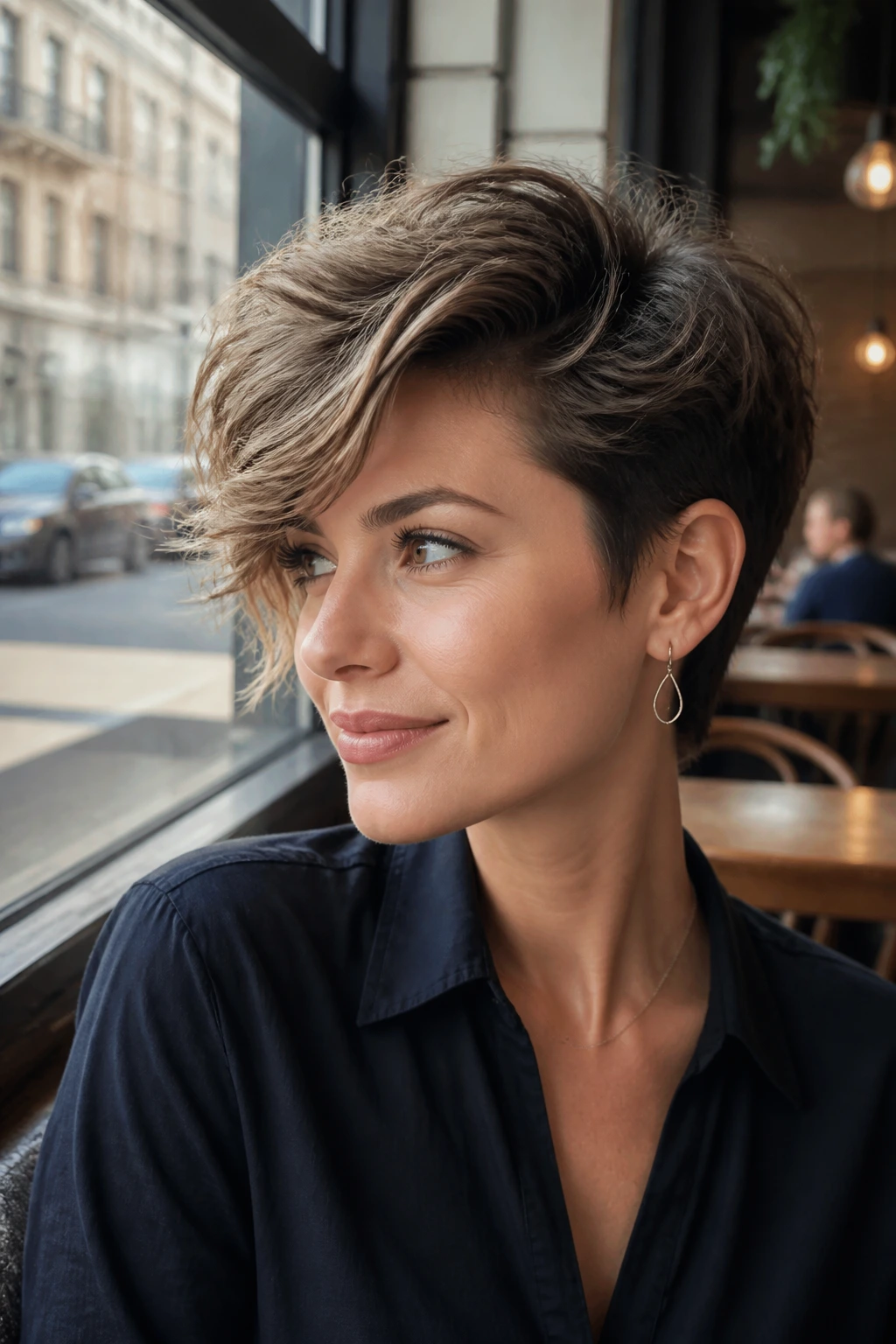
A side-swept crop is one of the easiest short cuts to wear when your waves have a mind of their own. The long front section gives you a soft sweep across the forehead, and the shorter back keeps the shape light.
The cut feels especially good when your hair has a loose wave pattern that likes to fall to one side anyway. Instead of flattening that habit, the crop turns it into part of the style. A slightly longer top, usually around 3 inches, gives enough room to shape the front with your fingers.
This one is good for people who want short hair without a hard edge. It can be neat, messy, or somewhere in between. And if you ever grow tired of the side sweep, the top usually has enough length to switch parts without a full restart.
10. Inverted Bob
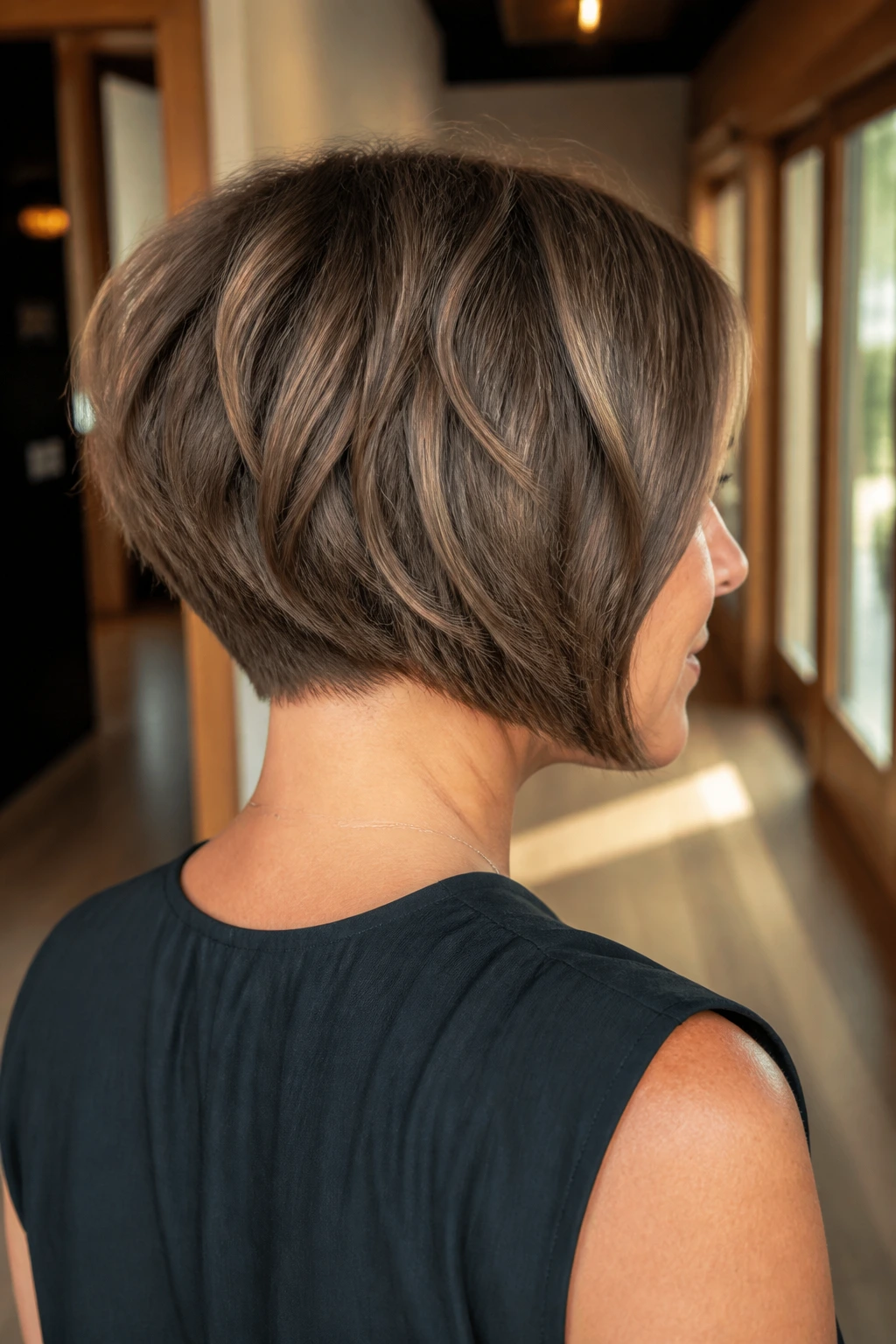
A good inverted bob is all about angle. The back sits shorter, sometimes stacked a little at the nape, while the front keeps more length and swings toward the jaw.
That shape gives wavy hair a natural lift in the back, which helps if your crown tends to lie flat. The front pieces then pull the eye forward, so the whole cut feels longer and sleeker than it really is.
What to Ask For
- Shorter nape with a clear angle toward the front
- Smooth graduation, not a bulky stack
- Front length hitting the jaw or just below
- Clean neckline so the back does not look heavy
This cut can get loud if the layers are pushed too high. Keep the graduation moderate, and it stays sharp instead of helmet-like. That little difference changes everything.
11. Choppy Layered Bob
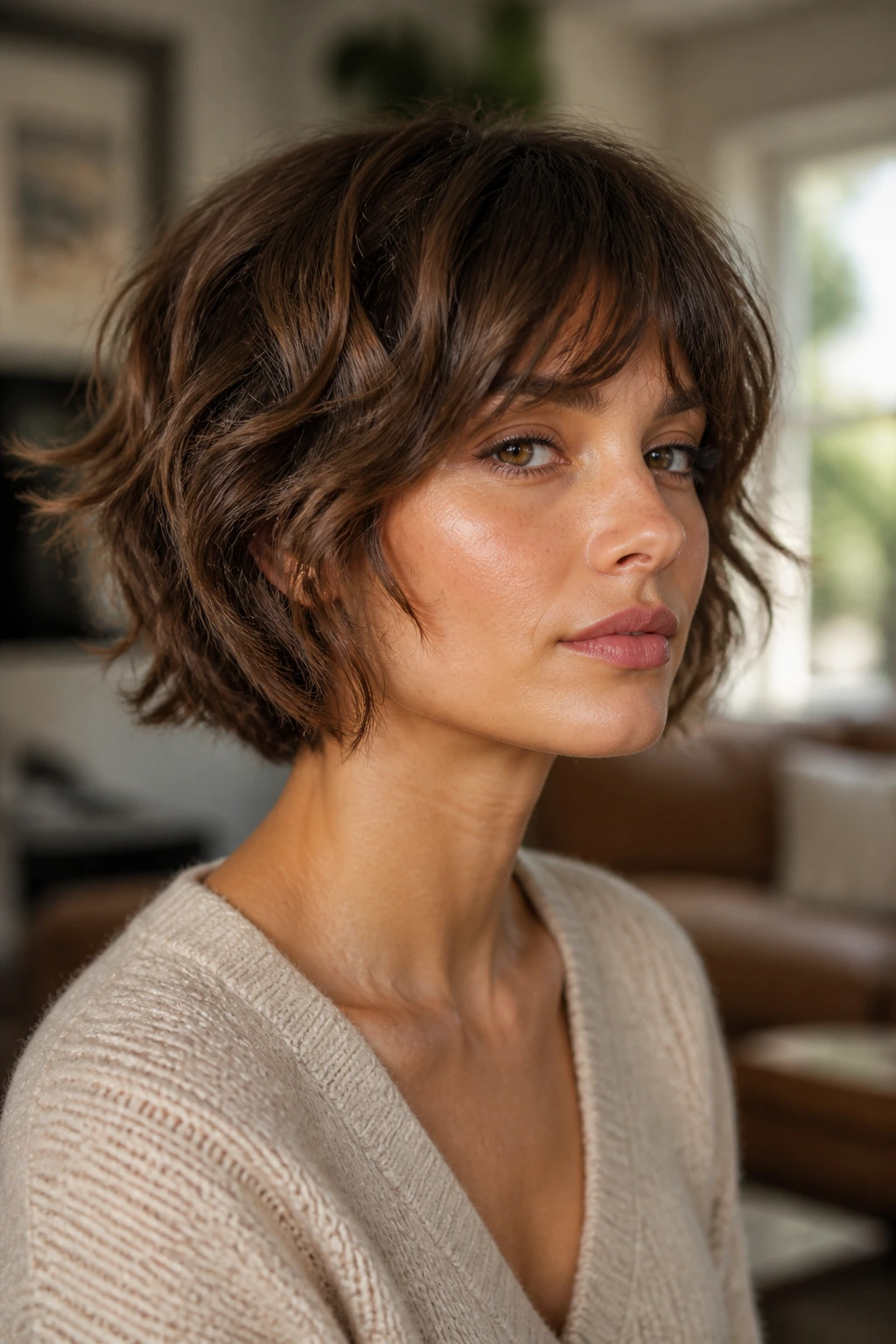
Some waves want structure. Others want bite. A choppy layered bob sits in the second camp, with ends cut in a way that lets the hair break up into pieces instead of one smooth sheet.
The texture gives the style a lived-in feel without making it sloppy. Shorter pieces around the crown can keep the top from lying flat, while the lower layers stop the bottom from looking too heavy. It is a good cut when your hair has a medium amount of density and you want it to move.
This is not the best pick if you like a very polished finish. It likes a little mess. A dab of texture spray and a quick scrunch can be enough. If you want to air-dry, tuck the hair behind the ears for a few minutes while it sets, then shake it loose.
12. Mini Wolf Cut
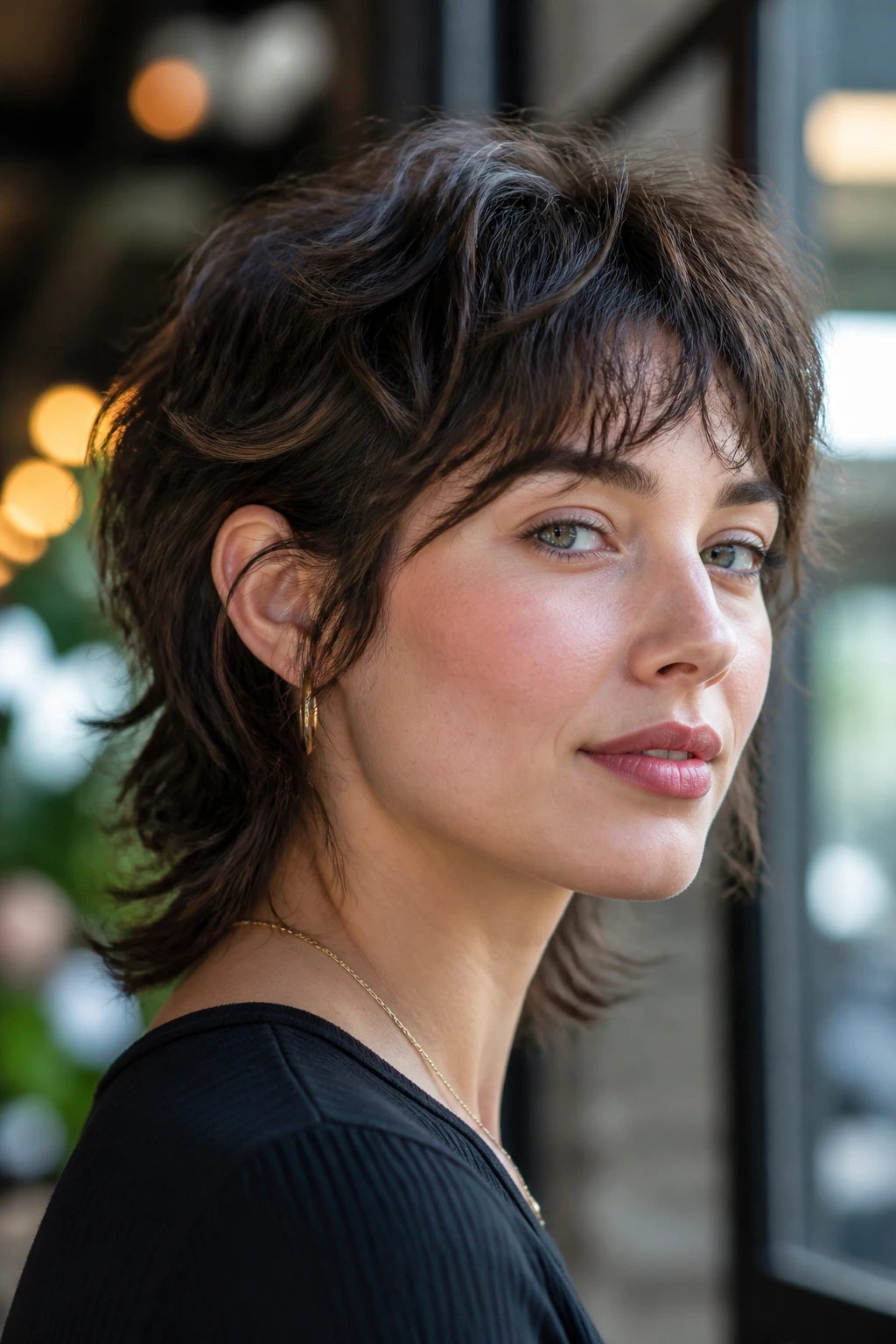
The mini wolf cut takes the rough idea of a wolf cut and trims it down into something wearable. You still get that cropped crown, a little fringe, and longer bits around the neck, but the shape is tighter and less shaggy.
Why It Keeps Its Shape
The short top gives waves lift. The longer nape stops the cut from turning into a plain pixie. It lands right in the middle, which is why it appeals to people who want edge without a full punk look.
- Fringe can be curtain-like or piecey
- Crown layers should be soft, not chopped to bits
- Best on hair that has some bend already
- Needs a bit of styling cream at the ends
I like this cut on thicker wavy hair because it removes weight where it hurts most: the crown and the sides. The result looks cool, but it is also practical. That combination is rare.
13. Undercut Pixie
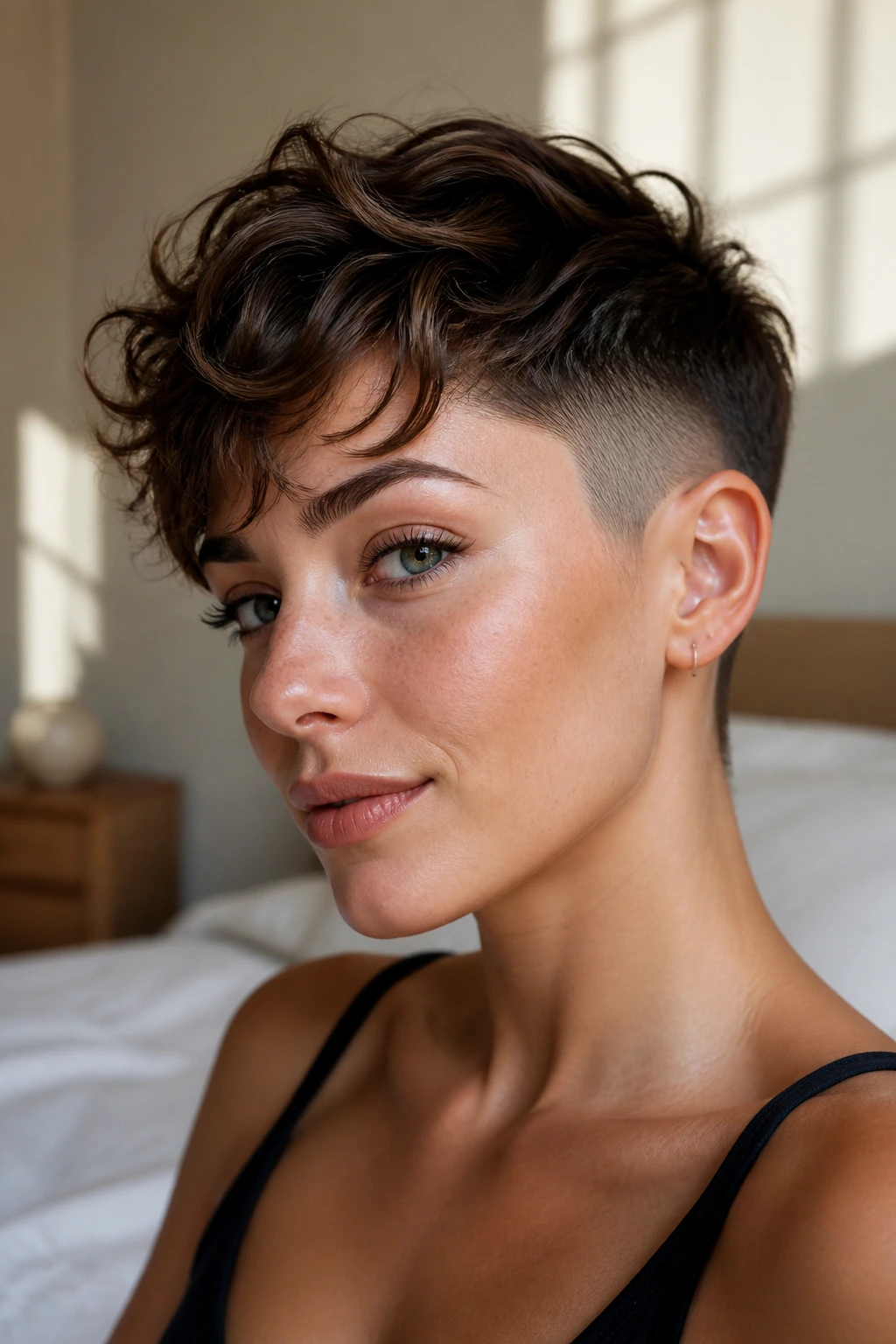
An undercut pixie is not subtle, and that is the appeal. The sides or nape get clipped closer to the head, which removes bulk fast and leaves the top free to show off the wave.
If your hair is dense, this can be a relief. Thick waves around the ears and neckline can feel hot and puffy, especially when the weather is warm. Shaving or closely clipping those zones makes the whole cut lighter and easier to dry.
The top still needs some length. Without it, the cut loses contrast and starts to look too flat. Keep a few inches on top, and the hair can sweep forward, sideways, or just slightly messy. That little difference gives the style its shape.
14. Ear-Length Tucked Bob

There is something neat about a bob that can tuck behind the ears without fighting back. Ear-length cuts sit short enough to feel fresh, but not so short that they lose their bob identity.
This shape looks good on waves that form a soft bend rather than a full curl. The hair can frame the cheekbones, then move back cleanly when you want it off your face. It’s a practical cut, which sounds boring until you realize how often practical hair ends up looking the most elegant.
A tidy neckline helps here. So does a slight bend at the ends, not a hard inward curl. That keeps the style from looking old-fashioned. If you want a little edge, ask for a side part and keep the front pieces just a touch longer than the rest.
15. Rounded Volume Bob
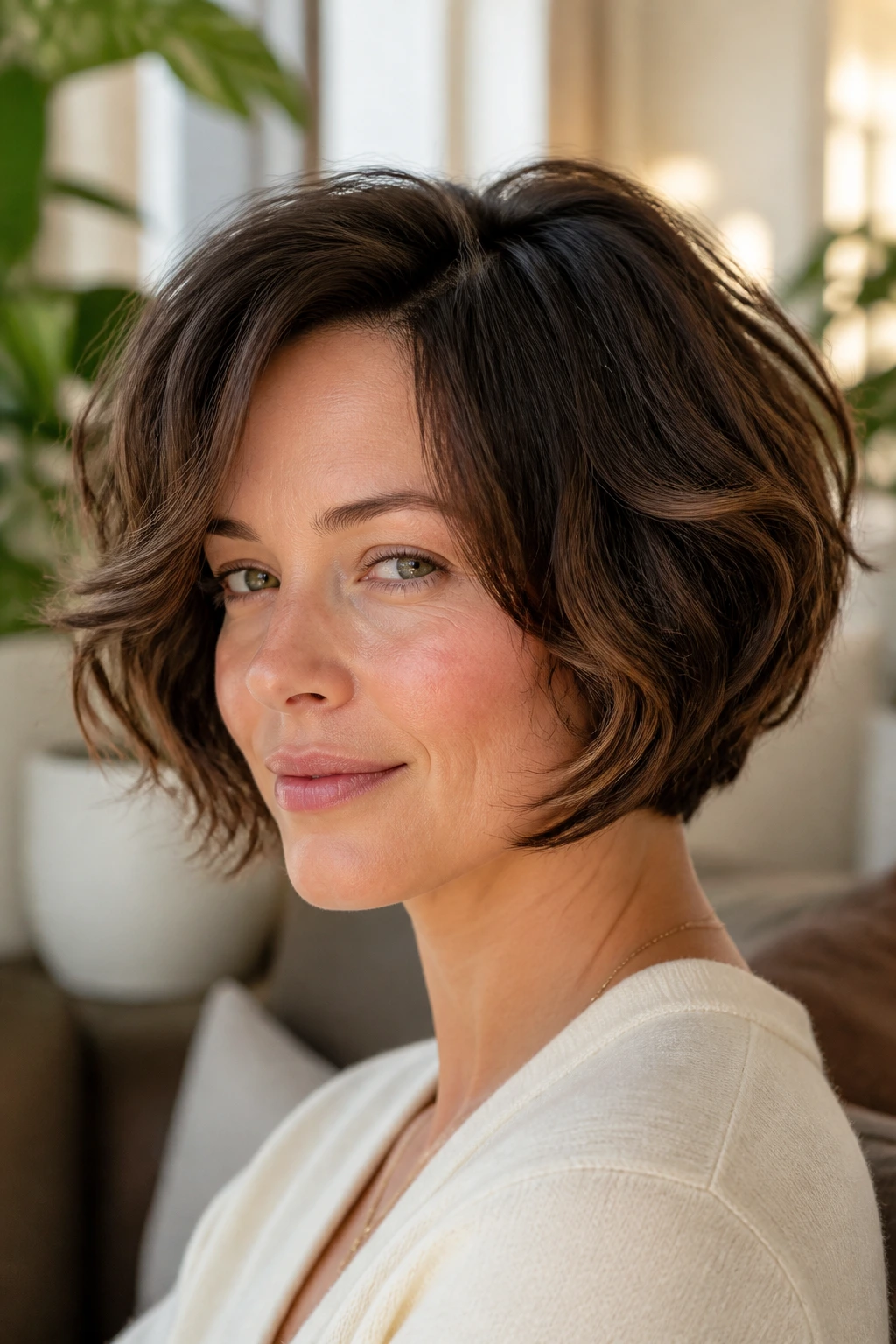
A rounded bob leans into softness. The silhouette curves in toward the jaw and cheekbones, which makes it a smart choice for fine-to-medium waves that need a bit of body.
The round shape gives the illusion of fullness without requiring a huge amount of styling. A good cut here keeps the corners from sticking out and uses the wave pattern to create lift in the middle. That can be a gift if your hair goes flat at the crown but frizzes at the ends.
It helps to avoid too much layering at the bottom. The outline should feel smooth, almost cushioned. If you use a diffuser, dry the roots first and let the ends finish in their own shape. Rush it and the curve can collapse. Slow drying keeps the round line intact longer.
16. Boxy Bob With Soft Texture

A boxy bob sounds harsh on paper. In real life, it can be one of the smartest choices for wavy hair, because the stronger outline gives waves a place to live without running wild.
The key is soft texture inside the shape. You want the perimeter to stay fairly straight, but not stiff. A small amount of internal cutting keeps the hair from feeling like a cardboard helmet, which is the nightmare version of this look.
This style suits people who like geometry in their haircut. It also tends to make thick waves look fuller at the bottom, which can be a plus if you want presence rather than feather-light movement. The line does the work. Your styling only has to keep the texture from frizzing away.
17. Razor-Cut Bob

A razor-cut bob can be beautiful on wavy hair, but only when the razor is used with restraint. Too much slicing, and the ends get wispy in a bad way. Done well, the cut looks soft, airy, and light at the tips.
What to Watch For
Razor cutting opens up the ends, which helps waves separate instead of clumping into one heavy block. That makes the style feel looser than a blunt bob.
- Best on medium-density hair
- Works around jaw to chin length
- Needs careful maintenance if your hair frizzes easily
- Styling cream helps keep the ends calm
I would not pick this cut for very coarse waves unless the stylist knows exactly how to remove weight without fraying the perimeter. But on softer wave patterns, it can give a nice broken-up finish that air-dries fast and looks easy.
18. Mullet-Inspired Crop
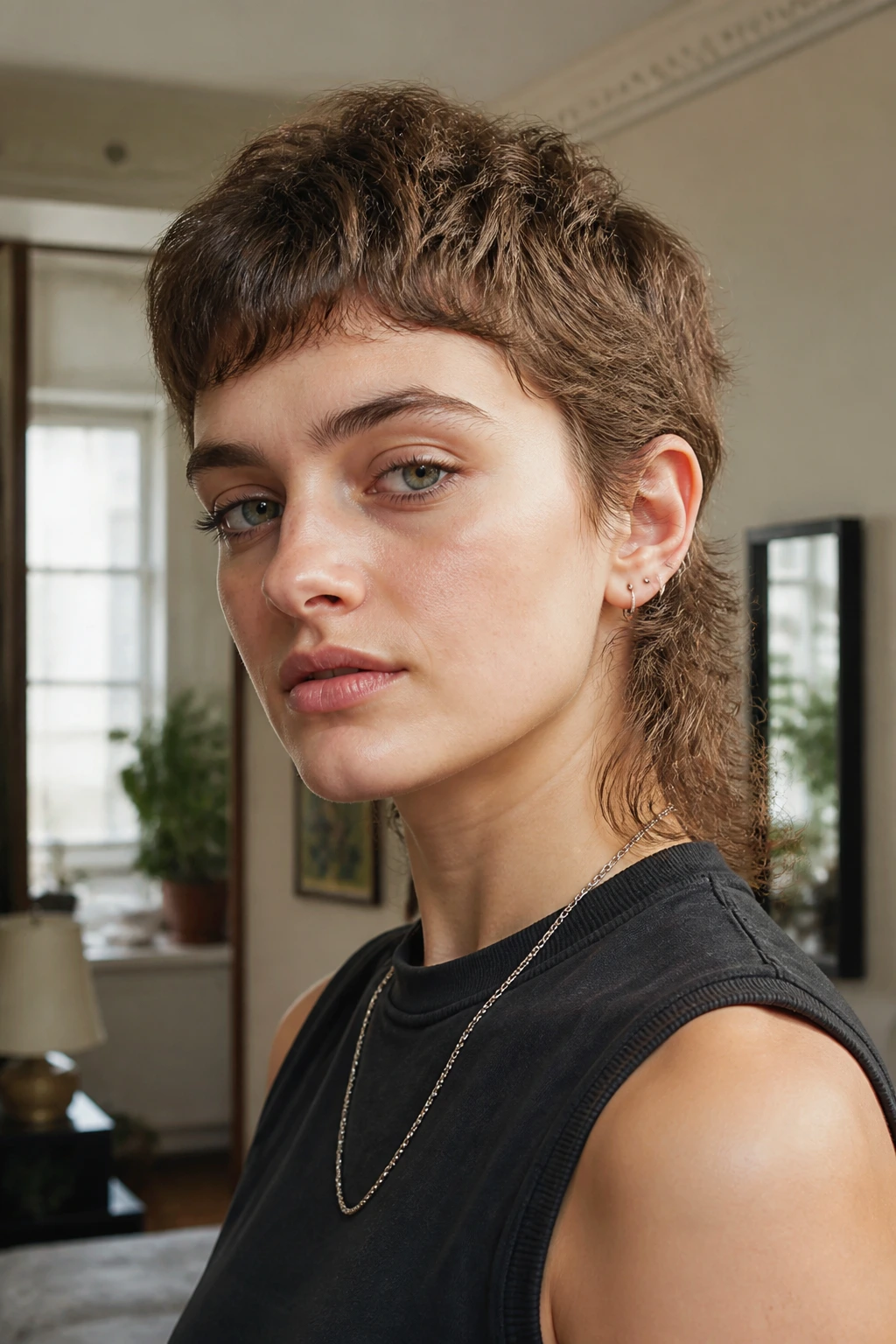
A mullet-inspired crop is for people who want a little attitude without going full throwback. The front and sides stay shorter, while the back keeps more length and movement.
That extra length at the nape is what makes it interesting on wavy hair. The waves can stack and bend there, which gives the cut a bit of swing. It looks especially good when the fringe is soft and the top is choppy rather than blunt.
This is a good choice if you want your haircut to feel a little rebellious but still wearable. Ask for a softened version, not a hard-line mullet. The difference is huge. A softened crop keeps the shape wearable for everyday life, while the stronger version is more of a statement.
19. Graduated Bob
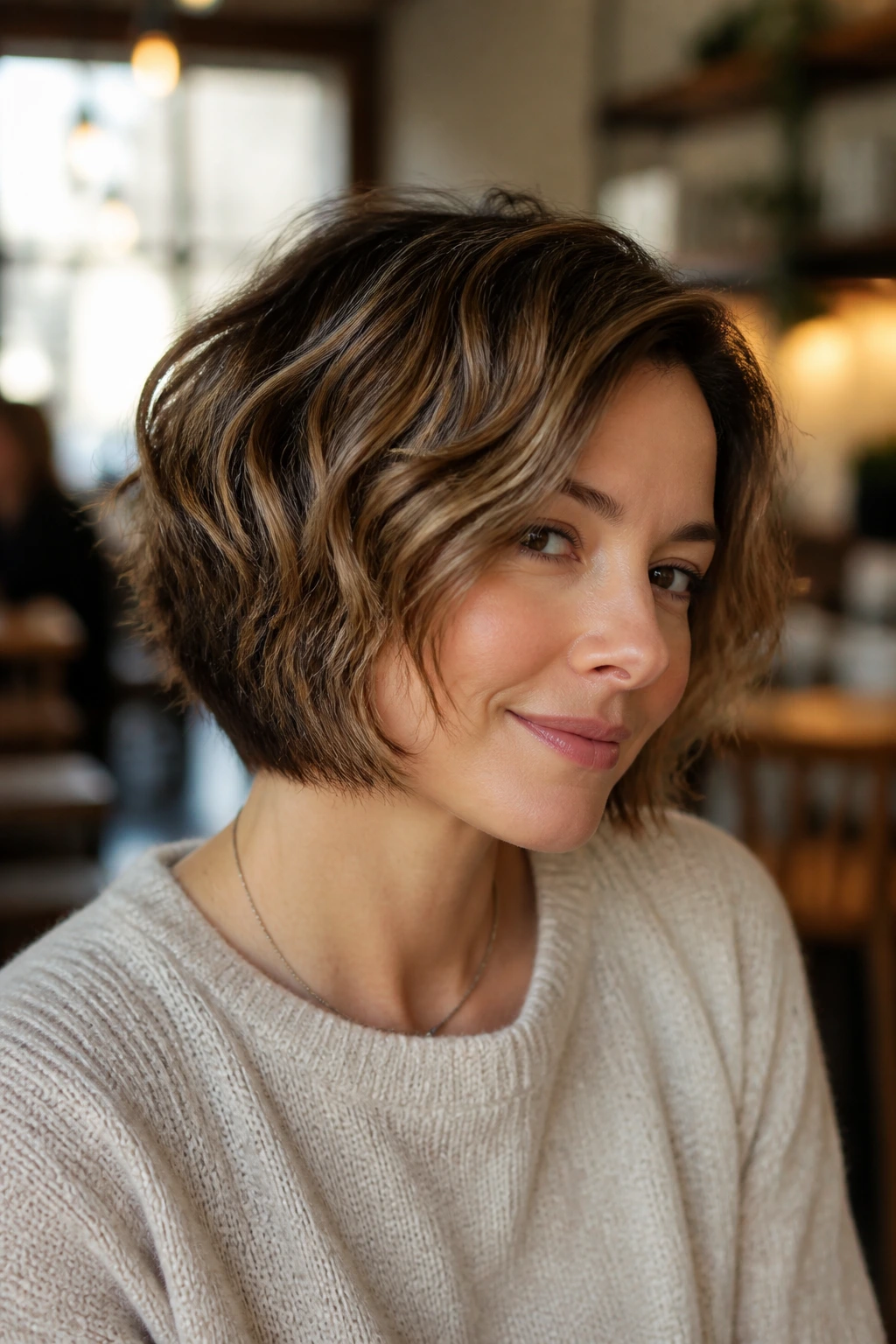
A graduated bob is built with shorter layers in the back and longer lengths toward the front. That stacked shape can give wavy hair real lift at the crown, which is useful if your roots go flat fast.
The cut has a tidy, almost tailored feel. It does not have to look severe, though. Keep the graduation smooth and the front lines soft, and the style stays polished without feeling stiff.
Best for thicker waves
Thick hair often carries this shape well because the stacked back removes bulk where it tends to bunch up. Fine hair can wear it too, but the stack needs to stay gentle.
- Shorter at the nape
- Longer pieces in front
- Smooth transition through the back
- Light texturizing only, if needed
Too much stacking makes the back puff. That is the trap. Keep the angle moderate and the cut stays sharp in a good way.
20. Layered Pixie Bob
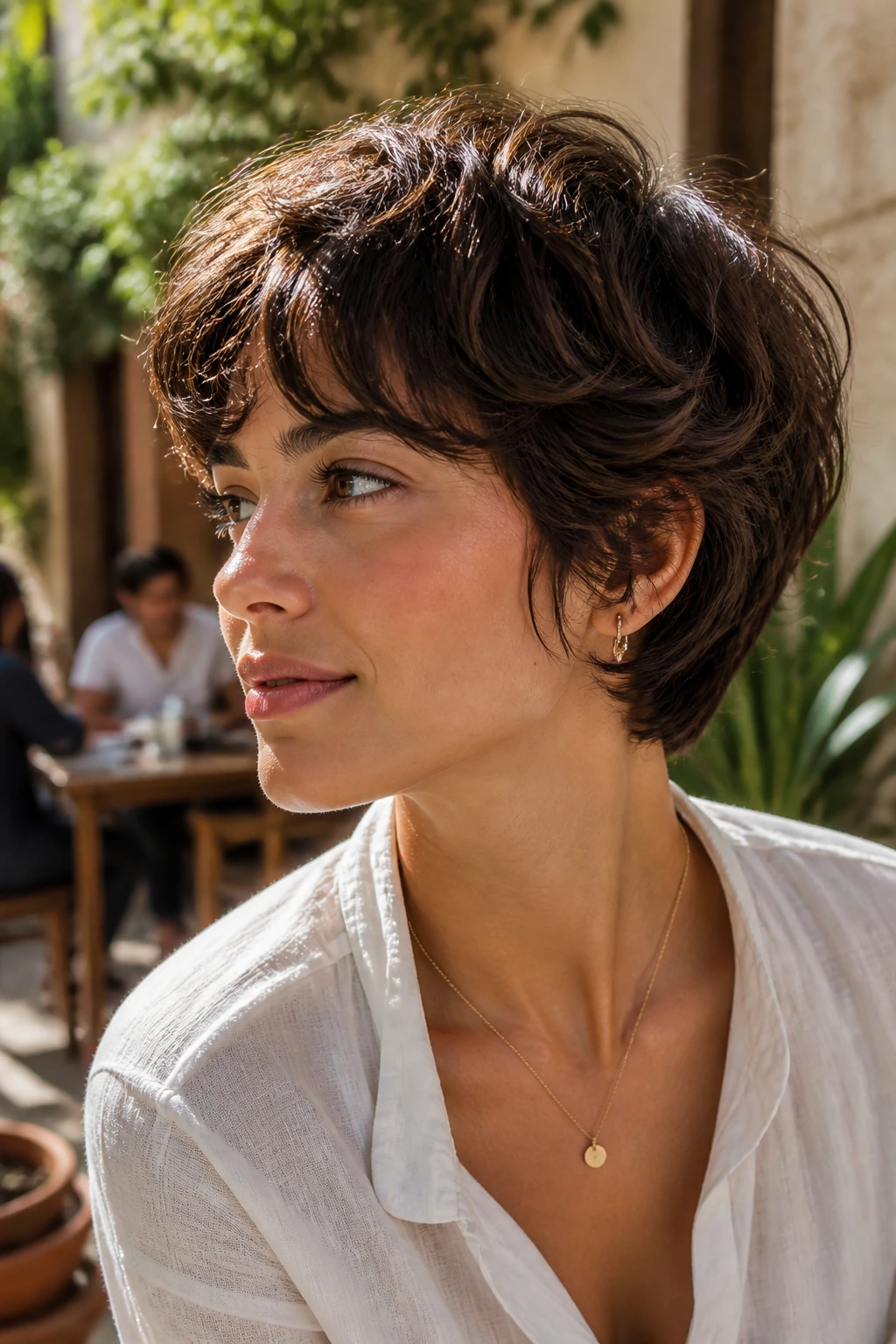
The layered pixie bob is what happens when a pixie wants a little more softness and a bob wants a little more edge. It is cropped, but not severe. It has layers, but not so many that it turns fuzzy.
This cut suits waves that like to bend in several directions at once. The top can be left longer for movement, while the sides stay close enough to the head to keep the silhouette clean. It’s also one of the easier short cuts to grow out because the shape already sits between two lengths.
A side part helps, especially if your hair has a stubborn cowlick. The layers can follow the direction your hair already wants to go. Fighting the grain here usually leads to puff. Working with it gives the cut that loose, broken-up texture people like.
21. Tousled Micro Bob
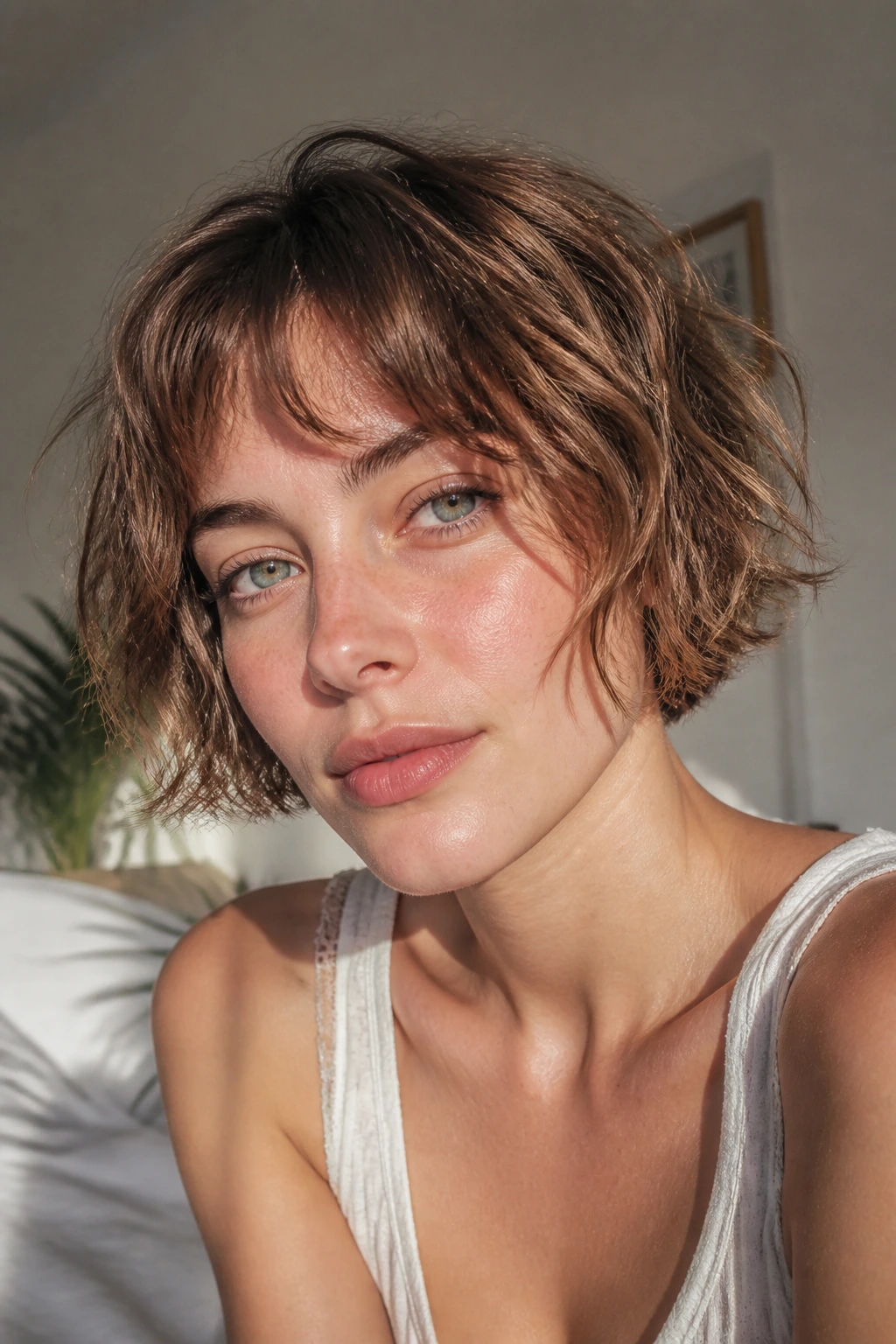
A micro bob is short enough to feel sharp, but not so short that it loses its bob identity. On wavy hair, the smaller length can make the bend show up faster, which gives the style a quick, tousled finish.
The cut usually hits somewhere between the cheekbone and the ear. That sounds tiny, and it is. But that is also why it works. The hair does not have room to spread out, so the wave pattern becomes the point of the cut instead of an afterthought.
This is a bold choice if you like a little shape around the face. It is not the easiest style for someone who wants to hide every odd bit of texture. But if you enjoy hair that looks a little cool even when it’s imperfect, this one has a lot going for it.
22. Pageboy With Soft Ends

A pageboy can look severe if it is cut too cleanly. On wavy hair, though, soft ends and a gentle curve under the jaw can make it feel much more relaxed.
The shape wraps around the face instead of pushing outward. That makes it good for someone who wants coverage around the cheeks or a smoother line through the jaw. If the ends are softened a little, the cut keeps its pageboy feel without looking stiff.
How to Keep It Fresh
This cut needs the curve to stay visible. A round brush can help if you blow-dry, but air-drying with a cream that encourages bend can work too.
- Keep the outline smooth
- Leave a soft fringe or side part
- Avoid too much volume at the crown
- Trim often so the curve does not droop
A pageboy is never the loudest cut in the room. That is part of its charm.
23. Long Pixie With Side Part
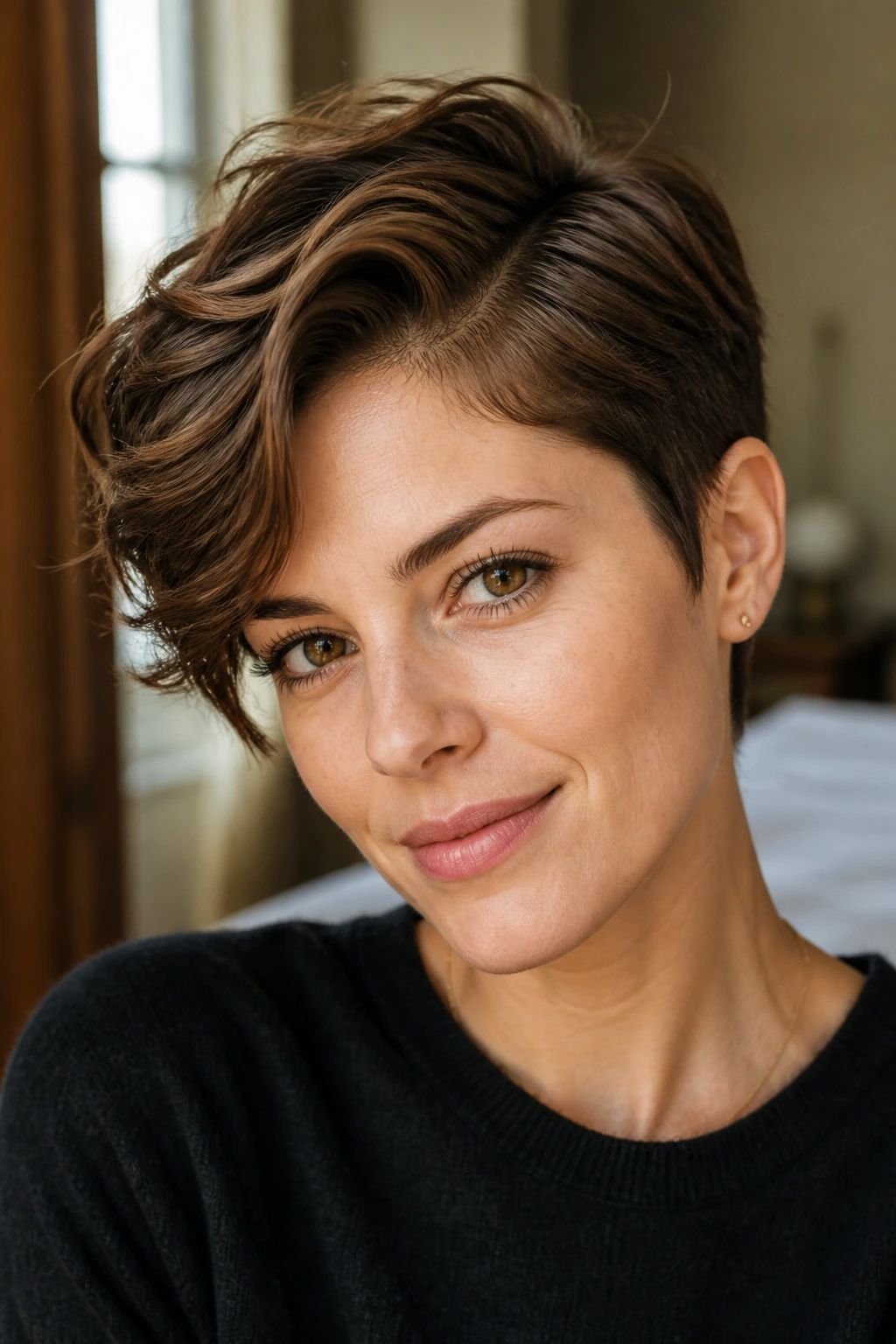
A long pixie gives you the ease of short hair with enough length to style in different directions. The side part is the piece that makes it work on wavy hair, because it lets the top sweep naturally instead of standing up in random places.
The top usually needs around 3 to 4 inches to show movement. Less than that, and waves can lose their shape. More than that, and the cut starts drifting toward a bixie. Neither is bad. It just changes the whole mood.
This style is smart for people who want a short cut that still feels feminine, sharp, or a little soft around the face. It also grows out without a dramatic ugly phase, which matters more than people admit. No one loves a haircut that turns strange after two weeks.
24. Curved Bob With Internal Layers

A curved bob sits close to the face and follows the shape of the head more than a standard square bob. On wavy hair, that curve can make the cut feel expensive in the plainest sense of the word: neat, controlled, and easy to wear.
Internal layers are what keep it from looking too solid. They take out weight from inside the shape, so the outer line stays smooth while the waves still have room to move. That mix is useful if your hair gets bulky at the sides but you still want a rounded outline.
This cut is a strong choice for someone who likes a polished finish and does not want a ton of obvious texture. It can be air-dried, but it also looks good with a quick blow-dry using a vent brush. The curve stays visible either way.
25. Grown-Out Crop With Fringe

A grown-out crop with fringe is for the person who wants a cut that looks intentional even when life gets messy. The fringe keeps the front defined, while the rest of the crop can sit a little longer and looser around the head.
That looseness suits wavy hair. Waves rarely stay rigid for long, and a grown-out crop embraces that instead of fighting it. If the sides start to broaden, a trim around the ears and neck usually brings the shape back without changing the whole style.
This one is especially good if you do not want to visit the salon every few weeks. It holds its shape while it grows, and the fringe can be worn forward, parted, or pushed to one side. Simple. Direct. Easy to live with.
A short cut should make your waves look like they belong there. If it needs constant rescue, it is the wrong cut.
