



Blue-black hair can sharpen a round face in a way plain black often can’t. The blue sheen breaks up the solid mass of dark hair, so the shape feels deeper, leaner, and a little more alive when it moves.
Blue-black has range.
On a round face, that range matters. A shade this dark can either work with your features or fight them, and the difference usually comes down to where the color sits, how the hair is parted, and whether the cut creates vertical lines instead of a clean circle around the cheeks. A chin-length bob with too much bulk at the sides can make the face look wider. The same shade on long layers, a deep side part, or a cropped cut with height at the crown can do the opposite.
That’s why blue-black is such a useful color family for round faces. It can look glossy and severe, soft and expensive, smoky and cool, or nearly ink-black with just enough blue to show up in daylight. On straight hair, the color reads crisp. On curls and coils, it looks richer and denser. And when the shape is right, the whole style pulls the eye up and down instead of side to side.
A few of these ideas are low-drama and easy to live with. A few are bolder. The best ones don’t just flatter the face — they make the color feel intentional, which is half the battle with dark shades anyway.
1. Long, Center-Parted Blue-Black Layers
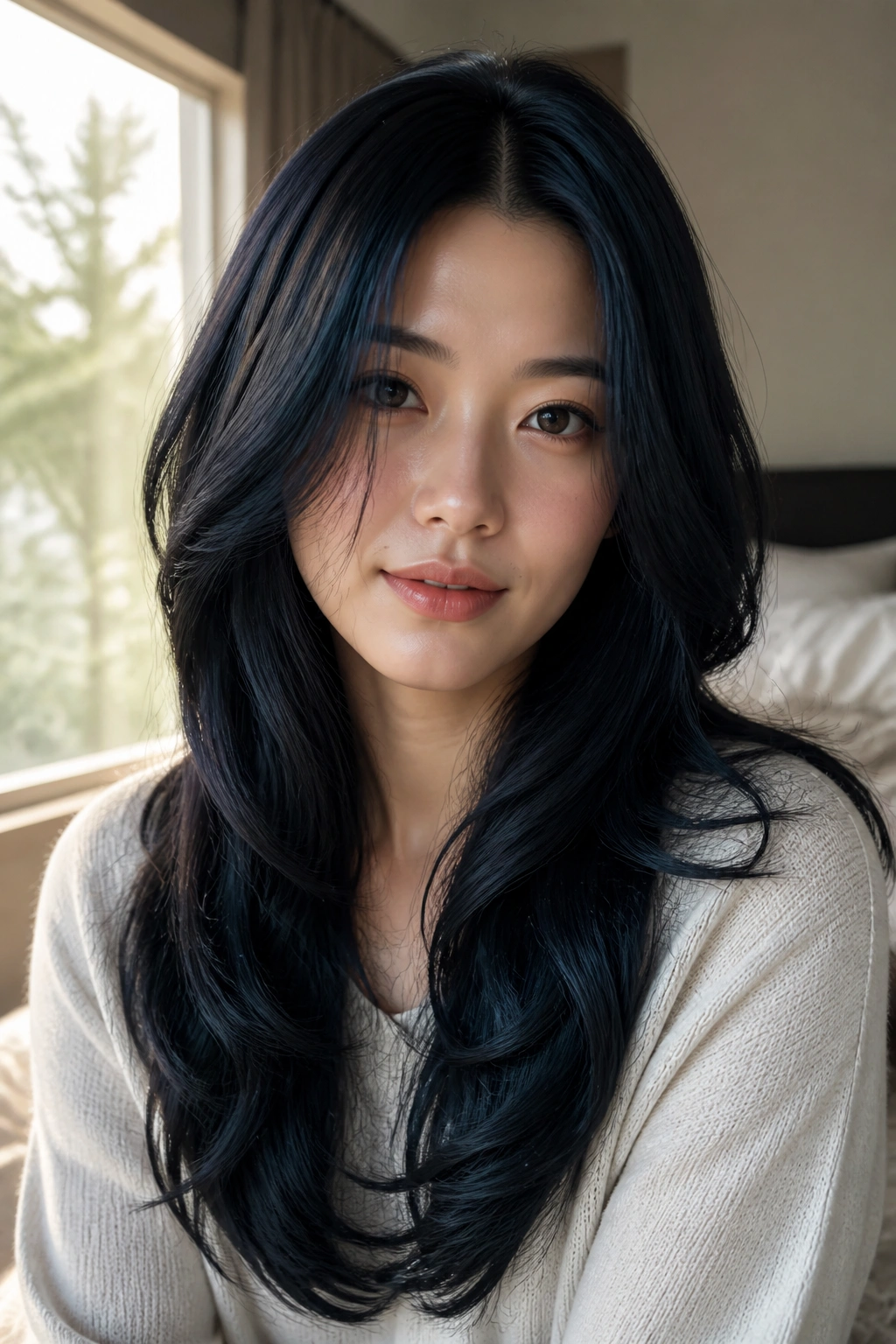
Long hair is one of the easiest ways to make a round face look longer, and blue-black gives it a harder edge. The center part creates a straight line from forehead to nose, while the length keeps the visual weight below the cheeks where it belongs.
Why It Works
Ask for layers that start below the chin, not at the jaw. If the shortest pieces land right at cheek level, the face can look fuller than you want. A gentle bend from mid-length to ends keeps the hair from hanging flat, which matters because flat dark hair can look heavy fast.
- Keep the part sharp and clean.
- Let the layers begin at the collarbone or lower.
- Add a soft wave from the ear down.
- Finish with a gloss or shine spray so the blue tone shows.
Best tip: if your hair is fine, keep the ends blunt and the layers long. Too many short layers can make the whole shape puff out at the sides.
2. Deep Side-Part Blue-Black Lob
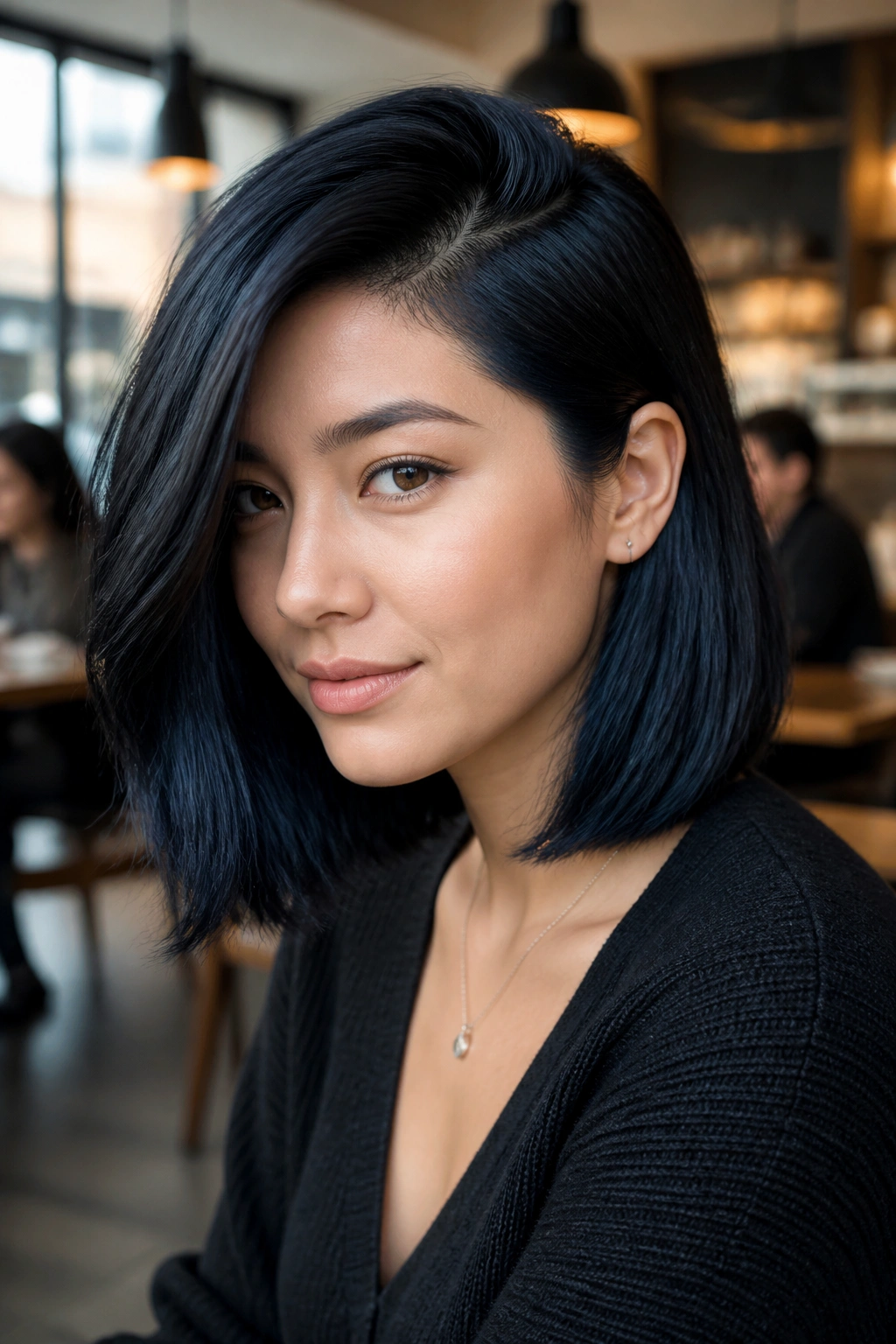
A side part does more for a round face than people give it credit for. It breaks the face’s symmetry, creates lift at the roots, and makes the hair fall diagonally instead of forming a perfect frame around the cheeks.
That diagonal line is the whole point. A lob that hits at the collarbone, then leans forward a little in front, gives you length without dragging the eye straight across the face. It also plays nicely with blue-black, because the sheen shifts every time the hair moves. The color feels darker near the roots and a little brighter along the curved ends.
This is a strong choice if you like hair that looks polished without trying too hard. Keep one side tucked behind the ear and let the other side skim the cheek. That tiny asymmetry is doing a lot of work.
3. Blue-Black Curtain Bangs with Collarbone Length
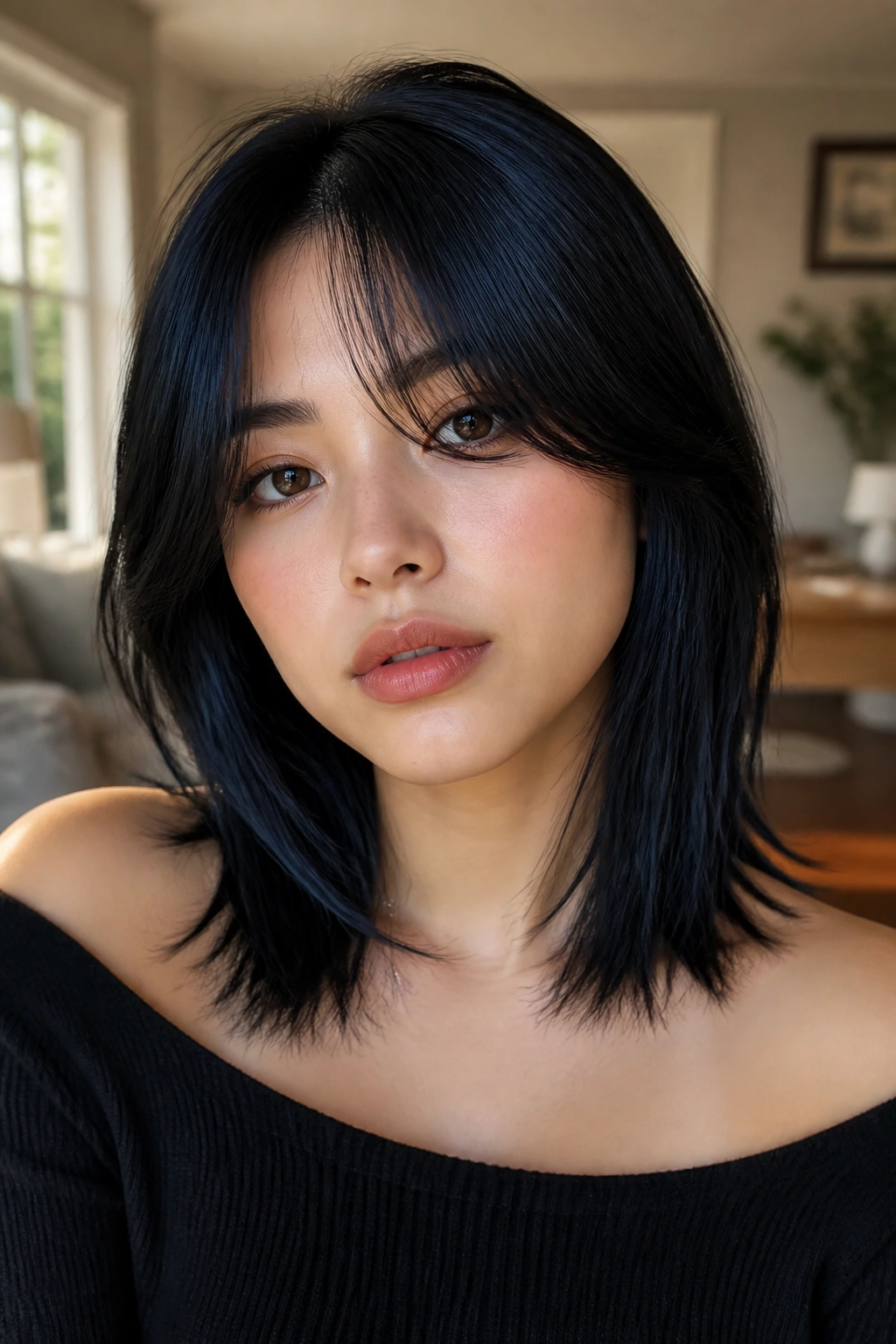
Can bangs work on a round face? Absolutely — if they’re soft, split, and long enough to move. Curtain bangs open up the forehead and guide the eye downward, which is much kinder than a blunt fringe that stops at the brow line.
Where the Fringe Should Hit
The sweet spot is somewhere between the cheekbone and the upper lip, with the shortest pieces near the center and longer pieces sweeping out toward the jaw. You want movement, not a helmet of fringe. Blue-black makes this even better because the darker base keeps the bangs from feeling too busy.
- Start the fringe higher than a straight bang would.
- Keep the center shorter and the sides longer.
- Blow-dry with a round brush away from the face.
- Add collarbone-length layers so the bangs have room to blend.
A small warning: if the bangs are too thick or too short, they can widen the top half of the face. Light, airy, and slightly broken up is the right mood here.
4. Glossy Blue-Black Blunt Bob with a Soft A-Line
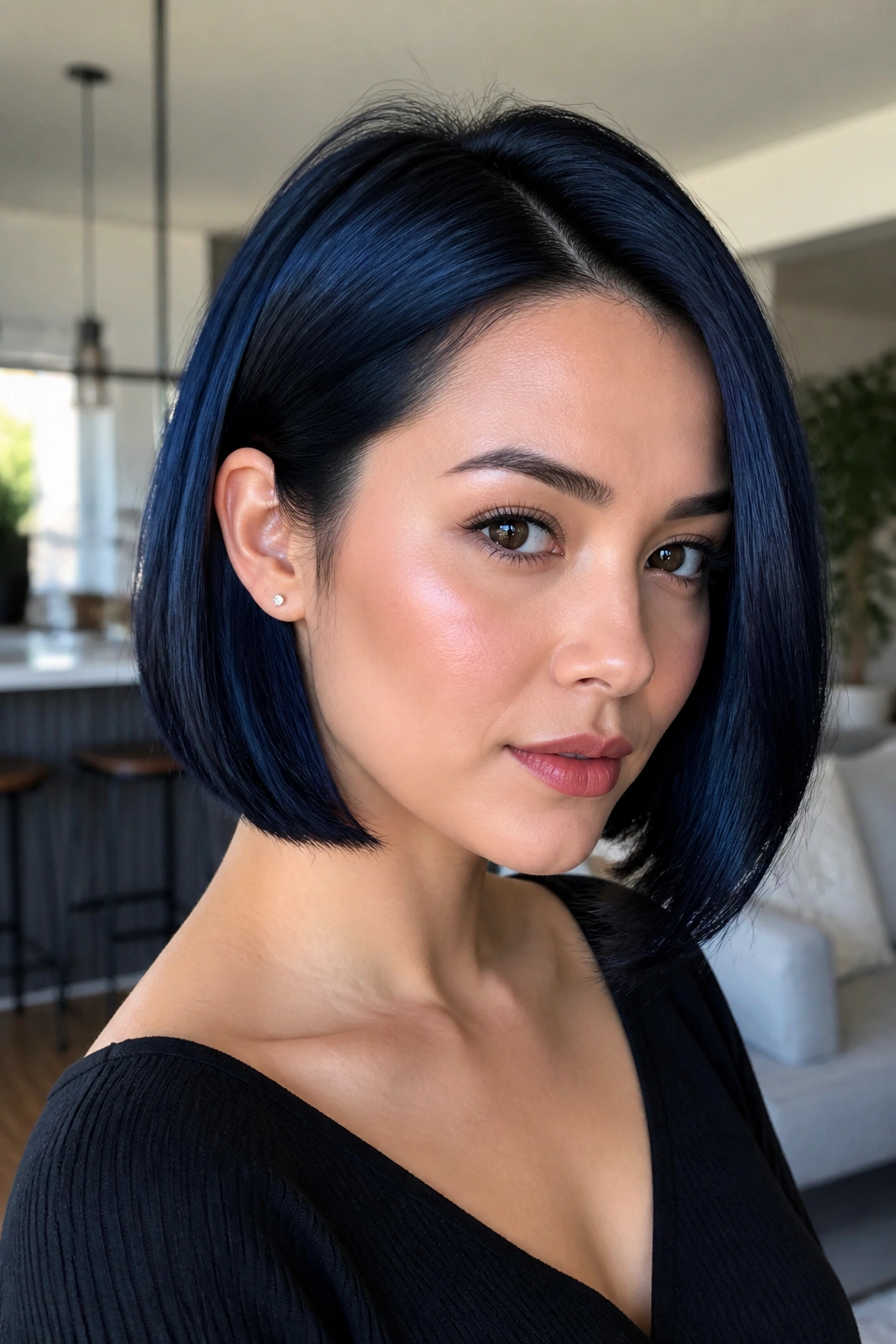
A blunt bob can work on a round face, but it needs the right cut. The old mistake is a chin-length bob that sits like a bowl around the face. That shape adds width where you do not want it.
A better version lands just below the jaw and tilts forward by a half inch or so in front. That tiny A-line shape creates a cleaner line from back to front, which lengthens the neck and trims the visual width of the face. Blue-black makes the shape look even sharper because the shine reads like a single, smooth surface.
This cut is best for straight or lightly wavy hair. Keep the ends polished, not airy. Tuck one side behind the ear, or wear a deep part for a little extra lift. The whole thing feels modern without being fussy.
5. Tapered Blue-Black Pixie with Height at the Crown
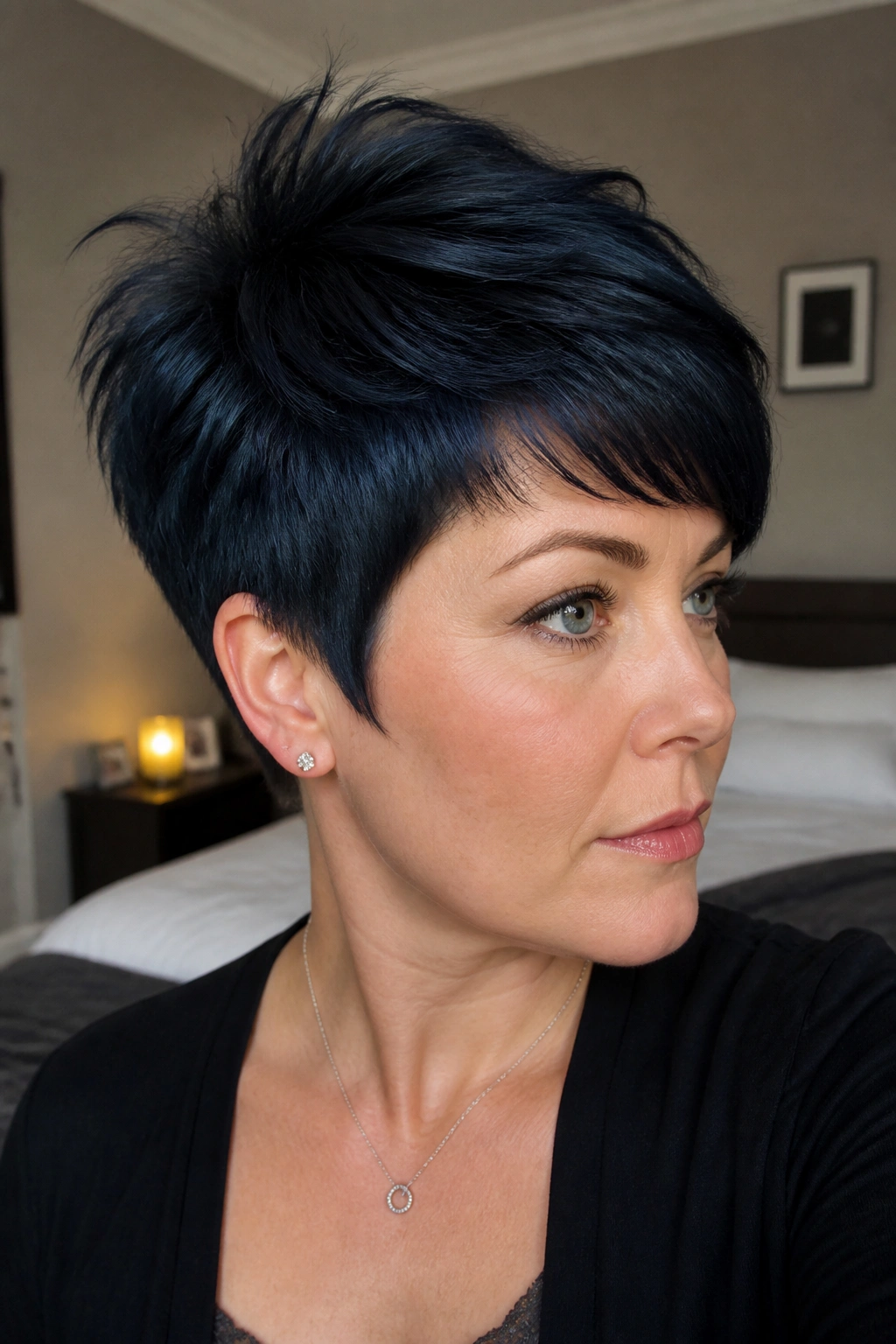
Short hair can flatter a round face beautifully if the top has lift and the sides stay neat. A tapered pixie does exactly that. The shorter sides slim the outline, while the crown gives the face a bit of vertical push.
If you’ve ever seen a pixie that looked too round, you already know the problem: the shape followed the head too closely. That’s not what you want here. Ask for texture on top, a side-swept fringe, and clean tapering around the ears and nape. Blue-black adds depth to every little layer, so the cut never looks flat.
Small Details That Matter
- Keep the crown 1 to 2 inches longer than the sides.
- Sweep the fringe diagonally, not straight down.
- Use a pea-sized amount of matte paste or light cream.
- Avoid rounded side volume that mirrors the face shape.
A pixie like this has attitude. And it earns it.
6. Choppy Blue-Black Shag with Broken Ends
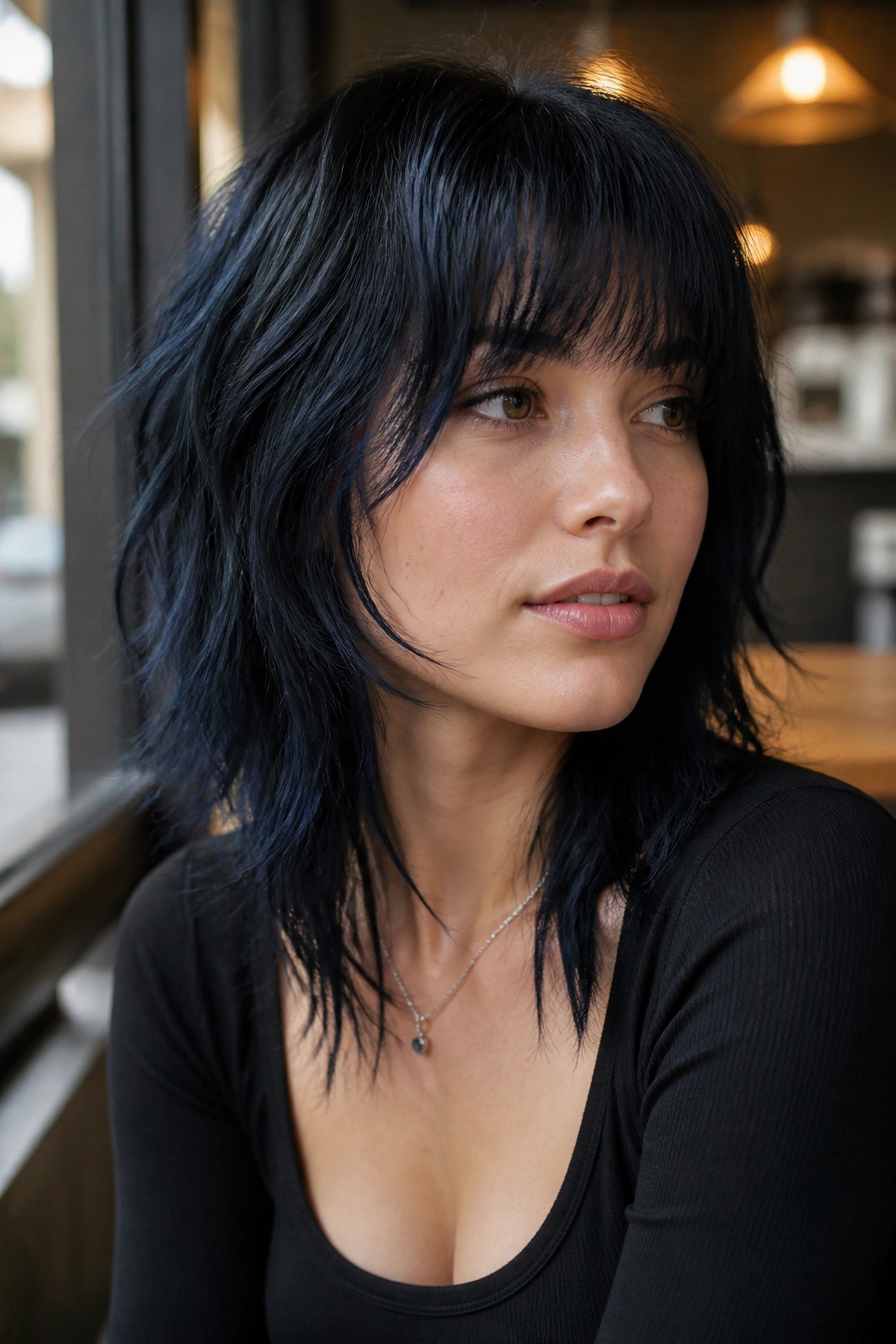
The shag is a good friend to a round face because it refuses to make one smooth circle around the face. Choppy layers break up the outline, and blue-black gives those layers a deeper, denser look that reads as deliberate instead of messy.
This cut works best when the shortest face-framing pieces start below the cheekbones. Higher than that, and the fluff can spread out at the widest part of the face. The goal is movement at the ends and softness through the crown, not a mushroom shape. That’s a real risk with any shag if the layering gets too enthusiastic.
How to Ask for It
Tell your stylist you want:
- airy layers through the crown
- face-framing pieces that begin below the cheekbone
- texture at the ends, not bulk at the sides
- a fringe that can be worn swept open or pinned back
What makes it work: the broken shape distracts the eye from the roundness and sends it downward. Blue-black keeps the whole thing grounded instead of fluffy.
7. Blue-Black Money Piece on Long Hair
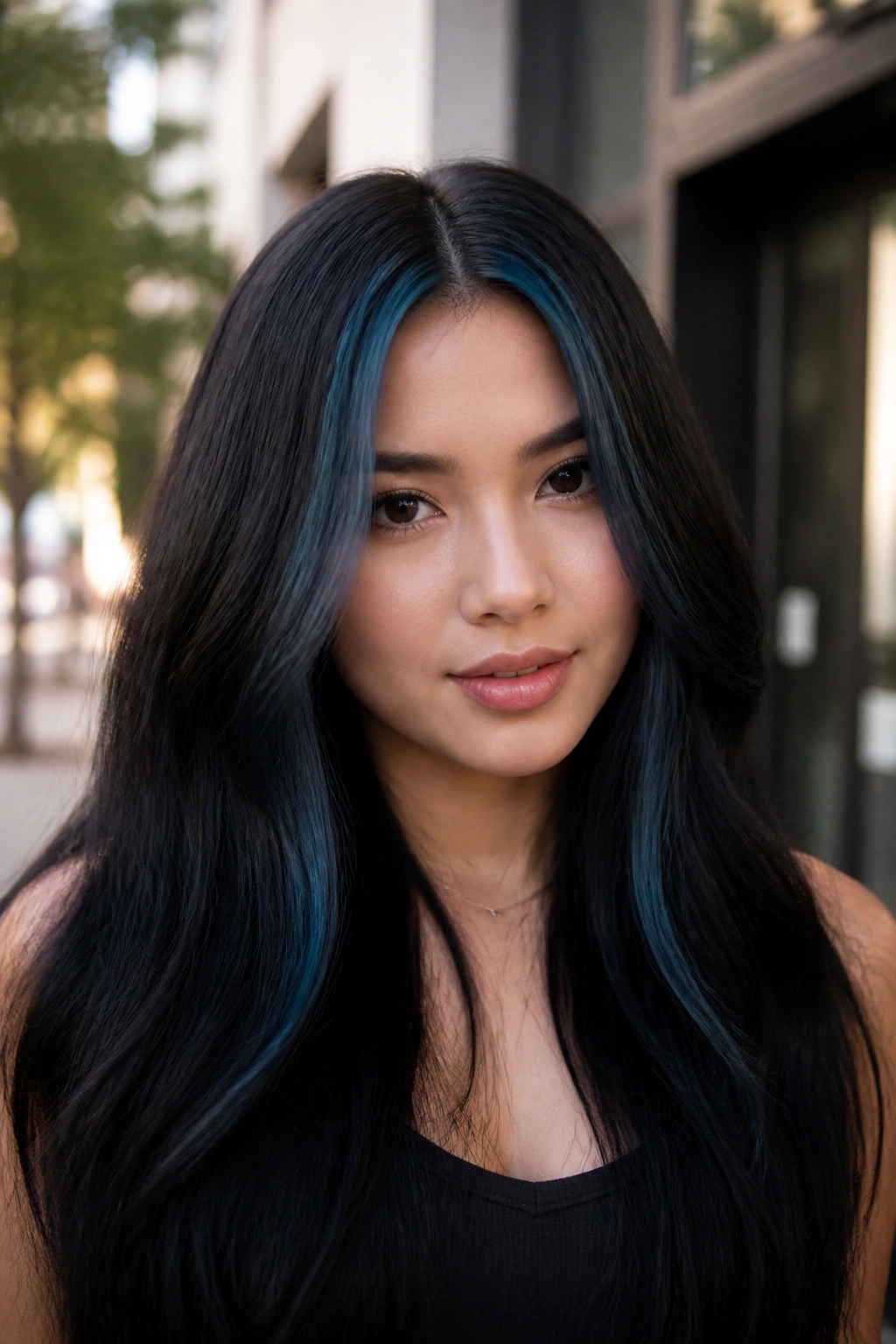
A narrow money piece can change the whole feel of blue-black hair. On a round face, the trick is to keep it slim and elongated, not broad and bright. A thick front panel that sits right on the cheek can make the face look fuller. A thin one that starts near the temple and slips past the jaw does the opposite.
This is one of the more flexible ideas in the list. You can keep the rest of the hair nearly black and let the front pieces hold a deeper indigo cast, or you can soften the contrast so the color shift only shows in sunlight. Either way, the face gains a pair of vertical lines that pull the eye downward.
The best versions don’t shout. They whisper a little blue near the front and let the rest stay dark and sleek. That restraint is what keeps the style flattering.
8. Soft Blue-Black Balayage on Wavy Lengths
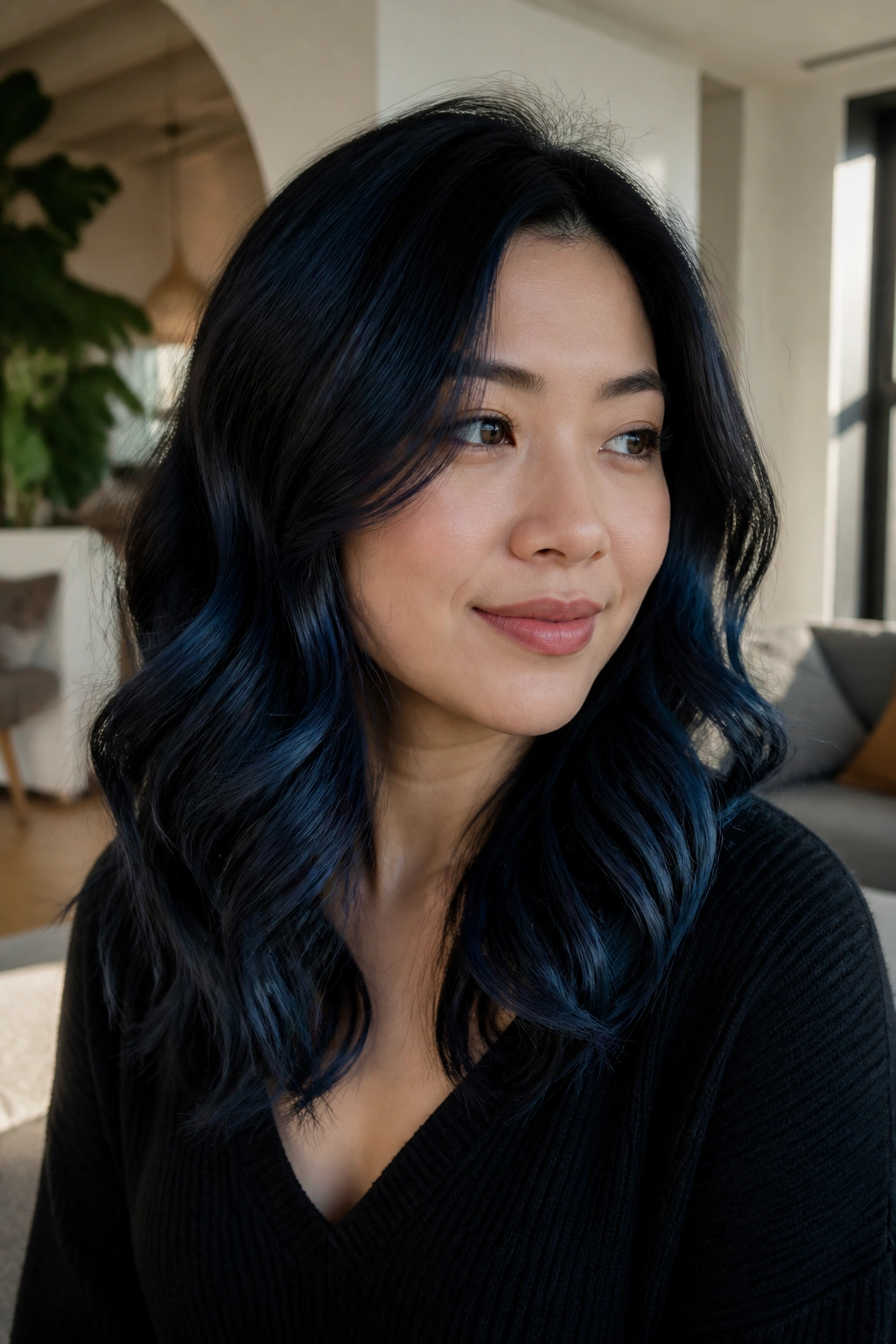
Balayage on blue-black hair is about restraint, not contrast. You are not trying to stripe the hair. You’re trying to place softer, cooler ribbons through the lower mids and ends so the hair moves with depth instead of sitting as one heavy block.
On a round face, that placement matters a lot. Keep the brightest pieces away from the cheek area and let them live lower down, where they create a visual pull toward the shoulders and collarbone. Wavy lengths make the effect read even better, because the bends catch the blue tone in little flashes instead of one large slab of color.
This is a smart option if you want dimension without losing the richness of dark hair. It also grows out gracefully, which saves you from the harsh line that a thicker highlight pattern can leave behind. The result feels soft, but not dull.
9. Blue-Black Ombré with Sapphire Ends
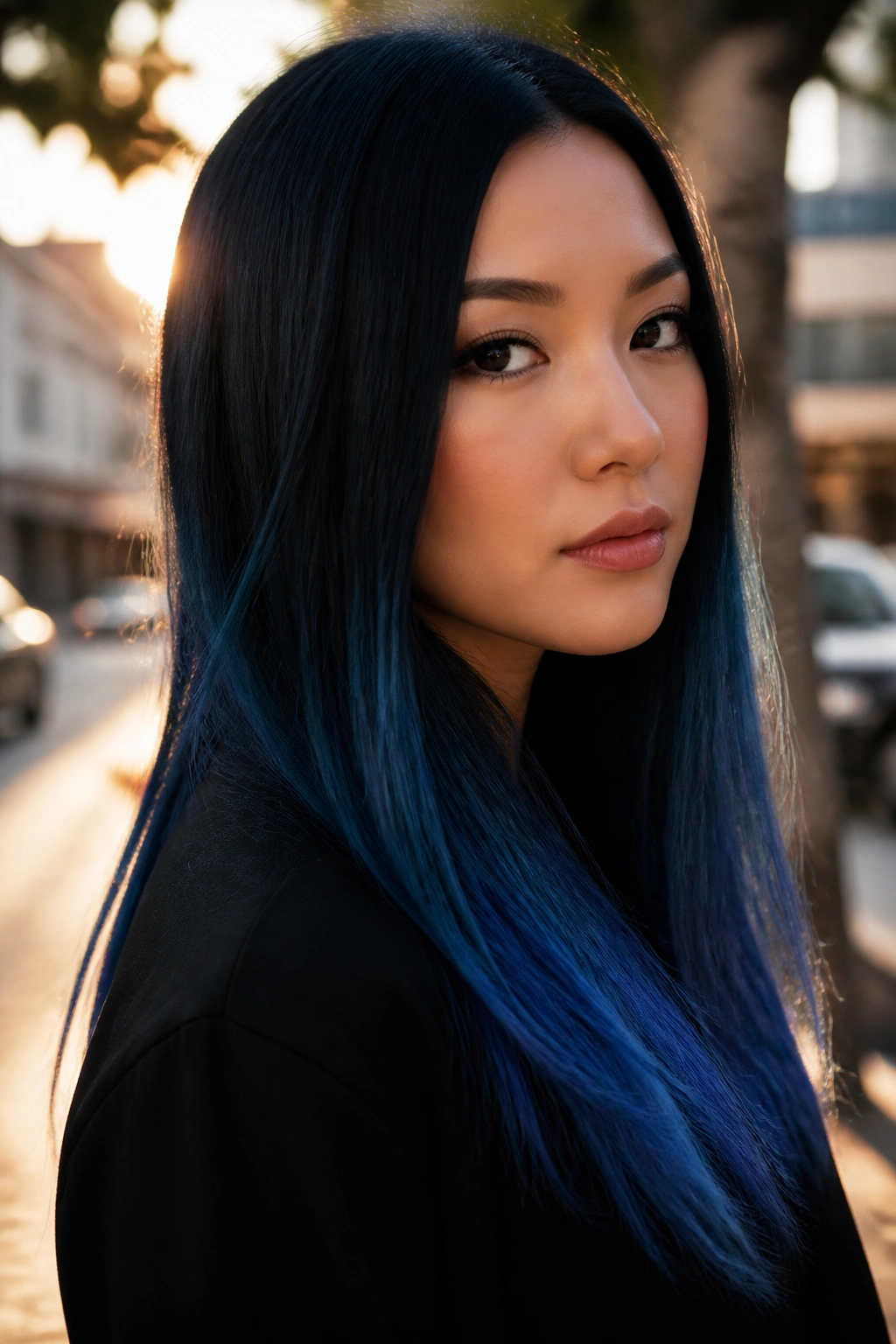
Why does ombré work so well on a round face? Because it moves the brightest part of the color downward. The eye follows the lightest area, and when that lightness lives near the ends, the face looks longer by association.
A blue-black ombré should start almost imperceptibly. The top stays dark, then the blue becomes more visible through the mid-lengths, and the ends carry the richest sapphire tone. Keep the transition soft and low. If the shift starts too high, the color can wrap around the face and add width instead of length.
This look loves hair that reaches past the shoulders. Straight hair shows the transition cleanly; waves make it look moody and dimensional. Either way, it has a little drama without needing a blunt cut or a big fringe.
10. Glassy Straight Blue-Black Hair
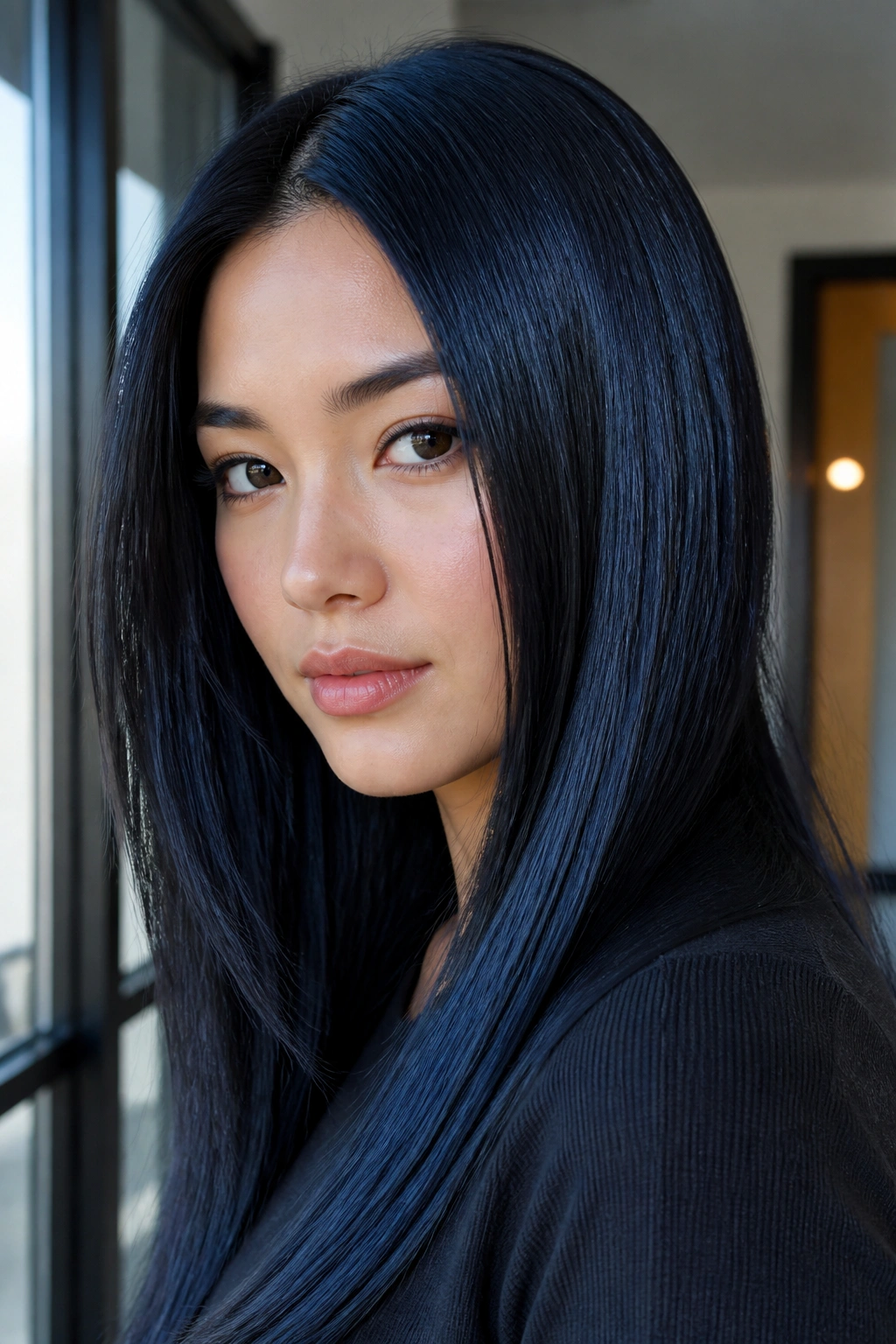
Run a comb through glassy blue-black hair and the whole shape changes. The finish becomes all about clean lines and reflection, which is exactly why it works on a round face. Straight hair makes a long, uninterrupted shape, and the dark blue sheen adds depth without busy texture around the cheeks.
What Keeps It Looking Crisp
- Use a heat protectant before any flat ironing.
- Keep the iron around 300°F to 350°F for most hair types.
- Work in thin sections so the finish stays smooth.
- Seal the ends with a light serum, not a heavy oil.
The part can be center or side, but it should be sharp. A jagged part breaks the sleek line. If your hair is thick, ask for a little internal layering so the ends do not balloon out. If it is fine, the weight of the cut matters more than the iron work.
This look is clean. Sharp. Slightly severe, in a good way.
11. Blue-Black Wolf Cut with Face-Framing Texture
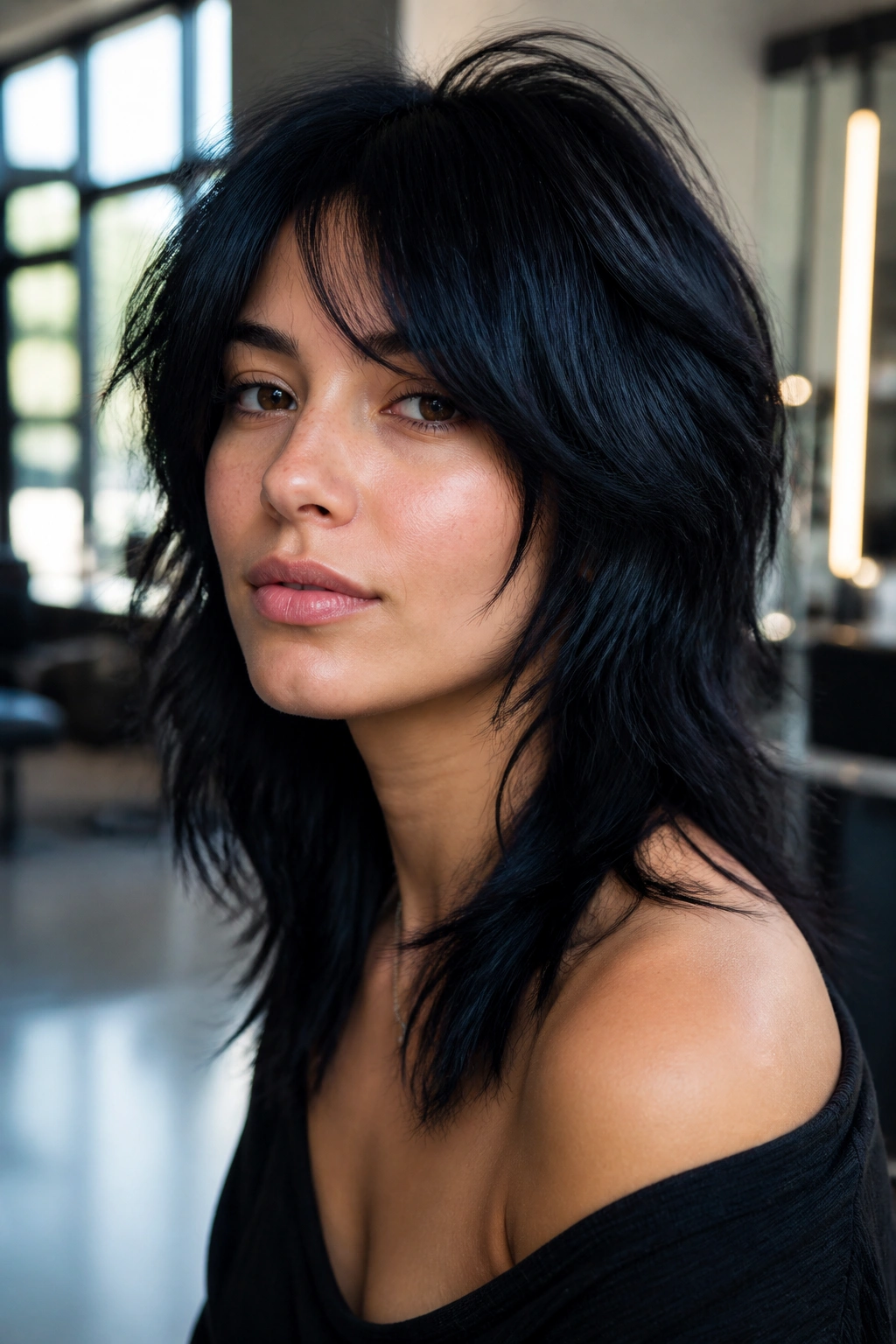
A wolf cut sounds wild, and that’s part of the appeal. On a round face, though, it works because the shape is irregular. You get height at the crown, broken layers through the middle, and ends that taper instead of wrapping around the jaw.
The key is keeping the face-framing layers low enough. If they start too high, the sides can puff at cheek level and steal the length you want. Blue-black helps here because the darker shade keeps the shaggy structure from looking airy or unfinished. The cut reads strong, not soft.
What to Watch For
- Ask for crown volume, not side width.
- Keep the layers long enough to fall below the cheekbones.
- Use texture spray only at the ends.
- Avoid over-round brushing the front pieces.
This is a good cut for someone who wants edge. It has teeth, but it still flatters.
12. Hidden Blue-Black Underlights
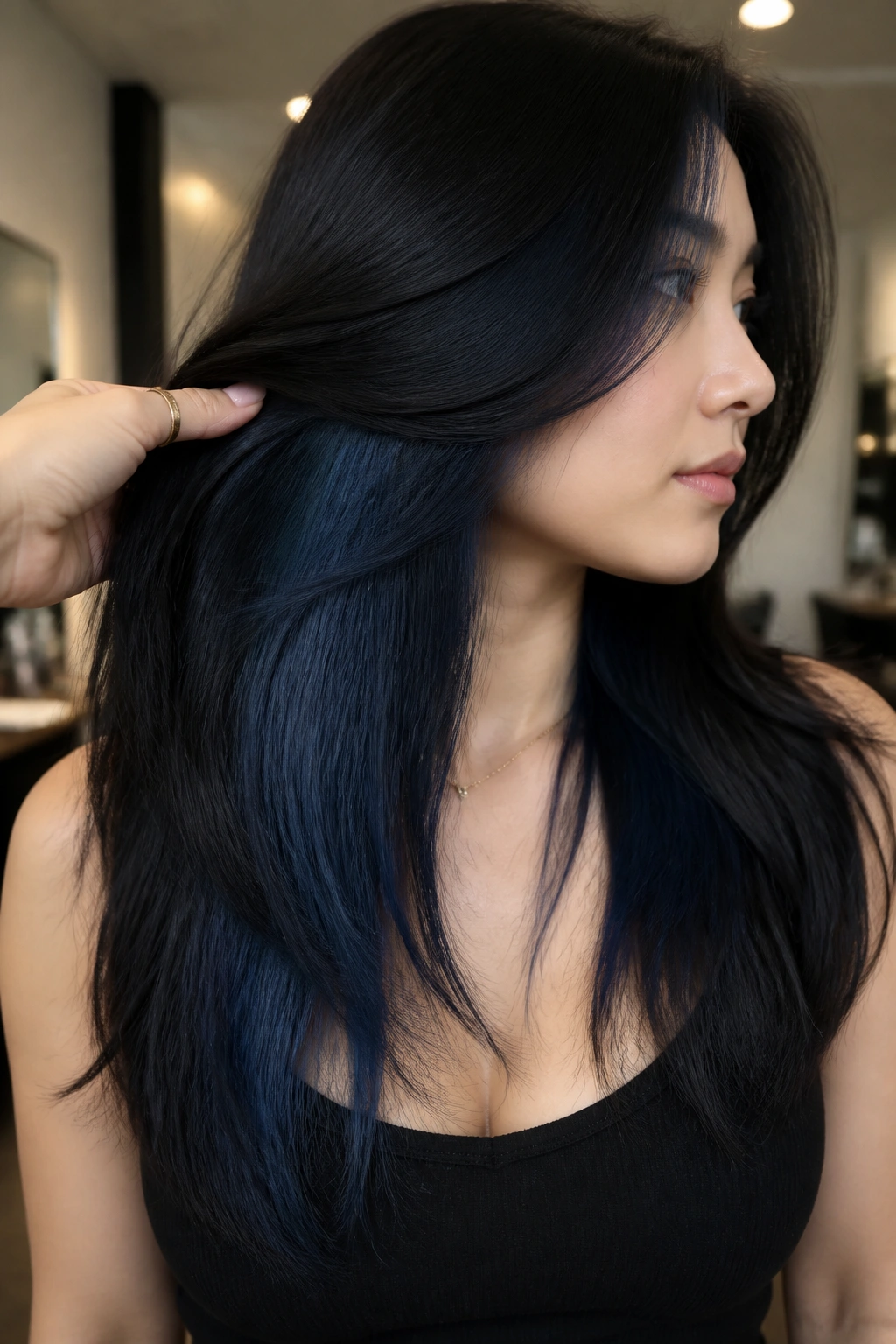
Not everyone wants obvious blue sitting on top of the hair. Underlights are the quieter choice, and on a round face they’re smart because the visible top layer can stay sleek and lengthening while the color shows up underneath.
This works especially well when the hair is worn half-up, twisted back, or braided. The hidden blue-black panels peek through the movement, which gives the hair depth without adding width around the cheeks. It also means the color feels a little more private. You see it when the hair moves, not from every angle in the mirror.
There’s a nice practical side too. Because the darker outer layer is doing most of the visual work, the style can stay polished even as the underlights grow out. For people who want blue-black with a low-key finish, this is one of the easiest options to live with.
13. Curl-Friendly Blue-Black with Crown Lift
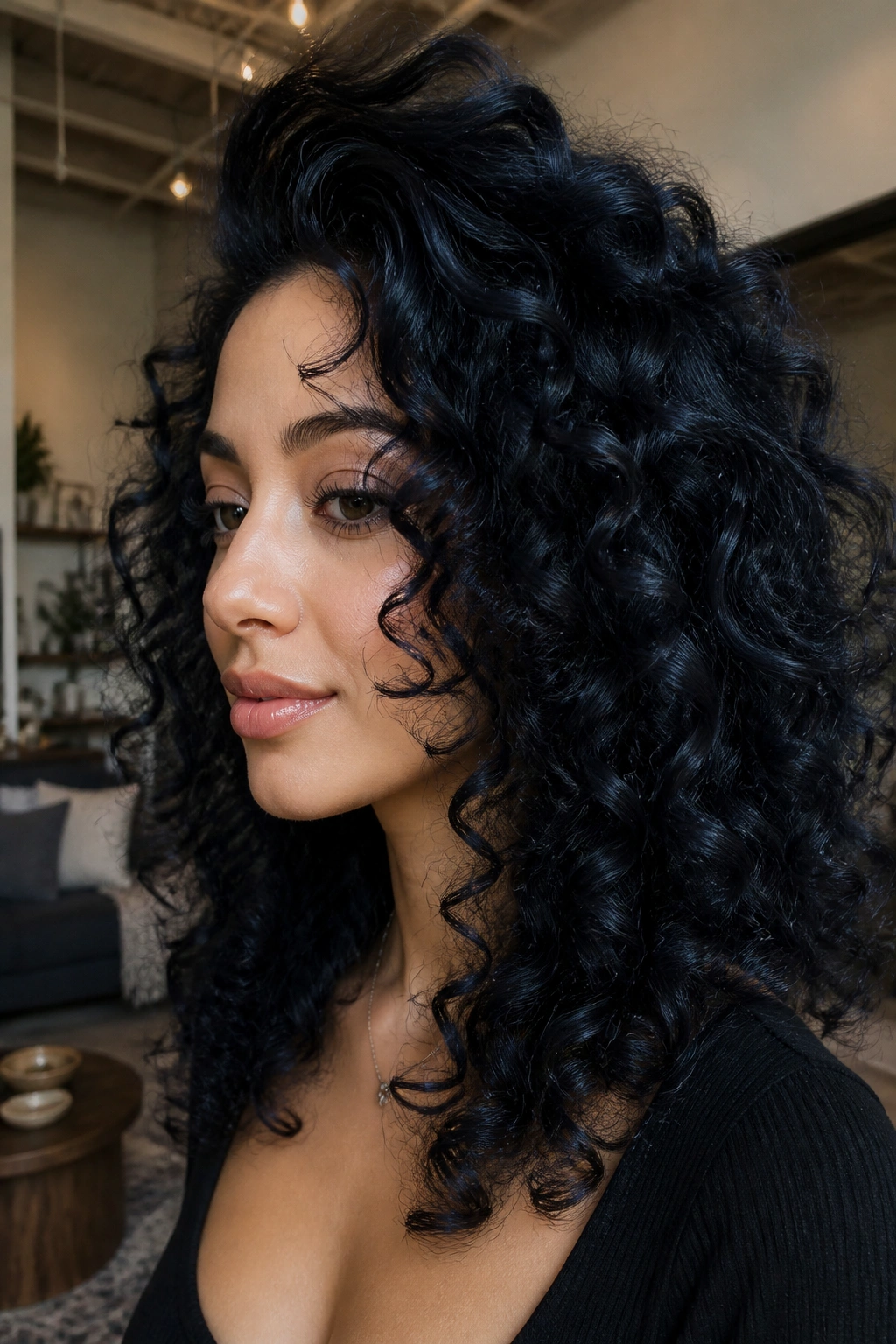
Do curls make a round face wider? Not when the volume sits in the right place. The mistake is letting the curl bulk spread out at the sides. The fix is simple: keep lift at the crown, keep the side pieces long, and let the curl pattern hang a little lower near the jaw.
Blue-black is lovely on curls because it gives the coil pattern more depth. The darker tone settles into the bends, and the blue sheen shows in tiny shifts rather than one loud streak. That makes the hair look rich instead of busy.
How to Wear It
Use a diffuser on low heat, clip the roots at the crown while they dry, and keep the front curls stretched just enough to move past the cheekbones. If you wear your curls in a side part, even better. That diagonal line breaks the roundness fast.
A curl cut like this can be soft without being too sweet. That’s the sweet spot.
14. Blue-Black Flipped-Out Lob
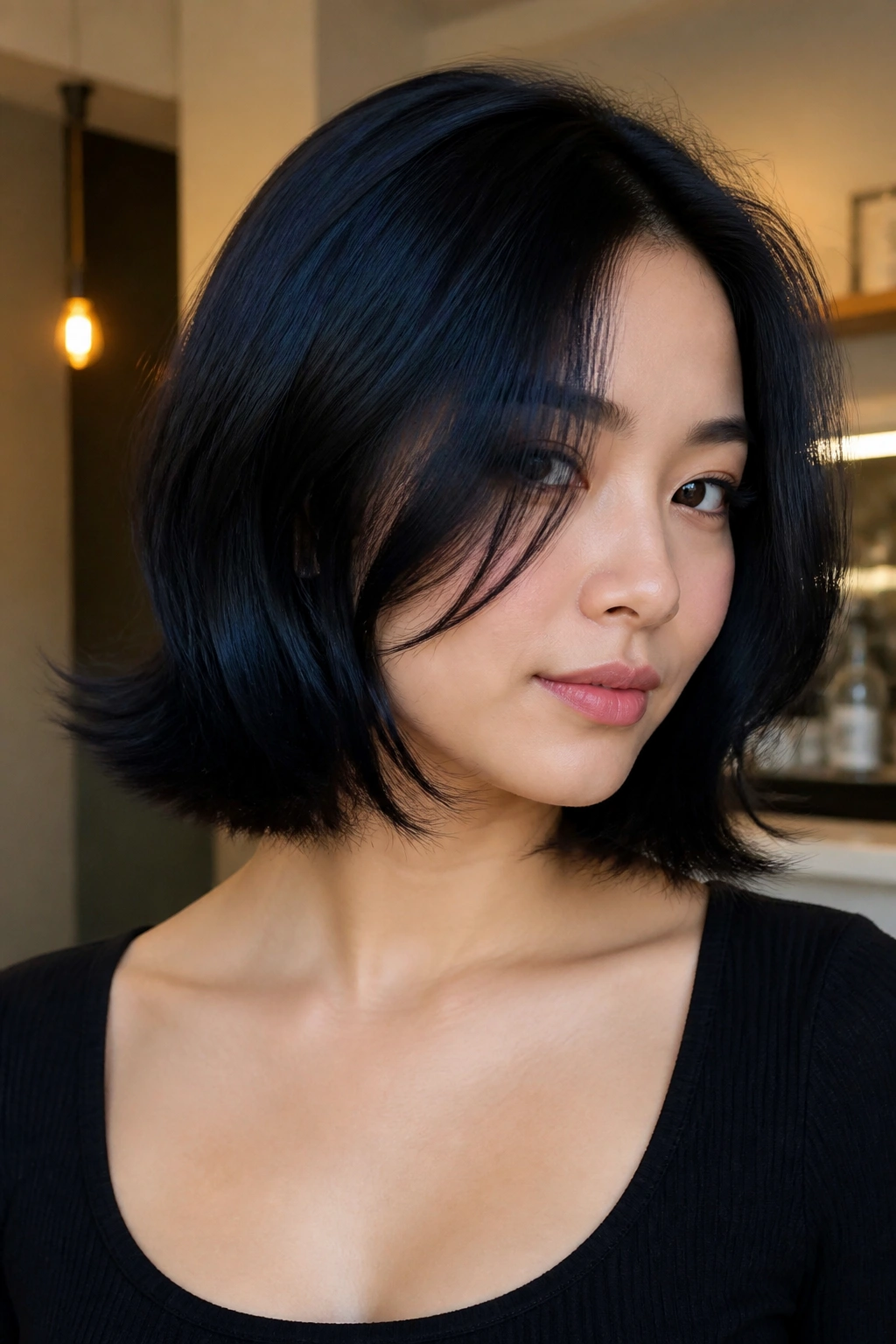
An inward curl at the ends can make a lob hug the face. A flipped-out finish sends the line away from the cheeks, and that tiny difference changes everything on a round face.
The flipped ends give the cut a little motion at the bottom instead of the middle. That keeps the visual weight low and outward, not centered around the cheek area. Blue-black makes the shape feel even cleaner because the gloss rides along the curve of each flip.
This is one of those styles that looks polished with almost no drama. A round brush and a blow-dryer can do most of the work. If your hair is straight, a flat iron flick at the last inch of the ends gives the same effect. Keep the part deep or slightly off-center and the whole style feels longer, leaner, and more deliberate.
15. Blue-Black Knotless Braids
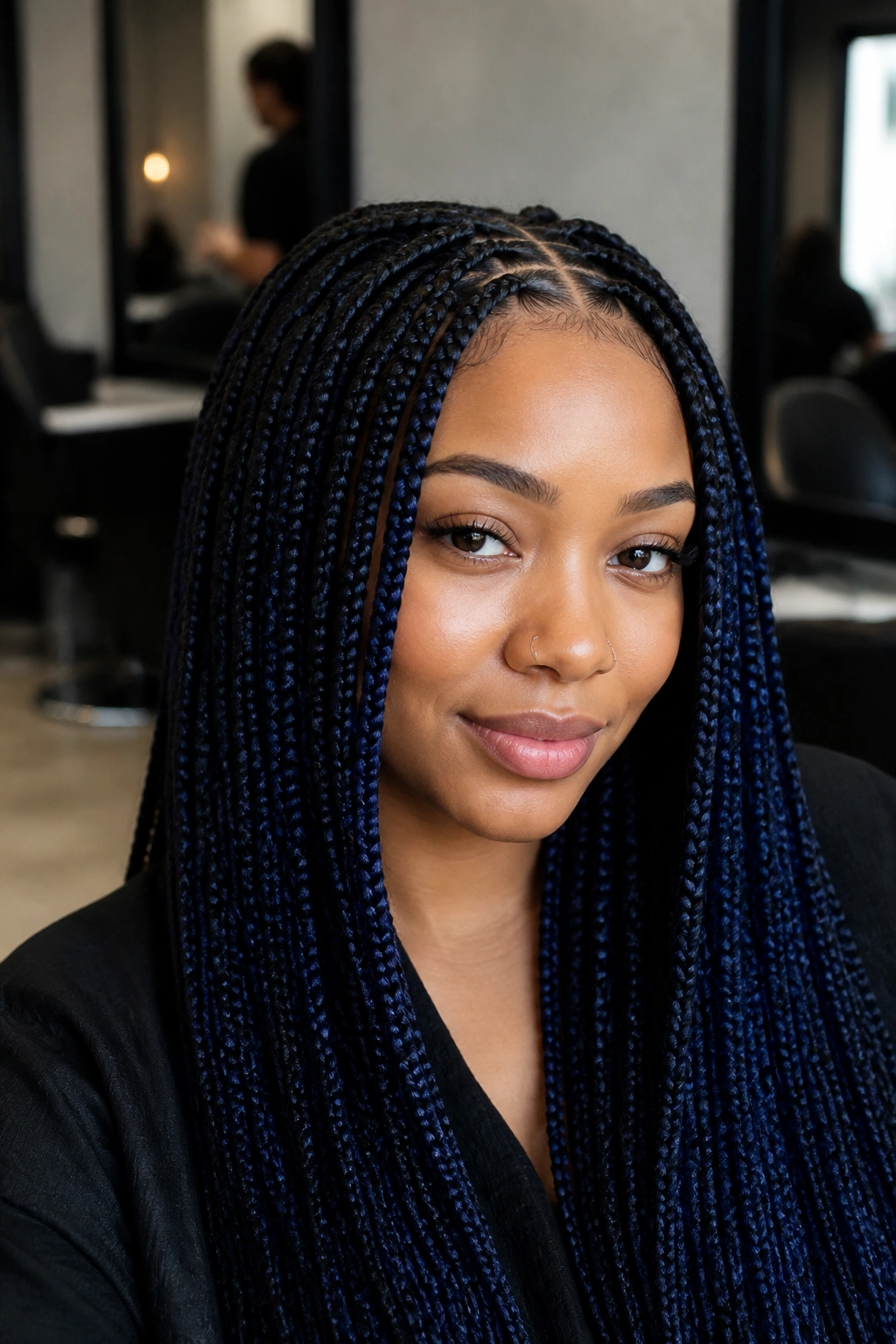
Long knotless braids in blue-black are quietly flattering on round faces. The length pulls the eye downward, and the cleaner root area keeps the style from looking bulky right at the scalp. That matters. A heavy braid line around the temples can widen the face faster than people expect.
The braid size also matters. Medium to slim braids create more vertical lines, which is what you want. If you go very thick, the hair can start to read wide before it reads long. Keep the front braids a touch shorter or angle them back from the face so the cheek area stays open.
A middle part gives a clean, lengthening line, but a slight off-center part can look softer. Add a little sheen spray and keep the edges neat, not overly laid. The style should look tidy and strong, not stiff.
16. Blue-Black Faux Locs with Side-Swept Front Pieces
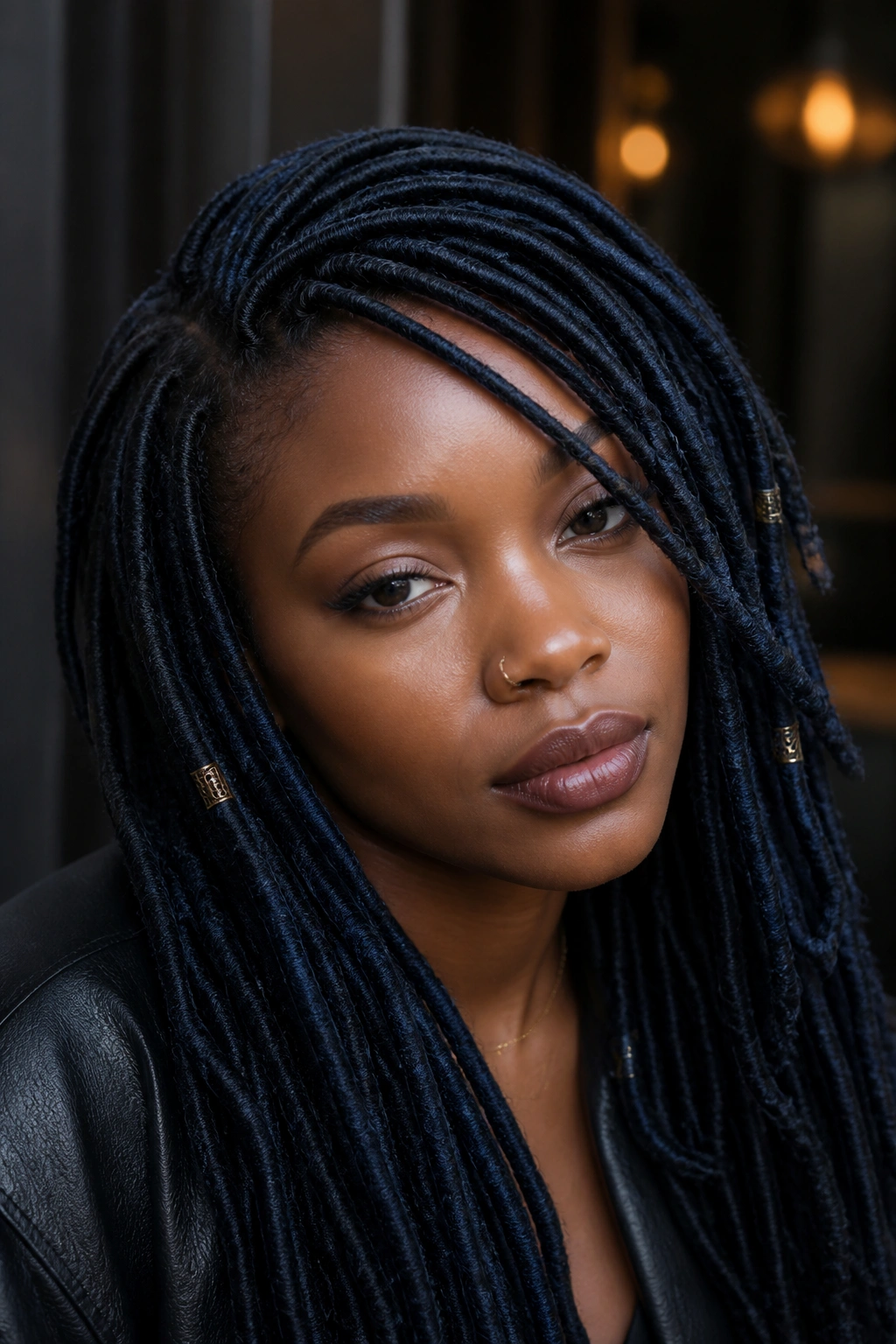
If you want texture with more weight, faux locs carry blue-black beautifully. The rope-like shape adds length and shadow at the same time, which is useful on a round face because it directs the eye down instead of outward.
The front pieces should stay controlled. Let them fall lower than the cheekbone, or sweep them gently to one side. When the locs flare out near the face, the shape can feel wider than it needs to. Slender locs around the front usually look better than chunky ones here.
This style has a strong, grounded feel. It also gives blue-black a moody depth that straight hair sometimes misses. The color nestles into the twists and shadows, which makes the finish look layered even if the base color is one solid shade.
17. Blue-Black Twist-Out with Long Face-Framing Pieces
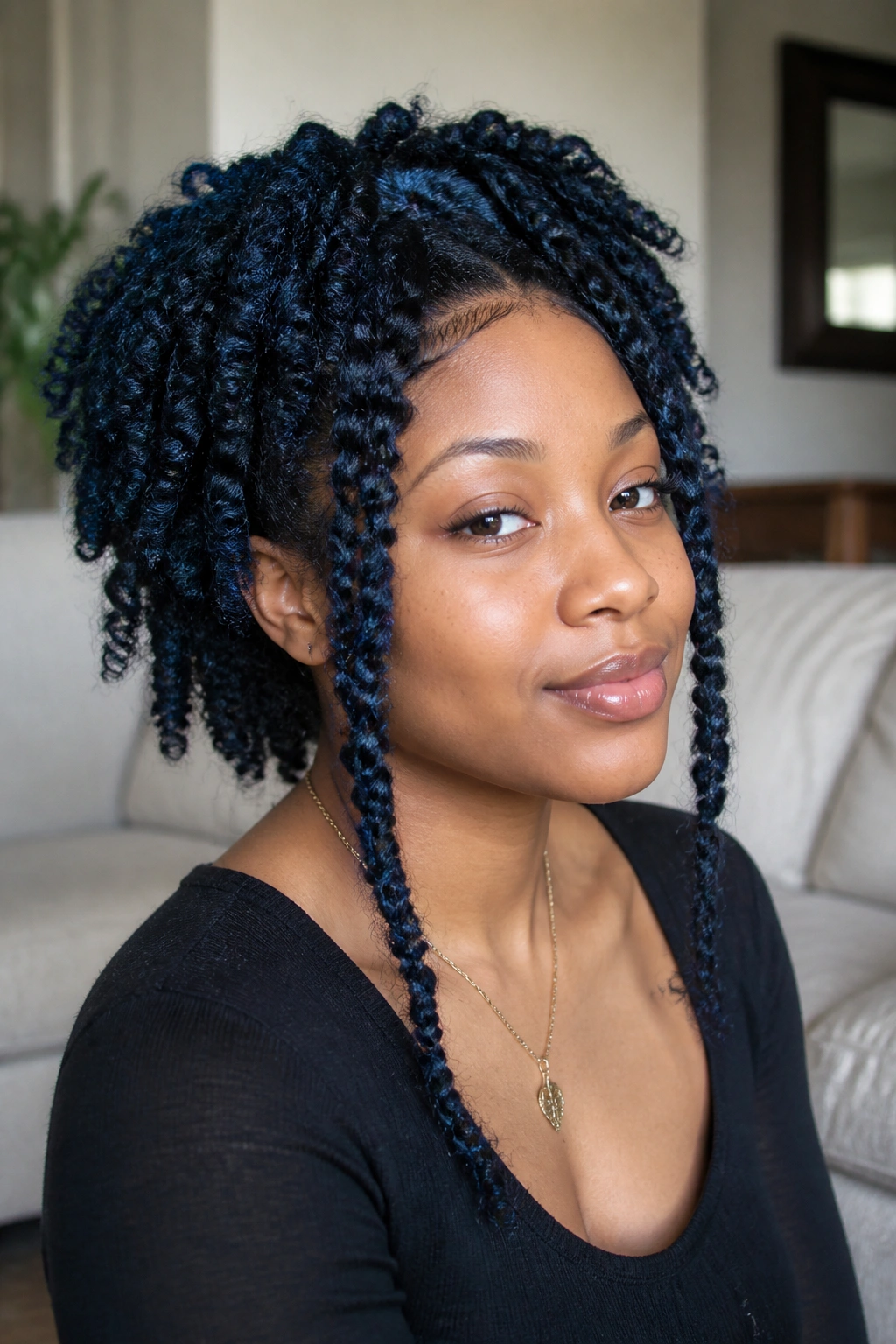
Defined twists and braid-outs do more for a round face than fluffy, unfocused texture. Why? Because the separated sections create little columns of length. The face reads the lines first, not the width.
Blue-black works well here because it makes each twist-out clump look darker at the base and slightly cooler at the edges. That shadow makes the texture pop without turning it fuzzy. Keep the front sections stretched long enough to pass the cheeks, and leave the crown a little fuller if you want extra height.
How to Get the Shape Right
- Start with well-moisturized, sectioned hair.
- Twist on medium-sized parts so the texture stays defined.
- Dry completely before unraveling.
- Separate gently, then stop. Over-fluffing ruins the shape.
This is a style that rewards restraint. A little separation, not a cloud.
18. Blue-Black Asymmetrical Bob

One side slightly longer. That’s the whole point.
An asymmetrical bob breaks the circle that a round face can sometimes echo, and blue-black makes the diagonal line feel even sharper. You do not need a dramatic, extreme cut for this to work. Even an inch or two of difference between the sides can shift the whole silhouette in a useful direction.
The shorter side should not end right at the fullest part of the cheek. Better to let it skim the jaw or sit just below it, while the longer side drops closer to the collarbone. That small slope keeps the face looking narrower and the neck looking longer. The cut also gives the color a bit of movement, since the blue sheen shifts at different angles.
This is a strong choice if you like structure. It has edge without turning into a stunt cut.
19. Feathered Blue-Black Layers Below the Chin
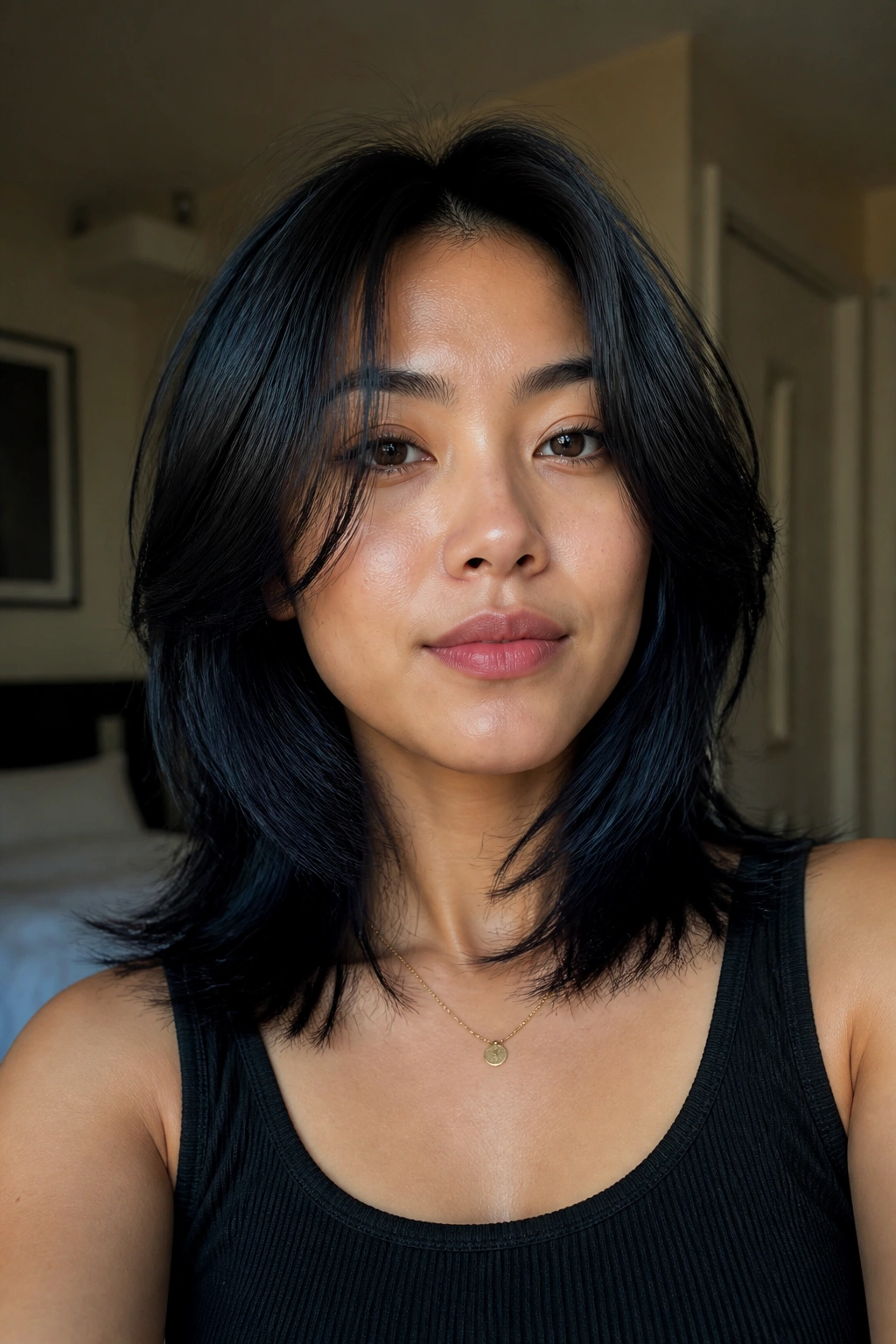
Feathered layers feel lighter the moment you brush them out. That’s good news for round faces, because feathering removes bulk where dark hair can otherwise look too solid and heavy. The trick is to keep the shortest pieces below the chin so the face stays open.
Blue-black gives feathering a nice contrast. The soft edges of the layers catch the blue tone in thin slices, which keeps the style from looking flat. On medium to thick hair, a round brush can shape the movement; on finer hair, a little root lift goes a long way.
This look is one of the more wearable options on the list. It doesn’t demand a big style routine, and it grows out without falling apart. If you want movement without losing length, it’s a smart place to start.
20. Blue-Black Half-Up Crown Lift
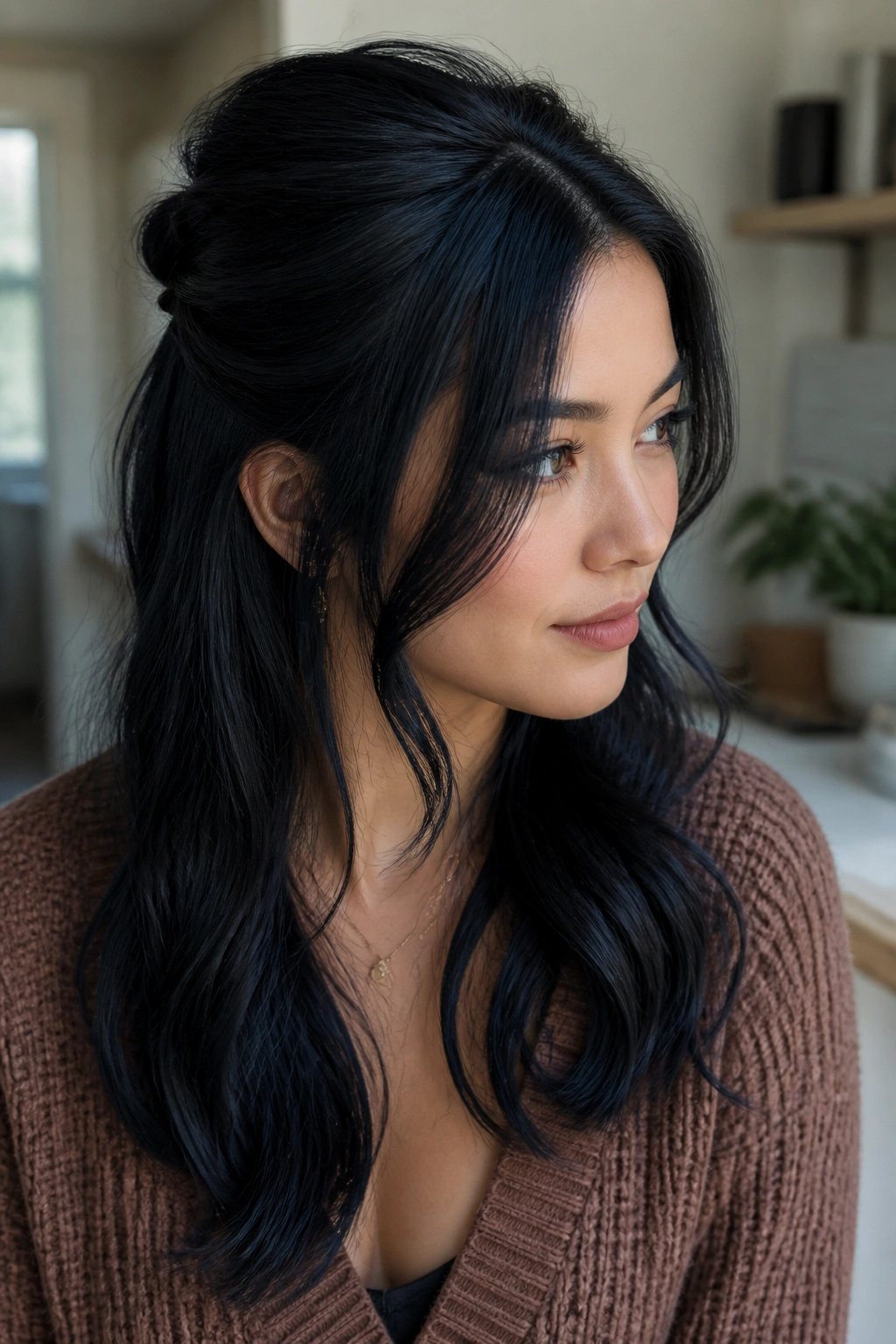
Need a style that can go from errands to dinner without a full reset? A half-up crown lift does the job. It gives the top half of the head a little height, which helps a round face look longer, while the loose length keeps the sides from feeling boxed in.
The lift does not need to be huge. Too much height can look dated or fussy. A small bump at the crown, a loose clip, or a softly pinned section is enough. Leave the front pieces out if you want a gentler line around the face. Let them fall past the cheekbones, not right across them.
Keep the Height Small
- Tease only the roots at the crown.
- Pin the half-up section flat enough to stay neat.
- Leave a few face-framing strands down.
- Use a light mist of hairspray so the top does not collapse.
Blue-black hair looks especially good in this style because the lifted section shows shadow and shine at the same time.
21. Blue-Black V-Cut with Long Waves
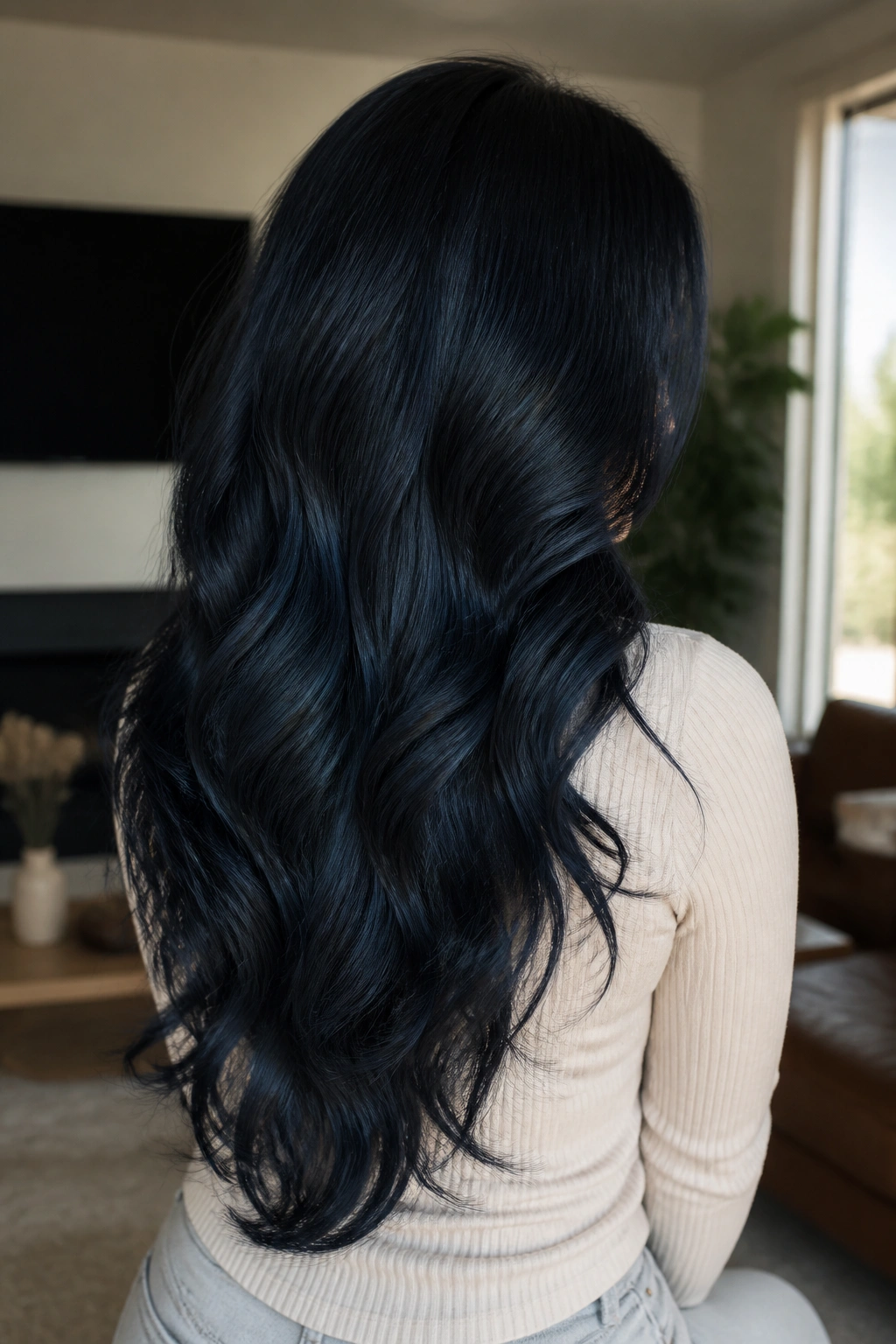
A V-cut is one of those shapes that looks subtle on paper and does a lot in real life. The back tapers into a soft point, which pulls the eye downward and gives long hair a cleaner line. On a round face, that shape helps because it shifts the focus away from width at the cheeks.
The waves matter too. Long, loose waves keep the cut from feeling severe, while the V keeps the overall outline from turning into a single wide curtain. Ask for face-framing pieces that start below the cheekbone and blend into the longer back length. If those front pieces are too short, they can widen the face faster than the V shape can slim it.
This is a good match for thick hair, especially hair that tends to sit heavy when cut straight across. Blue-black gives the V-cut a deep, glossy finish that looks clean from every angle.
22. Midnight Blue-Black with a Deep Side Part
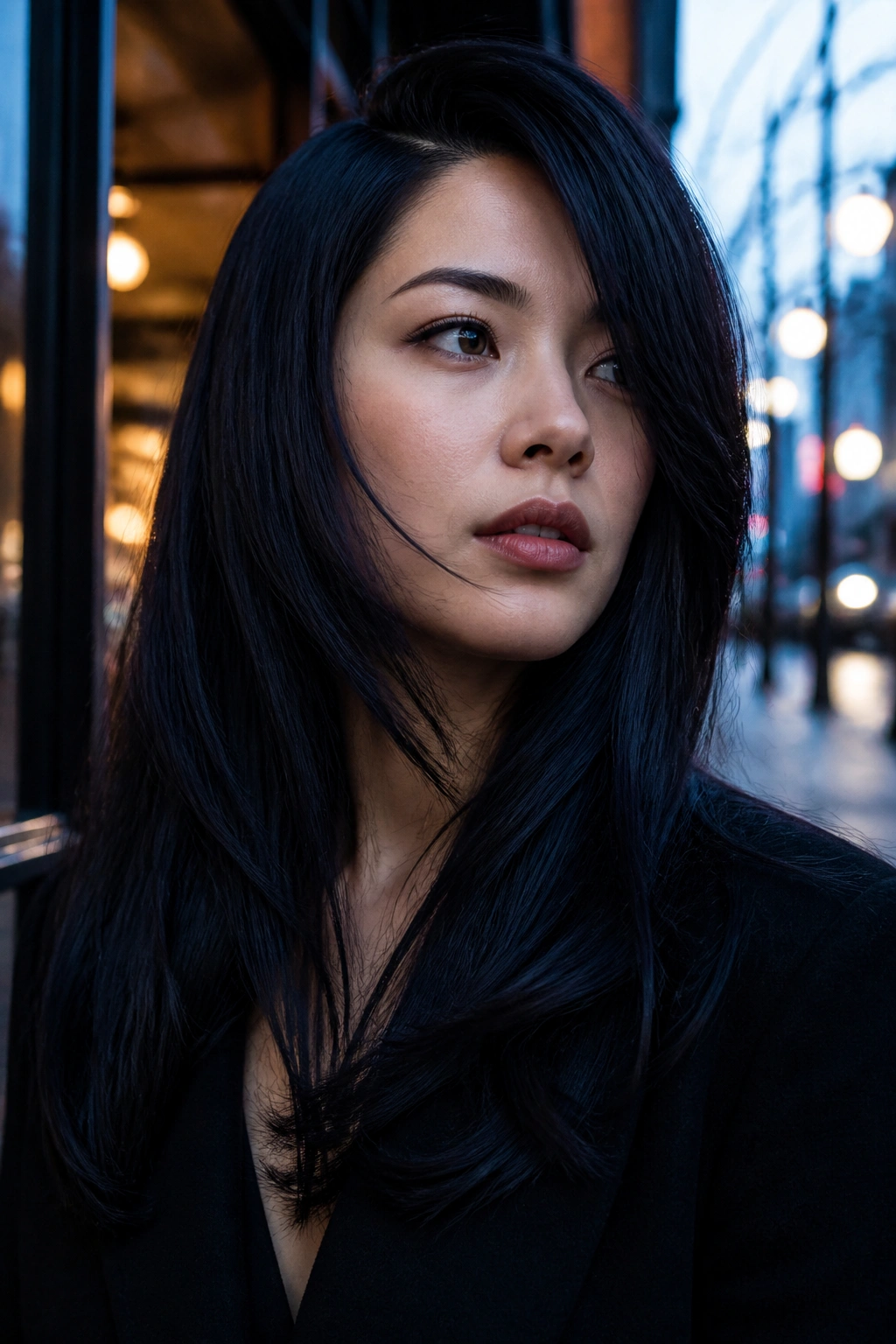
If you want the least fussy option, this is the one I’d reach for first. A deep side part, a midnight blue-black gloss, and long layers that stay below the cheekbone can do more for a round face than a cut full of clever tricks.
The reason is simple. The part pulls the eye diagonally, the length pulls it down, and the blue-black finish adds depth without clutter. Nothing sits right at the widest part of the face. Nothing tries too hard. It’s just a strong shape with a rich color and enough shine to make the dark tone feel deliberate.
This idea works on straight hair, waves, and looser curls. It also plays nicely with almost any wardrobe because the color is dark enough to feel classic and cool enough to keep it from going flat. If you only want one blue-black direction to show your stylist, start here.
