



Black hair turns sharp fast when silver enters the picture. On cool skin tones, that can be a gift or a headache, and the split usually comes down to three things: undertone, placement, and how much contrast you’re willing to live with every morning.
If your skin leans pink, rosy, or blue, silver can look crisp and expensive against it. If the silver drifts too beige or the black goes too warm, the whole thing starts to feel muddy. That’s the part people miss. Silver is not one shade. It’s a whole family of shades, from icy pearl to gunmetal to smoky graphite, and each one behaves a little differently on black hair.
The smartest versions keep depth at the root and let the silver show up where the light naturally hits. Ribbon highlights, face-framing panels, hidden underlayers, glossy charcoal melts — those are the moves that look deliberate instead of noisy. A good black-silver color should feel like movement, not paint spilled over hair.
1. Blue-Black Base with Silver Ribbon Highlights
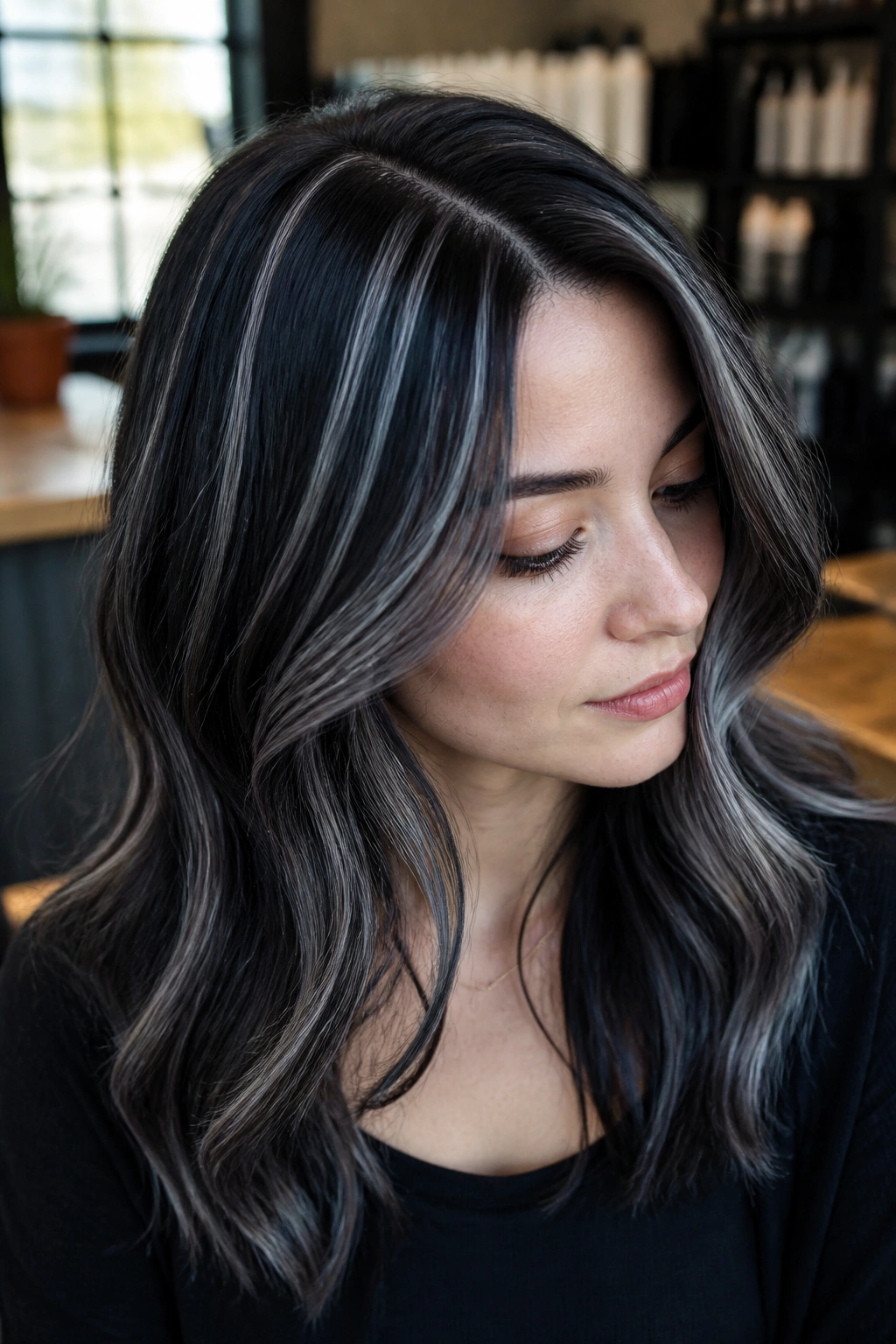
Blue-black is one of the easiest black-silver combinations to wear on cool skin because it already carries that icy cast. Add thin silver ribbons through the top layer, and the whole look starts to shimmer instead of flattening out. I like this one on straight hair and soft blowouts, where each ribbon can catch light without turning into a stripey mess.
Why It Flatters Cool Skin
The blue in the base keeps the black from looking harsh against pink or rosy undertones. Silver ribbons then break up the depth just enough to keep the finish lively.
- Ask for ribbons about 1/4 to 1/2 inch wide.
- Keep the black base deep, around level 2 to 3.
- Place the silver near the part line and crown for the strongest payoff.
- Use a blue-violet toner so the silver stays crisp, not beige.
Tip: This look is strongest when the ribbons are spaced out. Too many, and the whole thing turns gray in a hurry.
2. Smoky Charcoal Melt
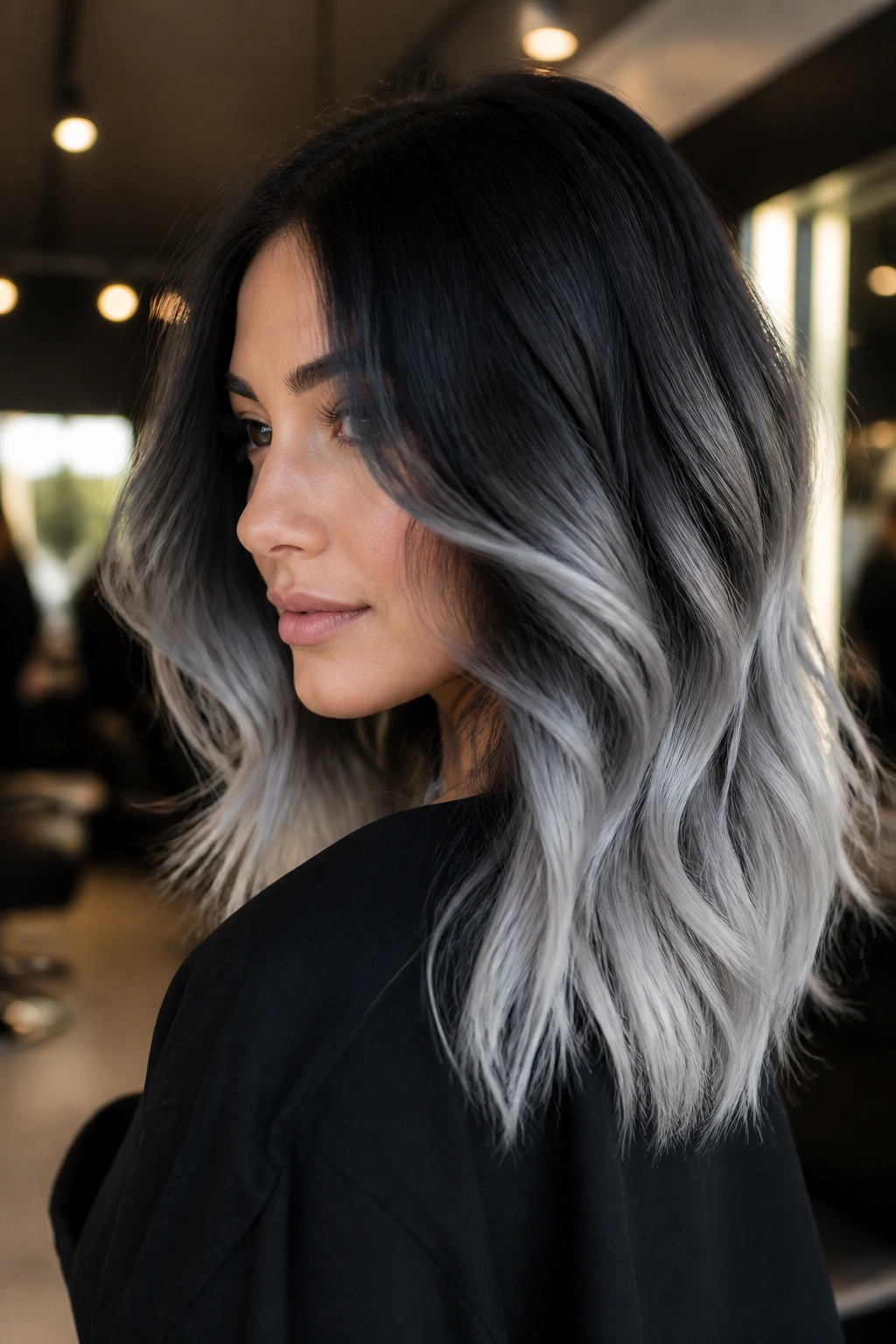
Smoky charcoal melt is the quiet cousin in this group. The roots stay black, the mids soften into soot-gray, and the ends fade toward cool silver without a hard line anywhere. It’s one of those colors that looks expensive when it moves and a little flat when it doesn’t, so a wave or bend in the hair helps a lot.
I reach for this idea when someone wants silver but refuses a high-maintenance root situation. The grow-out is forgiving. The transition is gentle. And on cool skin, the muted gray family keeps the face from looking drained the way a yellow-based blond sometimes can.
What matters here is the fade. You want black at the top, charcoal in the middle, and a true silver haze only at the bottom third. If the middle section goes too pale, the whole melt loses its depth and starts reading like faded dye instead of a chosen style.
3. Silver Money Piece on Black Hair
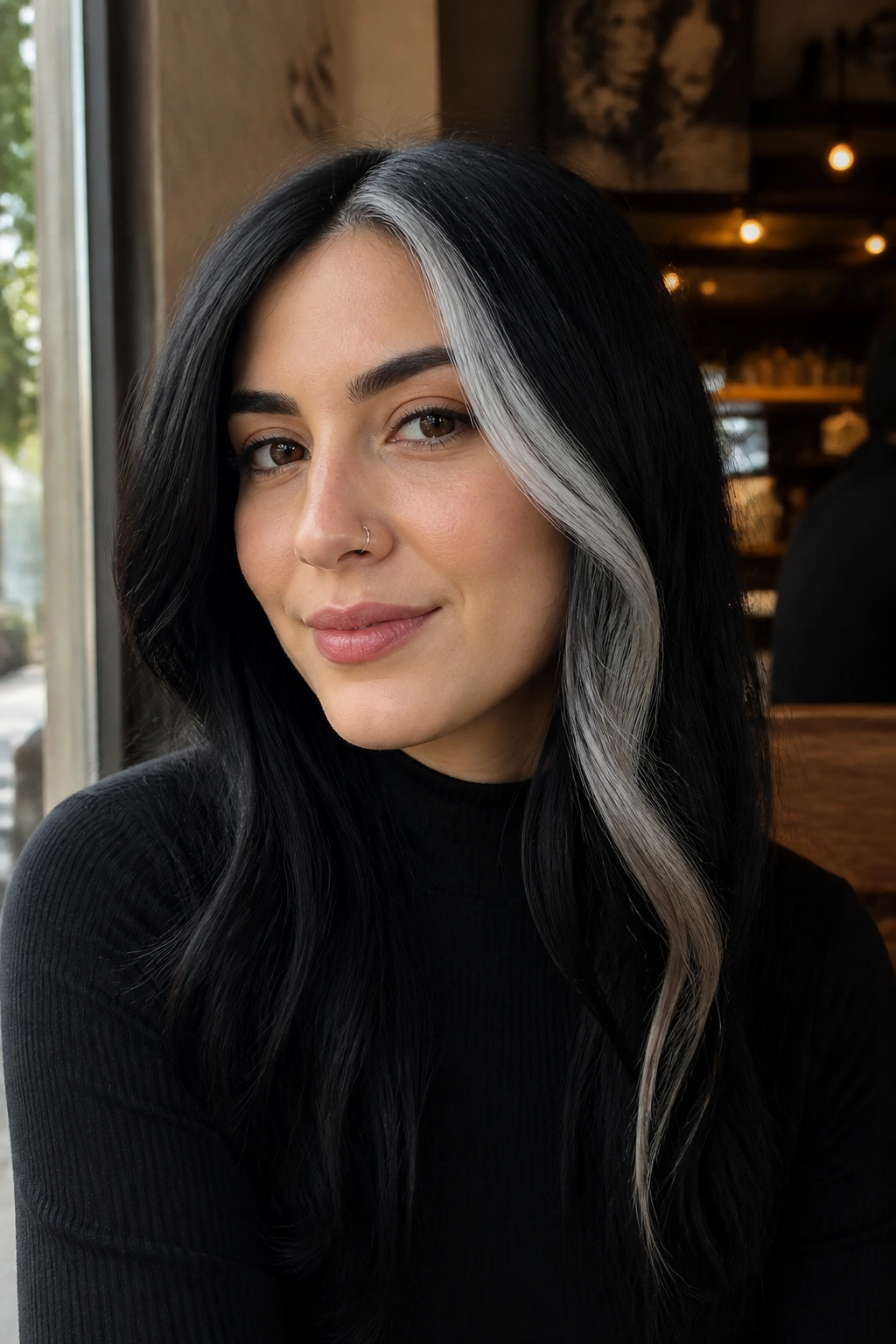
A single silver money piece can do more work than a full head of highlights. Seriously. If the rest of the hair stays glossy black, that bright face-framing strip pulls the eye right to the cheekbones and makes cool skin look clearer and more awake.
This is the one I’d pick for someone who wants a visible change without spending all day in the salon chair. It also plays well with makeup. A silver streak beside a smoky liner or a berry lip looks sharp in a way a softer color doesn’t always manage.
The placement changes everything. Keep the panel narrow if you wear bangs. Go a little wider if your hair is parted in the middle and you want the color to show from both sides. Either way, the silver should sit close enough to the face to act like a frame, not a stray highlight.
4. Ash Ombré from Roots to Ends
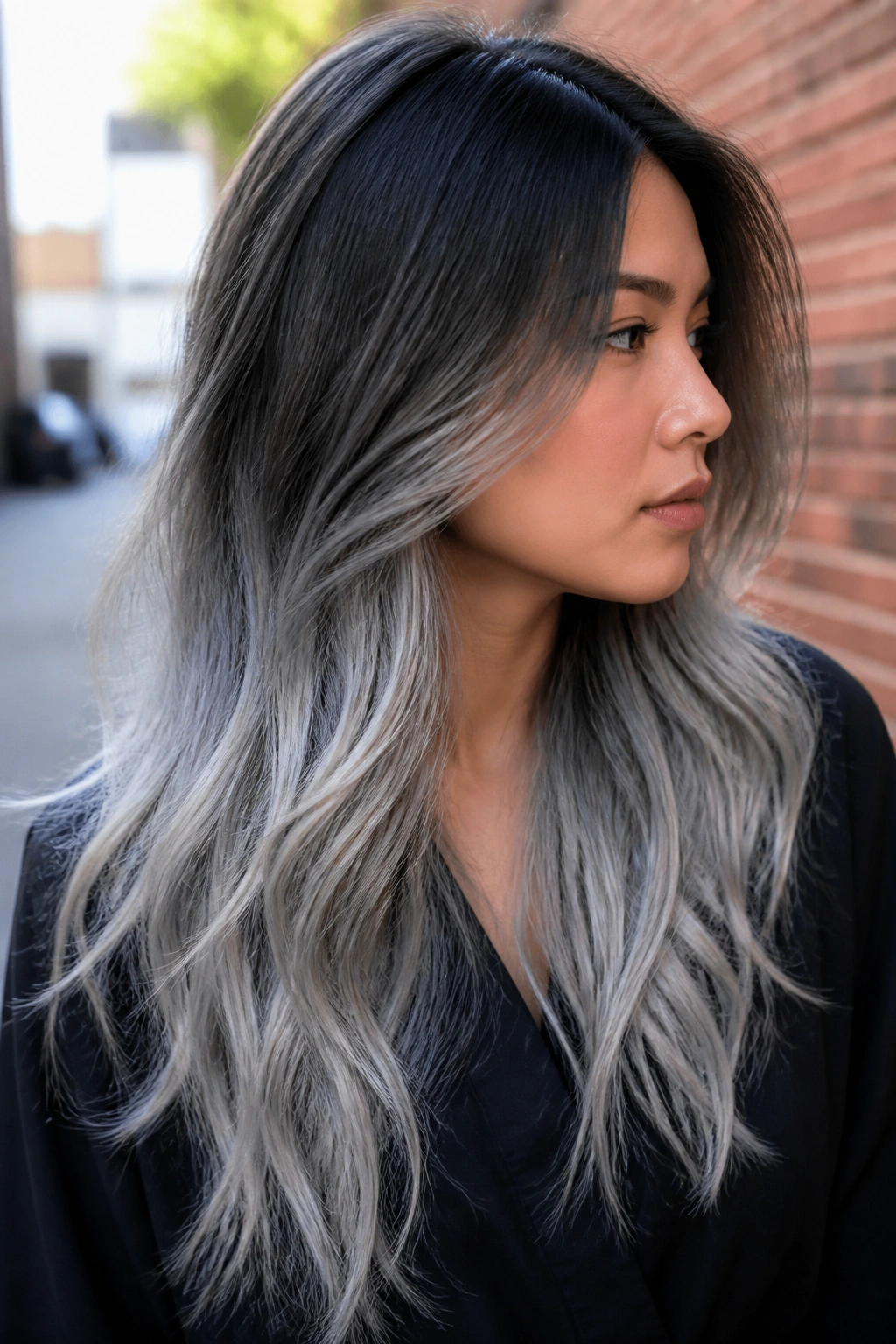
Why does ash ombré work so well on cool skin? Because it moves in the same color family as the undertones instead of fighting them. Black roots slide into ash mids, then into pale silver ends, and the whole thing feels balanced rather than loud.
This look needs length. Shoulder-length hair can pull it off, but long layers make the fade feel smoother and more expensive. On curls, the color reads even softer because every bend breaks up the line between shades.
How to Keep It From Looking Flat
The transition should be long enough to breathe. I’d want at least 3 to 4 inches of soft blending between the dark root and the lightest ends.
- Keep the root shadow deep.
- Ask for an ash toner, not beige.
- Leave a little darkness in the midlengths so the silver has something to sit against.
- Style with loose bends so the gradient shows.
5. Fine Silver Babylights
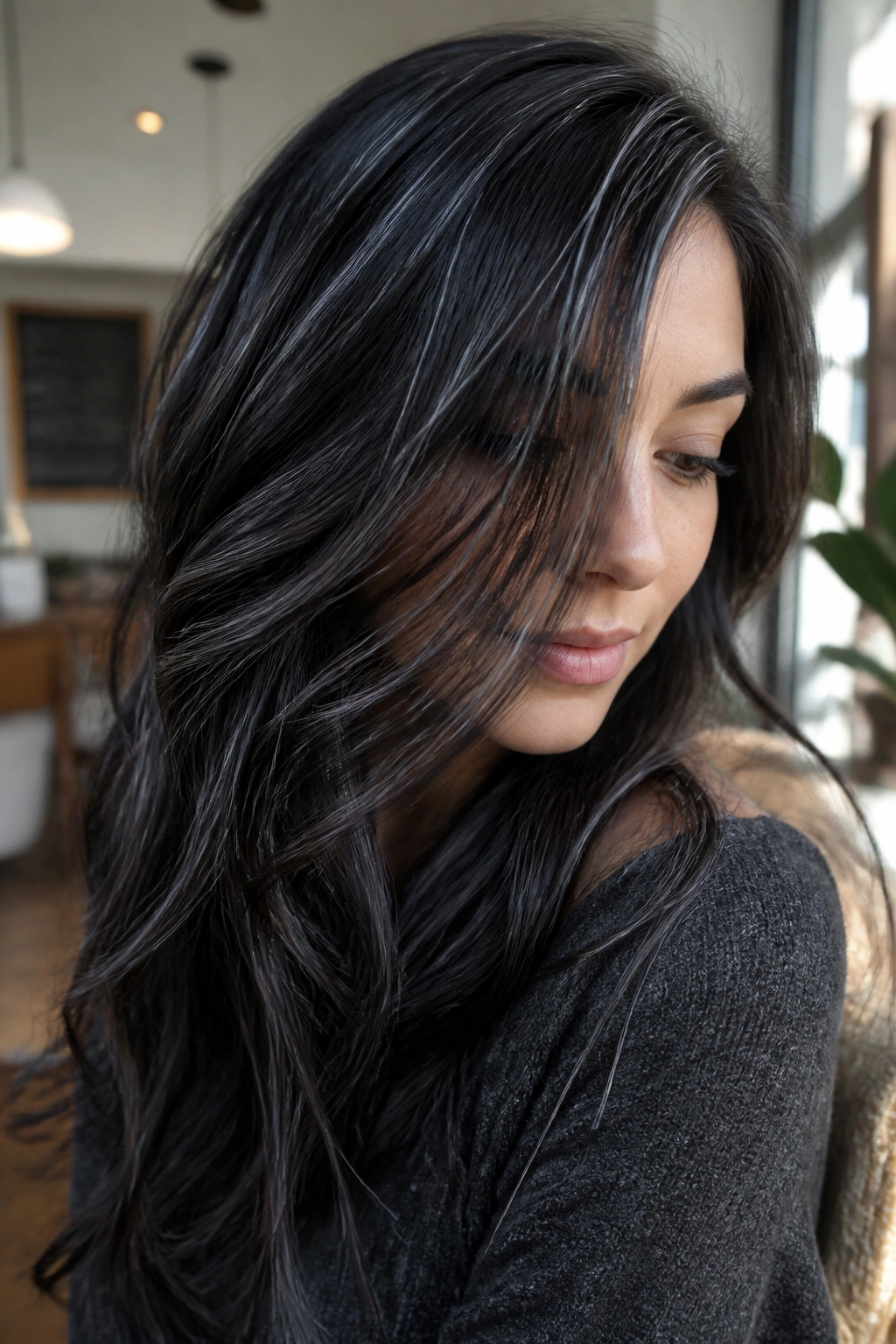
Fine silver babylights are for the person who wants sparkle, not drama. The pieces are so thin they almost disappear until the light hits them, which makes them a smart choice for cool skin tones that need brightness without a big color block near the face.
I like babylights on hair that already has movement — a shag, layered lob, or long waves. When the silver is woven in like thread, the black base stays in charge and the finish looks dimensional instead of frosted over. That matters. A lot.
What to ask for is simple: tiny slices, not chunky sections. The stylist should lift only enough to get the silver to show, then tone the pieces cool and clean. If the highlights are too wide, they stop feeling delicate and start competing with the base color.
6. Graphite Gloss Finish
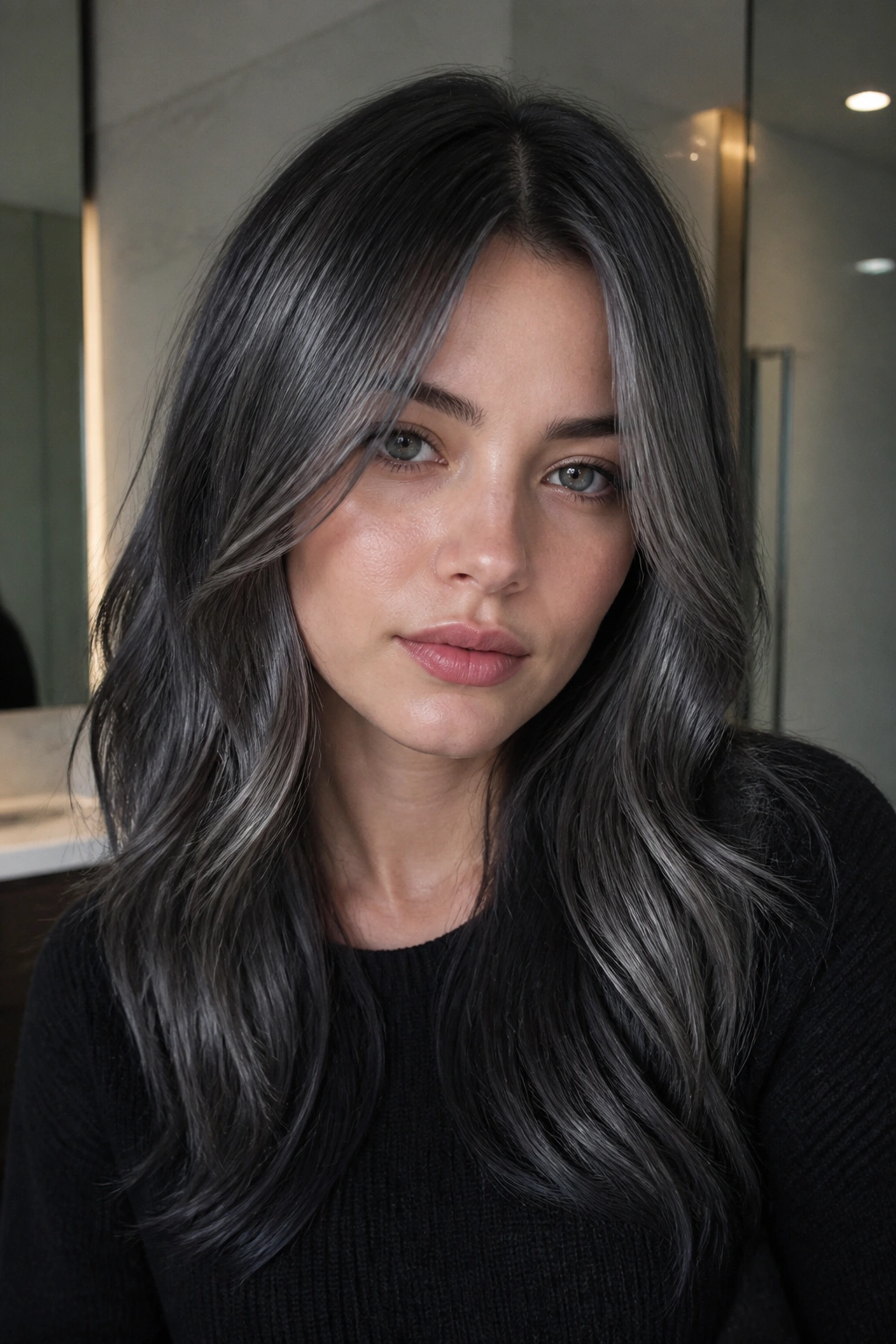
Graphite gloss is one of my favorites for people who want a cool-toned black silver hair color idea without obvious streaks. It sits between black and silver — darker than steel, shinier than ash — and it gives the hair a wet-metal finish that looks good even when the cut is simple.
This one can often be done without full lightening, which is a relief if your hair is already stressed or very dark. A good gloss adds reflective gray over black, then softens the edges so the color reads as graphite instead of plain black dye. On cool skin, that reflective sheen keeps the face from looking washed out.
It does fade. That’s the trade-off. Glosses are not stubborn, and that’s part of their charm. If you like low-drama upkeep, this is a solid choice, especially with a sulfate-free shampoo and cooler water when you rinse.
7. Crescent Moon Underlayer
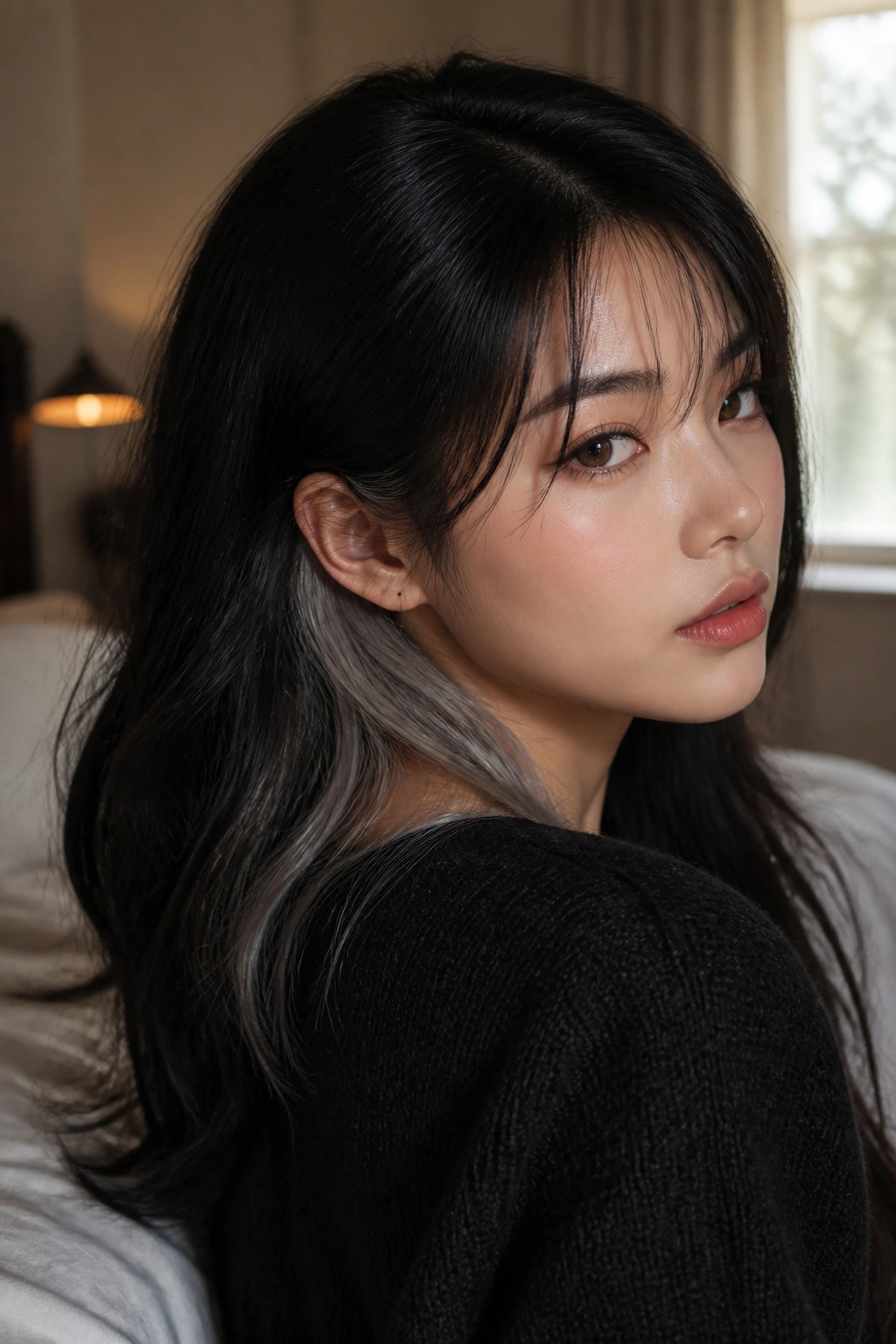
The silver does not have to sit on top to matter. A crescent moon underlayer puts the bright piece underneath the top curtain of black hair, usually through the nape or lower back section, so it flashes out when the hair moves or gets pinned up.
This is a smart choice if you wear buns, claw clips, or half-up styles. The hidden silver stays private until you want it to show. That makes the color feel a little more personal, a little less obvious, which I think is part of the appeal.
Why Underlayers Work
They let you keep the top view dark and sleek while still getting that cool metallic hit underneath.
- Ask for a panel about 2 to 3 inches thick.
- Keep the top layer dense enough to cover it when worn down.
- Use a silver toner that stays clean under indoor light.
- Great for long hair, braids, and pinned styles.
8. Peekaboo Silver Streaks
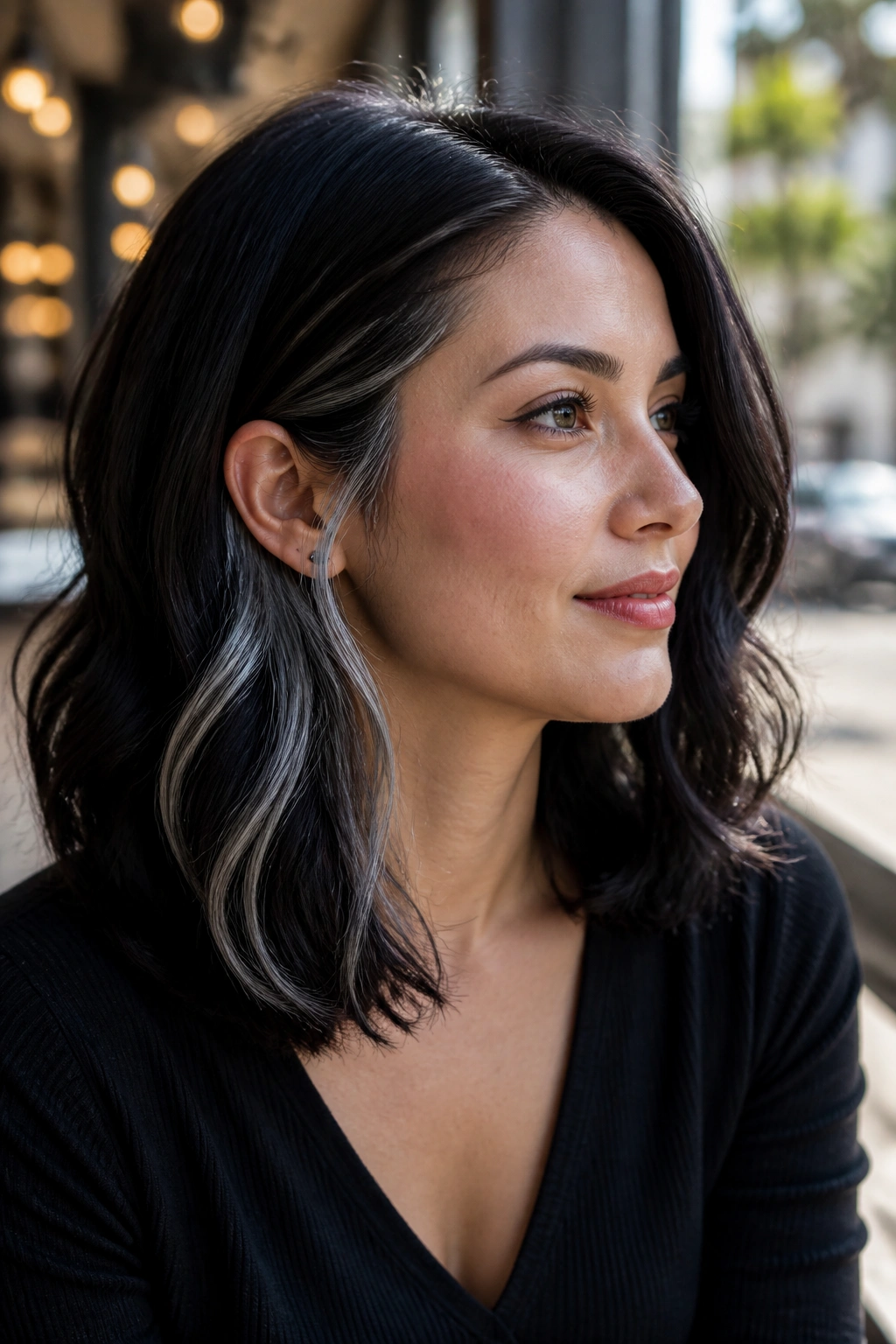
Peekaboo silver streaks are the fun version of the underlayer idea. Instead of one hidden panel, the silver gets placed through interior sections so it flashes when you tuck your hair behind your ear or when a breeze catches it. It’s less formal, more playful.
I like this on medium-length hair because the movement matters. Too short, and the peekaboo effect disappears. Too long and heavy, and the streaks can sink under the black layers unless the cut has some lift. The color itself should stay cool and bright, not smoky beige.
If you want a little edge without going full statement stripe, this is the safe bet. It’s also kinder to grow-out than a big face frame, because the silver lives inside the hair rather than drawing a hard line around your face.
9. Frosted Balayage
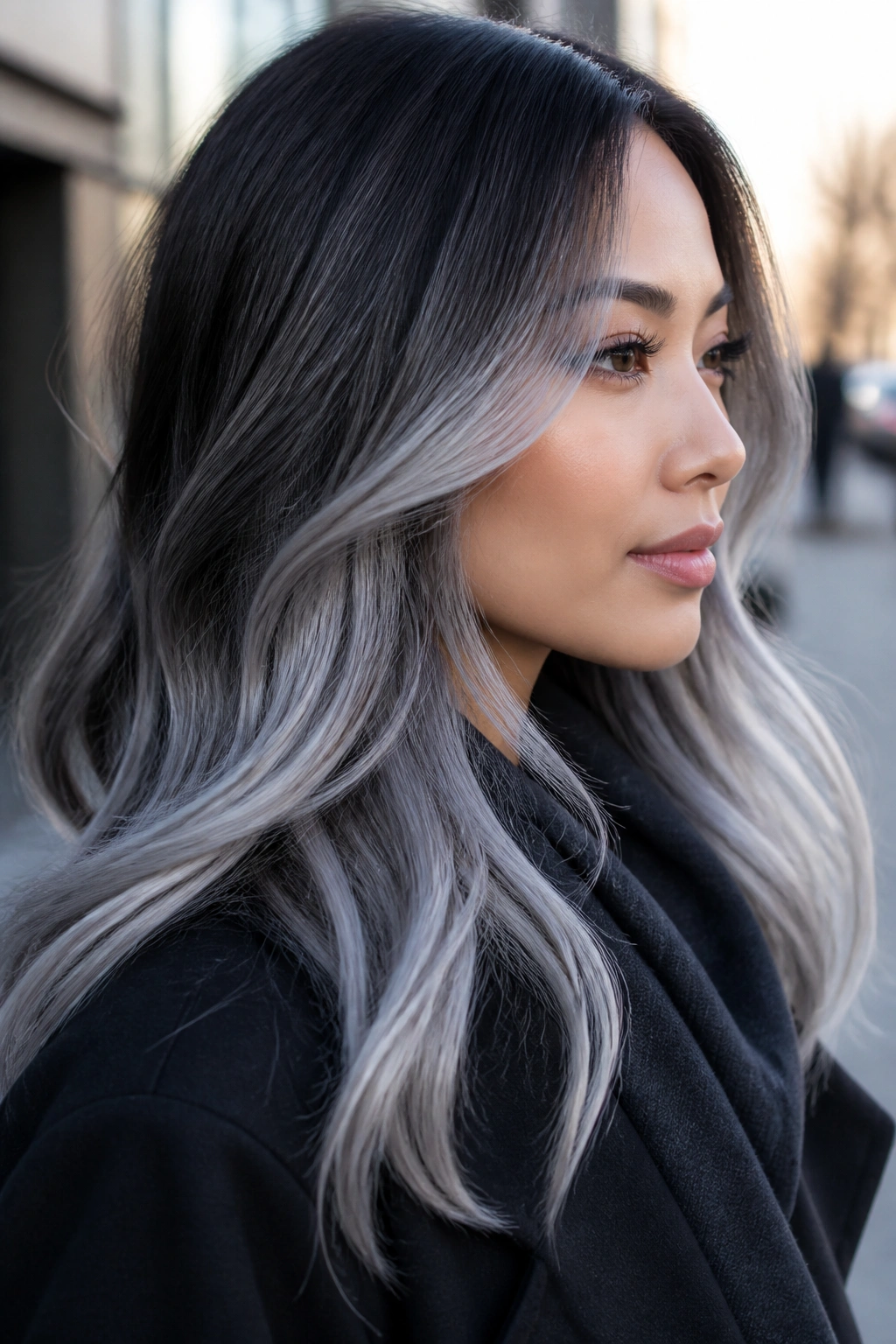
Frosted balayage is what happens when black hair gets painted with cool, icy silver in a way that still leaves plenty of darkness behind it. The result looks less like dye and more like frost settling on fabric. On cool skin, that kind of finish can be lovely because it keeps the face in the same temperature range as the hair.
Placement Matters
The best frosted balayage is not sprayed everywhere. It’s painted where the hair bends and lifts — mids, ends, a few surface pieces near the face. That keeps the black base from disappearing.
- Leave the root area deep and clean.
- Focus lightness on the outer curve of waves or curls.
- Ask for silver toner with no warm beige cast.
- Use a gloss after the tone to keep the finish reflective.
This idea grows out soft, too. That’s one reason I keep coming back to it.
10. Chunky Silver Face-Framing Stripes
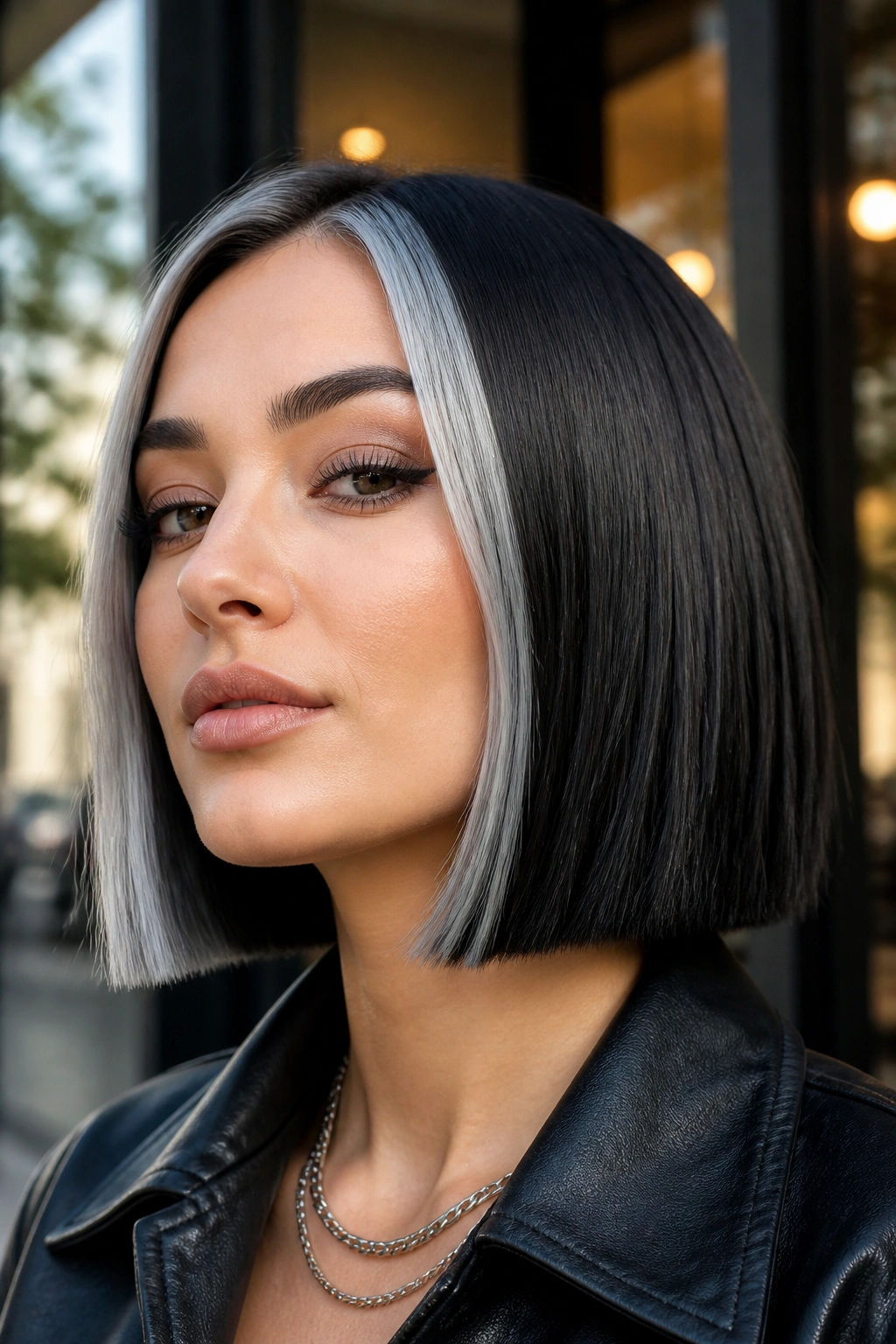
Chunky silver face-framing stripes are not subtle, and that is the point. On cool skin, the strong contrast can look sharp in a very clean way, especially if the rest of the hair stays black and glossy. Think bold panels near the temples, not thin ribbons.
This one loves blunt cuts, sharp bobs, and straight styles. The lines need room to show. If the haircut is too layered or too feathery, the stripes can blur into the rest of the hair and lose their punch.
No shyness here. If you want this look, commit to it. A strong brow, dark liner, or a red lip makes the silver pop even more, but the hair color should carry the statement on its own.
11. Metallic Halo Highlights
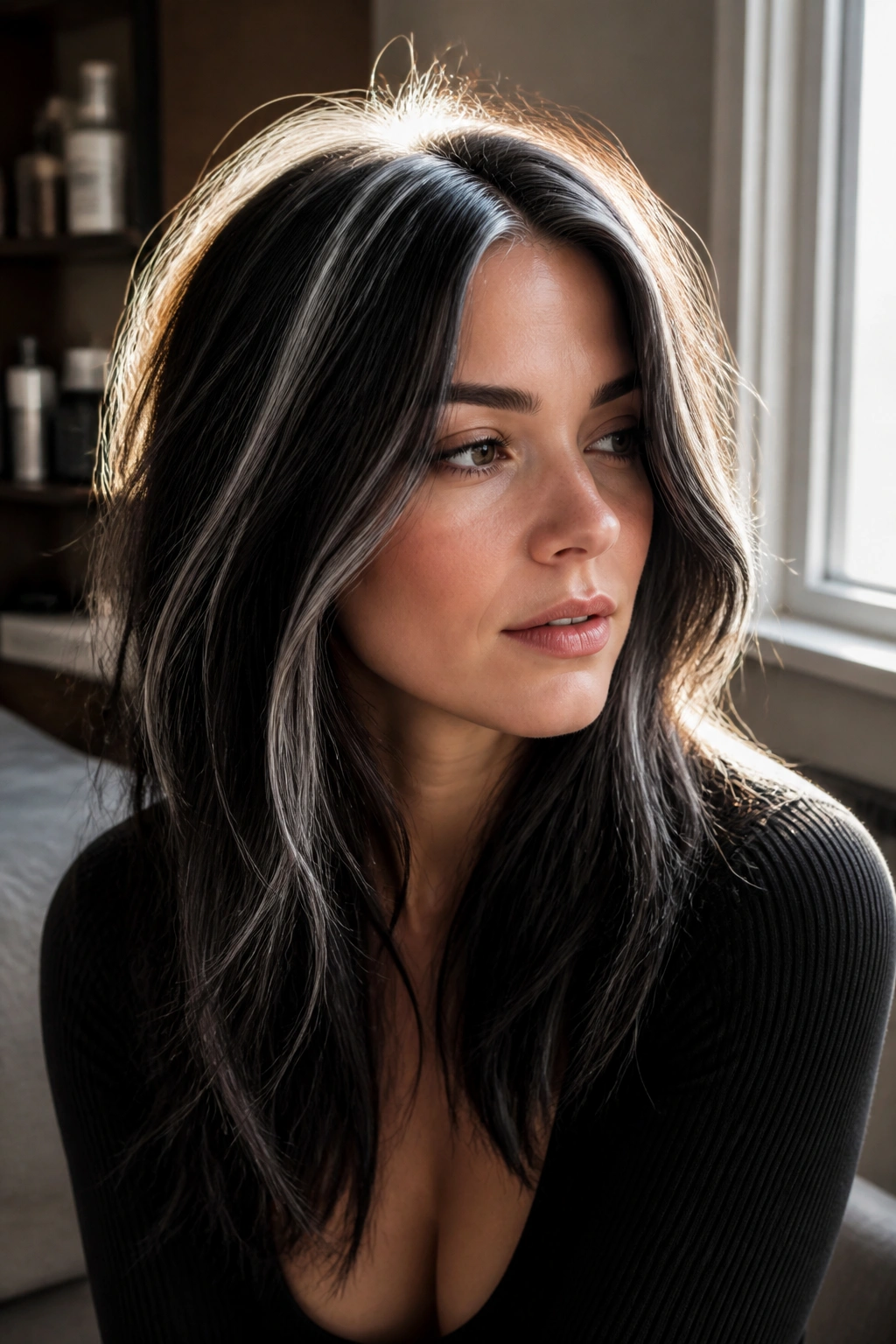
What if the silver stayed near the crown instead of the ends? That’s the whole trick with metallic halo highlights. The lightest pieces sit around the part, top curve, and upper crown, so the hair looks lifted from above without turning the whole head pale.
This is a clever option for flat hair because the color creates the illusion of more volume. The eye sees brightness at the top and assumes height. It’s a small visual trick, but it works.
Best Haircuts for This Look
- Sleek bobs with a clean part.
- Long layers that sit close to the head.
- Soft pixies with enough top length to show the crown.
- Any cut worn half-up on a regular basis.
If you like your hair pulled back, this one gives you a lot of mileage.
12. Steel-Gray Midlength Ends
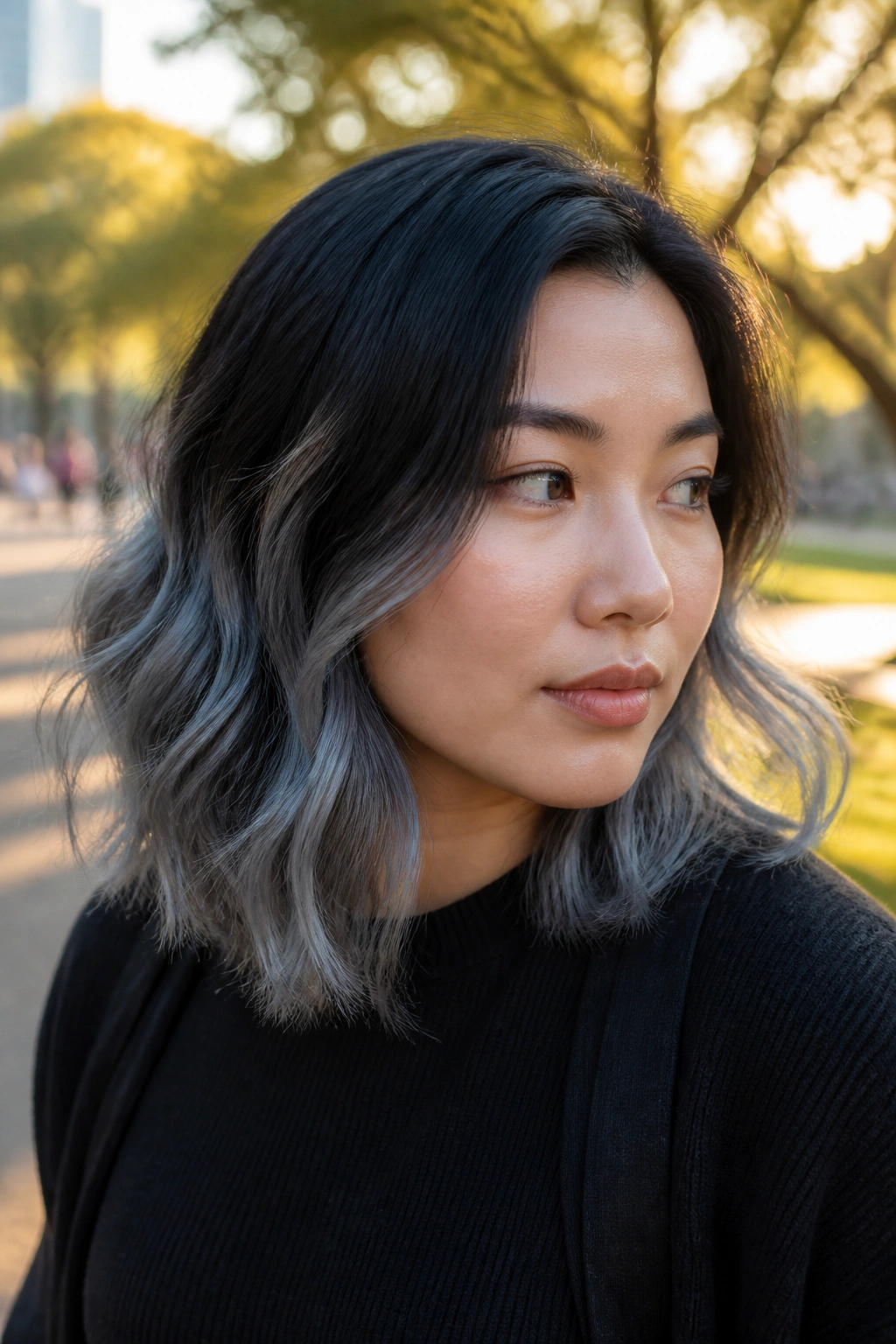
Steel gray sits between black and silver, and that’s why it feels so wearable. Instead of jumping straight from dark roots to bright ends, the midlengths stay heavy and smoky while the bottom section shifts into a cool metallic gray. It looks composed, not fussy.
I especially like this on shoulder-length cuts, where the ends have enough room to show the shade change. On very long hair, steel gray can feel softer and more swishy. On shorter hair, it can read sharper and more graphic.
Ask for the ends to stay cool, not muddy. That means no beige toner, no warm pearl, no accidental brown. Steel should feel like brushed metal, not driftwood.
13. Pearl Silver Tips
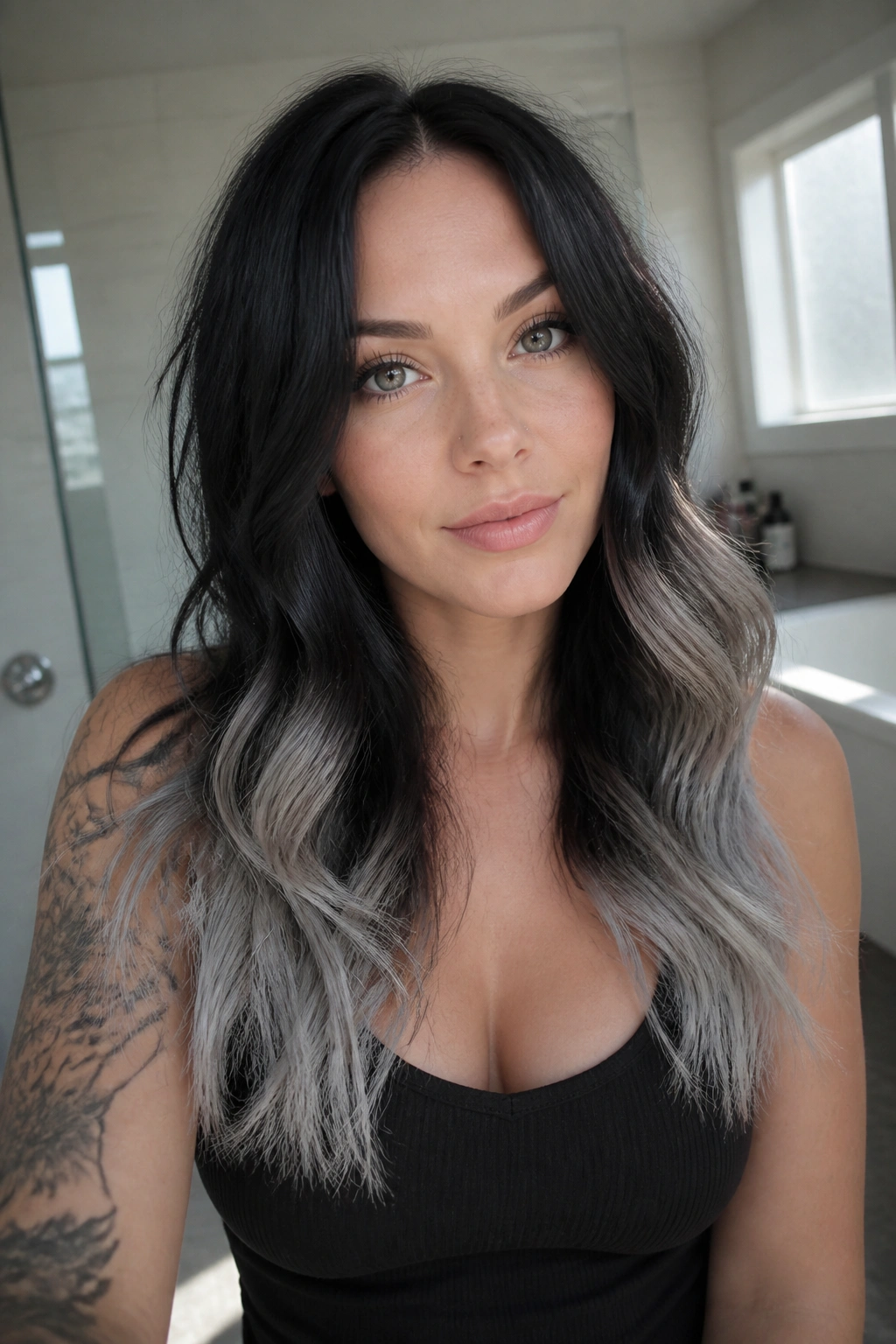
Pearl silver tips are for people who want the lightness pushed all the way to the ends and nowhere else. The black remains in control through the roots and mids, then the final two or three inches fade into a soft, pearly silver that looks gentler than full platinum.
This is a pretty good match for wavy hair. The silver sits on the ends like a soft cap of light, and the waves stop it from looking too blunt. On straight hair, the contrast feels cleaner and more modern.
The ends do the most damage, so this look needs care. Trim regularly. Use a bond-repair mask. And don’t overheat the hair every morning just to make the silver shine; a cool blow-dry and a drop of serum usually do enough.
14. Mushroom-Gray Blend
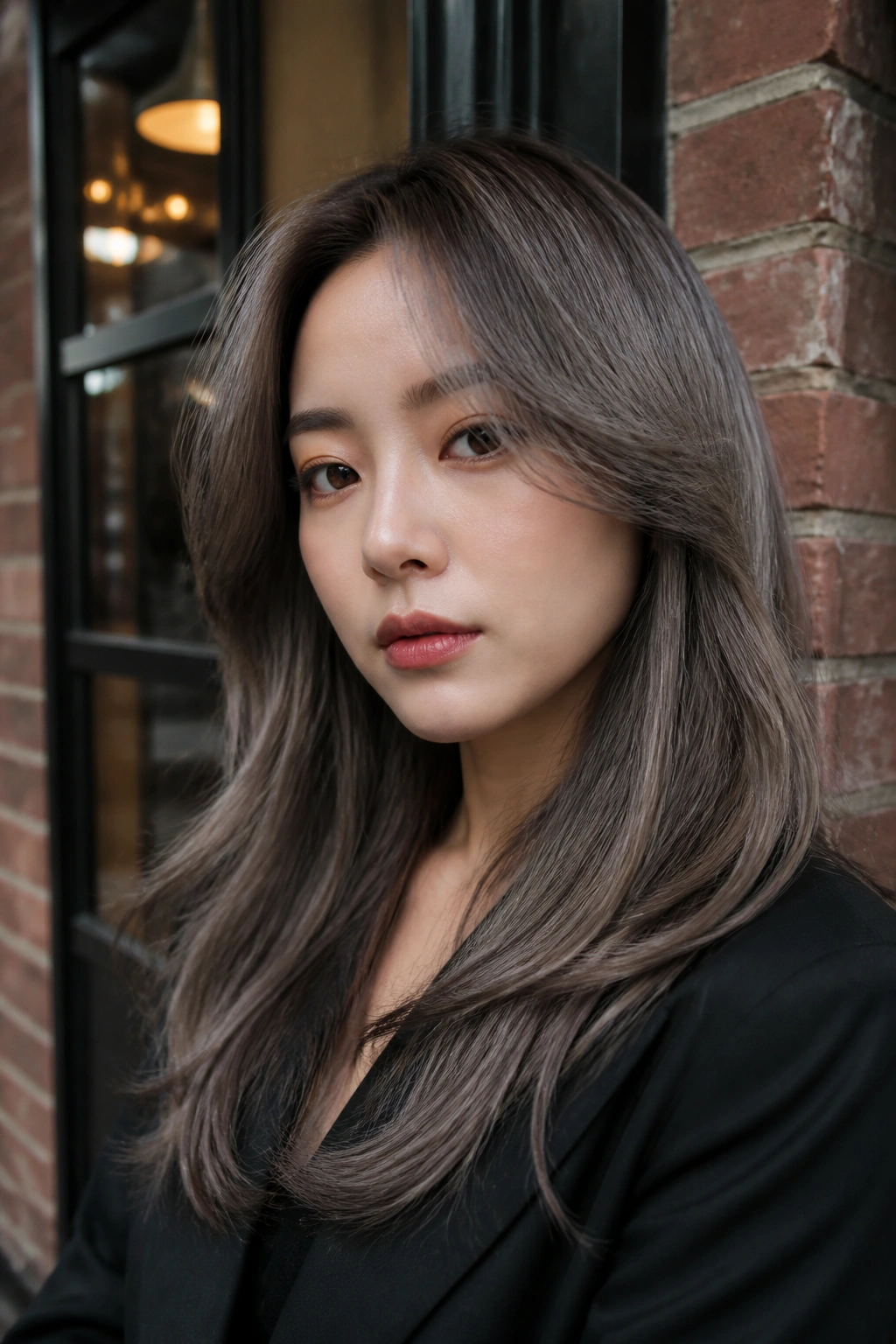
Not every cool-toned black silver hair color idea has to scream silver. Mushroom-gray sits quietly in the gray family, with a muted ashy cast that feels soft against cool skin. It’s darker than silver, less stark than chrome, and honestly, that’s what makes it useful.
This is a good choice if you want metallic depth without the harshness of bright highlight contrast. On thick hair, the blend keeps the color from looking blocky. On finer hair, it can make the hair look fuller because the tonal shift is subtle and layered.
Subtle, but not boring.
The only catch is tone control. Mushroom shades can drift warm if they’re not kept clean, so the toner matters. You want a gray that stays smoky, not beige. That one detail changes the whole look.
15. Oil-Slick Black with Silver Flashes
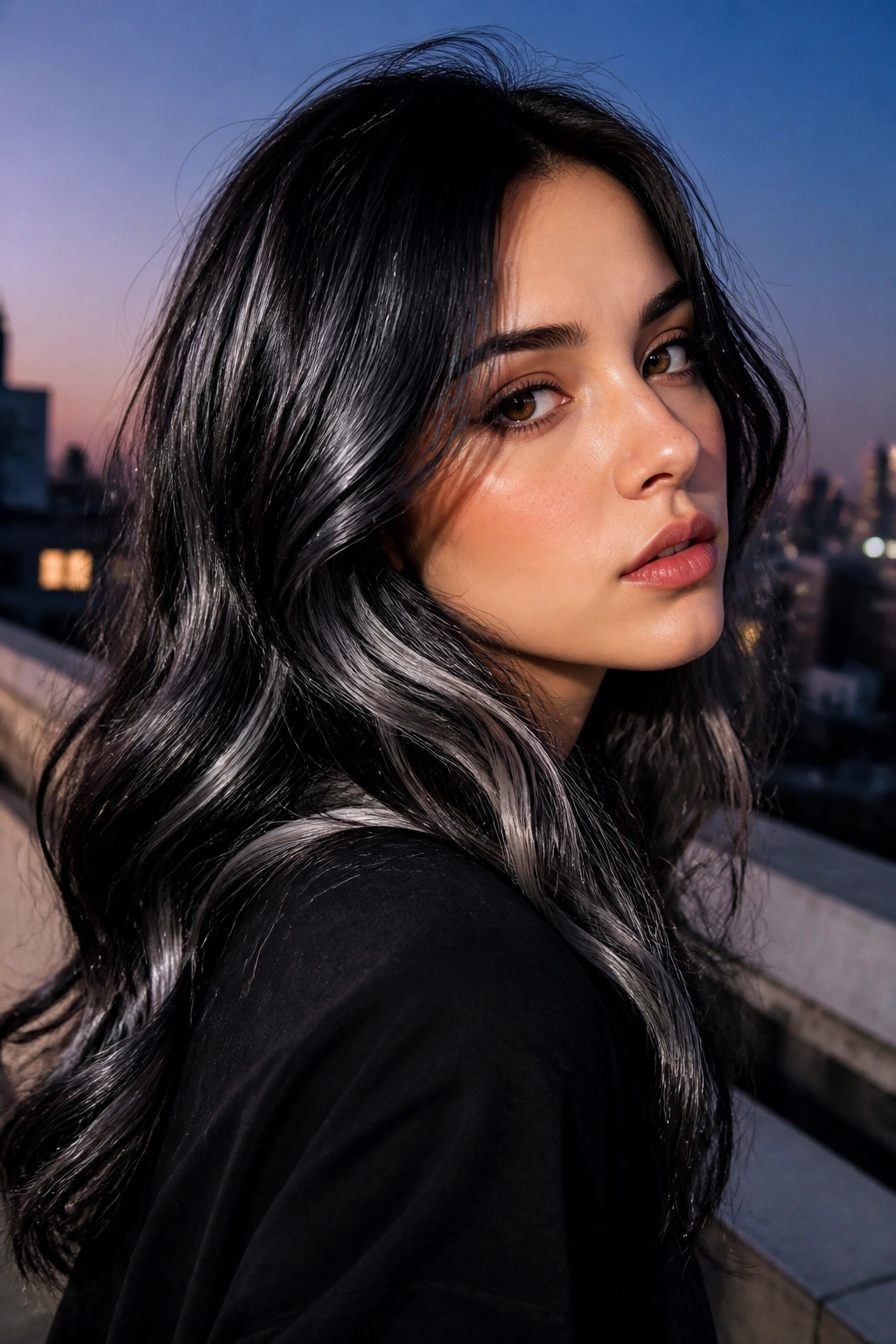
Oil-slick black is glossy, dark, and slippery-looking in the best possible way. Add silver flashes underneath or through surface panels, and the color starts to shift when you move. From one angle it looks nearly black. From another, the silver appears like light hitting metal.
What Makes It Move
The shine is the whole point. If the hair is dull, the color loses its bite.
- Use a very glossy black base.
- Keep silver pieces scattered, not evenly spaced.
- Place a few flashes under the top layer so they appear in motion.
- Style with bends or curls, not pin-straight rigidity.
This one is especially good for layered cuts because the movement opens and closes the silver like a curtain. It’s a little dramatic. That’s part of the fun.
16. Dusty Silver Fringe
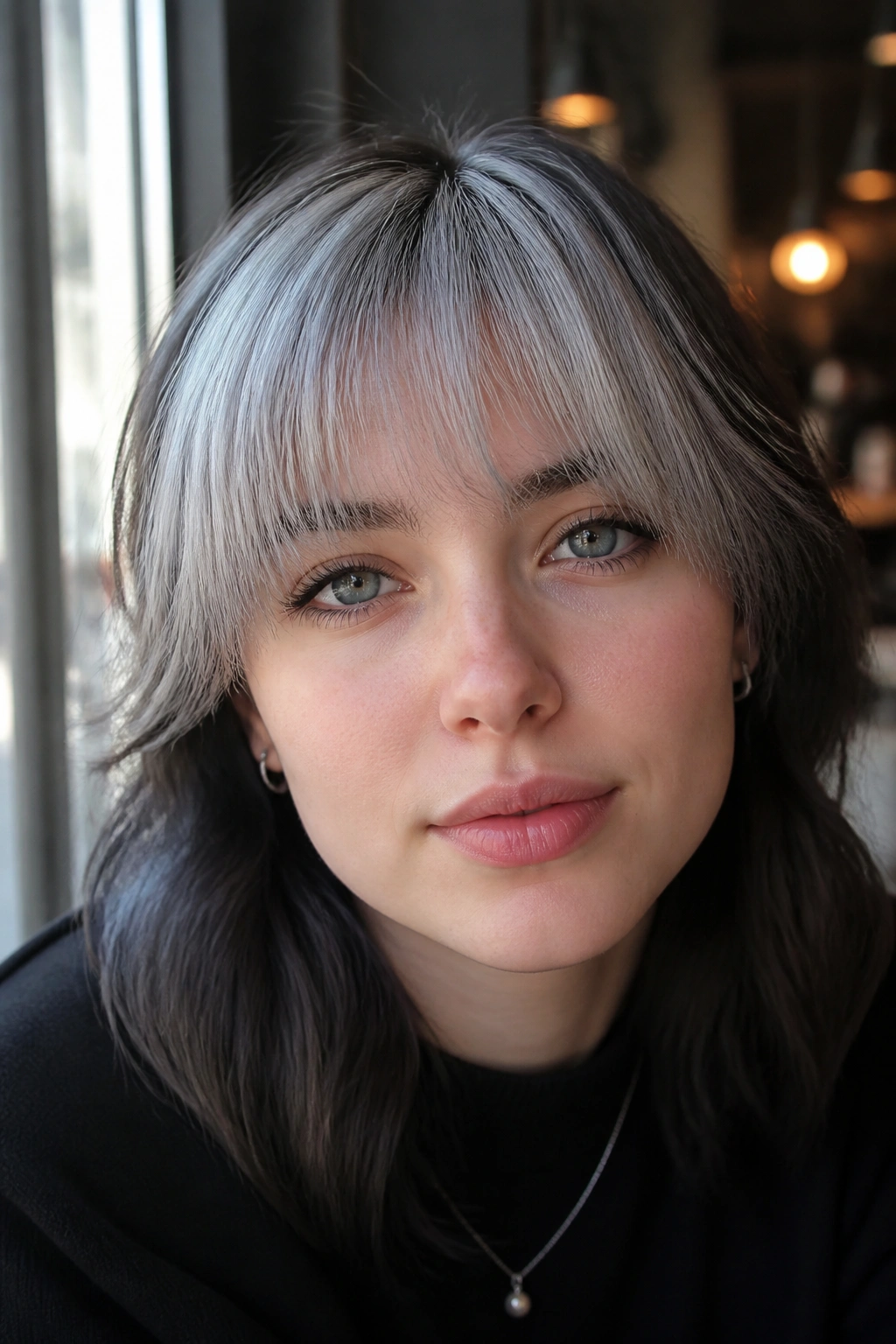
A dusty silver fringe is one of the fastest ways to make black hair feel fresh on cool skin tones. The bangs or fringe section goes silver, while the rest stays dark, which puts the brightness right where the face needs it most. It’s a neat trick.
Because the silver sits near the forehead, this look asks for upkeep. Bangs grow fast. They also pick up oil faster than the rest of the hair, so tone can dull if you pile on too much product. A light hand wins here.
I’d choose this if you like a slightly alternative look but don’t want the whole head competing with your clothes and makeup. The fringe does the talking. The rest of the hair can stay simple.
17. Silver Contour Highlights
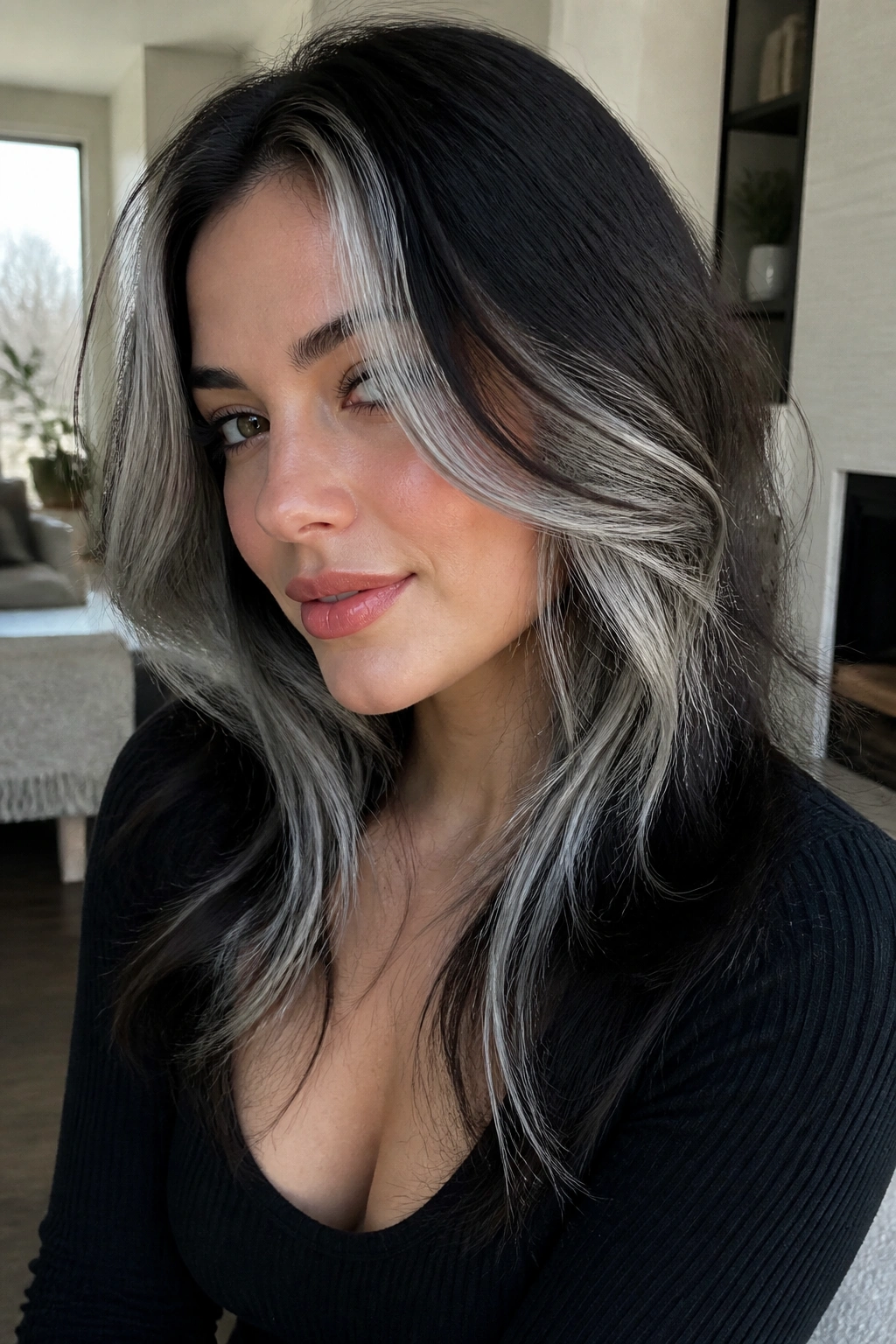
Silver contour highlights work like face contouring, except with hair. The light pieces are placed around the temples, cheek fall, and jawline so the silver catches the areas where the eye naturally goes. On cool skin, that lift can be flattering fast.
This is one of the most practical black silver ideas because it’s built around the face instead of the whole length. You get brightness where it matters and darkness where you still want contrast. The color can be thin and precise or a little broader, depending on how bold you want it.
Where to Place Them
- Near the temples for brightness.
- Just below the cheekbone line.
- A few strands along the jaw.
- Around the part if you wear your hair centered.
If you wear glasses, keep the front pieces a touch lower so the frames do not swallow them.
18. Chrome-Edged Bob
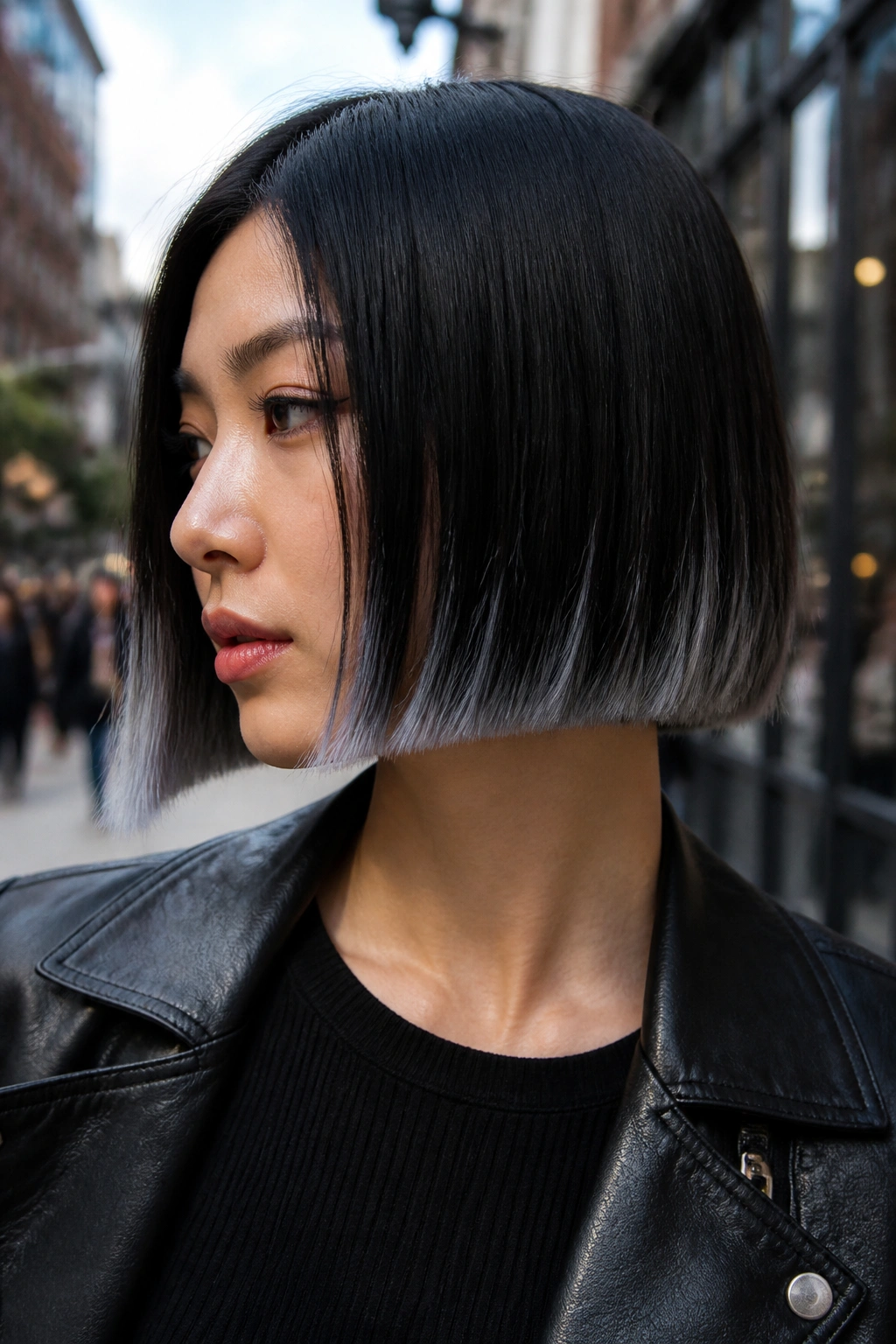
A chrome-edged bob is sharp, clean, and a little severe in the best way. The cut itself helps the color look intentional, because a blunt perimeter gives the silver edge a place to land. On cool skin, that crisp line can feel modern without being loud.
This style is best when the bob is healthy. Short hair shows damage faster than long hair, and silver lightening can make weak ends look frayed in a hurry. I’d trim first, color second. That order matters.
Why Short Cuts Love Chrome
A bob shows the edge of the color with almost no effort. Tuck one side behind the ear and the silver line changes shape. Turn your head and it flashes again. You get a lot of visual payoff from a small amount of hair.
19. Soft Silver Curls with Black Depth
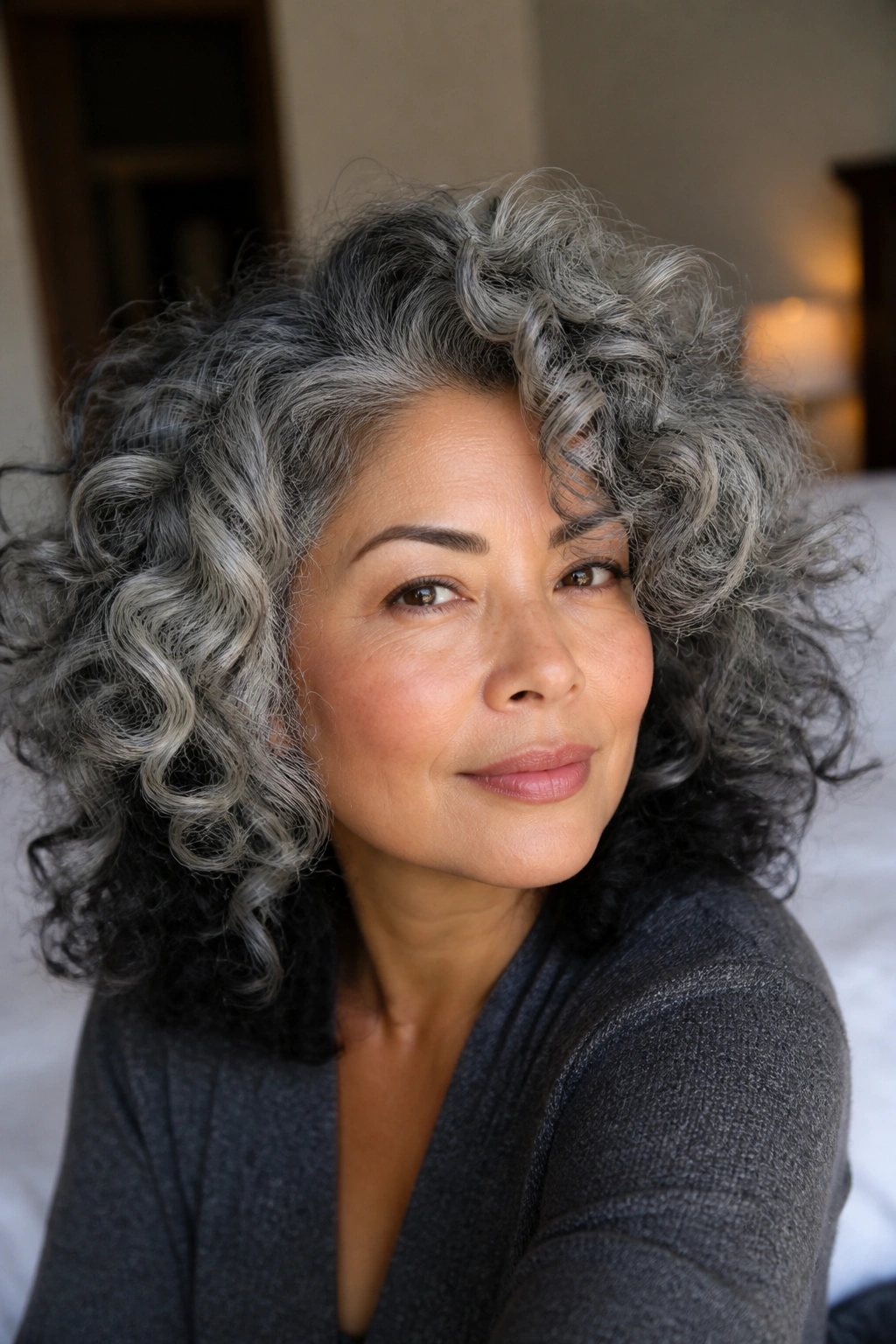
Curly hair and silver can be gorgeous together when the color respects the curl pattern. Soft silver curls with black depth keep the inner layers dark while the outer rings and curl tips pick up the silver. The result feels dimensional, not dry.
That last part matters. If every curl is lightened evenly, curly hair can puff out and lose the shape that makes it interesting. Keeping black in the inner layers preserves bounce and stops the silver from swallowing the texture.
This is one of those looks that gets better when the hair moves. The silver catches on the outside of each curl, then disappears into shadow underneath. Cool skin tends to love that contrast because the silver reads icy rather than yellow.
20. Midnight Black with an Ash-Silver Crown
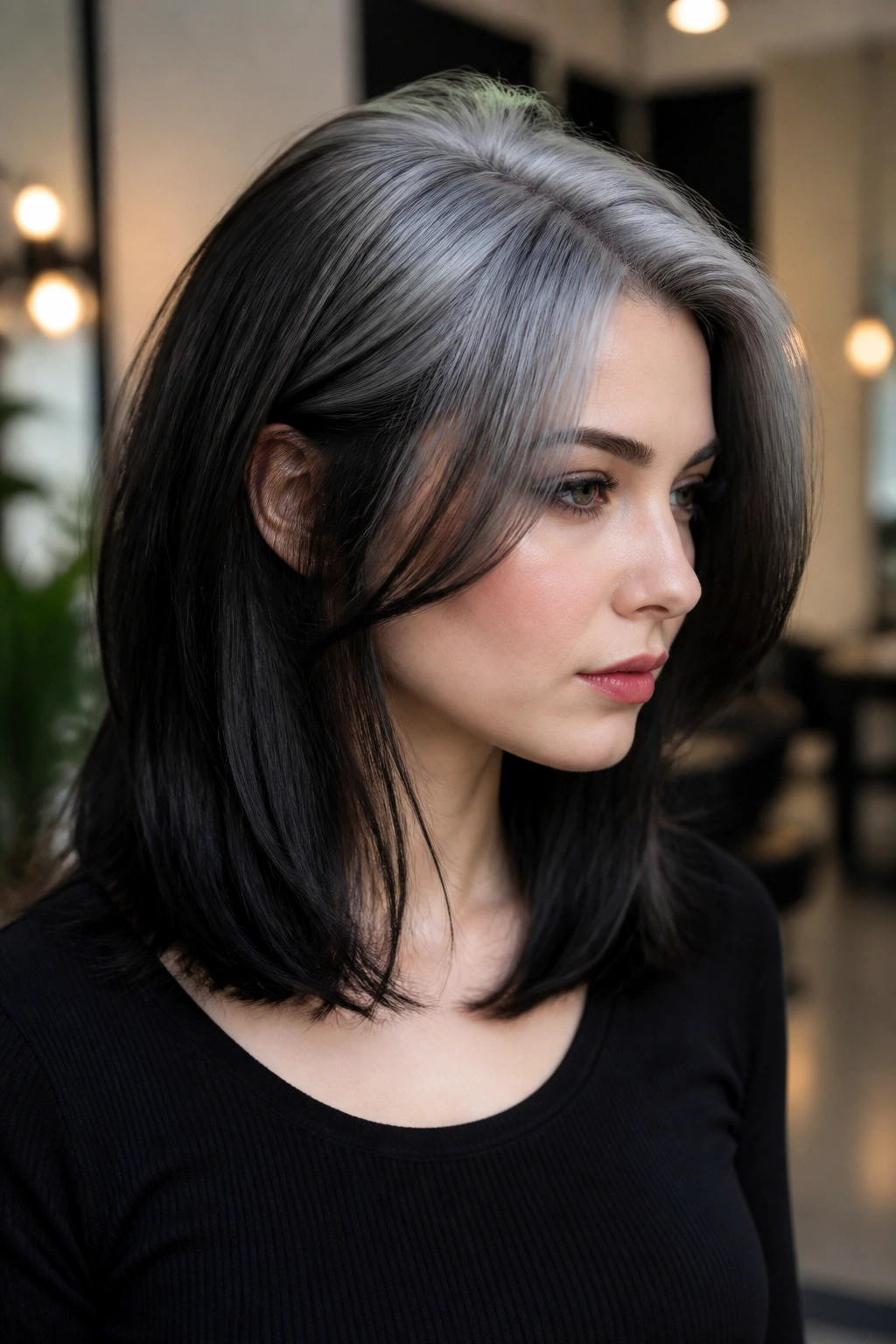
Midnight black with an ash-silver crown is a clever choice if you want lift at the top of the head without changing the whole length. The crown gets the silvered treatment, the mids stay darker, and the ends hold onto that deep midnight base. It gives volume a color cue.
The effect is strongest on hair that falls flat near the part. The silver around the crown pulls the eye upward and keeps the roots from disappearing into one dark block. It also looks good in half-up styles, where the crown section gets a chance to show off.
If you hate obvious root growth, skip this one. The contrast is part of the appeal. If you like contrast, though, this shade map is a strong move.
21. Silver Cascade on a Layered Shag
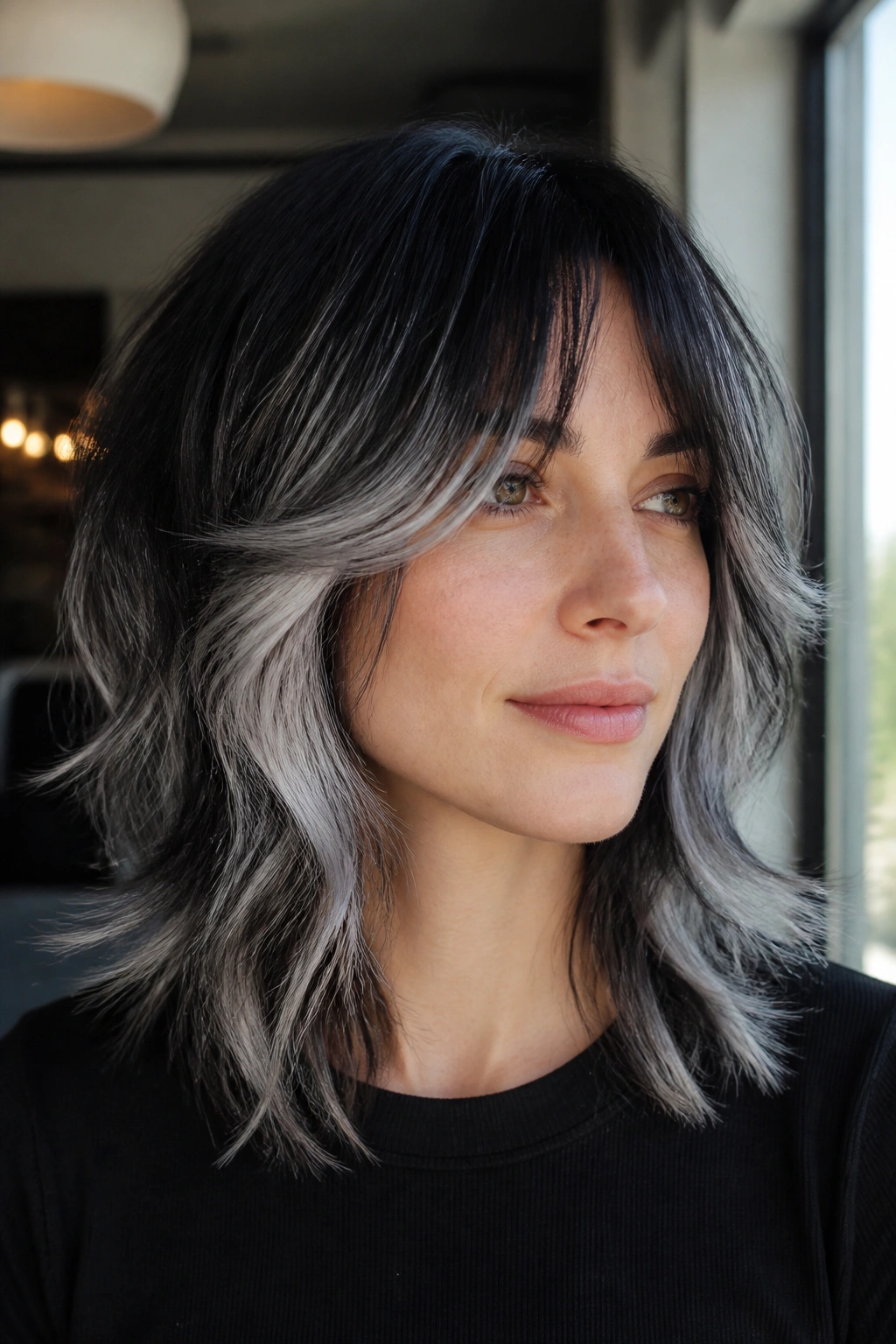
A layered shag and silver color are a good pair because both rely on movement. The layers break up the black base, and the silver cascade lands on the ends, the face frame, and the feathered pieces that swing the most. You end up with hair that looks active even when you are standing still.
I prefer this on wavy textures, but straight hair can pull it off too if the cut is choppy enough. The silver should not sit in one big mass. It needs to travel through the layers so the cut and color support each other.
How to Style It
- Use a light texture spray, not a heavy cream.
- Blow-dry with a round brush if you want more shape.
- Scrunch waves to make the silver pieces separate.
- Avoid heavy oil at the roots, which can flatten the whole thing.
22. Dimensional Salt-and-Pepper Blend
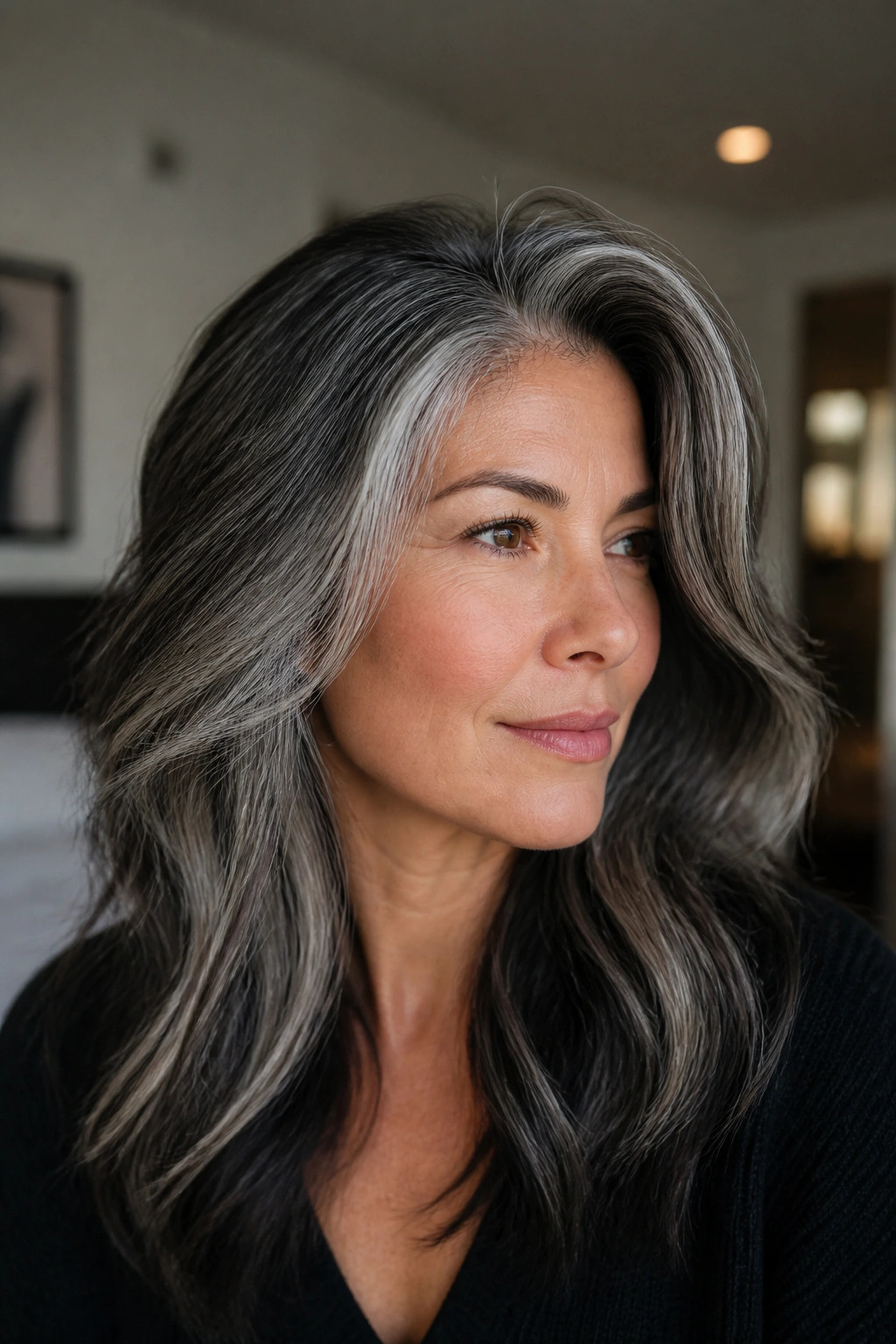
Dimensional salt-and-pepper hair can be beautiful when it’s planned instead of accidental. On a black base, the silver and slate pieces thread through the hair in a way that looks lived-in and grown-up, not flat or dyed-in-one-swipe. Cool skin usually handles this blend well because the tone stays icy.
This is a smart choice for someone who wants less obvious regrowth. Since the color is already a blend, the grow-out line stays softer. That makes it practical, which is not the most glamorous word, but it matters when you do not want a salon visit every few weeks.
What keeps it from looking dull is the spread of the silver. You need enough darkness left in the mix so the lighter pieces do their job. Too much silver and it stops being dimensional. Too little and you may as well have skipped the service.
23. Violet-Silver Hybrid
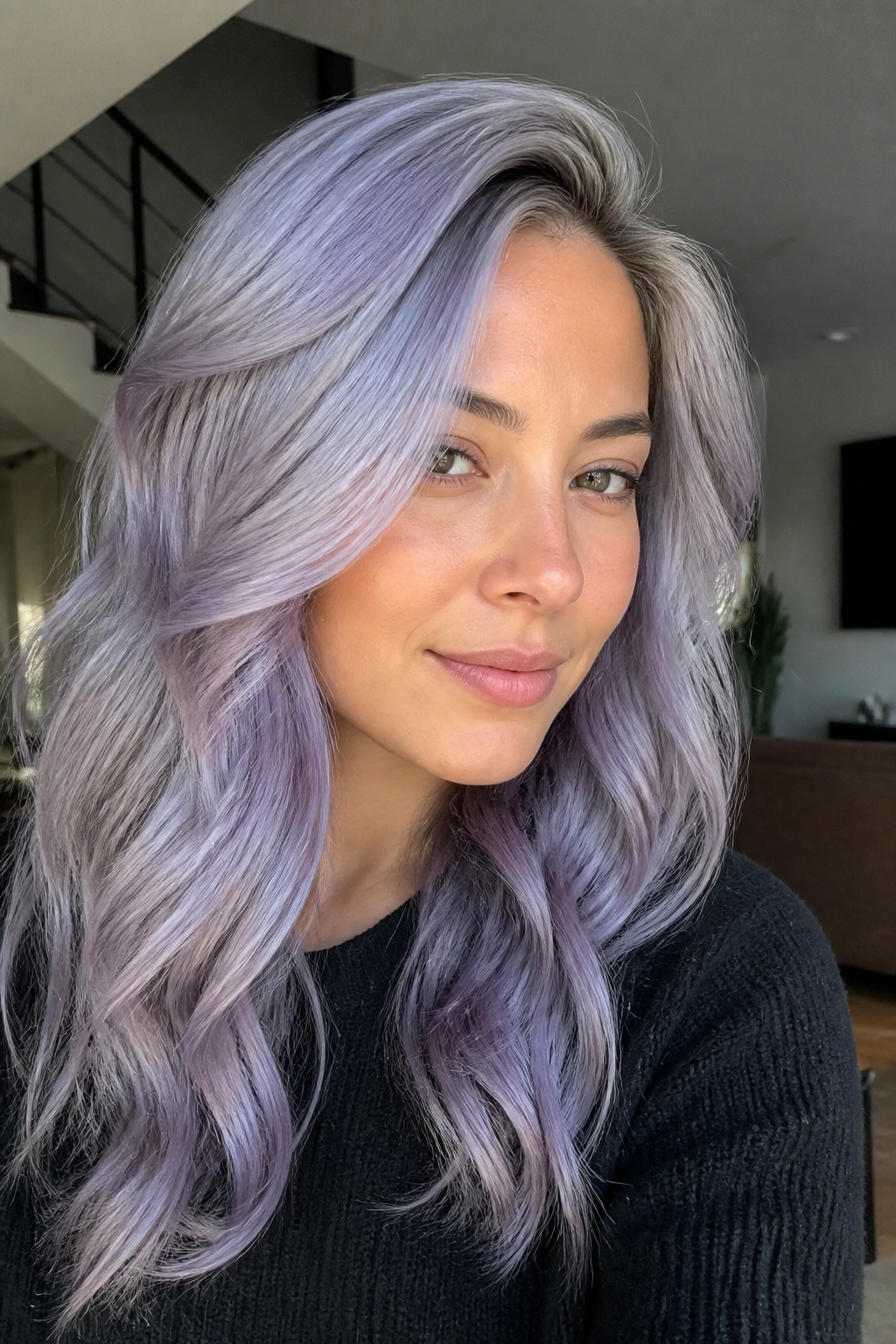
Why stop at silver when a whisper of violet can make it look richer? A violet-silver hybrid stays in the cool family but adds just enough lavender to keep the hair from going flat or chalky. On cool skin, that tiny shift can make the face look fresher.
This is not purple hair in the loud sense. It’s more like silver with a violet cast under daylight and a smoky gray cast indoors. That softness is what makes it wearable. If the violet gets too blue, the hair can look cold in a bad way. Too pink, and it starts drifting warm.
A prelightened base helps here, because the toner needs a pale canvas to show up cleanly. If you like slightly fantasy-leaning color without going full neon, this one sits in a nice middle lane.
24. Gunmetal Gloss with an Icy Veil
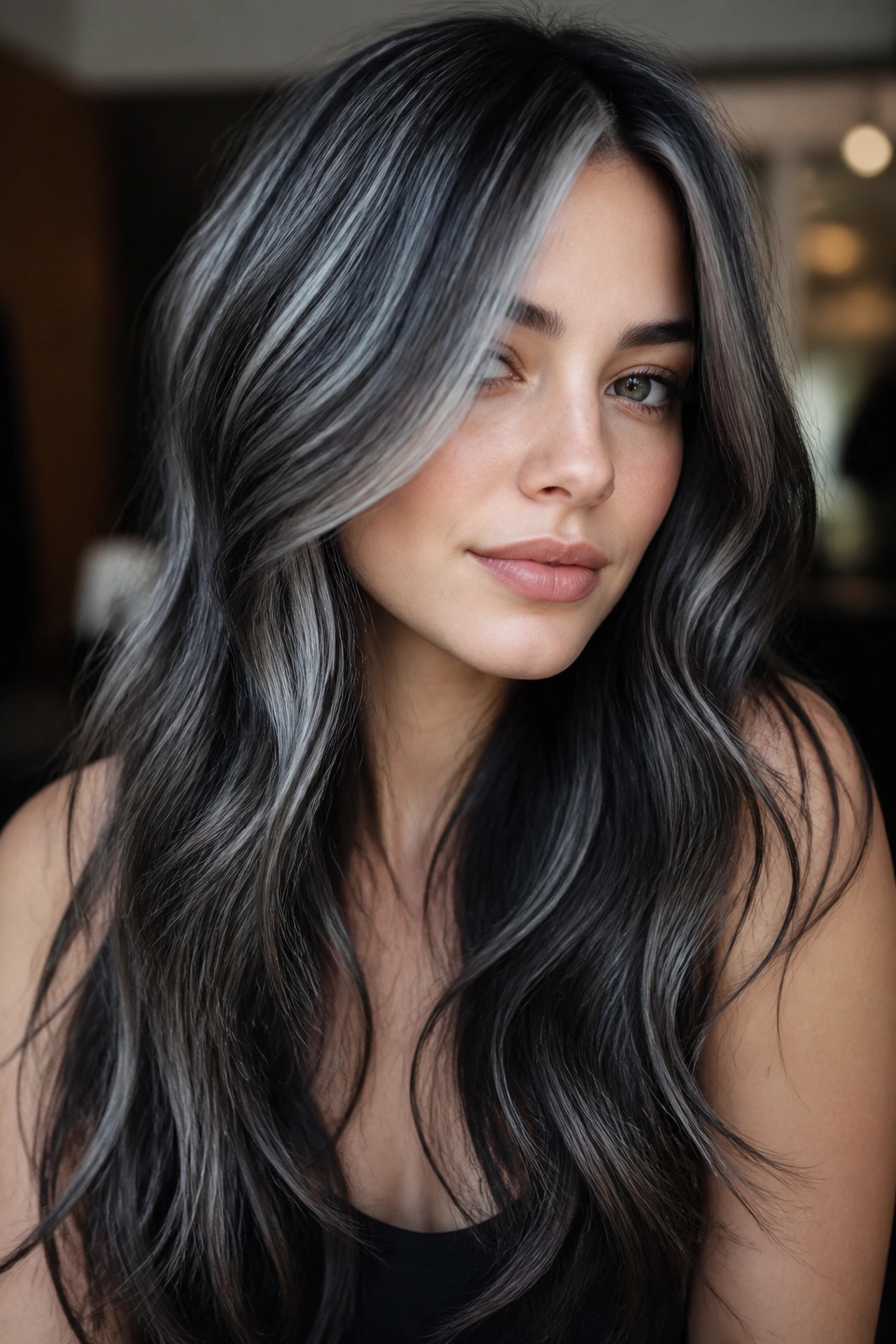
Gunmetal gloss is darker than silver and a touch cooler than charcoal, which makes it a strong match for cool skin tones that want edge without full brightness. Add an icy veil over the top — a thin reflective layer of silver — and the hair starts looking almost liquid.
Flat gunmetal is the enemy. It needs shine. A gloss treatment, a smooth blowout, or a polished wave will make the metal tone come alive. On thick hair, the depth looks rich. On finer hair, it can look a little sleeker and more graphic.
I like this one when someone says, “I want silver, but I don’t want to look frosted.” That’s the whole brief right there, and gunmetal handles it well.
25. Mirror-Panel Balayage
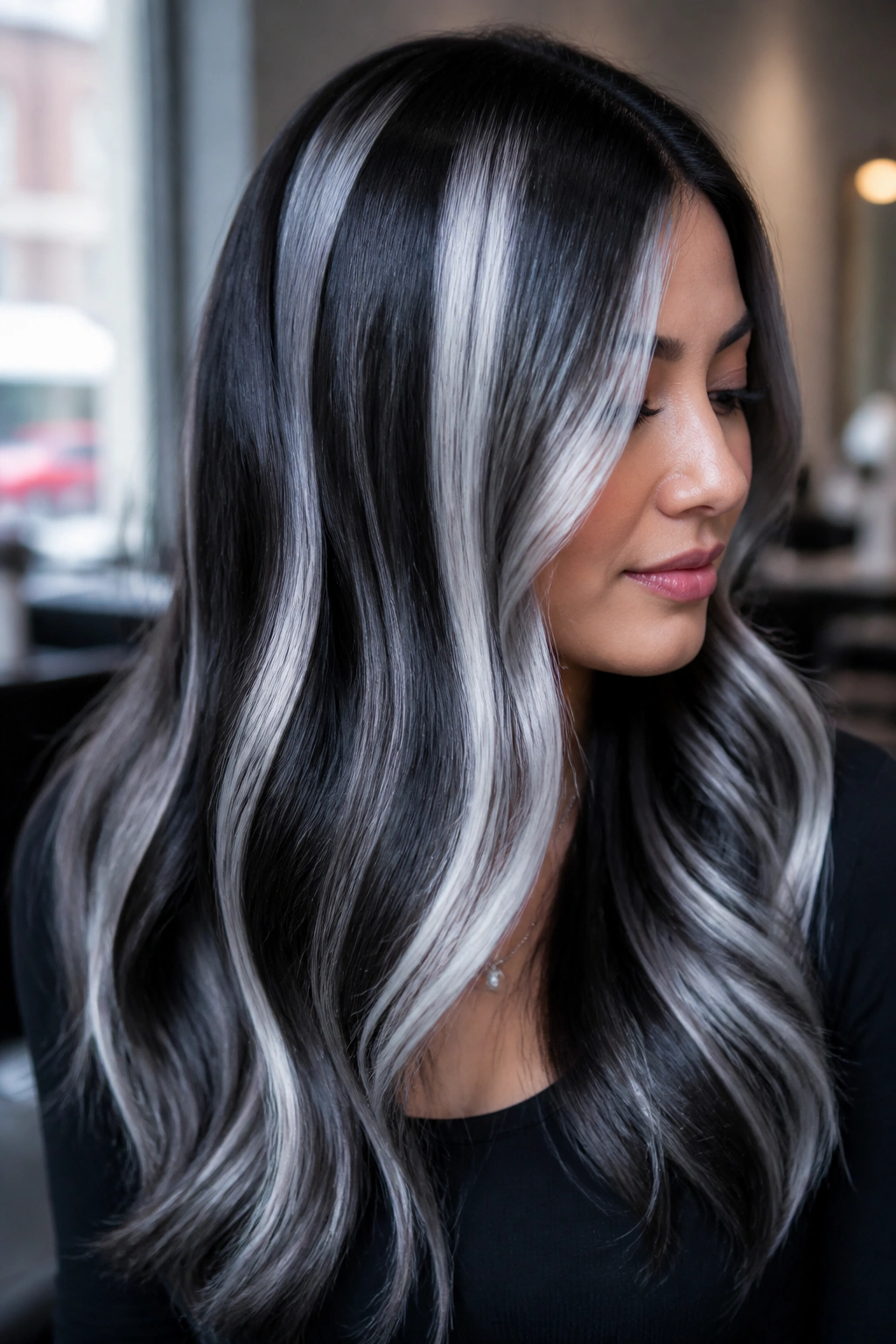
Mirror-panel balayage is the boldest version here, and I mean that in a good way. Instead of tiny silver threads, you get broader reflective panels painted through the black so the hair looks like polished metal when it moves. It’s not stripey if the panels are placed well. It’s sharp.
What Makes It Work
The panels need space. If they sit too close together, the look turns busy and starts to lose the mirror effect.
- Keep each panel around 1.5 to 2 inches wide.
- Leave black space between the light sections.
- Tone the silver to a clean, icy finish.
- Style with bends or a smooth blowout so the reflection shows.
This is the kind of color that likes a deliberate haircut. Long layers, a blunt lob, or a sleek straight finish all help. The look feels strongest when the surface is smooth enough to catch light, but not so polished that it looks stiff.
If you want black and silver to make a statement without tipping into costume territory, this is the one I’d bring to a stylist first.
The smartest black-silver looks for cool skin tones do two things at once: they keep enough darkness to make the silver matter, and they place the light where your face actually benefits from it. That’s why a tiny money piece can work just as well as a full balayage, depending on the haircut and how much upkeep you can live with.
Bring photos, sure. But bring a mood too. Crisp, smoky, reflective, edgy — those words help more than people think. A good colorist can usually tell when you want ice, when you want graphite, and when you want the kind of silver that only shows up when you turn your head.
