



Curly hair and black dye can be a gorgeous match, but the shade matters more than most people think. A black that looks rich on straight hair can turn hard, flat, or even a little harsh once it lands on curls, coils, or waves. The bends in the hair catch light from a dozen angles, so the finish has to do more than sit there and be dark.
That’s why black hair color ideas for curly hair need a little more thought than “just go darker.” Curl pattern, porosity, and finish all change the result. High-porosity curls tend to grab pigment fast and can go dull if the formula is too dense. Lower-porosity hair often needs more patience and better saturation, or the color can look uneven around the crown and ends.
The good news is that black does not have to mean one flat note. It can lean soft, blue, smoky, brown, cherry, plum, or glossy enough to make every coil look deliberate. Some shades look expensive without trying hard. Some are louder. Some barely whisper until sunlight hits them.
The smartest black shades for curls respect the texture instead of fighting it. They let the pattern stay visible, they make the hair look fuller, and they don’t force you into constant correction every time the roots grow out. That’s the sweet spot.
1. Soft Black for a Gentle Curl Finish
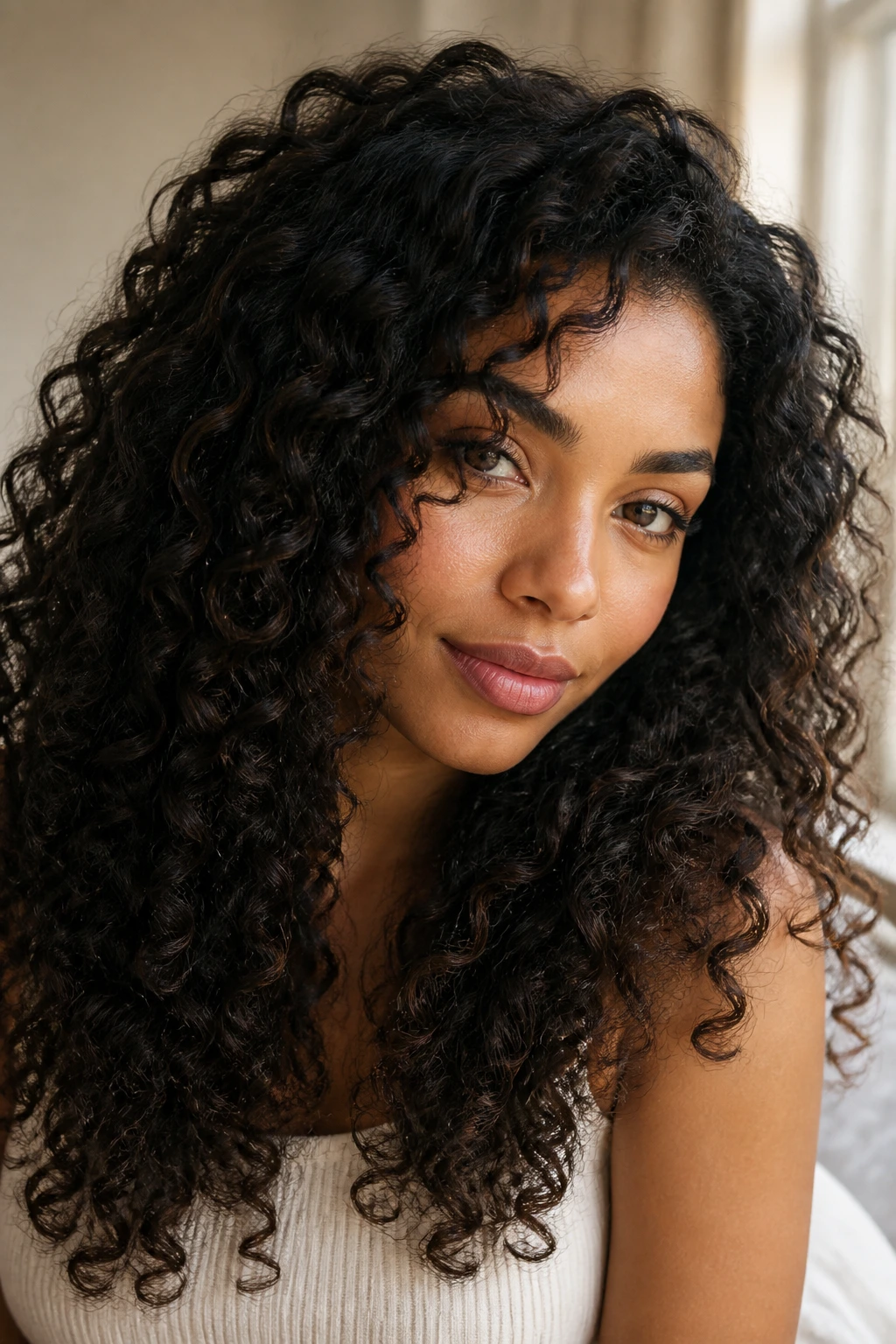
Soft black is the shade I reach for when someone wants dark hair without the hard edge. It sits between true black and deep brown, which makes it easier on curls that already have a lot going on visually. On spirals, it keeps the pattern readable instead of swallowing every curve.
Why It Flatters Curly Hair
Soft black usually has a brown or neutral base, so it gives depth without looking ink-heavy. That matters on curly hair, because the hair moves. A shade that feels a touch lighter can keep the style from looking like one solid block.
It also works well if your hair is a mix of textures. A tighter curl near the nape and looser pieces around the crown can read more even in soft black than in jet black.
- Best for 3A to 4B curls that need depth, not drama.
- Easier to grow out than blue-black or true jet black.
- A good pick if your curls already look dense and you want shape, not extra heaviness.
- Plays nicely with a satin or low-shine finish.
Pro tip: ask for soft black with a demi-permanent gloss if you want the color to fade a little more gracefully.
2. Jet Black With a High-Gloss Finish
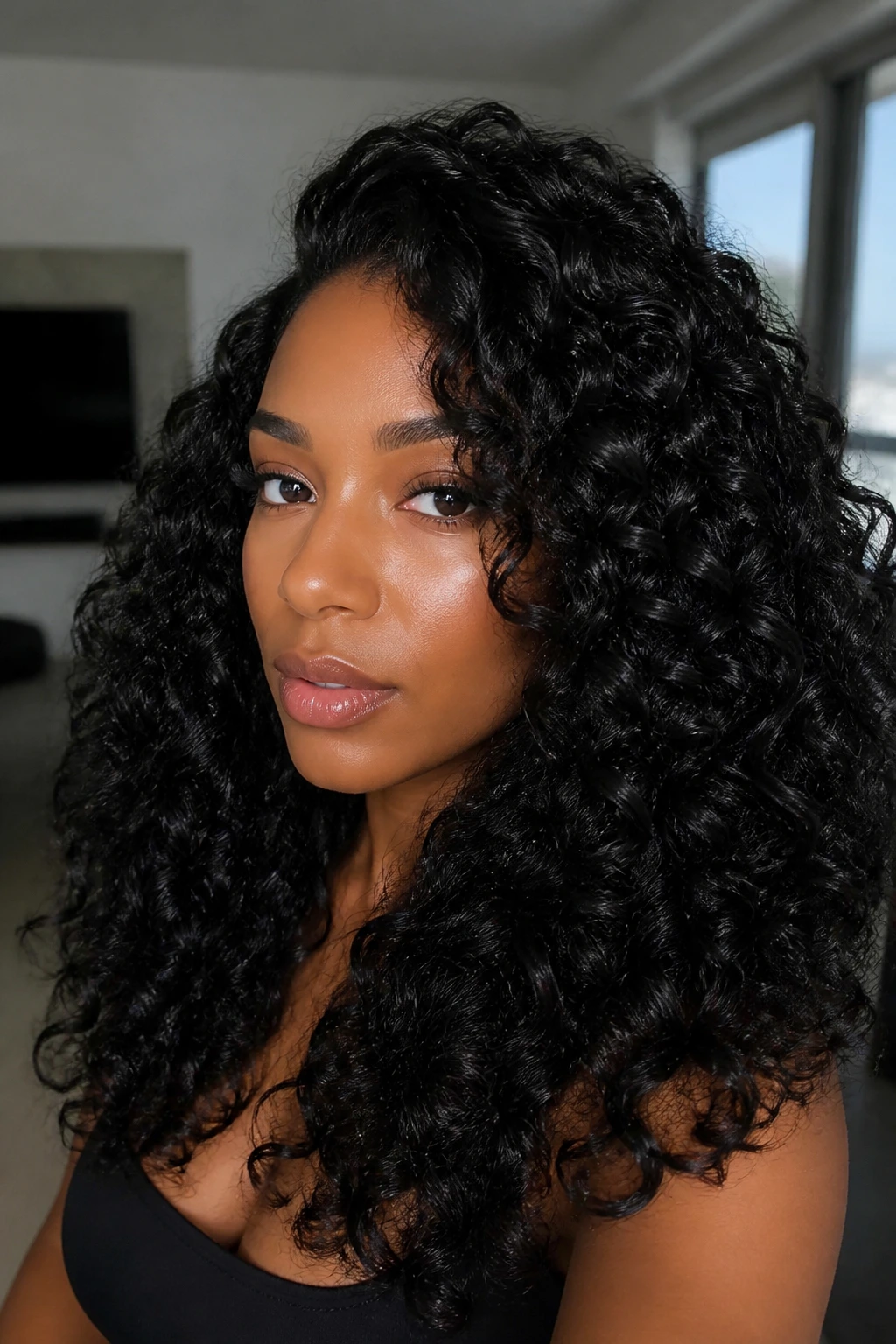
Jet black does not whisper. It makes a clear statement, and on curly hair that can be a good thing when the cut is shaped and the curls are defined. If you like sharp contrast, dark brows, and a style that looks polished even in a messy bun, this is the blunt instrument in the group.
The catch is simple: jet black can flatten weak curl definition. If the shape is already loose or frizzy, the color can make the hair look heavier than it is. On the other hand, when the curls are springy and well-moisturized, jet black makes the ringlets pop in a way softer shades sometimes don’t.
Go here if you like a clean, dramatic look and don’t mind upkeep. It tends to show new growth fast, and faded ends can look brownish against the roots. That contrast isn’t always bad. Sometimes it looks cool. Sometimes it just looks grown out.
Best When You Want Contrast
Jet black works best on structured styles: rounded afros, defined twist-outs, sleek curly ponies, and tapered cuts. If you air-dry with a curl cream that gives strong clumping, the shade reads rich instead of flat.
Use a shine serum sparingly on the mid-lengths and ends. Too much product makes black hair look greasy fast.
3. Blue-Black for Cool Shine
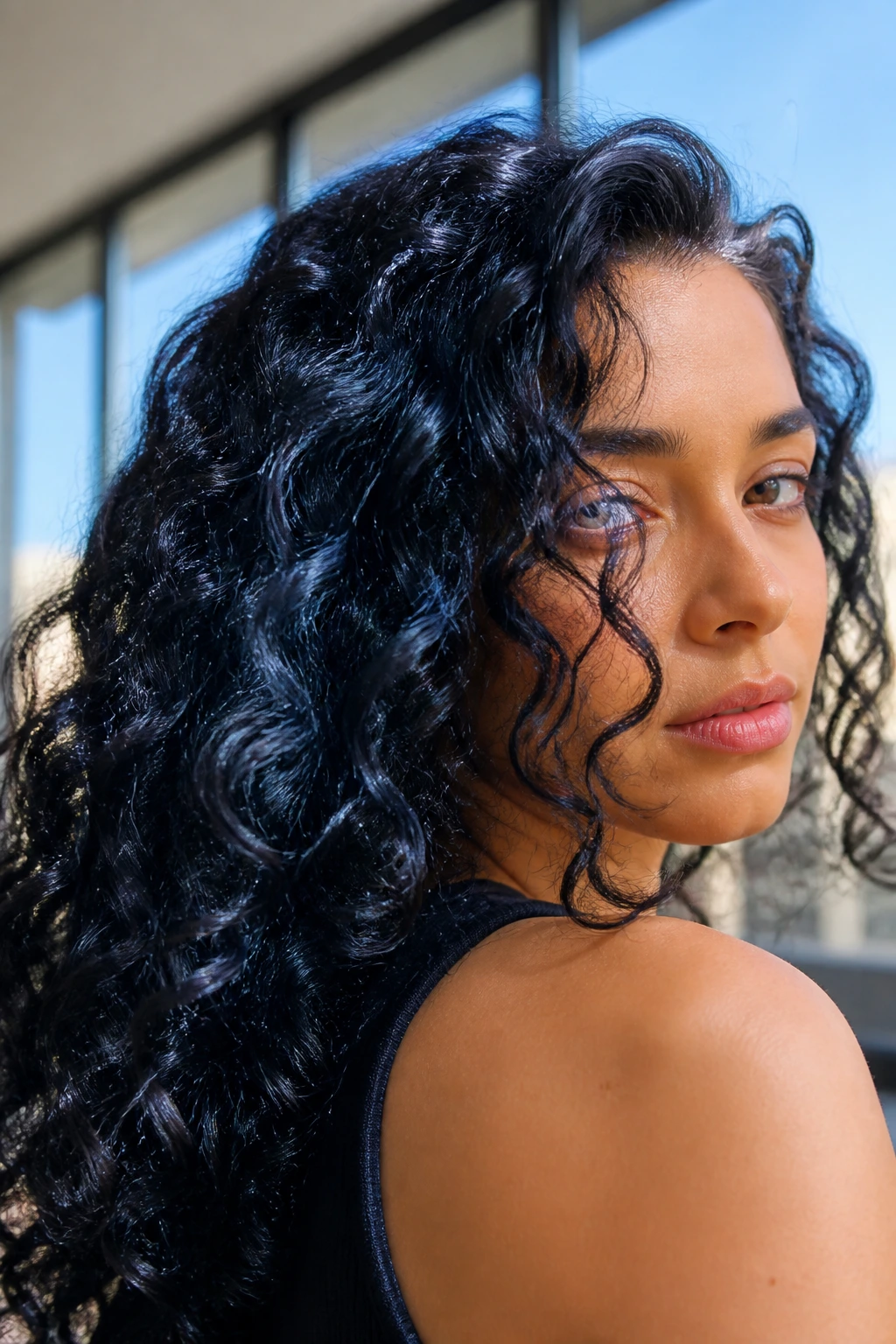
Why does blue-black look so sharp on curly hair? Because it gives black a second note. The blue cast is subtle, but it catches light at the bends of the curl and makes the whole head look cooler and cleaner. It’s a small shift with a big visual payoff.
This shade is especially useful if your natural hair has warm undertones and you want to neutralize some of that warmth without bleaching. Blue-black can make curls look crisp, especially in daylight, where the blue reflects off the surface instead of disappearing into the base.
Porosity matters here. Very porous ends can grab the blue pigment faster than the rest of the strand, which sometimes leaves the tips looking deeper or cooler than the roots. A strand test is worth the trouble. So is a careful gloss after the main color settles.
Who Should Ask for It
- People who like cool-toned makeup and silver jewelry.
- Curl types that hold definition well, especially 3B to 4A.
- Anyone who wants a black shade that looks a little more edited than plain jet black.
If you want the blue to stay understated, tell your colorist you want a black base with a blue reflect, not a bright navy effect. That distinction matters more than most people realize.
4. Espresso Black With Brown Depth
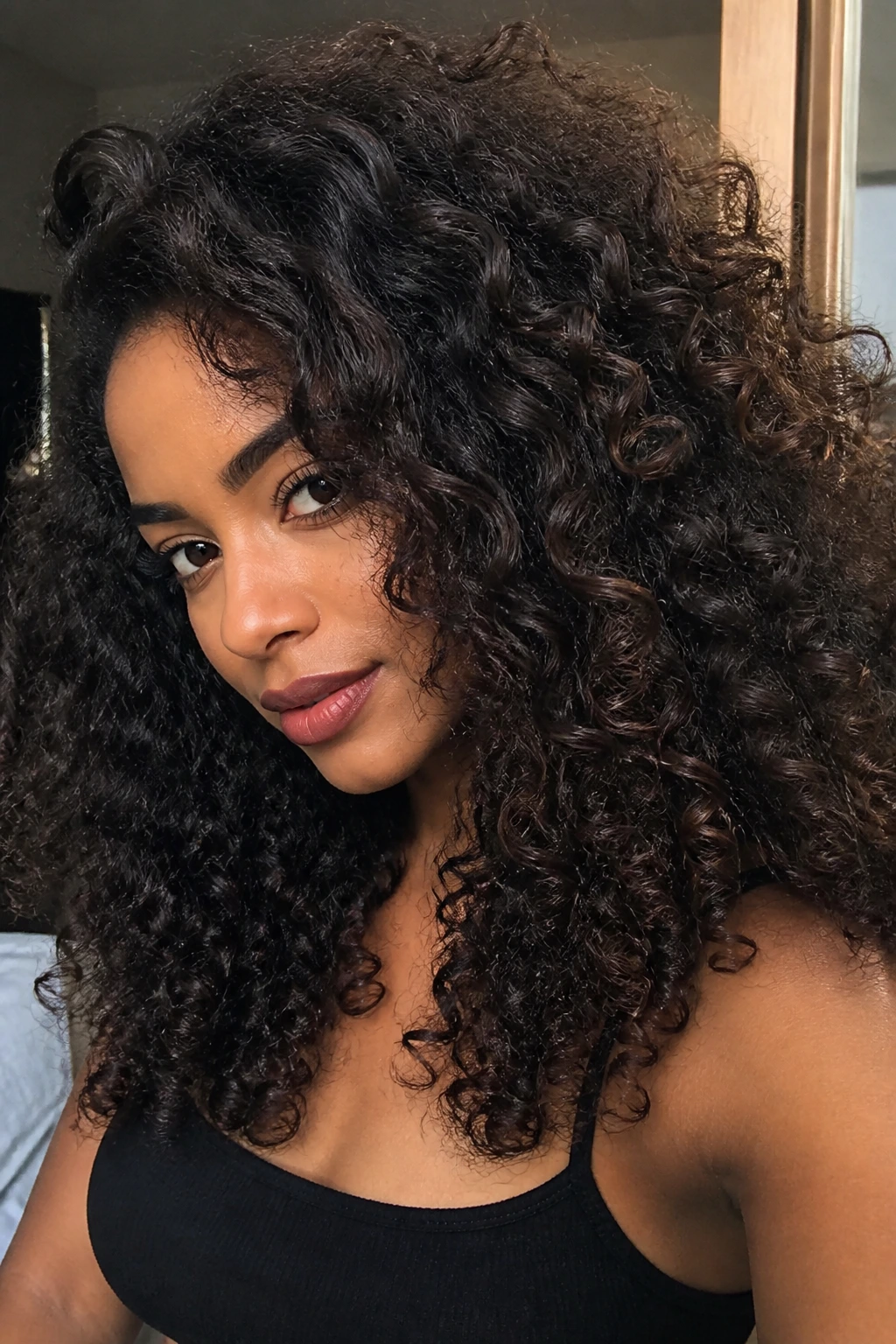
If you have curly hair and hate the hard line of jet black, espresso black is the easy compromise. It still reads dark from across the room, but up close you catch coffee-brown depth around the crown and through the ends. That tiny shift can make a curl pattern look softer and more expensive.
This shade makes a lot of sense on dense hair. Thick curls already create their own shadow, and espresso black works with that instead of fighting it. On a wash-and-go, it gives the style more shape. On a braid-out, it keeps the texture from disappearing into one flat tone.
It’s also a nice choice if you want a darker look but are nervous about commitment. Espresso black tends to grow out less aggressively than a pure inky shade. The line at the root is there, yes, but it doesn’t slap you in the face.
- Ask for a level 2 to 3 base with brown reflect.
- Best on medium to long curls where movement matters.
- Good choice if your wardrobe leans warm neutrals, denim, or gold accents.
- Works well with a glossy finish, not a matte one.
5. Raven Black With a Gloss Glaze
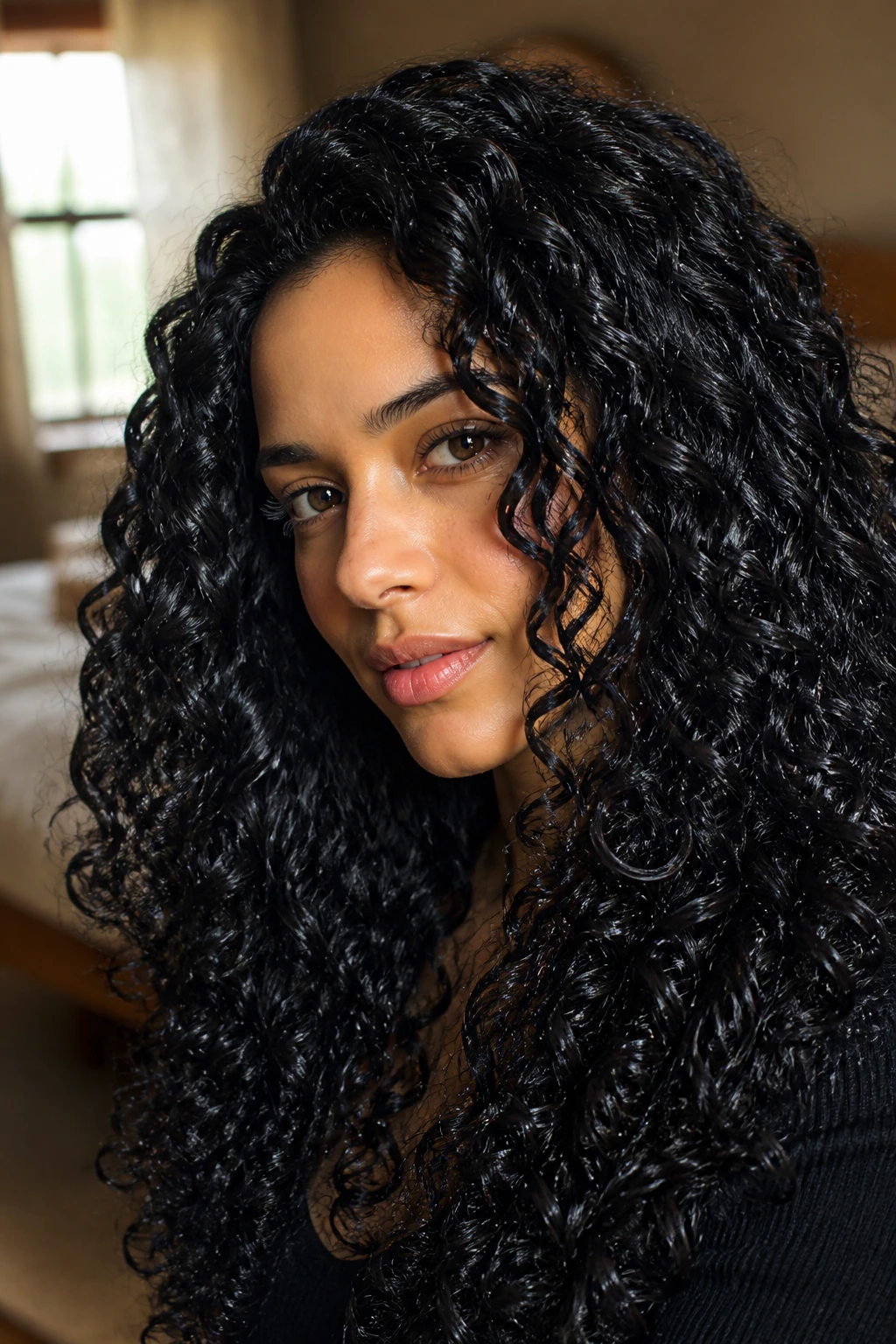
Raven black has a cleaner, deeper look than soft black, but it doesn’t need to feel severe. The trick is shine. Without gloss, raven black can go a little dull on curly hair, especially if the curl cuticle is rough or the hair has been colored before. With gloss, it looks sleek and deliberate.
A glaze makes the difference here. The color itself can be pretty simple, but the finish brings it to life. On ringlets, raven black can look almost liquid when the curls clump well and the light hits the curved surfaces. That’s the whole appeal. It’s dark, yes, but not dead.
This is one of those shades that rewards good styling habits. Color-safe shampoo, cool water, and a leave-in that keeps the hair cuticle flat will matter more than any fancy product that promises miracles.
A one-length curly bob in raven black is especially good. So is a long layered cut. The color loves structure.
6. Black Cherry for a Hint of Red-Violet
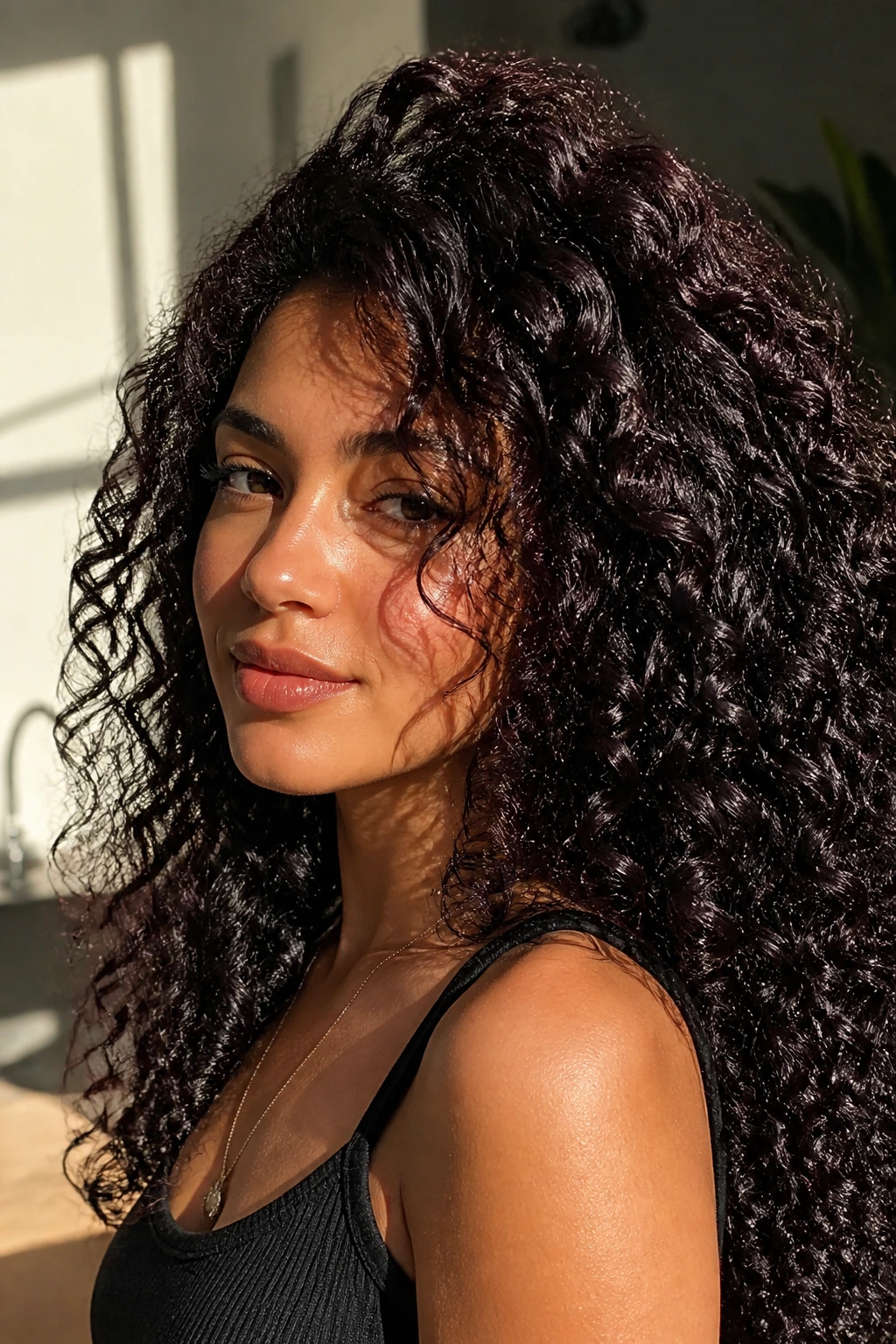
Black cherry is the color for people who want black hair with a little attitude. The red-violet base stays quiet indoors, then shows up in sunlight or under warm indoor lighting. On curly hair, that shift happens naturally at the bends, so the color feels built into the texture instead of painted on top of it.
The best version of black cherry is not bright red with a dark filter slapped over it. It should still read black first. The cherry tone is the second note, not the lead singer. If the red is too loud, the shade loses its elegance fast and starts to look like a dye job from three feet away.
This one works well on curls that already have good separation. The red-violet shine can make each coil look a little more defined. It’s a smart pick if you like warmth but don’t want brown.
How to Wear It
Keep the cut layered so the cherry tone can move. A blunt cut hides the fun part. A layered cut lets it flash at the ends, around the face, and at the crown where light hits first.
7. Plum Black for Cooler Depth
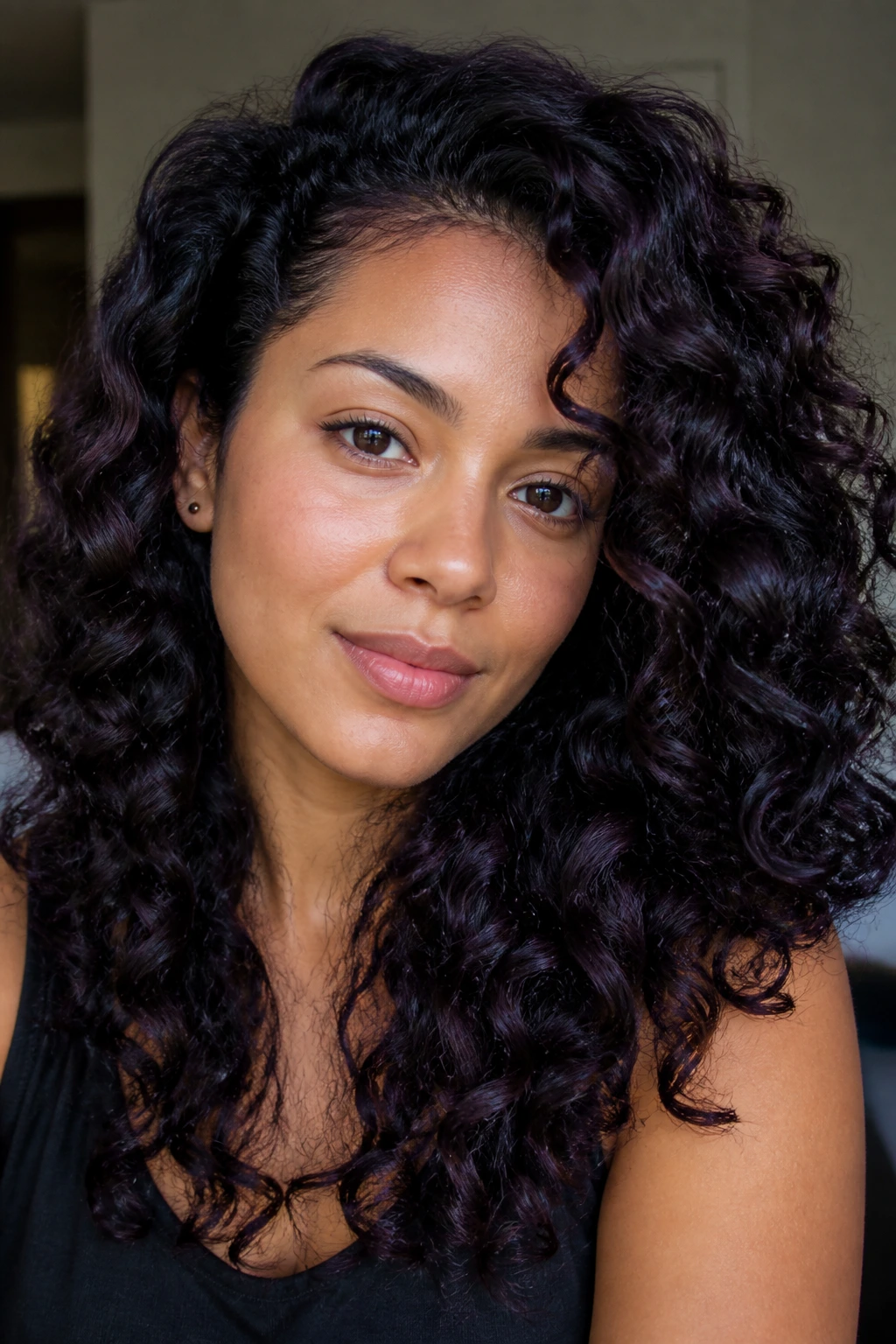
Plum black lives in the dark until light hits it. Then the purple base shows up just enough to make the hair feel richer than plain black. It’s a strong pick if you like cool tones but want something a little softer than blue-black.
Curly hair makes plum tones easier to live with than straight hair, honestly. The curl pattern breaks up the color field, so even a very dark plum-black reads dimensional instead of costume-like. That’s the payoff. You get depth without needing chunks of highlight or a huge maintenance plan.
If your skin leans cool or neutral, plum black can look especially good near the hairline. But the real win is texture. Coils and ringlets catch the purple undertone in a way that makes the whole shape feel alive.
What to Watch For
Plum black can fade into a flat brown-black if you wash often with strong shampoo. That isn’t a disaster. It just means the purple fades first. A color-depositing conditioner with violet tones can keep the color honest without pushing it toward lavender.
8. Brown-Black Melt From Roots to Ends
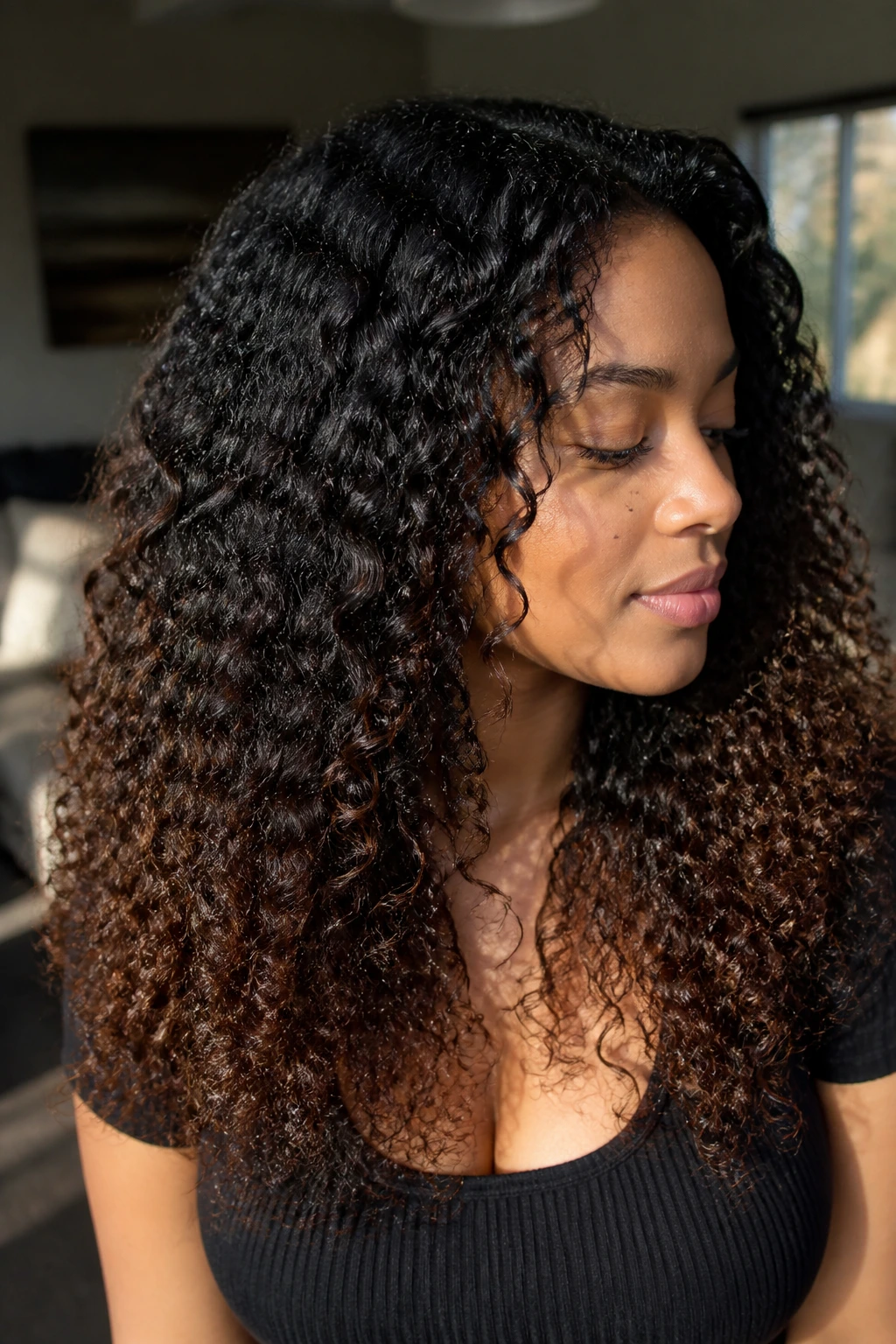
A brown-black melt is what happens when you want black hair, but you do not want one hard slab of color. The roots stay deep and dark, then the shade softens into a brown-black toward the ends. On curly hair, that gradient follows the movement of the curl clusters and looks more natural than a blunt all-over dye.
This is a smart option for longer curls. Length gives the melt room to show itself. On short crops, the transition can disappear before it has a chance to do anything useful. On shoulder-length curls, though, it looks intentional and easy to wear.
Unlike jet black, this version gives your curls a bit of light play. The ends are not blonde, not by a long shot. They’re just soft enough to keep the style from feeling heavy.
If you want something that grows out well, this is one of the safest bets. The root shadow helps with regrowth, and the brown ends make the whole style less fussy between salon visits.
9. Smoky Charcoal Black on Short Curly Cuts
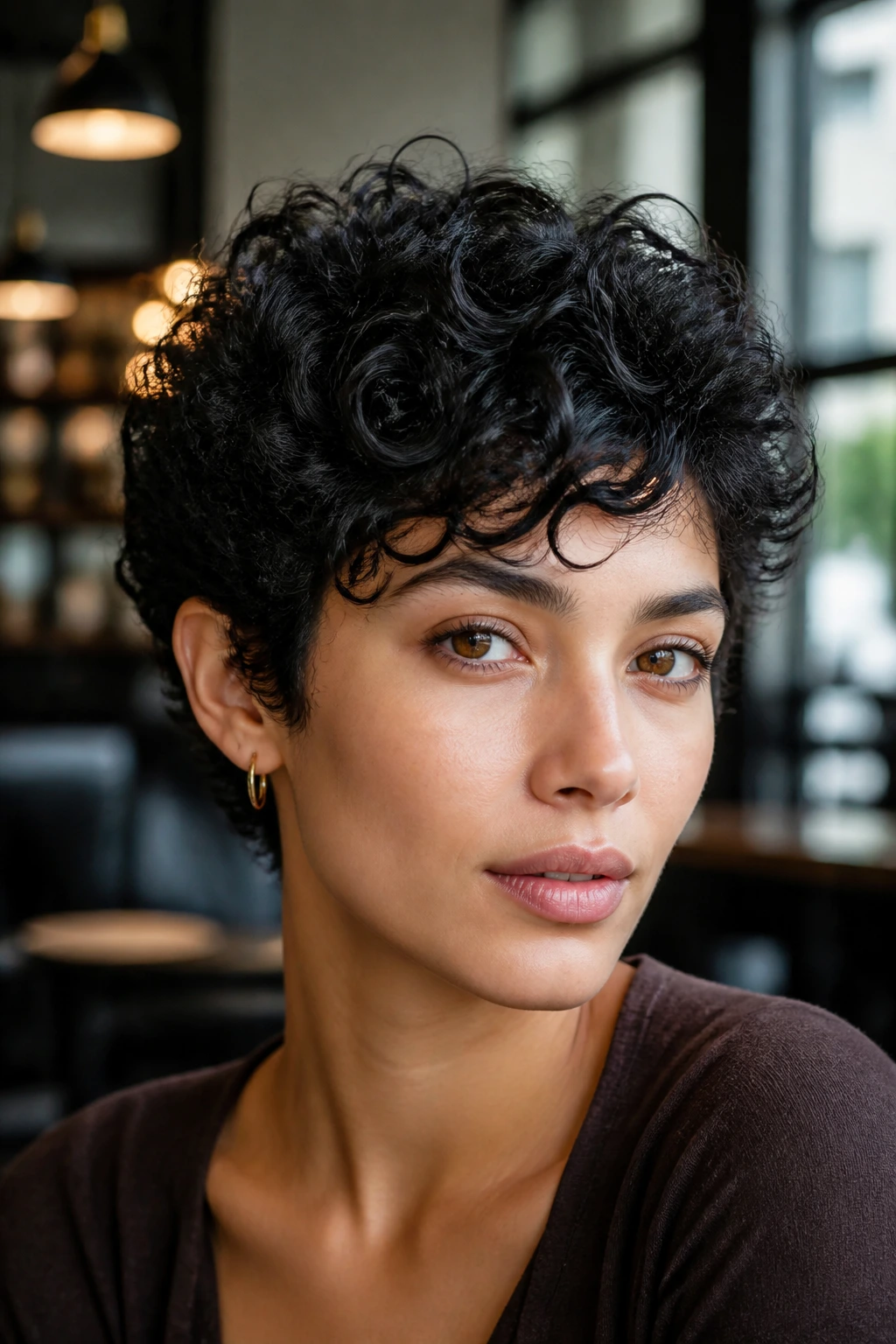
Can black look soft instead of severe? Yes. Smoky charcoal black proves it. The ashier undertone mutes the intensity, which makes it a clever choice for short curly cuts, tapered shapes, and tighter coils that you want to show off rather than bury under color.
This shade works because it changes the mood of black hair without turning it gray. The finish is cooler, a little muted, almost like soot with polish. On a cropped style, that reads modern and clean. On dense curls, it keeps the shape from looking too heavy around the sides.
The only catch is maintenance. If the hair starts to fade warm, smoky charcoal can drift into a muddy brown. That’s not always bad, but it does change the mood. A neutral gloss can keep the tone where you want it.
How to Keep It Sharp
- Use a sulfate-free cleanser.
- Skip purple shampoo unless your colorist says it fits your formula.
- Refresh with a cool-toned gloss every few weeks.
- Keep the cut crisp, because smoky tones look best when the shape is clean.
10. Cinnamon Ribbons Through Black Curls
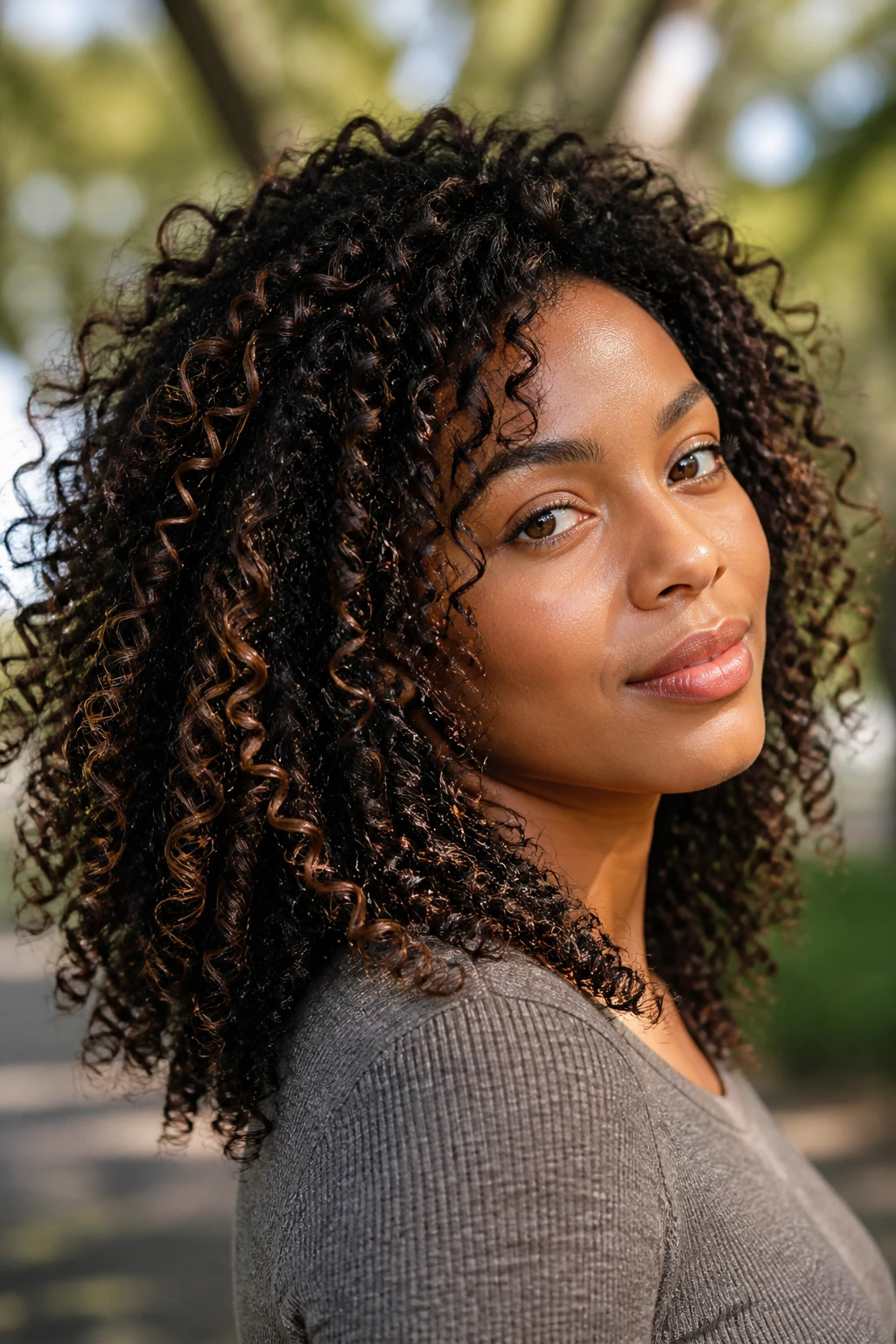
Cinnamon ribbons are the right move when you want warmth without changing the whole head. Thin cinnamon strands woven through black curls make the pattern easier to read, especially on looser spirals and big wash-and-gos. It gives the hair a little movement even when the style itself is simple.
Placement matters more than people think. If the ribbons are too wide, the look starts to drift away from black hair color ideas and into highlight territory. If they stay thin and close to the surface curls, they flash only when the hair moves. That is the sweet spot.
This is one of my favorite options for curly hair that can go flat at the ends. The cinnamon tone keeps the eye moving downward, which helps the whole shape feel longer and more alive.
A few practical notes help here:
- Keep ribbons on the outer canopy, not buried under the densest layers.
- Aim for warm brown with copper undertones, not orange.
- Let the curls separate a bit; the color looks better when it can breathe.
- Use a gloss, not a harsh toner, if you want to protect the warmth.
11. Mahogany Black for Warm Richness
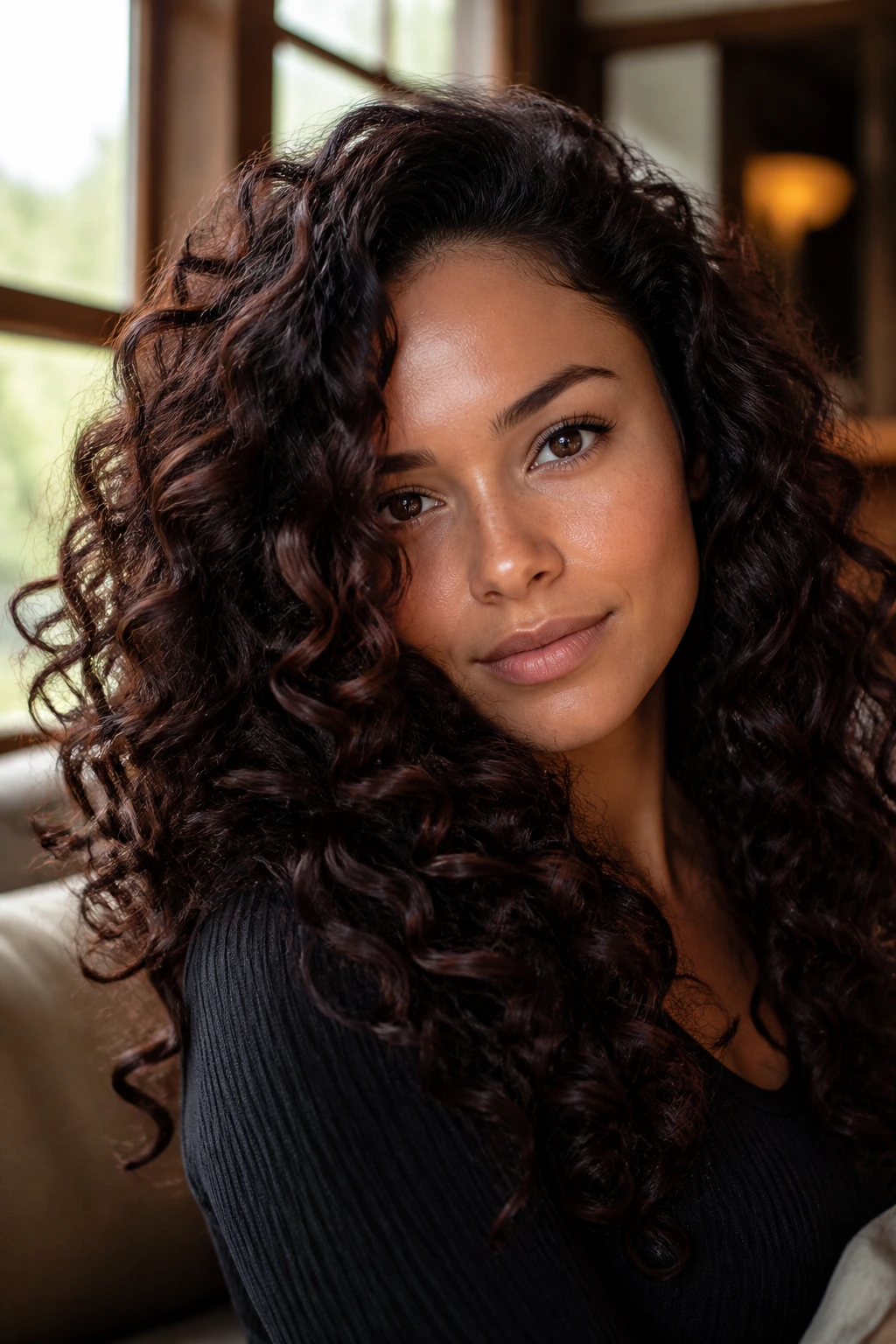
Mahogany black is for people who want depth with a little blood-red warmth underneath. It’s deeper than cherry black and less flashy than cinnamon ribbons. On curly hair, that matters because the color works like a shadow with a pulse. It doesn’t scream. It lingers.
This shade is especially good if your curls are thick and your natural base is already dark brown. Mahogany adds warmth without forcing the hair to look red at first glance. In motion, it reads like black with a soft ember glow. That’s the appeal.
I also like mahogany black on hair that frizzes a little. The warm undertone softens the look of flyaways instead of making them stand out. A hard, blue-black shade can make frizz look sharper than it is. Mahogany is kinder.
It pairs well with deep side parts, middle parts, and curly layers. The color likes shape. Give it that, and it pays you back.
12. Burgundy Underlayers for a Hidden Pop
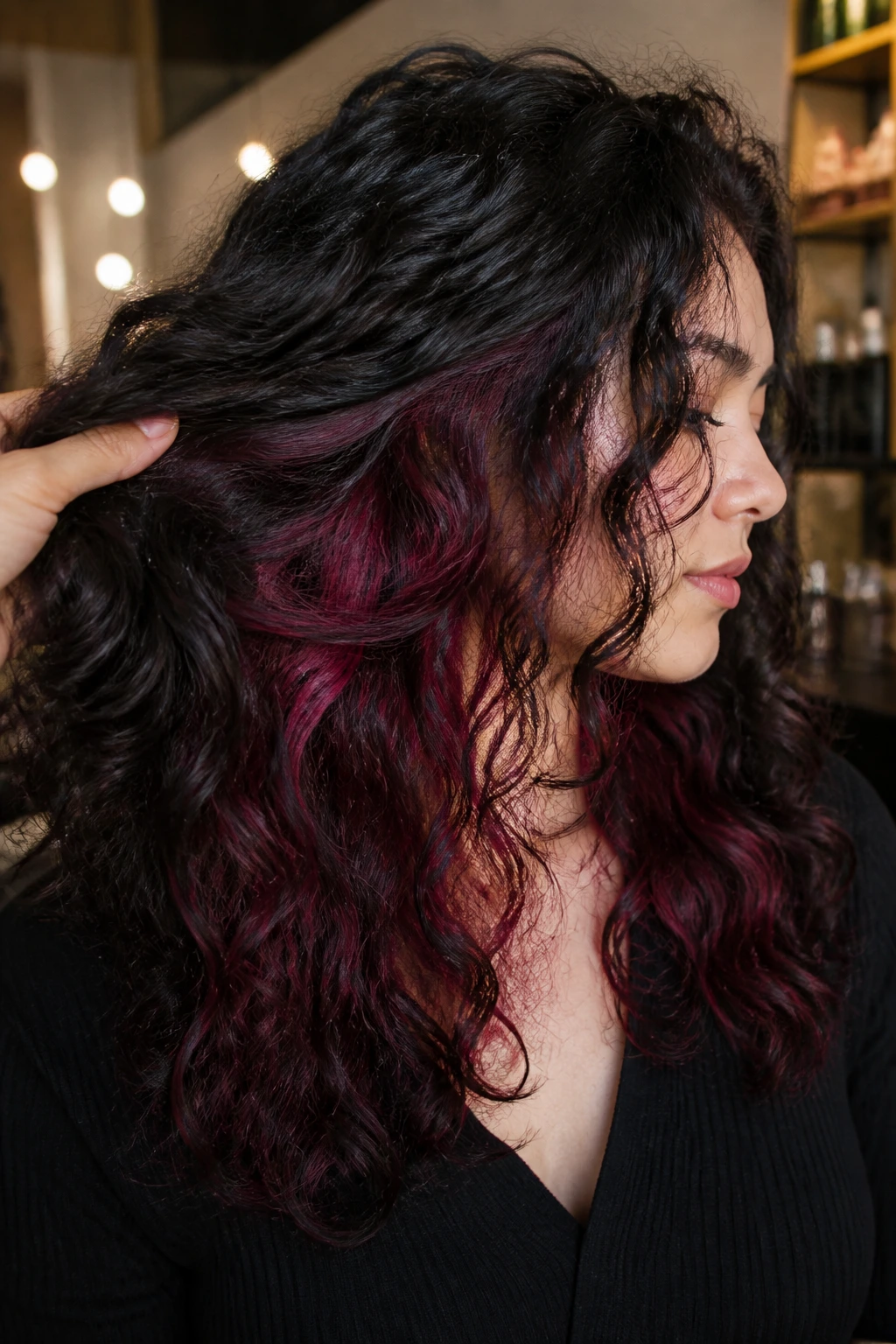
Burgundy underlayers are one of the easiest ways to make black curls feel more interesting without changing the whole head. The top layer stays black, while the panels underneath carry a deep burgundy that shows when the hair moves, lifts, or gets pinned up. It’s subtle in everyday wear and a little dramatic when you want it to be.
That hidden placement is the reason this look works. On curly hair, the top layer already creates shadow, so the burgundy flashes in a natural way. You don’t need chunky streaks. You need clean placement and enough depth in the red to survive the dark base.
This is a smart choice if you wear half-up styles, clipped backs, or braids near the crown. The color peeks out when you want it to and disappears when you don’t.
Ask For
- Burgundy panels below the ear line.
- A dark wine tone, not bright violet-red.
- Soft blending at the top so the black stays dominant.
- A color-safe conditioner that keeps the red from washing out too fast.
13. Chocolate Lowlights for Extra Depth
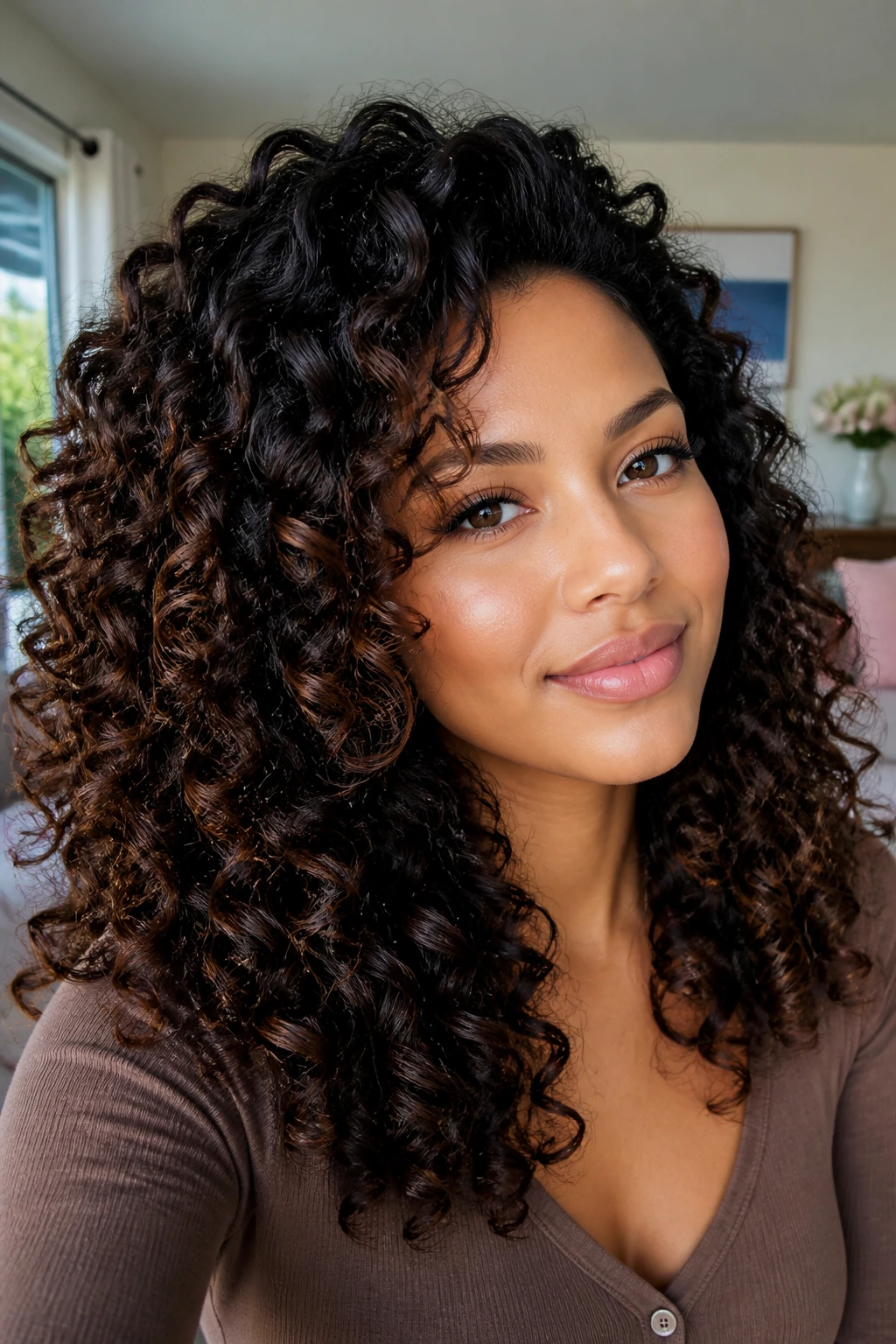
Chocolate lowlights are the quiet workhorse of dark curly hair. They don’t ask for attention. They just make the curls look fuller, more layered, and less blocky. If your hair is naturally dark and you want the black to have dimension instead of a single tone, this is a strong route.
The appeal is partly visual and partly practical. Black curls can start to look heavy when every strand is the same depth. A few chocolate lowlights break that up and help the eye follow the curl pattern. The result feels softer, especially on dense hair or long layers.
Why They Help
- They add movement without a high-contrast streak.
- They’re easier to maintain than lighter highlights.
- They make a curly cut look more shaped.
- They suit people who want change without a dramatic shift.
Chocolate lowlights also age well. They fade into brown tones that still look intentional. That is not a small thing. Some dark colors turn weird when they soften. Chocolate lowlights usually just get warmer.
14. Copper Tips on Black Ringlets
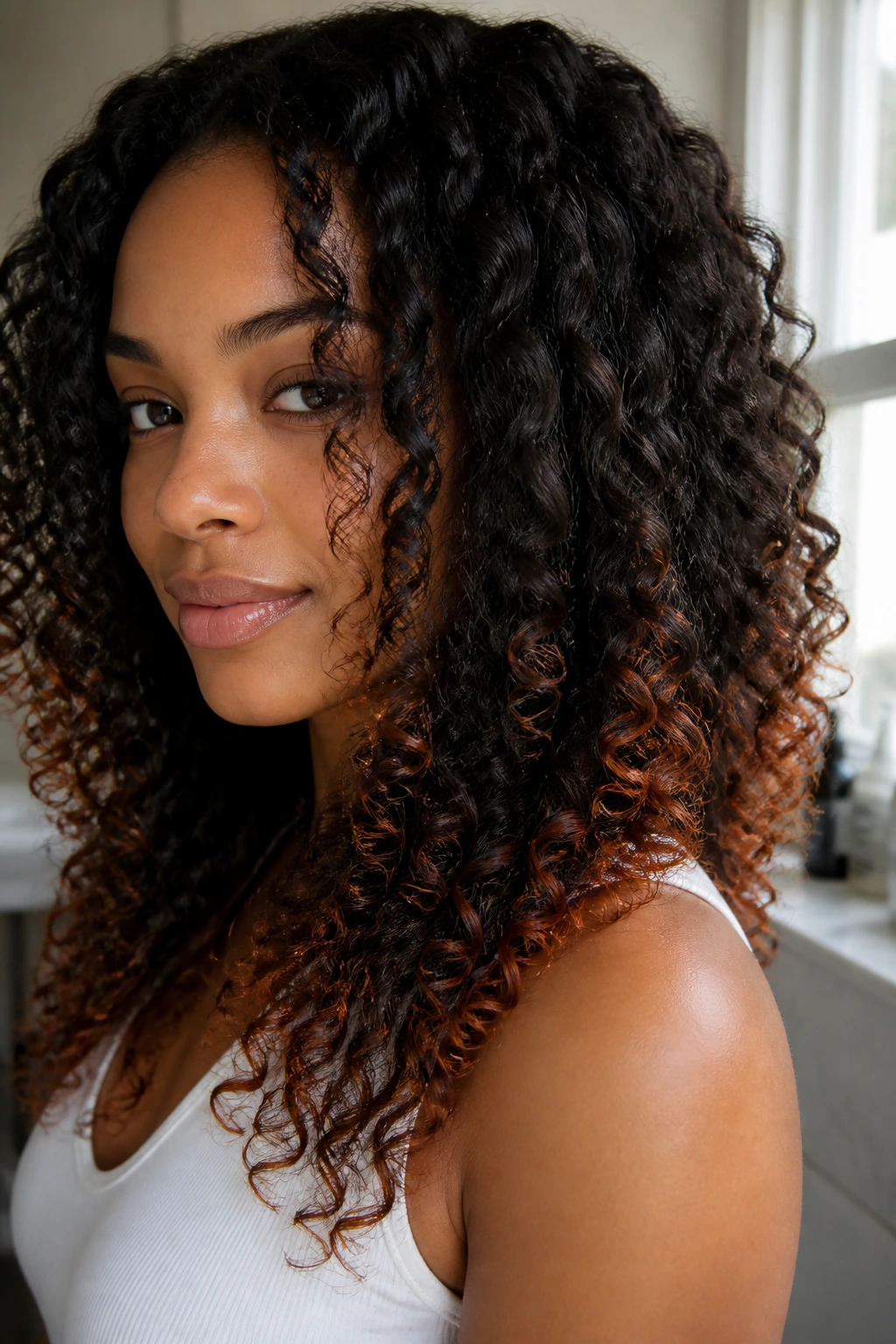
Copper tips on black ringlets can look sharp when they’re done with a light hand. The copper only needs to live on the last inch or two of the hair, where the curl naturally bounces and catches light. That keeps the look from becoming loud.
Why does this work? Because the ends are where curly hair moves the most. A touch of copper there gives you motion without repainting the whole head. It can make a long curly cut look more detailed and keep the eye from stopping at the darkest part of the hair.
This look needs healthy ends. Dry, frayed tips make copper look brassy instead of rich, and the color will expose damage fast. If the ends are rough, trim first. Dye second.
Placement Matters
Copper tips work best when the transition is soft. Ask for the color to begin with a feathered hand rather than a hard line. On tighter curls, keep the copper a shade deeper than you think you need. Curly hair tends to read lighter once it dries.
15. Ash Brown Balayage on Black Hair
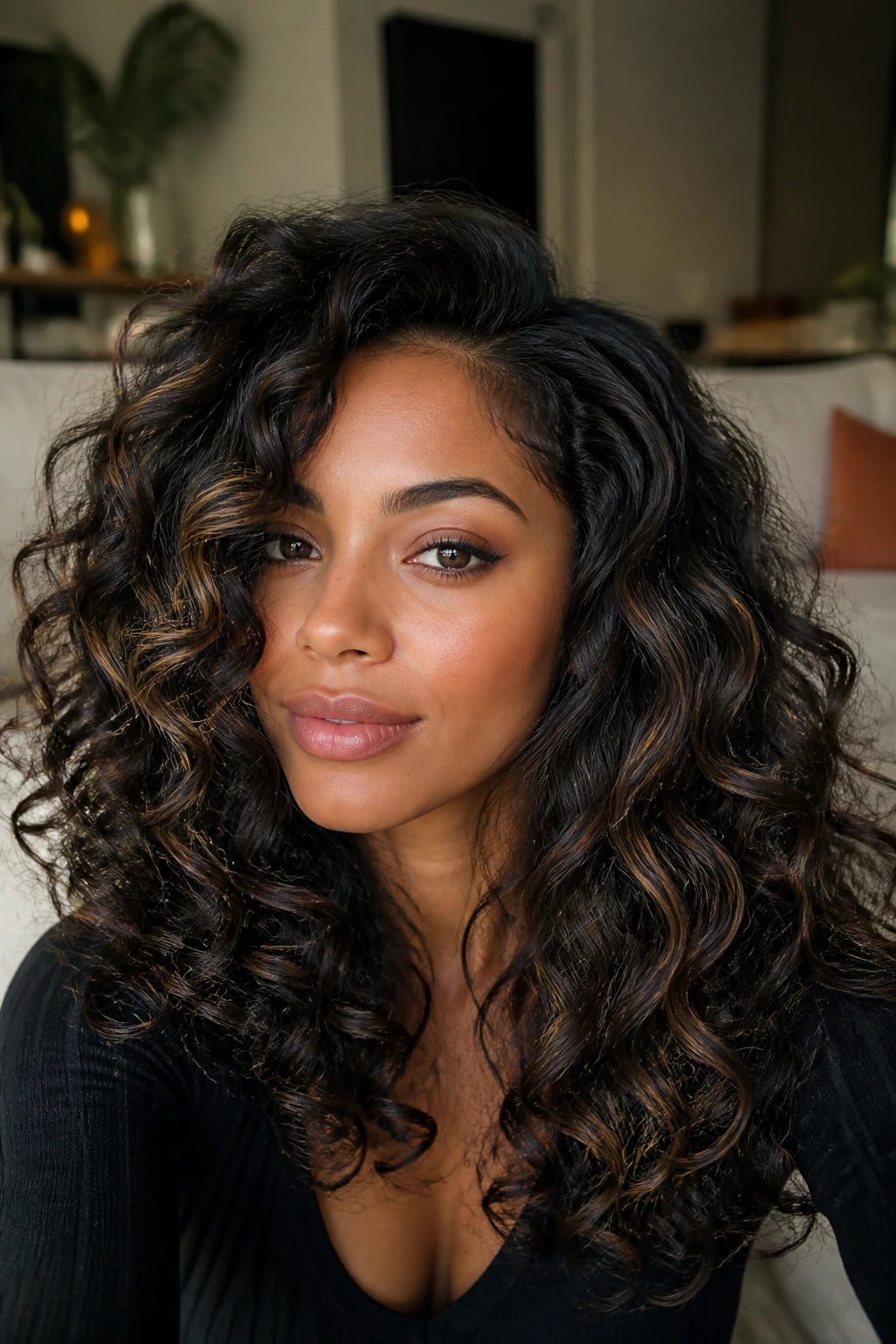
Unlike chunky highlights, ash brown balayage works by painting thin ribbons around the surface of the curls. That makes it a better match for black hair when you want dimension without giving up the dark base. The ash tone keeps the look cool, which helps the black stay crisp instead of turning muddy.
This is a smart pick for long curls and layered cuts. Balayage needs room to show the change from dark to lighter brown, and curls do a nice job of breaking up the transition. On straight hair, ash brown can look stripey if the placement is off. On curly hair, the motion hides small imperfections.
Best of all, this is one of the easier dark-color looks to live with. The regrowth blends into the roots, and the ash brown fades to a softer brown that still fits the overall style.
If you want to keep it believable, stay in the brown family. Blonde ribbons against black curls can be striking, sure, but ash brown feels more grounded and less high-maintenance.
16. Midnight Violet Peekaboo Panels
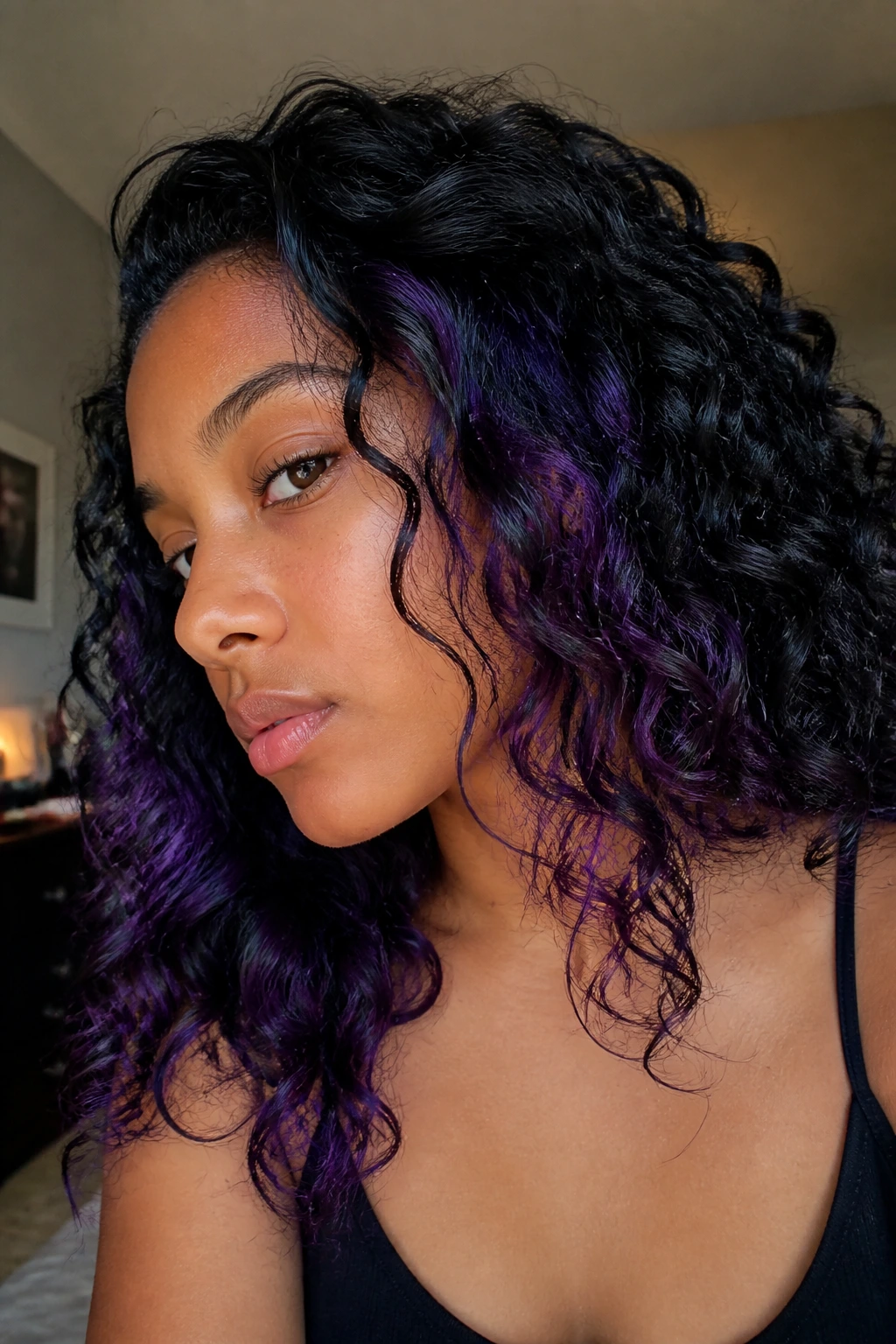
Midnight violet peekaboo panels are for the person who wants black hair but still wants a little surprise tucked underneath. The violet sits under the top layer, so you only see it when the curls separate, flip, or get pulled into a ponytail. That hidden effect looks especially good on curly hair because movement reveals the color in flashes.
This shade works better when it stays dark. Midnight violet should look like a deep eggplant, not bright purple. If it gets too vivid, the contrast can overwhelm the black base. Keep it rich and low-lit, and it reads like a secret rather than a costume.
Where to Place It
- Near the nape for a subtle reveal.
- Around the temples if you like face-framing movement.
- Under the crown if your hair goes up often.
- In a few broader panels if you want the color to show through braids.
Use a satin bonnet at night. Violet pigments fade faster than black, and friction will strip the color down faster than shampoo sometimes does.
17. Rosewood Black for Soft Warmth
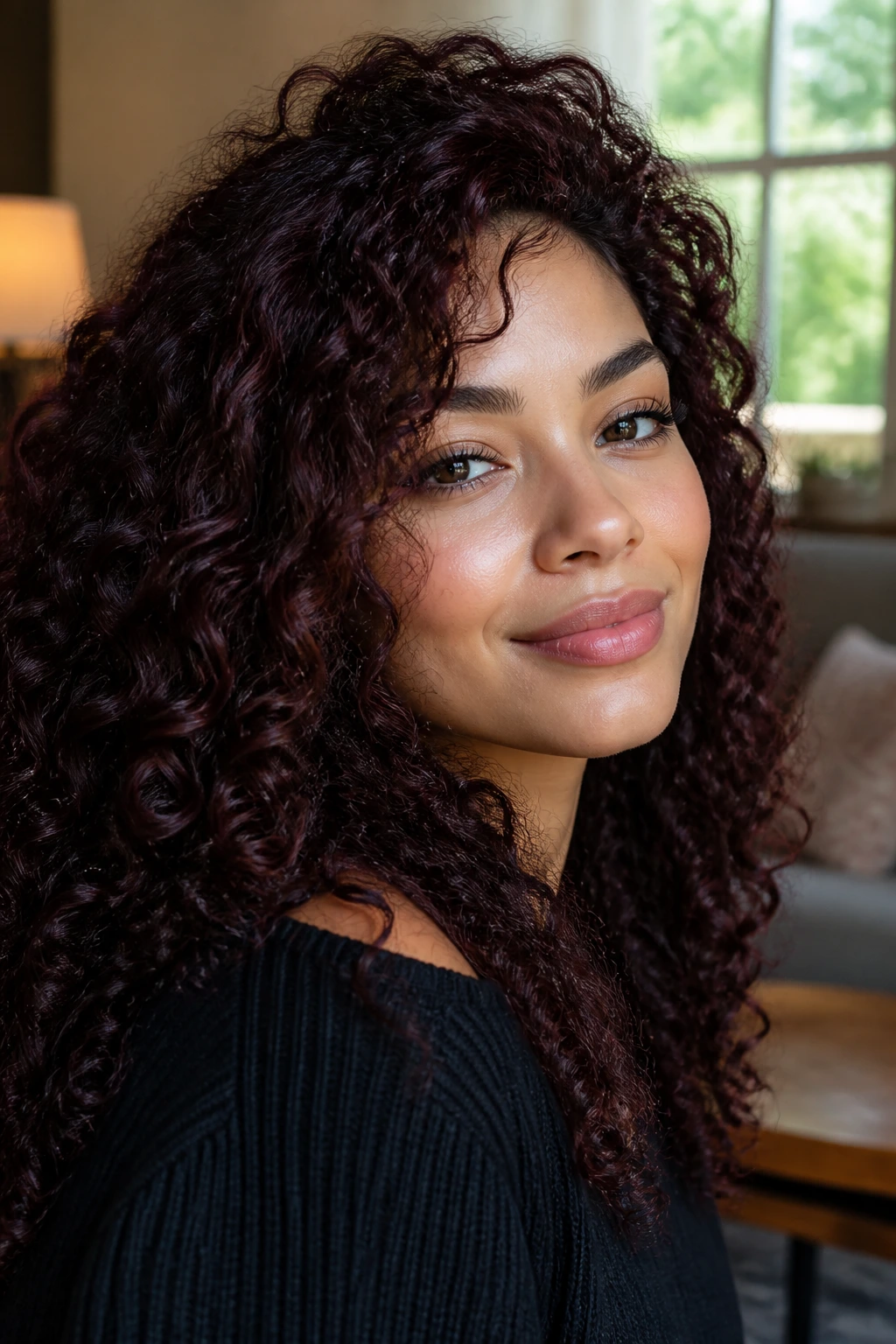
Rosewood black sits in that nice middle place between black and deep brown-red. It has a softer warmth than mahogany and less punch than black cherry. On curly hair, that balance can be lovely because the color doesn’t overpower the texture. It sits with the curls.
This shade is good when you want your hair to look rich in indoor light but not too warm in daylight. It can make the hairline look less severe, too, which matters if you like wearing your curls pulled back. The warmth softens the edges.
A lot of people overlook rosewood because it sounds subtle. That’s exactly why it works. It gives the eye something to read without shouting. If your wardrobe leans earth tones, cream, black, olive, or gold, the whole look settles in nicely.
For best results, ask for a rose-brown reflect inside a black base. That phrasing keeps the color where you want it.
18. Bronze Money Pieces on Deep Black Curls
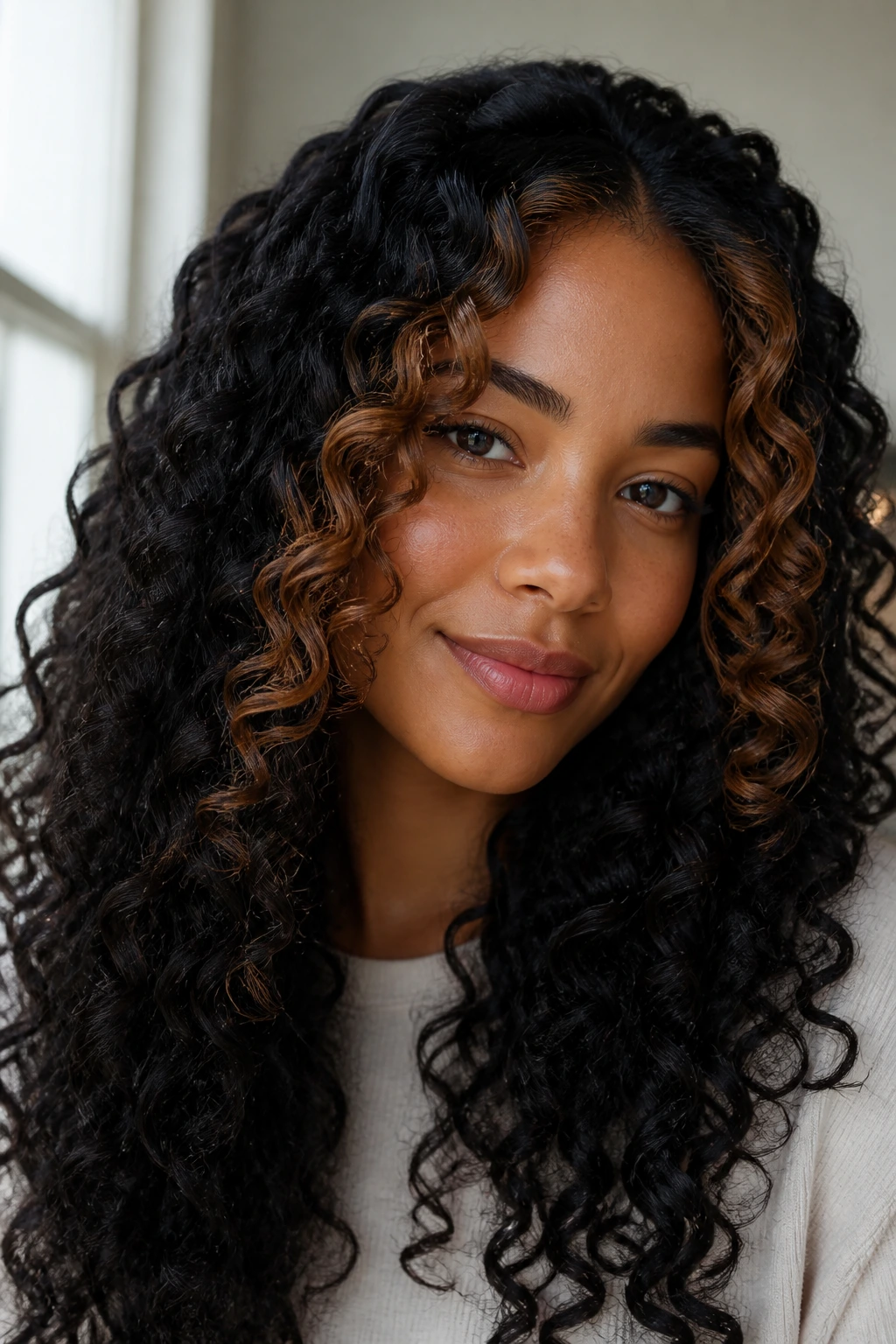
Bronze money pieces are one of the fastest ways to brighten black curls without changing the whole head. A few face-framing strands in bronze pull the eye upward and make the curl pattern around the face pop. The rest of the hair can stay deep and dark, which keeps the look grounded.
This works best when the bronze is only one to two levels lighter than the base. Too light, and the money pieces start to feel disconnected from the rest of the hair. Too dark, and they disappear. Bronze is a good middle lane because it has warmth and enough depth to stay believable next to black.
On curly hair, the placement matters as much as the shade. Keep the pieces slightly curved around the face instead of straight down the front. Curves follow the curl pattern and look more natural.
A Smart Way to Wear It
Ask for a soft frame starting at cheekbone level, not a blunt streak from root to end. That gives the color a softer entrance and keeps it from overpowering the shape of the cut. It’s a small detail, but it changes everything.
19. Shadow Root Black With Soft Brown Ends
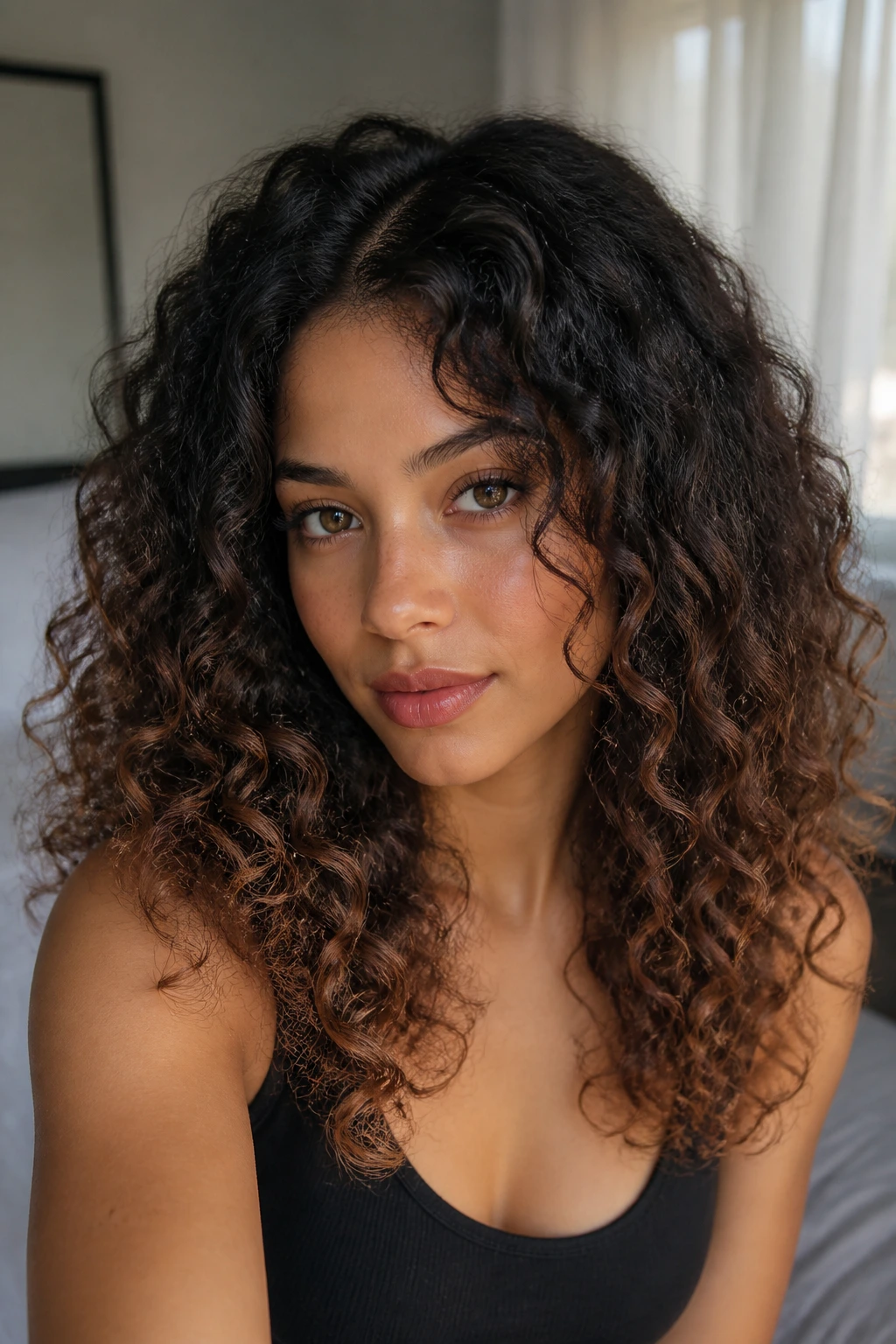
Shadow root black is a solid option when you want your curls to grow out better than a hard all-over color. The roots stay the deepest part of the look, while the mid-lengths and ends soften into a brown-black tone. That structure helps hide regrowth and makes the hair feel less sealed in.
This is especially useful if your curls were lightened before and you want to move back toward dark color without a harsh line. A shadow root lets you blend the transition instead of fighting it. The ends don’t need to go blond. They just need to be a few shades lighter than the roots so the curl pattern can show.
The result is calm, not dramatic. And calm is underrated. On days when your hair is stretched or day-three frizzy, the soft fade still looks intentional.
What Works Best
- Keep the root area one to two shades deeper.
- Use a brown-black melt on the ends, not a flat black.
- Refresh with gloss instead of full dye when the color softens.
- Wear the style in layers so the transition can show.
20. Dimensional Black With Smoky Brown Ends
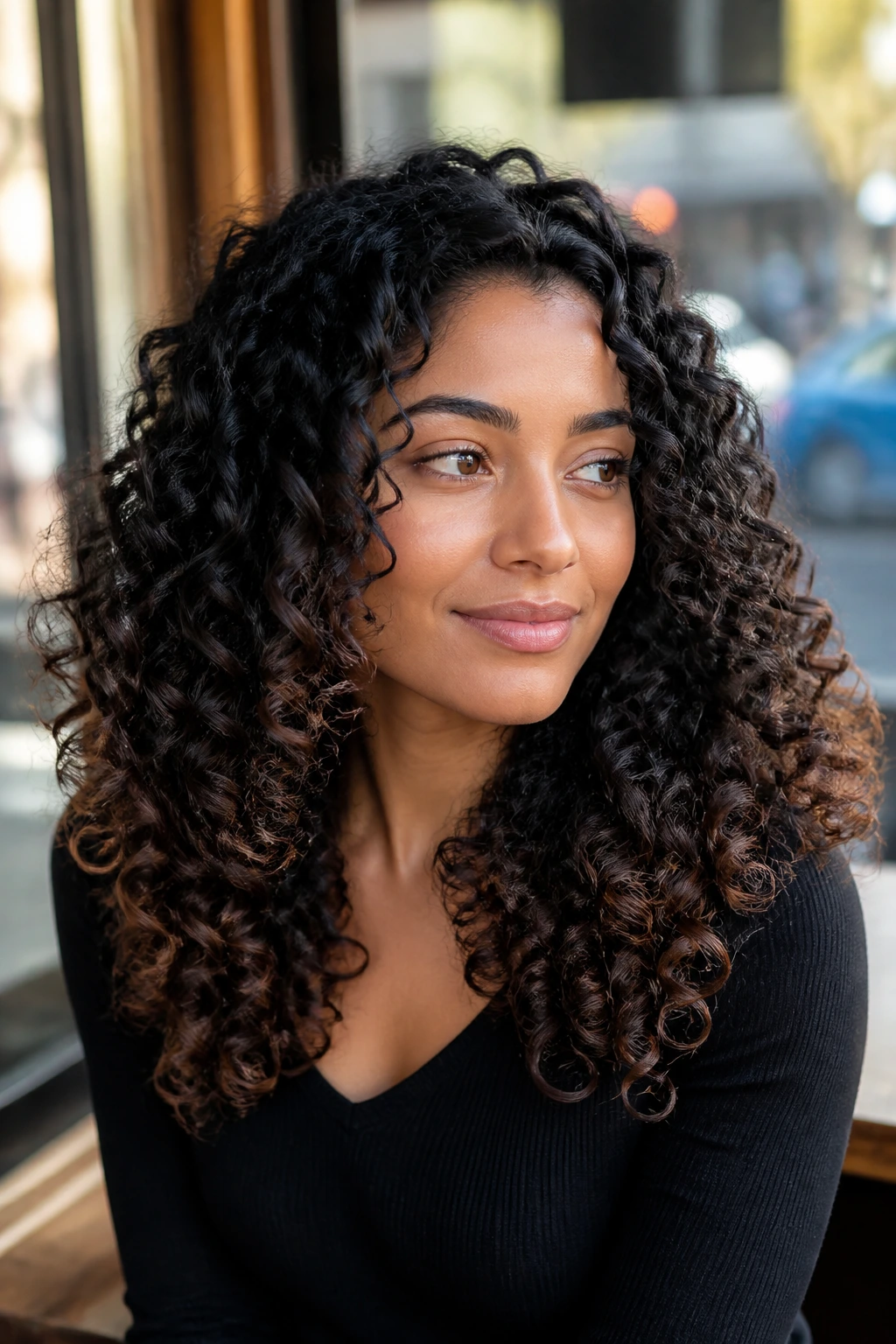
If you want one black hair color idea for curly hair that feels polished, easy to wear, and not too precious, this is the one I’d put near the top of the list. Dimensional black with smoky brown ends keeps the base dark while letting the ends soften just enough to show movement. On curls, that tiny shift can stop the whole style from looking heavy.
It works because the eye follows contrast. The darker roots ground the shape, and the smoky brown ends catch light around the perimeter of the curls. That makes the cut feel intentional even when the hair is air-dried and a little imperfect. Which, honestly, is most days.
This is also one of the friendlier options if you’re growing out previous color or just don’t want a strict maintenance schedule. The faded version still looks good. That matters more than people admit.
Bring a photo of your hair in daylight and another in indoor light when you talk to a colorist. Black on curls changes its mood depending on the bend, the shine, and the light around it — and that’s exactly why the right shade feels so much better than a generic dark dye.
