



Black and white hair color can look almost electric on cool skin tones. The trick is tone, not drama.
Blue-based black, graphite, pearl, and icy white sit close to pink, rose, and blue undertones, so the face looks crisp instead of muddy. Creamy white and soft beige can still be pretty, but they usually read warmer than this look wants. Any real white panel also needs a clean lift—usually to a pale yellow stage before toner can take over—so brass control matters more than people think.
These 22 ideas move from blunt and graphic to soft and wearable. Some are easy to keep sharp on short hair; others make more sense on curls, braids, or longer lengths where the contrast can move around. I like the styles that use white with restraint. Too much pure white too high up can wash out a cool face faster than most salon photos admit.
Keep one thought in your head as you read: the best version of this look is the one that still looks polished when it starts to grow out. That usually means a smarter placement, a better root shadow, or a slightly softer white than the reference photo suggests. And that’s where the good stuff starts.
1. Jet Black Hair with a Pure White Money Piece for Cool Skin Tones
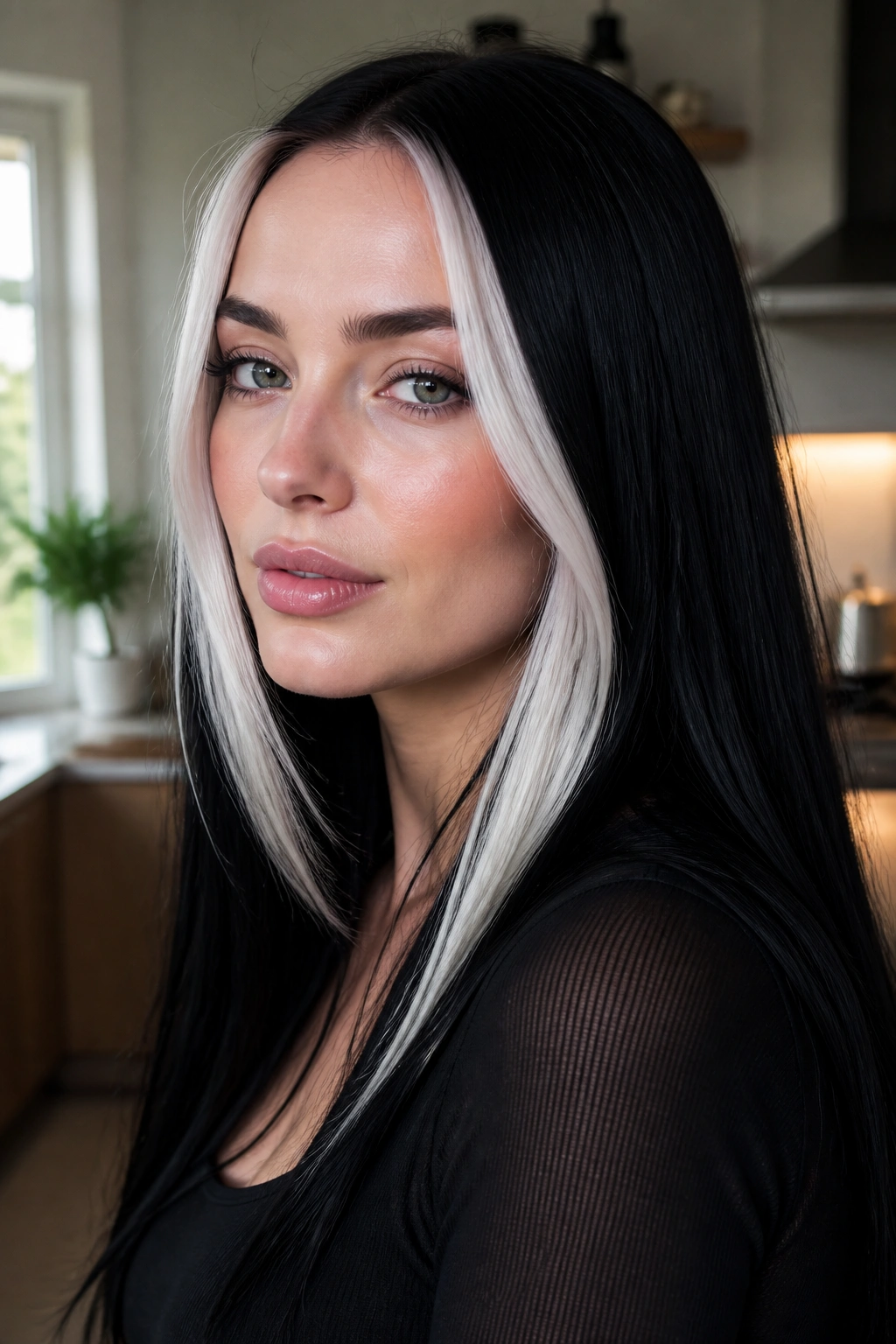
This is the quickest way to make cool undertones look sharper without changing the whole head. A white money piece against a jet-black base creates a face frame that acts almost like a reflector, throwing light back toward the cheekbones and eyes.
Why It Flatters Cool Skin
The contrast works because both shades stay clean. The black should lean blue-black, not brown-black, and the white should look like porcelain or winter snow, not cream. Keep the bright section about 1 to 1.5 inches wide on each side of the part if you want it bold but still wearable.
- Best on straight, wavy, or softly blown-out hair.
- Ask for the white to start around the cheekbone or eyebrow tail, not right at the scalp.
- A blue-violet shampoo helps the white stay crisp between salon visits.
- A gloss over the black base keeps the whole look shiny, which matters more than people think.
My favorite version keeps the money piece narrow and very clean. Too wide, and it starts to look costume-y. Too narrow, and you lose the point.
2. Black and White Split Dye with a Center Part
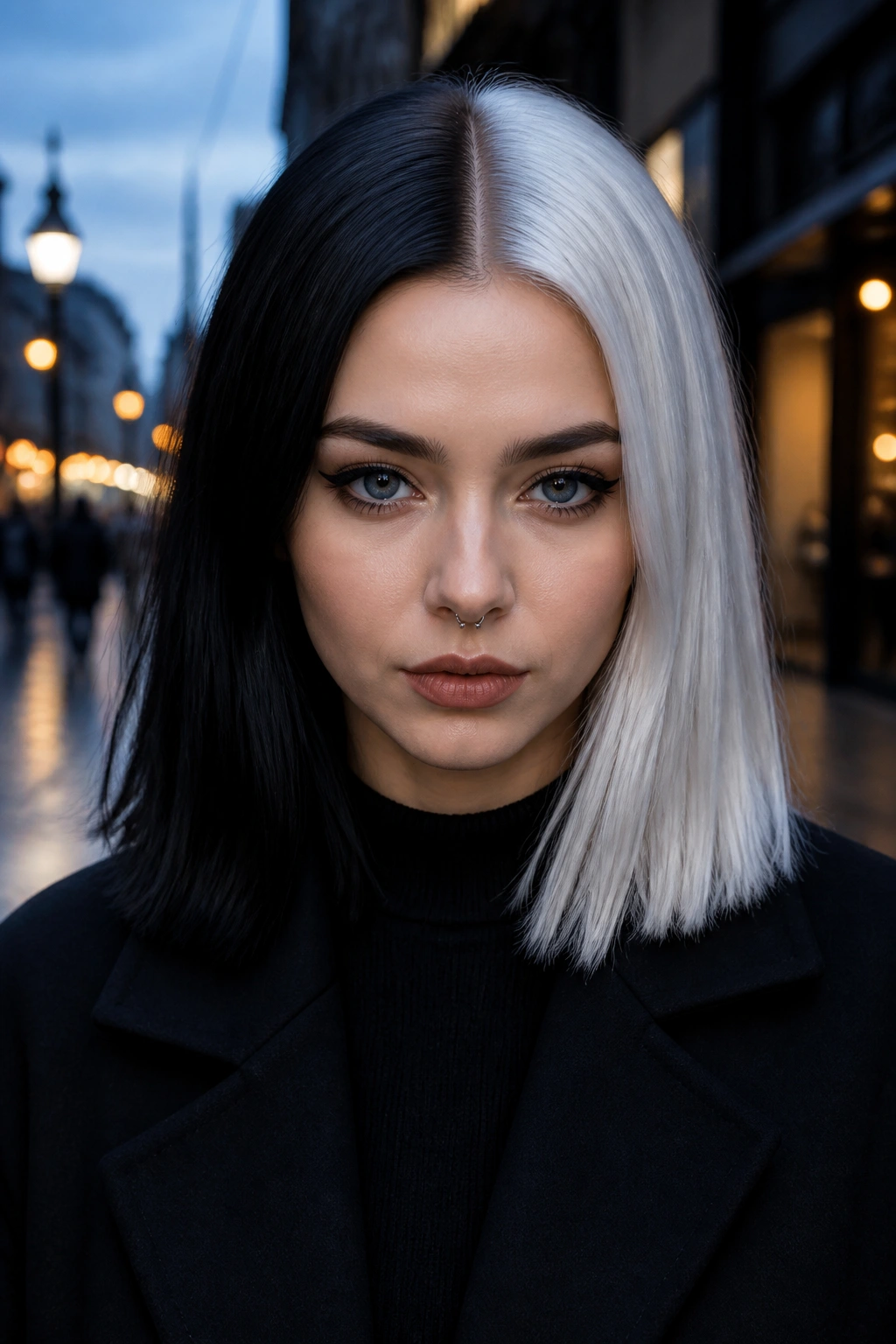
Why does this style keep showing up in fashion shoots? Because it has real shape. A clean center part turns the head into two deliberate halves, and that symmetry is especially strong on cool skin, where sharp contrast often looks more natural than blended warmth.
The black side should be a true blue-black or soft charcoal-black. The white side should be lifted evenly to a pale, icy level and toned so it lands somewhere between silver and pearl. If one side is creamy and the other side is flat black, the look gets muddy fast. A blunt bob, long straight hair, or a tight shoulder-length cut gives the split dye the most impact.
I like this style most when the part is exact. Not almost exact. Exact. A crooked part makes the whole thing feel accidental, and this look needs intention to stay chic.
If you wear your hair curly, the line blurs a little, which can be lovely, but it loses some of the graphic punch. On straighter textures, the split reads harder and cleaner, which is the whole point.
3. Icy White Underlayers Beneath a Glossy Black Top
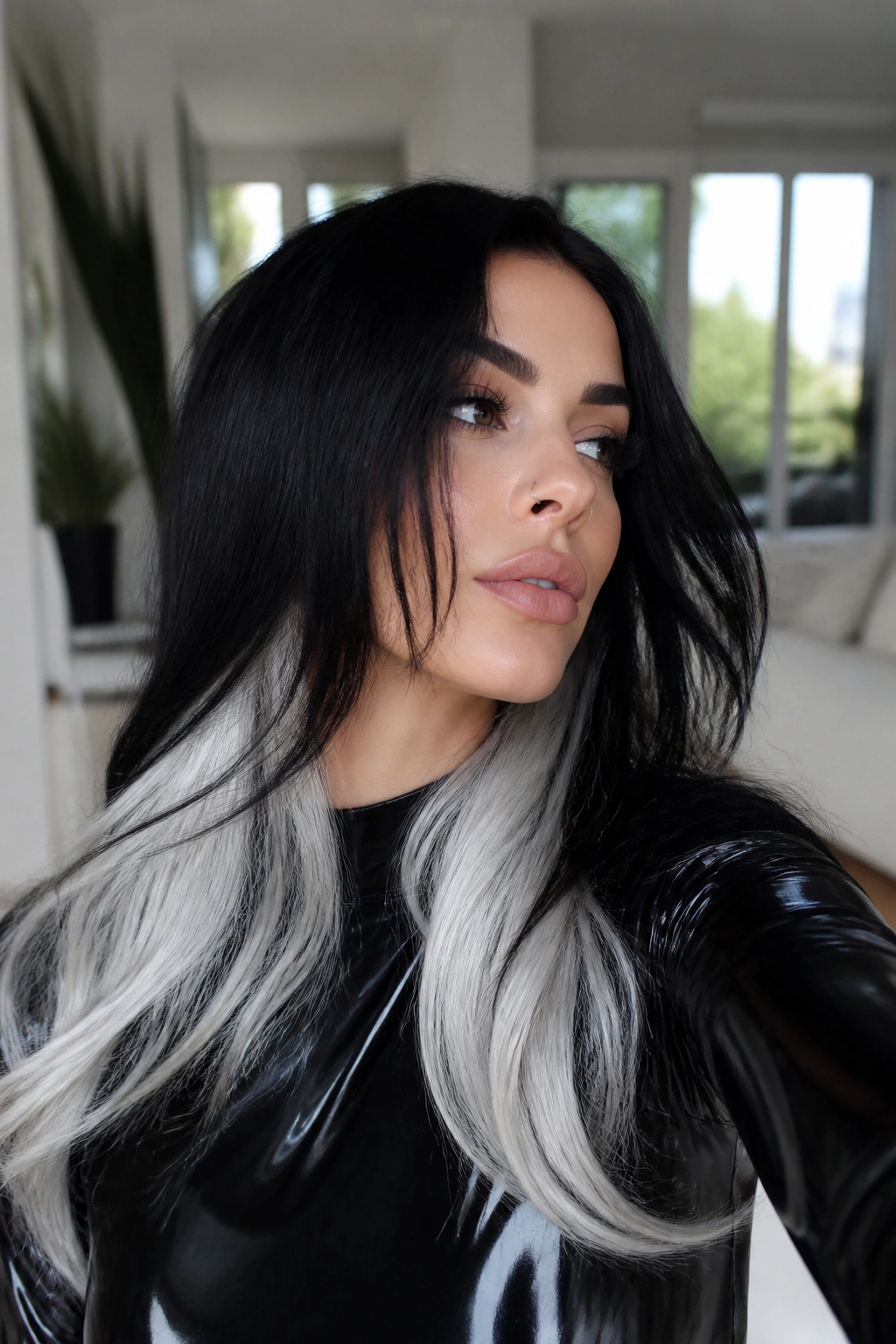
Picture hair that looks almost all black until you move, flip, or tuck it behind one ear. That hidden white underlayer gives you the drama of black and white hair color without forcing the bright pieces to sit front and center all day.
It’s a smart choice for cool skin tones because the white flashes in motion instead of staying flat against the face. That means you can keep the black base sleek and still get a hit of icy contrast when the light catches the ends or when the hair separates in layers. The effect is especially good on lob cuts, shaggy lengths, and mid-back hair with some swing.
Ask your colorist to keep the white concentrated on the lower third of the head, not scattered through the crown. That way, the top layer keeps things grounded. It also means regrowth is easier to live with, which is one of those boring but deeply useful details nobody mentions until the appointment is over.
Messy brass ruins the whole thing.
4. White Face-Framing Streaks on Long Black Waves
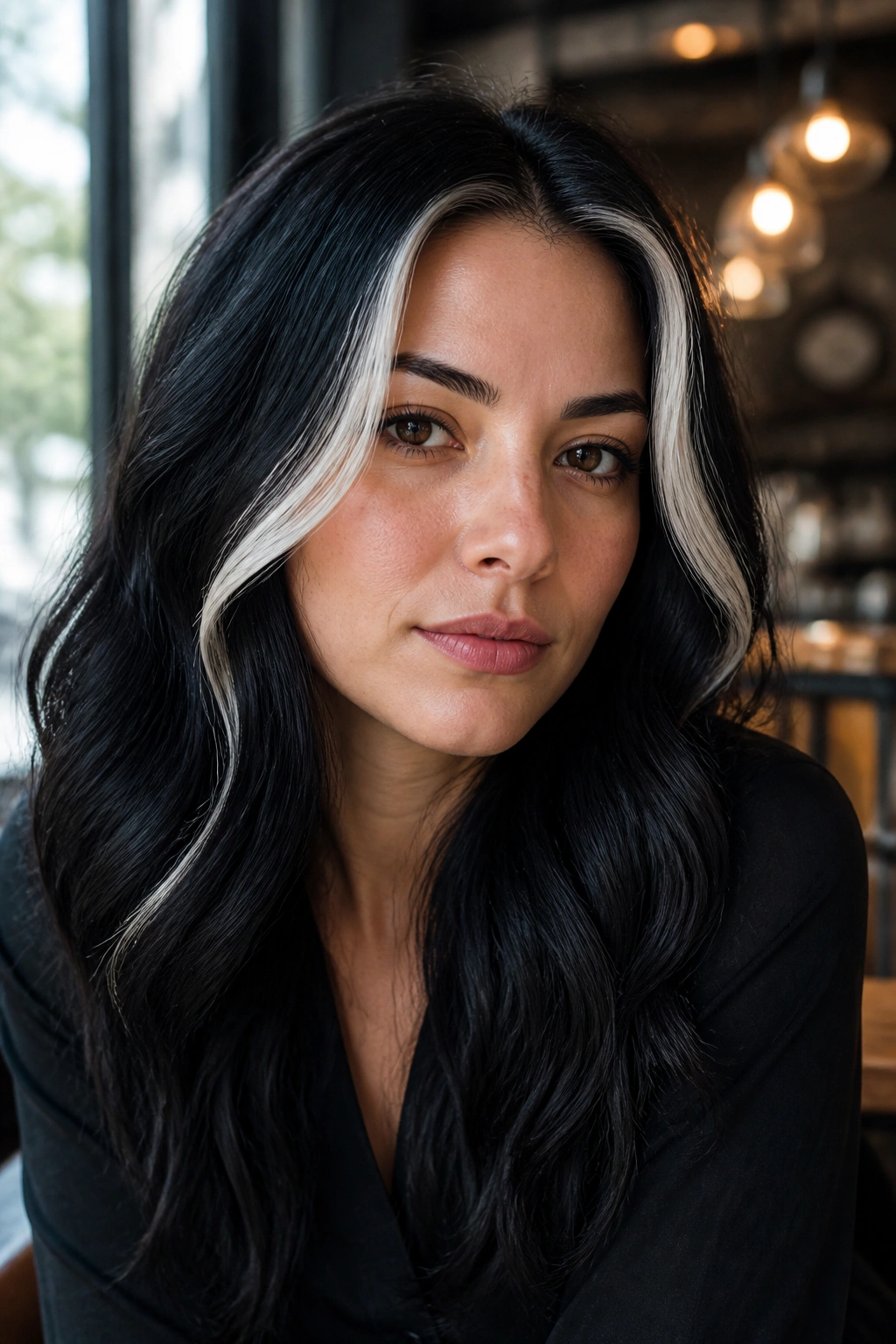
Not every white placement has to shout. Two slim streaks near the temples can look smarter than a giant front panel, especially when the rest of the hair is long, dark, and glossy.
This version works because the streaks behave like silver jewelry near the face. On cool skin, that little bright edge can make the eyes look clearer and the skin look fresher, without pulling focus away from the hair itself. Ask for streaks that are about a quarter inch to half an inch wide, starting just past the hairline and tapering down into the length.
Unlike a chunky money piece, these streaks don’t demand as much attention when they grow out. They soften into the black lengths in a way that feels deliberate rather than high-maintenance. That’s why I’d pick this for someone who wants contrast but doesn’t want to be at the salon every few weeks.
What Makes It Different
The shape is thinner, cleaner, and a little more elegant. It also plays nicely with waves, because the bends in the hair break up the white and keep it from reading like a stripe. If you wear glasses, this placement can be especially flattering—the white sits where the frame line and cheekbone already create structure.
5. Snow-White Blunt Fringe on a Black Bob
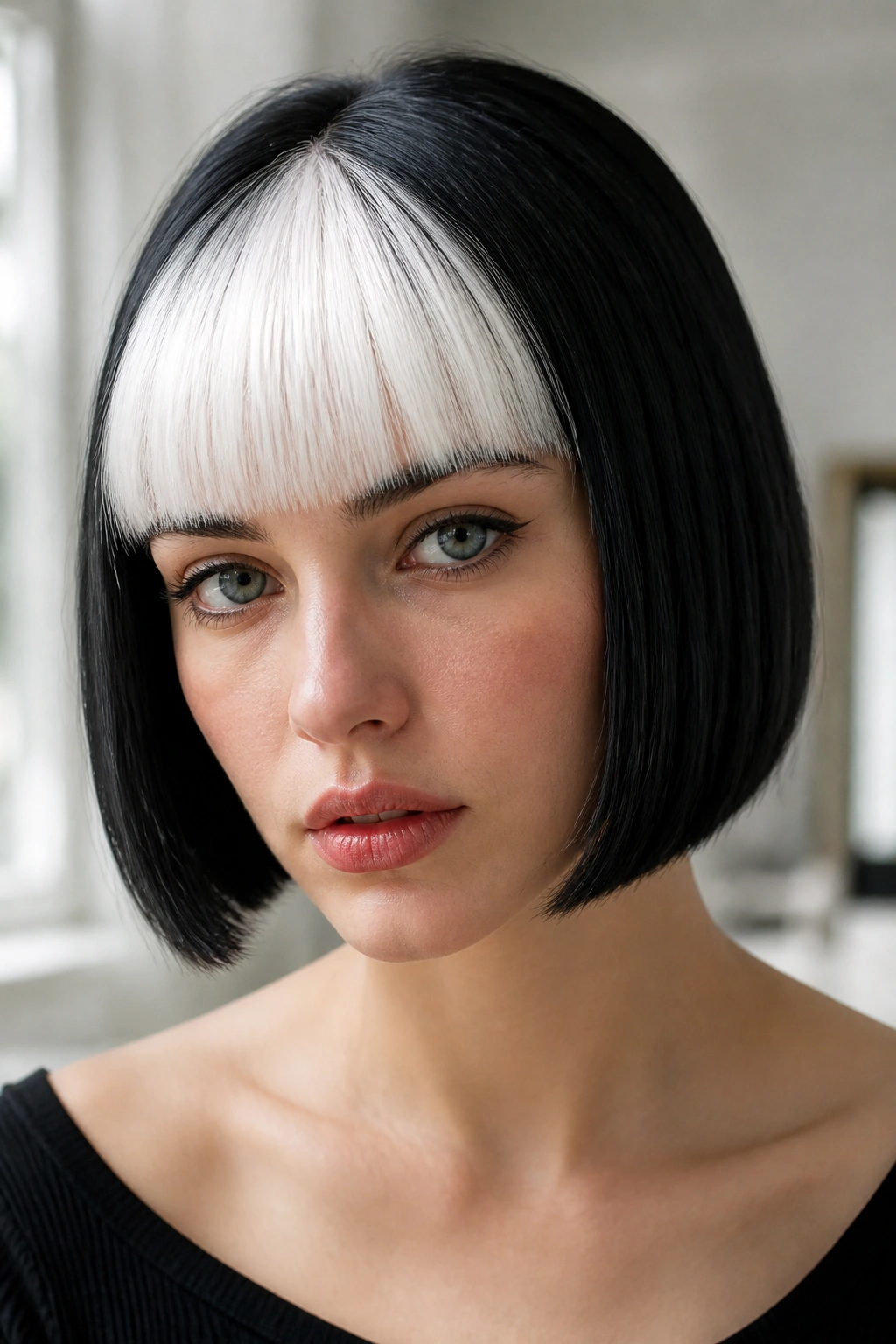
A black bob with a blunt white fringe is not subtle, and that is exactly why it works. The fringe creates a strong frame at the eyes, and the bob keeps the silhouette short enough that the white doesn’t drift into costume territory.
Ask for This Shape
- Keep the bob at jaw length or just below.
- Make the fringe blunt, not wispy, so the white reads cleanly.
- Ask for a cool toner that stays silver-white instead of beige-white.
- Trim the fringe every 2 to 3 weeks if you want the shape to stay sharp.
The beauty of this look is the geometry. On cool skin tones, a crisp fringe can feel almost architectural, especially if the rest of the hair is smooth and reflective. I’d avoid choppy layers here. They fight the line of the cut and make the white piece look less precise.
One practical note: the fringe is the first place to show yellowing from heat tools, dry shampoo buildup, and sunlight. Dry it separately, use heat protectant, and don’t pile on product at the roots.
6. Smoky Silver Ombré from Black Roots
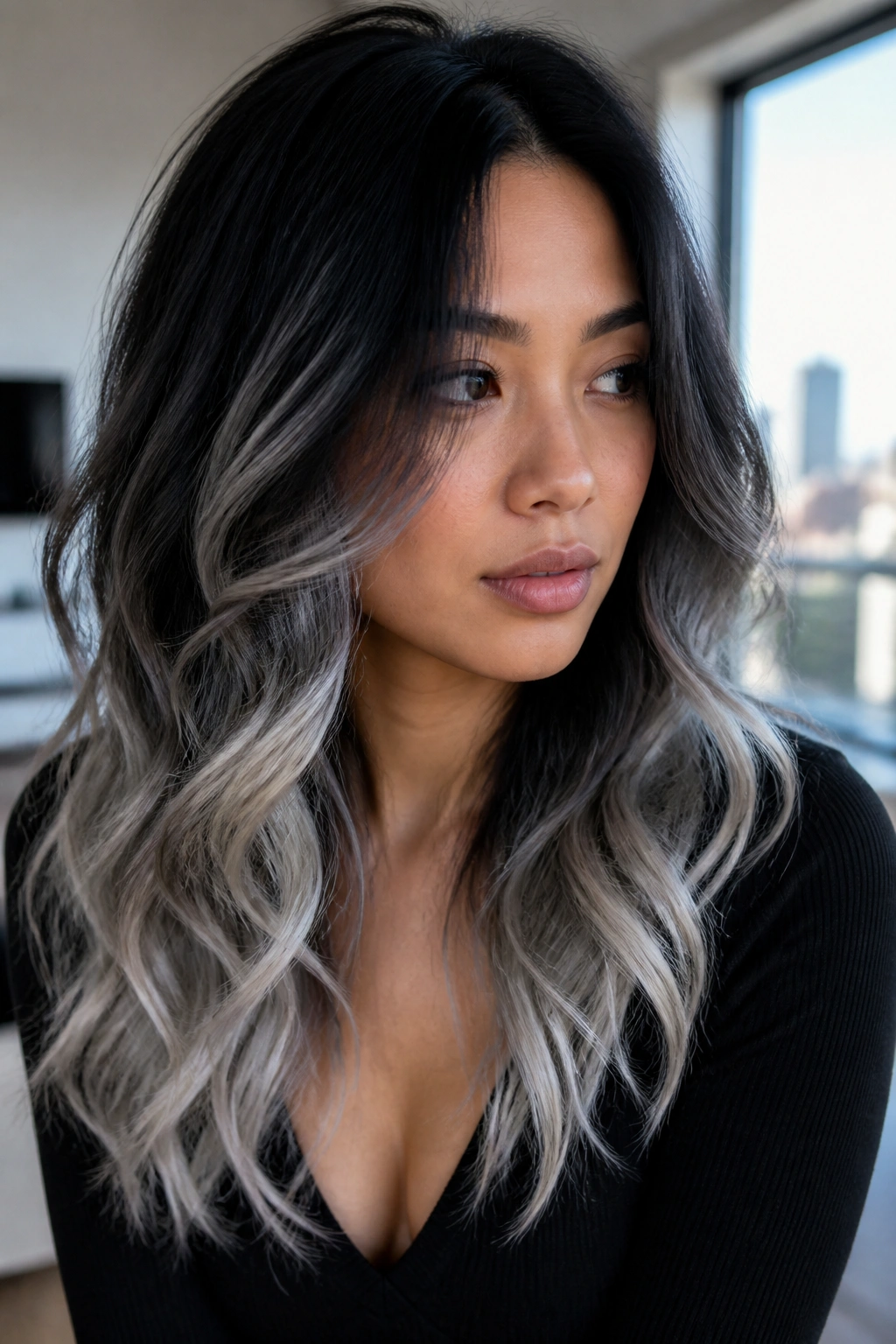
Want the contrast without a hard line? Go smoky. A black-to-silver ombré gives you a more lived-in black and white hair color that still reads cool and polished.
The root area stays deep black or blue-black, then the shade fades into graphite through the mid-lengths before landing in silver-white at the ends. That middle band matters. Skip it, and the transition can look abrupt. Keep it, and the color has depth that a straight black-to-white blend often misses.
This is one of the best choices if you like long hair. The length gives the fade room to breathe, and the ends can hold the brightest tone without crowding the face. It also softens grow-out, which is nice if you hate the idea of constant root touch-ups.
How to Make It Work
Ask for a slow melt, not a quick dip-dye effect. The tone should look smoky in the middle and icy at the ends. If your hair is naturally dark, this style can still work, but it needs a careful lift and a toner that removes every trace of yellow. Brass shows quickly in pale hair. Very quickly.
7. Black Pixie with a White Crown Highlight
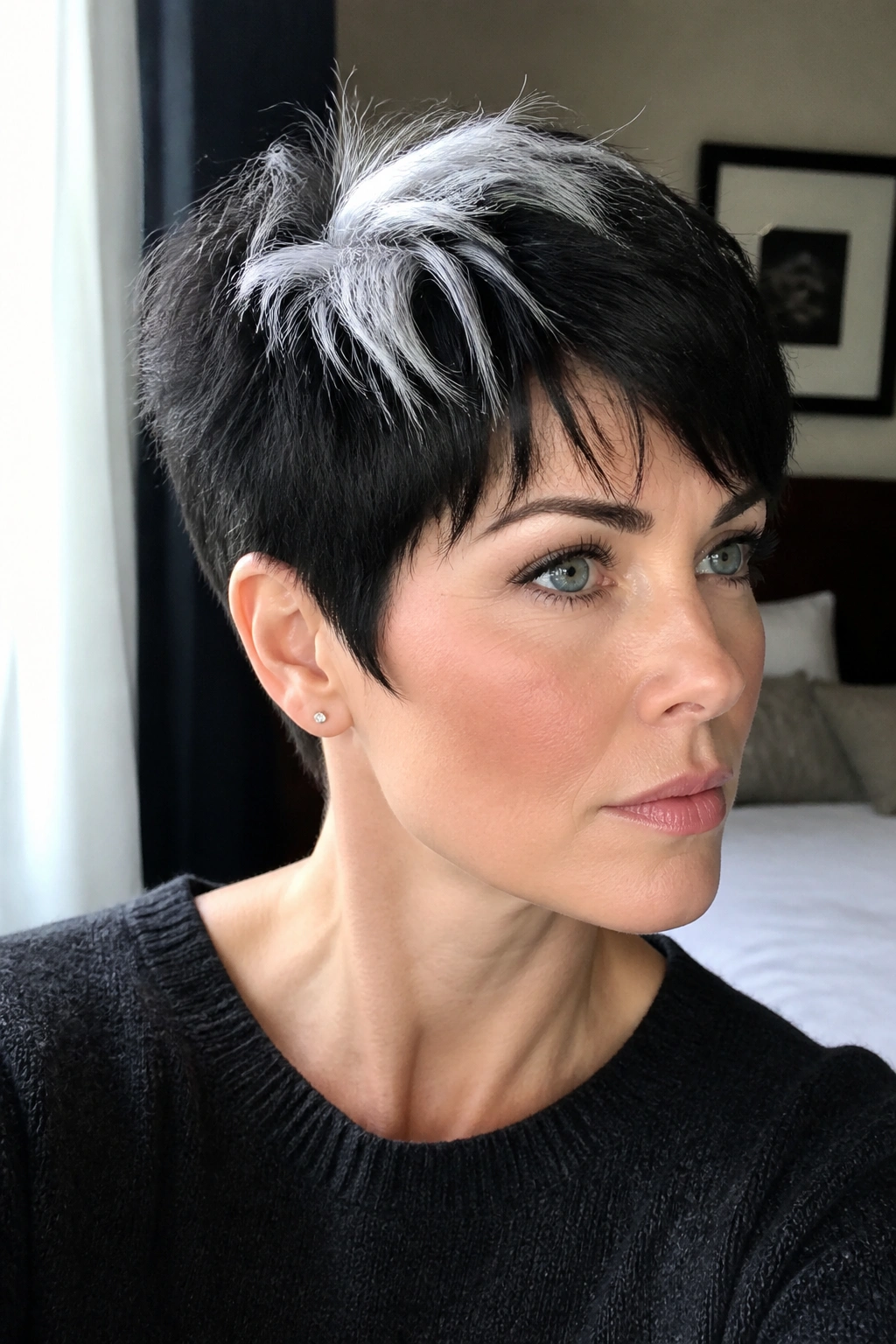
A black pixie can handle white better than most long cuts. Short hair gives the lighter pieces a clean border, so the contrast looks intentional instead of busy.
Put the white at the crown or top layer, where it can break up the dark base and give the cut a little lift. On cool skin, that touch of white near the face can brighten the whole look without turning the pixie into a high-contrast helmet. Ask for the white to stay slightly feathered through the top rather than packed in one solid block.
This works especially well if the pixie has texture. Choppy layers, a soft side sweep, or a lifted top all give the white somewhere to sit. On a super-sleek pixie, the same placement can feel harsher.
It’s also one of the more practical ideas on this list. Less hair means less bleach, less toning, and fewer places for the white to turn dull. Small mercy.
8. Reverse Money Piece on a White Base

Flip the whole idea and start with white. A white base with black panels at the front feels a little rebellious, but on cool skin tones it can look shockingly clean when the tone is right.
The white base does the softening, and the black pieces bring shape back to the face. You can place the dark panels right at the temples, around the part, or as narrow slices that fall next to the cheekbones. A dark root shadow helps this look a lot because it keeps the white from reading flat and makes the grow-out less obvious.
This version is higher maintenance than the black-base options, no question. White hair shows staining, heat damage, and toner fade faster than darker color. But if you want a bright, editorial look and your skin leans cool, it can be worth the upkeep.
I’d keep the black panels thin. If they get too wide, the whole style stops feeling airy.
9. Black Curls with Frosted Tips
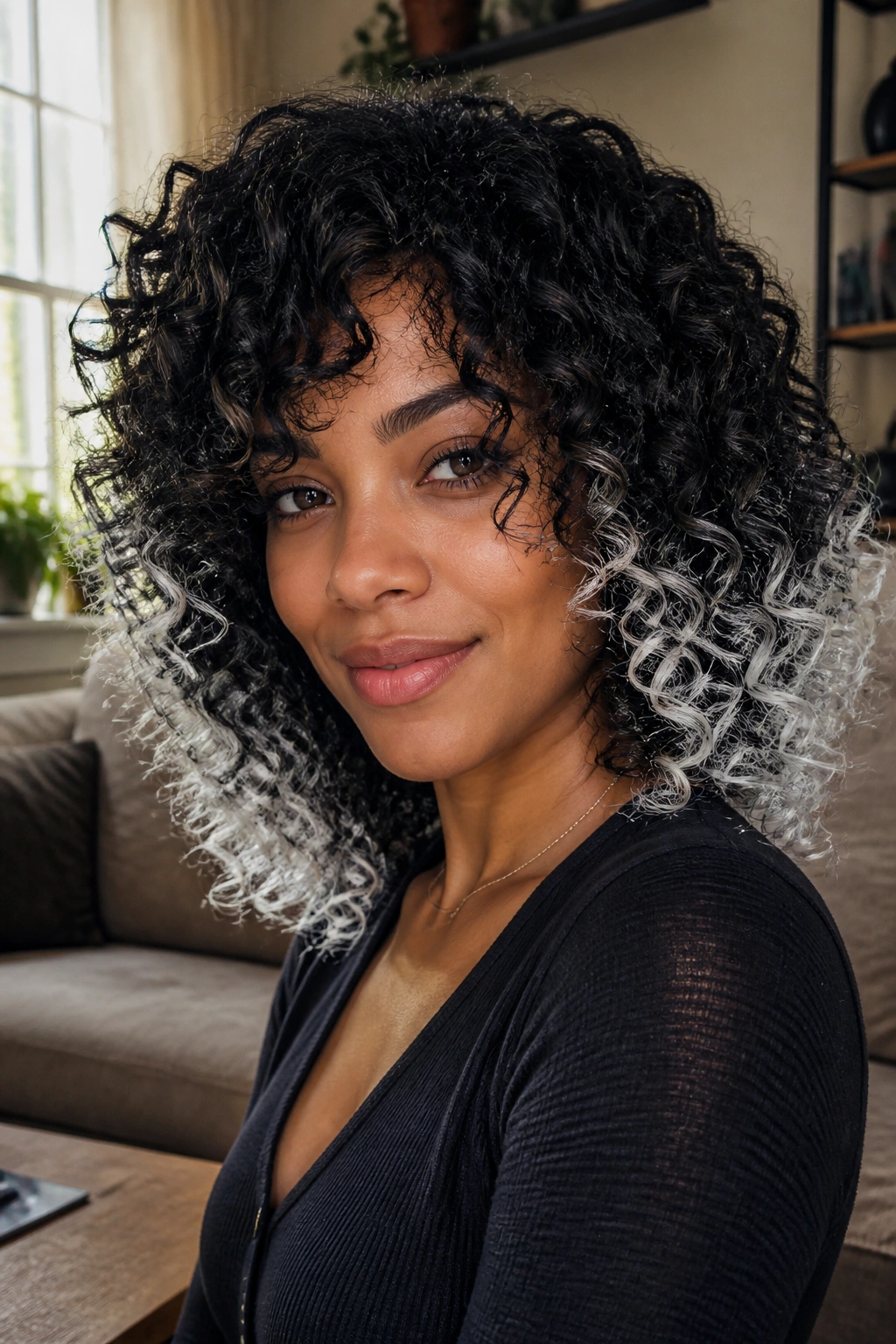
Curls and white ends can be beautiful together when the placement respects the curl pattern. Instead of bleaching the whole curl, keep the white on the final inch or two so the shape stays visible and the tips look frosted rather than dipped in paint.
This style works because the eye reads movement first. A dark curl with a pale end has a little bounce to it, and cool skin tones often look better with that sort of crisp contrast than with warm balayage. The white should stay clean, though. If it turns beige or yellow, the whole effect loses its edge.
A curl specialist will usually paint the lightener in a way that protects the coil pattern and avoids hard bands. That’s worth asking about. You want the ends to be bright, but not stripped.
One nice side effect: frosted tips can make dense curls look lighter without cutting off the length.
10. White Peekaboo Panels Inside Black Layers
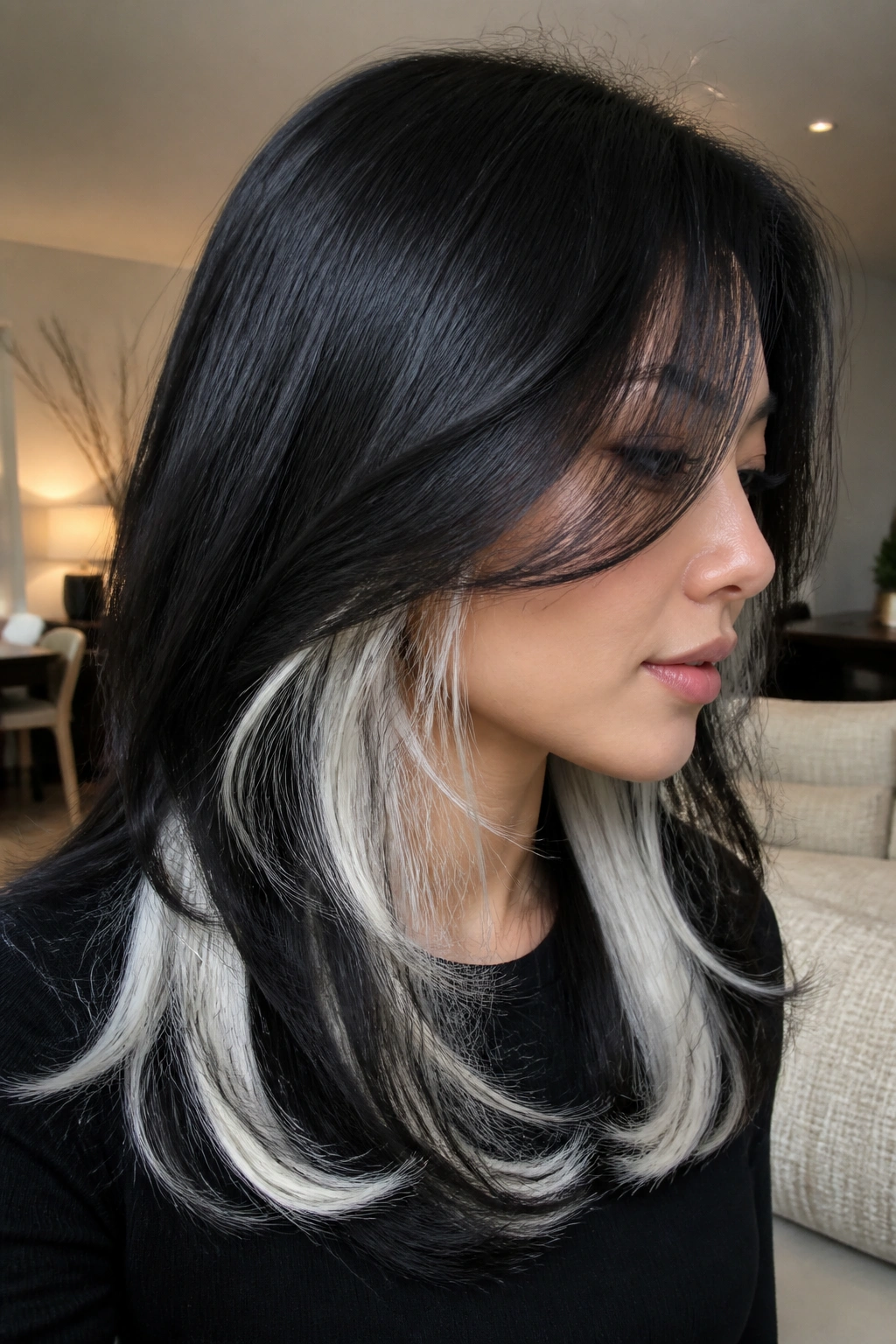
Peekaboo color is the quiet one in the room. From the outside, the hair can look mostly black. Then the layers shift, and a sheet of white appears underneath.
That hidden placement is especially good for cool skin tones that want contrast but not a full-on graphic face frame. The white catches light when you tuck your hair behind your ears, wear a half-up style, or let a wind blow through the layers. It feels personal, almost private, which I like.
What to Watch For
- Keep the white on the inner layers, not the surface.
- Ask for a cool, pearl-toned white instead of a creamy blonde.
- Works best on layered cuts where the top hair can lift away from the underlayer.
- A shine spray on the black top layer helps the contrast look richer.
The biggest mistake here is placing the white too high. If it shows all the time, it stops being peekaboo and starts competing with the rest of the cut.
11. Graphic Black-and-White Color Block Bob
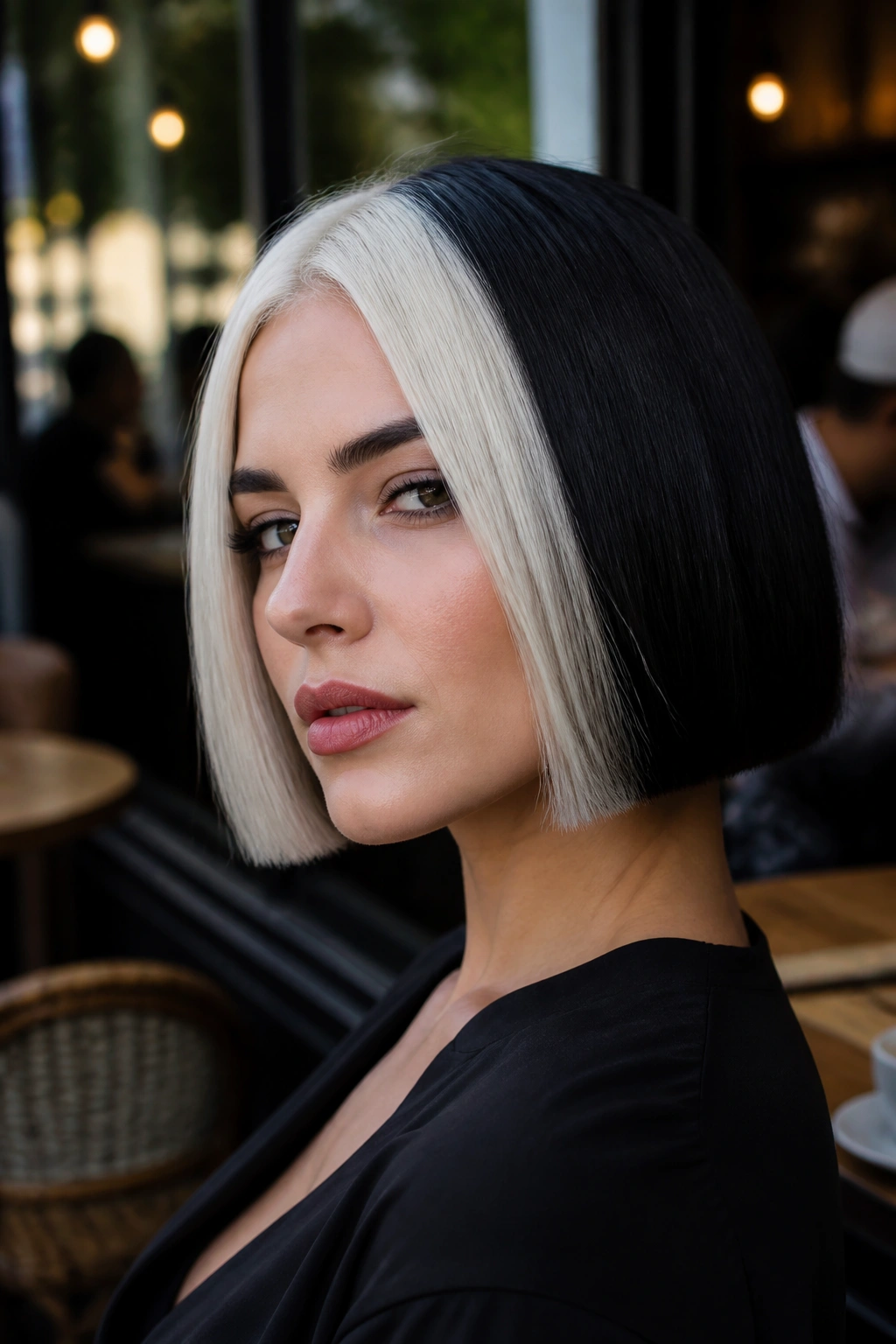
This is the bluntest version of the whole idea, and I mean that in a good way. A color-block bob uses thick, clear panels of black and white instead of tiny highlights, so the shape does the talking.
On cool skin tones, the hard edges can look striking rather than severe. A one-length bob or a slightly A-line shape gives the color room to sit cleanly. I like a white front panel with black through the back, or the reverse, because the geometry of the cut keeps the color from feeling random.
The trick is placement. A color block that follows the haircut looks chic. A color block that ignores the haircut looks like a DIY experiment gone sideways. Ask your stylist to map where the weight line falls before they start painting.
This one is for people who like strong clothes, strong eyeliner, strong opinions. It doesn’t whisper.
12. Salt-and-Pepper Balayage for Cool Skin Tones
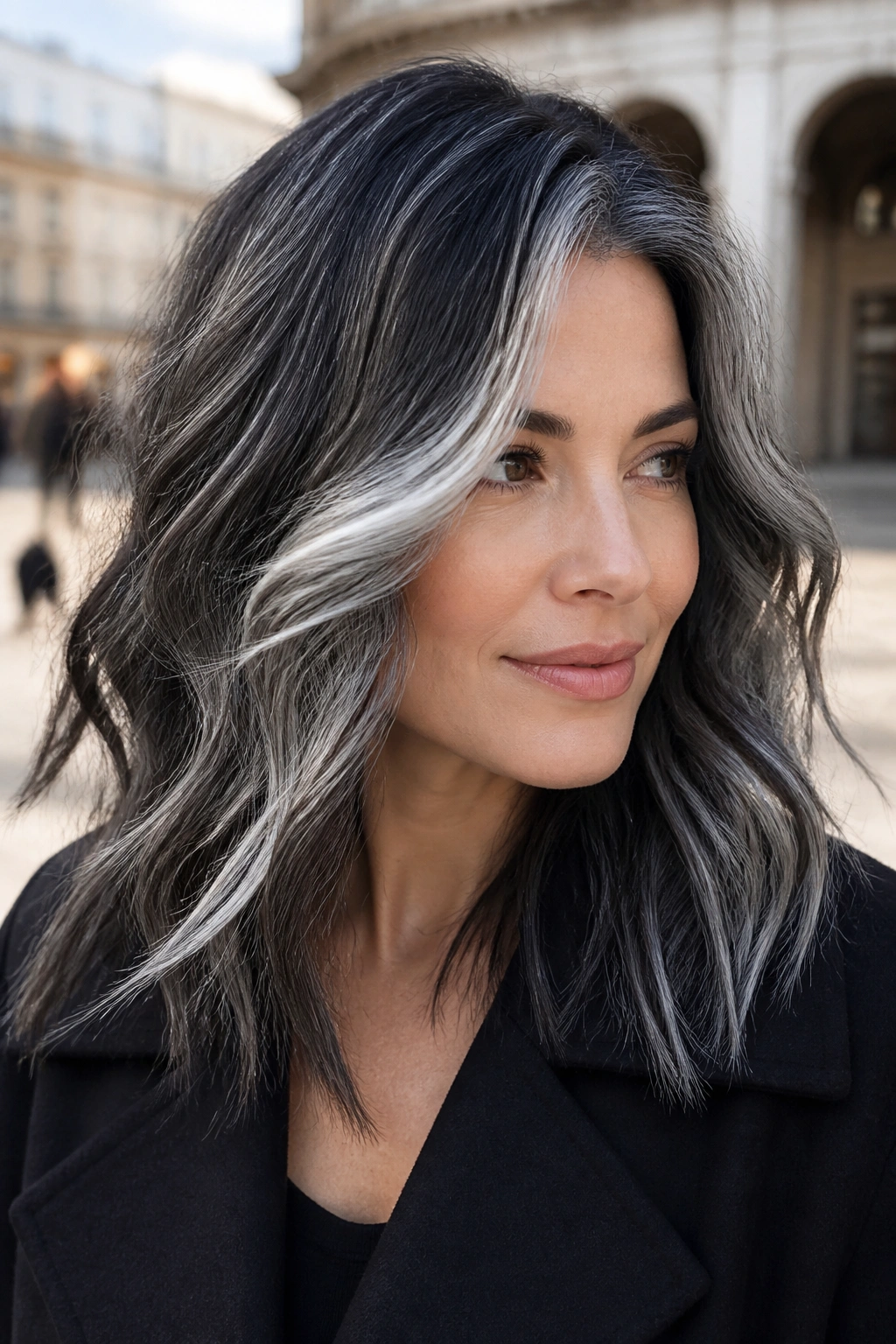
Salt-and-pepper balayage is the softer cousin of the pure black-and-white look. Instead of one hard divide, you get ash, silver, slate, and black moving through the hair in a way that feels natural but still deliberate.
What to Ask For
- Use ash-based lightening, not golden or beige tones.
- Keep the brightest pieces around the face and top layers.
- Blend in gray-silver panels through the mid-lengths.
- Leave some depth at the roots so the style keeps contrast.
This is a smart choice if you want dimension without looking like you’re wearing a costume wig. Cool skin tones usually like the smoky end of the palette, and this version stays there. It also grows out better than a pure white placement because the darker pieces soften the line between root and highlight.
I’d especially recommend it on long layers, lobs, or thick shoulder-length cuts. The movement matters. Without it, the gray family can look flat, and flat is not what you want here.
13. Black Wolf Cut with Silver-White Feathering
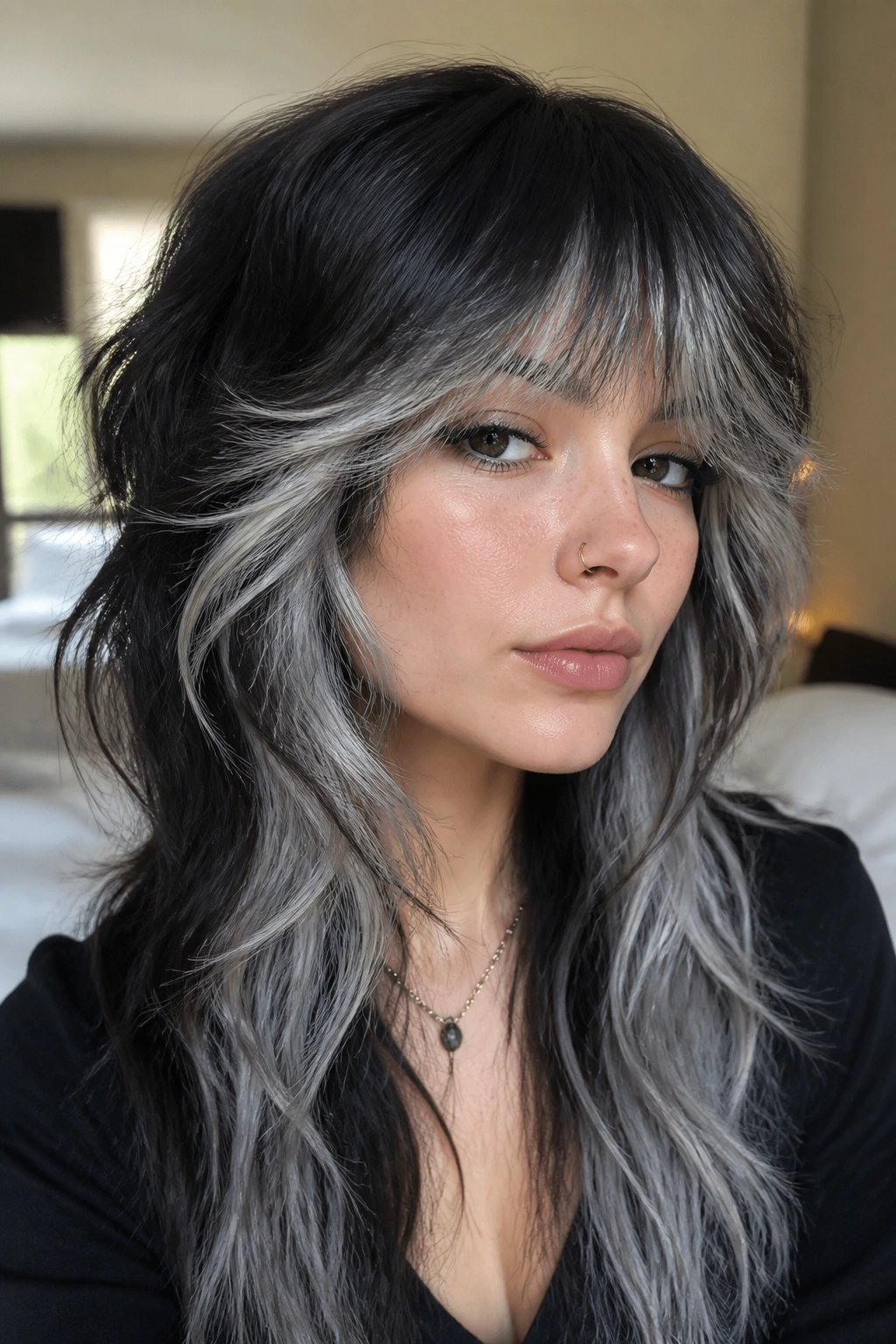
A wolf cut gives you a lot of texture to play with, which is why silver-white feathering works so well there. The layers already break the outline up, so the lighter pieces can sit on top and around the face without looking stiff.
This style is a good fit if your cool skin tone can handle a slightly messy finish. Not sloppy. Just broken up. The white should live on the ends of the face-framing layers, the crown, and a few top pieces that move when you shake your head. That keeps the look airy and prevents the dark base from swallowing everything up.
The best versions use a soft silver, not a bright white block. The feathering can still be pale, but it should have enough gray in it to blend with the texture. Pure white on a wolf cut can look too harsh if the cut is already very choppy.
A quick blowout or rough-dry finish helps the layers show off the color. That’s half the fun.
14. Platinum Halo Over a Black Undercut
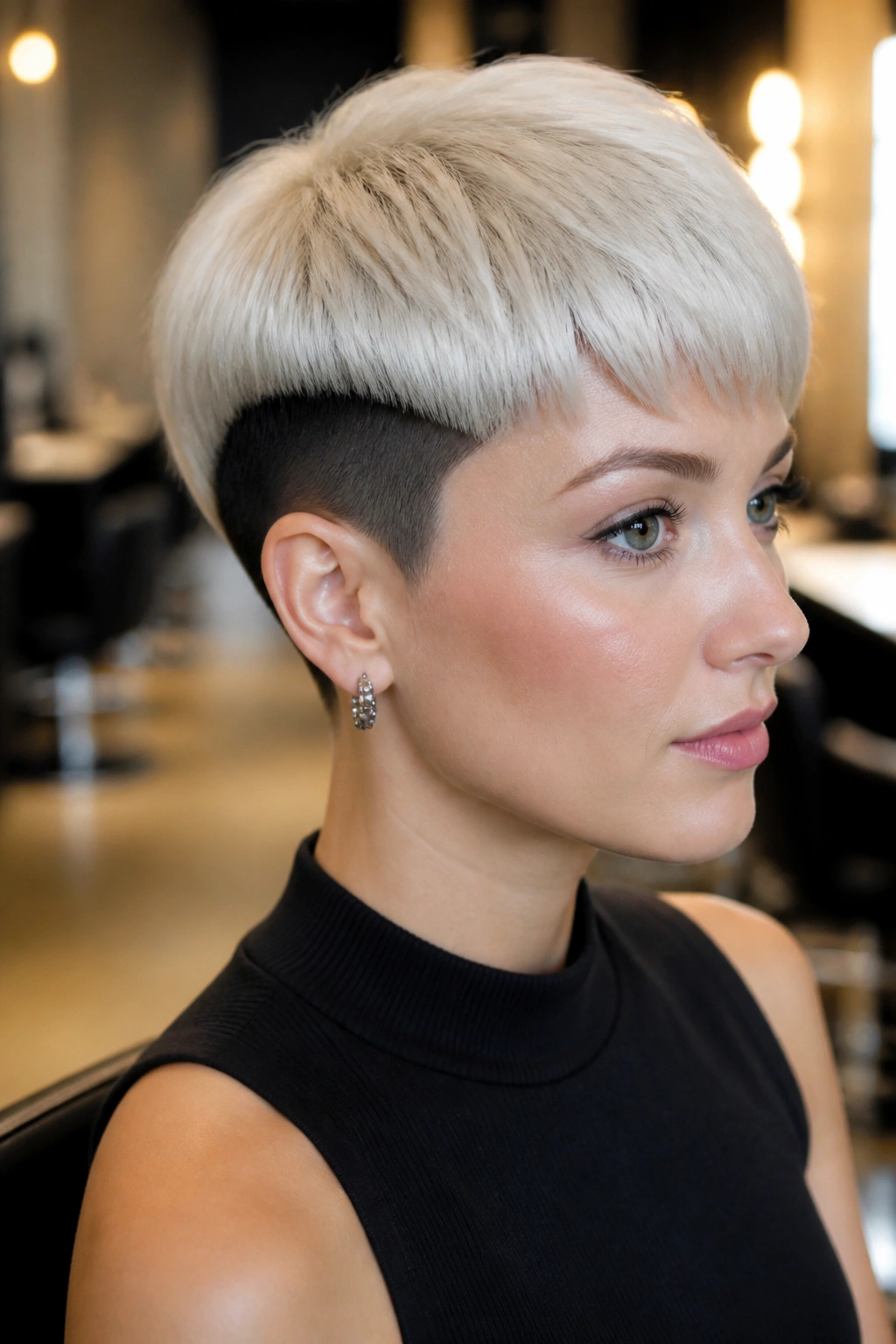
If you like dramatic contrast but want to keep the maintenance under control, this is a smart move. The shaved or closely clipped sides stay black, while the top layer turns into a platinum-white halo that sits over the darker base.
The shape matters here. The white should feel like a cap of light, not a random streak. When the top has volume, the contrast between the bright crown and the dark undercut becomes the whole hairstyle. Cool skin tones usually look excellent with this because the white sits high and catches light around the face.
It also uses less bleach than a full-head white look, which is a practical win. Fewer lightened sections means the hair often feels healthier after the service, assuming the lift is done carefully.
This one leans bold. If you want soft and understated, skip it. If you want a cut that looks finished even with simple makeup, it’s a strong candidate.
15. Black Braids with White Woven Accents
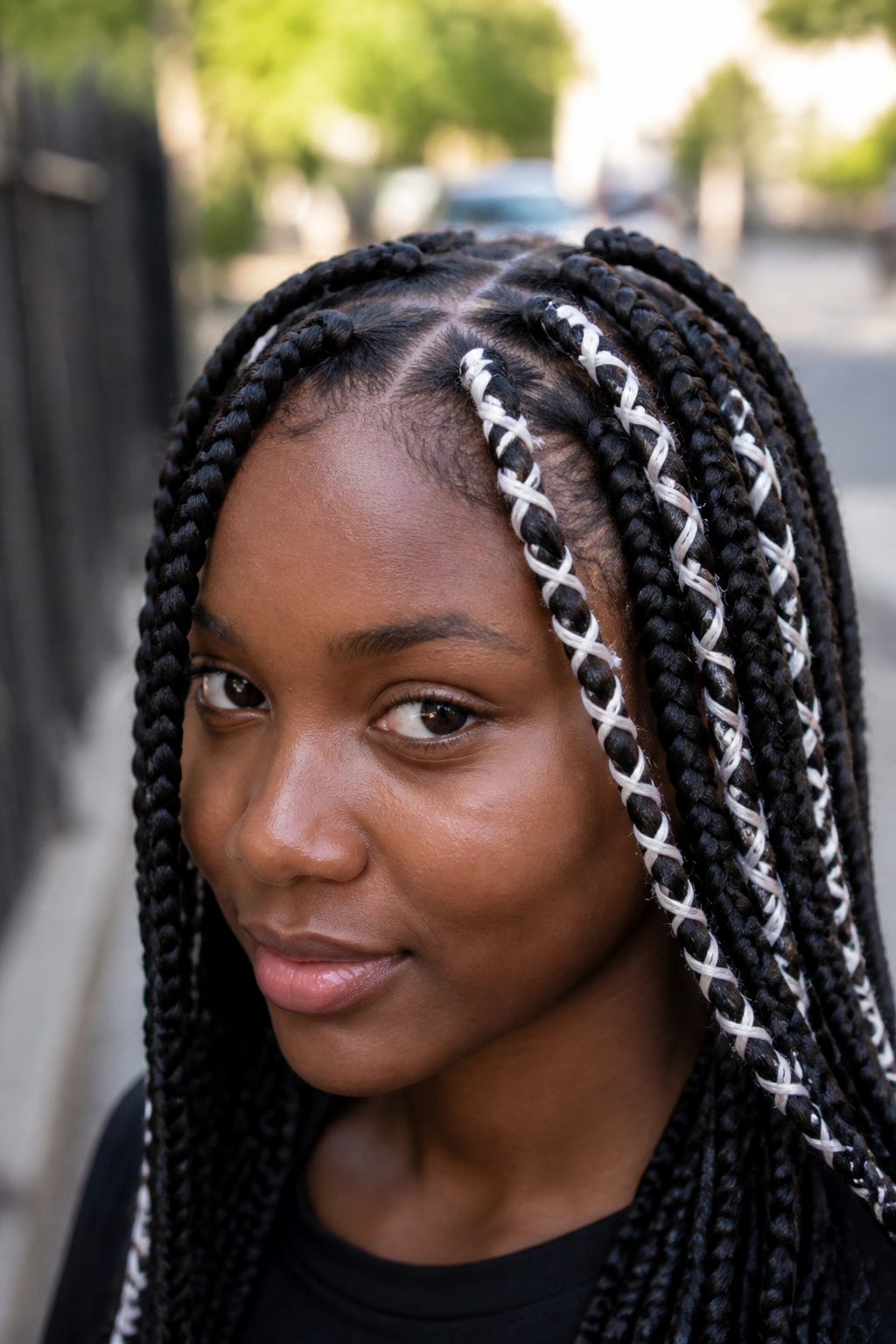
Braids give you a clean way to work black and white hair color into a protective style, and you do not have to cover the whole head to make it matter. A few white braids near the front or scattered through the part line can change the whole read of the style.
Placement Ideas That Actually Work
- Put white braids at the hairline to frame the face.
- Mix in one white braid every 4 to 6 black braids for a balanced look.
- Use white only on the ends if you want something calmer.
- Add silver braid cuffs or thread for extra brightness without more bleach.
This is one of the easiest ways to wear the palette if you want less tension on your natural hair. The color can come from extensions, yarn, thread, or pre-colored braid hair, which saves your own strands from some of the work. On cool skin tones, the white accents read crisp against the scalp and clean up the whole look.
I prefer this style when the white is placed with restraint. Too many bright braids and the pattern gets busy. A few well-placed ones look much smarter.
16. Ebony Length with Icy White Ribbon Highlights
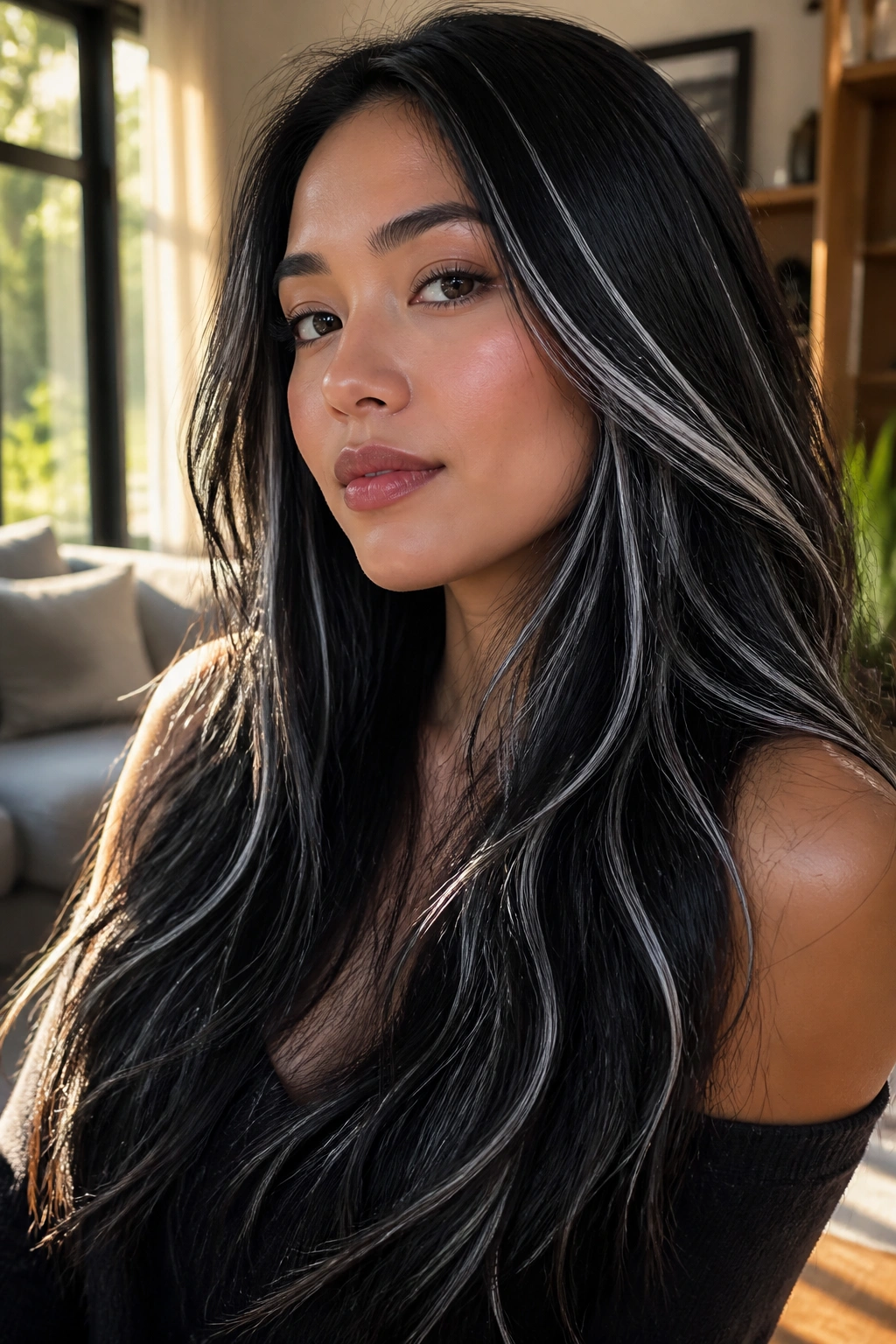
Ribbon highlights are thin, deliberate streaks that move through the length like little strips of light. On black hair, they look especially clean when they’re kept narrow and cool-toned.
This is a nice choice if you want the black to stay dominant. The white pieces should read like threads woven through fabric, not giant streaks. A width of about 1/8 inch to 1/4 inch keeps them ribbon-like and helps them blend into waves or long layers. That detail matters more on cool skin tones, because very thick white sections can overpower the face.
I like this idea on hair that already has some shine. Straight hair shows the ribbons neatly, while waves make them flicker in and out, which feels softer. If the hair is damaged, though, the white can become dry-looking fast, so a gloss or bond-building treatment is worth the trouble.
Quiet contrast can be smarter than loud contrast. This is one of those times.
17. White Fringe with Black Lengths and a Dark Root Shadow
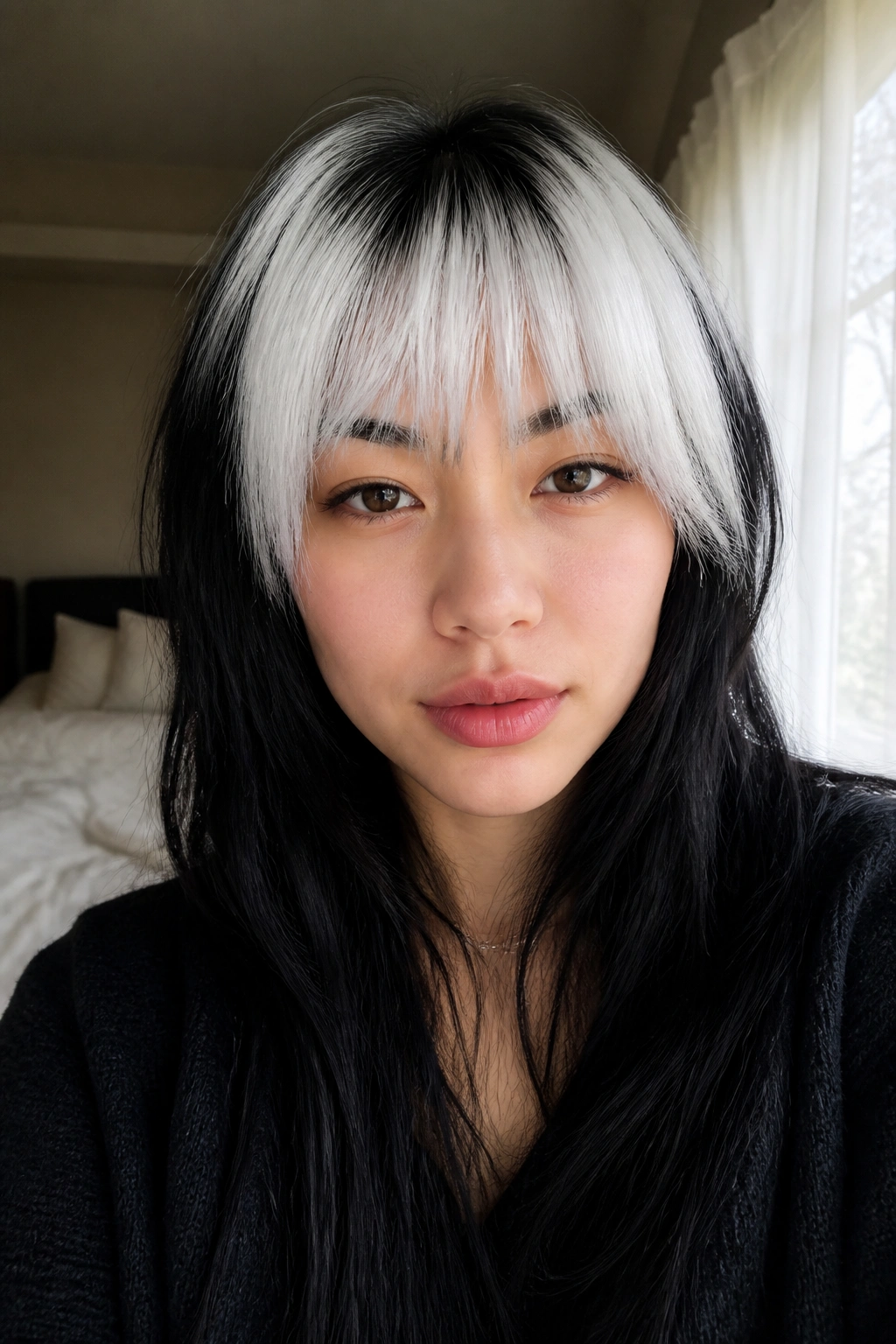
A white fringe on black lengths is a reverse of the blunt bob idea, and it has a cleaner edge than people expect. The bangs sit at the front, so all the brightness lands where cool skin tends to need it most.
The dark root shadow is the part that keeps this style looking polished. Without it, the white fringe can feel pasted on. With it, the transition looks natural enough to grow out for a few weeks without panic. That’s not a tiny thing. It’s the difference between a look you love and a look you resent by week three.
This version works best when the fringe is thick enough to make a statement but light enough to move. If the bangs are too thin, the contrast loses impact. If they’re too heavy, the white can start to overpower your features.
I’d keep the rest of the lengths glossy and dark. That makes the fringe look even brighter.
18. Black Shag with Pearl-White Split Ends
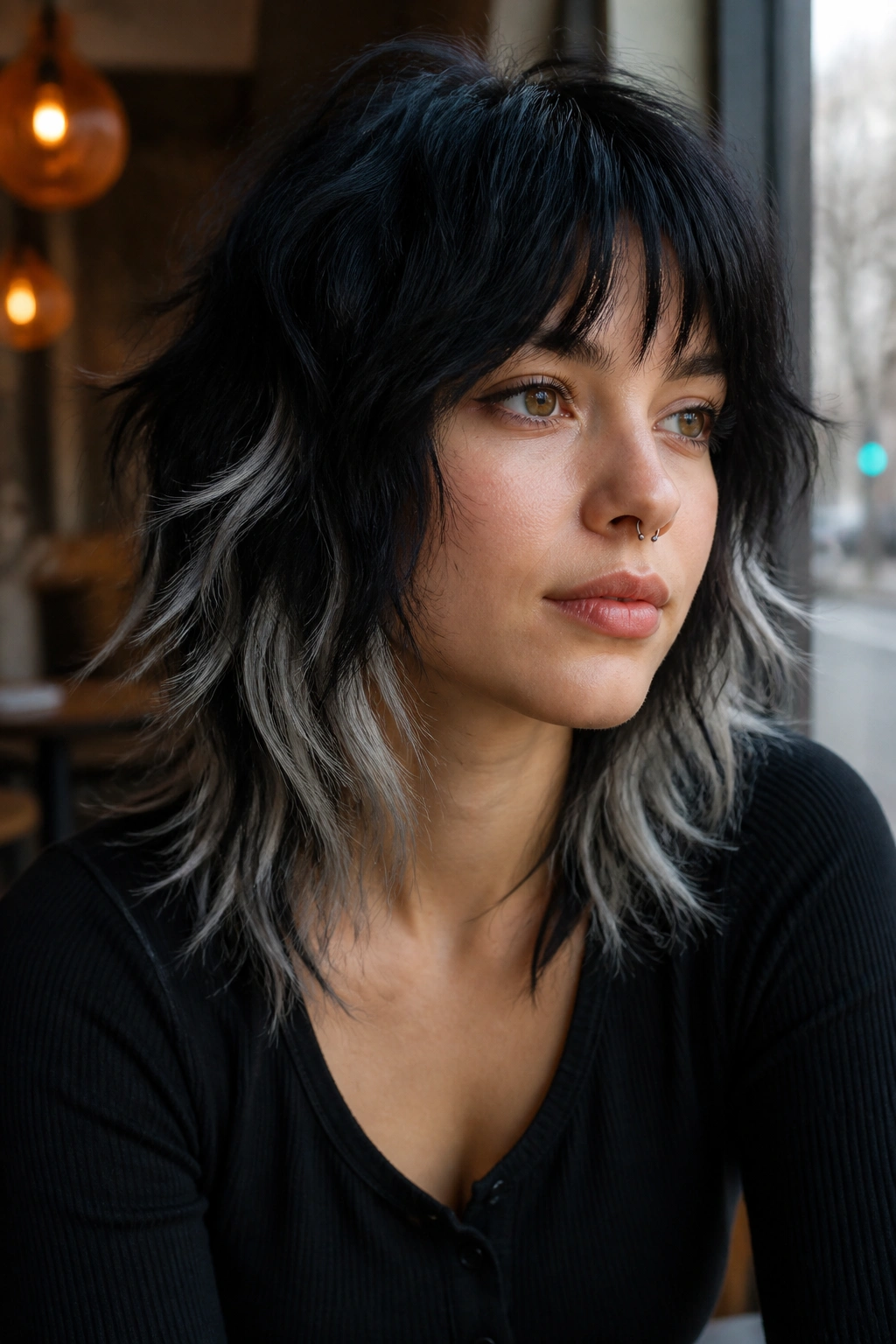
The shag is built for movement, which makes it a natural home for pearl-white split ends. Instead of bleaching the whole lower section, you let the brightest color live only at the ends where the layers break apart.
Pearl-white is the softer choice here. It has a faint opalescent feel that suits cool skin tones better than a hard, chalky white. The result is less graphic than a split dye and more textured than a standard ombré. That middle ground is what gives this style its charm.
If your hair is thick, the shag stops the white from looking heavy. If your hair is finer, the layers keep the ends from feeling stringy. It’s one of the few styles on this list that can look a little messy and still feel intentional, which is useful if you don’t want a perfect finish every day.
A bit of texture cream goes a long way here. Too much product, and the white ends can clump.
19. Mushroom Bob with Smoked-White Panels
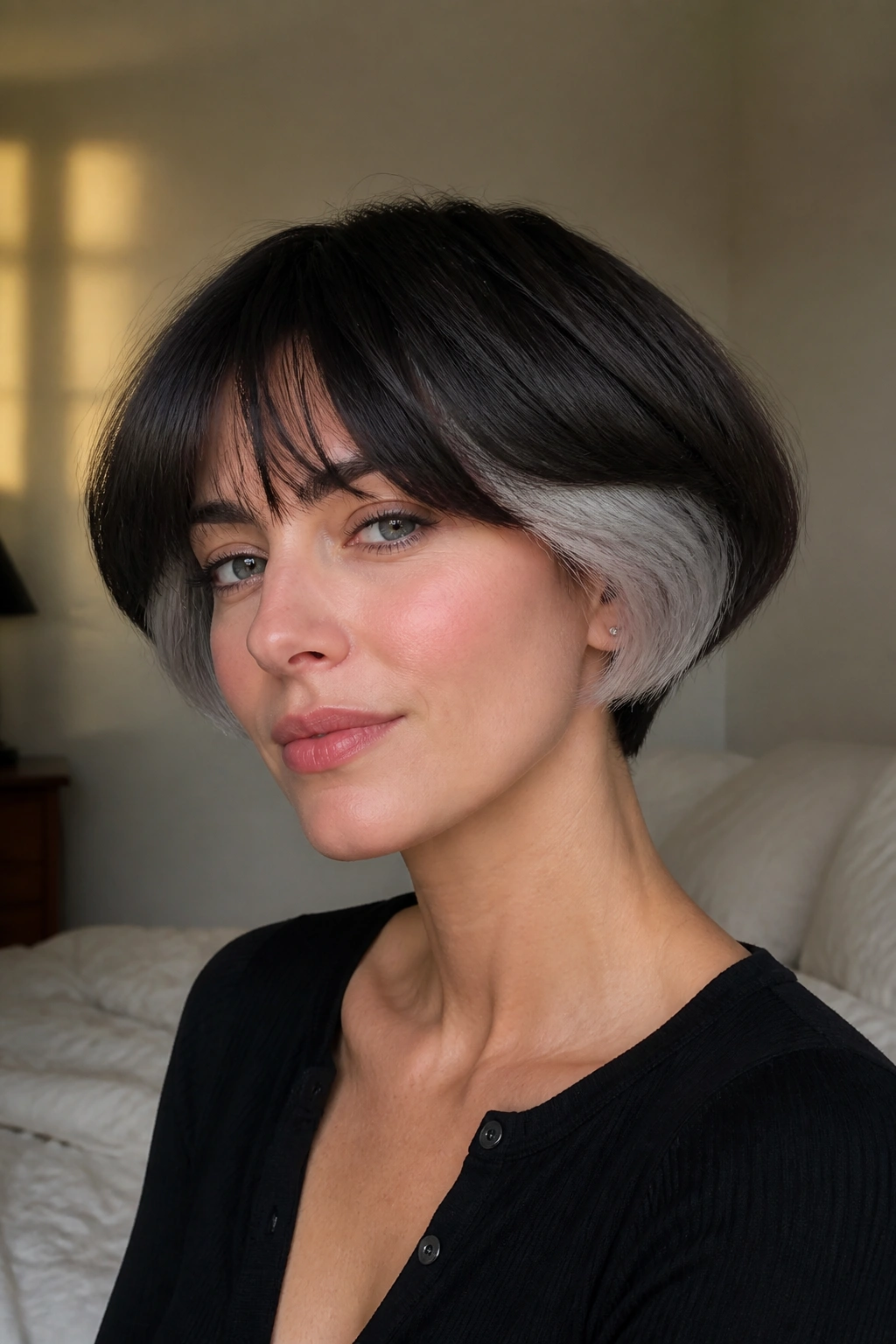
A mushroom bob already has shape built into it, so smoked-white panels can sit underneath the rounded top and still read clearly. The cut gives the color a dome-like outline, which feels very different from a long, flowing contrast look.
This style is especially good for cool skin tones because the smoky white stays in the ash family. That keeps the whole thing from tipping into yellow. You can place the white under the crown, around the ears, or at the lower perimeter so it peeks out as the bob moves.
The mushroom shape can be a little severe if the color is too flat. A few soft panels keep it alive. I’d also avoid making the white too bright at the top of the head; you want lift, not a harsh cap.
It’s a precise cut, and precise cuts usually reward precise color.
20. Black Locs with White Dipped Ends
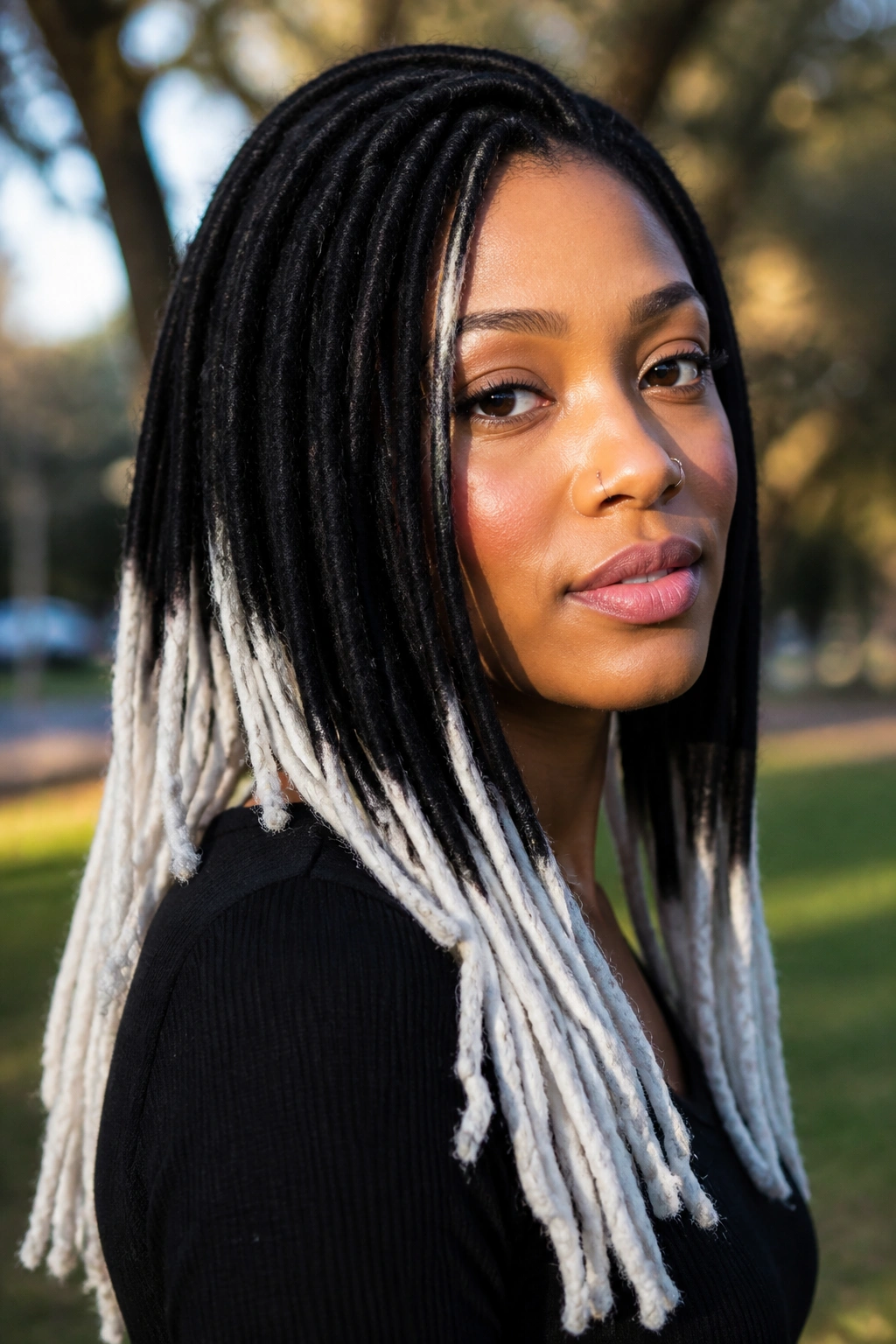
Locs carry contrast beautifully when the white is used at the ends instead of scattered everywhere. Dipped ends create a strong finish line, and that line looks especially clean against a dark base.
For cool skin tones, the white should stay icy or silver-white. Anything too creamy can pull the whole look warmer than intended. The best version keeps the black through most of the length, then shifts to white only in the last 1 to 2 inches of each loc. That gives you contrast without making the style too busy.
This approach is also practical. Dark roots and mid-lengths are easier to maintain, and the lightened tips can be refreshed or recolored without redoing the whole head. If the locs are long, the white ends can look almost like a frame around the face and shoulders.
A little shine oil on the dark section helps the dip effect look richer. Don’t overdo it on the white tips, though. They can get greasy-looking fast.
21. White Panels at the Nape Under Black Top Layers
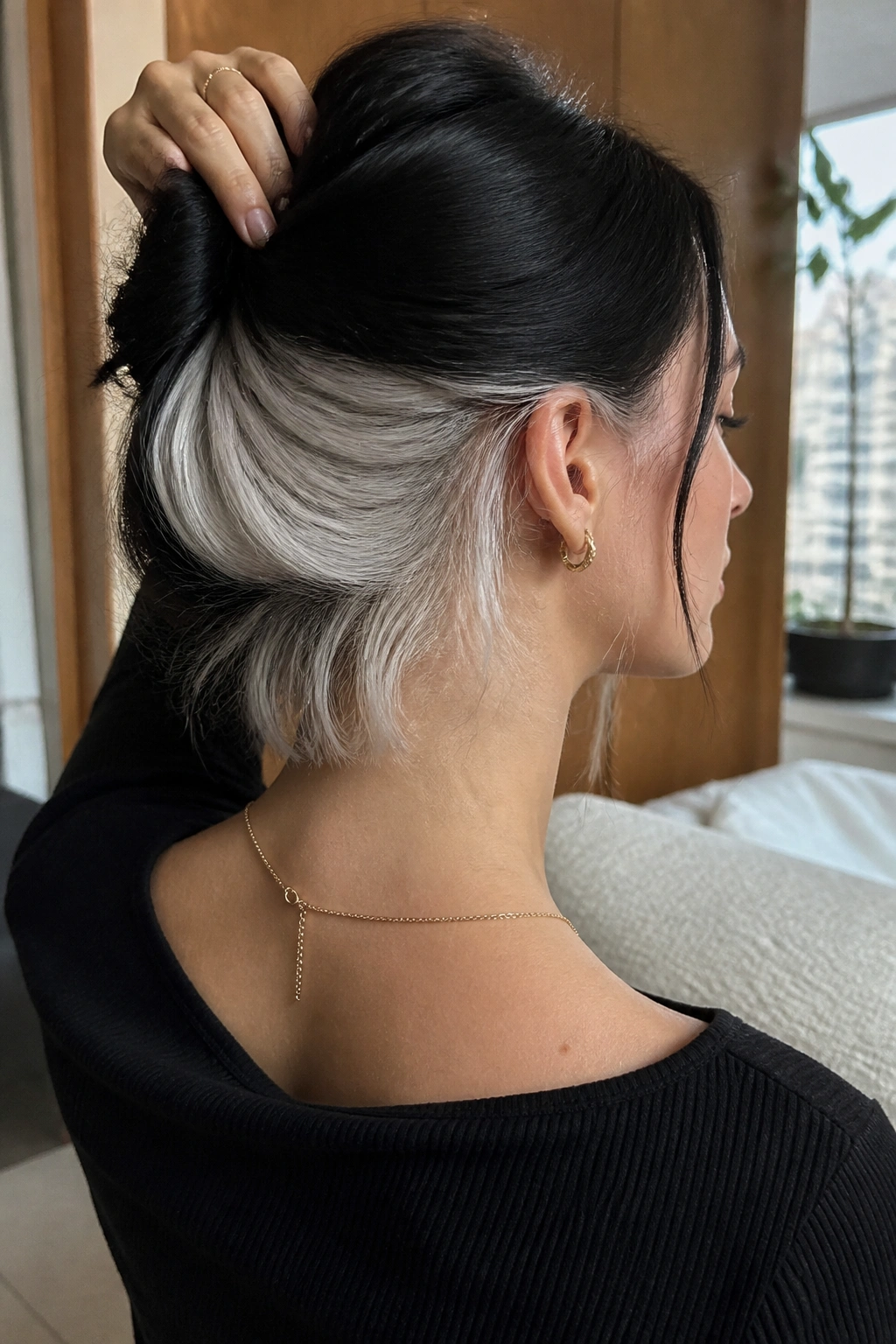
This is the hidden color choice for people who love a reveal. The top of the head stays black, but the nape underneath turns white, so the bright section only shows when the hair is tied up, pinned, or moved away from the neck.
Why It Works So Well
The placement keeps the face from getting overwhelmed. Cool skin tones can take a strong white, but not every face wants that brightness sitting at the front all day. By hiding the white lower down, you get the fun of contrast without the commitment of a full front piece.
- Best with buns, ponytails, half-up styles, and braids.
- Ask for the white to start below the occipital bone so it stays hidden.
- Works well with undercuts, stacked bobs, and layered mids.
- A quick mist of shine spray on the black top layer makes the reveal pop more.
This one is especially good if you like to switch your hair up. Down, it’s sleek. Up, it suddenly becomes a little more interesting. That shift is half the appeal.
22. Blue-Black Noir with Snowy Curtain Pieces for Cool Skin Tones
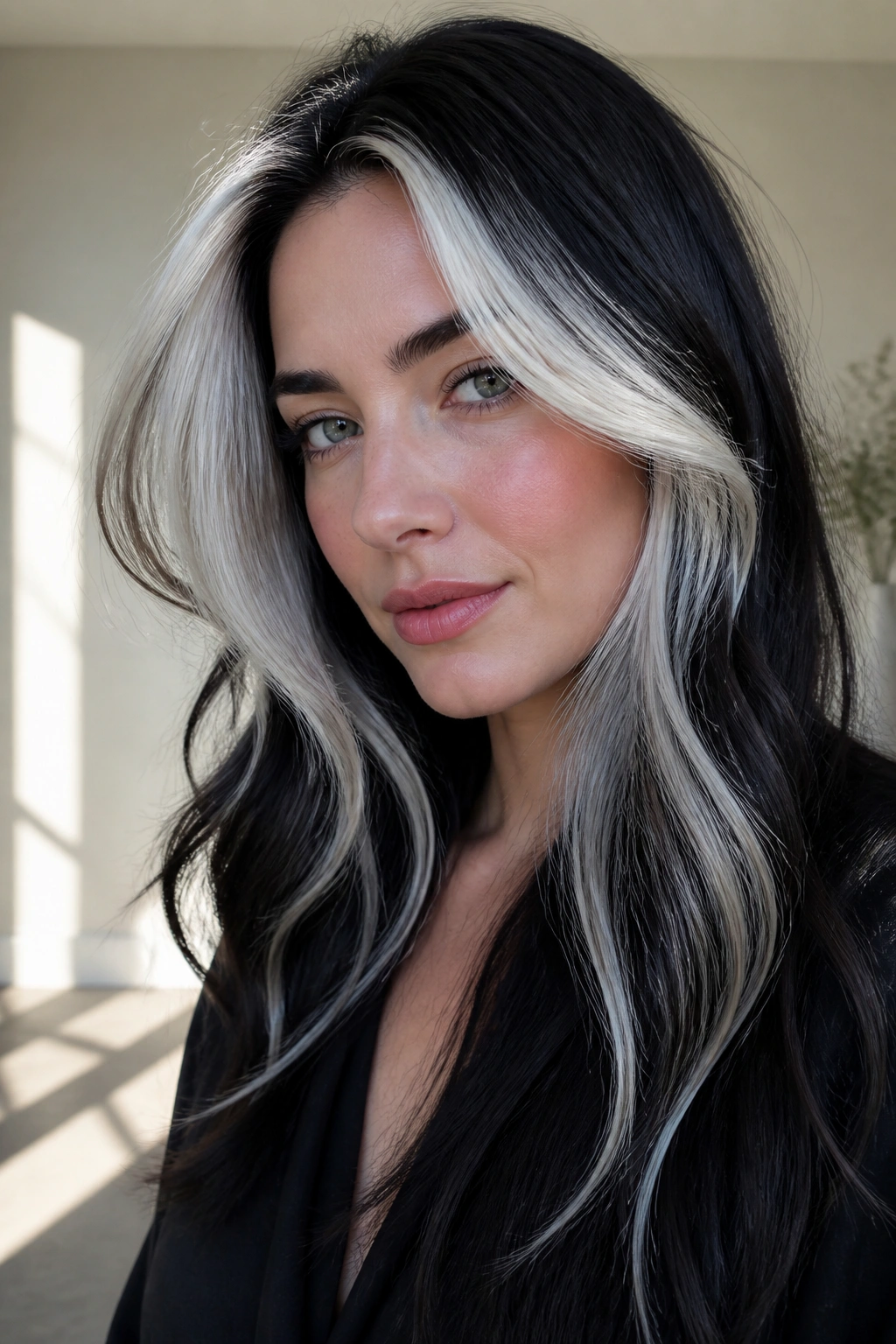
If I had to pick the most wearable version of this whole palette, it would be this one. A blue-black base with snowy curtain pieces gives you the contrast of black and white hair color without pushing the white so hard that it fights your skin.
The curtain pieces should sit just outside the center part, starting around the cheekbone and drifting into the length. That placement softens the face, which matters on cool skin because too much bright white at the hairline can sometimes make the complexion look a little tired. Blue-black below keeps the whole thing rich, shiny, and less flat than plain black.
This look works on straight hair, waves, and long layers. It’s also one of the easiest ways to wear white without making the salon visit feel like a full-time commitment. The curtain pieces can be toned icy, lifted cleanly, and left to grow a little without destroying the shape.
If you want the safest bet, start here. It’s sharp, flattering, and less fussy than it sounds. And when the light hits it right, the contrast does the work for you.
