



Black grey hair color ideas for cool skin tones work best when the gray leans clean, smoky, and a little blue at the edges. If your skin has pink, rosy, or blue undertones, the wrong kind of gray can make your face look flat fast, while the right one makes your features look sharper and your complexion look calmer.
That’s why this kind of color is never just “black with gray pieces.” It can be blue-black, graphite, steel, ash, pewter, silver, or a soft salt-and-pepper blend, and each one lands differently against cool skin. Some shades feel sleek and icy. Others feel soft, moody, and expensive in the plain, old-fashioned sense of the word — not flashy, just polished.
Gray is picky. It shows warmth where you didn’t ask for it, and black can turn harsh if the shine is missing or the undertone is too brown. The good versions have a little control built in: a shadow root to soften grow-out, a blue-violet toner to keep the light pieces crisp, or a strategic face frame that keeps the whole look from going heavy.
If you’ve been saving screenshots and wondering which version would actually flatter you in real life, the answer usually comes down to placement and tone, not drama. Some of the smartest choices are quiet ones. Some are bold. All of them can look fantastic on cool skin when the gray stays on the icy side.
1. Blue-Black Gloss With Silver Ends
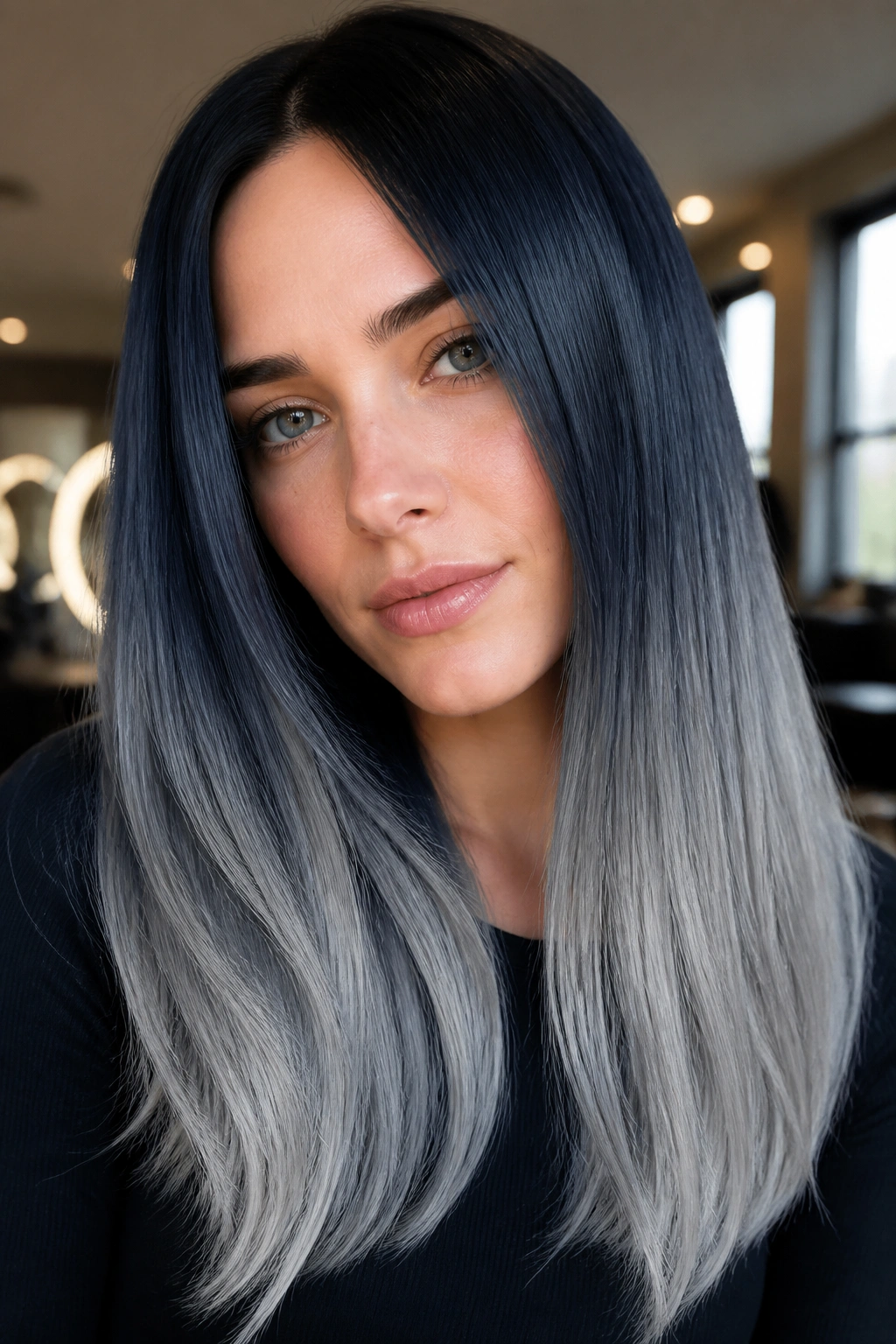
Blue-black is one of those shades that looks almost simple until you see it in motion. Then it gives itself away. The base stays inky and dark, but the blue cast keeps it from reading flat, and the silver ends give the whole style a cool, sharp finish that sits beautifully on cool skin.
Why It Works for Cool Skin
The blue undertone pulls the color away from muddy brown, which is the main thing to avoid here. When your skin already has cool undertones, that little extra blue helps the hair and face speak the same language.
Ask for a level 1 or 2 black base with silver-toned lightening on the last 2 to 4 inches only. That keeps the contrast clean without making the whole head look overprocessed. A gloss with blue-violet pigment helps keep the silver from drifting yellow.
Quick tip: Wear this with sleek blowouts, loose waves, or a straight mid-part. The silver ends show the most when the hair moves.
2. Smoked Charcoal Balayage
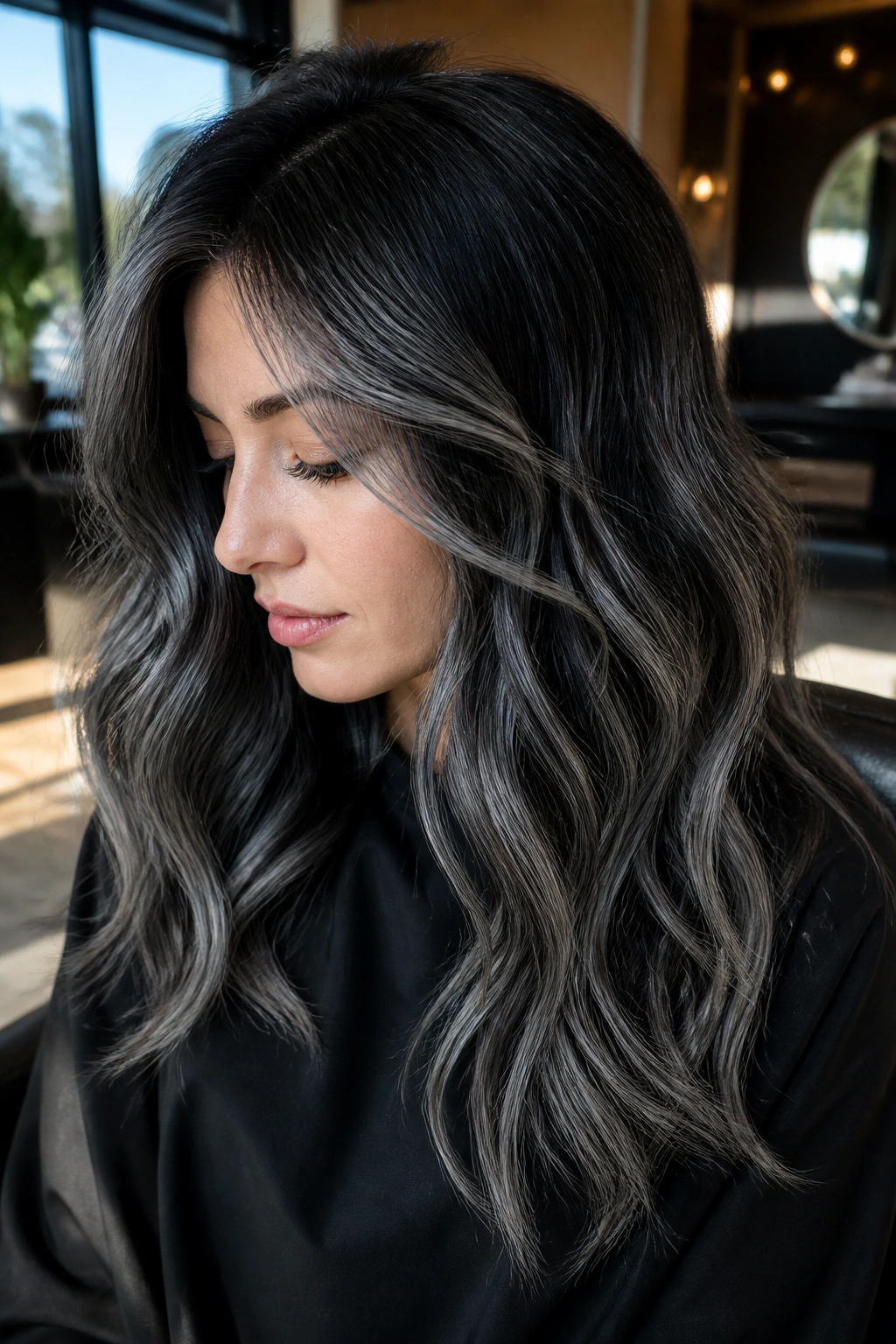
This one is quieter than full silver, and that’s the charm. A smoked charcoal balayage keeps the base dark while threading gray through the mids and ends in soft, hand-painted ribbons. On cool skin, it reads as elegant instead of harsh.
What I like most is the way it grows out. The painted pieces blur into the black base, so you do not get a hard stripe line every few weeks. That makes it a sensible pick if you want gray hair color ideas that still feel wearable for everyday life.
What Makes It Different
Unlike stark silver highlights, charcoal balayage stays smoky and shadowy. It gives you movement without turning the hair bright all over.
- Best on wavy bobs, lobs, and layered cuts
- Ask for fine surface painting rather than chunky panels
- Keep the lightened pieces a few shades darker than platinum
- Use a sulfate-free shampoo so the ash tone stays put longer
It’s a smart choice if you want gray, but not the kind that shouts from across the room.
3. Graphite Money Piece
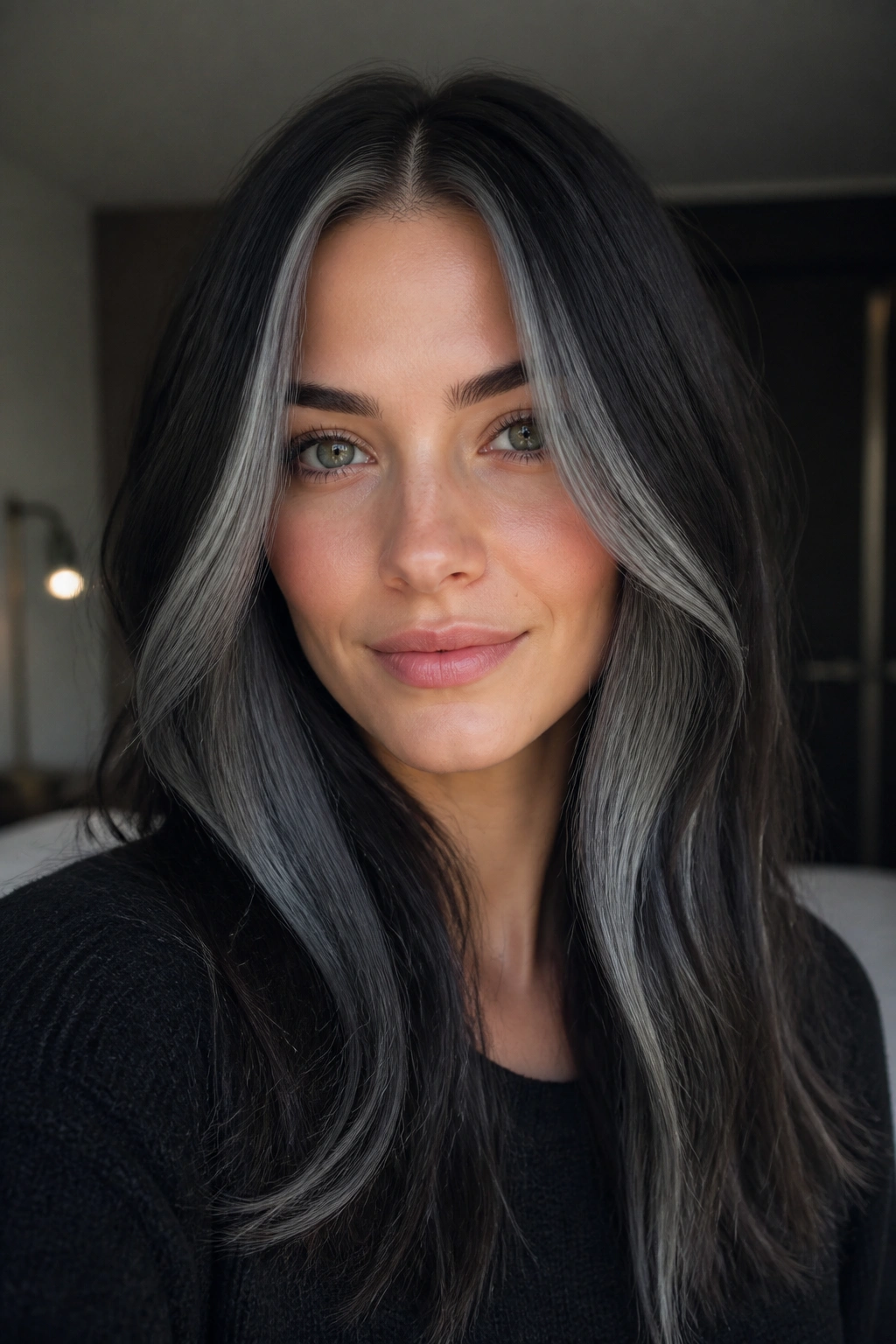
A graphite money piece is one of the easiest ways to wake up black hair for cool skin tones. The front sections are lifted to a smoky gray or graphite silver, while the rest of the hair stays black or near-black. The result is bright around the face without losing the depth in the rest of the style.
Why does that matter? Because cool skin often looks better when the lightest color sits near the cheekbones and temples. It softens the hairline and gives your face a little framing without needing a full-head lighten.
How to Ask for It
Tell your colorist you want two face-framing panels, not a wide blonde money piece. Keep the tone ash, steel, or graphite — no beige, no gold. If your hair is curly, ask for the lighter pieces to start below the bend of the curl so they do not disappear.
A neat middle part makes this look crisp. A deep side part makes it feel a little more dramatic.
4. Rooted Smoky Ombré
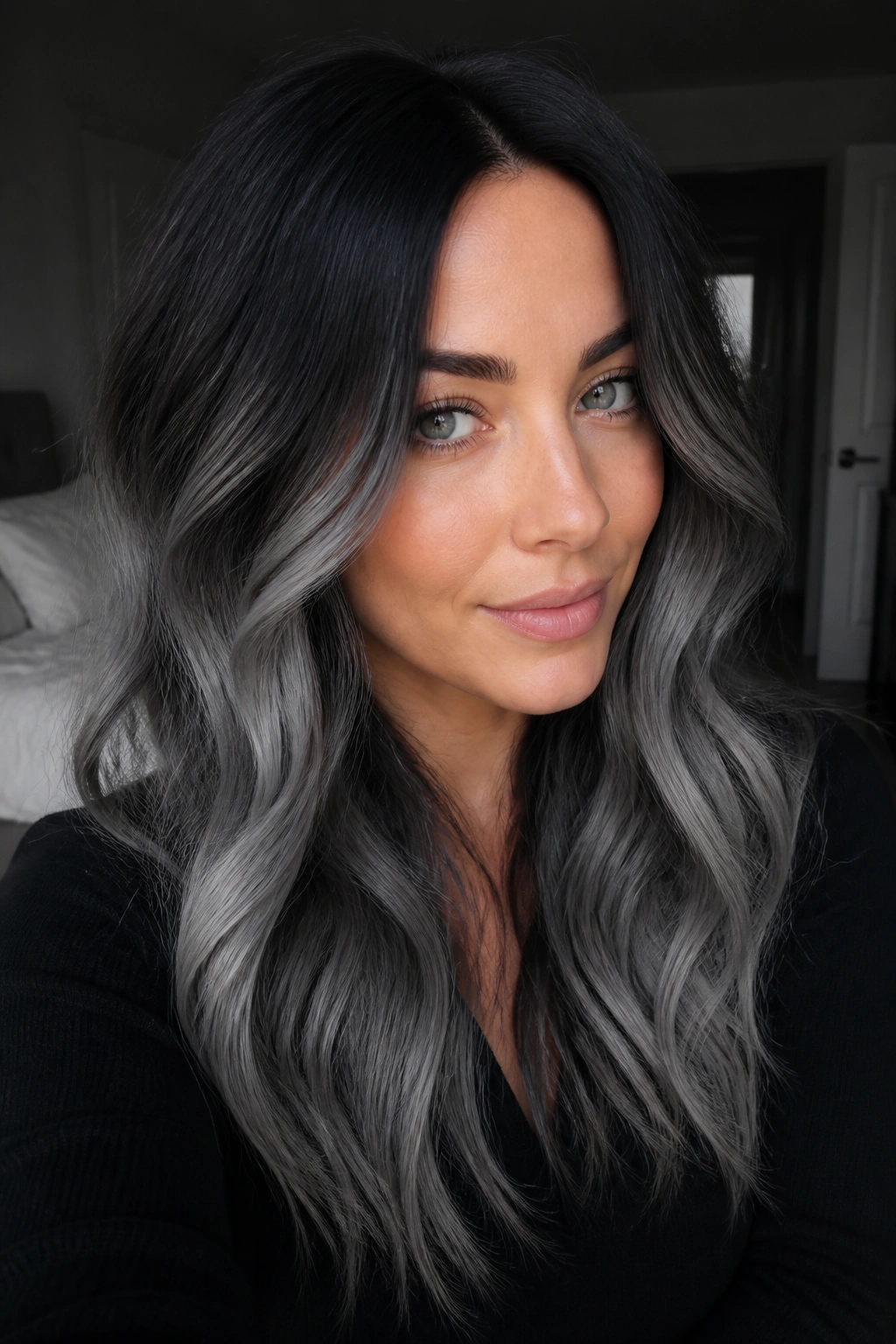
A rooted smoky ombré is a strong option if you like gray but hate obvious regrowth. The black root area stays heavy and glossy, then the color fades into smoky gray through the mid-lengths and ends. It looks soft, but not soft in a bland way. More like smoke moving across dark glass.
This style suits cool skin because the fade keeps everything on the ash side. If the gray turns too warm, the whole look can slide into dullness. But when the melt is handled well, the contrast feels chic and easy to wear.
What to Watch For
- Keep the root area rich and neutral-black
- Ask for a blurred transition line around the ears and jaw
- Let the ends go lighter than the mids for a true ombré effect
- Style with a 1.25-inch curling iron for a loose bend, not tight curls
I’d choose this for long hair first. The gradient has room to breathe there.
5. Ash-Black Allover Gloss
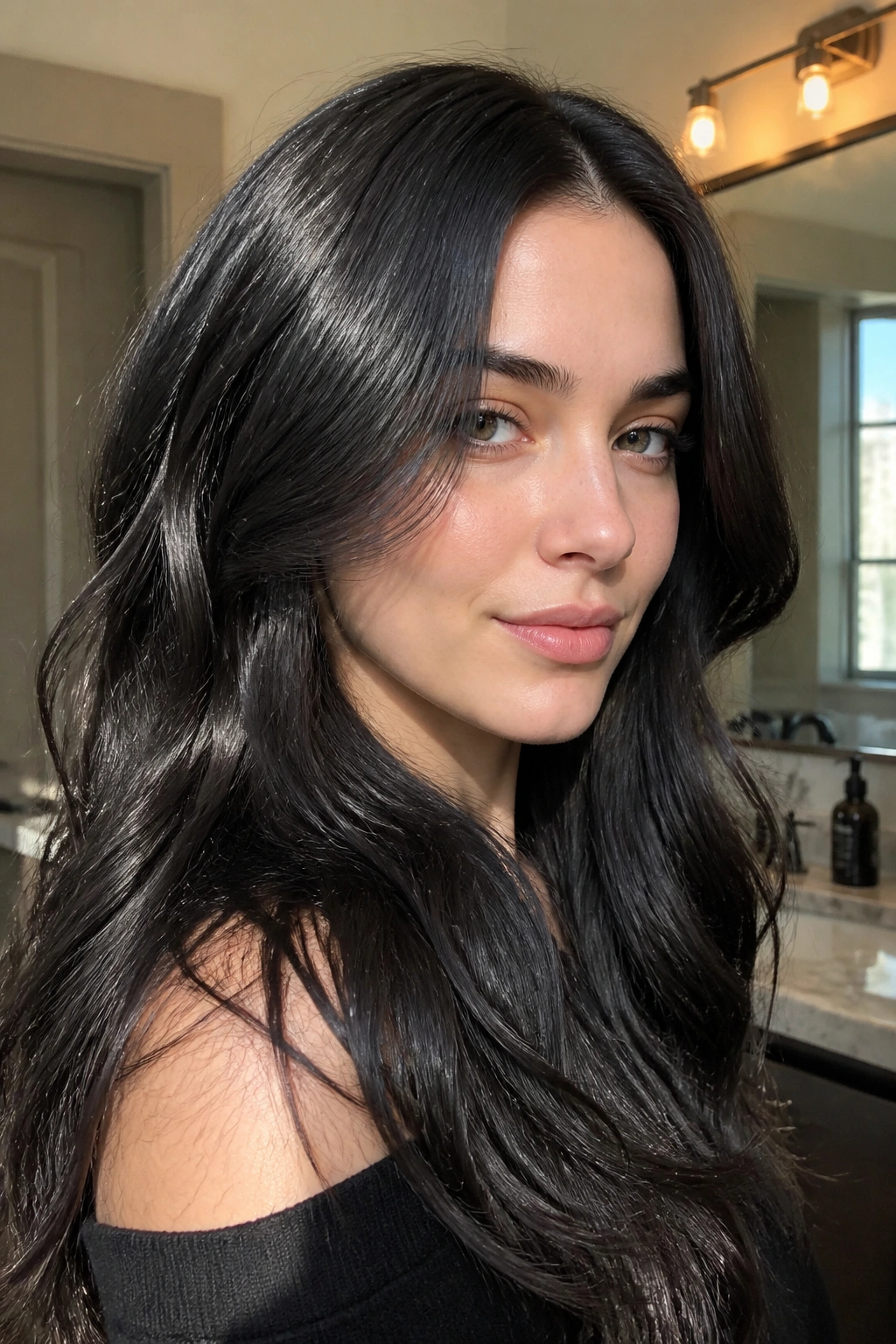
Sometimes the smartest move is the least dramatic one. Ash-black allover gloss gives you a full dark base, but the undertone is cooler and smokier than plain black. On cool skin, that can look cleaner than pure jet black, which sometimes reads a little too hard around the face.
This is the kind of color that does not need much explaining. It just works when you want depth, shine, and a shade that feels dark without feeling flat. It’s also one of the easier black grey hair color ideas to maintain because you are not chasing a bright silver tone every few weeks.
A good gloss should look reflective in daylight and almost liquid indoors. If the finish is matte or chalky, it has probably gone too far toward gray pigment and not far enough toward shine. Keep a clear shine serum on hand, but use a pea-sized amount. Too much and the whole head goes greasy.
6. Silver Peekaboo Panels
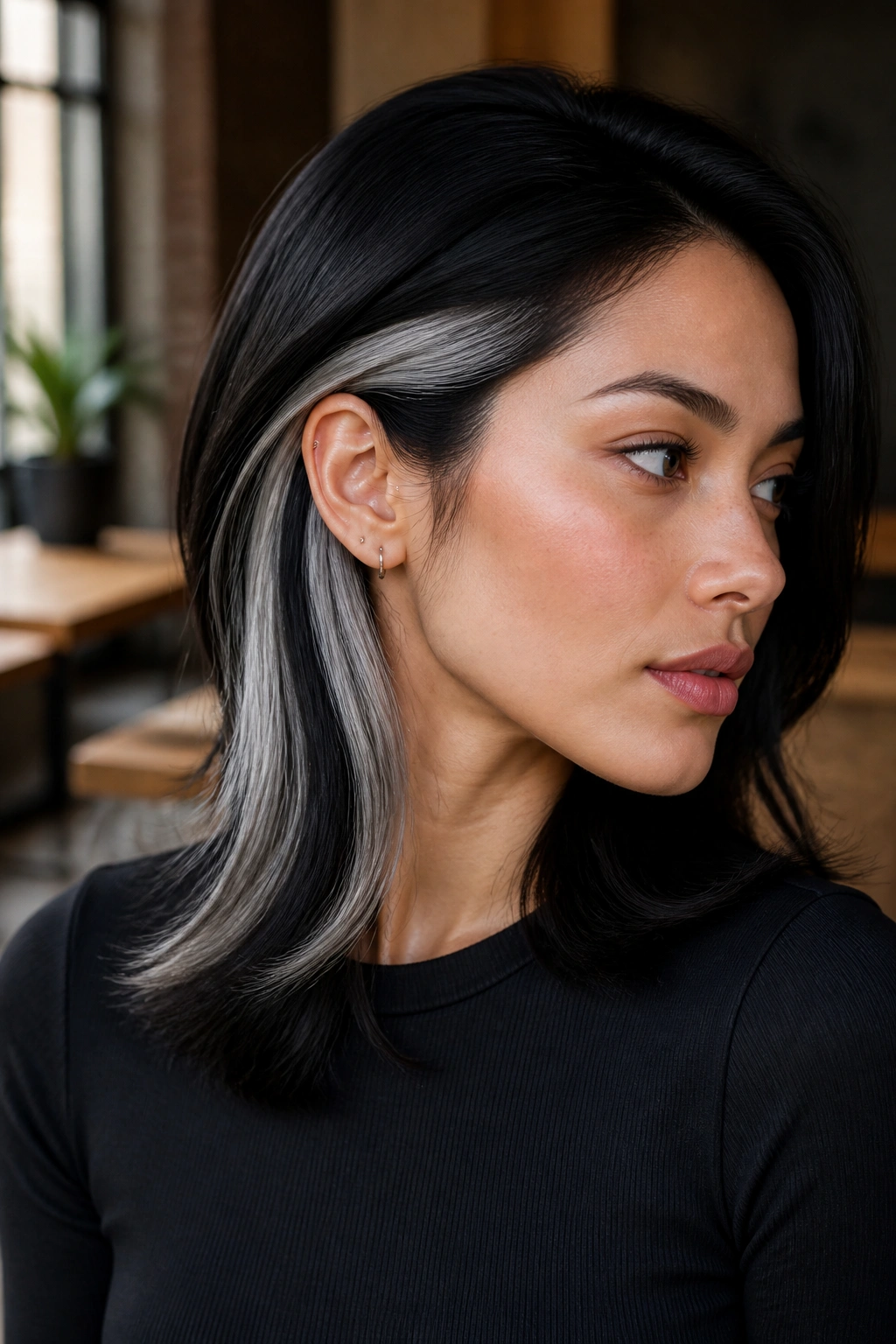
Silver peekaboo panels hide the drama underneath. From the top, the hair can still look black and sleek. Move it around, and those hidden silver strips flash through the layers like a secret. It’s a good fit for cool skin because the silver never has to fight with warm tones; it shows up as a crisp, icy surprise.
Unlike highlights that sit on the surface, peekaboo color feels a little more playful. You can keep it subtle at work and let it show when your hair is pinned half-up or worn in a loose wave. That flexibility is half the appeal.
Best placement: under the crown, behind the ears, or along the lower half of a lob.
If you want a version that grows out gracefully, keep the silver panels narrow and place them where the hair naturally falls apart. That way they appear in motion, not in a stripe.
7. Black Hair With Pewter Ribbons
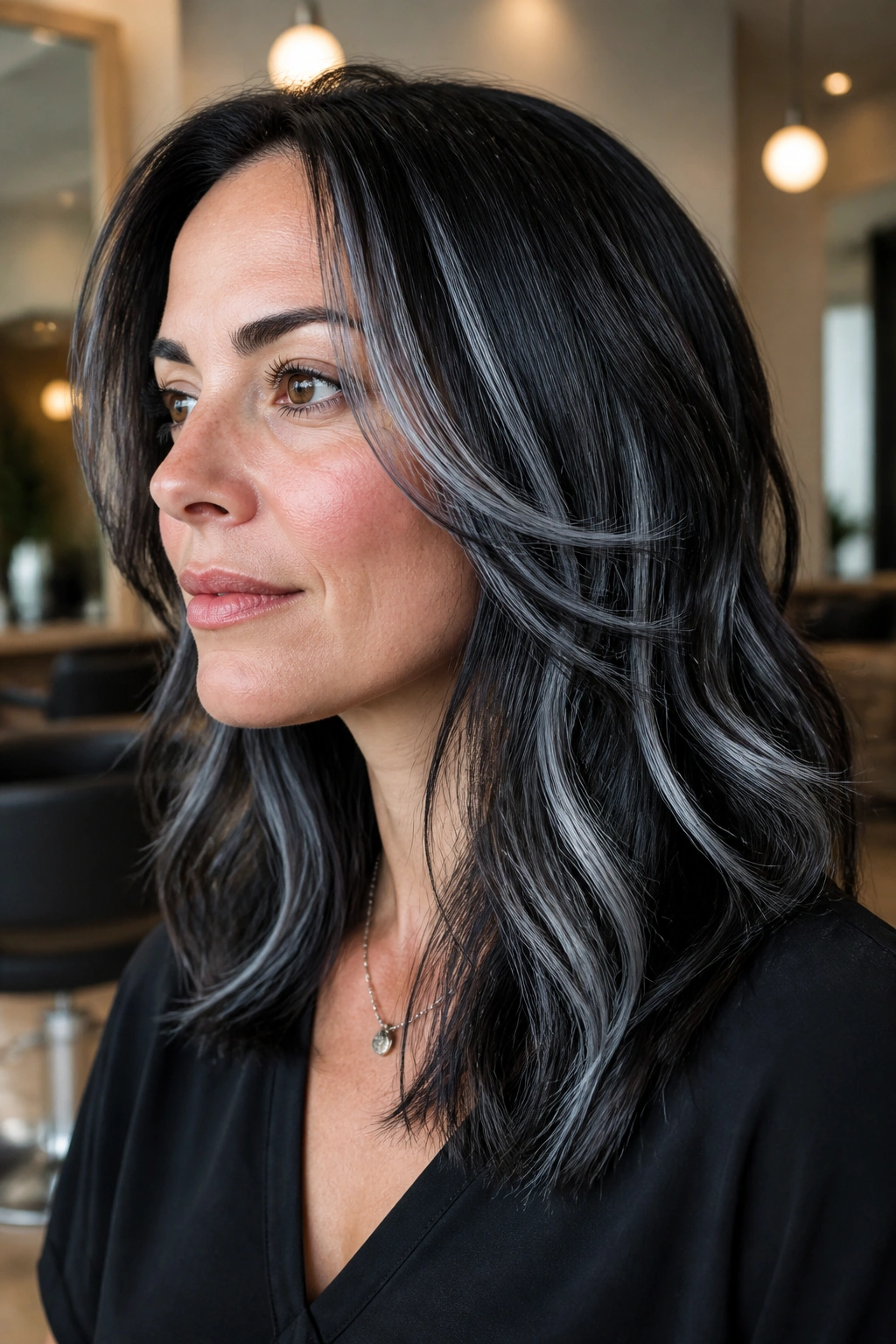
Pewter ribbons are a softer, more metallic take on gray. Instead of bright silver, you get a muted steel tone woven through black hair in thin, deliberate strands. On cool skin, the effect is flattering because it stays cool without turning icy in a harsh way.
What to Ask for
Ask your colorist for fine ribbon highlights in a pewter or gunmetal tone, placed mostly through the mid-lengths and around the face. The goal is dimension, not stripes.
- Keep the ribbons narrow so the black base still reads strong
- Let the pieces sit mostly on the outer layer for movement
- Style with soft waves to show the contrast
- Refresh with a cool-toned gloss every 4 to 6 weeks
This one is especially nice if your hair is thick. The ribbons stop the color from looking like one solid dark sheet.
8. Midnight Black With Frosted Bangs
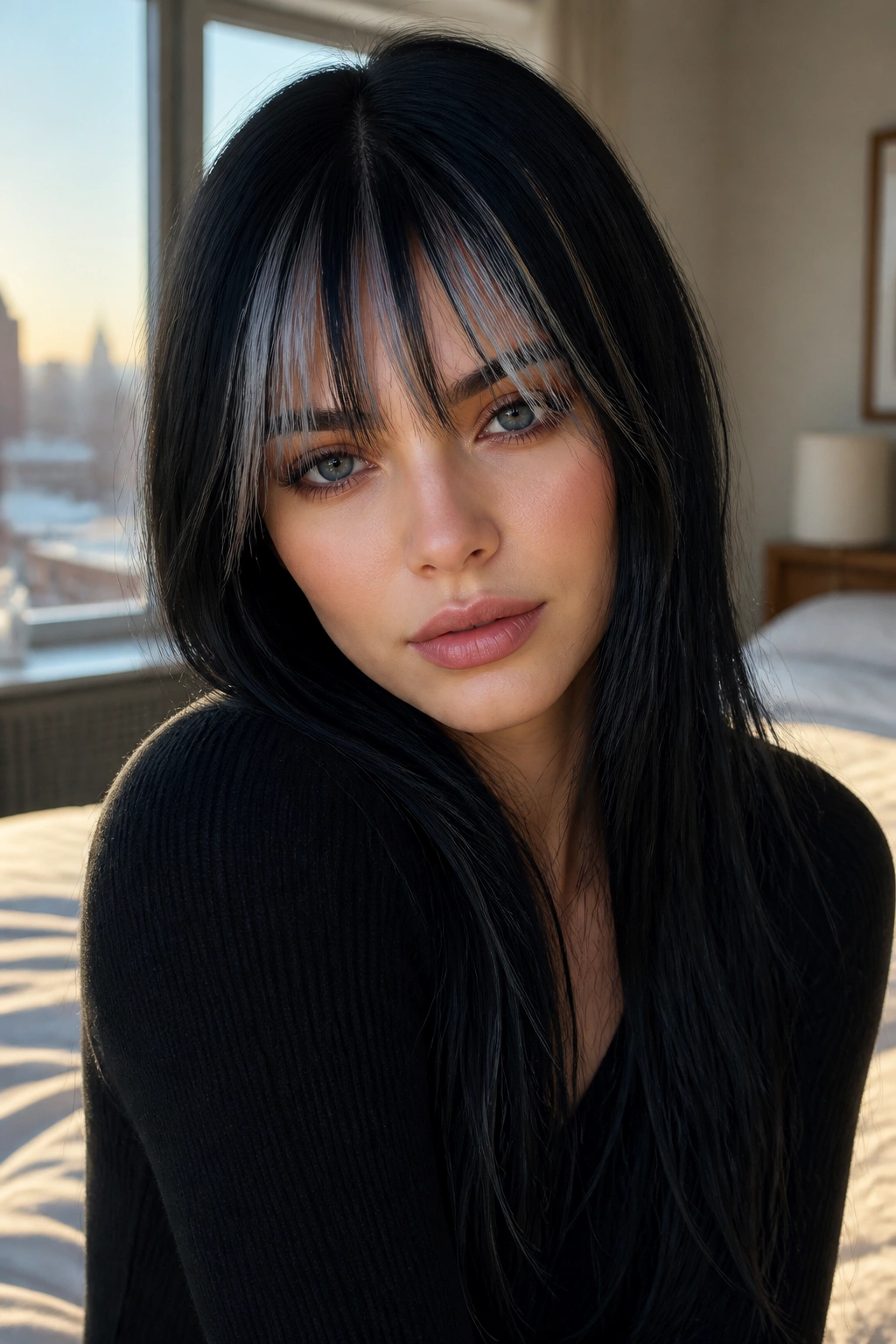
Midnight black with frosted bangs has a sharper edge than most gray looks, and I mean that in a good way. The bangs carry the color story while the rest of the hair stays rich and dark. If you have cool skin, the frosted front pieces can brighten the face without forcing you into a full silver head.
The thing people miss is that bangs can do a lot of the work. They sit close to the face, so even a narrow strip of pale gray or silver can make the whole cut feel intentional. That matters if you like contrast but do not want to bleach every section.
A soft curtain bang works especially well here because the lighter tone can feather around the eyes and cheekbones. Straight, blunt bangs create a bolder look. Both can work. The choice depends on how much edge you want to carry.
9. Smoky Silver Face Frame
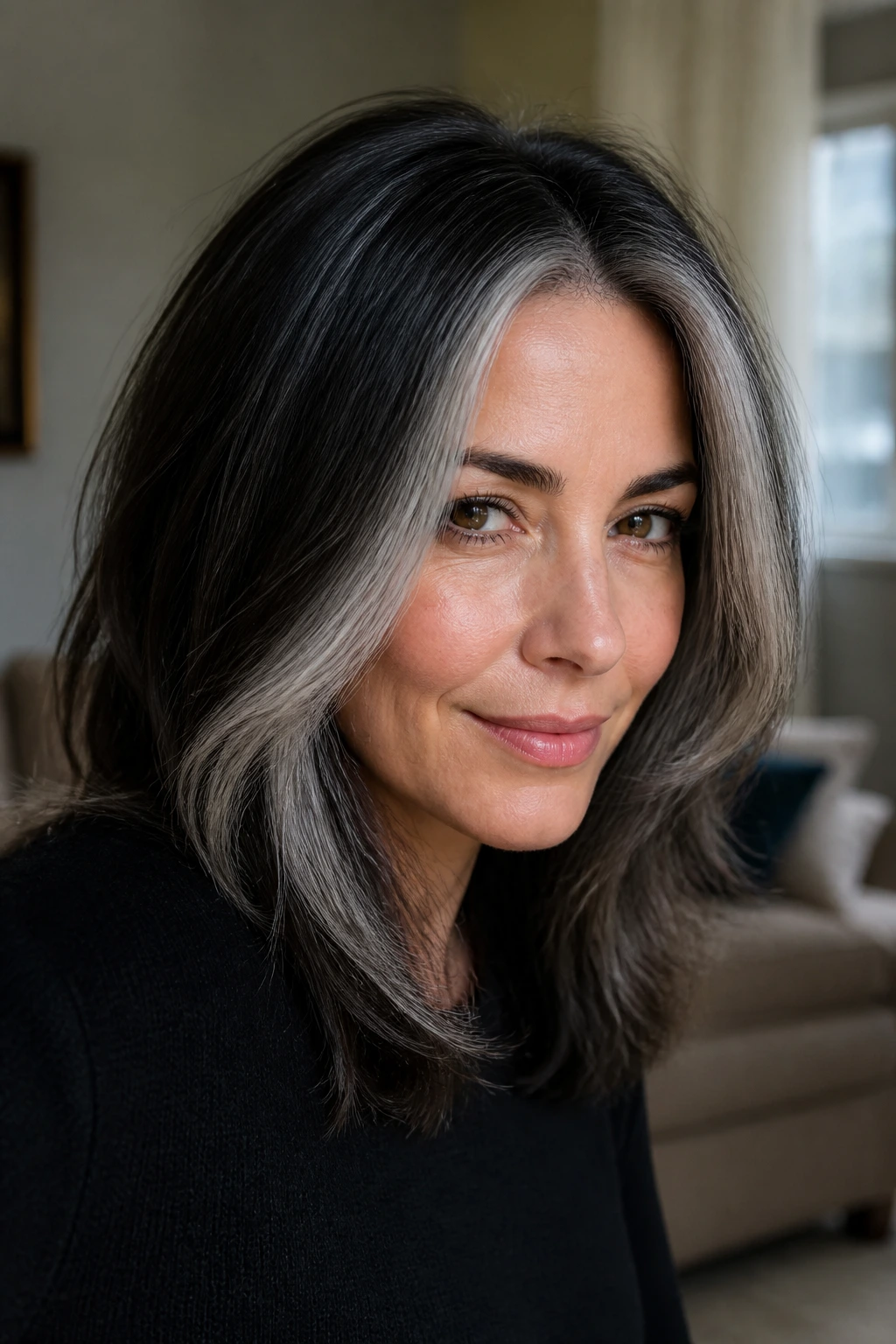
Why does a face frame matter so much? Because it’s the quickest way to make black and gray hair feel lively instead of heavy. A smoky silver face frame keeps the rest of the hair dark, then places the lightest gray around the eyes, temples, and cheekbones where cool skin tends to benefit most.
How It Shapes the Face
The lighter front sections pull the eye upward, which can make the whole cut feel more lifted. That’s especially useful with long, dark hair, where too much darkness near the front can swallow your features.
Tell your stylist you want soft silver framing pieces that fade into gray rather than bright platinum. If you wear glasses, leave a little extra space around the frame line so the color does not fight the glasses.
This look is dramatic enough to notice, but not so much that it takes over your whole style. That balance is hard to beat.
10. Charcoal And Dove-Gray Contour Highlights
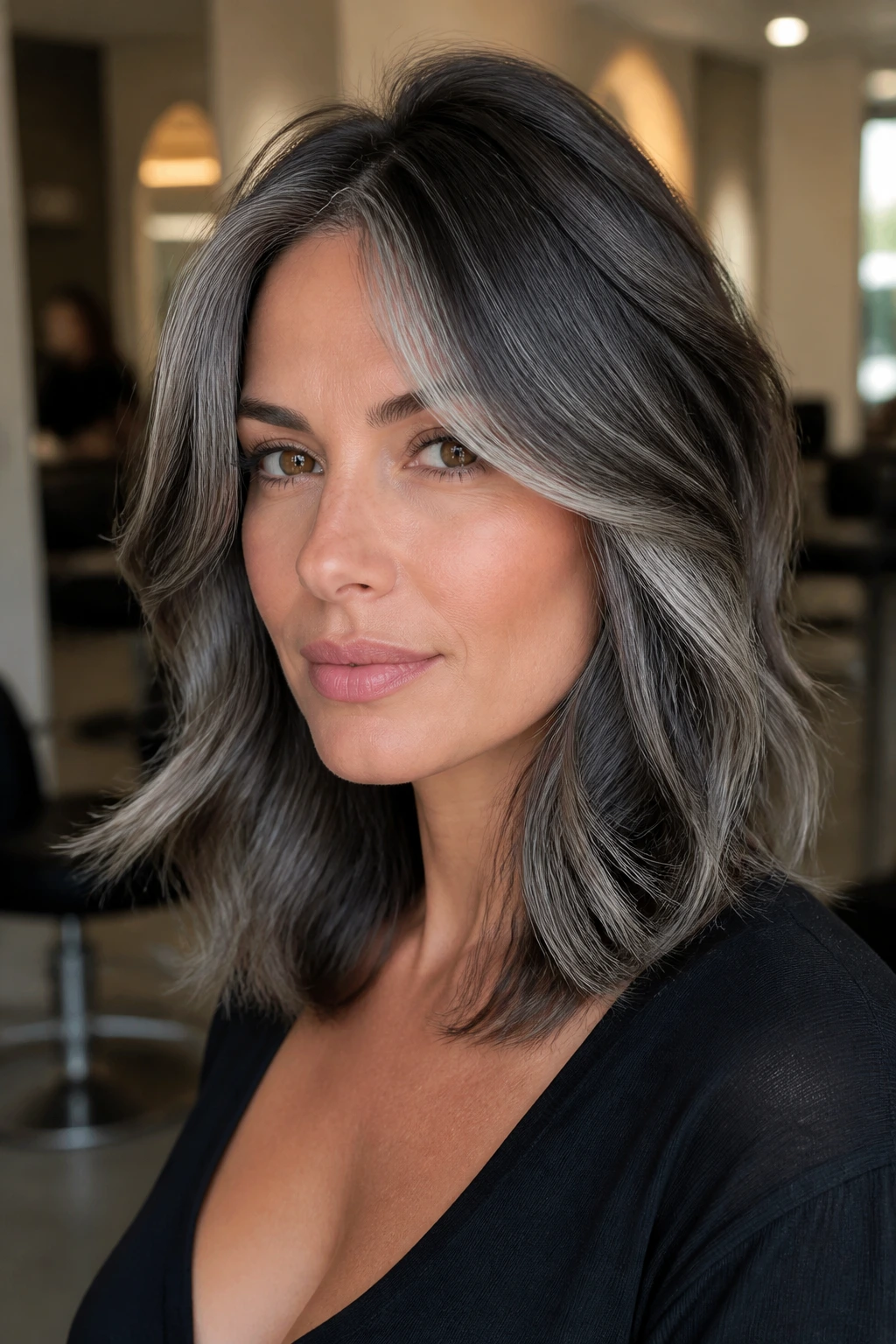
Contour highlights borrow the idea from makeup: place light where you want shape, and keep the deeper color where you want depth. In hair, that means charcoal and dove-gray pieces woven through the front layers, sides, and top surface to sculpt the cut. It’s a tidy, flattering choice for cool skin because the grays stay muted and controlled.
Picture a black lob with just a few pale gray seams near the jawline and temples. The cut looks sharper. The hair looks fuller. And because the tones are cool, the face does not get overwhelmed by warmth or brass.
Useful Placement Notes
- Put lighter pieces around the cheekbones, not just at the ends
- Keep the crown darker if you want more lift
- Use this with layered cuts, not one-length hair only
- Ask for ash, dove, or stone-gray toner, not beige-gray
This is one of those color choices that looks subtle on the hanger and expensive on the head. Rare, but true.
11. Black-To-Steel Melt
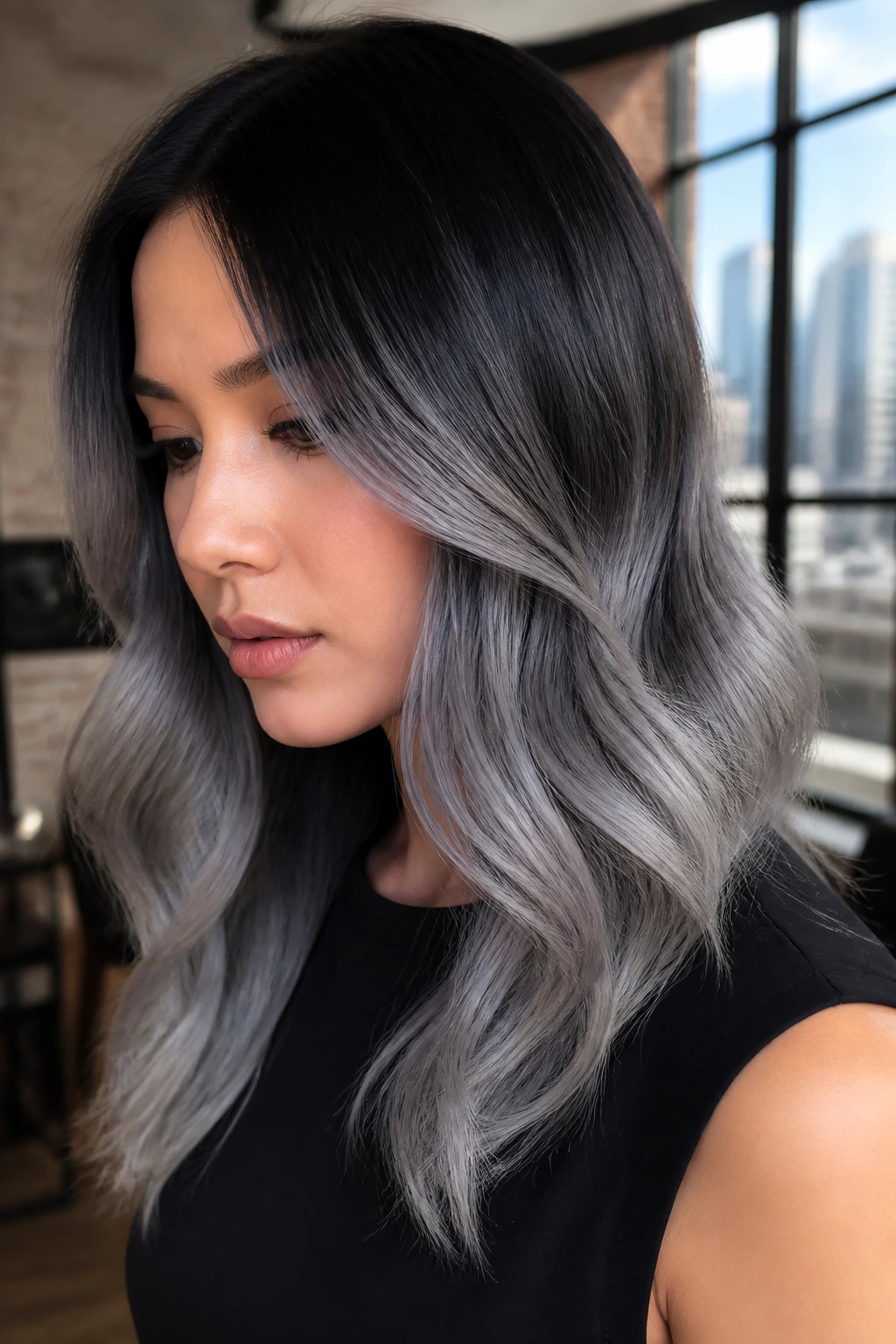
A black-to-steel melt is for someone who wants the gray to feel smooth, not striped. The hair starts black at the roots and slowly turns into a steel-gray finish through the mids and ends. There should be no sharp line. If you can see the color change from six feet away, it probably needs more blending.
This style flatters cool skin because steel gray carries that chilly, metallic cast that sits naturally next to pink or blue undertones. It looks especially good on straight hair and loose waves, where the gradient can stretch out instead of bunching together.
The best versions feel glossy, almost polished. You want shine here, not a dry, dusty finish. That means regular masks, but not heavy oils that dull the metallic tone.
12. Gunmetal Babylights
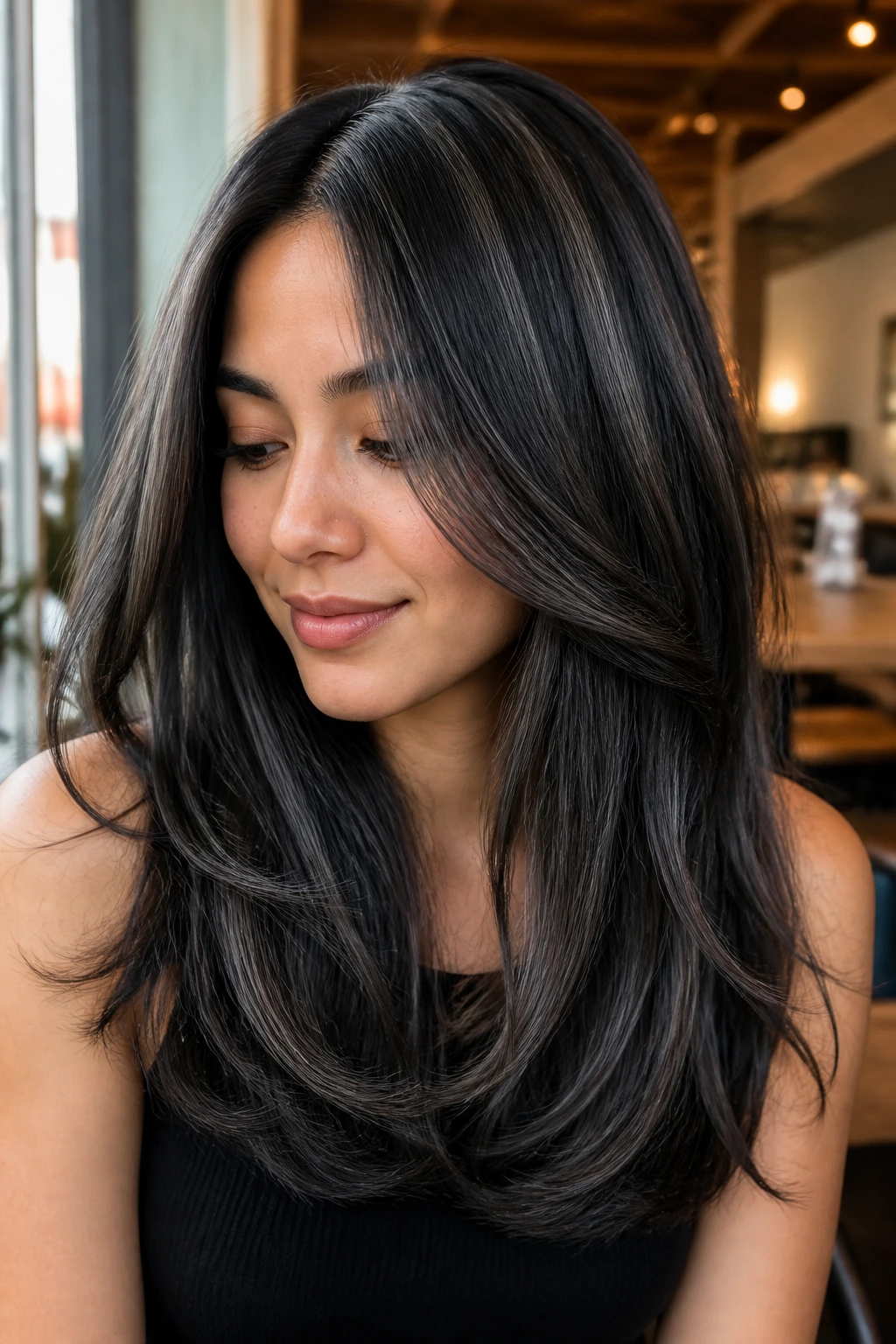
Gunmetal babylights are tiny, fine highlights that add texture without stealing the show. Compared with chunky silver streaks, these are much quieter. They work by breaking up the black base with narrow, cool gray threads that catch movement and make the hair look thicker.
That’s a useful trick if your hair is fine or medium in density. Huge highlights can look patchy on that kind of hair, while babylights keep the whole head looking blended. On cool skin, the gunmetal tone reads crisp rather than warm.
Unlike chunky contrast pieces, babylights are better for someone who wants a more expensive-looking finish than a bold color statement. They’re also easier to wear with makeup because the hair does not dominate the face.
A middle part and a glossy blowout show them best. If your hair is curly, ask for the babylights to be placed where the curl opens, not buried inside the coil.
13. Dimensional Smoke Lights On A Black Bob
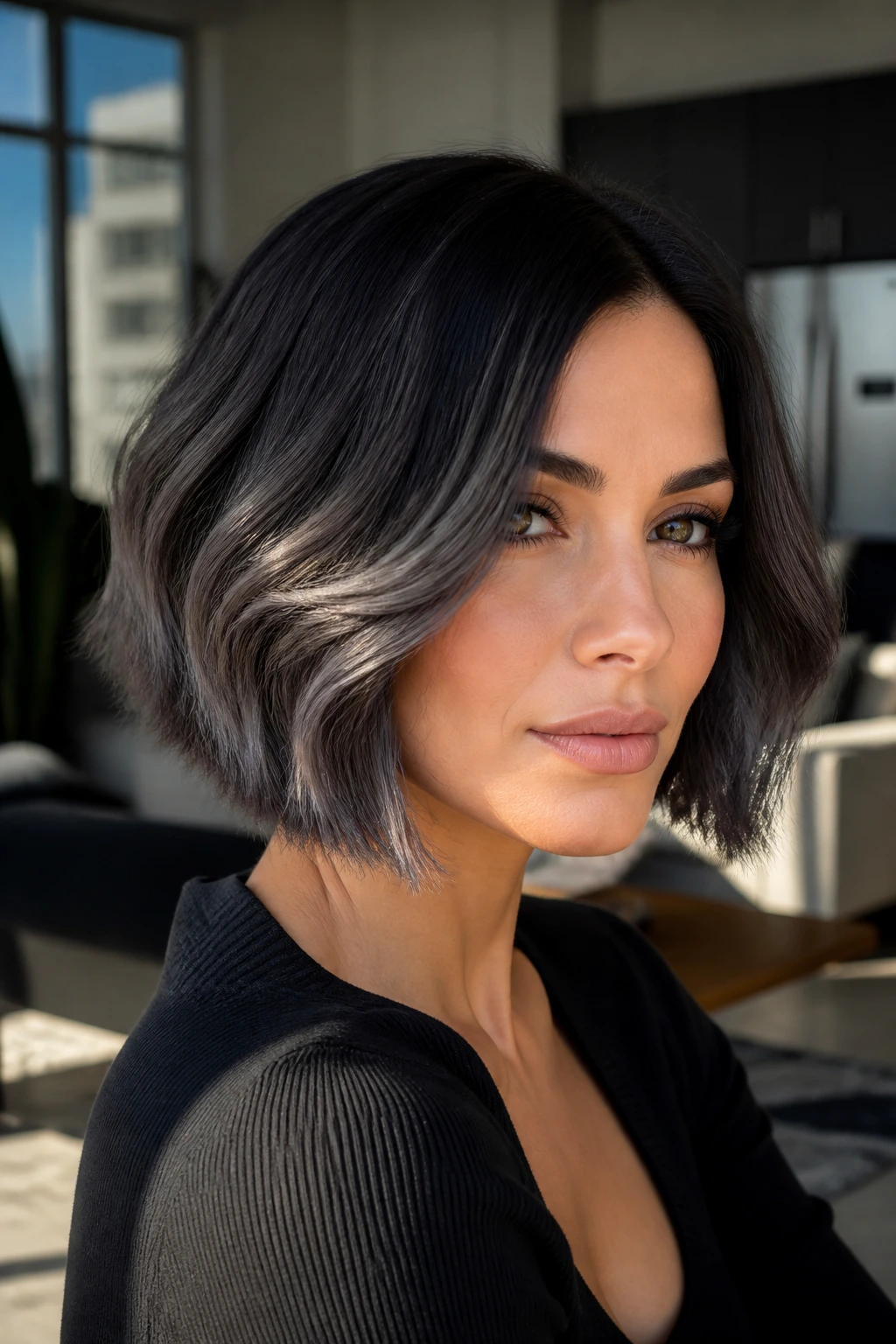
A black bob with smoke lights can look almost architectural. The cut gives you a clean shape, and the gray ribbons add movement inside that shape so it does not feel too blocky. On cool skin, smoke lights work because they stay soft, ash-based, and a little mysterious without tipping into brown.
What Makes It Read Well
The contrast is strongest on a blunt bob or a slightly stacked one. If the cut has weight at the bottom, the smoke lights stop it from looking helmet-like. That’s a real issue with dark bobs, and it’s why placement matters so much.
- Keep the light pieces around the outer curve of the bob
- Use 1 to 2 shades of gray, not 5
- Tuck the color a little higher near the back if you want movement
- Finish with a shine spray, not a heavy cream
This is one of my favorite looks for short hair. It has shape, and shape matters.
14. Ash-Gray Underlights
Ash-gray underlights are one of the easiest ways to test gray color without committing to a fully bright top layer. The top stays black and polished. The underneath sections get lifted to ash-gray, so the color appears when hair swings, ties back, or moves in the wind. It’s a smart choice for cool skin because the ash tone stays clean and understated.
The practical bonus is simple: you get the gray effect, but the grow-out is less obvious. That matters if you want a lower-maintenance look or you need something that can hide under a professional dress code.
The best part? You can control how visible it is. Wear the hair down for a quieter look. Twist it into a bun or half-up style, and the underlights show up fast.
15. Black Hair With Slate-Gray Ends
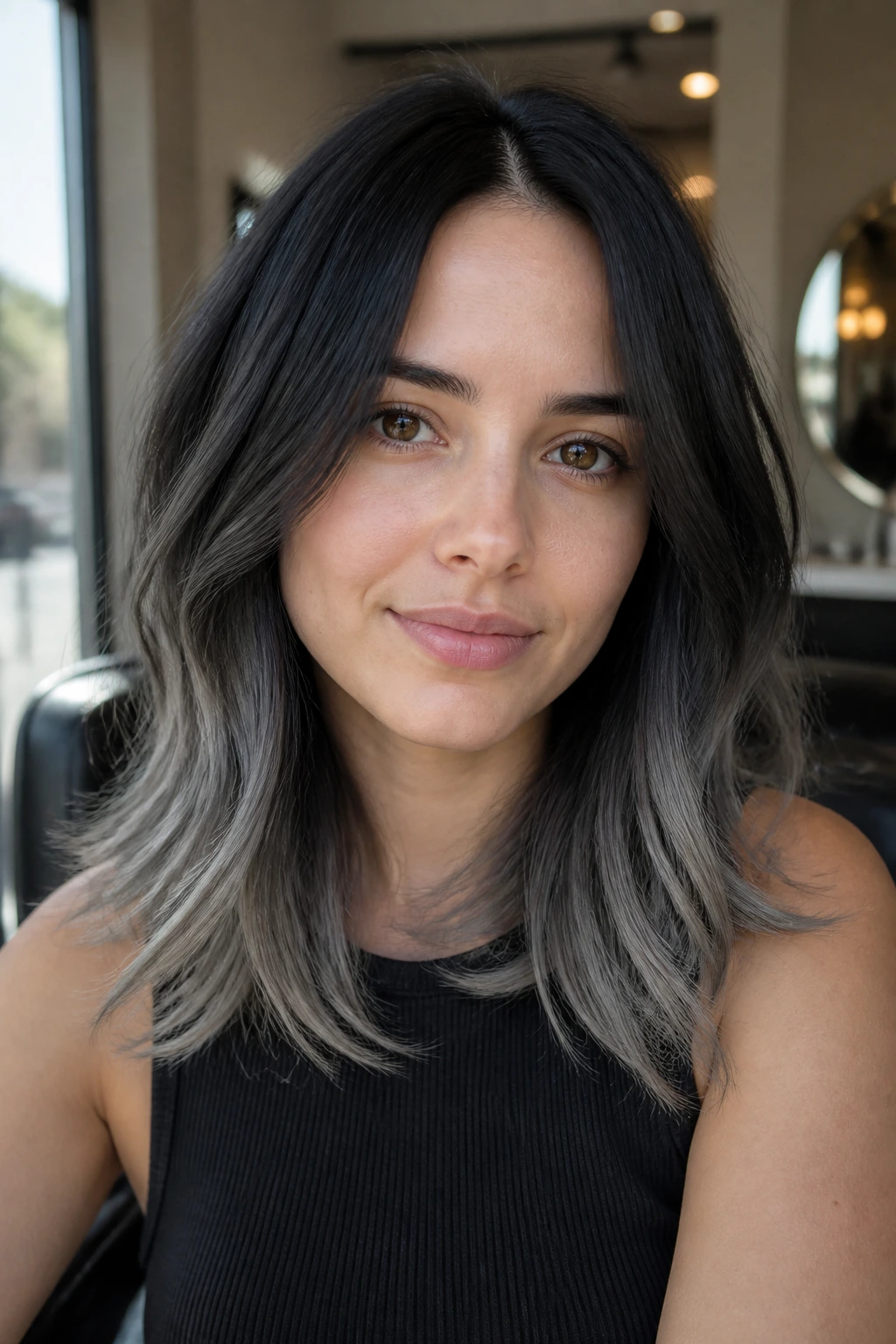
Slate-gray ends give black hair a softer edge than silver-dip dye. Slate sits in that cool middle zone between dark gray and steel, which makes it easier to wear if you like gray but do not want a stark contrast. Cool skin tends to handle this shade nicely because it stays muted instead of warming up.
Who It Suits Best
If your hair is shoulder-length or longer, slate-gray ends can look especially clean. There’s enough length for the fade to feel intentional, and the darker root keeps the style grounded.
How to Ask for It
Request a soft gradient from black into slate gray, with the lightest tone only at the bottom few inches. If your hair is wavy, ask for some of the gray to be painted a little higher on the front pieces so the color shows when the hair moves.
This is a gentle entry point if you want a gray look that still feels grown-up and wearable.
16. Icy Silver Mushroom Blend
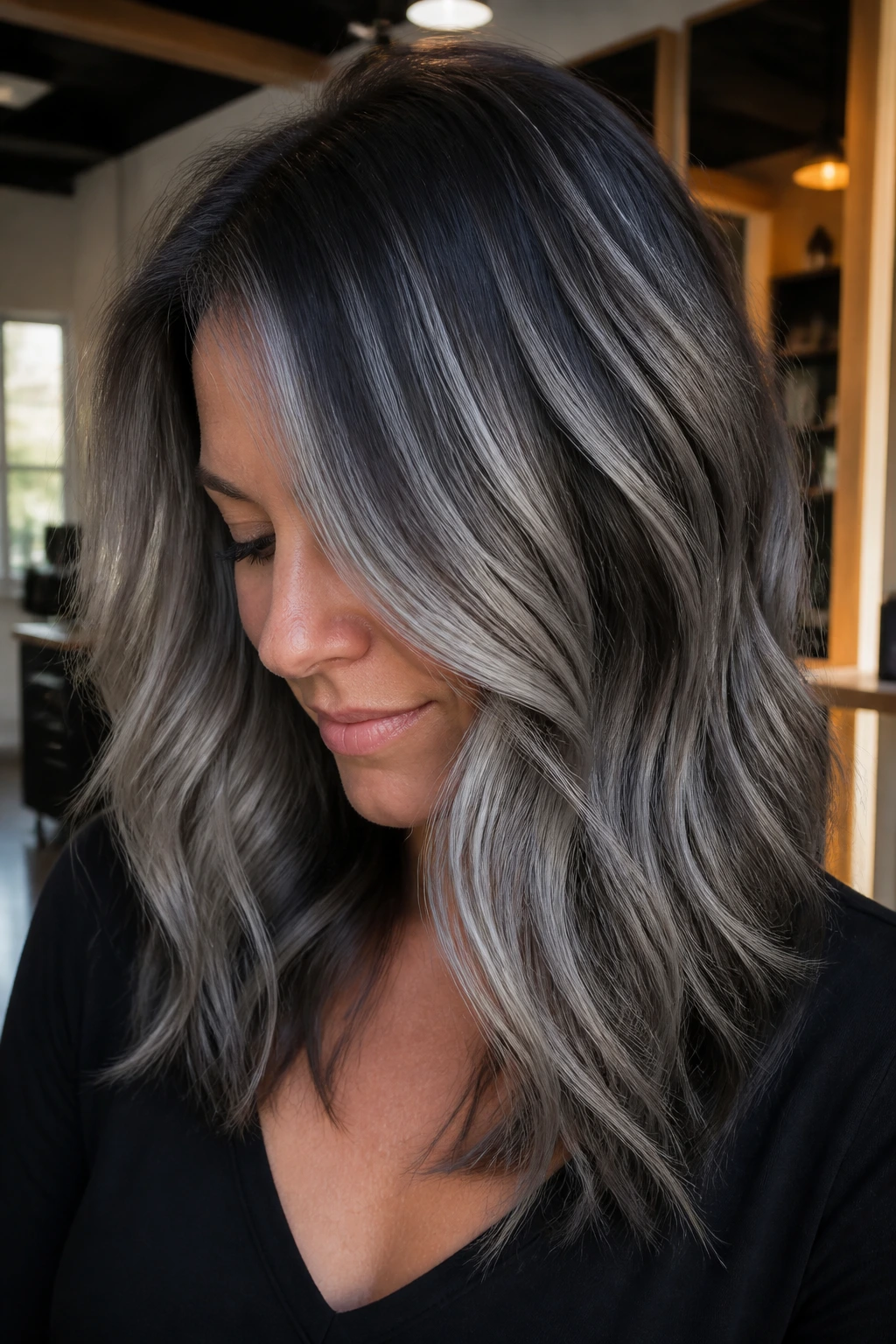
This one sounds odd until you see it. An icy silver mushroom blend keeps the base deep and smoky, then mixes in cool mushroom-gray and silver strands so the whole head has a soft, cloudy finish. It’s not warm mushroom brown. It’s the cooler, sharper cousin of that idea.
I like this for cool skin because it avoids the yellow cast that can creep into lighter gray looks. The mushroom-gray pieces soften the contrast, while the icy silver keeps the finish fresh. The result is moody, not muddy.
- Works well on layered mid-length hair
- Ask for alternating silver and mushroom-gray ribbons
- Keep the roots black or near-black
- Use purple shampoo sparingly so the silver does not over-toned and flat
On straight hair, it feels sleek. On waves, it turns misty. Both versions are good.
17. Black And Gray Split Dye
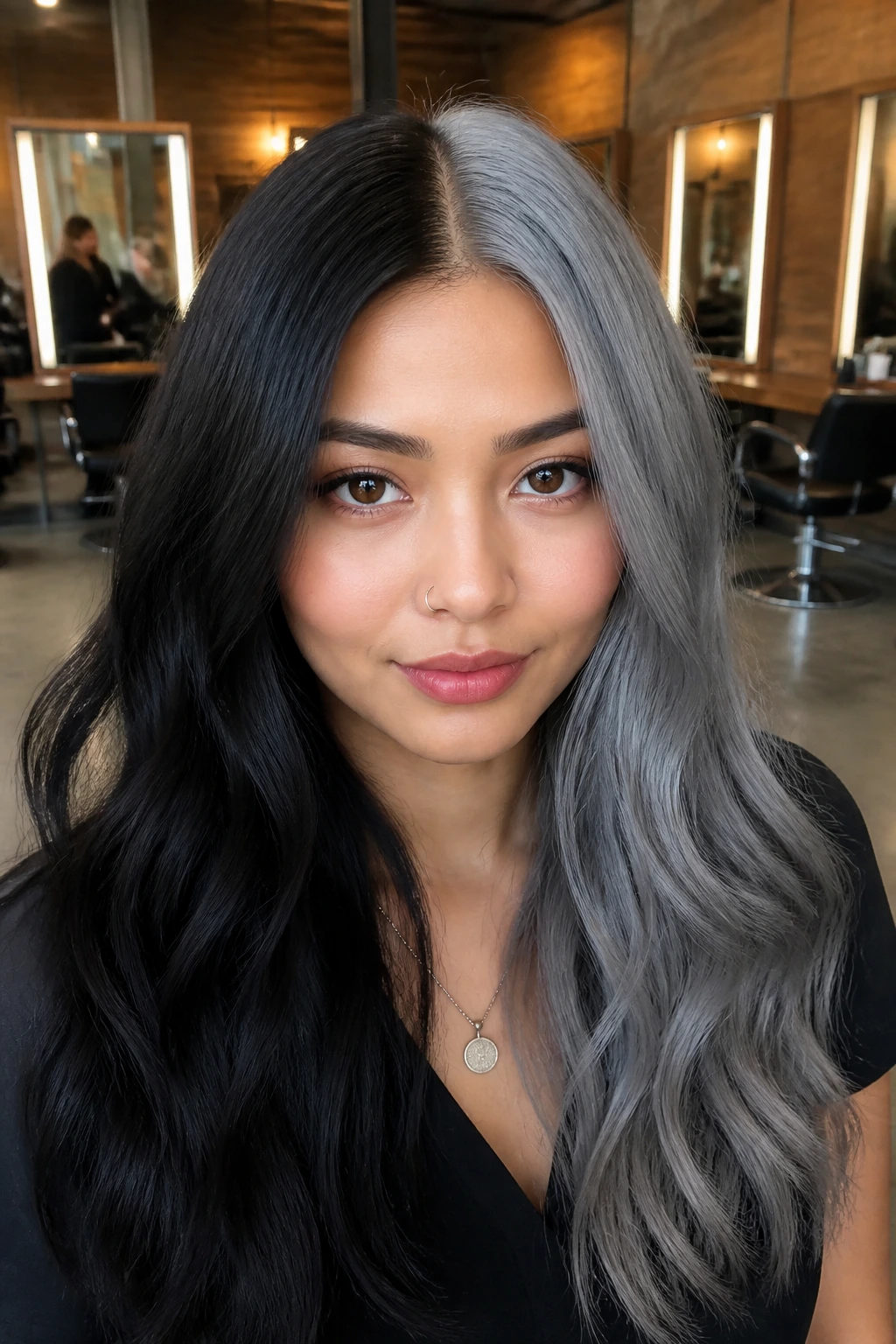
A split dye is not quiet. That’s the point. One side stays black, the other side goes gray, and the line between them is part of the whole statement. For cool skin, this can work better than warm split dyes because the gray side keeps the contrast feeling sharp instead of loud.
This look needs confidence and a clean cut. A center part makes the split dramatic. An undercut or tucked side can make it easier to wear if you do not want the contrast screaming all the time.
It is not the easiest maintenance choice, because any uneven fading shows. Still, if you want a bold black-gray color story, this is one of the clearest ways to do it.
18. Soft Salt-And-Pepper Pixie
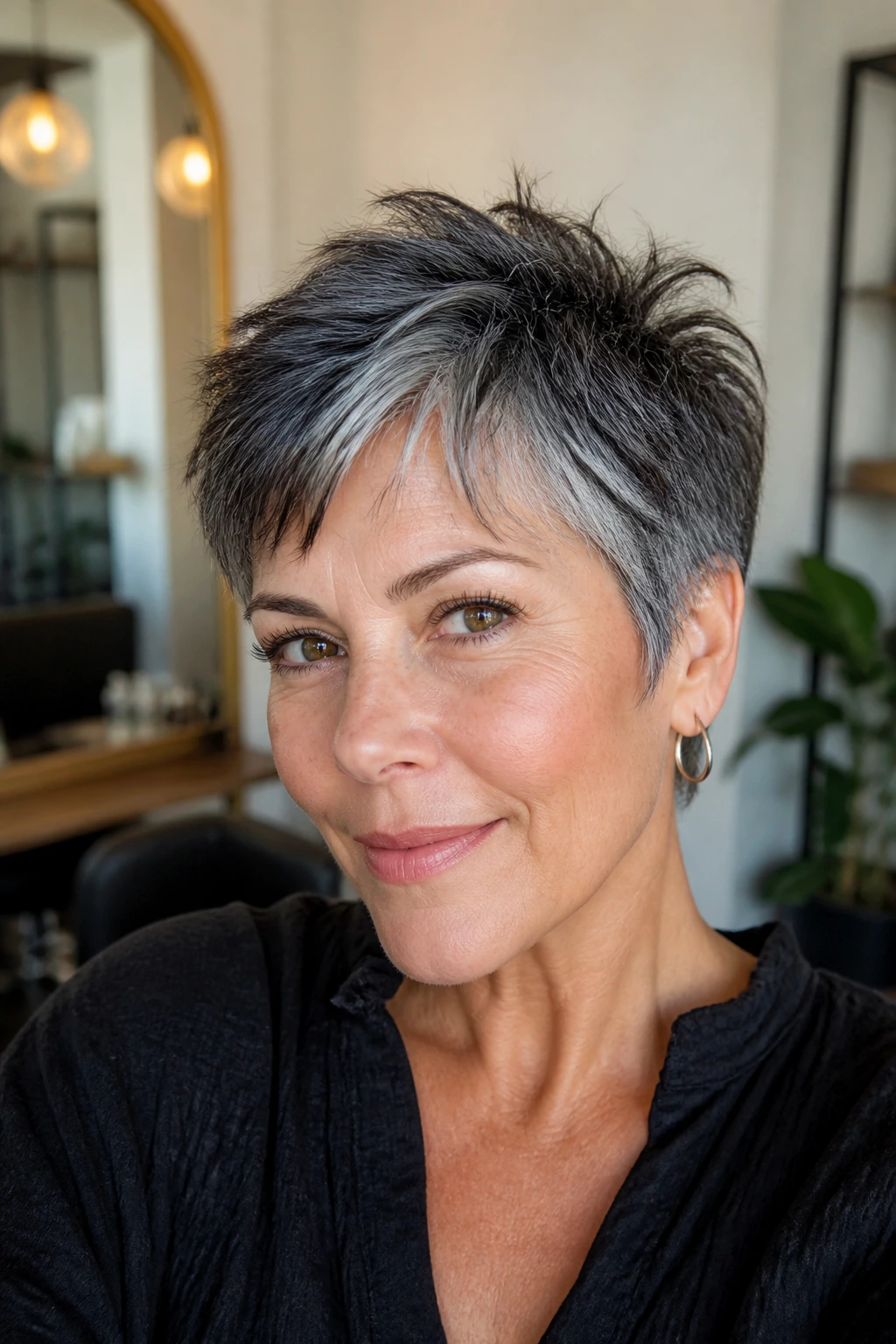
A salt-and-pepper pixie gives you one of the most natural-looking black and gray combinations on the list. The black stays underneath, the gray sits on top and around the face, and the crop lets the color layers read immediately. On cool skin, it feels especially good because the gray near the hairline can brighten the face without adding warmth.
Compared with long gray styles, a pixie needs less visual blending. That means the colors can be a little more obvious and still look refined. A longer top with tapered sides works well here because the gray can catch the light on the crown.
This is also a strong pick if you do not want to spend forever styling your hair. A little texturizing cream, a quick finger-dry, and you’re done.
19. Black Base With Platinum-Gray Feathering
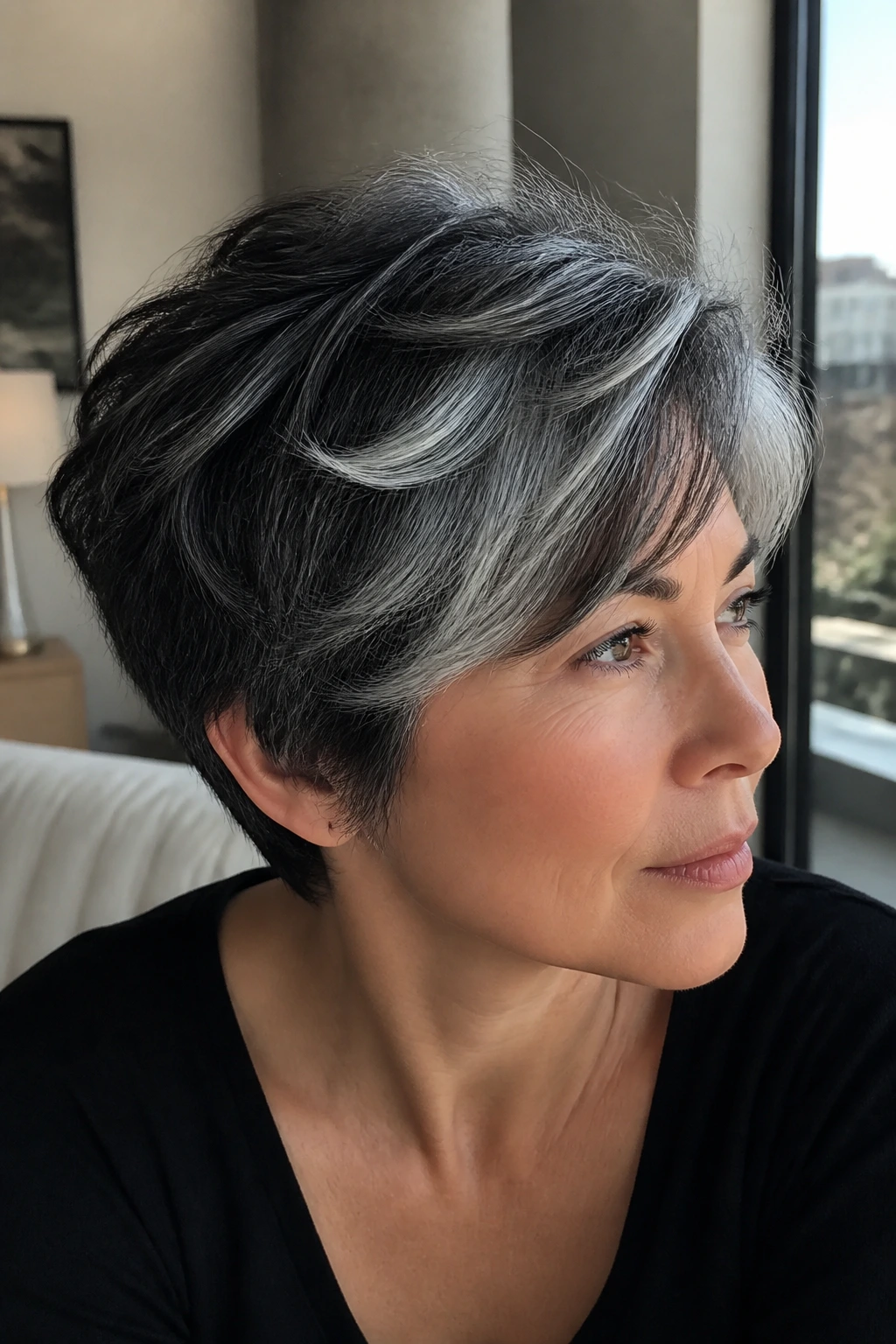
Platinum-gray feathering is for people who want lighter accents without a hard line. The highlights are soft, wispy, and tapered, almost like they were brushed into the top layer instead of dropped in with a foil map. That feathered edge is what makes the look flatter cool skin so well.
You can think of it as air around the hair, not blocks of color. The black base still does the heavy lifting, but the feathered gray pieces keep the style from looking dense. This is especially nice on layered cuts, shags, and long bobs.
A Few Placement Rules
- Keep the feathering concentrated around the top and sides
- Avoid too much lightness underneath if the cut is thin
- Ask for platinum-gray, not bright white
- Finish with loose bends so the pieces separate
It has movement, which is half the battle with black hair.
20. Graphite Curls With A Silver Halo
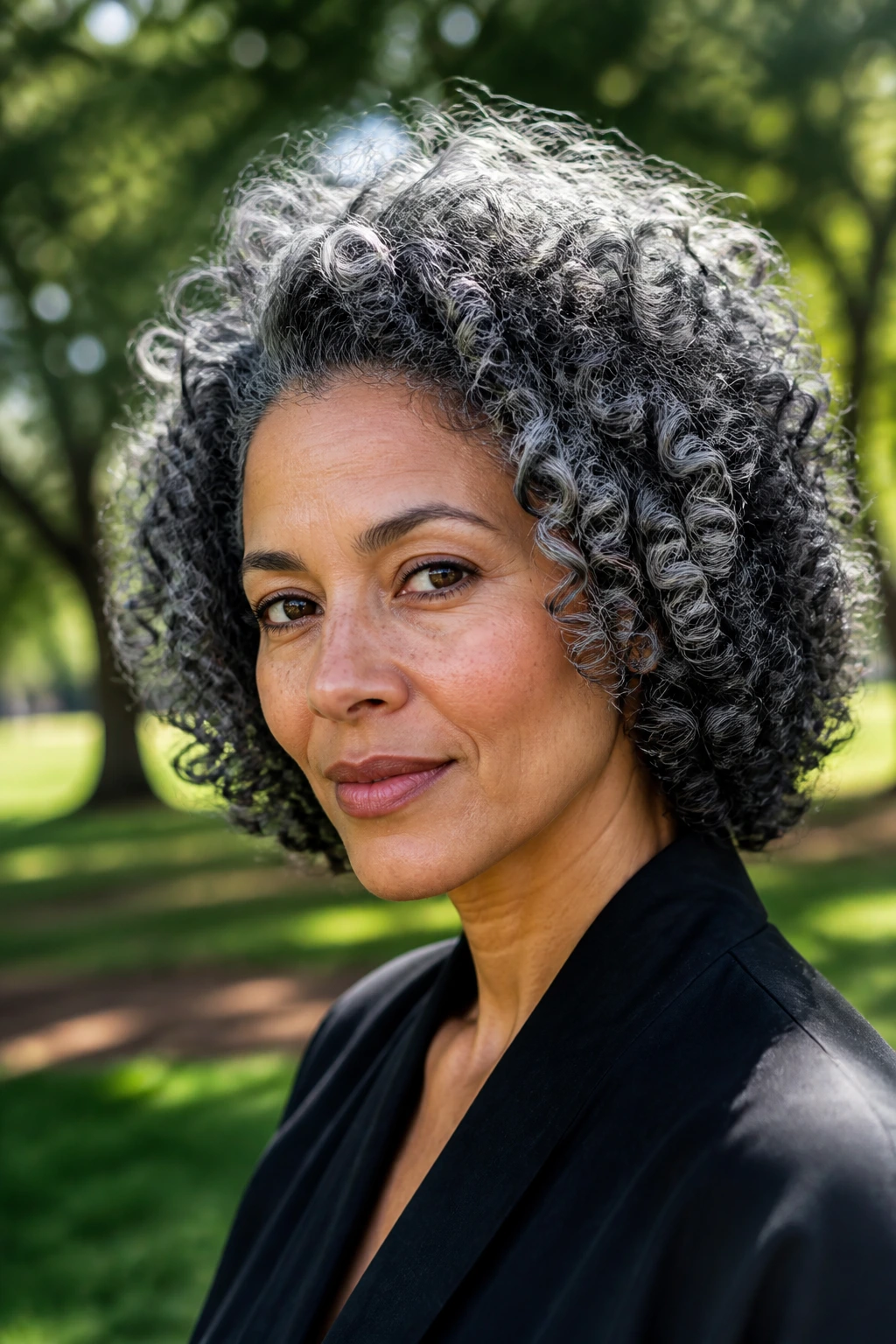
Curls can carry gray beautifully when the color is placed with the pattern in mind. A graphite base with a silver halo puts the brightest color around the outer layer and crown, where it catches the curve of the curl and gives the whole style lift. Cool skin tends to love this because the silver halo echoes the cool cast in the face instead of fighting it.
The main mistake with curly hair is over-lightening the inner layers. That can make curls look frizzy or patchy. Keep the silver on the surface, and let the graphite remain deeper inside the shape.
A diffuser helps here. So does a lightweight leave-in that keeps the curl defined but not crunchy.
21. Smoky Gray Dip-Dye
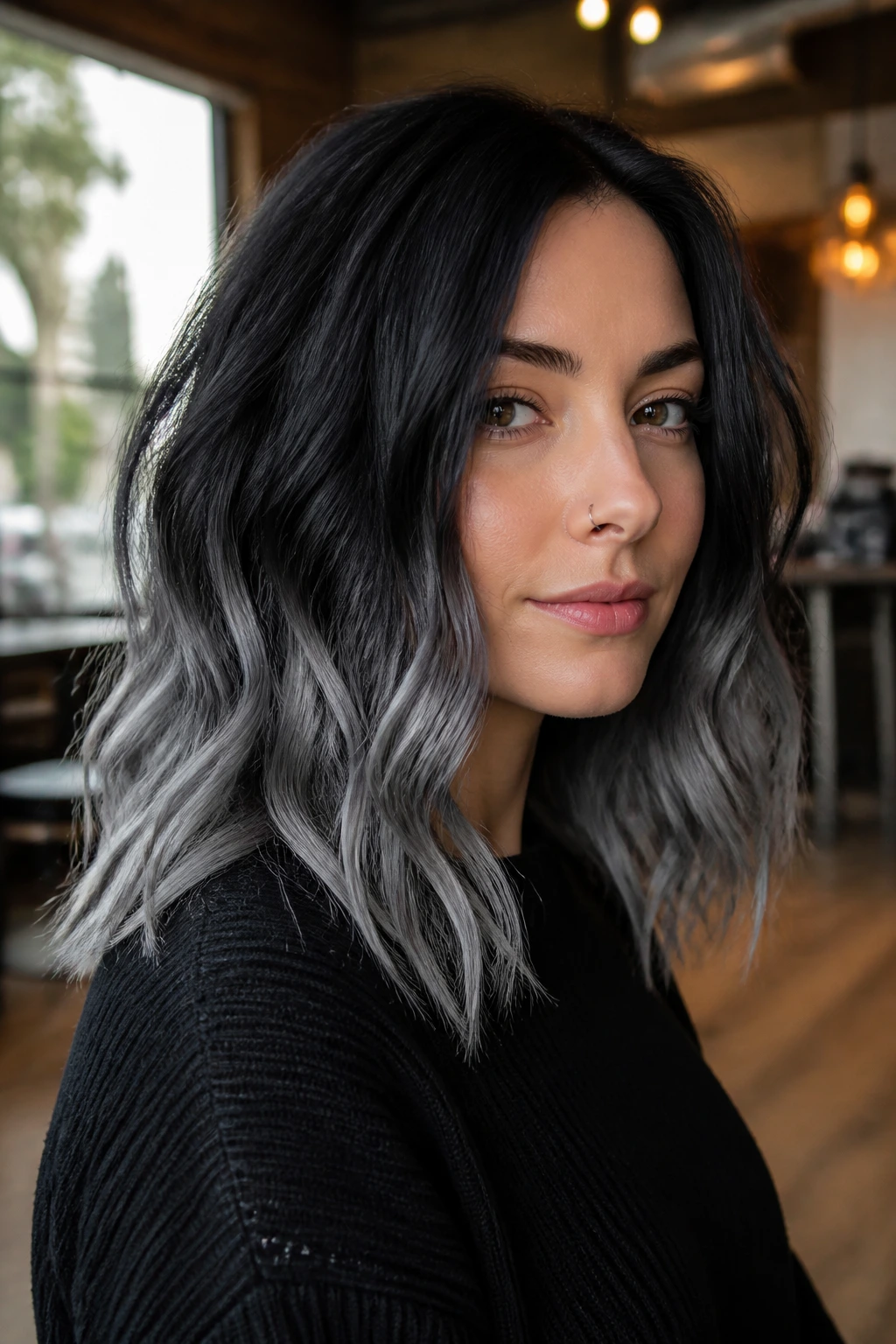
Smoky gray dip-dye is a sharper, more obvious color choice, and it works best when you want the ends to do the talking. The black stays dominant at the roots and mids, then the lower half fades into smoky gray or silver-gray. On cool skin, the finish reads sleek because the gray has a cool, shadowy tone rather than a yellow one.
Why The Edge Matters
A blurred edge feels softer, while a crisp dip-dye line feels more graphic. If your cut is straight and blunt, the sharper edge can look intentional. If your hair is layered or wavy, a blur usually wears better.
How To Get The Most From It
Ask your stylist whether the gray should start at the chin, collarbone, or lower. That placement changes the whole mood. Lower starts feel calmer. Higher starts feel bolder.
This style is a strong match for long hair because it gives the ends a reason to exist.
22. Cool-Toned Shadow Root With Silver Lengths
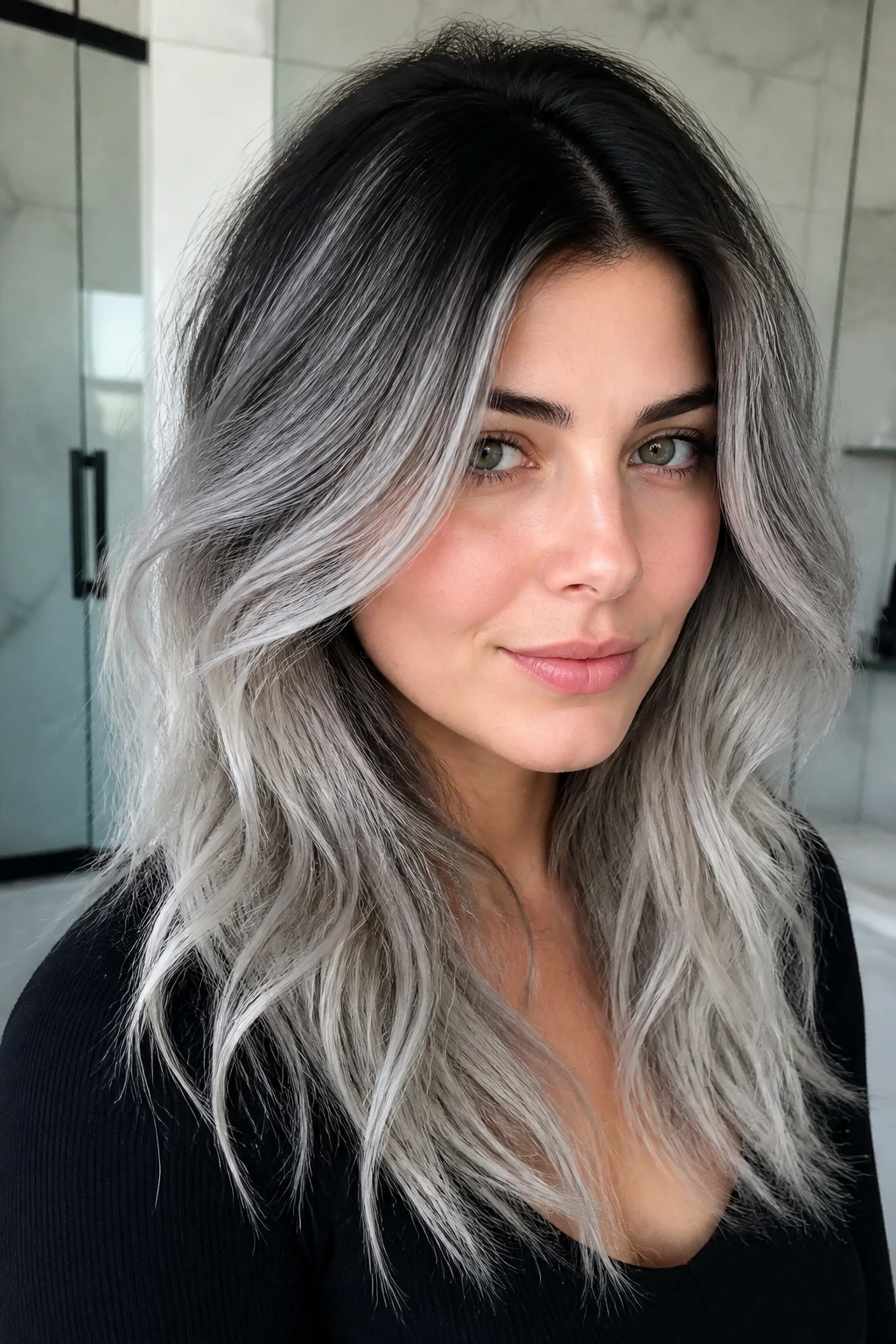
A shadow root can save you a lot of maintenance headaches, and I mean a lot. The root stays deeper black or dark charcoal, while the lengths lift into silver-gray. The darker root softens grow-out, and the silver lengths give the hair that cool, bright finish that works so well on cool skin.
If you’ve ever had pale gray color that looked gorgeous for ten days and then started showing every tiny regrowth line, this is the smarter version. The shadow root blurs the harsh line where the light color begins.
- Best for medium to long hair
- Keep the root cool, not chestnut
- Ask for silver that leans icy rather than pearl-beige
- Use a toner refresh when the silver starts to turn dull
It’s practical. It also looks expensive, which is a nice bonus.
23. Black Lob With Ashy Chunk Lights
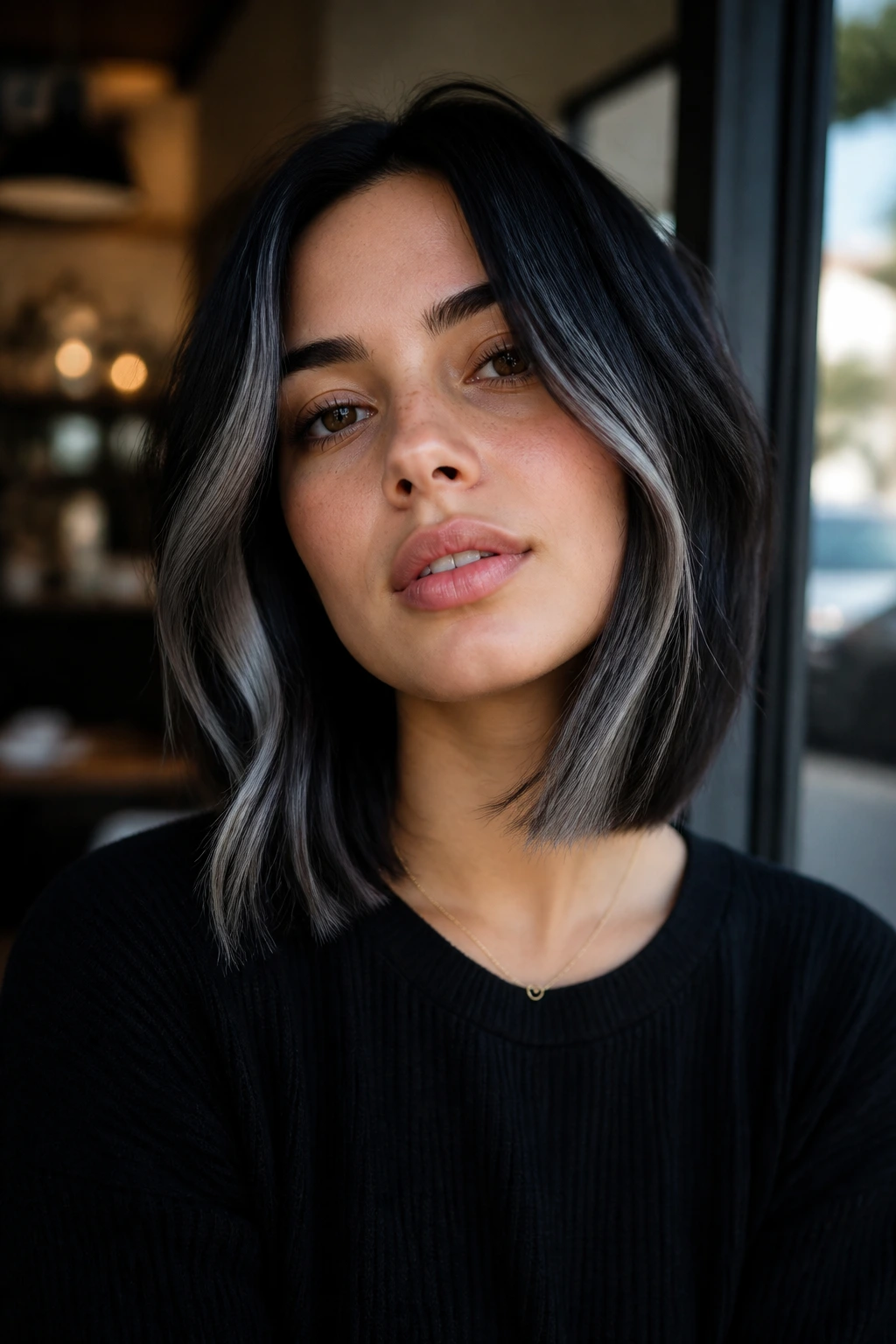
Chunk lights can look a little retro, but that can be a good thing if you keep the tones cool and the placement clean. On a black lob, ashy chunk lights add visible streaks of gray that break up the dark mass and give the cut more personality. Cool skin handles this well because the ash tone keeps the contrast from turning orange or coppery.
The trick is restraint. If the pieces are too wide, the hair can look stripy. If they’re placed mostly around the face and top layers, they give you the structure of highlights without making the look busy.
A lob is the right cut for this because it has enough length for the color to move, but not so much length that the pieces disappear.
24. Velvet Black With Metallic Gray Veil
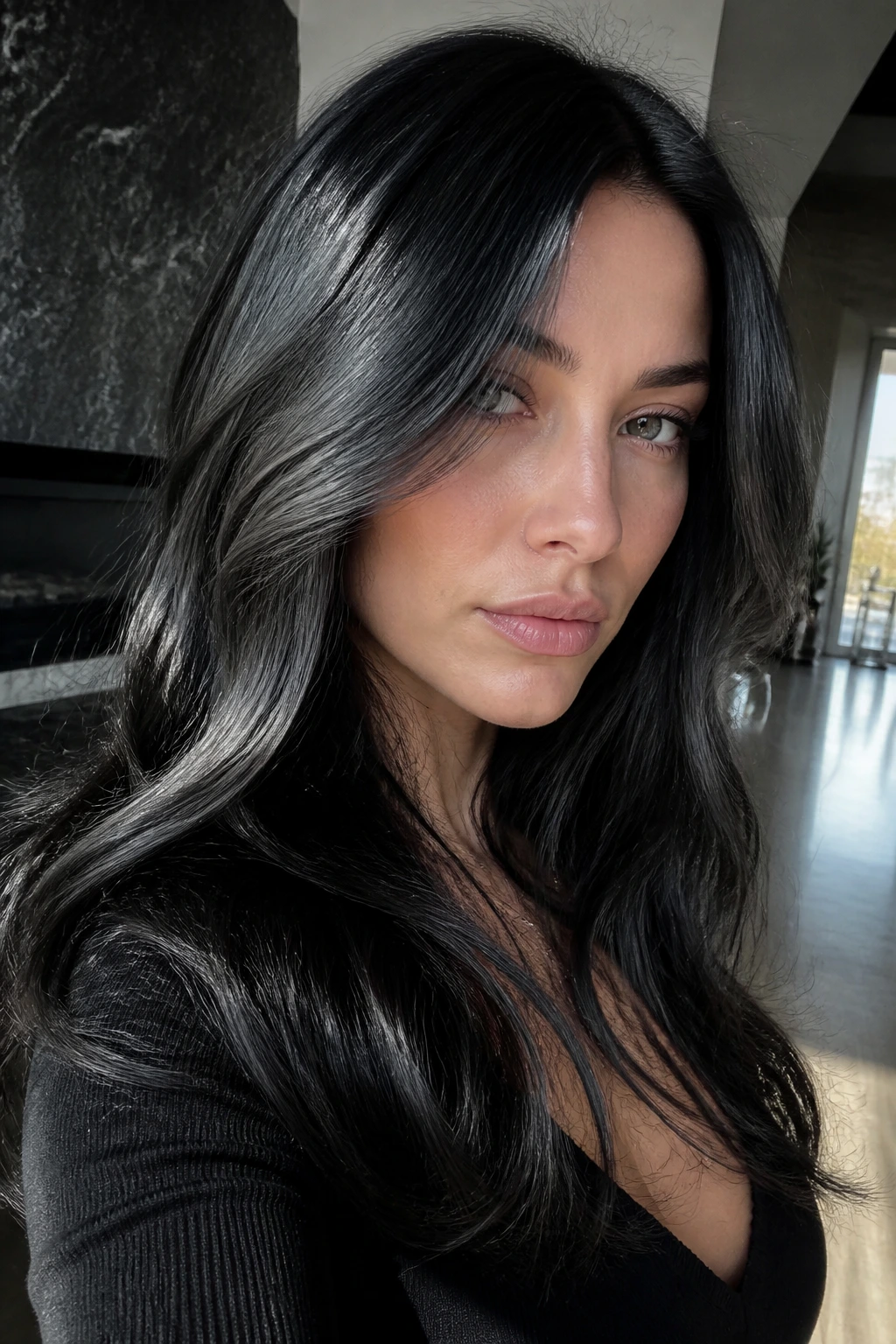
This is the darkest option on the list, and honestly, it’s underrated. Velvet black with a metallic gray veil keeps the hair almost fully black, then lays a translucent gray glaze over the surface so the color shifts in the light. It’s subtle, but not boring. That matters.
For cool skin tones, this shade can look cleaner than a warm brunette-black because the gray veil cuts the warmth right out of the picture. It works especially well if your hair is thick and naturally glossy, since the shine helps the metallic note show up.
Unlike brighter silver looks, this one does not demand constant attention. It feels polished even when the gray is barely visible.
25. Brushed Silver Streaks On Natural Black
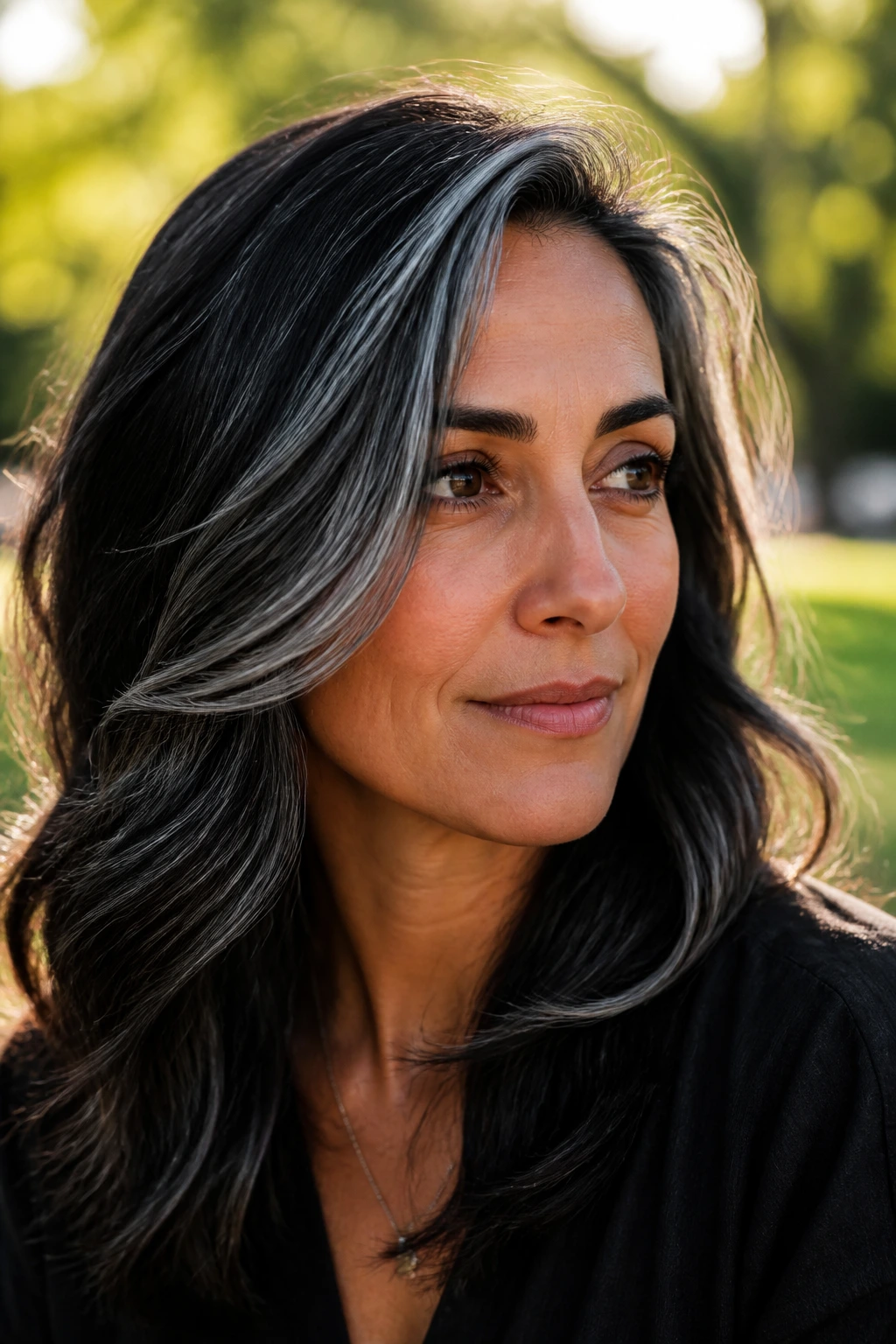
Brushed silver streaks are painted in a way that feels freer than foil highlights. Instead of neat, evenly spaced lines, the silver is brushed where the hair needs movement: around the front, through the top layer, and sometimes at the ends. On cool skin, the effect is crisp and flattering because the silver stays front and center without warming up.
What To Tell Your Colorist
- Keep the streaks irregular, not symmetrical
- Use silver or steel tones only
- Leave some black between the streaks so the base still reads rich
- Concentrate the brightest pieces near the face
This is a good choice if you want something that looks custom rather than standard. It’s a little messy on purpose, which is exactly why it works.
26. Black Hair With Moonlit Lavender-Gray
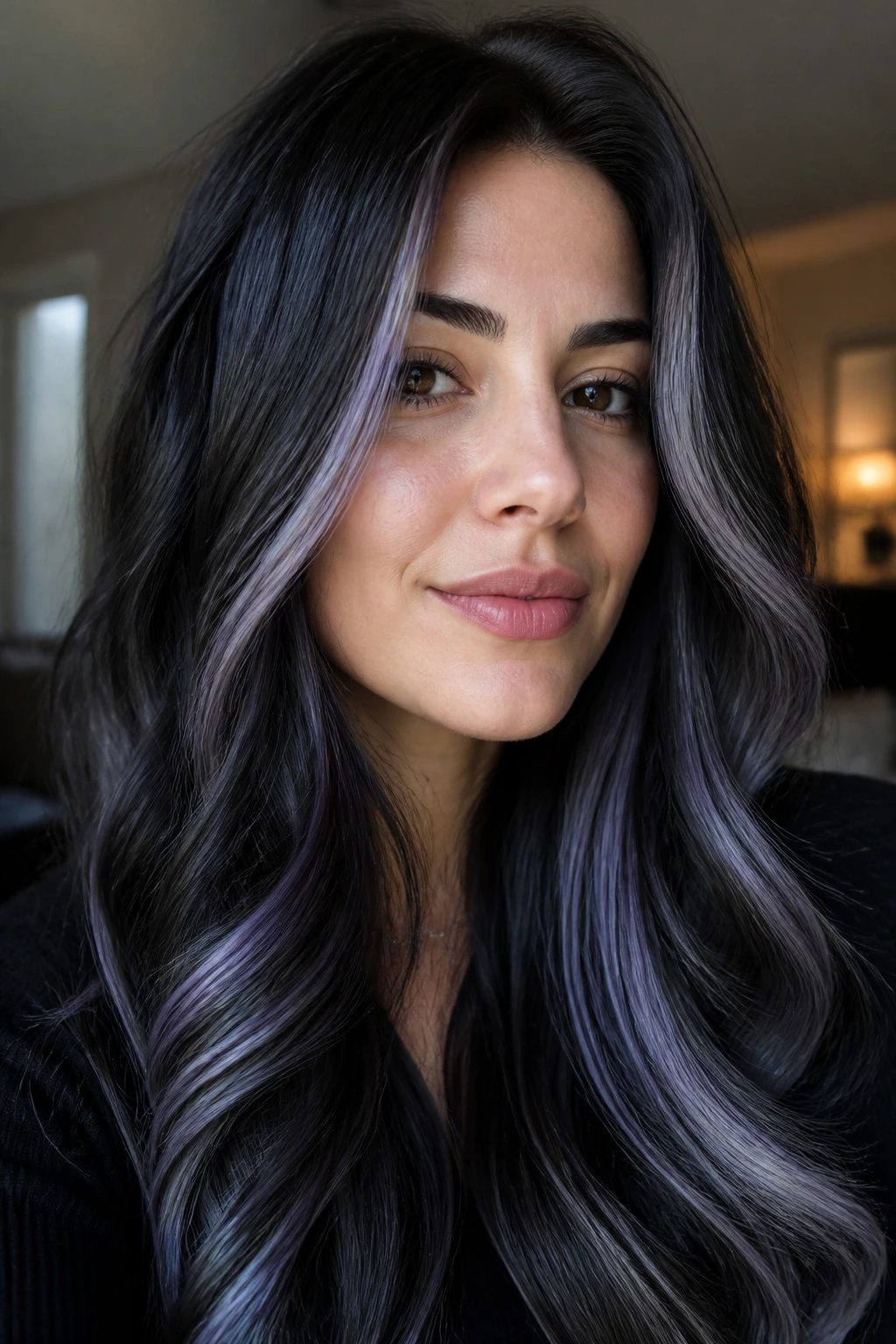
Moonlit lavender-gray is for people who want their gray to have a whisper of something extra. The base stays black, but the lighter pieces carry a faint lavender cast that still reads cool, not purple-purple. On cool skin, that small violet note can be a real advantage because it keeps the look from flattening out.
I like this version most when the gray is soft enough that you only notice the lavender in certain light. Too much purple and the whole thing shifts theatrical. Too little and it just becomes another gray look. The sweet spot is a gentle haze, almost like a tint in a window.
A toner with violet pigment helps maintain the shade. So does avoiding harsh clarifying shampoo every wash.
27. Charcoal Crown, Silver Ends
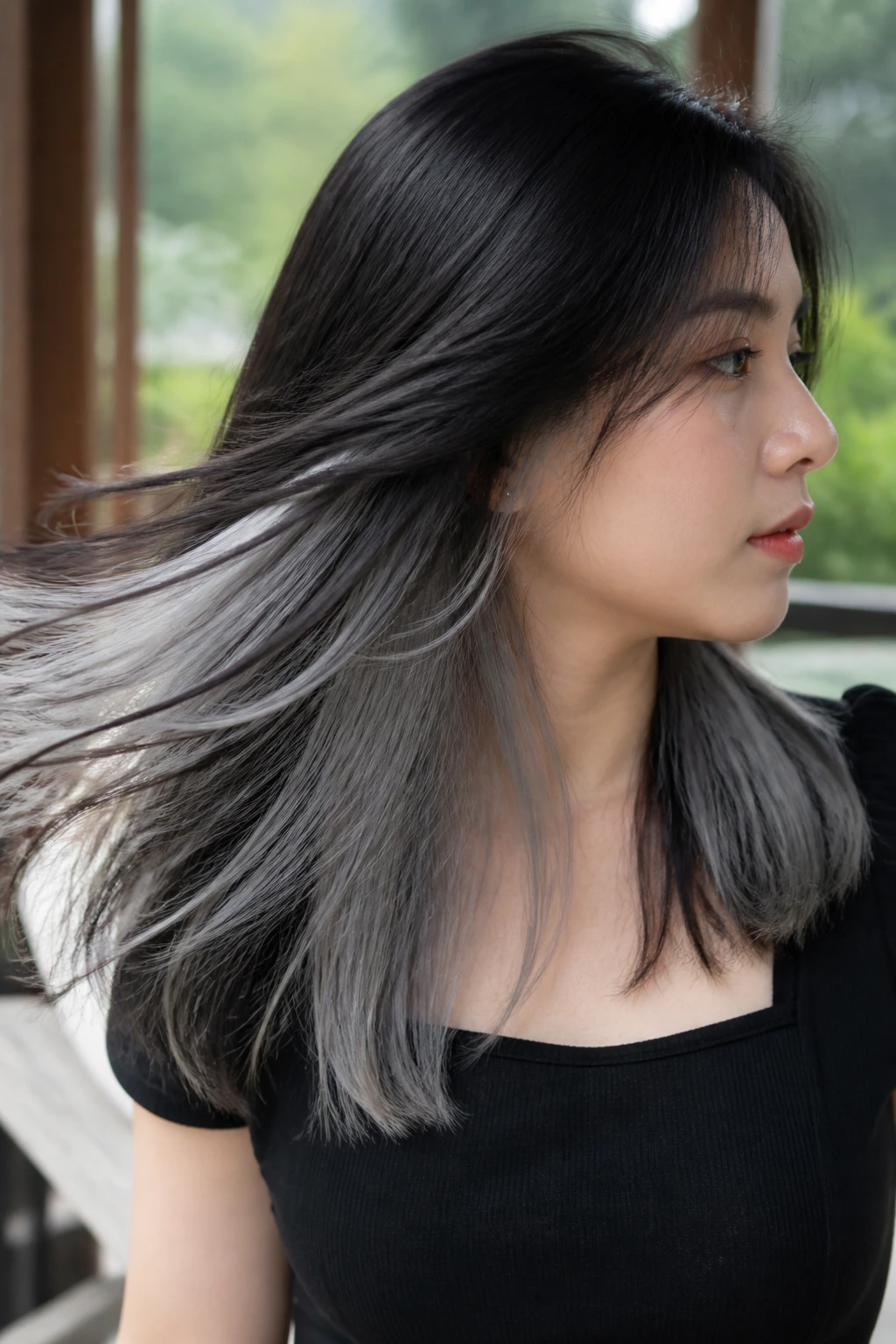
A charcoal crown with silver ends gives the hair a built-in top-heavy depth that feels strong and dimensional. The darker crown keeps the style grounded, while the silver ends lighten the outline and make the cut look more alive. On cool skin, the contrast is especially nice because the silver finishes the look without adding warmth near the face.
Why This Placement Works
The darker top creates volume at the crown. The lighter ends prevent the hair from looking too heavy or blocky. That makes this a strong choice for long layered cuts, where the ends need something to do.
If your hair is fine, keep the silver ends soft and misted rather than stark white. If it’s thick, you can push the contrast a little farther.
A loose wave helps the two tones separate. Straight hair can work too, but the gradient is more obvious when the hair bends.
28. Deep Espresso-Black With Smoky Gray Underlayers
This is the stealth version of the whole idea. Deep espresso-black on top keeps the look rich and dark, while smoky gray underlayers show up only when the hair moves. Cool skin benefits because the visible gray pieces stay ash-based, and the dark top keeps the whole style from going too bright.
It’s a strong choice if you want black gray hair color ideas that feel wearable in ordinary life. You can hide the gray when you want to, then let it flash through on a ponytail, a twist, or a half-up style. That flexibility is useful, plain and simple.
A layered cut helps the underlayers peek through more often. If the hair is one solid length, the effect can hide too much.
Final Thoughts
Black and gray hair does not have to mean one flat shade, and it definitely does not have to mean icy silver everywhere. The smartest versions for cool skin keep the tone ash-based, blue-based, or metallic, then place the lightest gray where it can do the most work around the face, at the ends, or under the top layer.
If you’re choosing between several ideas, start with the one that matches your maintenance tolerance. A silver face frame asks for more upkeep. A shadow-rooted charcoal melt gives you more breathing room. That tradeoff matters more than any mood board screenshot.
And if you’ve ever worried that gray hair color would wash you out, the fix is usually in the undertone, not the darkness. Keep it cool, keep it glossy, and keep the placement deliberate.
