



Curly hair and black color can look striking together, but only if the shade has some life in it. A flat black with no undertone can swallow curl shape fast. The spirals are still there, of course, but the pattern stops reading the way it should.
That’s why black hair color ideas for curly hair are not just about going darker. They’re about choosing a black that works with your curl pattern, your skin tone, and how much shine your hair naturally holds. Some blacks look inky and bold. Others lean blue, plum, cocoa, ash, or burgundy and make curls look richer from every angle.
There’s also a very curly-hair-specific problem: porosity. Looser or damaged curls can drink up color unevenly, which means one black can look sleek at the roots and smoky at the ends. A strand test saves heartbreak. So does paying attention to gloss, undertone, and placement instead of chasing the darkest box on the shelf.
Some of these looks are subtle. Some are loud. All 28 can work on curls when the color respects the shape instead of fighting it.
1. Jet Black
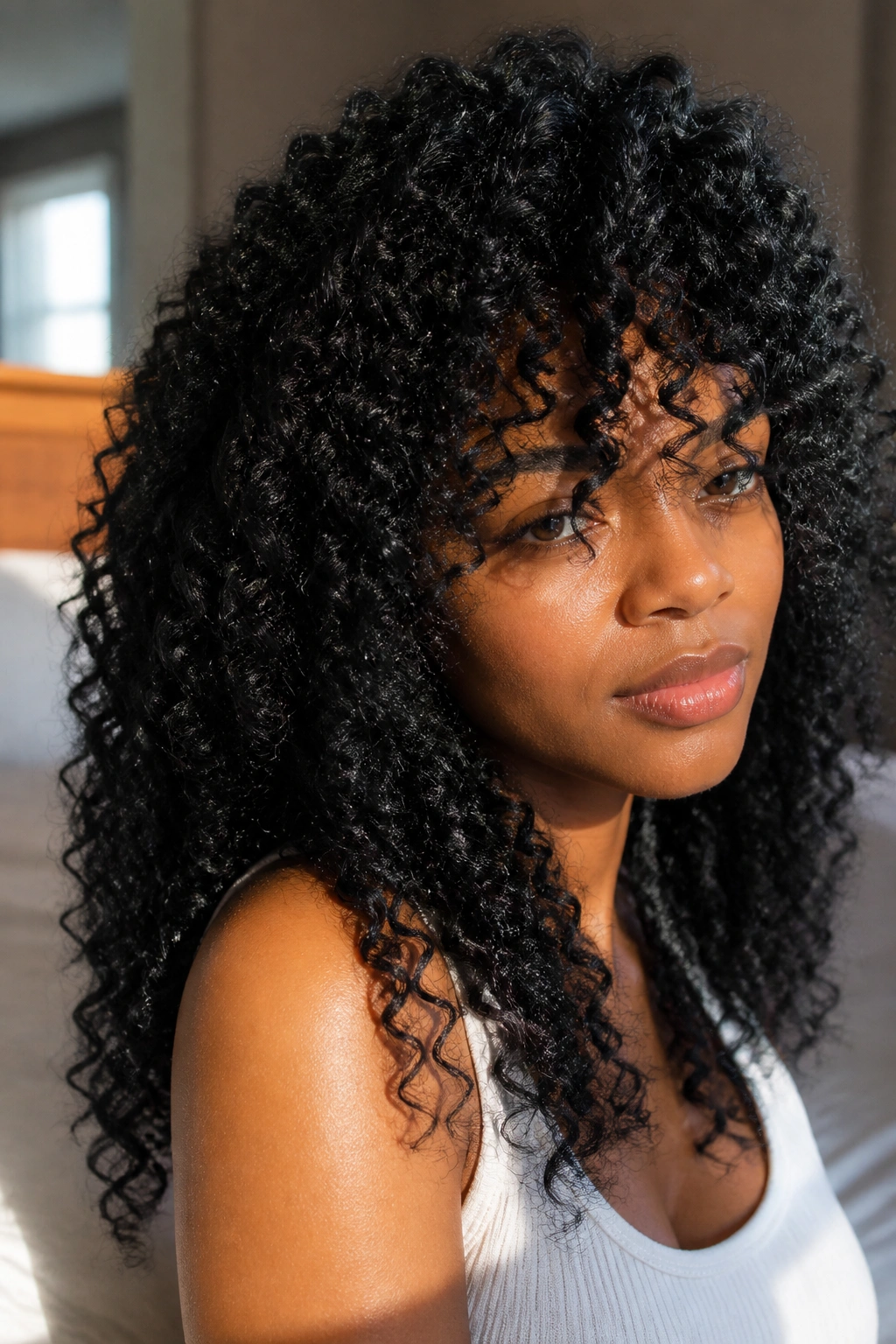
Jet black is the strongest, sharpest version of black hair color, and on curls it can look almost graphic. Tight coils tend to wear it best because the texture keeps the color from feeling like one solid block. Loose curls can wear it too, but they need shine or the whole look goes matte and heavy.
Ask for a glossy jet black rather than a flat, dead-black finish. A clear glaze on top makes a huge difference, especially when the light hits the bends in the hair. If your curls are porous, jet black will settle in fast, so keep your conditioning game serious. Dry ends show up faster on this shade than people expect.
2. Blue-Black
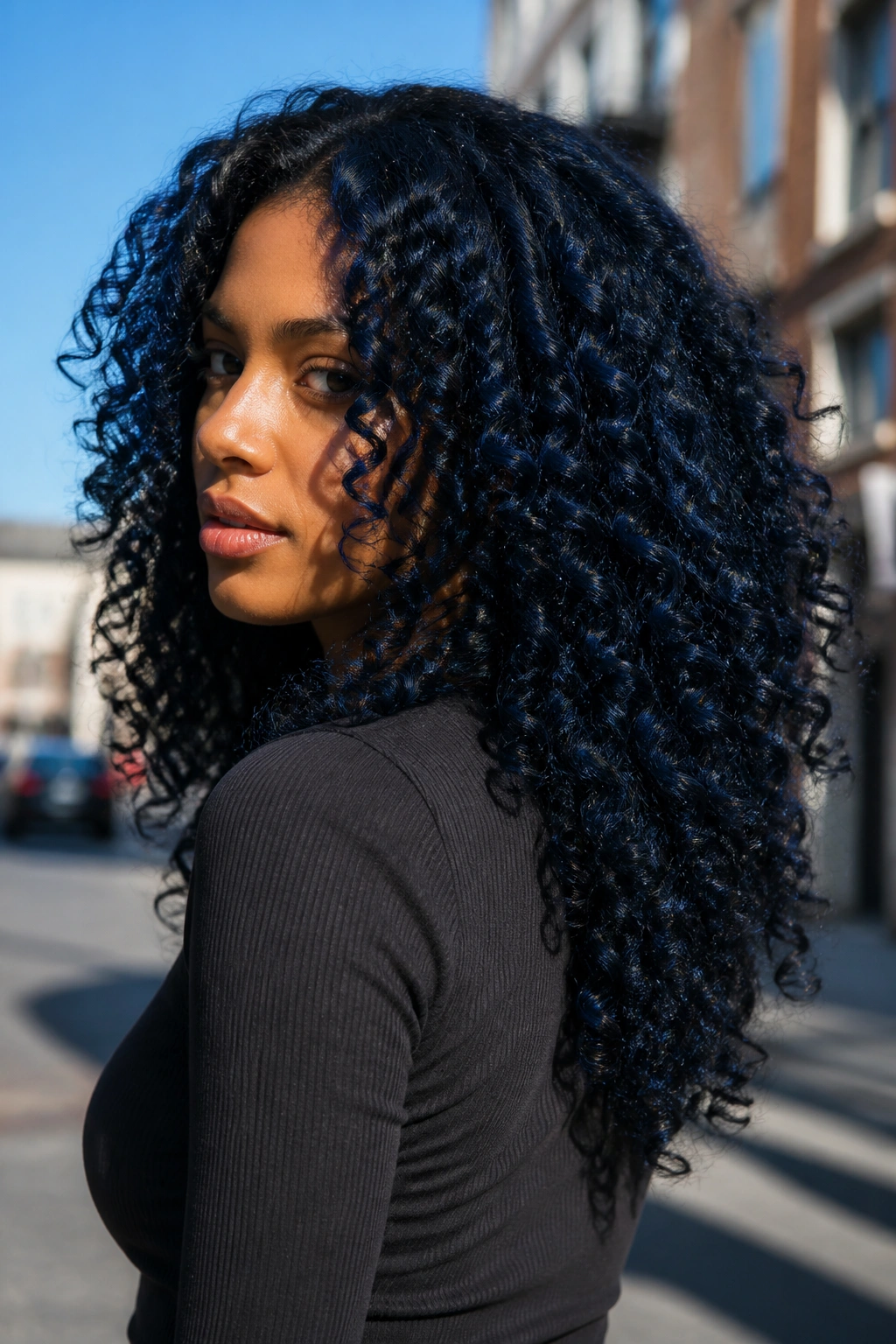
Want black hair that still has a little edge when it moves? Blue-black is the answer. Indoors it reads almost black, but outside or under bright light, that cool sapphire cast comes through and makes curls look cleaner and more defined.
Why It Works on Curly Hair
The blue tone gives the hair a sharper outline, which helps coils and ringlets pop against the face. It also cools down redness in the skin, so the whole look can feel more balanced. That’s useful if your black hair sometimes looks flat in photos or under yellow lighting.
Best For
- Cool or neutral skin tones
- Curly cuts with lots of shape
- People who want drama without red warmth
- Hair that can hold shine after coloring
A blue-black gloss is one of my favorite dark looks because it gives you that deep-black mood without feeling dull. It’s still black. It just has a pulse.
3. Soft Black
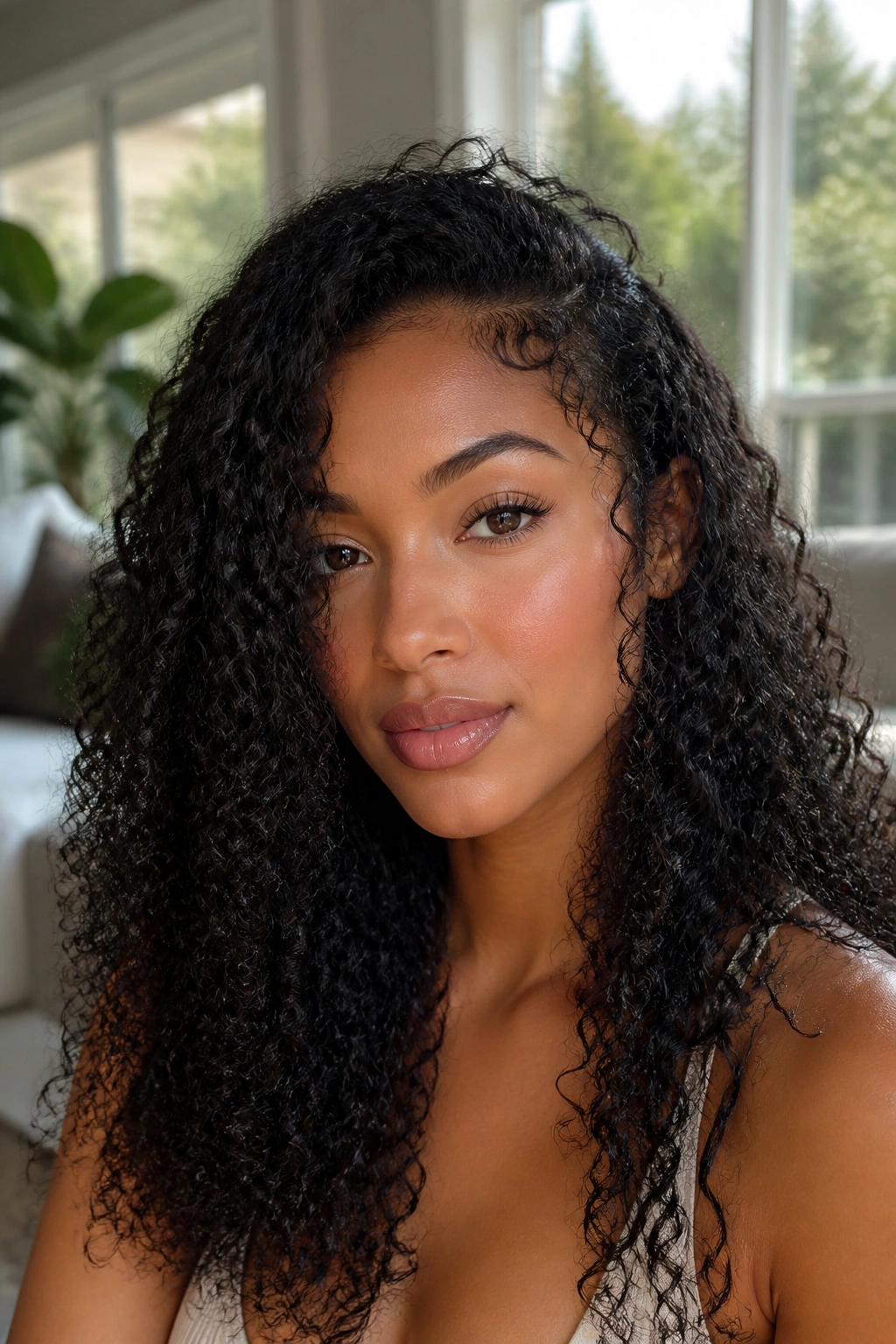
Soft black is the version I recommend to people who want darkness but not punishment. It sits between black and dark brown, which means the grow-out is gentler and the color looks less harsh around the hairline. On curls, that matters a lot.
The shade works especially well on looser curls and wavy textures, where a true black can sometimes look blocky. Soft black keeps the curve of the hair visible. It also plays nicer with natural highlights if your curls catch sun in random places.
If you’ve never gone dark before, start here. It’s the least dramatic option in the group, which is exactly why it looks polished.
4. Espresso Black
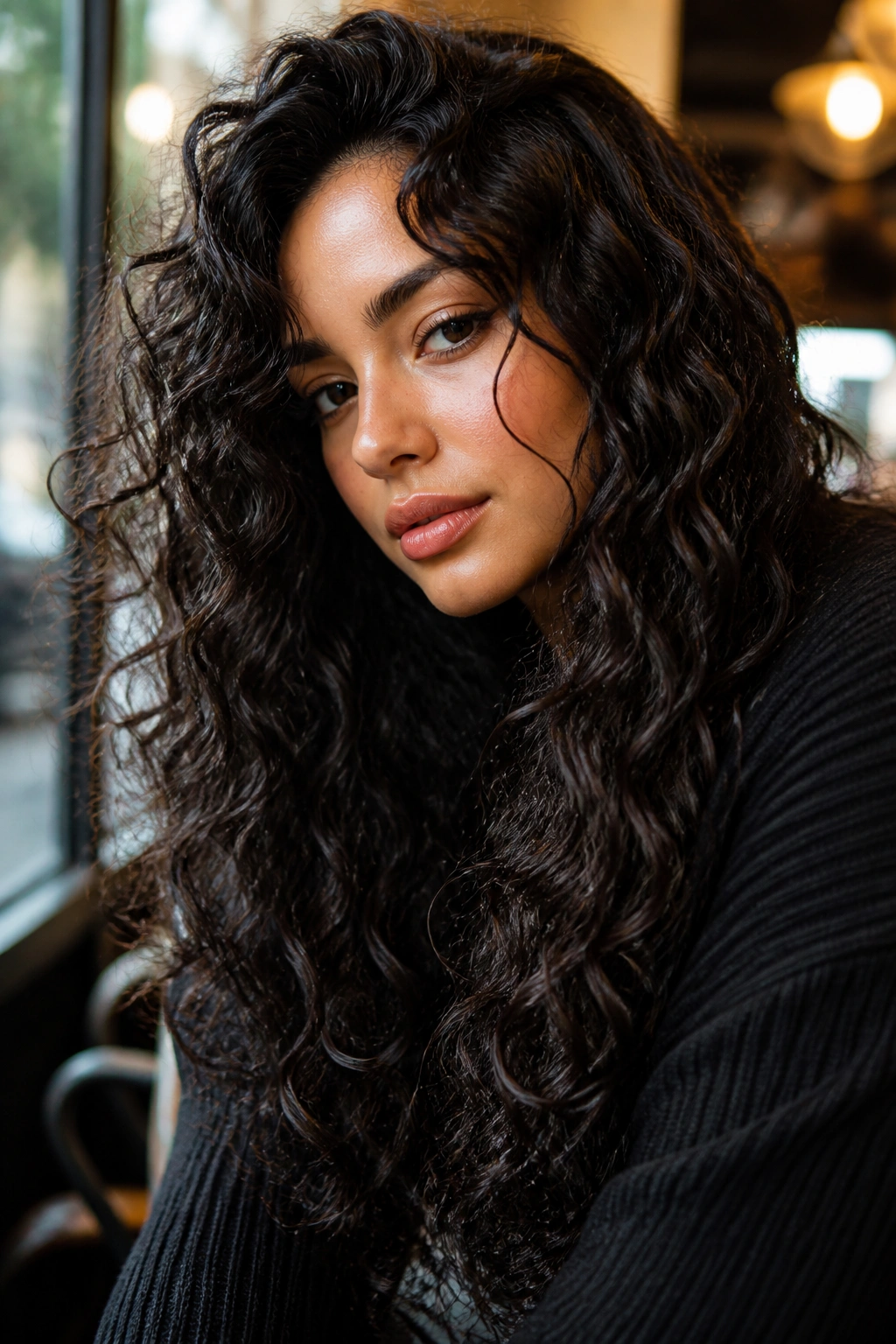
Espresso black has that dark roasted coffee tone that makes curls look dense and plush. It’s not as stark as jet black, and that’s the appeal. The brown base softens the edges, so the hair feels richer instead of harder.
I like this one on medium to deep skin tones, but it can work on almost anyone if the finish has enough shine. It’s especially good for long curly layers, where pure black can sometimes erase the cut. Espresso black keeps the shape readable.
A soft curl cream and a light serum are enough to keep this one looking expensive without making the curls greasy. Small amount. That part matters.
5. Raven Black
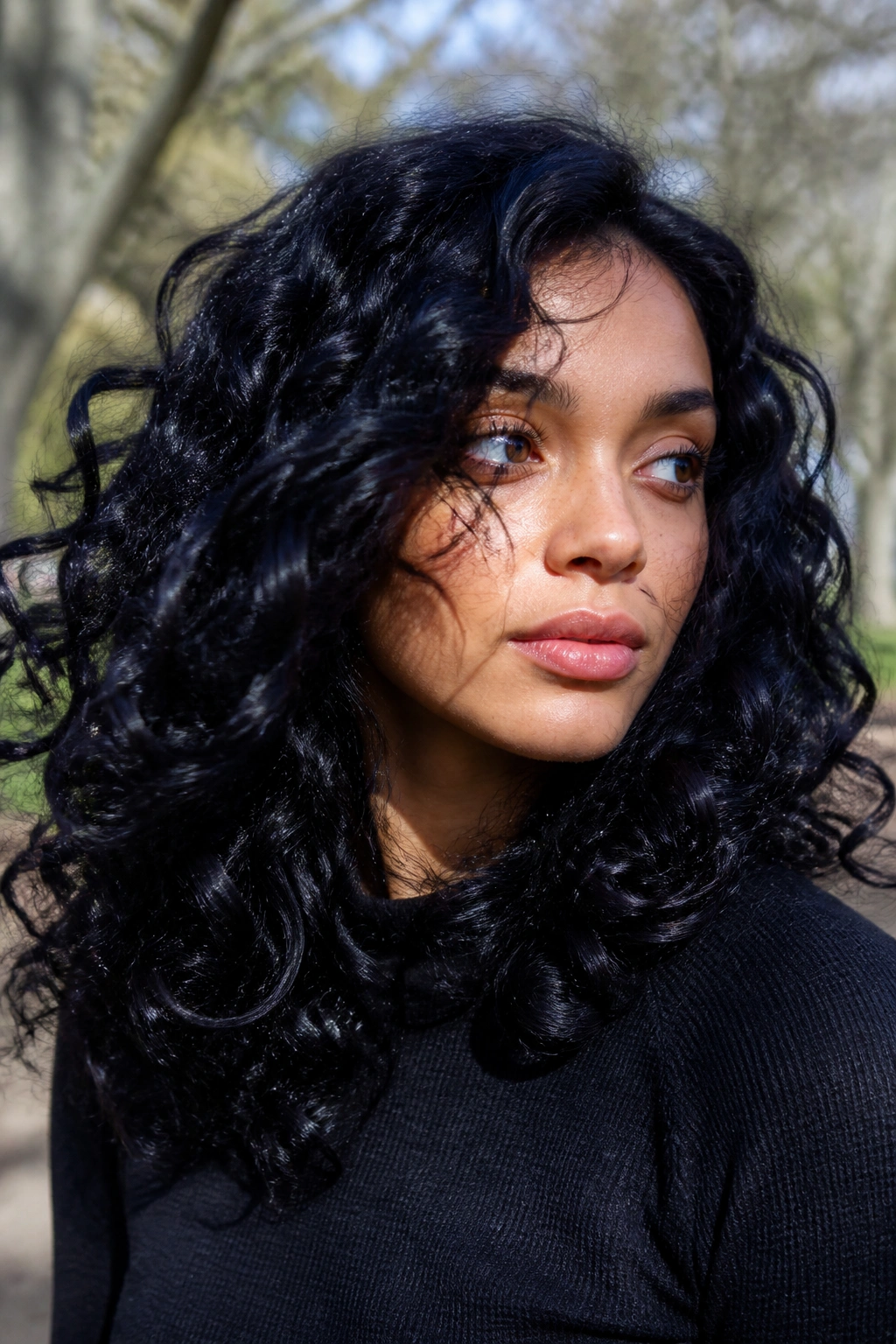
Raven black is dark, moody, and a little bit glossy in a way that feels almost feather-like. The undertone usually lands between blue and violet, which gives it more movement than a plain black dye. On curls, that movement is the whole point.
What Makes It Different
Raven black doesn’t just sit there. It catches light on the high points of the curl and leaves the inner bends darker, so the texture looks deeper. That makes ringlets and tighter spirals look especially full.
How to Wear It
- Ask for a blue-violet black, not a neutral black
- Keep the finish reflective with a gloss treatment
- Use lightweight leave-in conditioner so the curls stay bouncy
- Trim dry ends before coloring if the cuticle is rough
This is one of those shades that looks even better when the hair is moving. Still air is not its best friend.
6. Onyx Gloss Black
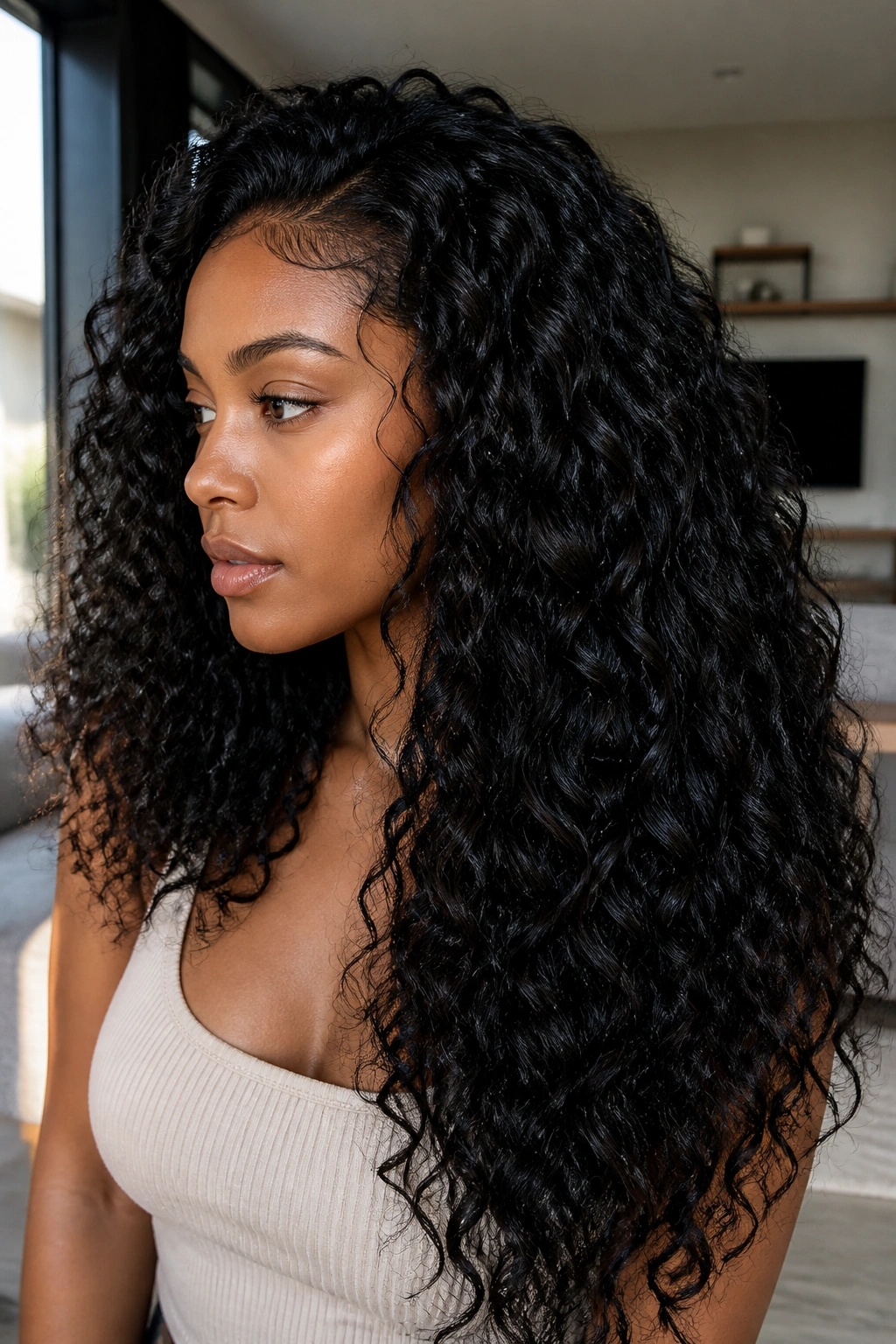
Onyx black is all about finish. The color itself is deep and neutral, but the glossy surface is what turns it into something special. Curly hair loves a reflective topcoat because the curves give the shine somewhere to land.
A salon gloss or clear glaze can make onyx black look almost liquid. That’s especially pretty on defined wash-and-go curls, where the spiral pattern creates tiny flashes of light. Without shine, the shade can feel a little severe. With shine, it looks sleek and rich.
I’d choose this one if you like hair that looks intentionally polished. It’s not fussy, but it does ask for regular moisture.
7. Smoky Black
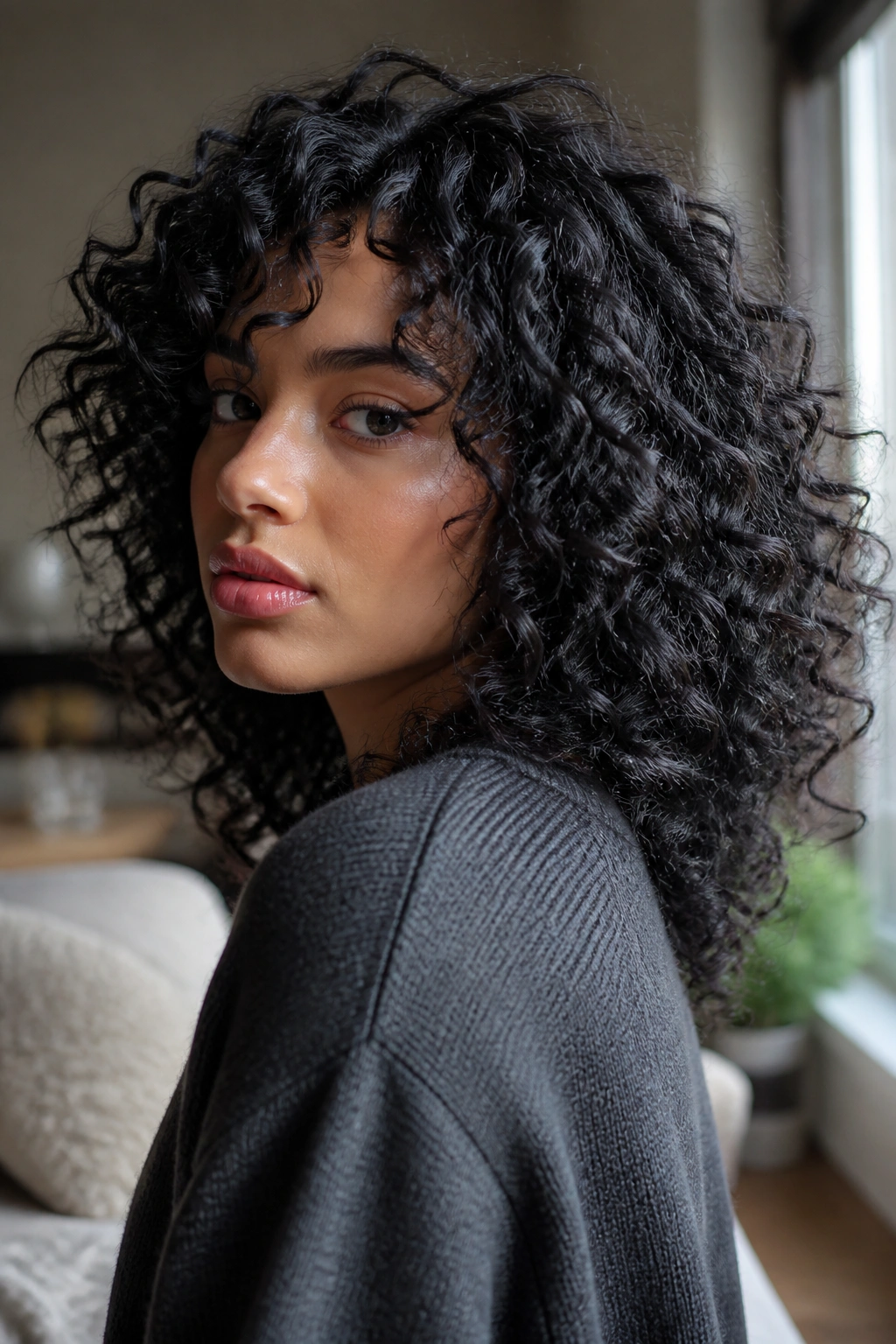
Smoky black has a soft ash cast that takes the harshness out of plain black dye. The result is darker than dark brown, cooler than espresso, and less dramatic than blue-black. It has a quiet, almost charcoal feel.
This shade works well on curls that already have good definition because the cooler undertone makes the pattern look crisp. It can also flatter silver jewelry and cooler makeup tones without much effort. The one catch: if your hair is dry, smoky black can look dusty instead of sleek.
A rich mask and a smoother finish fix that fast. Not glamorous work, but necessary work.
8. Plum-Black
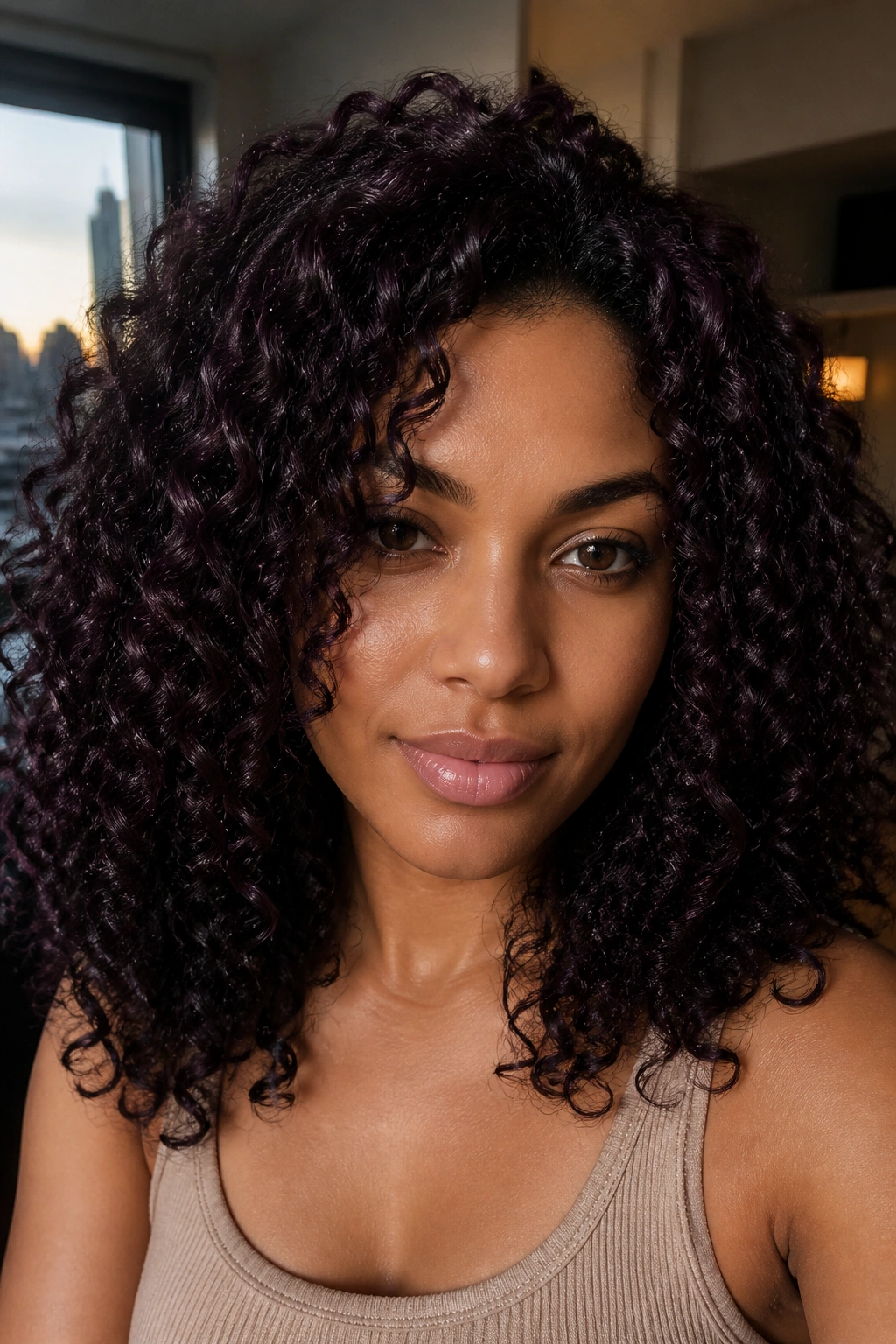
Plum-black is black with a violet heart. Indoors it can look like a deep neutral black, but the second light touches it, the plum comes alive. On curly hair, that hidden color is gorgeous because every bend in the strand shows a little more variation.
The Look in Real Life
It reads romantic without being sugary. The color can feel bold on a fresh twist-out and softer on stretched curls, which gives you two moods from the same dye.
Best Uses
- Tapered cuts
- Twist-outs
- Dense coils
- Dark brown natural bases that want more depth
If you like dark color but hate the idea of one flat note from root to tip, plum-black gives you more texture. It’s subtle until it isn’t.
9. Black Cherry
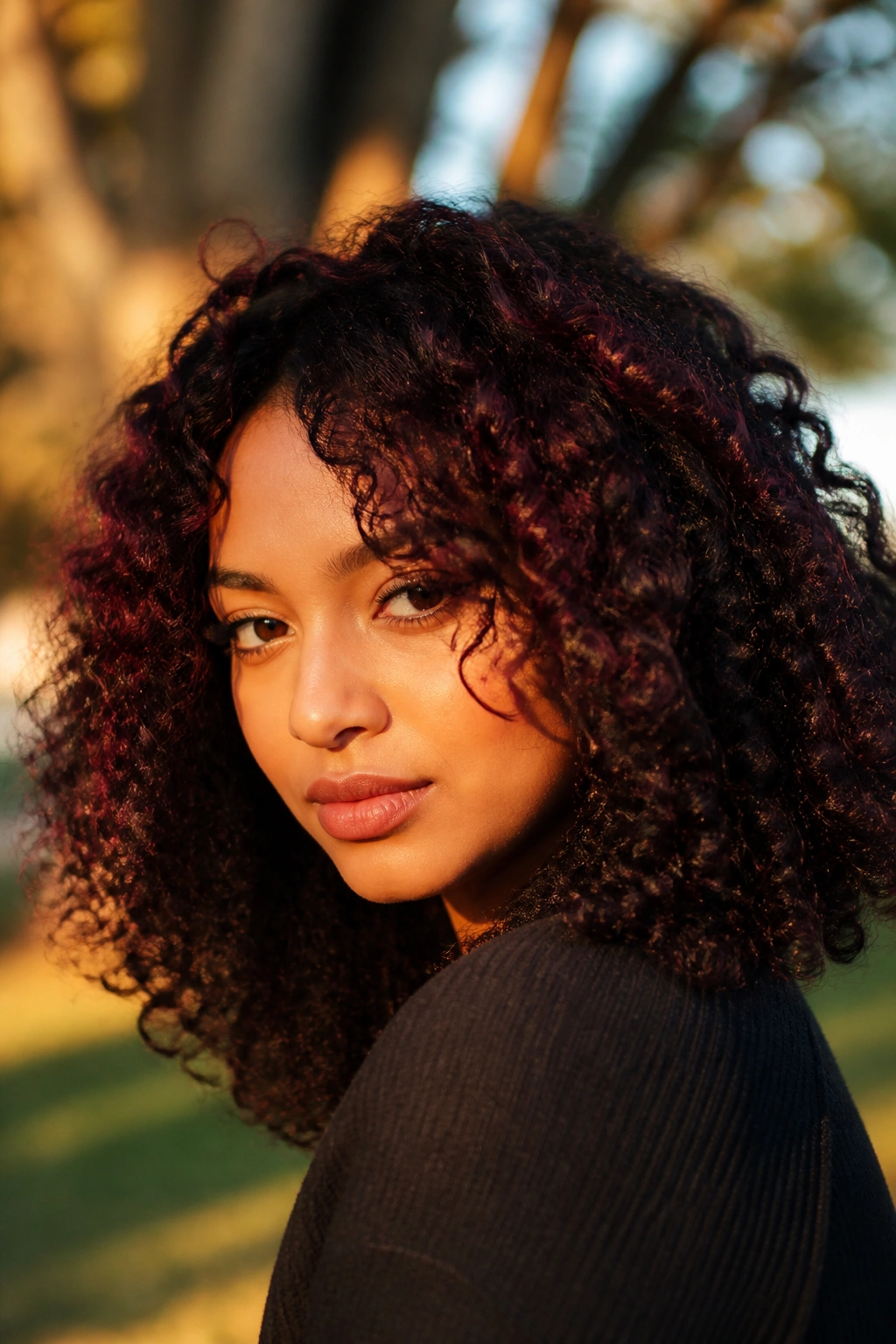
Black cherry is one of the easiest ways to warm up black hair without losing the drama. The red-violet tone stays hidden most of the time, then flashes through when the light hits or when curls separate. It’s a smart choice for people who want something a little less severe than pure black.
On curly hair, black cherry can make the pattern look softer and fuller at the same time. The shade is especially good if your skin has warm or golden undertones, since the red keeps the black from looking flat. Under indoor light, it may seem almost like a deep espresso. Outdoors, it turns richer.
That shift is the fun part.
10. Mocha-Black
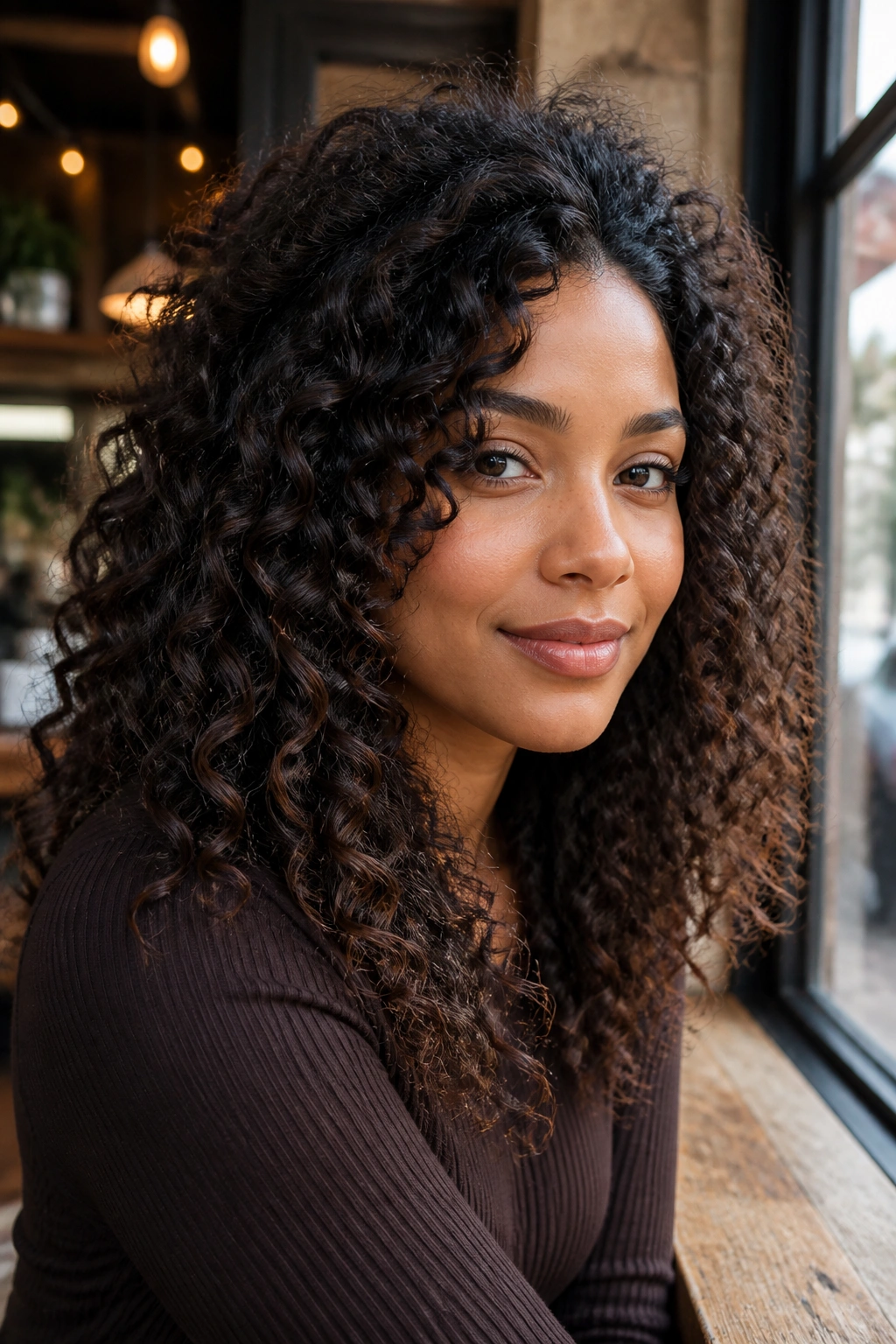
Mocha-black sits in that sweet spot between black and deep chocolate. It has warmth, but not enough to read brown from a distance. For curls, that extra warmth can make the texture look fuller because the light doesn’t get swallowed quite so hard.
This is the shade I’d pick for anyone who wants a natural-looking dark color with a little softness around the face. It’s also easier to wear if your brows, eyes, or skin are warm-toned. The whole look feels grounded rather than severe.
Mocha-black is not the loudest option here. That’s fine. Sometimes the nicest dark color is the one people notice only after they get close.
11. Chestnut Lowlights on a Black Base
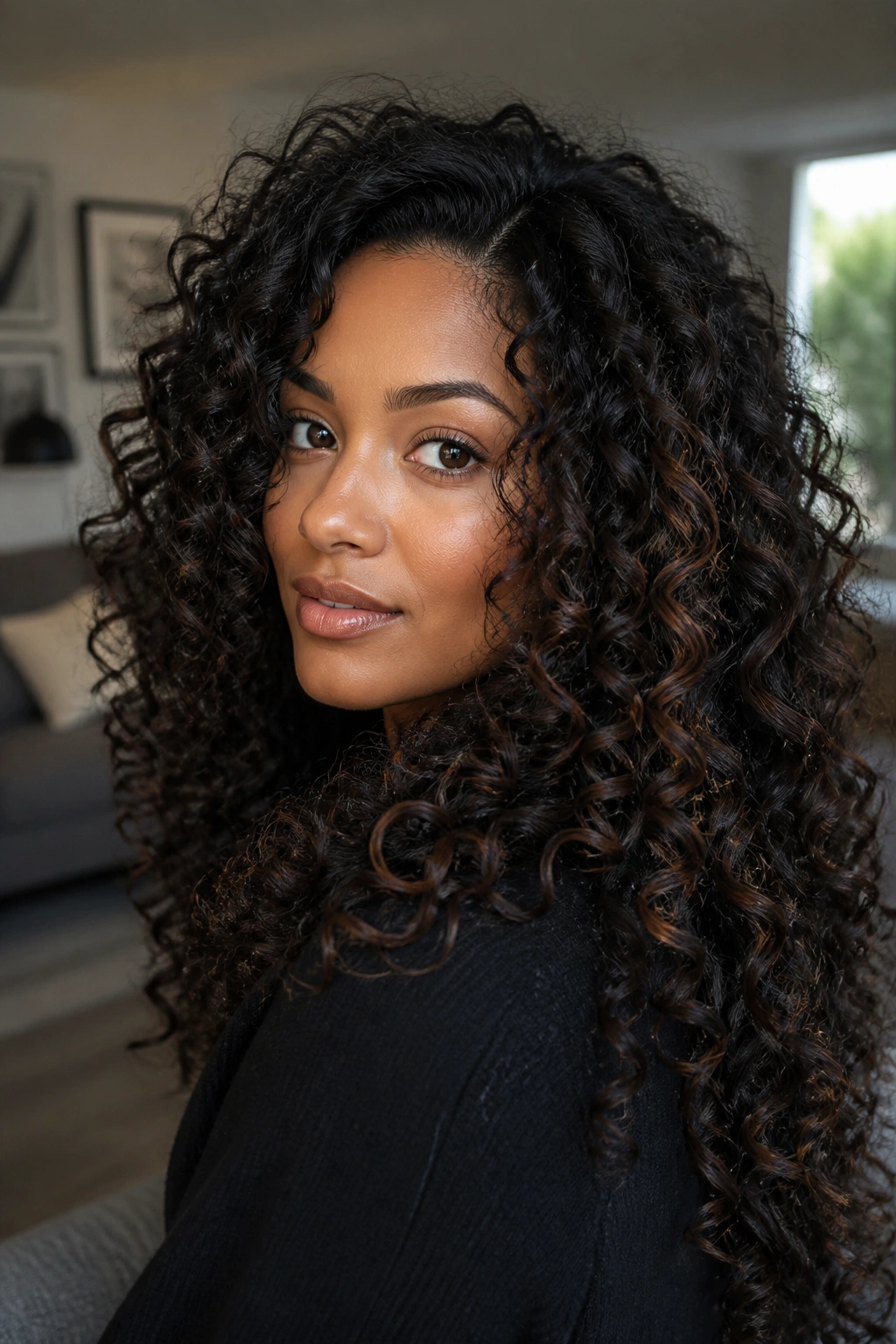
Black hair does not have to stay one flat color. Chestnut lowlights bring a brown ribbon through the curls, which gives the hair depth without turning it obviously highlighted. On dense curly hair, that extra movement matters a lot.
Why It Helps Curly Texture
Curly hair loses detail when the color is too uniform. Chestnut lowlights break up the surface in a way that makes coils and curls look more layered. They also soften grow-out because the difference between new growth and old color isn’t as stark.
What to Ask For
- Thin, scattered lowlights
- A chestnut brown that sits two to three levels lighter than black
- Placement through the mids and ends, not just the top
- No chunky streaks unless you want a louder result
This is a good choice if you want dimension without screaming for attention. Quiet, but not boring.
12. Caramel Money Pieces on Black Curls
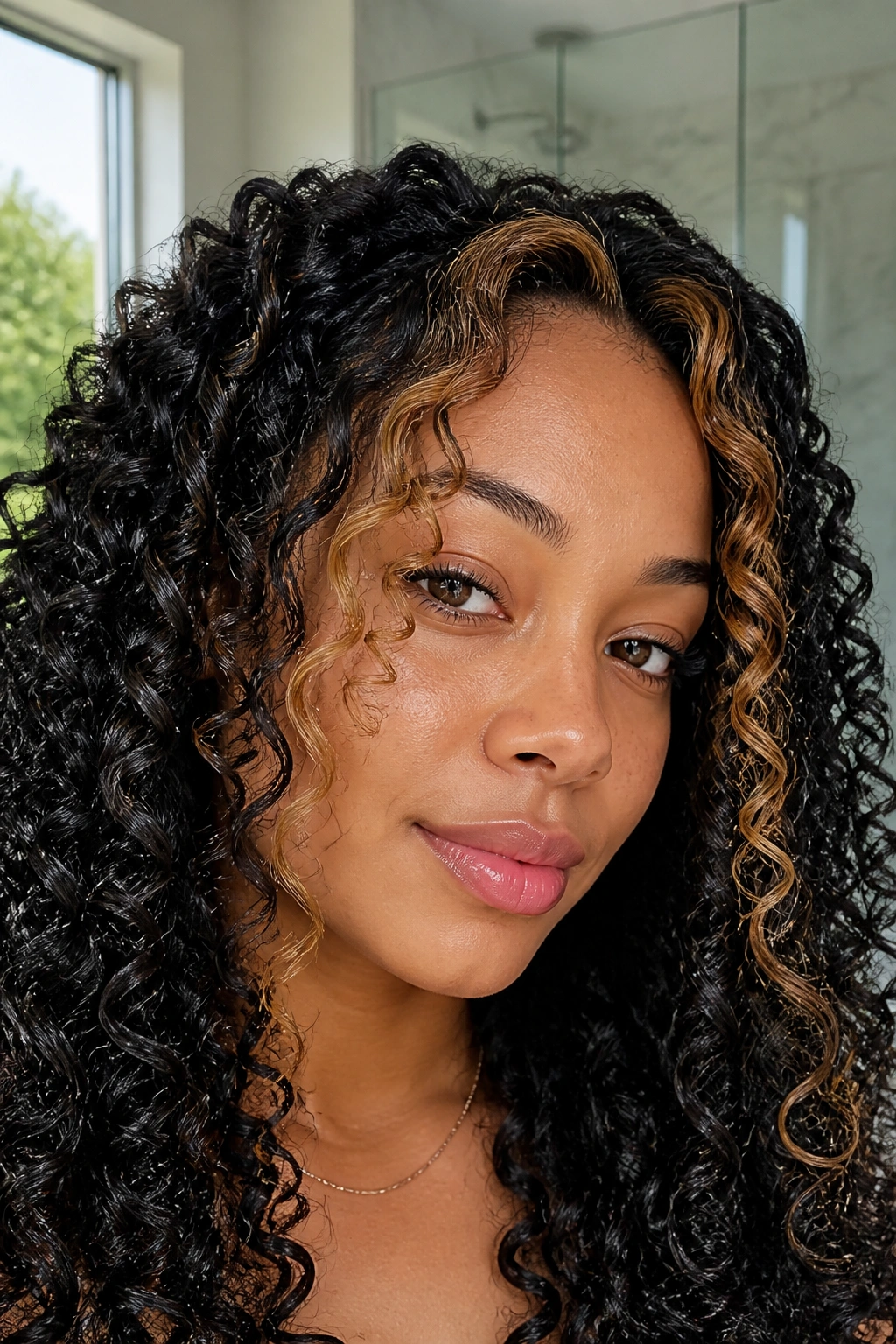
Caramel money pieces give black curls a bright frame around the face, and they do a lot with very little color. Because the rest of the hair stays dark, the caramel feels intentional instead of busy. The contrast draws the eye upward, which can be flattering on layered cuts and rounded curl shapes.
The trick is keeping the pieces thin enough to blend. Too wide, and the look turns striped. Too narrow, and you lose the point. On curly hair, the curl shrinkage changes how wide those face-framing pieces appear, so your stylist has to plan for that. Straightened hair lies about the look. Curls tell the truth.
I like this one when the goal is brightness near the face without touching the whole head.
13. Honey-Tipped Black Curls
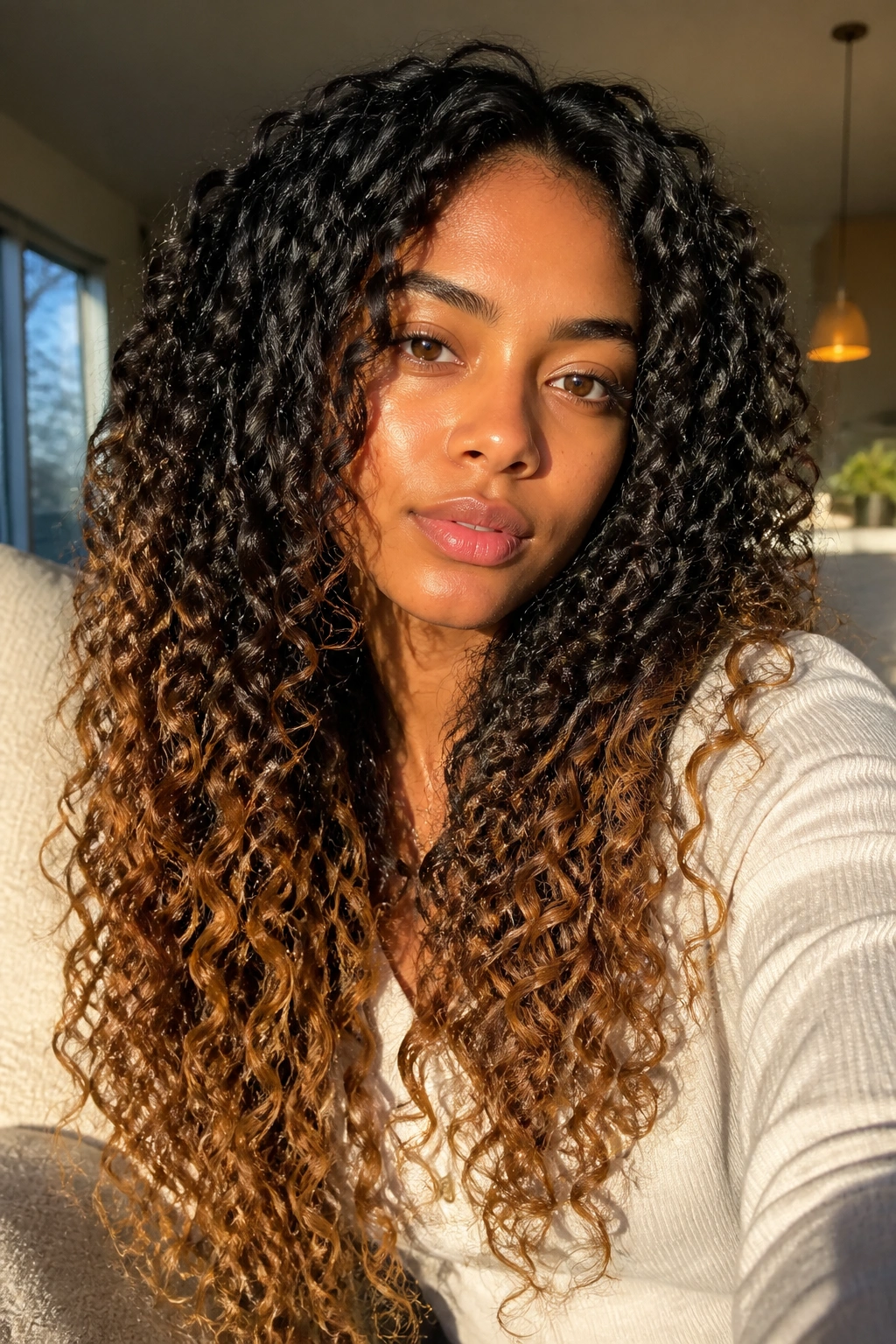
Honey tips can be beautiful on long curls because they show movement every time the hair sways. The darker root keeps the look grounded, while the ends carry warmth and light. It feels lived-in rather than overworked.
How It Reads on Different Curl Shapes
On loose spirals, honey tips look sun-kissed. On tighter curls, they feel more graphic because the ends cluster together and make the lighter color pop in little bursts. That can be gorgeous, but it does need a good cut so the lighter ends don’t look wispy or damaged.
A curl-defining cream helps this one a lot. So does keeping the lightened ends trimmed regularly, because blonde or honey tone on curly tips can dry out faster than the rest of the hair.
14. Burgundy Peekaboo Panels
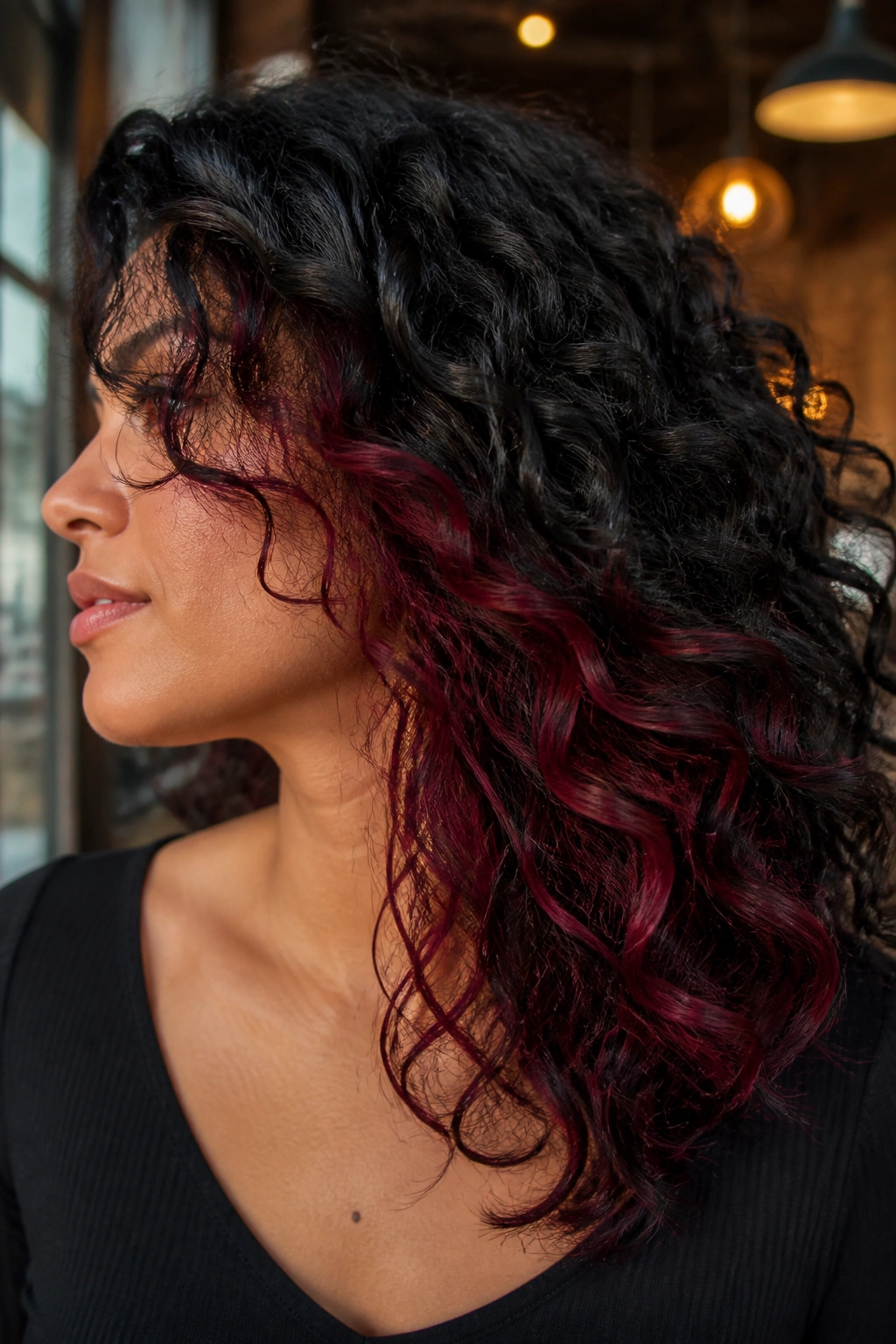
Peekaboo color is one of the smartest ways to play with black hair on curls. Burgundy panels hidden underneath the top layer show only when the hair moves, so the look stays dark from the front and dramatic from the side or back.
That hidden placement works especially well on curly hair because the hair naturally shifts and separates. You get little flashes of color instead of one big obvious streak. It’s a good choice if you want a private version of bold hair color.
For people with workplace rules or simply a low tolerance for high-maintenance color, this is a lovely compromise. The black stays dominant. The burgundy gets to surprise people.
15. Copper-Sheen Black
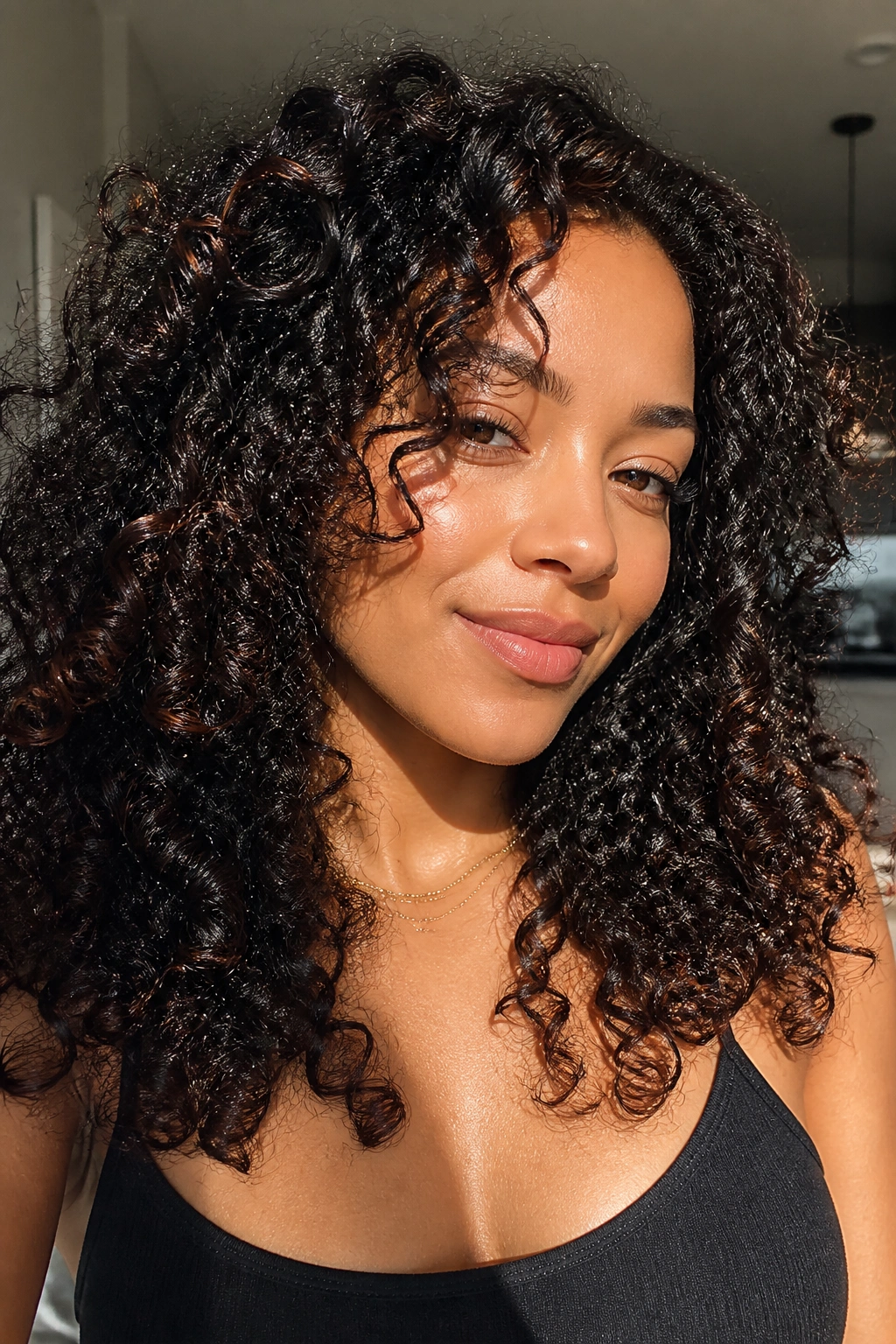
Copper-sheen black is not full copper. That would be too much on most black curly hair. Instead, think of it as a warm reflection that shows up when the light hits the curls at the right angle. The base stays black, but the surface glows a little warmer.
What It Changes
Copper undertones make curls look softer and fuller, especially on medium and deep skin tones. The warmth can also help black hair look less hard around the edges, which is useful if your hair texture is coarse or highly defined.
How to Wear It Well
- Use a clear gloss with a warm copper tint
- Keep the color subtle at the roots
- Let the sheen show on the mids and ends
- Pair it with warm makeup or gold jewelry if you like that look
This one is for people who want black hair with a hint of fire in it, not a full color shift.
16. Indigo Midnight Black
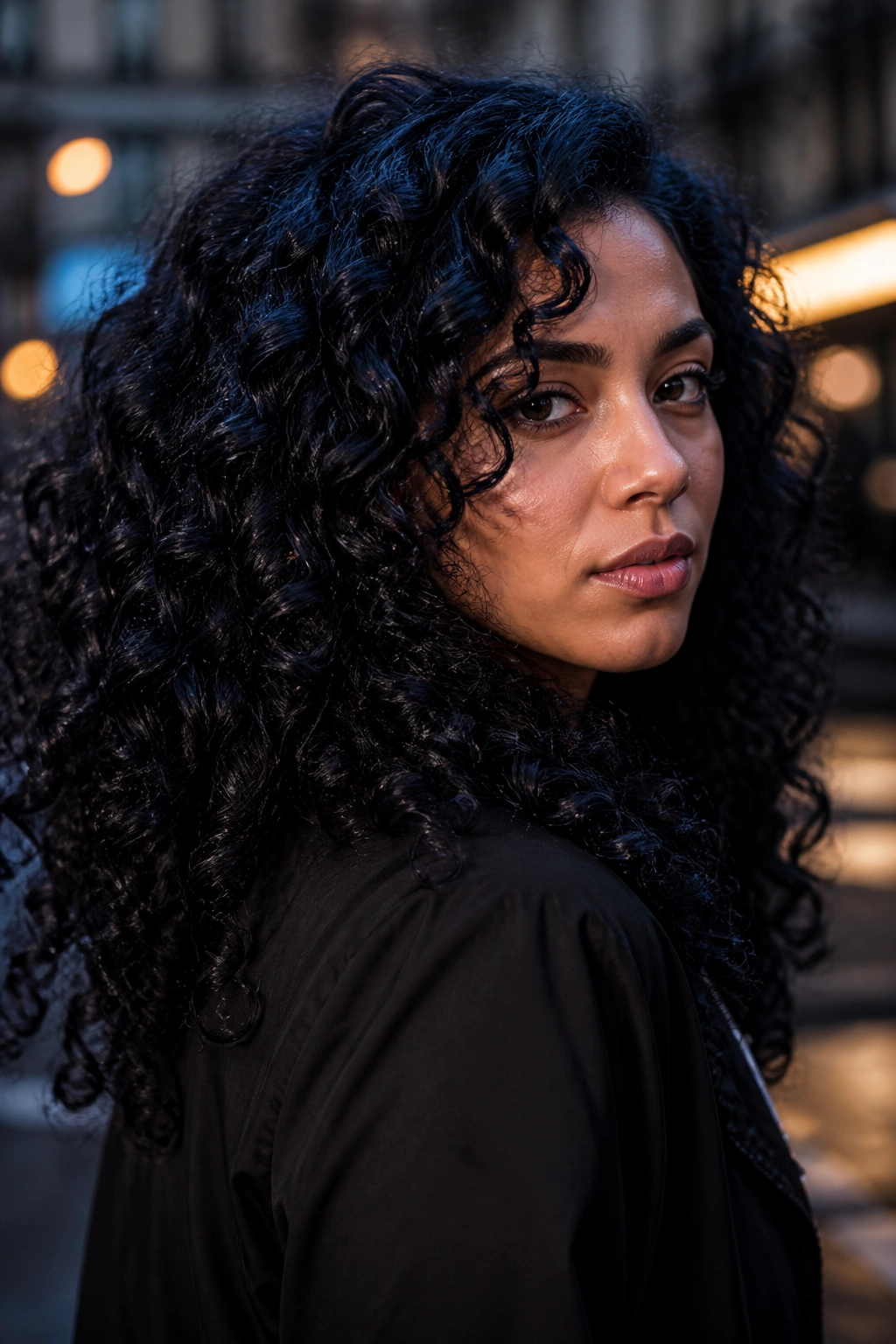
Indigo midnight black has a deep navy cast that appears when light lands on the hair. It’s darker than blue-black and usually more subtle, which makes it a smart choice if you want something cool and modern without looking vivid from across the room.
On curls, the indigo effect can create a gorgeous shimmer across the high points of the pattern. That works best on healthy, well-moisturized hair, because the color needs a smooth surface to reflect cleanly. If the strands are rough, the blue can look patchy.
This is the shade I’d suggest to someone who loves black hair but wants one small twist that feels personal.
17. Graphite Black
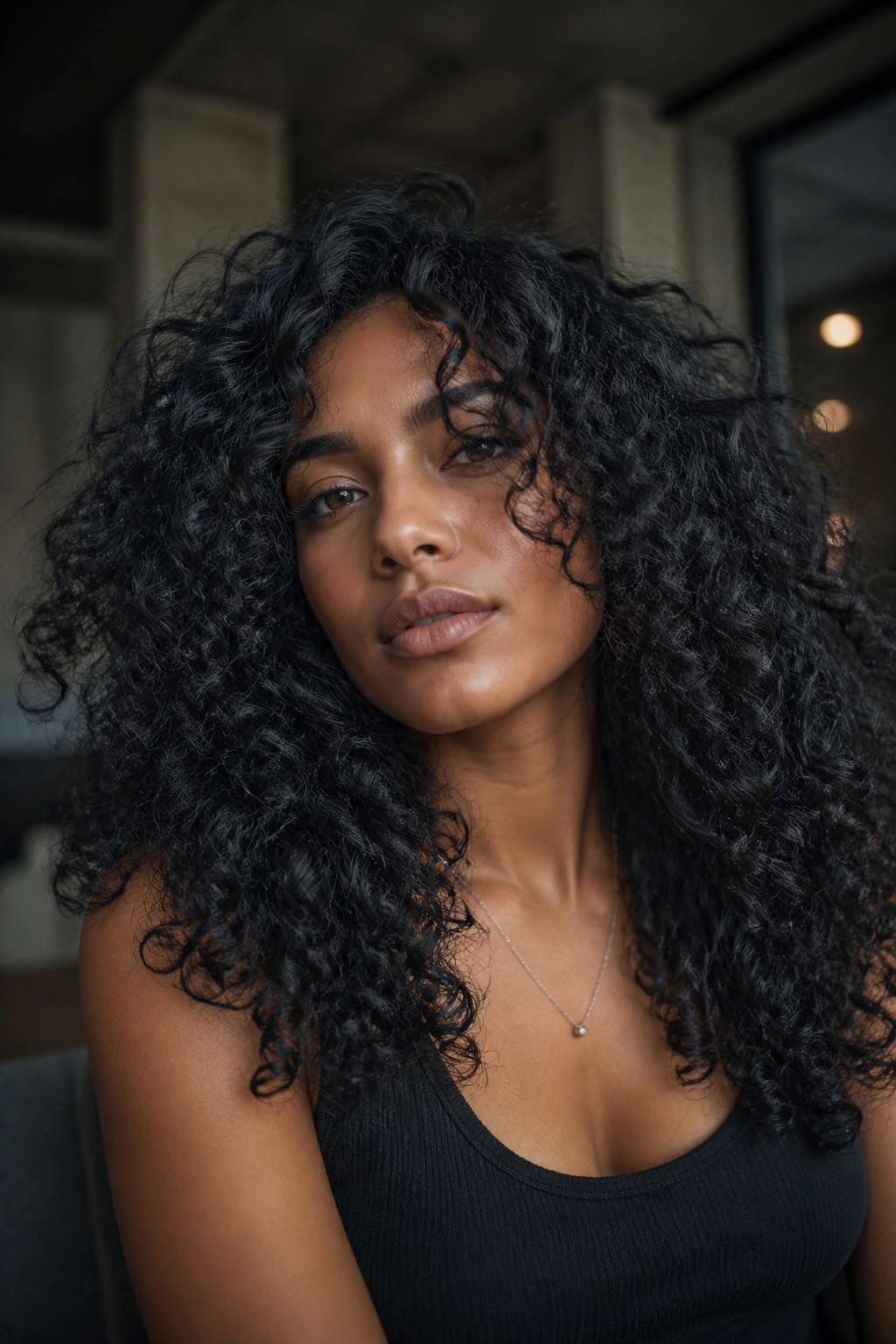
Graphite black is a charcoal-leaning black with a cool, almost mineral feel. It’s darker than smoky black, but not as obviously blue as blue-black. The tone lands in a place that feels sleek and a little modern without becoming flashy.
Why It’s Nice on Curly Hair
Graphite black lets texture stay visible. That makes it a good fit for layered curls, especially if the cut already has shape around the crown and face. The cool cast also gives the hair a polished edge that works well with minimal styling.
A Few Things to Know
- It can look flatter on very dry hair
- A shine spray helps, but only in small amounts
- The tone is strongest in bright light
- It works well on people who wear cooler makeup tones
Graphite black is one of those shades that looks expensive because it isn’t trying too hard. I respect that.
18. Black Ombré into Dark Brown
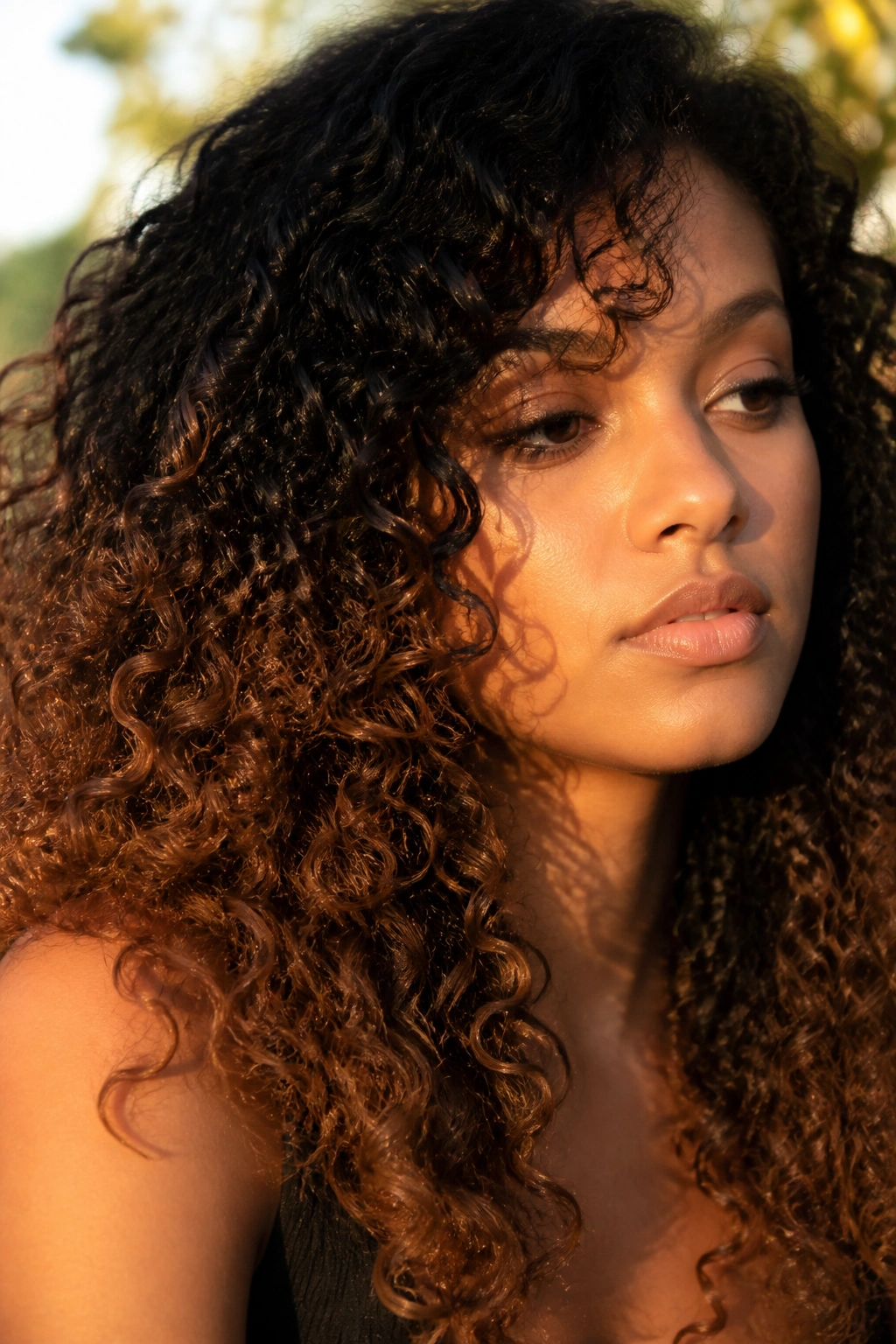
Black ombré into dark brown gives curly hair a softer finish at the ends, which is useful if you love depth but don’t want your hair to feel heavy from root to tip. The fade can be subtle or obvious, depending on how far down the brown starts.
Curly hair is a good match for ombré because the bends blur the transition in a natural way. On straight hair, you can see every line. On curls, the fade melts more gently. The result is lighter at the bottom without losing the dark base that makes black hair feel rich.
If you want a low-drama color change, this is one of the most forgiving options on the list.
19. Dimensional Black Balayage
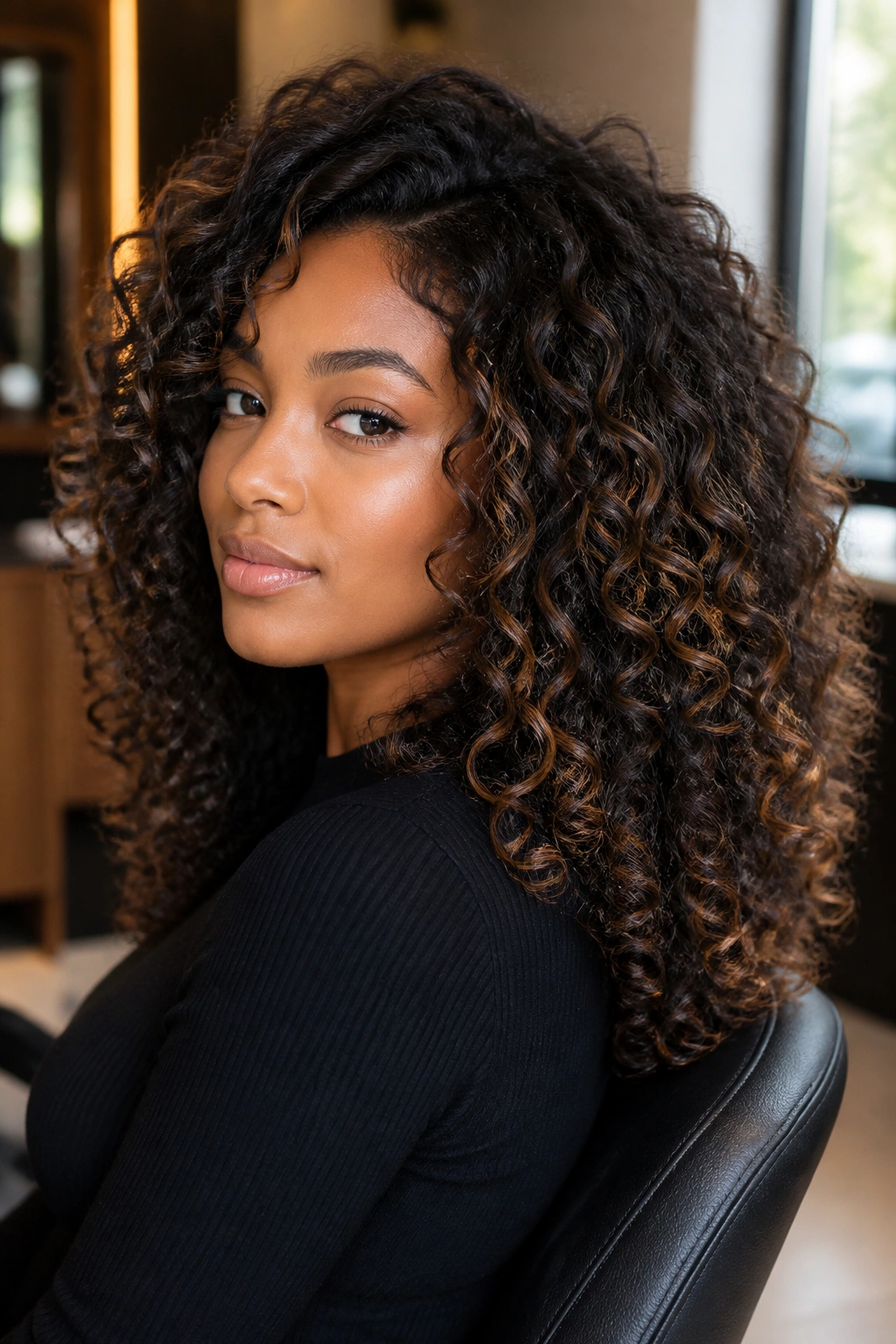
Balayage on black curls is all about placement. Hand-painted pieces let the stylist put brightness where the curls actually move, instead of scattering color in a way that gets lost once shrinkage kicks in. That’s why this method works better than many people expect.
The best version keeps the base dark and adds just enough lift to show shape. A few painted ribbons around the crown, sides, and ends can make a curly cut look sharper and more expensive-looking without turning it obvious. Too much lightening, though, and the black stops being the hero.
This is the option I’d pick for someone who wants dimension but still wants the hair to read dark at first glance.
20. Ash Brown Ribbons Through Black Curls
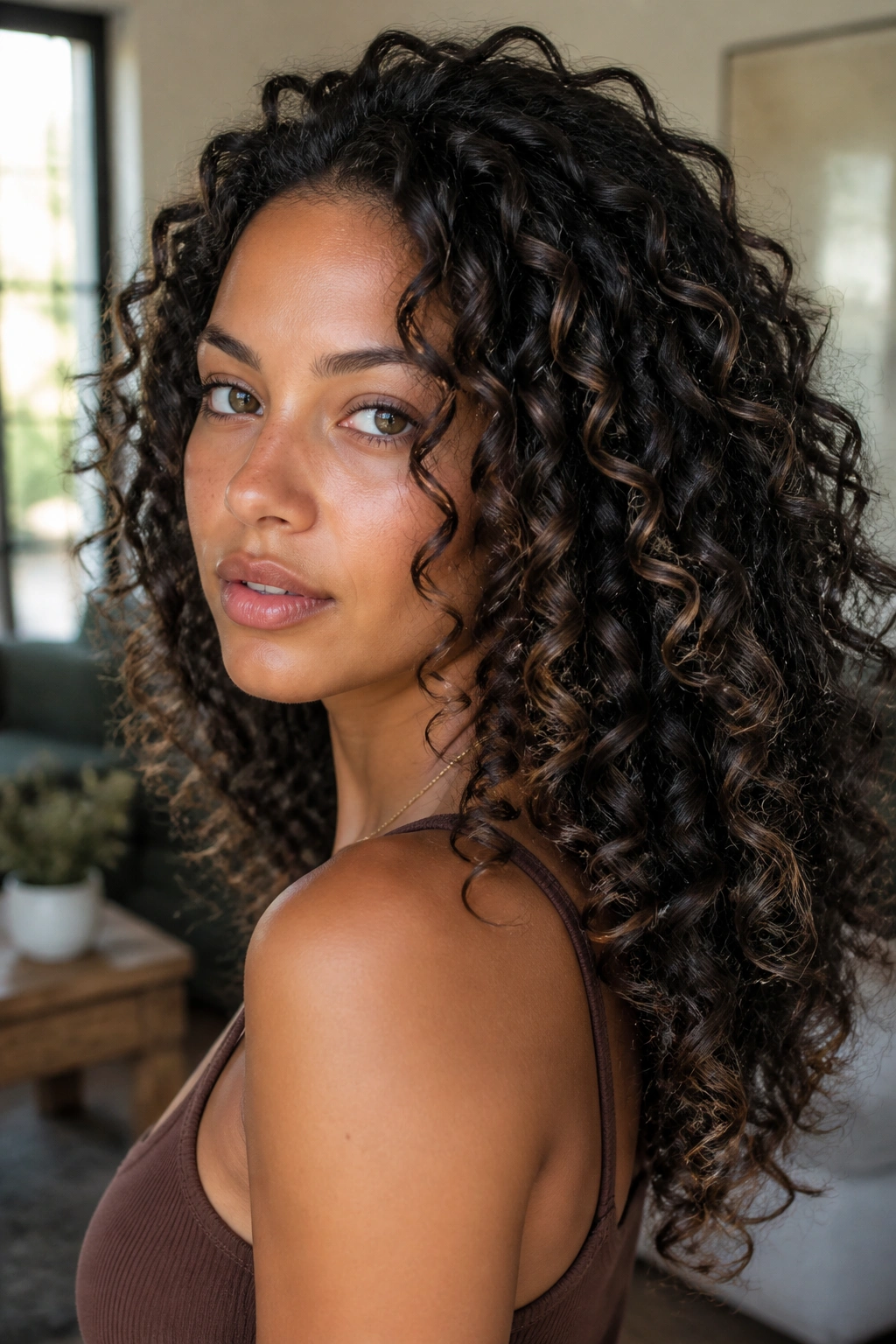
Ash brown ribbons are for people who like cool-toned hair with some depth. The ribbons cut through the black base just enough to show curl separation, but they don’t warm the hair up the way caramel would. That makes the look feel crisp and understated.
The Best Part
The contrast is gentle. You can see the ribbons when the hair lifts and falls, but they don’t shout. That’s useful if you wear your curls big and don’t want every strand to read as a separate highlight.
Keep in Mind
- Ash brown can fade warm if the hair is porous
- Purple or blue shampoos can help preserve the tone
- The placement should stay soft, not stripy
- Dense curls usually need more pieces than fine curls
This is a quiet color idea, and that’s exactly why it works.
21. Chocolate Ribbon Highlights on Black Hair
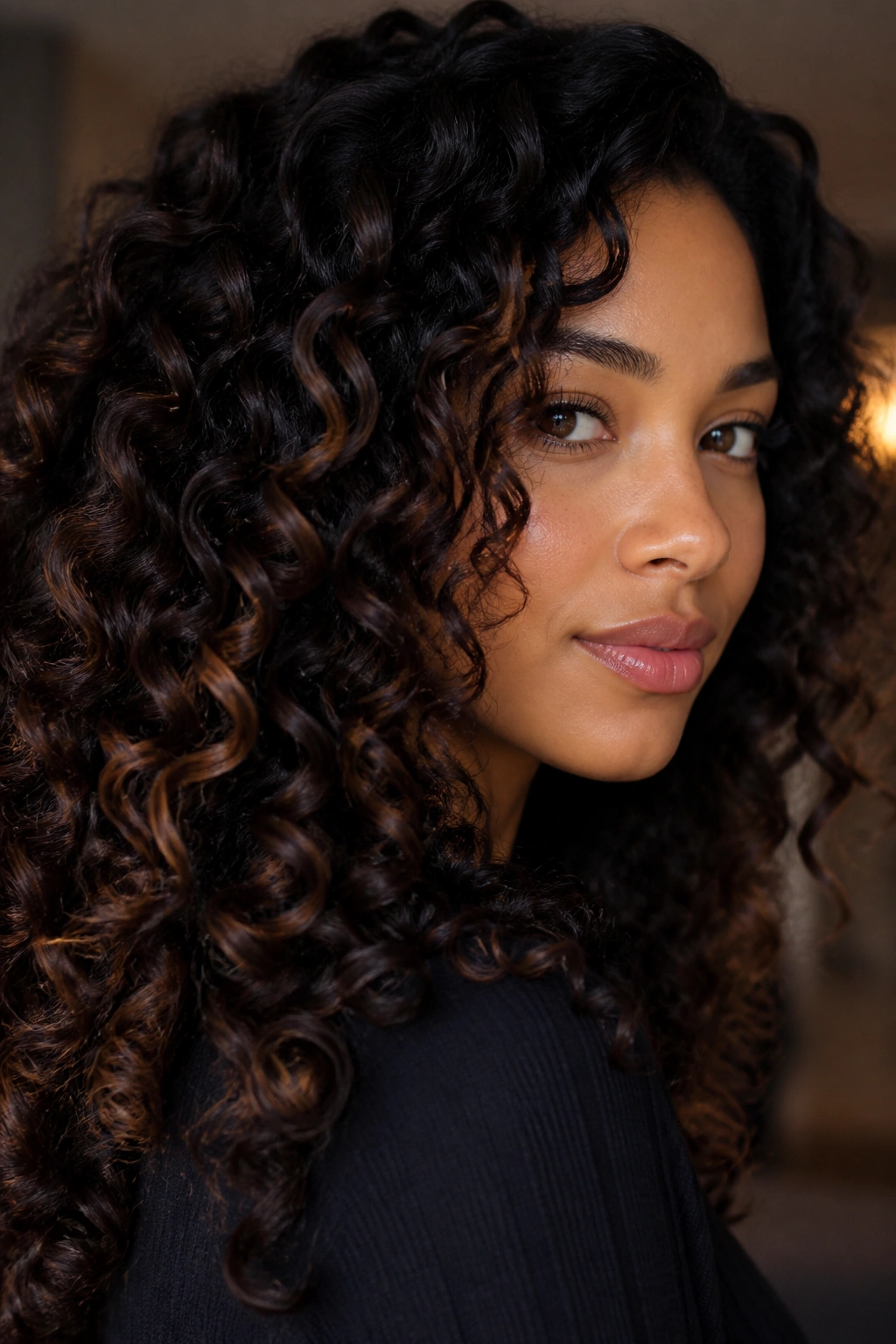
Chocolate ribbons are warmer and rounder than ash brown, which makes them a strong choice for black curls that need softness. The color blends into the base instead of fighting it. You get depth, not a big contrast block.
I like this look on thick curly hair because the ribbons create the illusion of even more volume. When the curls are dry or twisted out, the chocolate pieces catch the light and keep the black from feeling too dense. It’s also one of the easiest ways to ease into lighter dimension without committing to caramel or blonde.
If you want your curls to look rich and touchable, chocolate ribbons get that job done.
22. Silver Streaks on Black Curls
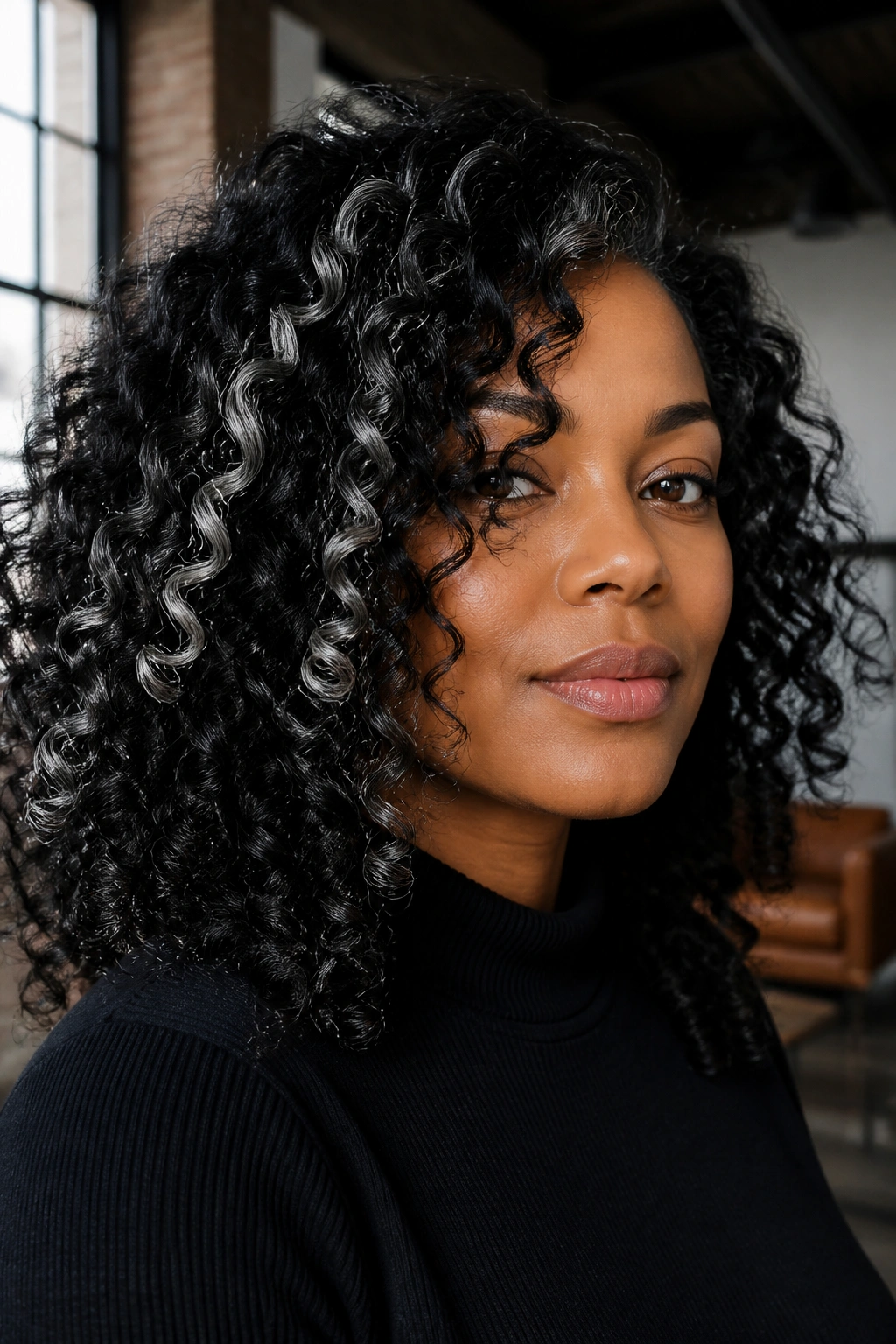
Silver streaks can be dramatic in a way that feels grown-up and unapologetic. Black hair gives the silver somewhere strong to land, so the contrast looks deliberate instead of accidental. On curls, the streaks can break up beautifully as the pattern moves.
Who It Suits Best
People with a sharp haircut, a bold wardrobe, or naturally cooler coloring tend to wear this look easily. It’s also a strong choice if your natural hair is already getting silver in places and you want to lean into it rather than cover it.
What to Expect
- The contrast is high
- Maintenance is lower if the silver is placed strategically
- Curly texture softens the stripe effect
- A toner may be needed to keep the silver from going yellow
This is not a shy color idea. It has attitude. A lot of it.
23. Teal Hidden Panels
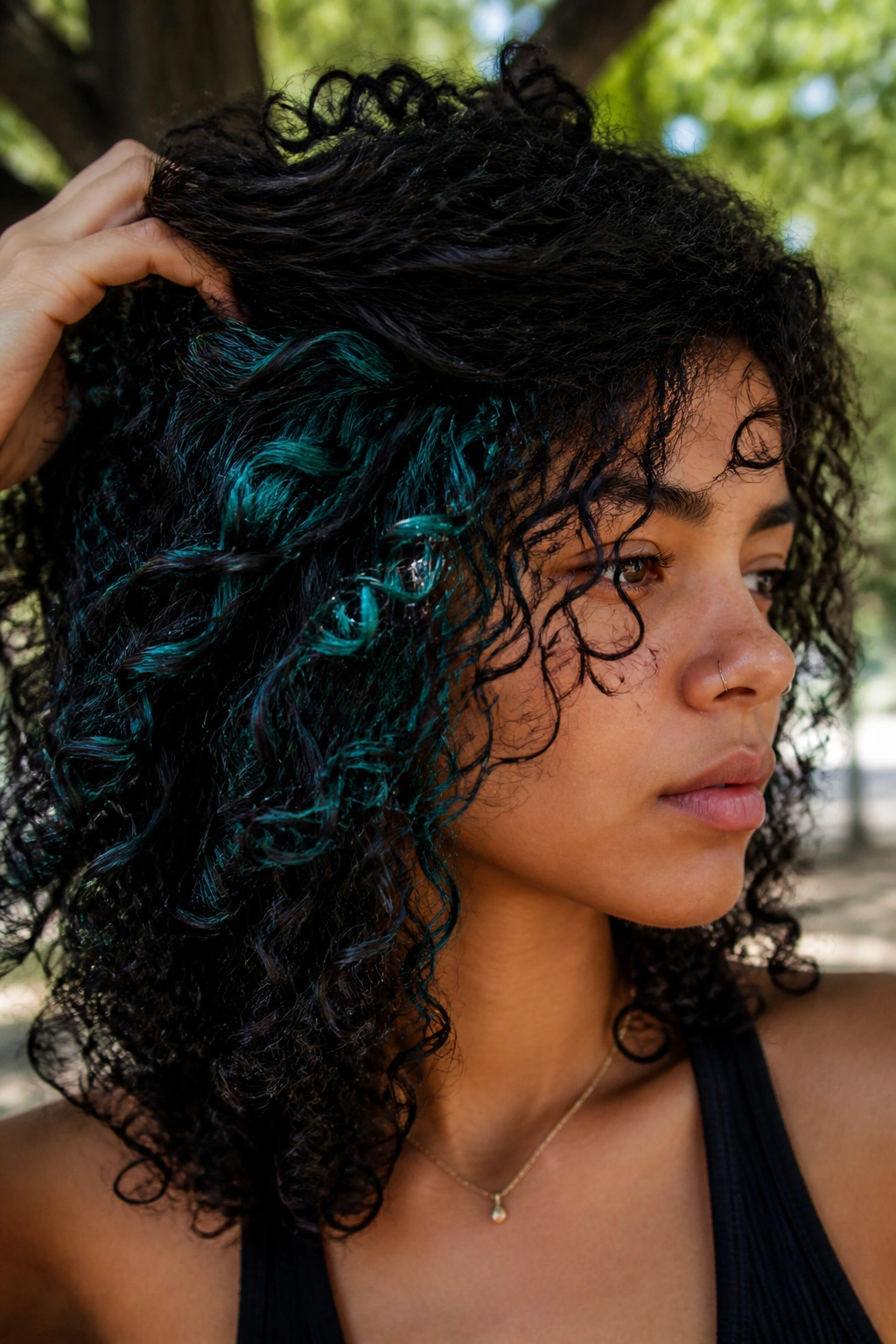
Teal hidden panels are the kind of thing that make curly hair fun again if you’ve been living in dark colors for a while. The outer layer stays black, so the look is wearable. The hidden color only appears when the curls separate or when you tuck one side behind the ear.
That makes teal one of the best playful options for people who want color without constant visibility. It also works especially well on layered cuts, where the different lengths reveal the hidden panels in little flashes. The contrast against black is sharp enough to notice, but the whole look still feels controlled.
This one is less about subtlety and more about personality. Fair enough.
24. Red Underlayer on Black Curls
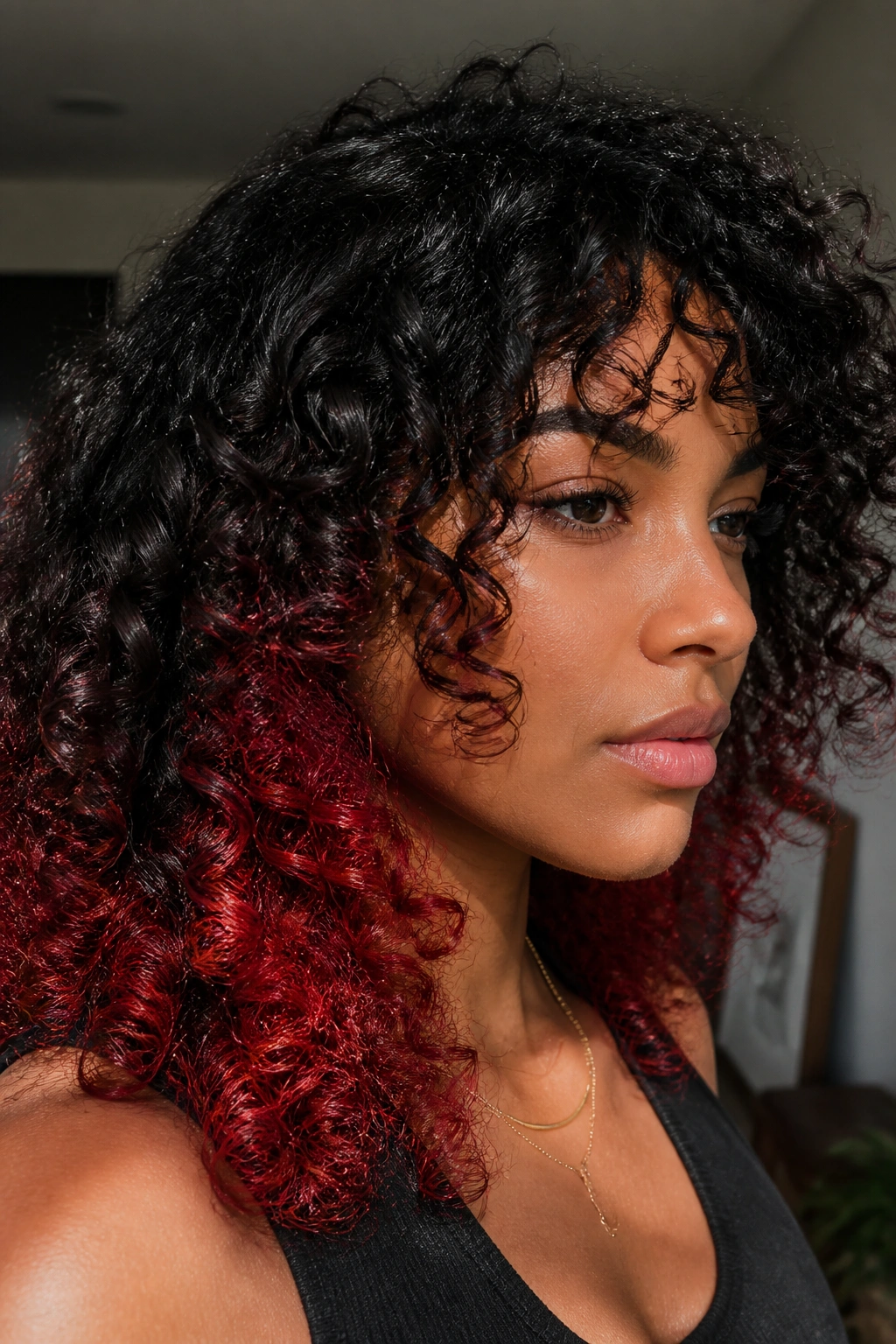
A red underlayer turns black curls into a moving surprise. From the front, the look can stay mostly dark. From the side or back, the red flashes through and changes the whole mood. It’s bold without needing the whole head to be bright.
Curly hair makes this placement even better because the underlayer shows at different moments depending on how the curls fall. You get depth, motion, and a little bit of edge all at once. Deep cherry red reads sophisticated; brighter red reads louder. Pick your lane before you sit in the chair.
This is a good choice if you like color that reveals itself slowly.
25. Face-Framing Highlights on a Black Base
Face-framing highlights are a smart move when you want your black curls to stay dark but still brighten the overall look. A few carefully placed lighter pieces around the front can open up the face and make the curl shape easier to see.
The placement matters more than the color here. Too chunky, and the highlights start to look dated. Too fine, and they disappear in curly shrinkage. The sweet spot is enough brightness to lift the front without turning the style into a striped mess. Honey, caramel, or even soft brown can work, depending on how strong you want the contrast.
This is the kind of color idea that makes a haircut look better immediately. I love that about it.
26. Auburn Root Melt on Black Curls
An auburn root melt gives black hair a warmer start near the scalp before the color moves darker or deeper through the length. It’s a softer way to add warmth than painting the whole head with red tones. On curls, the effect can feel almost velvety.
Why It’s Useful
Root melts are forgiving. They blur the line between new growth and color, which helps if you don’t want a hard maintenance schedule. The auburn tone also stops black from feeling too heavy at the crown, where flat color can sometimes make curls look dense in a not-so-good way.
Good Pairings
- Loose curls
- Layered shoulder-length cuts
- Warm makeup tones
- Deep brown or mahogany wardrobes
This is one of the quieter warm looks, and that restraint is part of the charm.
27. Violet Sheen Black
Violet sheen black is less obvious than plum-black and more refined than a full burgundy cast. Most of the time it reads as black. Under light, a violet reflection appears and gives the curls a little lift. It’s the kind of color people notice only after they look twice.
The Best Part
Curly hair already has built-in texture, so a soft violet sheen can turn each coil into its own tiny reflection point. The effect is subtle, but it changes how the whole head moves.
Keep the Finish Smooth
- Use a shine-safe conditioner
- Don’t overload the hair with heavy oils
- Refresh the gloss before the tone fades too far
- Ask for a violet-based glaze rather than a strong purple dye
This is one of my favorite black hair color ideas for curly hair when the goal is depth with a little mystery.
28. Bronze Halo Lights
Bronze halo lights sit around the crown and upper surface of the curls, almost like the sun hit the top layer and stopped there. The base stays black, but the bronze pieces create a warm ring of light that makes the hair look fuller from above and from the side.
That placement works especially well on big curls and rounded shapes because it follows the natural volume of the style. You don’t get a line of color; you get a halo. The result feels intentional and soft at the same time. If your curls tend to look flat at the roots, this is one of the better fixes.
It’s a nice final idea because it gives black curls warmth without giving up the darkness that makes them feel strong.
Final Thoughts
Black color on curls works best when it gives the texture something to do. Pure black can be gorgeous, but a black with blue, violet, cocoa, ash, or bronze in it usually gives the curls more shape and movement.
If you want the safest pick, start with soft black, espresso black, or mocha-black. If you want more personality, blue-black, black cherry, or plum-black usually deliver without wrecking the curl pattern. And if you like dimension, placement colors like money pieces, lowlights, hidden panels, and halo lights can make a bigger difference than going a shade darker ever will.
One last thing: healthy curls make dark color look better. Dull ends, rough cuticles, and over-processed strands flatten even the nicest black. A good trim and a reflective finish go a long way.
