



Blue-black hair has a sharpness that plain black rarely gives you. Under daylight it shifts to ink, navy, and that glossy midnight tone that makes layers, bangs, and part lines matter a lot more than people expect.
On a round face, that matters twice over. You usually want the eye to travel downward, not out to the sides, so a little height at the crown, a longer front section, or a deep part can do more than an extra inch of length.
That does not mean every blue-black style has to be sleek or severe. Some of the best looks here are soft, a little messy, even a bit moody around the cheeks, because the color itself already brings drama.
The trick is to let the color do its work without letting the cut puff out at the widest point of the face.
1. Glossy Collarbone Lob with a Center Part
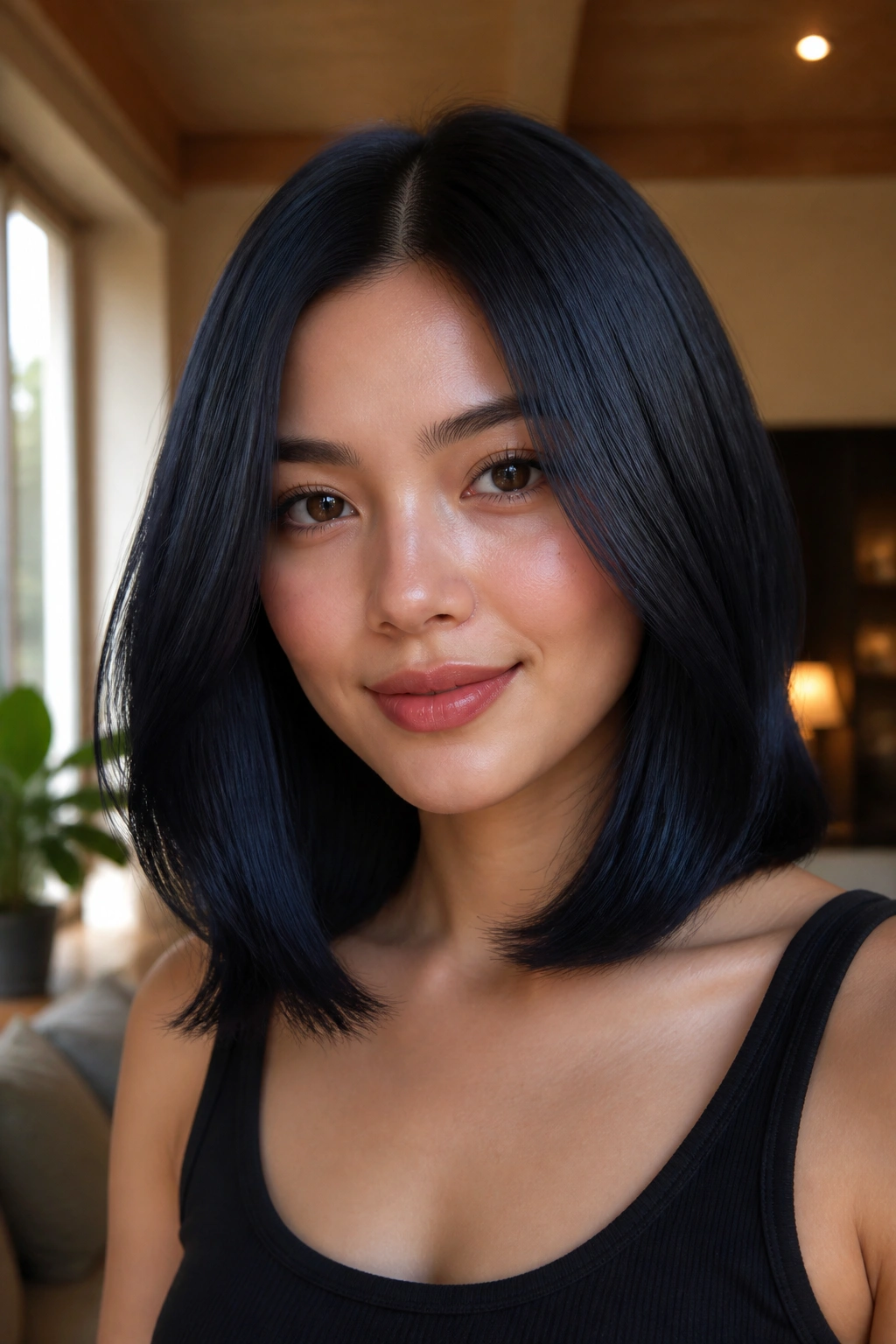
A collarbone lob is one of those cuts that just behaves well on a round face. It gives you length without dragging the hair so far down that the style feels heavy, and the center part splits the shape in a way that keeps the face from looking wider than it is.
Blue-black color makes the whole thing look cleaner. The shine sits right on the ends and midlengths, so the cut reads polished instead of flat. If your hair is fine, ask for a blunt-but-soft hem so it does not collapse; if it is thick, a few internal layers stop it from ballooning out.
A tiny bend at the ends helps too. Not beach waves. Just enough movement that the line falls straight and deliberate.
2. Long Layers with Curtain Bangs
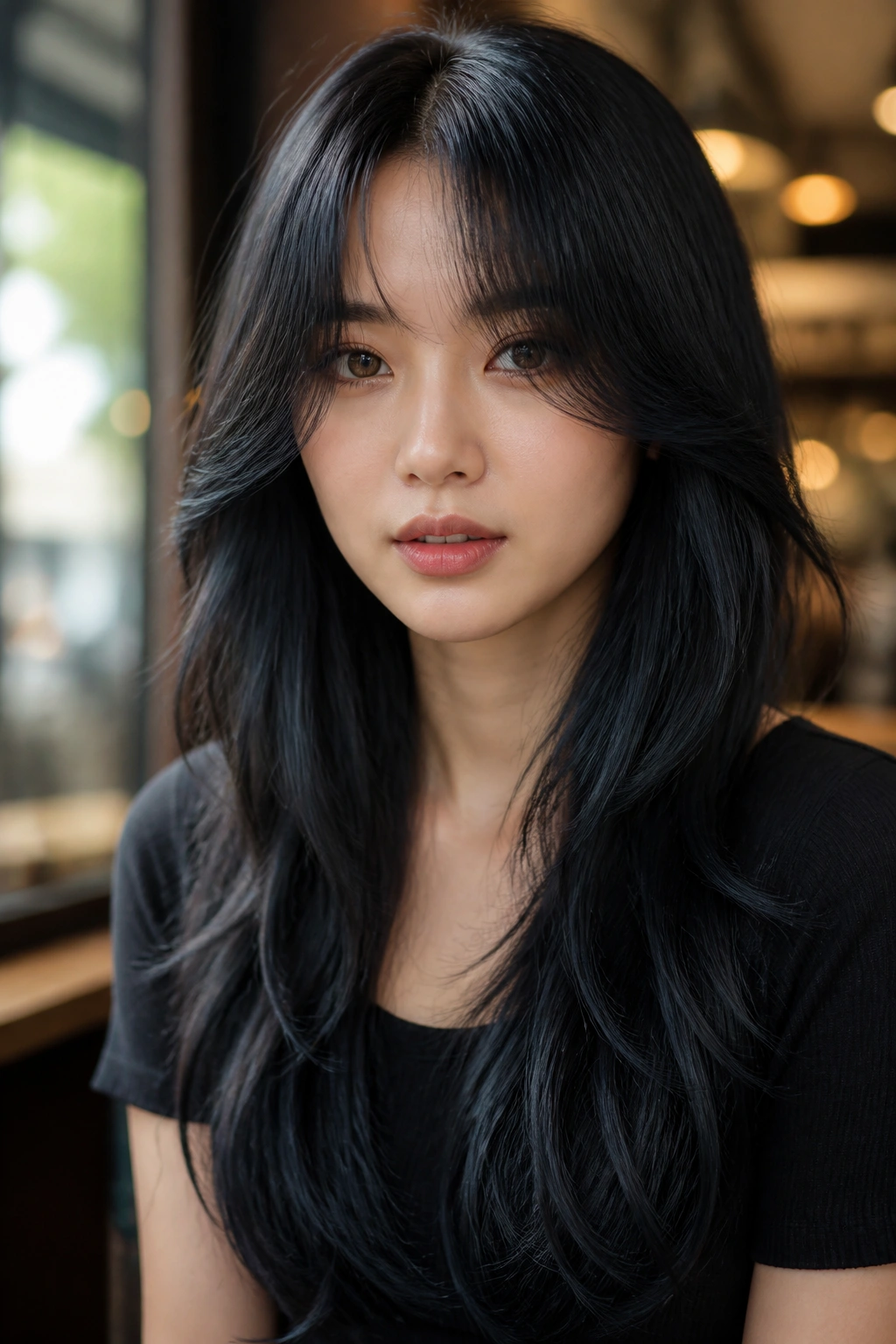
Curtain bangs are a smart move when you want softness without losing shape. They open in the middle, then fall away from the cheeks, which gives a round face a little more vertical room right away.
Why It Flatters a Round Face
The longest pieces should start around the cheekbone or just below it, not up high near the eyes. That placement matters. It draws attention to the middle of the face and then pulls it downward, which is exactly where you want the eye to go.
Ask for layers that begin below the jaw, not at it. That keeps the sides from puffing out in a way that fights the face shape.
- Curtain bangs should be blow-dried away from the face.
- The blue-black color looks richer when the fringe is slightly lighter through the ends.
- A loose bend at the front keeps the shape soft, not boxy.
Best for: hair that already has some natural body and needs a little shaping, not a full overhaul.
3. Chin-Length Bob with a Deep Side Part
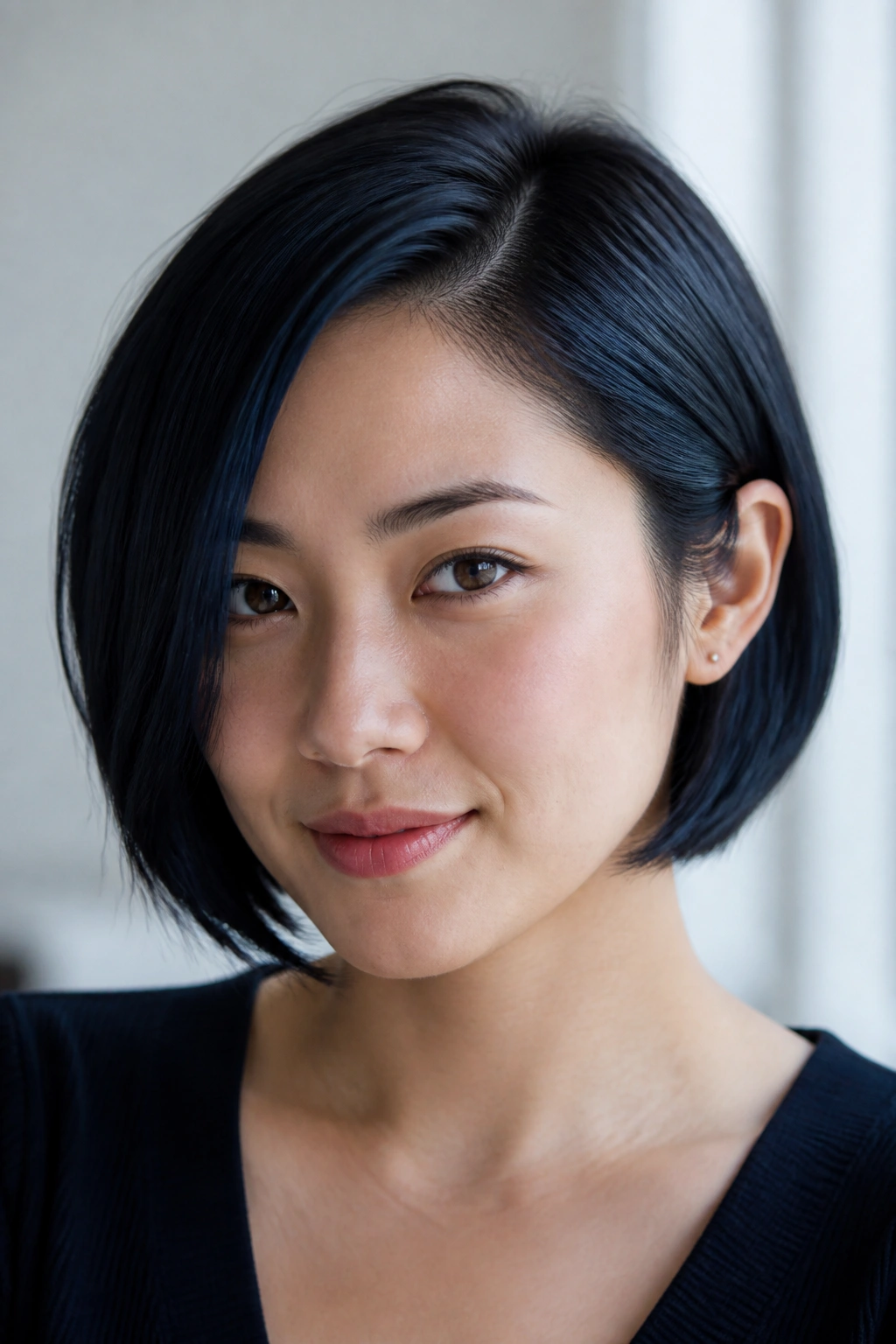
A side part does more work than people give it credit for. On a round face, it breaks symmetry fast, and that little visual tilt can make the whole cut feel longer and slimmer.
The chin-length bob needs to sit carefully. If it lands exactly at the fullest part of the cheeks, it can widen the face. If it skims just below the jaw, though, the blue-black color turns it into a clean frame instead of a helmet shape.
Keep the finish smooth but not rigid. A soft tuck behind one ear is enough. That tiny move opens one side of the face and lets the darker color look sharper on the other.
4. Asymmetrical Bob with One Longer Side
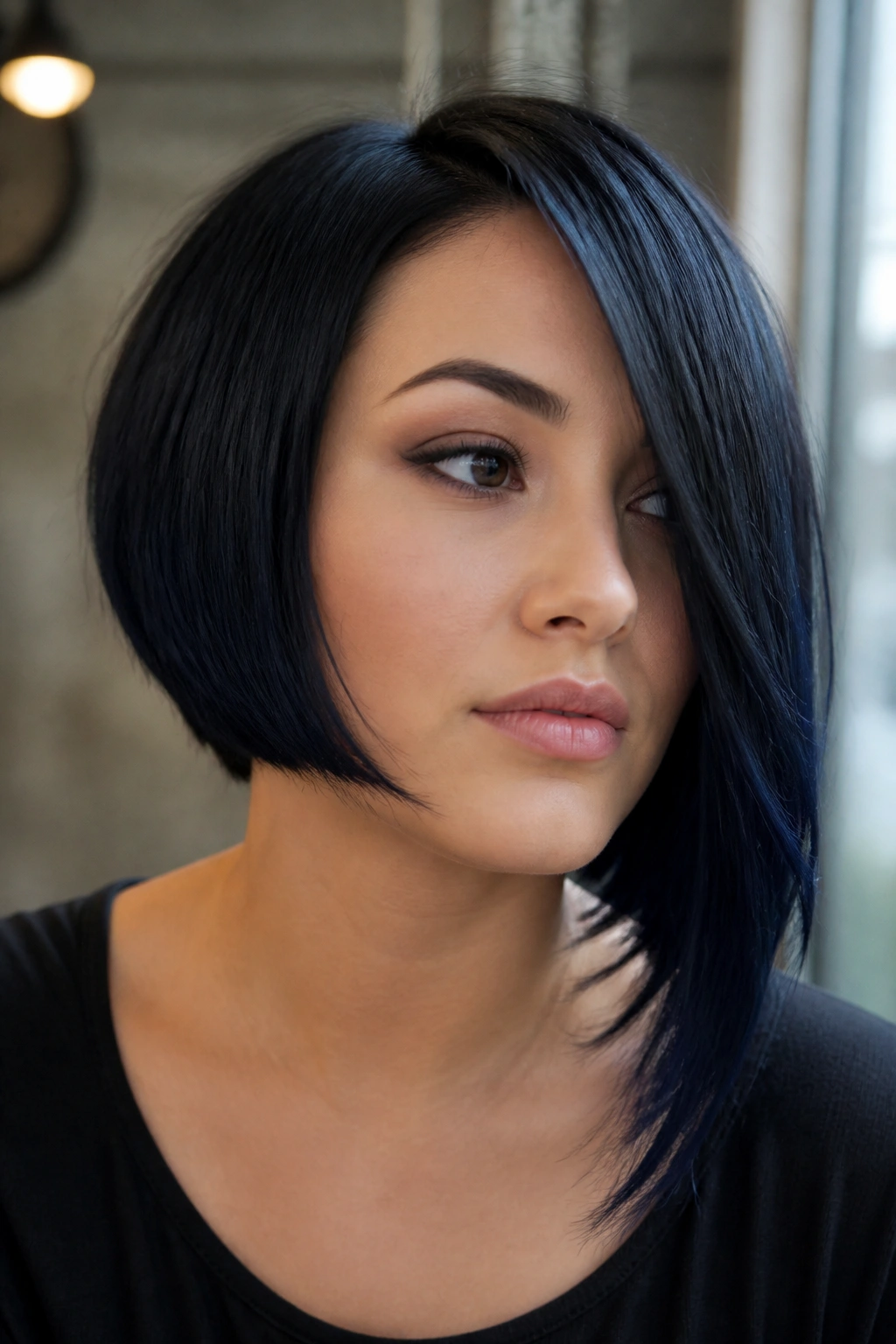
This is a good choice when you want something sharper than a lob but less severe than a blunt bob. One side hangs a little longer, and that uneven line gives a round face a built-in diagonal, which is useful because diagonals naturally slim the eye line.
The blue-black shade makes the asymmetry look intentional instead of choppy. The longer side should pass the chin by at least 1 inch so it does not stop right where the face is widest.
Wear it straight or with a slight bend at the ends. Either way, keep the shorter side close to the cheek and the longer side polished. That contrast is the point.
5. Tapered Pixie with a Feathered Crown
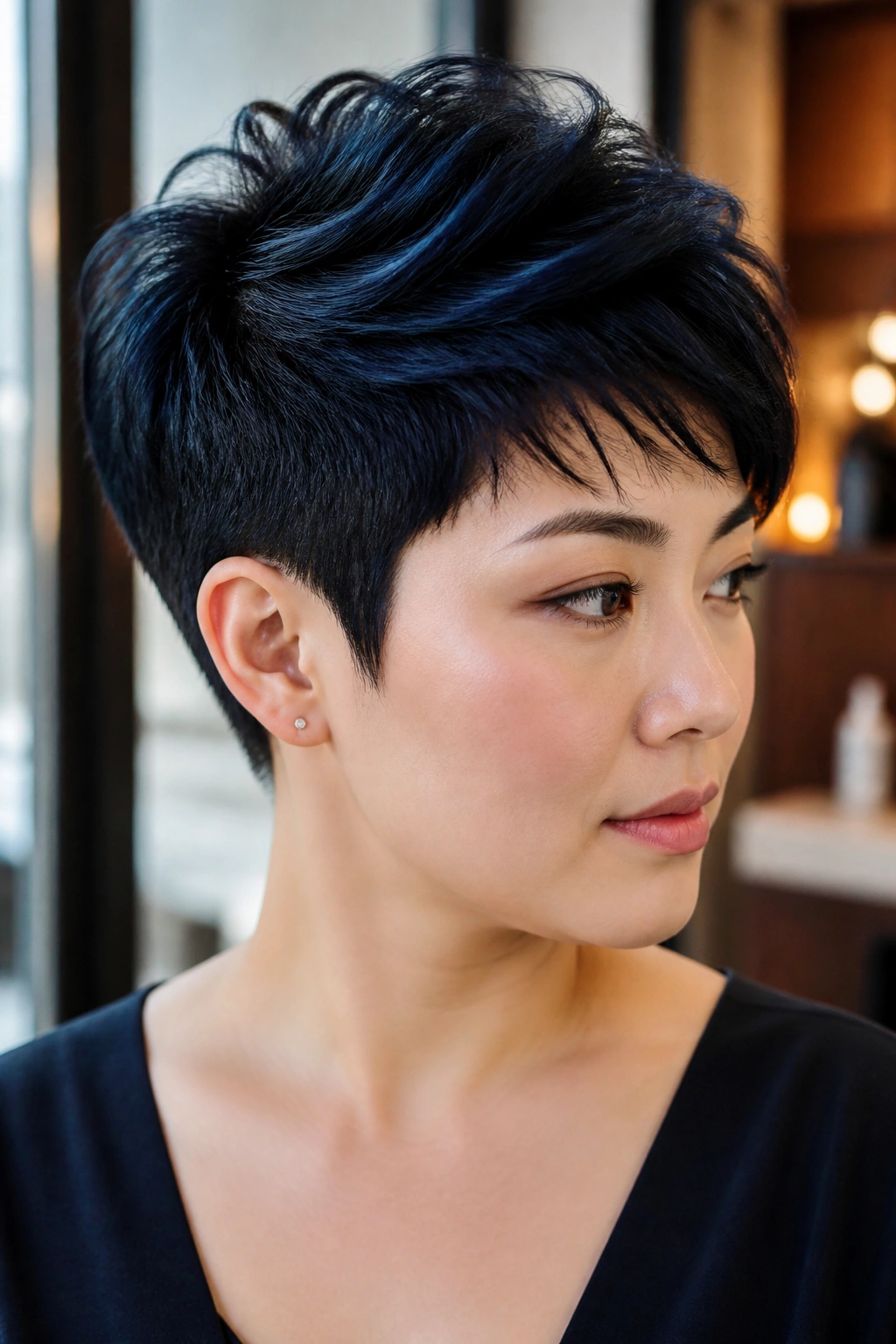
Short hair can work on a round face, but the shape has to be smarter than a one-length crop. A tapered pixie keeps the sides close to the head and adds lift on top, which stretches the face upward instead of outward.
Blue-black is especially good here because it shows texture. A feathered crown catches light in tiny strips, and that makes the cut feel lighter even when the color is deep. If you like short hair that still has personality, this is one of the best places to start.
What to Ask Your Stylist For
- Shorter sides and nape.
- A crown with 1 to 2 inches more length.
- Piecey texture, not a heavy top.
- A side-swept fringe if you want a little softness at the forehead.
Watch out for: a pixie that sits too round through the sides. That can make the face look fuller, not slimmer.
6. Soft Wolf Cut with Airy Ends
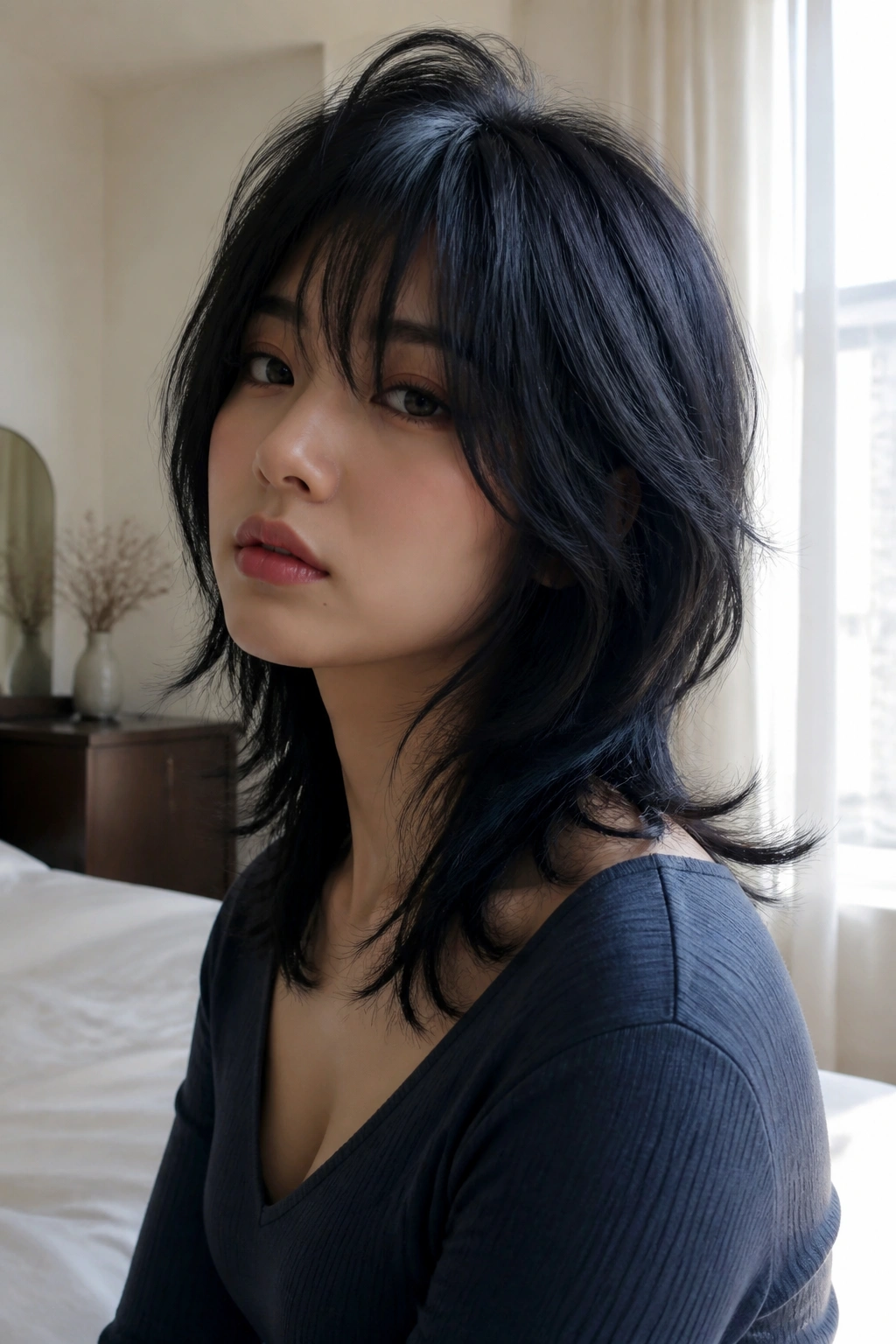
The wolf cut can be excellent on a round face when it stays soft. The trick is to keep the crown from getting too puffy and let the shaggy ends do the talking.
What Makes It Different
A cleaner shag can sometimes widen the cheeks if the shortest layers hit there. A soft wolf cut keeps the shortest pieces higher and the longest pieces lower, so the shape moves in two directions at once. Up top, you get lift. At the bottom, you get length. That balance matters.
Blue-black gives the whole cut a smoky edge, and the airiness in the ends stops the color from looking like one solid block. If your hair is thick, this cut can take out weight fast. If your hair is fine, ask for lighter texturing so it does not go stringy.
7. Sleek Long Hair with a Glassy Finish
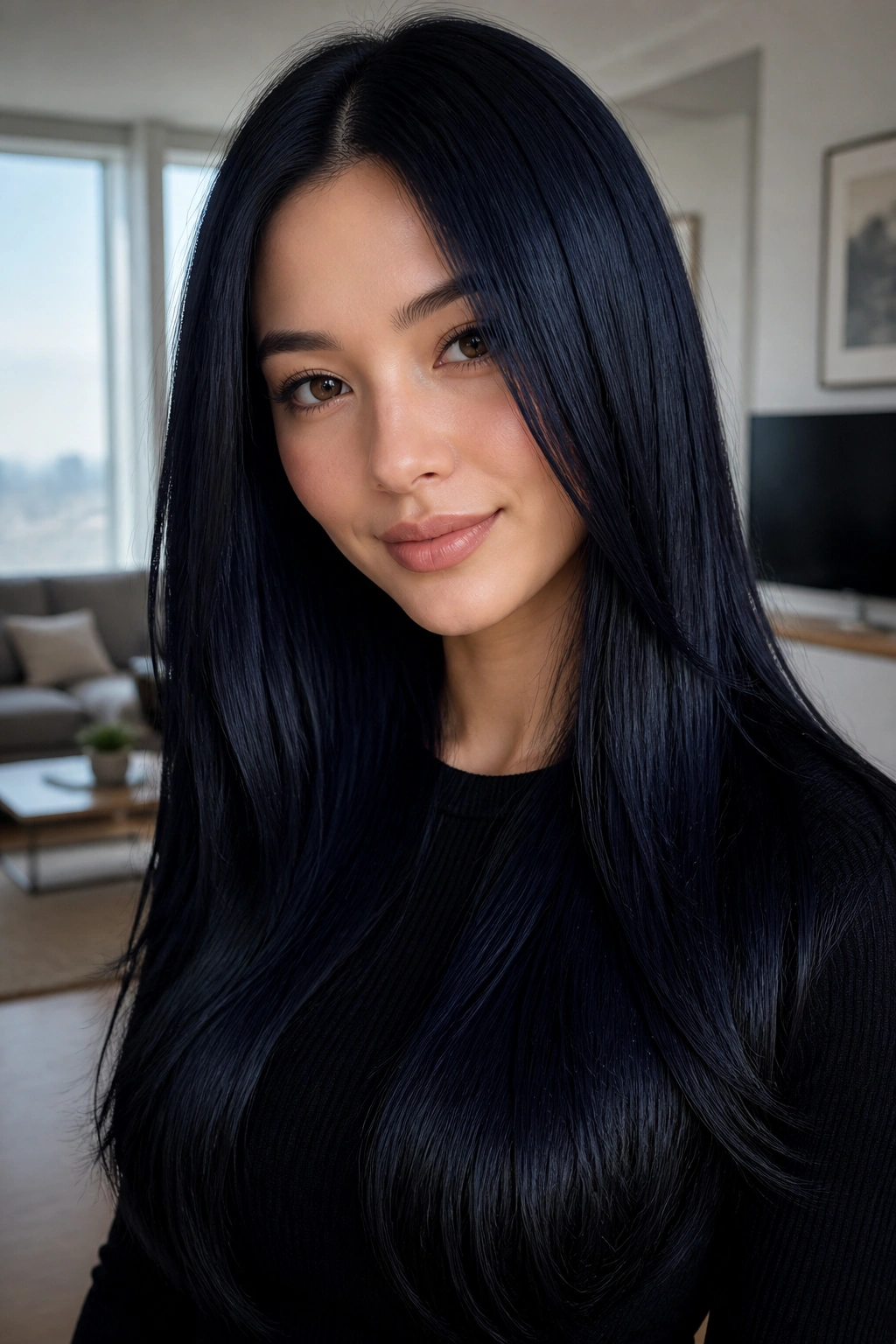
There’s something ruthless, in a good way, about long blue-black hair when it’s smooth. The color gets all the attention, and the length pulls the face down, which is exactly what a round face needs from a long style.
This works best when the hair is healthy enough to reflect light. Dry ends make blue-black look dull and almost brown. Smooth ends, on the other hand, let the blue undertone show up, especially near the middle of the shaft.
Use a heat protectant before flat-ironing, and keep the iron moving. You want polish, not fried ends. A tiny curve under at the very bottom keeps the style from feeling too severe.
8. Blue-Black Shag with Broken Layers

A broken-layer shag is a good answer if you like texture but hate anything too round. The uneven pieces stop the style from fanning out at the cheeks, which is the main thing to avoid with a round face.
The color helps because blue-black absorbs a lot of light, so the layer pattern becomes the star. That means the haircut has to be deliberate. Ask for layers that start lower than cheek level and are sliced, not chunked, so the ends move without looking ragged.
This is also one of the easier blue-black looks to wear with a little natural wave. Air-dry it, scrunch it, and let it look imperfect.
9. Shoulder-Length Cut with Side-Swept Bangs
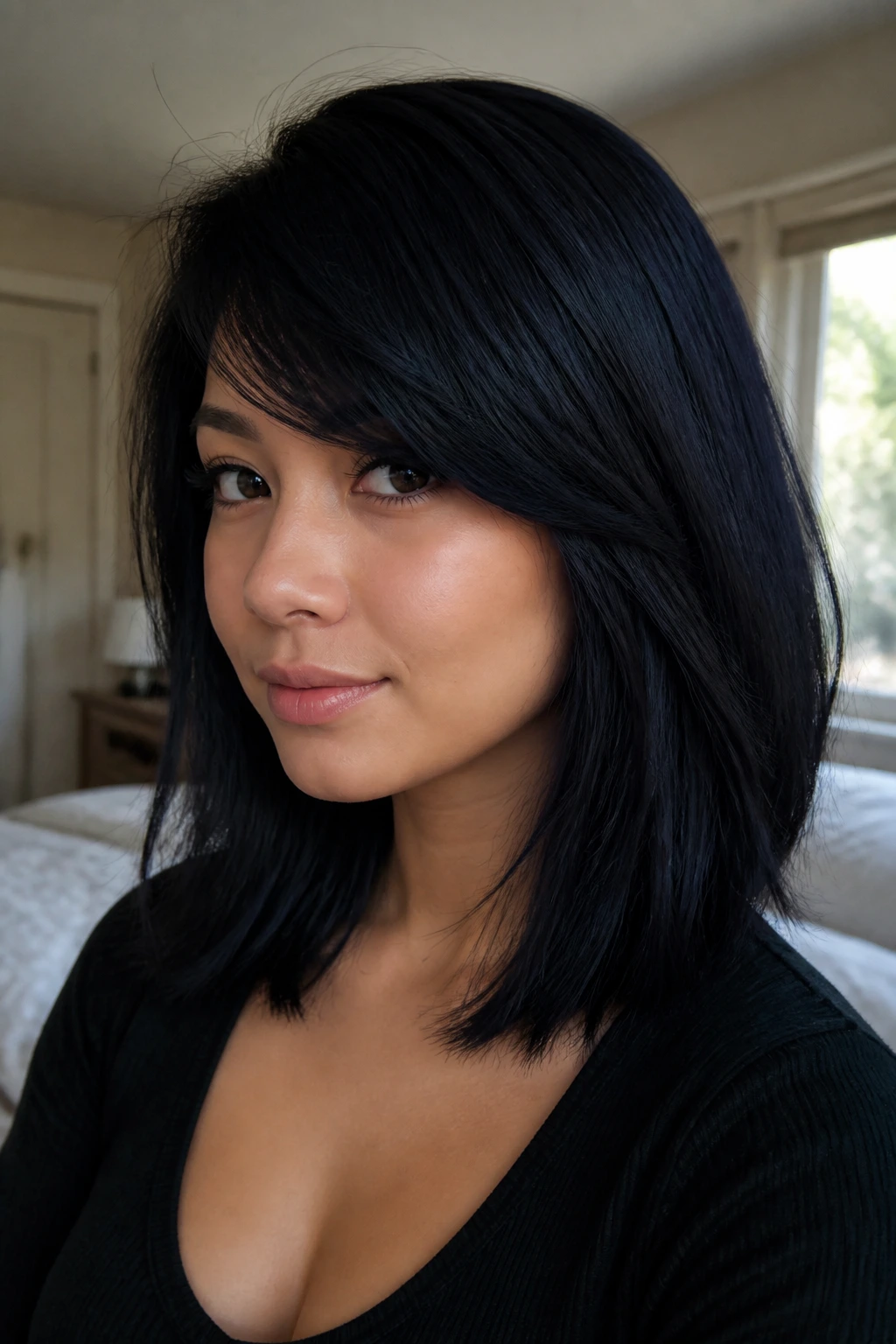
A shoulder-length cut gives you room to shape the face without going heavy. Add a side-swept bang, and you’ve got a diagonal line that takes some fullness out of the cheeks right away.
Small Details That Matter
The bang should sweep from the part and land around the outer brow or cheekbone area. If it stops too high, it can look puffy. If it hangs too low and heavy, it can drag the face down in a bad way.
- Keep the shoulder length slightly layered.
- Blow-dry the fringe with a round brush for a soft curve.
- Let the blue-black color stay deepest at the roots for contrast.
This is a very wearable option. Not boring. Just easy to live with.
10. Curly Lob with a Dark Root Shadow
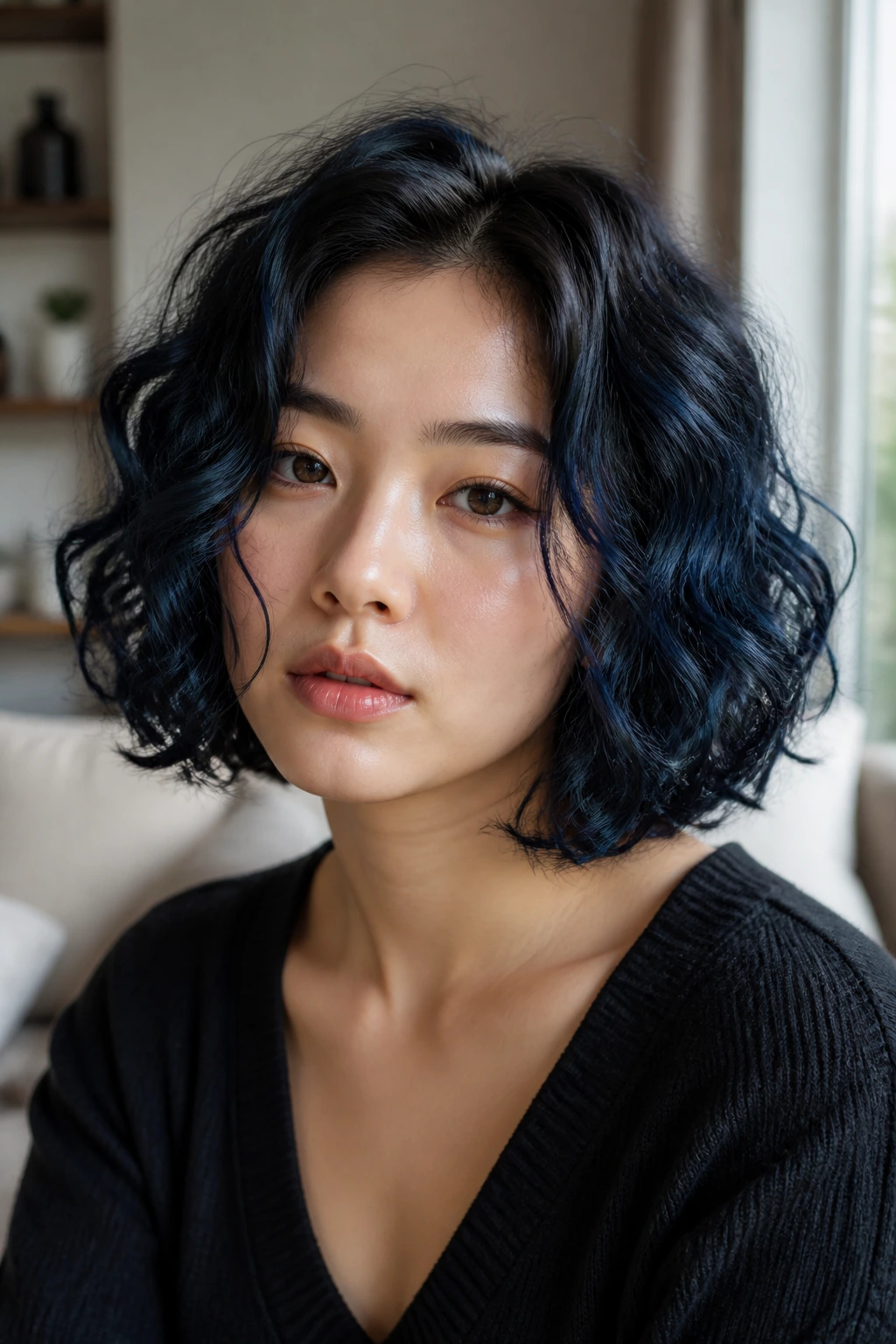
Curly hair on a round face needs shape control, not flattening. A lob gives the curls room to sit below the jaw, and a dark root shadow keeps the color grounded so the whole style does not puff out at the sides.
Blue-black is lovely on curls because it makes the curl pattern look richer, especially when the light catches individual coils. The key is where the bulk sits. Keep the widest point below the cheeks, not right at them.
Diffusing from the root with the head angled slightly forward helps create lift at the crown. That little bit of height matters more than people think.
11. Face-Framing Money Piece in Electric Blue
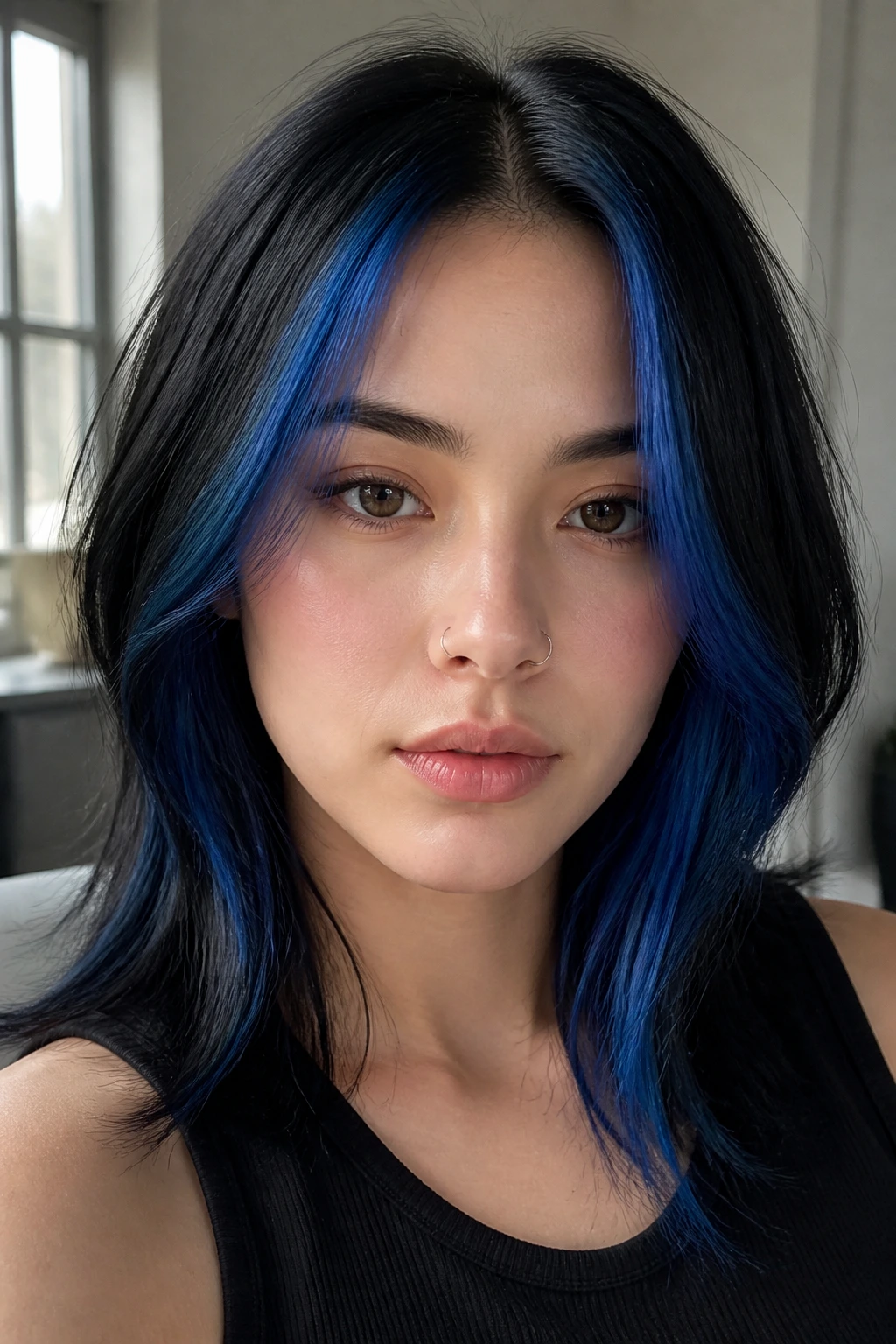
A little electric blue around the face changes the mood fast. On a blue-black base, it reads bold without needing a full head of bright color, and it gives a round face a stronger vertical frame.
The money piece should stay narrow. That’s the whole point. Too much bright color at the cheeks can widen the face visually, but a slim strip that starts around the temple and falls toward the collarbone can make the front look longer.
How to Keep It Balanced
Keep the brightest blue slightly below the brow line and let it taper as it goes down. That creates a clean edge instead of a chunky stripe.
Use this look with straight hair, loose waves, or even a high ponytail. It changes shape depending on how you wear it, which is half the fun.
12. Indigo Balayage on a Midnight Base
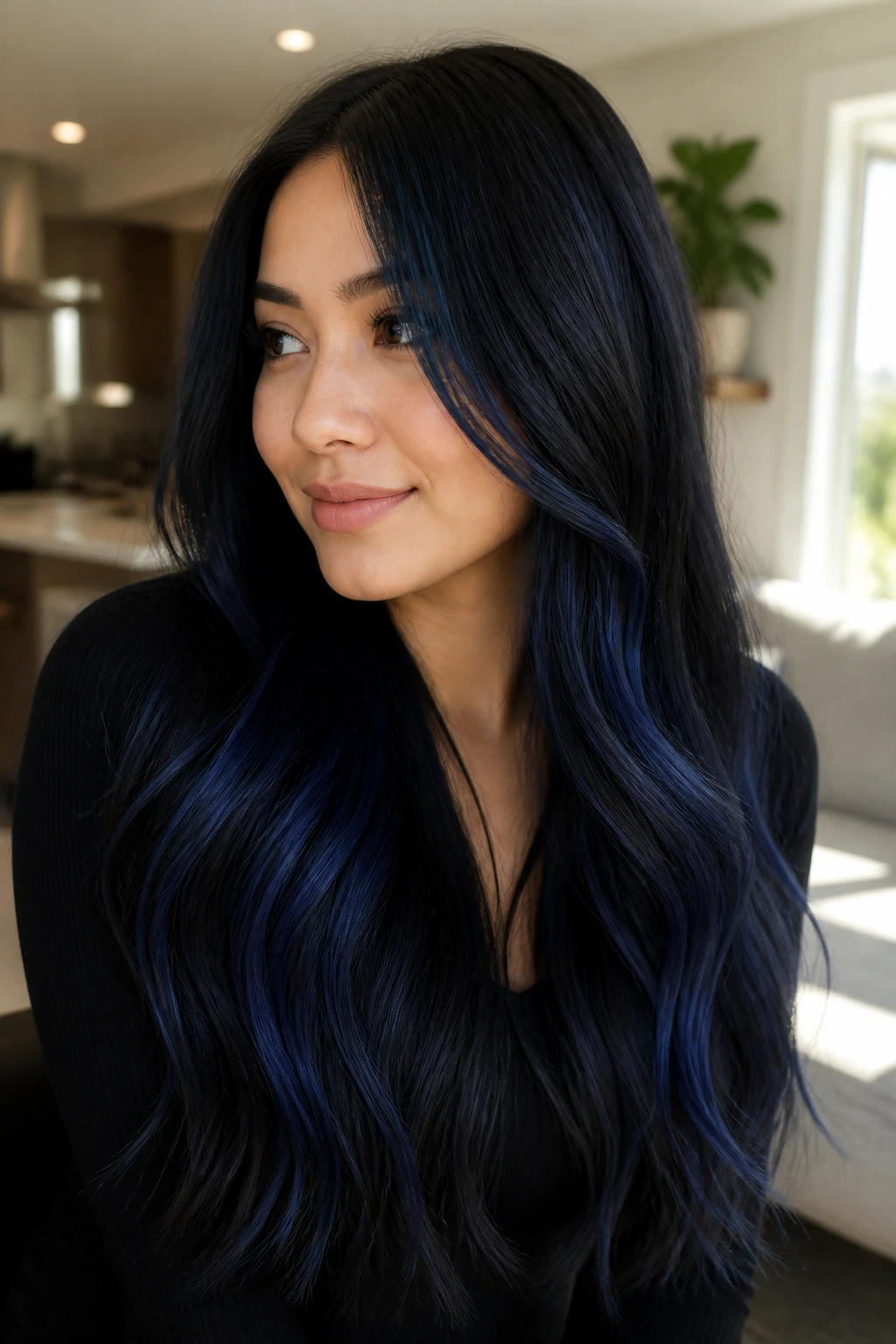
Why does indigo balayage work so well on a round face? Because the color is painted in long, vertical-looking ribbons instead of all over in one heavy block.
The dark midnight base keeps the roots sleek, while the indigo pieces start lower and move downward. That keeps attention moving along the length of the hair. If the bright pieces begin too high near the temples, the style can spread the face out. Keep them below the cheekbones and the effect stays cleaner.
This is a nice choice if you want dimension but not a high-contrast streaky look. It feels softer in daylight, deeper indoors, and it grows out in a forgiving way.
13. Blue-Black Ombré from Root to Tip
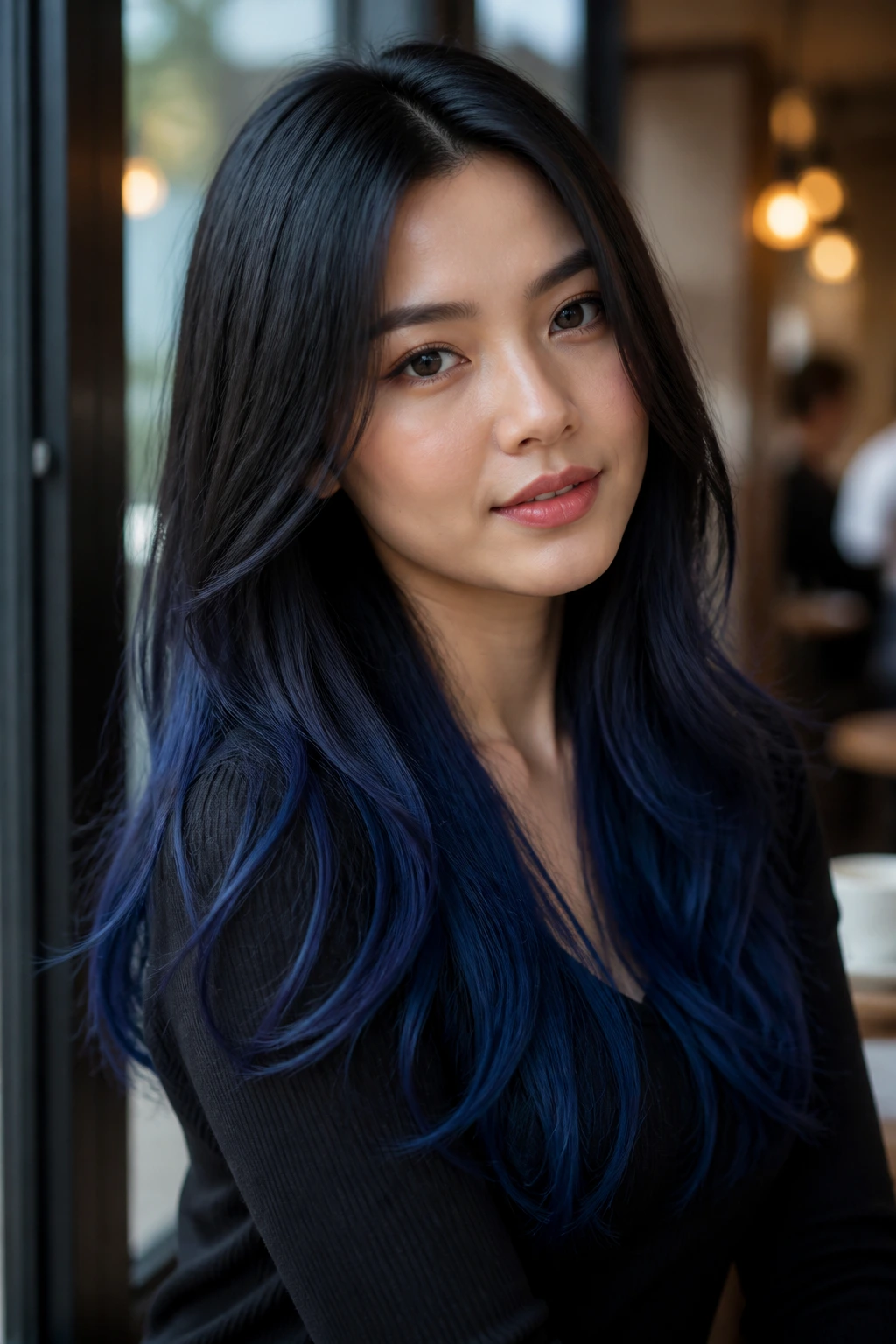
A good ombré does not have to scream “color melt.” It just needs a clear direction. For round faces, that direction should go down.
Start with a deep blue-black at the roots and let the ends lean more indigo or navy. The fade should happen below the widest part of the face, so the eye sees length before it sees contrast. That one detail makes a bigger difference than most people expect.
This works especially well on straight or slightly wavy hair, where the gradient can be seen clearly. The trick is keeping the transition soft, not stripy.
14. V-Cut Lengths with Subtle Dimension
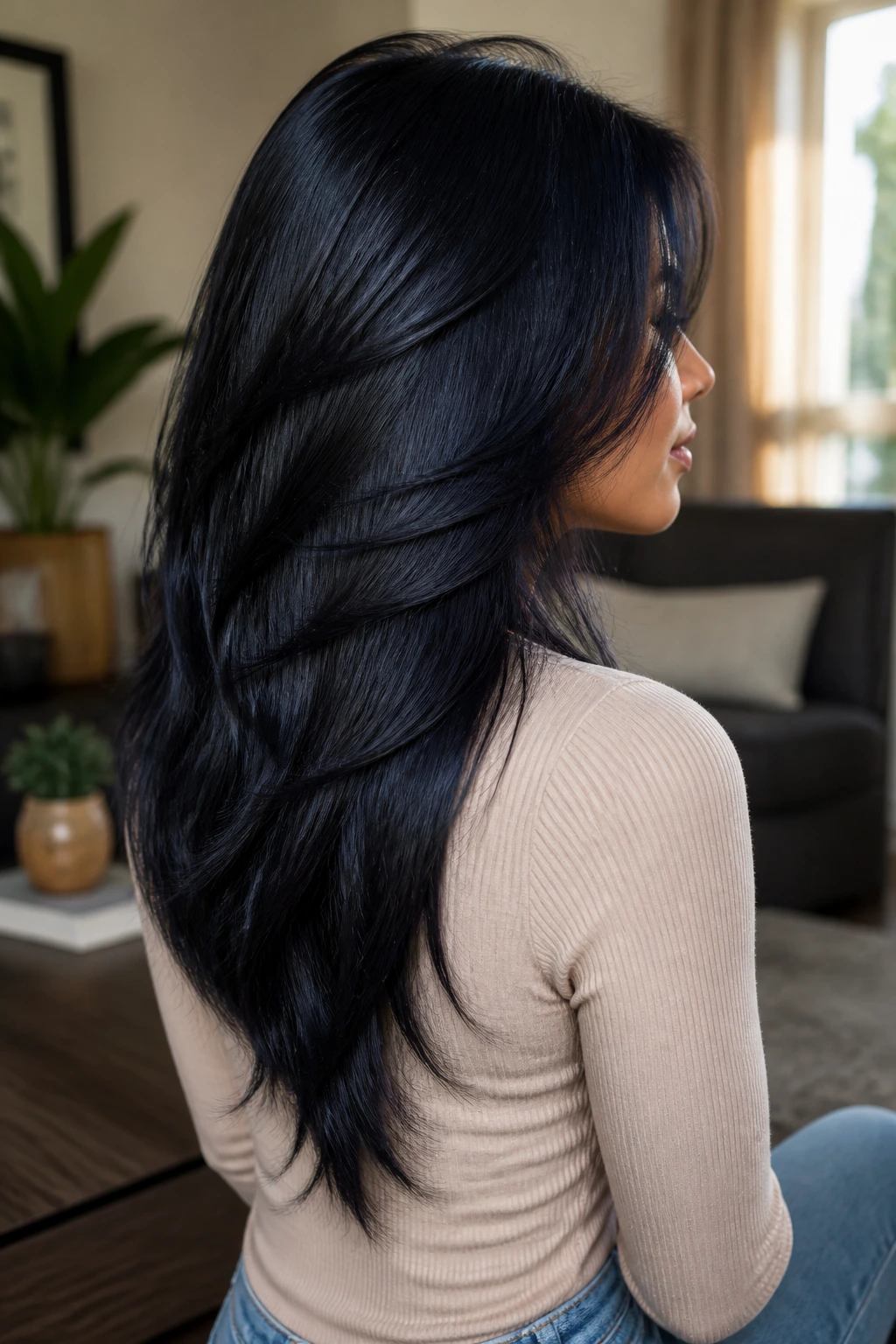
A V-cut is one of the easiest ways to make long hair feel less heavy around a round face. The center of the back stays longer, while the sides taper gently, which pulls the eye down the middle and keeps the perimeter from spreading outward.
Blue-black color gives the cut a polished edge. You can barely see the shape when the hair is still, then the V line shows up as soon as the hair moves. That’s the nice part. It looks expensive without trying too hard.
If you wear your hair down most of the time, this cut keeps the ends from feeling blunt and wide.
15. A-Line Bob That Skims the Jaw
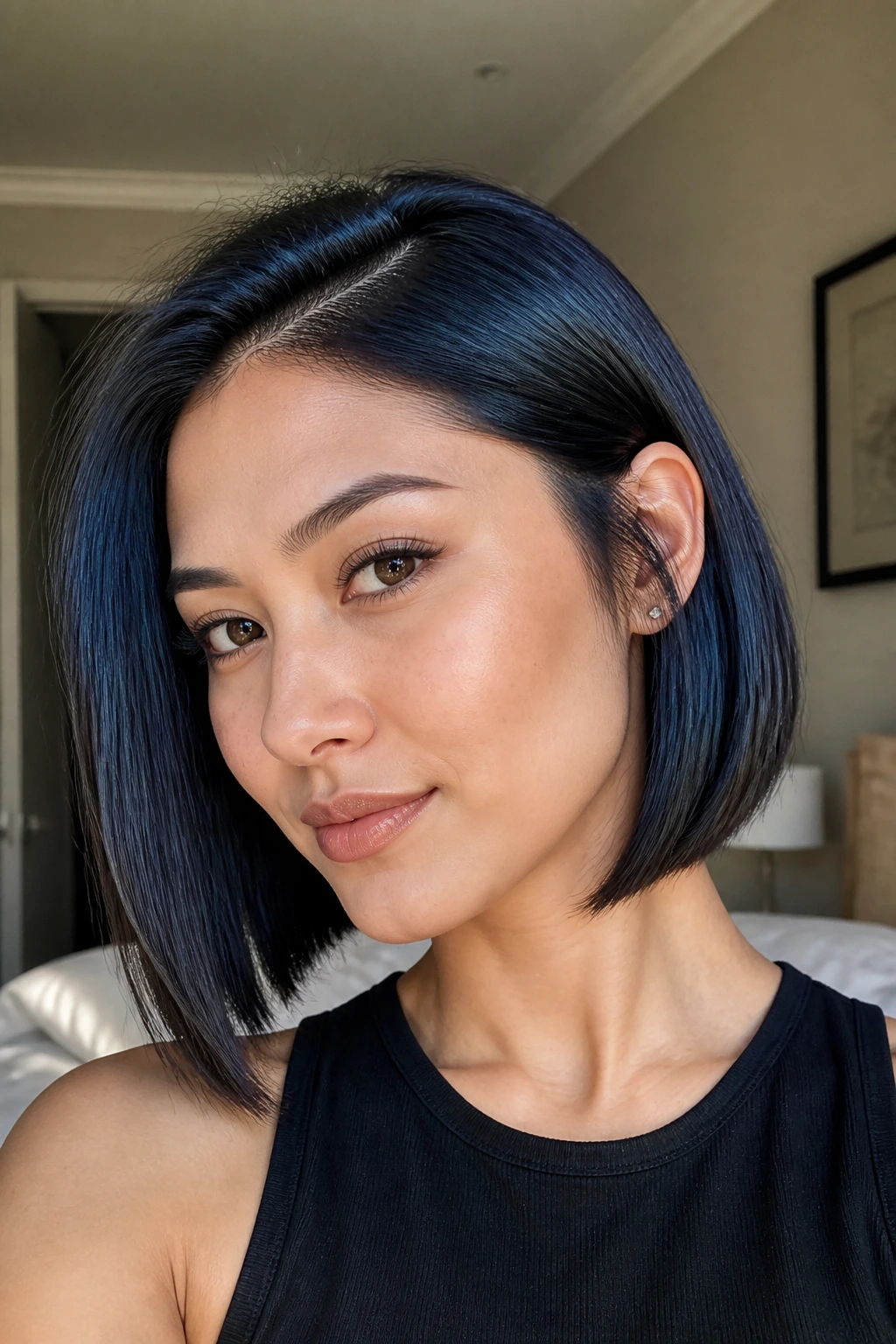
The A-line bob is a quiet winner. Shorter in back, longer in front, it gives the face a forward-moving line that works well on round shapes.
The front pieces should skim the jaw, not stop at it. That little bit of extra length keeps the cheeks from feeling boxed in. Blue-black makes the angles cleaner, especially if the bob is worn smooth with a side part or a deep tuck behind one ear.
A slight bevel at the ends helps. You don’t want them curling in too much, because that can make the lower face look narrower in a pinched way. Clean, not cramped.
16. Blunt Bob with Tucked Ends
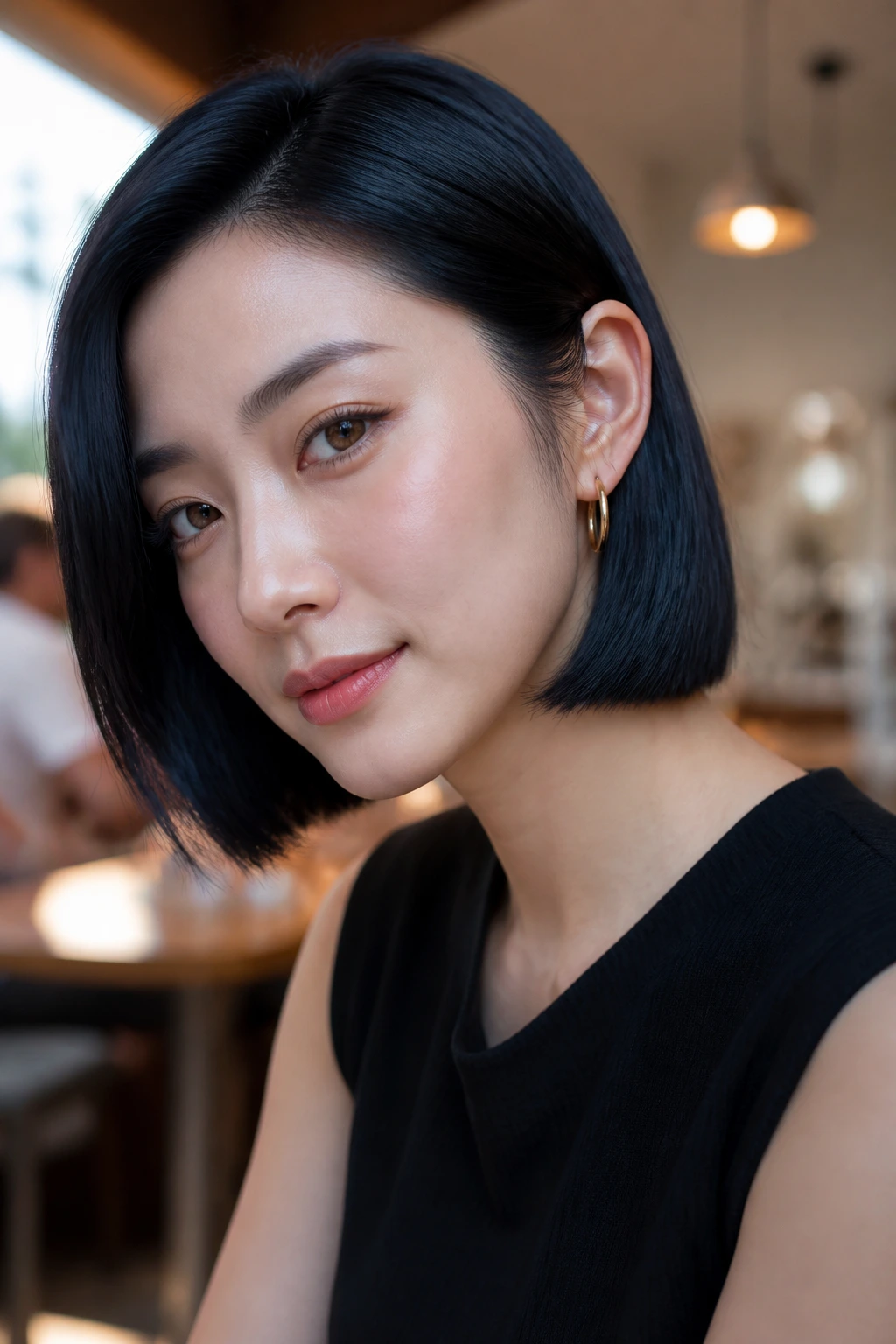
A blunt bob can work on a round face if the length is chosen with care. The safest version sits just below the chin and gets tucked behind the ears on one side or both, which changes the silhouette fast.
How to Keep It from Looking Wide
- Keep the hem line crisp.
- Use a center or deep side part.
- Leave enough length in front to clear the widest part of the cheeks.
- Finish with a flat iron, then bend the ends inward only slightly.
That structure makes the blue-black color look almost liquid. A blunt cut can go wrong if it hits too high, but when the length is right, it feels modern and sharp.
17. Mid-Length Layers with Flipped-Out Ends
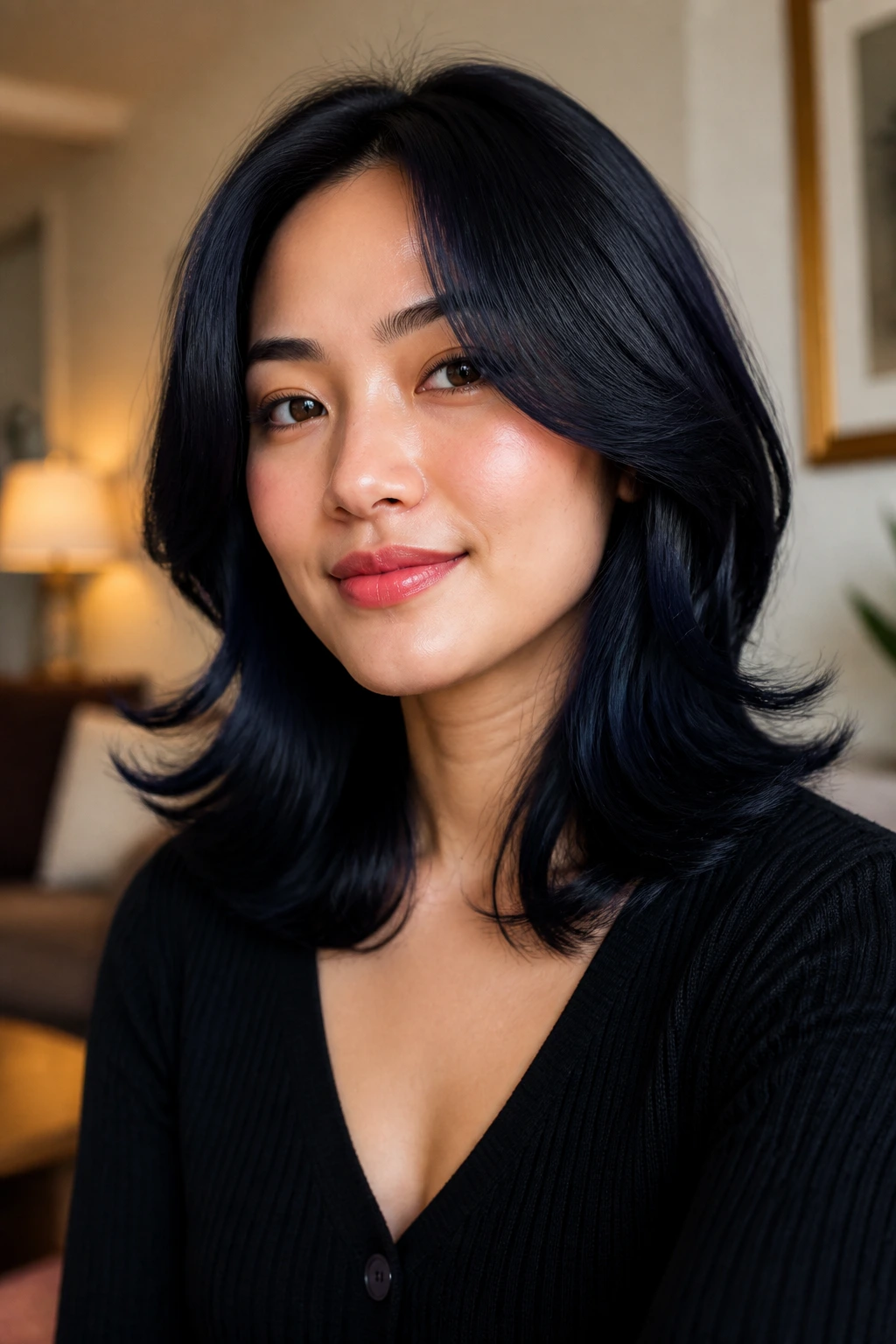
Flip the ends out, not the top. That’s the basic rule here.
Mid-length layers that flip outward below the jaw create movement without building width at the cheeks. The blue-black color helps the shape read cleanly, because each flipped piece catches light at the edge and stays dark through the middle.
This is a nice option if you like a little retro feel without going full blown-out volume. It works with a round face because the movement lives lower, around the collarbone area, where it helps lengthen the whole look.
A round brush and a 1-inch iron can both do the job. Keep the flip loose.
18. Long Curls with Ribbon-Like Shine
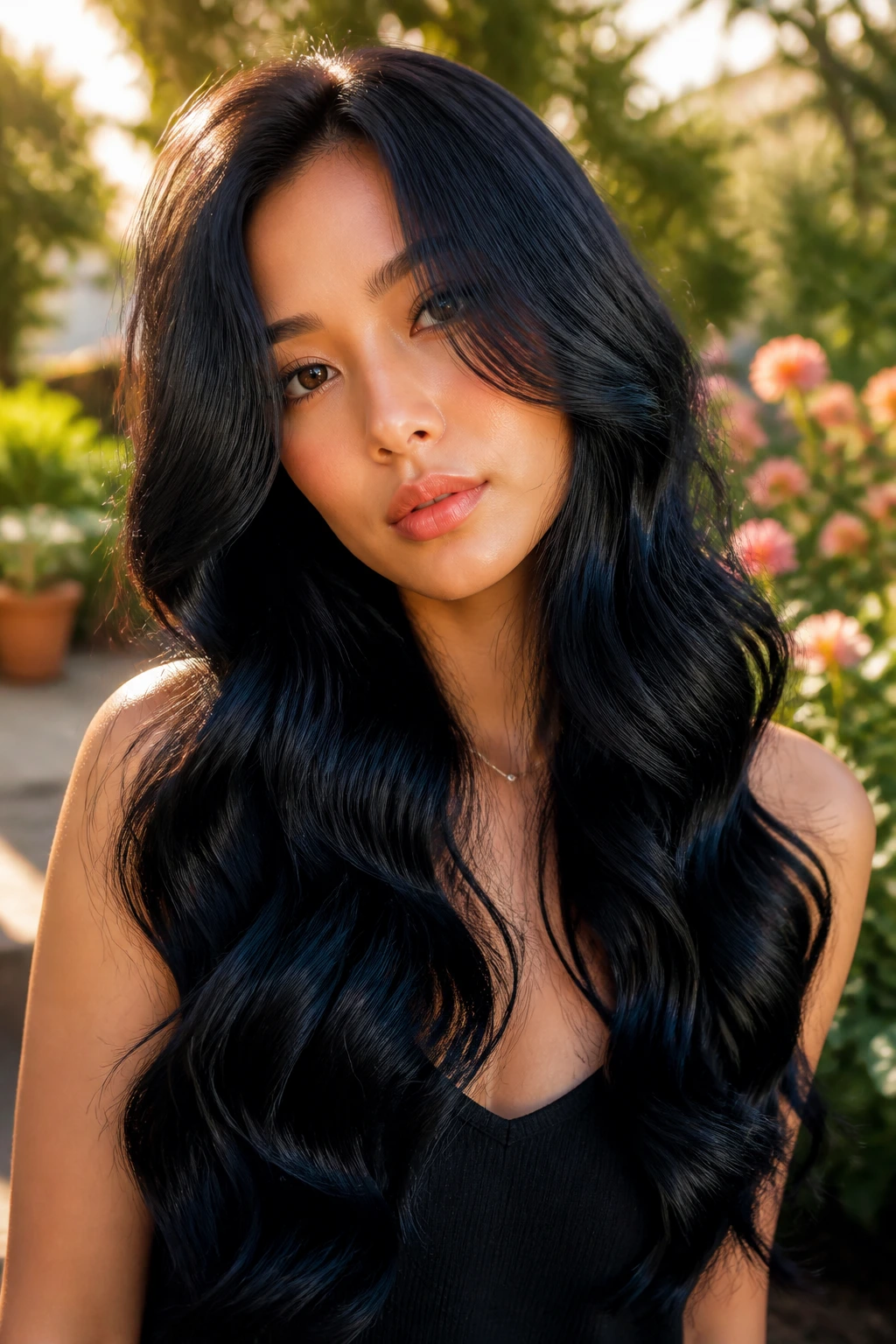
Long curls are beautiful on round faces when they start at the right place. If the curl pattern begins high at the cheekbone, the face can look fuller. If the curls start lower, around the chin or even the collarbone, the whole shape stretches out.
Blue-black hair gives curls a ribbon effect, especially when the light skims across each bend. That shine is what keeps the style from looking heavy. A curl cream with a little hold works better than a stiff gel here, because you want movement, not crunch.
Best Shape for the Cut
- Long layers below the jaw.
- Curl definition through the midlengths.
- Soft volume at the crown.
- Ends that are not too dense.
This one feels romantic without turning sweet.
19. Deep Side Part with Sculpted Waves
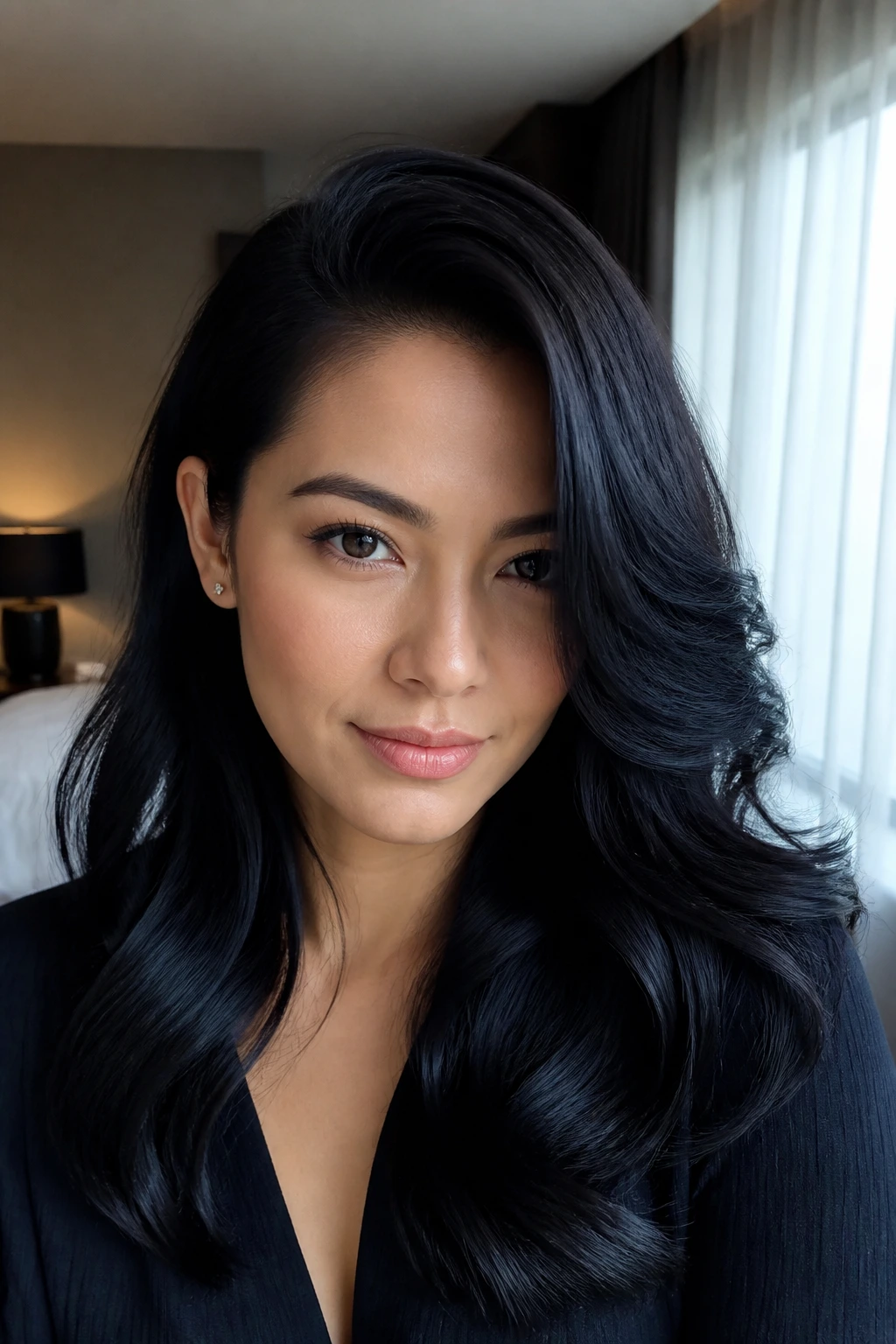
A deep side part is one of the fastest ways to alter a round face without changing the cut at all. Pair it with sculpted waves, and the blue-black color gets a clear direction: over, down, and away from the cheeks.
The waves should be brushed into a loose S shape, not left too fluffy. That keeps the hair from widening at the sides. A side part also gives the crown a little lift, which helps lengthen the face visually.
This is the look I’d reach for when the hair needs to feel dressed up. It’s simple, but not plain.
20. Textured Crop with Longer Fringe
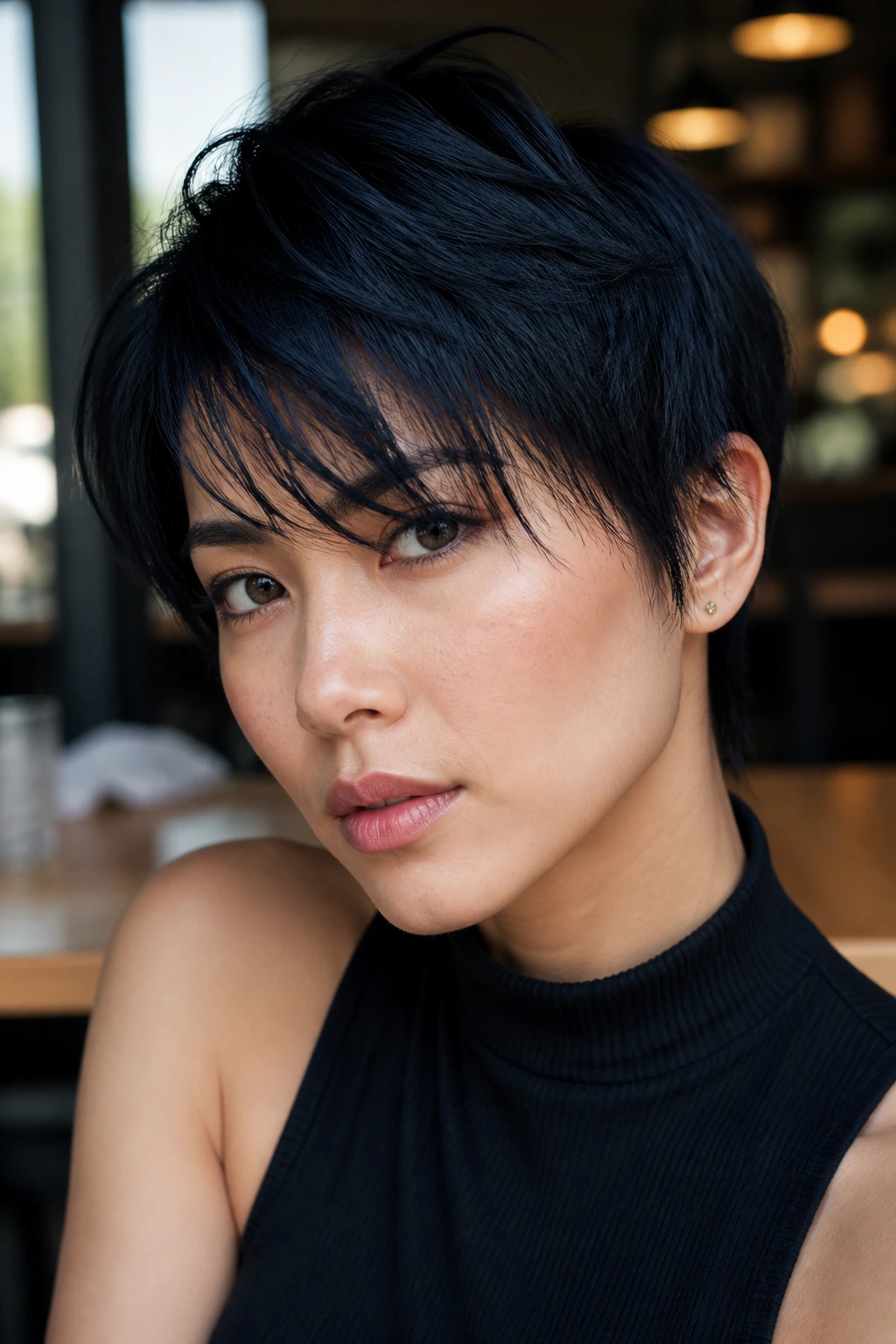
A short crop can still be friendly to a round face if the fringe is kept longer and a little broken up. The sides should stay neat, while the top and front carry the movement.
Blue-black is excellent on this kind of cut because the color makes the texture look deliberate. Too much thickness on the sides can make the face look fuller, so ask for a taper around the ears and a fringe that sweeps rather than sits heavy across the forehead.
This is a good low-maintenance option for people who do not want long hair but still want shape. Short, yes. Boxy, no.
21. Half-Up Style on Long Blue-Black Hair
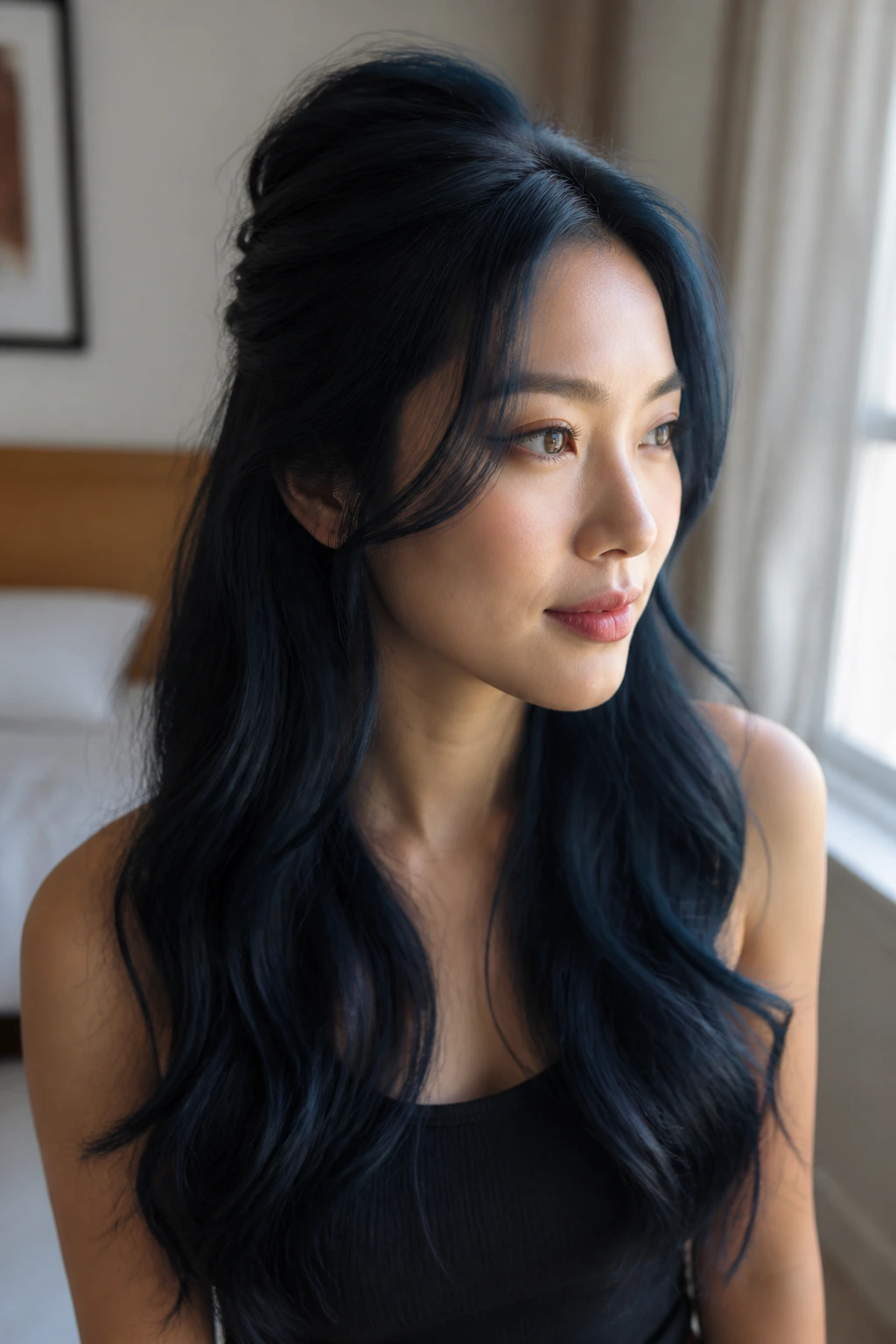
A half-up style is underrated on round faces. It lifts the crown, keeps the sides from feeling crowded, and lets the long lengths pull the eye downward.
Why It Works
The top section gives height. The bottom section gives vertical line. That combo is useful when the face has fuller cheeks, because it keeps the overall silhouette longer.
- Leave a little softness around the temples.
- Tease the crown only slightly, not to the point of a bump.
- Keep the lower hair loose and smooth.
- Wrap a small strand around the elastic if you want a cleaner finish.
Blue-black color looks especially rich here because the lifted top reveals shine from different angles. It’s a good everyday style, but it can dress up easily too.
22. Sleek Ponytail with a Center Part
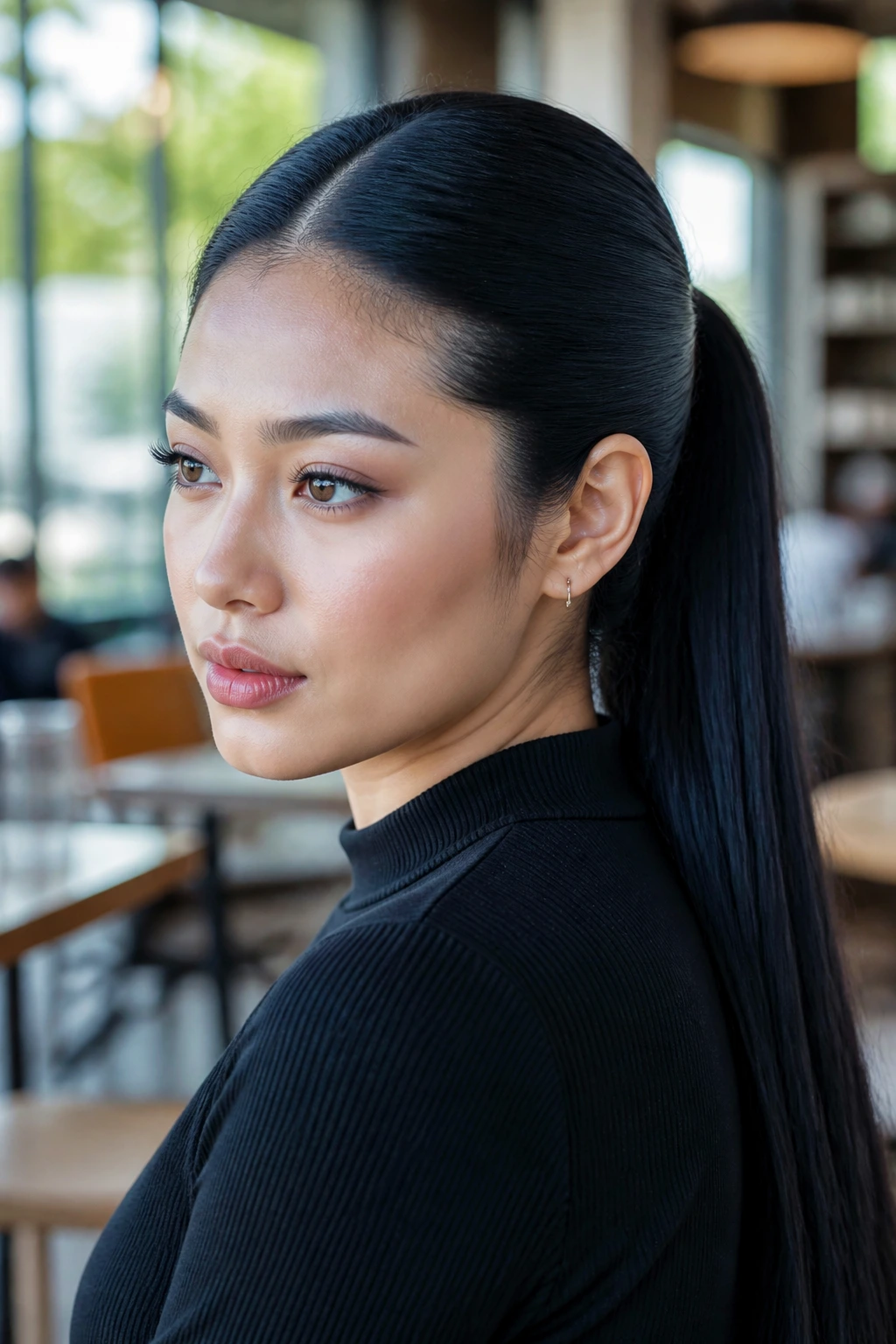
If your hair is long enough, a center-part ponytail is one of the cleanest ways to wear blue-black on a round face. The center part creates a vertical line right down the middle, and the ponytail extends that line straight down the back.
The key is keeping the crown smooth. Flyaways are fine at the nape, but not at the front, where they can blur the shape. A little gel or styling cream at the roots helps, and the ponytail itself should sit at mid-height or slightly higher so it does not drag the face down.
A thick ponytail looks especially good in this color. It feels bold without looking fussy.
23. Bouncy Blowout with Soft Volume at the Crown
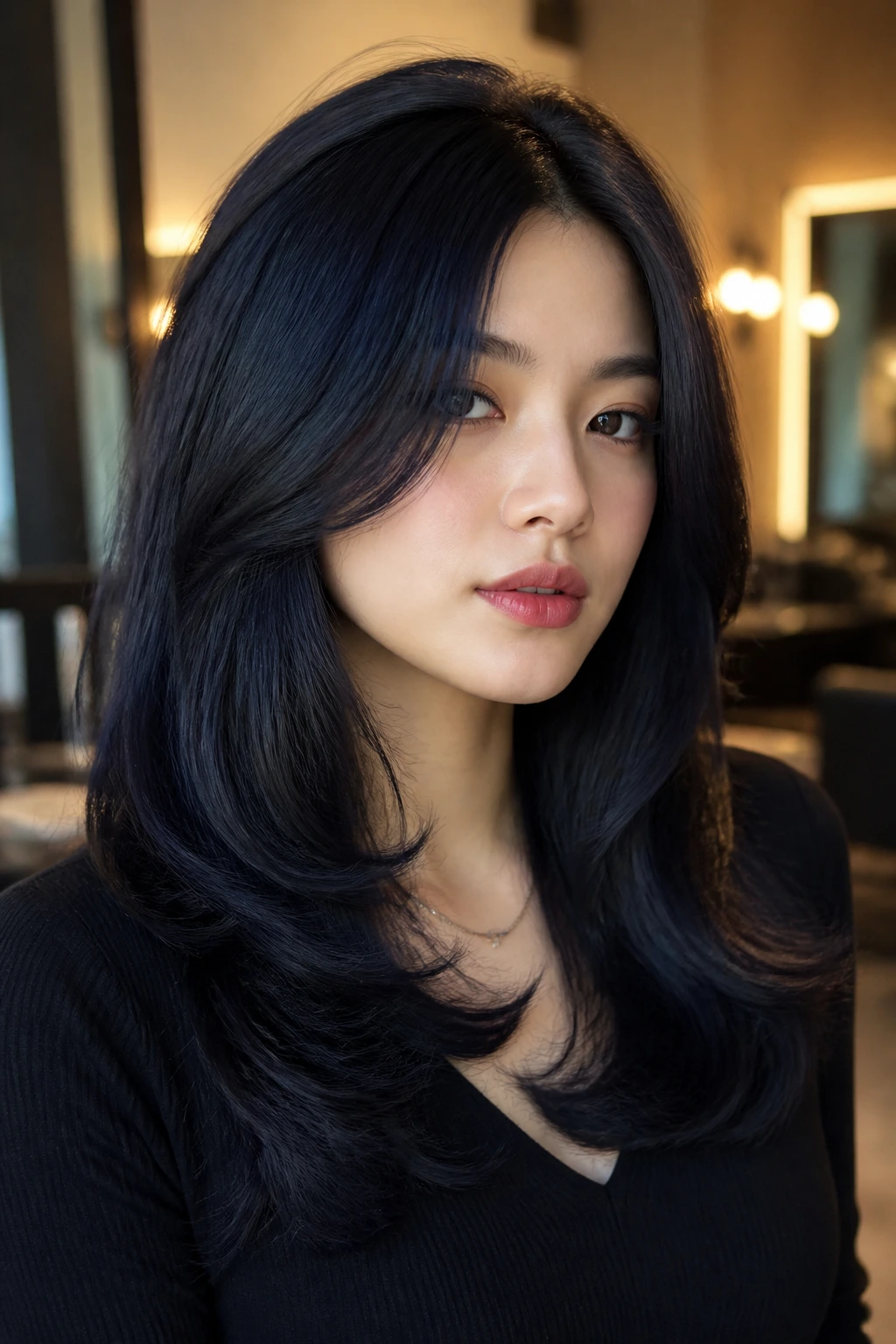
A round face does not need flat hair all the time. In fact, a little crown volume can help. The trick is to keep the lift up top and the fullness away from the cheeks.
Blue-black hair looks especially good in a blowout because the color reflects on the rounded surfaces of the layers. Use a round brush at the roots and midlengths, then let the ends curve softly inward or outward depending on the cut. The shape should feel airy, not puffy.
This style works best when the layers are long enough to fall past the chin. If the volume starts at cheek level, it can widen the face. Keep it higher. Always higher.
24. Blue-Black with Violet Undertones
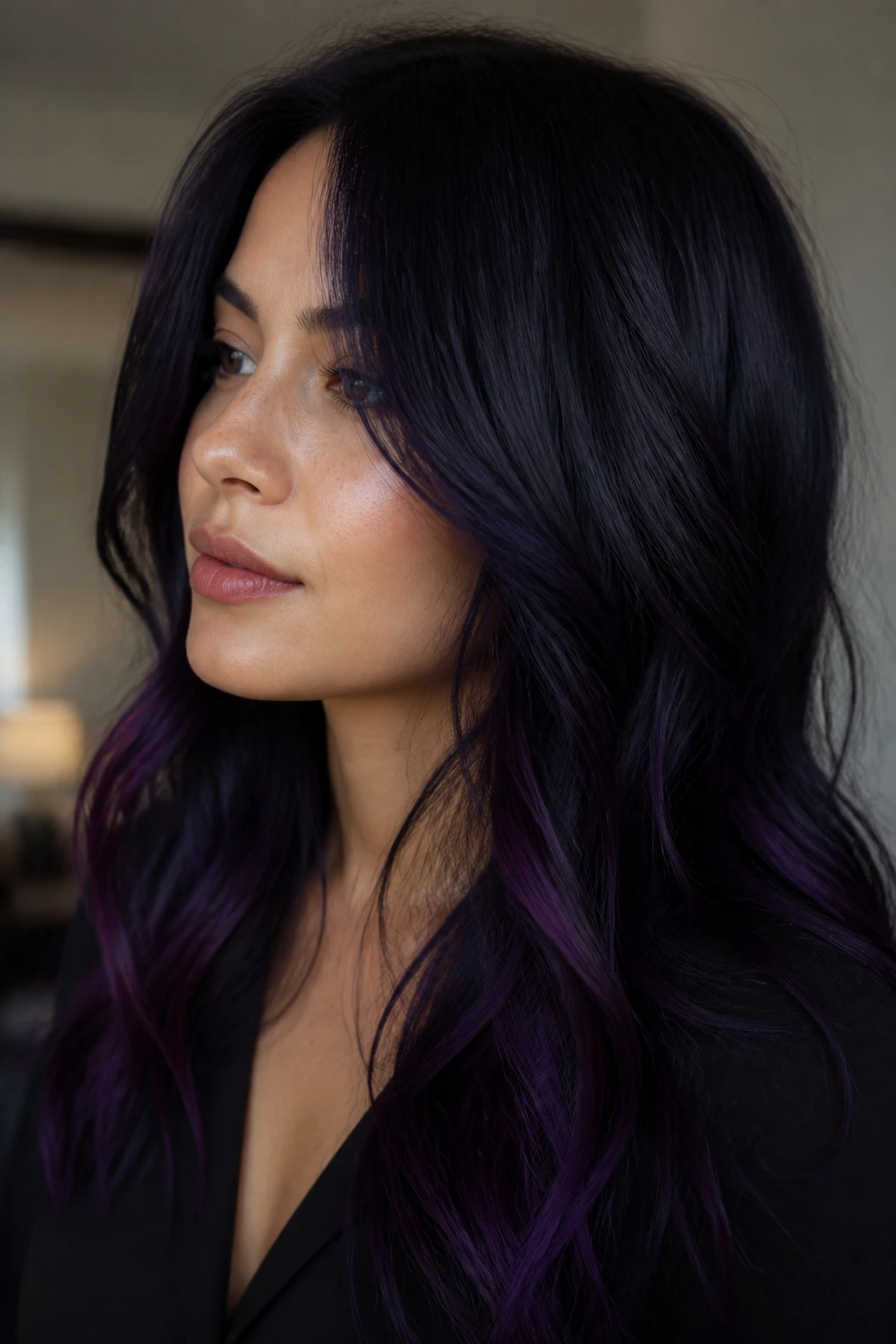
Violet-leaning blue-black is a softer take on the shade. It still reads dark and moody, but the cooler plum edge keeps it from looking flat, which helps when the face shape already has rounded lines.
This version is nice if you want the color to shift indoors and outdoors without going bright. The violet undertone can show up most at the ends and around the crown, where the light hits first. It’s a subtle thing, but subtle is often the better move with deep shades.
Compared with a harsher inky black-blue, this tone feels a little gentler around the face. Not soft in a sleepy way. Soft in a controlled, polished way.
25. Blue-Black with Sapphire Peekaboo Panels
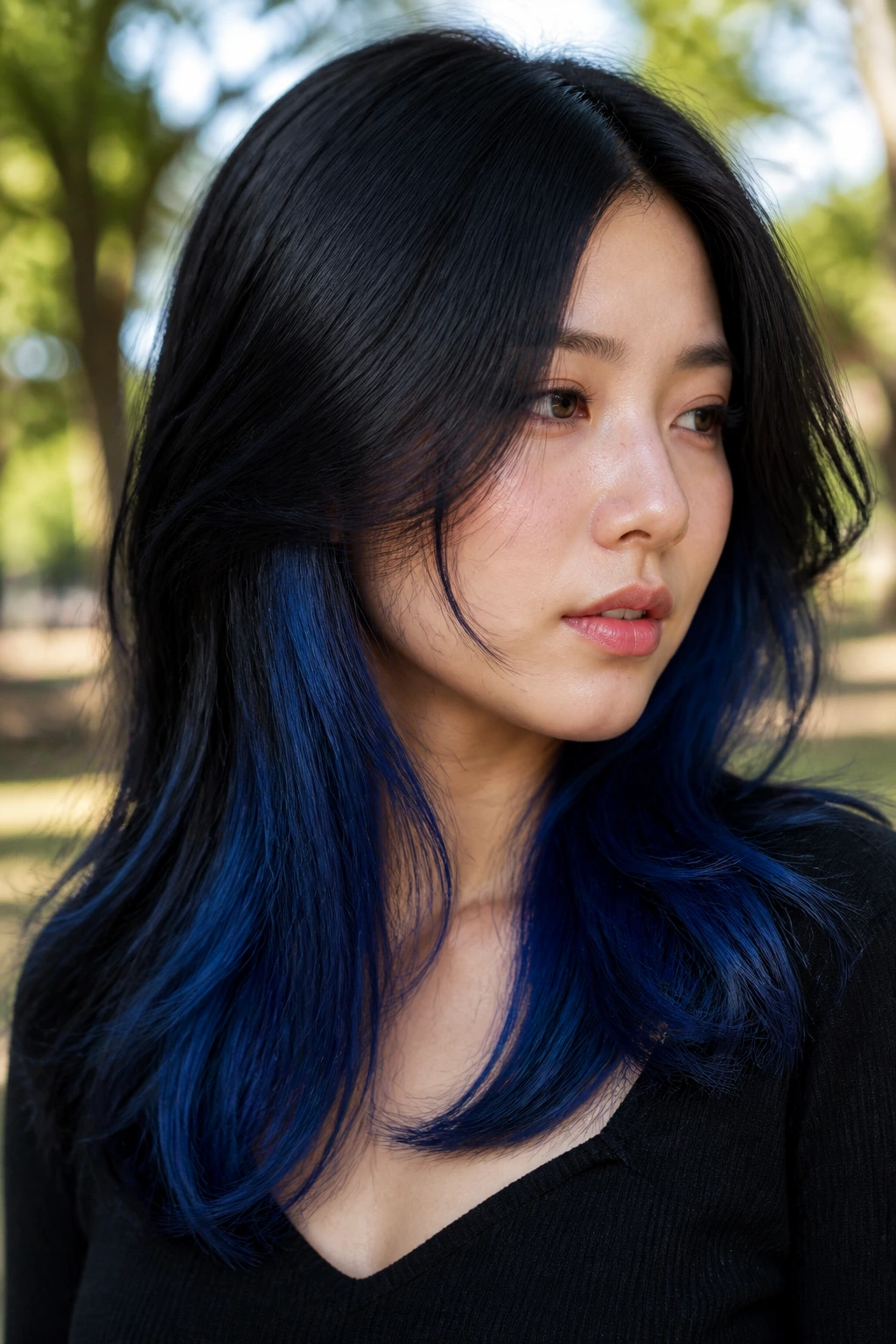
Peekaboo panels are fun because they let you hide the bright part until the hair moves. On a round face, that matters. The top layer can stay sleek and dark, which keeps the shape narrow, while the sapphire pieces show underneath and add surprise.
The panels should sit lower than the cheekbone, usually around the lower midlengths or ends. That keeps the color from spreading color attention around the widest point of the face. When the hair swings, the blue flashes through. When it sits still, the look stays calm.
This works especially well on layered lobs and long bobs. There’s enough movement to reveal the color without losing structure.
26. Blue-Black with Smoky Teal Underlayers
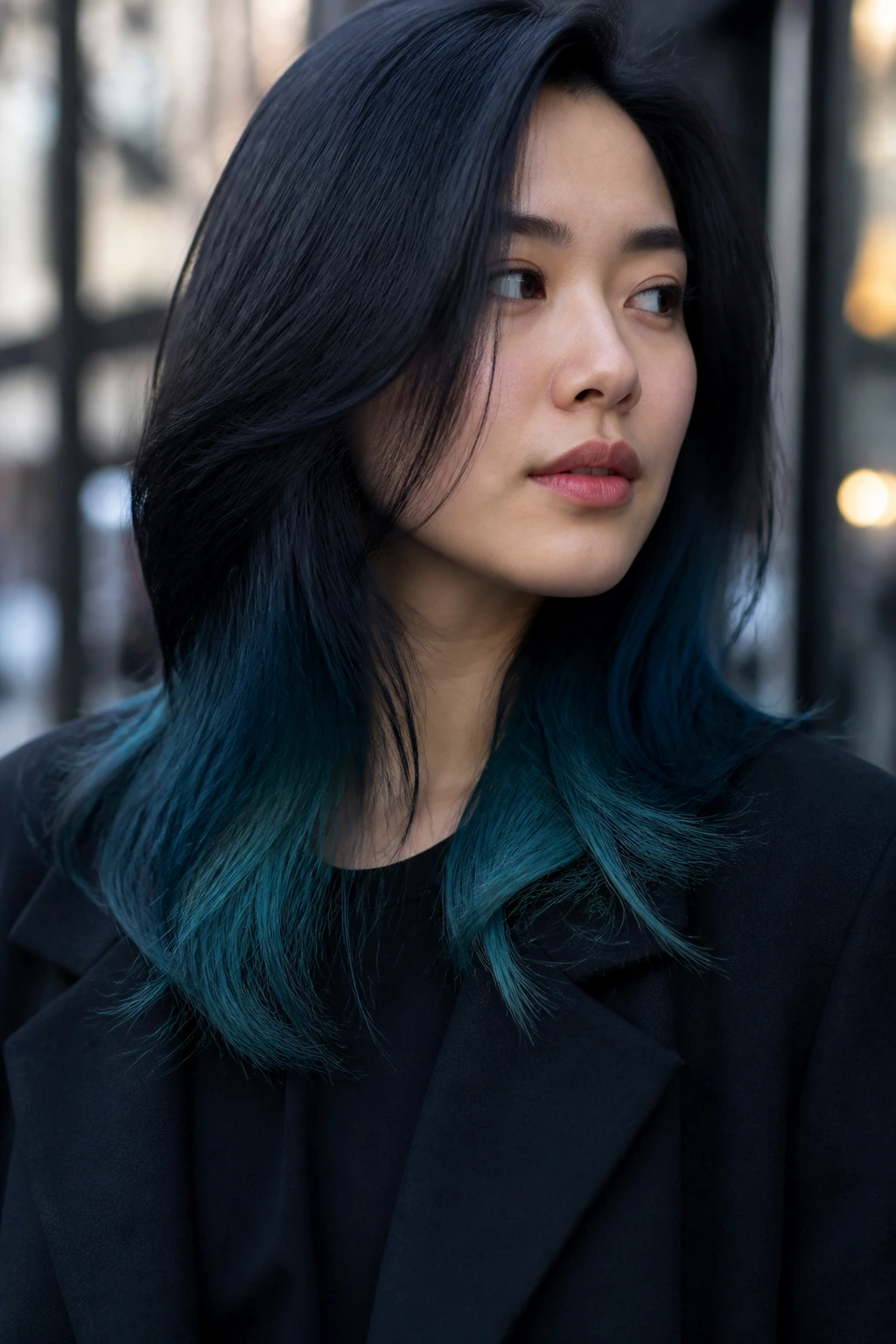
Smoky teal underlayers are a little moodier than bright blue, and I like that. The shade feels cool and deep, which keeps it in the same family as blue-black instead of fighting with it.
The best placement is under the outer surface, where the teal peeks out near the ends or around the back. For a round face, that’s better than framing the cheeks with too much contrast. The top stays dark and lengthening; the hidden color gives you movement when you turn your head.
This idea looks especially strong on shoulder-length cuts with a bit of texture. The underlayers do the interesting work. The top layer just holds the shape.
27. Blue-Black with Subtle Micro-Bangs and Long Sides
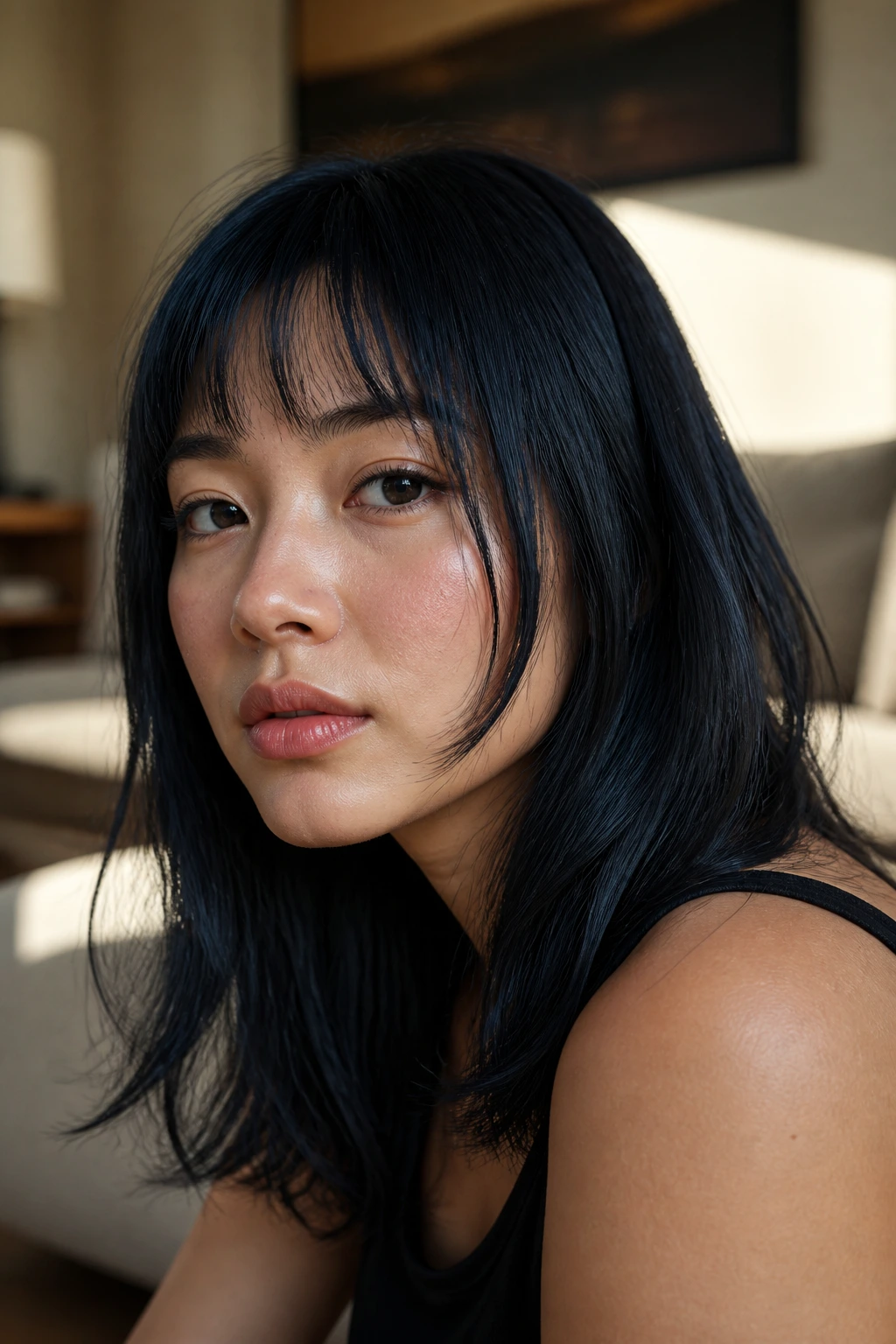
Micro-bangs are not for everybody. On a round face, they can go wrong fast if they are too blunt or too full. But paired with long side pieces and a narrow fringe, they can look sharp in a way that feels editorial rather than harsh.
What to Keep Soft
- Make the bangs wispy, not dense.
- Leave the sides long enough to graze the cheekbones.
- Keep the blue-black color glossy, not matte.
- Avoid a wide, puffed crown.
The contrast is the appeal. Tiny bangs up front, longer shapes around the sides, deep color everywhere else. If you like a style with a little attitude, this one has it.
28. Blue-Black with a Shadow Root and Soft Face Framing
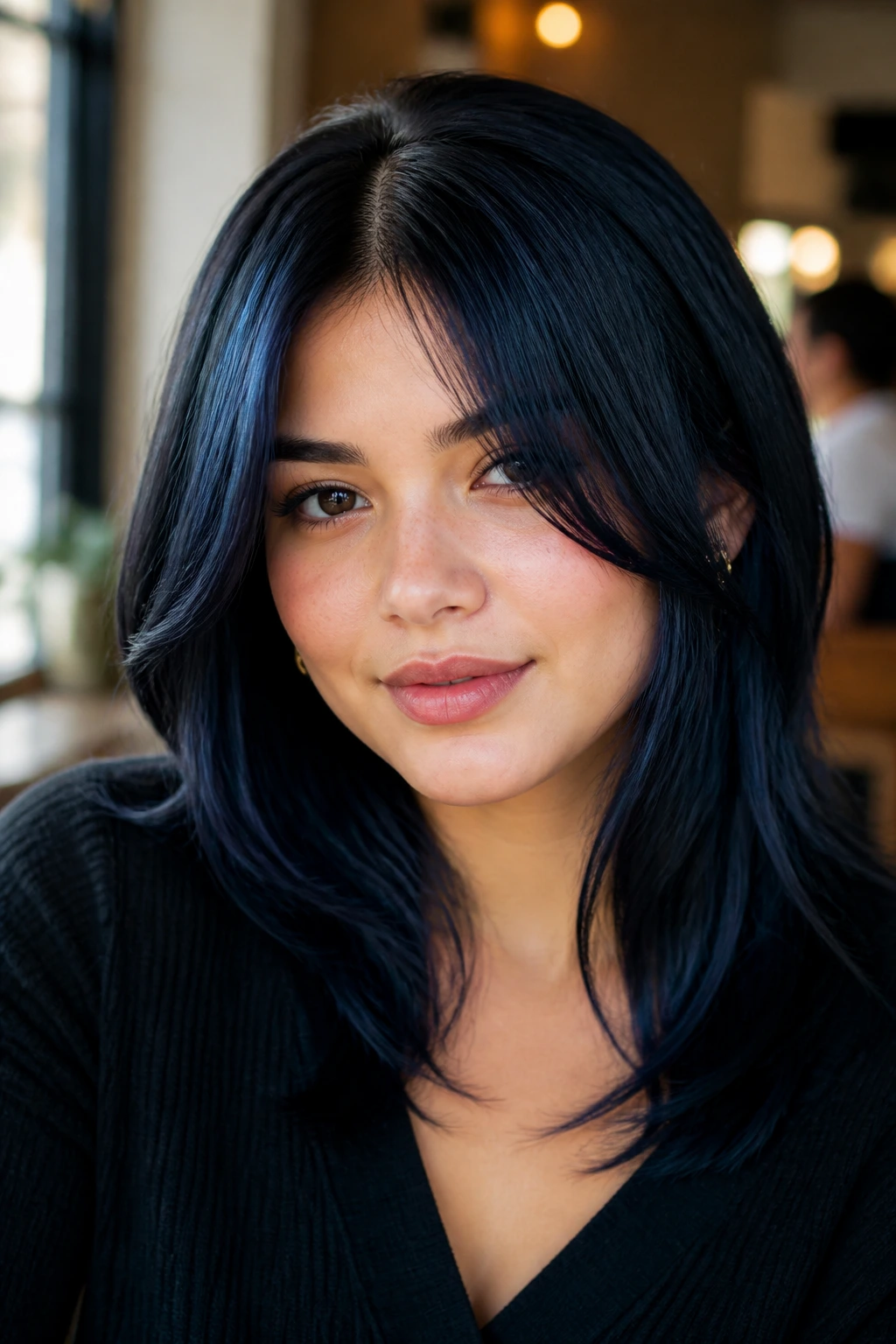
If you want the easiest blue-black idea to wear on a round face, start here. A shadow root keeps the top deep and smooth, while soft face-framing pieces begin below the cheekbones and fall toward the collarbone, which gives the whole style a longer line.
The root fade helps growth look cleaner, too, so you are not stuck with a hard demarcation line after a few weeks. That matters if you do not want to live in the salon. The front pieces should be light in movement, not light in color all the way through, so the face stays framed rather than widened.
This is the version I’d hand to someone who wants blue-black hair color ideas for round faces but still needs the style to work on school mornings, office days, and the days when you cannot be bothered to heat-style anything. It’s polished, forgiving, and it leaves room for the color to do the heavy lifting.
