



A round face does not need to be hidden. It needs lines.
That’s the part most people get wrong when they search for Black hairstyles for round faces. They think the goal is to “narrow” the face at all costs, like your features are a problem to solve. They’re not. What usually works better is a shape that adds height, angles, or movement in the right places — crown, part, length, and side placement matter more than people think.
Black hair gives you more room to play with shape than almost any other texture. Coils, braids, twists, locs, stretched natural hair, silk presses, wigs — all of them can shift how the eye travels across the face. A style can make the cheeks look softer, the jaw look longer, or the whole silhouette look cleaner without flattening the hair into something lifeless.
The tricky bit is balance. Too much width around the cheeks can make a round face feel wider, while too much tightness can make the style look severe. The sweet spot is usually a little height, a little asymmetry, and a little space around the sides. That’s where these styles live.
1. High Puff with Tapered Sides
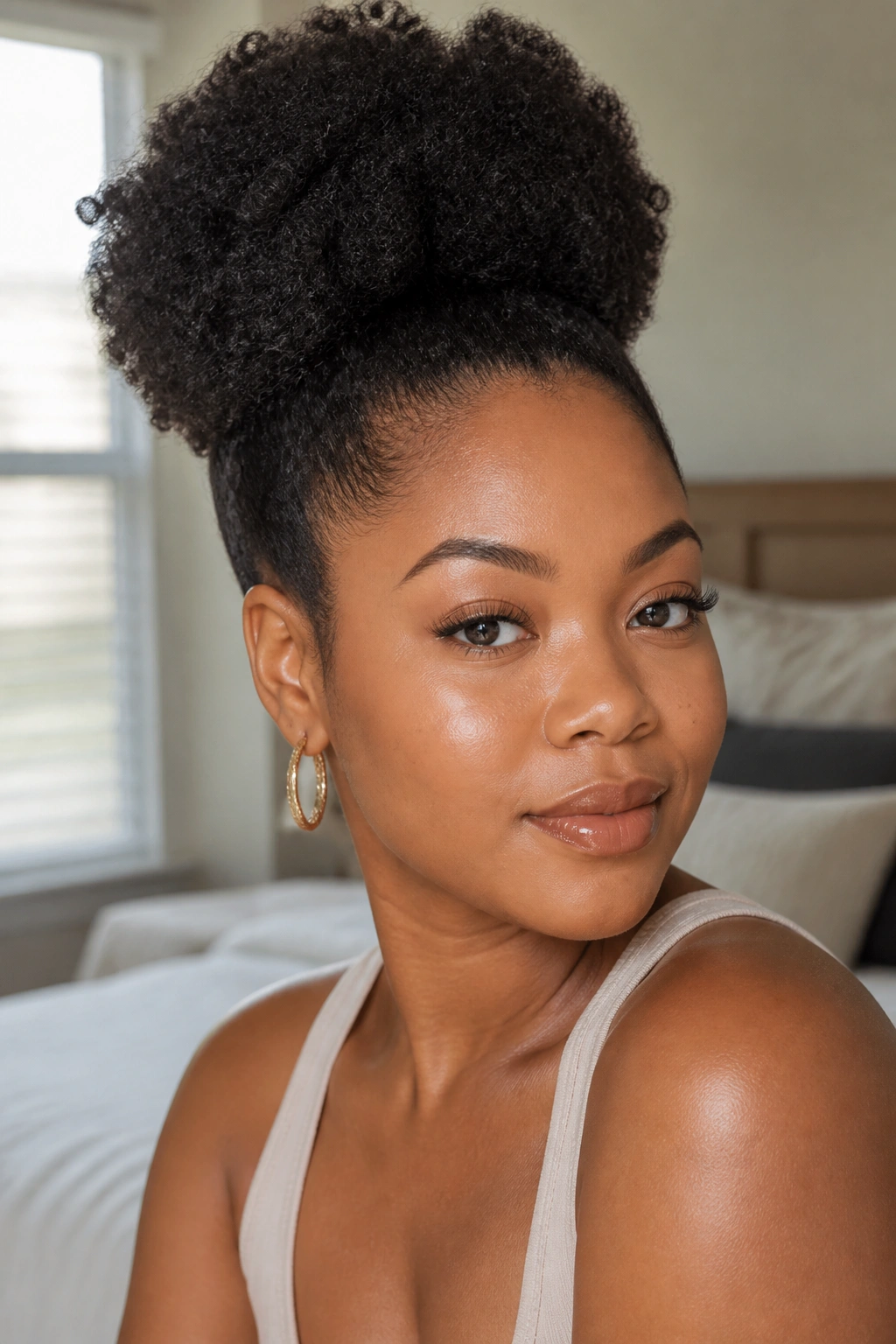
A high puff is one of those styles that looks simple until you notice how well it changes the shape of the face. The puff sits up top, the sides stay close, and the whole look pulls the eye upward instead of outward. On a round face, that vertical lift matters.
Why It Works
The best version of this style is not a puff that sits low and wide. It should start high, usually at or just above the crown, so the top half of the head gets the attention. If you have a tapered cut or even just smoothed sides, the contrast makes the puff look fuller without adding bulk at the cheeks.
- Use a soft brush and gel to smooth the sides without flattening the roots too much.
- Place the puff high enough that it creates lift, not bulk.
- Fluff the crown a little with your fingers or a pick.
- Leave a few curls loose around the hairline if you want a softer finish.
Best tip: Don’t tie the puff too low. That one inch changes everything.
2. Side-Parted Box Braids
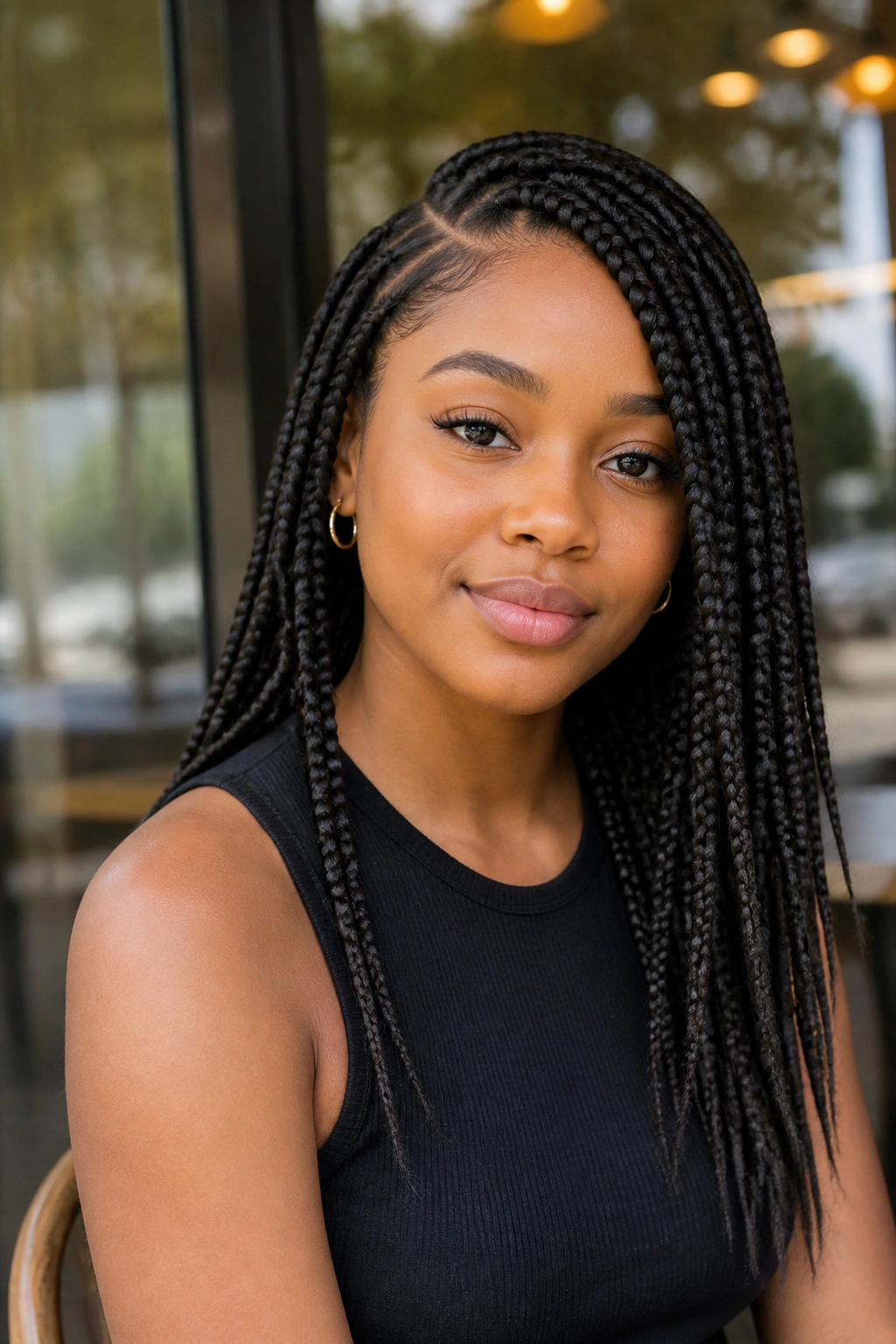
A side part is doing more work here than people give it credit for. Box braids already bring length, and when the part sits off-center, the face gets a diagonal line that breaks up roundness in a clean way. It’s a small change. It matters a lot.
What I like about this style is that it can be neat or full, long or medium length, thick or slim, and still do the job. The braid length should usually fall past the chin — collarbone length is a nice middle ground, while chest length gives more lengthening effect. A few braids tucked behind one ear help keep the shape open instead of boxed in.
If you want the face to look a touch longer, keep the front braids slightly lighter than the rest. Not skinny, not wispy — just less heavy at the front edge. That keeps the eyes moving downward instead of getting stuck across the cheeks.
3. Shoulder-Length Knotless Braids with Face-Framing Pieces
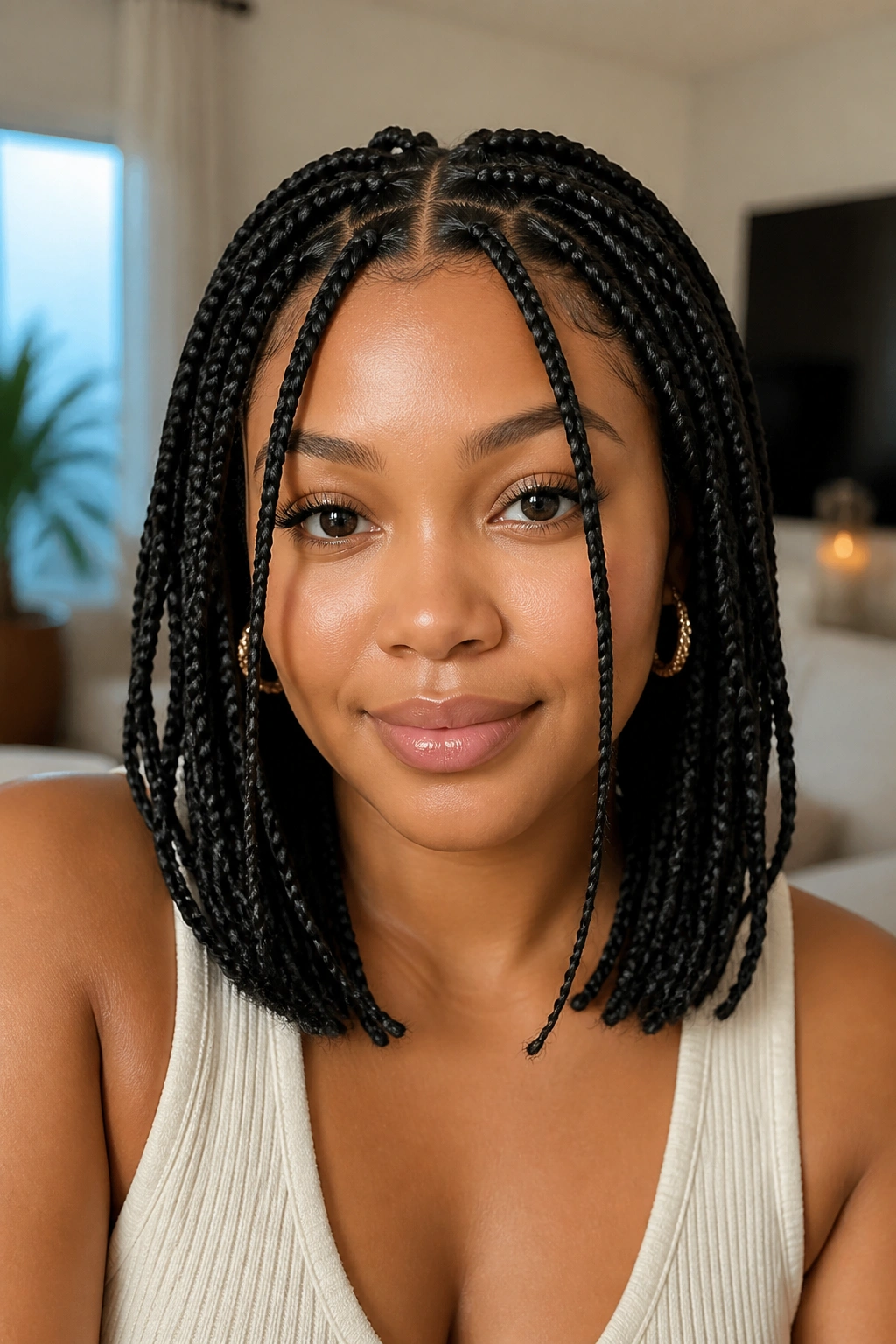
Why do knotless braids work so well on a round face? Because they sit flatter at the root, which keeps the top of the head from feeling bulky, and the face-framing pieces soften the outline without filling in the sides.
That matters more than it sounds. Knotless braids already have a smoother base than traditional box braids, so the style feels lighter near the hairline. Add two or four slightly shorter pieces in the front — not curtain bangs, not a full fringe, just a few braids that skim the cheeks — and the whole look gets softer in a controlled way.
How to Wear It
Ask for braids that hit around the shoulders or just below. That length usually gives enough drop to lengthen the face without becoming heavy around the neck. If you like beads, keep them toward the ends instead of loading the top third of the braid. Too much weight near the face kills the shape fast.
A neat middle part gives a straighter line, while a gentle side part adds more angles. I usually lean toward the side part for round faces. It feels less rigid, and the eye travels across the face in a more flattering way.
4. Long Goddess Locs with a Center Part
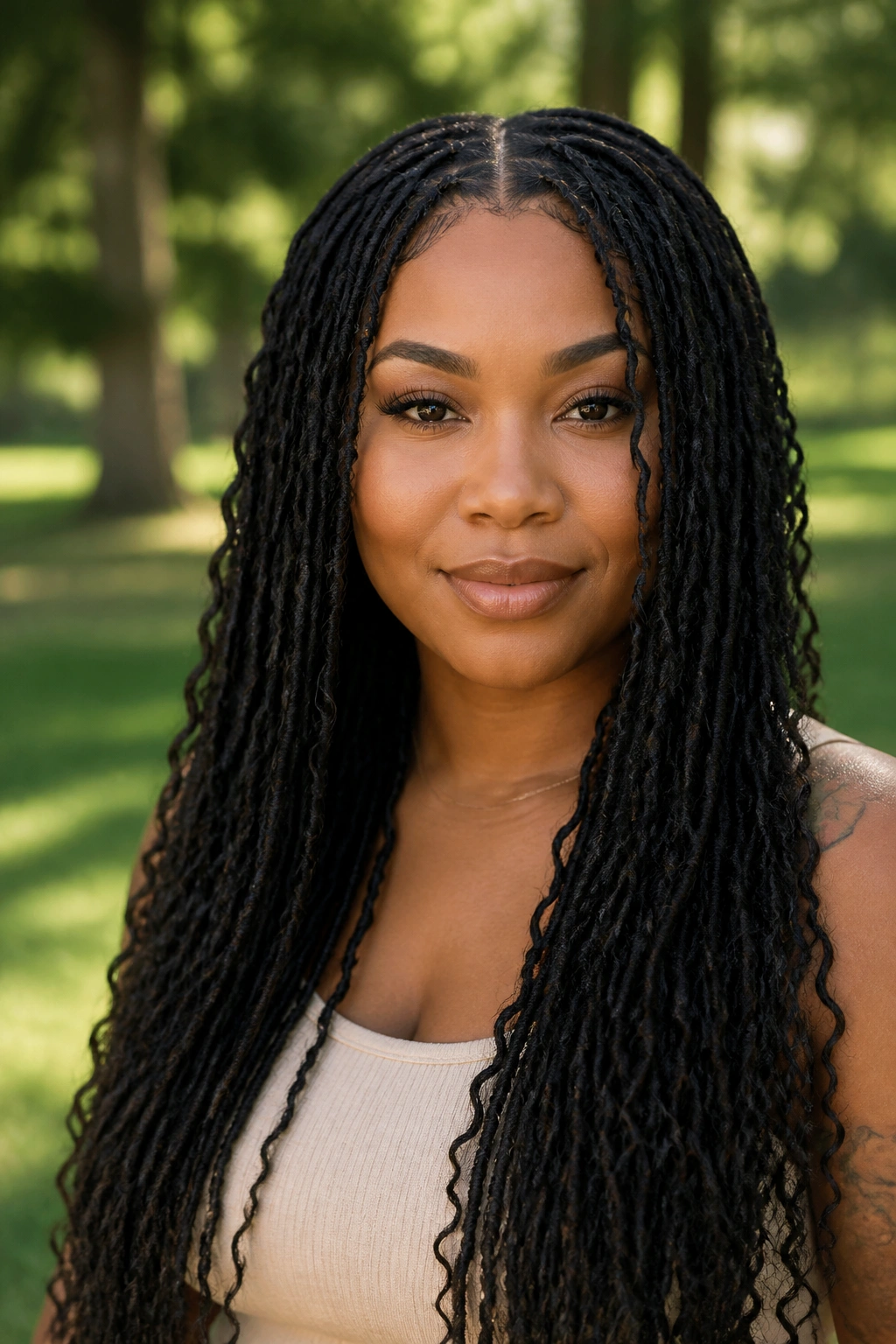
If you want movement every time you turn your head, goddess locs deliver that in a way plain faux locs sometimes don’t. The loose curly pieces woven through the locs soften the style, while the length draws the eye down. A center part can work here because the locs themselves add enough texture to keep it from looking flat.
Think of this style as structure plus softness. The locs give you a strong vertical line. The curly strands break it up just enough so the face doesn’t feel boxed in. That mix is why it sits so well on a round face.
- Best length: shoulder past, chest, or longer.
- Best curl amount: a few loose pieces near the front and a little through the mid-lengths.
- Best part: center if you want symmetry, slight off-center if you want more angle.
- Best finish: keep the roots neat so the style doesn’t spread wide at the scalp.
There’s one catch. If the locs are packed too thick around the temples, the face can look broader than it needs to. Keep the front section a little slimmer, and let the drama happen lower down.
5. Asymmetrical Curly Bob
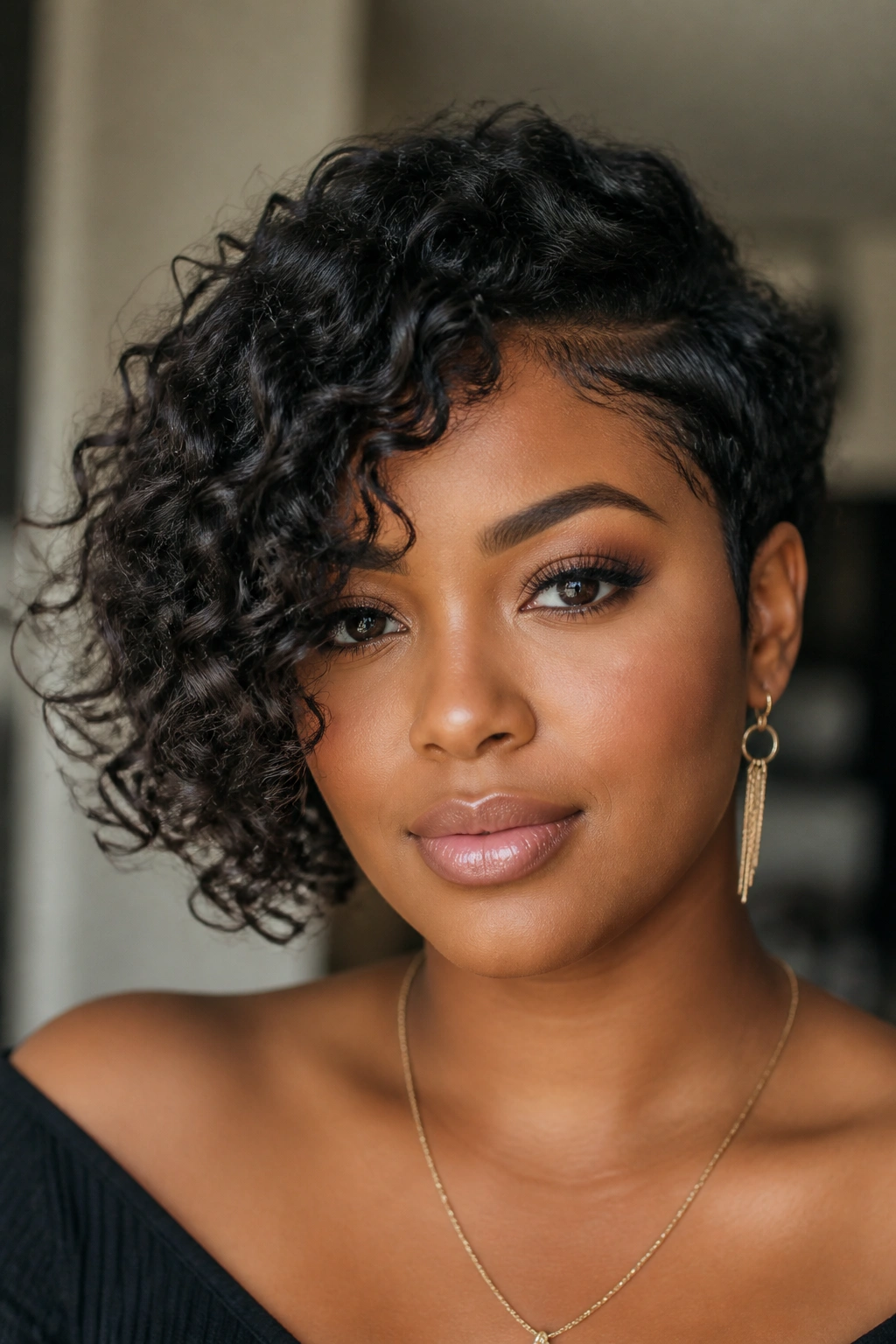
A curly bob with one side slightly longer is one of the smartest cuts for a round face. It gives you shape without dragging the whole look downward, and the asymmetry breaks up the curve of the face in a way a perfectly even bob often cannot.
The length should usually land around the jaw or collarbone, depending on how much curl shrinkage you have. Tight curls can sit higher than they look when wet, so the cut needs to account for that. A bob that looks chin-length in the chair may dry much shorter, and that can change the effect completely. I’d rather see it a little longer than too short.
The thing to ask for is a side that grazes the jawline and a slightly longer opposite side. That uneven edge gives the eye something to follow. With curls, the movement does half the work, so you do not need a heavy shape or dramatic layers. A little mousse, some diffuser time, and a clean side part usually do more than an hour of fussing.
6. Faux Hawk with Flat Sides
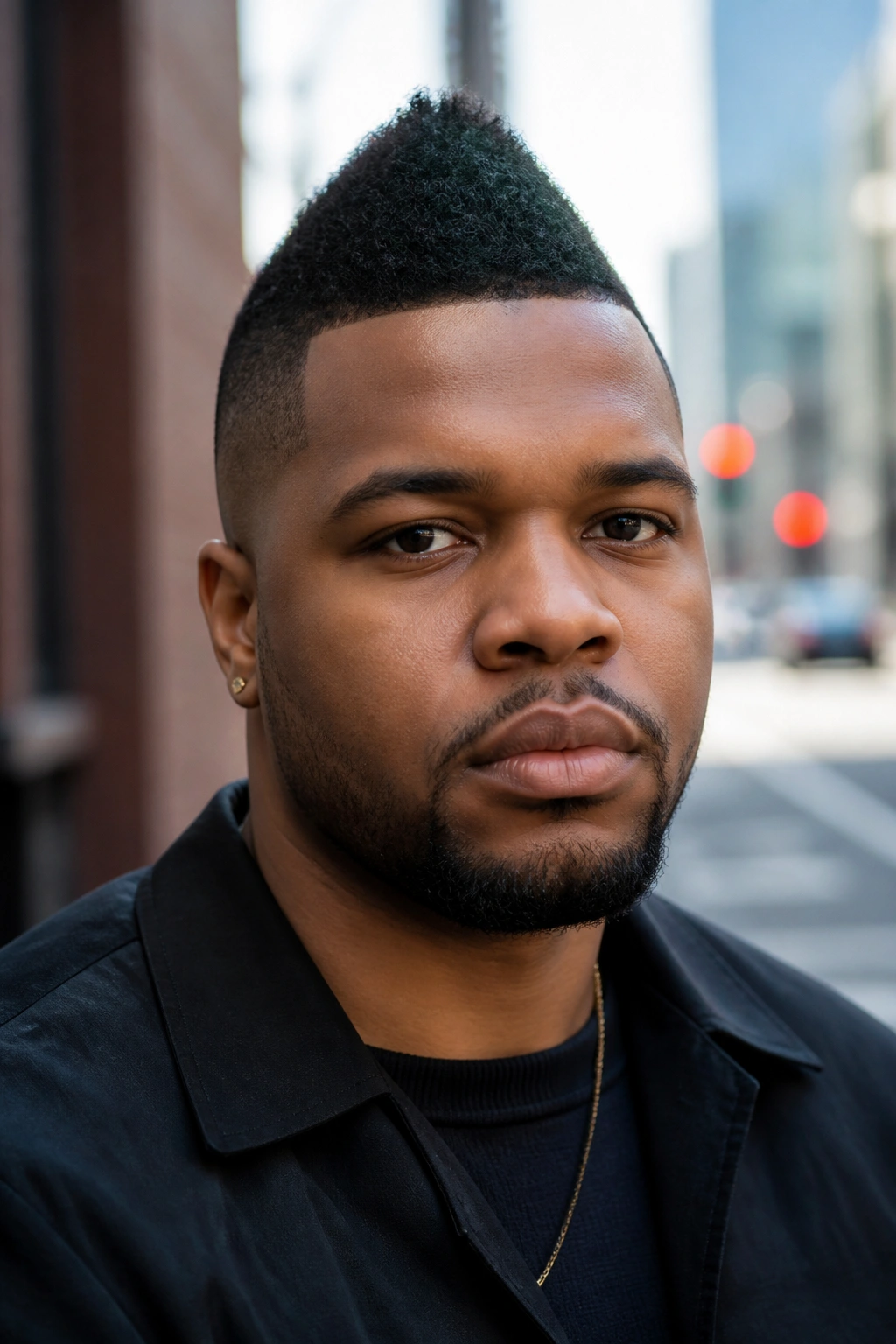
A faux hawk is one of the few styles that can make a round face look longer without trying too hard. The reason is simple: it puts the volume right up the center, then keeps the sides sleek or braided close to the head. That central ridge pulls attention upward immediately.
Unlike a style that spreads out across the cheeks, a faux hawk uses contrast. The middle section can be curly, twisted, braided, or pinned, but the sides should stay controlled. Flat twists, cornrows, or slicked sections all work. If you wear it with natural curls on top, make sure the widest point sits above the temples, not at them.
This style is good when you want something that feels sharp but still playful. It also works well with locs or braids if you want a protective version. The one thing to watch is over-padding the top. A giant mound at the crown can tip into costume territory fast. Keep the lift clean, not cartoonish, and the whole face shape looks more defined.
7. Defined Twist-Out with Crown Volume
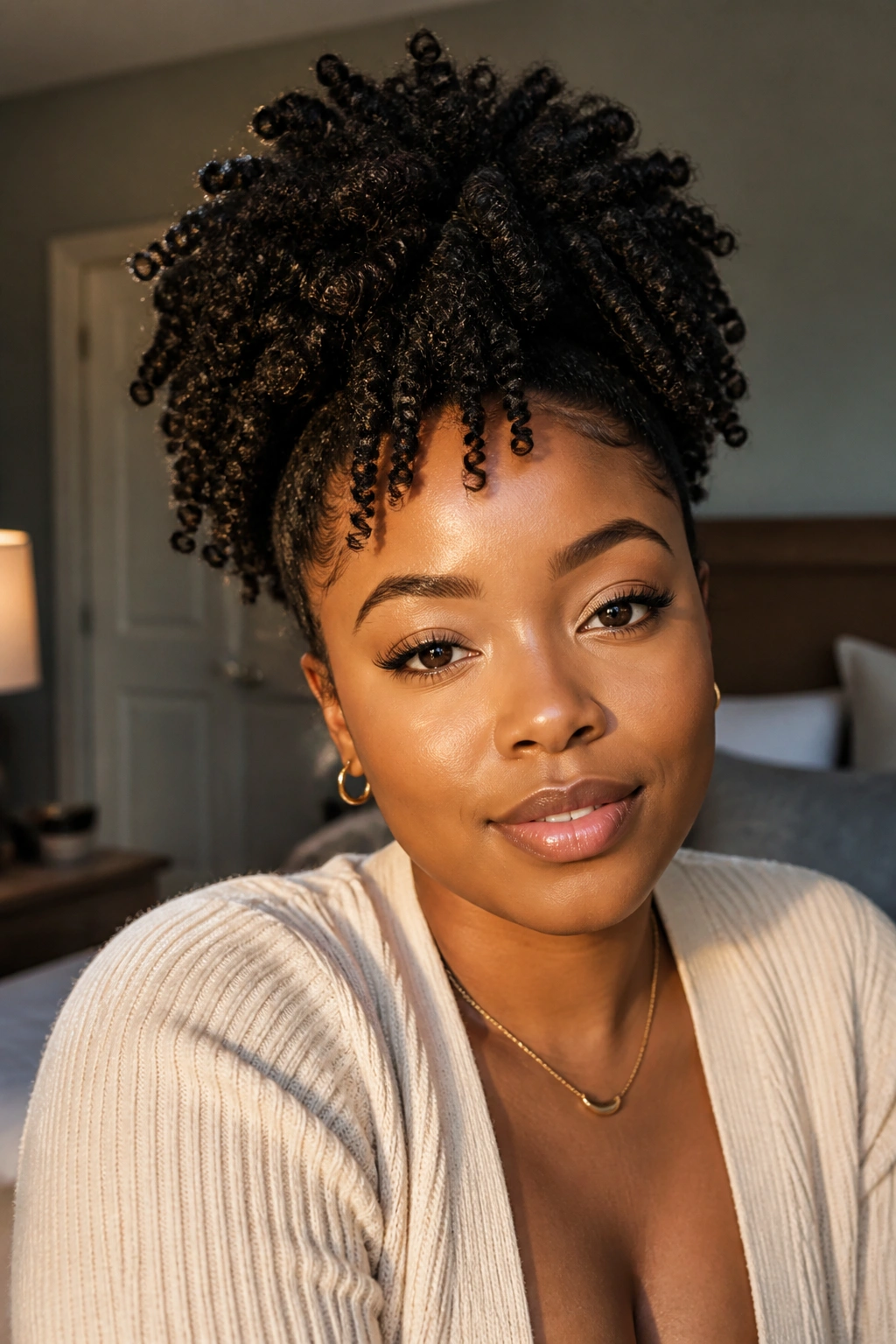
A twist-out can be soft and full without making the face look wider — if you control where the volume lands. The trick is height at the crown, not width at the sides. That’s the part most people miss when they say twist-outs “don’t work” for round faces. They do. They just need a little direction.
Why It Flatters a Round Face
Twist the hair in medium sections, not tiny ones, if you want shape instead of a cloud. Medium twists tend to give curls that separate in a more predictable way, and the result is easier to guide upward. Drying fully matters too. Damp roots make the style collapse at the top and spread out around the cheeks.
- Start on stretched hair for more length.
- Set the twists in rows that lift away from the face.
- Take them down with oil on your fingertips to reduce frizz.
- Use a pick at the crown, not the sides, if you want height.
Best tip: Keep the side sections a little smoother than the top. That small contrast is what gives the style its shape.
8. Cornrow Updo with a Lifted Bun
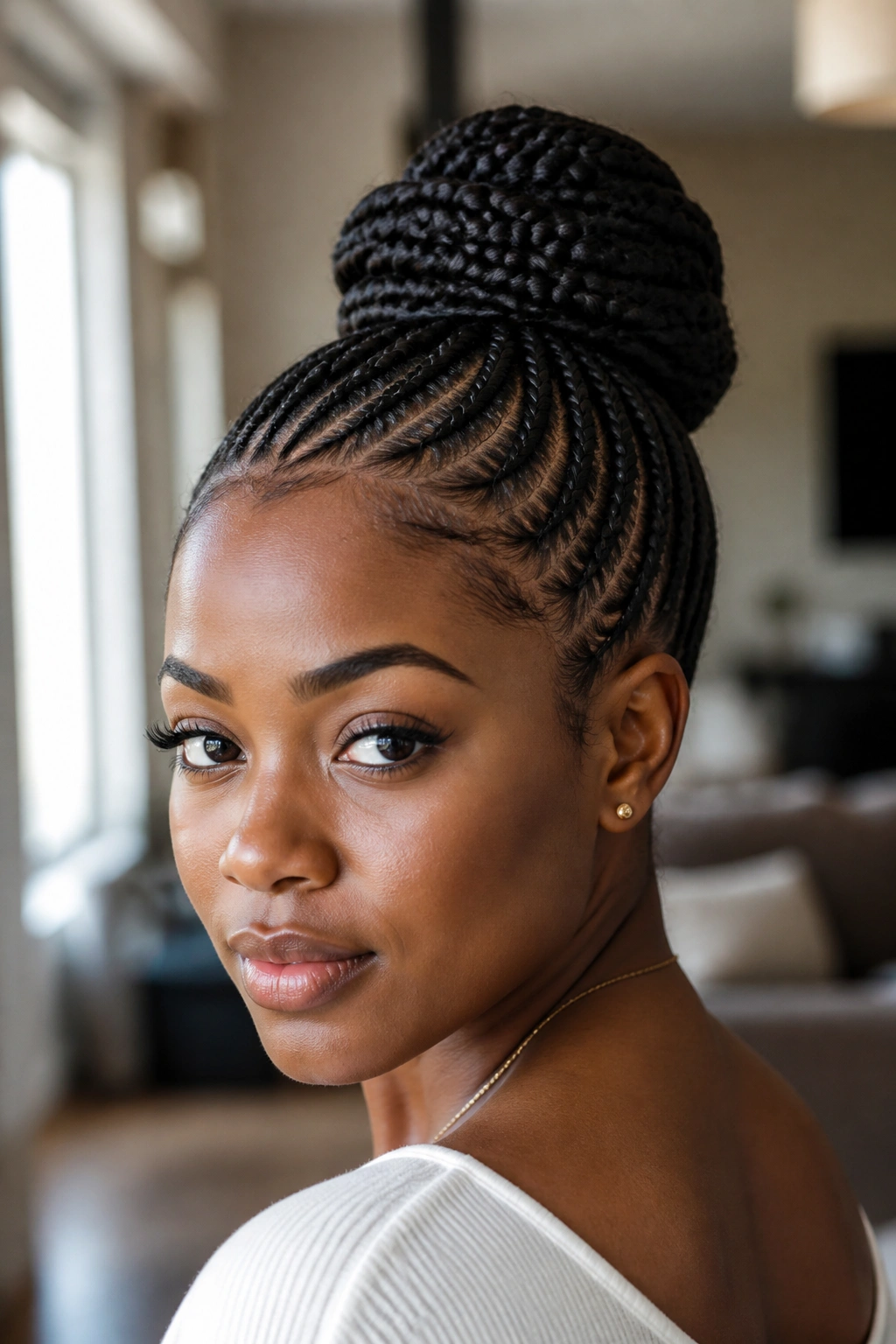
A cornrow updo can look delicate or dramatic depending on how you place the bun. For a round face, a lifted bun usually does more than a low one. It puts the focal point above the widest part of the face, which is exactly where you want it.
The braid pattern matters too. Cornrows that sweep upward or curve toward the crown create movement before the bun even appears. That makes the style feel taller and more sculpted. Straight-back cornrows can work, but I prefer patterns that angle slightly upward or to one side, because they make the face feel less circular.
This is also one of those styles where your parting has real personality. Clean middle parts feel classic. Side parts feel softer. Curved parts feel a little more modern and can break up the roundness in a nice way. Just keep the bun itself above the nape and not too wide. A bun that sits too low can drag the whole shape down.
9. Rounded Afro with a Side Part
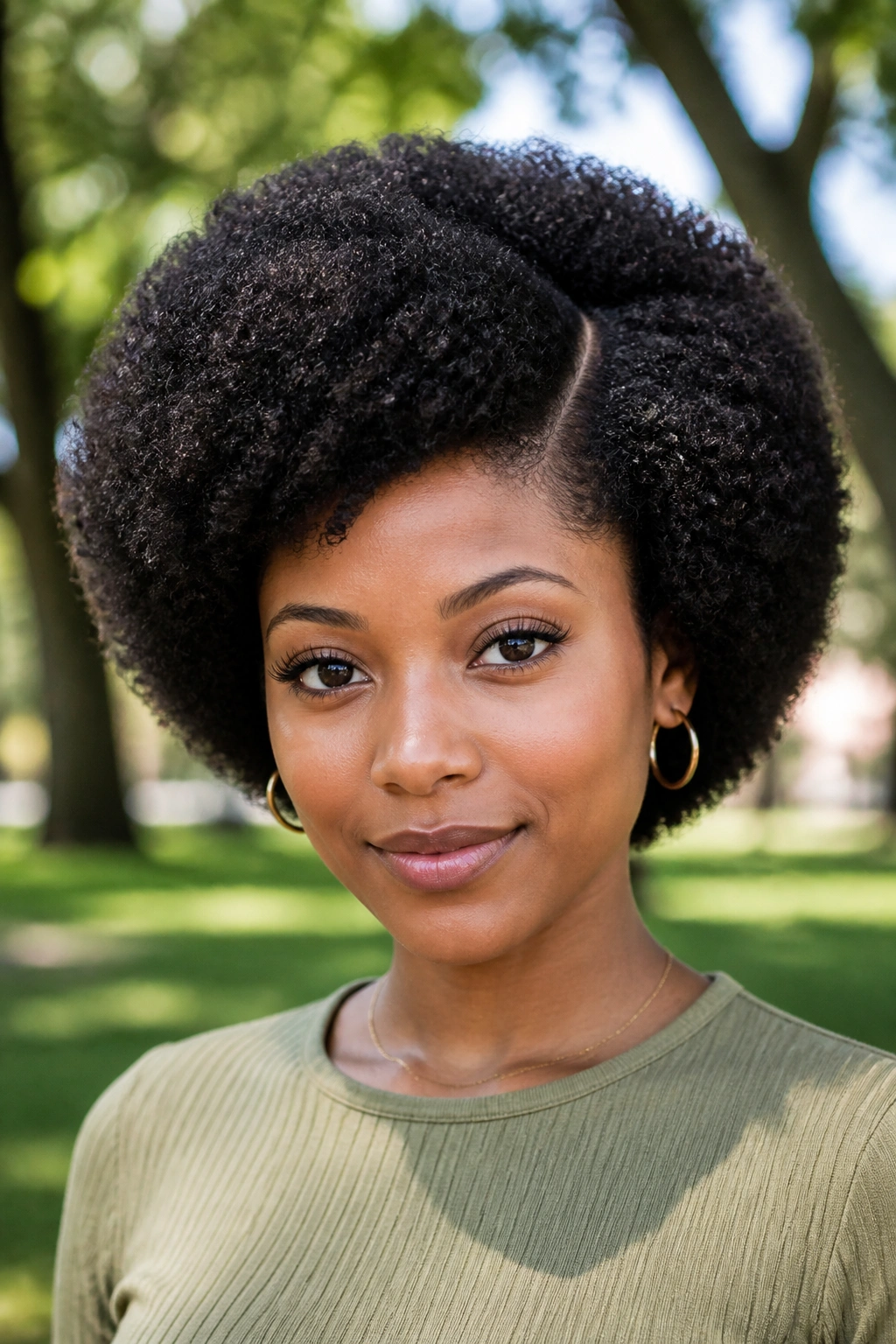
Can an afro work on a round face? Absolutely. The mistake is assuming the afro has to be huge in every direction. It doesn’t. A shaped afro with a side part and a little height at the top can be one of the most flattering natural styles out there.
The side part creates a line that interrupts symmetry, which is useful when the face already has soft curves. Then the shape can be rounded at the top and trimmed a bit closer at the sides so the silhouette stays balanced. If your hair shrinks a lot, stretch it first with twist-outs, braids, banding, or a blow-dry on low heat. That gives the afro more length and less spread.
Pick the roots upward, not outward. That one habit changes the whole shape. If you keep fluffing the sides but ignore the crown, the style gets wider instead of taller. And yes, a little edge shaping around the temples helps, but don’t overcut it into a hard circle. The best rounded afro still has movement.
10. Sew-In Lob with Soft Waves
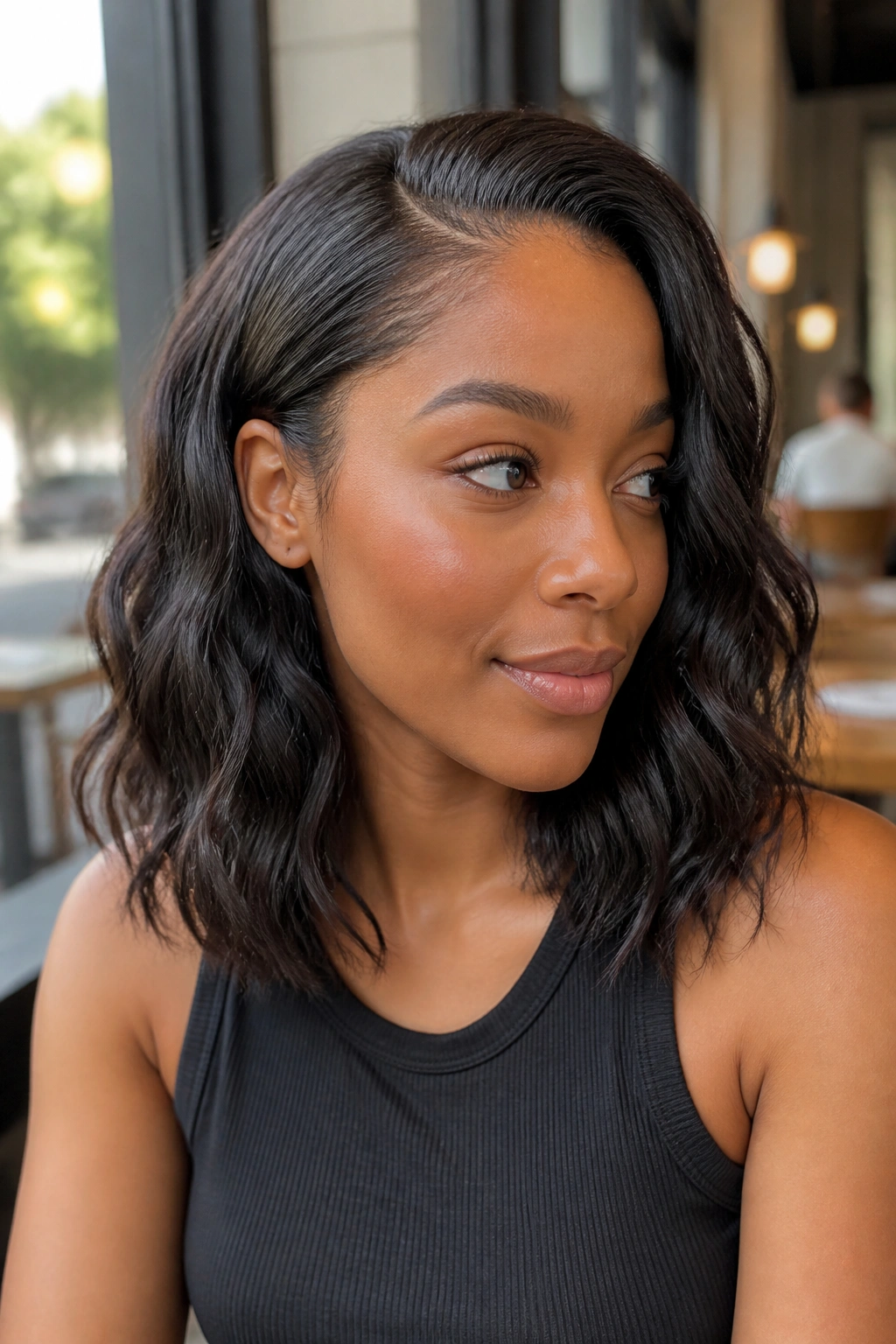
A lob works because it lives in the space between short and long, and that middle ground is useful for round faces. It gives the face room without stopping at the jawline in a way that can feel blunt. Soft waves make it even better, because the bends keep the style from reading as a solid block.
The length should sit around the collarbone or just below it. That spot matters. Too short and the cut can widen the cheeks. Too long and the style loses the clean, lifted feel that makes a lob so good in the first place. Waves should start below the cheekbone, not right at it, so the volume stays lower on the face.
A side part usually wins here. It adds a diagonal line and keeps the top from feeling too flat. If you wear leave-out, keep the blend smooth at the front but not overstyled. A little bend at the ends is enough. The whole point is movement, not perfection.
11. Fulani Braids with Length
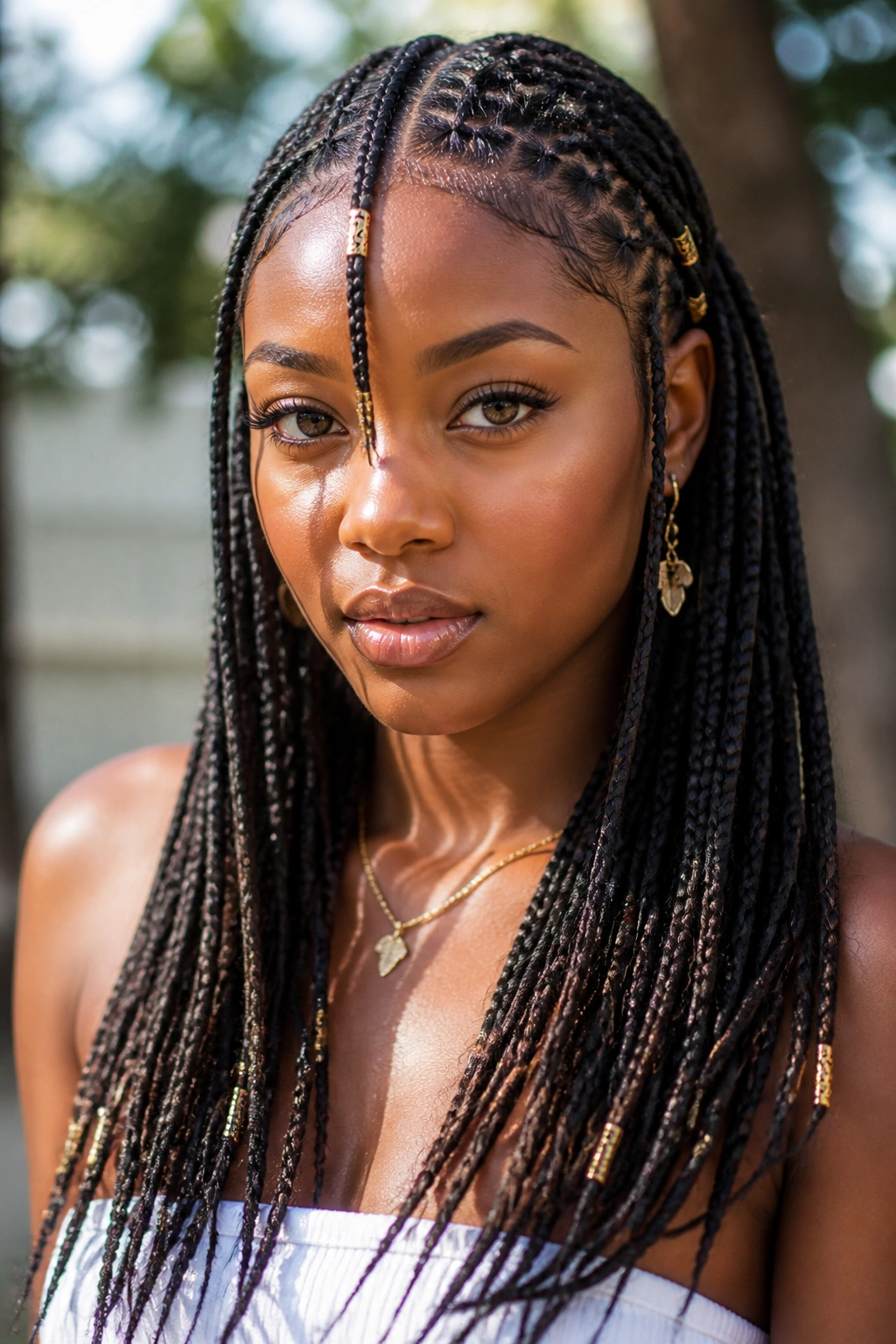
Fulani braids are one of those styles that bring a lot of structure without looking stiff. The central braid, the side braids, the beads or cuffs if you choose them — all of it can work with a round face, because the design naturally creates vertical and diagonal lines.
What makes this style especially good is the way it frames the face without trapping it. The braids usually move backward from the hairline, then flow down the sides. That backward motion keeps the center open and makes the face look longer. If you add a few braids that hang lower near the shoulders, even better.
I like Fulani braids most when the front pieces are kept neat and the decorative bits stay lower on the braid. Heavy beads near the temples can make the face feel crowded. Slimmer accents down the length look cleaner and let the hairstyle breathe.
A center braid with a subtle side sweep can be lovely here too. It softens the geometry just enough. And yes, the style can be bold. It just should not be bulky where the face is widest.
12. Marley Twists Swept to One Side
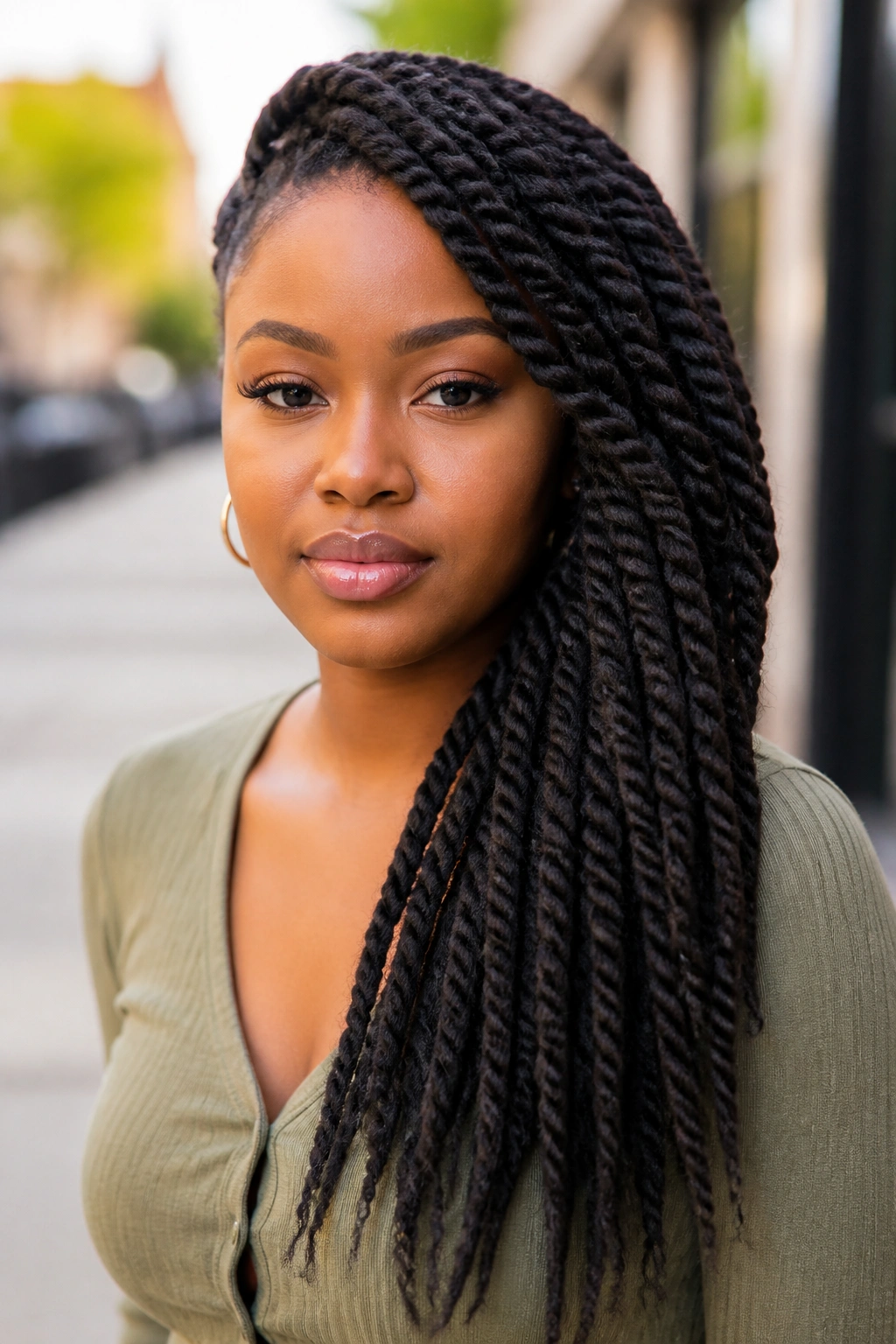
Marley twists have a chunky, matte look that can feel strong and elegant at the same time. Swept to one side, they create a diagonal line across the face, which is exactly why they work so well on round features. Straight-down twists are fine, but a side sweep feels more intentional.
The twist size should match the feel you want. Larger twists create more visual weight, which can be useful if you want fullness past the shoulder. Smaller twists look lighter and more delicate. Either way, keep the sweep starting near the part rather than forcing all the hair across the forehead. You want a soft angle, not a curtain.
This style is especially nice for protective wear because the length does not have to be extreme to make the face look longer. Even mid-chest length can do the job if the side placement is right. If you tuck one side behind the ear and leave the other fuller, the contrast becomes part of the shape. Very clean. Very effective.
13. TWA with Shaped Edges and Height
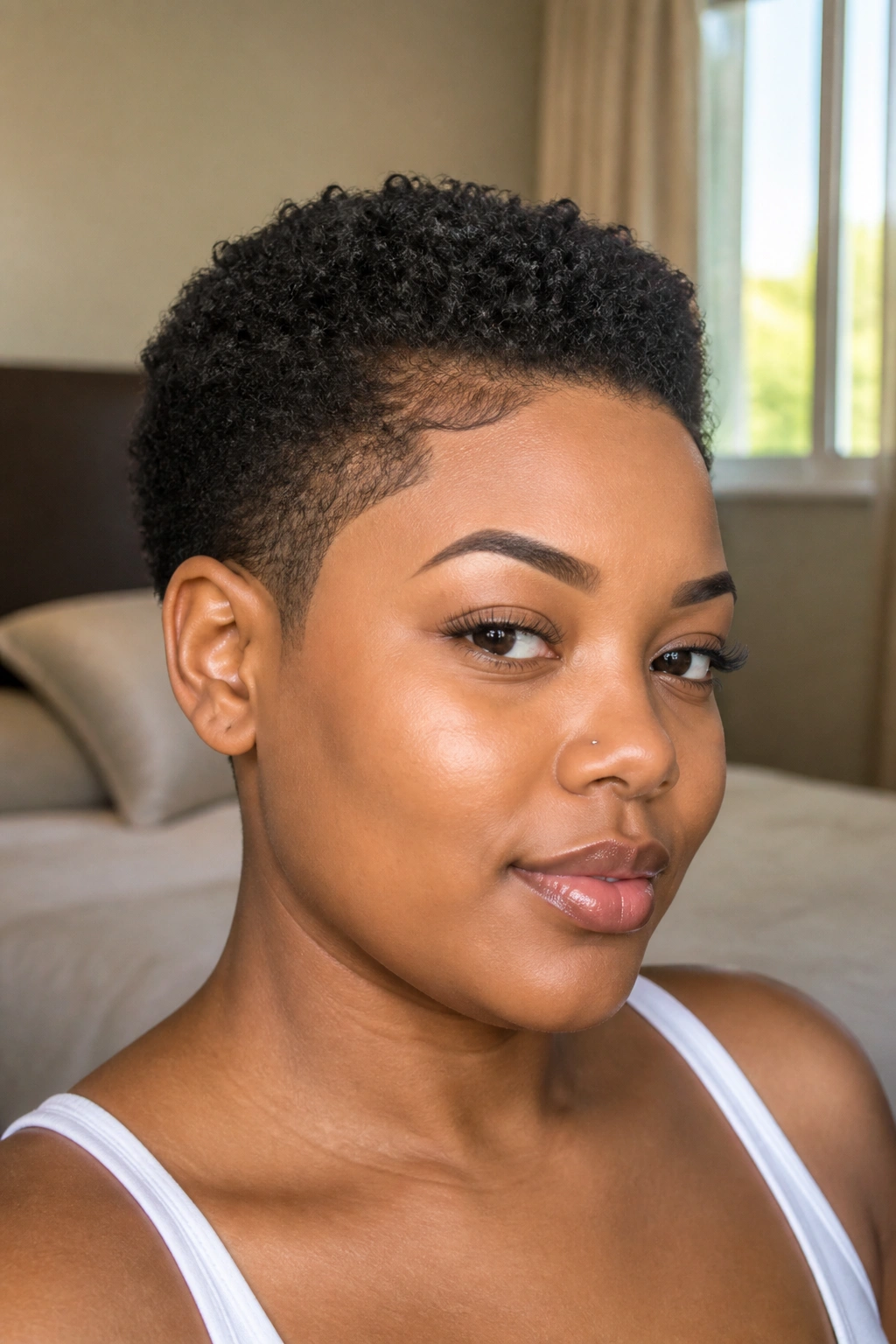
A TWA can be one of the most flattering black hairstyles for round faces when the shape is handled well. Short hair does not mean less shape. It means the shape has to be sharper.
Where the Shape Matters
Keep the sides close and let the crown stand up a little. That slight lift stops the head from reading as a single round line. A shaped hairline helps too, especially if the edges are clean but not overly squared off. The goal is tidy, not helmet-like.
- Leave more length at the top than the sides.
- Use a small pick or sponge to lift the crown.
- Keep the nape neat so the cut doesn’t puff outward there.
- Avoid a mushroom shape unless you want extra width.
Short hair is honest. It shows every choice. That’s why a TWA with height feels so good on a round face — there’s nowhere to hide, and no reason to. The silhouette does the talking.
14. Pineapple Updo on Curls
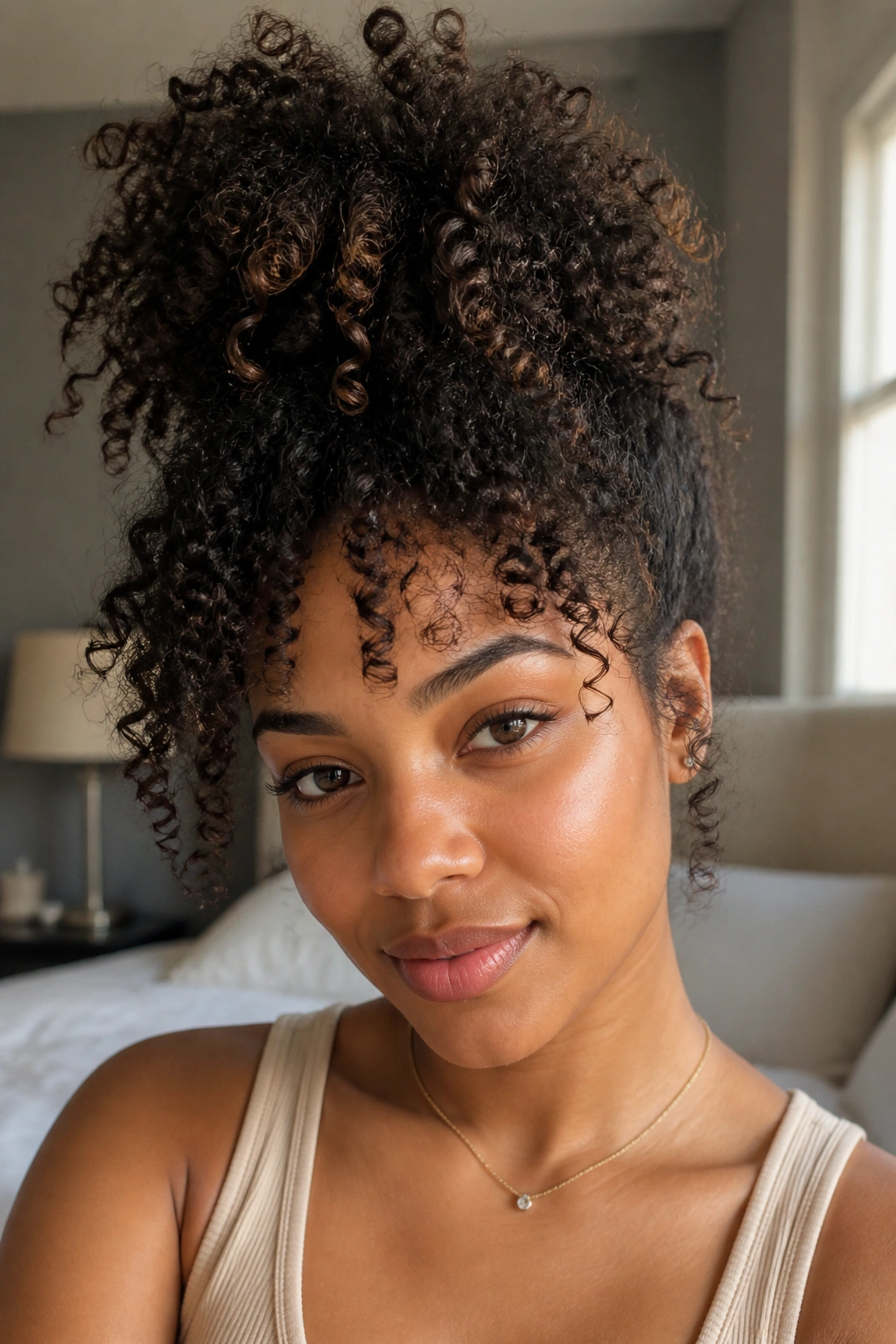
A pineapple updo changes the face shape fast because it pushes the curls up and away from the cheeks. The hair sits high on the head, which gives you lift without forcing the curls into a stiff updo. It’s relaxed, but not lazy.
The style works especially well on second- or third-day curls when the texture has a little memory and doesn’t need to be rebuilt from scratch. Gather the hair loosely with a satin scrunchie, not a tight elastic, so the top keeps its bounce. Let some curls spill forward near the front if you want softness around the forehead.
This is a good option when you want a face to look longer but still want the curl pattern visible. It also works with twist-outs, braid-outs, and flexi-rod sets. The key is placement. Put the pineapple too low and you lose the vertical line. Put it high and the whole shape opens up.
15. Half-Up Half-Down with a Top Knot
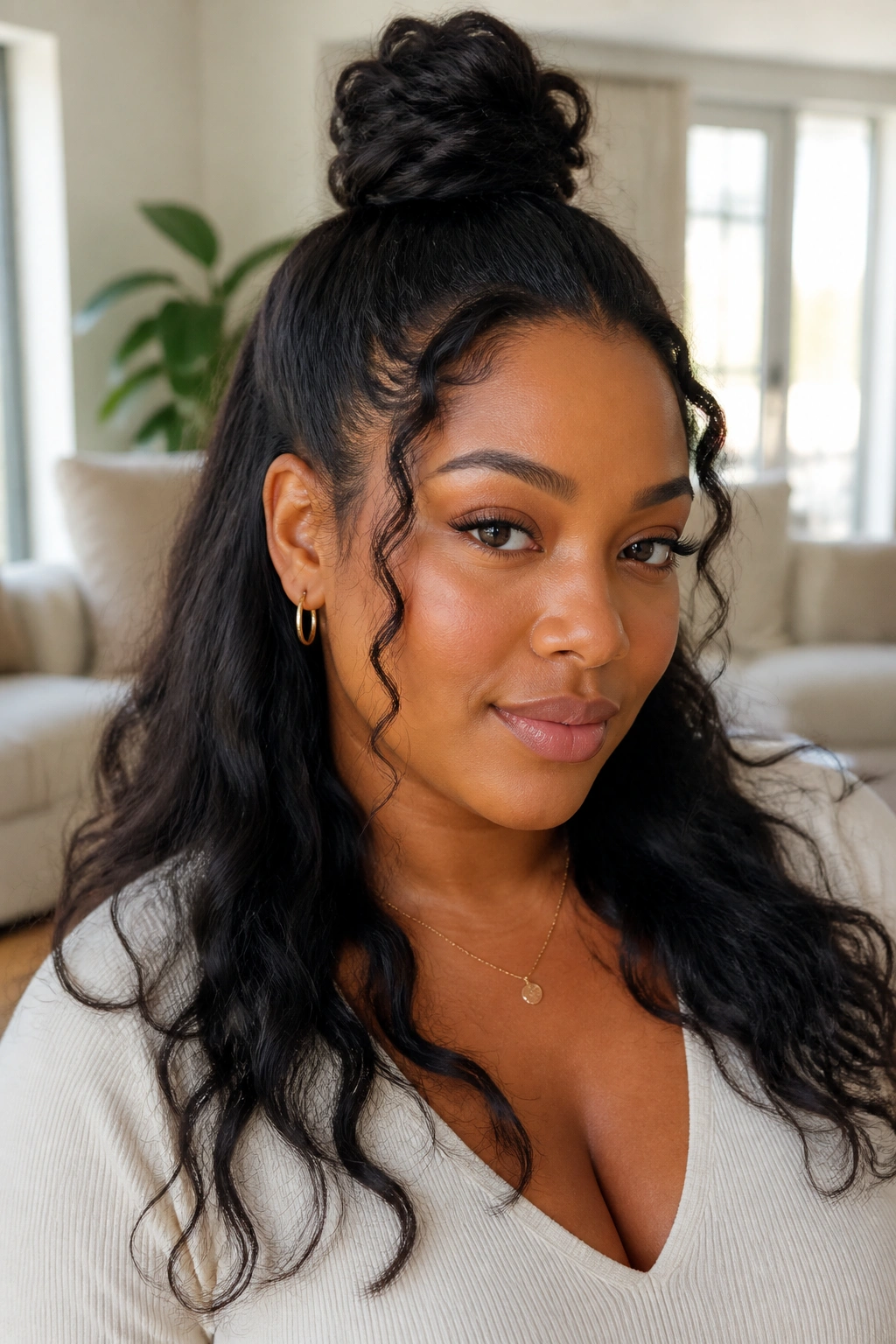
Why does a half-up, half-down style flatter a round face so reliably? Because the top knot gives you height while the loose bottom section keeps the style soft. You get both structure and movement. That combination is hard to beat.
The knot should sit high enough to lengthen the face, but not so high that it looks disconnected from the rest of the hair. If the lower section is curly or waved, keep the volume around the jaw a little softer than the crown. That stops the bottom from spreading too wide.
How to Make It Feel Balanced
Use a clean part — center or slight off-center — and keep the top knot compact. A huge knot can throw the proportions off. A medium knot usually looks more elegant and works better with natural texture.
A nice detail here is face-framing curls. Just two or three pieces near the front can soften the cheeks without crowding them. Don’t overdo them. A few is enough. More than that and the style starts to lose its shape.
16. Layered Curly Wig with an Off-Center Part
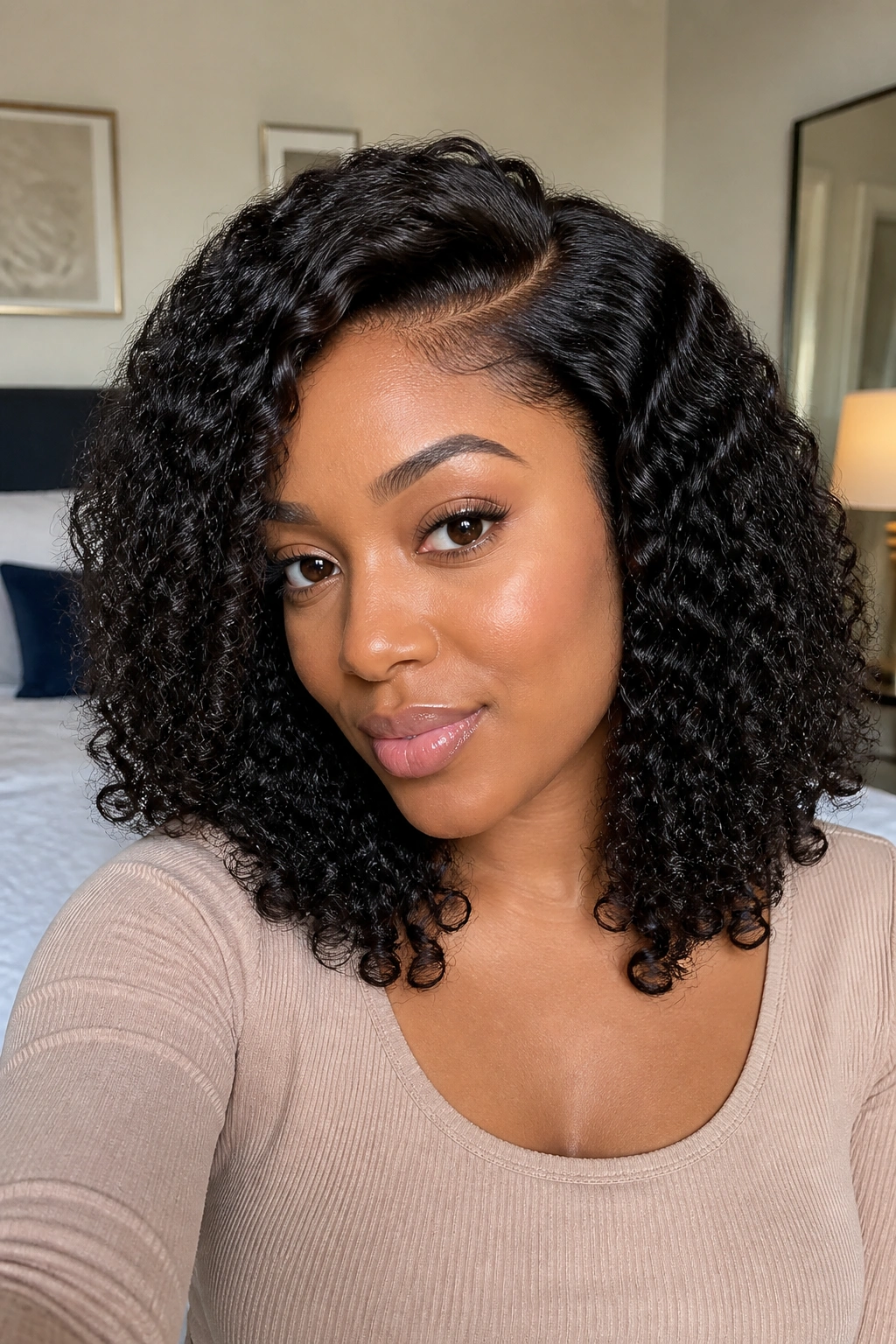
A curly wig can be a smart choice when you want control over the shape without spending hours on manipulation. The off-center part breaks symmetry right away, and the layers keep the curls from ballooning out in one heavy line around the face.
I like this style most when the wig has some length past the chin and the curls are layered enough to move. A blunt, super-dense curly wig can sit too wide on a round face. Layers thin out the shape in the right places and let the curls fall in vertical pieces instead of one large halo.
- Choose a density that is full, not packed.
- Keep the part slightly off-center.
- Ask for layers that start below the cheekbone.
- Avoid a lot of volume at the temples.
The beauty of a wig here is simple: you can test shape before committing to a cut. If a round face looks better with more length or more side sweep, you can find that balance without touching your natural hair.
17. Low Bun with a Side Swoop
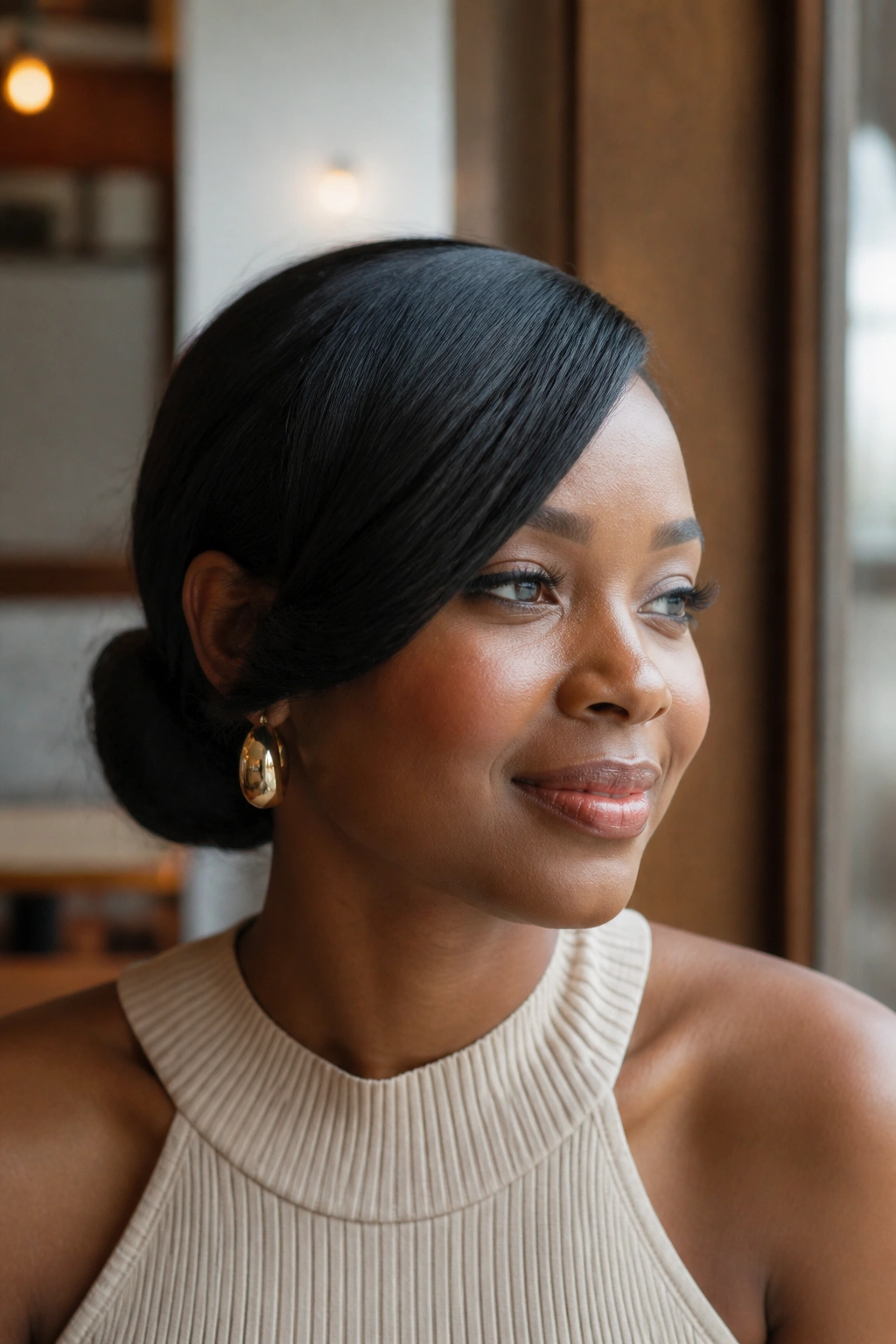
A low bun sounds plain until you see how much the side swoop does. The bun keeps the silhouette low and controlled, while the swoop creates a line that moves across the face instead of around it. That line matters.
This style is often overlooked because people assume low buns flatten the face. That only happens when the bun is too tight or too centered and the front is pulled straight back. A soft side part, a little height at the roots, and a swoop that brushes the temple change the whole feeling. The face opens up. The neck looks longer. Jewelry gets its moment too, which I always appreciate.
If you want the style to feel less severe, leave a small amount of softness around the hairline. Not baby hairs for the sake of it — just enough texture to avoid that over-slick look that can harden features. A satin scarf at night keeps the edges clean without requiring you to rework the whole thing the next morning.
18. Senegalese Twists Shoulder-Skimming
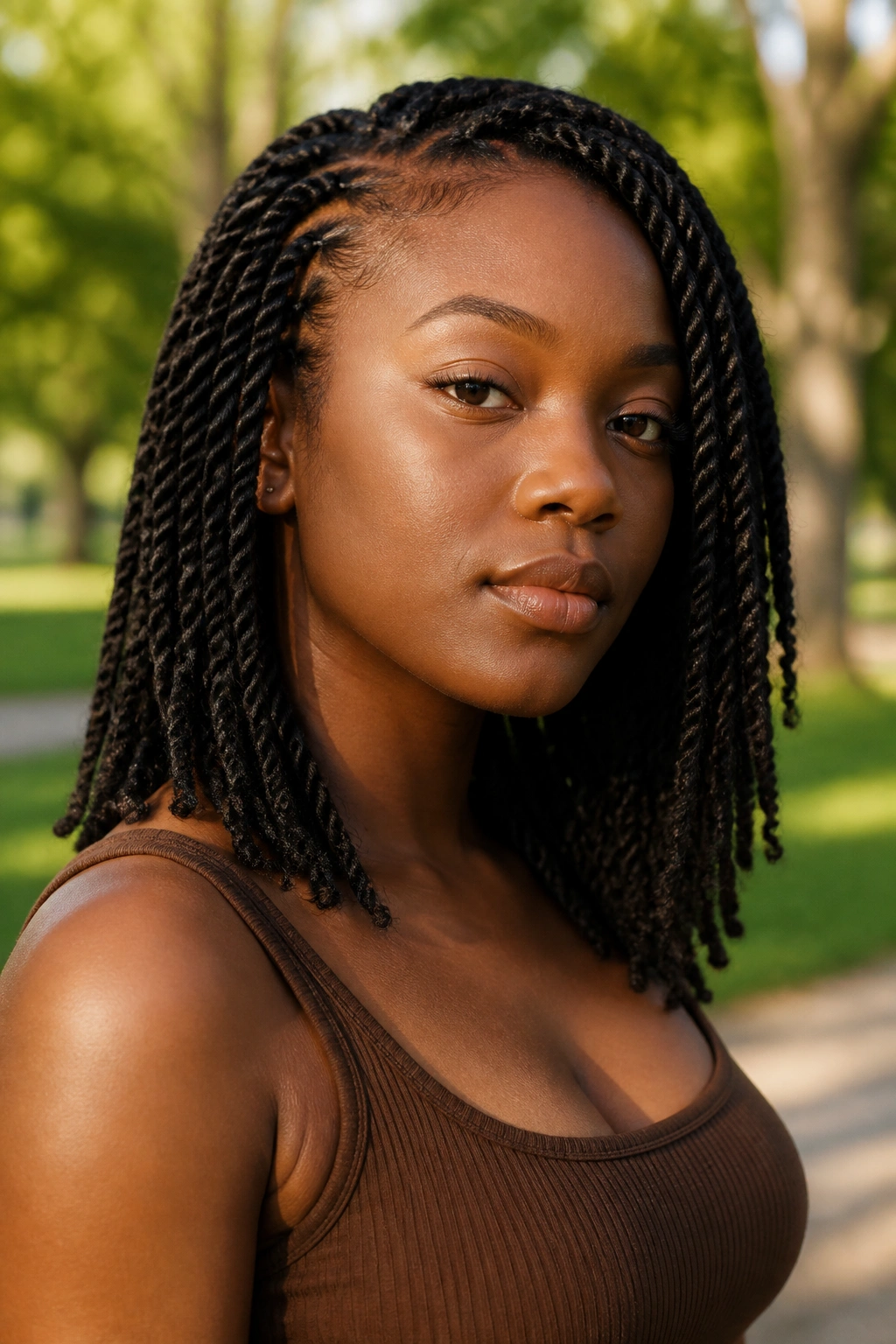
Senegalese twists have a smoother, rope-like finish than some other twist styles, and that slicker look is part of why they work so well on round faces. They create a clean vertical line, especially when the length skims the shoulders instead of stopping at the cheeks.
The shoulder-skimming length is the sweet spot. Shorter twists can sit too close to the jaw, while very long ones can feel heavy if the hair is fine. At shoulder level, the twists give motion without pressing the face inward. A middle part gives a strong straight line, but a side part usually softens the shape more.
Unlike box braids, Senegalese twists tend to move a little more fluidly, so the face doesn’t feel boxed in. That lighter swing helps a lot when the face already has soft contours. If you want the look to read cleaner, keep the front twists neat and the ends uniform. If you want a softer finish, let the ends curl slightly.
19. Braided Ponytail with Wrapped Base
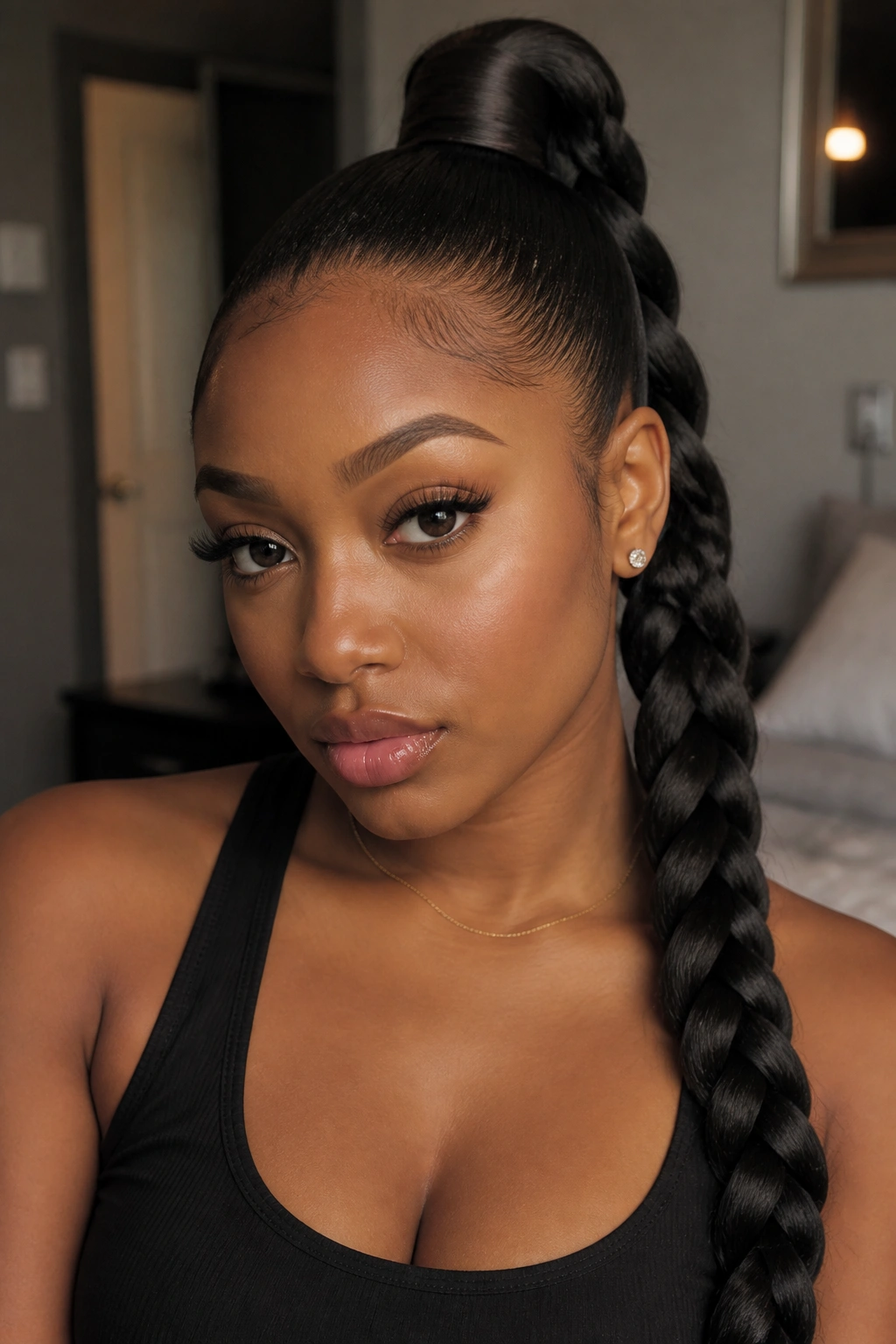
A braided ponytail is one of the easiest ways to add height without making the face feel crowded. The ponytail sits up high, the wrapped base hides the hair tie, and the braid falls in a long line that pulls everything downward in the best way.
Where the Lift Should Sit
The ponytail should start at or above the crown, not at the middle of the head. That placement gives the style its lengthening effect. If you can see the braid base clearly from the front, the ponytail is probably sitting too low.
- Wrap the base with a section of hair or a slim braid.
- Keep the top smooth but not pulled tight enough to hurt.
- Let the braid fall over one shoulder if you want more diagonal movement.
- Add one or two cuffs near the end, not near the hairline.
This style also works with added hair, which is handy if your natural length is shorter. A little extra length past the shoulder changes the silhouette more than people expect. Straight ponytail, braided ponytail, bubble-braid ponytail — all of them can play this same shape game.
20. Bantu Knot-Out with Stretched Shape
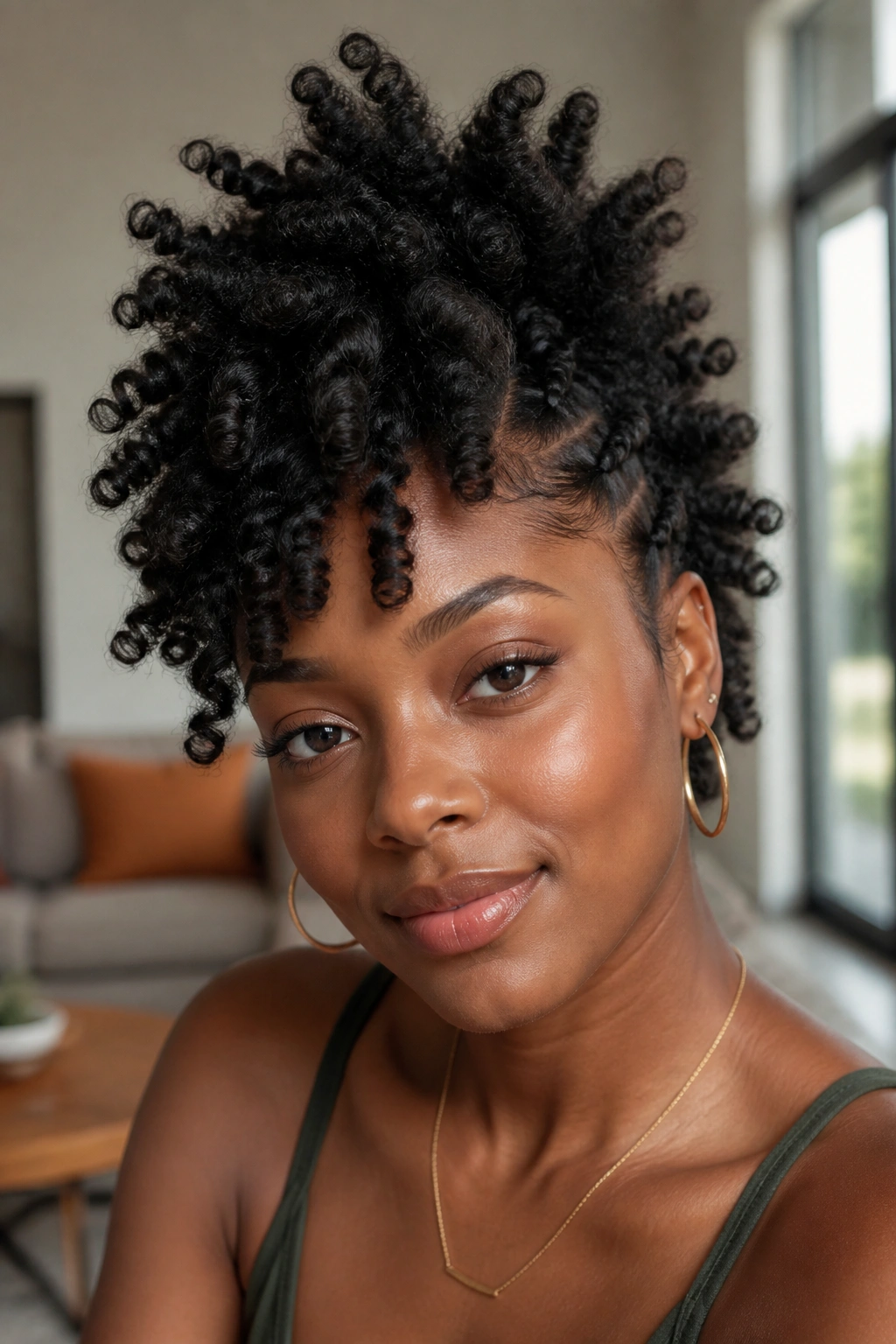
A Bantu knot-out can look playful, but the shape it leaves behind is surprisingly good for a round face. The curls from the takedown have stretch and lift, and if the roots are handled well, the style gives height at the crown without adding too much width on the sides.
The size of the knots makes a big difference. Smaller knots create tighter curls and more defined patterning, while medium knots give a softer, fuller finish. For a round face, medium sections often work better because the result has enough length to feel elongated without turning into a puff around the cheeks.
Set the knots on stretched hair if you want even more vertical shape. That part is easy to skip, but it matters. Hair that starts stretched tends to fall in a more controlled way after the takedown. A little oil on the fingertips, careful separation, and a pick at the crown can make the difference between “cute” and actually flattering.
21. Headband Twist-Out with Side Sweep
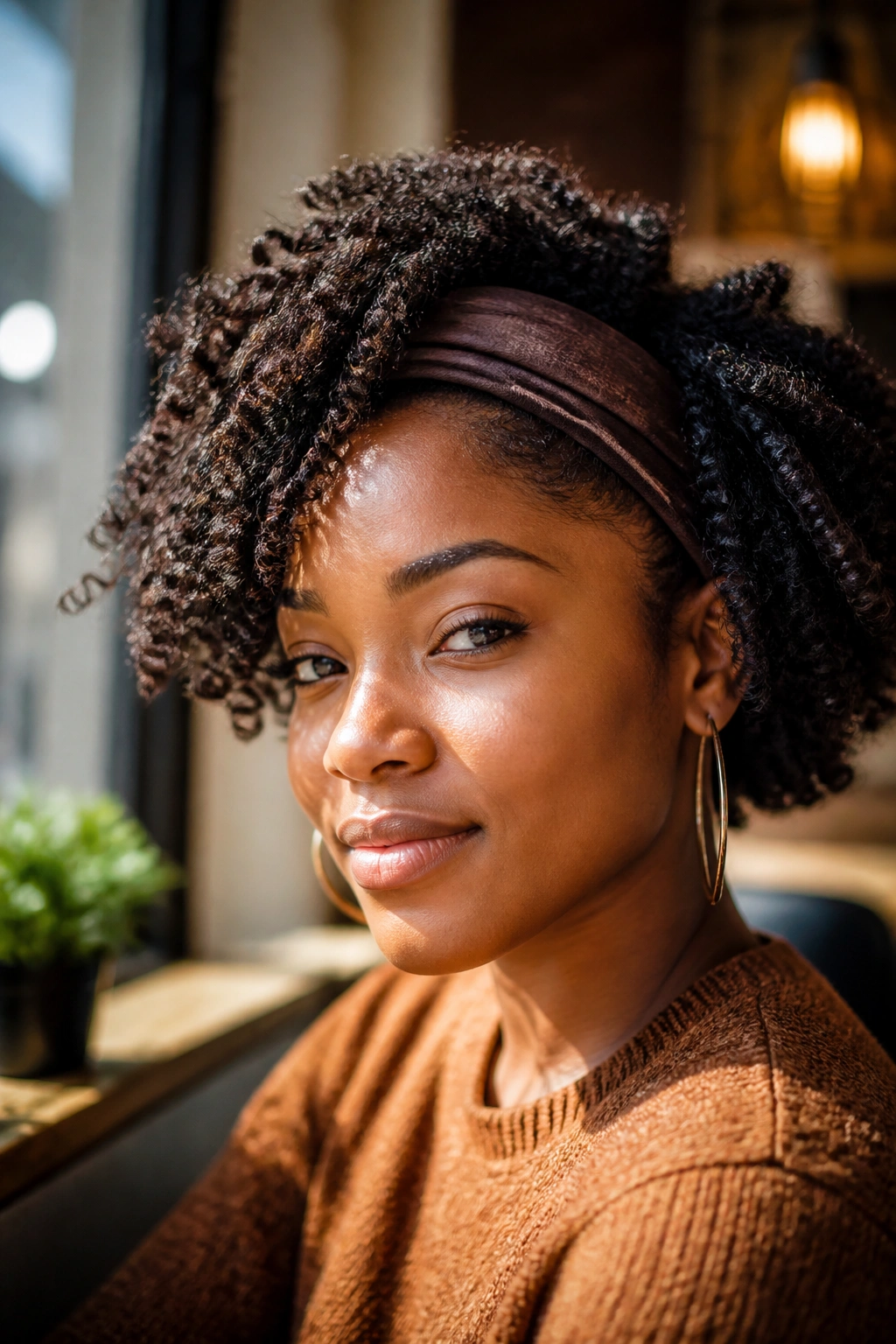
A headband style can do more than keep hair out of your face. It creates a frame. And when the front hair is swept up or to the side above the band, the face gets a cleaner outline without losing softness.
Why does it work so well? Because the headband gives the eye a horizontal anchor, while the hair above it can build height. That combination makes the face feel longer. A satin or fabric headband usually looks better than a thin elastic band, which can cut the head in half in an awkward way.
What to Ask for or Adjust
If you’re wearing this with a twist-out, keep the top loose and the sides slightly controlled. If your hair is straightened or stretched, let the front pieces bend away from the cheeks. A deep side sweep can be especially flattering because it breaks the face shape without needing much styling at all.
This one is easy to wear and easy to overdo. The band should frame, not squeeze. That’s the whole point.
22. Braided Crown with Loose Ends
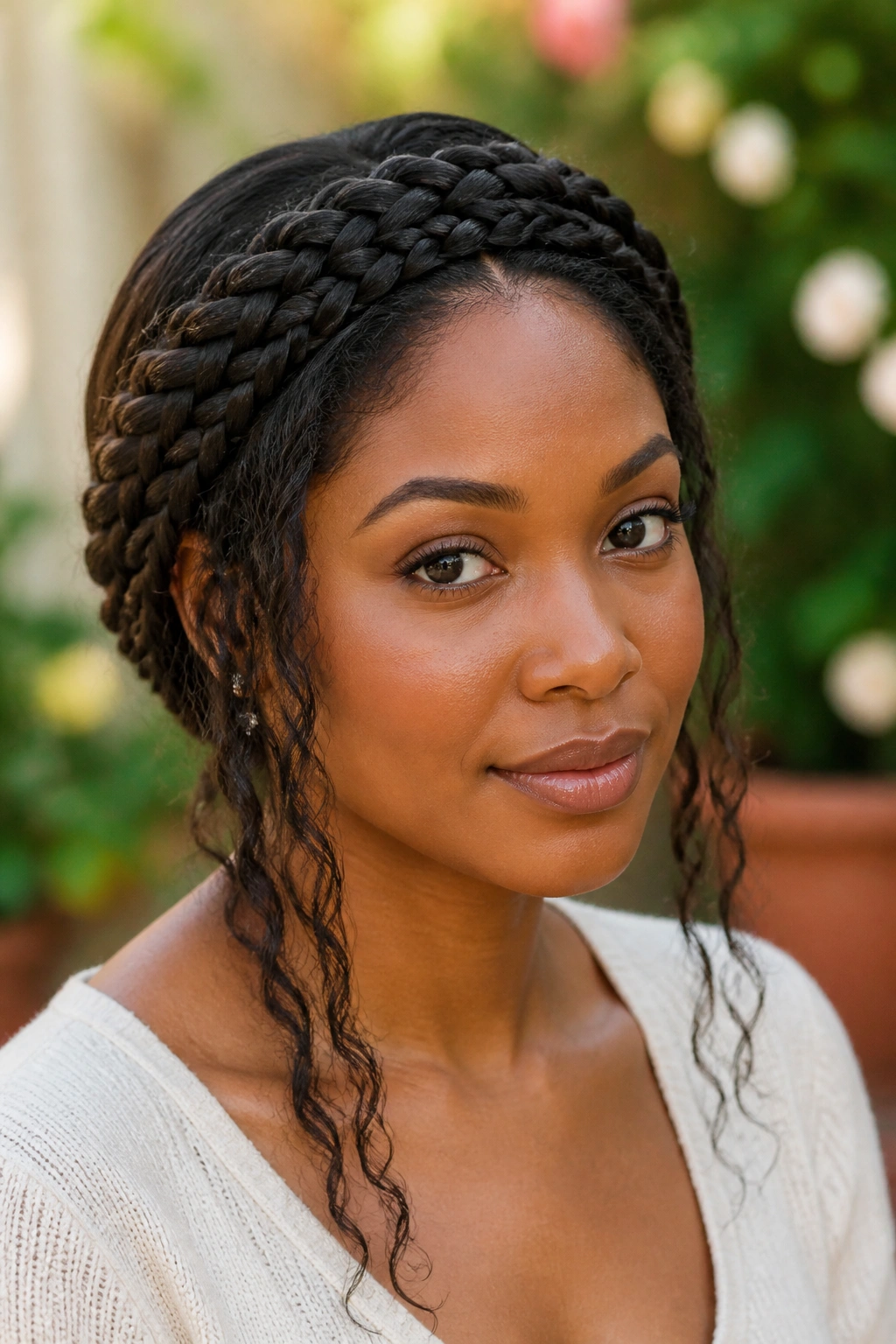
A braided crown sounds formal, but the shape is what makes it useful for round faces. The braid travels around the head, which creates a curved frame, while the loose ends drop downward and keep the look from feeling too wide.
I like this style when the braid starts low on one side and wraps back toward the crown instead of sitting straight across the forehead. That diagonal path softens the roundness of the face and adds a little lift where it counts. If you leave the ends loose and textured, the style feels less rigid and more balanced.
- Keep the braid snug enough to hold its shape, but not so tight that it pulls at the hairline.
- Let the loose ends fall past the chin if possible.
- Add a few soft curls or bends to the ends for movement.
- Tuck one side if you want more face opening.
This is a style that works when you want the face, the earrings, and the neckline to stay visible. And that, honestly, is a nice thing to have in your back pocket.
