



Wavy hair and a short bob have a reputation problem. People expect puffiness, random flips at the ends, and a morning routine that needs a round brush, a blow dryer, and more patience than anyone wants to give.
The right short bob haircuts for wavy hair do the opposite. They let the bend do some of the work, keep the outline clean, and stop your hair from expanding into a shape you never asked for.
The catch is that not every bob behaves the same way. A blunt chin-length cut, a stacked shape, and a soft layered bob all respond differently when the hair dries in a wave pattern. Density matters. So does how tight or loose your waves are. A cut that looks sharp on one person can look bulky or flimsy on someone else.
That is why the details matter so much here. Length, weight, where the layers start, and how the ends are finished can change everything. Get those four things right, and a bob on wavy hair can feel easy instead of fussy. Start with the shape that matches your wave pattern, and the rest gets easier.
1. Chin-Length French Bob for Wavy Hair

A chin-length French bob is the haircut I reach for when someone wants their waves to look intentional without a lot of styling drama.
The length sits right where the hair bends naturally at the jaw, which helps the wave fall into place instead of hanging down and losing its shape. Keep the line blunt, or close to blunt, and the cut gets a little more weight at the bottom. That weight is what keeps wavy hair from ballooning out at the sides.
Why it behaves so well
Fine-to-medium waves usually love this shape because the hair is short enough to spring up, but not so short that it turns into a puffball. If your wave pattern is loose, this cut makes the bend show up. If your waves are stronger, it gives them a crisp edge.
Ask your stylist to keep the perimeter at the chin and soften only the face frame. Too many short layers here will make the whole thing wobble.
- Ask for a blunt line at chin level, not higher.
- Keep the face frame soft around the cheekbone.
- Use a small amount of mousse on damp hair.
- Scrunch, then air-dry or diffuse for 5 to 8 minutes.
Best detail to remember: if your waves shrink a lot, cut it slightly longer than your first instinct. That tiny bit of extra length saves the shape.
2. Blunt Micro Bob for Wavy Hair

Can a bob sit above the jaw and still work on waves? Yes, but only if the cut is clean and the ends are left heavy enough to hold the line.
The blunt micro bob is short, sharp, and a little fearless. It usually sits around the mouth to lower cheekbone area, depending on your face and neck length. On wavy hair, that short shape can either look chic or go sideways fast. The difference is almost always in the weight at the ends.
If your hair is thick, this cut can look gorgeous because the wave gives it movement while the blunt edge keeps it from puffing up. If your hair is fine, I’d be more careful. A micro bob with too much internal thinning can start looking wispy, and that defeats the whole point.
This is the cut for someone who does not want to hide behind a long fringe or a lot of styling. It puts the shape right out there. No camouflage.
One more thing: this haircut needs trims. Regular ones. Skip the maintenance and the shape starts to widen instead of sitting close to the head.
3. Layered Jaw-Length Bob for Wavy Hair

If your hair balloons at the sides, a jaw-length bob with long internal layers is often the first fix worth trying.
The trick is restraint. You want movement, not short pieces floating around your face like confetti. Long layers that start below the cheekbone let the waves bend without building too much bulk near the crown. The perimeter still gives you a clean edge, but the inside has room to breathe.
What to ask for
- A blunt or nearly blunt outer line at the jaw.
- Internal layers that start low, not at the temples.
- Soft point cutting only at the ends.
- No heavy razoring near the top if your hair frizzes easily.
This shape is especially useful if you have medium to thick hair and your waves stack on top of each other after drying. It removes just enough weight to stop the triangle effect. That triangle shape is the enemy. It makes a bob look wide and boxy in the wrong places.
For styling, keep it light. A small amount of curl cream or leave-in is enough for most people. Heavy oil can flatten the top and make the ends separate in a stale, stringy way.
4. A-Line Bob for Wavy Hair

An A-line bob is not just a neat haircut for straight hair people who want a little swing.
On wavy hair, the longer front pieces and shorter back create a built-in direction. The hair falls forward a little, which can be useful if your waves tend to puff at the nape or stick out behind the ears. That forward angle also gives the face a clean frame without making the ends look blunt in a harsh way.
The cut works especially well if your waves are loose to medium and your face has softer angles. It can make round cheeks look a bit longer. It can also take some width out of a square jaw without hiding it.
A steep A-line is where things can go wrong. Too much angle and the front starts shouting while the back disappears. I prefer a gentler slope on wavy hair, where the difference between front and back is visible but not dramatic enough to fight the texture.
Tiny warning: if your hair is very fine, don’t let the nape get over-thinned. That back section needs enough weight to keep the line grounded.
5. Box Bob for Wavy Hair
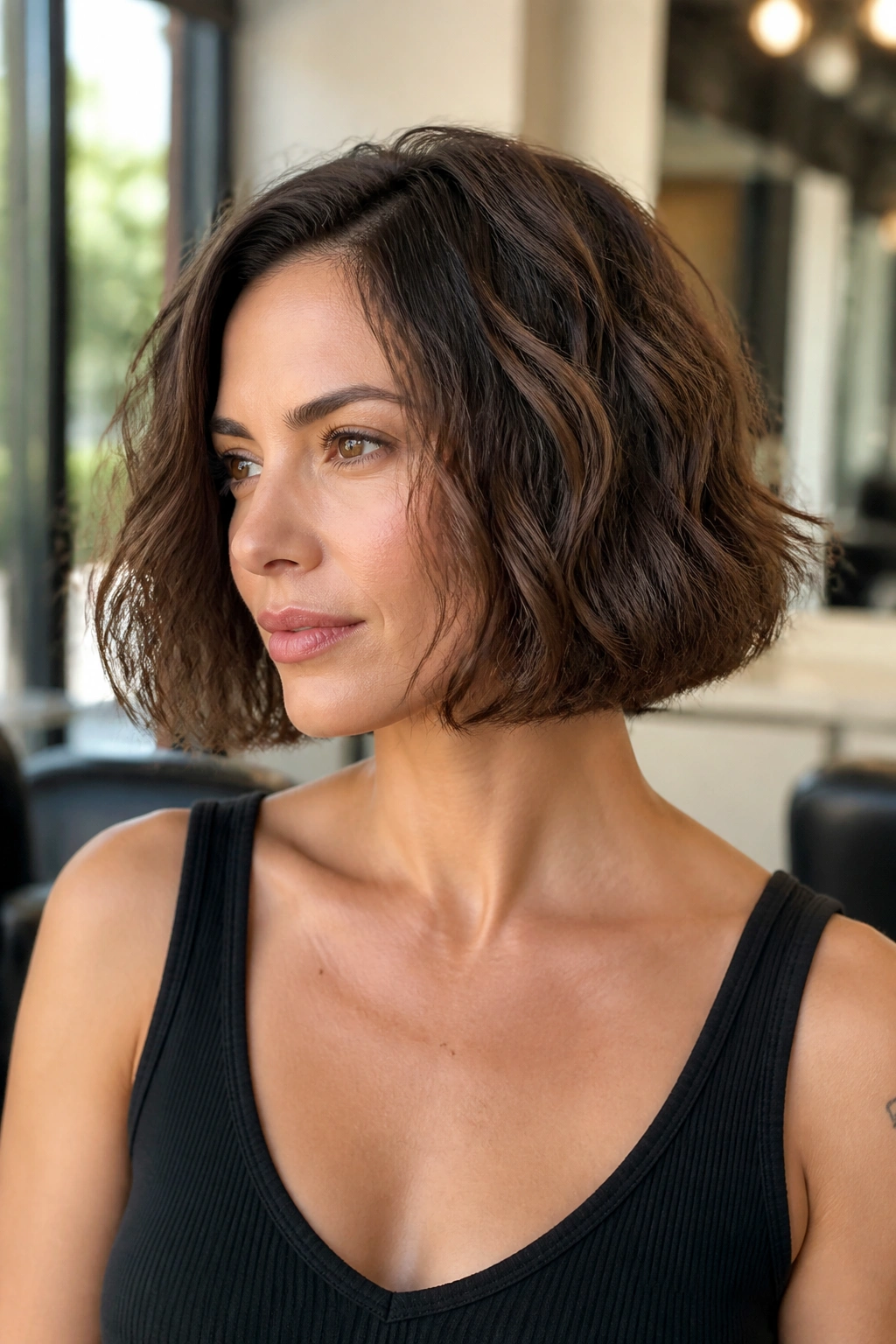
Picture a bob that sits like a tidy block at the bottom. That is the box bob, and wavy hair gives it a little life without softening the structure away.
The square shape is the point. The ends stay level, the sides are controlled, and the outline feels deliberate. On dense waves, the cut can look rich and polished because the texture adds movement inside that boxy silhouette. On finer hair, it can look sparse unless the stylist keeps enough bulk through the ends.
What makes it different
A box bob is not about swing. It is about shape. That means the haircut needs a careful hand, not aggressive thinning. If the inside gets stripped too much, the clean line falls apart.
It suits people who want their hair to look neat with almost no styling. Air-dry it with a bit of mousse or a light cream, and the waves give the shape a soft bend instead of a rigid wall.
- Best for thick or medium-density waves.
- Keep the ends blunt.
- Ask for minimal texture near the perimeter.
- Avoid heavy layering at the crown.
If you like structure and hate fluff, this one deserves attention.
6. Curved Bob with Soft Ends for Wavy Hair

Why do some short bobs look finished before you even touch them? Usually because the curve is doing the work.
A curved bob hugs the head a little more closely than a straight-line cut. The length often sits somewhere between the jaw and the top of the neck, and the ends are softened just enough to turn inward instead of kicking out. On wavy hair, that soft bend makes the whole cut feel calmer.
This is a good choice if your waves frizz at the bottom. A hard line can make that frizz more obvious. Soft ends hide the roughness better because they blend into the wave pattern instead of sitting on top of it.
How to style it
Use a lightweight mousse at the roots and a cream only through the mid-lengths. That combo gives lift without making the hair greasy. If you air-dry, clip the crown for a few minutes while the roots set. If you diffuse, stop when the hair is about 80 percent dry and let the rest finish on its own.
The shape is quiet, but not boring. That matters more than people think.
7. Shaggy Bob with Choppy Layers for Wavy Hair

Some waves want movement more than precision.
A shaggy bob gives you that movement in a way a blunt cut never will. The layers are choppier, the ends are softer, and the whole shape feels looser around the head. On a good day, it looks like you barely tried. On a bad day, if the layers are too short, it can look frayed and messy.
What to ask for
- Layers that are long enough to bend, not spike.
- Face-framing pieces that blend into the bob.
- A perimeter that still has some weight.
- Texture through the inside, not a shredded surface.
This cut is especially good if your waves have a bend that shows up in random places and you want the haircut to work with that. It also helps if your hair has a lot of natural fluff at the sides. The unevenness gives the eye something softer to read.
I would skip this if your hair is already fine and fragile. Too many short layers can make the ends look thin fast. If you want movement without losing density, keep the choppiness low and the length just at the jaw.
8. Side-Part Bob for Wavy Hair

A deep side part changes the whole bob.
It lifts one side, flattens the other, and gives wavy hair a shape that feels less symmetrical in a good way. If your waves fall flat down the middle, a side part can wake them up without changing the cut itself. That’s useful. Cheap fix, too.
This works well for people with a stronger wave on one side or a cowlick near the crown. The part gives that natural unevenness somewhere to go instead of forcing both sides to behave the same way. And honestly, hair rarely behaves the same way on both sides anyway.
To get the most out of it, part the hair while it’s damp, not after it has already dried crooked. If you need extra lift, clip the top section near the roots for 10 minutes while the hair sets. That small habit makes a bigger difference than most people expect.
A side-part bob also softens the look of a blunt edge. The cut stays neat, but the part keeps it from feeling stiff.
9. Bob with Curtain Bangs for Wavy Hair
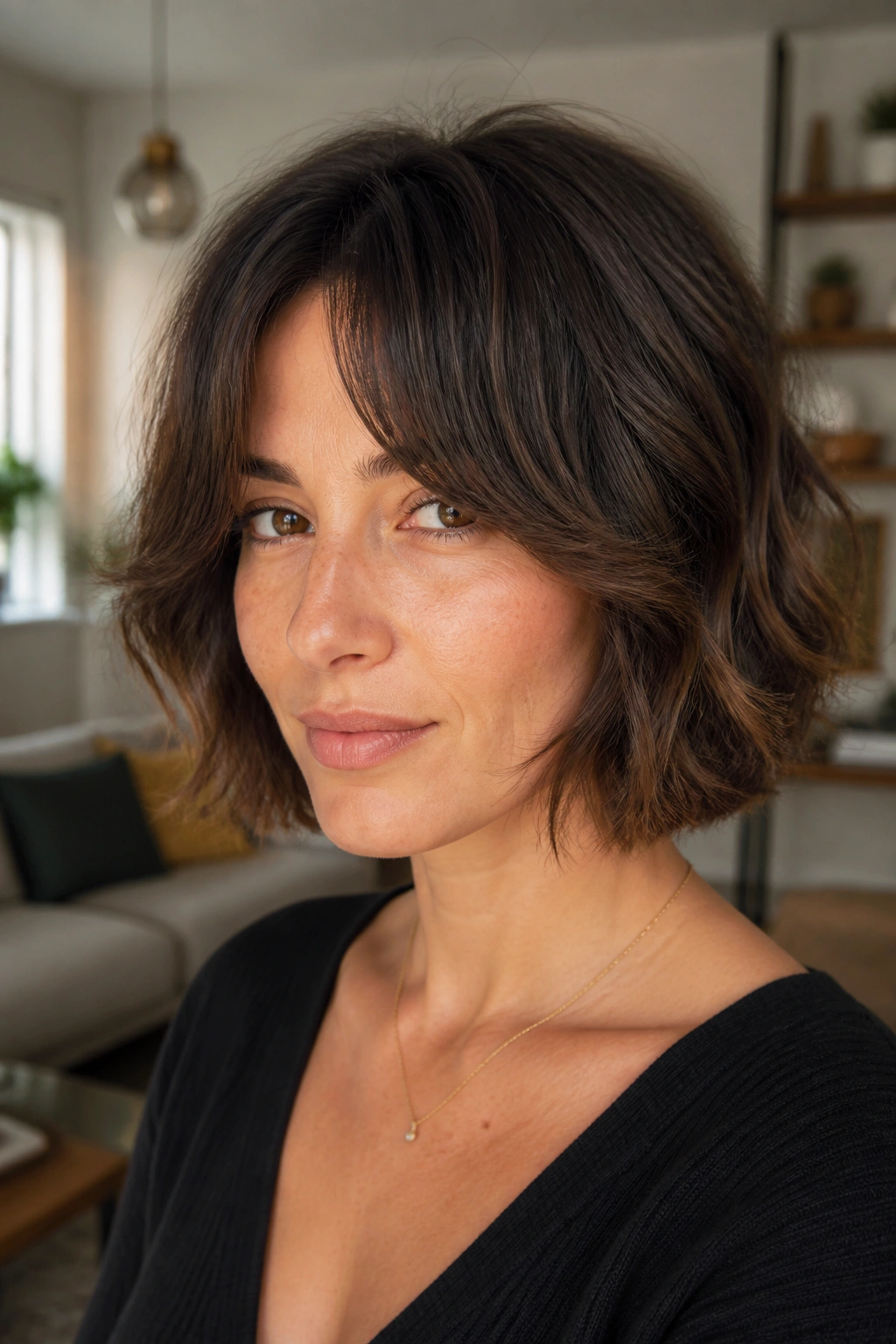
Curtain bangs can rescue a short bob, or ruin it. The difference is mostly length.
On wavy hair, curtain bangs work best when they start around the cheekbone and blend into the front pieces. If they’re cut too short, they spring upward and sit like a little shelf. Nobody wants that shelf. If they’re too heavy, they separate and look stringy.
The beauty of this pairing is that the bangs and the bob move together. The fringe softens the forehead, the side pieces frame the face, and the bob keeps the whole thing from looking too long or too round. It’s a nice setup for people who want more shape around the face without going full shag.
Best bang lengths
- Cheekbone length for soft waves.
- Just below the brow if your hair is denser.
- Slightly longer at the temples so the blend feels smooth.
- Cut dry, or at least checked dry, because waves shrink.
Style the bangs first. Always. If you leave them to dry on their own, they often curl in a direction you did not plan for. A small round brush or even your fingers and a bit of tension can make the front sit better.
10. Stacked Bob for Wavy Hair
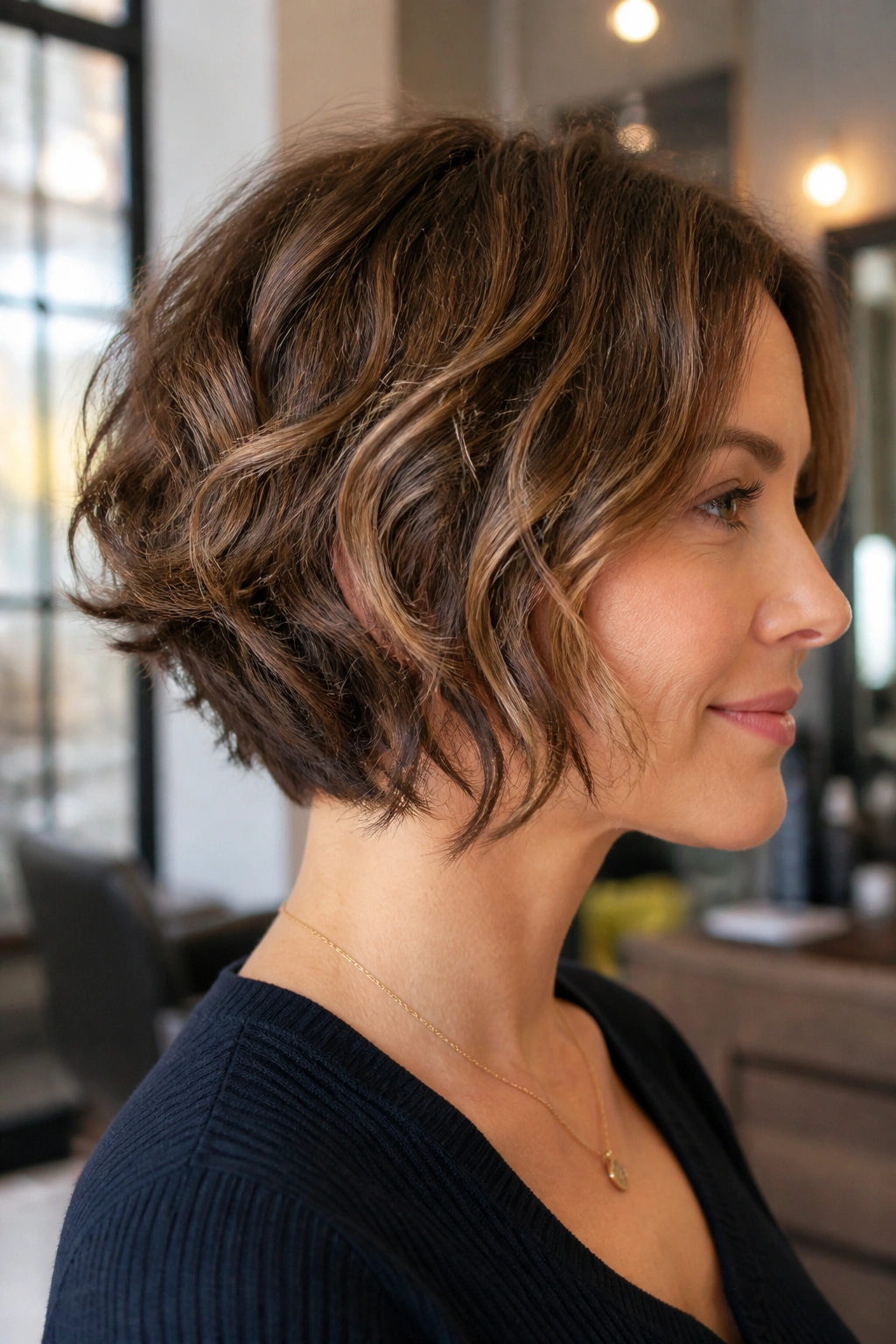
A stacked bob builds lift where thick waves need it most: at the back of the head.
The graduation at the nape gives the haircut shape and makes the head look a little more lifted from behind. On wavy hair, that can be useful because the natural bend adds fullness through the back section. A stacked cut turns that fullness into shape instead of bulk.
The mistake people make is asking for too much stacking. Then the back becomes too short, the crown rises too high, and the whole cut looks overbuilt. I like a softer stack on wavy hair, where the angle is visible but not sharp enough to fight the texture.
What your stylist should soften
- The nape line, so it doesn’t look harsh.
- The crown, so it doesn’t puff upward.
- The side sections, so they don’t flare out.
This is a good haircut if you want volume on purpose. If you’re already dealing with a lot of wide, fluffy texture, though, proceed carefully. You want lift, not a helmet.
11. Inverted Bob for Wavy Hair
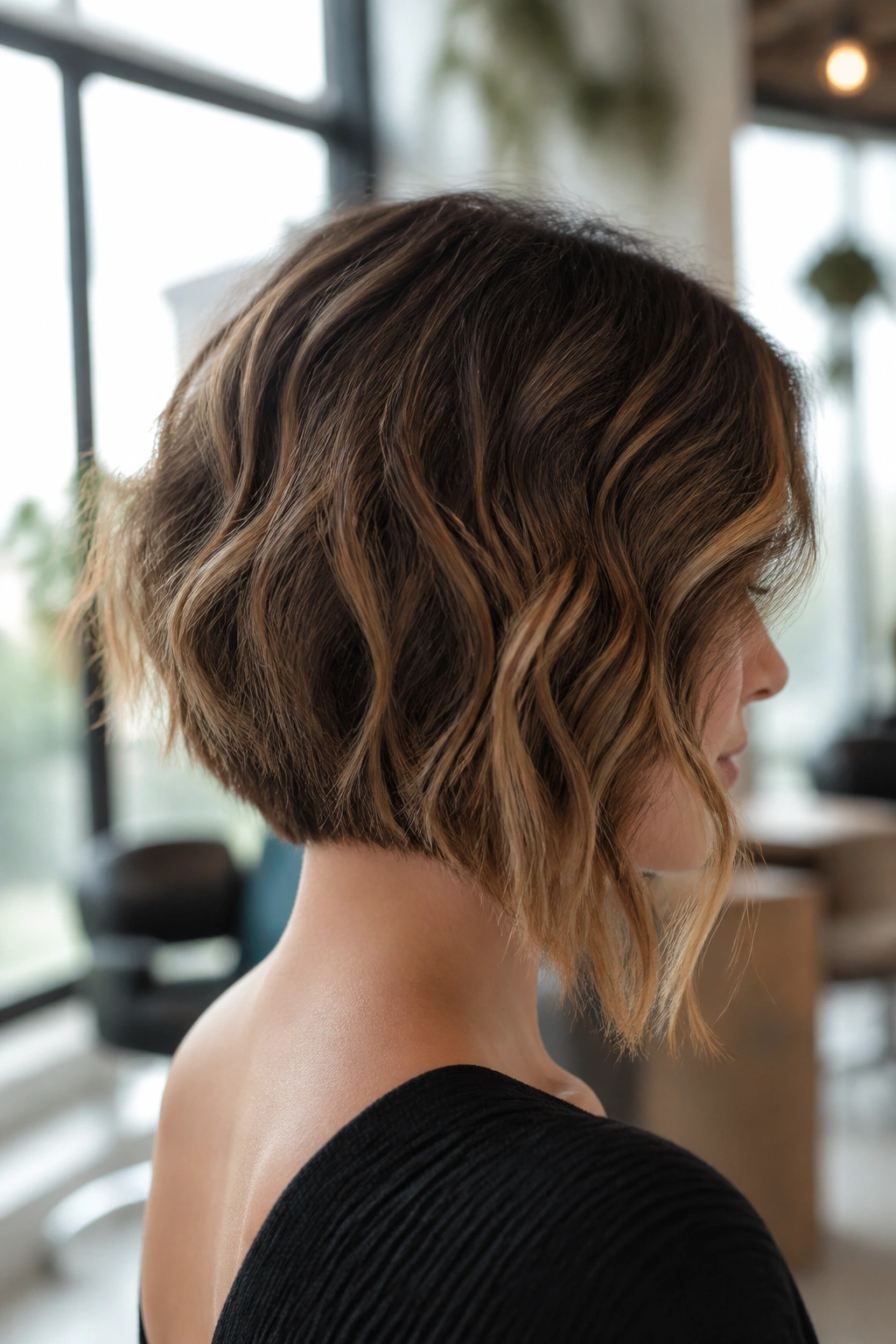
Why does the inverted bob still work on waves when so many angled cuts look stiff? Because waves break up the geometry a little.
An inverted bob is more dramatic than a gentle A-line. The back is shorter, the front is longer, and the line has a clear forward angle. On wavy hair, that angle gets softened by movement, which keeps it from feeling too sharp. The result is a cut that still has structure but does not look pasted down.
It suits people who like a cleaner shape around the face and do not mind a haircut with a little attitude. The front pieces usually sit near the jaw or below it, while the back hugs the neck. That contrast is the point.
The catch is balance. If the front gets too long and the back too short, the bob starts to look lopsided. If your hair is loose-waved and fine, keep the angle subtle. If it’s thicker, the stronger shape can hold up better.
This is not a lazy haircut. It looks good when the proportions are right.
12. Razor-Cut Bob for Wavy Hair
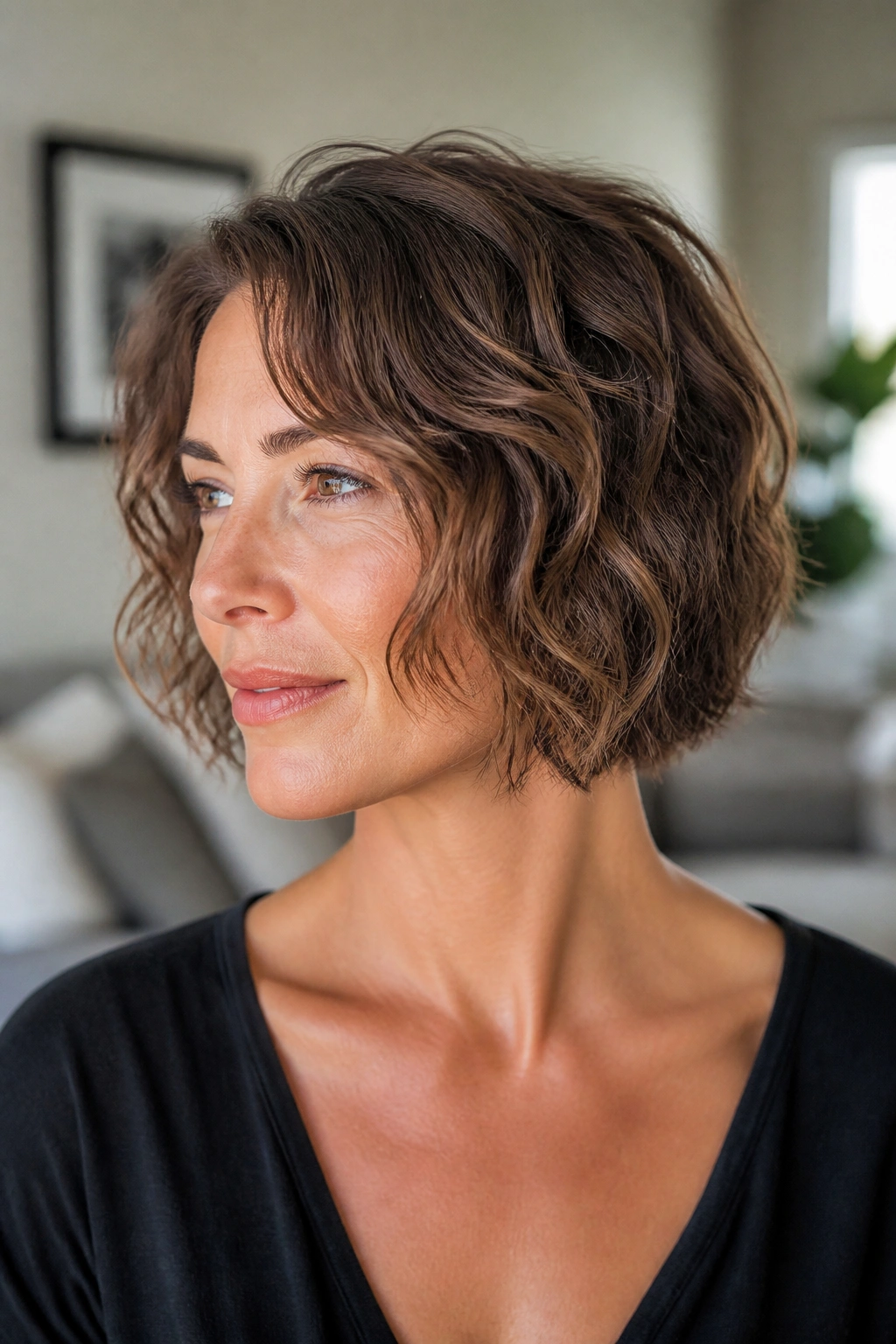
A razor can be a gift or a mess.
On thick, resistant waves, a razor-cut bob can remove bulk and create air around the ends. The haircut feels lighter, the movement looks softer, and the hair stops sitting in one heavy block. That can be a relief if your waves are dense and stubborn.
On fragile or porous hair, though, a razor can chew up the ends. You get frizz, little bent pieces, and a finish that looks rough in daylight. So this cut is not for everyone, even if it photographs nicely in salon mirrors.
Good candidates for a razor bob
- Hair that feels dense and heavy when wet.
- Waves that need softness, not extra texture.
- People who hate blunt, boxy ends.
- Hair that holds moisture without splitting fast.
If you try this cut, ask for the razor to be used with restraint. The ends can be softened, but they do not need to be shredded. That word gets thrown around too much in salons. Shredded hair is not a vibe. It is a repair bill.
Use a smoothing cream after washing, not a salty texturizer. The cut already creates movement.
13. Hidden-Layer Bob for Wavy Hair
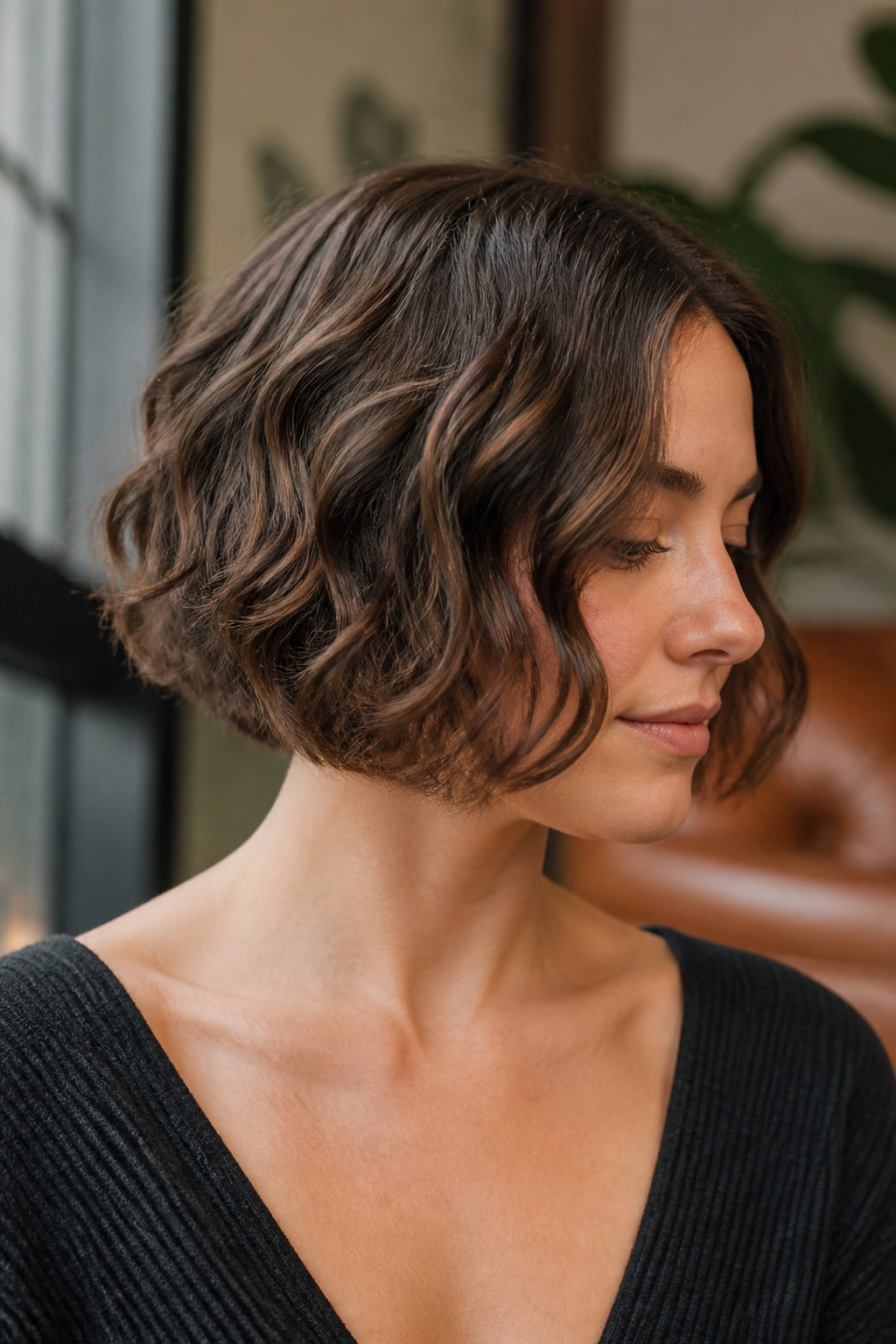
Want movement without seeing every layer? This is the answer.
A hidden-layer bob keeps the outside looking clean while the interior is cut to remove weight. That means the surface still reads as a neat bob, but underneath, the hair has room to bend and settle. It is one of the smartest shapes for wavy hair that feels bulky but not necessarily thick.
The good part is that you get control without a choppy look. The hair falls more evenly, the ends keep their outline, and the waves do not pile up in obvious steps. It’s a nice middle ground for people who like polish but still want motion.
Ask for underlayers or internal shaping, not obvious face layers. The outline should stay simple. If the stylist starts cutting visible layers too high, the haircut loses that clean outer shell and starts looking busy.
This cut is especially good if you like air-drying. The inside does the work while the outside stays tidy. That’s a useful trade.
14. Ear-Length Tucked Bob for Wavy Hair
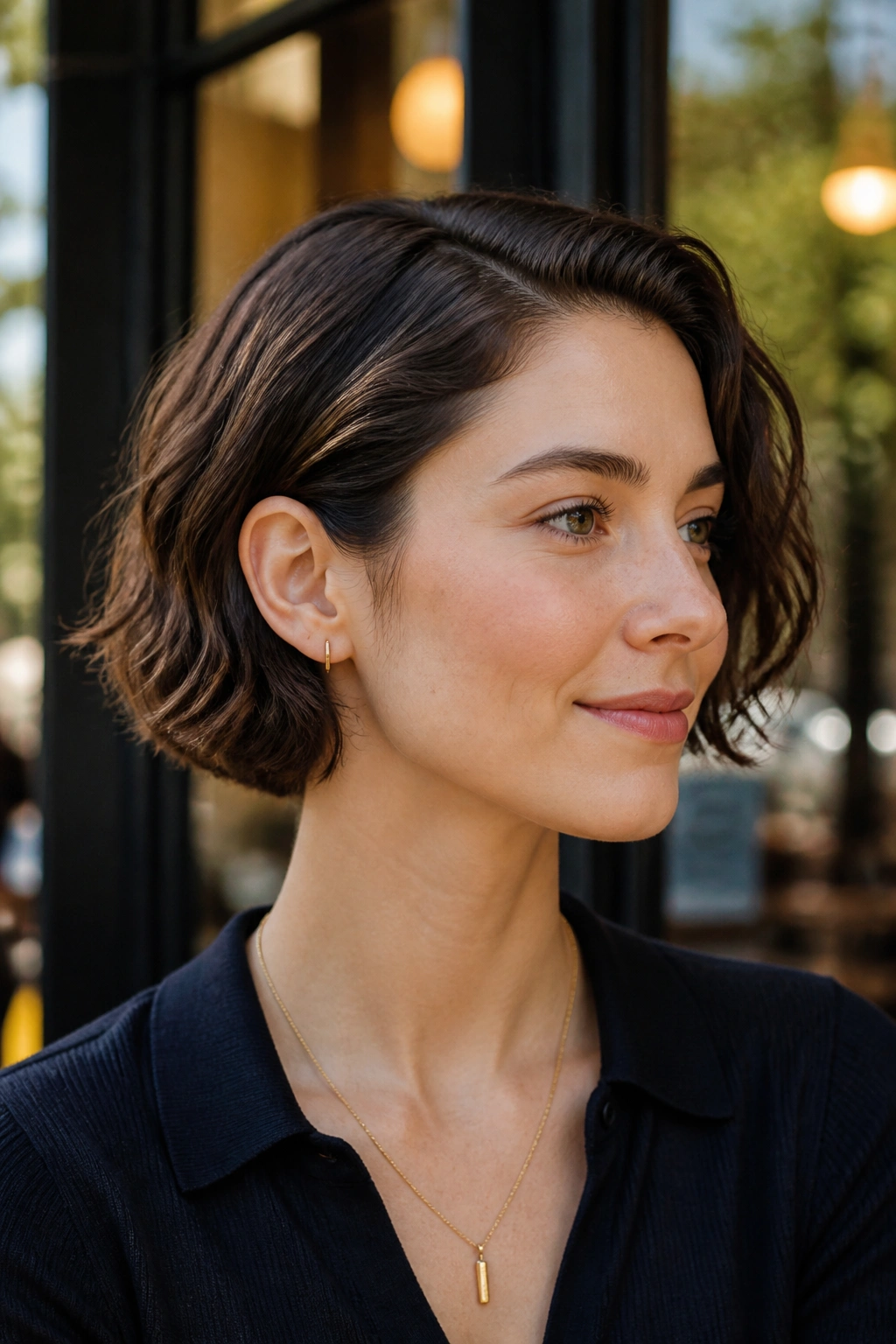
Compared with a chin-length bob, the ear-length version is sharper and more exposed.
It sits close enough to the ear that you can tuck it back easily, which gives the haircut a neat little swing when you move. On wavy hair, that creates a nice contrast: the shape is short and crisp, but the texture stops it from looking severe. If your waves are loose and your density is moderate, this can look clean without trying too hard.
The cut does demand confidence. There is less room to hide uneven growth or frizz at the corners. It also needs regular shaping because even a quarter inch of growth changes the balance fast.
Who should skip it
- People who hate frequent trims.
- Very strong wave patterns that bend hard at the sides.
- Hair that puffs wide around the ears.
- Anyone who wants a lot of styling freedom.
If you do wear this cut, keep the ear area tidy and let the top have just enough length to fold softly. A tiny bit of tuck behind the ear can change the mood of the whole style.
15. Italian Bob for Wavy Hair

The Italian bob may be the easiest short cut to live with if your waves are loose and your hair has some body.
It usually carries more weight than a shaggy bob and less severity than a blunt micro bob. The ends sit heavier, the movement stays low and smooth, and the whole shape looks expensive in the practical sense of the word: you don’t have to wrestle it every morning. That’s the appeal.
This cut tends to favor a length that grazes the jaw or sits just under it. The perimeter stays full, and the layers stay subtle. Wavy hair likes that because the waves can show up without turning the outline messy.
I especially like this shape on people who want a side part, soft volume, and a cut that works with a polished blow-dry or an air-dried finish. It is not precious. It is not fussy. It just behaves.
If your hair is very fine, ask for enough internal weight so the ends do not look see-through. The strength of this bob is the line.
16. Asymmetrical Bob for Wavy Hair
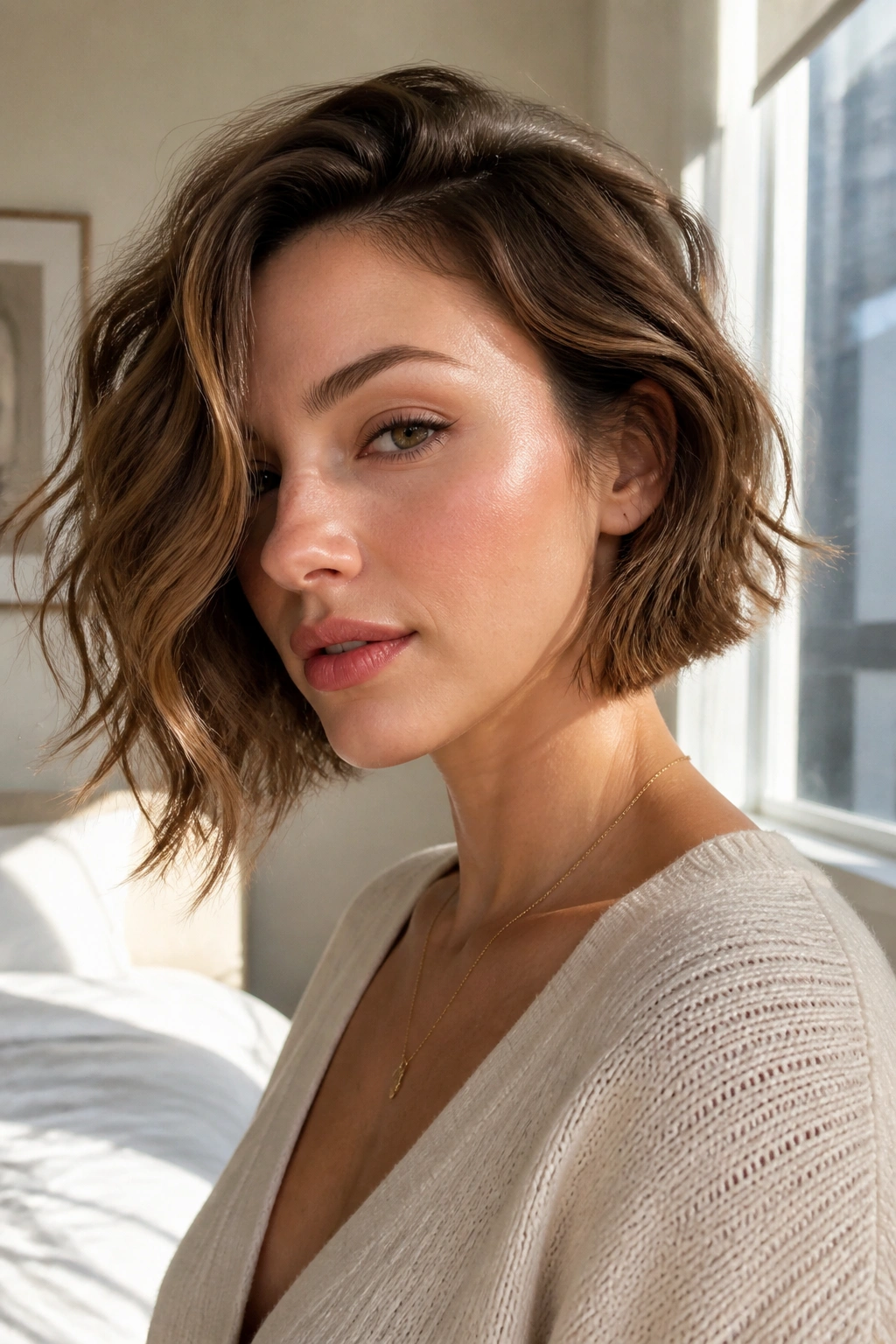
Unlike a perfectly even bob, this one changes the rhythm of the face.
An asymmetrical bob leaves one side slightly longer than the other, often by half an inch to an inch and a half. That small shift gives wavy hair a point of interest without turning the haircut into a costume. The waves soften the asymmetry, which is nice. You get movement and shape, but not a stiff, graphic edge.
This cut works especially well if one side of your hair naturally waves more than the other. The longer side can balance that difference. It also plays well with side parts, since the line already wants to move off-center.
What to watch for
- Keep the difference subtle, not extreme.
- Make sure both sides still share the same weight.
- Ask the stylist to check the fall dry, because waves shorten unevenly.
- Avoid over-layering the longer side or it gets flimsy fast.
I like this cut for people who want something a little less safe than a standard bob, but not so bold that it takes over their face.
17. Bob with Micro Fringe for Wavy Hair

A micro fringe changes a bob faster than any layer ever will.
On wavy hair, a short fringe creates a strong line across the forehead, which can be striking if the rest of the bob stays clean. The danger is shrinkage. Waves pull fringe upward and sideways when they dry, so the cut has to be planned with that in mind. If you want the fringe to sit near the brows, it may need to be cut a touch longer than it looks in the salon.
This style works best with mild to medium waves rather than very strong bends. It also likes dense hair, because thin fringe can separate and look scrappy. A bob with a micro fringe can feel very graphic, almost architectural, but the wave texture keeps it from looking severe.
My honest take: this is not the easiest option on the list. It is one of the most memorable, though.
If you choose it, dry the fringe first and keep a small brush nearby. The rest of the bob can air-dry with more freedom.
18. Bubble Bob for Wavy Hair

A bubble bob is the one I recommend when someone wants roundness on purpose.
The shape curves inward at the ends and builds a soft, fuller silhouette around the head. On wavy hair, the texture helps the curve feel natural instead of helmet-like. That makes a difference. The cut sits between polished and playful, and it usually looks best when the perimeter is kept smooth and the volume is centered near the middle and crown.
This is a strong choice for dense hair that tends to fan outward. The rounded outline contains the width and keeps the style from getting too wide at the jaw. On finer hair, it can collapse if the cut is too soft, so the ends need enough weight to hold the curve.
Make it hold
- Use mousse at the roots while the hair is damp.
- Clip the crown for a few minutes while drying.
- Blow-dry the top section if you want more roundness.
- Finish with a flexible spray, not a stiff one.
It’s a little retro, but not in a costume way. More like hair that knows where it wants to sit.
19. Undercut Bob for Wavy Hair
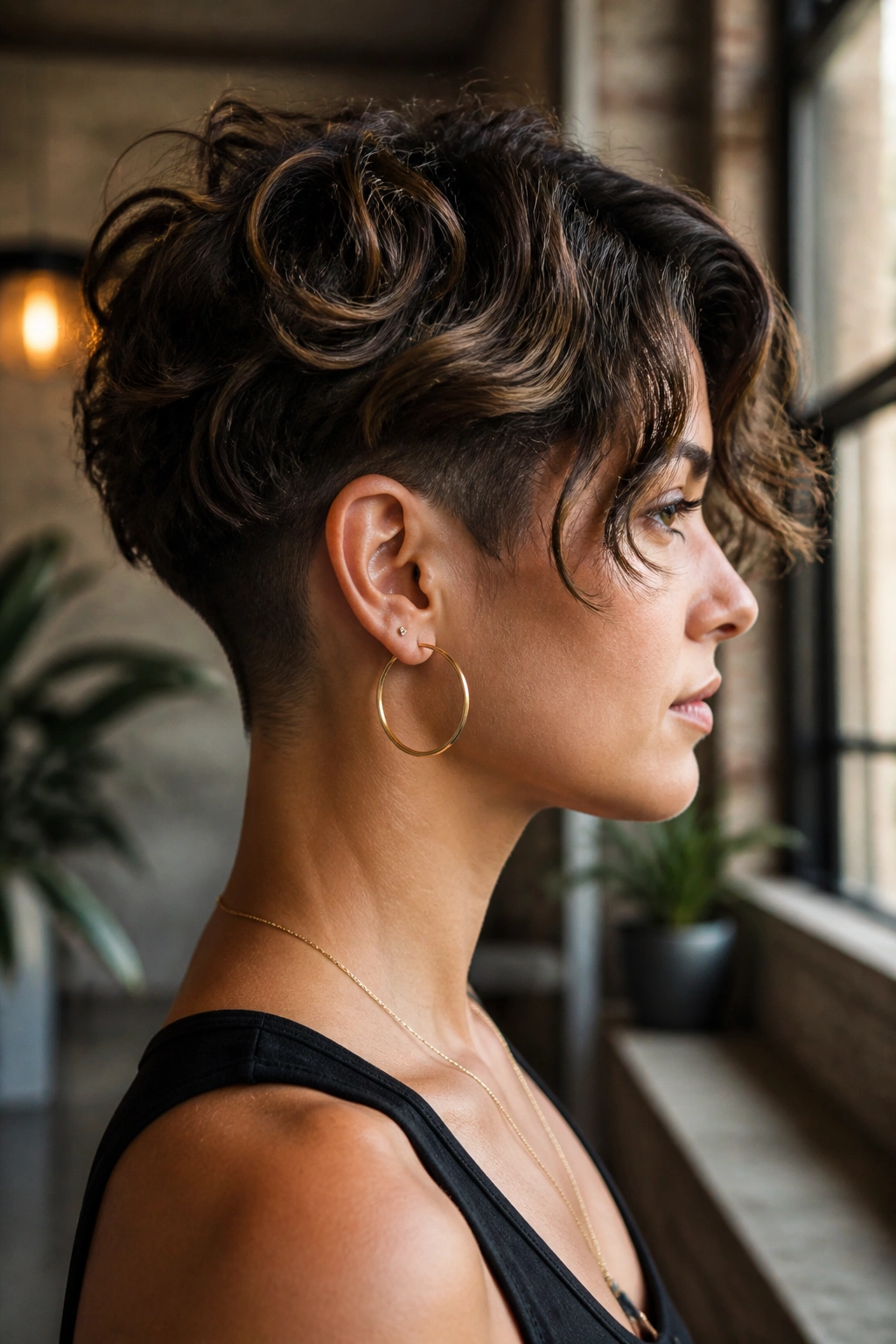
If your hair swells into a helmet by noon, an undercut bob can feel like cheating.
The secret is hidden bulk removal. The stylist takes weight out from underneath, usually at the nape or lower interior, while leaving the top layer intact. That means the visible shape still looks like a bob, but the inside does not fight you as much. For thick, heavy waves, this can make the difference between “manageable” and “why is my head so wide.”
This cut is especially useful when the nape area feels hot, bulky, or too dense to sit flat. It’s also a smart move if you want shorter hair without having the bottom line flare out. The top layer keeps enough length for movement, while the undercut calms the shape down.
- Ask for hidden removal, not a shaved strip unless you want that look.
- Keep the top layer long enough to cover the undercut naturally.
- Schedule trims every 4 to 6 weeks if the bulk grows fast.
- Use a light cream so the top still separates softly.
Not everyone needs this. But if you do, you usually know it already.
20. Soft One-Length Bob for Wavy Hair

Simple wins more often than people think.
A soft one-length bob gives wavy hair a clean edge with almost no fuss. The line stays even, the ends keep enough weight to sit down, and the wave pattern does the rest. If you want a haircut that looks calm, tidy, and easy to manage, this is the one I’d put near the top of the list.
The key is “soft.” You do not want harsh, shelly ends. A tiny bit of point cutting or softening at the very bottom keeps the haircut from looking boxy while still protecting the perimeter. That perimeter matters a lot on wavy hair. It stops the cut from spreading out sideways.
This shape is especially good for people who like to air-dry and go. A dab of cream, a quick scrunch, and the waves have enough structure to sit in place. If your hair is fine, this cut can make it look fuller. If your hair is medium density, it keeps the weight in check without asking for daily styling rituals.
And that is the real appeal of a good bob on wavy hair. It should make your texture easier to live with, not turn every morning into a small project.
