



Brass can wreck a sandy blonde fast on cool skin tones. The blonde itself isn’t the problem. It’s the yellow-orange drift that sneaks in when the tone is too warm, too bright, or too flat against skin that already leans pink, blue, or rosy.
The good sandy blondes sit in a narrow lane. Ash, beige, pearl, taupe, and a touch of smoke keep the shade soft enough to flatter cool undertones without going dull. That balance matters more than people think. A blonde that looks sunny in the salon chair can look harsh at home under bathroom lighting, especially if your skin tends to flush easily.
I’ve always liked sandy blonde because it can look expensive without shouting for attention. Not icy-white, not golden, not brassy. Just a clean, muted blonde with enough depth to feel lived-in and enough lightness to feel fresh. When it’s done well, the color seems to sit on the hair instead of sitting on top of it.
The trick is choosing the right flavor of sandy blonde for your cut, your base color, and how much upkeep you can live with. Some versions are whisper-soft and easy to wear. Others are more striking, a little sharper around the edges, and better if you want the hair color to do some of the work for you.
1. Soft Mushroom Sandy Blonde Hair Color
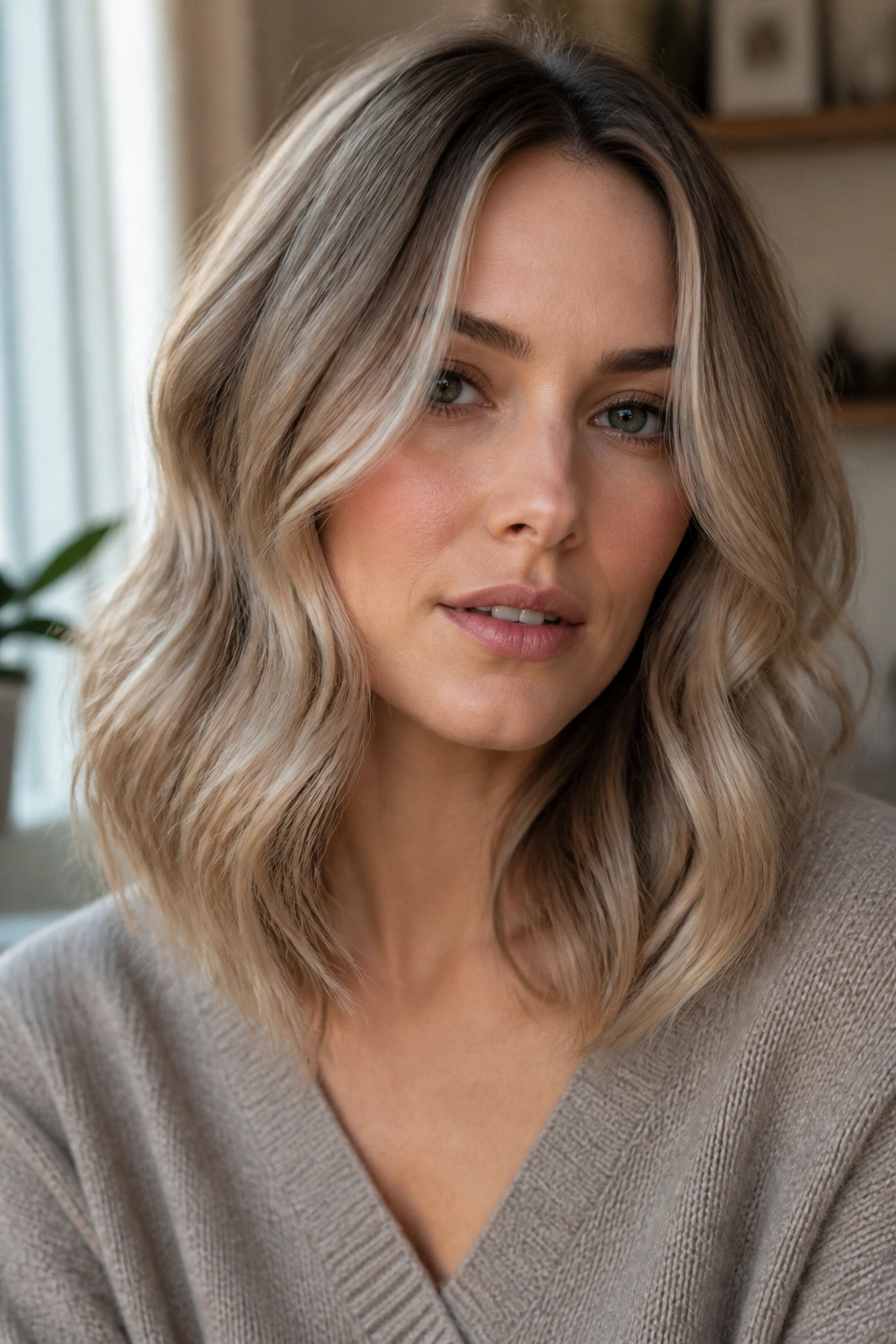
Mushroom blonde looks quiet for a reason. It borrows from taupe, beige, and a soft smoky ash, which keeps cool skin tones from turning pink or flat. The shade has a grounded feel, like wet sand rather than bright beach sand, and that texture reads beautifully on people who want blonde without the gold.
Why It Flatters Cool Skin
The cool base keeps the blonde from warming up too much around the face. That matters if your skin likes silver more than gold, or if warm highlights tend to make your complexion look blotchy. Mushroom blonde is especially nice on fine to medium hair because the muted tone makes the strands look denser.
Ask for a level 8 or 9 beige-blonde base with ash and a trace of pearl. Too much silver can turn the result dull. Too much beige can drift warm. The sweet spot is soft and dusty, not gray.
- Best on shoulder-length cuts, lobs, and long layers
- Works well with a subtle root shadow
- Needs a cool gloss every 4 to 6 weeks
- Looks especially good with loose waves
Pro tip: keep the face-framing pieces one half-step lighter than the rest so the color doesn’t disappear next to your skin.
2. Beige Sandy Blonde Hair Color with a Shadow Root
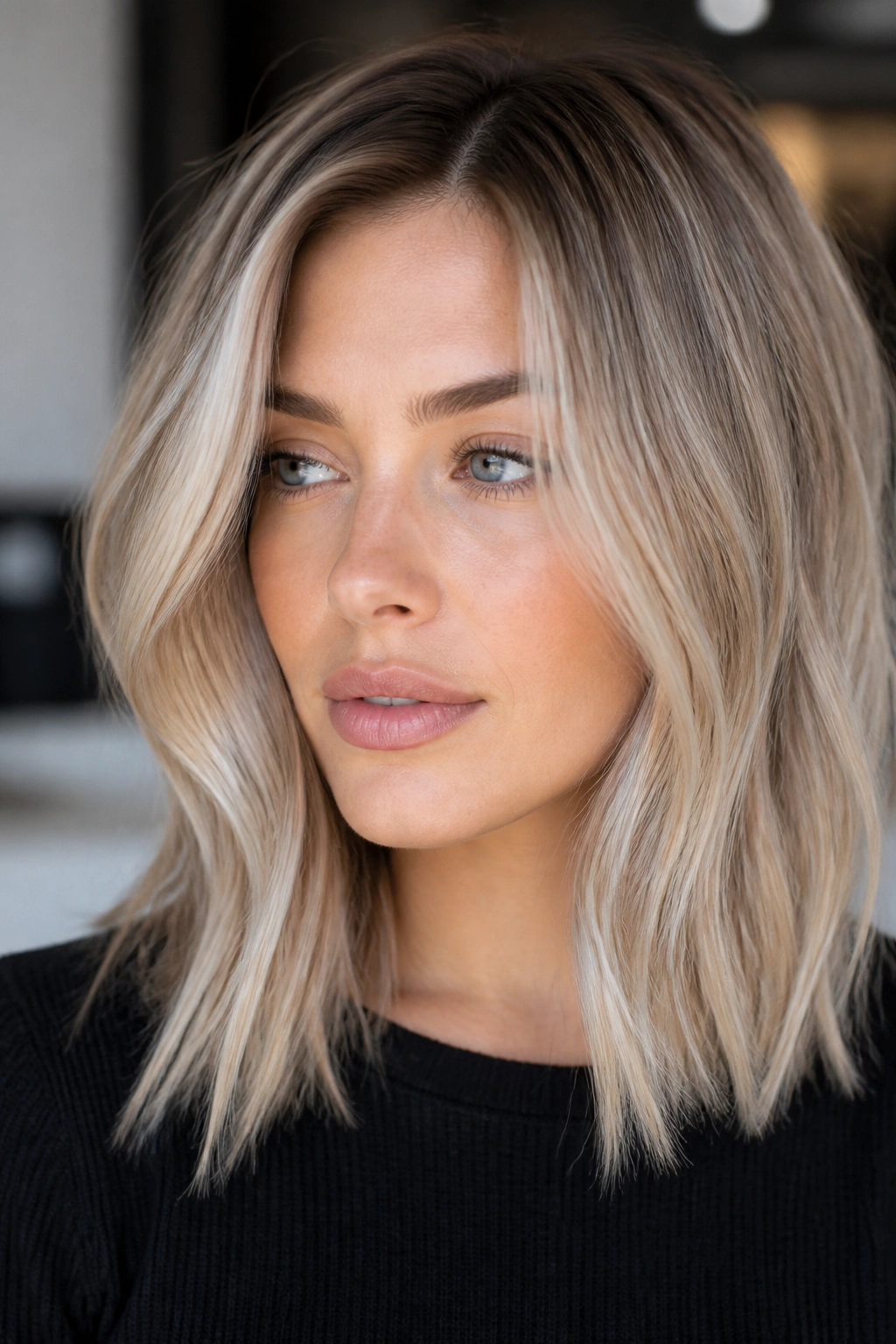
A shadow root is the easiest way to make sandy blonde look polished instead of high-maintenance. The root stays one to two levels deeper than the mid-lengths, and that small drop in depth keeps the blonde from looking harsh against cool skin. It also softens the line where your natural color grows in.
That root depth matters on hair that has a lot of movement. Straight hair shows every line. Wavy hair forgives almost everything. If you want the color to hold up between salon visits, this is the one I’d point you toward first.
No hard line. That’s the whole point.
What to Ask For
Tell your colorist you want a cool beige blonde through the mids and ends, with a soft root smudge that stays taupe, not brown. A good shadow root should look like your natural color melted into the blonde, not like a stripe painted across the top.
This version works especially well if your base is already medium blonde or light brown. It gives you brightness where you want it and coverage where you need it. The grow-out is kinder, too. Less panic, more grace.
3. Pearl Sandy Blonde Bob
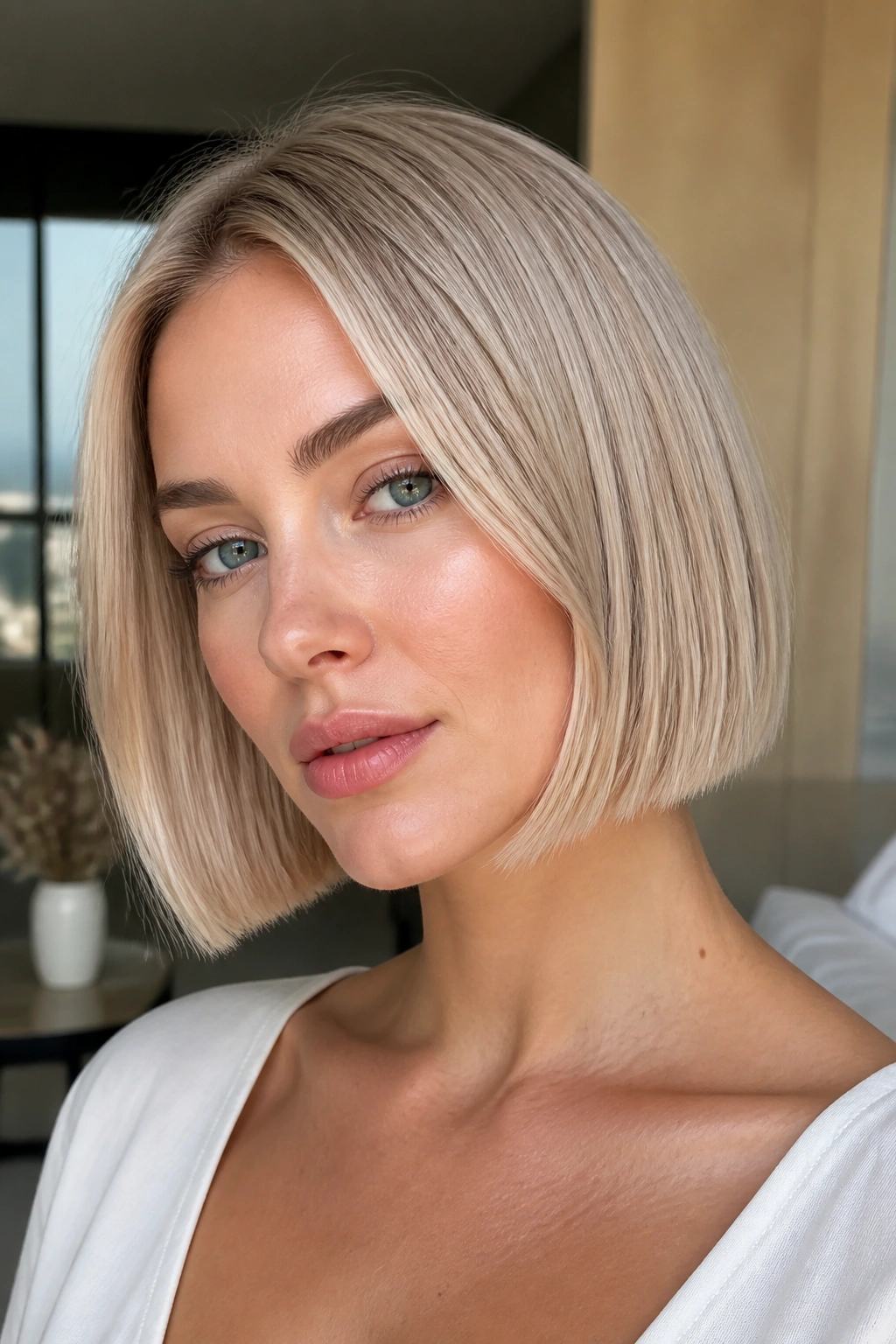
Want blonde that looks clean instead of yellow? A pearl sandy blonde bob does that job well. Pearl tones pull the color toward cool, reflective beige, and a bob gives the whole look a sharp edge that keeps it from slipping into softness overload. It’s neat. It’s crisp. It has a little bite.
How to Wear It
A blunt bob will make the pearl finish look even clearer. A French bob will make it feel softer and a touch more romantic. Either way, keep the tone bright enough to read as blonde but muted enough to stay cool next to the skin.
- Best on chin-length or jaw-skimming cuts
- Great with a middle part or a soft side part
- Needs shine spray more than heavy oil
- Looks strongest when the ends are freshly trimmed
Pearl blonde can go flat if the cut is over-layered. That’s the part a lot of people miss. If the shape is too busy, the tone loses its clean finish.
Use a gloss every 6 weeks to keep the pearl note intact, and skip heavy purple shampoo unless the hair starts leaning yellow.
4. Icy Sandy Balayage
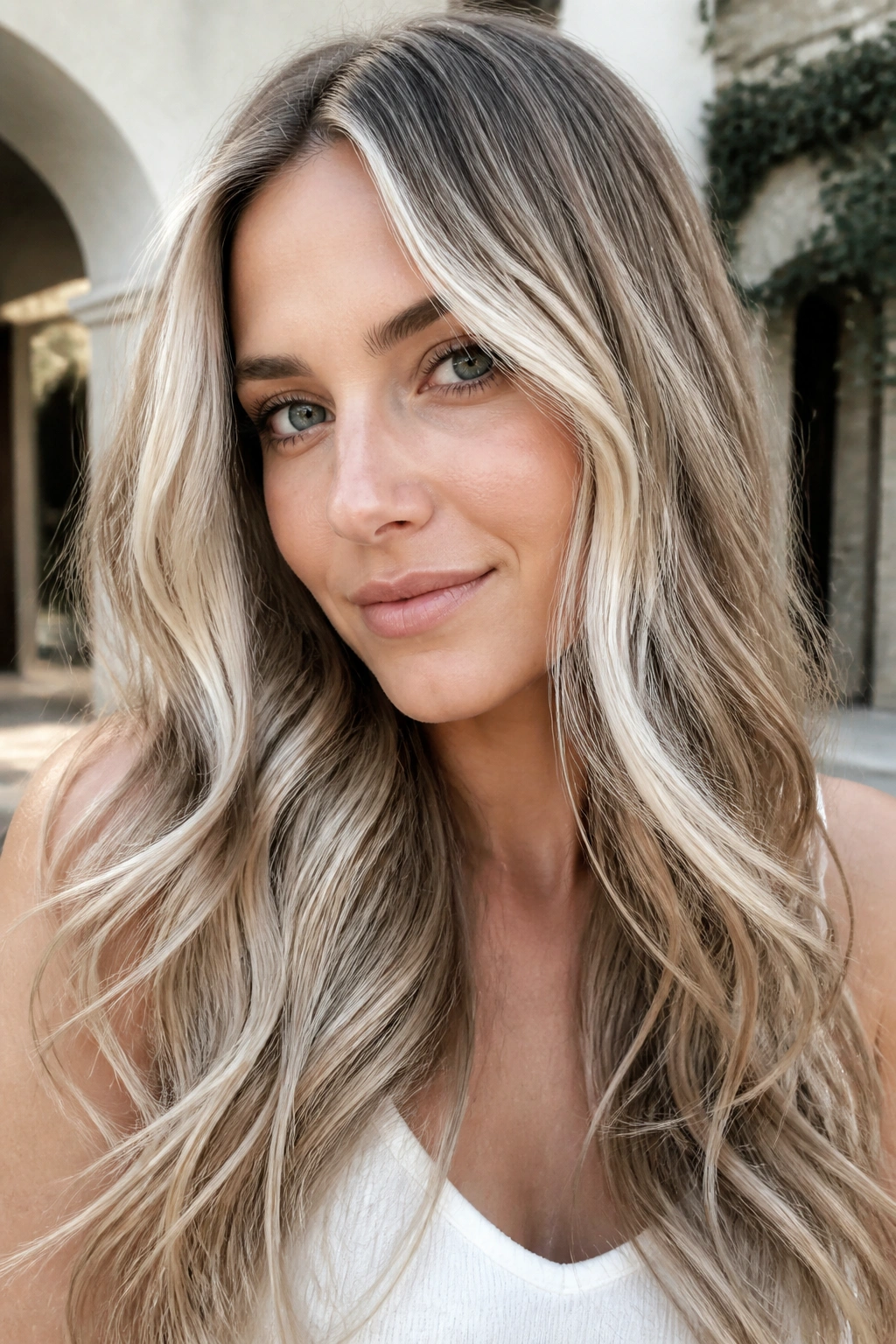
If your natural base is darker and you want blonde that doesn’t scream “bleach,” icy sandy balayage is the move. The colorist paints lighter ribbons through the hair instead of lifting every strand, so the result feels airy and lived-in. On cool skin tones, that icy-beige contrast can brighten the face without making it look overdone.
The best versions keep the lightest pieces around the face and through the ends, with a calmer beige base underneath. That way the blonde still has depth. Flat balayage gets boring fast. This doesn’t.
Key Details to Mention at the Salon
- Ask for hand-painted ribbons rather than chunky highlights
- Keep the base in the medium-to-dark blonde range if you want contrast
- Use a cool beige toner, not a gold one
- Leave some depth near the root and underneath for movement
- A violet shampoo once a week is usually enough
I like this look on long layers because the color opens up as the hair moves. It also works on loose curls, where the lighter ribbons show a bit of texture and the darker base keeps everything from looking stringy.
Don’t chase white-blonde ends unless your hair is already strong. Icy and sandy are not the same thing, and the sandy part is what makes this wearable.
5. Rooted Sandy Blonde Lob
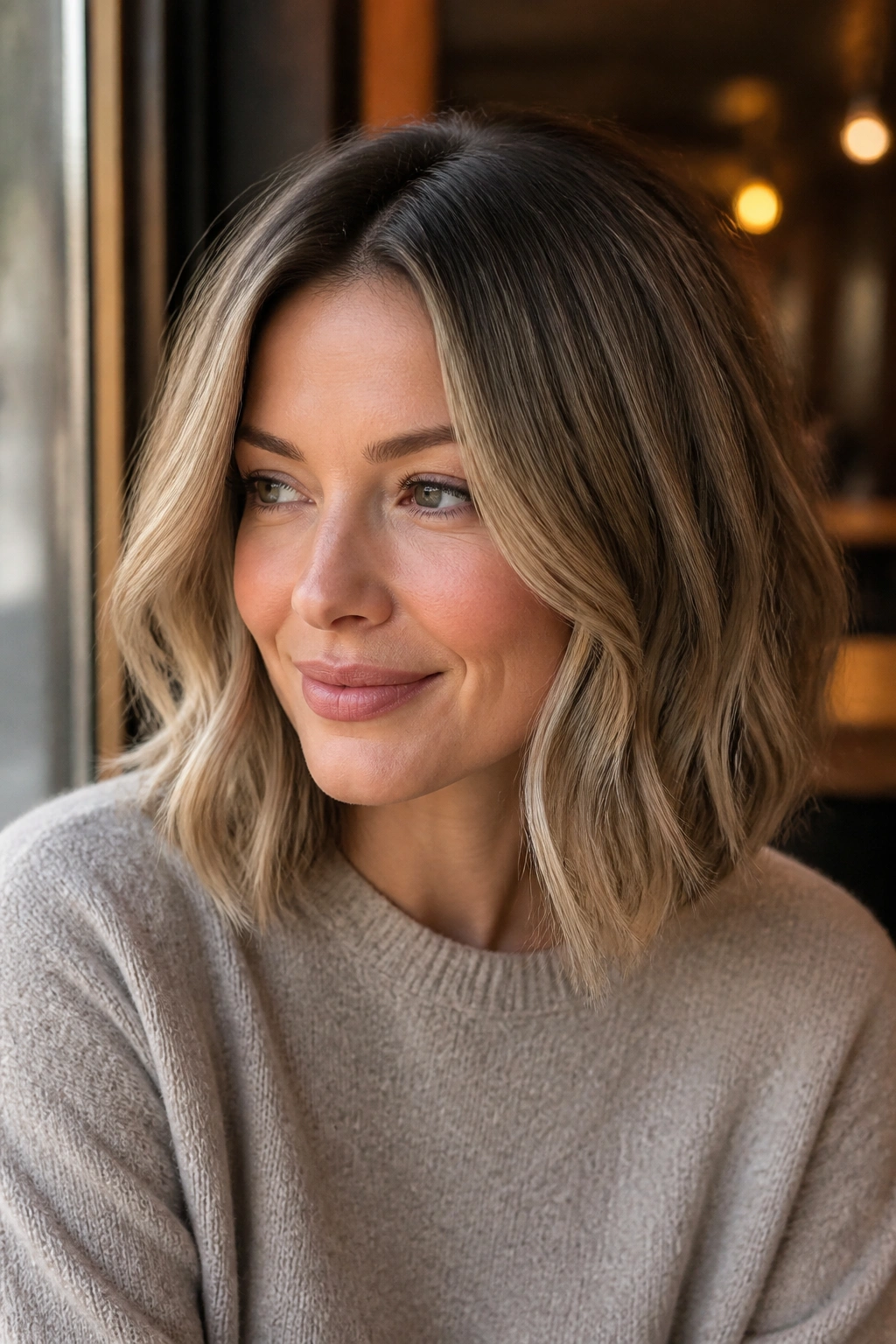
A shoulder-skimming lob gives sandy blonde a place to breathe. The cut is long enough to show dimension, but short enough that the color reads as deliberate instead of beachy-by-accident. With a rooted finish, the blonde stays softer at the top and brighter through the middle, which is a smart shape for cool skin tones that need a little shadow near the scalp.
This is one of those colors that looks better with a bit of bend in it. Straight and sleek, it can feel almost too tidy. Add soft waves, and the whole thing wakes up.
The root melt also helps if your natural color is a dark blonde or light brown. You don’t have to force the hair lighter all the way to the scalp, and that restraint usually makes the blonde look richer. Less lift at the root often means more life everywhere else.
If you wear glasses, this cut-color combo is especially good. The frames and the blonde don’t fight each other. They sit in the same visual lane. Simple. That’s why it works.
6. Smoky Vanilla Sandy Blonde
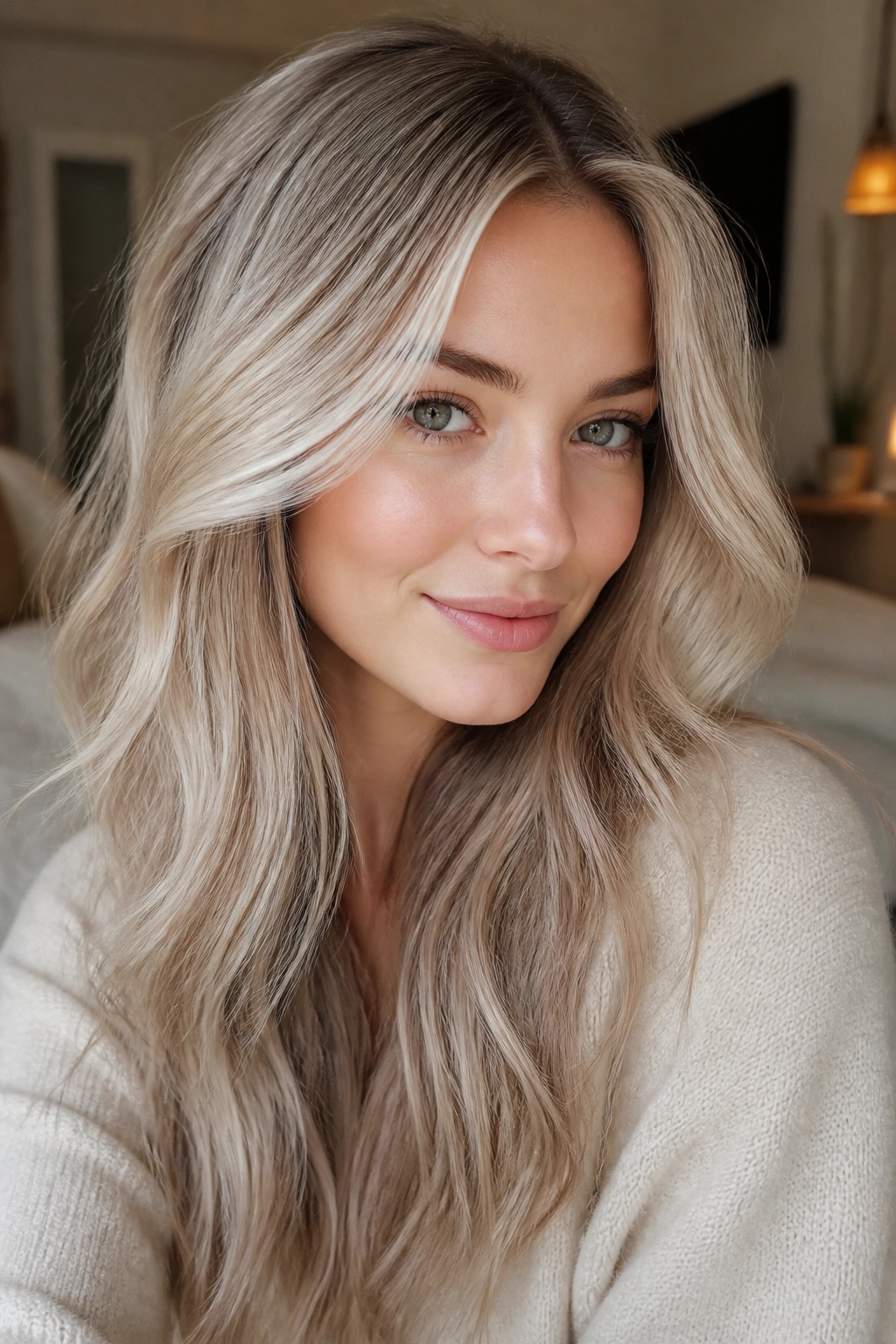
Smoky vanilla is what happens when vanilla blonde stops flirting with gold and settles into beige. Unlike warm vanilla, this version keeps the finish cool enough for pink or blue undertones while still feeling soft and approachable. It’s a nice choice if you want your blonde to look smooth, not icy.
That middle ground matters. Some cool skin tones look fantastic in ash-heavy blondes, but others need a little creaminess so the face doesn’t look washed out. Smoky vanilla gives you that cushion without tipping into yellow.
What Makes It Different
The base usually sits around level 8 or 9, then gets glazed with a neutral-cool toner that takes the edge off any gold in the hair. You still get shine. You still get lightness. You just don’t get the warm glare that can make cool skin look flushed.
It’s best for people who like a softer finish and don’t want the blonde to feel severe. If you’re growing out old highlights, this is also a useful bridge shade. It can tidy up a messy blonde history without forcing you into a full correction.
Ask for vanilla, not honey. The distinction sounds small, but it changes everything.
7. Champagne Sandy Blonde Highlights
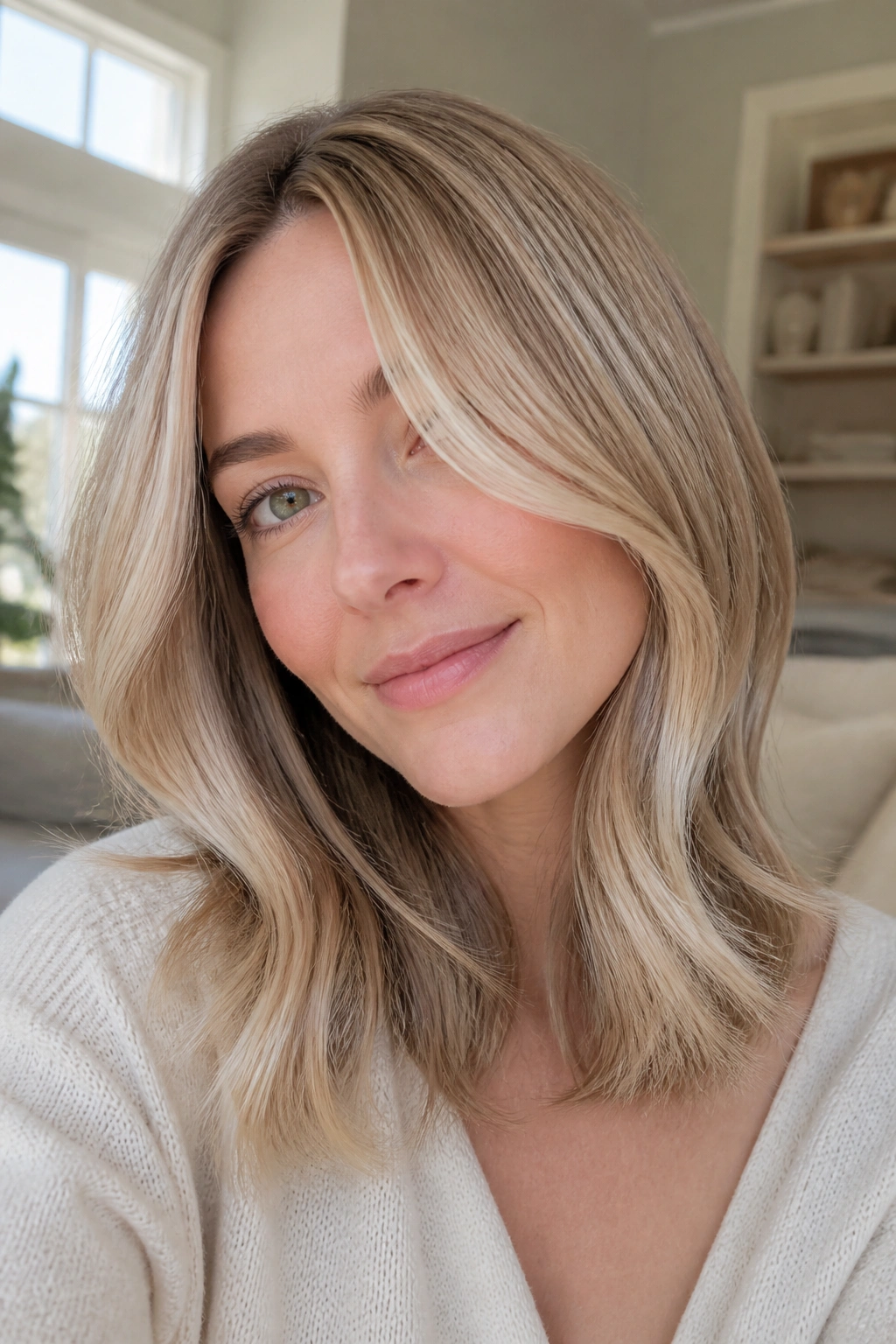
Champagne blonde isn’t about blinding brightness. It’s about lift with restraint. The highlights stay fine, airy, and cool enough to flatter pale or rosy skin, and the surrounding sand-beige tones keep the result from looking one-note. I prefer this on layered hair because the movement helps the highlights flick in and out of view.
What Makes It Different
The smartest champagne highlights are woven in with a light hand. Think face-framing pieces, crown brightness, and a few thinner ribbons through the back. Chunky stripes kill the effect fast. You want a sprinkle, not a map.
- Works well on layered lobs and long cuts
- Looks best when the highlights are mixed with beige and pearl
- Needs toning more often than a deeper blonde
- Reads softer on wavy hair than on pin-straight hair
A lot of people ask for champagne and end up with gold. That’s the trap. Champagne should feel chilled, almost fizzy, not warm and sticky. If your skin is cool, that difference shows immediately.
My favorite thing about this shade: it brightens the face without flattening the jawline or making the scalp look harsh.
8. Face-Framing Sandy Blonde Money Piece
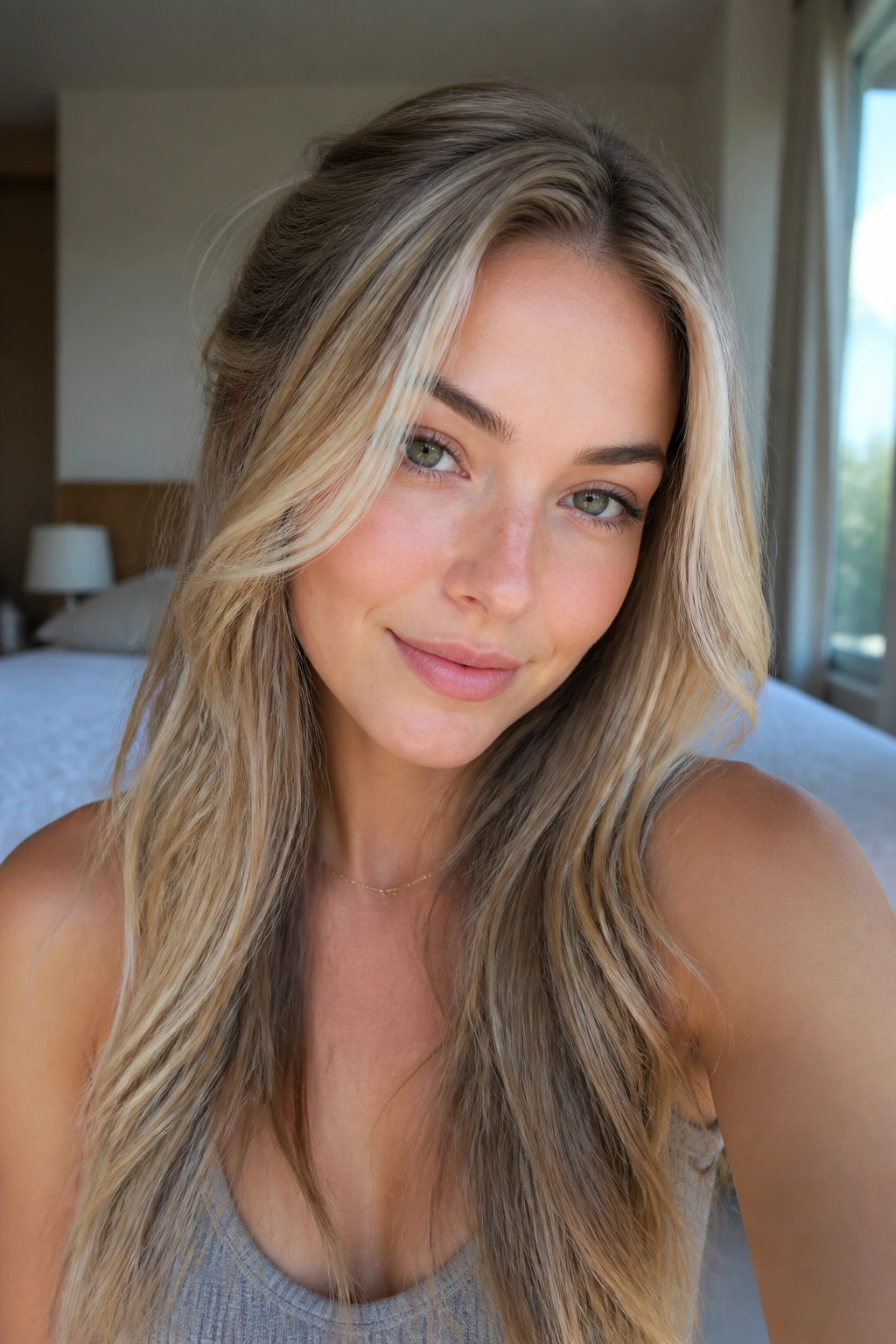
Need the fastest way to wake up cool skin tones? The money piece does a lot with a little. Two brighter strands around the face can change the whole mood of the hair, especially when the rest of the color stays sandy and muted. It’s a good move if you want a visible change without committing to a full head of light blonde.
The trick is keeping those face pieces cool. Too pale and they look stripey. Too warm and they drag the skin tone in the wrong direction.
Best Placement
A good money piece starts where the hair naturally falls around the cheekbone and softens down through the front layers. You do not want a thick, blocky chunk at the hairline. That reads harsh. Thin, blended lightening gives a better result and grows out with less drama.
This style is strong with ponytails and buns because the bright pieces stay visible even when the rest of the hair is pulled back. It’s also a smart choice if you’re testing blonde for the first time. Small commitment. Big payoff.
Keep the face frame one shade cooler than the mids. That’s the part that makes it feel intentional instead of streaky.
9. Sandstorm Blonde with Lowlights
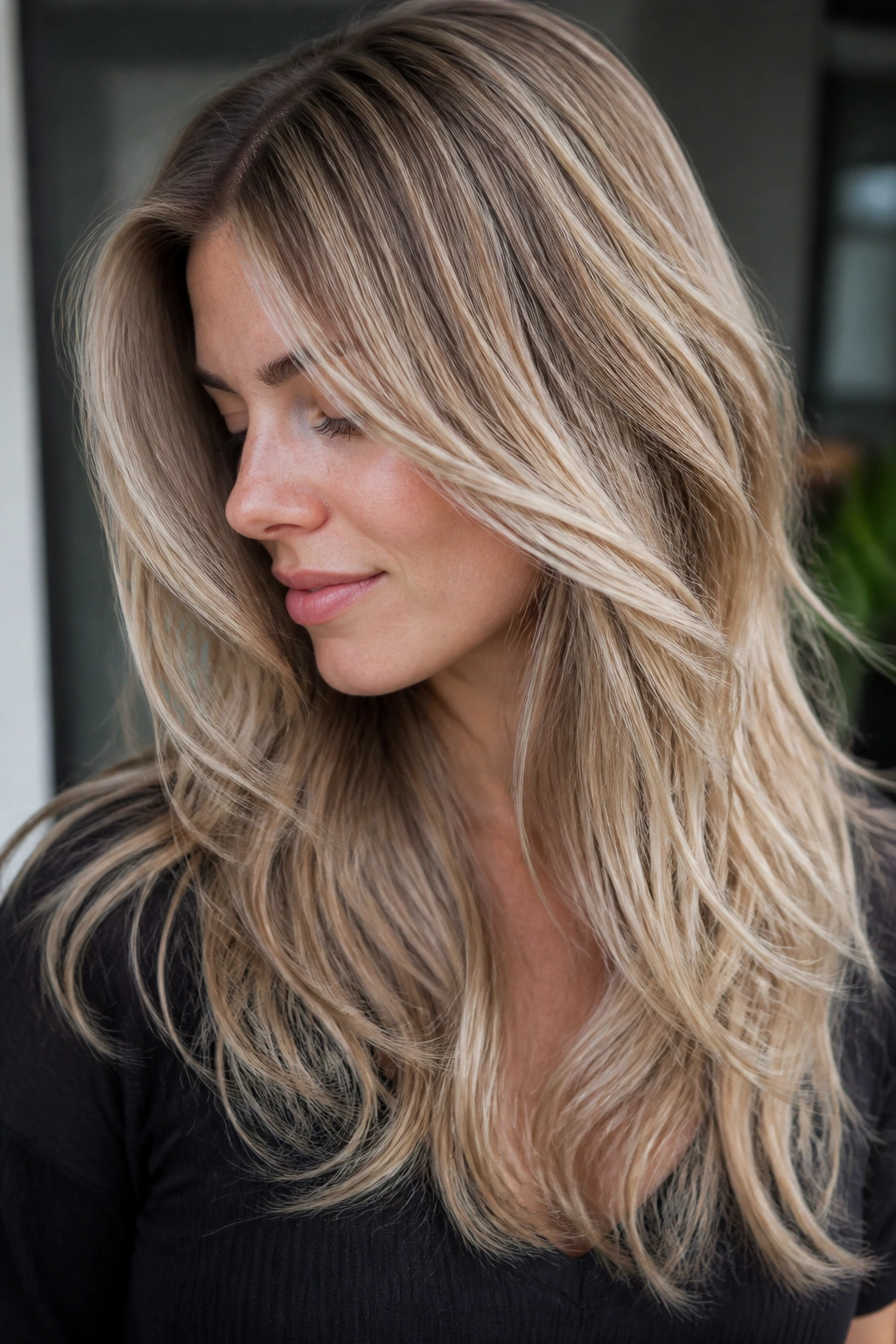
Flat blonde happens when every strand sits at the same level. Lowlights fix that fast. A sandstorm blonde uses deeper taupe or beige-brown ribbons under the surface to give the lighter pieces a place to land. On cool skin tones, that shadow helps the blonde look richer and less bleached-out.
This is a good option if your hair is thick, long, or naturally very light. Those hair types can swallow color unless they have some depth woven through them. Lowlights stop the blonde from turning chalky.
What to Watch For
- Ask for lowlights that are one to two levels deeper, not dark brown
- Keep the tone cool or neutral, never caramel
- Place the darker ribbons underneath and in the interior
- Leave some lighter pieces around the face so the skin still gets brightness
A lot of people think lowlights make hair darker. Sometimes they do. Here, they make the blonde feel more expensive because the eye can see contrast. That’s a different thing.
The best sandstorm blondes look touched by weather, not painted in a salon line. That’s the target.
10. Silver-Sand Platinum Blend
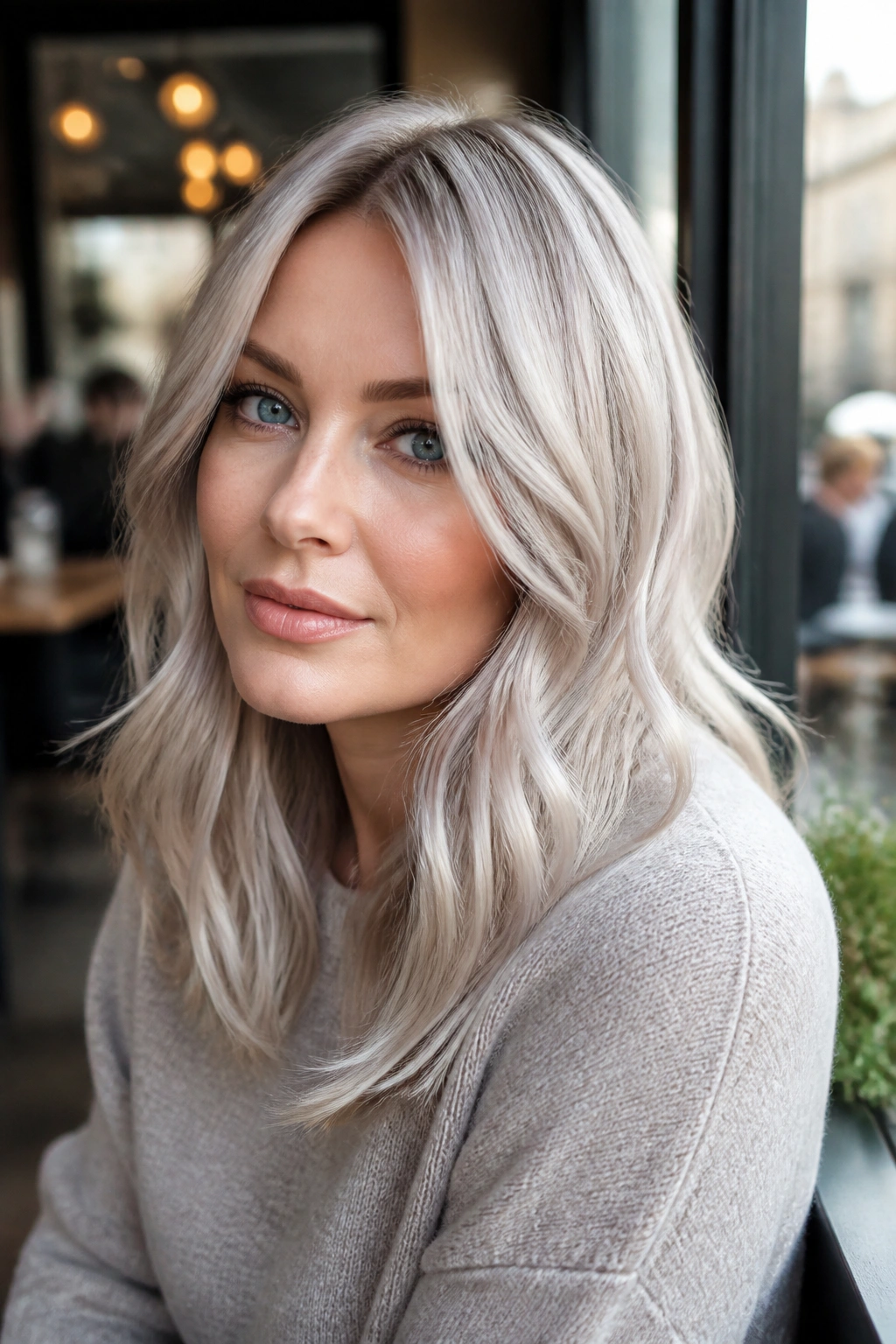
Silver-sand blonde lives closer to platinum than most of the other ideas here. It still keeps a beige or sandy note, but the finish is sharper, cooler, and more reflective. If your cool skin can handle a brighter blonde, this is one of the cleanest ways to wear it.
It is not the easiest option. Hair has to be healthy enough to handle a lighter lift, and the tone has to be watched closely or it turns icy in an unflattering way. But when it’s done well, the result has a mineral, almost polished feel that suits fair cool skin beautifully.
Skip it if the hair feels fragile or has already been lightened to death. Seriously. Some blondes need a break.
The smartest version keeps a whisper of beige in the mid-lengths so the platinum doesn’t look chalky. A full silver finish can wipe out dimension, and then the haircut starts doing all the work.
If you want something crisp, bright, and a little dramatic, this is the one to bring to your colorist. It’s sharp without being cold in the wrong way.
11. Frosted Sandy Blonde Curls
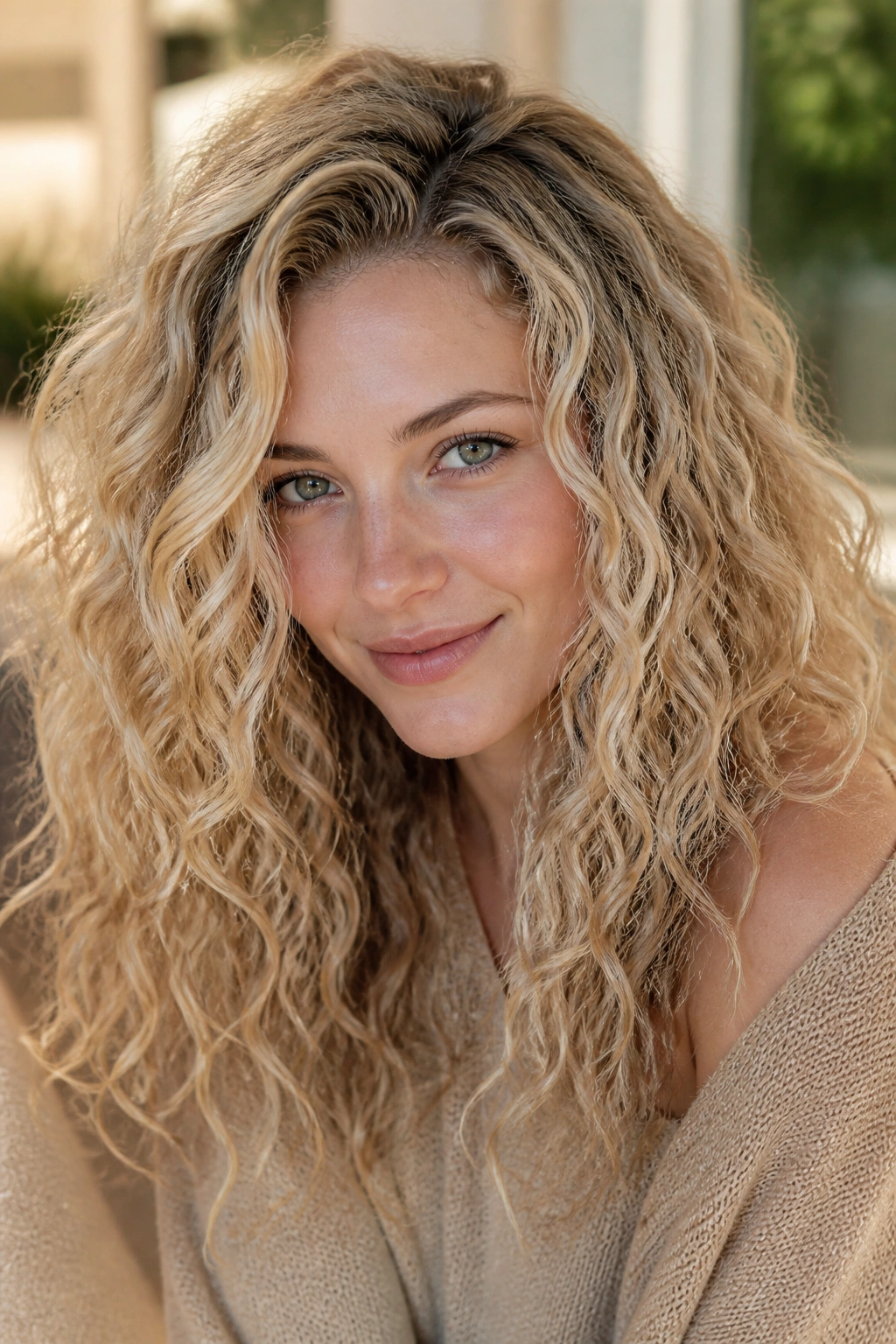
Curly hair changes the rules, and that’s a good thing. Frosted sandy blonde curls look best when the color is placed to catch movement rather than cover every curl evenly. The mix of soft ash, pearl, and beige gives the curls shape, while the lighter ribbons make the pattern pop.
The biggest mistake with curly blonde is striping. You don’t want zebra curls. You want a soft frost that appears and disappears as the hair moves.
What to Ask For
- Fine hand-painted highlights instead of chunky foils
- A cool beige gloss over the lifted pieces
- Some depth left between the curls so the pattern stays visible
- No heavy toner that knocks out all shine
This look works well on looser spirals and strong waves, but it can also look beautiful on tighter curls if the highlights are very fine. The color should sit inside the shape of the curl, not on top of it.
Moisture matters here. A blonde curl that feels dry will frizz and lose the definition that makes the color worth wearing. A leave-in conditioner and a light curl cream usually do more than extra styling products.
12. Cool Bronde Sandy Blonde
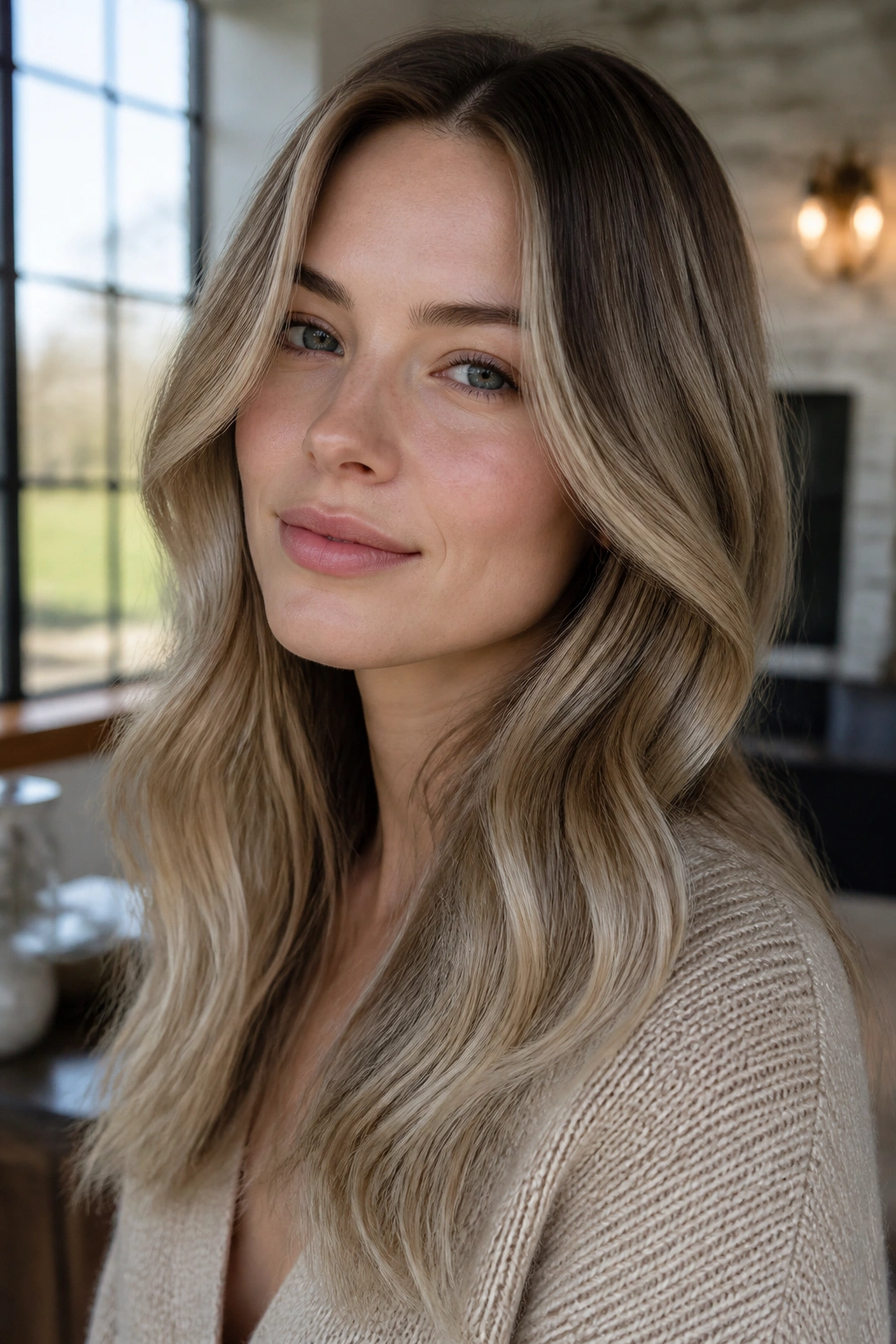
Bronde is the middle ground that saves a lot of people from overcommitting. Cool bronde sandy blonde keeps some light brown depth at the base and weaves in soft blonde through the mids and ends. For cool skin tones, that depth is useful because it prevents the blonde from looking too pale or too yellow.
Why It Flatters Cool Skin
The darker base adds contrast near the scalp, which makes the face look more defined. The sandy blonde through the ends brings in enough light to keep the hair from feeling heavy. It’s a clean balance, and it works well if your natural color is in the dark blonde to light brown range.
- Good for people who want less upkeep than all-over blonde
- Looks best with soft waves or a loose blowout
- Needs a beige or ash glaze, not caramel
- Helps thick hair feel lighter without overprocessing every strand
This is one of those shades that grows well on you. Not because it hides mistakes, but because the color story is forgiving. The darker root and soft blonde ends keep the shape intact even as the hair grows.
If you’ve ever looked at full blonde and thought, too much, bronde is your answer.
13. Ashy Sandy Blonde Shag
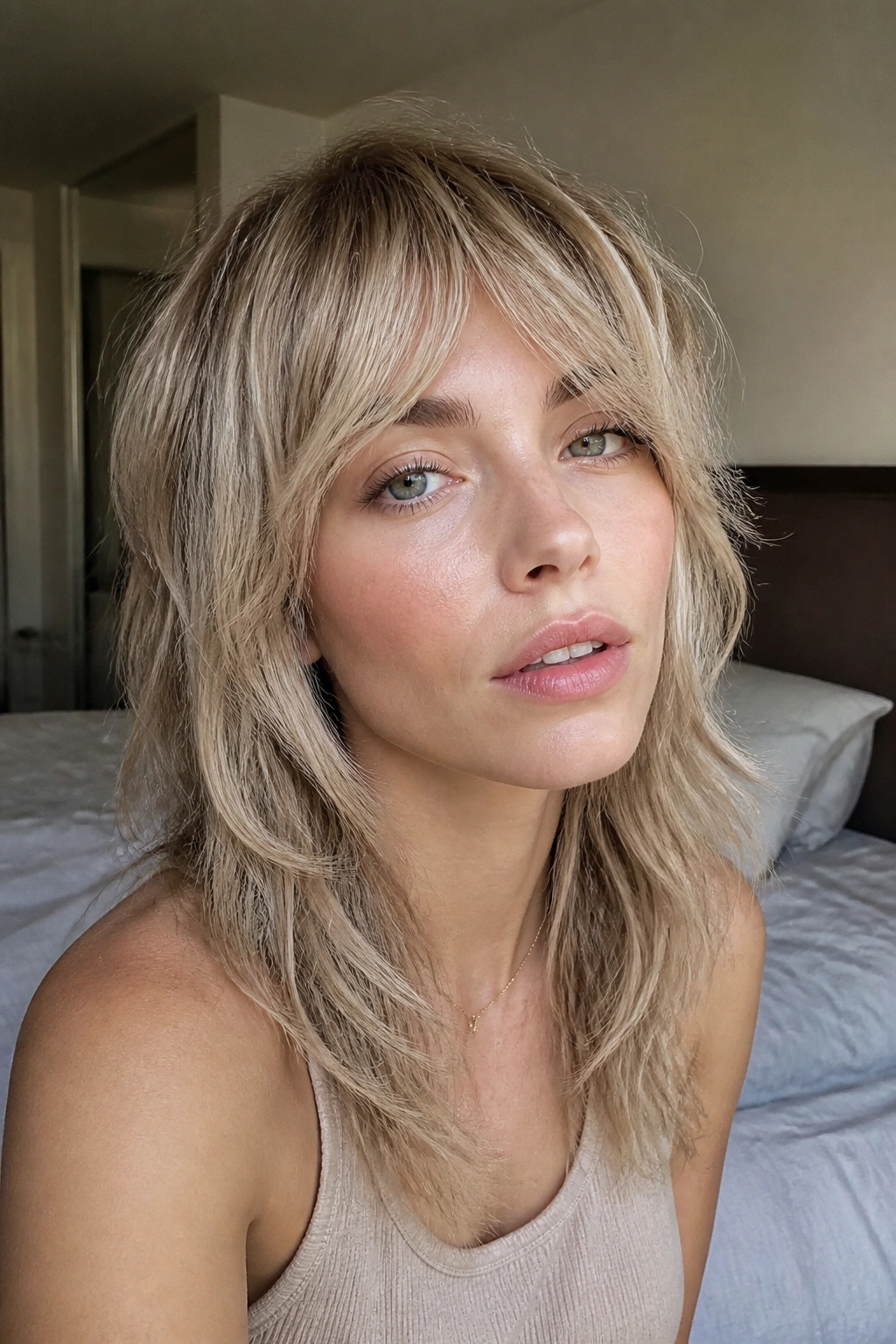
The shag and ash tones are a good pair. The cut brings movement, and the color keeps that movement from getting fluffy or warm. On cool skin tones, an ashy sandy blonde shag feels relaxed but still sharp enough to frame the face.
A shag needs texture, so the blonde should support that texture instead of fighting it. Too much gold makes the layers look loud. Too much platinum makes them look choppy. Ashy sand sits right in the middle.
When I see this done well, the fringe is usually a little lighter near the eyes and the lower layers keep more depth. That contrast helps the haircut show off. Curtain bangs love this shade. So do choppy layers.
Use a matte texture spray or a light mousse if your hair tends to fall flat. The color looks better when the cut has some lift. That’s true with most blondes, but especially this one.
If you want hair that looks styled without looking polished, this is a strong pick.
14. Dimensional Sandy Blonde Pixie
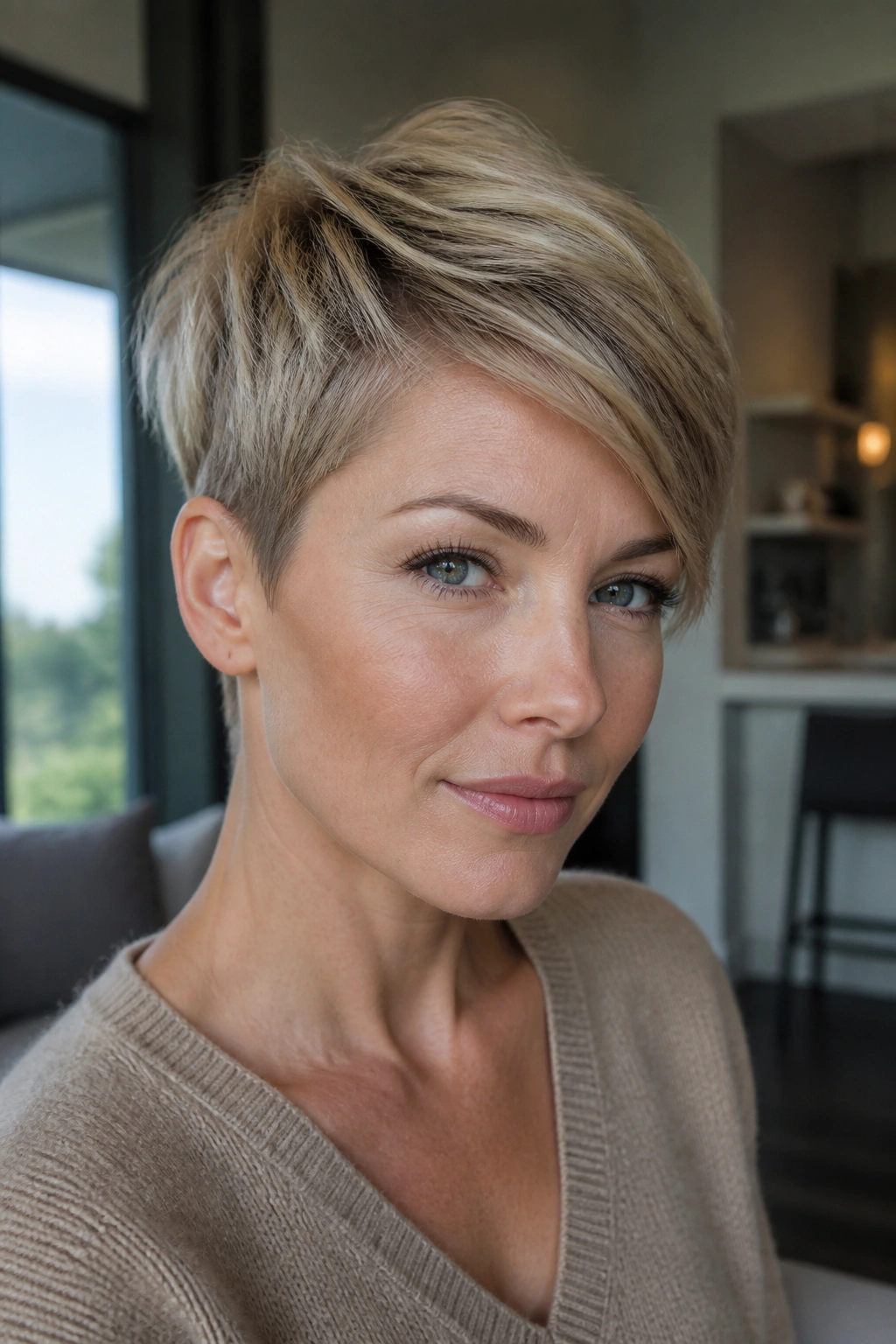
Can short hair carry sandy blonde? Absolutely. A pixie can look even more dimensional than longer hair because the cut exposes every shift in tone. Cool skin tones benefit from that contrast, especially when the top is lighter and the sides stay a touch deeper.
How to Keep It From Looking Blocky
The best pixie blondes use tiny slices of lightness rather than one flat color. A softer beige through the crown and a slightly deeper sand at the sides gives the cut shape. The result is tidy, not helmet-like.
A pixie also gives you room to play with finish. Blow it smooth for a cleaner look, or rough it up with paste for something more casual. The color changes a bit with each styling choice, which is part of the fun.
- Good for strong cheekbones and defined eyes
- Needs regular trims to keep the shape sharp
- Looks better with dimension than with a single pale tone
- Works well if you like low-product styling
If your cool skin is very fair, avoid pushing the top too white. A soft sandy base keeps the face from disappearing into the color.
15. Sandy Blonde Melt with Shadow Root
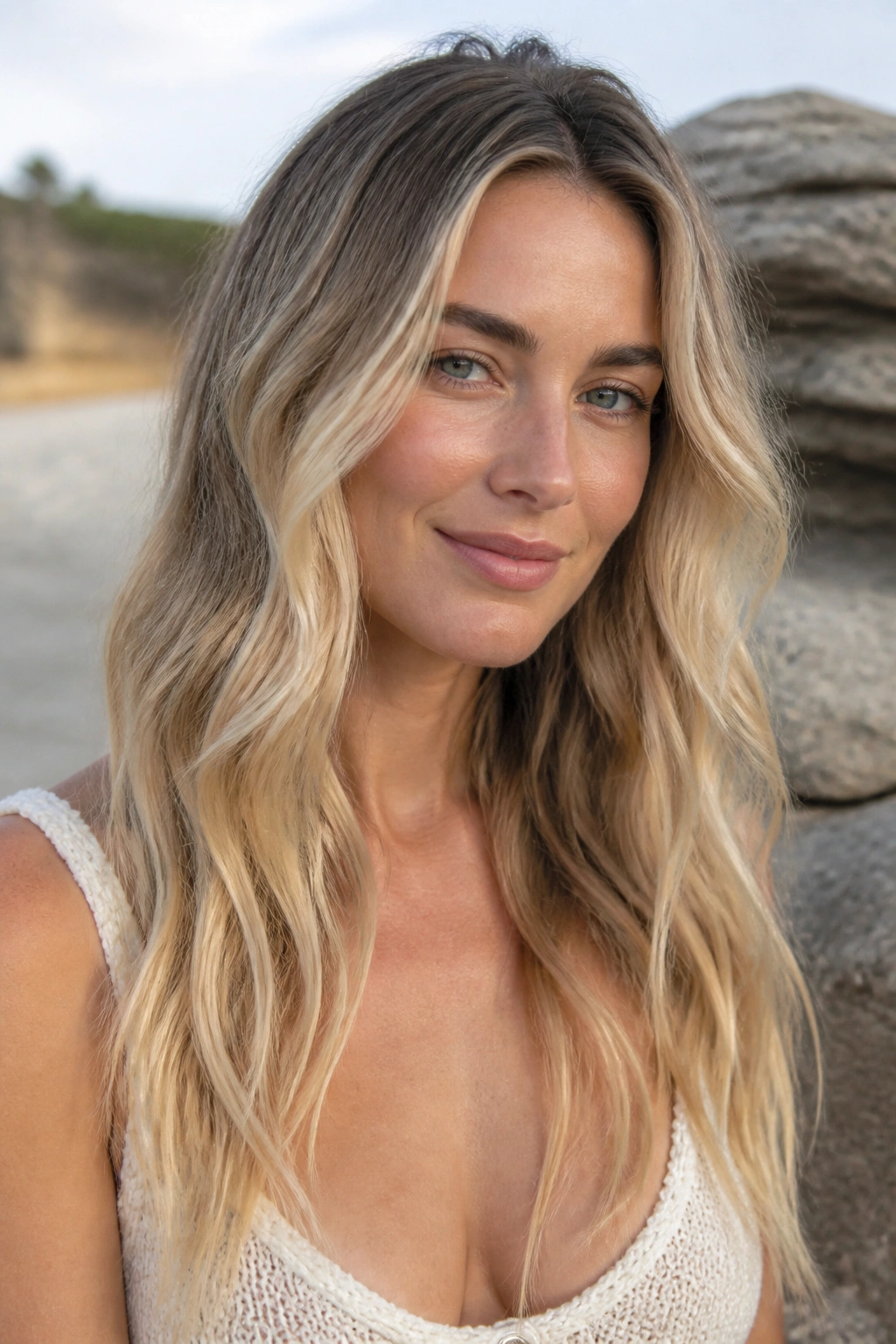
A melt is the gentlest way to go blonde without obvious lines. The color moves from deeper root to sandy mids to lighter ends in one smooth sweep, and that softness is a gift for cool skin tones. You get brightness, but you don’t get the hard stop that can make a blonde feel stripy.
This works especially well on long hair because there’s room for the blend to show. On shorter cuts, a melt can still work, but you need enough length for the transition to read properly. Otherwise it just looks like grown-out highlights.
The best melts usually keep the root a shade or two deeper than the mids, with a beige-cool blonde at the ends. That lets the hair catch light without losing depth at the scalp. It also makes the grow-out easier to live with, which is no small thing.
If you wear your hair in waves, this color really opens up. Straight hair shows the gradient. Waves show the whole story.
Ask for a blend, not a stripe. That one word changes the outcome more than people expect.
16. Opal Beige Sandy Blonde
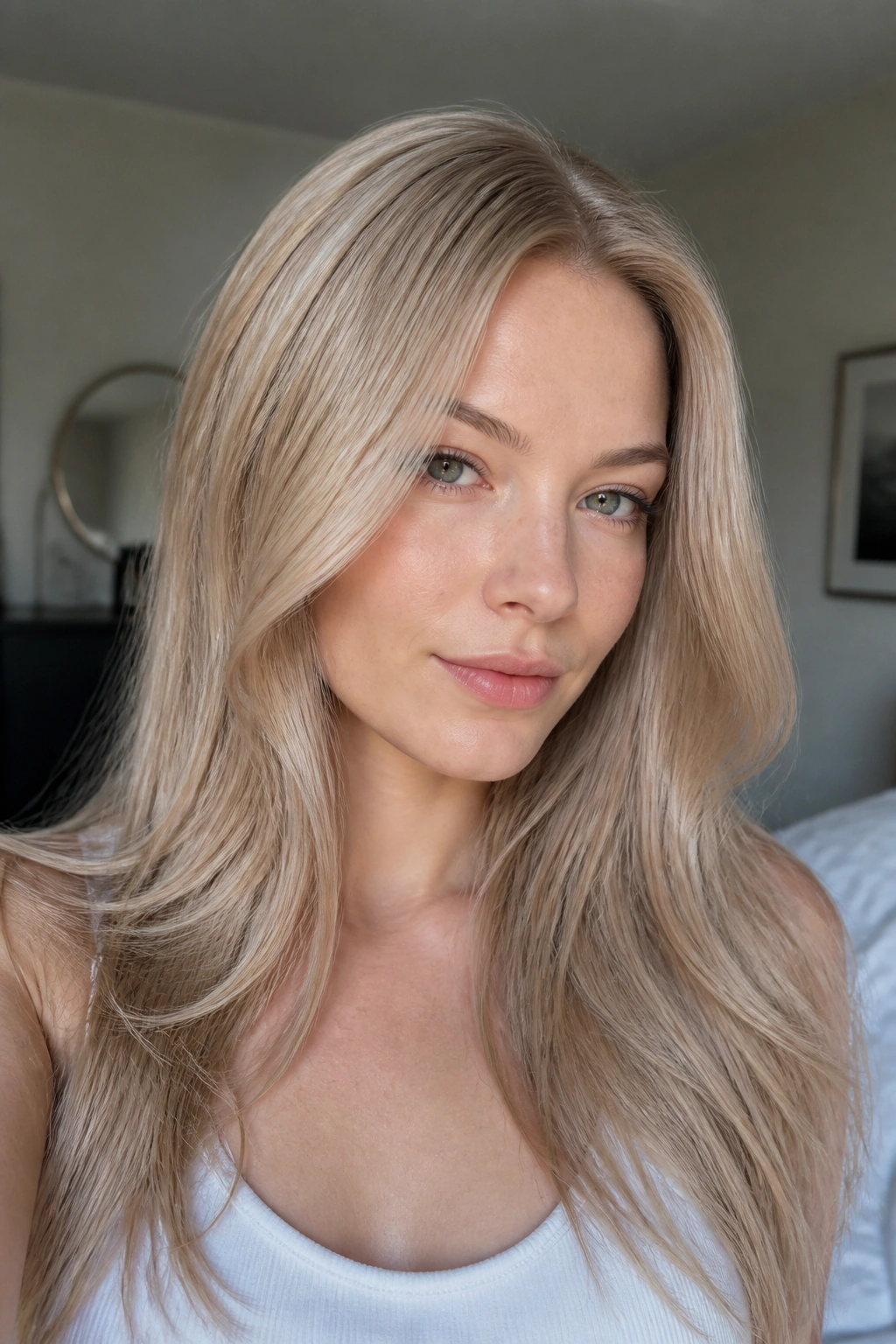
Opal beige is for people who want blonde with a soft glow, not a loud shine. It sits between pearl and beige with a hint of cool reflection, almost like the inside of a shell. On cool skin tones, that kind of tone gives the face a cleaner look without dragging it into silver territory.
I like opal beige on sleek hair because the finish is so smooth. A blunt cut, a polished bob, or long hair blown out straight all give the color room to show its reflective side. Curls can wear it too, but the light effect reads differently.
Do not push it too white. That’s the mistake. Opal beige should still feel creamy and wearable. If the tone turns chalky, it loses the whole point.
A gloss is the secret here. Not the loud kind. The subtle one that leaves hair soft to the eye and smooth at the ends. If the hair is porous, the opal note can fade faster, so maintenance matters a little more than it would with a darker sandy blonde.
This is the shade I’d choose for someone who wants lightness with restraint.
17. Soft Sable-Sand Balayage
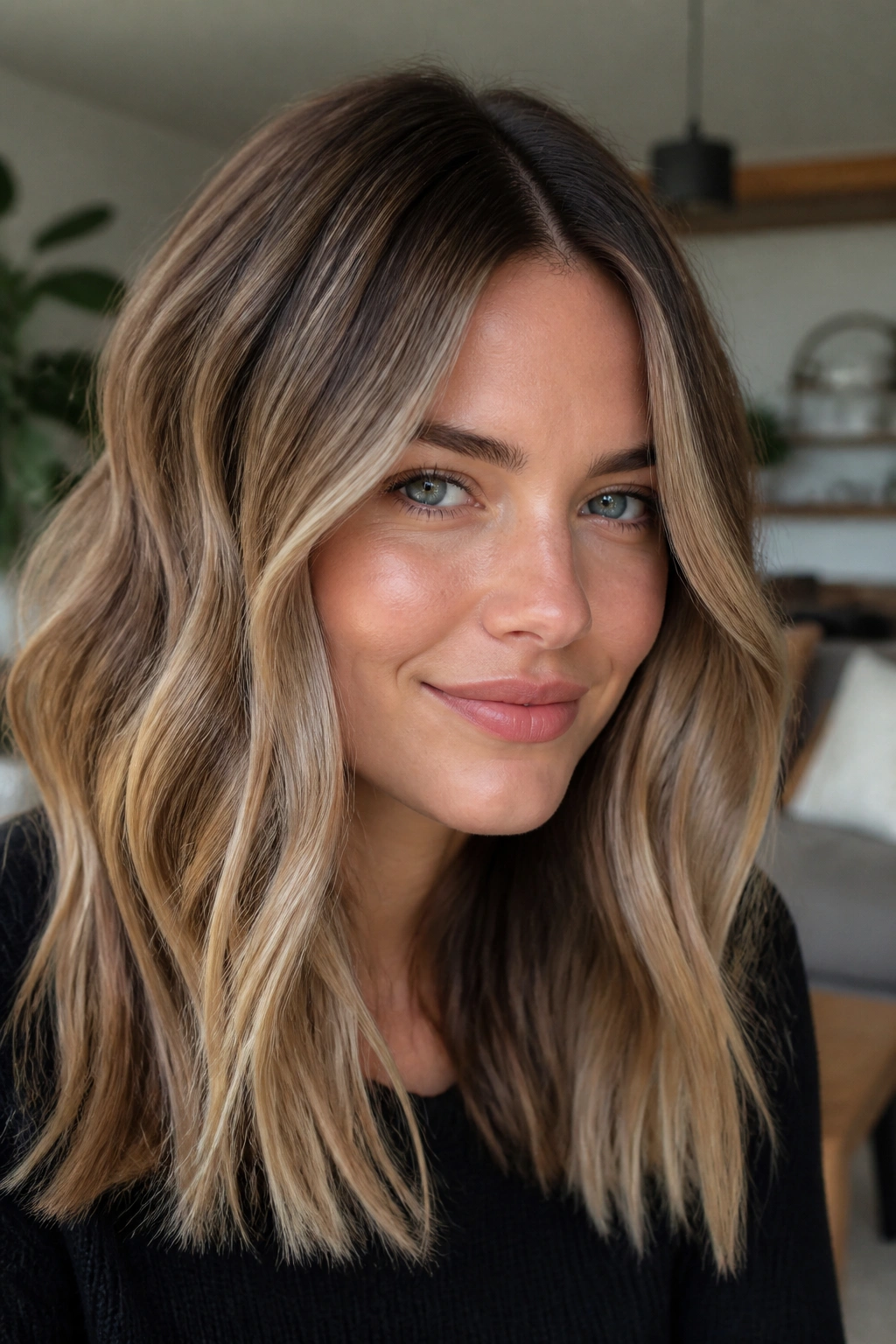
Caramel balayage gets all the attention, but sable-sand balayage is the cooler, more understated cousin that often flatters cool skin better. It keeps the brightness, but it pulls the warmth down and adds a darker, more shadowy base. That makes the blonde feel richer and less sugary.
Best Placement
The painterly ribbons should sit mostly through the mid-lengths and ends, with a few lighter pieces around the face. Leave the root area deeper so the finish has shape. If every section is lifted the same way, the color gets busy fast.
- Best on brunettes moving toward blonde
- Works well on wavy or layered hair
- Needs a cool beige toner to stay soft
- Grows out more naturally than full highlights
This look is a smart choice if you want movement without a lot of brightness at the scalp. It also suits people who find full blonde too much against pale skin. The depth gives the face somewhere to land.
A good sable-sand balayage feels like the blonde is rising out of the darker base rather than covering it up. That’s the better read.
18. Nordic Sandy Blonde
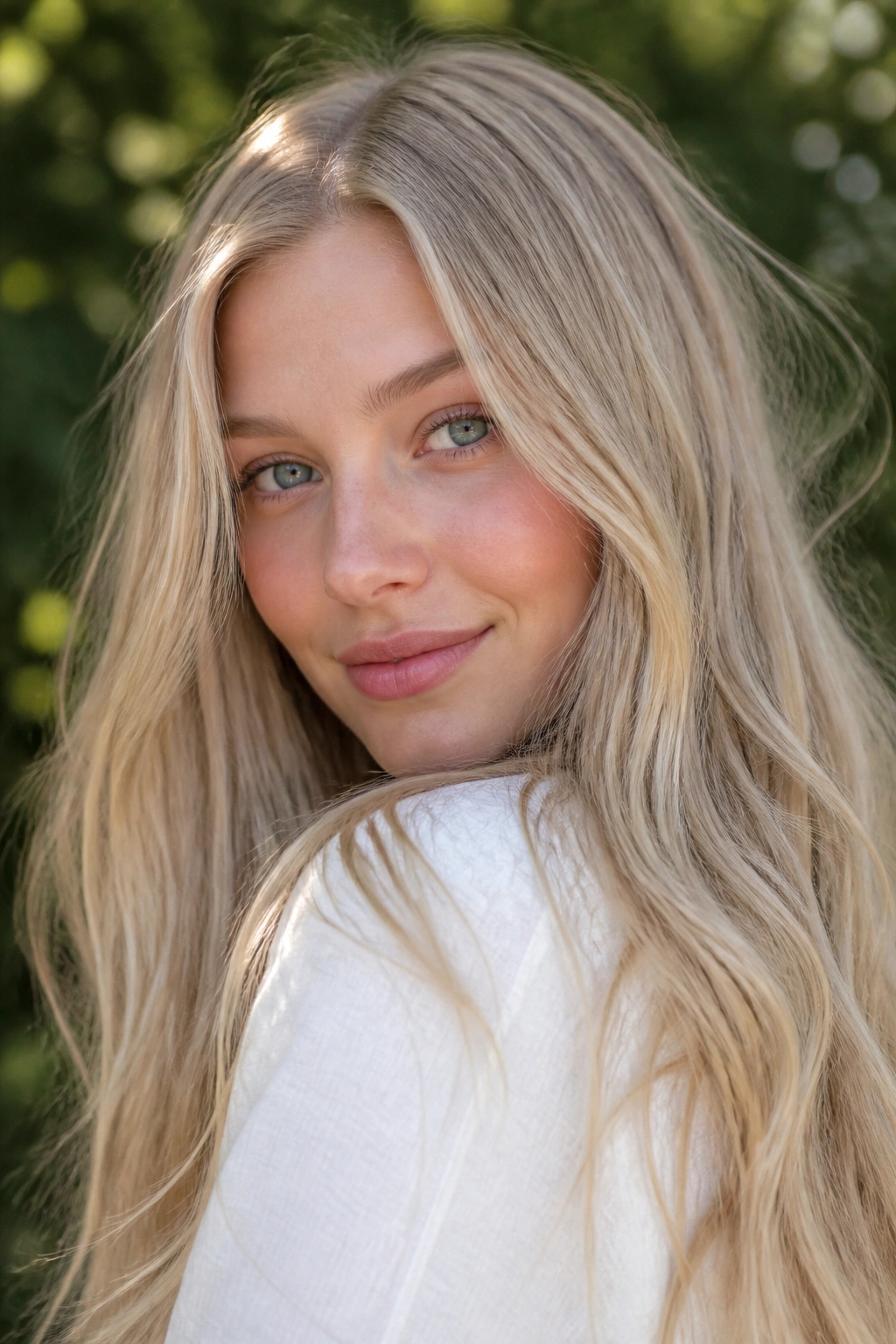
Nordic blonde leans pale, cool, and airy. It can be beautiful on cool skin tones when the tone is kept soft, not stark. The best versions keep a trace of beige through the mids so the blonde doesn’t go chalk-white or flatten the face.
Why It’s Tricky and Flattering
This shade works because it reflects light cleanly. It can also wash some people out if it gets too pale around the entire head. That’s why a tiny bit of depth near the root and underneath matters so much.
- Great for naturally light bases
- Needs regular toning to stay cool
- Looks stronger with movement in the haircut
- Can be softened with a fringe or face-framing layers
I would not call this low maintenance. It isn’t. But if you love pale blonde and your skin leans cool, this is one of the cleanest ways to wear it. The key is keeping the beige note alive so the color still feels like hair, not paper.
A little root shadow goes a long way here. It keeps the pale ends from looking harsh by contrast.
19. Cool Buttercream Sandy Blonde
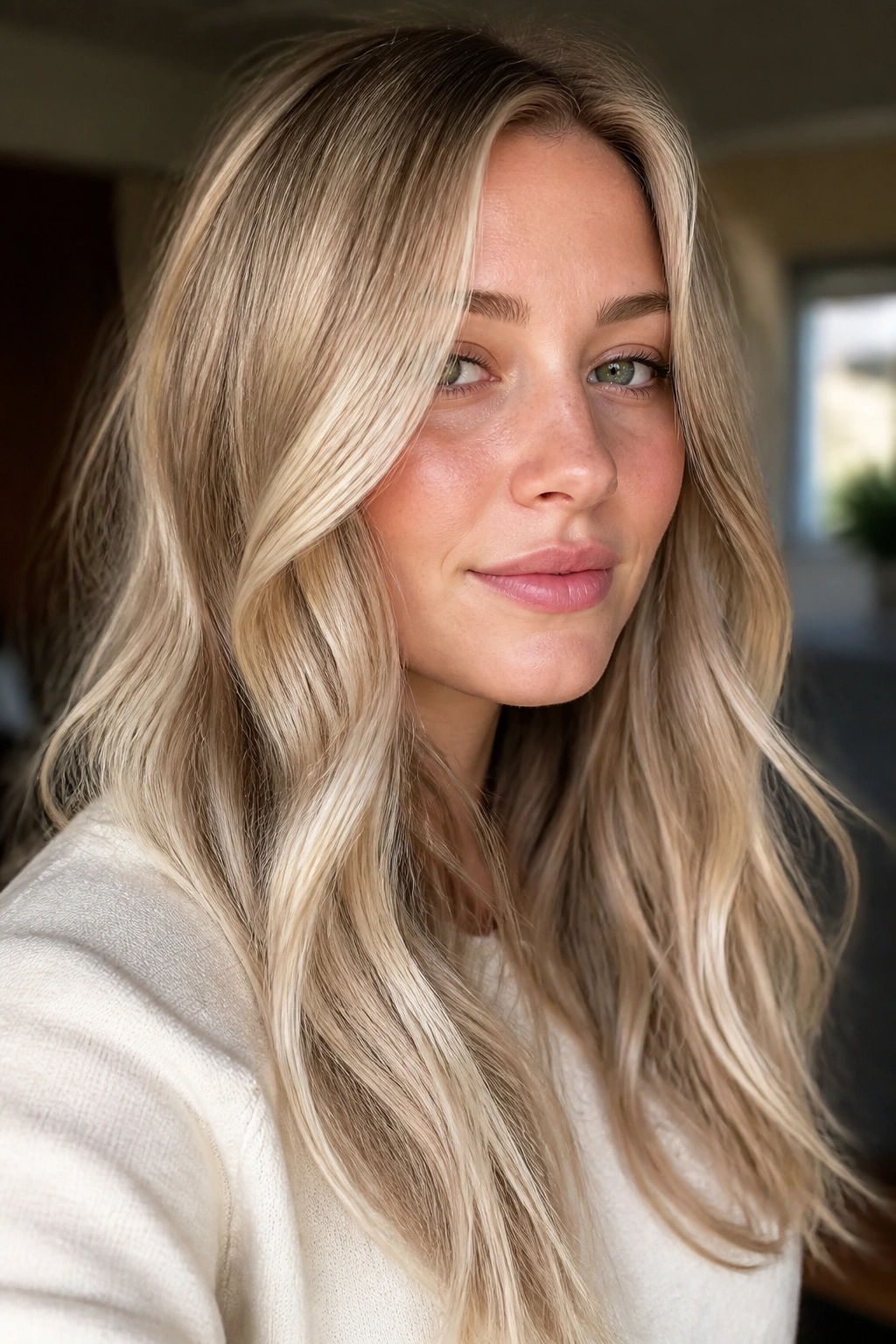
Buttercream can be cool. It just needs the right toner. This version stays creamy without turning yellow, which makes it friendlier than ash-heavy blondes for people who want softness first and drama second. On cool skin tones, that creamy-beige finish can make the complexion look calm instead of flushed.
I like this shade on medium-length layers because the light catches the ends and leaves the top a bit softer. It’s not trying to be icy. It’s trying to be smooth.
The danger is warmth creep. Buttercream can slide yellow fast if the toner is too weak or the shampoo is too harsh. Keep an eye on that. If the blonde starts looking like butter in bad light, it needs adjusting.
This is a solid choice if you like polished blowouts, round brushes, and hair that moves in one soft sheet. It’s also a nice bridge shade if you’re going lighter but don’t want to jump straight to platinum or silver-sand.
Cool buttercream is all about balance. Creamy, not golden.
20. Pale Sand with Baby Lights
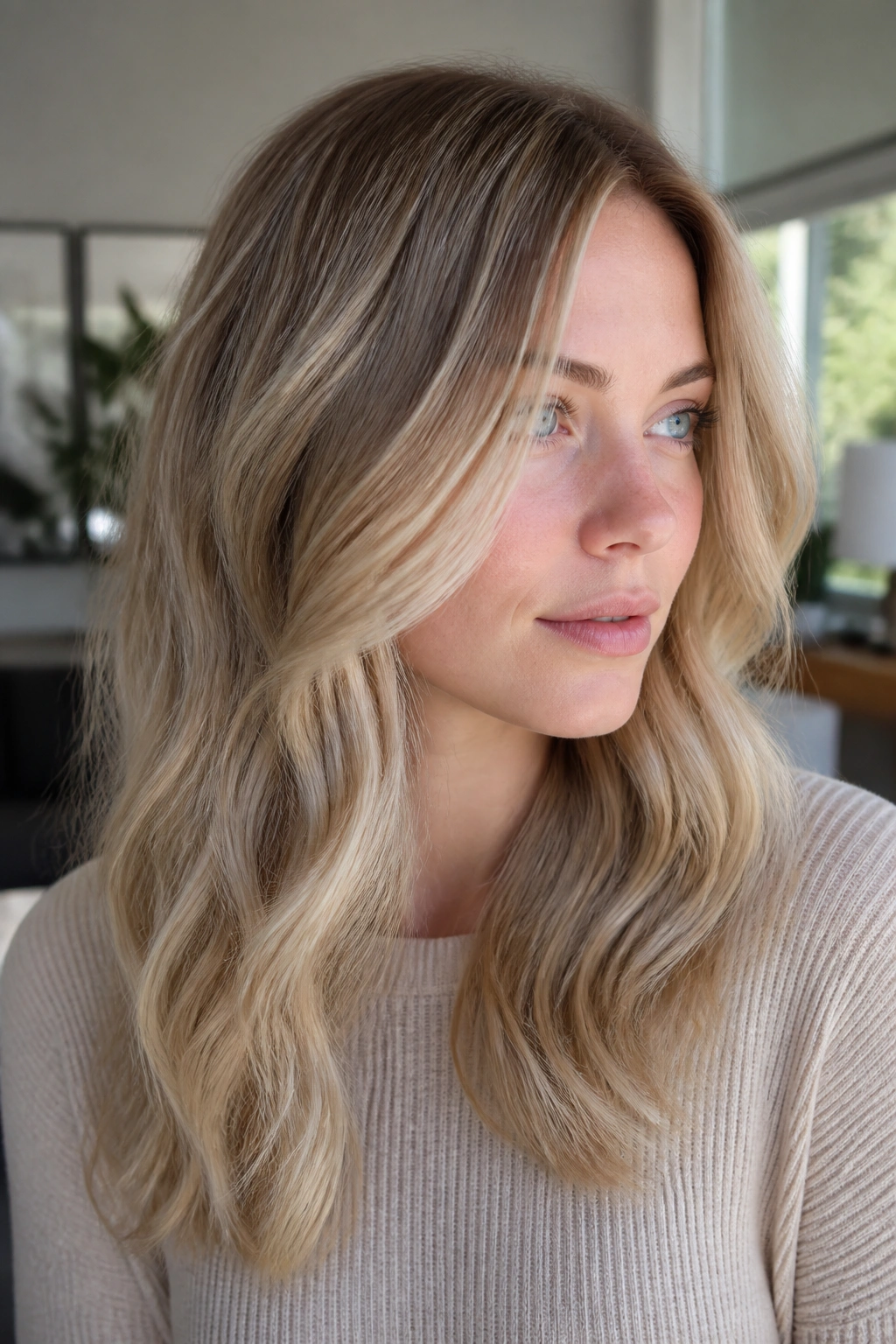
Baby lights are tiny, fine highlights that mimic natural sun-fading, and pale sand with baby lights is the softest option in this lineup. The color stays delicate, with just enough lightness to brighten cool skin tones without making the hair look streaked or forced. If you want something subtle, this is the quietest answer.
The strength here is how believable it looks. The highlights are so fine that the eye reads movement before it reads color. That makes the hair feel lighter without looking overworked. It’s a smart pick for first-time blondes, people with fine hair, and anyone who wants to keep their grow-out calm.
A pale sand base keeps the blonde in the beige family, while the baby lights add a little lift around the part line and face. The result is gentle, but not boring. That distinction matters.
If I had to give one practical tip, it would be this: bring photos taken in daylight and ask for beige, not gold, in the toner. That small instruction can save you from the warm drift that cool skin tones so often fight. And if you keep the finish soft, the hair can stay flattering for a long stretch without looking like it’s trying too hard.
