



A blonde dye job on a man can look sharp, sun-faded, or a little reckless. The color itself is only half the story. The cut decides whether it feels clean or chaotic.
Among the many blonde hair color ideas for men, the smartest ones usually match the haircut first and the skin tone second. That sounds simple, but it’s where a lot of bad dye jobs go sideways. If your hair sits at a dark brown level and you rush the lift, you get orange. If you over-tone, you get that flat, chalky finish that looks like it gave up halfway through the process.
The details matter. Hair that lifts to a pale yellow can take a toner beautifully; hair that stops at gold or copper needs more work. Short cuts hide a lot. Longer hair exposes everything, which is why some blonde shades look incredible on a buzz cut and strange on a shaggy mop.
And roots matter.
1. Platinum Blonde Buzz Cut
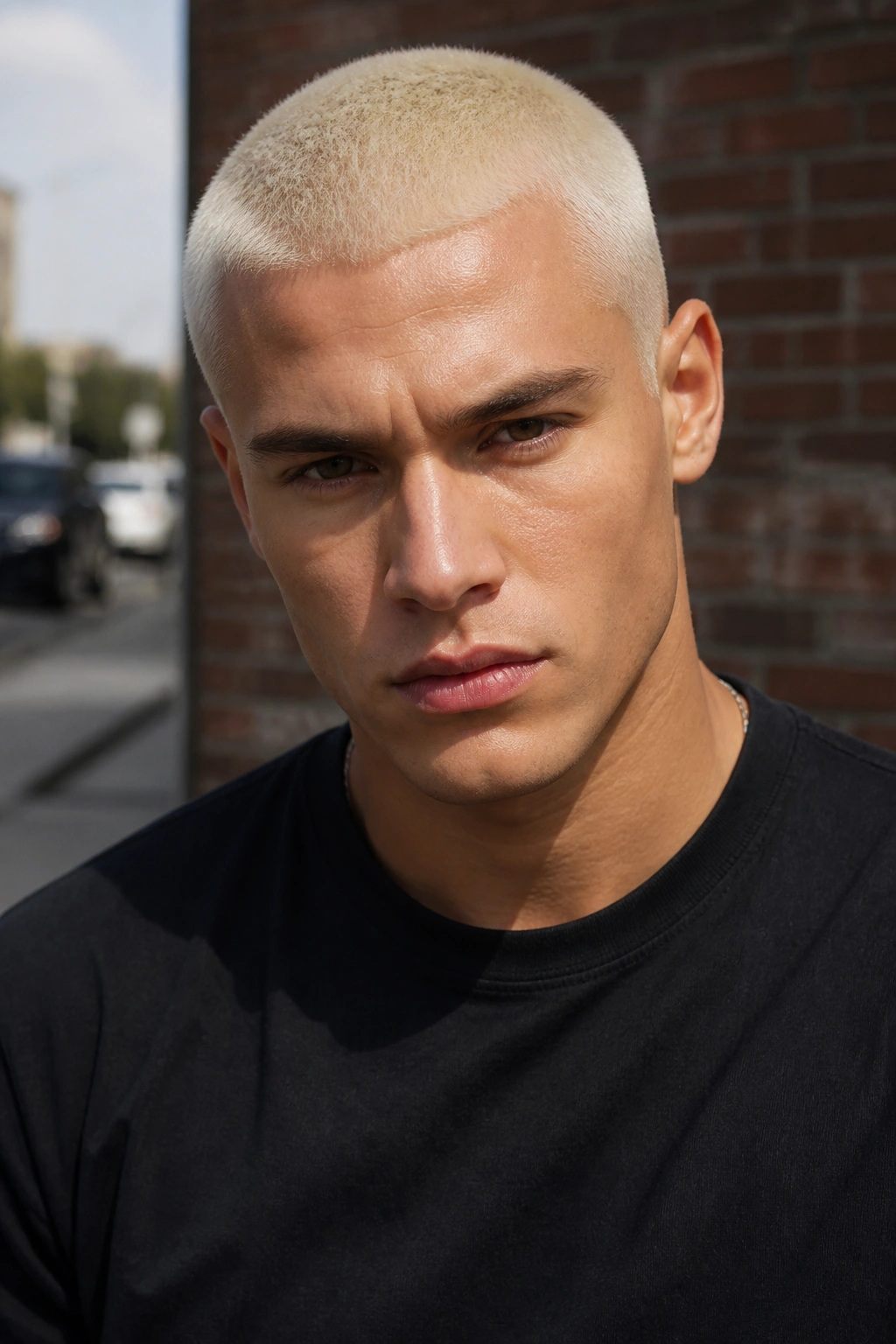
A platinum buzz cut does one thing better than almost any other blonde: it makes the color look deliberate. There’s nowhere for patchy lift to hide, which sounds harsh, but it also means the final result can look very clean when it’s done right.
Why It Hits Hard
Short hair turns platinum into a shape, not just a color. The buzzed length keeps the style tight, so the eye reads the whole head as one strong block of tone instead of a bunch of uneven strands. If your scalp is even-toned and your head shape is something you’re happy to show off, this is one of the easiest blonde looks to wear.
A platinum buzz also works because the haircut removes most of the styling guesswork. No pomade. No blow-drying. No wrestling with cowlicks at the crown. Just keep the edges neat and the color crisp.
- Best with a #1 to #3 guard on top.
- Ask for the lift to reach a pale yellow before toning.
- Use violet shampoo once a week so brass doesn’t creep in.
- Put sunscreen on your scalp if you’re outside for long stretches.
My blunt advice: if you want blonde without daily styling, start here rather than trying to force platinum onto a messy medium-length cut.
2. Honey Blonde Textured Crop
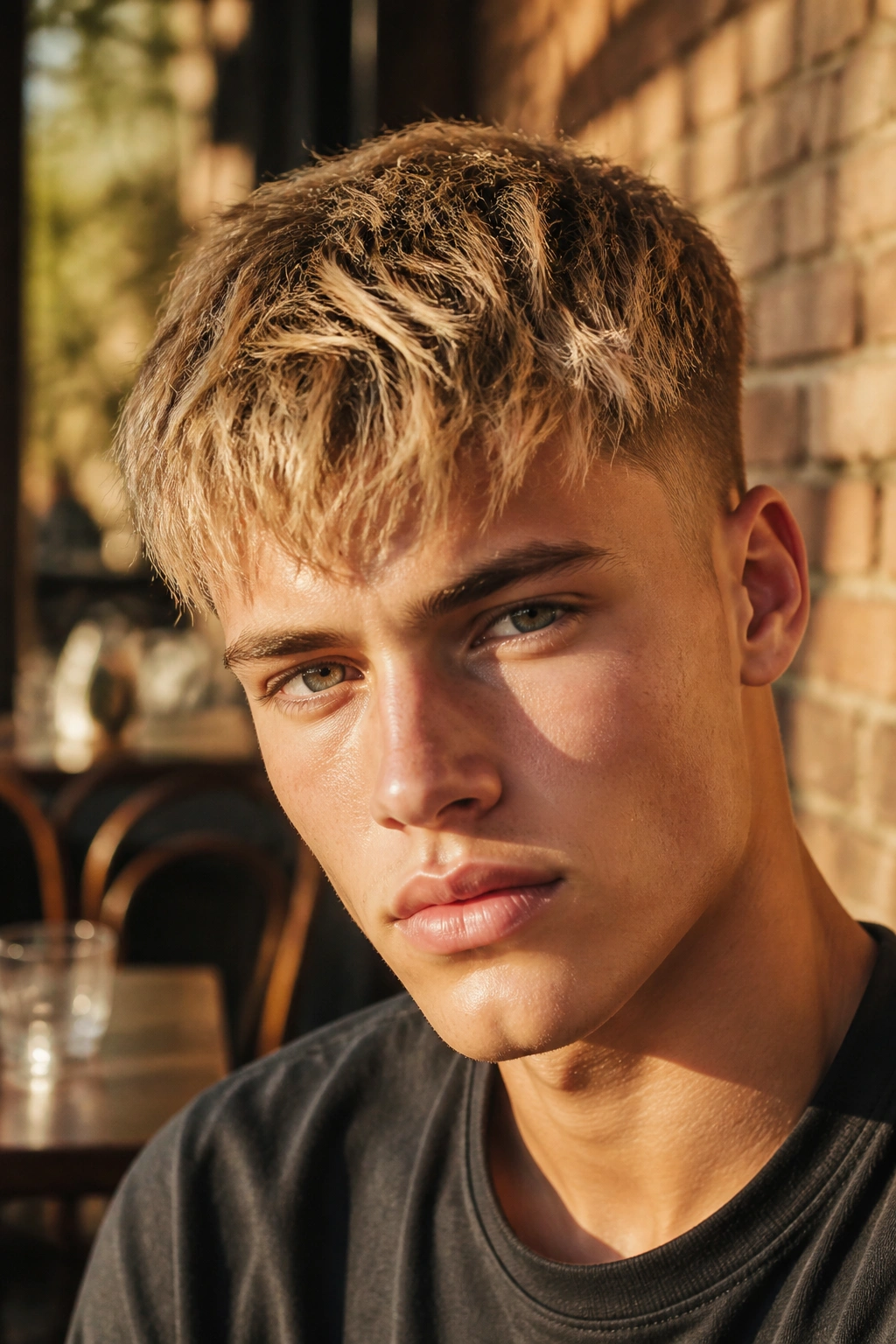
Honey blonde is the shade men underestimate. It sits between gold and beige, which means it warms the face without screaming for attention. On a textured crop, that softness makes the whole haircut feel easy to wear.
The shade works especially well when the top is kept around 1.5 to 2.5 inches and cut with choppy ends. The texture catches light in small pieces, so the blonde feels dimensional instead of flat. That’s a big deal. Flat blonde can look fake fast.
Honey blonde is also kinder to first-time color clients because it doesn’t demand a perfect bleach job. If your hair lifts unevenly, a warm toner can blur the rough spots better than a cool one can. I like it on men with brown eyes and warm or neutral undertones, but it can work on cooler skin too if the haircut stays sharp.
A matte clay is the right styling partner here. Skip anything glossy. The shine can make honey blonde drift into yellow, and yellow is not the same thing.
3. Ash Blonde Mid Fade
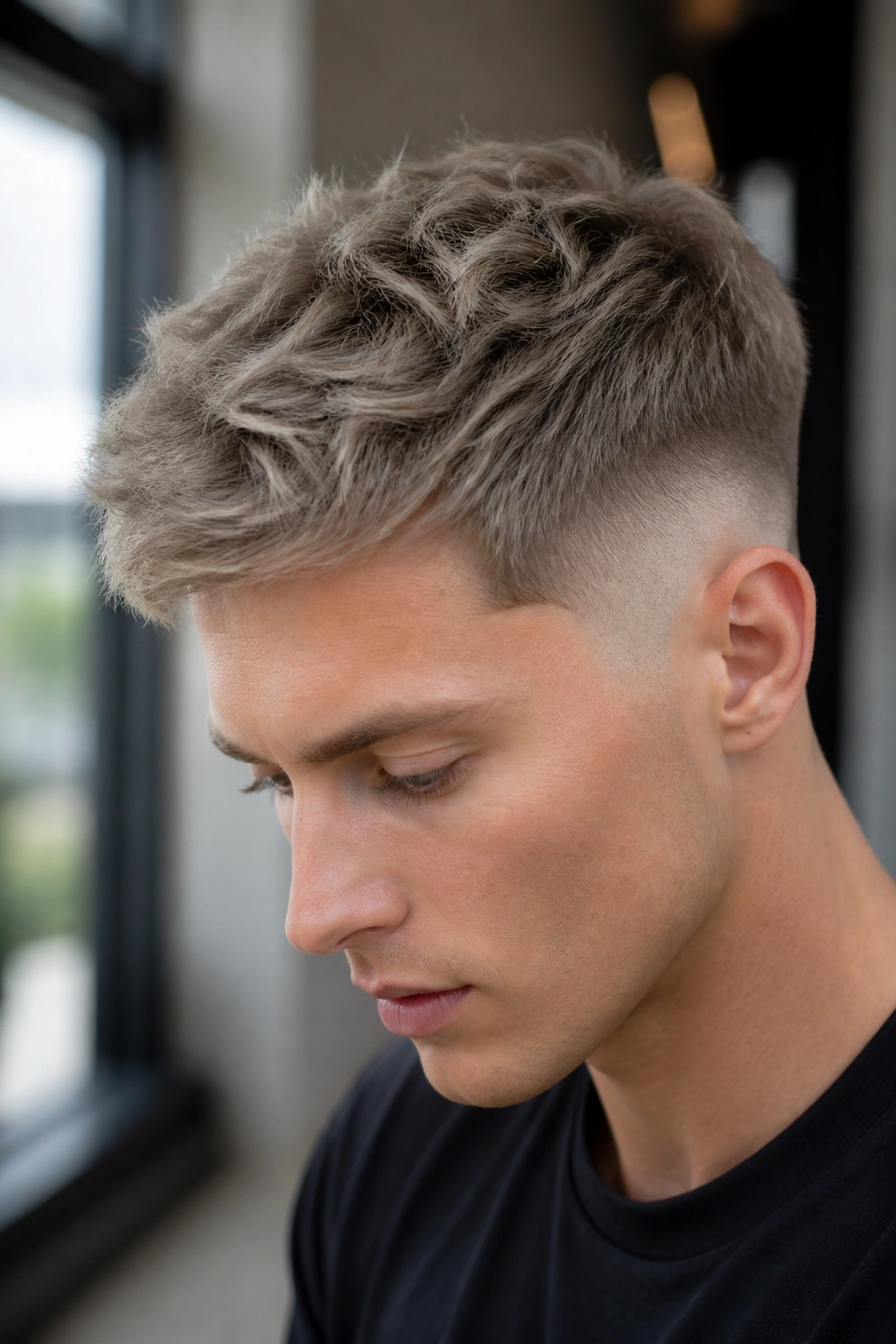
Want blonde that looks cooler and cleaner? Ash blonde is usually the answer. The mid fade gives the haircut structure, while the ash tone keeps the color from looking too gold or too bright.
How It Works
Ash blonde gets its personality from restraint. After the hair is lifted, the toner knocks down warmth and leaves a muted finish that reads more beige-gray than yellow. On men, that usually looks strongest with a mid fade because the fade keeps the sides quiet and lets the top carry the color.
This shade is a strong pick if your hair tends to pull brass quickly. It’s also a good fit for men who wear their hair forward or slightly messy, because the cool tone stops the style from getting too playful. There’s a crispness to it.
How to Wear It
- Keep the top around 2 to 4 inches so the fade has something to work against.
- Ask for a toner that leans ash-beige, not silver-gray.
- Use purple shampoo sparingly; once a week is usually enough.
- Style with a light matte paste so the color stays the main event.
If your beard is dark, this one looks especially sharp. The contrast can be a little severe, but in a good way.
4. Dark Roots With Bleached Ends
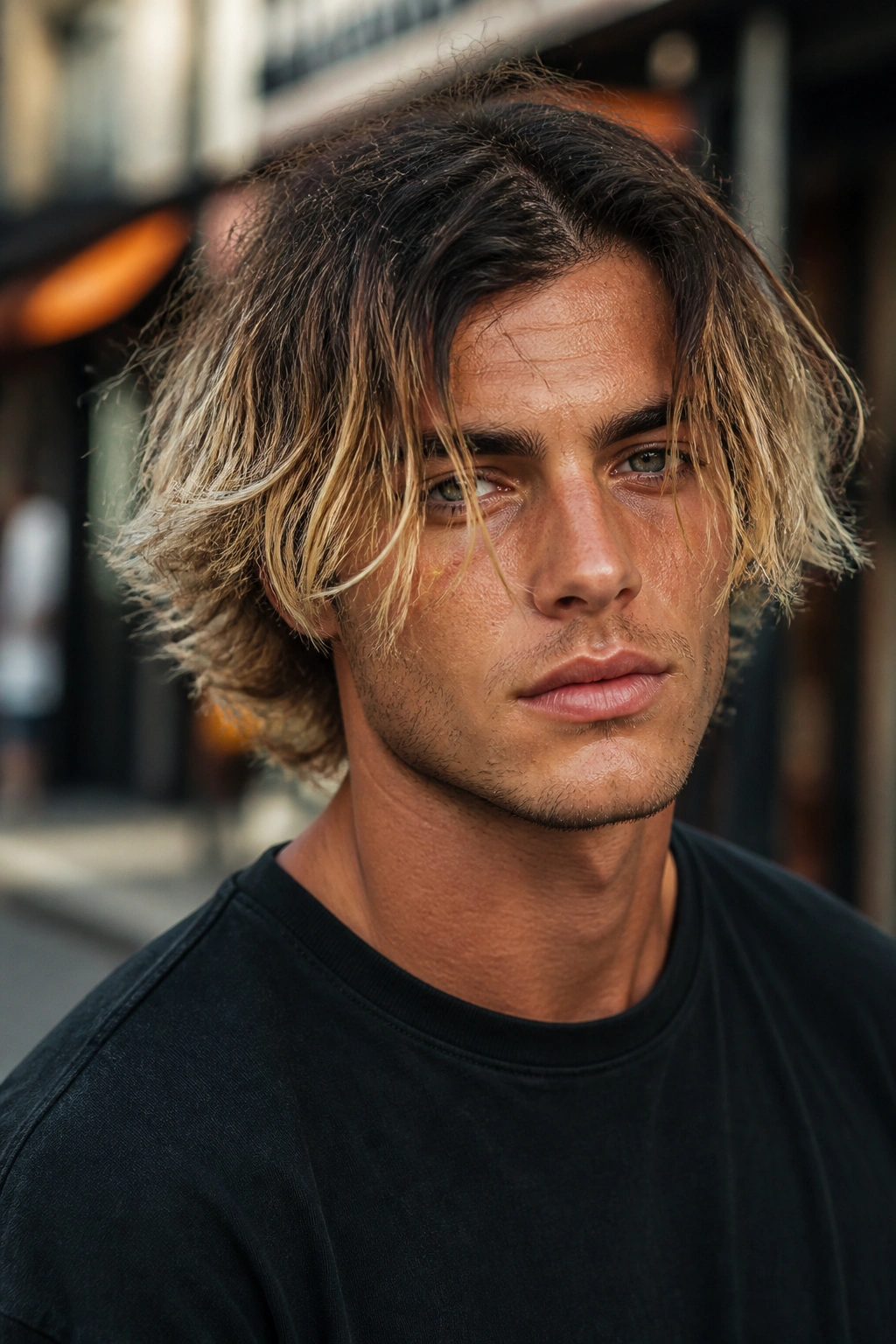
You want blonde, but you do not want to live at the salon. Fair enough. A dark-rooted blonde with bleached ends is one of the smartest ways to wear the color because it gives you a softer grow-out and keeps the style from looking too rigid.
The trick is that the root shadow is part of the design, not a mistake to cover up. That darker base near the scalp gives the lighter ends some depth, so the whole look feels lived-in rather than sprayed on. It works especially well on medium-length cuts where the color can move.
Take a close look at the ends. They should be the brightest part, but not white. If the lightest pieces hit a pale beige-yellow, they’ll blend better with the darker root stretch. Chunky contrast can be cool if that’s the goal, but most people wear this best when the transition is gradual.
Let the roots stay darker. That is the whole point.
5. Sand Blonde Quiff
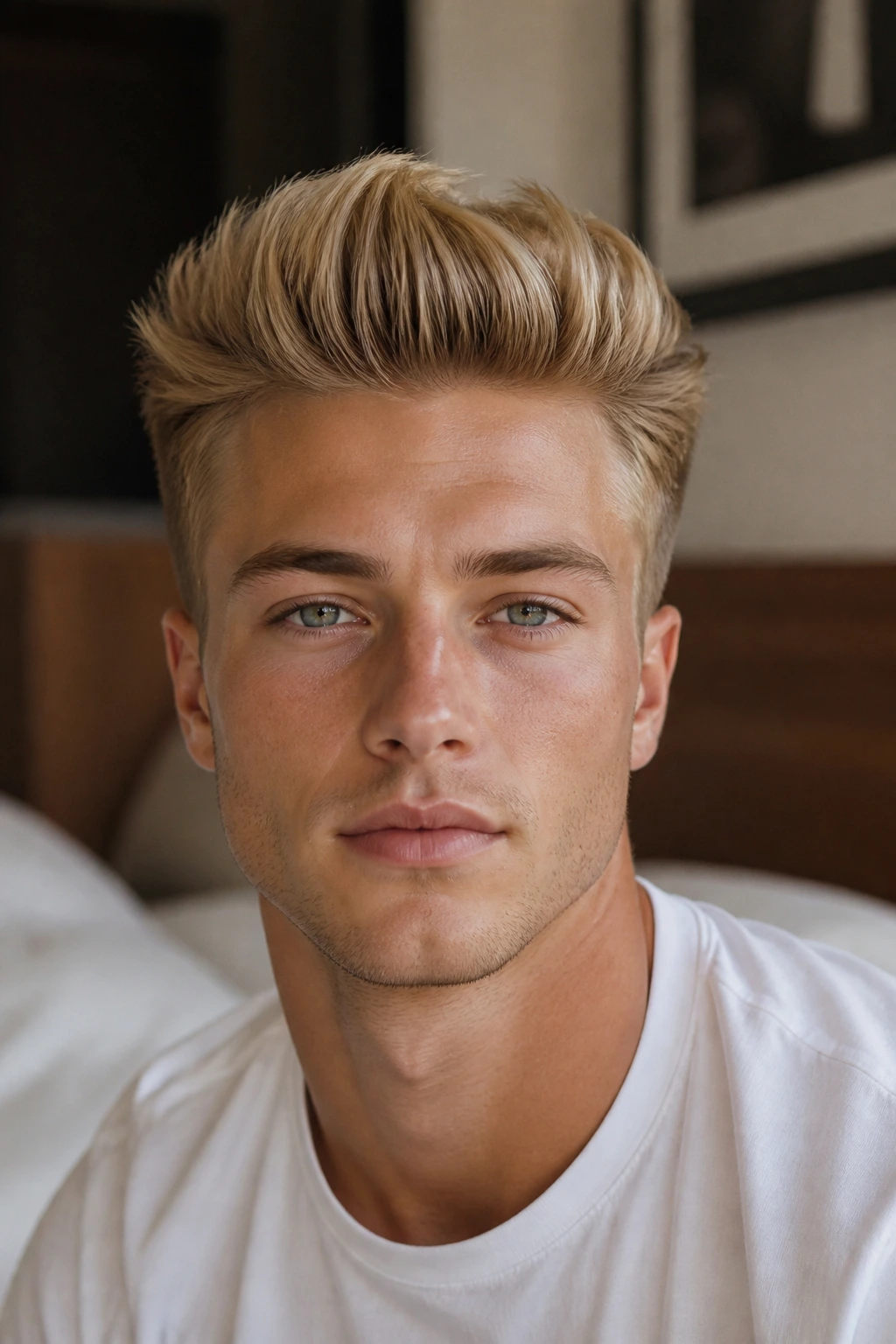
A quiff needs color with some give. Sand blonde has that quality built in. It sits one step softer than gold and one step warmer than ash, which makes it a nice middle ground for men who want height without the hair color taking over.
The quiff shape depends on lift at the front, and sand blonde helps because it reflects light without looking icy. That matters more than people think. A bright platinum quiff can turn severe fast, especially if the haircut is thick or the forehead is narrow. Sand blonde eases that pressure.
I like this on straight or slightly wavy hair with enough density to hold volume. The cut usually needs 3 to 5 inches on top, shorter sides, and a blow-dry that pushes the front upward and slightly back. A round brush gives more shape, but a vent brush works too if you’re not trying to make the routine a whole project.
Use a low-shine cream or a lightweight mousse. No shine bombs. The hair should look shaped, not lacquered.
6. Golden Blonde Pompadour
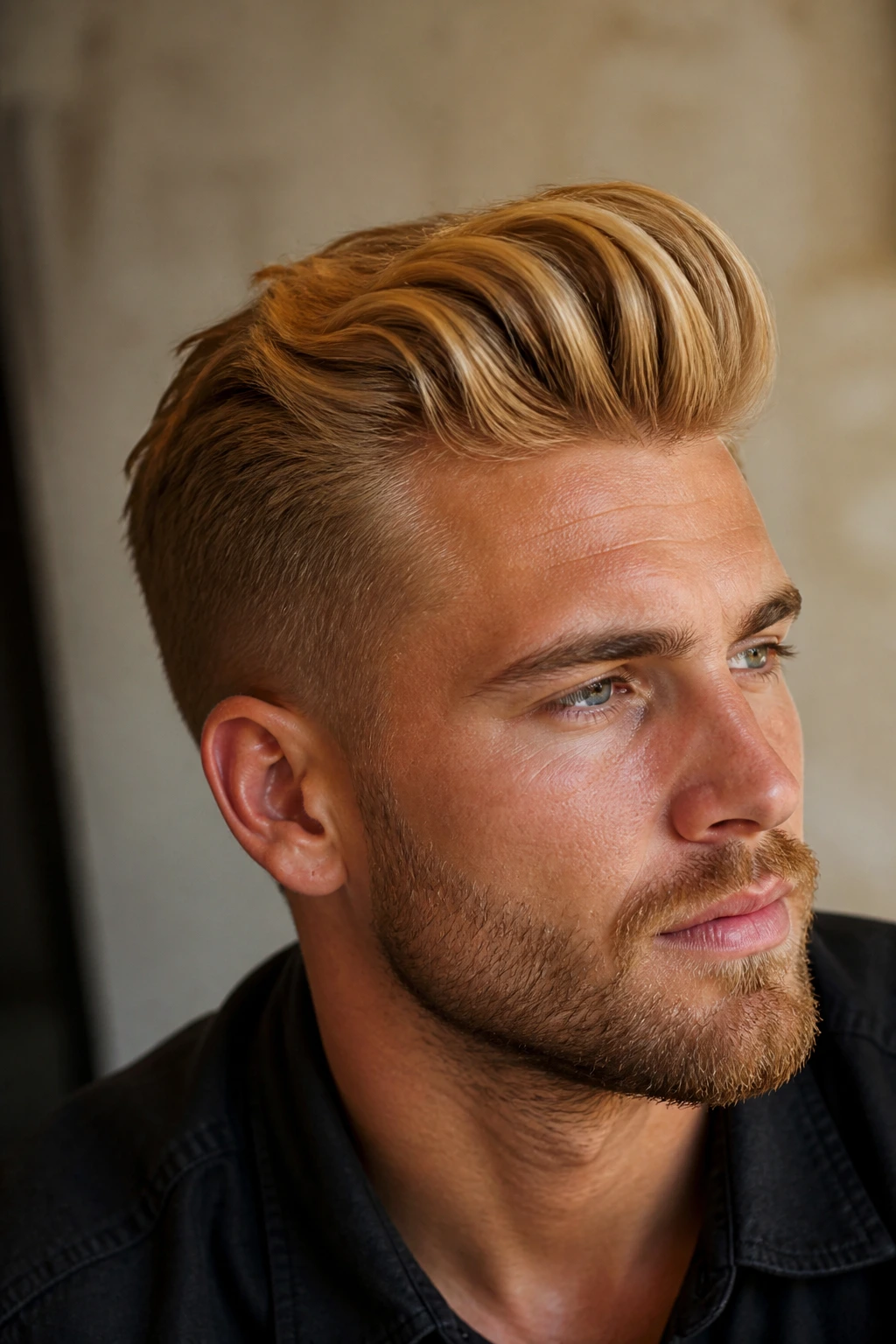
Golden blonde is the warm cousin of ash blonde, and it changes the mood completely. Ash reads cool and controlled. Golden reads richer, softer, and a little more noticeable under indoor light.
On a pompadour, that warmth is useful because the style already carries height and polish. The blonde adds brightness, but the gold keeps it from looking flat or chalky at the top. Men with medium to deeper skin tones often wear this especially well, though the real test is contrast. If your eyebrows and beard are darker, the warm blonde can look strong without feeling harsh.
This is also one of the better blonde choices if you like a dressed-up finish. A pompadour has a built-in sense of order. The color should match that. Ask for a level 8 or level 9 blonde with a golden toner, not a lemon-yellow lift. There’s a big difference.
Use a light cream or soft pomade, then comb the top back with a slight curve. The shape should hold, but the hair shouldn’t look stiff. That balance is where this look lives.
7. Beige Blonde Curtains
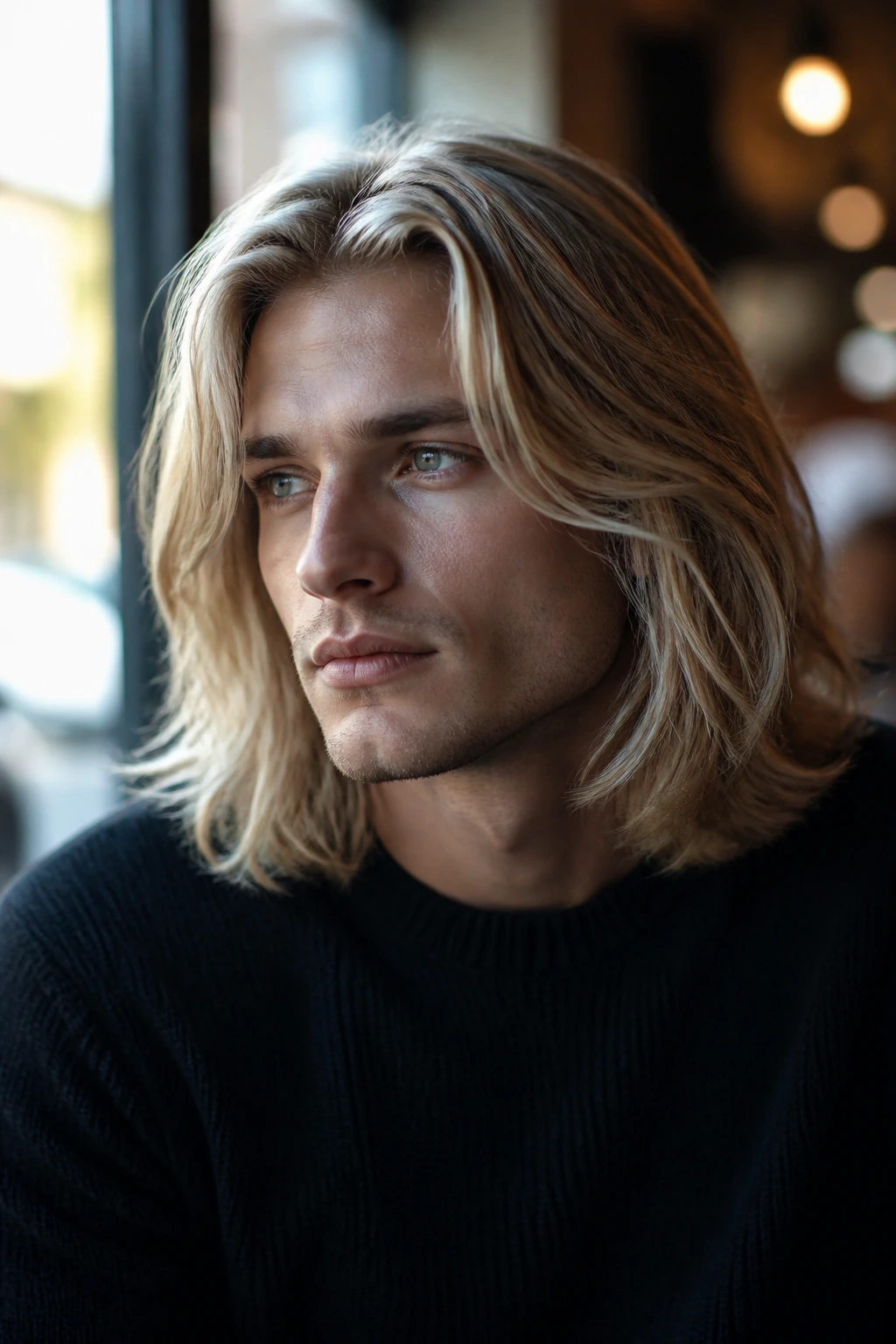
Can middle-part hair look polished on men? Yes, if the blonde stays beige instead of brassy. Beige blonde curtains are one of the easiest ways to make longer hair look intentional rather than underdone.
The middle part softens the face, and the beige tone keeps the look from getting too bright around the cheeks and forehead. That matters on longer cuts because too much yellow can turn the whole style into a wide wash of color. Beige gives the hair a calmer, more expensive look without the empty shine people sometimes chase.
Keeping the Part Soft
- Grow the top to at least eye level, with enough length to fall away from the center.
- Ask for a beige toner, not a bright gold one.
- Blow-dry the part with the air going away from the face first, then back into shape.
- Use a light cream or leave-in, not a heavy wax.
This style works especially well on oval, square, and longer faces. If your hair is naturally straight or only slightly wavy, it will sit nicely. Coarse hair can do it too, but you’ll need a little more smoothing.
8. Dirty Blonde Wavy Fringe
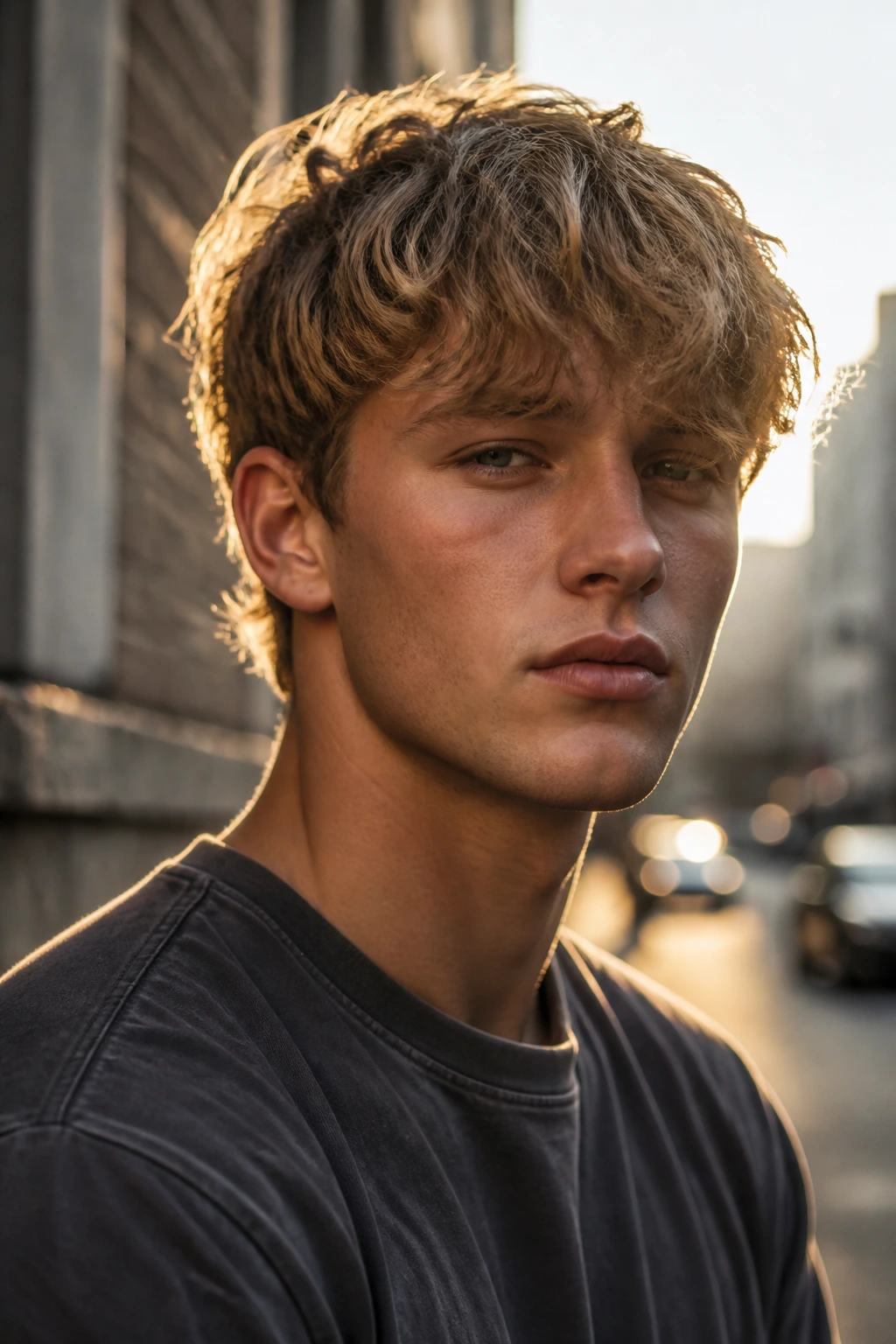
Dirty blonde is the easiest blonde to wear if you want the color to look like it grew there. It sits low on the brightness scale, which is exactly why it works so well with a wavy fringe.
The magic is in the low contrast. Instead of looking stripped and re-toned, the hair keeps some depth, some shadow, and a little edge at the root. On wavy hair, that means the blonde rides along the movement instead of sitting on top of it like paint. That’s a much better look for most men.
This shade is a smart first step if you’ve never gone blonde before. It lets you test the waters without demanding full commitment to platinum upkeep. The fringe can fall forward, split a little, or get tossed to the side, and the color still makes sense.
The trick is restraint. Keep the waves loose, use sea-salt spray lightly, and avoid over-drying the front. If the hair gets crunchy, the color starts to look costume-like. Dirty blonde works because it feels relaxed, not because it tries to be perfect.
9. Champagne Blonde Crew Cut
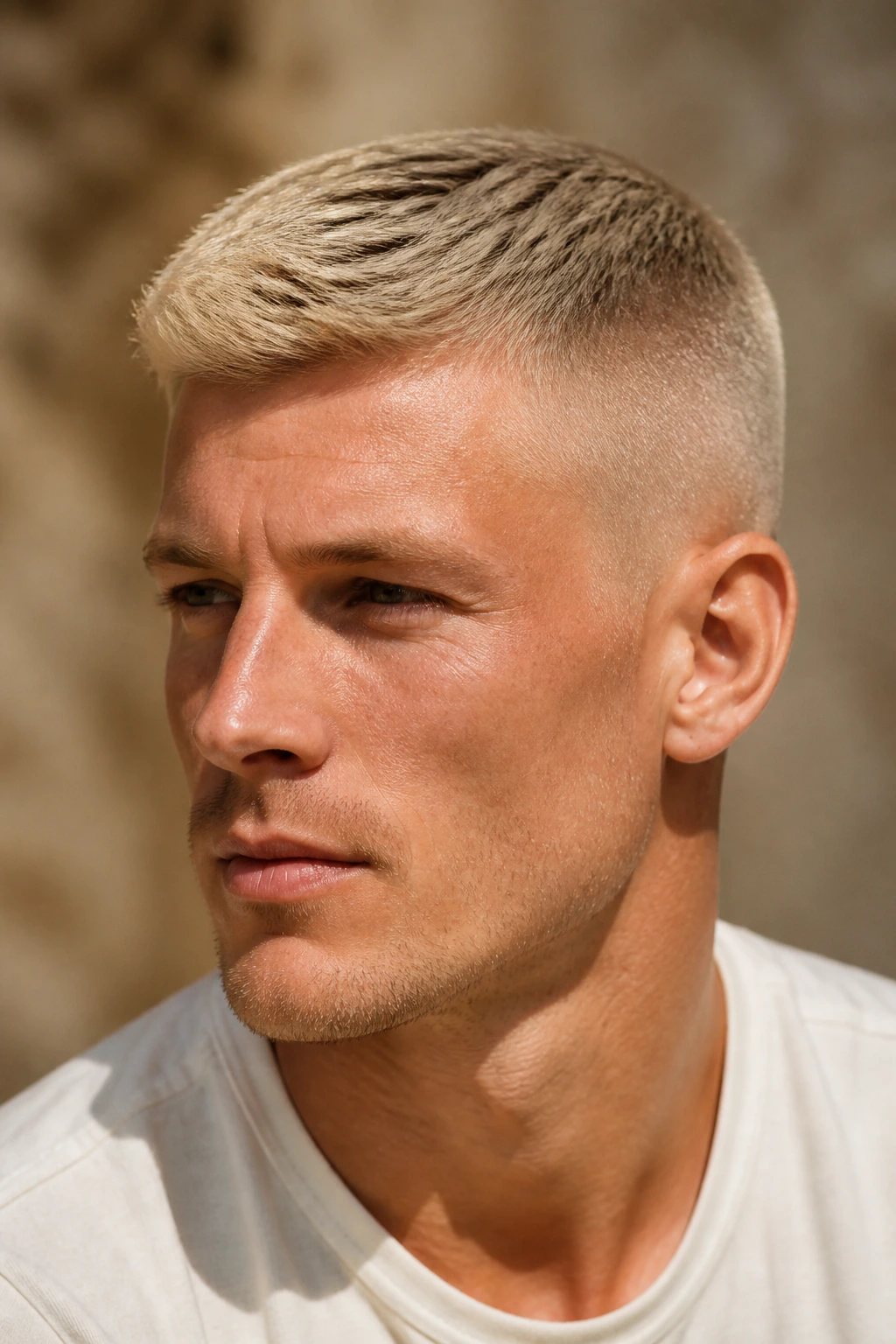
Short hair can still look polished. Champagne blonde proves it. The shade has a pale golden base with a cooler edge, so it feels brighter than beige but softer than full platinum.
What Makes It Different
A crew cut gives champagne blonde a strong outline. The tight shape keeps the color from wandering, which is useful because pale blonde on longer hair can sometimes lose its punch. On a crew cut, every bit of tone is easy to see. The crown, the front line, the fade into the sides—everything reads clean.
This is a solid choice if you want a blonde that works in a neat setting. It doesn’t need heavy styling, and because the cut itself is short, touch-ups fit naturally into the maintenance rhythm you’d already need for the haircut. That’s practical, not glamorous, but practical wins a lot.
What to Ask For
- A pale champagne tone, not a flat white.
- Tight sides with a little extra length on the crown.
- A root tone that stays slightly deeper for dimension.
- A satin finish, not a glossy one.
The finished look should feel light, not loud. That’s the difference.
10. Sun-Kissed Blonde Curls
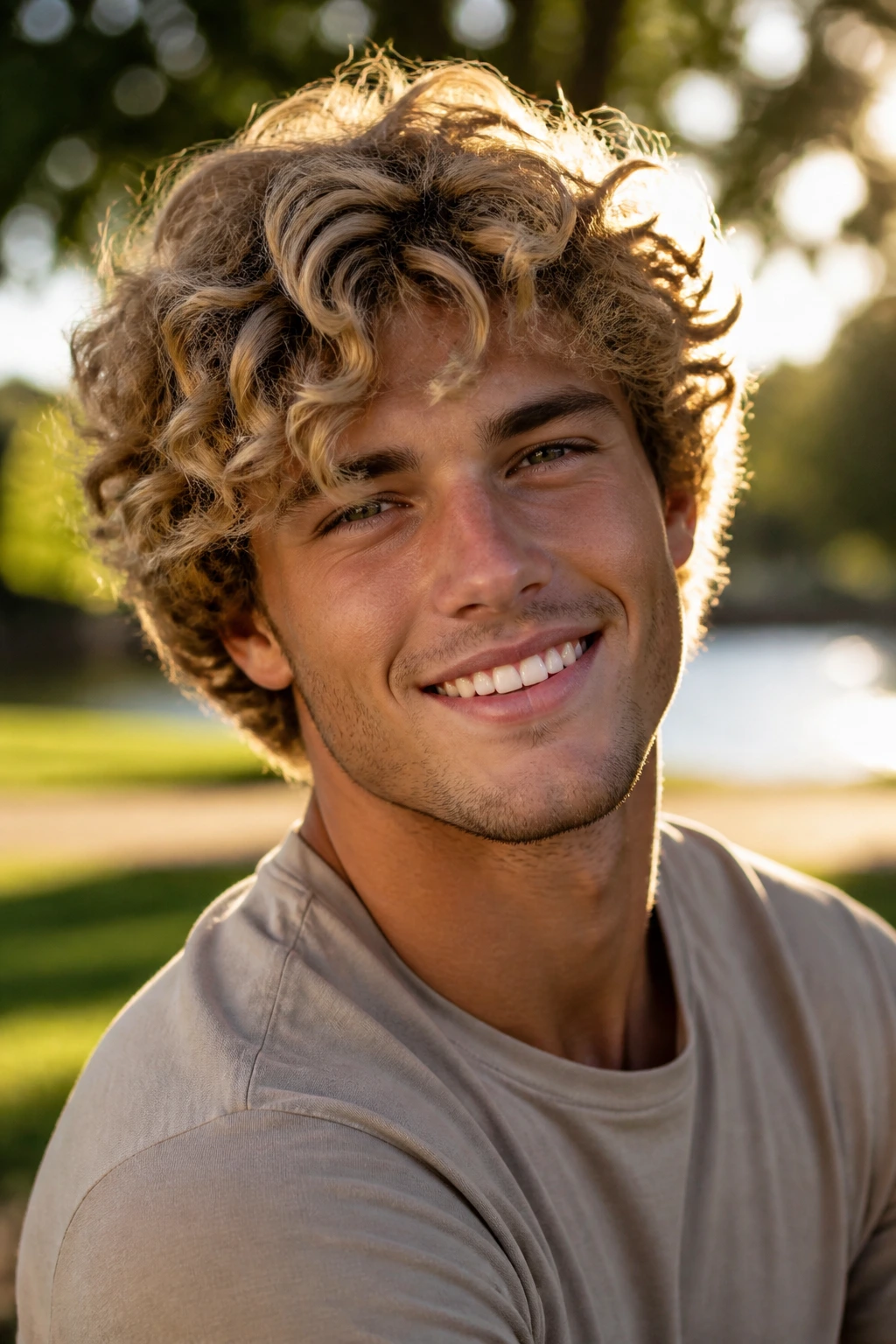
Curly hair takes blonde differently from straight hair. The shape breaks up the color, which is good news if you want movement and depth instead of one uniform block of lightness. Sun-kissed blonde curls use that to their advantage.
The best version usually relies on highlights rather than a full bleach-out. Ribbons of blonde placed through the outer curls let the shape breathe. If every curl is light, the whole head can lose definition and get dry fast. A partial approach keeps the texture alive.
I’d ask for pieces around the top and outer sides, with the lightest lift where the curls naturally pop. That gives the style a sun-hit look without flattening the curl pattern. Bond-building treatments help here, and so does a gentle diffuser on low heat. High heat is where curls get frizzy and color gets brittle.
- Ask for ribbons, not a single flat block of blonde.
- Keep the lightest pieces around the face and crown.
- Use curl cream on damp hair, then diffuse on low heat.
- Trim regularly so the ends don’t go fuzzy.
This one looks especially good on men who want texture to be the main story.
11. Two-Tone Blonde Highlights on an Undercut
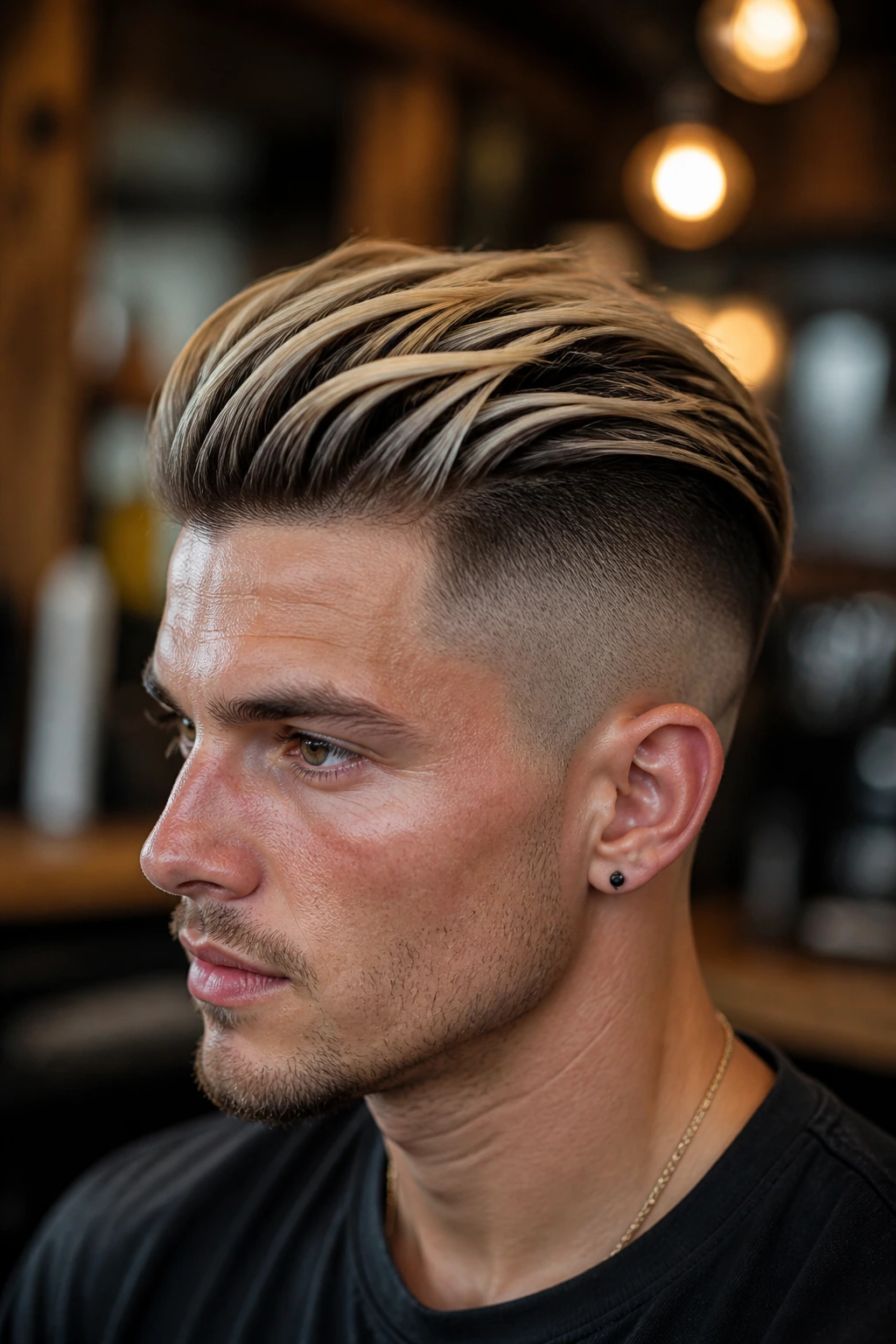
Two-tone color looks strongest when the haircut already has clear lines. That’s why blonde highlights on an undercut work so well. The dark sides anchor the style, and the lighter top gives it movement.
The contrast does the heavy lifting. You do not need every strand to be pale for the look to stand out. A few brighter sections through the top can make the shape pop, especially if the top is styled back, pushed up, or left a little messy. The undercut frames the whole thing like a border.
This is a good pick for men with thick straight hair. Thick hair holds light and dark sections without looking thin, which matters here. If the hair is too fine, the contrast can make it seem flatter than it is. A barber can work with that, but the cut has to be precise.
My favorite version keeps the sides tight, the top between 3 and 5 inches, and the highlights a shade or two lighter than the base. Not white. Not chunked too hard. Just enough to make the shape obvious.
12. Icy Blonde Mullet
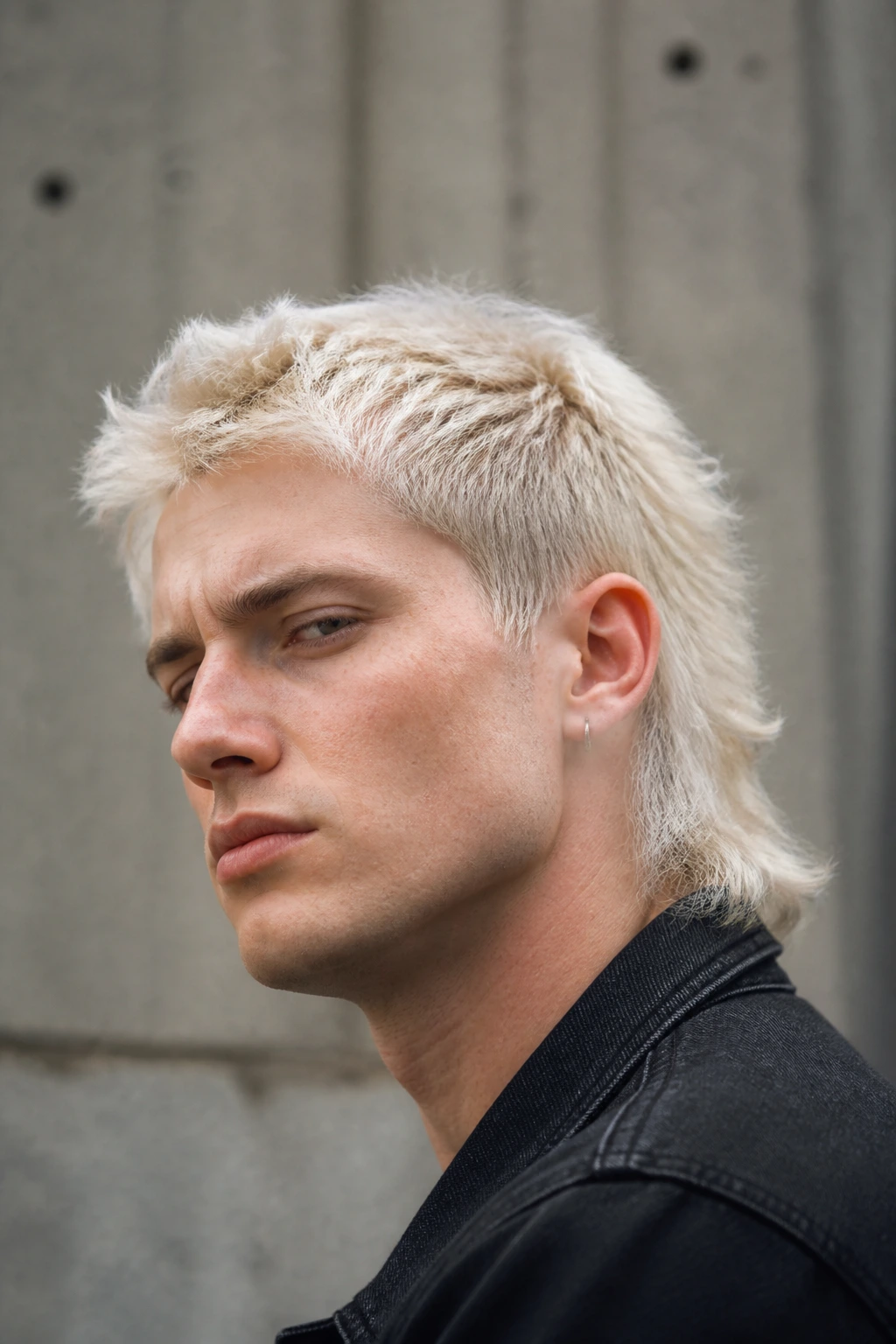
Icy blonde on a mullet is not for shy hair. It’s sharp, a little rough, and much better than people expect when the cut is balanced.
Compared with a short platinum buzz, the longer back gives the color some movement. That extra length softens the brightness, which means the icy tone doesn’t feel as harsh as it would on a flat short cut. The front and sides can stay tighter, while the back keeps a bit of texture and flow. It’s an odd mix, and that’s why it works.
This style suits thick hair especially well. Thick hair can hold the shape of the front and still keep enough body in the back to make the mullet line believable. A matte product is the right choice, because shine makes icy blonde look colder in a bad way. You want texture, not frost.
If you like a haircut that has edge without needing a perfect finish, this is one of the stronger blonde options. It looks best when the roots are left slightly deeper, too. That little shadow keeps the color from going flat.
13. Wheat Blonde Bro Flow
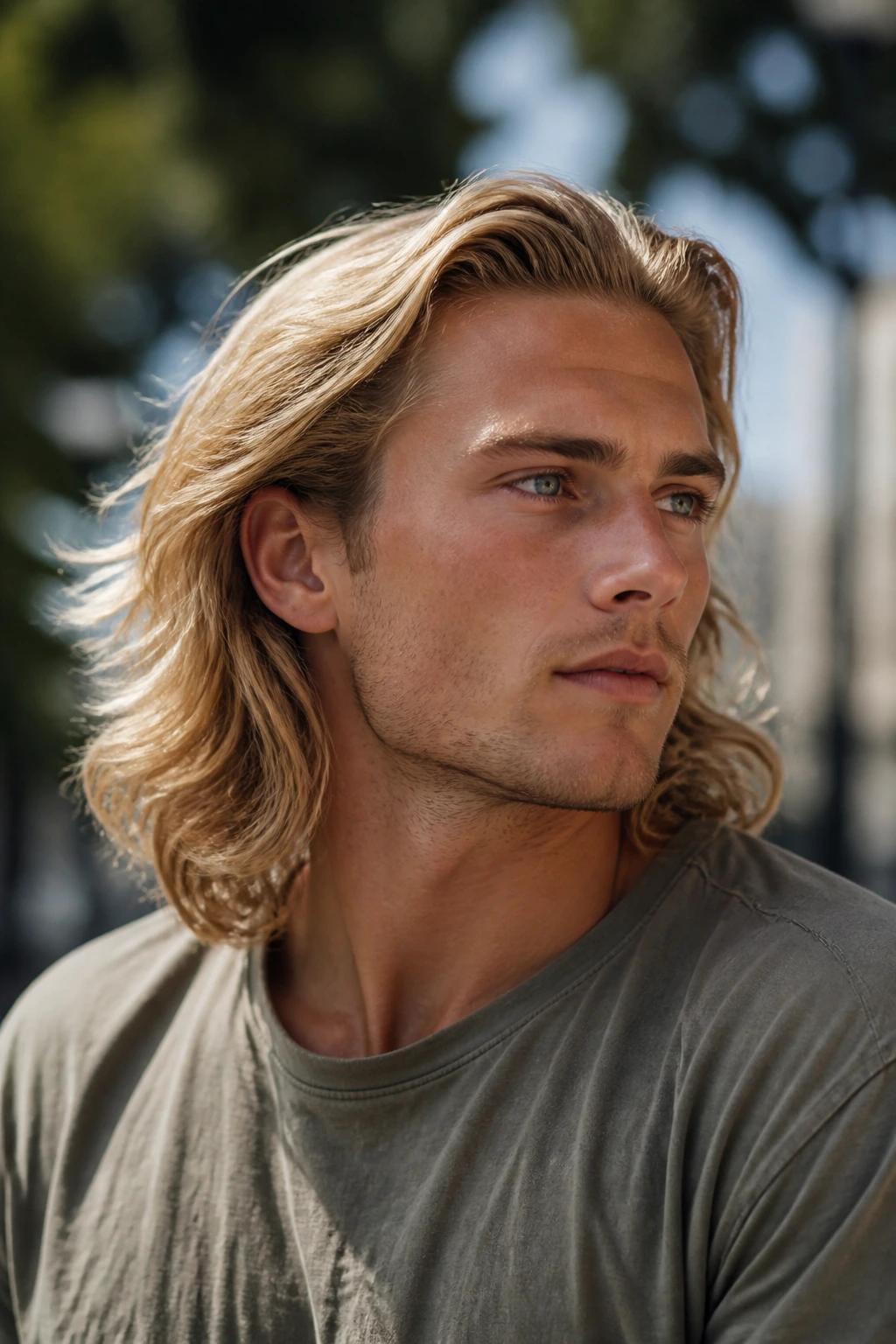
Long hair needs a blonde that doesn’t turn straw-colored. Wheat blonde handles that job better than brighter shades because it keeps a soft, grain-like tone instead of a bleached-out finish.
The bro flow shape depends on movement. Hair that hits the shoulders or the upper chest needs some depth, or else the whole thing looks washed out. Wheat blonde keeps enough beige and brown in the mix to let the layers show. That makes the style feel smoother, especially when the hair is blown back or tucked behind the ears.
What Makes It Different
- Works best on medium to thick hair with a little natural wave.
- Looks better with layered ends than blunt ones.
- Needs less tonal correction than icy or platinum blonde.
- Plays well with a beard that stays medium to dark.
A light leave-in cream is usually enough. Heavy paste makes the flow look stiff, and stiff is not the point here. Let the hair move a little. That’s where wheat blonde looks best.
If your hair is naturally dark, ask for a soft lift and a beige toner rather than pushing for full brightness. The goal is a long, healthy-looking blonde, not a dry one.
14. Mushroom Blonde Shadow Root
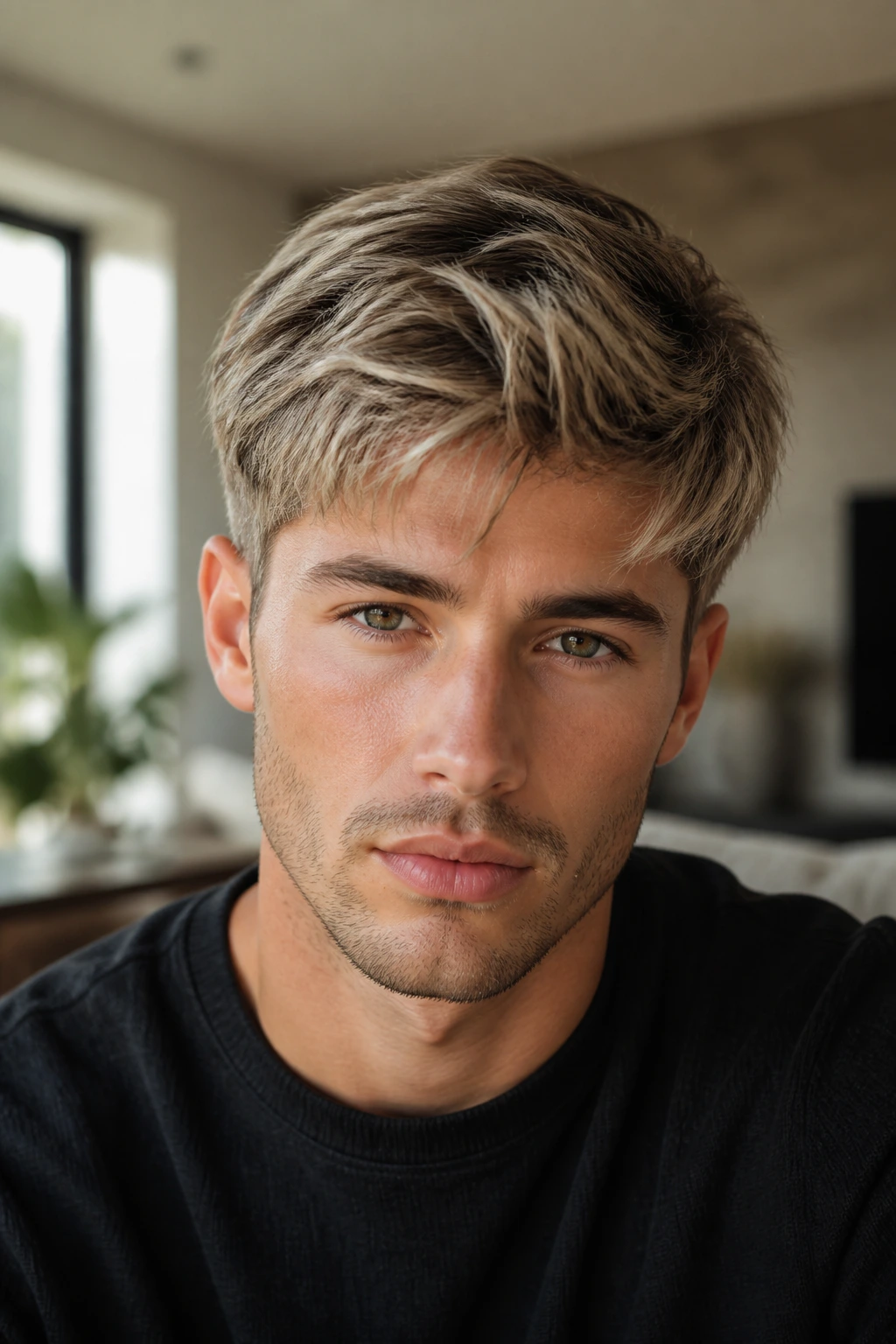
Mushroom blonde is the smartest blonde for dark bases. It lives between brown and blonde, which means the color looks believable even when the hair is growing out.
The cool, dusty tone has a quieter feel than gold or platinum. That makes it useful for men who want a lighter look but do not want their hair to shout from across the room. The shadow root is part of the appeal. It keeps the scalp area grounded, so the blonde around it has somewhere to land visually.
This shade is especially good on men with neutral or olive skin, though it can work more widely if the rest of the haircut is strong. A clean taper, a crop, or a textured side part all make mushroom blonde feel sharper. What it doesn’t love is messy, over-long ends that haven’t been cut in months. The whole point is controlled softness.
Ask for fine highlights, lowlights, and a root smudge. That combination creates the mushroom effect better than one solid color ever will. It’s the least fake-looking blonde on this list, and I mean that as a compliment.
15. Vanilla Blonde French Crop
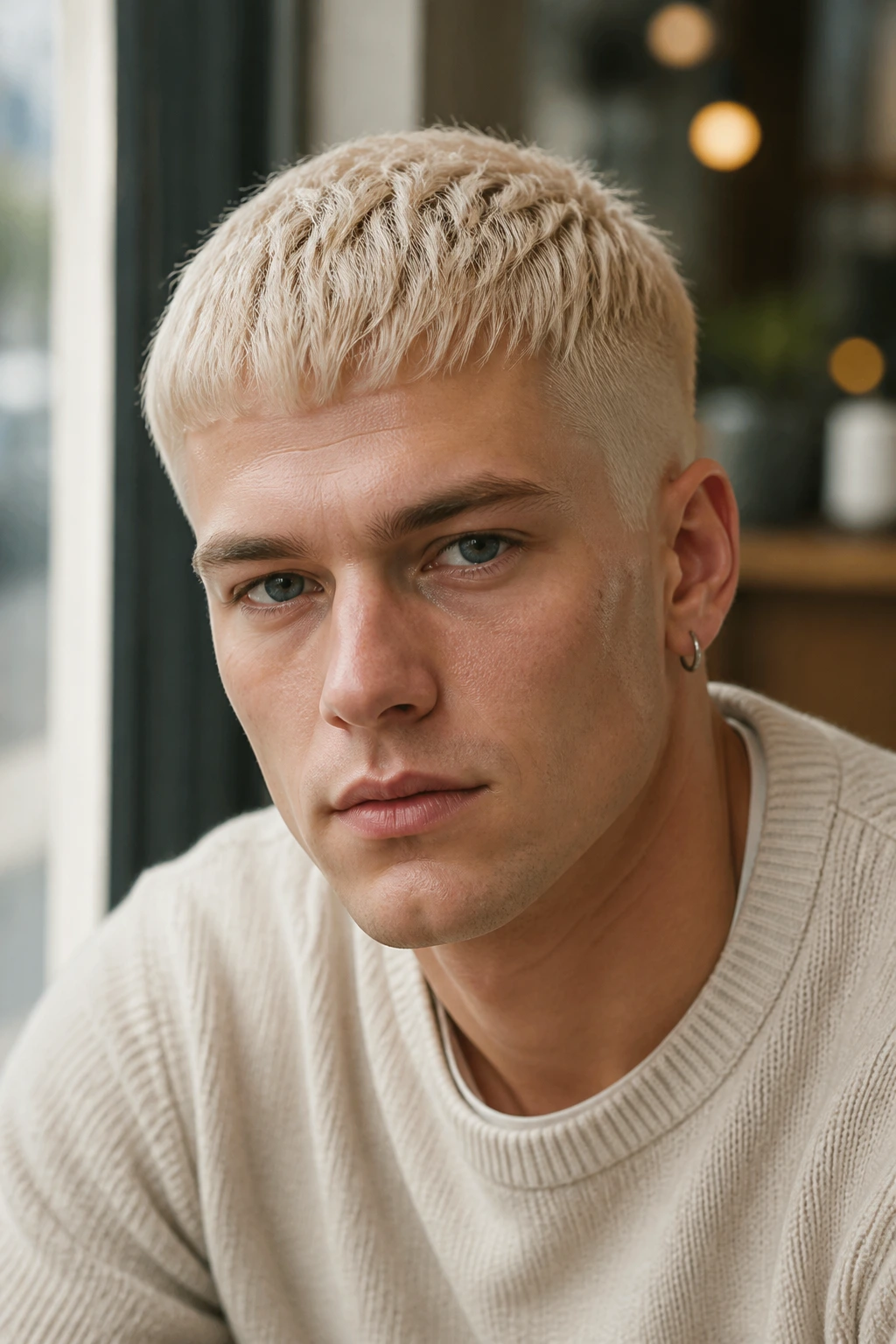
Can a short fringe go light without looking fried? Yes, if the blonde is creamy and the cut keeps its shape. Vanilla blonde on a French crop has that clean, clipped feel men often want when they like short hair but still want color.
The crop fringe does most of the work. Because the front sits forward and the sides are kept tight, the blonde reads as a compact block rather than a loose cloud. That helps a creamy vanilla tone feel intentional. It also keeps the style from slipping into yellow, which is always a risk when the lift is bright.
The Shape Matters
- Keep the fringe blunt enough to frame the forehead.
- Leave some texture through the top so the blonde doesn’t look painted on.
- Use a light matte product, not a wet gel.
- Trim often enough that the line at the front stays crisp.
This one looks best on men with dense hair and straight to slightly wavy texture. Thin hair can do it, but the crop needs enough weight to keep the fringe from looking wispy. If the hair starts to feel dry, stop bleaching and focus on glossing instead. Sometimes the smarter move is to let the color sit a little deeper.
16. Bronde Blend
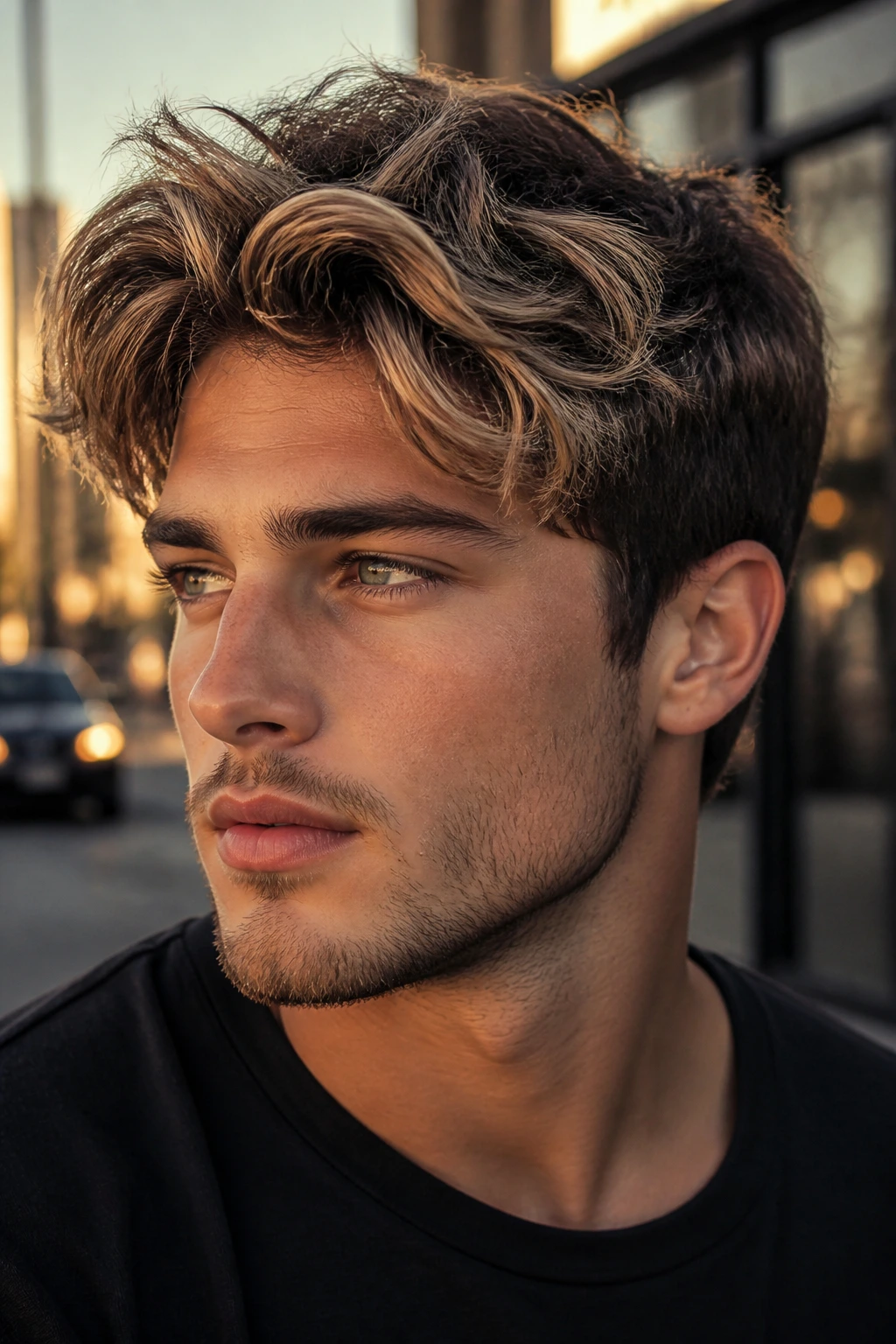
If your hair is too dark for full blonde, bronde is the sane answer. It mixes brown and blonde in a way that keeps the color believable, which is why it works on so many men.
Unlike an all-over light blonde, bronde holds onto depth. That means the haircut still shows shadows in the right places. Around the temples. Under the fringe. At the crown. Those darker pieces stop the color from looking stripped, and they help the grow-out behave. That alone makes bronde a lot easier to live with.
This is a strong choice for first-time color clients and for men who want lightness without a hard commitment. It also works on more lengths than people expect. Short crops, wavy medium cuts, and longer textured styles all benefit from the mix. The blonde can sit in the top layers while the brown stays underneath, which makes the whole thing feel richer.
Ask for highlights and lowlights together. That’s the part some people skip, and then they wonder why the color looks flat. Bronde only works when the brown is allowed to stay in the room.
17. Strawberry Blonde Brush-Up
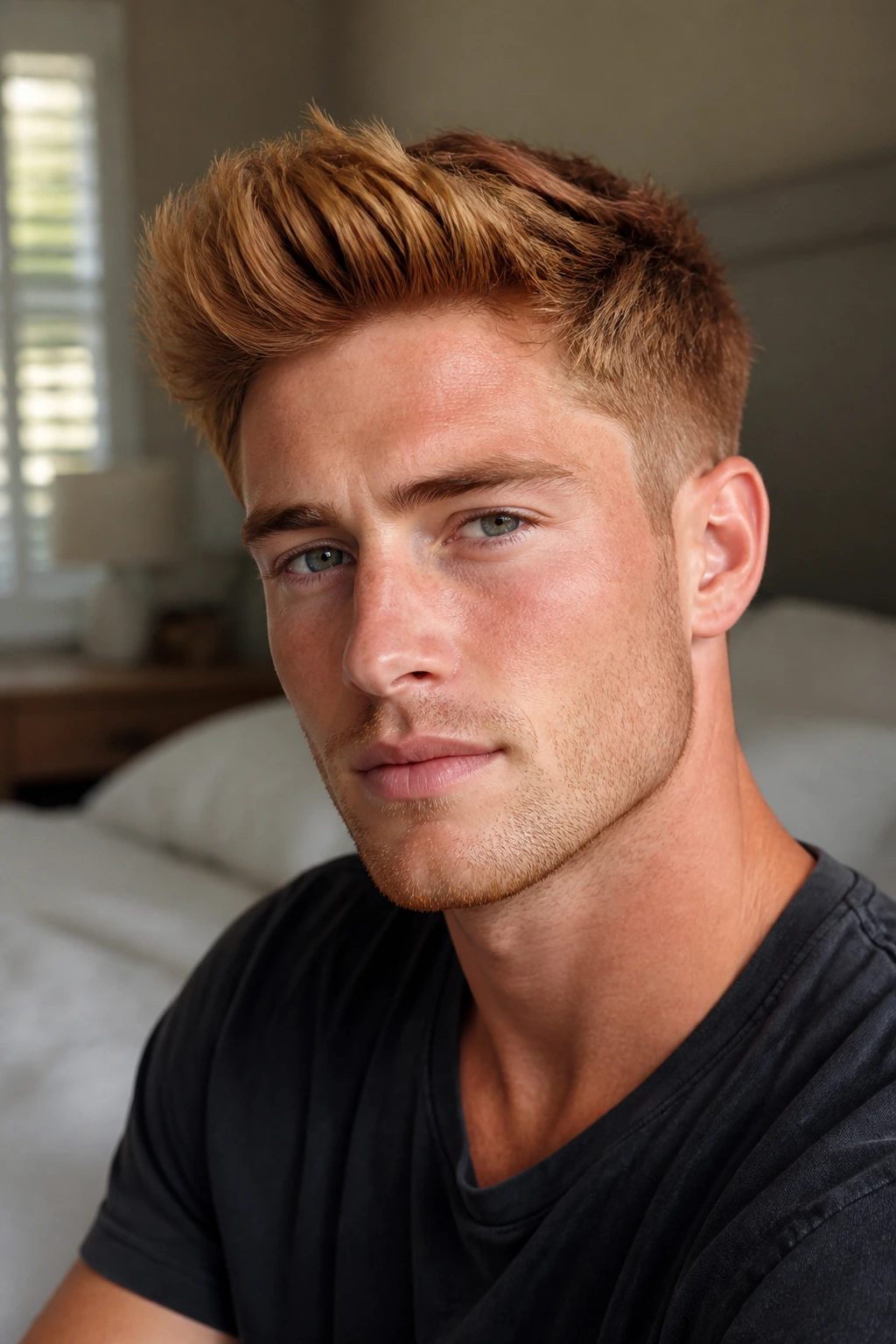
Strawberry blonde sits in a tricky place, and that’s exactly why it stands out. It pulls warm red-gold notes into the blonde family, which can look natural on some men and striking on others.
The best version is usually softer than people expect. You do not want orange hair. You want a warm, dusty tone that hints at copper without tipping into neon. On fair skin, freckled skin, or a face with a little natural redness in the beard, it can look incredibly good. On warmer skin tones, it needs more beige mixed in so the red doesn’t take over.
A brush-up style works well here because the front can show off the warmth without making the whole cut feel heavy. Light cream, a small round brush, and a quick lift at the front are enough. Heavy product kills the color. It makes strawberry blonde look thick in the wrong way.
Orange is the trap. Stay away from it.
18. Frosted Tips on a Taper Fade
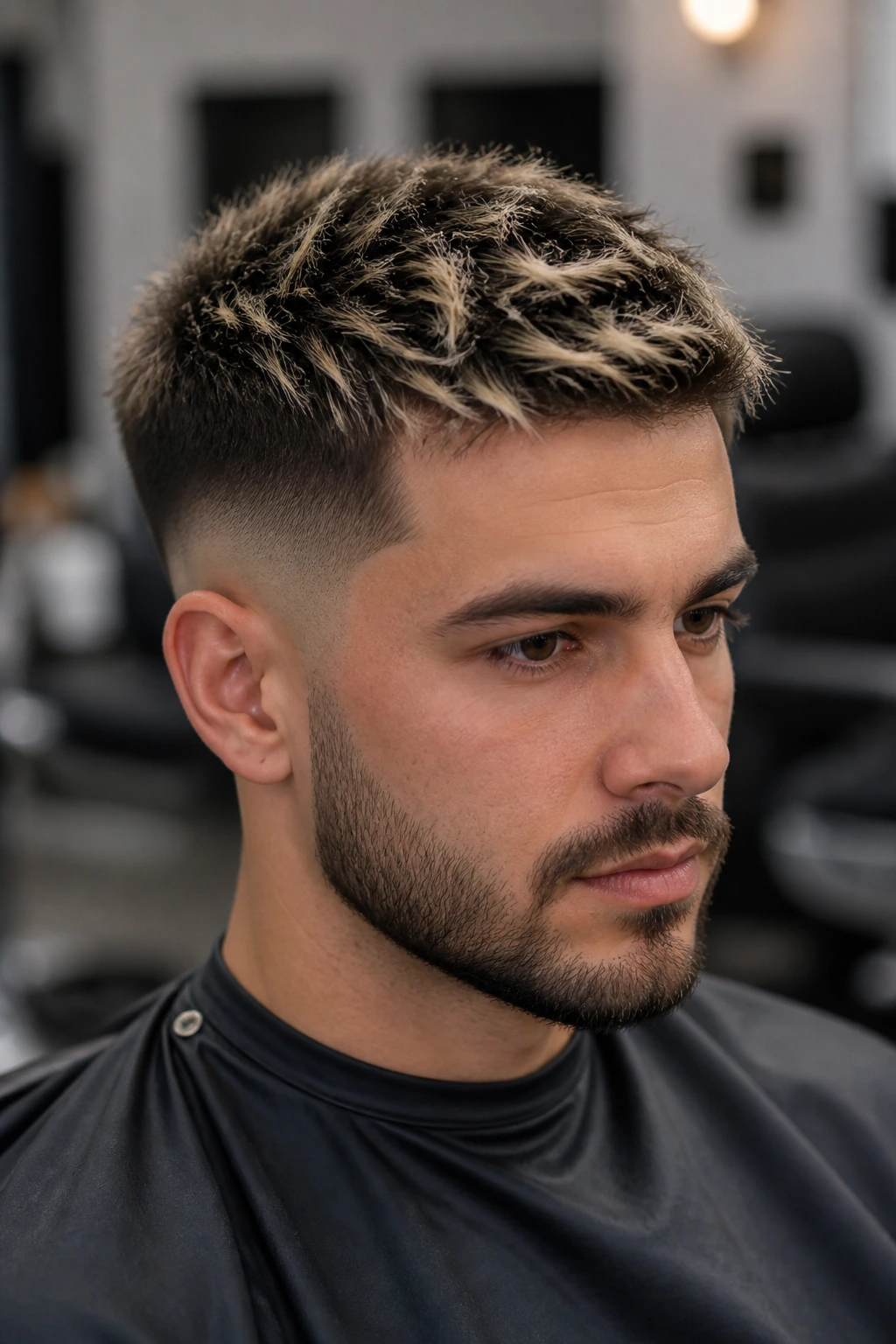
A newer frosted-tip look works because the taper fade keeps it from turning messy. The short sides sharpen the haircut, while the lighter ends on top give the color its edge.
Chunky frosting can still look clumsy if it’s done too hard. The better version keeps the tips narrow and the contrast controlled. Think of it as pointed accents rather than big blocks. That makes the blonde feel like part of the haircut instead of a throwback costume.
What to Ask For
- Dark base with lightened tips through the top only.
- A taper fade that stays clean around the sides and neckline.
- Matte texture on top, not stiff spikes.
- Narrow lighter sections rather than wide stripes.
This style works best on short to medium hair with enough density to hold the separation between dark and light. If the hair is too fine, the tips can look stringy. If it’s thick, the fade helps keep the shape under control.
I like this option for men who want a little attitude without bleaching every inch of hair. The contrast does the talking.
19. Linen Blonde Slick Back
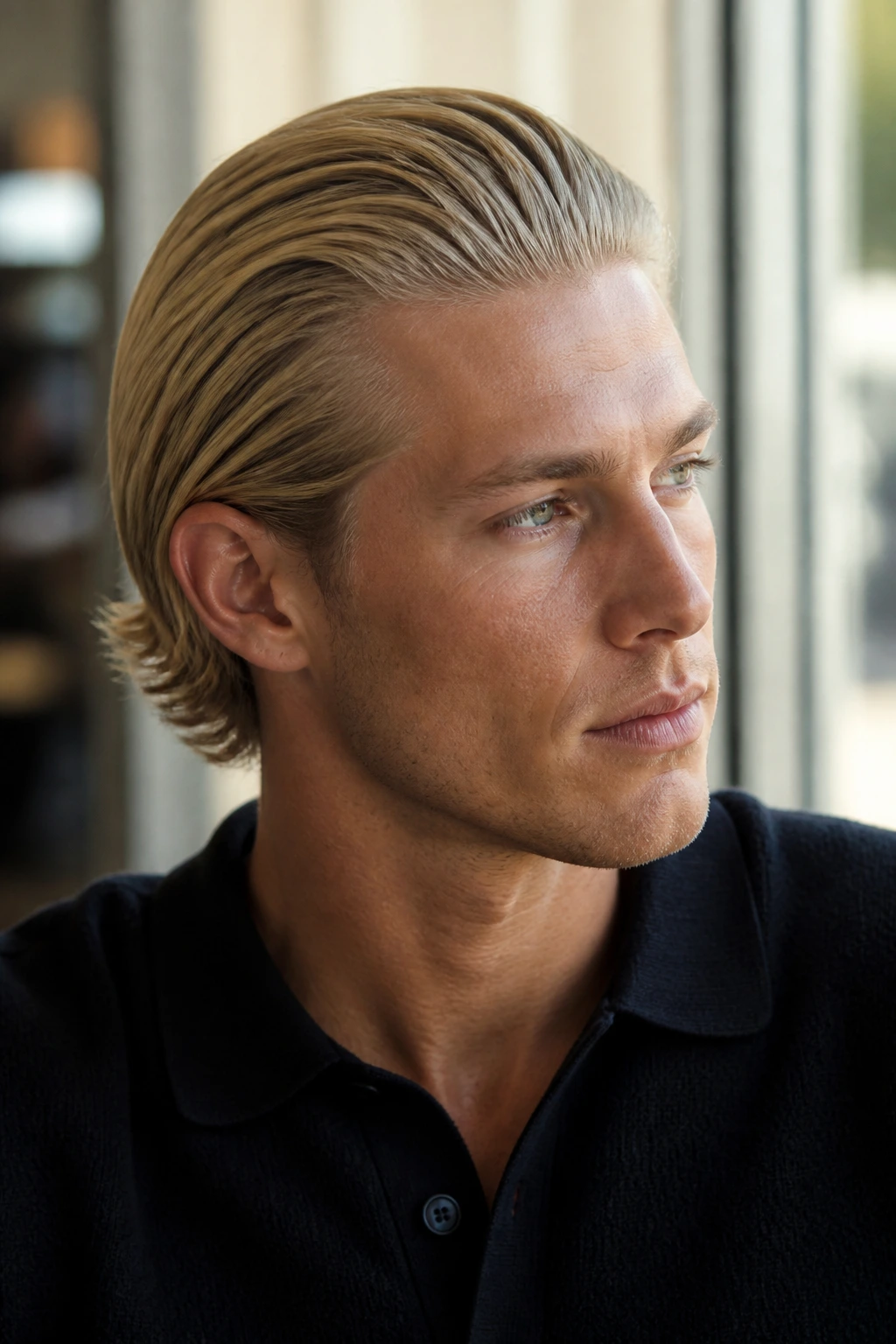
A slick back with linen blonde feels calmer than platinum. The shade is pale and neutral, but not icy to the point of looking severe. That makes it a strong match for men who like a polished finish.
The slick back works here because the hair is already moving away from the face. That gives the color a broad surface to show on, which is useful when the tone is subtle. Linen blonde tends to look best on straight or slightly wavy medium-length hair, where the combed-back shape can stay neat without too much fighting.
How to Keep It from Looking Wet
- Use a light cream or soft cream-pomade, not a greasy product.
- Comb the hair back while it’s damp, then let it set.
- Keep the sides tapered so the top has room to breathe.
- Ask for a neutral toner, not a yellow one.
The finish should look smooth, not slicked down in a heavy way. That’s the difference between a clean style and one that looks like it’s trying too hard. Linen blonde gives you polish without making the hair look sealed in place.
20. Dark Blonde With Shadow Roots
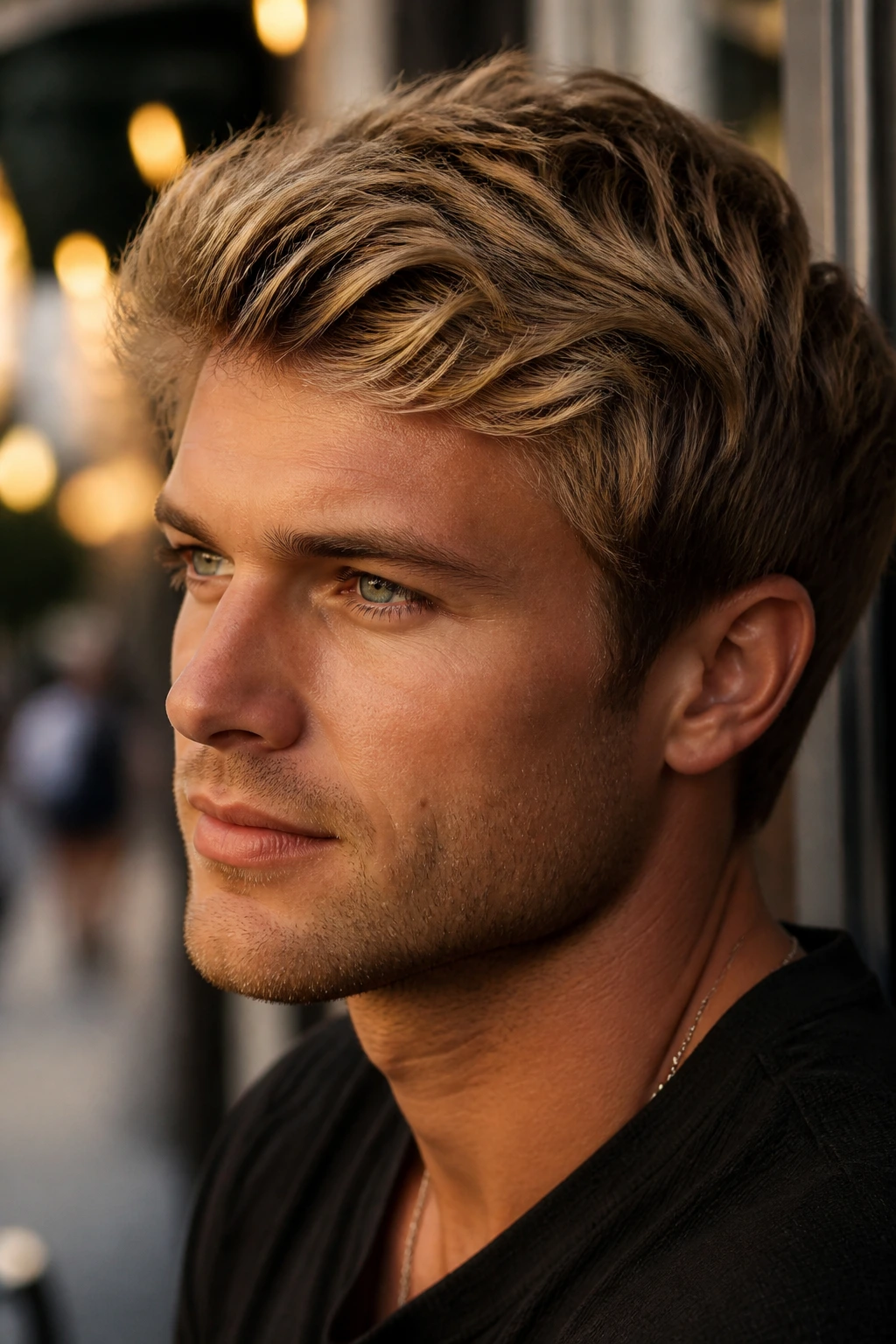
If you want blonde that won’t punish you two weeks later, dark blonde with shadow roots is the one I’d put money on. It’s the least fussy version of the whole group, and that alone makes it useful.
The shadow root softens regrowth, which is a blessing if your natural hair is medium brown or darker blonde already. Instead of a hard line at the scalp, you get a gradual fade from darker base to lighter mid-lengths and ends. That makes the color feel more expensive in the practical sense: it keeps looking fine after the first visit to the salon, which is more than some brighter blondes can say.
This shade is also good when you want your brows and beard to stay dark without clashing. The darker base ties the face together. On short hair, it looks tidy. On medium hair, it has depth. On wavy hair, it reads soft rather than flat.
If I were telling a friend to try blonde for the first time, this is where I’d start. It gives you room to go lighter later, and it doesn’t trap you in a maintenance routine you may hate by week three.
