



Champagne blonde looks easy from the chair and fussy in real life. Get the tone wrong by even a little, and the shade can drift yellow, beige in a dull way, or flat enough to wash out cool skin tones instead of flattering them.
Champagne blonde is picky.
That’s also why it works so well when it’s done right. Cool undertones usually need a blonde with pearl, ash, silver, or soft beige in the mix, not a heavy gold that fights the natural pink, red, or blue in the skin. A good colorist usually thinks in terms of level 9 and level 10 blonde, then softens it with a violet-beige gloss or a smoky toner so the finish stays airy, not brassy.
The shades below lean into that balance in different ways. Some are brighter and cleaner. Some keep a darker root so the blonde looks expensive for longer. A few are subtle enough for someone who wants the idea of champagne without the bright, high-maintenance feel that scares people off.
1. Pearl Champagne Waves
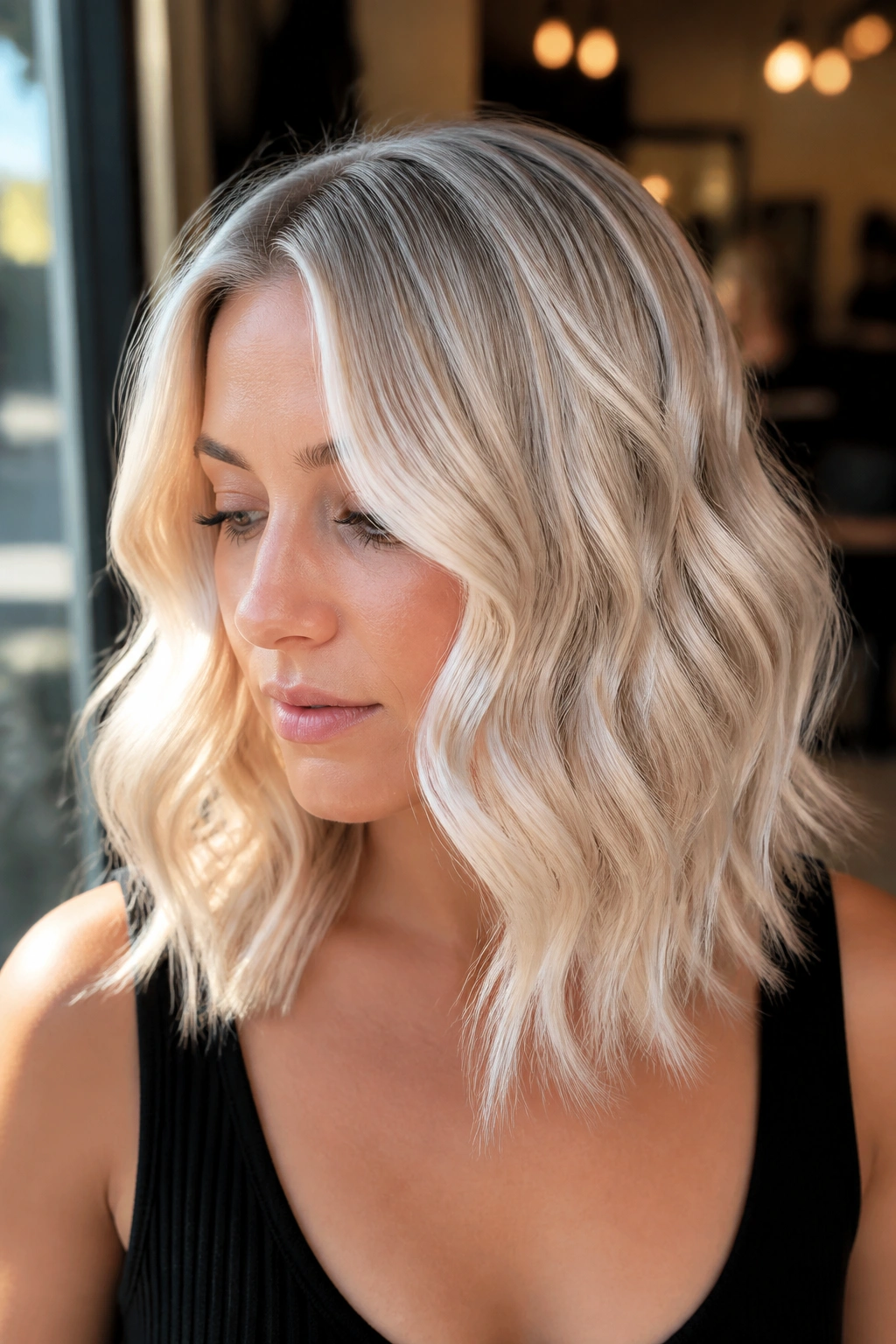
Pearl champagne is the one I reach for when someone wants blonde that looks soft, bright, and expensive without drifting warm. The pearl note gives the color that cool, almost satiny finish that sits nicely beside rosy cheeks and blue-based undertones. On wavy hair, the movement helps the lighter ribbons catch different angles, so the shade never feels one-note.
What makes it work: the tone stays closer to pearl than gold. That matters a lot for cool skin tones, because too much yellow can make the face look tired or a little flushed in the wrong way. Ask for a level 9 to 10 blonde with a pearl-beige gloss and soft face-framing brightness around the cheekbones.
A few things to keep in mind:
- Best on hair that already lifts cleanly to pale yellow.
- Looks especially good on shoulder-length cuts and longer waves.
- Needs a gloss refresh every 6 to 8 weeks to keep the pearl note crisp.
- Purple shampoo helps, but use it sparingly so the blonde does not go chalky.
Pro tip: ask your colorist to keep the ends brighter than the root. That tiny shift adds movement fast.
2. Ash-Root Champagne Bob
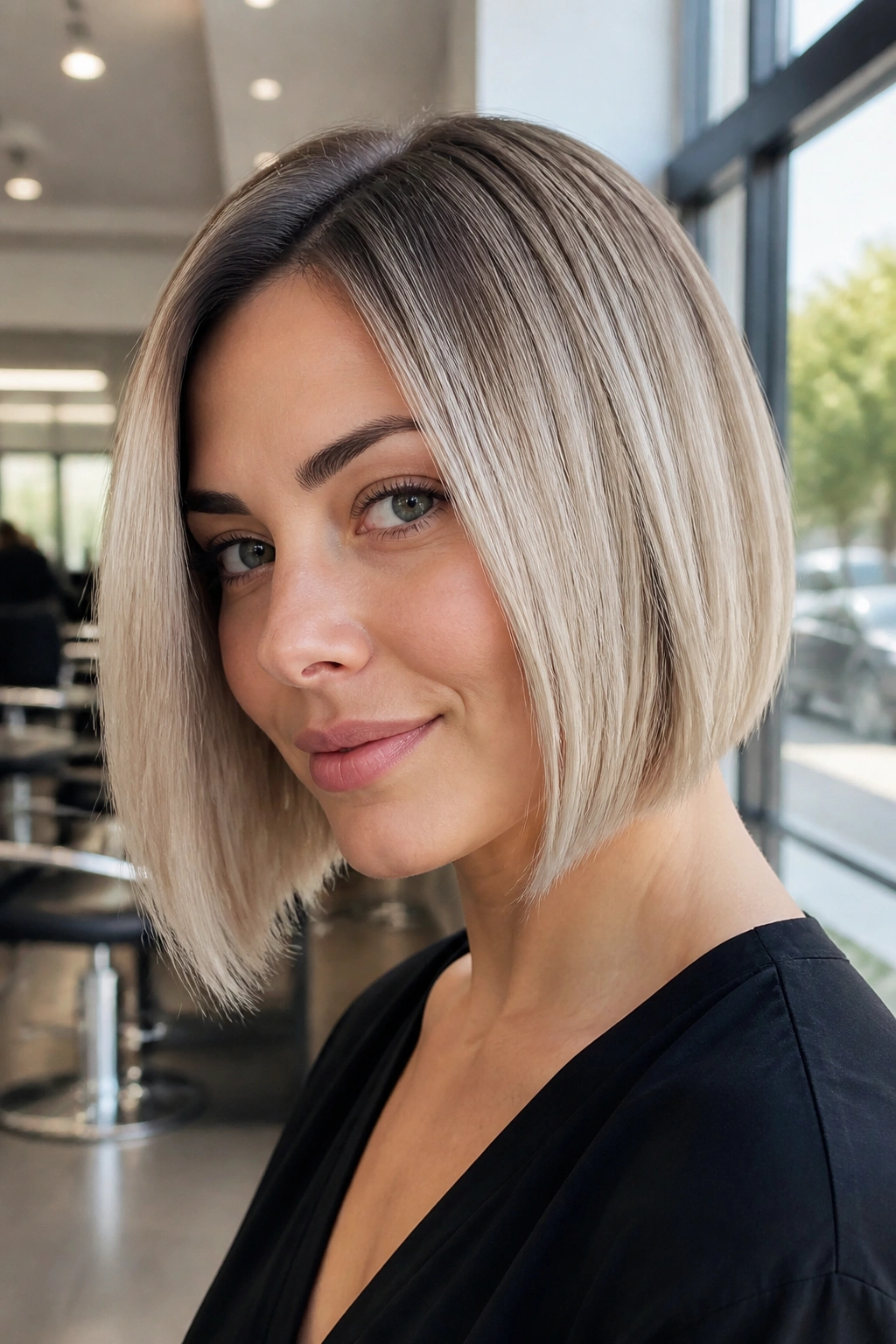
A bob with an ash root is one of those cuts that makes champagne blonde feel sharper and more modern. The root depth keeps the style grounded, while the lighter mids and ends still give you that pale, bubbly feel that people want from champagne blonde hair color ideas for cool skin tones. It’s a smart choice if you like structure more than softness.
The ash root does a lot of work here. It keeps regrowth from looking stark and gives the face a cooler frame, which helps if your skin leans pink or freckled. A chin-length or jaw-skimming bob makes the color look intentional instead of overdone. And yes, the haircut matters. A blunt line makes the blonde look cleaner. Choppy ends can make it read more casual.
Why it flatters cool undertones
The root acts like a shadow around the face, and that shadow can be flattering in a way a bright blonde root never is. It gives the eye a place to rest. That means the blonde can stay lighter without screaming for attention.
Ask for:
- A level 7 to 8 ash root melt.
- Pale champagne through the mid-lengths.
- Soft beveling around the ends so the bob does not puff out.
Skip this if you want a very high-contrast blonde. This one is about polish, not drama.
3. Cool Beige Champagne Balayage
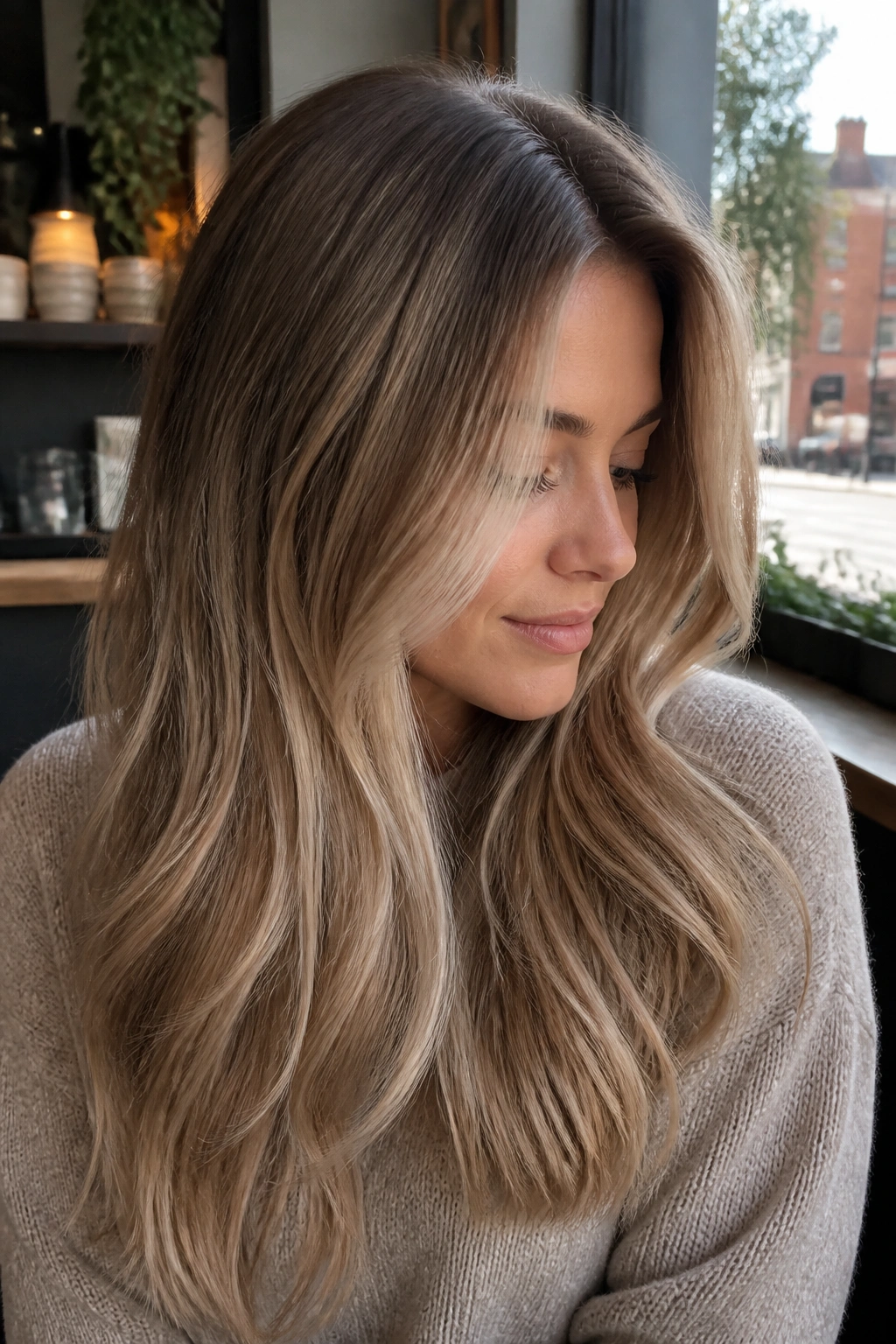
This is the shade for someone who wants dimension more than brightness. Cool beige champagne balayage takes the warmer edge off blonde and replaces it with a soft, creamy finish that still feels light. It works especially well on medium brown or dark blonde bases where full bleaching would be too harsh.
Balayage keeps the color hand-painted and blended, so the blonde doesn’t sit in obvious stripes. That matters on cool skin tones because hard yellow pieces can look a little loud next to pale skin. Beige champagne, done right, reads like soft light rather than yellow dye. It’s calm. In the best possible way.
How to ask for it
A colorist will usually understand the goal faster if you describe the finish, not the name alone. Say you want cool beige champagne ribbons, no banana warmth, and a soft shadow near the root. If your hair pulls orange easily, ask for a toner with violet or blue-violet support.
- Best for long layers and loose blowouts.
- Low contrast, so it grows out softly.
- Needs less frequent touch-ups than full blonde.
- Works well if you already wear silver jewelry and cool makeup shades.
4. Silver Champagne Money Piece
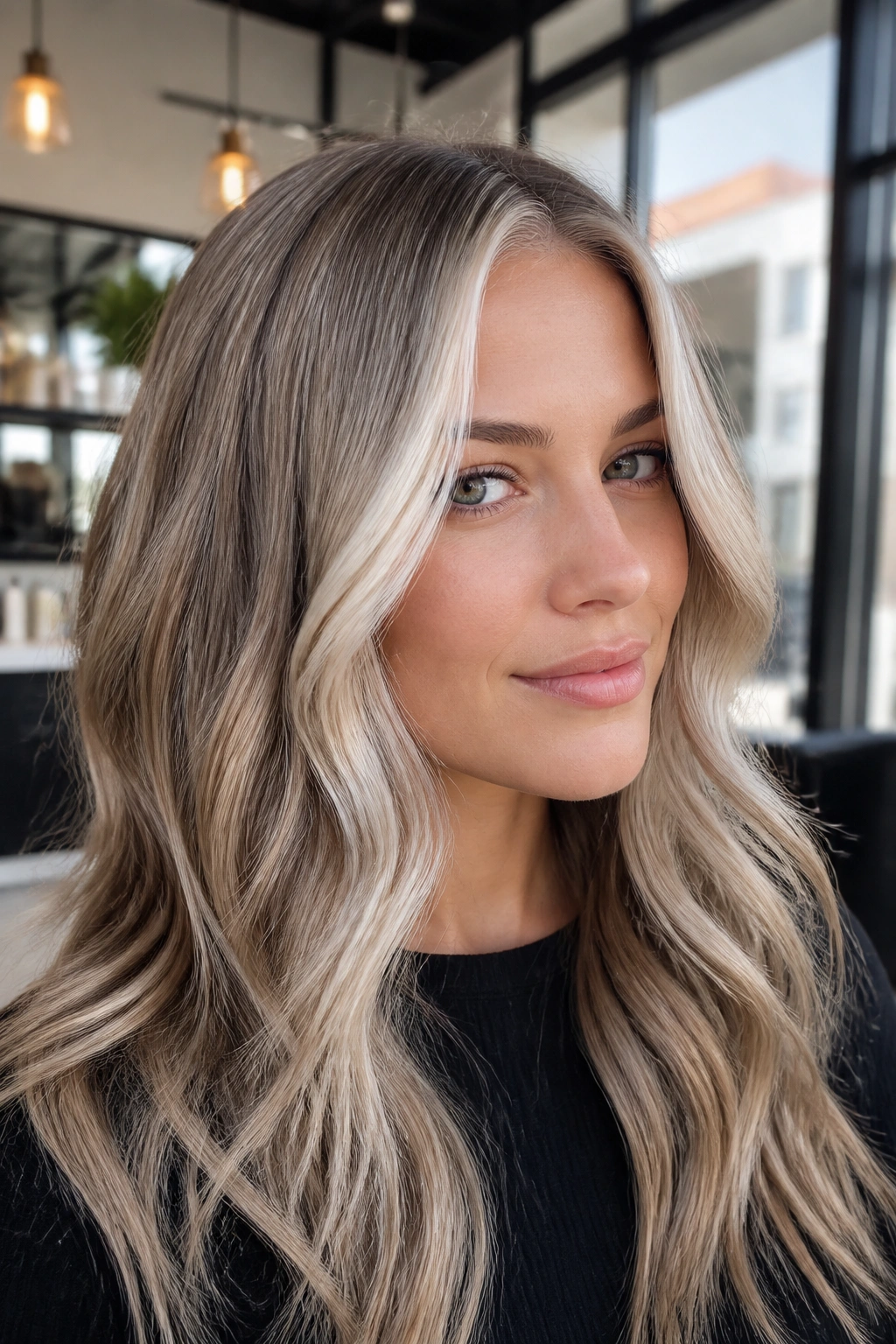
A silver champagne money piece is bold, but not in a loud way. It brightens the front of the face with a pale, cool blonde that can almost read frosted indoors and luminous outside. If your skin tone likes icy makeup, clean white shirts, and silver hoops, this is one of the easier ways to wear champagne blonde without warming it up too much.
The trick is keeping the money piece cool enough to flatter, but not so silver that it looks gray. That’s a small line, and honestly, it’s easy to cross if your toner is too strong. The rest of the hair can stay a little deeper—beige blonde, mushroom blonde, even a soft dark root—so the front pieces do the bright work.
A money piece also gives you a shortcut. You get impact without lifting the entire head to level 10. That means less damage and a little more sanity on the grow-out. Good trade.
Best when: you want your haircut to look sharper, your eyes to stand out, and your skin to keep its natural coolness instead of getting warmed over by the color.
5. Smoky Champagne Melt
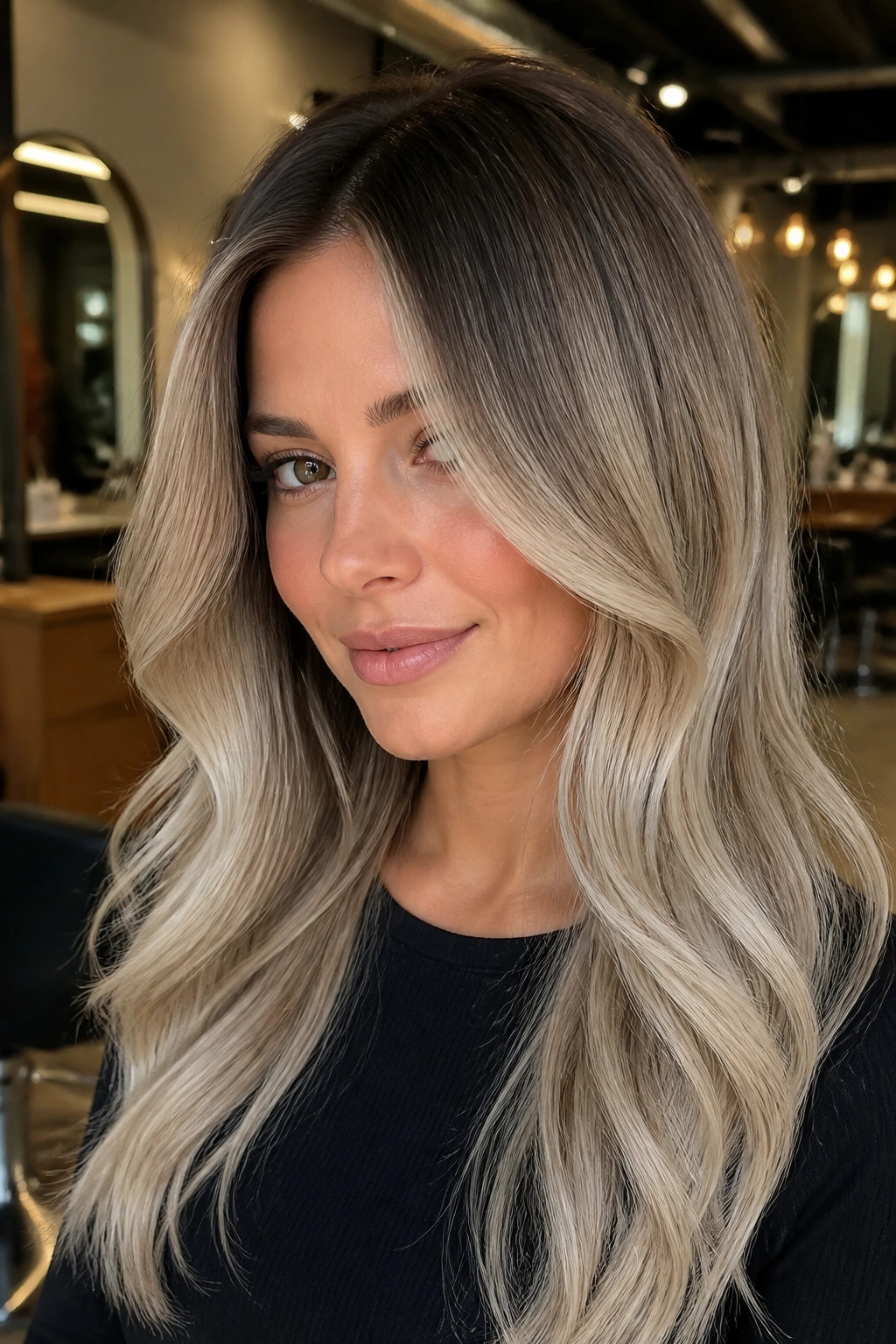
Smoky champagne is one of the easiest ways to make blonde feel expensive without looking harsh. It starts deeper at the root, then melts into a pale, muted champagne through the mids and ends. The smoke in the tone takes the edge off brass, which is exactly what cool skin tones tend to need when they go blonde.
There’s also a practical upside. A smoky melt hides regrowth better than a bright solid blonde, so you can stretch salon visits a little longer. If your natural color is dark blonde or light brown, this can be a very forgiving choice. It looks deliberate even when the roots start to come through.
The finish should never feel muddy. That’s the mistake. Smoky does not mean dull. It means the blonde has a cool veil over it, like a little haze over glass.
What to ask for
- A root shadow that stays one or two levels deeper than the ends.
- Champagne ribbons with a beige-ash toner.
- Soft face framing to keep the color from looking too heavy.
If you like polished hair that doesn’t scream upkeep, this one has real appeal.
6. Babylight Champagne for Cool Brunettes
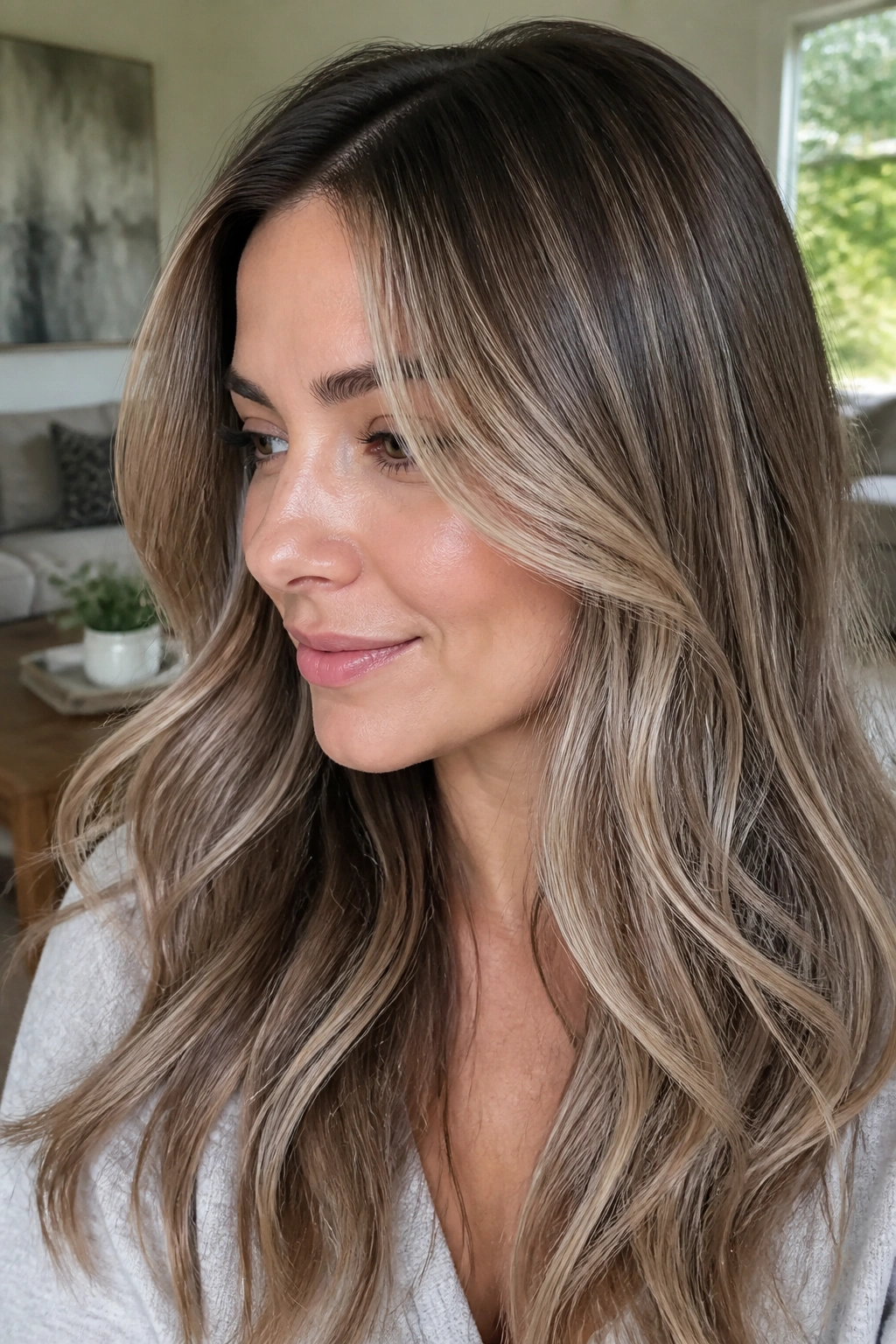
Babylights are tiny, fine highlights, and that’s exactly why they work so well on brunettes who want champagne blonde without a huge transformation. The thin placement makes the blonde look woven in, not pasted on. On cool skin tones, that subtlety matters. You get brightness around the face and a cool, airy finish without a chunky contrast that can look too warm or too obvious.
Why it works
Babylights mimic the way hair lightens naturally in scattered sunlight. That’s the whole charm. Instead of one broad stripe of blonde, you get a soft spread of pale pieces that can be toned toward pearl or beige. The result is lighter hair that still feels believable.
Ask for finer sections around the hairline and crown, then a few wider ribbons underneath for depth. That mix keeps the blonde from looking flat. It also helps if you wear your hair straight a lot, because straight styles can expose weak color placement fast.
- Best on brunette bases that lift to orange only with effort.
- Good choice if you want gentle change, not a full blonde overhaul.
- Needs careful toning so the light pieces stay cool rather than yellow.
This is one of my favorite options for people who want blonde to feel expensive and understated at the same time.
7. Icy Champagne Lob
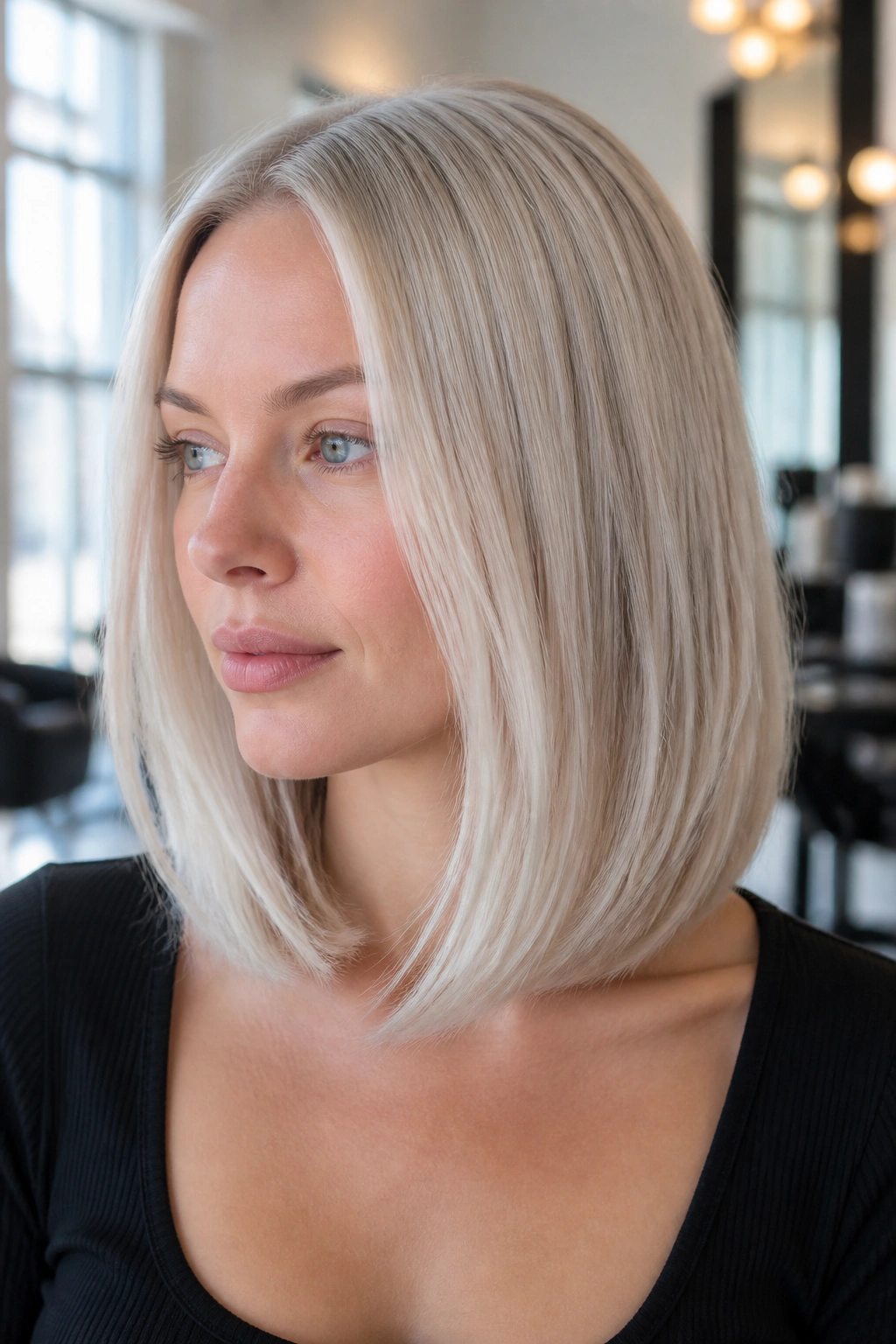
A lob gives icy champagne room to breathe. The cut sits right around the collarbone, which means the blonde can look crisp without needing extra length to soften it. If the color is toned toward pearl and silver, the shape feels sleek and fresh, especially on cool skin tones that can handle lighter contrast.
The biggest win here is balance. A lob can get away with a brighter champagne than a long, dense cut because the shape itself is clean and simple. You don’t need much fuss. A smooth blowout or a tucked-behind-the-ear style is enough. That’s handy if you don’t want a hairstyle that asks for a curling wand every morning.
Watch the ends. Icy blonde shows dryness faster than deeper shades, so a trim every 8 to 10 weeks keeps the line looking sharp. If the ends go fuzzy, the whole color can feel a little older than it is.
A gloss with a violet base helps keep the icy note from drifting yellow. Don’t overdo it, though. Too much purple can make the blonde look dusty. One good toning service between full highlights usually does the job.
8. Mushroom Champagne Blonde
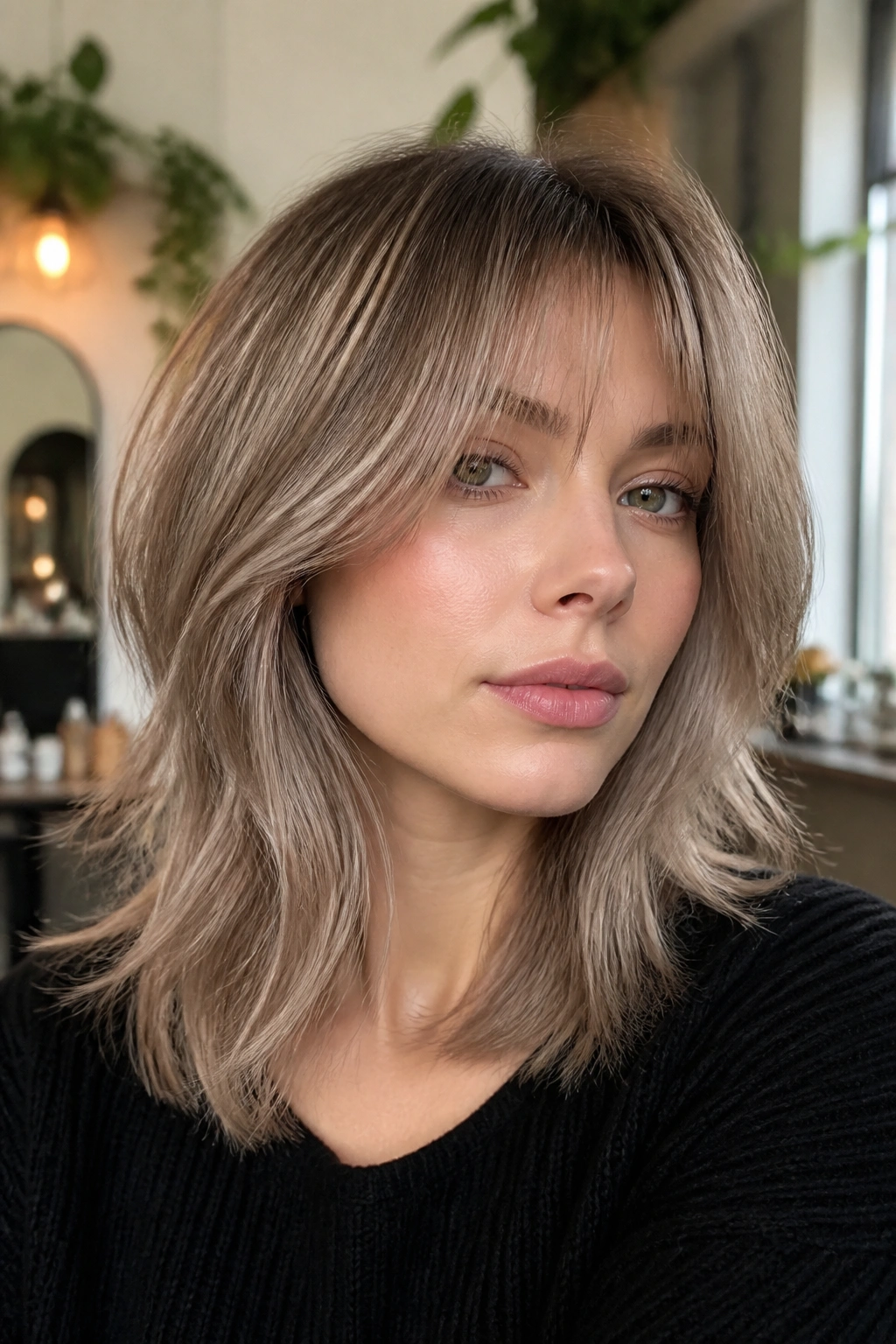
Mushroom blonde is the quiet cousin in this group, and I mean that in the best way. It sits between beige, ash, and soft taupe, which makes it a strong match for cool skin tones that don’t want an over-bright blonde frame. Add just enough champagne sparkle, and the color stops looking flat.
This shade is especially good if your natural color is already on the cooler side. Light brown hair with a smoky undertone can lift into mushroom champagne without a hard jump. The finish feels dimensional, almost soft-focus, and that’s a useful thing around the face. It doesn’t compete with skin. It supports it.
I like this on shag cuts, mid-length layers, and thick hair that can handle a more muted tone. Straight, shiny hair shows the beige-gray detail very well. Curly hair can do it too, though the dimension needs to be placed a bit higher so it doesn’t disappear in the curl pattern.
One note: mushroom champagne is not the place to chase brightness. If you push it too light, you lose the earthy coolness that makes it interesting.
9. Champagne Ombré with a Shadow Root
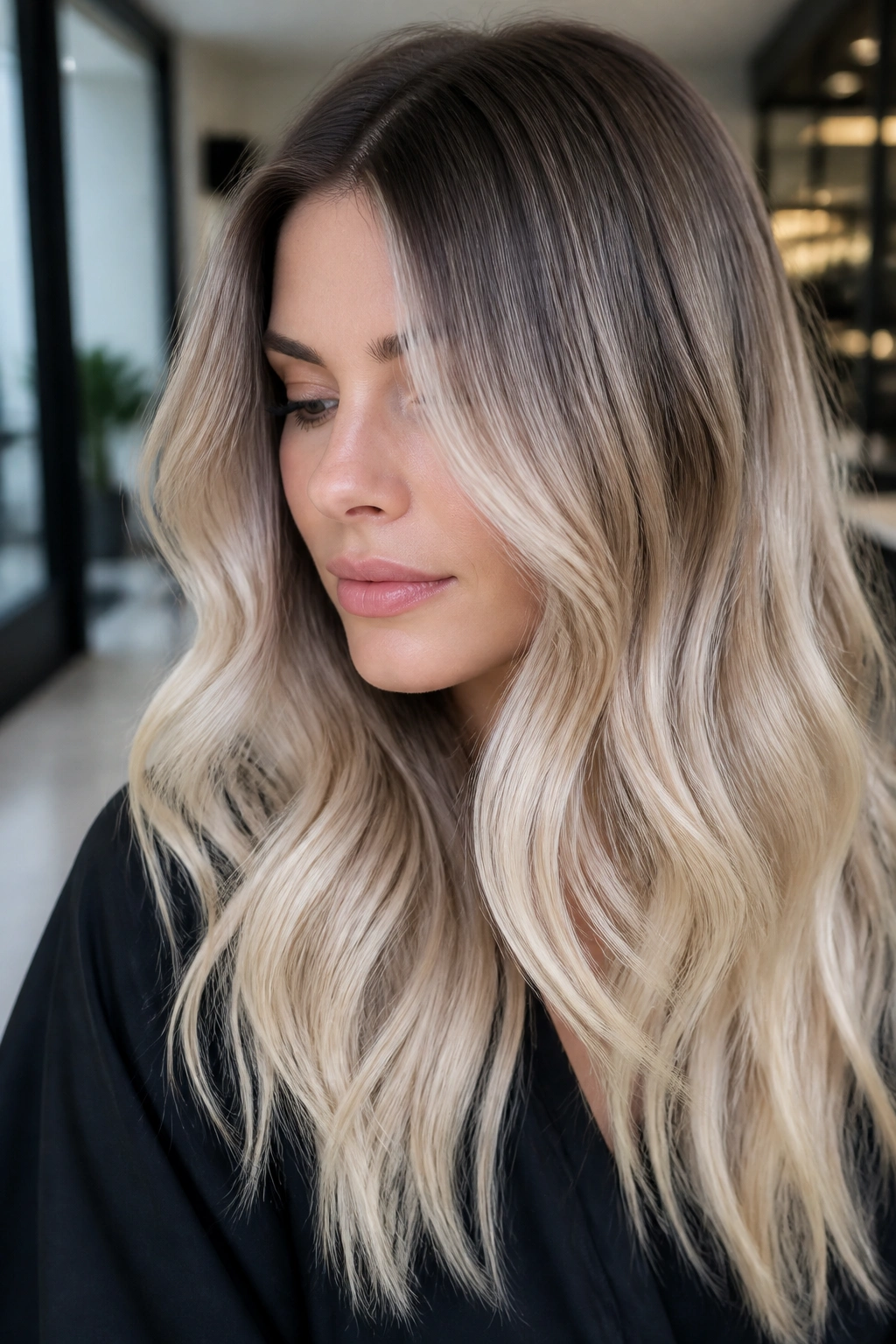
Ombré works when you want the color to move from deeper at the top to lighter at the bottom without obvious striping. With a champagne ombré, the root stays shadowy and cool, then the length opens into pale beige or pearl blonde. Cool skin tones usually benefit from that darker top, because it keeps the face framed instead of blown out.
This is also one of the easier ways to wear champagne blonde if your hair is naturally darker. You do not need every inch lifted to the same level. The gradient does the heavy lifting. I’ve always liked ombré for people who want blonde that grows out gracefully and still looks intentional at week eight or ten.
Best version of this shade
- Root: soft ash or neutral brown.
- Mid-lengths: beige champagne.
- Ends: pale pearl blonde with a clean gloss.
The transition should feel smooth, not like two separate colors stacked on top of each other. If the fade is too abrupt, the whole thing can look dated fast. If it’s blurred right, though, it has a clean, worn-in charm that works with cool makeup, silver accessories, and minimal styling.
10. Opal Champagne Pixie
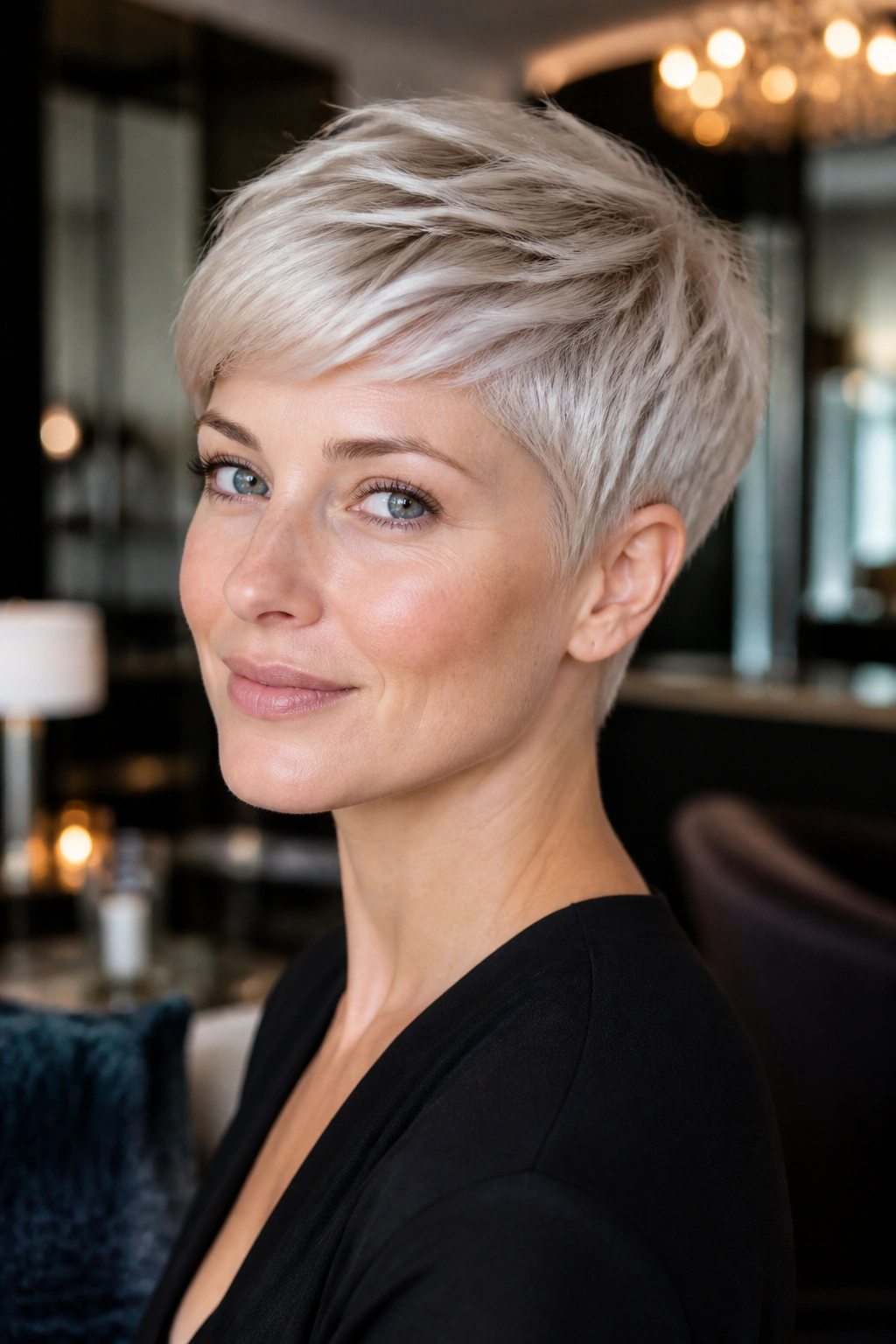
A pixie gives champagne blonde a chance to look sleek instead of soft. That’s the fun of it. Opal champagne, with its pale pearl and slightly iridescent finish, can make short hair look bright, neat, and expensive in a way long hair sometimes can’t. On cool skin tones, the effect is crisp, not sugary.
Short hair shows tone more than length, which means every little color choice matters. If the blonde turns too yellow, you’ll see it fast. If it leans too silver, it can look flat. Opal sits in the middle. It gives the cut a soft shine with a cool edge, and that makes a pixie feel deliberate rather than harsh.
How to wear it
Ask for lighter pieces on top and a slightly deeper perimeter so the shape has some outline. That stops the cut from disappearing into a single pale mass. A cream wax or a light styling paste can separate the top layers and show off the color shifts.
- Best for strong cheekbones and neat, close-cropped shapes.
- Needs frequent toning because short hair exposes brass quickly.
- Looks sharp with bold brows and simple earrings.
This one is not for someone who wants invisible maintenance. It’s for someone who likes a clean line and doesn’t mind making the color the point.
11. Satin Champagne Highlights on Long Layers
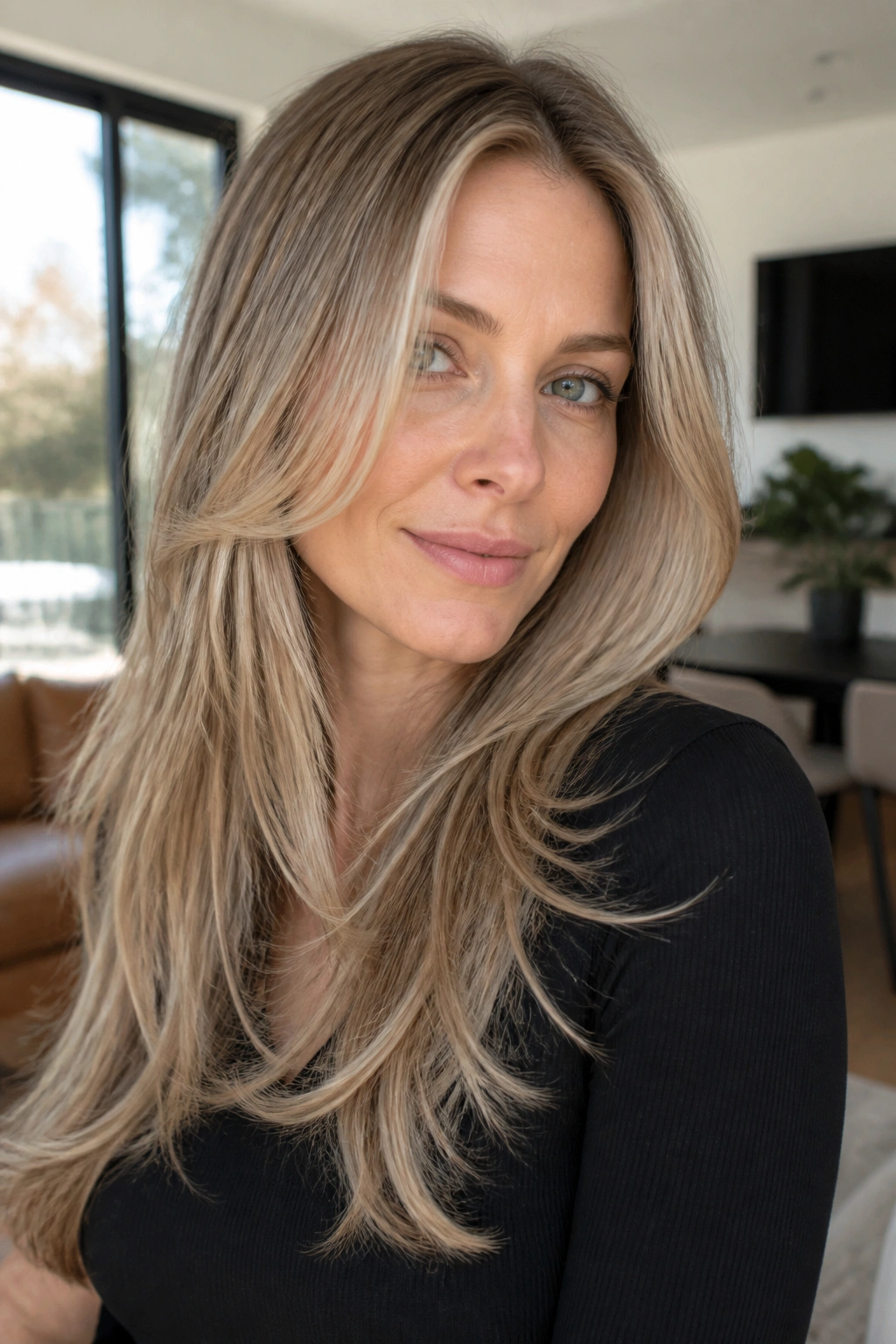
Long layers can swallow a weak blonde. Satin champagne fixes that by adding a sheen that looks smooth, cool, and softly reflective instead of streaky. The highlight placement should be broad enough to show up in movement, but not so chunky that it breaks the hair into obvious bands.
Why the satin finish matters
Satin blonde sits in a sweet spot between matte and shiny. It has enough light bounce to look healthy, but not so much brightness that it veers warm. That makes it ideal for cool skin tones, especially if your base color is medium brown or dark blonde.
Think of the placement as stitched into the haircut. The longer layers need lights through the mid-lengths and some around the face, while the underside can stay deeper for contrast. That gives the hair depth when you wear it over one shoulder or flip it back after a blowout.
A soft gloss every few weeks keeps the satin note from turning dull. If the ends are porous, they’ll drink toner faster than the rest of the hair, so ask for a gentler formula there. Hair history matters. Bleached ends never behave like virgin hair, and pretending they do is a fast way to get an uneven finish.
12. Frosted Champagne Ribbon Highlights
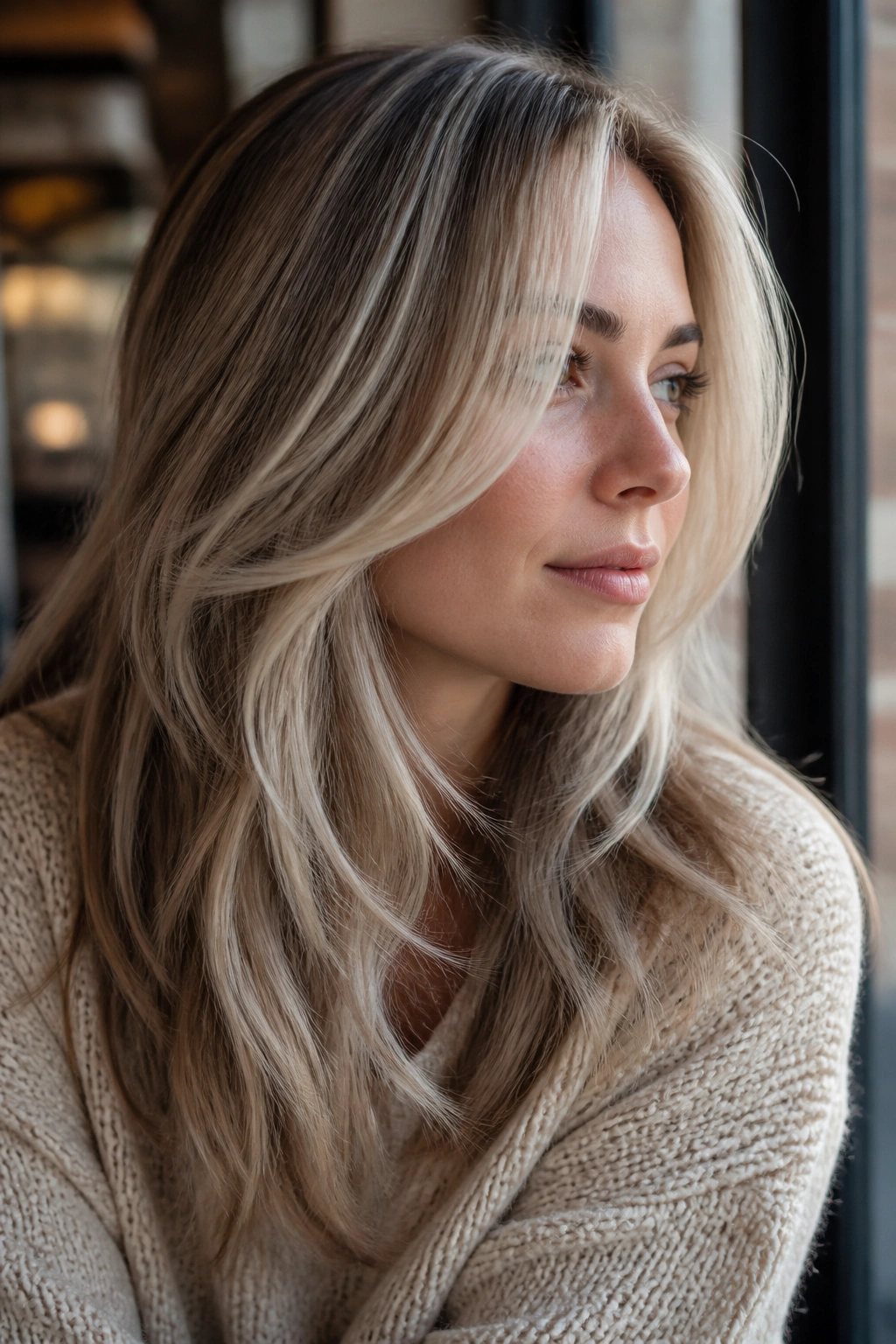
Ribbon highlights are wider than babylights and softer than chunky streaks. They slide through the hair in pale bands that can make champagne blonde feel airy and dimensional. Frosted is the right word here because the tone should look cool and lightly glazed, not bright and sunny.
This style is especially good if you have a layered cut with texture. The ribbons show up between bends in the hair, which gives the blonde movement without needing a perfect curl. On cool skin tones, the frosted edge keeps the color from fighting blush, freckles, or visible redness.
What to watch for
- Too many ribbons can make the blonde look striped.
- Too little contrast can make the color disappear.
- A beige-violet gloss usually keeps the finish on track.
The sweet spot is usually a few brighter panels around the face and crown, then softer, thinner ribbons through the back. That mix gives you lift where people notice it first and calm where you don’t need as much drama. It’s a smart pick for someone who wants dimension without a lot of fuss.
13. Champagne Gloss Over Prelightened Blonde
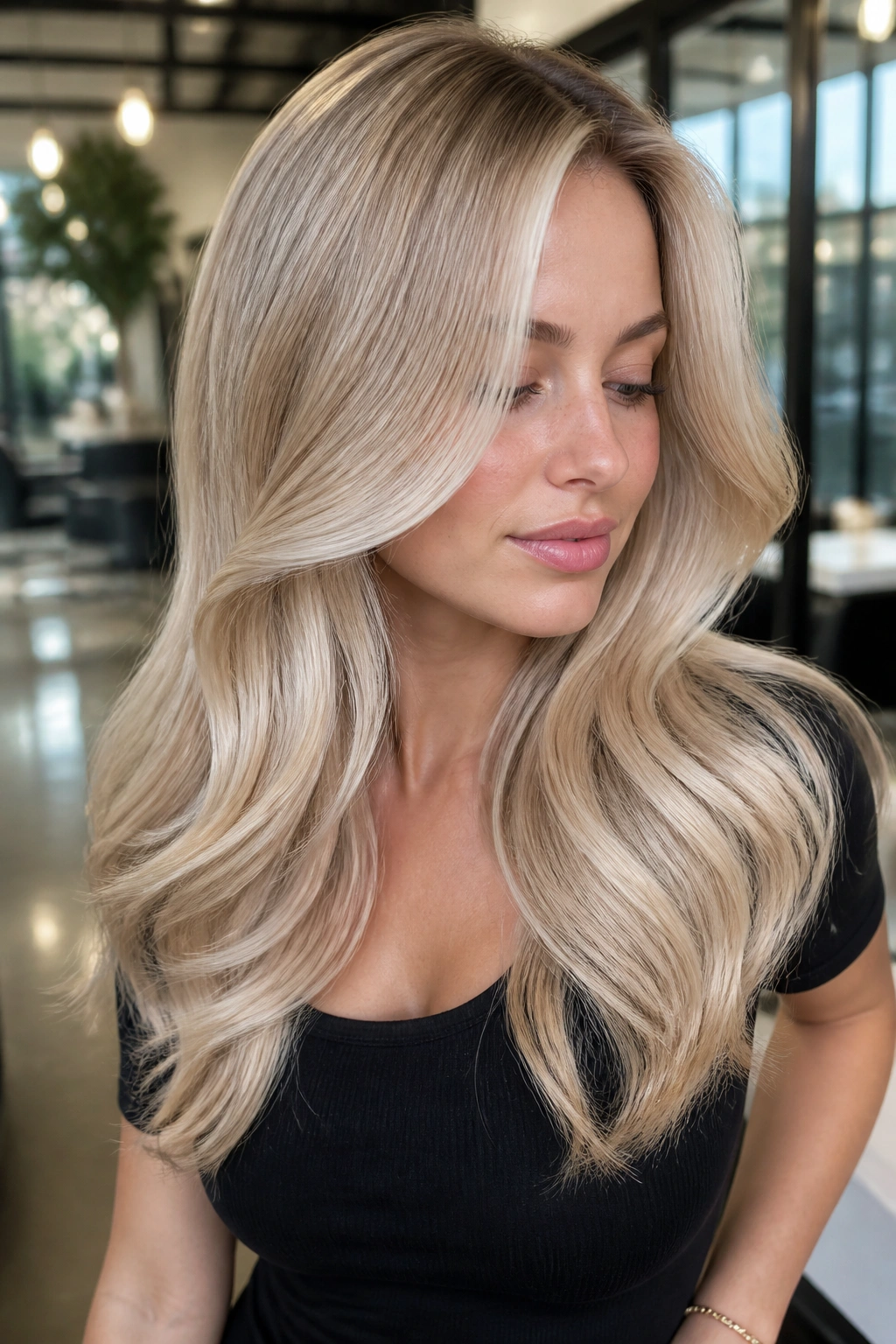
If your hair is already light, a champagne gloss can change the whole mood without another round of bleaching. That’s one of the neatest tricks in blonde color. Prelightened hair gives the gloss a clean canvas, so the champagne can sit on top like a soft filter. On cool skin tones, that filter should lean pearl, beige, or violet-beige.
A gloss is also the easiest way to fine-tune tone. If your blonde has gone too icy, a soft champagne gloss can warm it just a touch without turning it gold. If it’s looking yellow, a cooler gloss pulls it back toward a clean, polished finish. It’s a small service with a big visual payoff.
The color usually lasts shorter than full highlights, which is both the downside and the upside. You get flexibility. You also have to return for refreshes more often.
Best paired with: straight blowouts, sleek buns, and polished waves. A glossed blonde can look almost liquid when the cut is tidy and the hair is smooth. If the cut is shaggy or broken up, you’ll still get a pretty result, but the tone will read less sleek and a little more casual.
14. Dimensional Champagne for Curly Hair
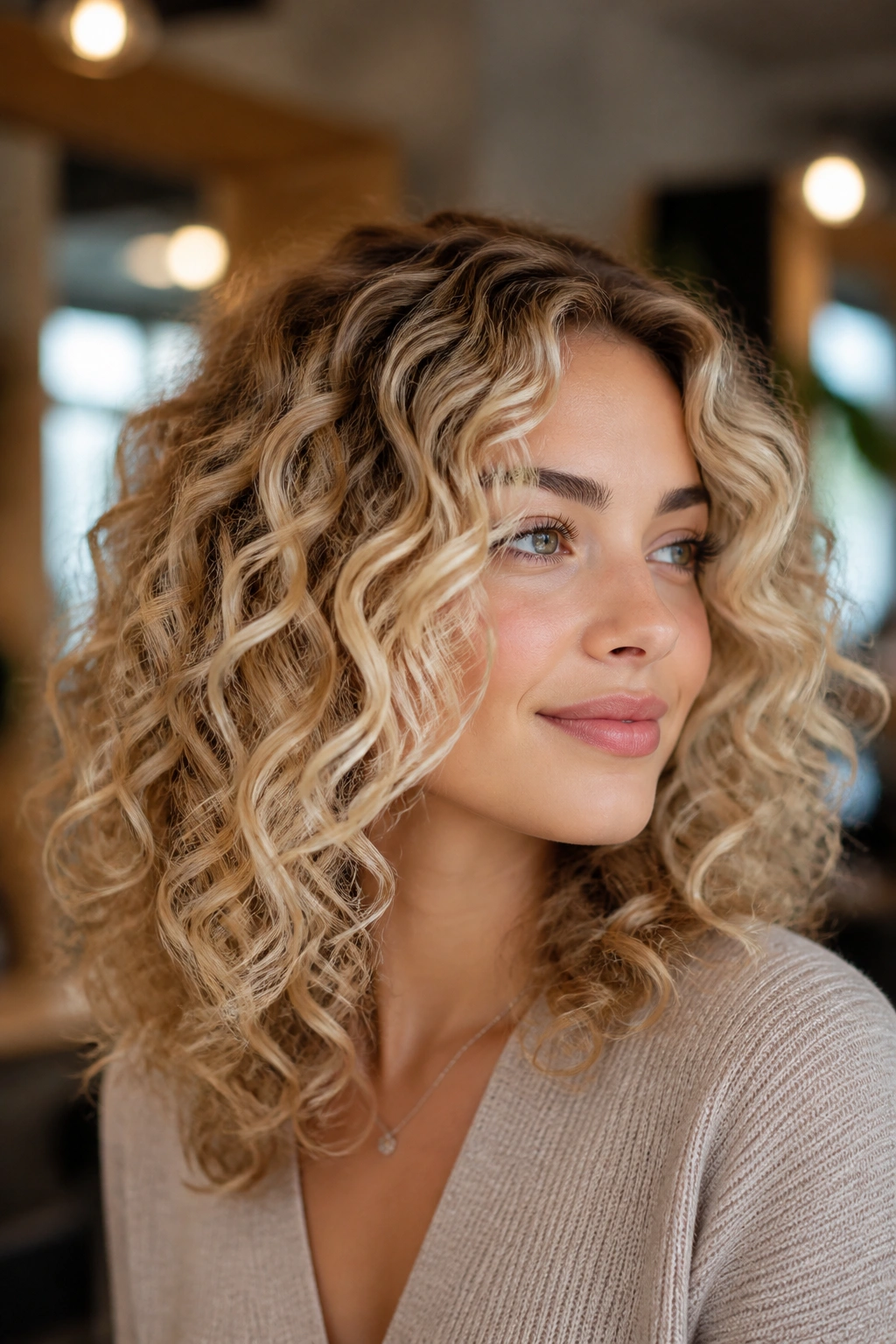
Curly hair needs color placement that respects the curl pattern, or the blonde can look blotchy. Dimensional champagne solves that by spacing the lighter pieces where the curls naturally open. That keeps the color from sitting in one flat surface and gives cool skin tones a lighter frame around the face without turning the whole head into a bright helmet.
The best champagne shades for curls usually live in the pearl-beige family. That range keeps the blonde soft enough to blend, but light enough to reflect through the curl clumps. You want the curls to look springy and defined, not overbleached and fuzzy. That difference matters more than people think.
A smart curl map
- Lighter pieces near the top and front.
- Slightly deeper ribbons underneath for depth.
- Toner chosen to keep brass out of the porous ends.
Curly hair also benefits from a little distance between the color and the scalp. A soft root keeps the grow-out from looking harsh and helps the curl shape stay readable. If you wear your curls big, this is one of the nicest ways to do champagne blonde without losing texture.
15. Beige-Pearl Champagne with Curtain Bangs
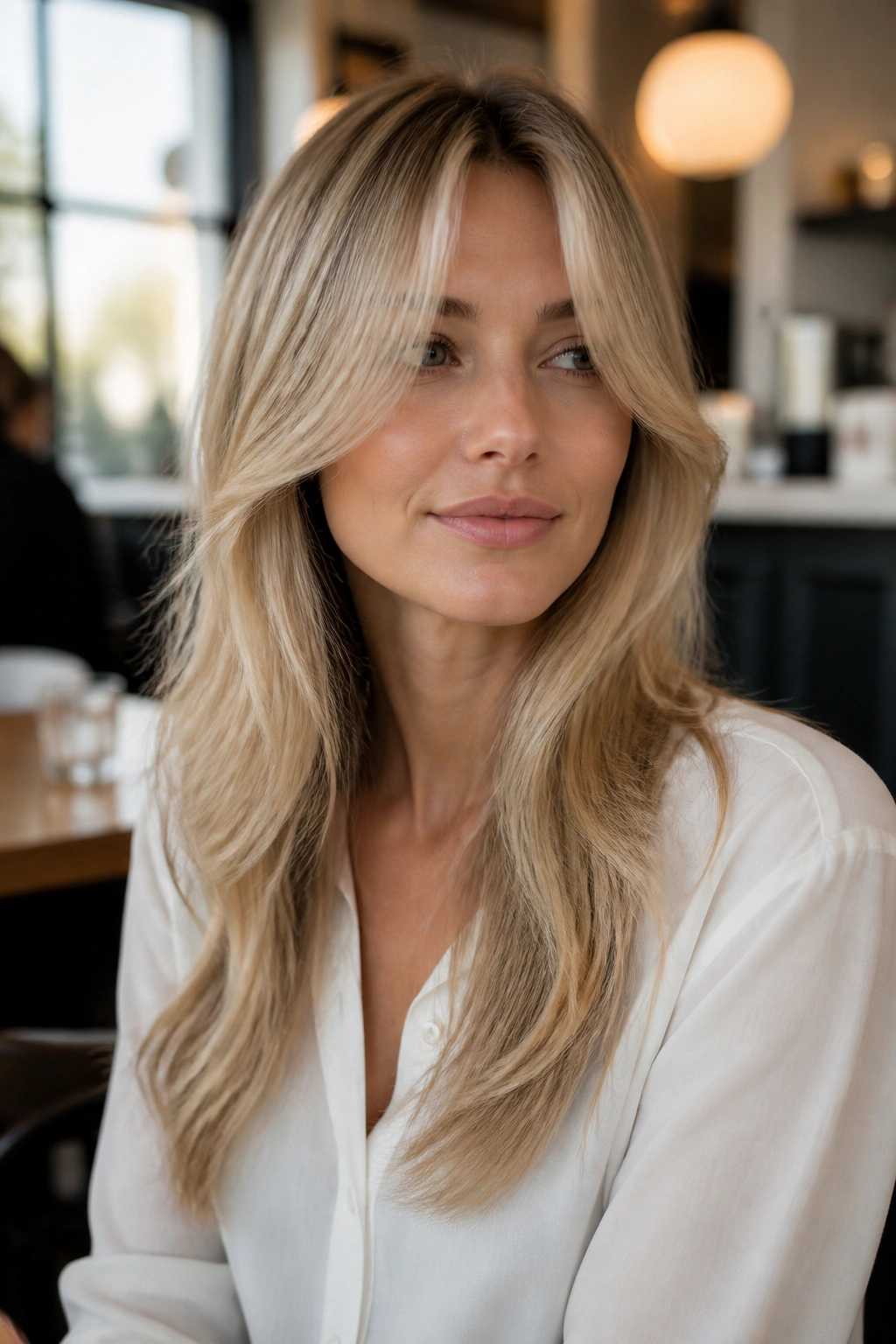
Curtain bangs change the whole face shape, which means the blonde around them has to behave. Beige-pearl champagne does that job well because it gives brightness near the eyes without tipping into warm gold. Cool skin tones usually look best when the front pieces are soft but clear, and curtain bangs are the perfect place to show that.
The bangs should be slightly lighter than the rest of the front so they separate from the hairline. That doesn’t mean stark blonde. It means enough lift that the fringe isn’t swallowed by the rest of the hair. Long layers behind the bangs help, too, because the cut needs movement for the color to look natural.
This is one of those styles that looks easy and actually needs a thoughtful hand. If the bangs are too golden, they can pull the whole face warmer than you want. If they’re too icy, the softness goes away. Beige-pearl solves the problem by staying neutral and polished.
A center part, loose bend, and a little face-framing brightness make the shade look lived-in rather than severe. That’s the real goal here.
16. Airy Champagne Foilyage
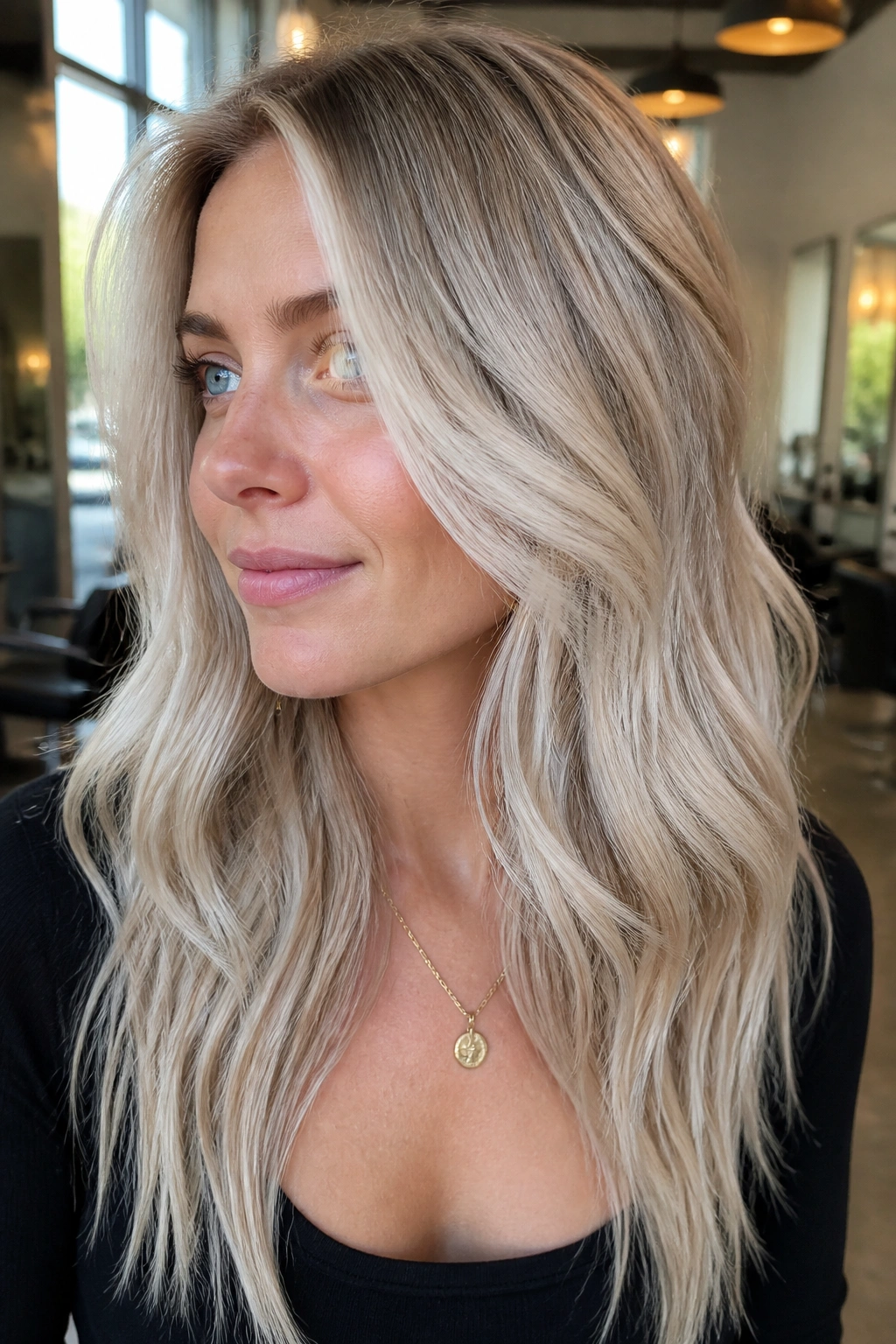
Foilyage gives you brightness where balayage sometimes stays too soft. It combines hand-painted placement with foil lift, which means you can push the blonde lighter while still keeping the placement blended. For cool skin tones, that matters because the color can stay pale and airy without turning into a solid sheet of yellow.
This is a strong pick if you want more impact than babylights but less obvious stripe work than traditional highlights. The lighter pieces can be placed around the face, crown, and top layers, while the lower sections stay deeper. The result is lift that moves with the haircut.
Why foils help
Foils trap heat, so hair lifts more evenly and can reach a brighter level. That gives the colorist a cleaner pale base for toning into champagne rather than hoping the lift lands where it should. If your hair resists lightening or tends to go orange, foilyage can make a big difference.
- Good for medium and dark blonde bases.
- Excellent when you want a brighter blonde with soft edges.
- Needs careful aftercare, because lifted ends dry out fast.
It’s not the lowest-maintenance option in the group, but it gives one of the prettiest cool-blonde results.
17. Soft Root-Smudge Champagne Shag
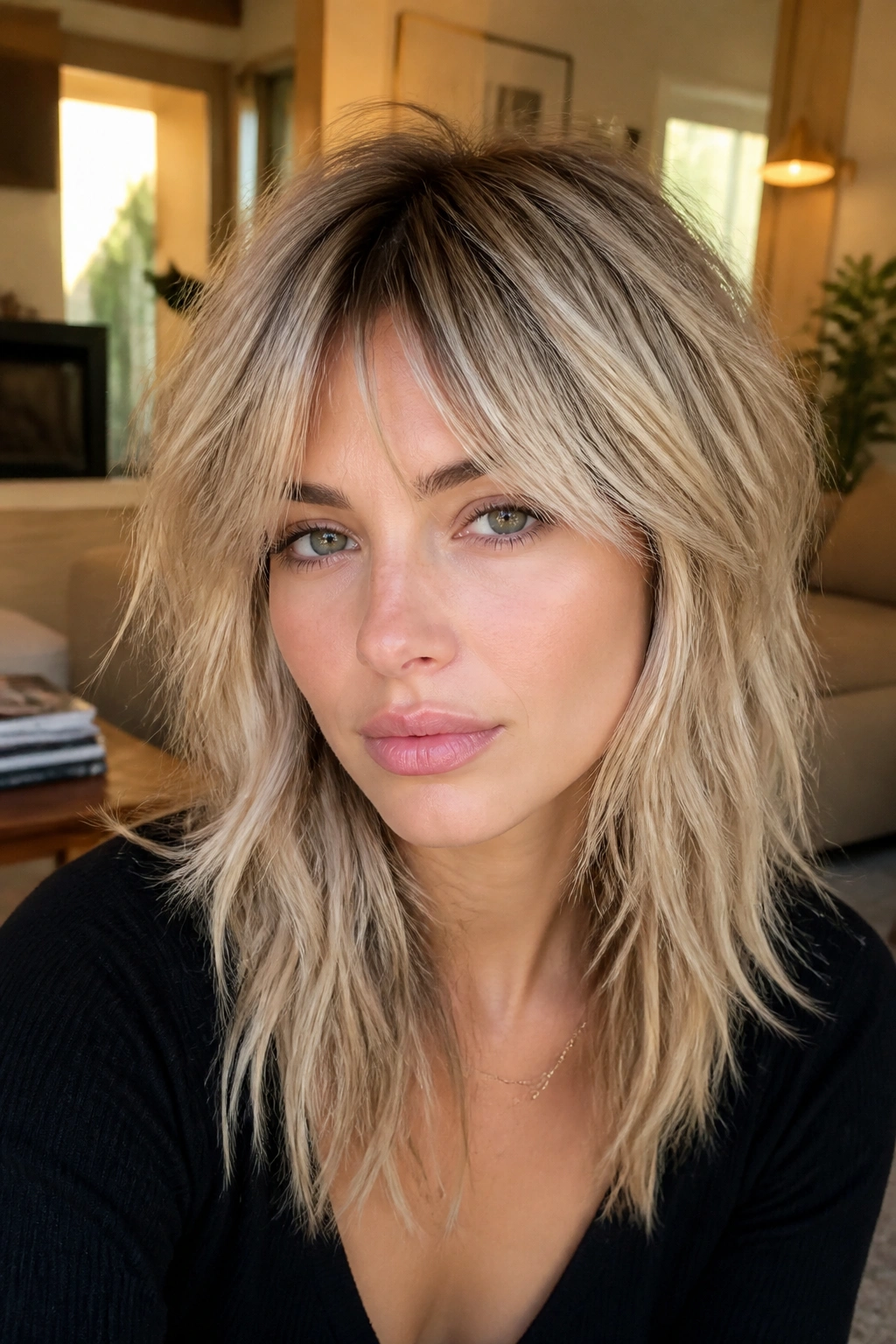
A shag needs color that moves with the haircut, not against it. A soft root-smudge champagne blonde does that beautifully because the darker root blends into pale, broken-up blonde pieces through the layers. On cool skin tones, the root smudge keeps the face from getting overlit, which is a real risk with shag cuts that already have a lot of texture.
The shag shape usually reads best when the highlights are uneven on purpose. A little brighter around the fringe, some softer pieces through the back, and a smoky root to hold it all together. That combination keeps the cut looking cool and a little undone, rather than overly styled. Good shag color never looks too neat. That would miss the point.
One reason this works so well is the way the layers expose different parts of the color as you move. You get flashes of champagne, then quieter beige and ash. It feels alive. That’s the right word.
If you want a style that looks better a little messy than overdone, this one belongs near the top of your list.
18. Pearl Champagne for Fine Hair
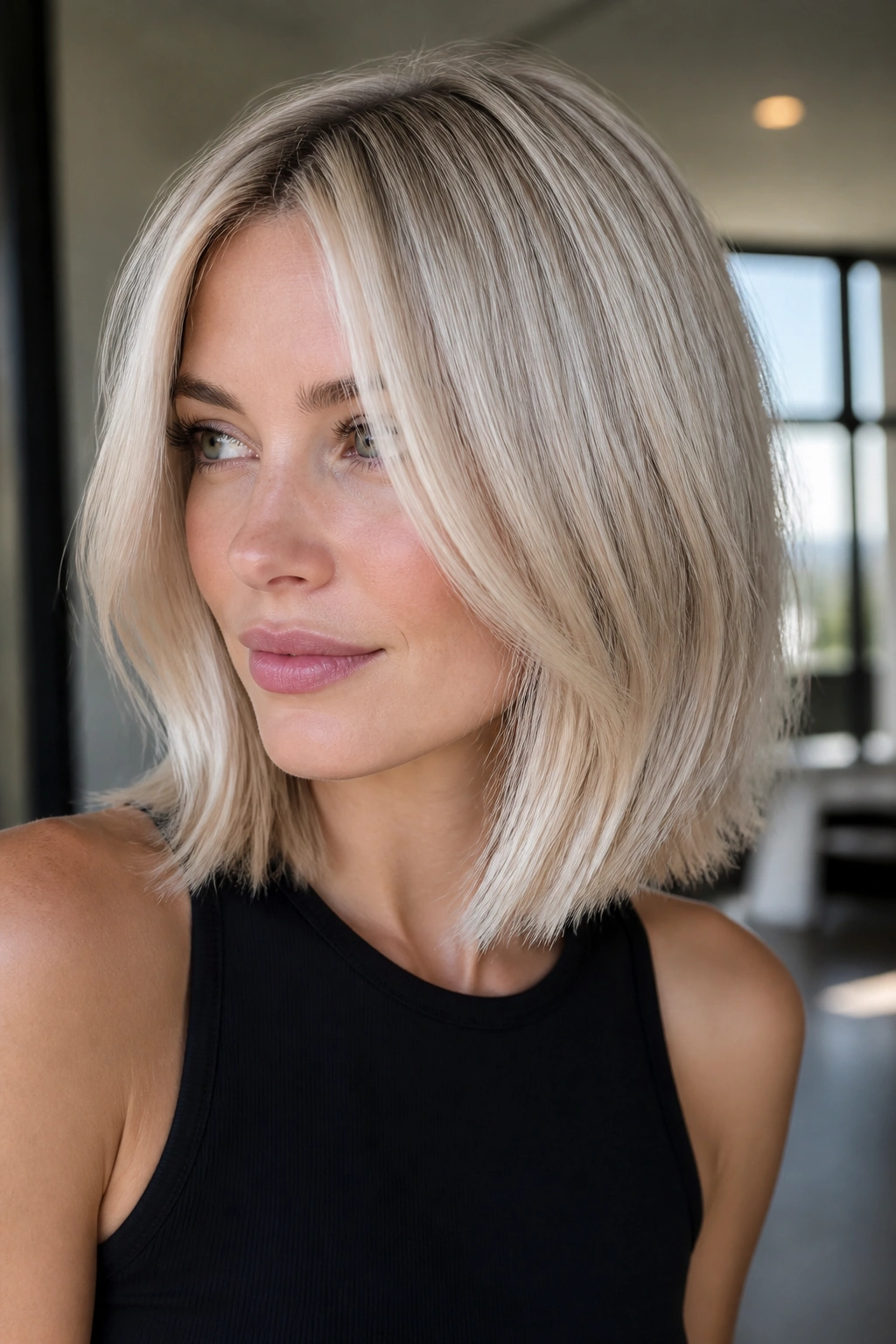
Fine hair can get lost in heavy dimension, so pearl champagne is a smart move. It keeps the blonde light and reflective without piling on too many dark ribbons that would visually thin the hair out. On cool skin tones, the pearl finish brings brightness near the face without the harshness that some ultra-pale blondes create.
The trick is not to overcomplicate the placement. Fine hair usually looks best with fewer, cleaner pieces and a gloss that gives shine. Too many foils can make it look patchy. Too much ash toner can make it look flat. Pearl champagne gives you that clean, cool sparkle while still keeping the hair looking soft.
What helps most
- Keep the highlights fine and evenly spaced.
- Use a lightweight toner so the hair stays luminous.
- Trim often; thin ends make pale blonde look stringy fast.
A bob, a lob, or a soft collarbone cut tends to suit this shade well because the shape gives the hair some body. Long fine hair can wear it too, but the ends need careful care. Split ends show up fast on pale blonde. Faster than people expect, honestly.
19. Muted Champagne Against Dark Brows
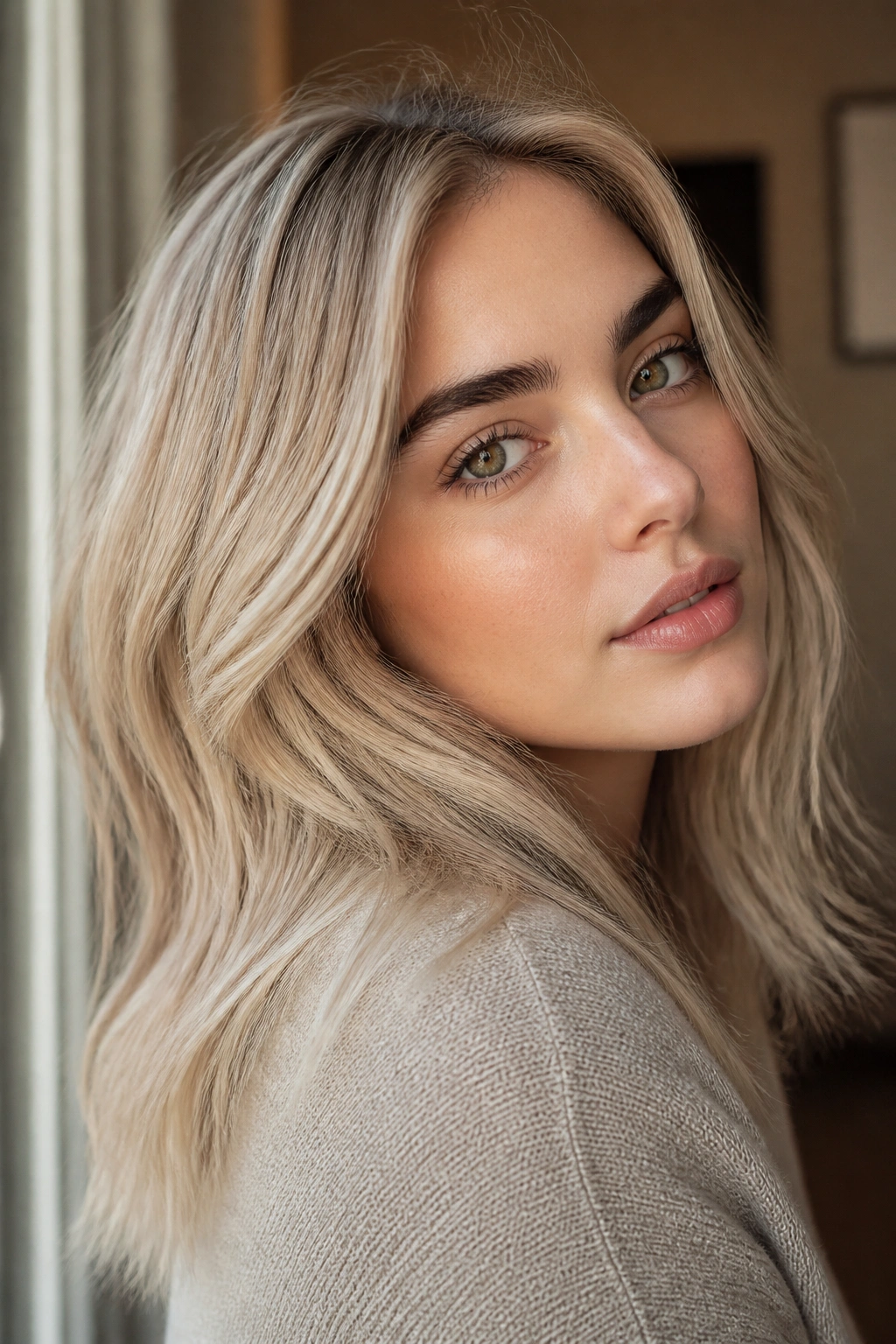
Dark brows and champagne blonde can be a terrific pairing when the blonde is muted enough to sit beside the brows instead of fighting them. That’s where a softer champagne shade earns its keep. The hair can stay cool and bright, but the finish needs beige, pearl, or a touch of smoke so the contrast feels elegant rather than jarring.
This look works especially well if you want your brows to stay a feature. Some blondes try to erase them with hair color, and I think that usually makes the face less interesting. A muted champagne lets the brows anchor the look. The result is polished and a little more graphic, which can be great if you like strong makeup or simple clothes.
Because the brows already give the face definition, the blonde doesn’t need to do all the work. That means you can choose a gentler champagne tone and still get a noticeable change. Less bleach pressure. Less tonal chaos. Better grow-out, too.
If your brows are naturally dark brown or black, ask for a champagne that stays soft rather than super icy. The contrast will still be there. It just won’t shout.
20. Low-Maintenance Champagne Blonde with a Deeper Base
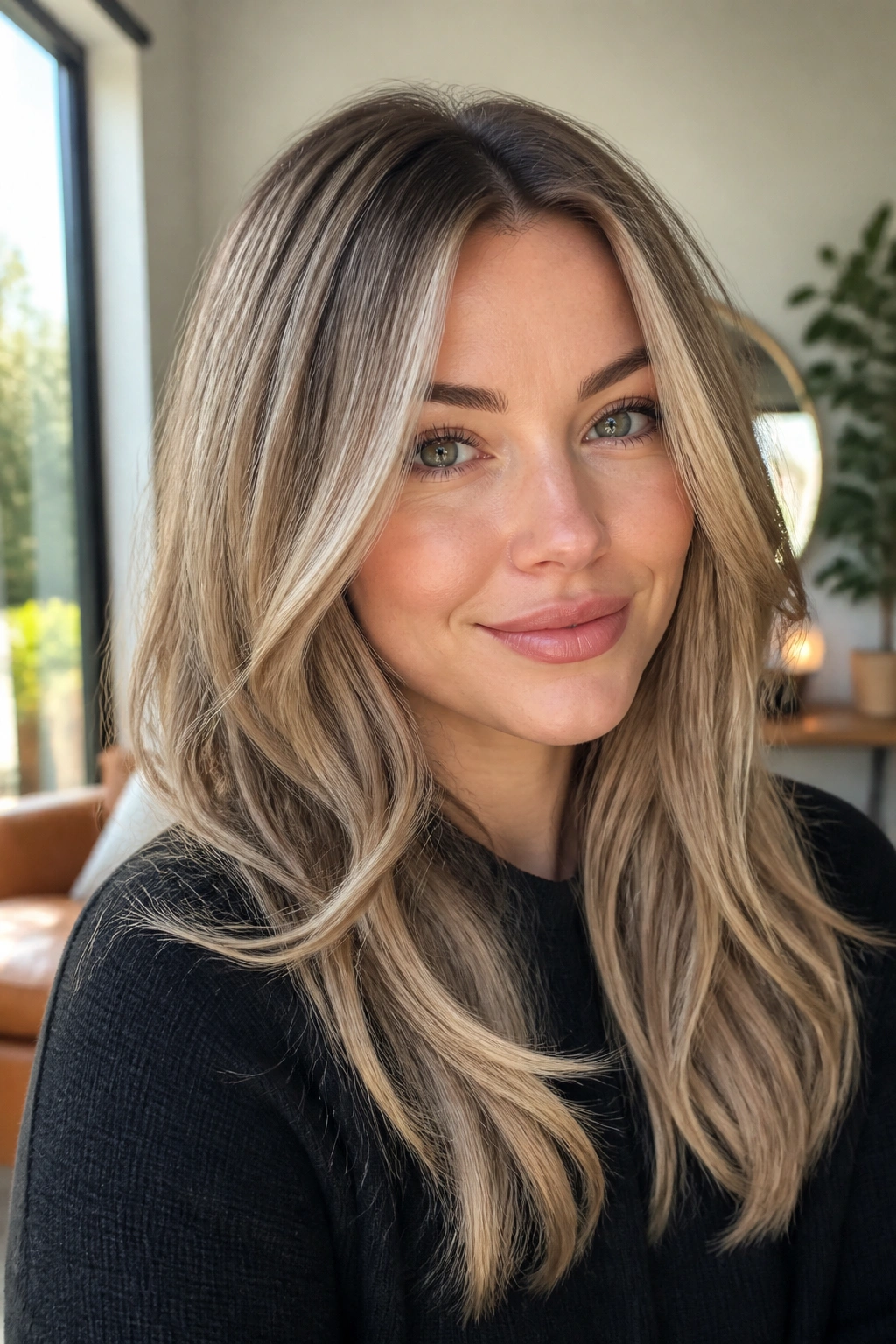
A deeper base can make champagne blonde look cleaner for longer, and that’s the whole appeal here. The root stays closer to your natural color, while the mids and ends carry the cool champagne tone. For cool skin tones, that arrangement is flattering because it frames the face without flooding it with pale color from scalp to tip.
This is the shade for people who want blonde but don’t want their life ruled by salon appointments. A darker base softens regrowth, and the champagne lengths keep the hair bright enough to feel intentional. If your natural shade is light brown or dark blonde, this can be one of the easiest ways to go blonde without a hard grow-out line.
The tone should still stay cool. That part matters. A deeper base does not give you permission to go gold. Ask for a soft beige-pearl finish through the lighter pieces, and keep the root neutral or ash-based so the contrast stays believable.
A good cut helps here too. Long layers, a lob, or a softly textured mid-length shape lets the darker root and lighter ends move together. The effect is relaxed, but not lazy. And that’s a nicer place to land than a brittle all-over blonde that needs constant rescue.
The best champagne blonde for cool skin tones is the one that keeps the brightness under control. Pearl, ash, silver, beige, and smoky tones all have a place here, but they work best when the placement and cut support them. A strong tone on the wrong haircut can still look off. A softer tone on the right shape usually looks expensive without trying too hard.
If you’re choosing between two shades, I’d lean cooler and cleaner rather than warmer and richer. Cool skin usually forgives a slightly muted blonde far better than a golden one. And once you see the right champagne in the mirror, the difference is obvious.
