



Beige blonde hair color looks easy from a distance. Up close, it’s a little fussy — and that’s exactly why it’s worth getting right.
On cool skin tones, the difference between a flattering beige blonde and a shade that makes your face look tired often comes down to undertone. Pearl, ash, smoky, and soft neutral beige can make cool skin look fresh and clear. Too much gold, butter, or honey, and the whole thing starts to fight your complexion instead of working with it. That’s the part people miss when they ask for “beige” as if it were one single color.
I’ve always liked beige blonde because it has restraint. It doesn’t shout. It sits somewhere between icy and warm, which gives it range — but only if the toner, base level, and placement are chosen with some care. A lot of the shades below are wearable because they keep depth at the root, or because they use cool ribbons instead of one flat all-over blonde wash.
1. Icy Beige Blonde Hair Color with a Soft Shadow Root
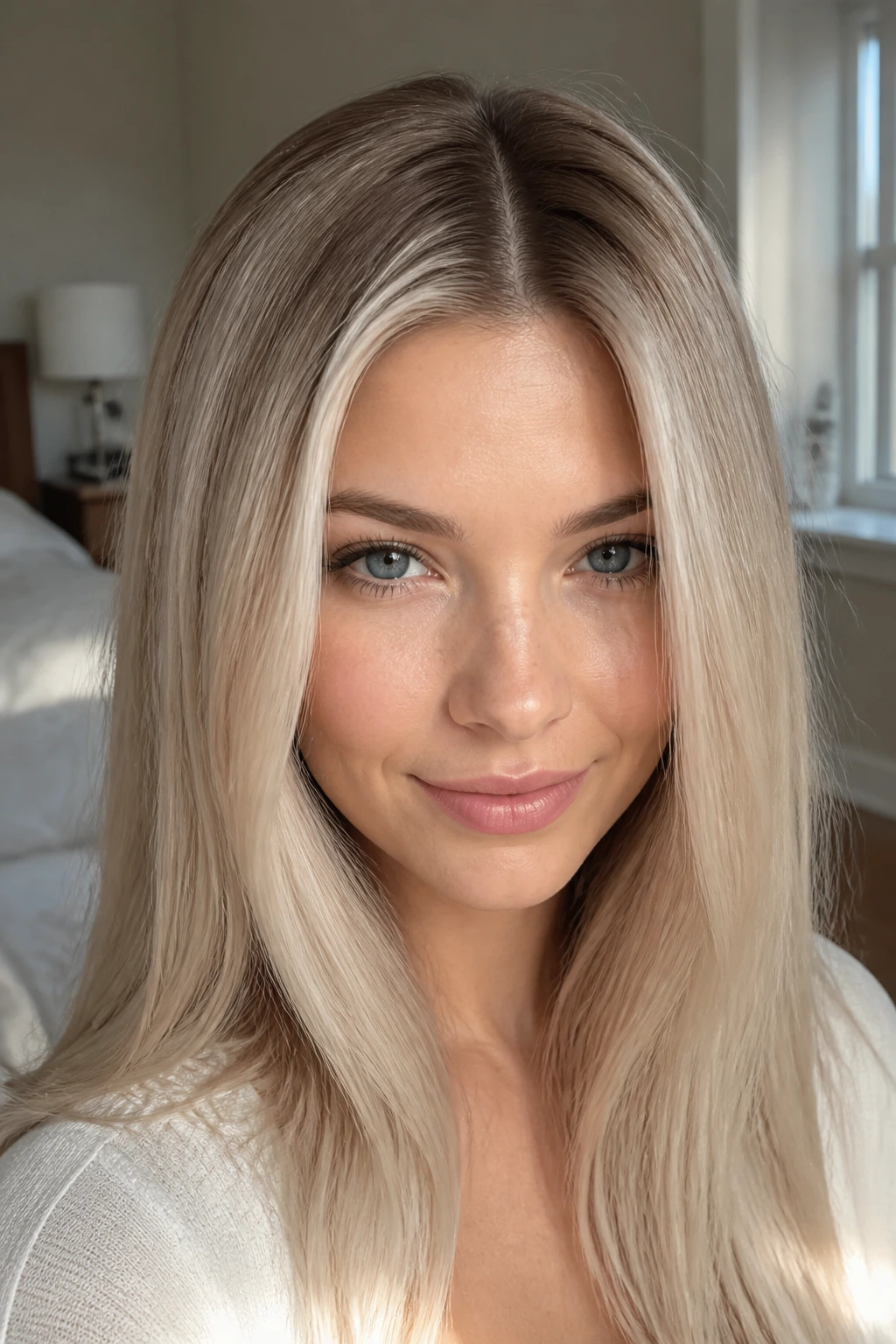
Icy beige blonde hair color is the cleanest place to start if your skin leans pink, blue, or porcelain. The trick is keeping the blonde pale without letting it turn yellow, and a soft shadow root helps do exactly that.
Why It Works on Cool Skin
The root gives the color some breathing room. Without it, pale blonde can look chalky against fair cool skin, especially if your face has a lot of natural redness. A root that’s just one level deeper keeps the mids and ends looking brighter by contrast.
Ask for a level 9 beige blonde with violet-ash toner and a root shadow that stays about ½ to 1 inch from the scalp. That small gap keeps the grow-out soft instead of blunt.
- Best on straight hair or loose, polished waves
- Looks sharp with center parts
- Needs toner refreshes more than heavy bleaching
- Stays cooler if you skip golden glosses
My favorite thing about this shade: it still looks deliberate three weeks after a salon visit, which is more than I can say for many pale blondes.
2. Pearl Beige Blonde on a Mid-Length Lob
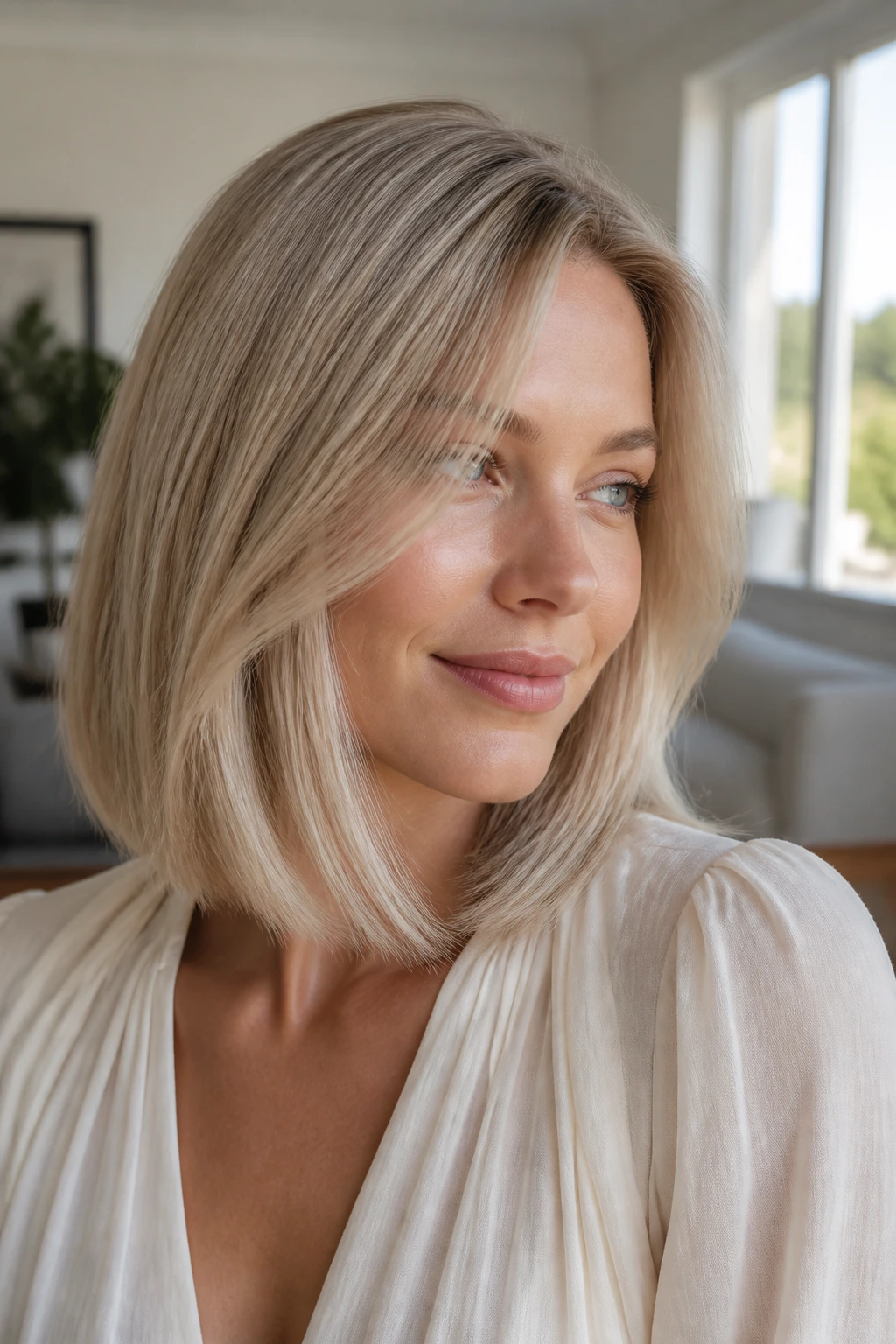
Pearl beige blonde has a soft, shell-like sheen that flatters cool skin without going flat or gray. On a lob, it looks especially good because the cut gives the shade movement instead of letting it sit like a helmet of color.
This is the version I’d pick for someone who wants blonde that feels refined rather than loud. Pearl beige reflects light in a way that keeps the face bright, but it doesn’t push warmth back into rosy or blue-toned skin. If your hair is naturally light brown or dark blonde, this can be lightened just enough to feel fresh without crossing into icy territory.
A collarbone-length lob helps the shade look expensive. The bluntness at the ends keeps the color from getting too wispy, and the slight bend from a round brush or flat iron adds the kind of swing that makes pearl tones come alive.
Use this if you want softness first, brightness second. It’s a good choice for people who wear minimal makeup and still want their hair to carry the look.
3. Mushroom Beige Blonde with Low-Contrast Ribbons
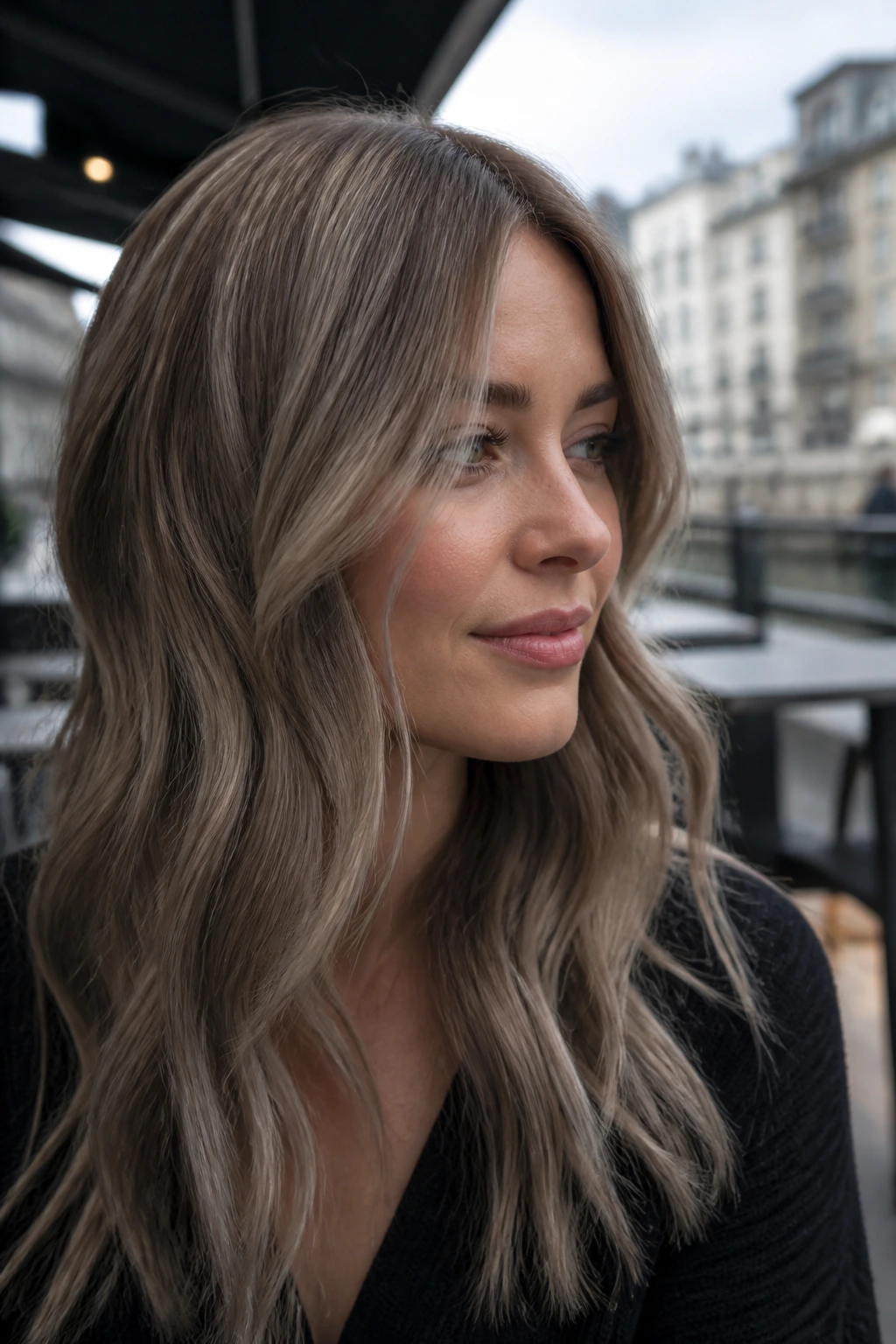
Why does mushroom beige work so well on cool skin? Because it borrows from ash brown instead of chasing gold blonde. That earthier base keeps the color believable, especially if your complexion has a cooler olive cast or a little natural flush.
Mushroom beige blonde is not the flashy blonde people expect when they hear “beige.” It’s quieter. Thin ribbons of beige sit inside a taupe or soft brown base, so the result looks dimensional rather than bright. On cool skin, that low contrast can be a relief — your face stays the focus, not your hair.
How to Ask for It
Tell your colorist you want fine beige ribbons over a smoky base with no obvious yellow. Ask for cool lowlights if your hair tends to go too pale too fast. The goal is depth, not stripey contrast.
This shade is especially good if you hate obvious regrowth. It grows out in a way that still looks finished, even when the appointment moves farther down the calendar than you planned.
4. Beige Blonde Balayage Over Dark Blonde
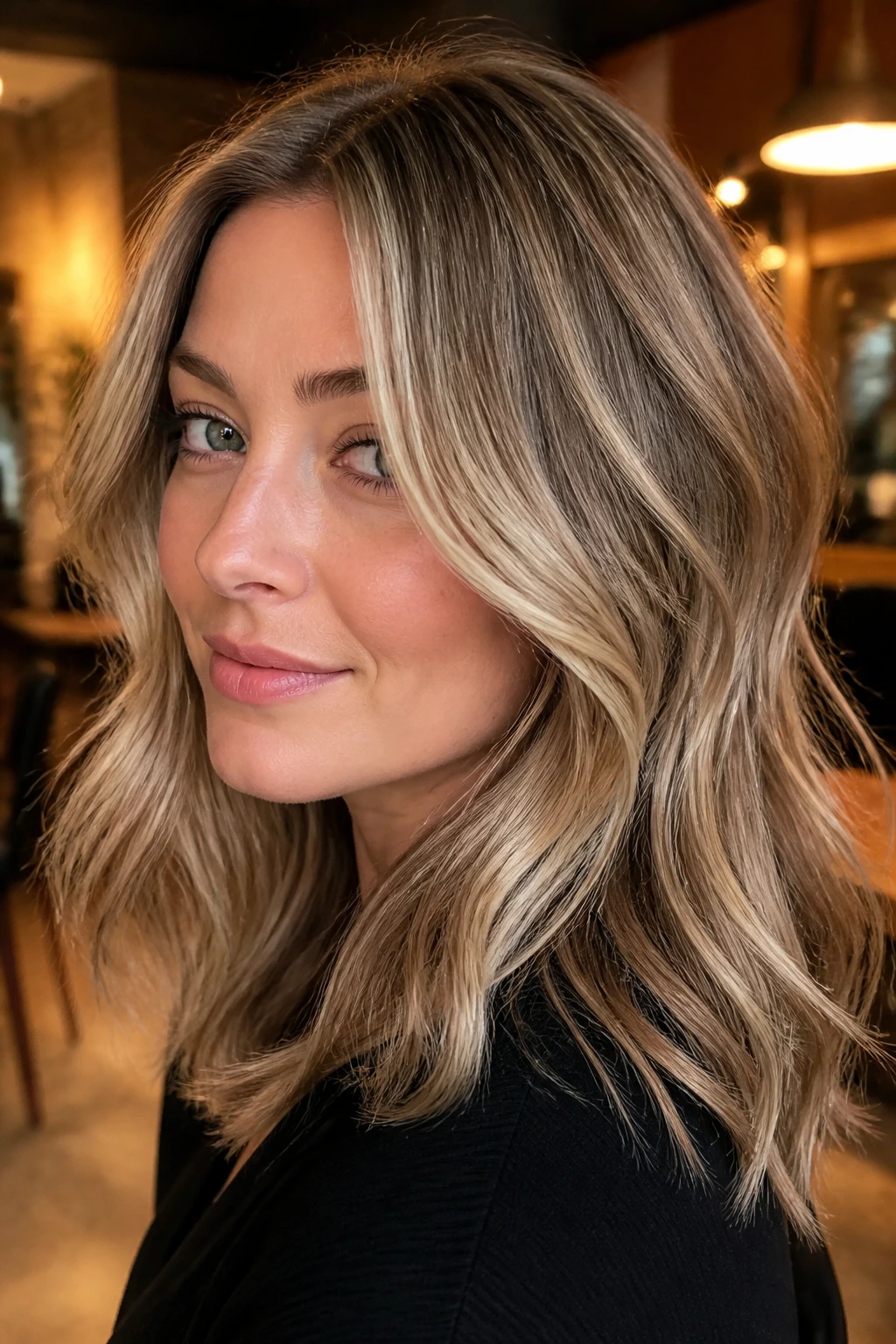
A dark blonde base gives beige blonde balayage a much better shot at looking natural on cool skin. Instead of bleaching everything to the same level, the lightness gets painted where it matters — around the mids, along the face, and through the ends.
Balayage is the move when you want brightness but not that full-head blonde texture that can sometimes make cool skin look a little flat. The hand-painted pieces let your own color stay visible, which is part of the appeal. On cool undertones, that mix of soft depth and beige lightness reads calm and expensive without trying too hard.
A few details make or break this look:
- Keep the painted pieces thin near the hairline
- Leave some depth at the crown
- Tone the blonde into a cool beige, not yellow beige
- Ask for a soft blend at the root so the grow-out isn’t harsh
It’s a strong pick for people who like dimension more than brightness. Honestly, I think that’s where beige blonde does its best work.
5. Champagne Beige Blonde with Face-Framing Pieces
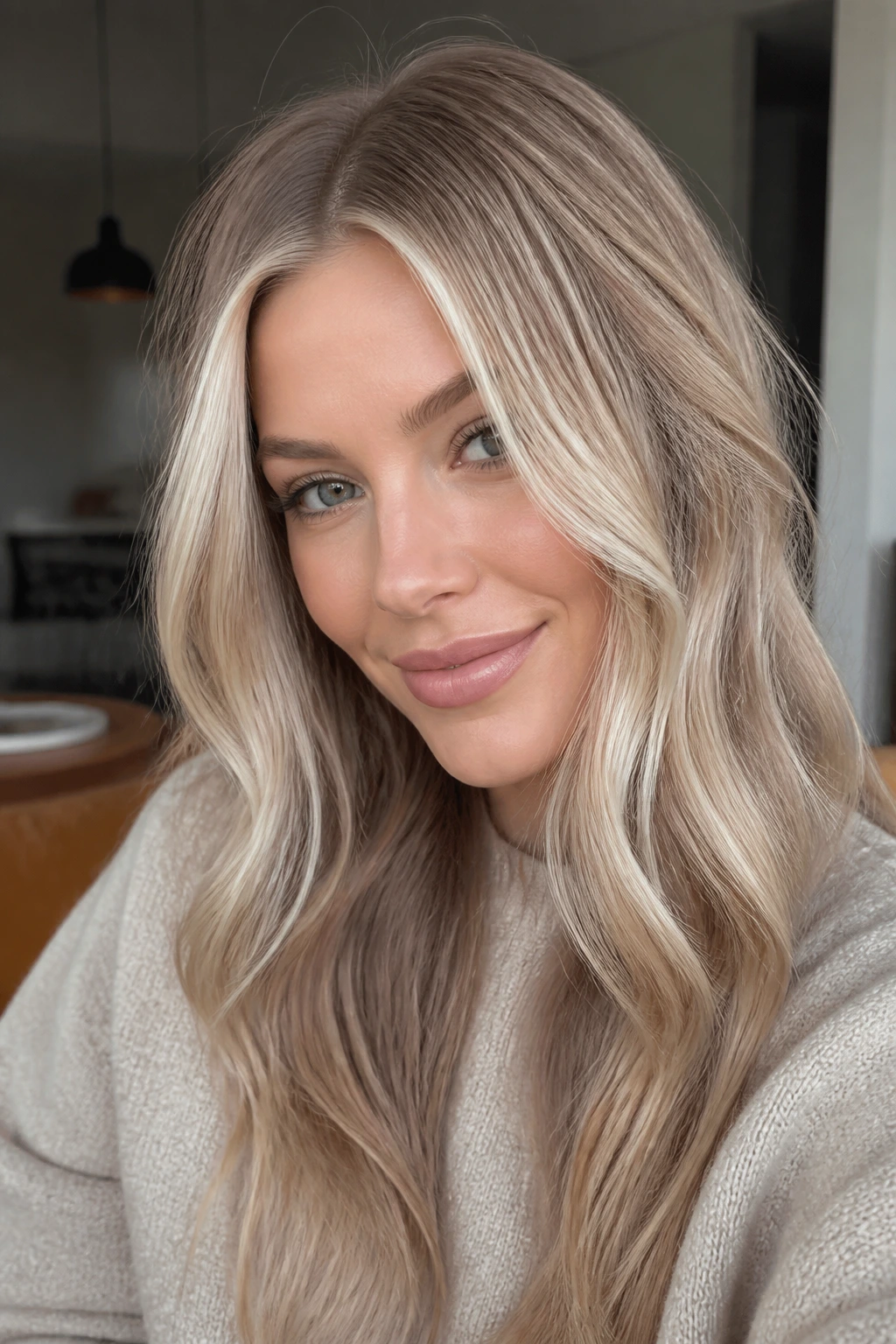
Champagne beige sounds warmer than it needs to be, and that’s where people get nervous. Done right, it isn’t gold at all — it’s pale, refined, and slightly sparkling, like beige with a dry finish instead of a buttery one.
On cool skin, the face-framing pieces matter more than the overall blonde level. A few brighter strands around the cheekbones and temple area lift the face fast, especially if your natural base is a medium blonde or light brown. Keep the money pieces cooler than champagne and they won’t clash with rosy undertones.
The rest of the hair can stay a shade deeper, which helps the bright sections feel intentional instead of stripy. That contrast is useful. Too much all-over lightness can wash out pale skin; a little controlled brightness around the front often looks better.
I like this shade on layered cuts because the lighter pieces catch movement from different angles. Straight hair can wear it too, but then the color needs more precision near the part line or it can look a touch flat.
6. Smoky Beige Blonde with Root Melt
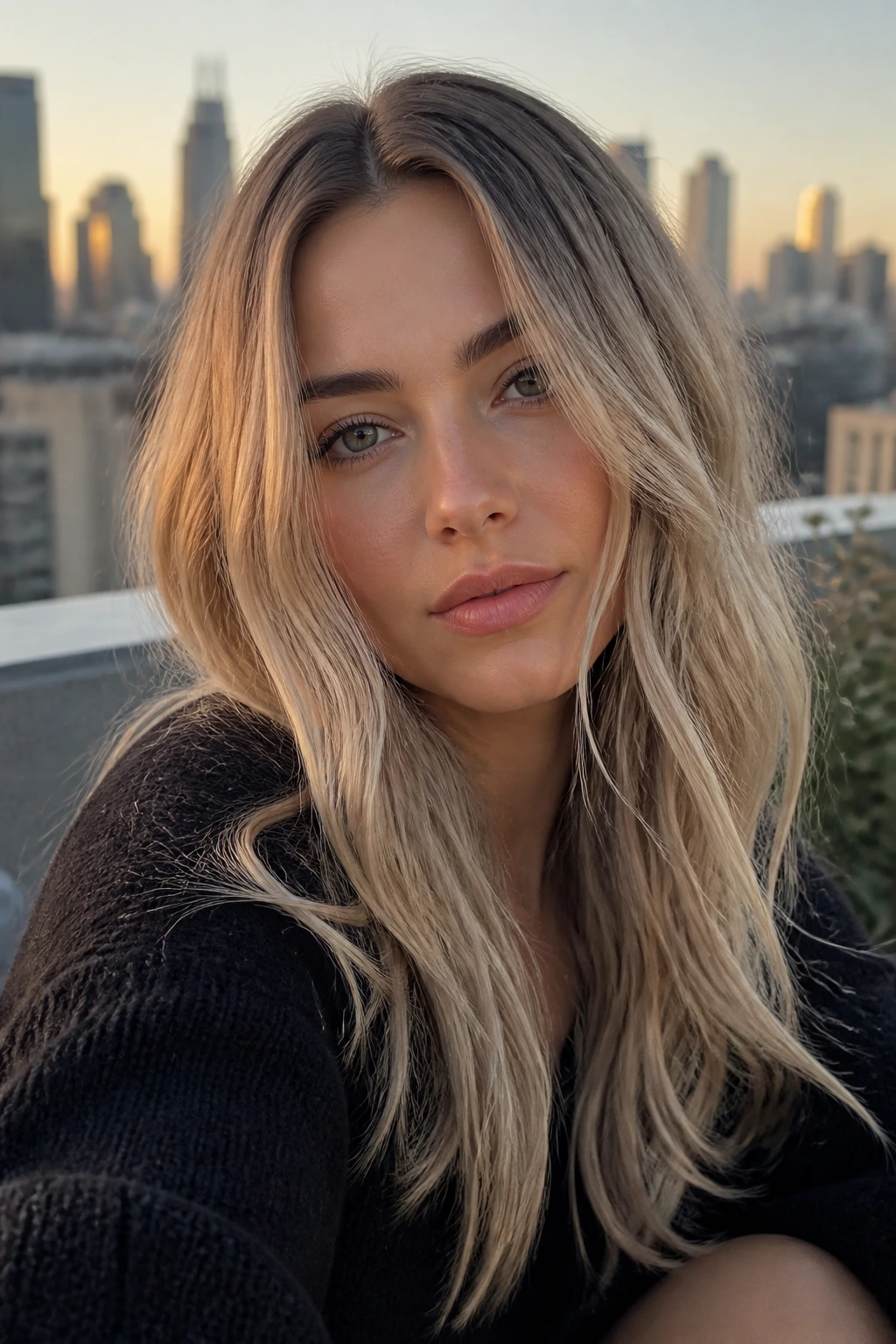
Smoky beige blonde is the shade I reach for when someone wants blonde but doesn’t want to babysit it. Compared with platinum or icy beige, it has more depth at the root and a softer finish through the mids, which makes it easier on both the hair and the eye.
That root melt matters a lot for cool skin. A clean, dark root fading into a smoky beige end keeps the face from looking washed out. The transition also gives the blonde a shadowy quality that works especially well on pink-toned or cool olive complexions. No harsh line. No bright band. Just a smooth shift.
What Makes It Different
Unlike high-lift blonde that starts at the scalp and stays bright all the way through, smoky beige blonde lives in the middle ground. It’s cooler than caramel, softer than ash, and less stark than silver blonde. That makes it a good fit if you wear black, charcoal, navy, or crisp white a lot — the whole palette hangs together.
If you want one blonde that can survive a grow-out without looking neglected, this is the one I’d point to first.
7. Beige Blonde Babylights on Cool Brunette Bases
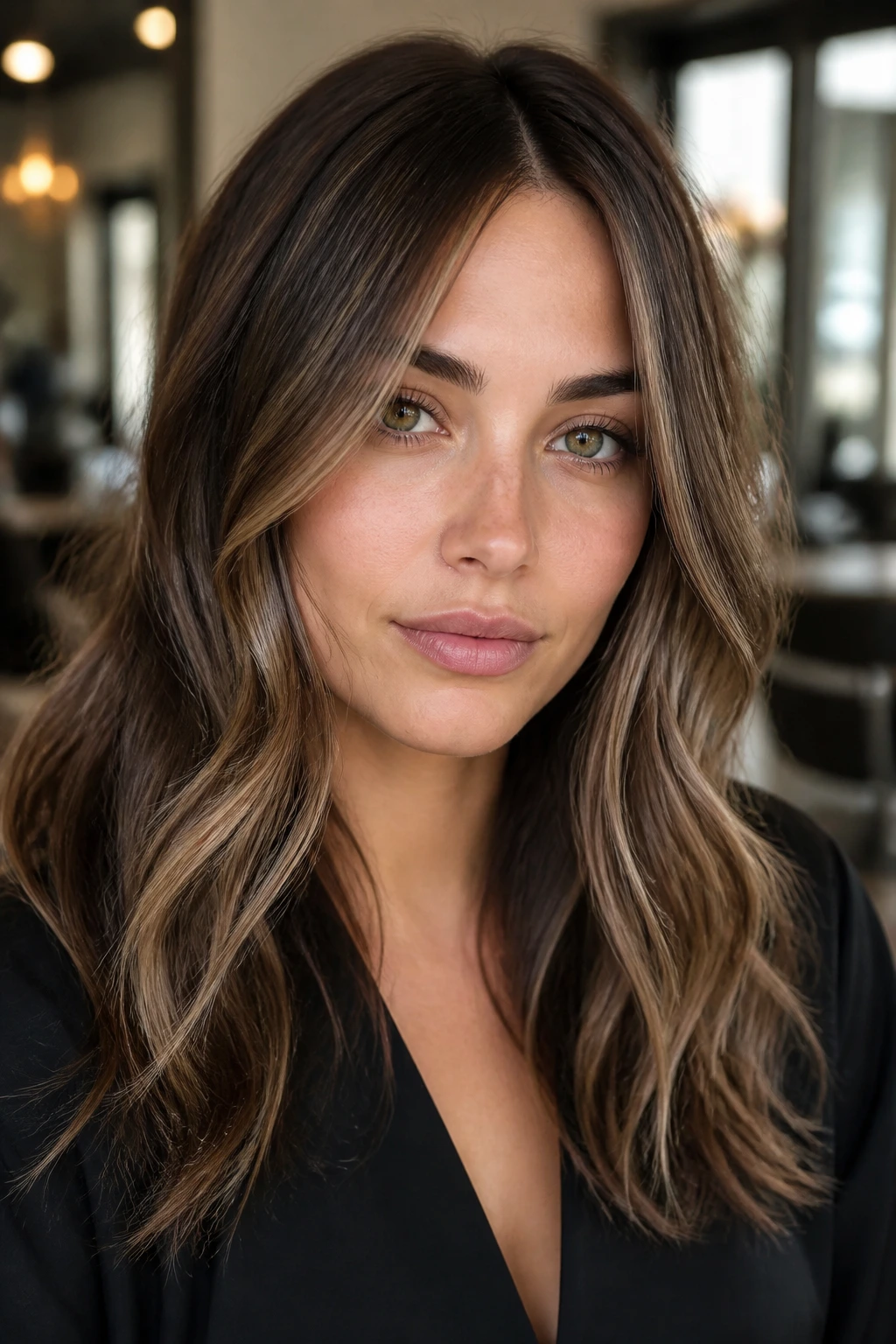
Thin babylights are a smart way to bring beige blonde into brunette hair without making it look striped or overprocessed. On cool skin, that matters. The lighter pieces should look like they belong there, not like they were pasted on for contrast.
Babylights work because they mimic the tiny shifts you’d see in natural sun-lightened hair. When those fine strands are toned into beige instead of gold, they keep the brunette base intact while still brightening the face. That’s a better move than a chunky highlight if your skin is cool and your hair is dark enough to need structure.
What to Ask For
- Baby-fine weaves, not thick slices
- A cool beige toner on the lightest pieces
- Extra brightness around the part and hairline
- A preserved base color that stays visible underneath
This is one of those shades that looks understated in photos and even better in person. The small strands catch light when you move, which keeps the hair from going dull. That’s the whole point.
8. Beige Blonde Money Piece with Cooler Ends
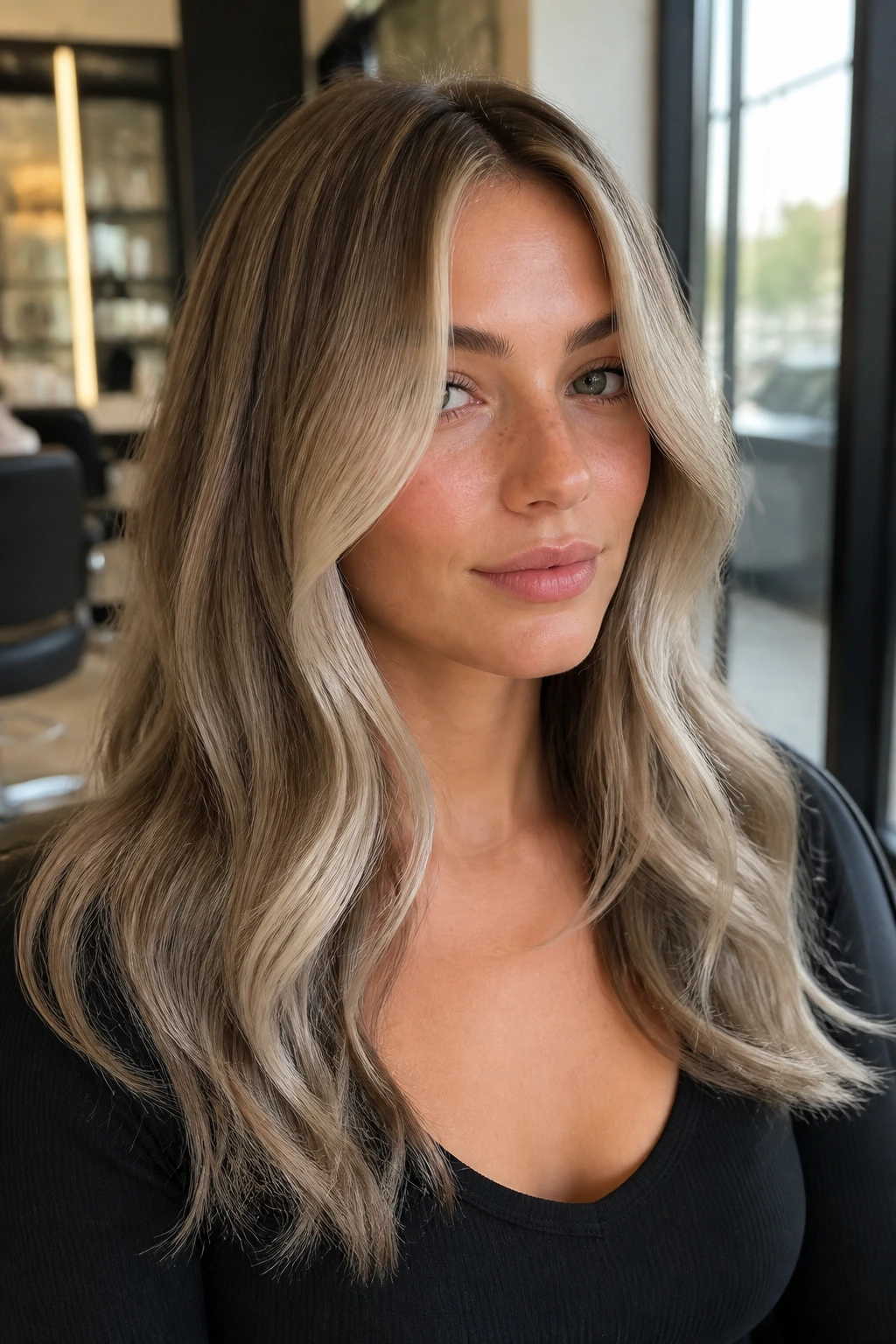
A money piece can change the whole mood of beige blonde hair without forcing you into full-head lightening. If you like the idea of blonde but don’t want every inch of your hair to compete with your skin tone, this is a clean compromise.
The front pieces should be the lightest part, but not the warmest. Keep them beige with a cool edge, then let the ends stay one shade softer or deeper. That little contrast keeps the color from reading flat and also gives cool skin a lifted frame around the face. It’s especially useful if you wear ponytails, clips, or half-up styles a lot.
This style is one of the few blondes that can feel playful and practical at the same time. You get brightness where people notice it first, and the rest of the hair can be toned a touch darker to keep maintenance sane.
A blunt cut or long layers both work. The important part is the placement. If the bright front pieces stop too high, the face can look harsh. If they’re too wide, the effect starts looking dated fast.
9. Vanilla-Beige Blonde with Soft Waves
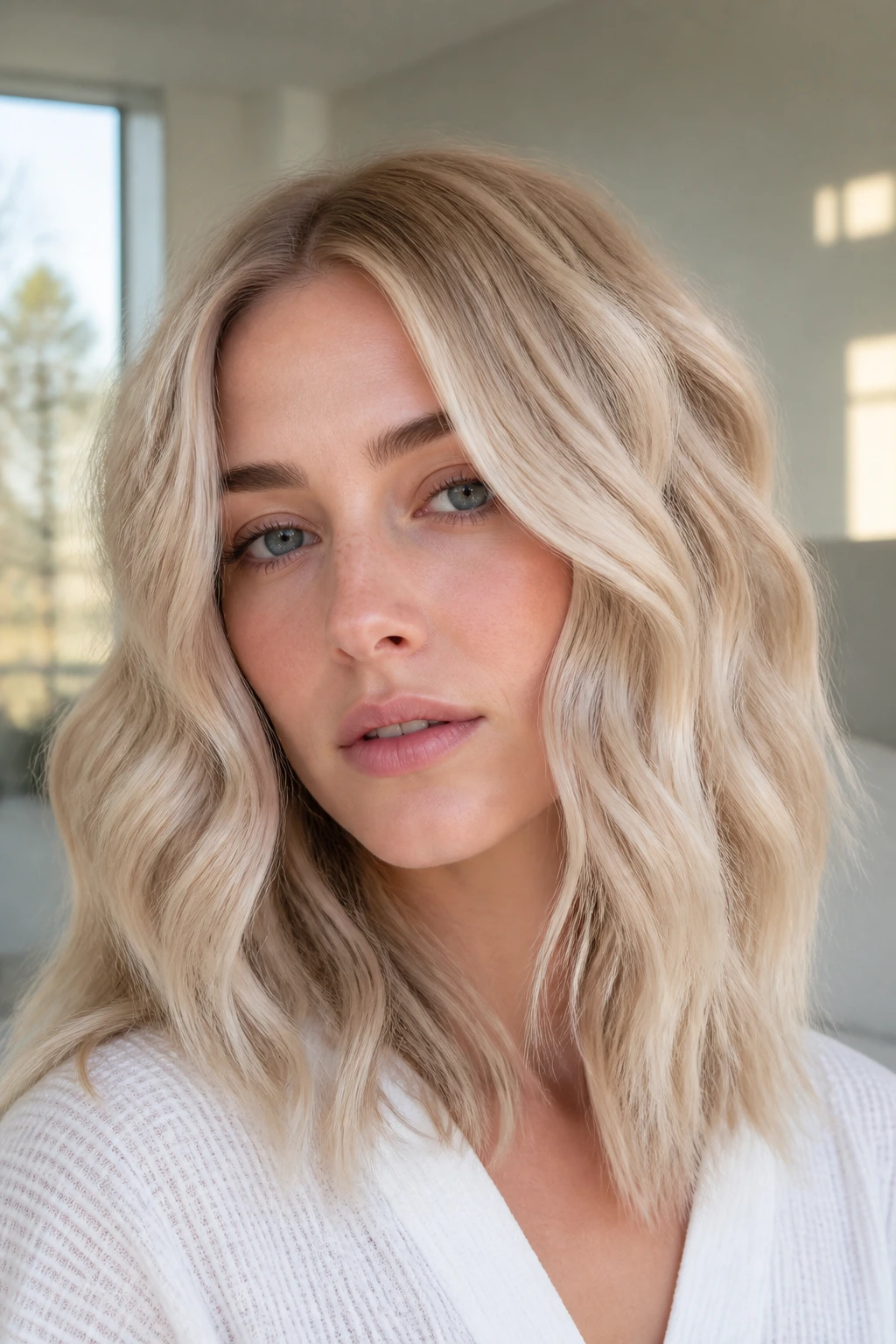
Vanilla-beige blonde sounds delicate, but it’s a tougher shade than people think. On cool skin, the vanilla part needs to stay pale and neutral, not sugary or yellow. Get that right, and the whole look feels airy.
Soft waves help because they stop vanilla-beige from looking too uniform. The bend in the hair gives the shade movement, and movement is what keeps beige blonde from turning one-note. On cool undertones, that matters more than it does on warmer skin, where a bit of yellow is easier to get away with.
The tone should sit somewhere between pearl and cream. I’d avoid heavy gold gloss here, no matter how tempting it sounds in the chair. Instead, ask for a neutral-beige finish that keeps the lightness soft. If your hair pulls brass quickly, a cool toner with a little violet base helps keep the blonde clean between visits.
This is a pretty forgiving option for finer hair, too. The softness of the shade can make strands look fuller than a harsh platinum ever will.
10. Platinum-Beige Blonde for Very Fair Skin
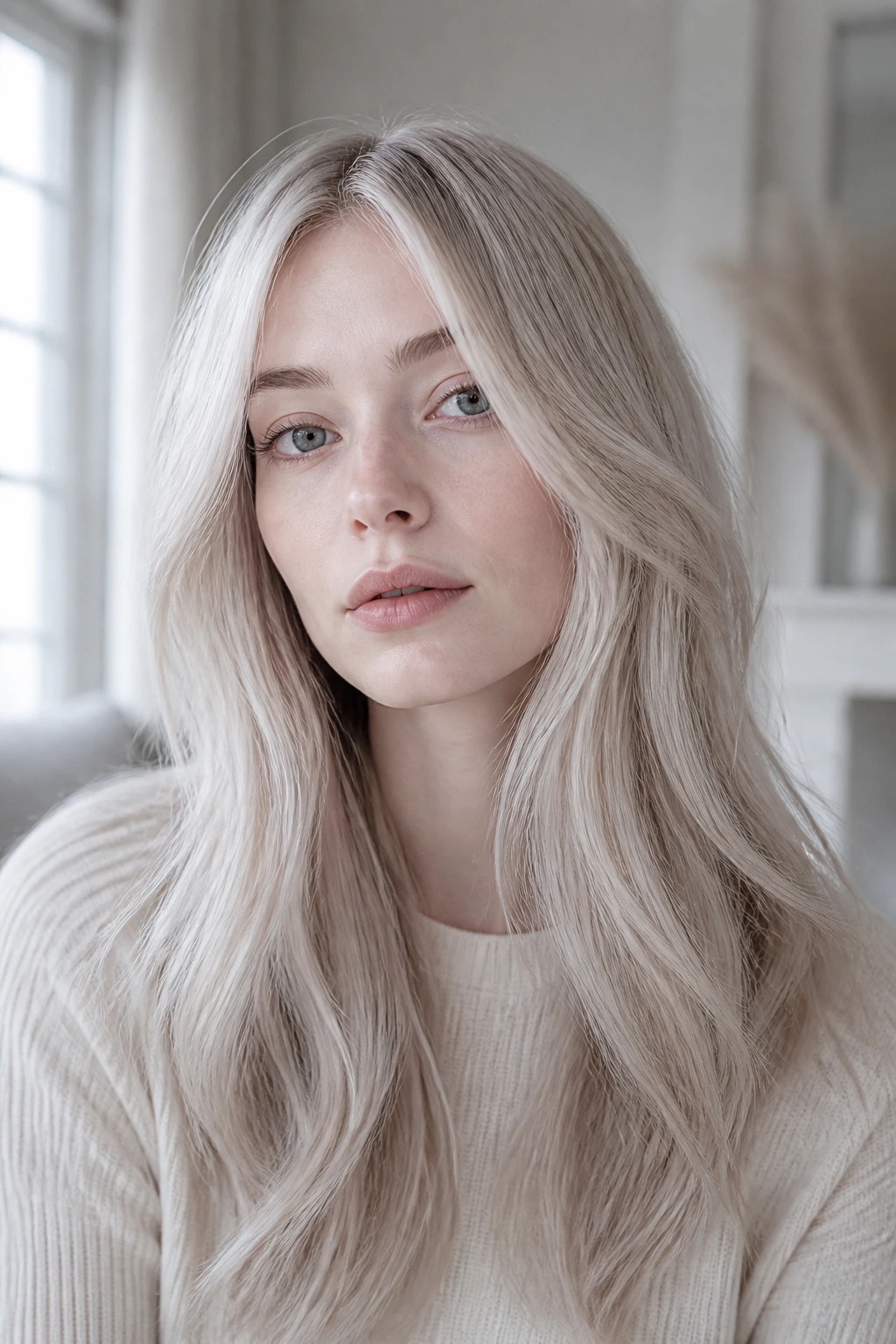
Platinum-beige is not the same thing as icy white platinum. It keeps a little beige softness in the mid-tones, which is why it can work so well on very fair cool skin. Pure white blonde can sometimes look severe; beige-platinum has a little more life in it.
If your skin is porcelain, rosy, or blue-based, this kind of blonde can sharpen your features in a nice way. The key is to avoid yellow in the toner. Even a hint of gold can start to fight pale cool skin, especially around the jaw and forehead. A cooler finish keeps everything crisp.
This shade does come with maintenance. Not the fun kind. Toner fades, and pale blonde shows brass fast. A purple shampoo once a week can help, but too much of it can leave the hair dull or slightly lavender. Use it with restraint. A gloss every few weeks does more than most people expect.
Best for someone who likes a clean, high-contrast look and doesn’t mind regular upkeep. If that sounds like a chore, skip it.
11. Beige Blonde on a Blunt Bob
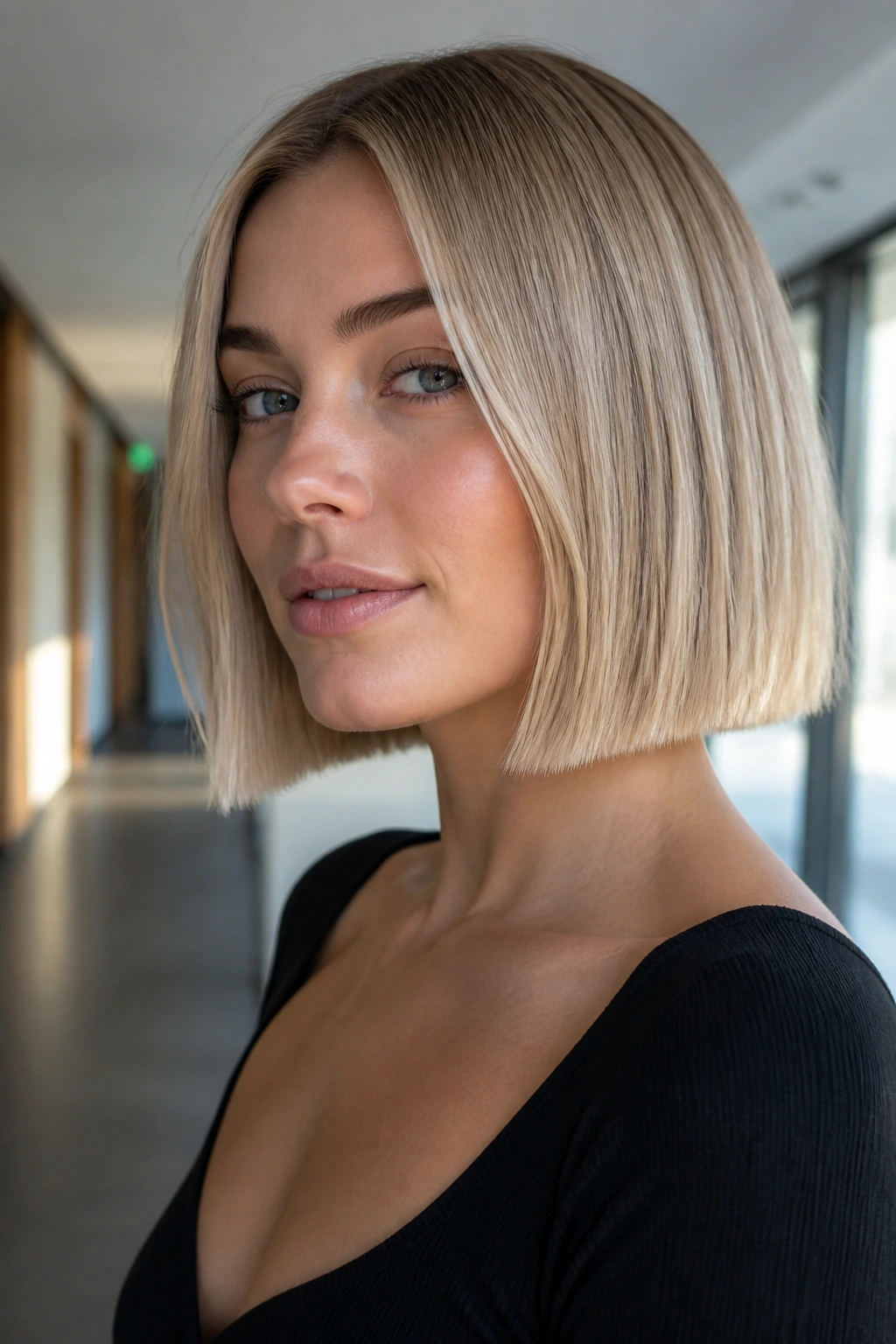
Can a blunt bob wear beige blonde without looking boxy? Yes — and the answer usually comes down to tone, not cut.
The straight edge of a bob gives beige blonde something solid to sit on. That means the color looks sharper, not softer, so the beige needs enough coolness to keep the shape from feeling heavy. A neutral-ash beige works well here, especially if the bob hits the jaw or just below it.
The Detail That Keeps It Soft
A micro-shadow at the roots can stop the whole look from going too stark. Then the mids and ends can stay lighter and cleaner. That contrast makes the haircut look precise instead of flat.
If your bob is blunt and one-length, beige blonde becomes a little more editorial. If the cut has a slight inward bend, even better. The color reflects off the ends and keeps cool skin from disappearing into the hair. That’s the real test with short blonde cuts — does your face still show up? If the answer is yes, you’ve picked the right tone.
12. Ash-Beige Blonde Gloss on Level 8 Hair
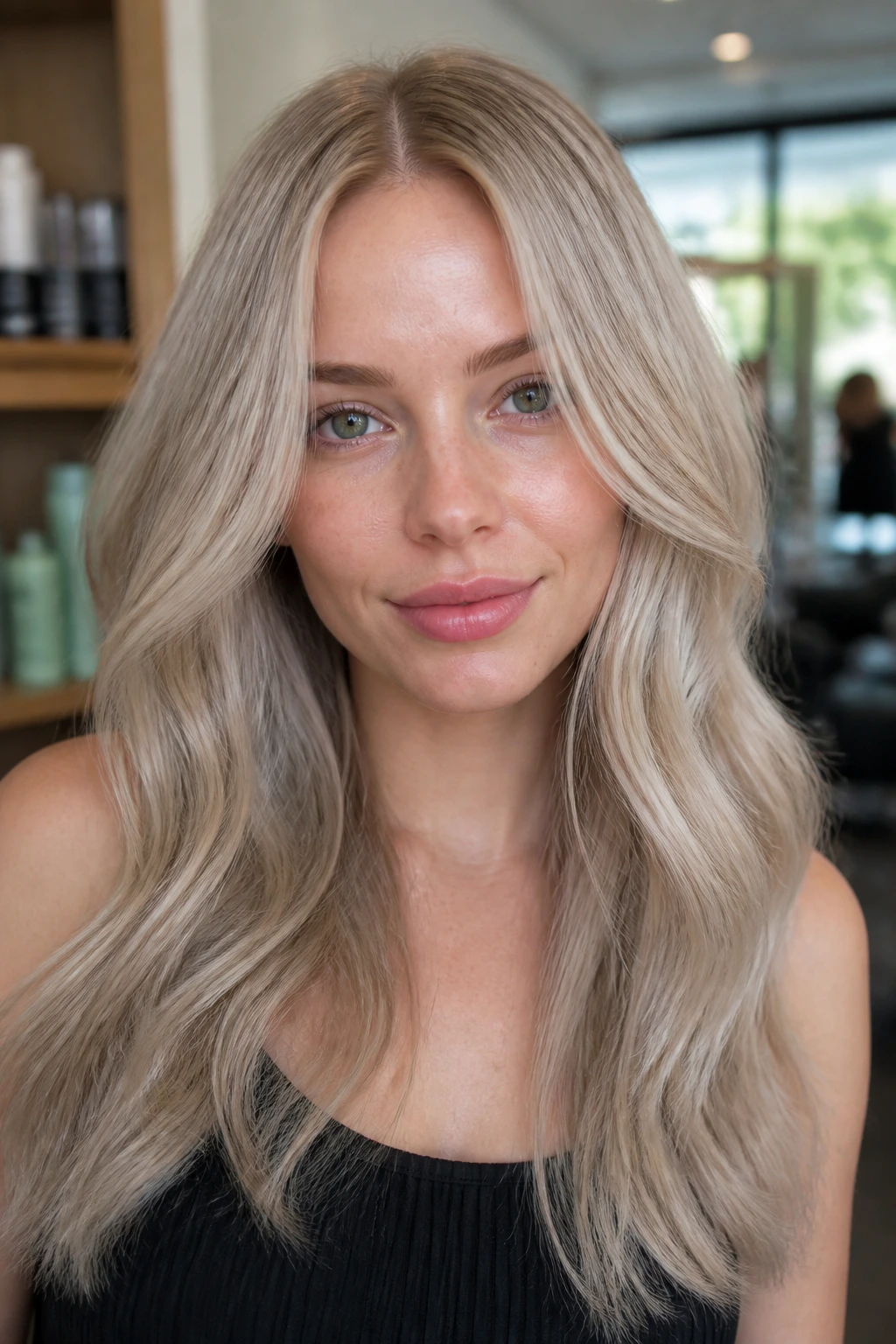
If your hair is already a level 8, you may not need a full bleach job at all. An ash-beige gloss can shift the color into the right lane fast, and for cool skin tones that’s often the cleanest fix.
Level 8 hair usually has enough lightness to take beige without going muddy, which is a common problem on darker bases. A gloss adds tone more than lift, so you get a cooler, softer blonde without a huge commitment. That makes it a good option if your current color is too golden or if you’re trying to calm brass after summer lightening.
The best thing about a gloss is the texture it leaves behind. Hair usually feels smoother and looks a little shinier, which helps beige tones reflect more evenly. It’s not magic, and it won’t turn dark hair blonde. But on the right base, it can tighten up the whole look in one session.
If your cool skin has been fighting warm blonde for months, this is often the easiest correction to make.
13. Beige Blonde Ombré with a Soft Transition
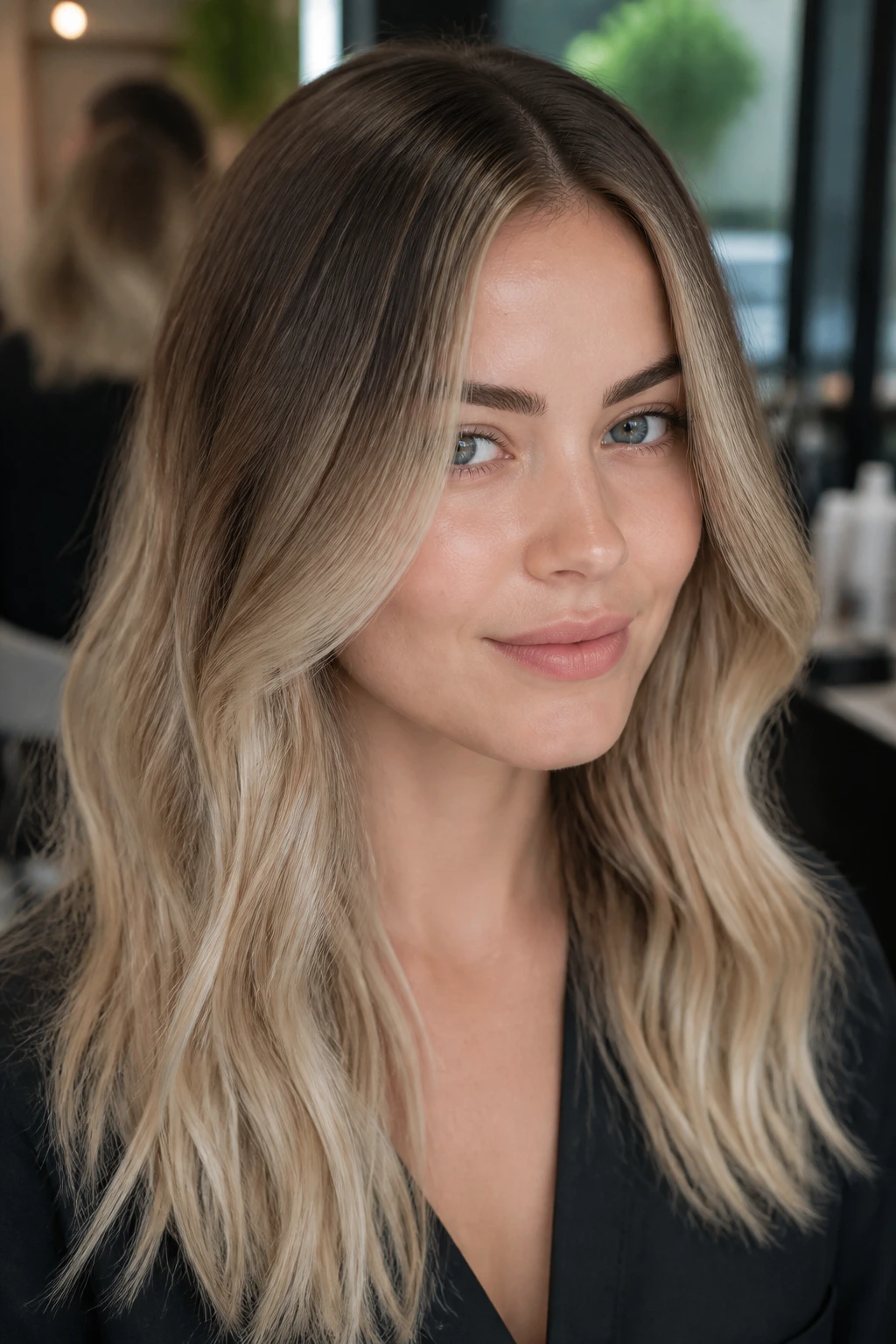
Ombré gives beige blonde a slower fade, and that softer movement can be a gift for cool skin. Instead of starting light right at the root, the color eases from darker depth into beige ends, which means the face keeps some structure.
That transition matters if your natural color is medium brown or dark blonde. A beige ombré lets the lighter pieces live lower on the hair, where they can open up the style without overexposing the scalp area. On cool skin, that usually looks more balanced than all-over brightness. The darker upper section gives the complexion something to ground against.
How It Differs From Balayage
Balayage tends to scatter light through the hair in a painted, broken pattern. Ombré gives you a more obvious shift from root to end. If you want that gradient to be soft and cool, ask for beige ends with no gold in the transition zone.
Long hair wears this especially well because the fade has room to show. On shoulder-length hair, the look can get compressed unless the transition is very smooth. Keep that in mind before you ask for a dramatic change.
14. Beige Blonde with Curtain Bangs
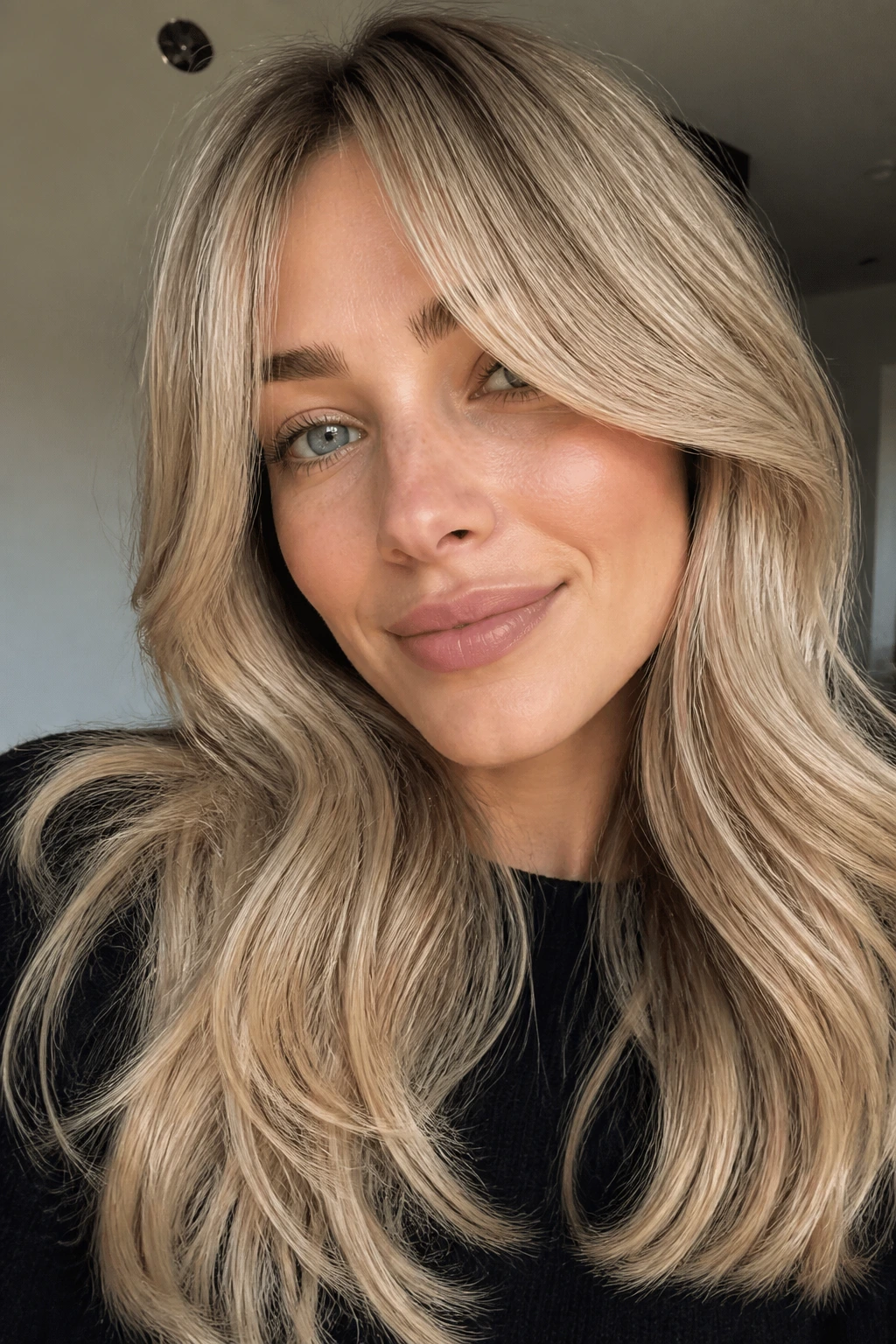
Curtain bangs can do a lot for beige blonde on cool skin, mostly because they bring the lightness up near the eyes and cheekbones. That’s where most people want the lift anyway.
A soft beige tone through the bangs makes the front of the face look brighter without turning the whole head into a halo of blonde. The trick is keeping the bangs slightly lighter than the rest, but not so light that they disconnect from the lengths. A half-shade difference is often enough. More than that, and the fringe can start looking pasted on.
This works particularly well on medium-length cuts with layers. The bangs soften the forehead area, while the beige blonde keeps the overall look gentle. If your skin is cool and you wear blush or berry lipstick, this pairing is easy to live with because the color doesn’t fight the makeup.
One small detail: bangs show brass faster than the rest of the hair. They sit against the forehead, get oilier, and pick up more heat. A cool gloss helps them stay in the right lane.
15. Cool Beige Blonde Pixie Cut
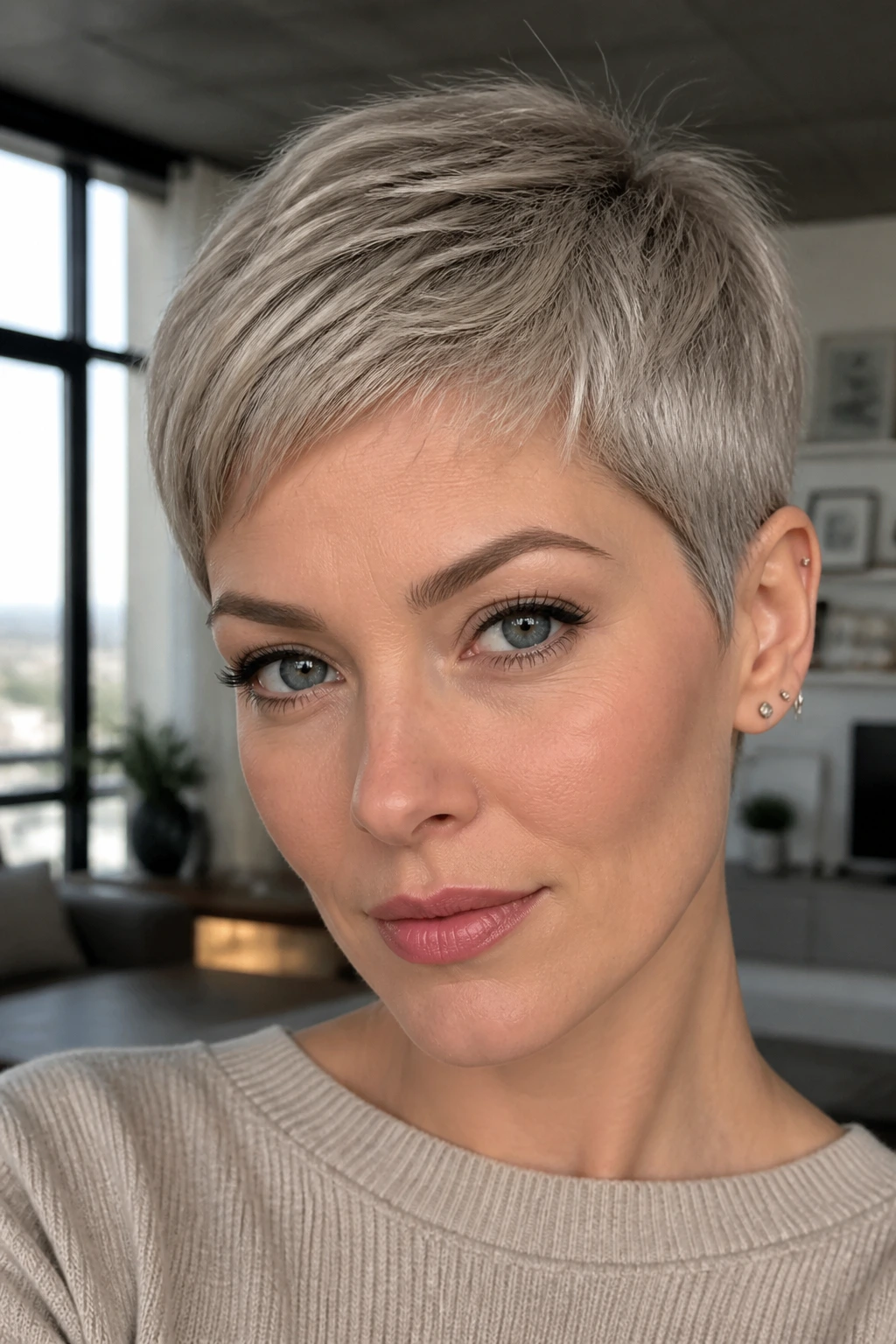
A pixie cut leaves no place to hide bad tone. That’s the upside and the downside. Cool beige blonde looks fantastic on a pixie because the short length makes the color read clean, but it also means every ounce of warmth shows up fast.
For cool skin, that can be a win. The close crop lets the face do the talking, and a beige tone with a slight ash edge keeps the hair from looking too stark or too yellow. I like this shade best when the top is a touch lighter than the sides, just enough to keep the cut from feeling helmet-like.
Short hair also benefits from shine. A satin finish, not a greasy one, helps the beige read soft and deliberate. If the hair is coarse, keep the sides a shade deeper so the top feels lifted. If the hair is fine, lighter ends can add texture.
This is not a lazy color. It needs precision. But when it’s right, it looks sharp in a way longer blondes rarely do.
16. Beige Blonde on Long Layers with Airy Ends
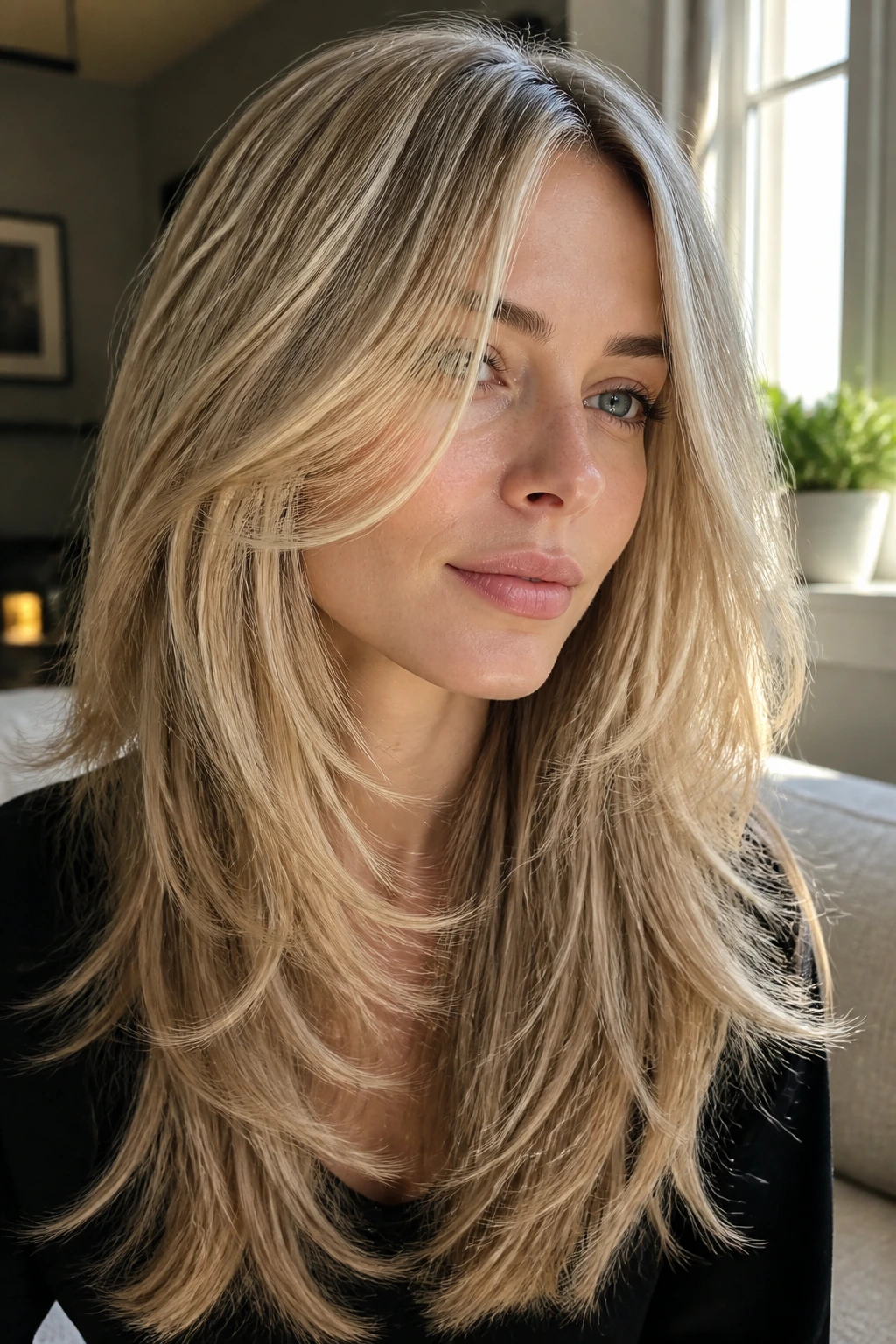
Long layers give beige blonde a chance to move, and movement is what keeps the shade from falling flat. On cool skin, that lightness through the ends can make the face look fresher, especially if the root stays slightly smoky.
The best version keeps the brightest beige where the hair bends and turns. That means the mid-lengths and ends do a lot of the visual work. When the layers are cut well, the color doesn’t need to be super pale to make an impact. It just needs to catch light in the right places.
This is one of the easiest beige blonde ideas to wear if your hair is thick. Layers remove bulk, and the beige helps the shape feel lighter. On very straight hair, the color can still work, but the cut has to be clean or the ends can look heavy. A little bend with a round brush makes a huge difference.
If you like hair that swishes without looking overstyled, this is a solid choice. It feels softer than platinum and more finished than plain dark blonde.
17. Beige Blonde with Lowlight Depth
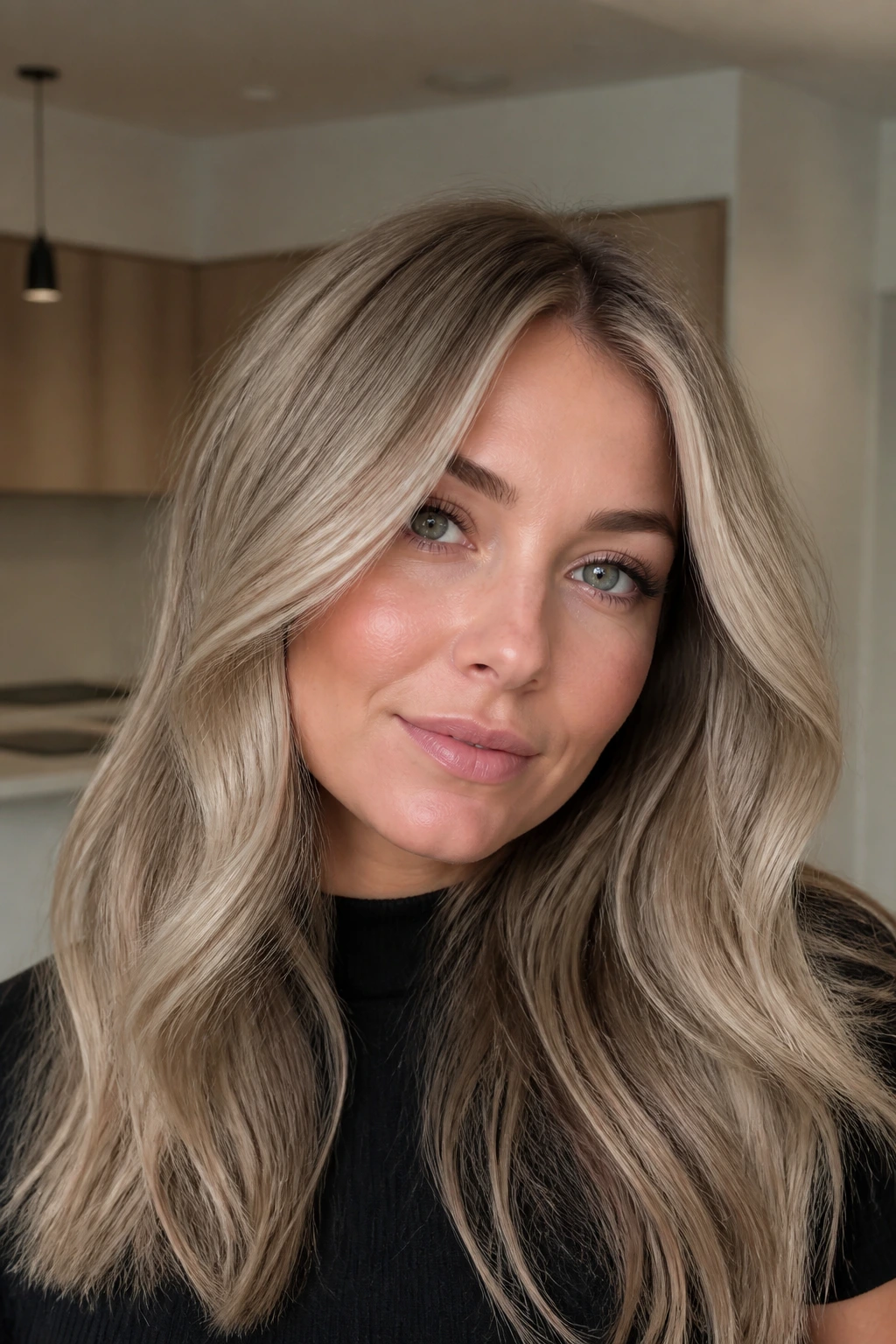
A lot of people think more blonde is always better. It isn’t. Cool skin often looks better when beige blonde has some darker pieces tucked inside it, because the depth stops the whole look from washing out.
Lowlights can be taupe, beige-brown, or a cool chestnut tone that sits a level or two deeper than the lightest blonde. Placed through the interior of the hair, they keep the surface looking bright while the body of the color stays anchored. That matters if your skin is fair and cool, or if your blonde tends to go a bit hollow after a few weeks.
Who Should Choose This
- Fine hair that needs thickness
- Porous hair that turns pale too fast
- Cool skin that looks better with contrast
- Anyone tired of one-note blonde
This shade works especially well in layered cuts because the darker pieces peek through as the hair moves. The result feels dimensional without getting busy. It’s one of those colors that looks better the longer you stare at it, which is more than enough reason to keep it on the list.
18. Scandi Beige Blonde with Near-White Ribbons
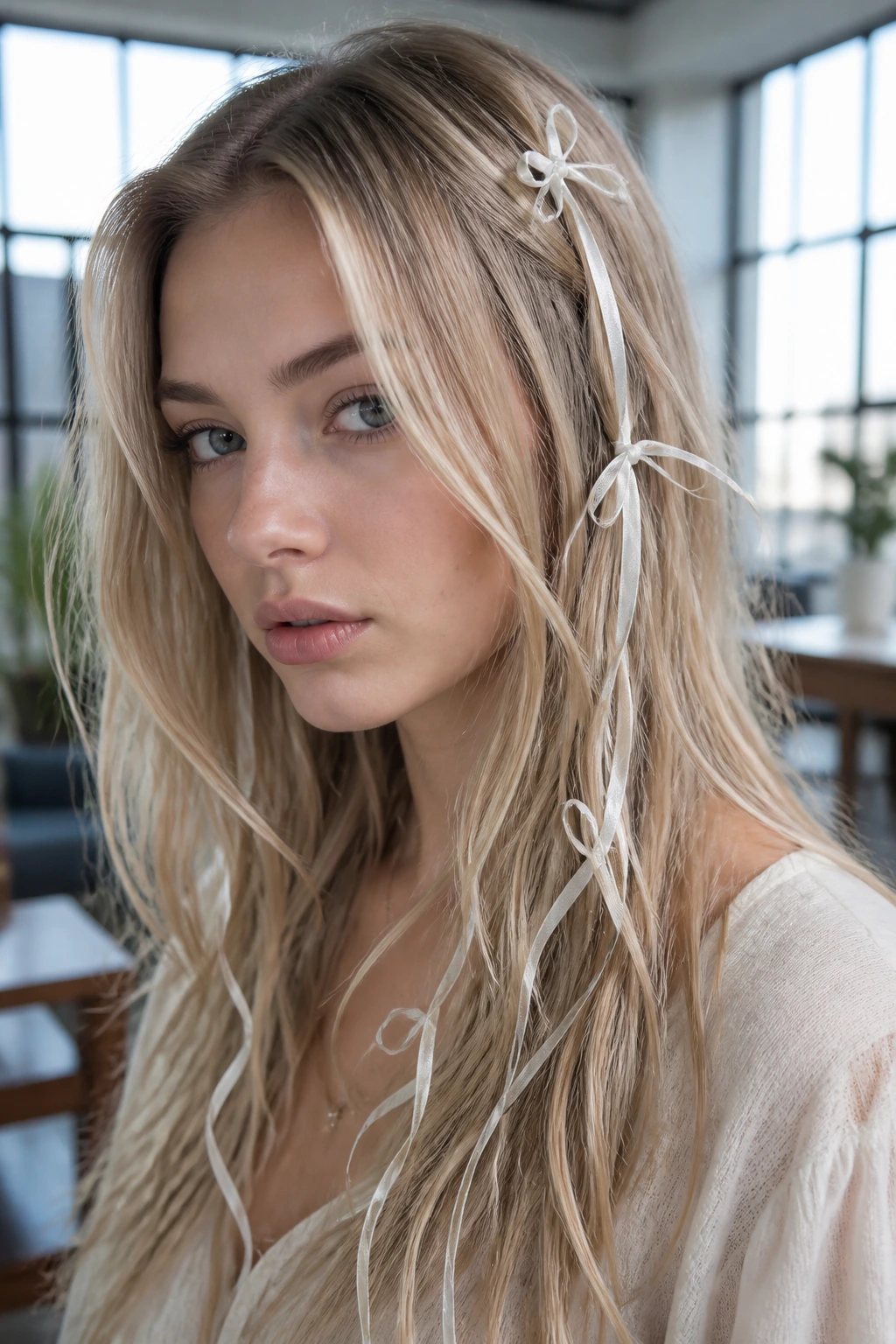
Scandi beige blonde sits on the pale end of the spectrum, but it keeps enough beige in the mix to avoid looking flat. The near-white ribbons are what draw the eye; the beige base is what keeps the whole thing wearable for cool skin.
This version works best when the lightest pieces are woven in very fine sections. Thick ribbons can look streaky fast. Thin ones let the color blur together, which is the whole appeal. The blonde appears airy and crisp, not harsh.
Very fair cool skin can wear this shade beautifully, especially if the eyebrows and lashes have some depth. That contrast keeps the face from disappearing. If your coloring is softer, this may need more dimension at the root or it can feel a little severe.
The nice thing about Scandi beige is that it looks modern without trying to be trendy. It’s pale, but not bleached to the point of losing texture. That makes it a cleaner choice than pure white blonde for a lot of people.
19. Beige Blonde with a Lived-In Brunette Root
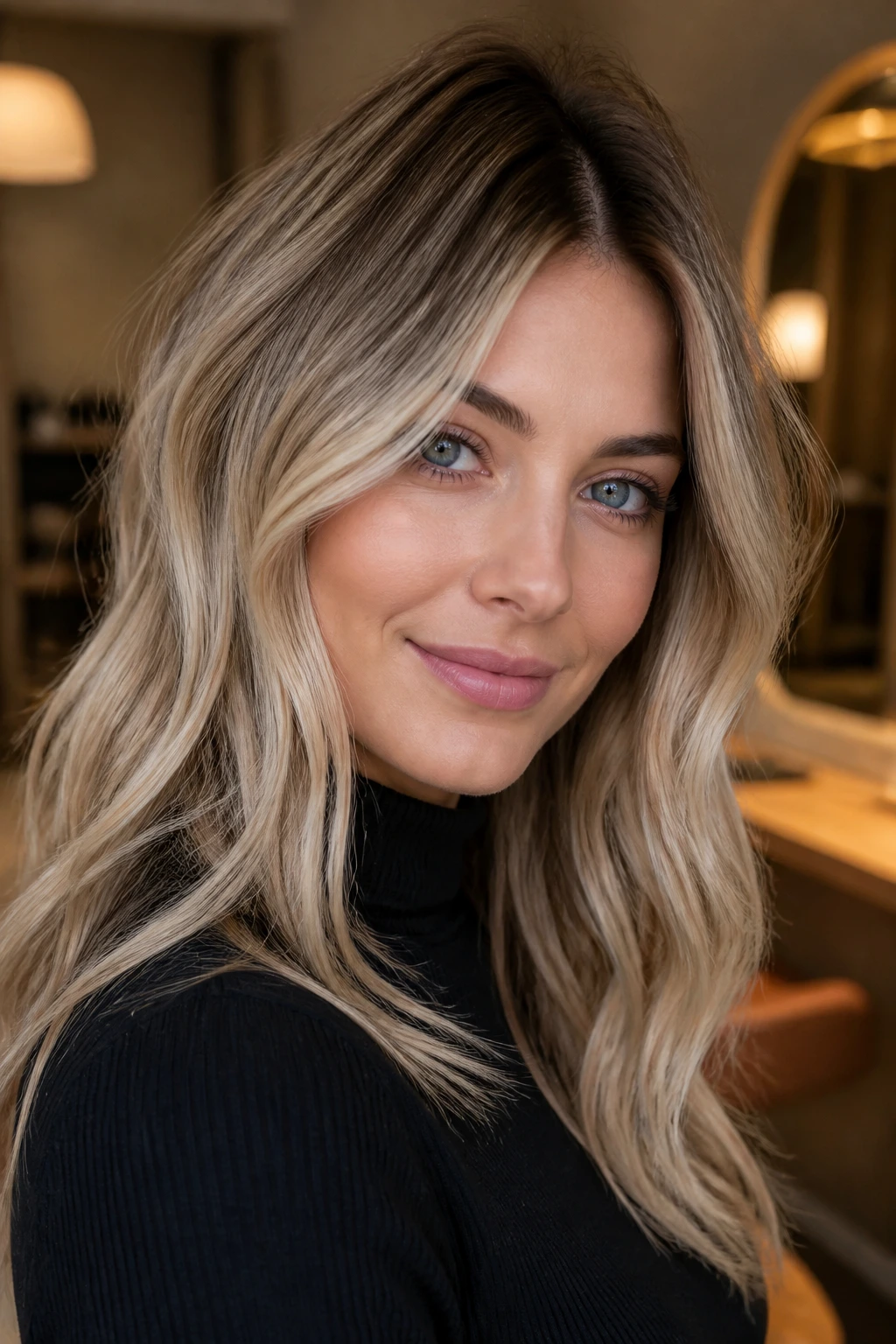
A lived-in brunette root is one of the easiest ways to make beige blonde more wearable for cool skin. Instead of chasing full-time brightness, the color starts darker at the root and slowly opens into beige through the mids and ends.
That root gives the face structure, which is useful if your skin is pale or easily overwhelmed by light hair. It also buys you time between appointments. The grow-out looks intentional, not accidental, and the blonde doesn’t scream for attention every time your part shifts.
What the Root Should Look Like
- Two to three shades deeper than the ends
- Soft, not painted in a hard line
- Cool or neutral brown, never red
- Blended through the first inch or two of growth
This style is a strong pick if you work with a low-key wardrobe, wear glasses, or just don’t want your hair to feel precious. It’s practical. And it still gives you that beige blonde softness where it counts.
20. Soft Beige Blonde with Smoky Dimension
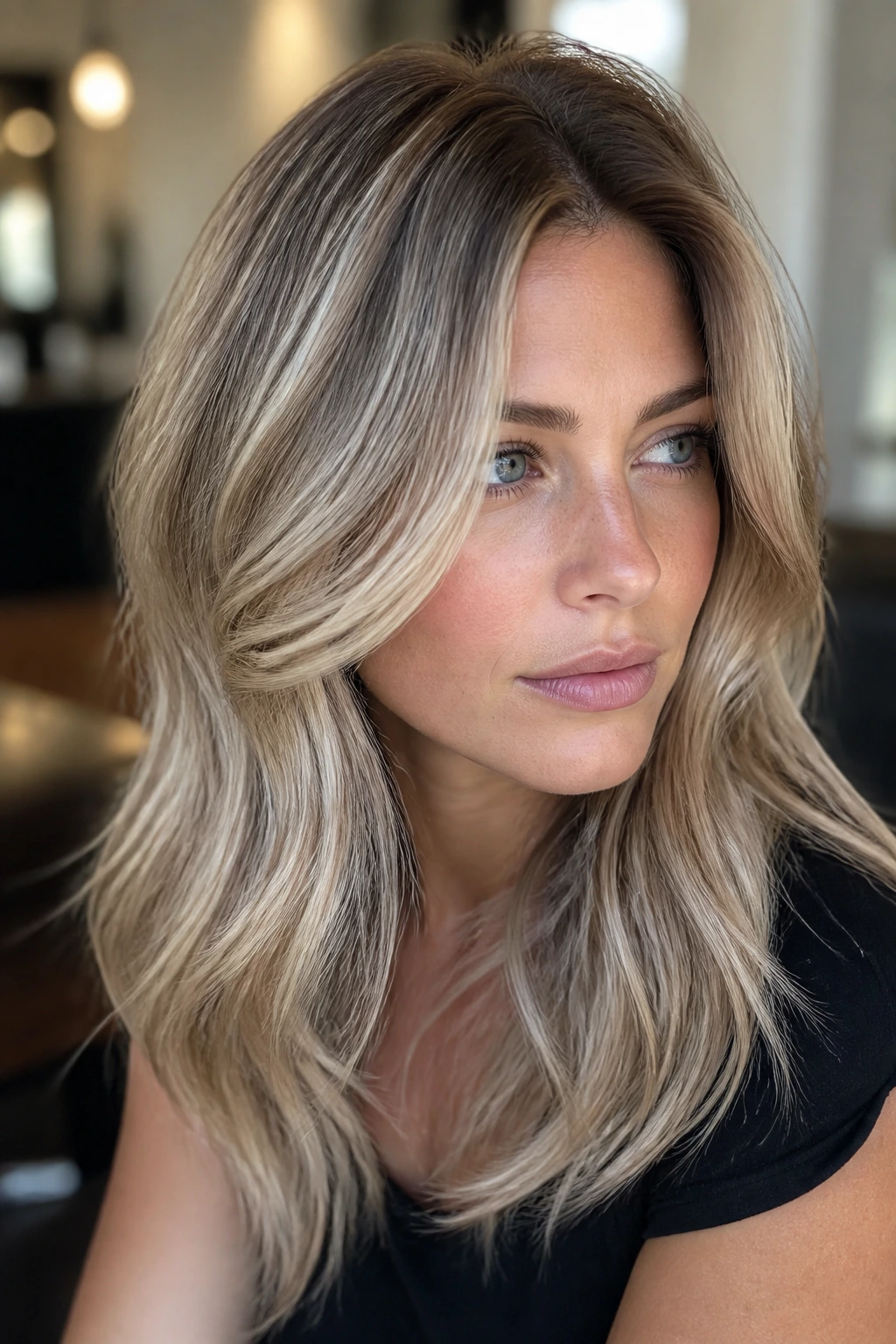
Soft beige blonde with smoky dimension is the shade I’d hand to someone who wants one blonde that can sit between pearl and ash without leaning too far in either direction. It’s the most forgiving of the bunch, which is saying something.
The smoky dimension matters because it keeps cool skin from looking overlit. Pale beige on its own can go a little chalky. Add a smoky undertone through the root area or interior layers, and the whole shade gains depth. That’s especially useful if your hair has a fine texture or if it tends to lose tone fast.
This is also the kind of blonde that works in different cuts without needing a total reinvention. Long waves, a mid-length shag, a blunt lob — it adapts. The tone stays soft, and the darker pieces keep the look from turning one-dimensional.
If you’re torn between icy and warm beige, this is the middle path I’d trust first. Keep the warmth out, keep the smoke subtle, and let the beige do the rest.
For cool skin tones, that quiet balance is usually the thing that makes beige blonde feel right instead of merely pretty. The best version doesn’t look sunny. It looks clean, soft, and a little expensive — and that’s a shade worth keeping around.
