



A chignon can save a wedding look in a way a fancier style sometimes can’t. It sits close to the head, keeps the neckline clean, and still leaves room for a veil, a comb, pearl pins, or nothing at all. The catch is that a chignon can also go wrong fast: too tight and it looks stern, too loose and it slides into a shapeless knot by dessert.
That balance matters because wedding hair has to do two jobs at once. It has to look calm in photos and survive hours of hugs, dancing, and warm air from a crowded room. A good bridal chignon does both without asking the rest of the look to carry the weight.
I like chignons for weddings because they can be tuned in tiny ways that most people never notice until the whole style suddenly clicks: a three-quarter-inch shift in the part, a softer twist on one side, a pin hidden under a curl, a crown with 1 inch of lift instead of 3. Those details change everything.
Some of the versions below are crisp and formal. Others are loose, textured, and a little romantic. All of them can be adapted to straight, wavy, curly, or coily hair—the trick is choosing the shape that belongs with the dress, the neckline, and the amount of movement you want.
1. The Classic Low Chignon at the Nape
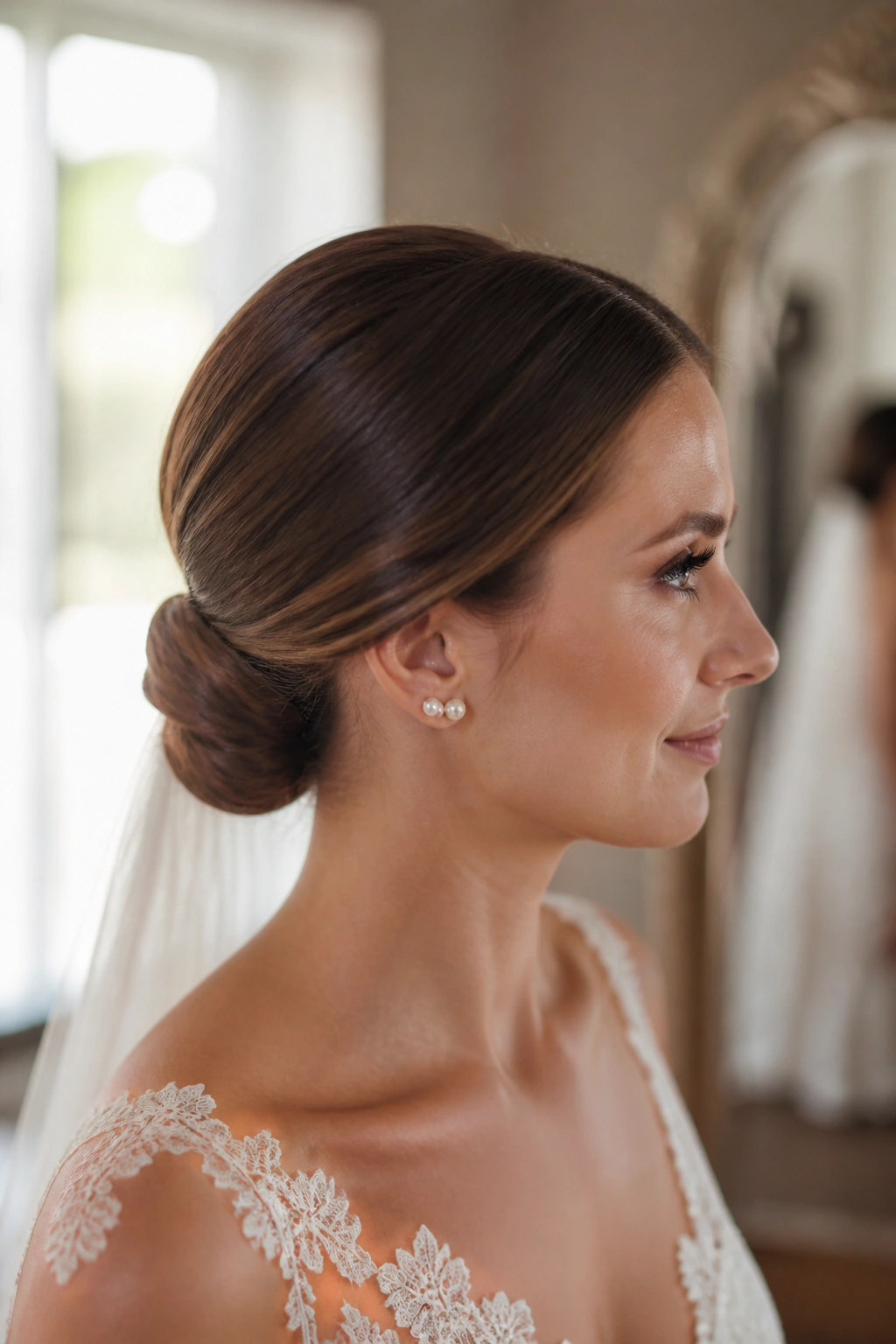
The classic low chignon is the one that still earns its keep. It sits right at the nape, tucked close to the neck, and it gives that clean, graceful shape people want when the dress already has a lot to say. There’s no drama in the setup. That’s the point.
What makes it work so well for weddings is its restraint. A center part makes it feel sharp, while a soft side part pushes it toward romantic territory. Either way, the bun stays low, compact, and neat enough to hold a veil comb or a row of pins without wobbling around.
It’s also the version I’d recommend when the neckline is busy. Lace, beadwork, buttons, and high collars all get room to breathe when the hair doesn’t compete with them. Simple doesn’t mean plain here. It means deliberate.
What gives it staying power
- Use a light mousse at the roots for grip.
- Smooth the top with a fine-tooth comb, not a brush that leaves fluff.
- Pin the rolled section in a tight oval, not a round puff.
- Finish with a flexible hairspray so it moves a little, instead of freezing stiff.
A low chignon like this is the safest choice for long ceremonies and late dancing. It stays tidy in photos, and it doesn’t fight the dress.
2. The Side-Swept Chignon with a Deep Part
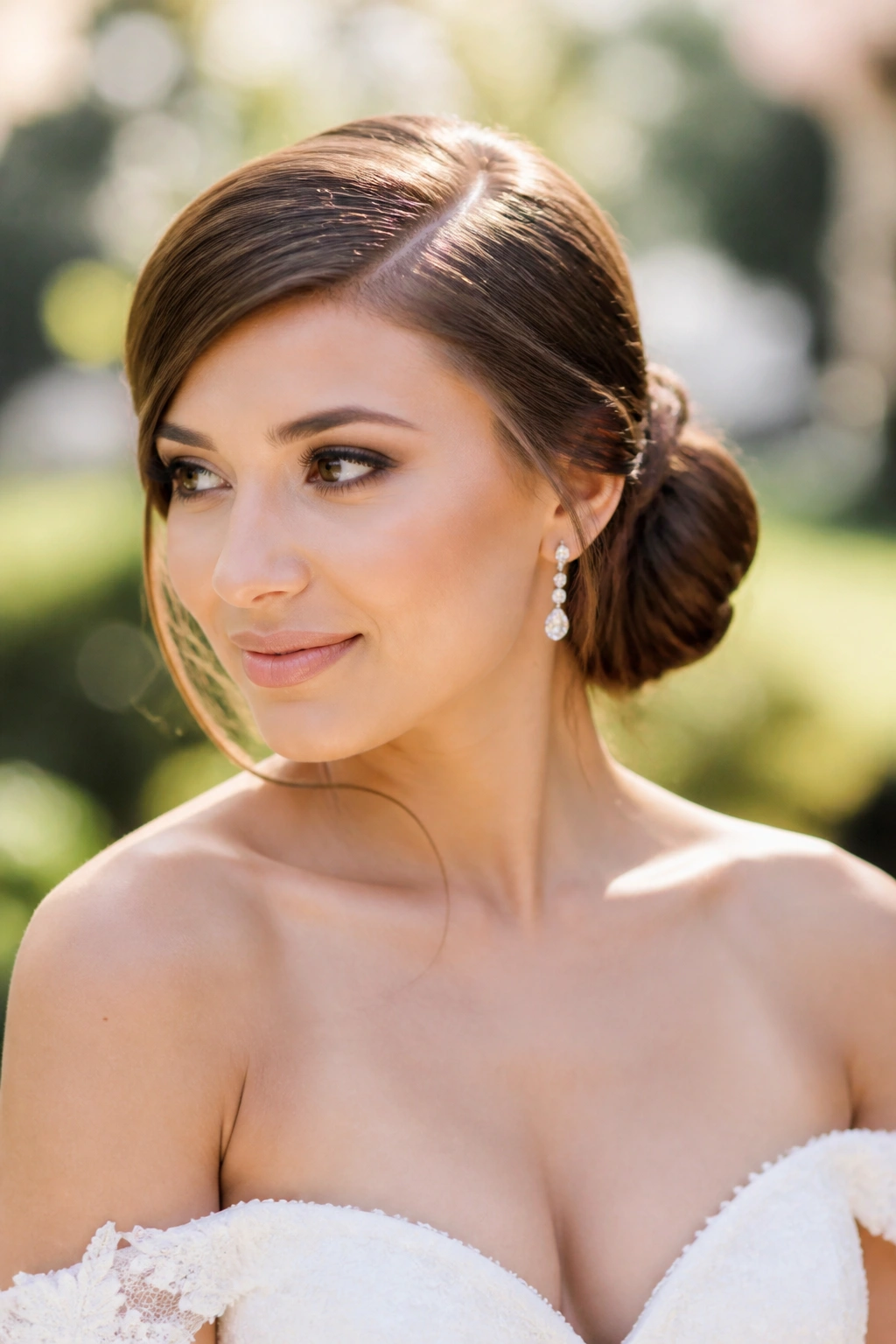
Why does a side-swept chignon look so polished so quickly? Because the asymmetry does half the work for you. A deep side part gives the style a built-in sweep, and the bun sits slightly off-center, which softens the face and keeps the shape from feeling too formal.
This one works especially well when the gown has an off-shoulder neckline or a sculpted bodice. The hair follows the same diagonal line as the dress, and that creates a kind of visual calm. Not loud. Not fussy. Just balanced.
Why the shape matters
A side-swept chignon is also a smart fix for hair that refuses to sit flat in a center part. Some heads simply look better with a side fall, and this style leans into that instead of fighting it. If the hair is thick, the sweep helps distribute the bulk. If the hair is fine, a little root lift at the heavy side keeps the shape from collapsing.
How to style it
- Set the part while the hair is still damp.
- Direct the front section across the forehead, then tuck it behind one ear.
- Keep the bun low and slightly elongated, not circular.
- Leave one or two soft pieces near the ear if the face needs a little easing.
I like this for outdoor ceremonies because the side shape still reads clearly even when the wind starts messing with everything.
3. The Braided Chignon with a Hidden Plait
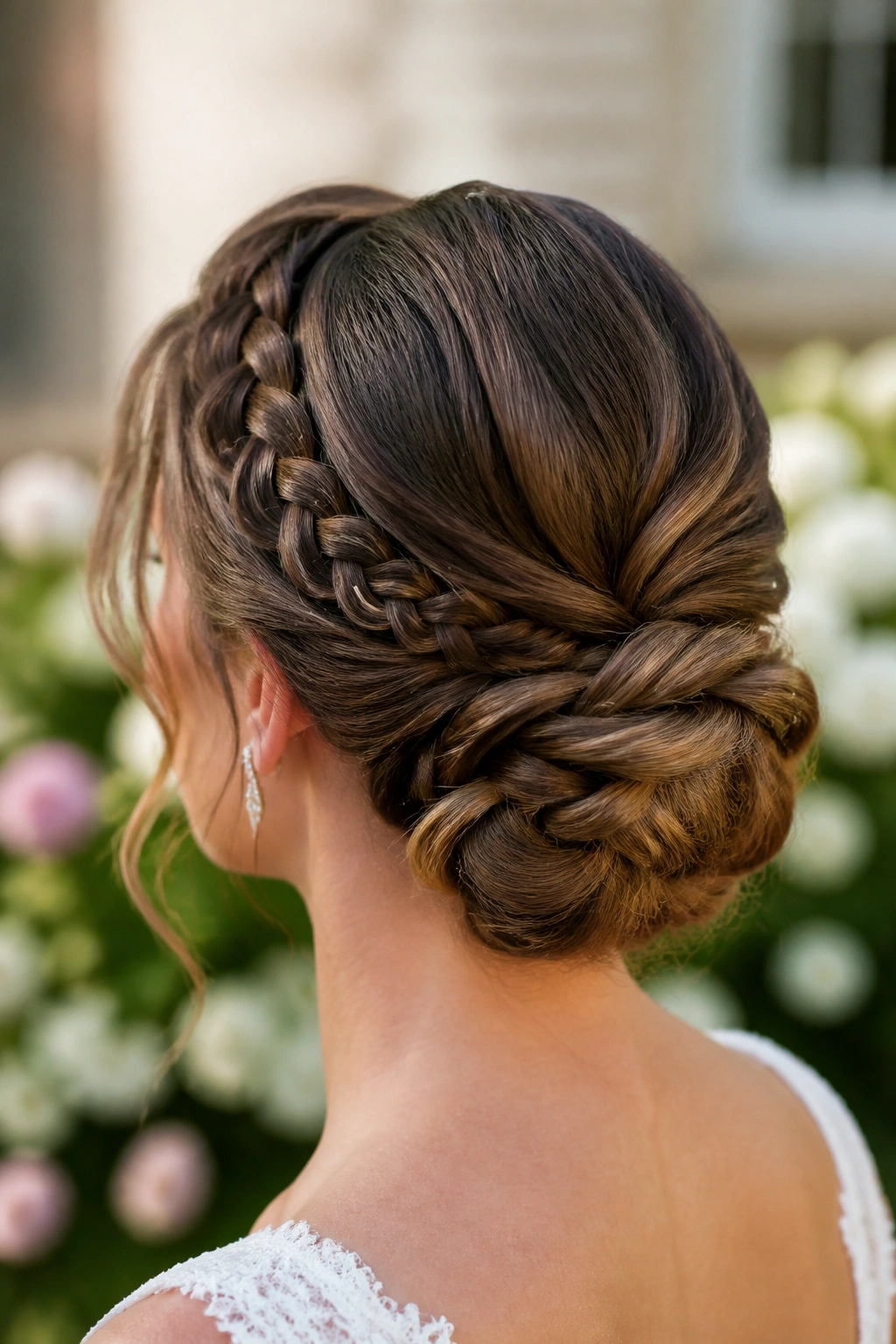
A braided chignon solves one of the oldest wedding-hair problems: how to make a bun look detailed without loading it up with too many accessories. The braid gives you texture, and the chignon gives you structure. That’s the whole trick.
What makes it different
Instead of wrapping all the hair straight into the bun, one section is braided first and then coiled into the chignon. Sometimes the braid runs along one side and disappears under the base. Sometimes it wraps around the bun like a thin rope. Either way, it gives the style more depth when the hair is photographed from the back.
This is one of my favorites for long hair because it uses length well. Hair that can feel heavy when worn down becomes part of the design. And if the braid is pancaked a little—pulled open with the fingertips—it softens the look without making it sloppy.
- Best with medium to long hair
- Nice match for boho or garden weddings
- Holds flowers, pins, or a small comb with ease
- Works well when the hair is slightly textured before braiding
A hidden plait also helps the chignon stay put. Braids grip. Plain wrapped hair can slide. That tiny structural difference matters more than most people think.
4. The Sleek Center-Part Chignon
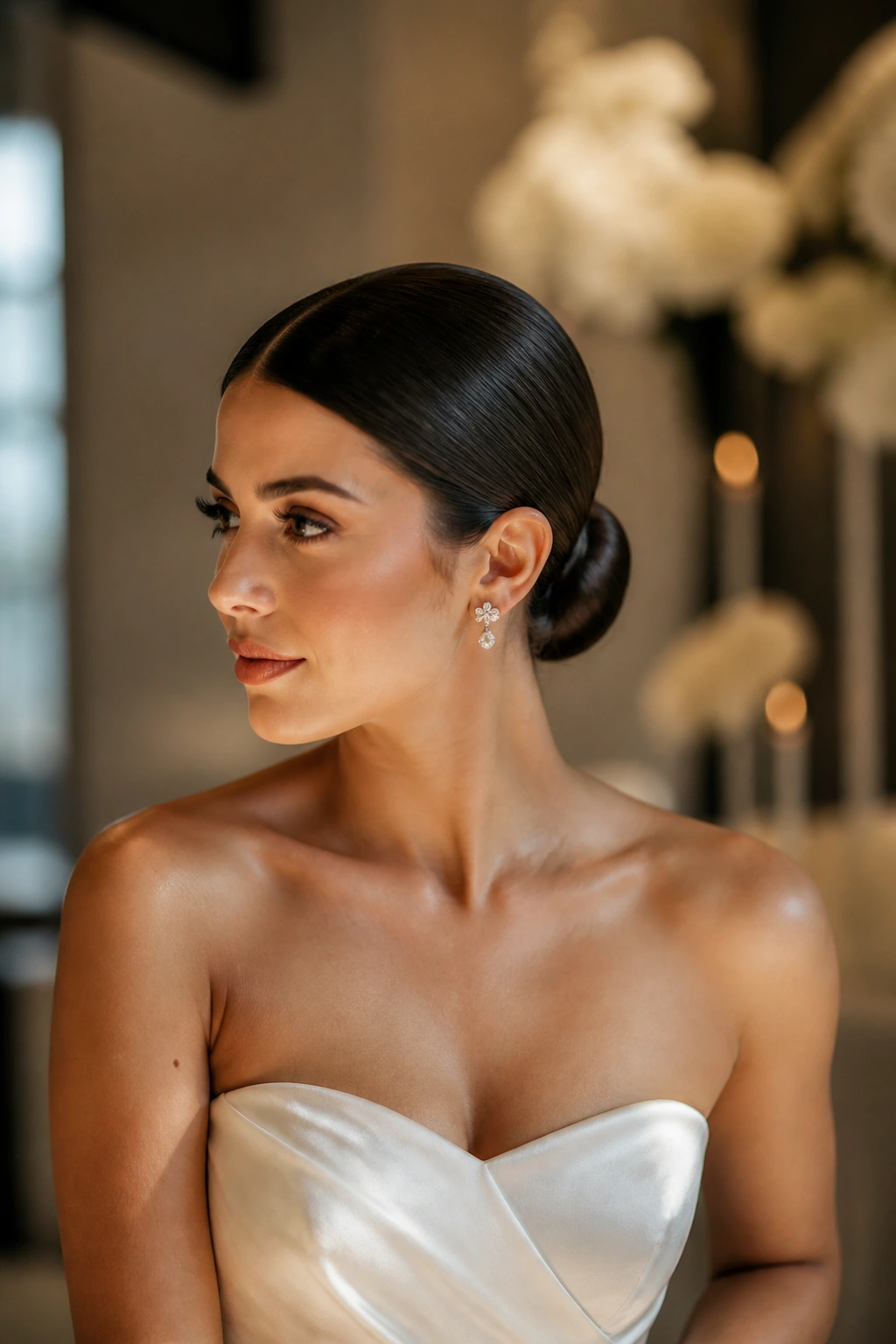
The sleek center-part chignon is blunt in the best possible way. It doesn’t ask for fluff, curls, or loose strands pretending to be accidental. It wants shine, clean lines, and a part so straight it looks drawn with a ruler.
That’s why it works so well with modern gowns. Satin, crepe, minimal silk, sharp tailoring—this style sits right beside those fabrics without competing. The hair becomes part of the architecture. And yes, it can still be soft enough for a wedding. Sleek does not have to mean severe.
The real work is in the prep. A small amount of smoothing cream through the mid-lengths, then a precise center part, then a low pinning pattern that keeps the bun flat against the head. No bulky padding. No wandering volume at the crown.
This is one of the few styles that looks better when the finish is slightly glossy. A dab of lightweight shine serum on the top layer, kept away from the roots, can make the whole thing read as deliberate instead of stiff.
If you want a chignon that feels clean, modern, and expensive-looking without being noisy, this is the one.
5. The Soft Messy Chignon with Face-Framing Pieces
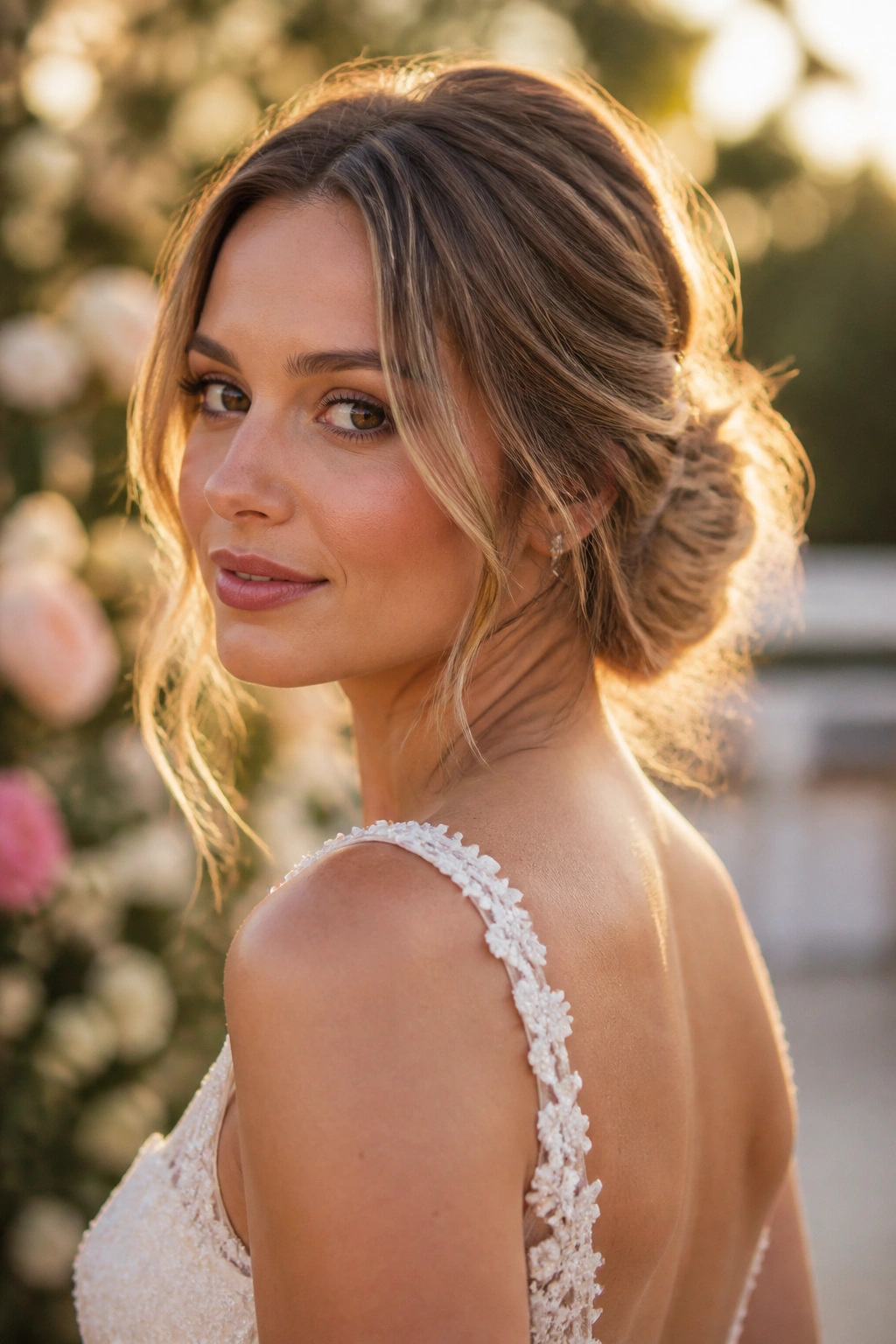
A messy wedding chignon should never look forgotten. That’s the line. It should look touched, not abandoned. The difference is in the edges: the bun stays anchored, but the front pieces move softly around the cheeks and jaw.
I’ve seen this style rescue dresses that were almost too sweet. A puffed sleeve, a floral lace skirt, a garden venue with too much charm—those settings can make a stiff hairstyle feel out of place. A soft messy chignon keeps the tone relaxed without tipping into casual.
The face-framing pieces matter more than the bun itself. They should be thin enough to soften the face, but not so thin that they look like scraps. Curl them away from the face with a 1-inch iron, then break the curl once it cools. That gives a bend instead of a ringlet.
What to watch for
A messy chignon goes wrong when the volume spreads too far. Keep the fullness low and the crown controlled. The mess belongs in the texture, not the shape.
A few pins hidden under the twist will keep the style from collapsing later in the day. And if the hair is fine, a dry texturizing spray sprayed from 8 to 10 inches away gives enough grip to fake density.
6. The French Chignon Twist-Bun Hybrid
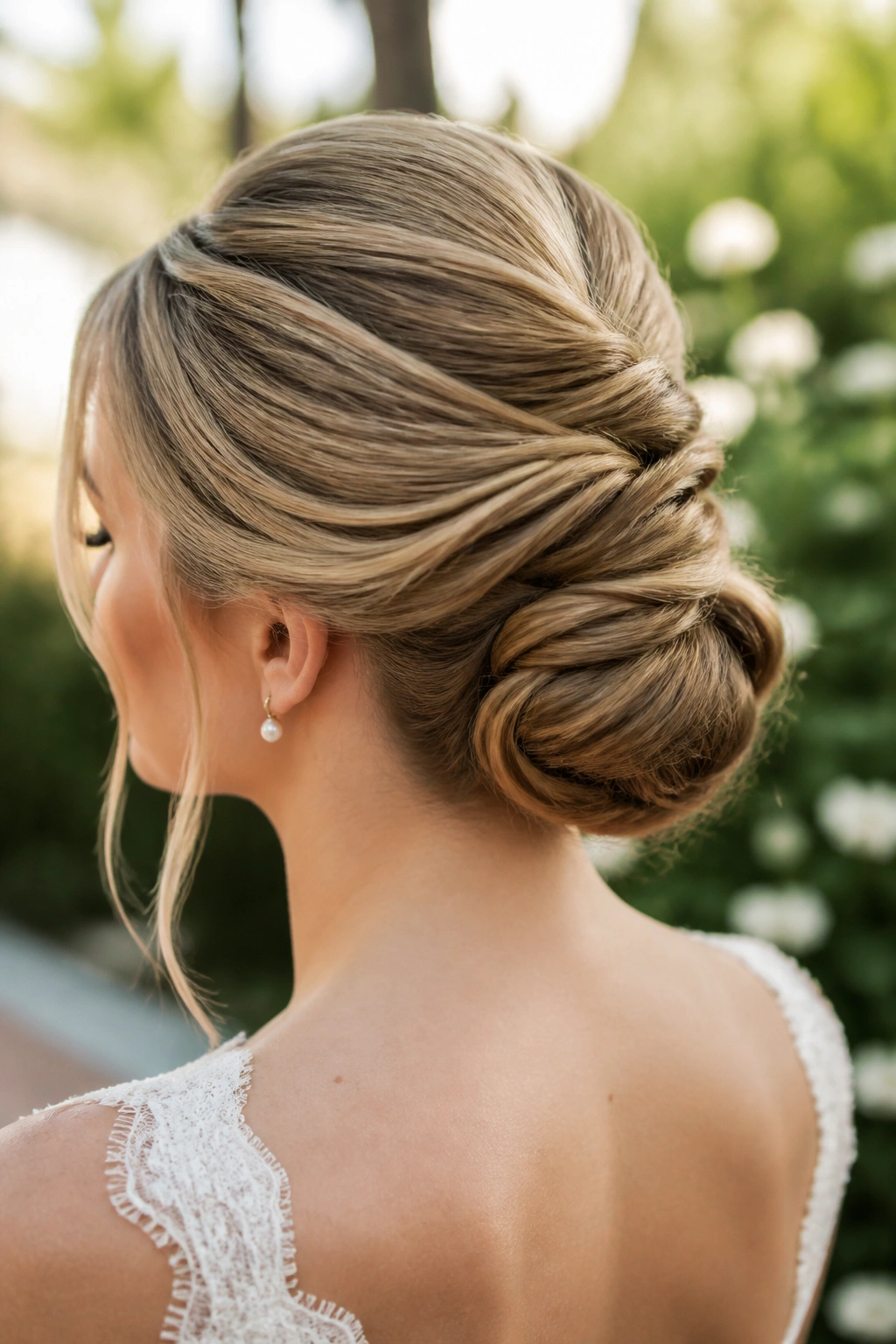
The French twist and the chignon are cousins, and this style sits right between them. It has the vertical sweep of a French twist, but the lower section loosens into a chignon instead of staying rolled all the way up. That makes it a little softer, a little less formal, and easier to wear for a long stretch.
It’s a smart choice when you want something polished but not severe. A full French twist can feel a bit rigid with some dresses, especially if the neckline is softer. The twist-bun hybrid keeps the elegance while relaxing the top half a touch.
This version also handles medium-length hair well. You don’t need waist-length strands to make it happen, because the shape relies on pinning and folding more than on wrapping endless length. That’s a gift, honestly. Not every bridal hairstyle needs heroic amounts of hair.
The best detail is the seam where the twist becomes the chignon. Leave that transition slightly rounded, not pinched flat. It keeps the style from looking overworked.
If the wedding has a formal tone, this one lands beautifully. If the dress is simpler, it can look almost cinematic.
7. The Curly Textured Chignon
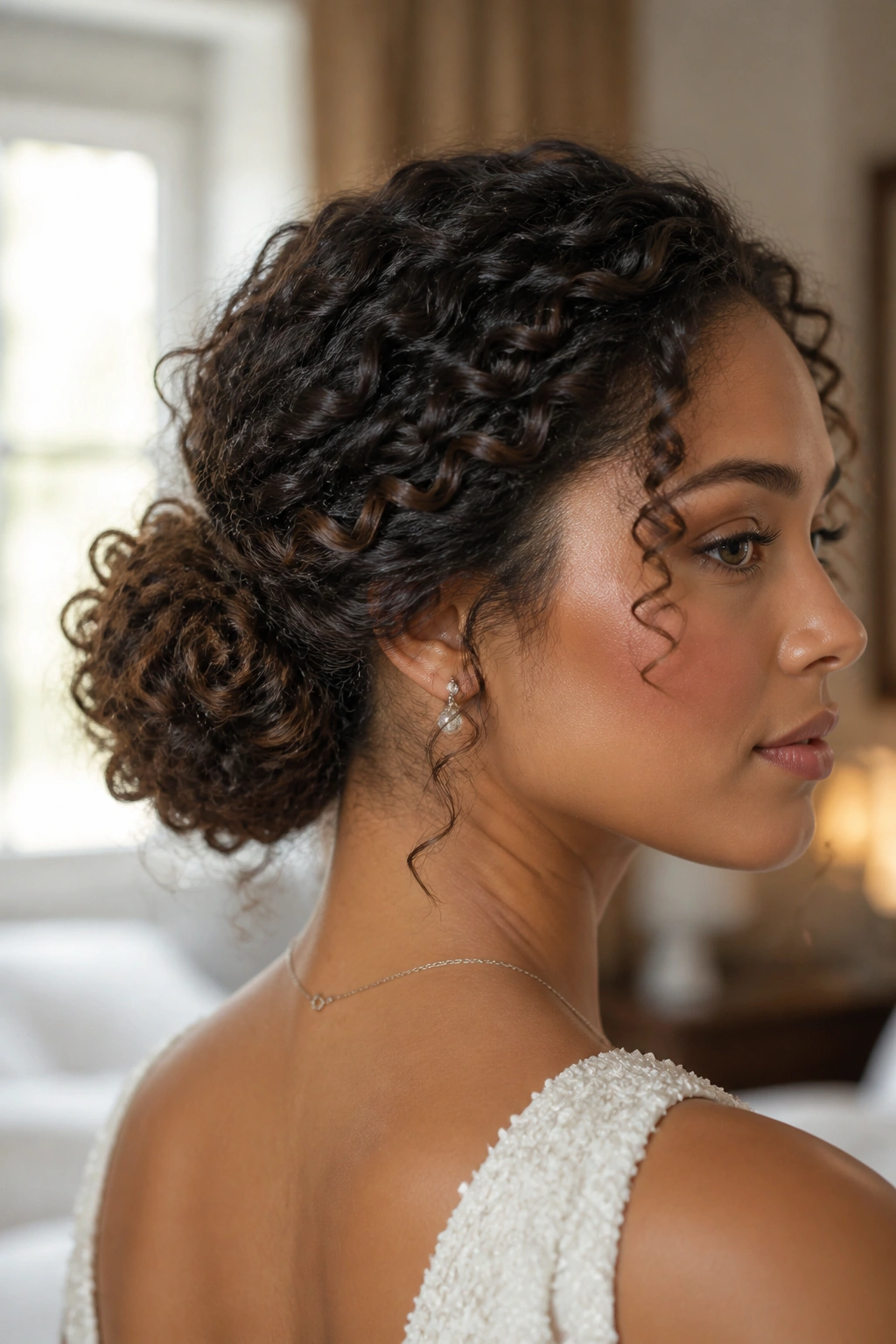
Curly hair makes a better chignon than people give it credit for. The texture does half the styling before you ever pick up a pin, and the finished result often has more life than a smooth bun that was forced into place. The key is to work with the curl pattern, not scrape it away.
Start with curls that are fully dry and shaped. Scrunch in a little light cream or curl gel, then gather the hair low without crushing the pattern. The bun should look plush, not mashed. Some ends can stay visible. That is not a mistake. In a textured bridal chignon, those ends give the style movement.
How to keep it soft, not puffy
- Use a wide-tooth comb only at the root area if needed.
- Leave some curl definition around the hairline.
- Pin each coil where it naturally wants to fold.
- Avoid brushing the entire shape smooth, or the chignon will lose its character.
This works especially well when the dress has a lot of texture already. Think embroidery, lace, or layered fabric. The hair feels at home beside it.
And a small warning: curly chignons can get bigger through the day if they’re pinned too loosely. Use more pins than you think. Curly hair shifts. That’s part of the charm.
8. The Chignon Designed for a Veil
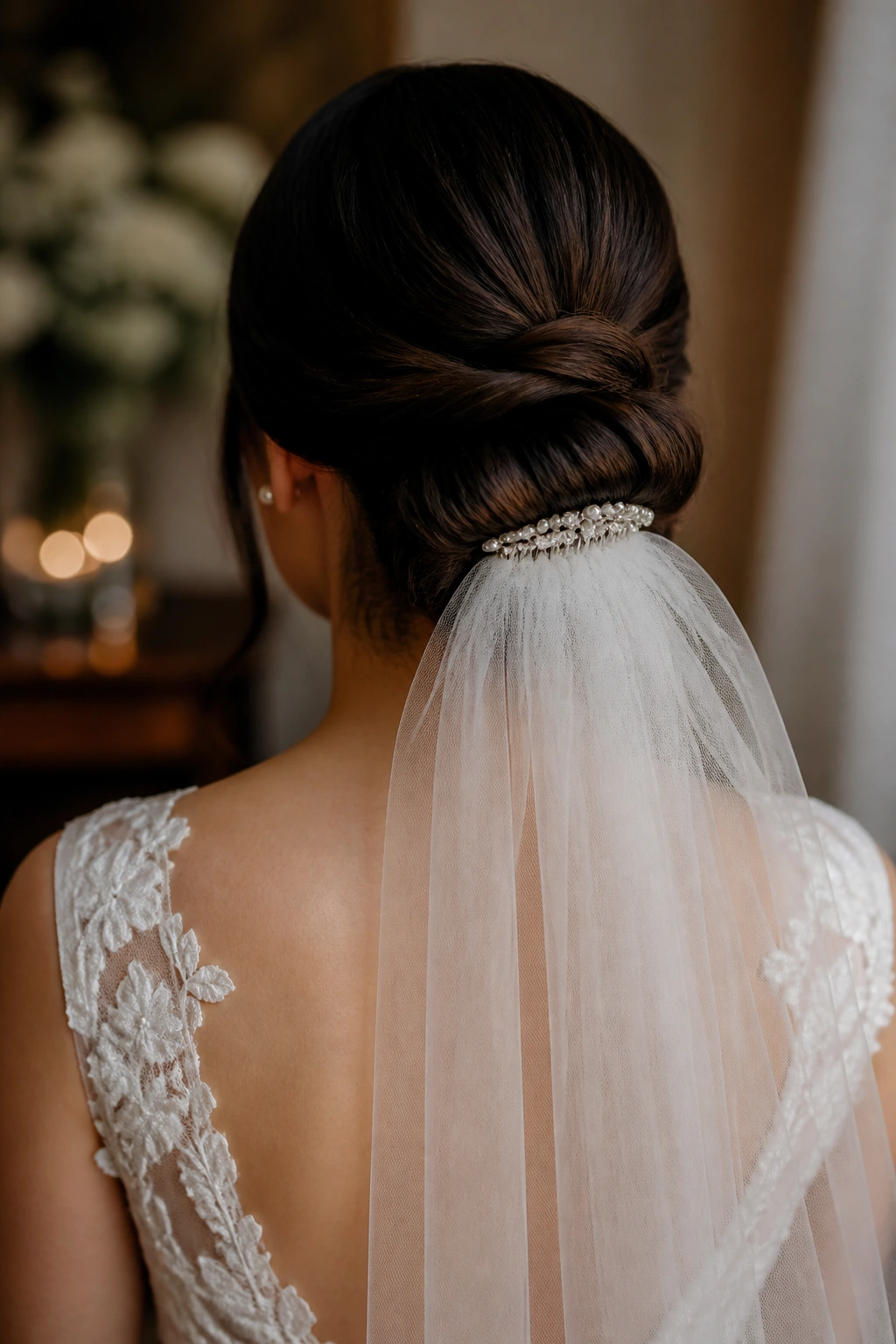
A veil changes the whole job of the hairstyle. The chignon can’t just look nice from behind; it has to hold hardware without sagging, slipping, or splitting the style apart. That means the bun needs a sturdy center and a clean place for the comb to sit.
The smartest placement is usually just under or just above the bun, depending on the veil weight. A single-tier veil often sits well beneath the chignon for a softer fall. A heavier or longer veil needs a more secure anchor, and that usually means tighter pinning at the base.
A few placement rules
- Put the veil comb into a firm section of the hair, not a fluffy top layer.
- Test the placement with the dress already on.
- Make sure the bun can still be removed later without dragging the veil with it.
- Leave enough room for pins if the veil needs extra support.
I prefer this style when the bride wants both ceremony drama and reception ease. The veil comes off, and the chignon still looks finished on its own. That matters. A style that only works with the veil attached is a little too dependent for my taste.
The bun itself can stay classic, twisted, or braided. The important part is the foundation.
9. The Rosette Chignon
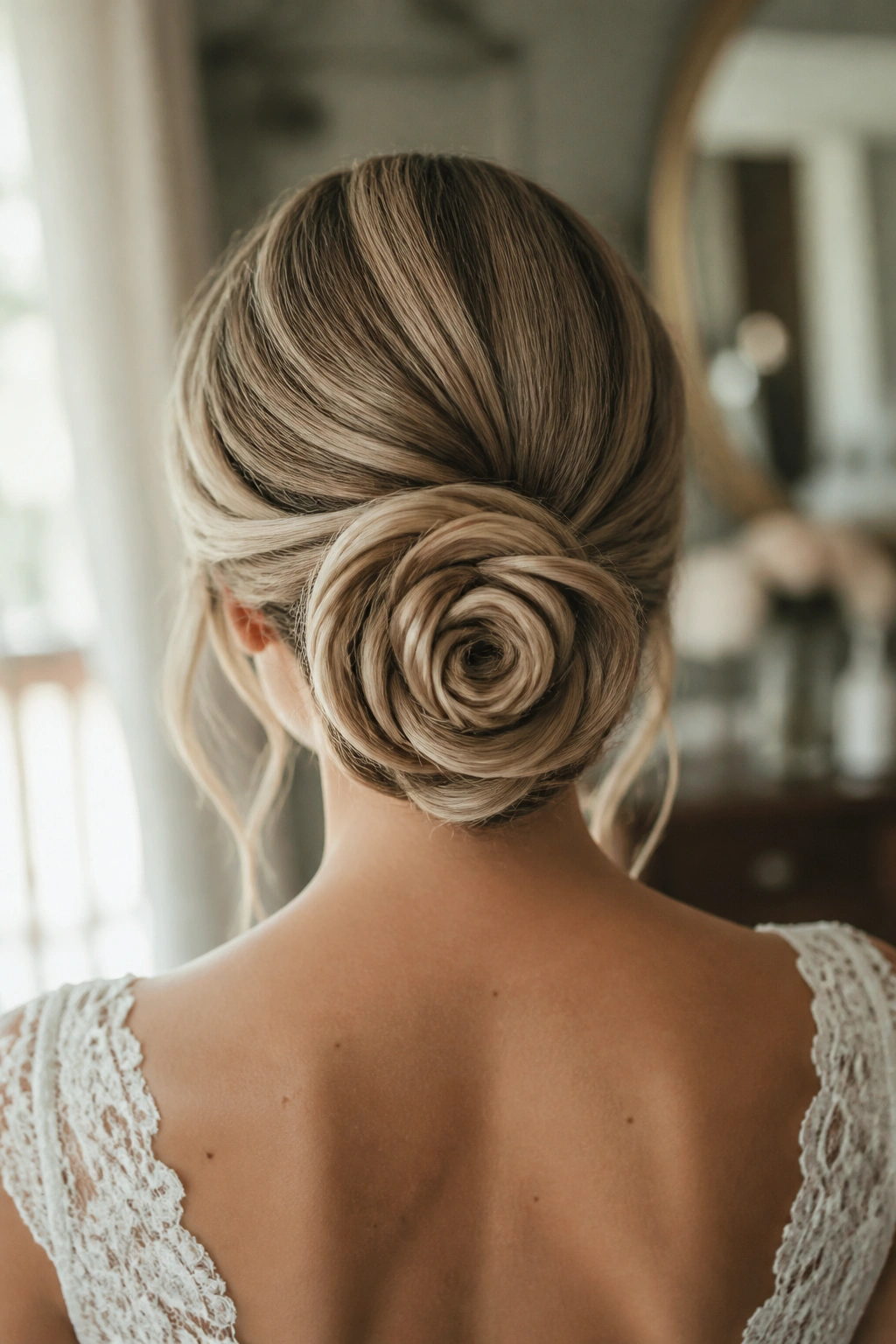
The rosette chignon is the one that looks like it took forever, even when the technique is simpler than it seems. Hair is twisted into small loops and arranged to resemble a rose or a spiral bloom at the nape. It’s decorative without needing extra decoration.
What I like about it is that it creates visible detail from the hair itself. No combs needed if you don’t want them. No sparkly extras if the dress is already doing enough. The shape becomes the ornament.
This style works best when the hair has enough length to fold over itself cleanly. Very fine hair can do it, but it often needs a little padding or a hidden base to make the loops look full enough. Thick hair, on the other hand, can build a rosette that feels rich and dense in a nice way.
Keep the outer edges smooth and the center slightly tighter. If every loop is too loose, the shape gets vague. If everything is too tight, the flower effect disappears and you’re left with a knot. The middle wants pressure; the outer ring wants softness.
This is a pretty choice for a wedding, yes, but it also has backbone. It won’t fall apart easily once pinned correctly.
10. The Double Chignon with a Knotted Duo
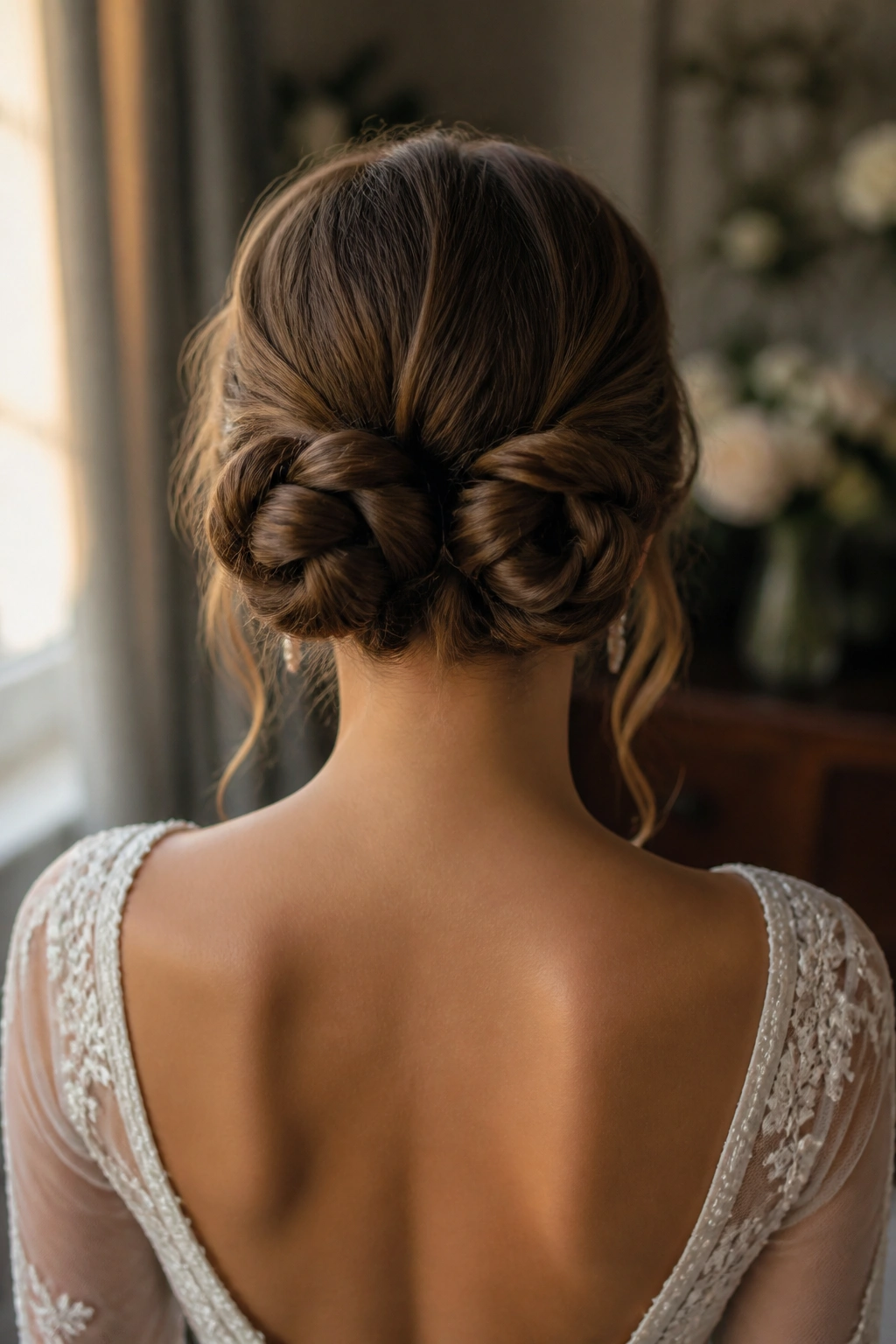
Why stop at one knot when two can look better? The double chignon uses a second loop or tucked knot to build depth, almost like the bun is layered instead of stacked flat. It gives the back of the head more structure, which is useful when the dress has an open back that needs something interesting to frame it.
Unlike a single low bun, the double chignon has a built-in rhythm. The eye moves from one fold to the next, and that makes the style feel a little more sculpted. It’s not fussy. It’s arranged.
This version is a nice fit for thicker hair because it divides the bulk into sections instead of forcing everything into one heavy roll. That often makes the bun sit more comfortably, too. Less tug at the scalp. Better all-day wear.
- Good for open-back or low-back gowns
- Useful when the hair has a lot of length
- Can be neat or softly broken apart
- Holds structure better than a single loose twist
The only thing to watch is symmetry. A double chignon can look lopsided if one loop is pinched tighter than the other. Give both shapes room, then tighten them in place.
11. The Pearl-Pin Chignon
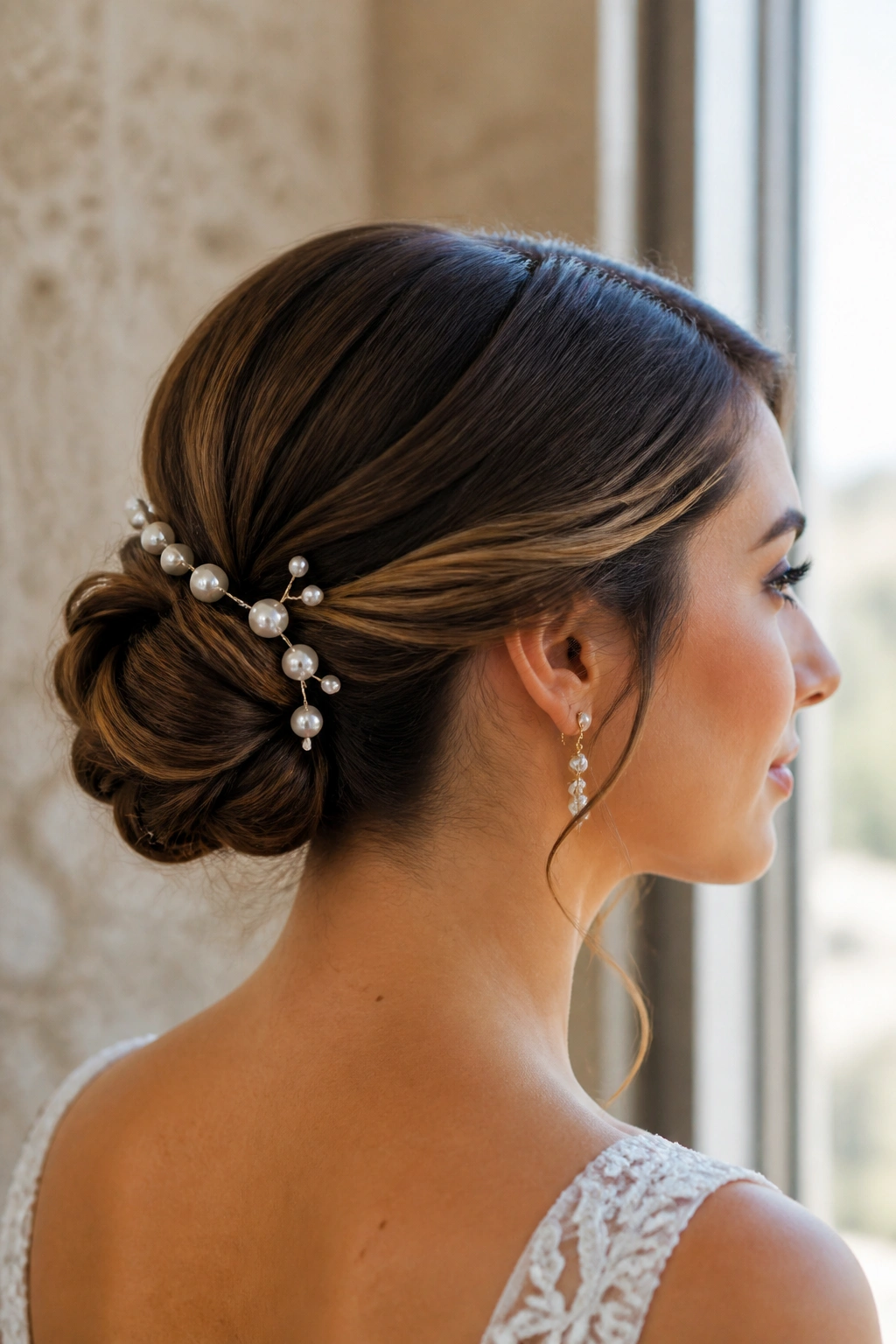
What changes a chignon more than a huge accessory? Usually, a few tiny pearl pins. Scattered pins give you control over the finish. They can line the twist, tuck into the bun, or cluster near one side so the style picks up light without turning into a jewelry display.
This works best when the chignon itself is fairly simple. A rope twist, a low knot, or a clean bun creates a calm base, and the pearls provide the detail. If the hair is already braided, curled, and pulled apart, the pins can disappear into the texture. Sometimes that’s lovely. Sometimes it’s too much. I prefer the pearls to have room to breathe.
Where pearl pins look smartest
- Along the upper curve of the bun
- On one side only, if the dress is asymmetrical
- At the seam where a twist tucks under
- Near the veil comb for a layered back view
Pearl pins also help if the bride wants softness but doesn’t want loose hair. That’s a real balancing act. The pins give the eye something delicate to rest on, so the whole style feels lighter.
Use a few, not a parade of them. Too many and the bun starts looking busy.
12. The Low Chignon with a Lifted Crown
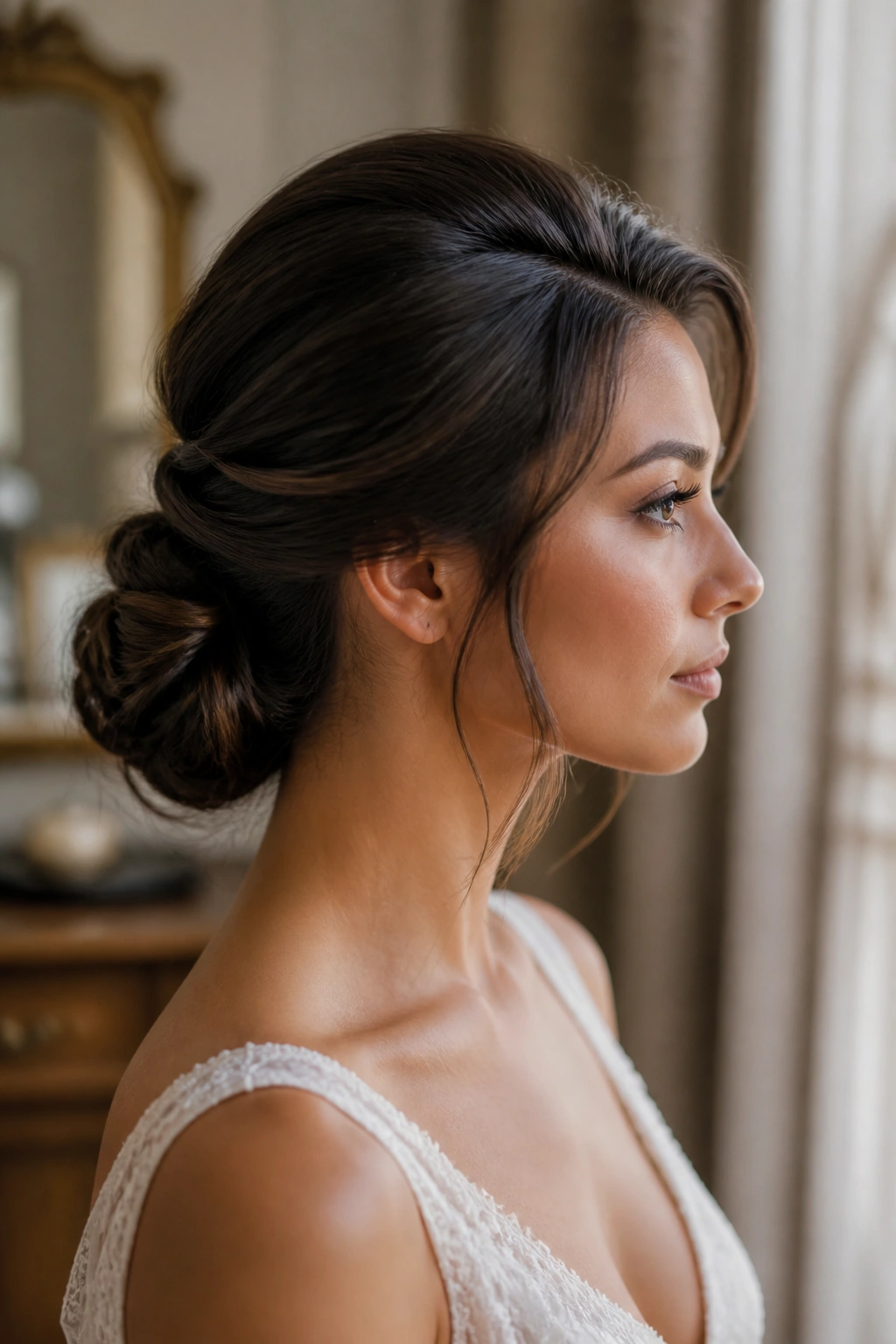
A little height at the crown can change a wedding updo from flat to poised. Not big volume. A small, controlled lift—maybe an inch, maybe a touch more—is often enough to make the chignon feel more finished and help the profile read better in photos.
The crown lift is useful when the face needs elongation or the dress neckline is very low. It creates a gentle transition between forehead and bun, instead of a sudden drop. That line matters more than people expect. Hair is shape, after all.
How it works
The top section gets light backcombing or a hidden cushion of root-lifting spray, then it’s smoothed over so the teasing doesn’t show. The trick is to keep the lift localized. If the whole top is puffed up, the style starts drifting toward prom hair, and nobody wants that.
- Best for round or heart-shaped faces
- Nice with strapless gowns
- Helps fine hair look fuller
- Keeps the bun from sitting too low visually
This is a clean, useful compromise style. It offers a little drama without going full volume. That’s often exactly what a bride needs when the rest of the look is already doing enough.
13. The Minimalist Wrapped Chignon
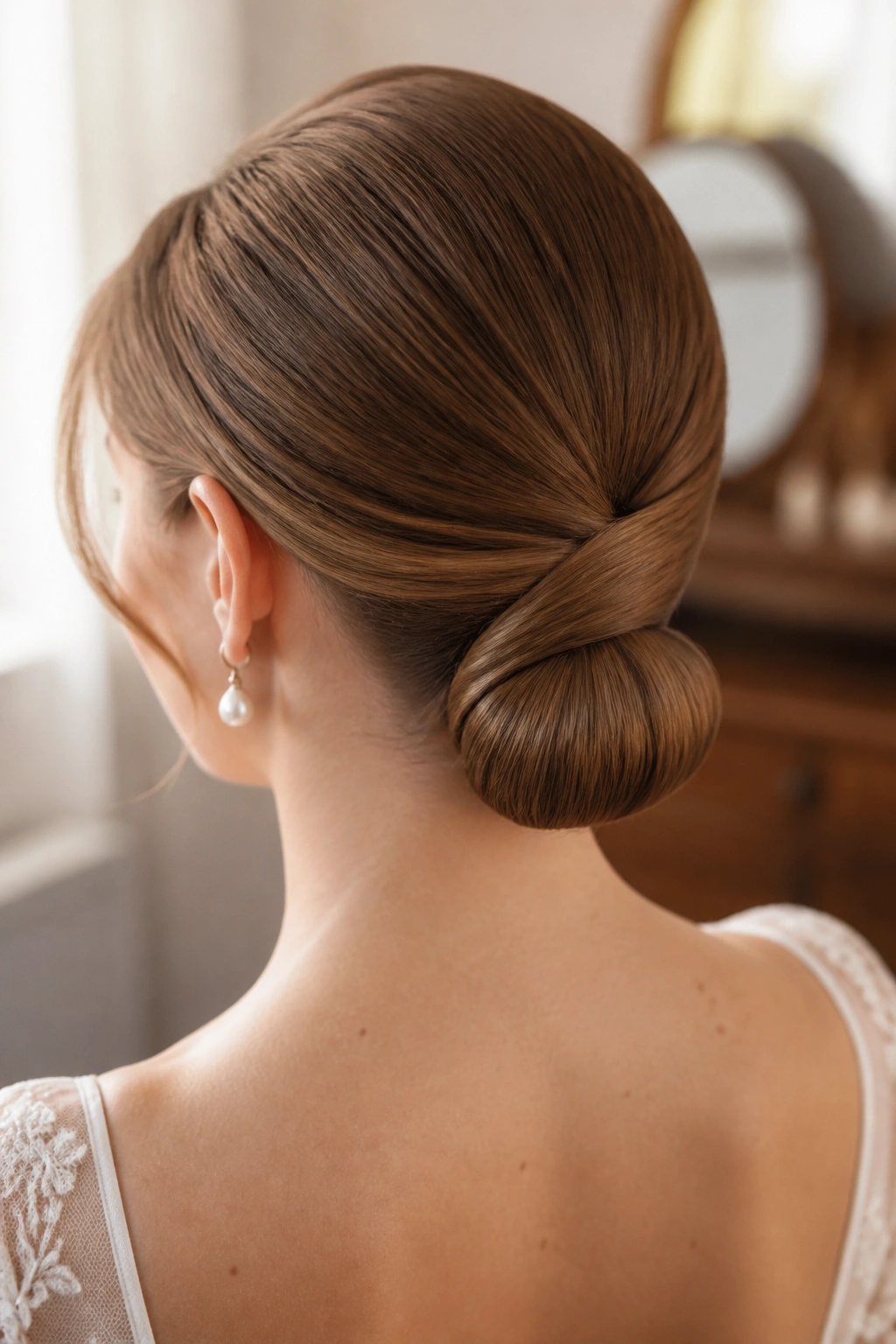
The minimalist wrapped chignon is one of those styles that looks easy until you try to copy it. It depends on control. Each section of hair is wrapped with intention, the ends disappear neatly, and the final shape stays smooth from every angle.
There’s no teasing here. No stray tendrils. No soft collapse around the ears. The finish is crisp, and that is why it works. It suits brides who like modern clothes, clean makeup, and a hairstyle that doesn’t chase attention.
This one reads especially well with structured fabric. Satin, mikado, and silk organza tend to like a plain, wrapped bun because the textures don’t compete. The hair and the dress end up speaking the same language.
The best version has a visible wrap line where one section crosses another. That tiny seam gives the eye something to follow, which keeps the bun from looking like a plain lump at the nape. Smooth is good; flat is not.
If you use pins, hide them in the seam rather than scattering them around the perimeter. The bun stays cleaner that way.
14. The Gibson Tuck-Inspired Chignon
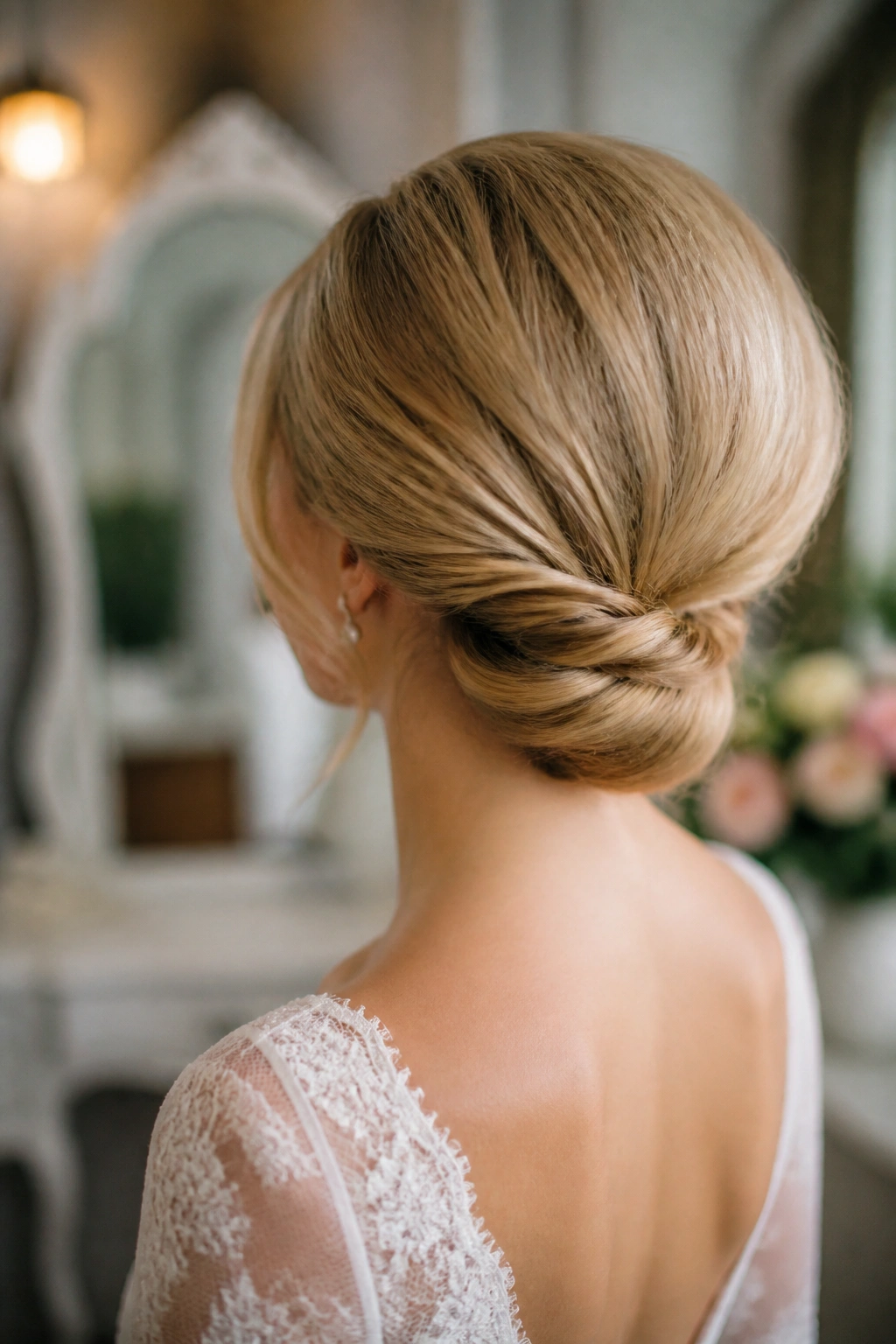
The Gibson tuck and the chignon share a love of folding hair under itself, but the Gibson version has a softer, more vintage bend. It feels old-fashioned in a nice way, especially with a dress that nods to another era without becoming costume-y.
This style suits medium to long hair and works well when the ends can be tucked into a roll rather than wound into a tight knot. The back stays smooth, and the lower section tucks inward like a rolled cushion. That makes the shape feel gentler than a standard bun.
What gives it character
A soft side part or a slightly puffed crown brings the whole thing into bridal territory. Without that lift, it can feel too everyday. With it, the style becomes elegant in a quiet, old-soul kind of way.
It’s a strong pick for vintage-inspired weddings, garden settings, or brides who want a hairstyle that won’t fight a detailed neckline. The back of the head looks polished, and the roll can be anchored low enough to leave earrings visible.
If you like the idea of a chignon but want something with a little more romance and less severity, this hybrid is a good place to land.
15. The Side Nape Chignon for a One-Shoulder Dress
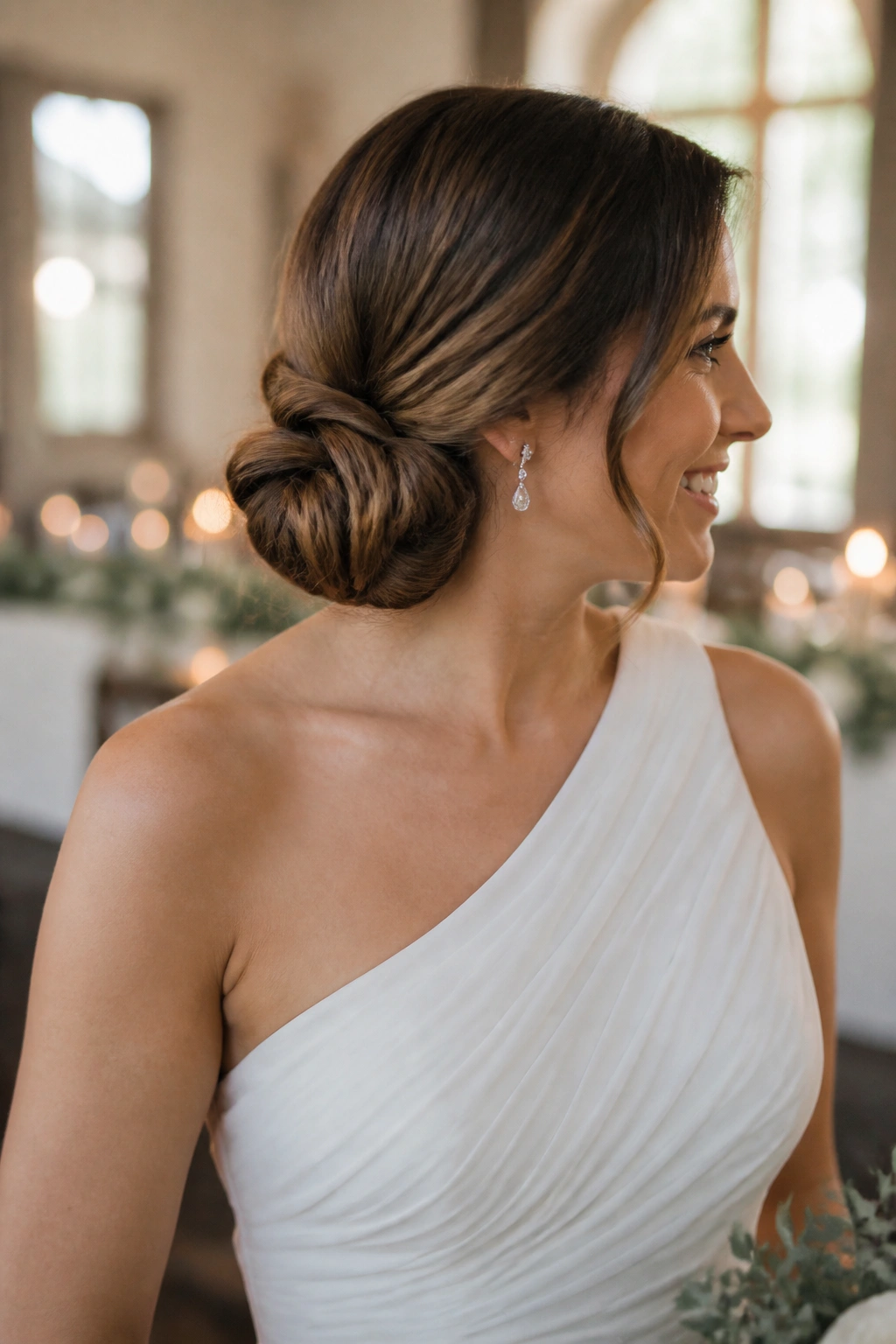
A one-shoulder dress needs a hairstyle that respects the line of the neckline, and a side nape chignon does that beautifully. The bun sits low and slightly to one side, which keeps the exposed shoulder visually open instead of crowding it.
This is one of those cases where symmetry is not your friend. A centered bun can make a one-shoulder gown look awkward, like the hair and dress are arguing. Shift the weight. Let the hair echo the dress instead of competing with it.
The side chignon can be sleek or soft. I like a version with a gentle twist feeding into the bun, because it keeps the style from feeling too severe near the neck. But if the dress is sharp and tailored, a cleaner side knot can be the better move.
That tiny offset does real work in photos. It guides the eye along the cut of the dress, then stops where it should. The styling should follow the clothing, not fight it.
A side nape chignon also leaves room for a statement earring on the opposite side, which is a nice bonus.
16. The Halo-Braid Chignon
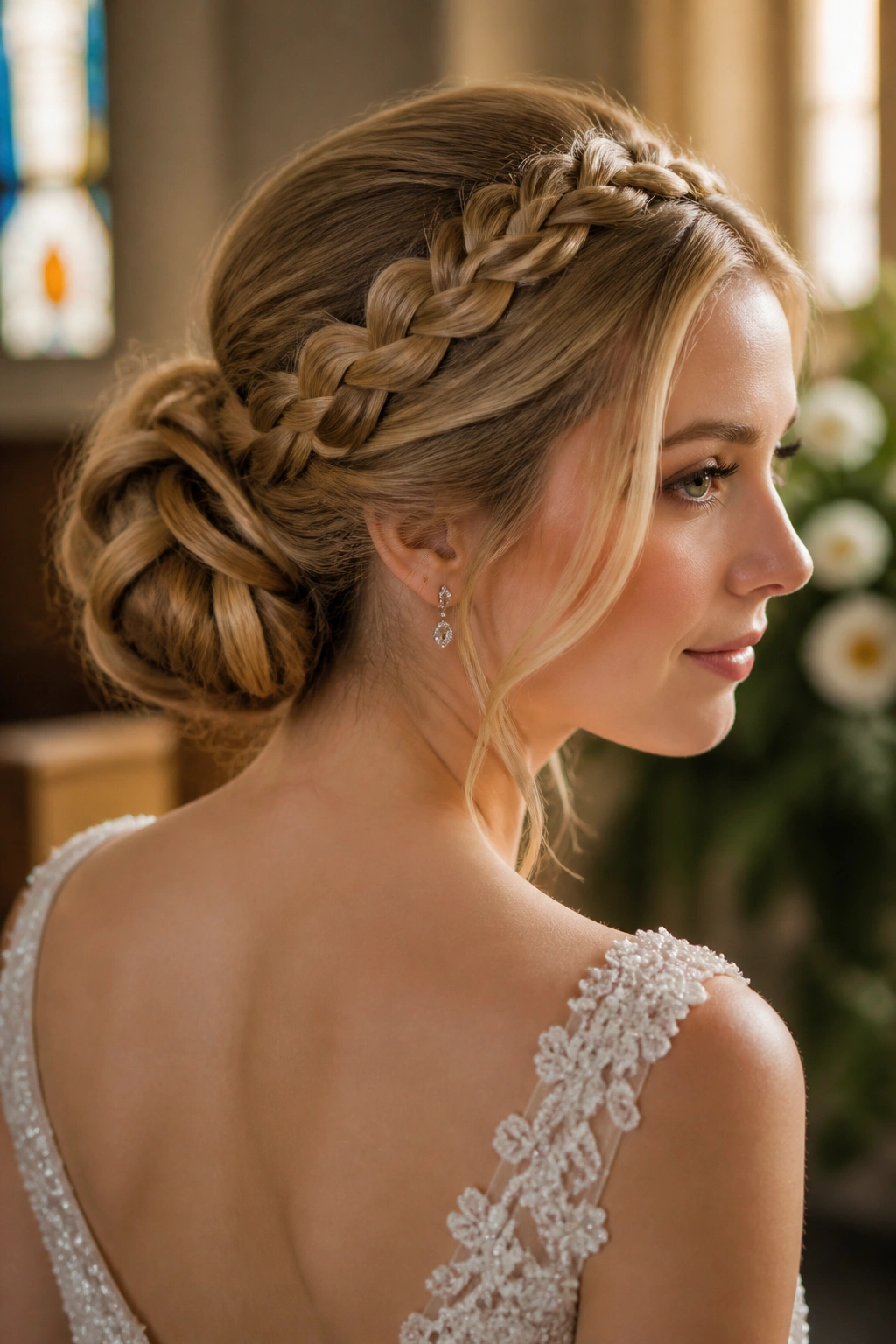
A halo braid into a chignon gives you two styles in one: the framing of a braid around the hairline and the tidiness of a bun at the nape. It feels romantic without becoming sugary, and it works well when the bride wants the front of the style to matter as much as the back.
Why does this combination work so well? The braid creates a built-in border, which keeps the face area neat, while the chignon collects the length and keeps the neck exposed. That balance helps the style stay readable from every angle.
How to wear it well
The braid doesn’t have to be tight. In fact, a braid that’s pulled apart a little looks better in most wedding settings because it softens the hairline. Then the braid feeds into the bun, where the ends vanish under the pinned base.
This is a lovely match for veils, floral combs, or just bare hair. The halo keeps the front detailed enough that it doesn’t need much more. For brides with medium-thick hair, it can also help distribute weight so the bun doesn’t feel bottom-heavy.
It’s one of those styles that feels old and fresh at the same time. That’s rare, and worth using.
17. The Satin-Ribbon Chignon
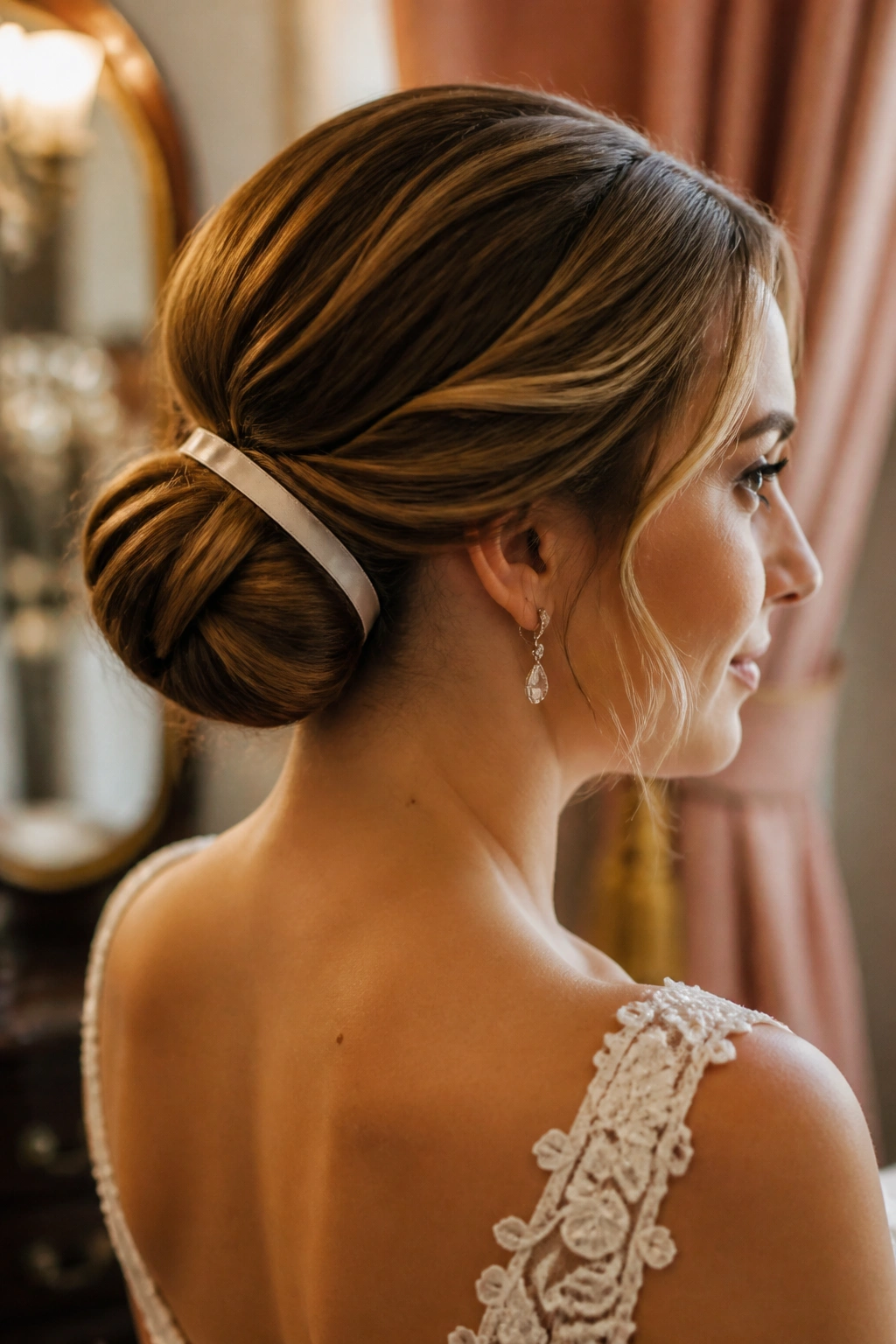
A satin ribbon wrapped through a chignon changes the tone fast. The style becomes softer, a little more personal, and less reliant on expensive accessories that can sometimes feel cold. A ribbon can match the bouquet, echo the dress lining, or simply bring a touch of color to the back of the hair.
I like this version most when the bride wants one detail that feels handmade. Not rustic. Handmade. There’s a difference. A ribbon tied neatly at the base or wound around the bun gives the style a human touch that pearls and crystal pins don’t always offer.
The ribbon should be narrow enough to sit cleanly—about 1/4 inch to 1/2 inch wide is usually enough. Wider ribbon can bulk up the bun in a way that looks awkward from the side. Silk or satin tends to drape best. Stiffer ribbon fights the shape.
This style is also easy to adapt. A white ribbon feels classic. Blush feels gentler. Dark green or navy can look sharp with the right dress. The chignon itself can stay simple, because the ribbon does the talking.
And no, it doesn’t have to look like a gift wrap bow. Please don’t do that.
18. The Soft Romantic Chignon with Wispy Tendrils
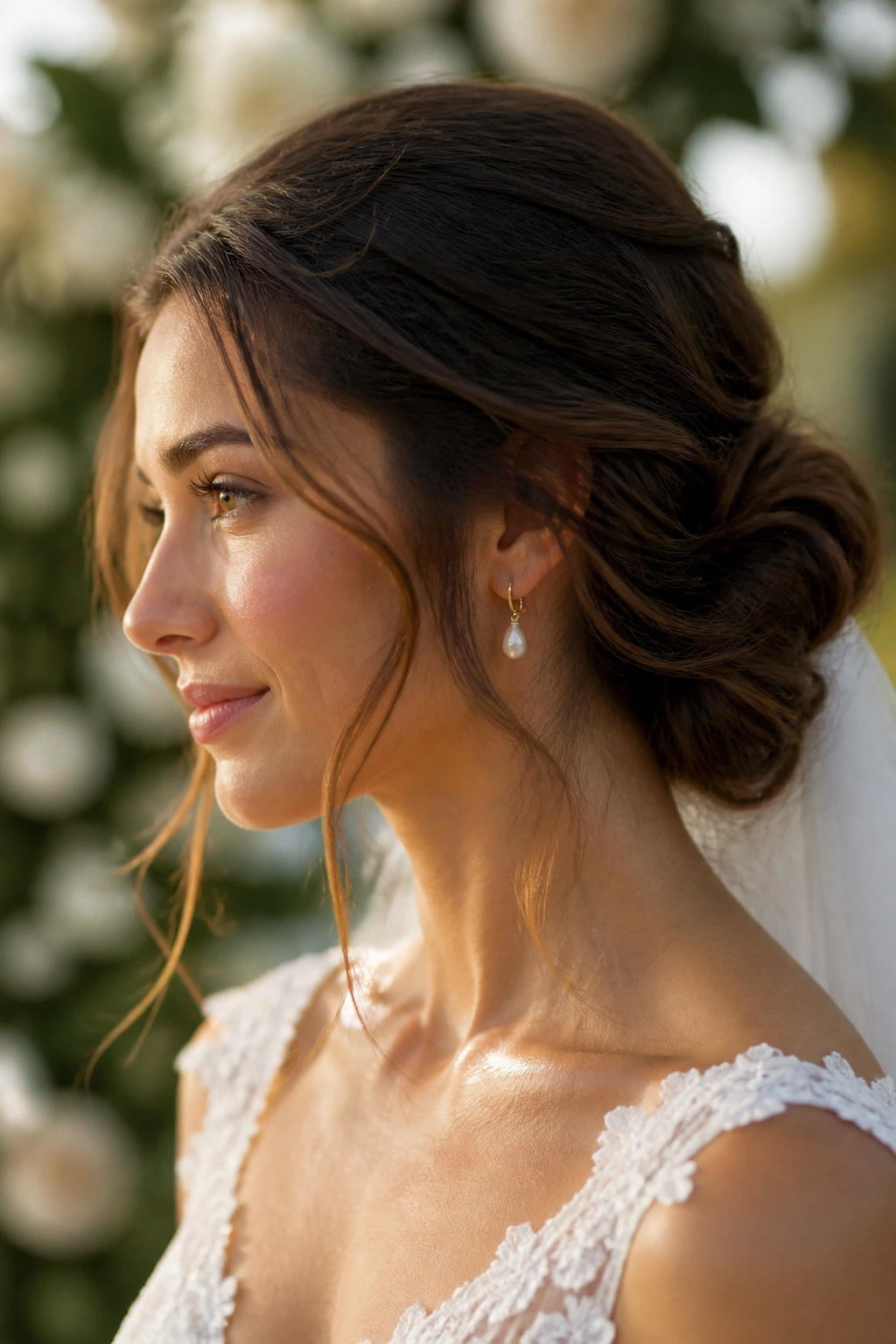
The soft romantic chignon is the one people picture when they say they want something airy, but not messy. The bun sits low and loose, the front has a few wispy tendrils, and the whole style looks like it moved a little before the photos were taken. That movement is the point.
What separates this from a sloppy updo is control over where the softness lives. The bun itself still needs shape. The tendrils need to be placed with intention around the cheeks, temples, or near the ears. If you scatter loose bits everywhere, the style loses focus fast.
How to keep it pretty instead of fuzzy
- Curl the tendrils away from the face.
- Leave them thin enough to bend, not hang.
- Pin the bun first, then release the soft pieces last.
- Use a light mist of hairspray on the fingertips before shaping.
This chignon works well for outdoor ceremonies, candlelit receptions, and dresses that already carry a little romance in the fabric. Tulle, chiffon, and softer lace seem to like it.
The style does not need much more than that. A few well-placed wisps can say a lot, which is lucky because too many wisps start to look accidental.
19. The Sculpted Chignon for Black-Tie Weddings
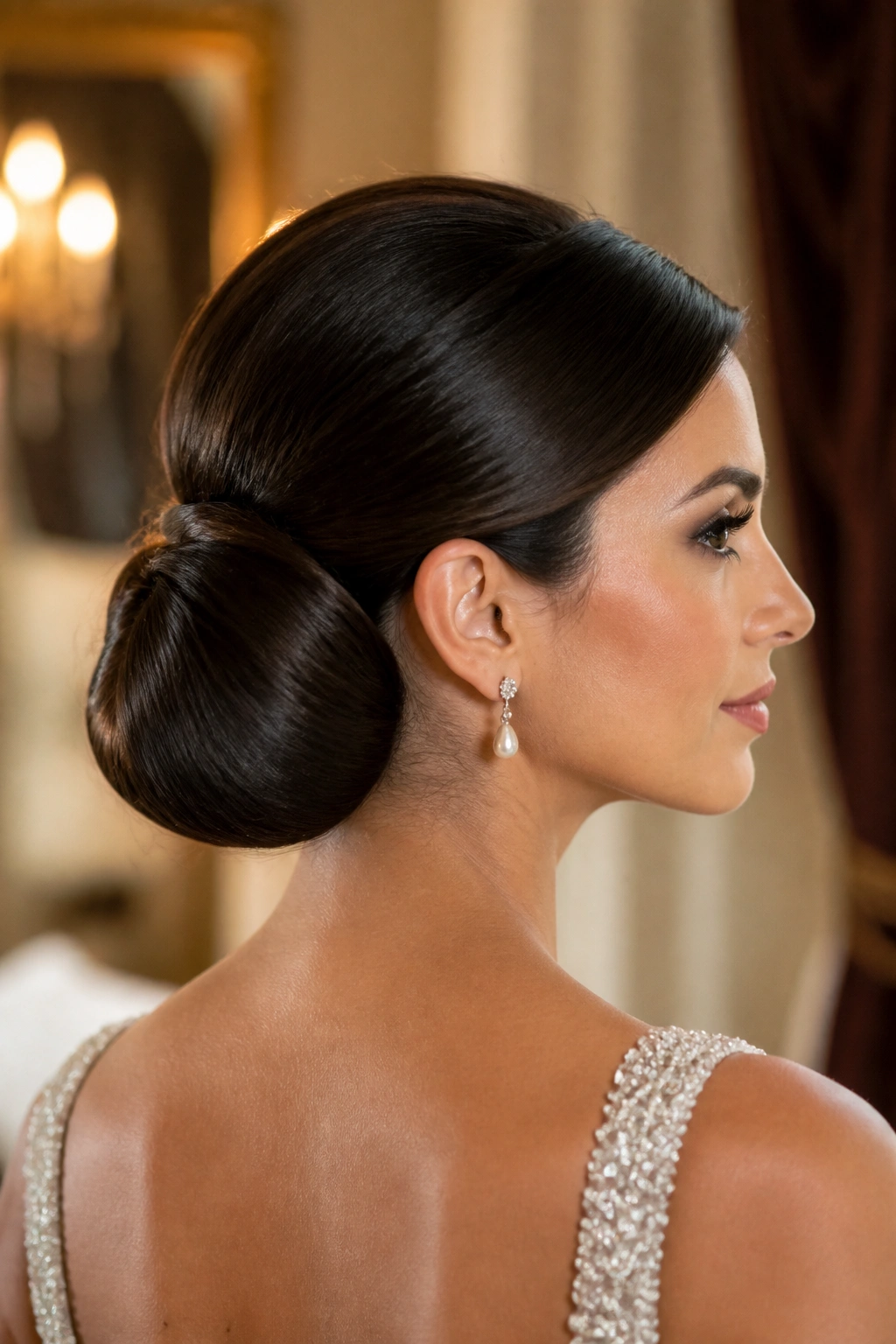
A sculpted chignon is the one I’d choose when the event calls for polish with some backbone. It’s firm, smooth, and intentionally shaped, often with a distinct twist or fold that looks almost architectural at the back of the head.
This version is especially good for black-tie weddings because it can handle a formal gown without getting timid. The hair sits close, the lines stay clean, and the finish looks deliberate from the first toast to the last song. Thick hair can support it well, but finer hair can do it too if the base is built carefully with hidden padding or tighter pinning.
The main thing is not to over-soften it. A sculpted chignon needs edges. They can be rounded, but they should exist. Too much breakup at the surface and the style loses its shape. Too much shine spray and it can look greasy instead of glossy.
Best details to ask for
- A low, anchored base
- A clean twist or fold at one side
- Hidden pins that match the hair color
- A finish that stays smooth near the crown
If the dress is dramatic, this hairstyle can match it without shouting. If the dress is simple, the chignon gives the whole look a stronger spine.
20. The Secure Low Knot That Lasts the Night
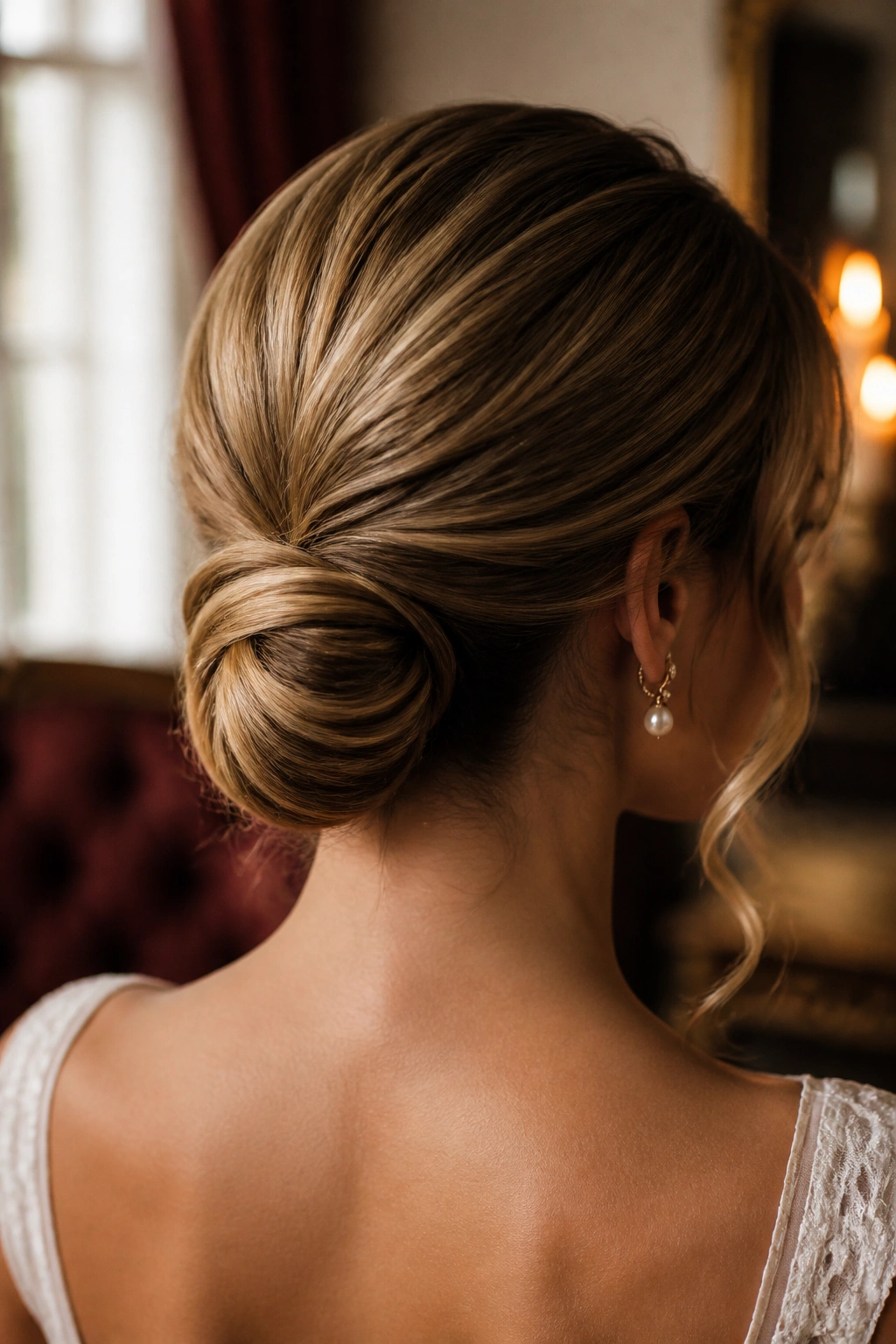
The secure low knot is the practical choice people often overlook because it doesn’t sound romantic enough. I think that’s a mistake. A wedding hairstyle should look beautiful, yes, but it should also stay comfortable when the day starts running long and the dancing gets messy.
This chignon keeps the bun tight at the nape, with the ends tucked deep and pinned in a way that spreads the tension around the head instead of pulling from one spot. That makes a bigger difference than it sounds like it would. A style that hurts by hour three is a bad style, full stop.
It’s the one I’d reach for when the bride wants to forget about her hair after the first half hour. It can be dressed up with a veil, pearl pins, a comb, or left plain. It does not need rescue. It needs good prep, a few strong pins, and a clean finish.
The best wedding hair is the hair you stop thinking about. That’s what this chignon gives you. It holds its shape, stays close, and leaves room for everything else—the dress, the flowers, the people, the actual day—to do their part.
