



Most bad pompadours fail for the same boring reason: the top is too tall, the sides are too soft, and nobody has bothered to decide whether the haircut wants to look polished or a little dangerous.
A good pompadour has shape, not just height.
That distinction matters more than people think. A clean pompadour can look sharp enough for a suit, while a textured version can sit right next to a denim jacket and still feel deliberate. The cut lives or dies on balance — front lift, side control, and enough length on top to push back without collapsing into a greasy slab.
The line between a pompadour and a quiff is thin, and barbers know it. The pompadour usually has more sweep, more height, and a more sculpted front edge, while the quiff tends to feel looser and a touch messier. If you know which direction you want, the chair conversation gets a lot easier.
And that’s the real problem most guys run into. They ask for “volume,” leave the chair with the wrong fade or the wrong length on top, then spend weeks fighting the cut with too much product and too little shape. These 15 pompadour hairstyles for men avoid that trap because each one has a clear job to do, a clear face shape it suits, and a clear styling rhythm that makes sense in real life.
1. Classic High-Shine Pompadour
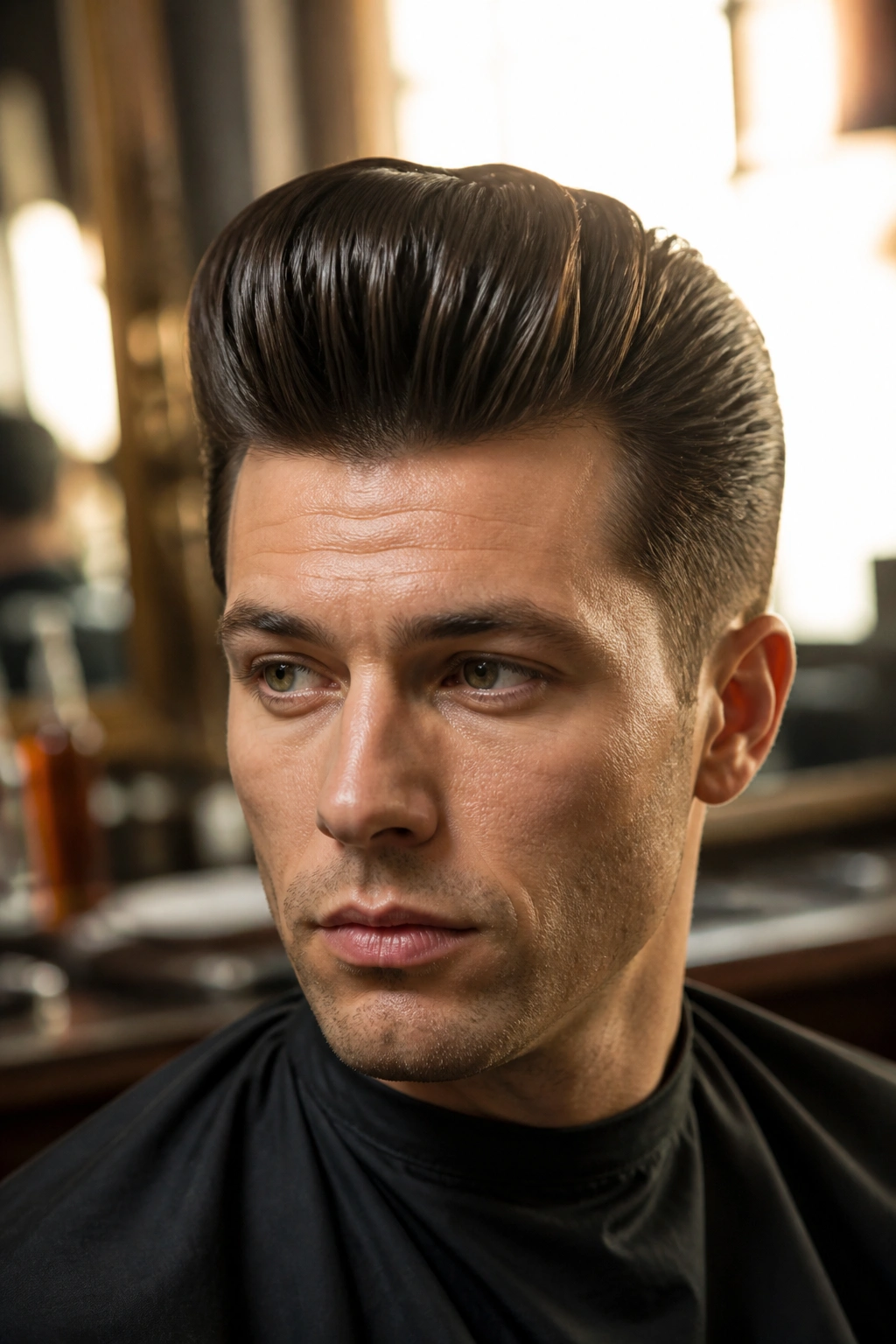
The classic version is the one people mean when they say “pompadour” without thinking too hard. It’s clean, tall at the front, and usually paired with sides that are trimmed short enough to keep the top in charge.
What Makes the Classic Shape Work
The appeal is simple: the front lifts, the back stays controlled, and the shine does half the talking. That glossy finish gives the haircut its old-school feel, but the shape itself is what keeps it from looking costume-y. You want the front to rise in a smooth curve, not a stiff wall.
Ask your barber for 4 to 6 inches on top, depending on your hair thickness, with the sides tapered or scissor-cut tight near the temples. If the top is too short, it won’t hold the sweep. If the sides are too bulky, the whole style loses that clean outline.
What to Use
- A medium to strong-hold pomade with shine
- A blow-dryer with a nozzle attachment
- A fine-tooth comb for the finish
- A light pre-styler if your hair lies flat
Pro tip: blow-dry the front up and slightly back while directing air from the roots. That first pass matters more than the product.
2. Short Pompadour
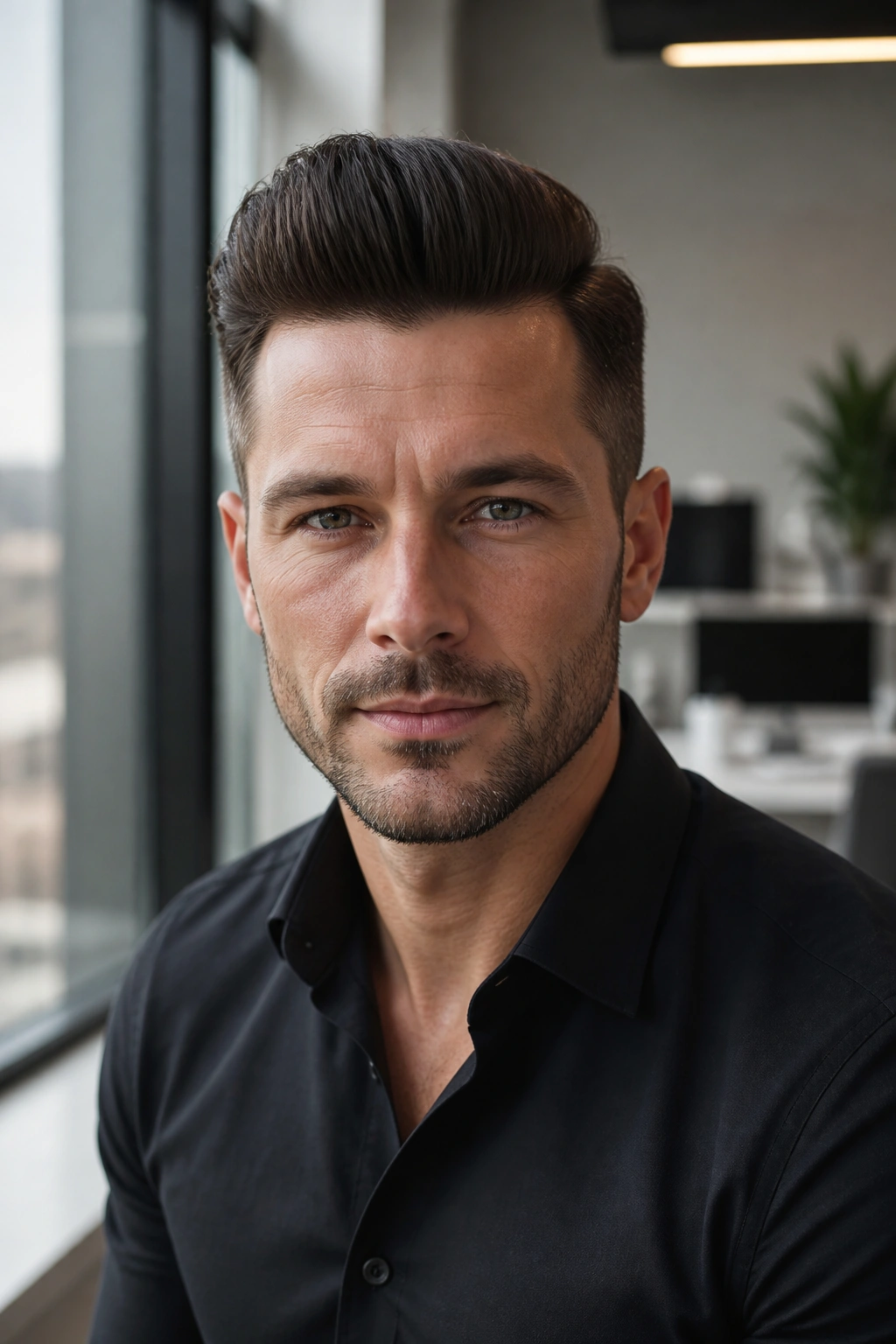
Short does not mean timid here. A short pompadour is the one I recommend to guys who want the silhouette without the daily wrestling match of a long top.
The trick is keeping enough length — usually 2 to 3 inches on top — so the front can still rise. Anything less and the haircut starts to behave like a plain brush-up instead of a proper pompadour. The shorter length makes the style easier to manage, and it also keeps the front from drooping during the day.
This version works especially well with fine hair, straight hair, or anyone who wants a neater office look. Use a matte paste or a light clay, not a shiny pomade that makes short hair look flat and separated. You want lift with a bit of grip, not a helmet.
It’s a quiet haircut, which is a compliment. Some styles need a room. This one just needs a clean neckline and five minutes in the mirror.
3. Textured Pompadour
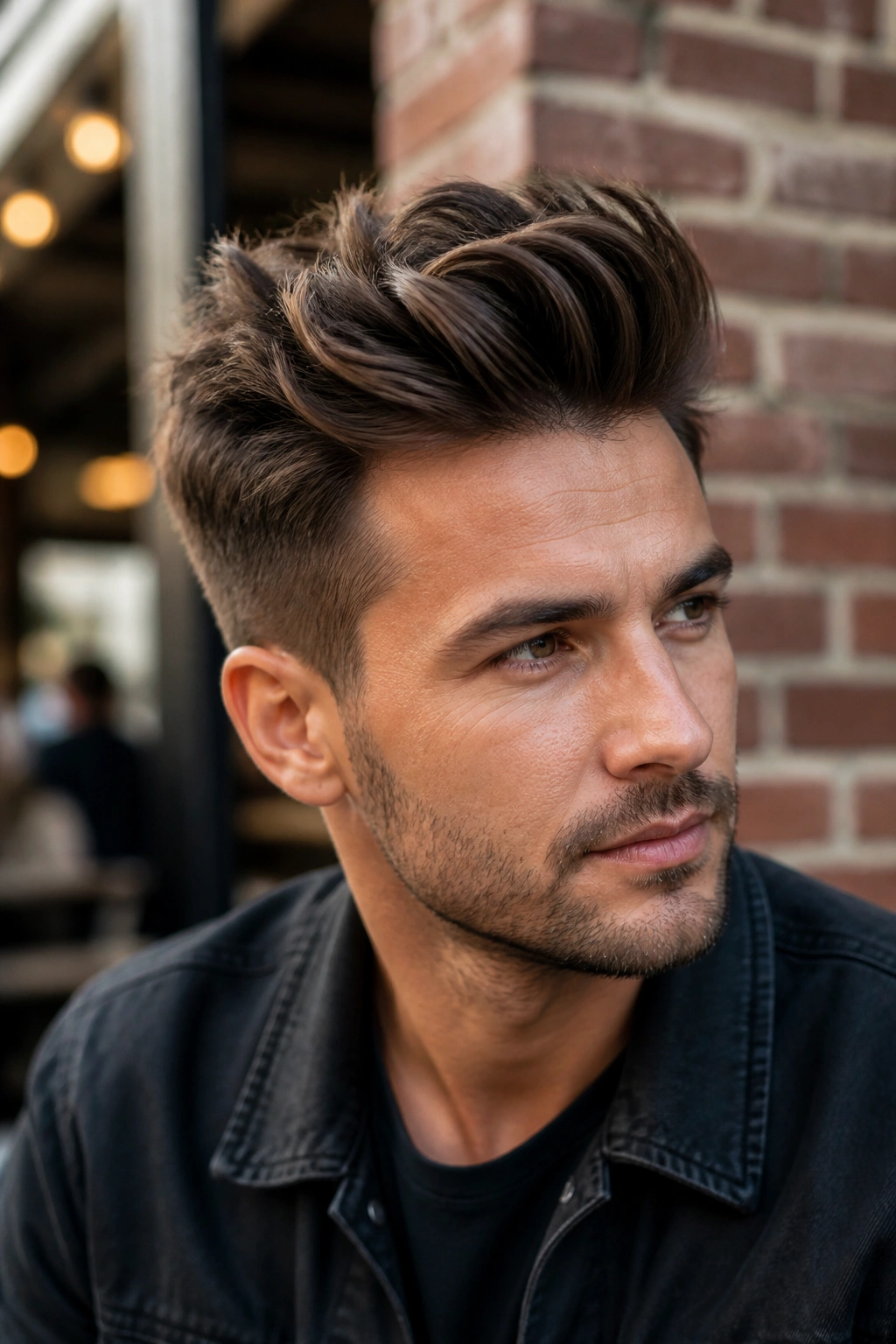
Want lift without the helmet look?
A textured pompadour is the answer when the classic version feels too polished. The surface stays piecey, the front still rises, and the overall shape looks a little looser in a good way. It’s one of the easiest pompadour hairstyles for men with thicker hair, because the texture helps break up bulk instead of fighting it.
Why Texture Changes Everything
Texture keeps the top from reading as one solid block. That matters when your hair is dense, wavy, or naturally rebellious around the crown. The cut should include choppy layers on top, then lighter product on the finish so the strands keep some separation.
How to Style It
- Work in a sea salt spray on damp hair
- Blow-dry upward with your fingers, not a comb
- Finish with a matte clay or fiber paste
- Pinch the front into small sections instead of smoothing it flat
The best textured pomp looks a little imperfect on purpose. Not messy. Just lived-in enough to feel current without chasing a wet, shiny finish that takes over the whole haircut.
4. Low Fade Pompadour
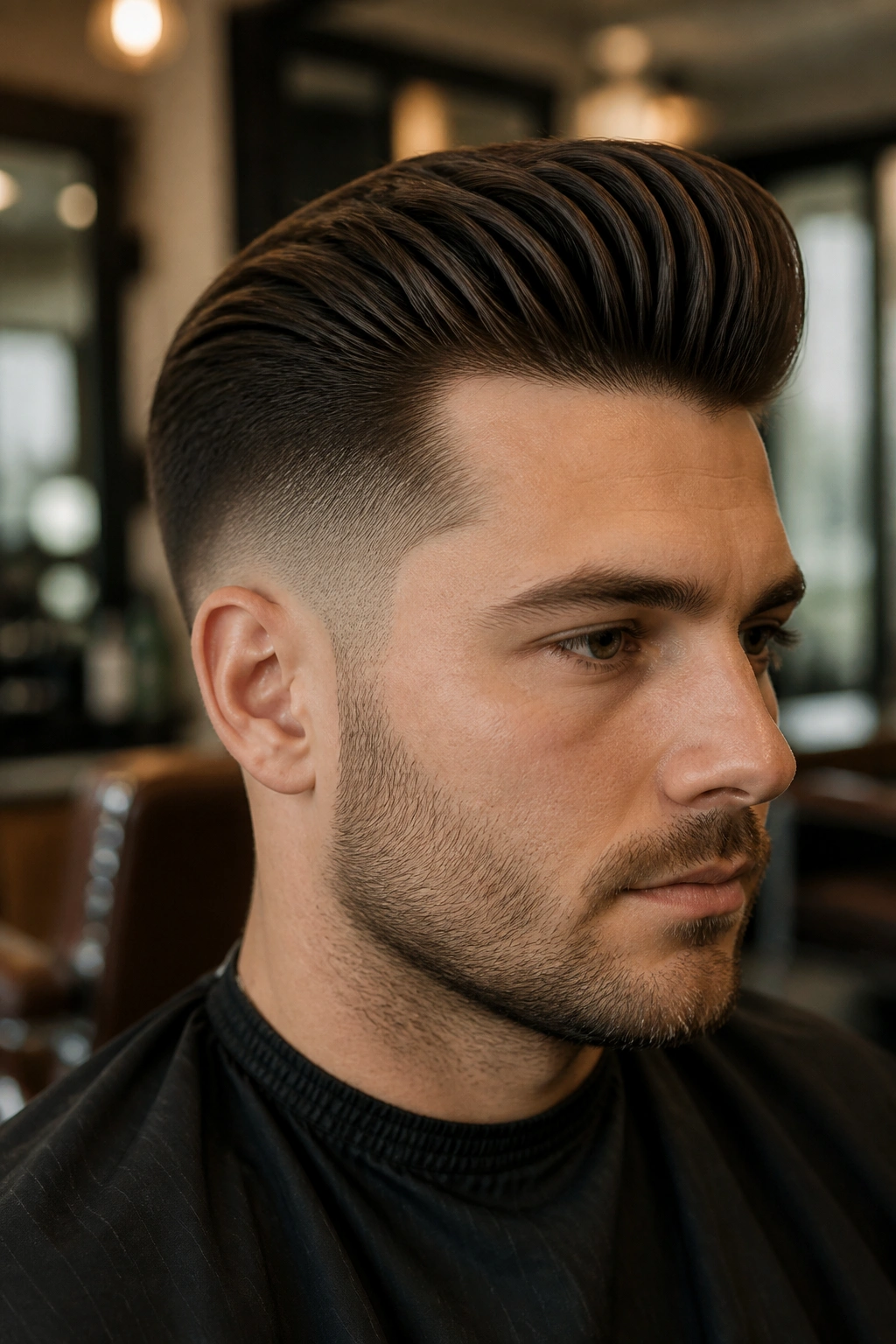
If your barber takes the sides too high, the whole haircut starts shouting before you do.
A low fade pompadour fixes that by keeping the fade tight near the ears and nape while preserving more weight through the midsection of the head. The result feels cleaner than a full taper but softer than a high fade, which makes the top look taller without making the cut feel harsh.
This is a smart choice for guys with square faces, strong jawlines, or thick hair that needs shape without a dramatic disconnect. It gives the style a smooth transition, and that transition is doing more work than people realize. Too much contrast can make the pompadour look disconnected in the wrong way. Too little and it just looks like a regular comb-over with ambition.
Ask for a low fade that starts around the natural curve of the ear, then keep the top long enough to brush back in one clean arc. A medium-hold product is usually enough. Heavy product makes this version slouch.
5. Skin Fade Pompadour
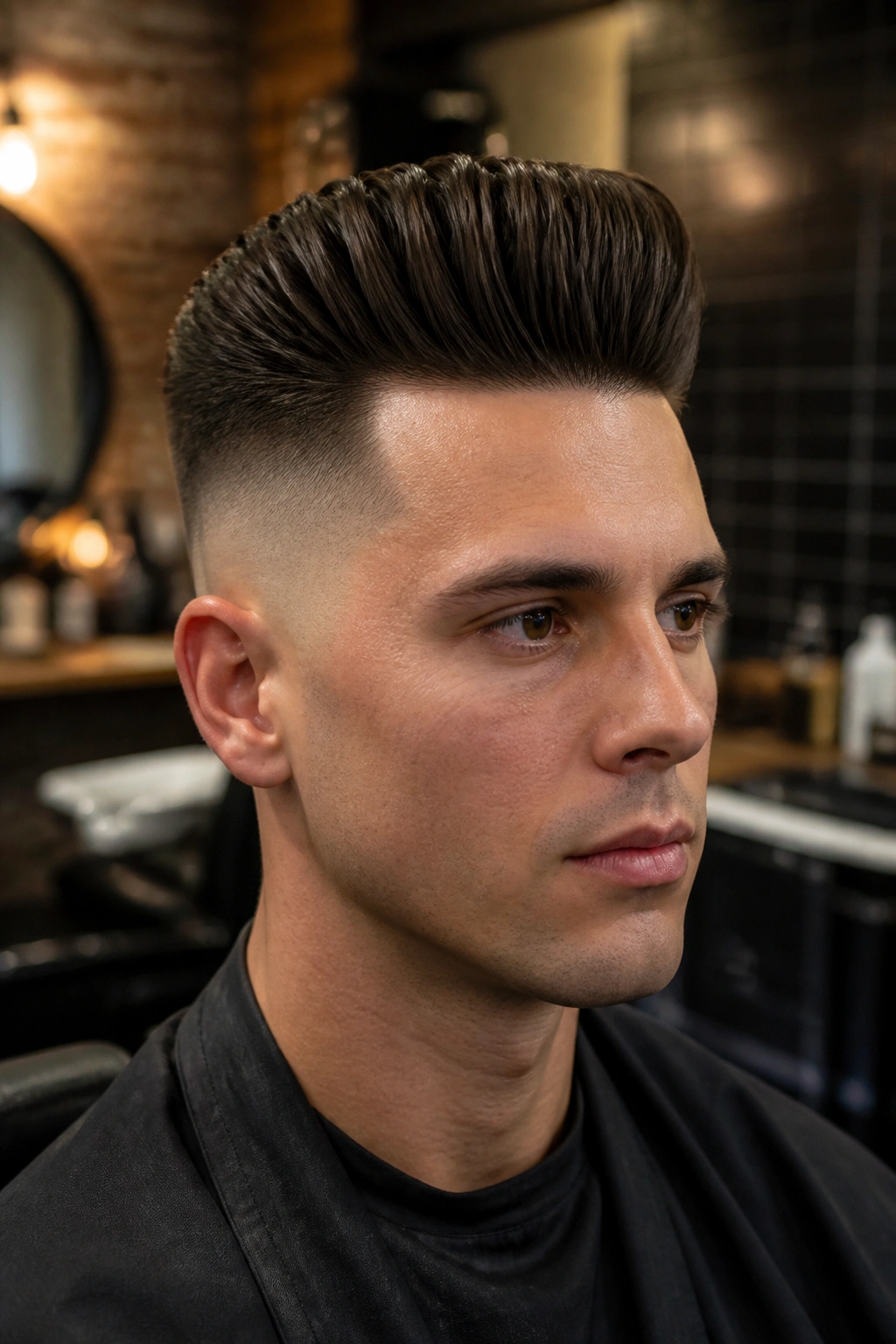
The skin fade version is the loudest one in the room.
That’s not a flaw. It’s the point. When the sides drop all the way to bare skin, the top gets a hard frame, and every inch of height on top looks sharper. The contrast is strong, which makes this one especially good if you like a haircut with edges that read clearly from across the room.
It does ask for upkeep. A skin fade grows out fast, and when the fade softens, the whole style loses some of its bite. The top can still look good on day ten or day twelve, but the sides will start to blur, and that blur changes the whole mood.
This version loves strong-hold styling products, blow-dried volume, and clean barber work. If the top is left too heavy, the fade can look disconnected in a sloppy way rather than a deliberate one. Keep the front tall, but not so tall that it buckles. That’s the line.
6. Disconnected Undercut Pompadour
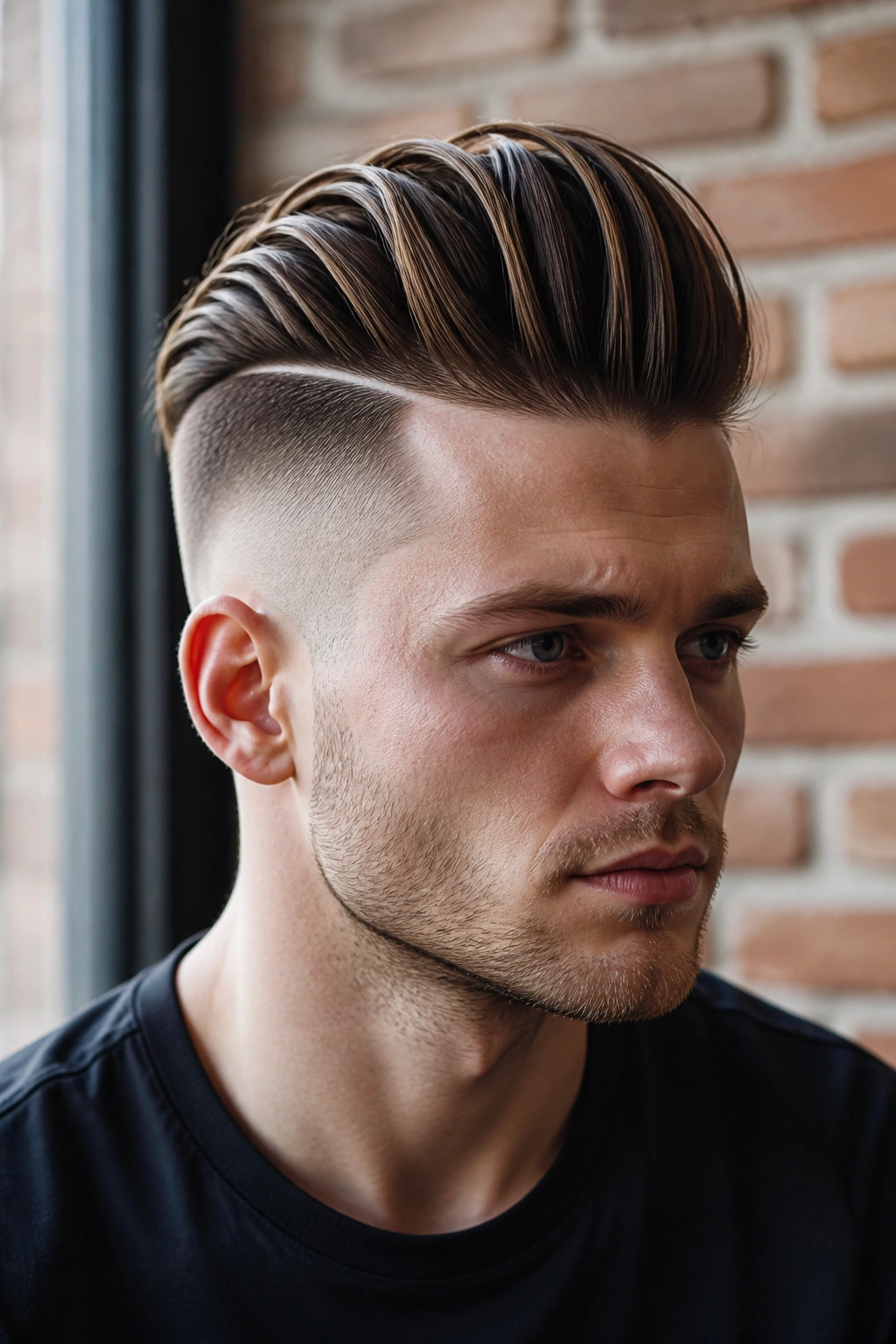
Unlike the low fade, the disconnected cut refuses to soften the join. The sides stay very short, the top stays long, and the difference between the two is supposed to be obvious. That is the whole point.
This is the most dramatic version on the list. It has attitude, and it knows it. When it works, the style gives you that strong vertical lift in front while keeping the sides close enough to sharpen the face. When it fails, it fails because the top was cut too thin or the undercut line was left fuzzy. Fuzzy is the enemy here.
The disconnected pompadour tends to suit thick hair, straight hair, and guys who don’t mind spending a little extra time with a blow-dryer. It also leans more fashion-forward than office-safe, which is worth saying plainly. If your job expects a softer haircut, this may feel like too much.
Ask for a clear contrast between the top and the sides, then style the top with a strong-hold pomade or paste. You want clean lift, not airy fluff.
7. Side-Part Pompadour
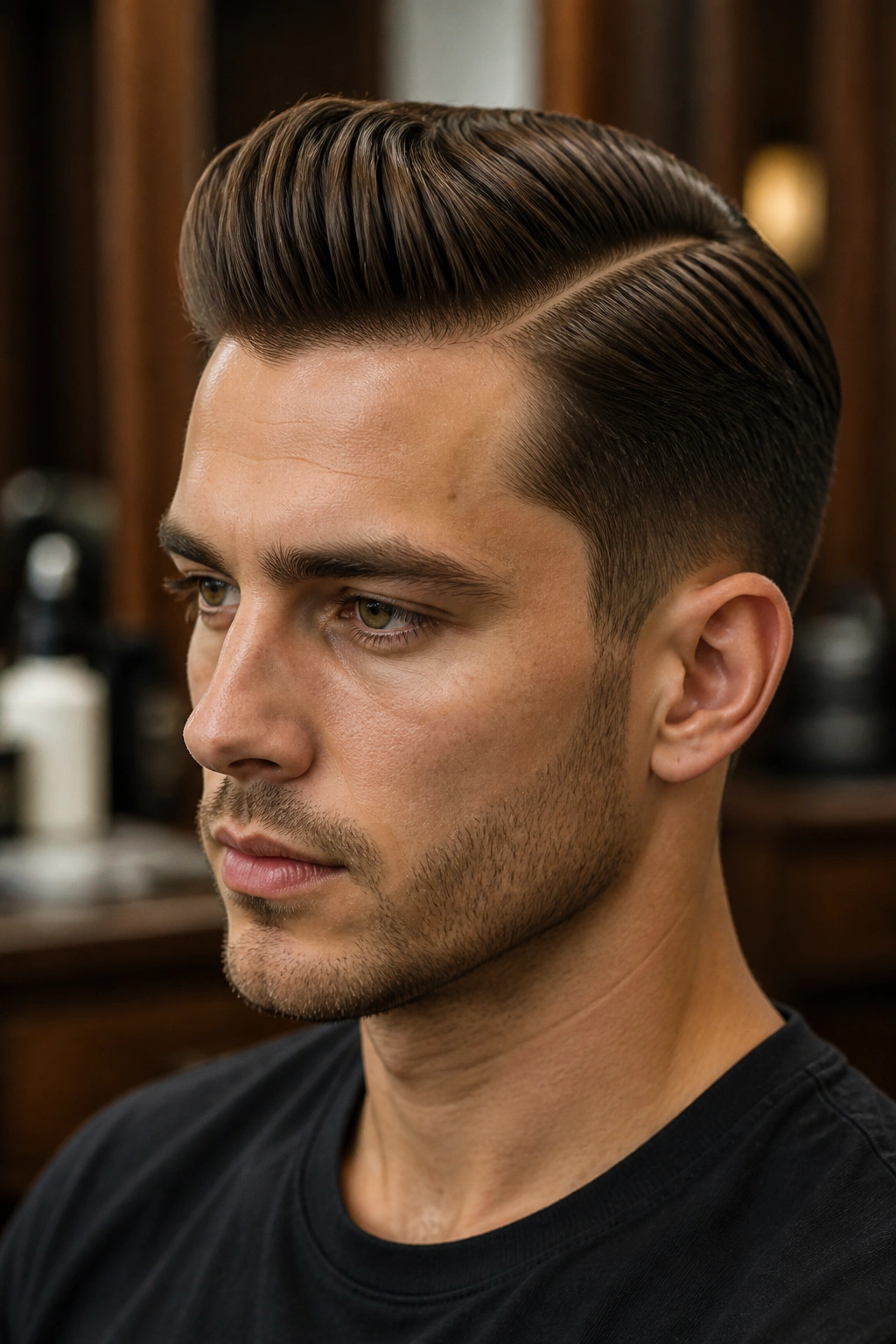
A side part turns a pompadour into something a little sharper.
The front still rises, but the part gives the style direction, and direction calms down a haircut fast. This version works well for men who want volume without losing that tidy, composed look that a plain brushed-back pompadour can sometimes miss.
Barber Notes That Matter
- Keep 3 to 5 inches on top
- Ask for a visible but not extreme side part
- Use a taper or low fade if you want the style to stay balanced
- Tell your barber whether you want the part to sit left or right before the cut starts
The side-part pompadour is one of those styles that looks more expensive than it is. Not because it costs more, obviously, but because the shape feels controlled. A comb with fine teeth helps here, and so does a product with medium shine. Too much shine can make the part look hard and stiff. Too little and the sectioning disappears.
It’s a neat haircut. A little formal, a little old-world, and still easy to wear.
8. Wavy Pompadour
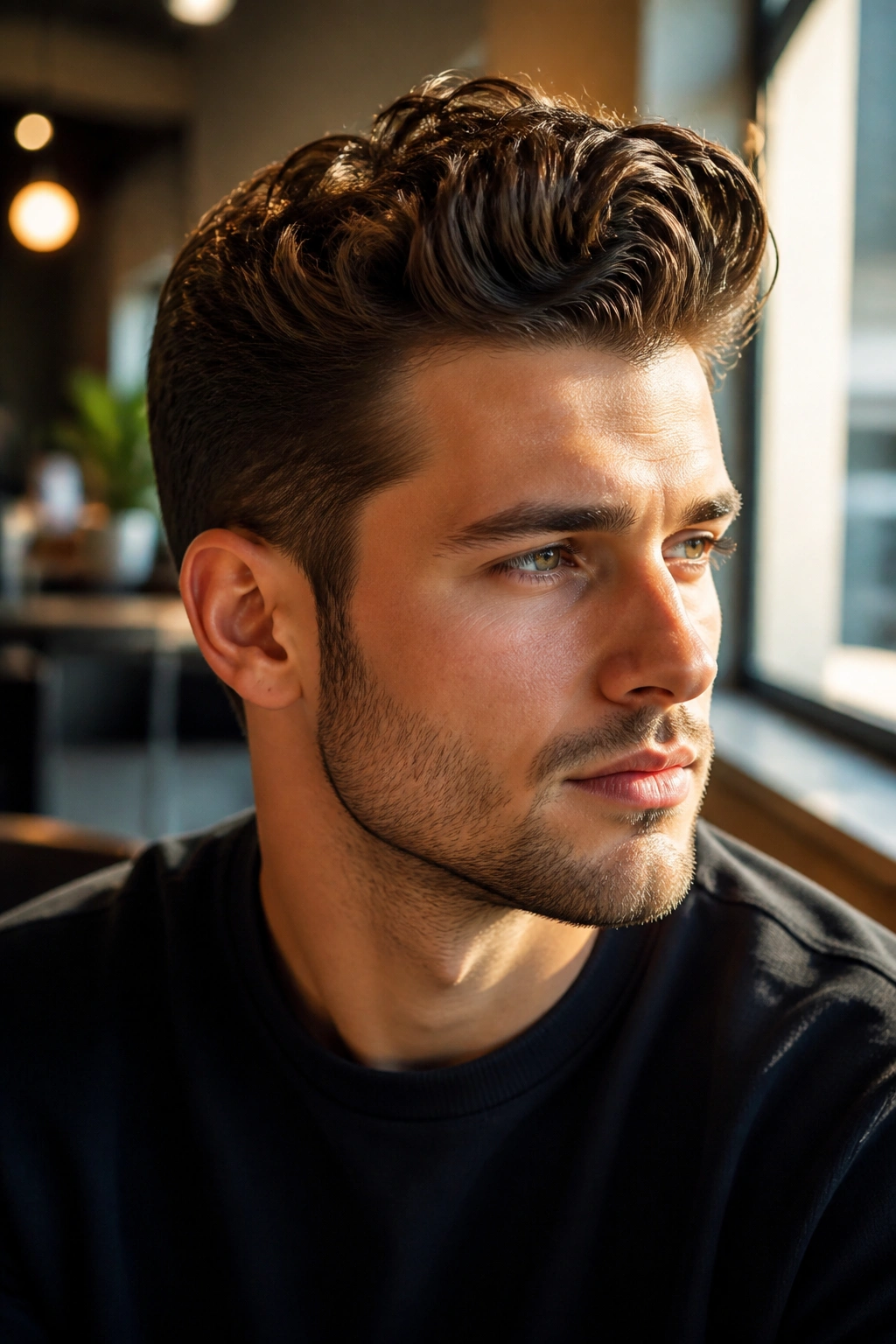
Wavy hair gives you free movement; fighting it is the mistake.
A wavy pompadour works because it lets your natural bend do some of the work. Instead of trying to force each strand into a glass-smooth curve, the cut uses the wave to add lift and softness at the same time. The result feels less strict than the classic version, which is exactly why a lot of men end up liking it more.
Use a cream pomade or light clay so the wave can still move. Heavy gel crushes the pattern and leaves the front looking hard. A diffuser can help, but a regular blow-dryer on low heat works fine if you keep your hands in the hair and lift at the roots.
This style suits medium-density hair, loose waves, and anyone who wants texture without making the haircut look messy. The wave already does the visual work. Your job is to keep the shape from drooping into your forehead.
9. Curly Pompadour
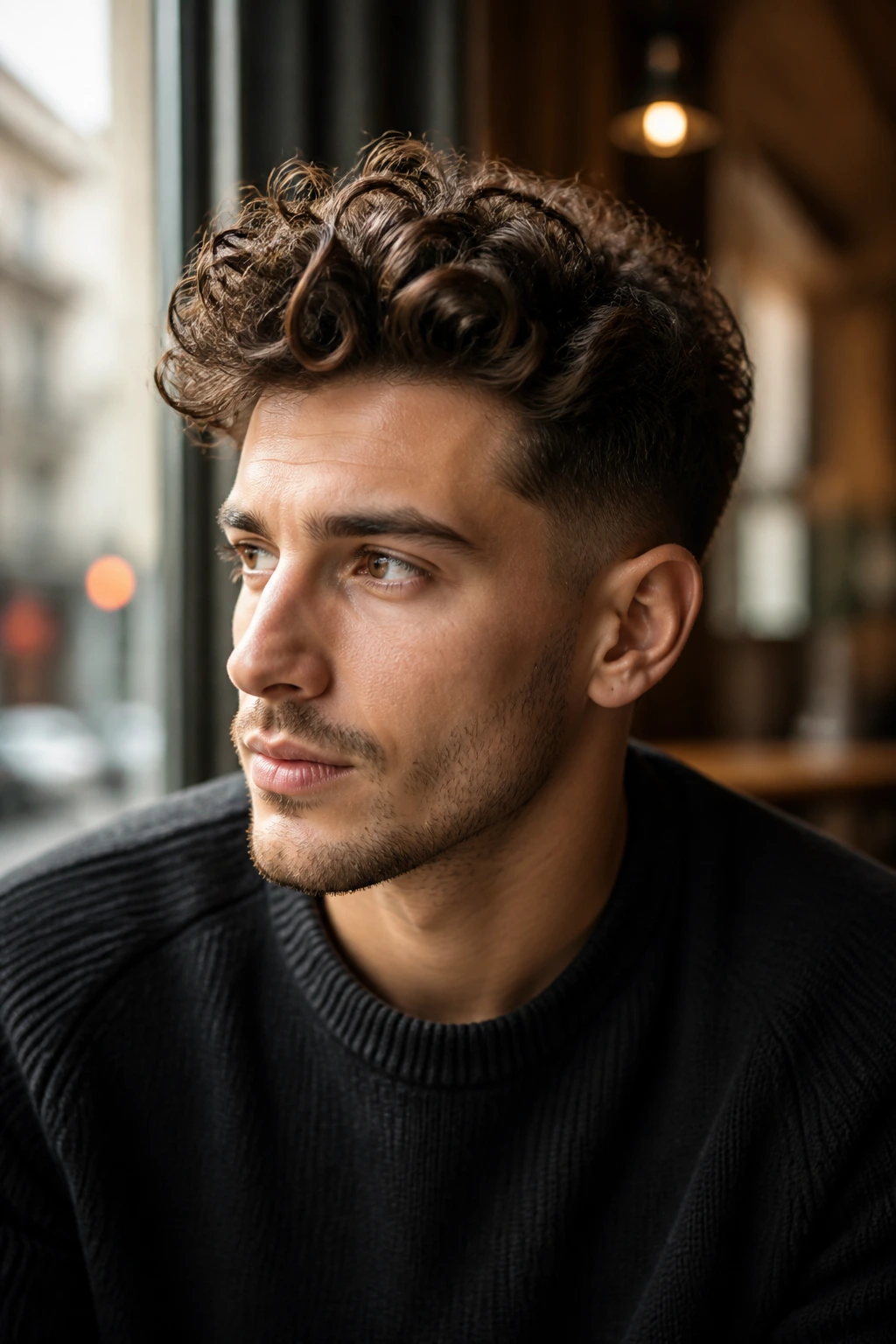
Can curly hair pull off a pompadour? Absolutely. It just needs a different plan.
Curly hair gives the top a built-in lift, which helps more than people expect. The mistake is trying to flatten it into a straight-haired pompadour shape. That usually ends with frizz, puffiness, and a front that refuses to sit where it should.
How to Keep the Curl Alive
You want the sides tight and the top long enough for the curls to stack without exploding outward. A curl cream or light styling cream helps define the pattern, and a diffuser on low heat keeps the shape intact. If you brush the curls too hard, they puff. If you drown them in heavy product, they collapse.
This cut works best when the barber shapes the top with curl movement in mind, not against it. The pompadour line can still be there. It just won’t be a perfect sculpted ridge, and that’s fine. A curly pompadour looks better when the front has some bounce.
Use it if your hair already has spring. Don’t fight the spring.
10. Long Pompadour
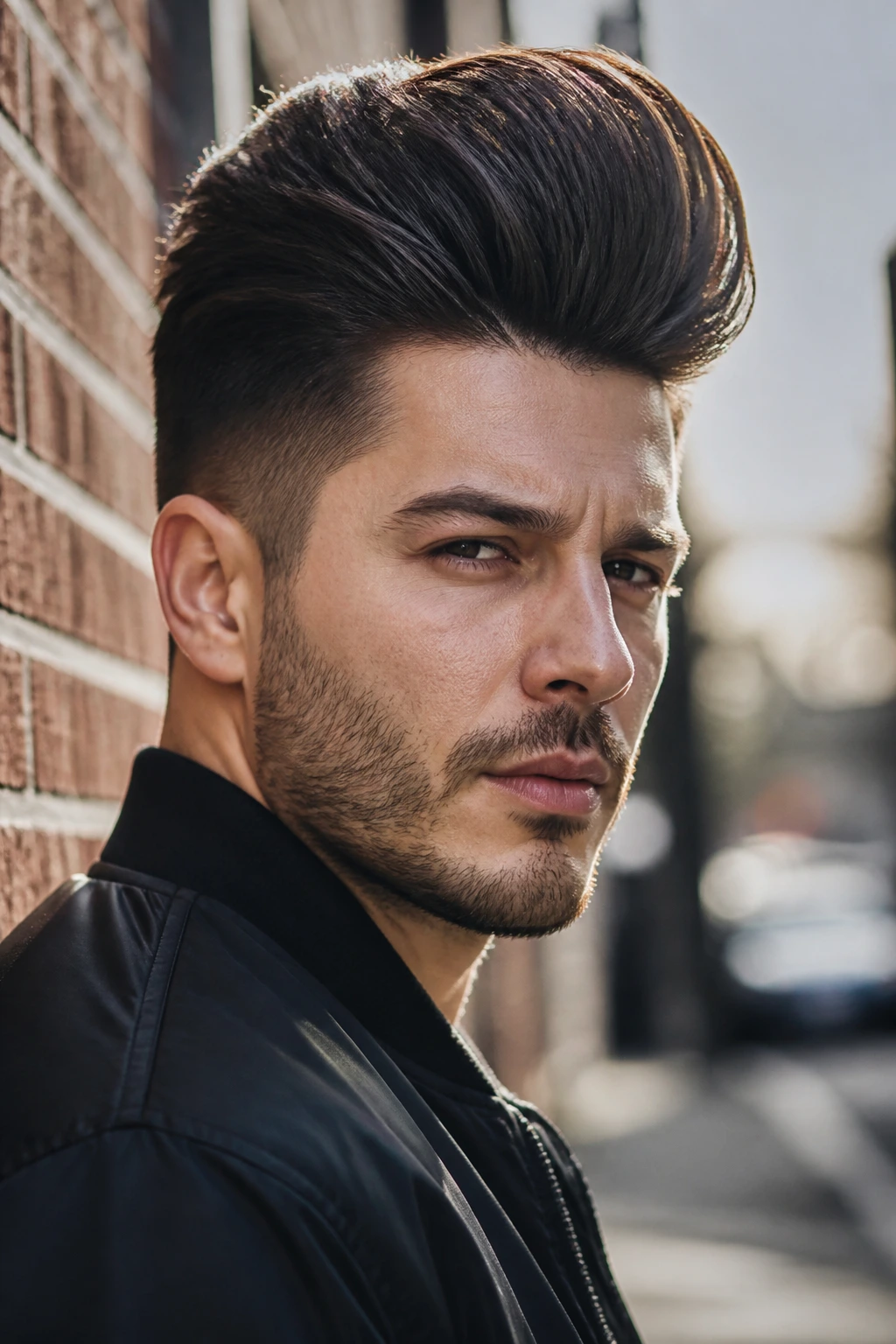
Long top, tight sides, and a mirror that tells the truth.
A long pompadour is not for lazy mornings. It has a bigger silhouette, more drama, and more room to go wrong if the styling is rushed. The benefit is obvious: the extra length gives you height, sweep, and a strong front shape that can look almost architectural when done right.
The cut usually needs 5 to 7 inches on top, sometimes more if the hair is thick and cooperative. The sides should stay shorter so the top doesn’t lose definition. If the top and sides are both long, the whole thing starts to drift into mullet territory, and that is a different conversation entirely.
This style likes a strong pre-styler, a blow-dryer, and a comb or brush that can guide the front upward. It is a bit unforgiving. Fine hair can wear it, but only if you’re willing to work with volume powder or a firm product that keeps the roots from sinking.
Some guys love the height. Others tire of it fast. Fair enough.
11. Matte Pompadour
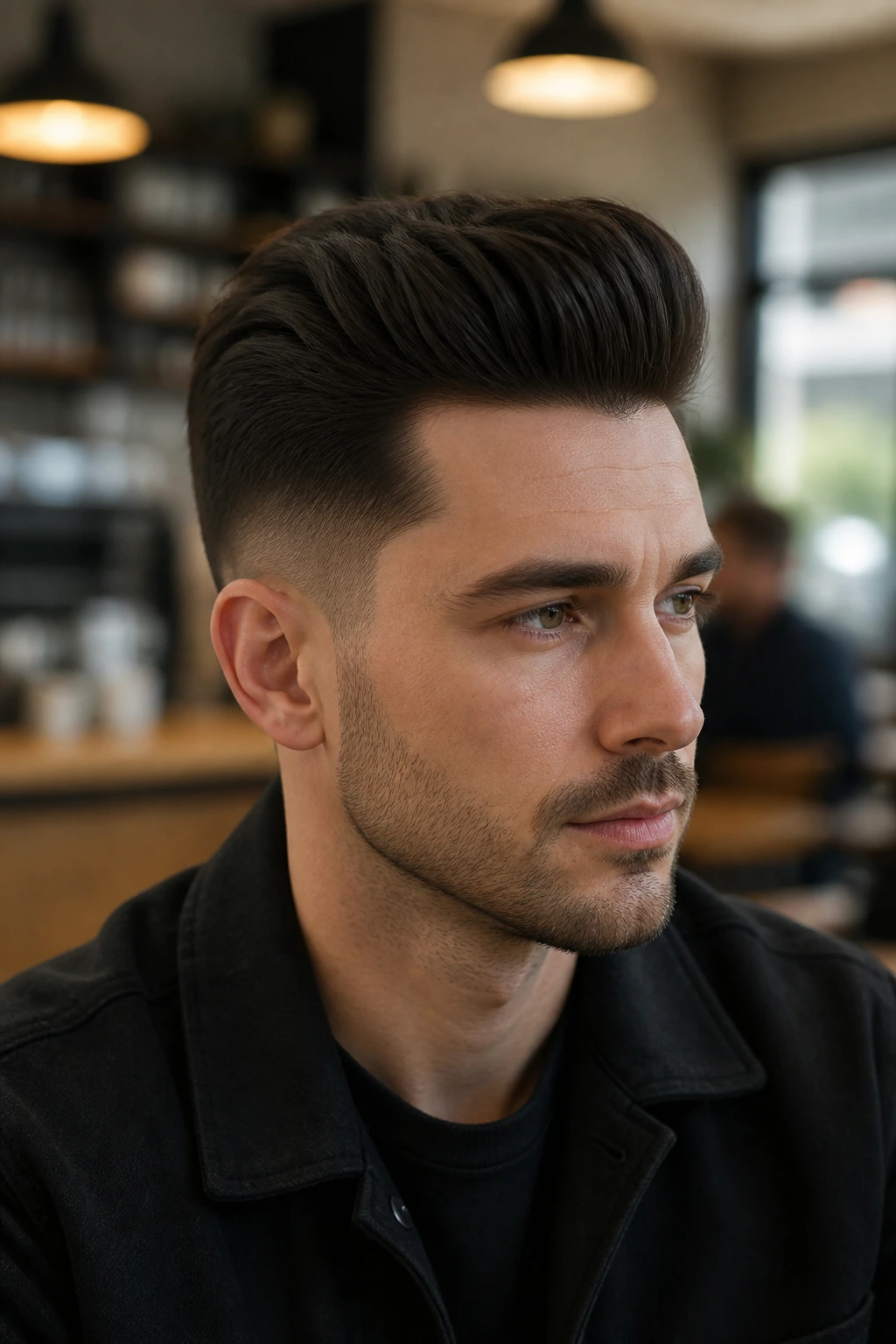
Shine is optional; shape isn’t.
A matte pompadour swaps the glossy, old-school finish for a drier look that reads more relaxed and more current. The haircut still needs structure, though. If the front isn’t lifted properly, matte product just makes the hair look flat and dry, which is not the same thing at all.
Use a clay, paste, or fiber product that gives grip without sparkle. A little blow-drying goes a long way here because matte styles often depend on root lift more than product weight. Put the product in after the hair is mostly dry, then push the front up with your fingers and leave some separation in the top.
This version is strong on thick hair, straight hair, and anyone who hates the feel of shiny pomade. It also hides small imperfections better than the classic polished version. A tiny uneven spot in a matte cut usually disappears. In a high-shine style, it stares back at you from the mirror.
It’s a practical haircut. Maybe the most practical one here.
12. Rockabilly Pompadour
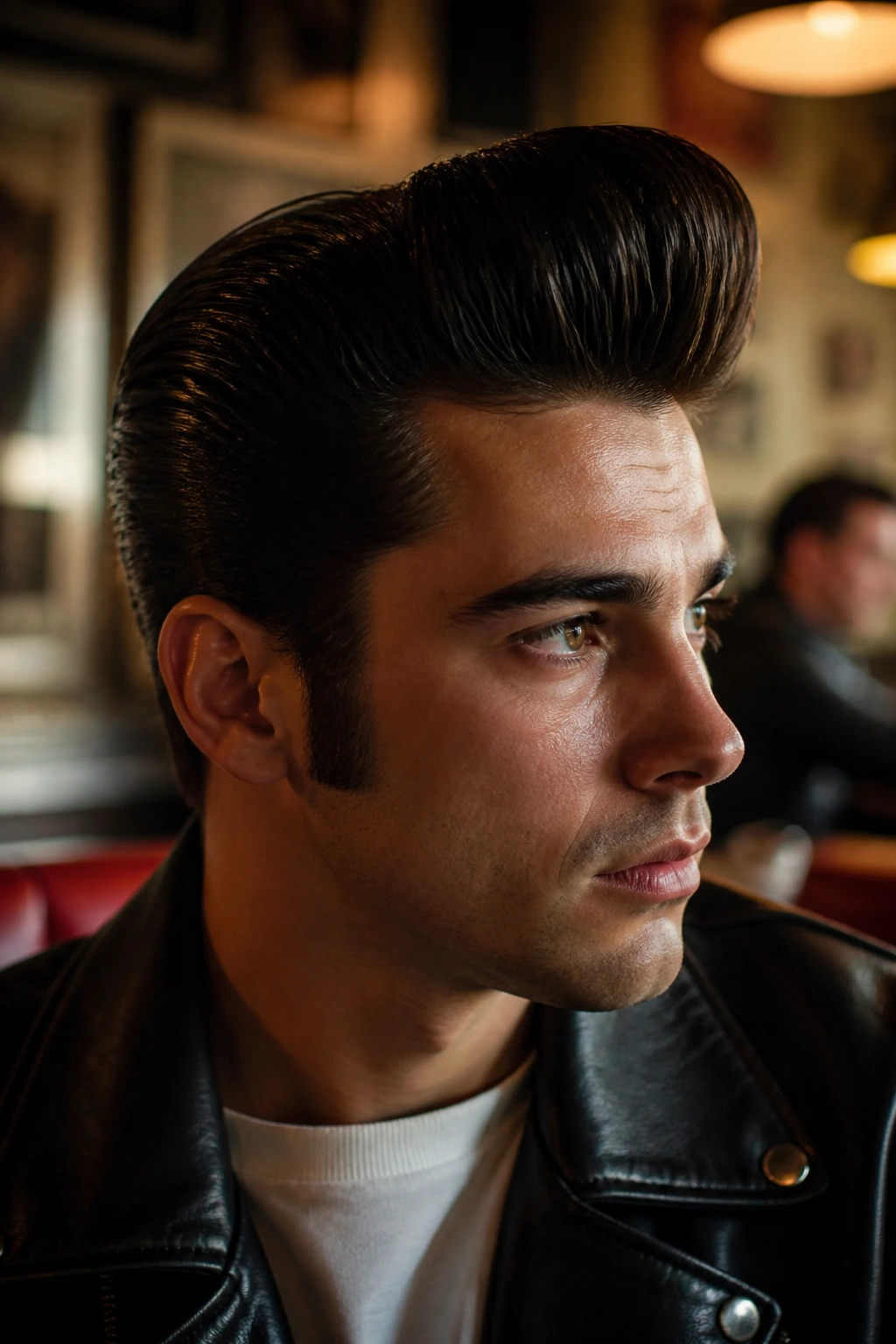
Rockabilly hair has a little swagger built in.
This is the version that leans hardest into tradition. The front is higher, the edges are cleaner, and the finish usually has enough shine to catch the eye without looking greasy. If you like vintage shirts, boots, or a haircut with a little theatrical energy, this one fits that mood.
The key is the roll at the front. You do not want just a brushed-up wall. You want a rounded lift that feels deliberate from the hairline back. That shape takes more combing and more patience than the casual versions, but it rewards the effort. A strong pomade works best, and a finishing spray can help keep the front from falling during a long day.
This haircut does best with medium to thick straight hair. Curly hair can wear it too, but the curls need to be managed without flattening them into mush. The vibe matters here. Rockabilly looks best when the rest of the grooming matches the hair — clean beard line, neat neckline, maybe a straight razor fade around the edges.
It’s a statement cut. No need to pretend otherwise.
13. Taper Pompadour
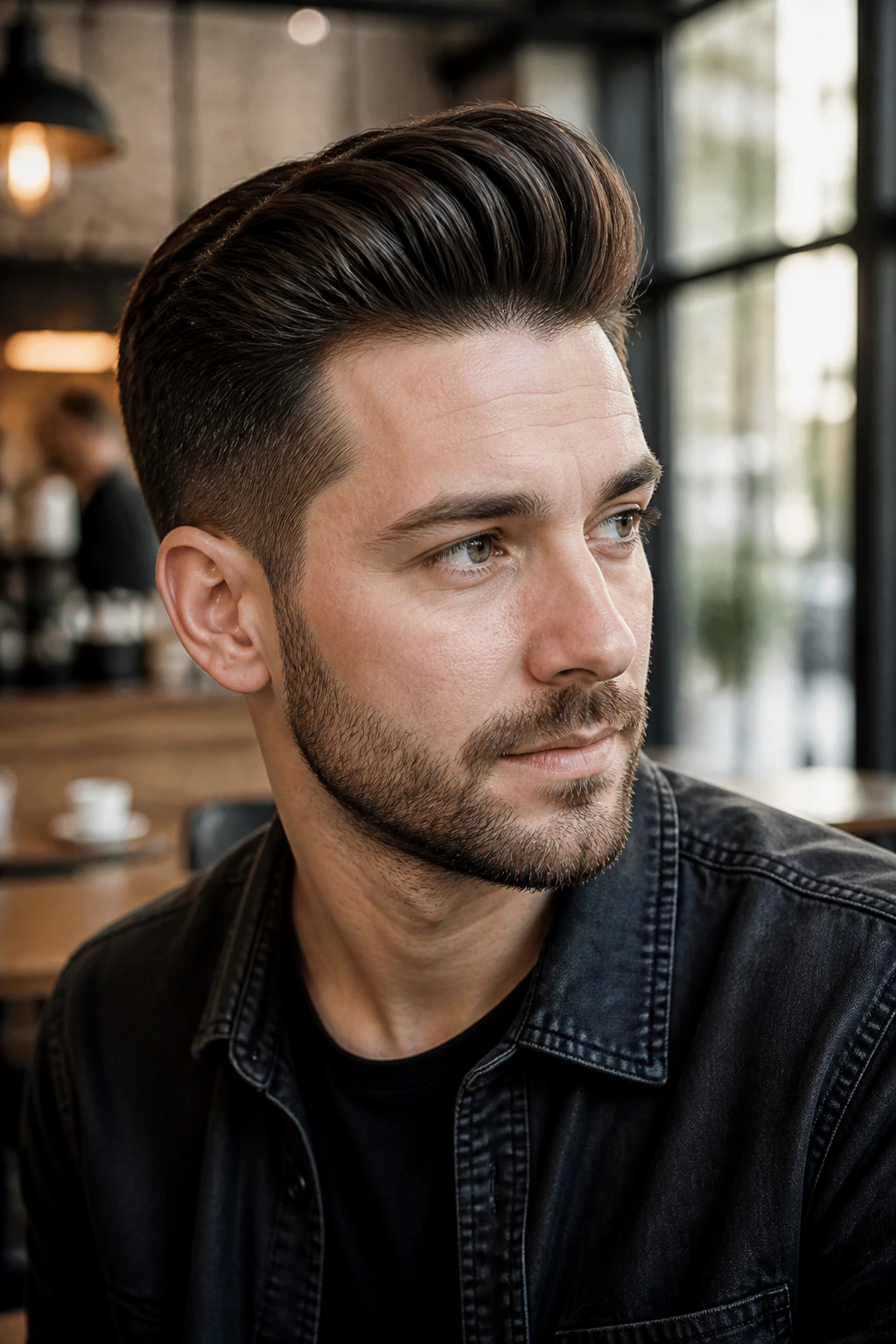
A taper keeps the haircut calm.
That’s why this version is such a good starting point. The sides narrow gradually, which softens the whole shape and makes the top feel easier to wear. You still get the lifted front and the brushed-back movement, but the haircut stays more understated than a fade-heavy version.
The taper pompadour is the one I’d send a guy to first if he wants to test the style without diving into something too loud. It plays well with most face shapes, especially if you want height without hard contrast. The taper also grows out in a nicer way than a skin fade, which means fewer awkward weeks in between cuts.
Why It’s So Wearable
- The transition is smooth
- The top can stay medium length
- It works with matte or shine
- It suits both work clothes and weekend clothes
It’s not the flashiest version on the list. That’s its strength. A taper pompadour can look clean at breakfast and still hold shape by dinner.
14. Beard-Connected Pompadour
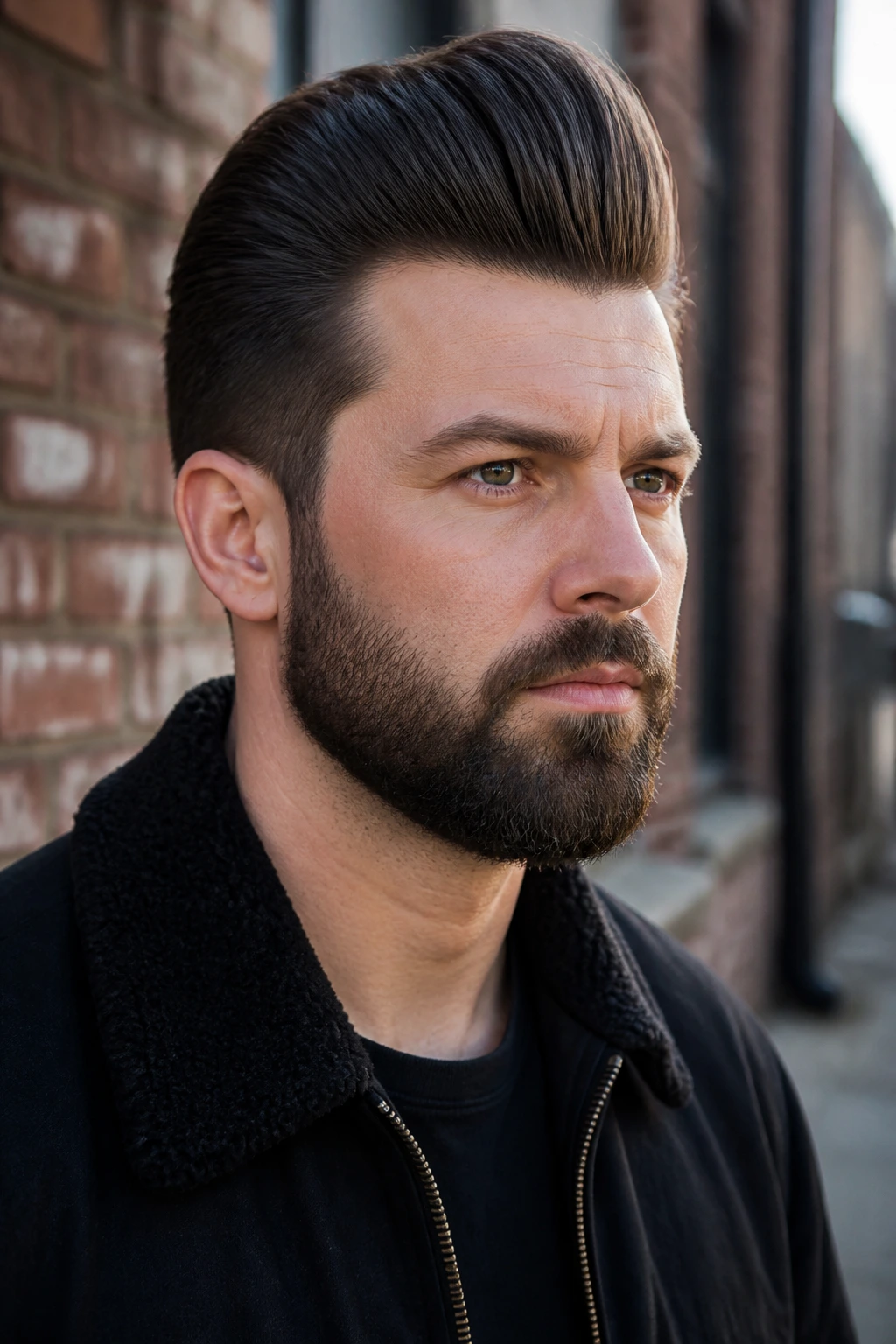
A beard can save a pompadour that would otherwise look unfinished.
The reason is balance. When the hair on top is tall and the beard is shaped to meet it through the sideburns and jawline, the whole face reads as one design instead of separate parts fighting each other. Without that connection, a high pompadour can make the lower half of the face feel a bit bare.
This style works best when the barber fades or tapers the sideburn area into the beard with a clean line. You want the top to stay in charge, but the beard should support it, not compete with it. A full beard can make the haircut feel heavier and more masculine; a shorter beard keeps it neat and avoids the lumbering look that sometimes happens when the beard is too dense.
The trick is discipline around the edges. Keep the neck clean. Keep the cheeks tidy. Let the pompadour have height, then let the beard anchor it. That contrast is what gives this version its shape.
15. Loose Pompadour with Quiff Texture
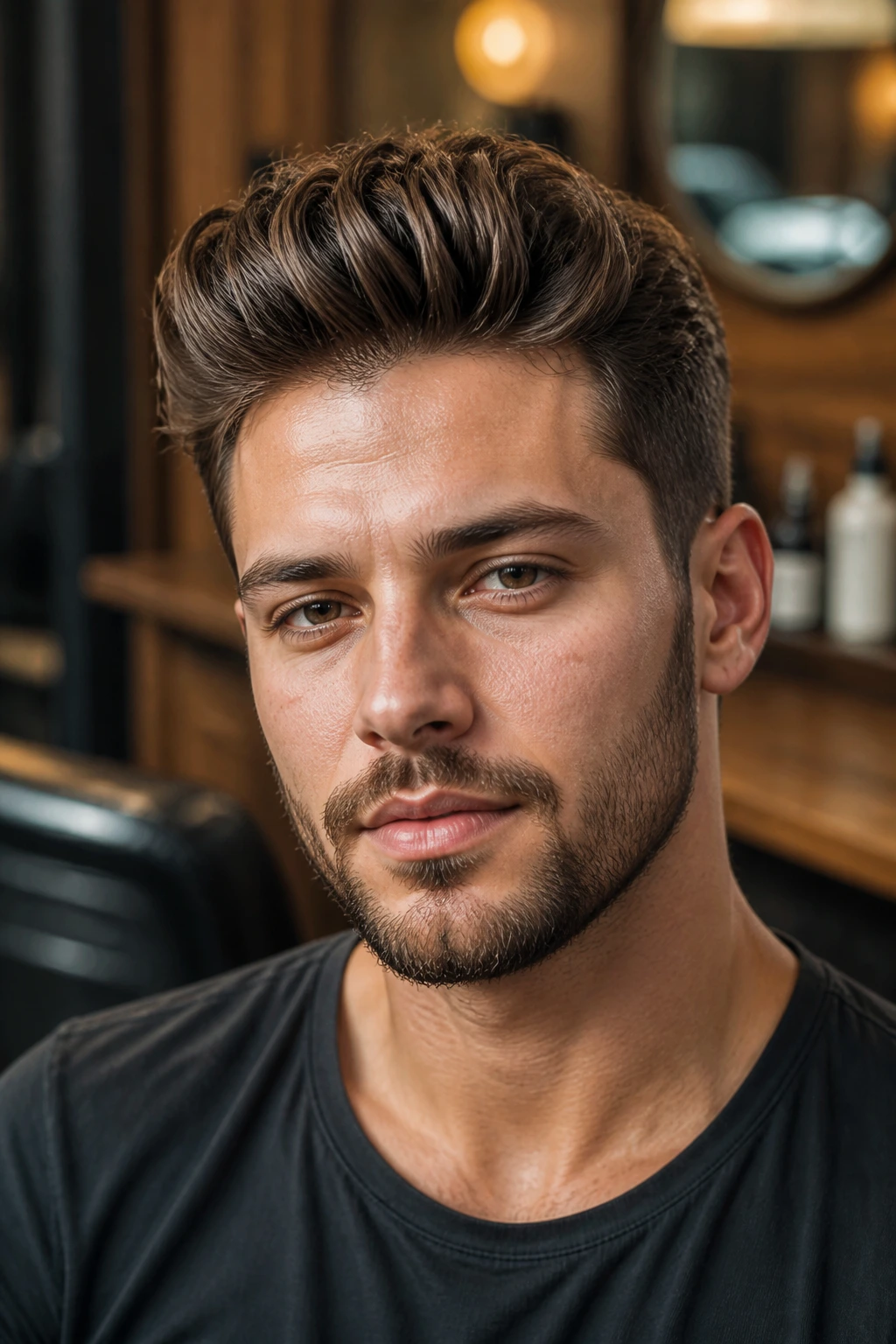
A loose pompadour sits right on the border between a real pompadour and a quiff.
That’s exactly why it works for so many men. The front still lifts, but the finish is less sculpted and more relaxed, so the style doesn’t feel overbuilt. If the classic pompadour is a tailored jacket, this one is the worn-in leather version — a little softer, a little less formal, and easier to live with.
This cut is good for guys who want height but hate the feeling of having every strand locked into place. Use a light paste or texture cream, then push the front upward with your fingers rather than a tight comb. The goal is lift with movement. Not stiffness. Not a shell.
It also hides growth better than a high-shine style. A loose shape can survive a day or two of imperfect styling and still look intentional, which is a practical reason to like it. If you’re not into the polished vintage look, this is the version that keeps the pompadour idea without all the ceremony.
Final Thoughts
The best pompadour is the one that matches your hair, your face, and how much work you’re willing to do in the mirror. That sounds obvious, but people still ignore it and end up blaming the cut when the real problem is the styling plan.
If you want the safest entry point, the taper pompadour, short pompadour, and textured pompadour are the easiest places to start. If you want sharper contrast, the skin fade and disconnected undercut versions bring it fast. And if your hair has wave or curl, don’t sand it down into something fake. Use the movement.
Bring a photo, sure. Better yet, bring one with the angle of your head turned the same way you usually wear your hair. That tiny detail helps more than another vague “something like this” request, and it saves you from a cut that looks good on paper but wrong on your actual head.
