



A quiff works because it gives your hair a job. The front lifts, the sides stay tighter, and the whole cut looks deliberate even when the rest of your morning feels chaotic. That is why quiff hairstyles for men keep showing up in barbershops: they can look neat with a jacket, relaxed with a T-shirt, and a little sharper than the average short back and sides.
The trick is that a quiff is not one haircut. It’s a shape. A barber can push it clean, messy, glossy, matte, high, low, side-parted, or close to pompadour territory, and each version changes the face in a different way. A tall quiff opens up the face. A shorter one keeps things compact. A textured version looks looser and more relaxed. A hard-parted quiff feels more exact, almost architectural.
Hair type matters more than most people admit. Straight hair usually needs more help from a blow dryer and a brush. Wavy hair often gives you shape with less work. Thick hair needs bulk removed near the crown or the front turns into a puffball. Fine hair can still pull off a quiff, but it usually needs a lighter product and a smarter cut, not a thicker paste dumped on top.
The 10 styles below cover the full range, from clean and classic to sharper, looser, and more statement-making. Some are easy to wear every day. Some take a little more effort. All of them work when the cut matches the hair.
1. The Classic Brush-Up Quiff
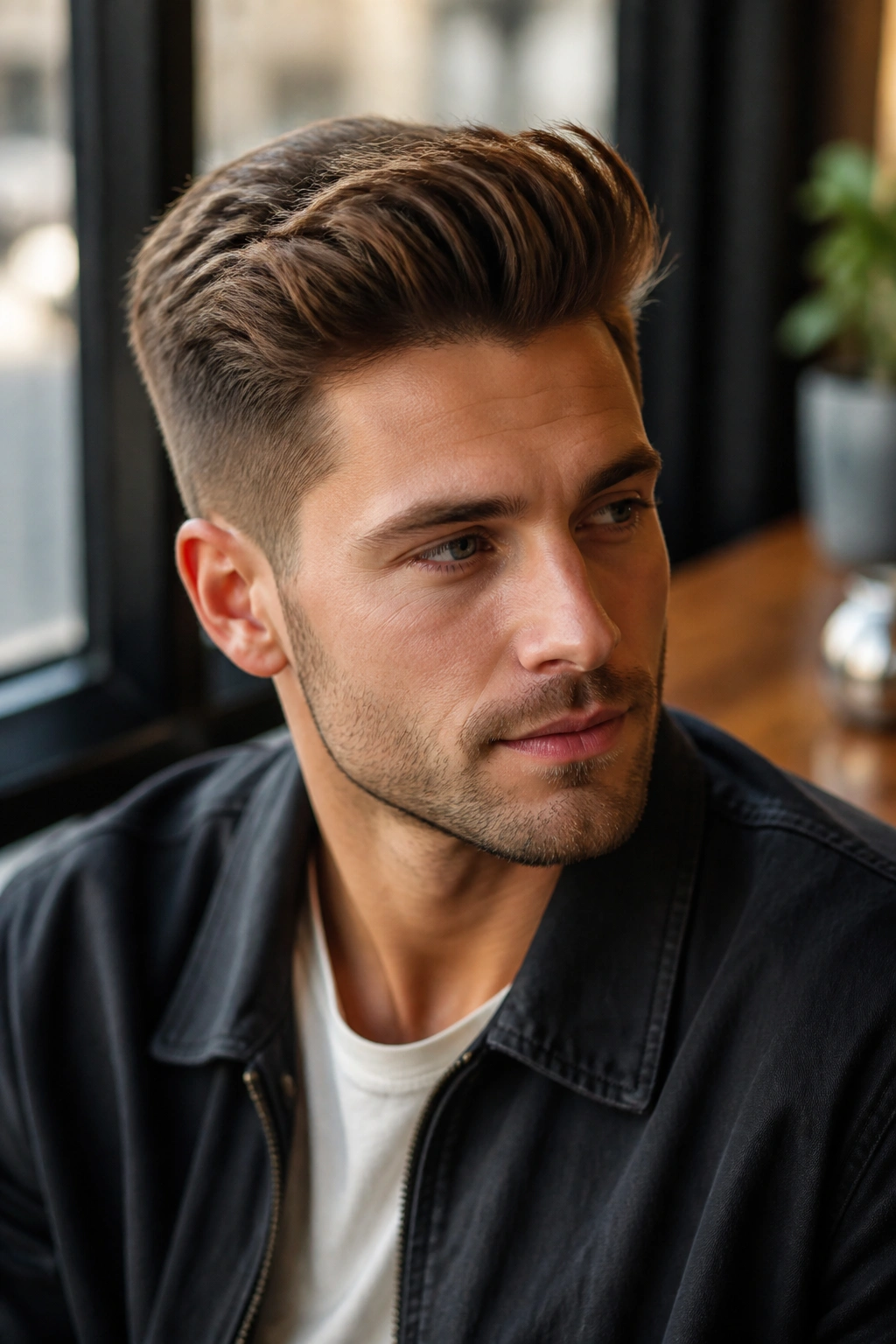
This is the version people picture first, and for good reason. It looks clean without feeling stiff, and it gives you that lifted front section that makes a face look a little more awake. The shape is simple: short sides, enough length on top to push the front upward and back, and a finish that still moves when you run your fingers through it.
What Makes It Work
The classic brush-up quiff sits in that sweet spot between polished and casual. It does not need heavy shine, and it does not need to look messy to feel current. A medium-hold product with a little grip is usually enough, especially if the hair is cut with some layering through the top.
Ask your barber for 3 to 5 inches on top and a tapered or low-fade side profile. That keeps the cut balanced. If the sides go too short too fast, the top starts to look disconnected in a way that can be hard to control. If the top is left too flat, the whole style loses its lift.
Good Fit Notes
- Works best on straight to slightly wavy hair
- Looks strong on oval, square, and heart-shaped faces
- Needs a blow dryer if your hair falls flat fast
- Holds best with medium-hold pomade, cream, or light clay
My take: this is the safest quiff for someone who wants shape without looking overdone. Clean. Predictable. Good in the best way.
2. The Textured Quiff With Matte Finish
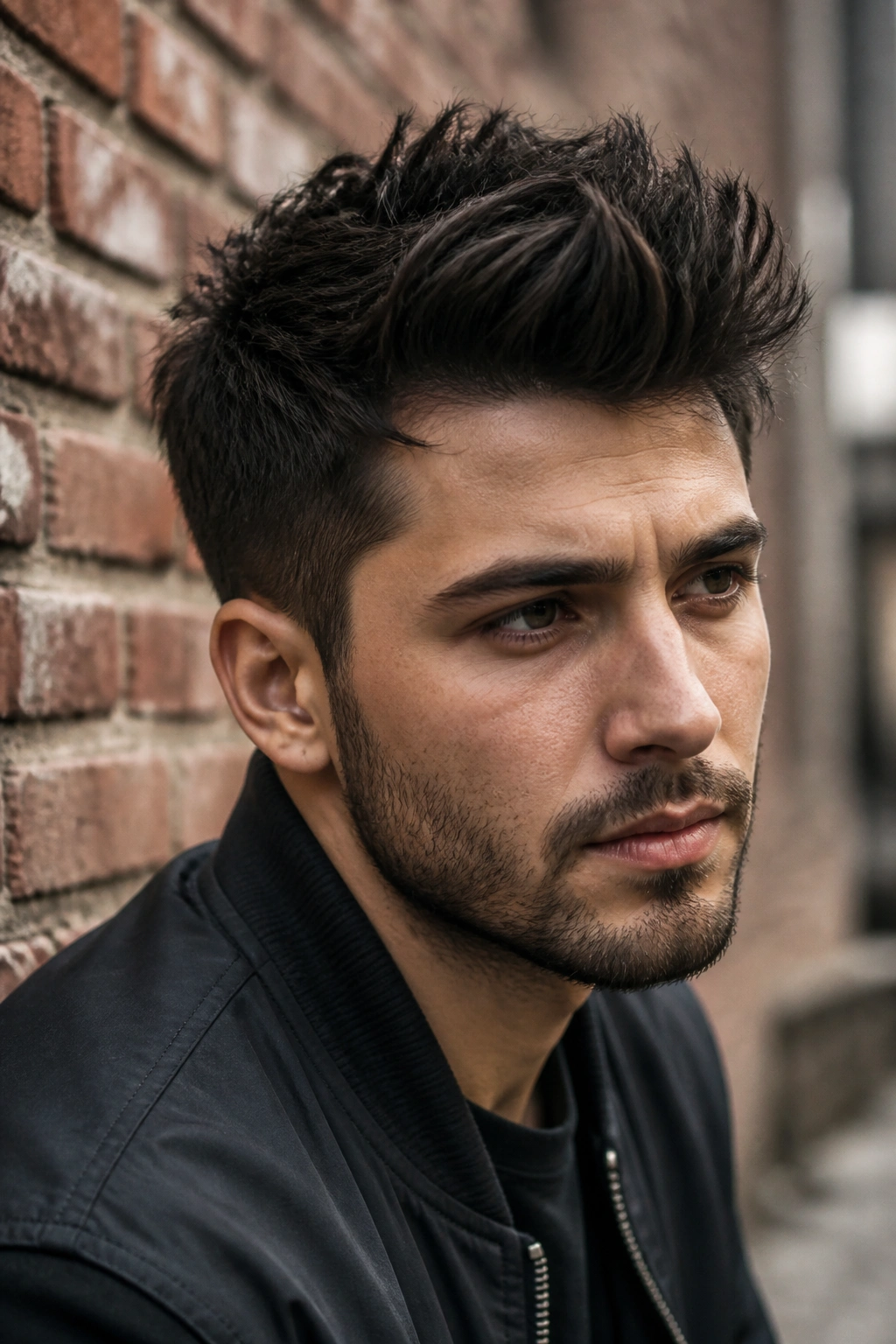
Shine can ruin a quiff fast. Too much of it, and the style starts looking slicked back by mistake. A textured quiff fixes that by breaking up the top, softening the front line, and making the whole cut feel more relaxed.
This version looks best when it does not look too perfect. That sounds obvious, but it matters. The top should feel touchable, almost a little rough around the edges, with separation between the strands rather than one solid helmet of hair.
A matte clay or paste works better here than a glossy product. I’d also use a sea salt spray on damp hair before drying, because it gives the roots a little grit. Then use your fingers, not a comb, to push the front section up and back. If you comb it too neatly, you lose the whole point.
The nice thing about a textured quiff is that it forgives imperfect hair. Fine hair gets a lift from the rough finish. Thicker hair gets less weight and less shine, which makes the shape feel lighter. And if your hair has a natural bend to it, this style takes that bend and turns it into useful movement.
One warning: don’t overload it with product. Two pea-sized amounts is usually plenty for short-to-medium length hair. If it feels sticky before it dries, you’ve used too much.
3. The Short Quiff That Stays Clean

Can a quiff work when the top is only a couple of inches long? Yes, and that’s exactly why this version is useful. It gives you quiff shape without demanding a lot of daily styling time or a thick head of hair.
How to Style It
A short quiff is the answer for men who want structure without visible fuss. The front is just long enough to lift, but not so long that it collapses or flops over during the day. It’s neat, tidy, and easy to reset with a damp hand and a small dab of product.
Ask for 2 to 3 inches on the front, with the crown kept slightly shorter so the top naturally rises toward the hairline. That little bit of weight control matters. If the crown is left too heavy, the front will lie down instead of standing up.
What To Ask For
- A short taper or low fade on the sides
- A front section left longer than the rest of the top
- Light layering, not choppy thinning
- A finish that can be styled with cream, paste, or a light clay
Short quiffs suit men who want a haircut that can survive a gym bag, a humid commute, or a rushed morning. They also look good on younger guys who don’t want a heavy style sitting on the head all day. Not flashy. Not boring either.
4. The Long Quiff With Extra Height
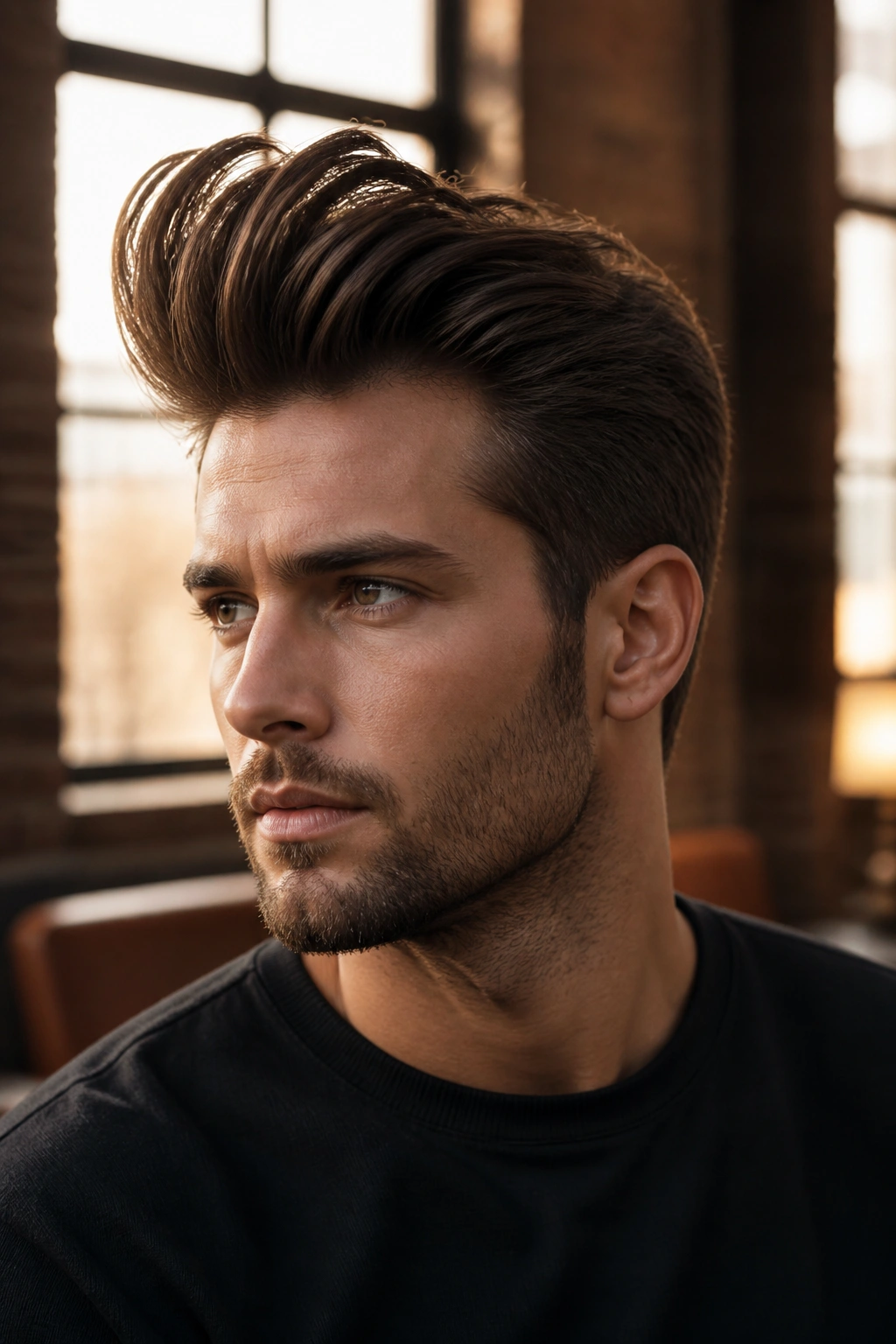
A lot of people think longer hair on top automatically turns into a pompadour. Not if you keep the front loose and the shape a little forward. A long quiff uses the extra length to build height, but it still feels lighter and less formal than a full pompadour.
Weight is the enemy here.
If your hair is thick, ask the barber to remove bulk through the upper back part of the top, not just the sides. That keeps the front from drooping after an hour. Long quiffs usually need a blow dryer more than any other version on this list, because the lift comes from setting the shape while the hair is still warm and damp.
A round brush can help, but you do not need to wrestle the hair into submission. Pull the front section up and back in controlled passes, then let it cool before touching it again. That cooling stage is what helps the shape hold. Skip it and the hair tends to fall halfway through the day.
Best For
- Men with thick hair
- Guys who want a taller front profile
- Faces that can handle more vertical shape
- Styling products with medium hold and some flexibility
This version does take more effort. That’s the tradeoff. But when it works, it gives you a strong, full front with enough movement that it doesn’t feel frozen in place. It sits between classic quiff and pompadour, and that middle ground is where a lot of the best men’s haircuts live.
5. The Side-Parted Quiff
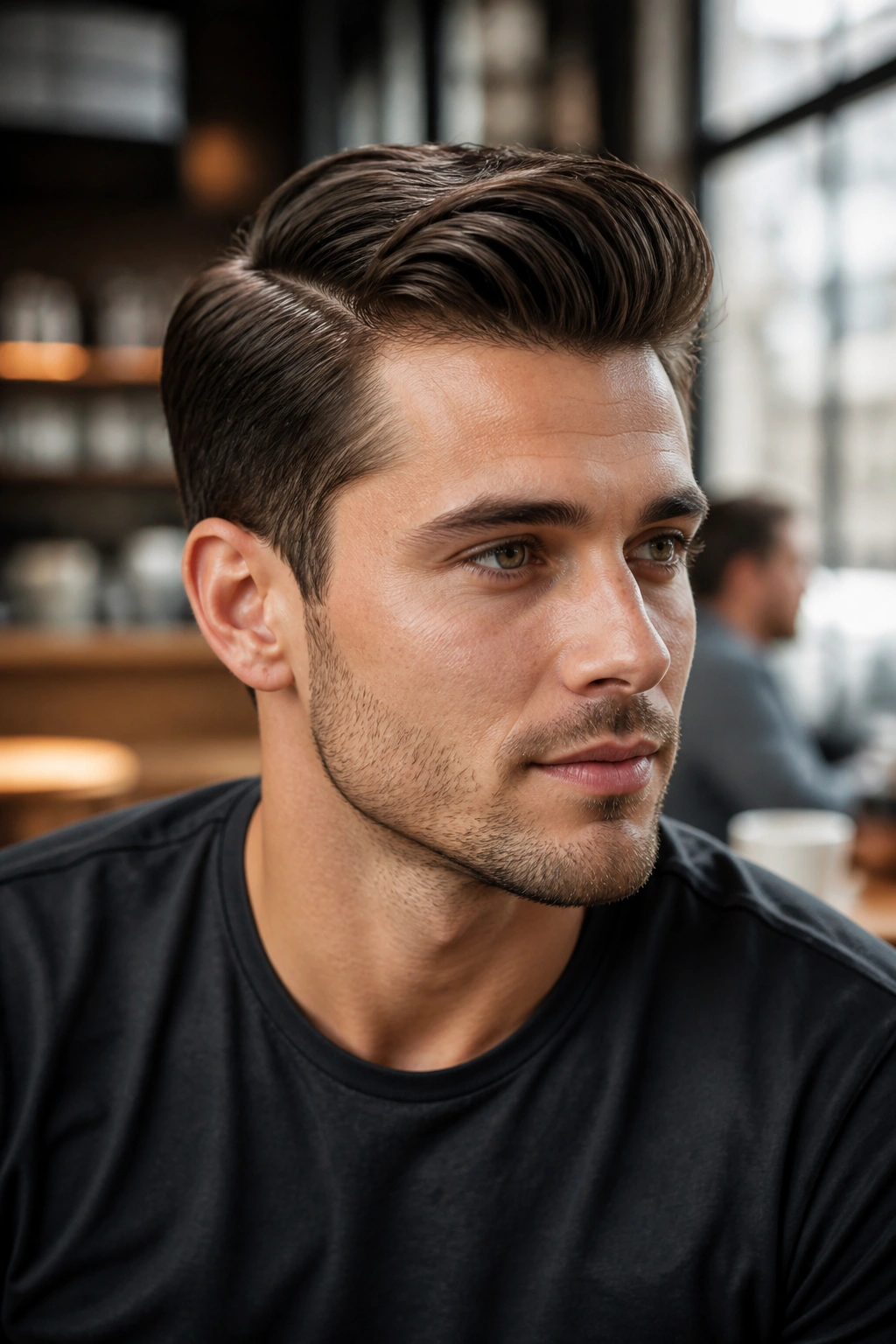
A side part changes the mood of a quiff immediately. The lift is still there, but the hair gets a clear direction, and that one detail makes the whole style feel more intentional. It’s the difference between “styled” and “arranged.”
The part doesn’t need to be sharp or shaved in. In fact, a softer side part often looks better because it blends into the quiff instead of fighting it. The top is brushed upward and then angled slightly to one side, which keeps the front from looking like it was copied straight out of a catalog.
I like this version on men who want structure without a hard edge. It works well in office settings, sure, but it also looks good with a denim jacket or a plain crewneck because the shape is doing the work, not the shine. Use a light pomade or cream if you want a cleaner line. Use matte product if you want the part to stay visible but not glossy.
The barber request is simple: ask for a soft side part with length left through the front third of the top. If your hair naturally falls in one direction, lean into it. Fighting the grain usually makes the style worse, not better. A side-parted quiff looks best when the movement feels natural, even if the finish is controlled.
One more thing. This is the version I’d pick for someone who wants to look put together without looking precious about it.
6. The Quiff With a Low Fade
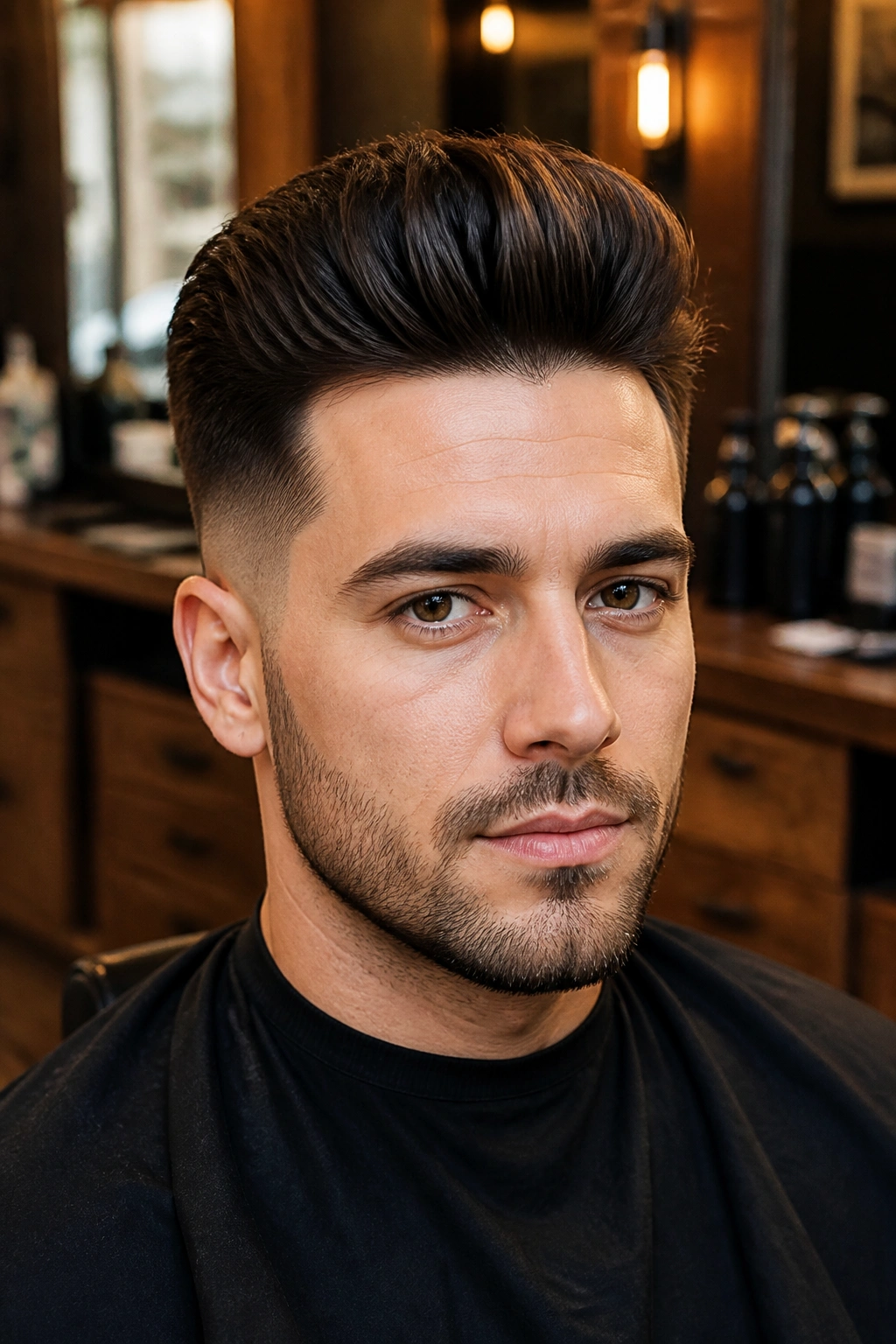
A low fade makes the top look taller because the eye moves upward faster. The sides drop cleanly around the ear and temple area, then blend into the longer top, which creates a sharper contrast than a basic taper but doesn’t go as extreme as a skin fade.
That contrast is the whole point. A quiff with a low fade feels modern, but not loud. It keeps the outline crisp and gives the front a little more drama, especially if your hair has some natural density. If the top is flat or the sides are bulky, the quiff can look heavy. A low fade solves both problems at once.
Barber Request
- Ask for a low fade starting just above the ear
- Keep 3 to 4 inches on top for a balanced silhouette
- Leave a little weight near the crown if your hair is fine
- Use matte clay for a drier finish, or light pomade for a neater one
What To Watch For
If your face is already long, don’t let the fade climb too high. That can stretch the head shape more than you want. On the other hand, if your face is round or square, the extra lift from the quiff and the tight fade can work well together because it gives more vertical line.
This is a strong everyday option because it looks sharp when freshly cut and still holds its shape after a few weeks, when the fade has softened just enough to look lived-in.
7. The Messy Quiff With Movement
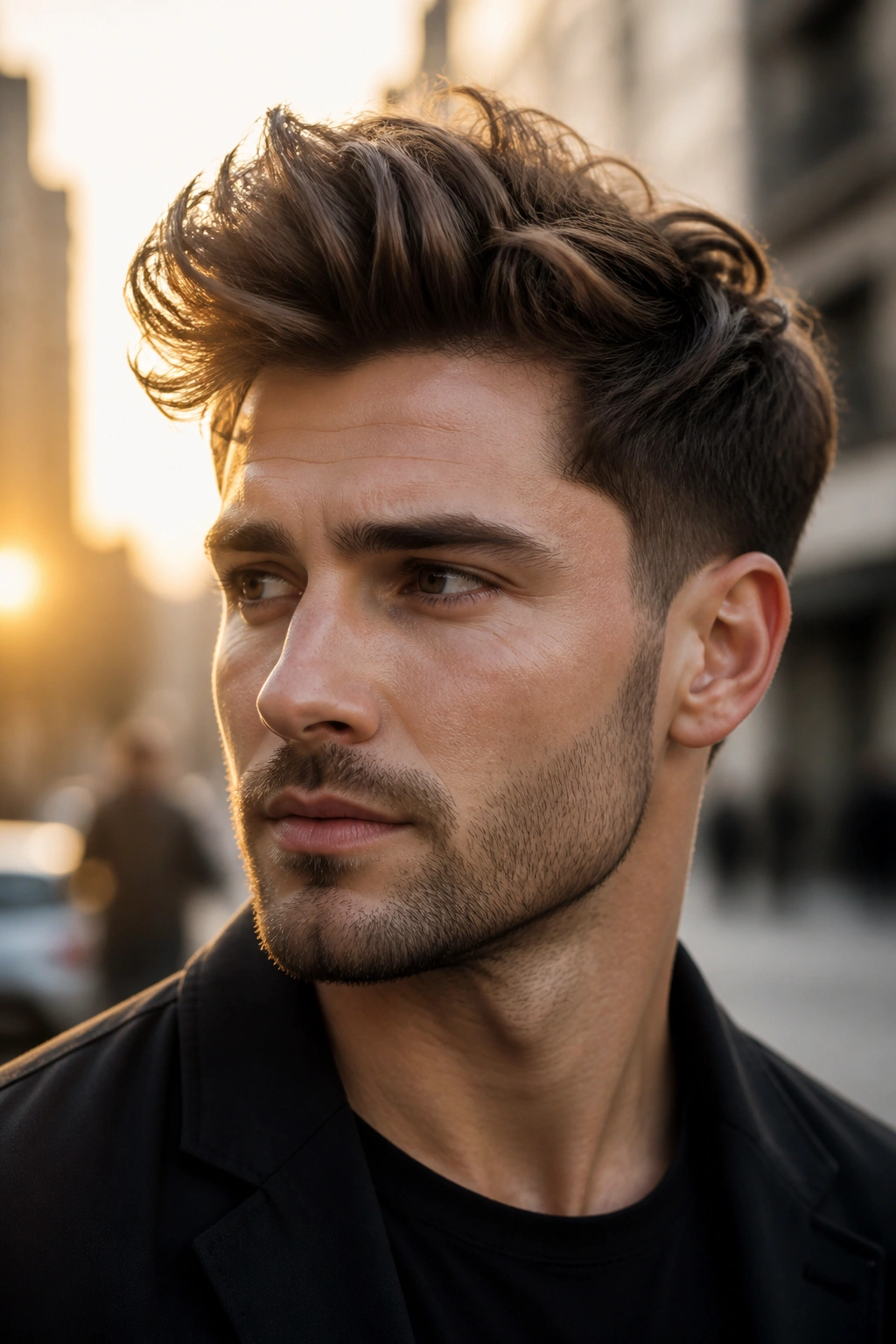
Why do some messy quiffs look stylish while others just look unfinished? Control. A good messy quiff still has a plan, even if the strands don’t sit in a perfect line.
Messy here means broken-up texture, not chaos. The front should rise, but the ends can fall in different directions. A little separation around the hairline helps a lot, especially if your hair has a natural wave or a bit of bend. The style looks best when the top has been dried in different directions instead of being pushed into one frozen shape.
How to Keep It From Collapsing
- Start with damp hair, not soaking wet hair
- Use a sea salt spray or texture spray before blow-drying
- Push the front upward with your fingers, then let it cool
- Finish with a small amount of matte paste
- Avoid thick gel. It kills the movement
Messy quiffs suit men who want hair that looks touched, not staged. They can be a little undone and still look clean because the sides are kept tidy. That contrast matters. A messy top with sloppy sides just looks neglected. A messy top with a clean fade looks intentional.
I’d especially recommend this for thicker or slightly wavy hair. Those textures carry a rough finish well and don’t need a ton of help to build shape. Fine hair can do it too, but it needs less product than people think. Start small. Add more only if the front keeps falling.
8. The Curly Quiff
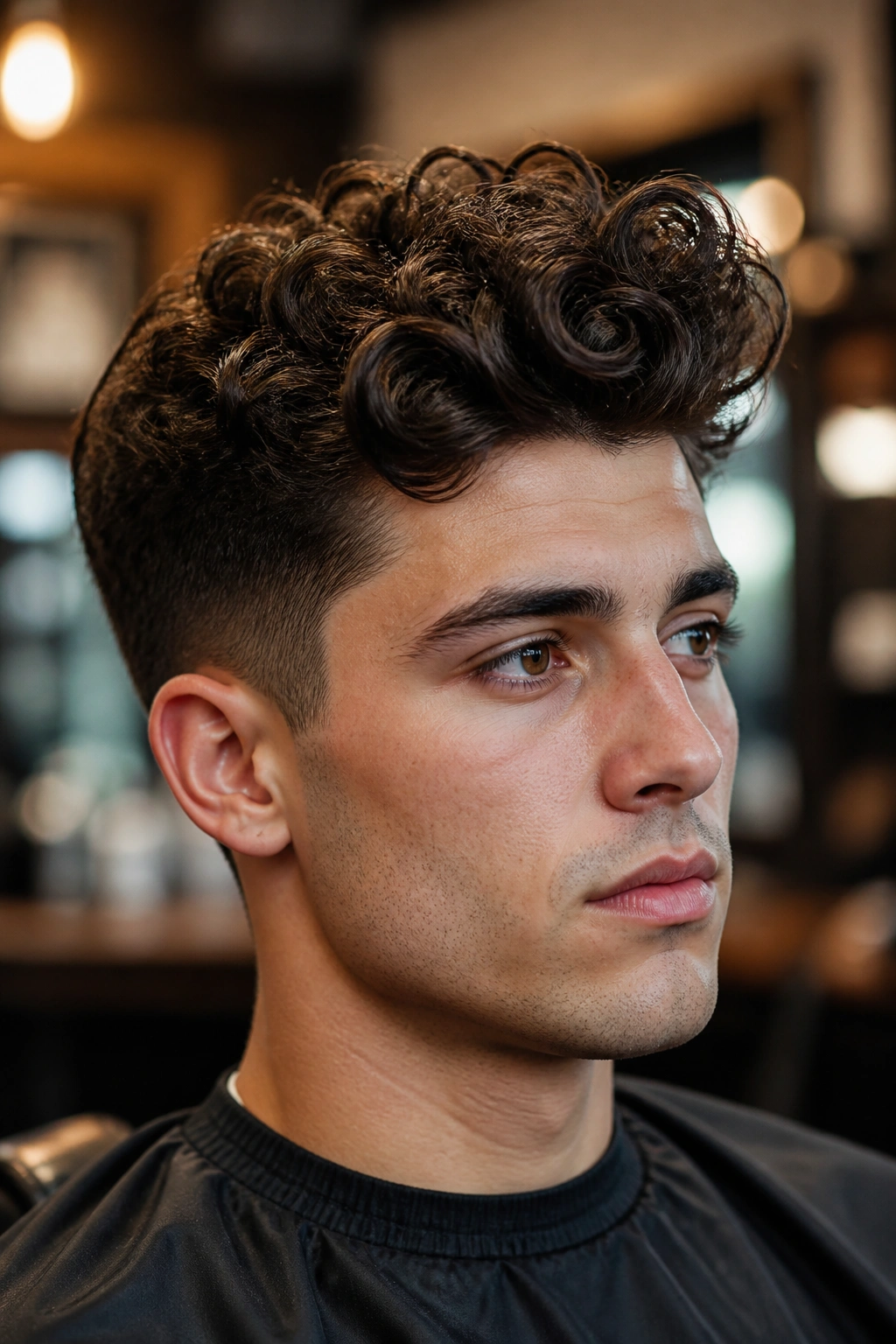
Curly hair can wear a quiff better than straight hair in some cases, because the curls give you built-in lift. The problem is usually not lack of shape. It’s too much shape in the wrong place, with the front puffing up while the rest of the top stays flat.
The fix is to keep the top long enough for the curls to stack without spreading out. A curly quiff usually needs a barber who knows how to leave room at the front and remove bulk where the hair starts to swell. If the cut is too blunt, the curls fight each other. If it’s too thin, the whole shape gets wispy.
Why Curl Pattern Matters
Tighter curls need more length to show a clean front shape. Looser curls can sit higher with less work. Either way, the front section should be allowed to rise, not crushed under heavy product. Curl cream or light mousse works better than a stiff paste, because you still want the curl to live inside the quiff.
A diffuser helps a lot. Dry the hair until it’s about 80 percent dry, then stop touching it. That last bit of drying matters because curly hair frizzes when it gets manhandled. Once the hair is set, use a tiny amount of matte product on the ends if the shape needs a little control.
Best on men who want texture without forcing straightness. That’s the cleanest way to think about it. Curly quiffs work because they respect the curl pattern instead of flattening it.
9. The Wavy Quiff
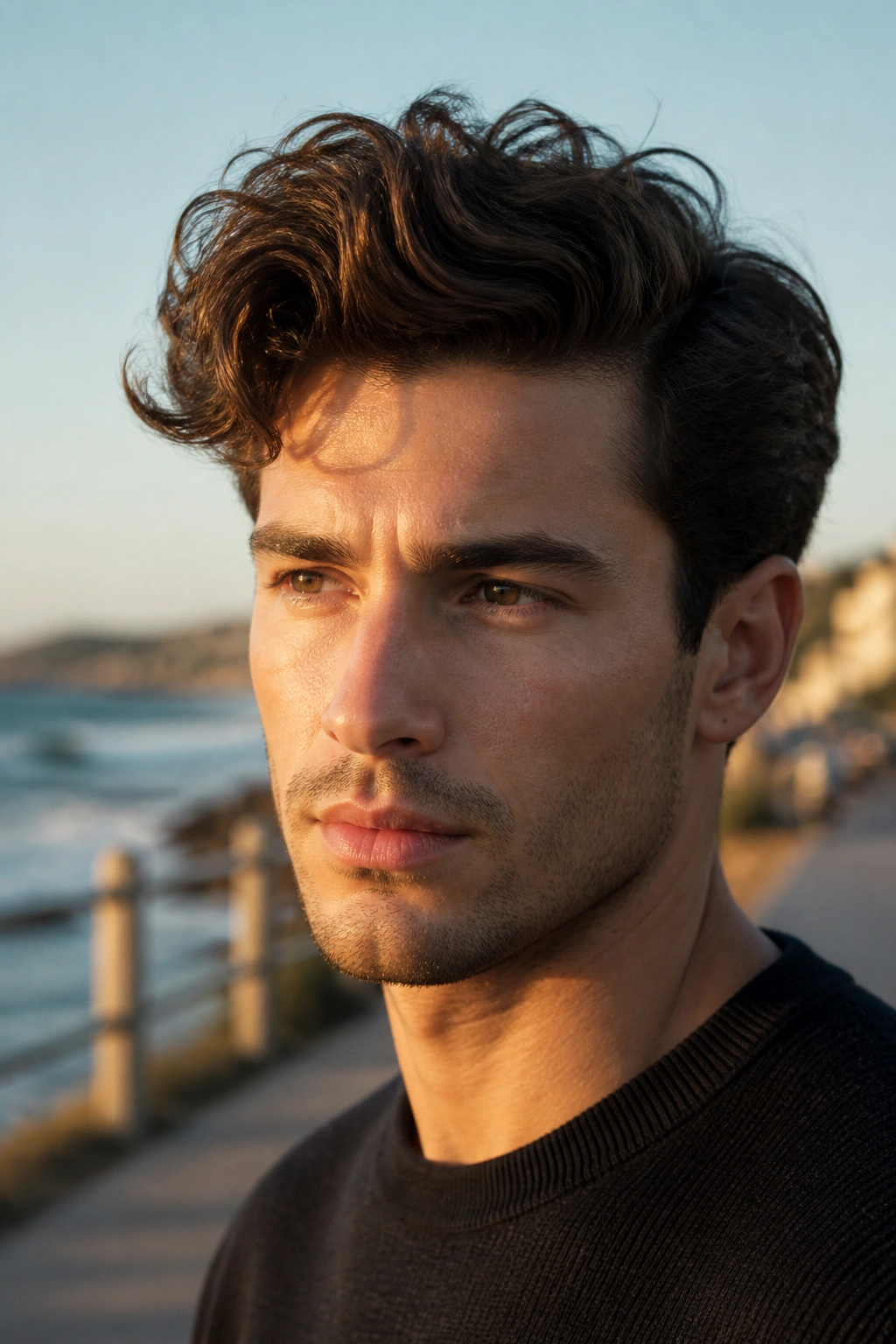
Wavy hair gives you the softest-looking quiff on the list. Not soft in a weak way. Soft in the sense that the shape already has movement, so the style feels less rigid and a lot more natural the second it leaves the mirror.
A wavy quiff is easier to wear than most people expect because the wave pattern does half the styling work. The front lifts, the hair bends a little, and the top never looks perfectly uniform. That unevenness is what makes it good. You get shape without the hard shell look that comes from too much product or too much combing.
The only real danger is overdoing the finish. If you pile on heavy pomade, the waves flatten and the style turns into a damp-looking block. Better to use a light cream or a small amount of paste, then dry the hair with your fingers while keeping the front directed upward. A little sea salt spray can help, but it’s not mandatory if your hair already has a natural bend.
Wavy hair can also be a nice compromise for men who sit between straight and curly. It creates enough lift for a quiff but still falls back into place without much effort. If the wave starts at the crown, leave a touch more length there. Shortening the wrong spot makes the front lose support, and the quiff starts to cave in after an hour or two.
Some styles want to look engineered. This one does not.
10. The Disconnected Quiff With a Hard Part
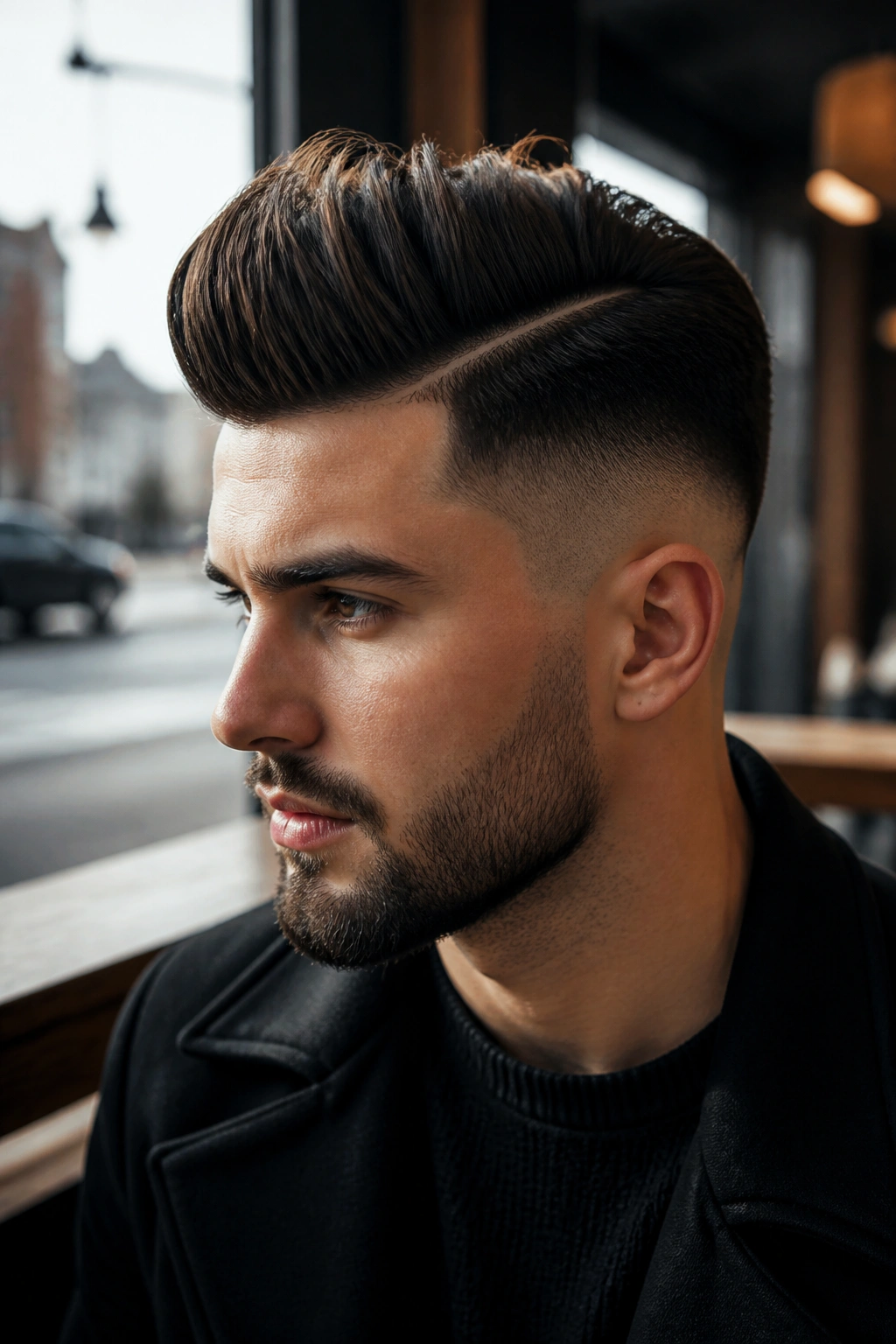
If you want a quiff with a sharper edge, this is the boldest version here. The sides are cut much shorter than the top, often with a visible hard part or a shaved line that makes the separation impossible to miss. It has more contrast, more structure, and more attitude.
The disconnected effect can look excellent on men with dense hair because the top has enough weight to stand up while the sides stay tight and clean. The hard part adds direction, which helps keep the quiff from drifting into pompadour territory. The whole look feels precise. Almost stern, if I’m being honest.
Best Barber Request
- Keep the top long enough to lift but not sag
- Ask for a clearly disconnected side profile
- Add a hard part only if you want a strong line
- Use medium-hold pomade for shine or matte clay for a drier finish
It suits guys who want a haircut that reads from across a room. It also needs upkeep. The hard part grows out faster than a soft blend, and the contrast loses its edge once the sides start to bulk up. If you hate frequent trims, this is probably not your friend.
For the right person, though, it’s a great look. Sharp, controlled, and a little aggressive in the best way. If you want a quiff that feels more tailored than relaxed, this is the one to show your barber.
The real question is not which quiff looks best in a photo. It’s which one you can wear on a normal Tuesday without fighting it for 20 minutes. Pick the cut that matches your hair texture, your patience, and how much shape you want sitting on top of your head. The best quiff is the one that still looks good after a wind gust, a long lunch, and a mirror check you barely had time to make.
