



Round faces like height.
Spiky hair can work better than people expect, but only when the shape is right. A round face usually has similar width and length, softer jawlines, and fuller cheeks, so the haircut needs to stretch the eye upward instead of spreading it sideways.
That is where a lot of bad advice falls apart. People hear “spiky” and picture stiff, all-over points, which usually makes the head look wider. The smarter move is controlled lift at the crown, shorter sides, and a little asymmetry through the fringe.
Keep that rule in mind and the rest gets easier. Fine hair, thick hair, straight hair, curls — each one needs a different product or blow-dry trick, but the silhouette is the part that does the heavy lifting. The styles below range from neat and understated to sharp and a little rebellious, and each one uses texture in a way that flatters a rounder face instead of fighting it.
1. Textured Pixie with Crown Lift for Round Faces
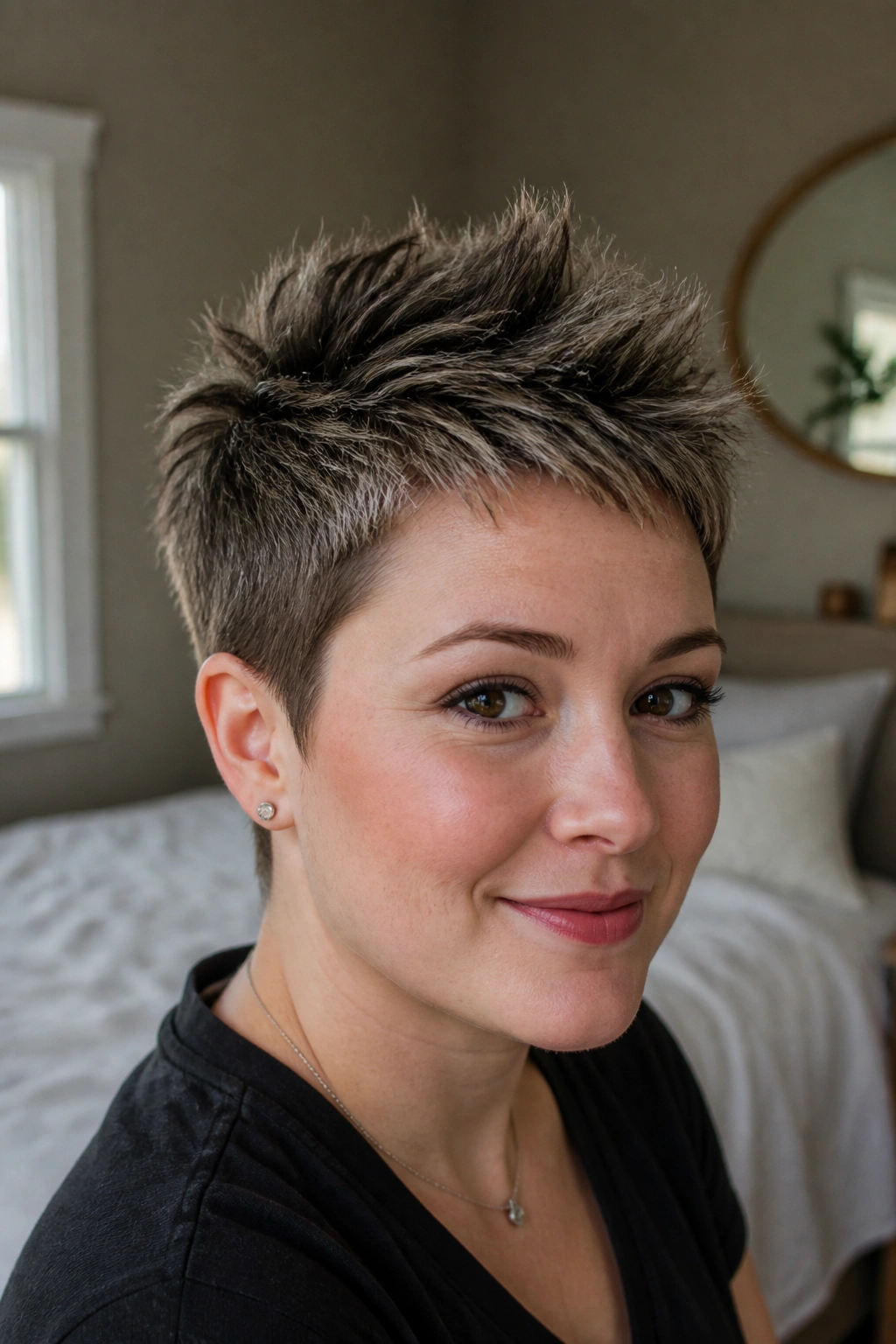
A short pixie does not have to read soft and rounded. With 1.5 to 2.5 inches left at the crown and the sides clipped close, the eye goes up before it goes wide.
Why It Works on a Round Face
The crown height is doing the main job here. A round face usually needs some vertical line, and this cut gives it without turning the head into a block. The texture on top keeps it from looking too sweet or too neat.
How to Style It
- Blow-dry the top straight up for 20 to 30 seconds with your fingers lifting at the roots.
- Work in a pea-sized amount of matte clay for dry hair or a light paste for softer hold.
- Pinch just the tips, not the whole section, so the finish stays piecey.
- Keep the sides tighter every 3 to 4 weeks or the shape starts to puff out.
Best for: fine to medium hair that needs help standing up without looking helmet-like.
2. Side-Swept Spiky Pixie
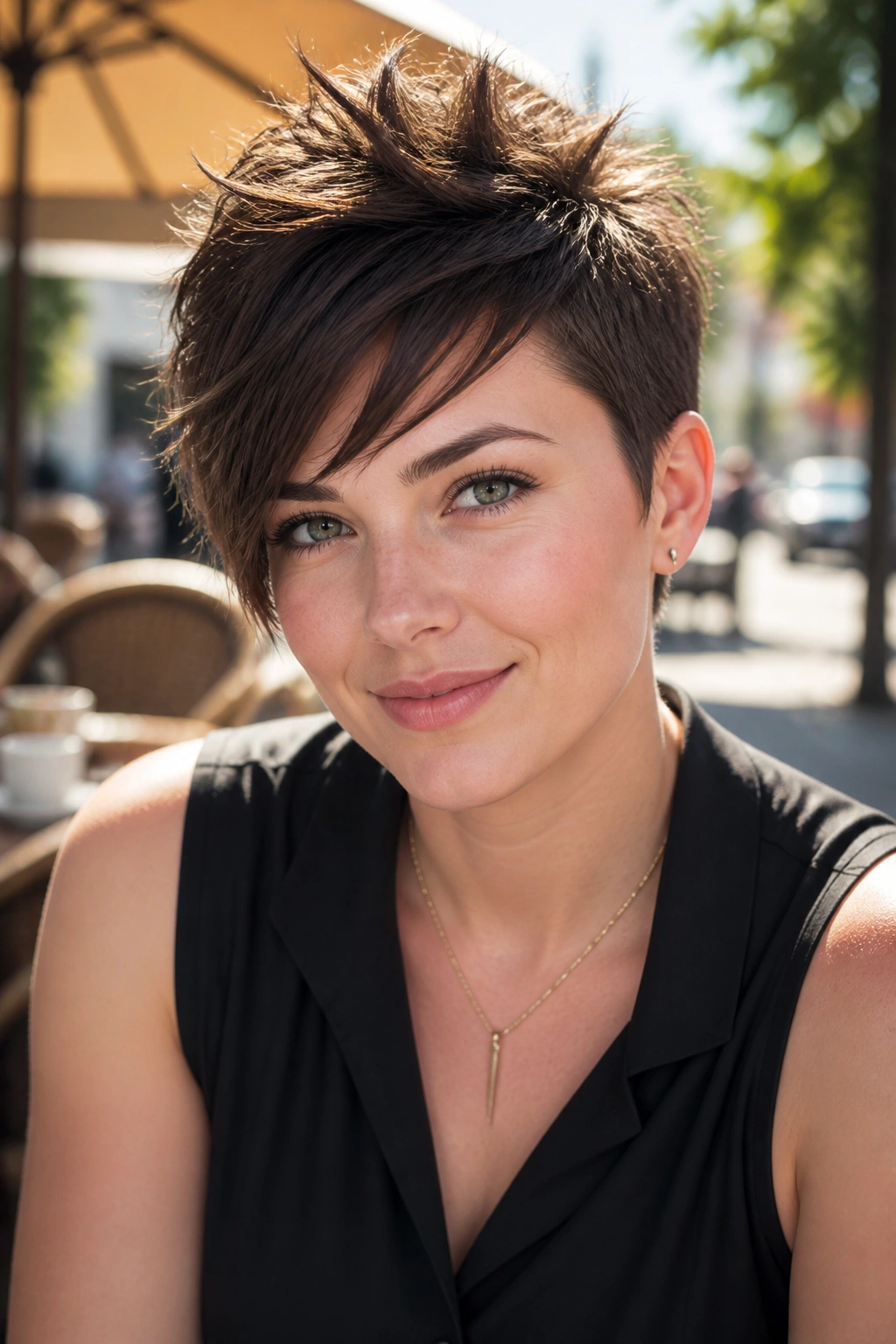
A side-swept pixie sounds gentle, but it has more shape than people give it credit for. The little diagonal line across the forehead breaks up the roundness of the face in a clean, easy way.
The trick is not to sweep the hair flat. You want the front pieces to angle across the forehead while still lifting a bit at the roots. That small lift keeps the cut lively, not sleepy.
This one works especially well if your hair falls forward on its own. Use a lightweight cream or fiber paste, then push the front up and over with your fingers rather than a comb. A comb often makes the style too tidy. And tidy is not always the goal.
3. Soft Faux Hawk
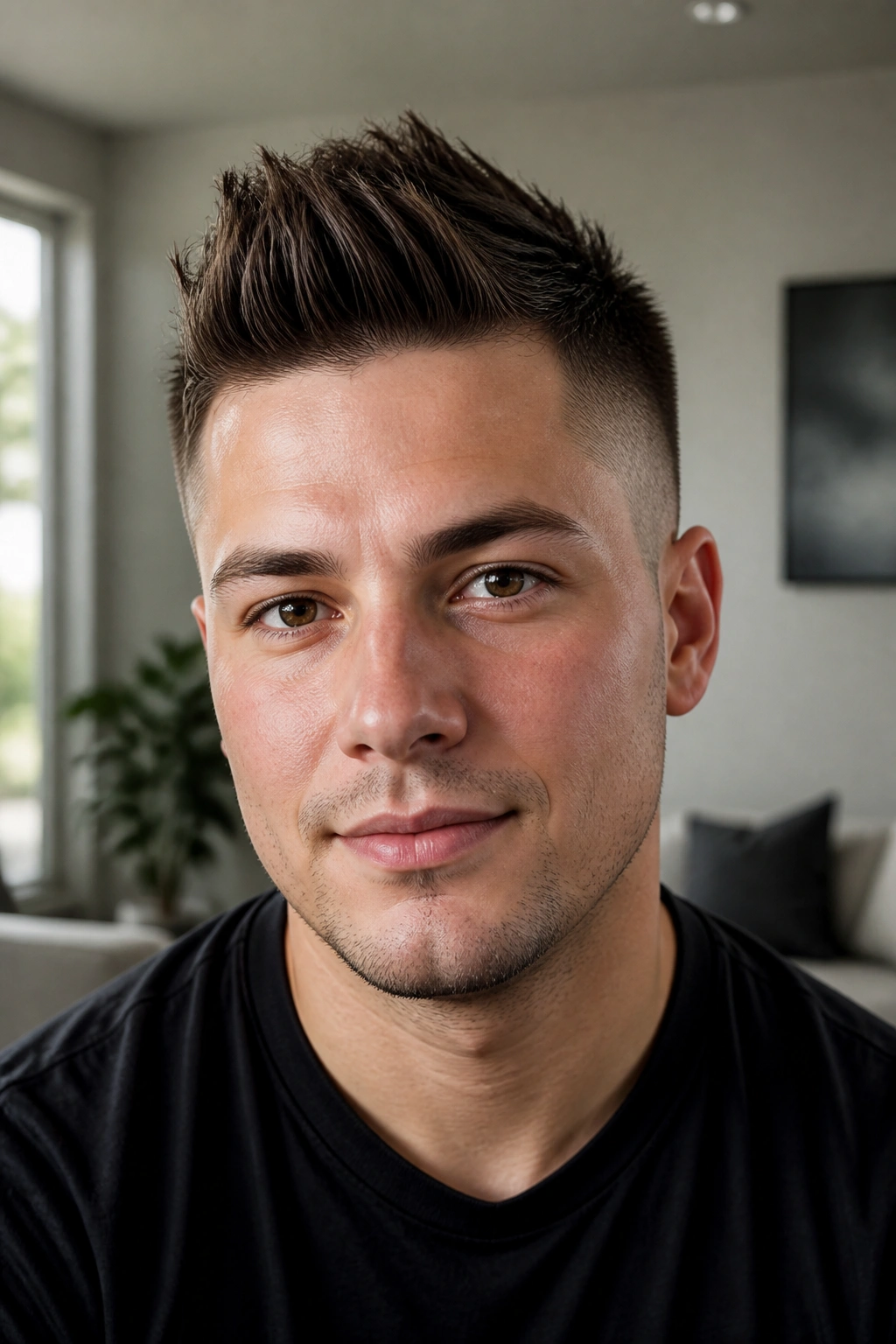
Want height without the full punk look? A soft faux hawk is the answer. It leaves a narrow ridge of hair through the middle, which gives a round face a much longer line from front to back.
What Makes It Different
Unlike a hard mohawk, this version keeps the transition gentle. The sides are still short — usually a fade or tight taper — but the top stays a little softer and less severe. That matters if you want something wearable for everyday life.
How to Wear It
- Ask for 2.5 to 4 inches through the center strip.
- Keep the sides at a #1, #2, or low fade depending on how sharp you want it.
- Use a medium-hold paste and push the middle section upward with your fingertips.
- Let a few pieces lean off-center so the shape does not look too rigid.
This is a strong choice for straight or wavy hair. Thick hair can handle the height easily. Fine hair can do it too, but it will need a blow-dryer and a bit more product.
4. Short Spiky Crop with Forward Direction
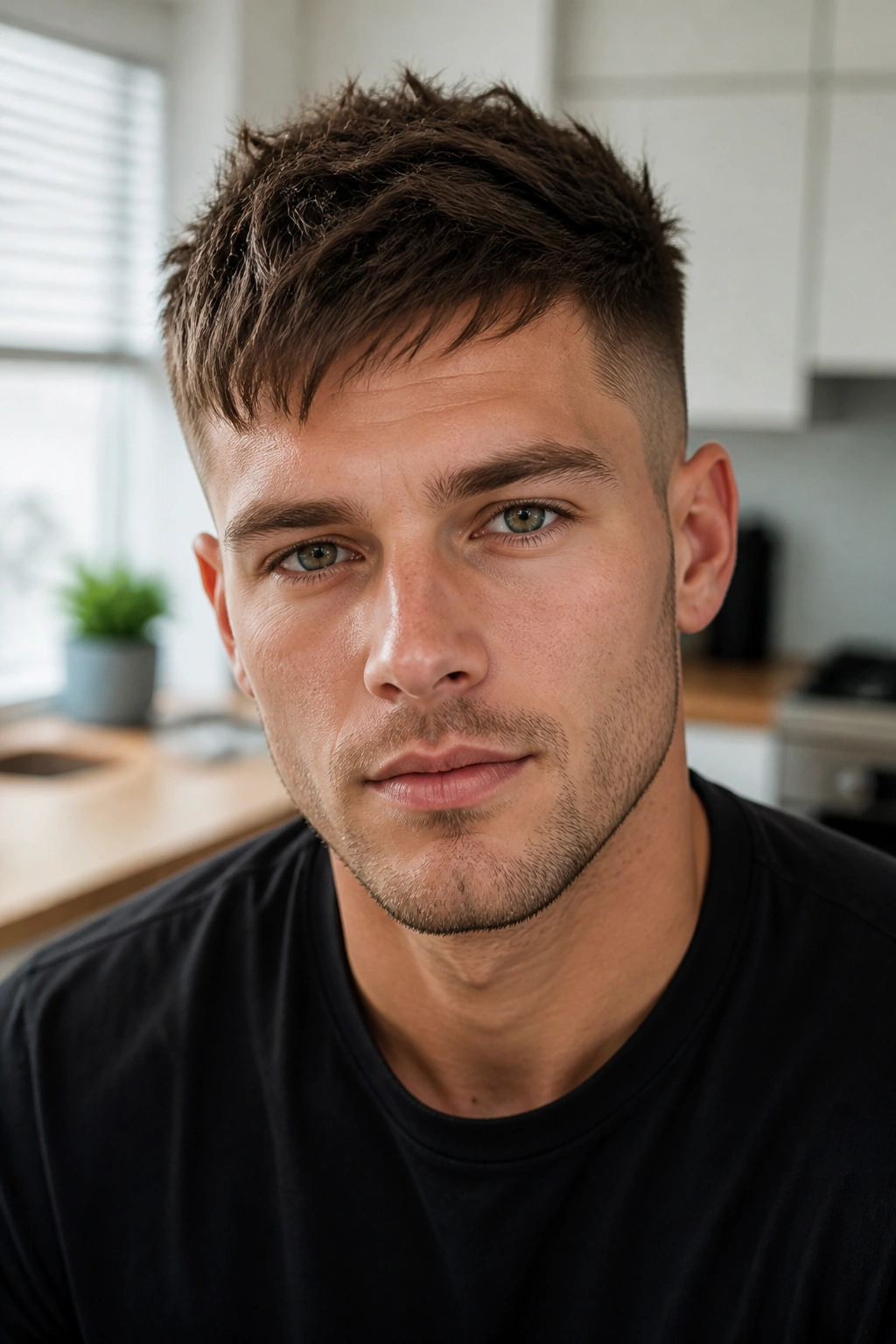
The little secret with a crop cut is direction. Push the texture straight up and it can get boxy. Push it slightly forward and the face reads narrower.
That forward movement also makes the style easier to live with. It grows out well, it does not ask for a lot of product, and it works on mornings when you have five minutes and a mirror that is not being kind.
I like this cut on round faces because it gives structure without opening up the sides. The top should feel choppy and uneven, not smooth. If the hair lies flat, a quick blast of warm air at the roots and a dab of matte cream will wake it up.
5. Choppy Crew Cut with Tapered Sides
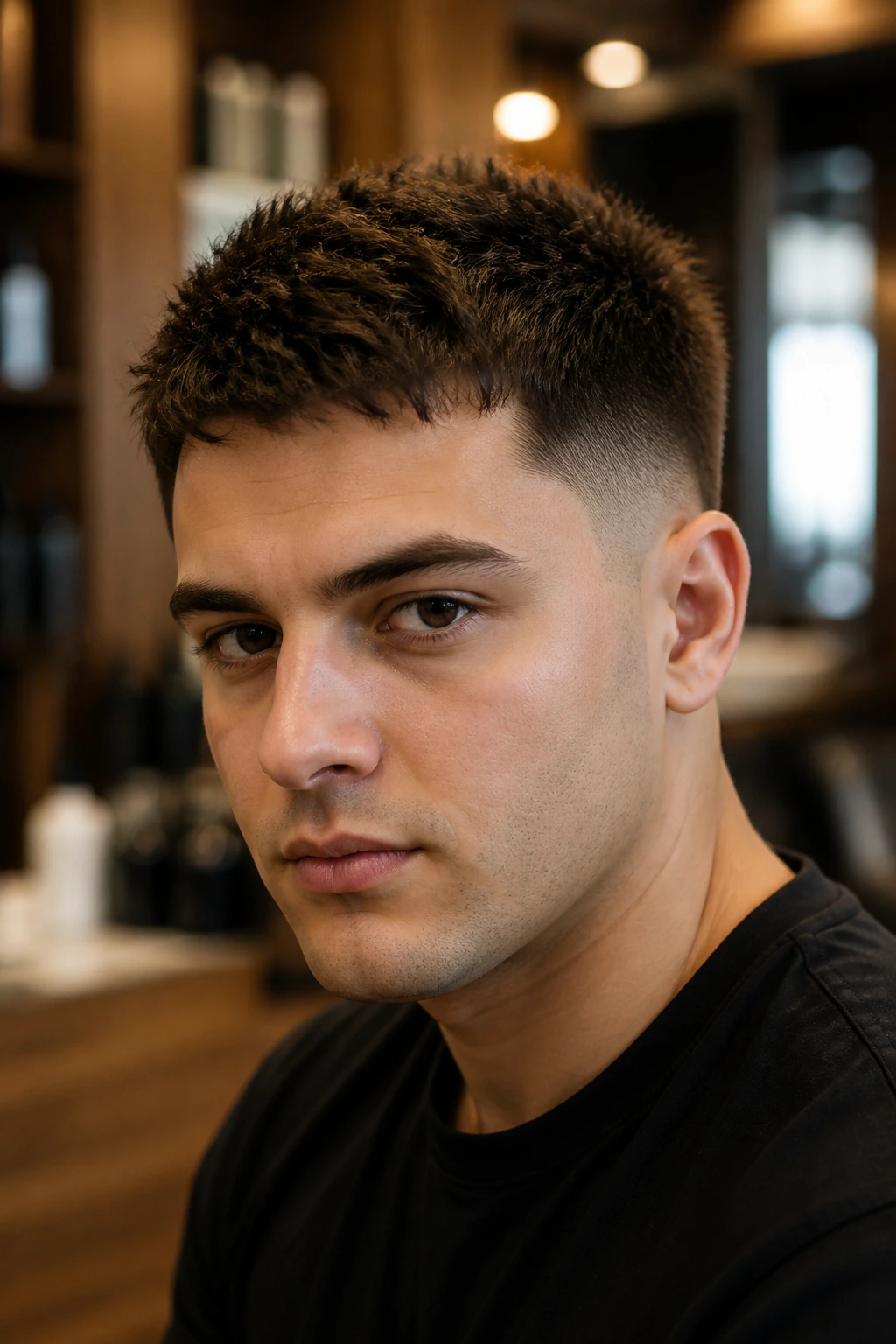
A crew cut can flatter a round face, but only if it is cut with some bite. A blunt, even crew cut can look too wide; a choppy one with tapered sides looks leaner and sharper.
The top should be point-cut, not bluntly sheared. That tiny difference changes everything. You get little broken edges instead of a single heavy shape, and those edges keep the head from reading as a solid circle.
This is a practical haircut, which I appreciate. It takes maybe a minute to style if your barber leaves the top around 1.5 to 2 inches. Rub a little fiber cream between your palms, push the front up, then leave a few strands imperfect. Too much effort ruins the charm.
6. Disconnected Undercut with Spiky Top
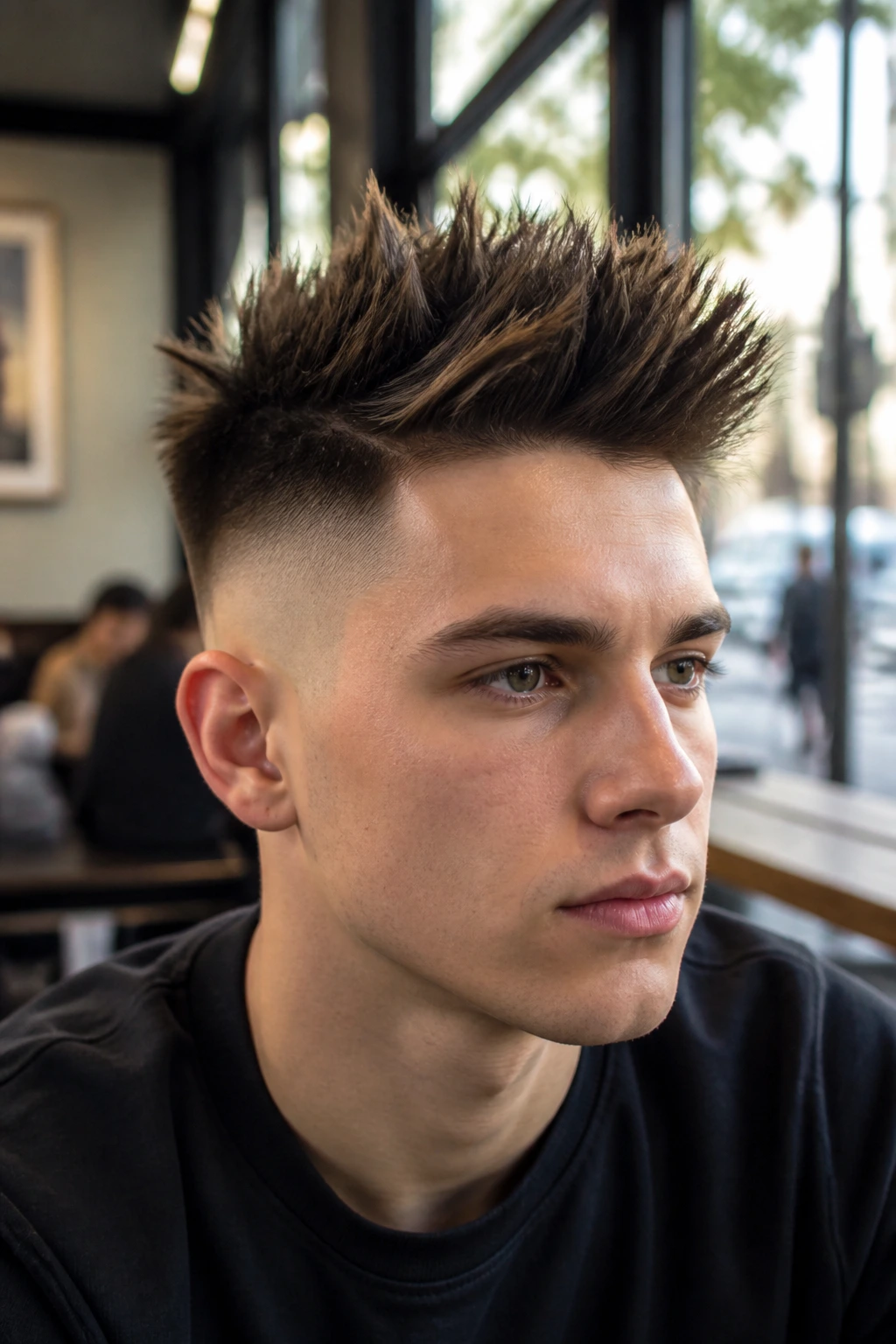
A disconnected undercut gives a round face a very clear frame. The short sides drop away fast, the top stays longer, and that contrast creates a vertical shape almost by itself.
The cut works best when the top has real length — 3 to 4.5 inches is the sweet spot. Shorter than that and the spikes can look tiny. Longer than that and you start drifting into quiff territory. Not a disaster, just a different haircut.
If your hair is thick, this style is a gift. It removes bulk from the sides and leaves enough weight on top to build actual height. If your hair is fine, ask for textured layering on the top so the spikes do not collapse under their own weight.
7. Messy Quiff with Side Height
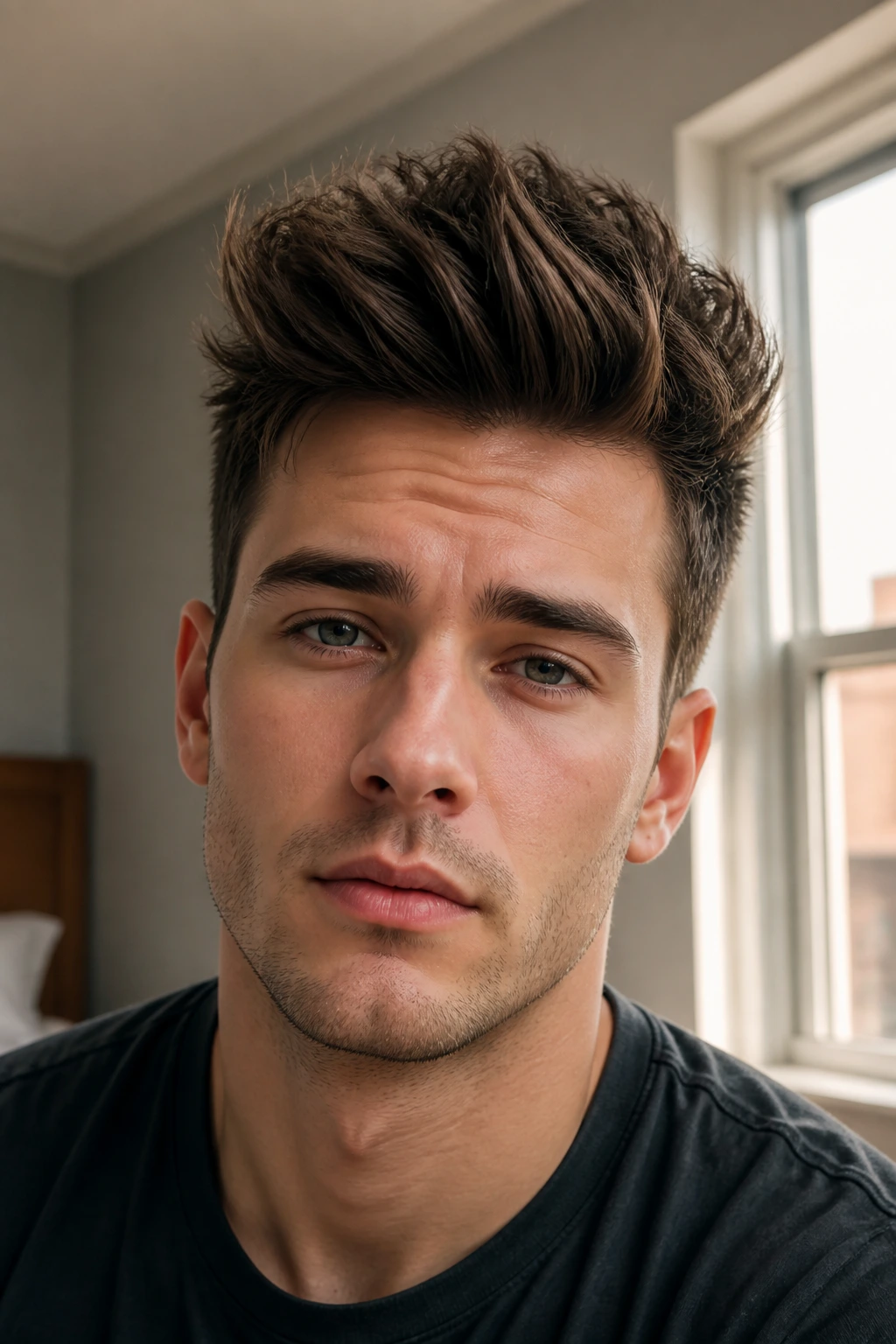
A quiff does one thing very well: it makes the forehead area look longer. On a round face, that extra height is useful, but the best version is not a giant shiny wave. It is a loose, side-biased lift that feels a little undone.
Start with damp hair and a root-lift spray. Blow-dry the front section up and slightly back with your fingers or a vent brush. Then bend the top over to one side just enough to break the straight vertical line. The result is softer than a pompadour, less rigid than a brush-up, and easier to wear with glasses or a beard.
One caveat. If you over-tease the front, the quiff can turn puffier than you want. Keep it airy, not inflated.
8. Vertical Brush-Up with Tight Sides
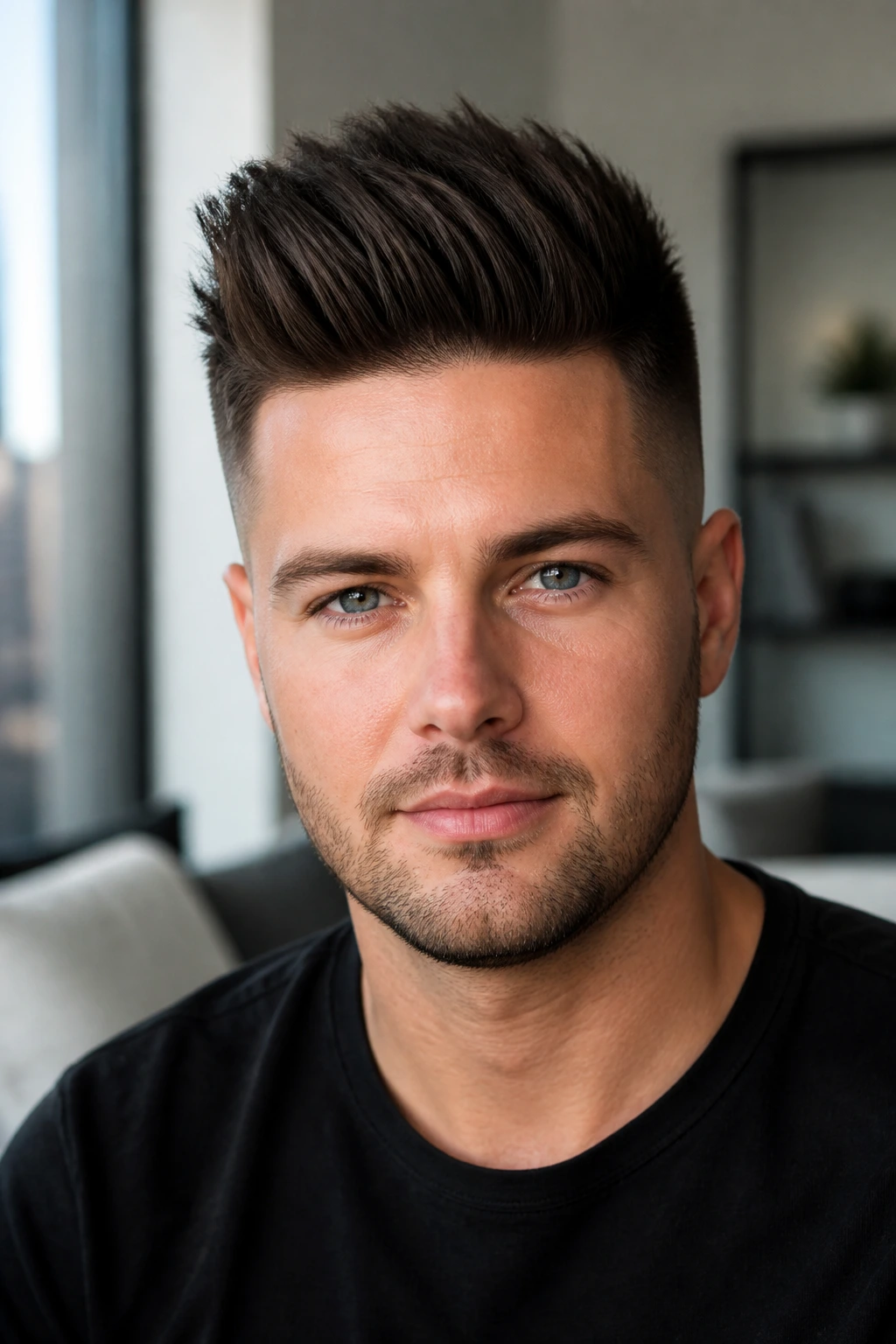
A strong brush-up can look fantastic on a round face because it adds the exact kind of line the face shape needs. The sides stay clean, the top rises almost straight up, and the eye follows that column.
This style wants grip. A light mousse on damp hair, then a blow-dryer aimed at the roots, then a matte paste or low-shine clay to lock in the shape. Work the front section with your fingertips and pinch the ends into narrow spikes. If you smear product across the whole top, it goes flat. If you use too much, it turns chalky.
What Keeps It from Puffing Out
- Keep the sides tapered close.
- Leave the top around 2.5 to 4 inches.
- Dry the hair in the opposite direction first, then set it upright.
- Finish with a tiny mist of flexible spray, not a heavy shell of hairspray.
That last bit matters more than people think. Stiff hair looks old fast.
9. French Crop with Piecey Fringe
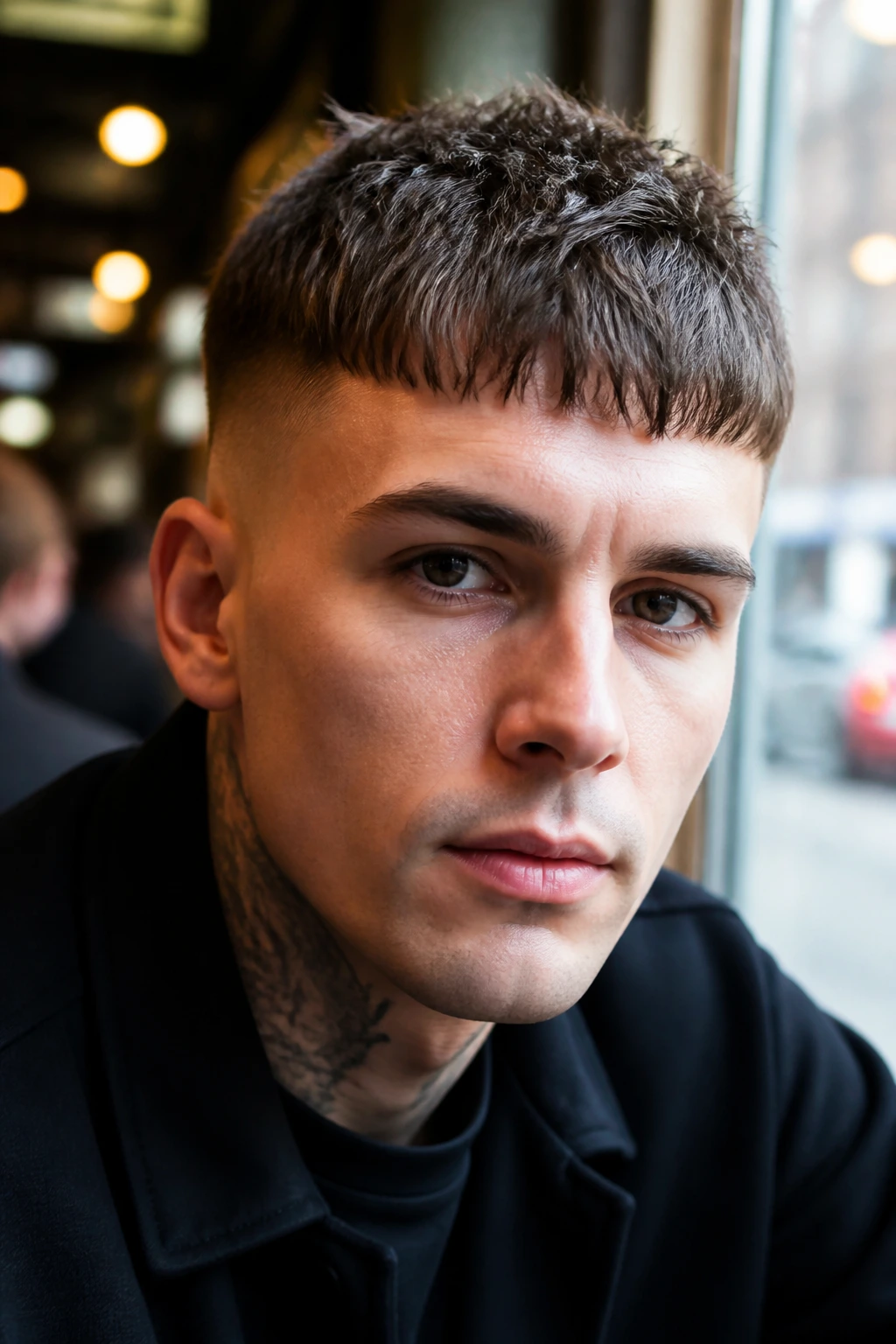
The French crop is usually thought of as tidy, but the spiky version has a little more attitude. The fringe stays short and broken, which helps a round face by keeping the front line from becoming a wide curtain.
This cut is good when you want low maintenance. The top is short enough that it does not need much coaxing, and the fringe can be pushed forward or slightly up depending on the day. The key is piecey separation. A blunt straight-across fringe is the wrong move here. It adds width where you do not want it.
Use a small amount of matte paste and rough it up with your fingers. A tiny bit of unevenness is a good thing. It keeps the crop from looking like a school haircut.
10. Layered Shag with Spiky Ends
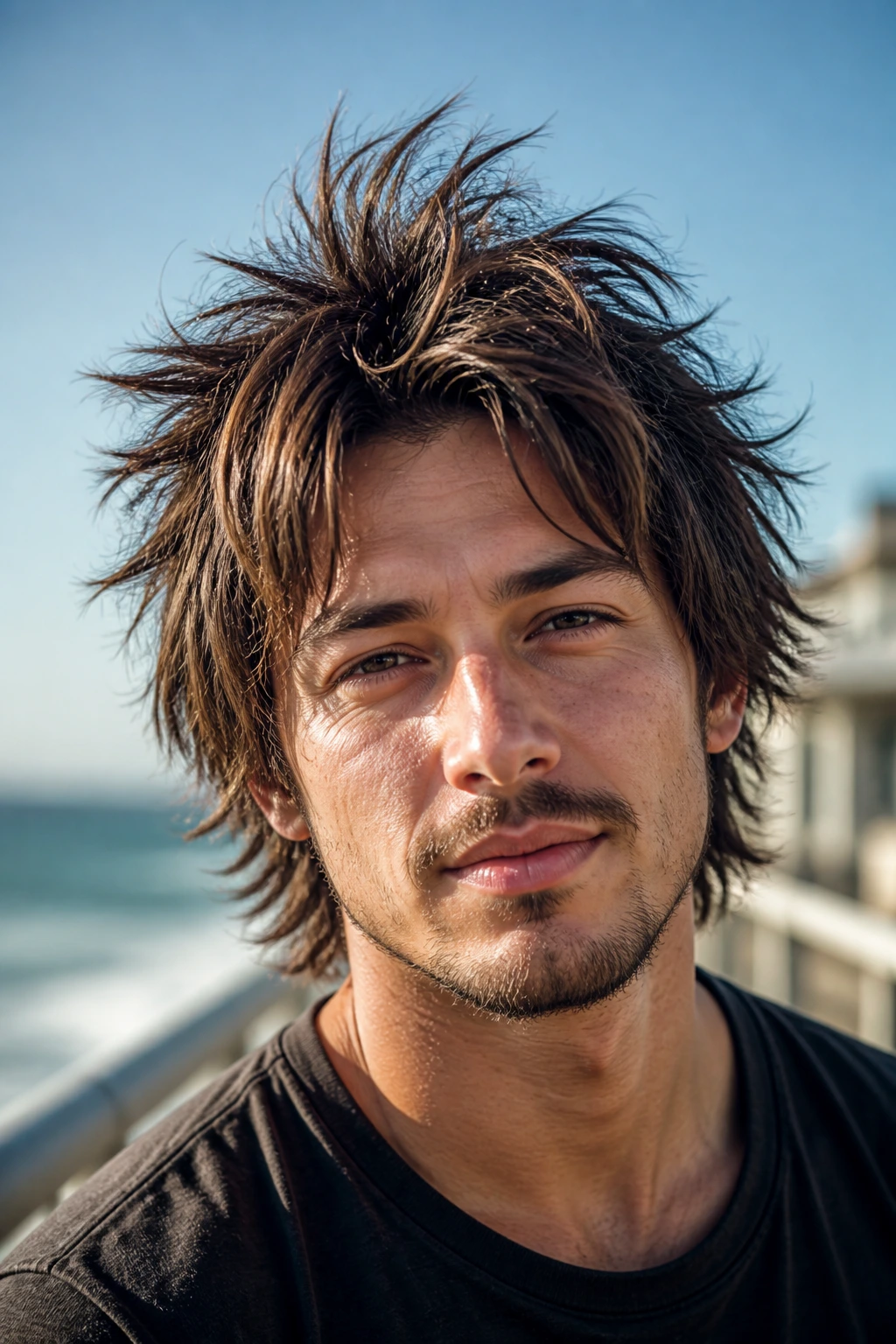
A shag can work on a round face if the layers are cut with enough purpose. The length should fall around the cheeks and jaw, but the top and crown need shorter layers that can stand up in little spikes instead of lying in a soft blob.
This one is especially nice for wavy hair. The waves give the cut movement, and the spiky ends keep it from looking too fluffy. If the layers are too heavy, the whole shape can widen the face. If they are too short, the style loses its messy, lived-in feel.
A sea-salt spray and a quick scrunch after washing usually do enough. If your hair is straighter, a diffuser or a few twists with your fingers can add texture fast. The charm here is that it looks a little imperfect on purpose.
11. Spiky Bob with Crown Volume for Round Faces
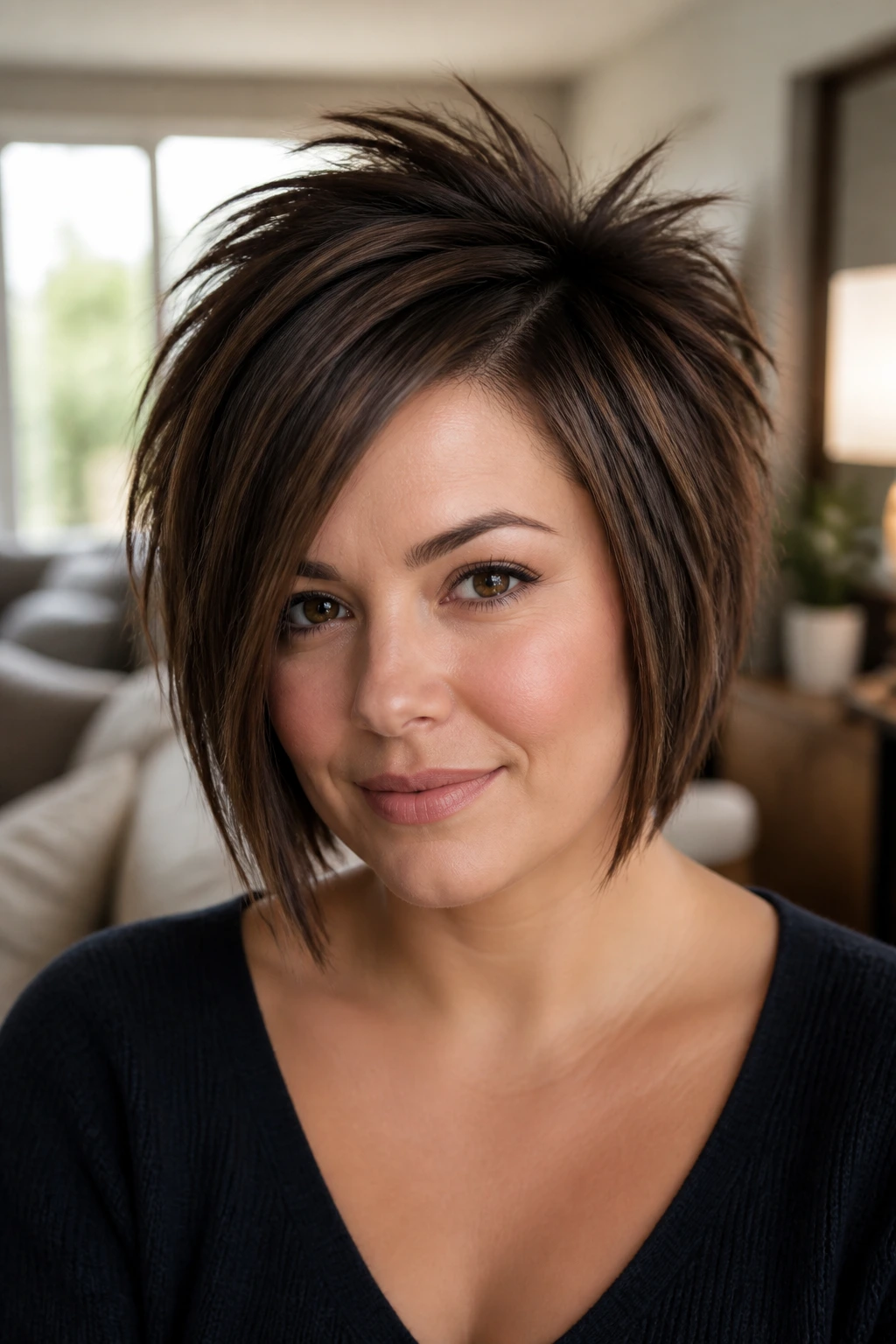
A bob does not have to sit there and be polite. With a little crown volume and jagged ends, it can become one of the sharper spiky hairstyles for round faces.
The version that works best is slightly angled, with the front pieces sitting longer than the back. That angle matters. A round bob can make the face read fuller, while a spiky, slightly forward-leaning bob gives you lift and direction. It is a cleaner silhouette, and it looks good with or without a side part.
Who It Suits
- Hair that is straight or lightly wavy.
- People who want length near the chin but not past the shoulders.
- Anyone who likes a style that can be tucked behind one ear and still look deliberate.
If you want the ends to flick out a bit, a flat iron or round brush will help. Keep the finish touchable. Hard, sticky spikes on a bob can feel awkward fast.
12. Asymmetrical Pixie with Angular Fringe for Round Faces
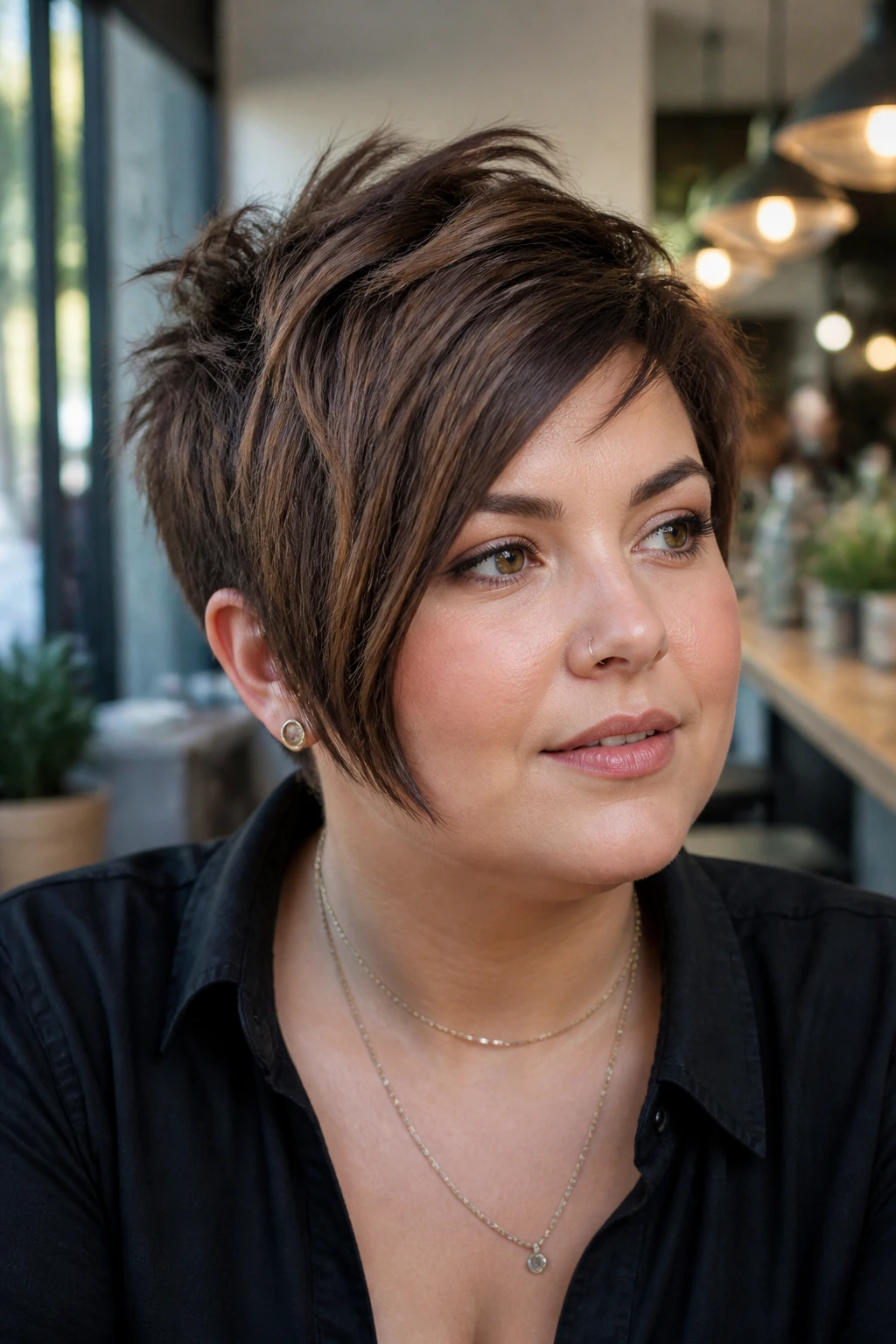
One side shorter, one side longer. That imbalance is the whole point, and it works because a round face usually needs a shape that does not mirror itself too neatly.
The angular fringe pulls attention diagonally across the face instead of horizontally across the cheeks. That alone can change the way the haircut reads. The overall look feels sharper, more modern, and a little less expected than a standard pixie.
Ask for the longer side to fall somewhere between the temple and the cheekbone. Too long, and the cut starts to hide the face. Too short, and you lose the line. A little wax or paste is enough to define the fringe. No need for a heavy hand.
13. Curly Faux Hawk
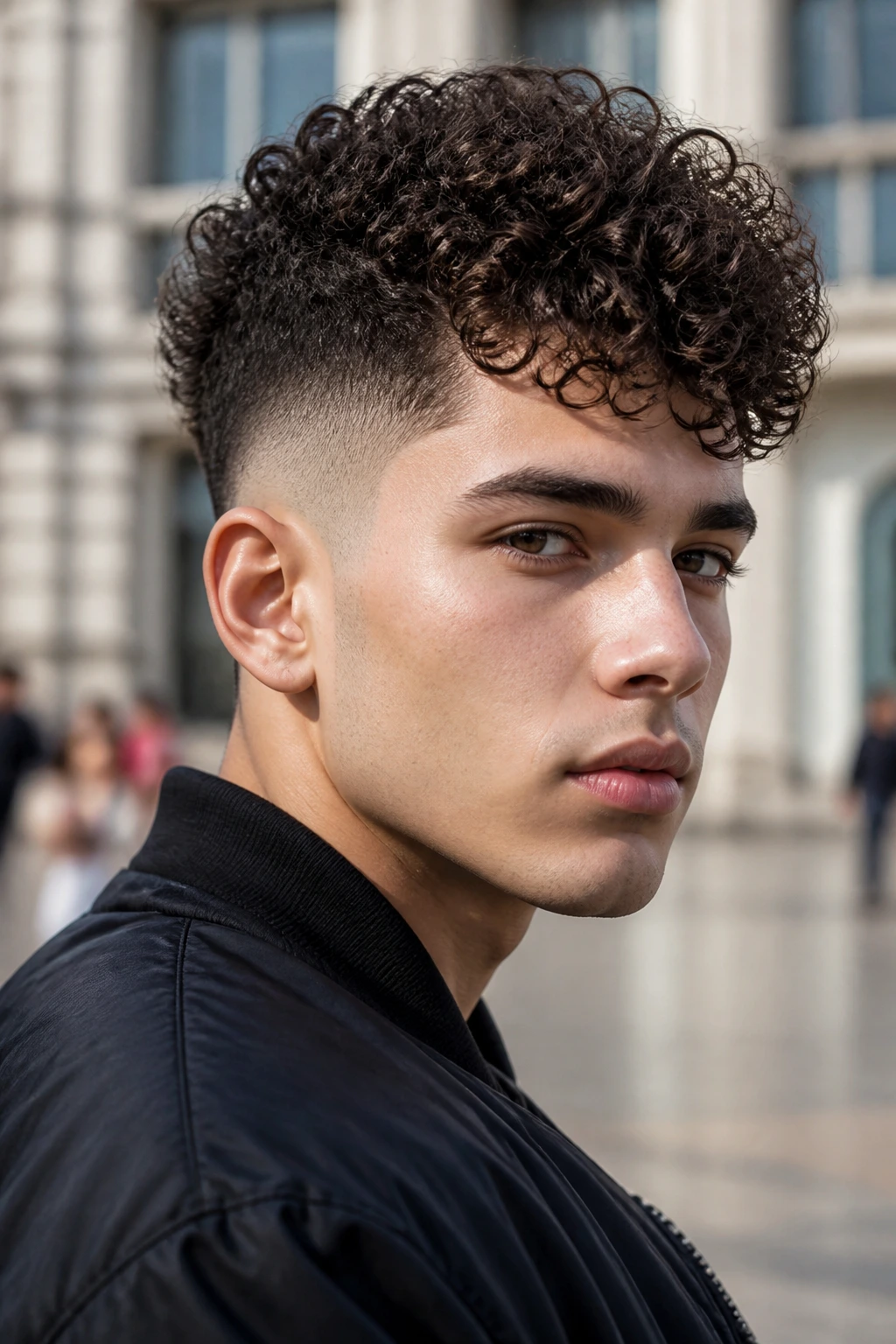
Curly hair loves a faux hawk because the texture does half the work for you. Instead of forcing straight spikes, you let the curl pattern build a natural ridge through the middle.
The sides should stay tight — a fade or taper works best — so the curls on top do not spread outward. Then you shape the center with curl cream or a light gel while the hair is still damp. Scrunch upward, diffuse for a few minutes, and leave the curls separated enough that they read as shape, not just volume.
A Better Way to Style It
- Use a nickel-size amount of curl cream for short curls.
- Scrunch upward from the ends to the roots.
- Diffuse on low heat until the curls feel set but not crunchy.
- Pick apart a few clumps with your fingertips if they dry too chunky.
This haircut flatters a round face because it creates height without flattening the natural texture. That is the whole win.
14. Tapered Afro with Defined Tips
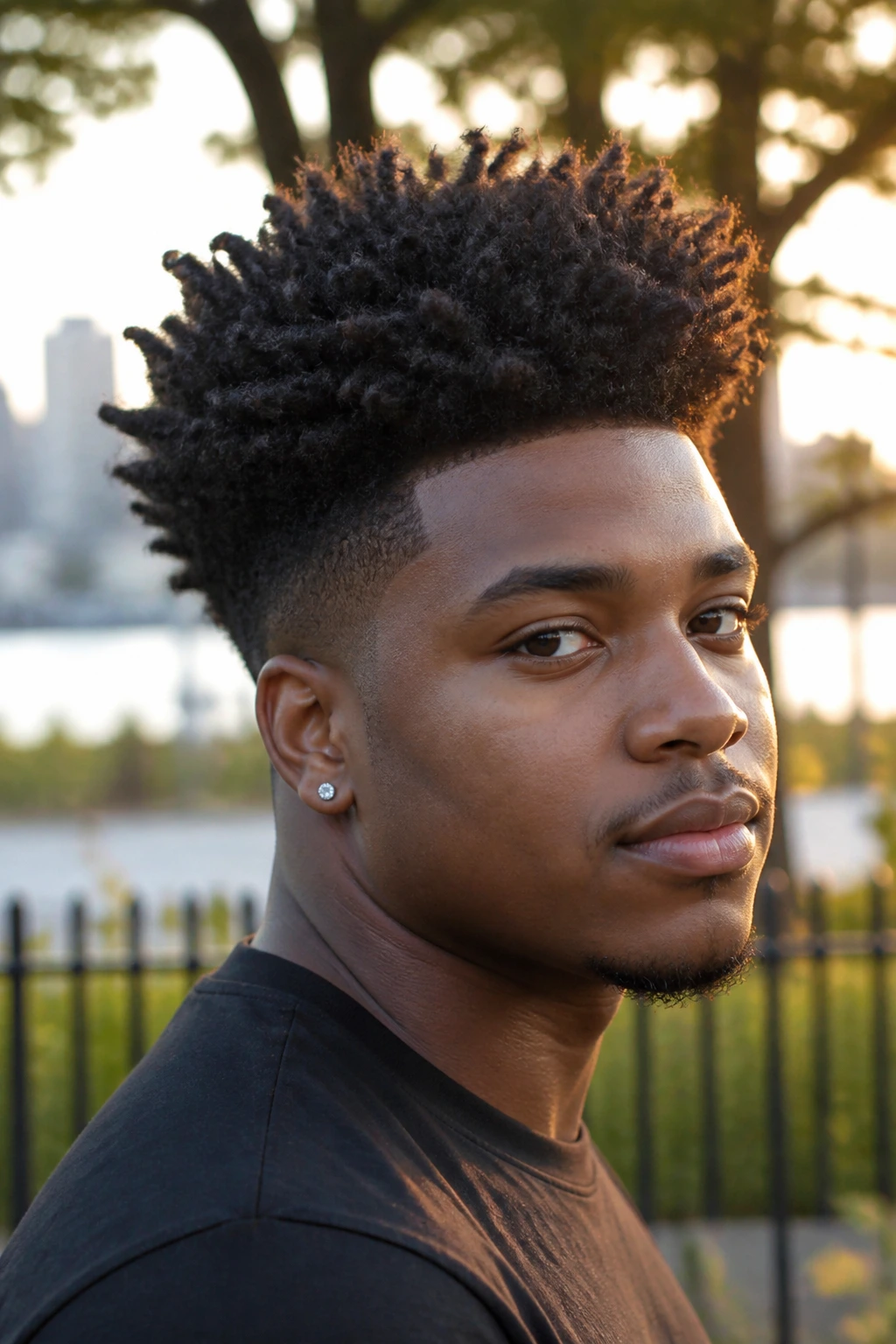
A tapered afro can look incredible on a round face when the shape stays taller than it is wide. The sides and back should narrow in gently, while the top keeps enough length for the tips to separate and stand up a little.
A sponge twist or twist-out can help define the ends, but even a small amount of pick work at the crown changes the shape. The goal is not a perfect sphere. That would fight the face shape. The goal is a soft column with texture on top and clean edges below.
This cut is honest about texture, which I like. It does not pretend to be something else. If your hair is dense, ask your barber to keep the outline tight around the temples and nape so the top remains the focus. That contrast is what slims the face.
15. Angular Fringe Crop for Round Faces
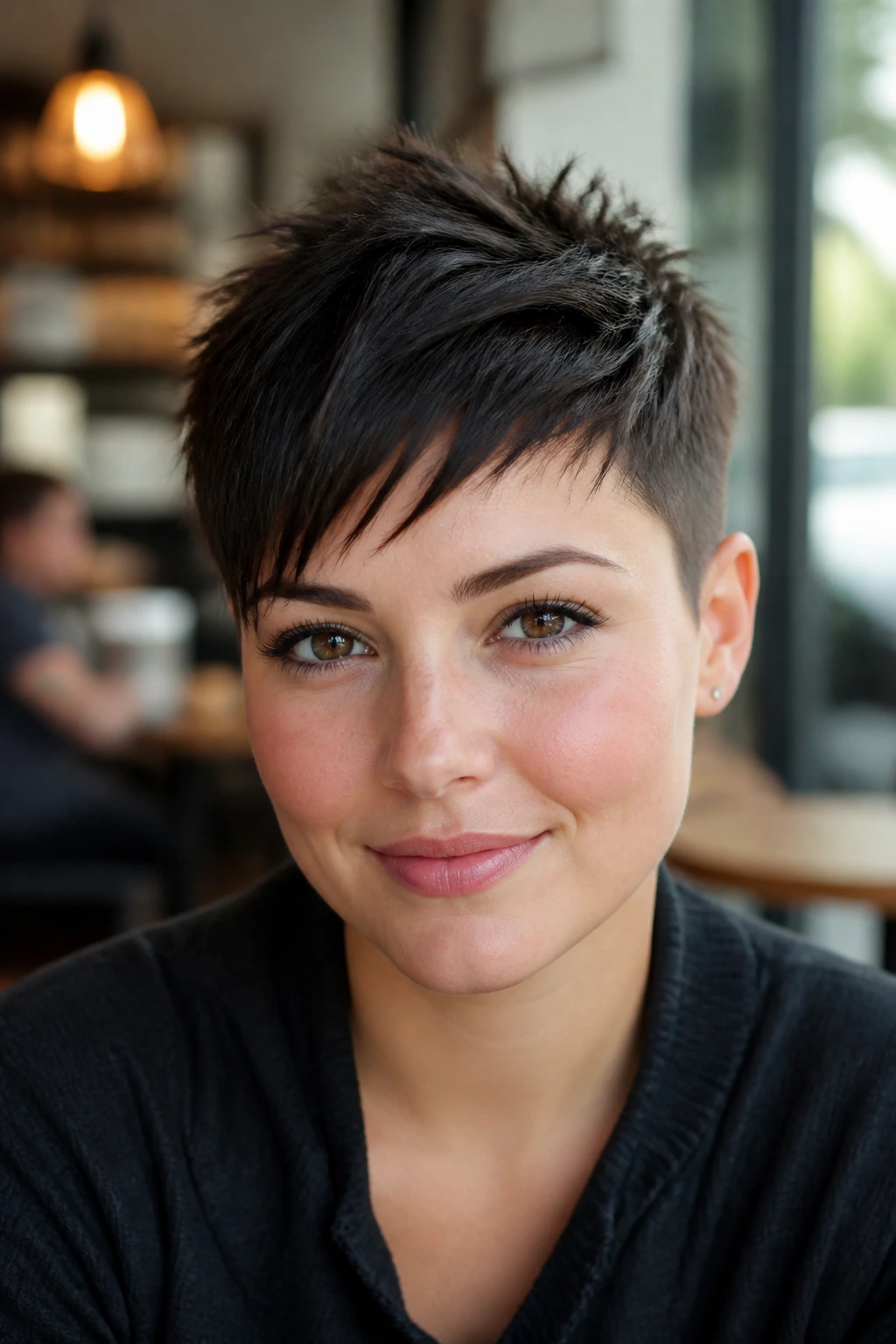
A blunt fringe can make a round face look shorter. An angular fringe does the opposite. It cuts across the forehead with a slant, which brings motion and breaks the circular outline.
This is a good choice if you want something that sits between a crop and a pixie. The top is still short, but the front has enough length to lean to one side or lift into small spikes. The cut also plays nicely with straight hair because the angle stays visible.
If the fringe is too dense, ask your stylist to thin the ends slightly with point-cutting. That keeps the front from turning into a solid curtain. A little texture spray after drying is enough to keep the tips separated and light.
16. Two-Block Spiky Cut
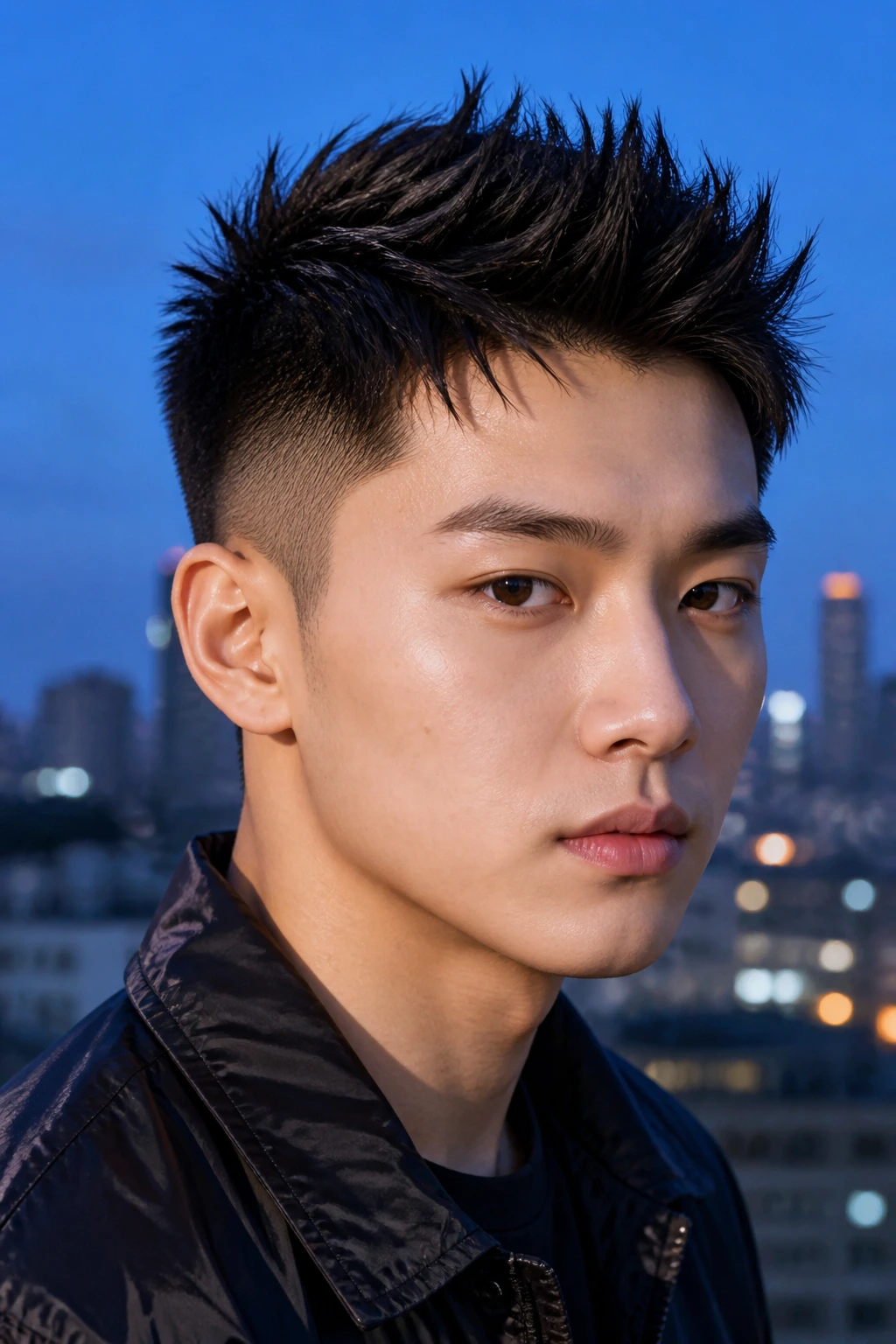
The two-block cut creates a clean lower section and a longer top, which gives a round face a taller shape without a lot of fuss. It is a strong haircut if you want something that feels modern but not overworked.
The lower section is clipped short around the sides and back, while the top is left long enough to spike, brush, or part. That split makes styling easier because the shape already does half the work. You do not need a mountain of product. A small amount of clay or wax is enough to rough up the top and keep it from sitting flat.
It helps if the top has a few layers cut into it. Otherwise the hair can fall like a sheet. With layers, the spikes break apart naturally and the face looks longer.
17. Wet-Look Spikes
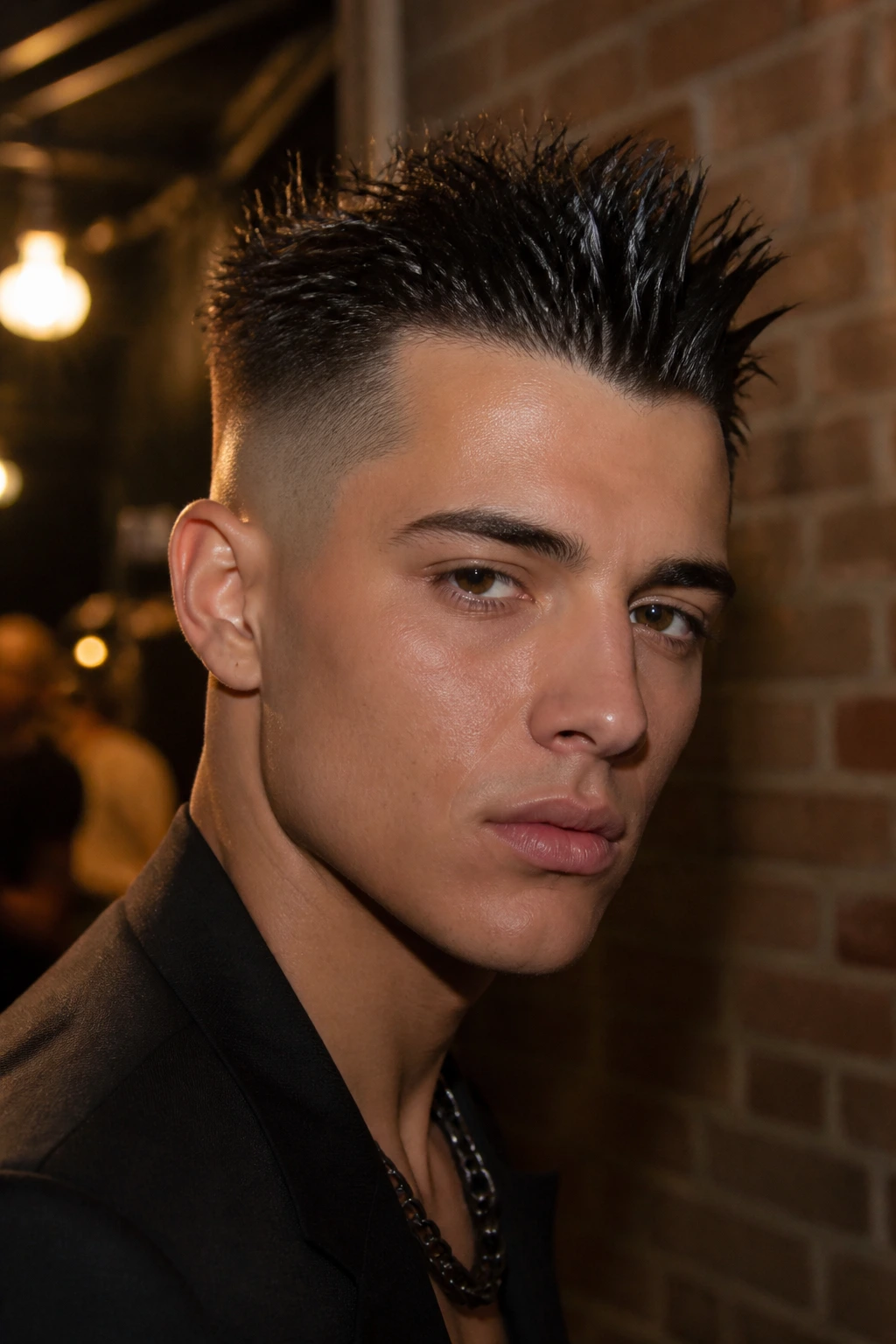
Wet-look spikes are not for everybody, and that is fine. When they are done well, though, they look sharp and deliberate, especially on a round face that needs a bit of visual length.
The shine helps define each spike, but the shape still has to be narrow. If the wet look becomes puffy at the sides, it works against you. Keep the sides clipped close and the top directional. A small amount of gel on damp hair is enough; too much turns the style stiff and sticky.
I like this look for nights out or short, sharp haircuts that need a cleaner finish. It is bold. It also grows out fast, so be ready to restyle after a long day.
18. Razor-Cut Short Crop
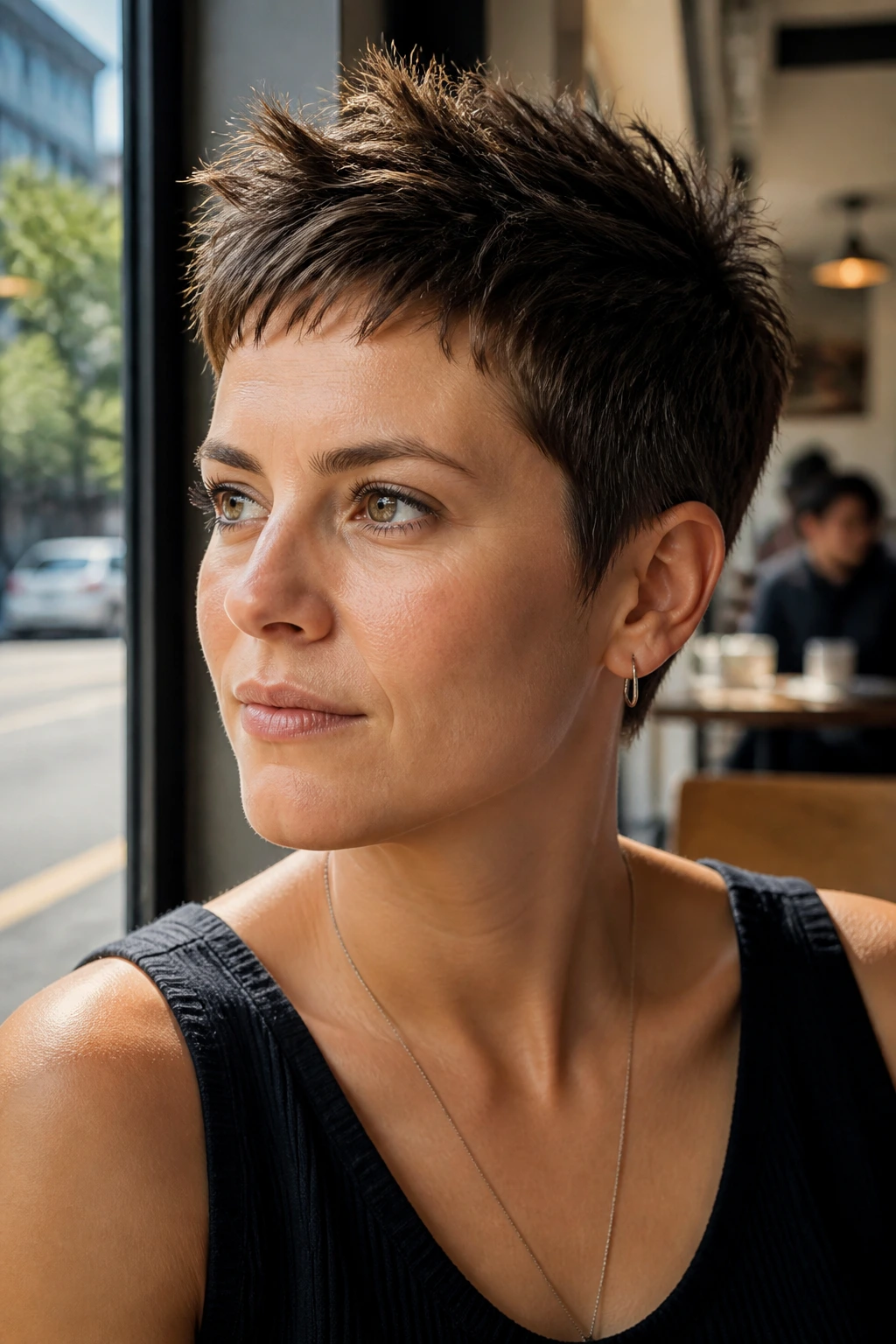
Razor cutting gives the hair a rougher edge, and that roughness is useful on a round face. The tips fall in different directions, which keeps the silhouette from becoming too smooth and wide.
This style is especially good for fine hair because the razor removes some weight without shortening everything to the same blunt line. The result is lighter and more airy. A round face benefits from that break in the outline.
You will probably need trims a little more often with this cut, since razor edges lose their crispness as they grow. That is the tradeoff. If you want easy texture and do not mind a salon visit once the shape starts to blur, it is a strong pick.
19. Modern Mullet with Sharp Ends
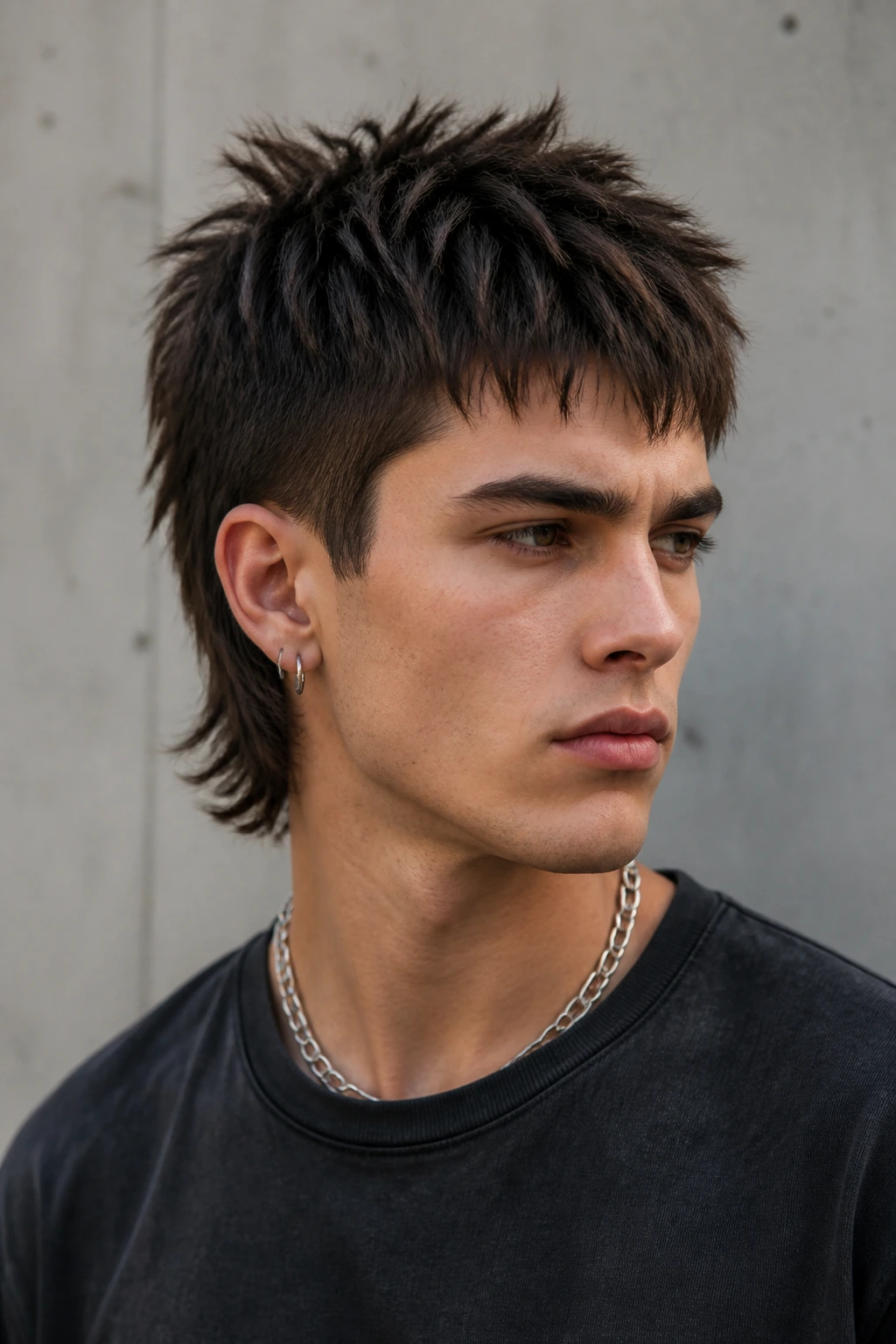
A modern mullet sounds like a gamble, but the right version can be one of the best spiky hairstyles for round faces. Why? Because it pulls the eye downward at the back while keeping the top light and lifted.
The cut should be subtle. Short, textured layers in front, tapered sides, and a back that is longer by a modest amount — maybe 1 to 2 inches past the neck, not a dramatic tail. That keeps it wearable. If the back gets too heavy, the whole thing loses its shape.
This is a good option for people who like edge without looking costume-y. A matte paste on the front and a bit of finger-styling at the crown keep it modern. And yes, the cut needs confidence. Mild versions often look better than the extreme ones.
20. Side-Parted Spiky Cut
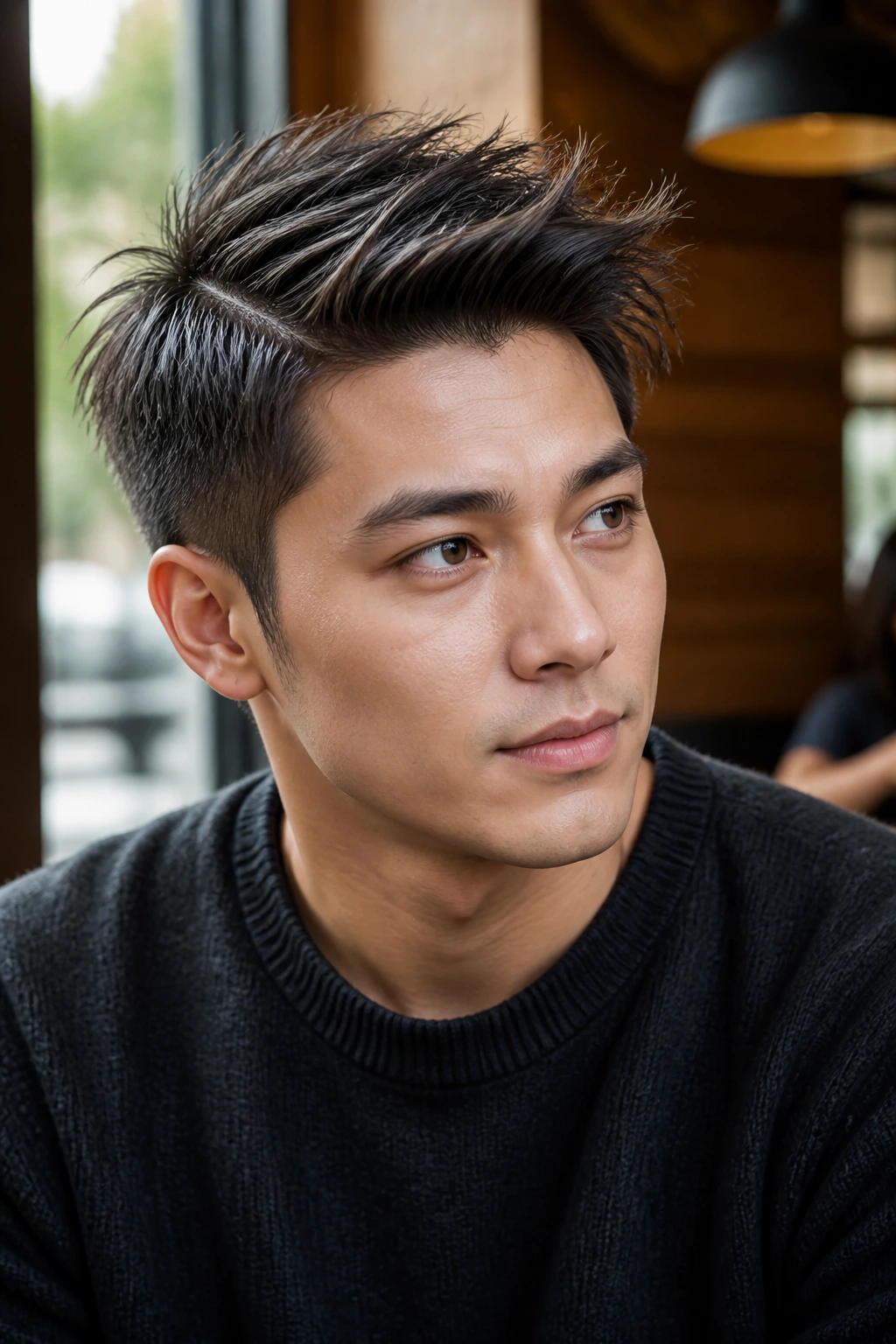
A side part can do a surprising amount of work on a round face. It creates a diagonal line, and diagonal lines are your friend when the goal is to break up softness.
The spikes should sit mostly on the heavier side of the part, with the top lifted just enough to show texture. Don’t drag a comb through the whole head. Use it only to place the part, then go back in with your fingers so the finish stays loose. A comb alone makes the cut too neat.
How to Keep the Part from Looking Stiff
- Part the hair while it is still damp.
- Blow-dry the top in the direction you want it to sit.
- Finish with a small amount of fiber paste.
- Let one or two pieces break away from the line so the shape does not look drawn on.
This cut works in a workplace, on a date, or with a beanie tossed on later. Handy, that.
21. Temple Fade with Brush-Forward Texture
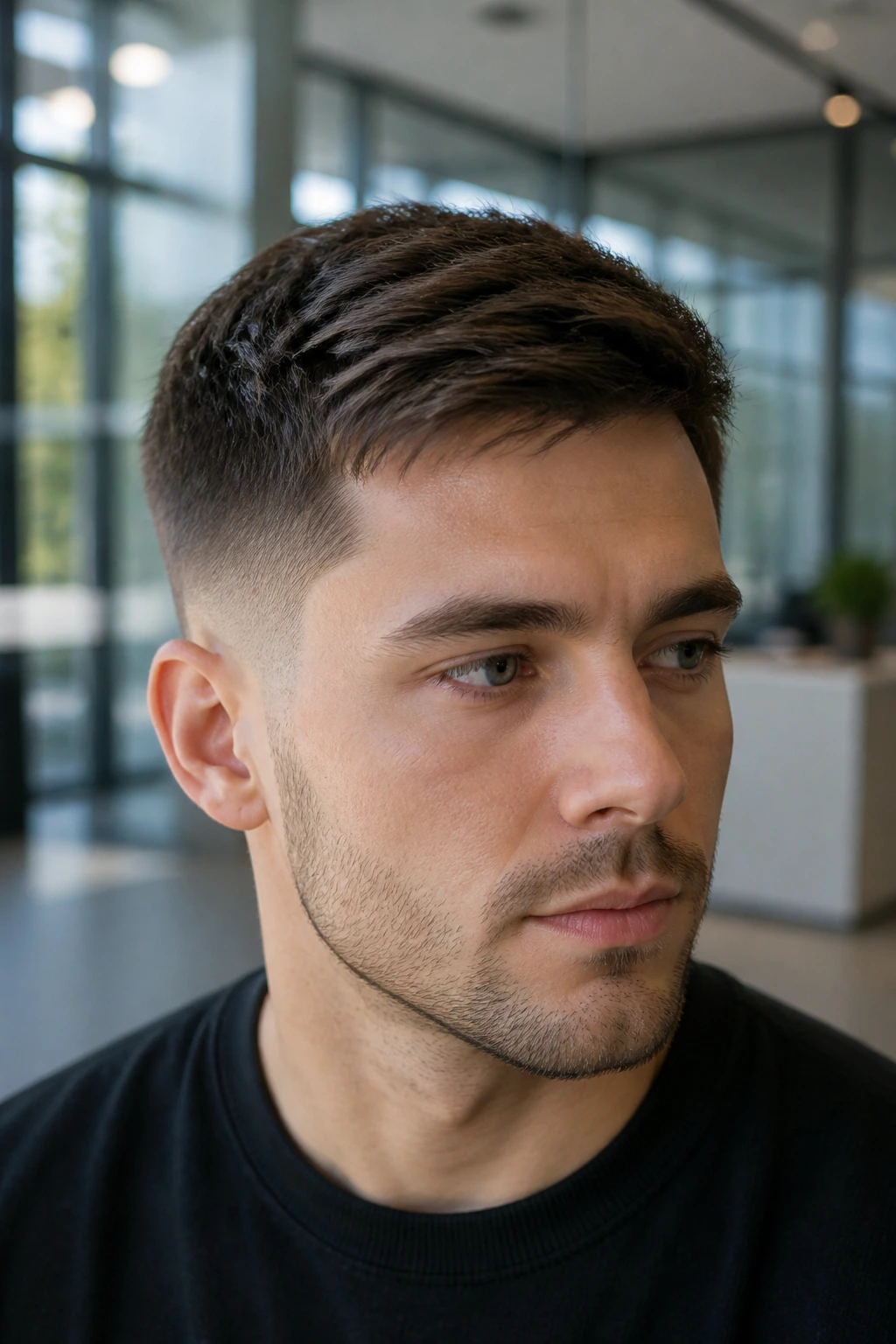
A temple fade is one of those cuts that looks sharper than the effort it takes. The fade clears out bulk where round faces tend to feel widest, and the brush-forward top gives the style a little motion.
The front should have enough length to push forward into short spikes, but not so much that it collapses over the forehead. Around 2 to 3 inches on top is usually enough. If your hair is thick, the fade makes the whole shape cleaner. If your hair is fine, the tight sides help the top appear fuller by contrast.
It is a good cut for anyone who wants something neat without looking severe. The forward movement also makes the face seem slightly longer, which is exactly the effect you want here.
22. Piecey Lob with Hidden Height

A lob can be spiky, and that surprises people. When the ends are choppy and the crown has some lift, the style stops reading as a smooth block and starts looking sharper.
For round faces, length matters here. A lob that ends around the collarbone or just below the chin gives the face more room to breathe. Add a deep side part and flip the shorter side back, and you get hidden height without obvious teasing. That is the nice part: it looks casual, but it still shapes the face.
A round brush or a 1-inch curling iron can help flick the ends outward in small points. Finish with texturizing spray and avoid heavy oils near the roots. Heavy product drags a lob down fast.
23. Mini Pompadour with Spiky Front for Round Faces
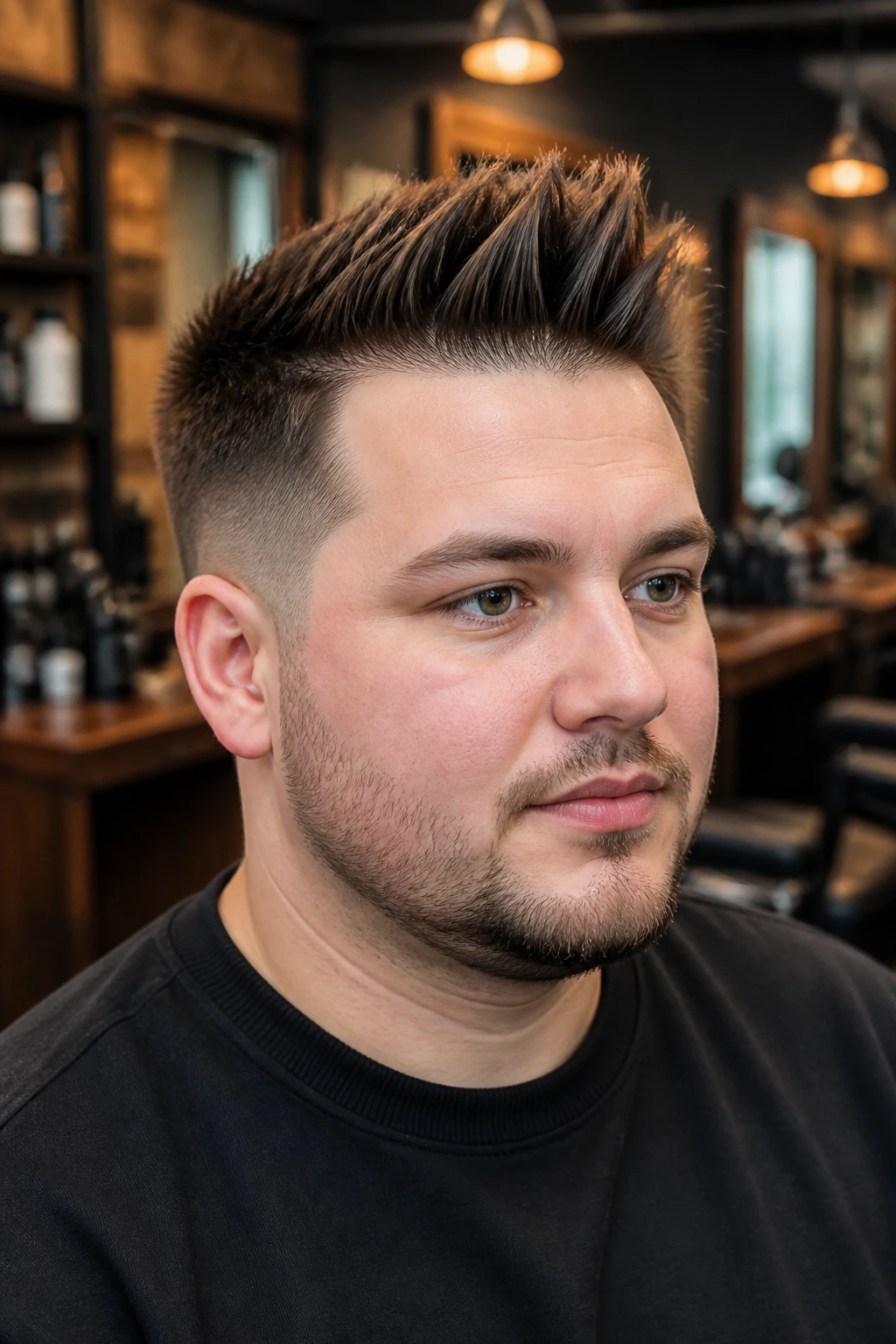
A mini pompadour has more polish than a faux hawk, but it still keeps the front high enough to flatter a round face. Think classic lift, trimmed down to something modern and manageable.
The sides should stay close, and the top should have a short crest that rises at the front before tapering back. That little wave of height gives the face more length without making the haircut look overstyled. A full old-school pompadour can be too much. This smaller version is smarter.
Best Styling Move
- Blow-dry the front up and back with a round brush.
- Use a small dab of medium-hold pomade or clay.
- Pinch the front into a few pointed sections rather than one smooth curve.
- Keep the sides slicked in only as much as needed; too much shine can make the style feel stiff.
This cut looks sharp with facial hair, glasses, or clean-shaven. It has range.
24. Short Sides, Long Top Spiky Cut
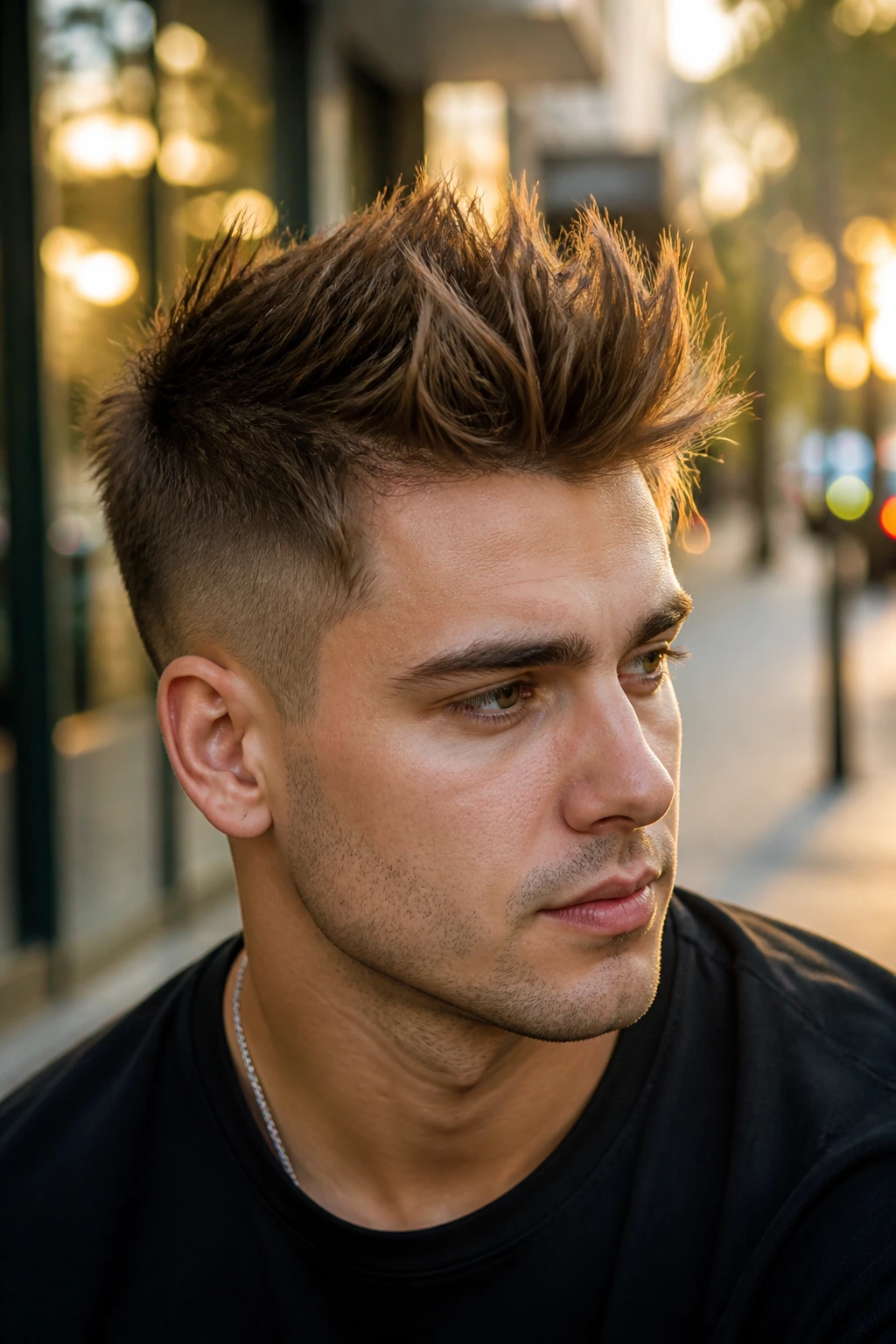
Sometimes the simplest shape is the one that works best. Short sides, long top, and a textured finish on top can flatter a round face because the eye goes straight to the height instead of the width.
The nice thing about this cut is flexibility. Wear it messy, sweep it forward, spike it up, or split it a little off-center. As long as the sides stay compact and the top keeps some point-cut layers, the face gets the vertical line it needs.
This is also one of the easiest haircuts to personalize. If your hair is thick, the top can be thinned a little for control. If it is fine, leave a touch more length so the spikes have something to grab. Not every haircut needs a fancy name to work hard.
25. Soft Spikes with Tapered Nape
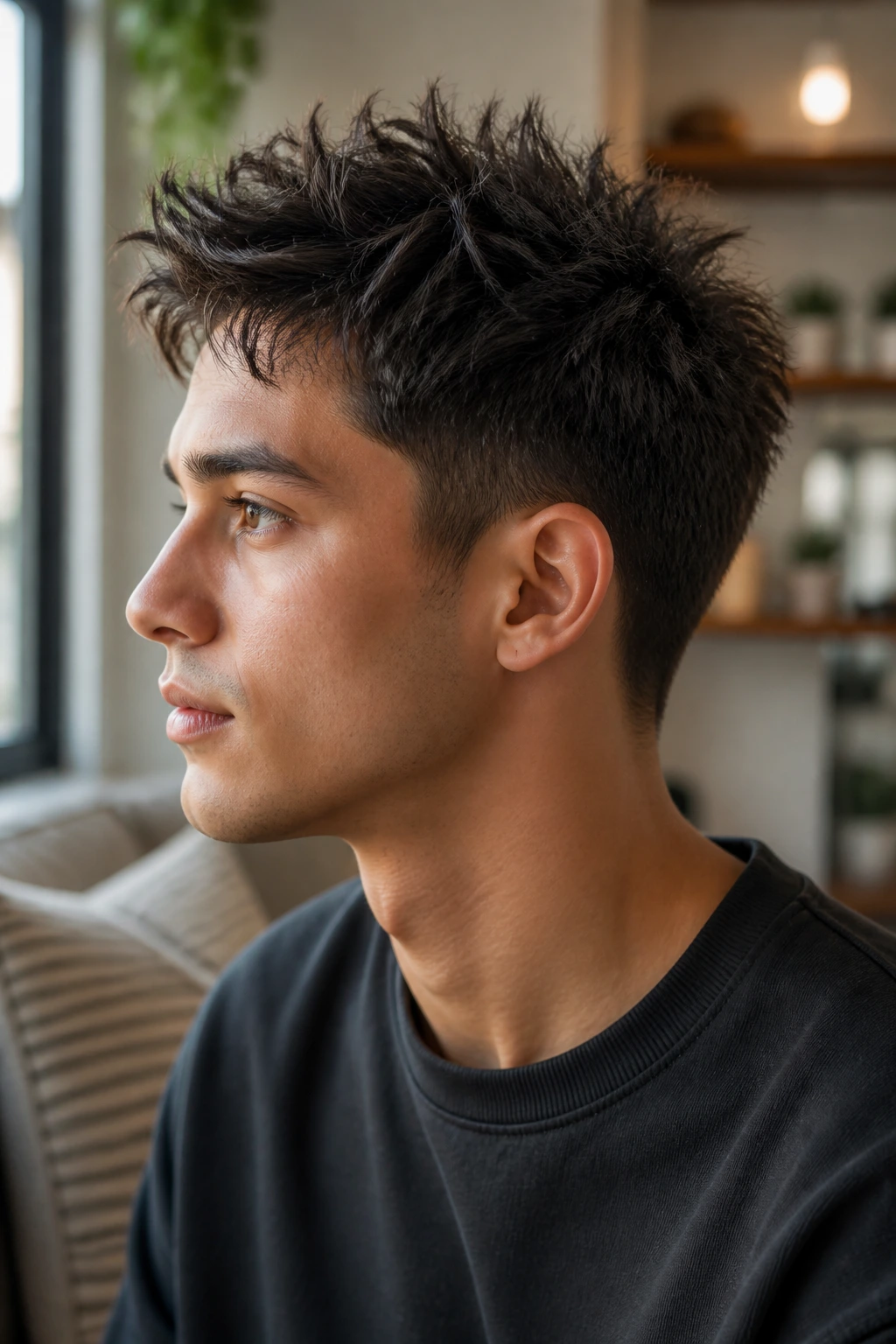
Soft spikes are the low-drama version, and I mean that as a compliment. They give a round face a bit of lift without making the hair look sharp or severe.
The tapered nape keeps the back clean, which stops the silhouette from spreading out. Up top, the spikes should be loose and lightly separated, more touchable than rigid. A little mousse or lightweight cream works better than hard gel here because the goal is movement, not armor.
This is the kind of cut that wears well in real life. It does not fall apart if you skip a full styling routine, and it does not look fussy when it grows out. If you want a spiky hairstyle that still feels calm, this is probably the easiest place to land.
Final Thoughts
Spiky hair flatters a round face when the shape is thoughtful. Height at the crown, tighter sides, and a little diagonal movement through the fringe do more than any amount of product ever will.
The safest mistake is choosing texture that is too even. That soft, all-around puff can make a face look wider than it is. Better to keep the top broken and the sides lean.
Bring photos to your barber or stylist, not vague words like “a little spiky.” Better still, point to the exact part of the cut you want to keep tall, narrow, or asymmetrical. That tiny bit of specificity saves a lot of bad hair days.
