



Black blue hair color can look almost pitch-dark in one room and like wet ink in another. On cool skin tones, that shift is the whole point. It keeps the face from looking flat, which is what happens when a black shade leans too brown, too red, or too dusty.
Cool undertones are not only pale skin with pink cheeks. They can show up on deep skin too, often as a blue, rosy, or neutral cast that sits best beside blue-based color. That is why a true blue-black, a navy gloss, or a graphite finish usually feels cleaner than a warm black that secretly carries chestnut in the background.
The trick is to think about reflect, not just darkness. Some versions are subtle enough to pass for plain black indoors; others flash sapphire at the hairline, cobalt at the ends, or violet-blue around the crown when sunlight hits. And yes, that difference matters more than people expect.
These 18 ideas stay in the cool lane, but they do not all play the same game. Some are soft and low maintenance. Some are bold enough to make your earrings look like they were chosen on purpose.
1. Classic Black Blue Hair Color
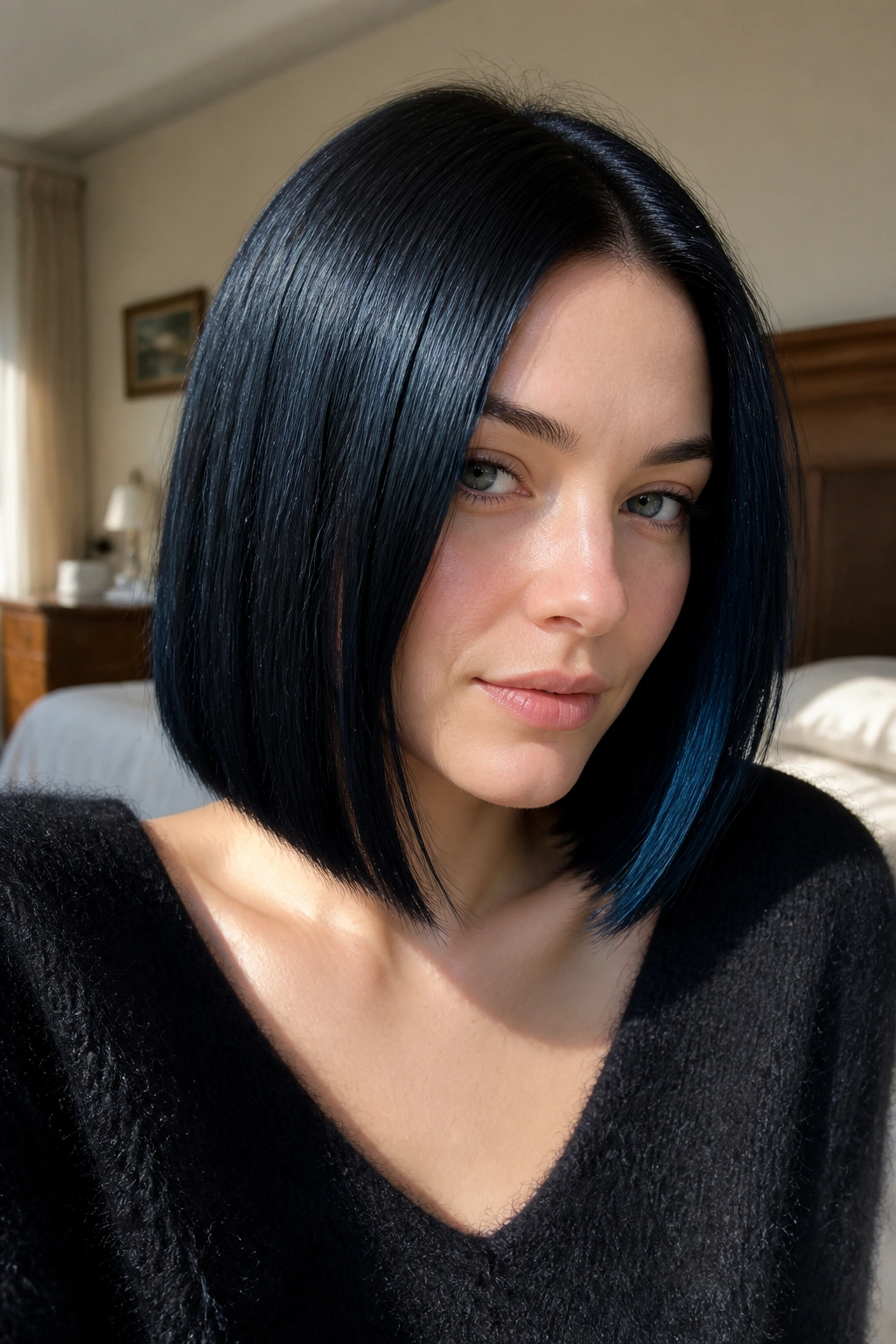
The simplest version is still the one I trust most. A true blue-black base looks nearly black at first glance, then gives off a blue sheen when light lands on it at an angle. It is crisp, not muddy, and that matters a lot for cool skin tones.
Why It Flatters Cool Skin
Blue-black works because it echoes the cool undertone in the skin instead of fighting it. If your complexion has pink, rosy, or slightly blue depth, the shade tends to make your face look more even and your features a touch sharper. A warm black can pull the other way and make the skin look tired.
Ask for a level 1 or level 2 black base with blue reflect, not a soft black that leans brown. That one phrase changes the result more than people think. The finish matters too; a glossy topcoat helps the blue show instead of swallowing it.
- Best on straight hair, blunt bobs, and soft waves
- Easy to wear if you want dark hair without bright color
- Usually needs a gloss refresh every 4 to 6 weeks
- Looks strongest under sunlight, flash, or overhead light
Pro tip: tell your colorist you want blue, not warm black with a hint of shine. Those are not the same thing.
2. Midnight Navy Gloss
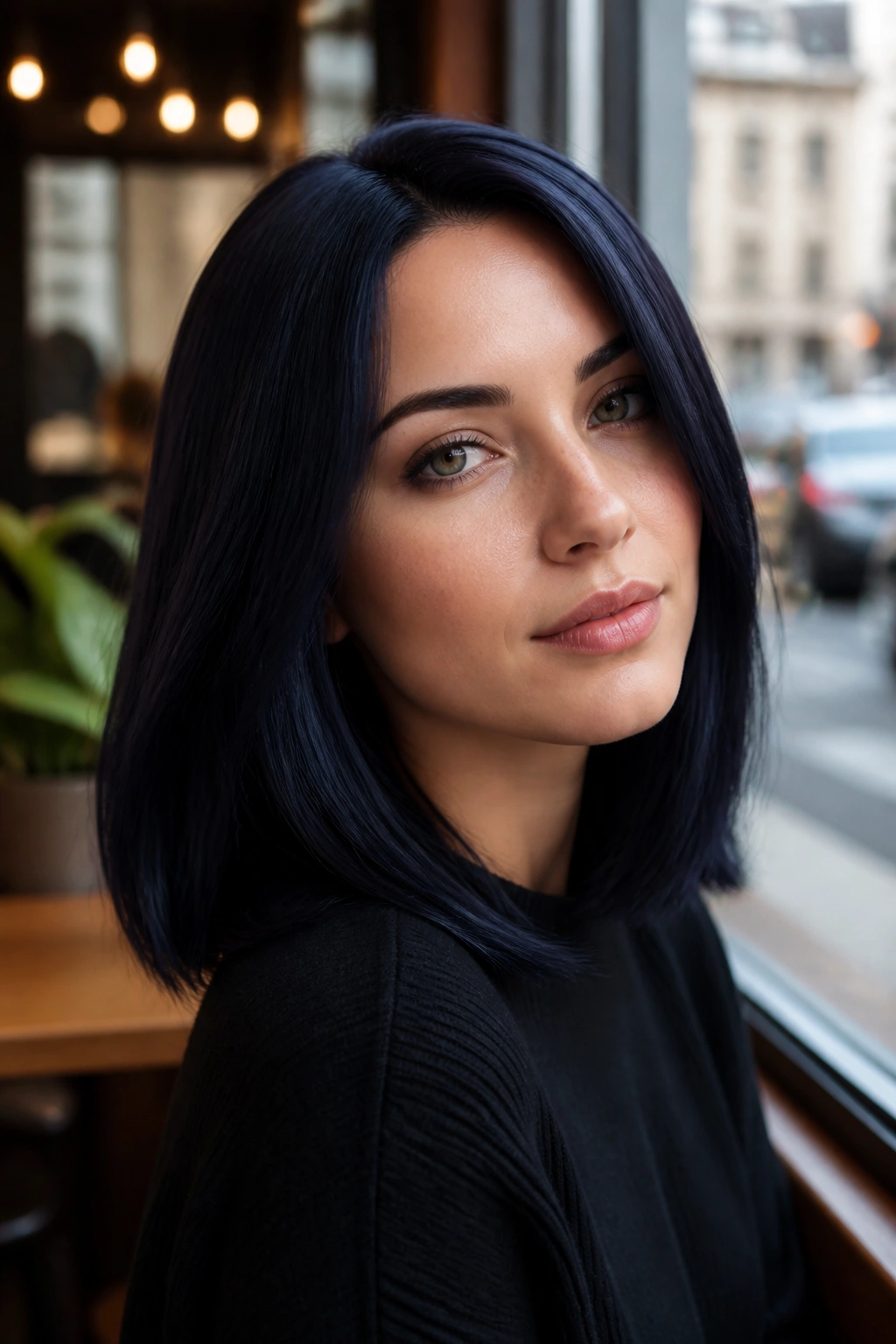
Midnight navy is the version I reach for when black hair needs a little more depth and a little less edge. It stays dark enough to feel dramatic, but the navy note softens the look so it does not turn severe.
This shade is especially good on cool skin because navy sits close to charcoal, slate, and deep denim in the color family. That means the hair reads rich instead of harsh. On shoulder-length cuts and blunt ends, the effect is clean and expensive-looking without trying too hard.
A navy gloss also behaves well as it fades. It usually drifts toward a deeper black rather than a brassy mess, which is one of the reasons stylists like it on clients who hate frequent touch-ups. You can wear it with silver jewelry, plum lipstick, or a soft smoky eye and it all makes sense together.
One small thing: if your hair is very porous, the navy can grab unevenly. That is not a disaster, but it is a reason to strand test first.
3. Sapphire Money Piece for Cool Skin Tones
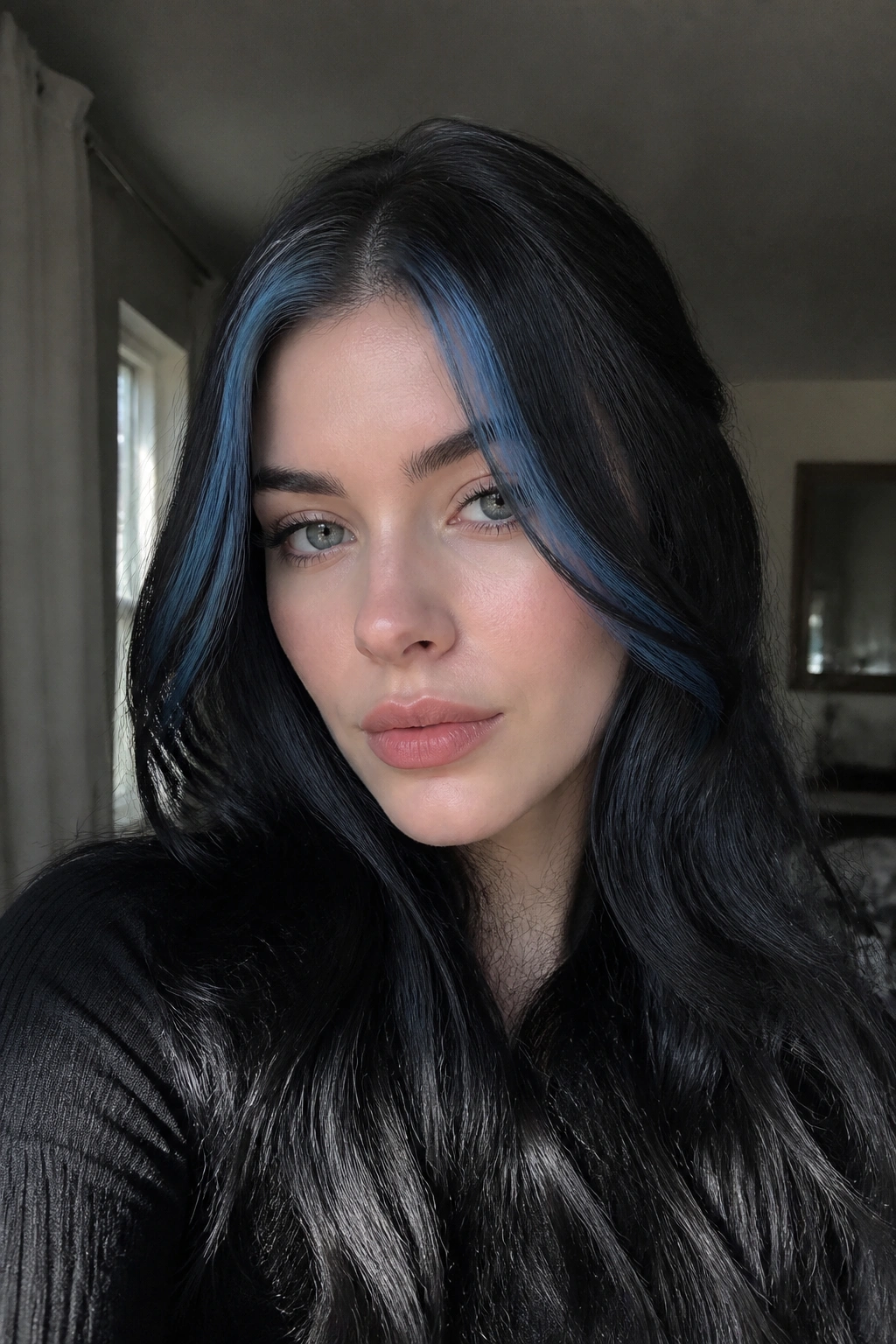
Want the blue near your face without committing to a full-head change? Put the color in the front and keep the rest black. A sapphire money piece does that job neatly.
How to Ask for It
The placement should be deliberate, not chunky. Ask for 1 to 2-inch face-framing sections that start near the part and fall through the cheekbone area. If your hair is dark enough to hold blue without lightening, the color can go straight over a black base. If not, those pieces need to be lifted first so the sapphire has room to show.
This idea works because the eye lands on the front first. The blue sits closest to the skin, which is useful on cool undertones because it brightens the whole frame around the face. It also means you can wear the rest of your hair up, down, or half-tucked and still get a strong color payoff.
- Good for ponytails, middle parts, and curtain bangs
- Needs more upkeep than an all-over gloss
- Looks best when the blue pieces are thick enough to be seen from the front
- Easy to soften later if you decide you want less contrast
I like this one for people who want the color to show without turning the whole head into a project.
4. Blue-Black Balayage on Dark Brown Hair
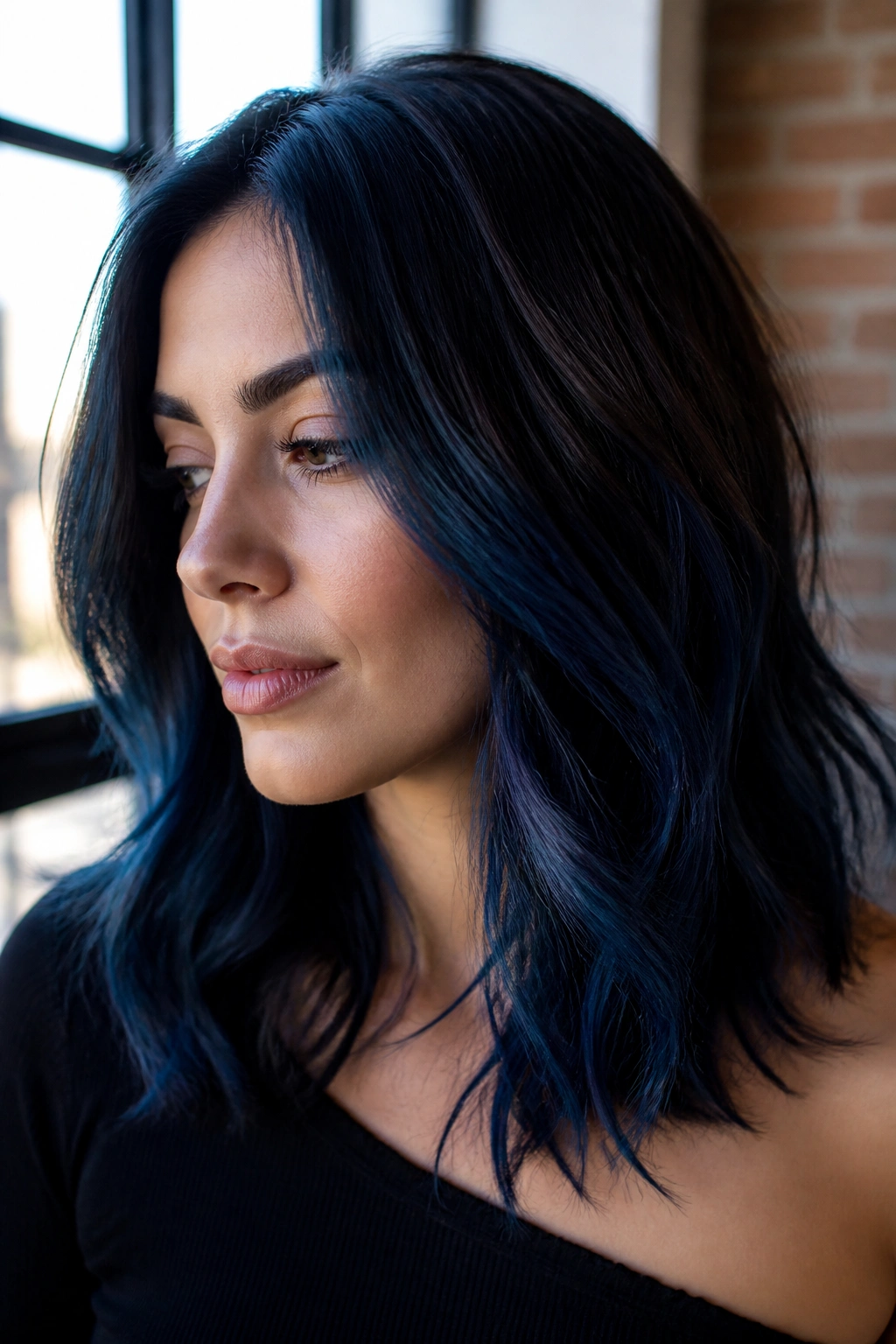
If an all-over black feels too severe, balayage gives you room to breathe. The black-blue color stays at the base, while hand-painted ribbons of blue-black move through the mid-lengths and ends. The result is darker and richer than traditional highlights, with more shape than a flat all-over dye.
A good balayage placement keeps the root area darker and the brightest blue pieces away from the scalp. That matters on cool skin tones because the hair still reads deep and polished, but the movement keeps it from looking like a solid helmet of color. On layered cuts, the painted pieces catch the bend of the hair and break up the silhouette.
This is also a smart option if you are starting from dark brown rather than true black. You do not need to force the hair into one tone from root to tip. Let the black-blue live where light naturally lands — around the crown, the face, the outer layer, and the ends.
What to ask for: feathered placement, no obvious stripes, and a blue-black gloss over the painted sections. That last part keeps the contrast from looking patchy.
5. Indigo Ends on Layered Hair
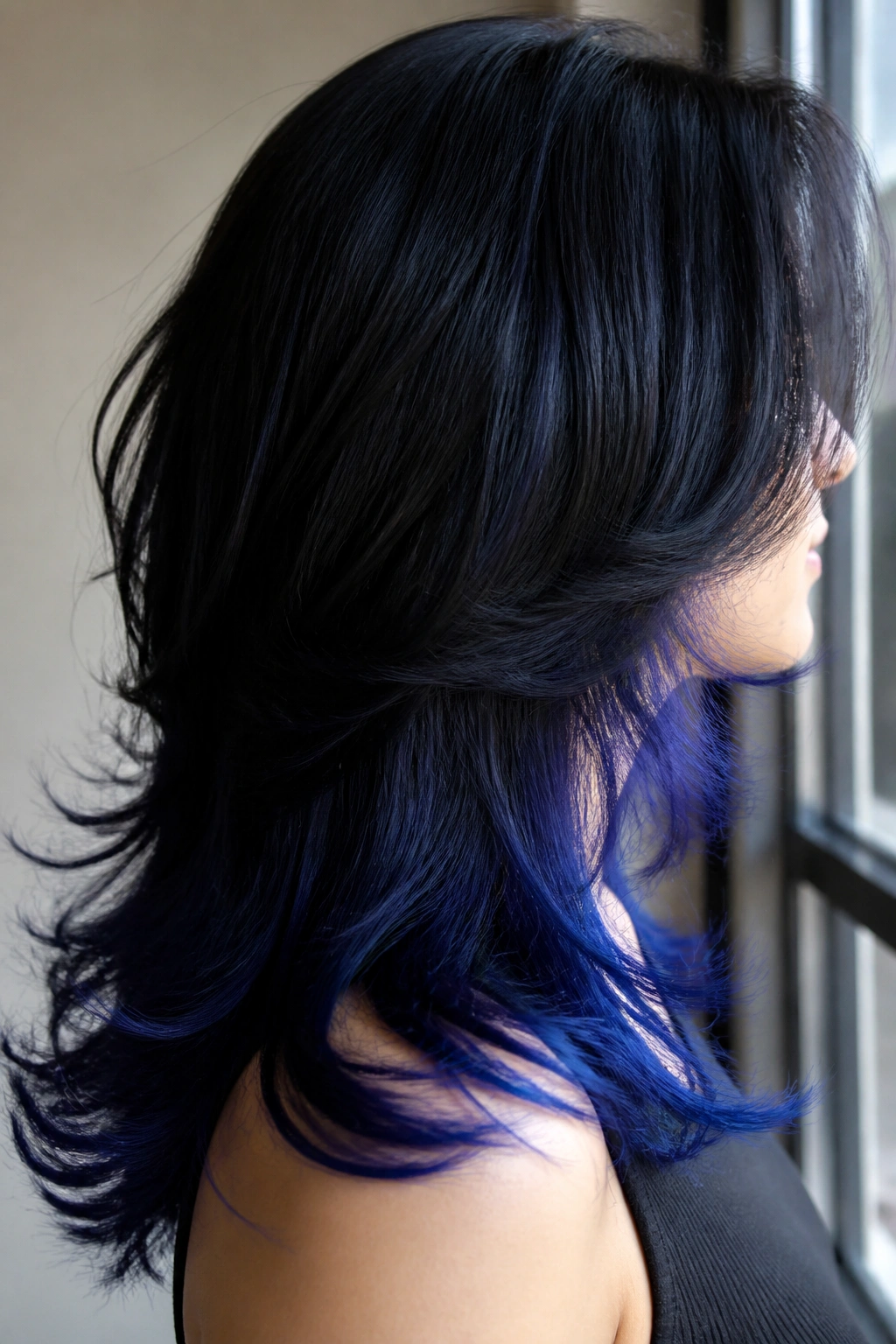
Indigo at the ends has a moody, almost liquid look. The root stays black, the middle stays dark, and the last few inches slide into blue that feels more ink than neon. It is a nice move if you want something visible but not loud.
Layering helps a lot here. When the ends are cut into soft tiers, the blue sits on different lengths and the color looks like it moves. On a one-length cut, indigo can feel heavier and a little blunt. On curls or loose waves, the ends flick the color around in a way that flat hair cannot.
One reason this idea works well on cool skin tones is that the blue is concentrated where the eye naturally follows the shape of the hair. You do not need the color sitting right next to the face to get the point across. A lot of people like that. The grow-out is easier too, because the natural root stays simple.
If your ends are already dry, treat them gently before coloring. Indigo grabs rough hair fast, and that can make the tips look darker than planned.
6. Smoky Steel Blue-Black
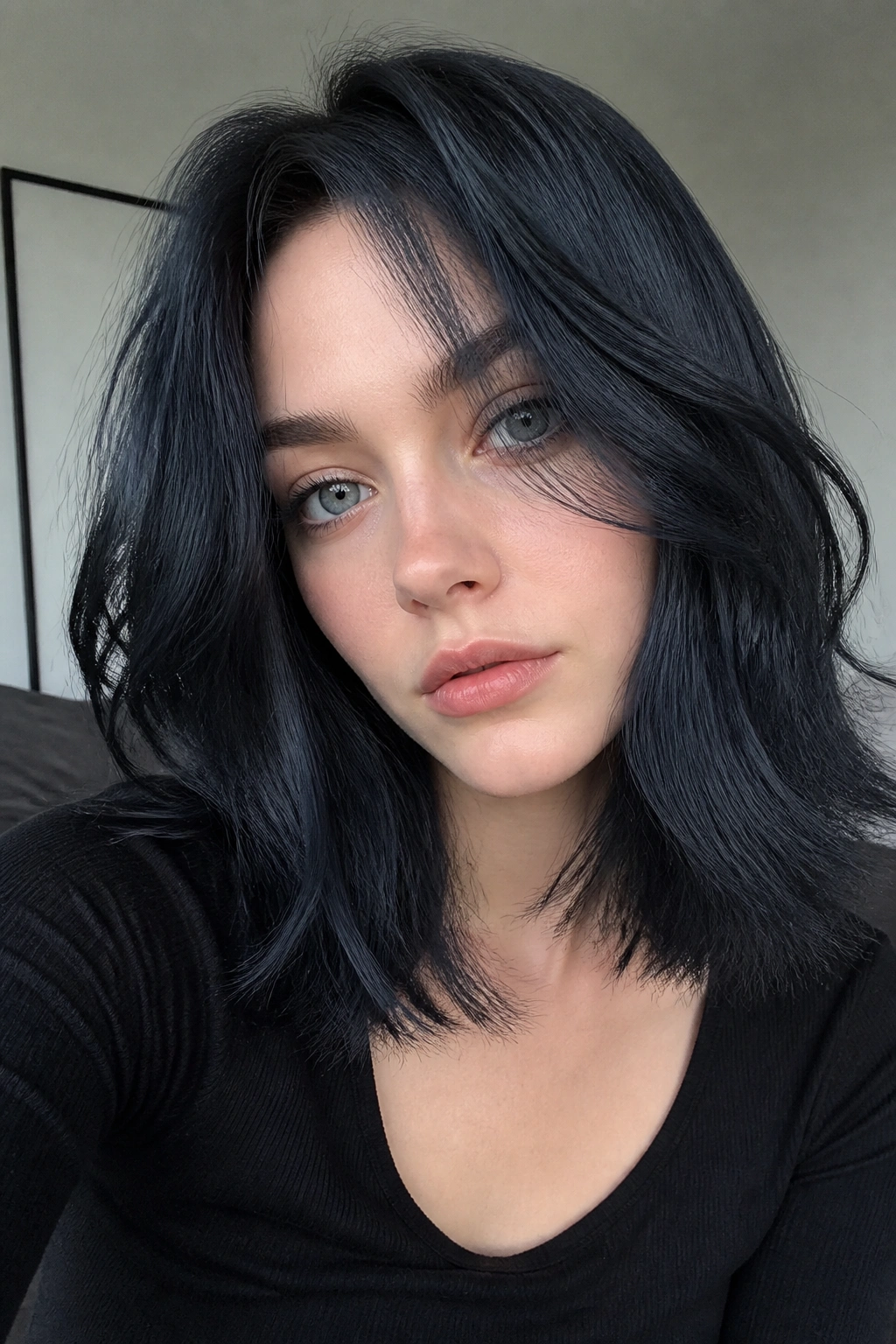
Smoky steel blue-black is the quiet version of the whole family. If sapphire feels too bright and navy feels too deep, this one sits in the middle with a gray-blue cast that looks cool, smooth, and a little restrained.
Compared with a shiny blue-black, smoky steel has less obvious reflect. That is the charm. It reads almost charcoal indoors and turns into a cold blue-gray under daylight, which is exactly why it looks so good on cool skin tones. The shade does not fight pink undertones or make the skin look flat.
Who It Suits
- Fine hair that needs a softer-looking color
- Short cuts and blunt bobs
- People who want dark hair without a glossy, in-your-face finish
- Cooler complexions that already lean toward slate, rose, or porcelain
Ask for a charcoal-black base with a steel-blue glaze if you want this effect. The glaze should be translucent, not heavy. Too much blue turns it into a different shade entirely, and too much gray can look dusty. The balance is the whole thing.
7. Cobalt Peekaboo Panels
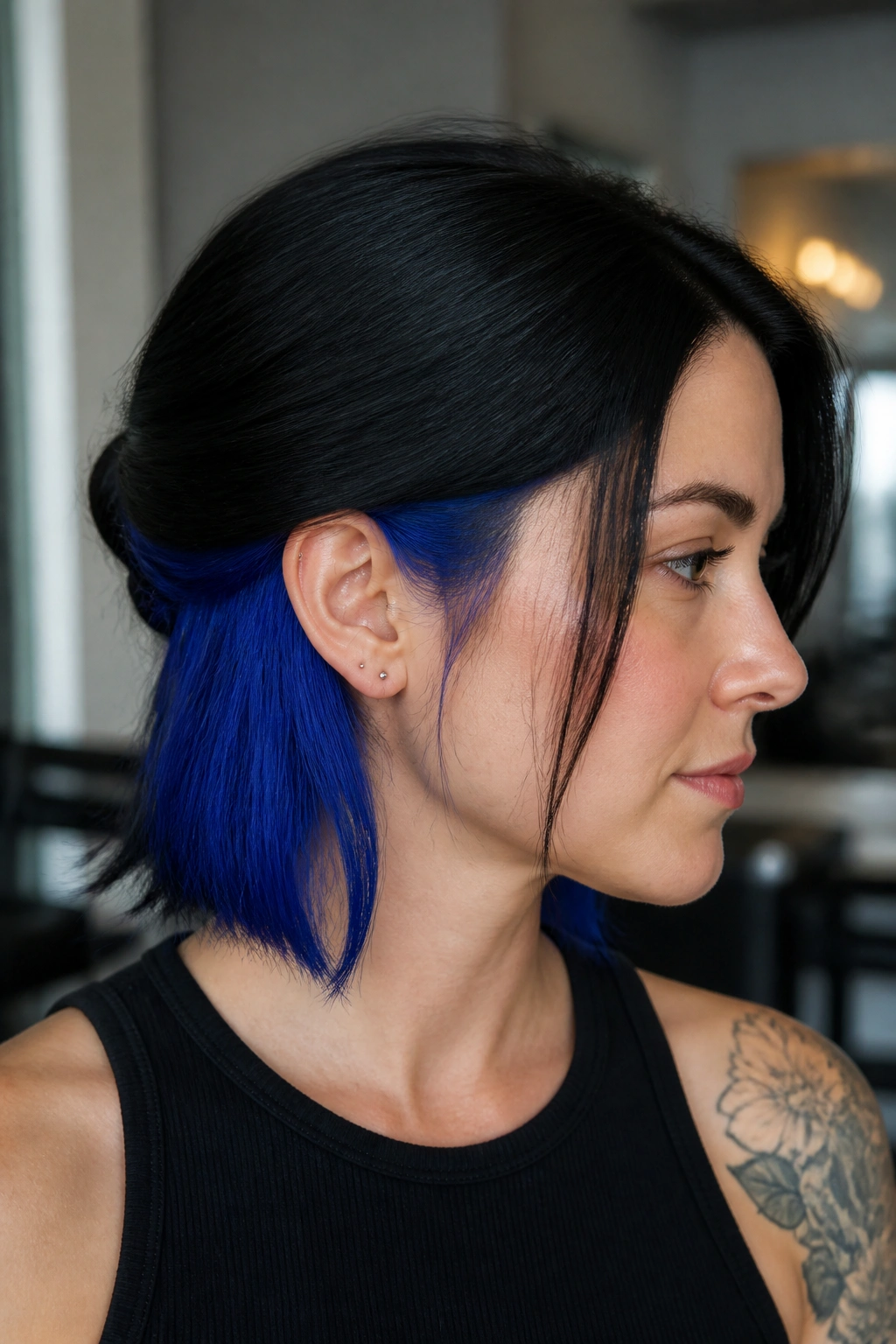
Cobalt peekaboo panels are the fun choice that still hides politely when you want them to. The black sits on top, the cobalt lives underneath, and the color shows when you move, tuck your hair back, or throw it into a half-up style.
A client who wears this well usually likes a little surprise in the finish. Hair down looks mostly dark. Hair up shows the blue at the nape, around the ears, or under the crown. That shift makes the style feel alive without asking for constant attention.
What Makes It Different
Peekaboo color gives you control over how much blue you want to show. You can keep the sections thin for a softer flash or go wider if you want the contrast to show through braids and buns. I prefer cobalt here over brighter electric blue because it stays rich against a black base.
- Panels work best at the nape, behind the ears, or beneath the crown
- A 1-inch section is enough for a clean peek
- Straight hair shows the color most clearly when you tuck one side back
- Wavy hair gives the blue a softer, more hidden look
It is one of the few bold ideas that still feels practical.
8. Denim Blue Wash Over Black
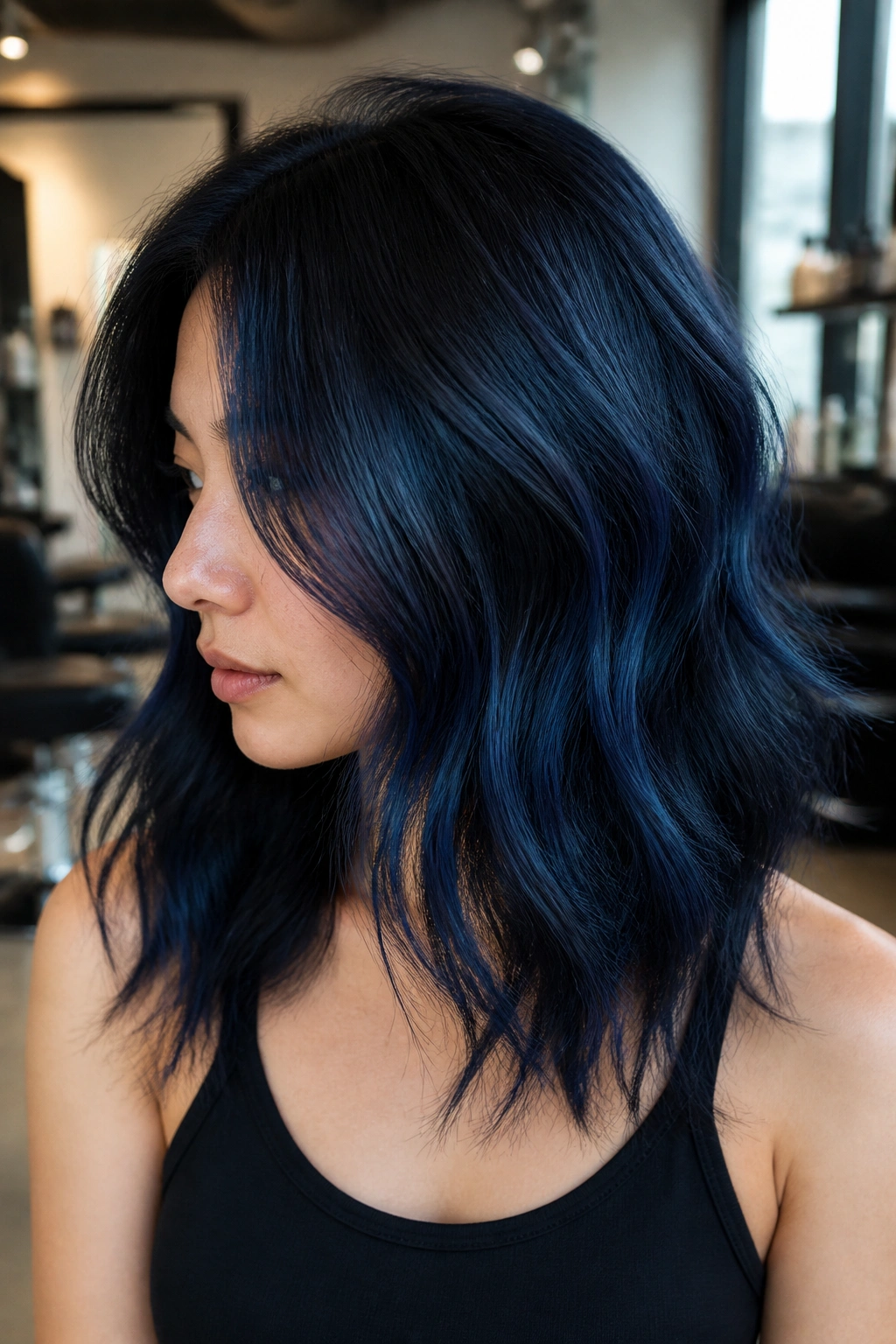
Denim blue is the easiest way to make black hair feel lived-in rather than severe. The shade has that muted, worn-in denim look — not bright, not purple, not teal-heavy. It sits on top of a black base like a cool filter.
What I like about denim blue is the way it fades. Instead of dropping straight into dull black, it softens toward smoky charcoal and dusty navy. That is a good fade pattern if you do not want to baby your color every ten days. It also works well on cool skin tones because the blue is present without looking icy or artificial.
This shade is nice on layered cuts, shoulder-length hair, and textured waves. The bends in the hair show off the muted blue in a way that straight strands sometimes hide. If your hair is coarse, a gloss can help the color catch more evenly. If it is fine, keep the tone sheer so it does not flatten the cut.
A denim wash is not the loudest choice here. It is one of the smartest.
9. Violet-Blue Black Gloss for Cool Skin Tones
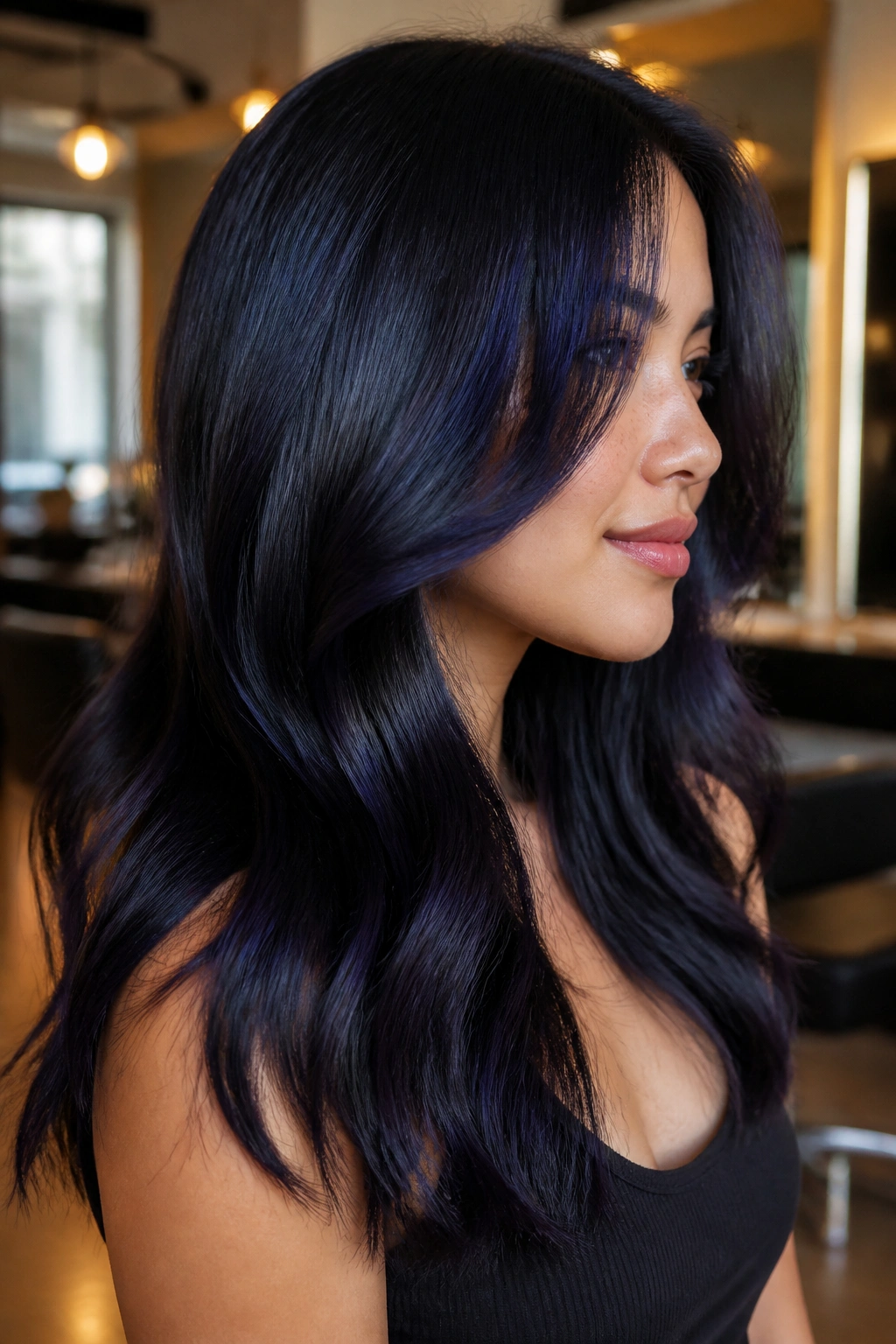
What if your black hair keeps sneaking warm, even when you do not want it to? A violet-blue gloss can pull it back into the cool zone fast.
Violet helps cancel yellow and orange warmth, while blue adds depth and that inky finish people tend to want from dark color. On cool skin tones, the result is tidy and balanced. The face looks less red, the hair looks more polished, and the whole shade feels cleaner. This is especially useful if you are covering old box dye, because those warm leftovers can peek through black more than people expect.
When Violet Matters
A violet-blue gloss is worth considering if your hair tends to fade copper at the ends or if your natural base has a stubborn warm cast. It is also useful when you want the blue effect to be felt more than loudly seen. The gloss sits on the surface, so the hair gets shine and tone without a hard line of color.
- Good for refreshing faded blue-black
- Helpful after a warm balayage or old brunette dye
- Best when the undertone needs cooling, not brightening
- Usually needs a 4 to 6 week refresh if you want the shine to stay sharp
Ask for blue-violet, not red-violet. That detail matters more than the name sounds like it should.
10. Electric Blue Face Frame
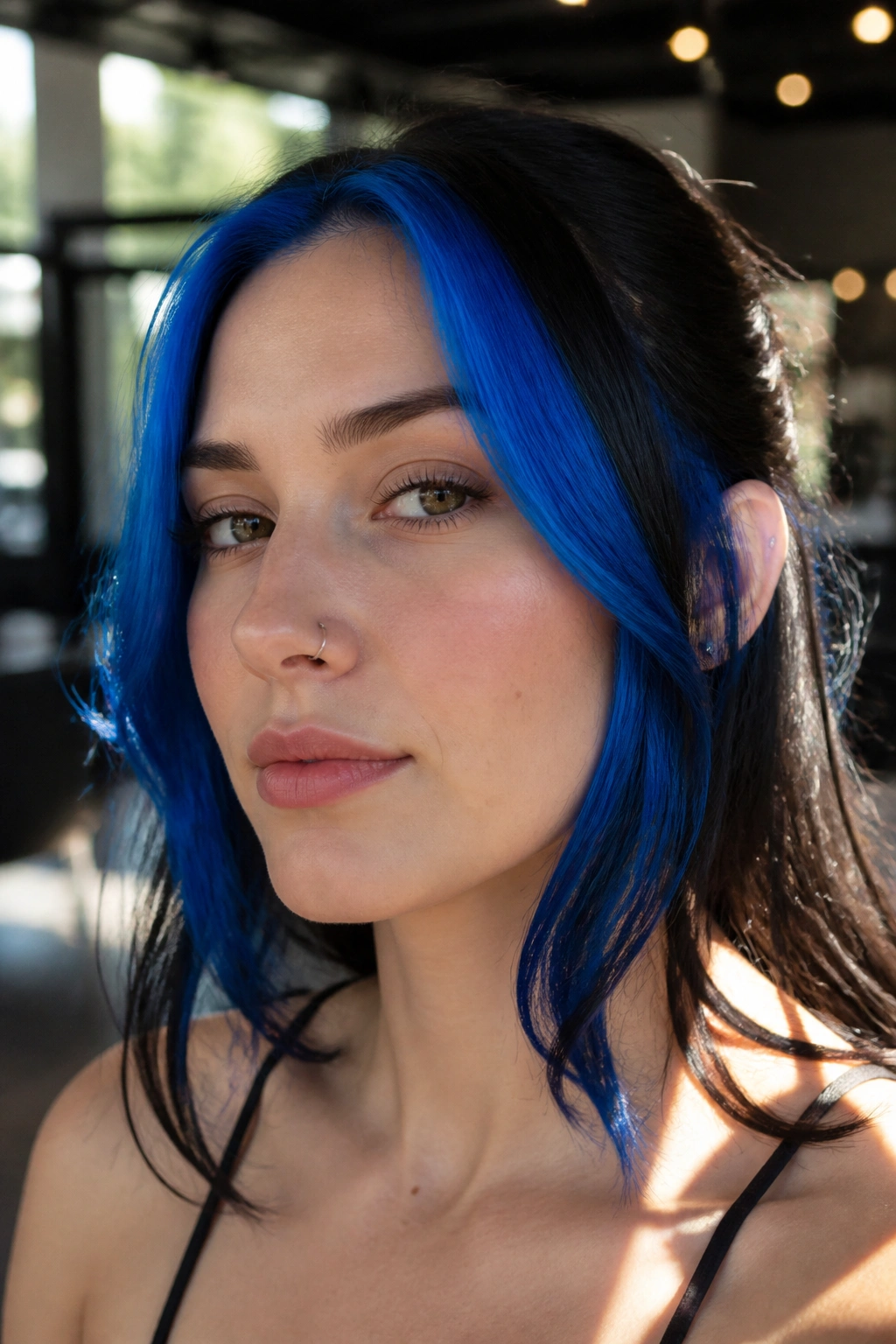
Put the brightest blue where people look first. That is the whole logic behind an electric blue face frame on black hair, and honestly, it works.
The panels can start at the part and sweep down the temples, or they can sit just inside the front layers so they flash when you move. On cool skin tones, the brightness adds light near the face without making the skin look sallow. It can be especially good if your features are sharp and you want the hair to echo that energy instead of softening it away.
How to Wear It
Electric blue face framing likes a bit of shape around it. Think blowout bends, curtain bangs, or a centered style that lets the color sit on both sides of the face. A very tiny streak can disappear. A broader panel gives you enough contrast to matter.
- Best width: 1.5 to 2 inches on each side
- Works well with glasses and strong brows
- Needs pre-lightening if your hair is very dark and resistant
- Shows best when the front layers are trimmed regularly
This one is not shy. That is the point.
11. Navy Ombré on Long Hair
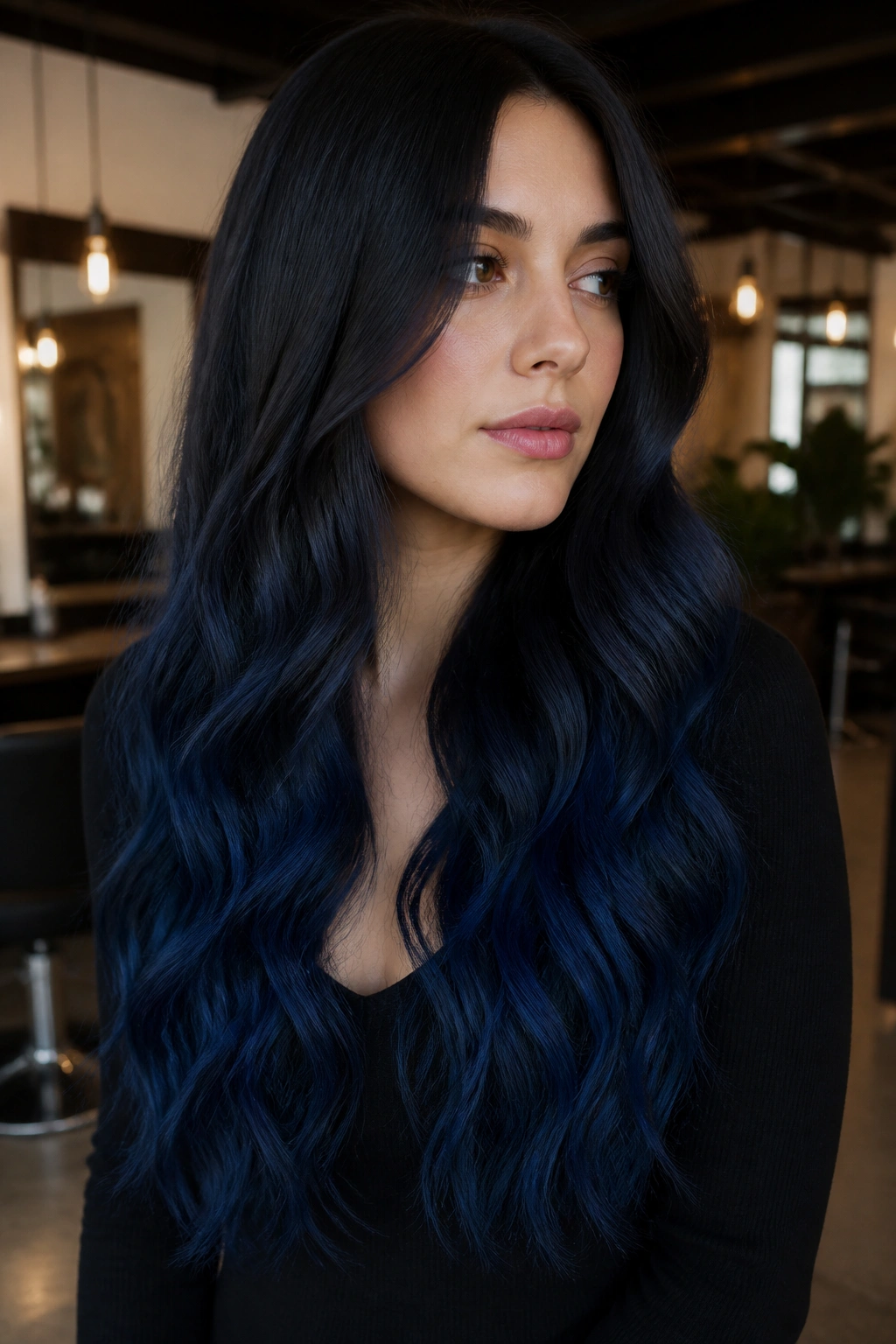
Navy ombré makes the most sense on long hair because the color has room to travel. The roots stay black, the mid-lengths start to pick up navy, and the ends go even deeper into blue. It is smooth when it is done well, and a little chopped when it is rushed.
The nicest version keeps the transition soft enough that you do not see a hard line where black ends and blue starts. On long layers, the fade follows the cut and the whole style feels more fluid. Loose curls help too, since they break up the gradient and let the navy show in little flashes instead of one block.
A lot of people like ombré because the grow-out is forgiving. That part is real. You can keep the roots dark, stretch the salon visits a bit, and still have a color story at the bottom. On cool skin tones, the navy ends keep the face from sitting next to a warm dark brown base, which is where some brunette ombrés fall apart.
If your hair is short, I would skip this and pick something else. Ombre needs length to breathe.
12. Graphite Blue-Black Crop
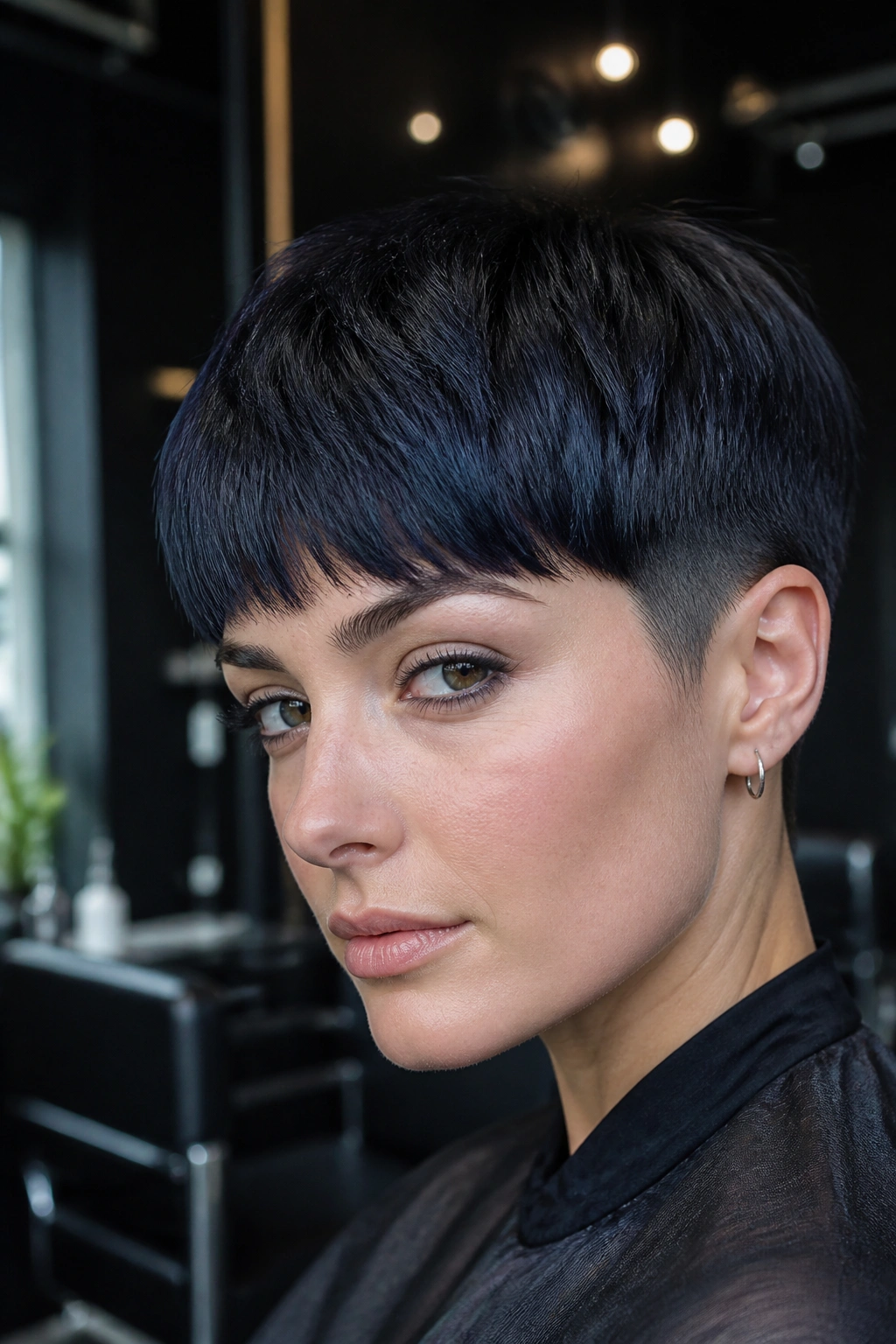
Short hair changes the rules. On a pixie, bixie, or blunt crop, you do not get long ribbons of color to show off, so the shine and surface tone matter more than the distance the color travels.
Graphite blue-black is perfect for that. It is darker than steel, less obvious than sapphire, and cooler than plain black. The finish is what makes it work: the top layers reflect a blue-gray sheen while the sides stay tight and clean. On cool skin tones, that crisp edge can make the jawline and cheekbones look sharper, which is a nice effect if you like a cut with some structure.
What Makes It Work on Short Hair
A crop needs color that reads from a few feet away. That means a sheer blue-black gloss or a deeply pigmented toner works better than a patchy highlight plan. If the hair is too matte, the shade turns flat fast. If it is too bright, the cut can look costume-like.
- Best on pixies, bixies, and jaw-length bobs
- Good when you want the haircut to look deliberate
- Needs a light styling product so the finish does not go dull
- Works best with regular trims every 4 to 8 weeks
I like graphite here because it respects the cut instead of fighting it.
13. Peacock Blue-Black on Curls
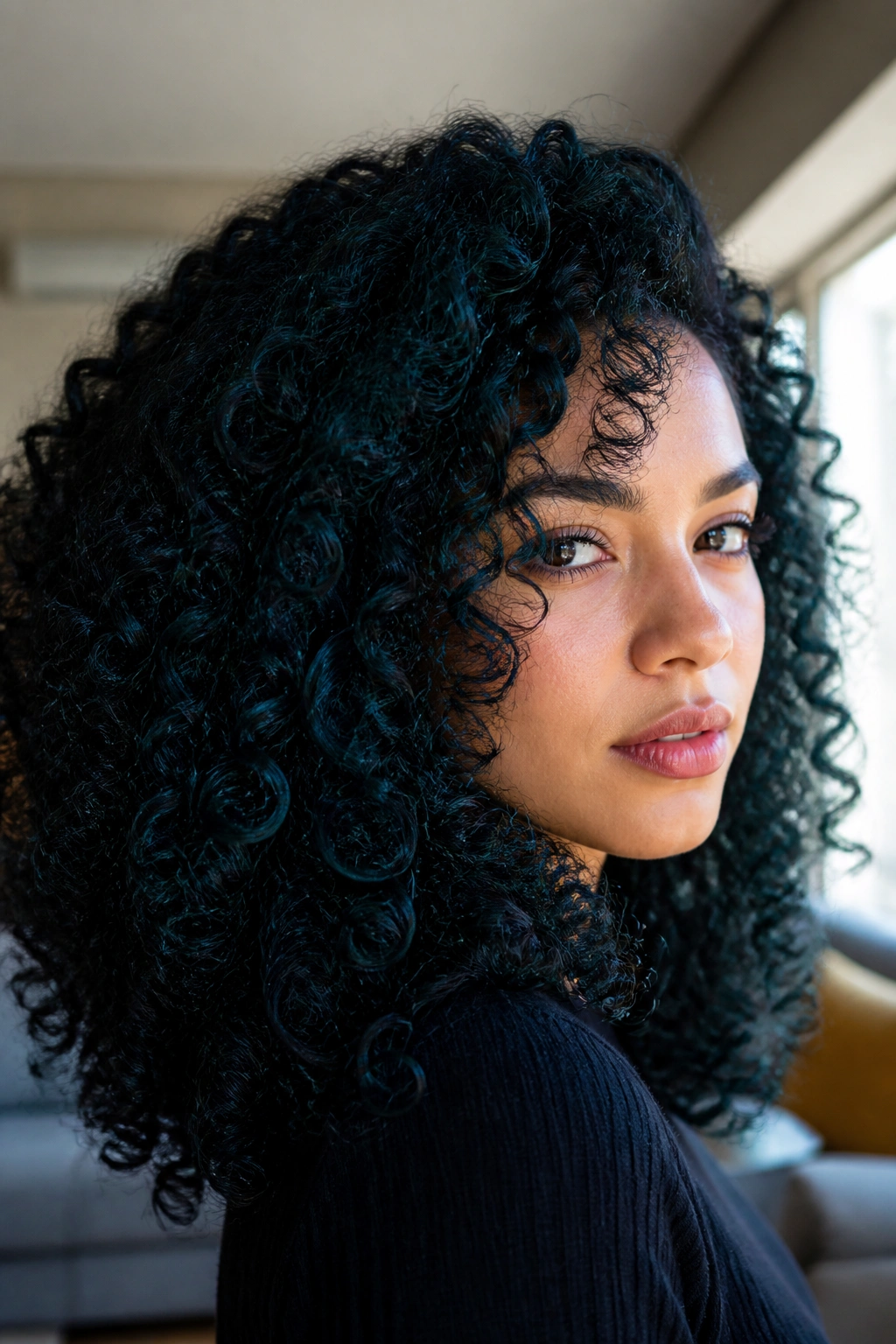
Curls make blue-black hair look richer because every bend catches the light a little differently. That is why peacock blue-black can be such a good match for textured hair — the shade shifts as the curl pattern moves.
Keep the blue dominant and the peacock note restrained. Too much green and the result can read warmer than you want. A blue-leaning teal-black feels cooler and sits better on skin with pink or blue undertones. On loose spirals, the color shows up as depth first and blue second, which is a nice way to wear it if you want dimension without streaks.
How to Keep the Curl Pattern Visible
Moisture matters here. Dark color already hides some texture, and dry curls can swallow reflect even faster. A curl cream with slip, a diffuser on low heat, and a wide-tooth comb are enough to keep the shape without fluffing the hair into a halo.
- Ask for a blue-dominant peacock tone
- Keep the curl pattern hydrated so the reflect stays visible
- Use low heat or air-dry when possible
- A trim every 8 to 10 weeks keeps the ends from getting ragged
On curls, the color should move when the hair moves. If it sits still, it has not been placed well.
14. Periwinkle Dip Ends
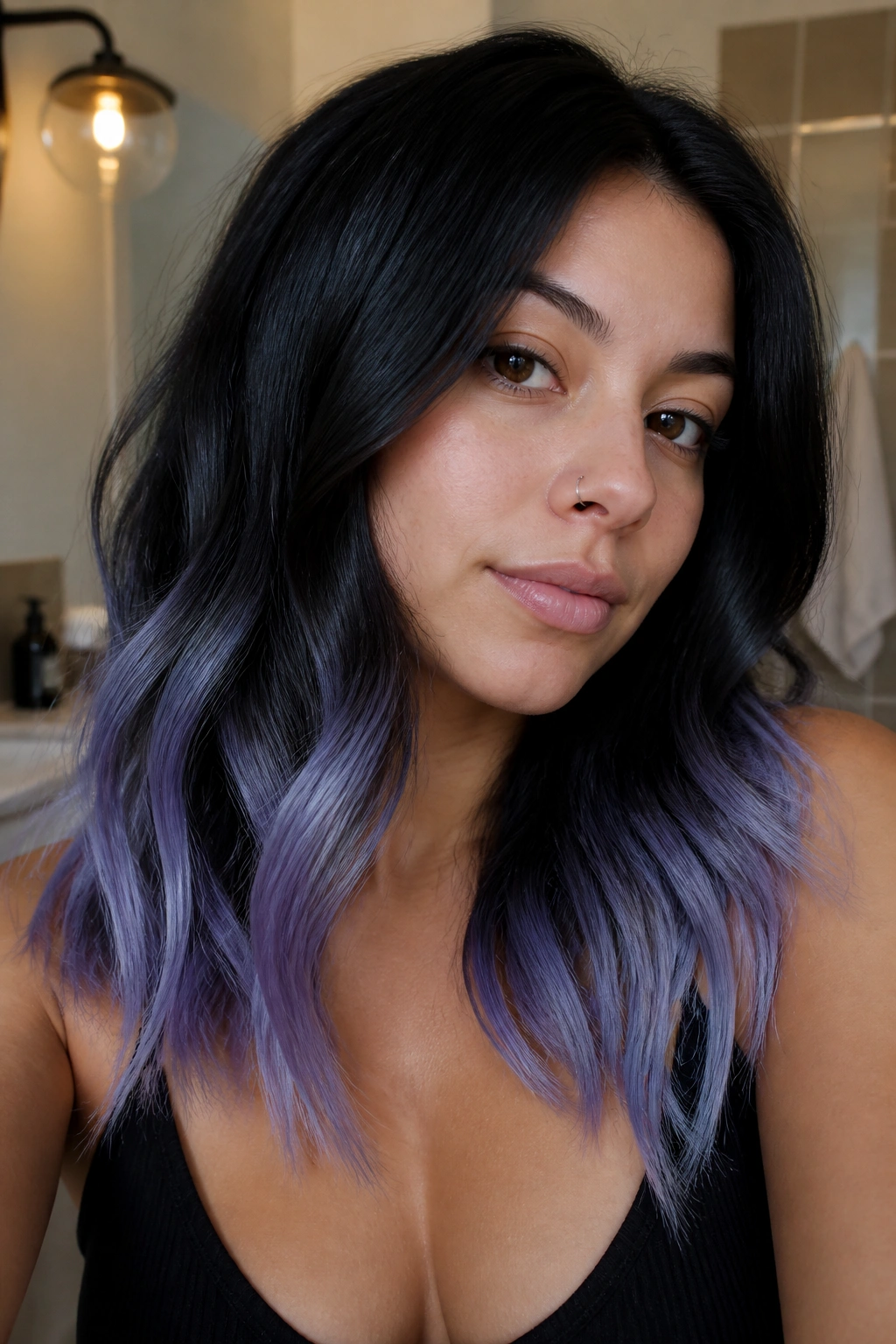
Periwinkle dip ends are for someone who wants a cooler, lighter blue at the tips without turning the whole head bright. The black stays at the root and mid-length, then the last few inches shift into that soft blue-gray lavender edge.
This is a more delicate look than cobalt or sapphire. It feels airy, almost cloudy, and it can be beautiful on cool skin because the pale blue at the ends keeps the whole style feeling cold-toned and crisp. Braids, waves, and half-up looks make it easier to see the color because the ends get enough movement to show the fade.
The catch is that periwinkle usually needs lifted hair. Black base plus light periwinkle on the ends means those tips have to be pre-lightened to a pale yellow, then toned down. That is a job for someone who understands how fragile lightened ends can be. If the hair is already fragile, the shade can still work, but the ends need extra care.
A good periwinkle dip is soft, not sugary. There is a difference.
15. Blue-Black Lowlights for Depth
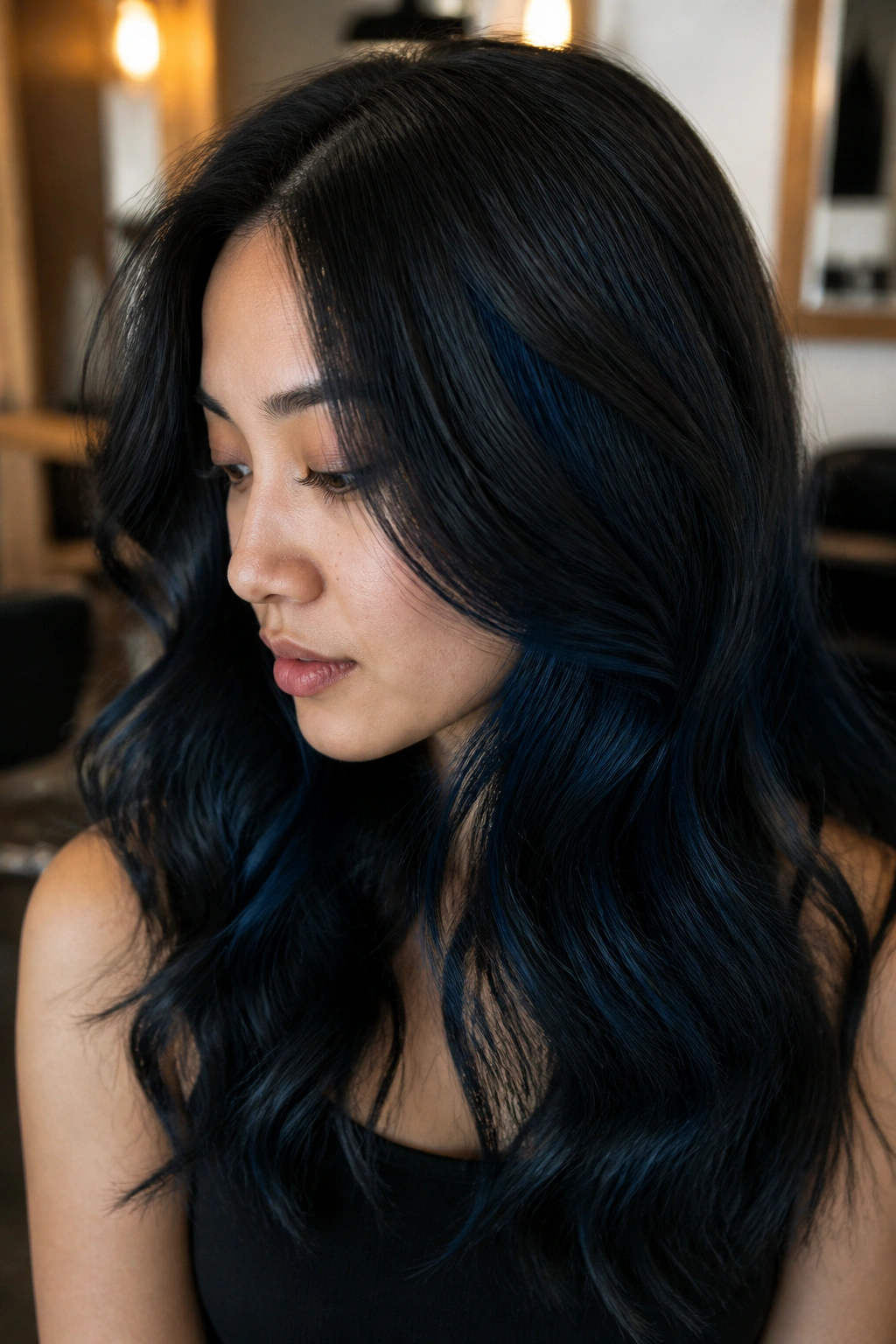
Sometimes the answer is not more blue on top. It is blue hidden underneath. Blue-black lowlights can rescue flat hair that already feels too dark and one-note.
Lowlights work by adding darker blue sections under the top layer so the hair gets depth when it moves. On fine hair, that can make the cut look fuller. On one-length hair, it breaks up the solid wall of color and gives the eye something to follow. The effect is subtle, which is why people often miss how much better it looks than a big all-over refresh.
Where to Place Them
I like lowlights around the crown, behind the ears, and in a few ribbon slices through the mid-back section. Quarter-inch to half-inch panels are usually enough. Wider than that, and the color starts to read like stripes. Narrower than that, and you may not see the depth you paid for.
- Best for medium to dark black bases
- Great if you want motion without obvious streaks
- Helps thick hair feel less solid
- Works on straight, wavy, and blown-out styles
This idea is quiet, but it is not boring.
16. Marine Blue Sheen on Black Hair
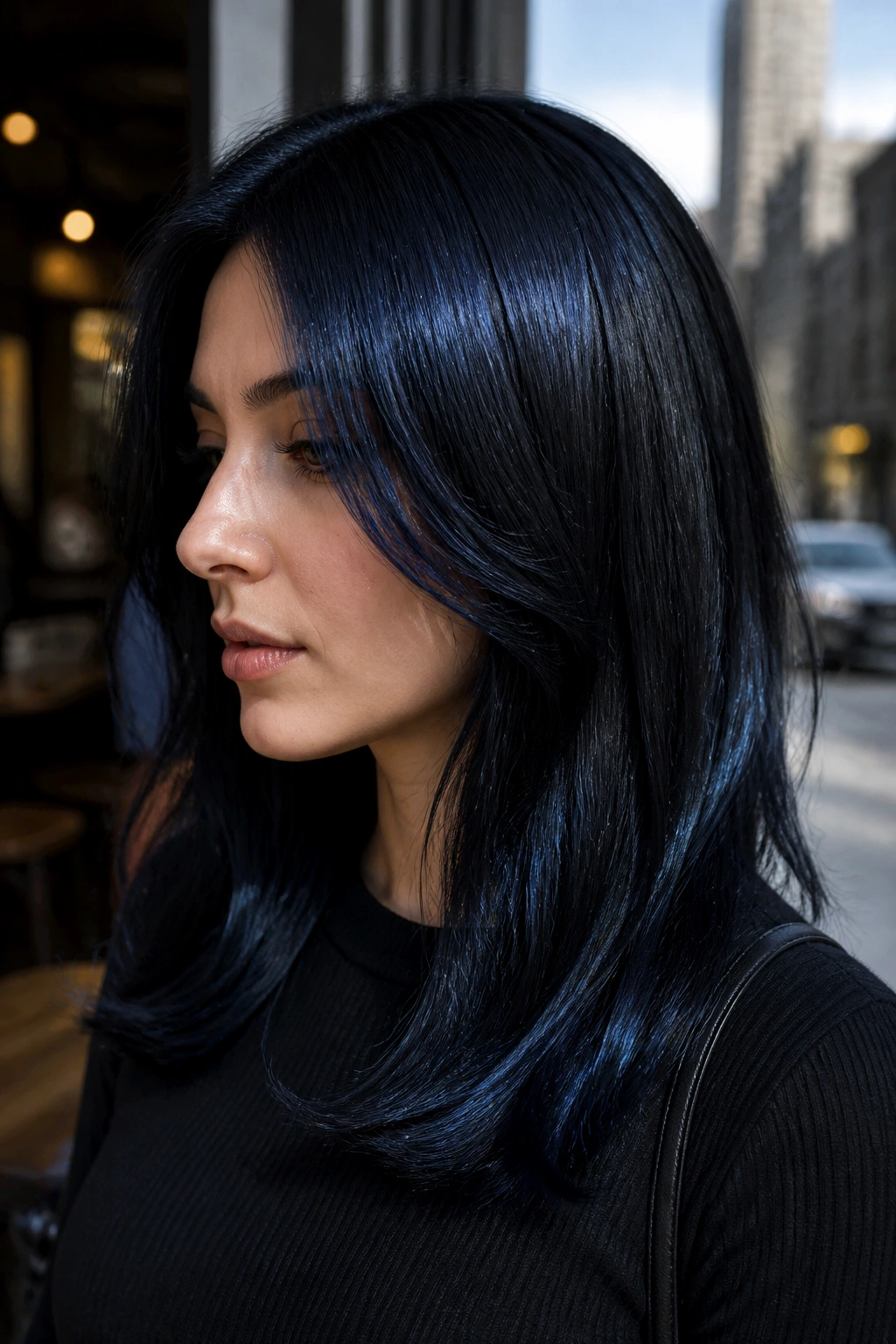
Marine blue sheen is the shade for people who want the color to live in the reflection, not the outline. From a distance, the hair still looks black. Up close, or in sunlight, it throws off that deep marine flash that feels cold and glossy.
Unlike visible streaks or panels, this version depends on finish. A clear blue glaze over a black base can give the hair a wet, polished look that shows most when the light hits from the side. Straight hair and smooth blowouts show it best because the surface is uninterrupted. On cool skin tones, that reflective blue can brighten the face without making the color feel loud.
This is one of those styles where a clean blow-dry matters more than you expect. Frizz breaks the sheen. Rough ends break it too. If the goal is a marine flash, the haircut and the finish need to behave.
It is a quieter cousin to sapphire. That is why I like it.
17. Ink Black with Blue Gloss Refresh
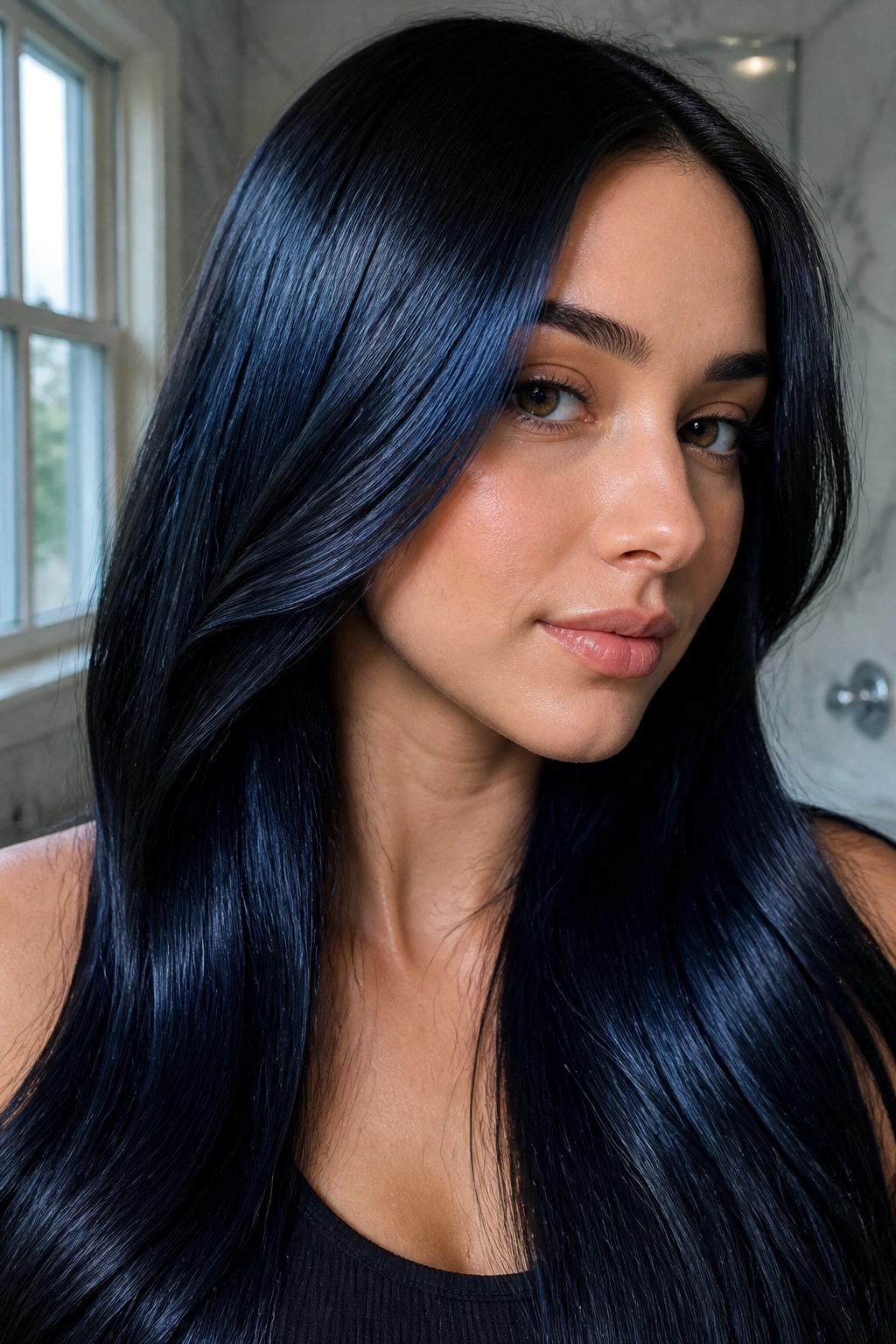
If you already wear black hair and it has gone a little dull, a blue gloss refresh can bring the cool tone back without changing the whole head. This is the easy maintenance lane, and frankly, a lot of people need that more than a brand-new color story.
The gloss sits on top of the existing black and deepens the reflect. A good blue refresh can make faded black look cleaner, richer, and less brown around the edges. That matters on cool skin tones because dull black tends to drag the face down. A quick gloss can pull it back up without a full color appointment.
How People Usually Keep It Going
Some people use a color-depositing mask once every second or third wash. Others book a salon gloss every few weeks and leave it at that. Either way, the goal is the same: keep the blue from disappearing into plain black.
- Best for existing black hair that needs tone restored
- Works well after sun, heat styling, or repeated shampooing
- Helps older black dye look less flat
- Usually needs cool water and gentle shampoo to last
If you like your hair low-maintenance but still want the blue note, this is the sensible choice.
18. Soft Black Blue Hair Color for Low Maintenance

Soft black blue hair color is the one I’d hand to someone who wants the look to age gracefully. It is black first, blue second, and it does not shout for attention every time you miss a salon visit.
The shade stays close to natural black but keeps just enough blue in the reflect to flatter cool skin tones. That means it still has the polished ink effect, but the grow-out is easier and the fade is less dramatic. On medium-length hair, the color reads tidy. On long hair, it gives the ends a little life instead of letting the whole head sink into one dark block.
This is the right choice if you want to wear the shade to work, to dinner, to the grocery store — all without feeling like the hair is wearing you. It also saves you from the trap of going too bright too fast. You can always move richer later.
If you only try one look from this list, start here. It is the calmest version, and sometimes calm is the move.
