



Brown hair can go flat fast.
A good caramel balayage changes that without turning your head into a stripe map. The color sits in soft, hand-painted pieces, so you get movement when your hair swings, bends, or catches a little light on the ends of a blowout. The sweet spot is usually somewhere between blond and brown — bright enough to wake the color up, but warm enough to still look like brunette hair, not a dramatic overhaul.
That balance matters more than people think. On brown hair, caramel can lean honey, toffee, amber, cinnamon, beige, or even a soft coffee-with-cream shade, and each one behaves differently once it’s blended through the mids and ends. Go too gold on a deep base and the whole thing can read brassy. Stay too dim and you lose the point. The best caramel balayage looks make the hair feel fuller, shinier, and a little more expensive-looking without looking overworked.
There’s also a practical reason this coloring stays popular with brunettes: grow-out tends to be softer than with blunt highlights. The root stays deeper, the lightness is placed where it matters, and you’re not staring at a harsh line every few weeks. If you like brown hair but want more shape, more warmth, and a little glow around the face, the right placement does a lot of the heavy lifting.
1. Soft Caramel Face-Framing Ribbons
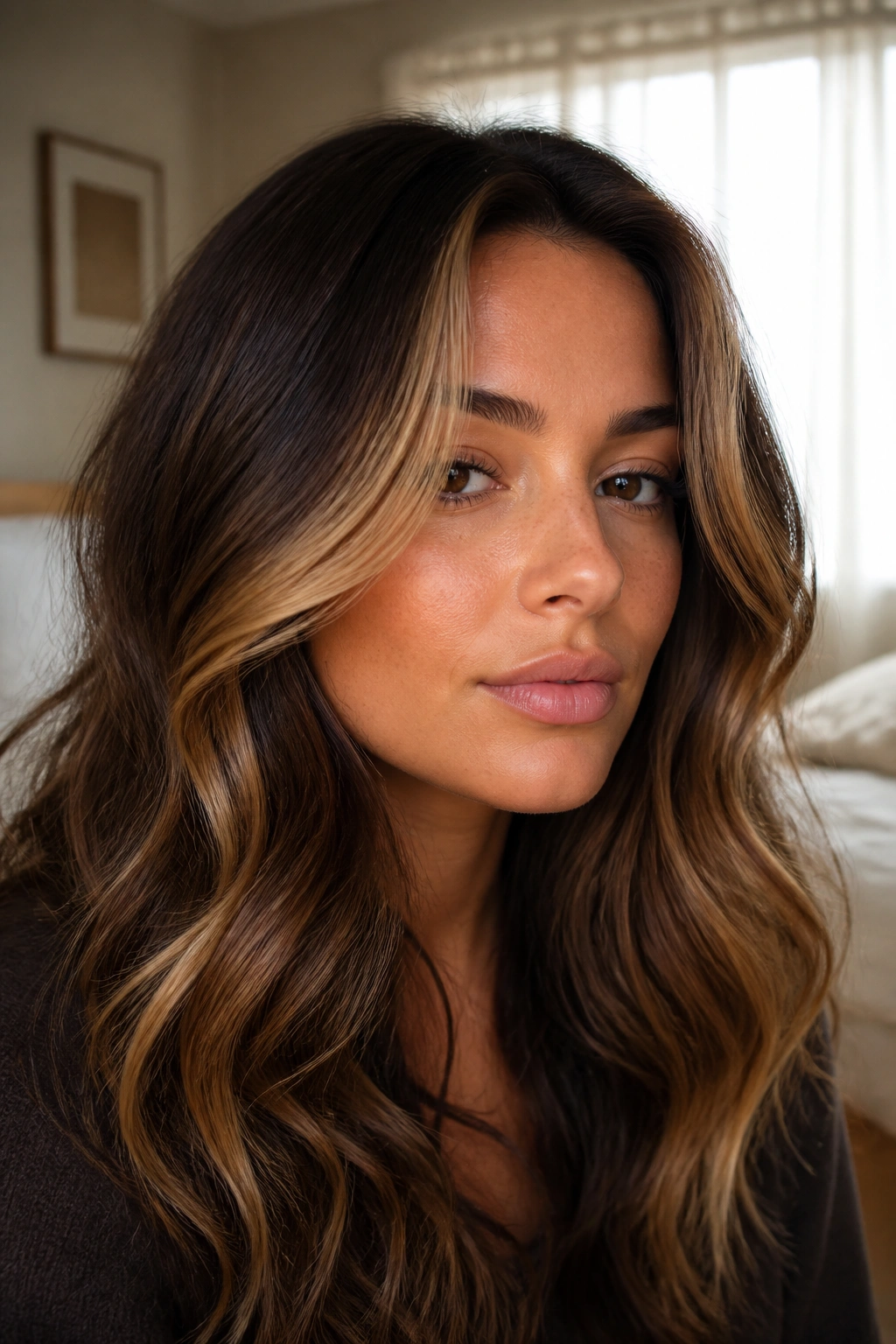
Face-framing ribbons are the first place I’d send anyone who wants a gentle change. They brighten the front without taking over the whole head, which means you keep the richness of brown hair while still getting that lifted, fresh look around the eyes and cheekbones.
Why It Works
The front sections usually move the most, so a few caramel ribbons there read louder than the same amount tucked in the back. That makes this look ideal if you wear your hair down often or split it in the middle and want the color to show without a big styling effort.
Ask for thin, painted pieces around the hairline and one or two softer ribbons just behind them. The best version stays a shade or two lighter than your base, not five. That keeps the finish soft instead of streaky.
- Best on medium brown or light brown bases
- Works well with loose waves, a round-brush blowout, or a soft bend from a flat iron
- Looks cleaner when the front pieces are slightly brighter than the rest
- Needs a gloss every so often if your hair pulls orange fast
Tiny tip: keep the lightest pieces near the cheekbone, not all the way back at the temple. That small shift makes the color feel intentional instead of loud.
2. Chestnut Brown With Melted Toffee Ends
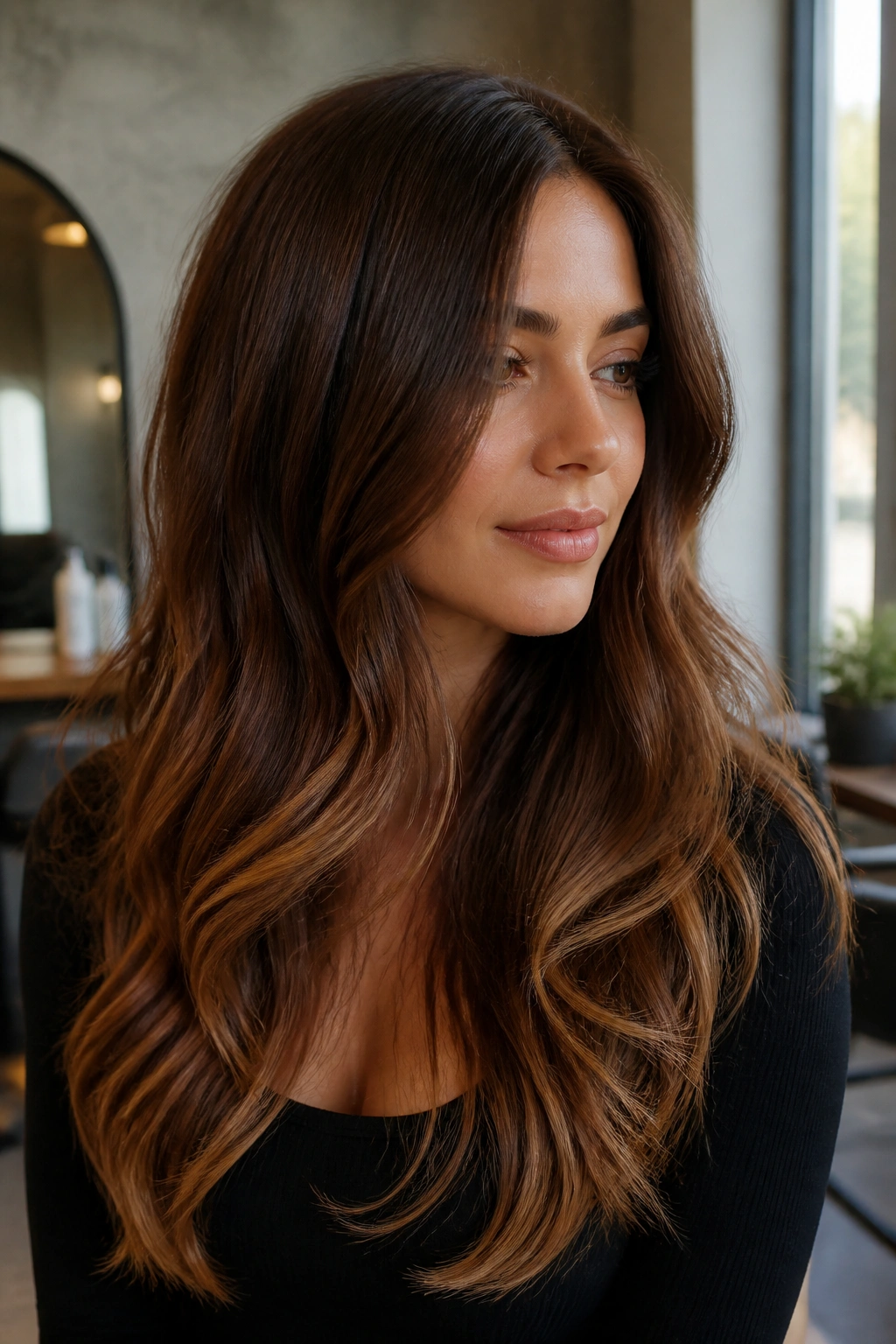
Chestnut brown has enough warmth to handle toffee-toned balayage without fighting it, and that’s why this one looks so natural. The color melt is smooth from roots to ends, so the eye doesn’t catch a hard break anywhere. It just slides from one brown into another.
What I like about this version is that it does not ask for a lot of drama. The ends are where you get the payoff, and the mids hold most of the movement. On layered hair, the finish looks especially good because the lighter pieces break up the shape instead of sitting like one flat sheet.
If your hair is medium length or longer, this is a strong choice. The caramel through the ends gives that warm, expensive salon finish people usually want when they say they want “something subtle but noticeable.” That’s the exact lane here.
For styling, a loose bend works better than poker-straight hair. A 1-inch curling iron, wrapped away from the face, will show the color shift in a way that air-dried hair sometimes hides. If your hair is thick, ask your colorist to keep the lightness concentrated on the outer layers so the color doesn’t disappear under all that density.
3. Smoky Cocoa Base With Honey-Caramel Swirls
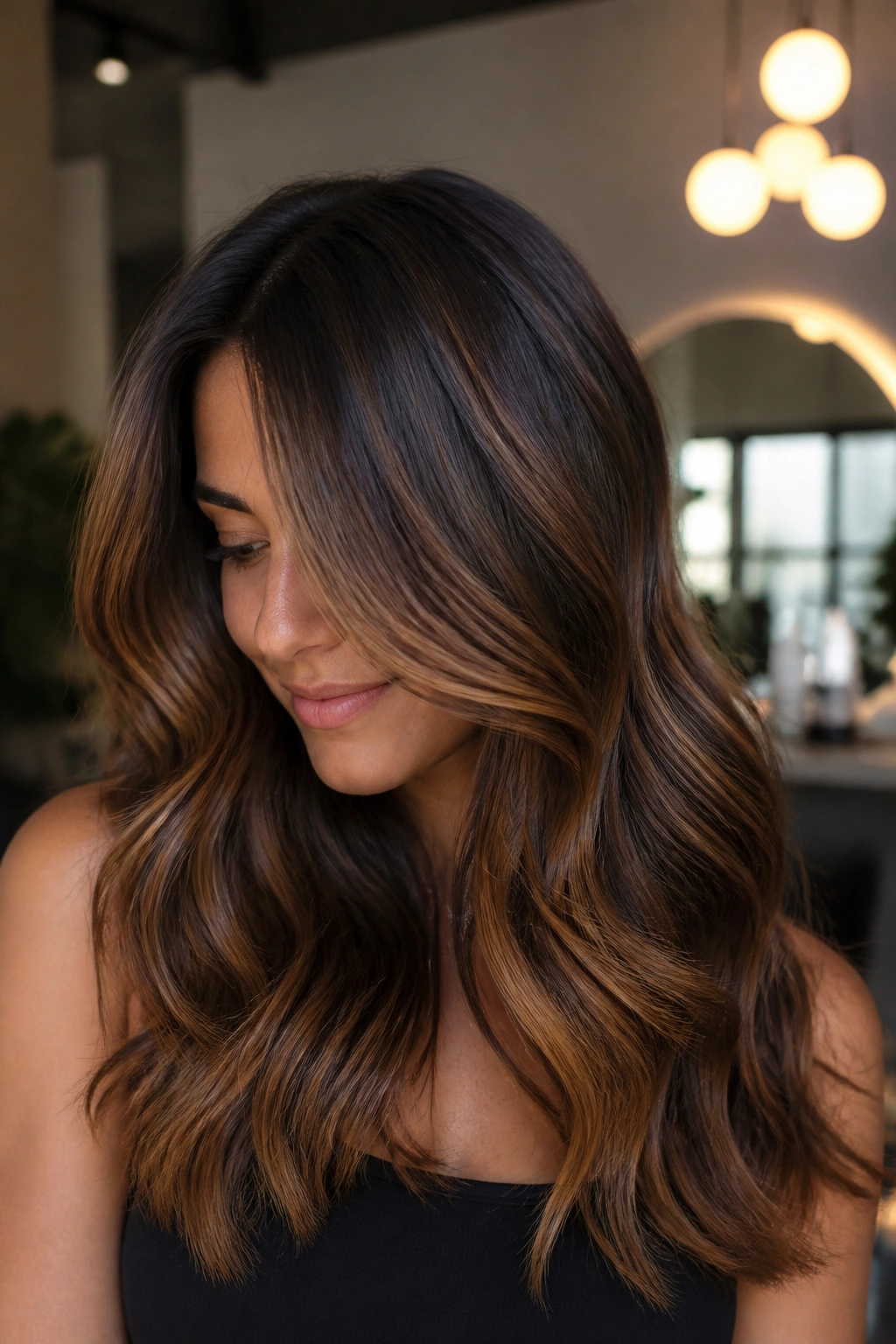
Why does this work so well on darker brunettes? Because the honey caramel sits warm enough to show, but the smoky cocoa base keeps the whole thing grounded.
The trick is contrast control. Too much gold on a deep brown base can look brassy in harsh light, while a slightly muted honey tone gives you shine without crossing into orange. That makes this look a smart option if your hair is naturally dark and you want dimension more than brightness.
How to Ask for It
Tell your colorist you want soft swirls, not stripes, with the lightest pieces tucked through the mid-lengths and ends. If your hair is very dark, the caramel will usually need to be lifted a bit more than you expect to show up. That part matters. Dark hair swallows color.
A few things help this look hold up:
- Use a color-safe shampoo, not a heavy clarifying formula every wash
- Ask for a beige-gold toner if your hair tends to go too orange
- Style with medium waves so the swirls separate and move
- Keep the root zone deeper for a smoother grow-out
This is one of those shades that looks elegant when the hair moves and a little too plain when it doesn’t. So if you like wearing your hair in a wave or a twist-out, you’ll get more out of it.
4. Mocha Brown With Chunky Painted Panels
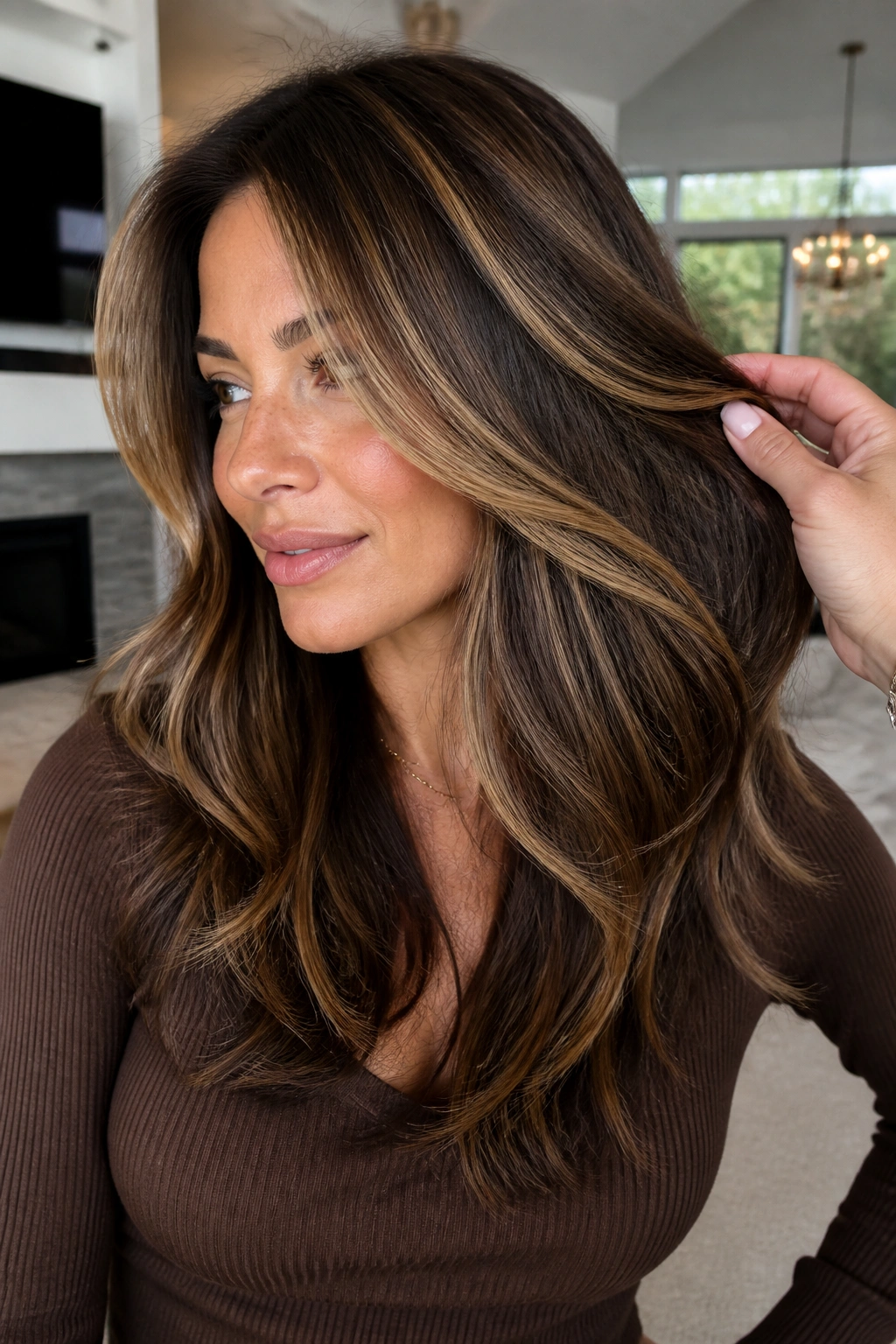
Some people want soft. Others want to see the color. This is the one for the second group.
Chunkier painted panels bring a little more edge to caramel balayage on brown hair, especially if your base sits in the mocha or dark chocolate range. Instead of whisper-thin ribbons, you get wider sweeps of light that show the shape of the haircut. On thick hair, that can be a good thing. The color keeps the style from looking heavy.
What Makes It Different
The painted panels should follow the cut. Long layers? Paint the visible outer layers. Curly ends? Keep the lightness where the curl opens up. Straight hair? A few wider panels underneath the top layer will still peek through when the hair moves.
- Best for thicker hair or blunt cuts that need more dimension
- Looks sharper with a glossy finish
- Needs careful placement near the front so it doesn’t turn harsh
- Works well with bouncy blowouts and bigger waves
There’s a catch. Chunky doesn’t mean careless. If the light pieces sit too close together, the look starts to feel dated fast. You want space between the panels, and you want the darkest brown to stay visible. That contrast is what gives the color its shape.
5. Dark Brunette With Barely-There Caramel Veil
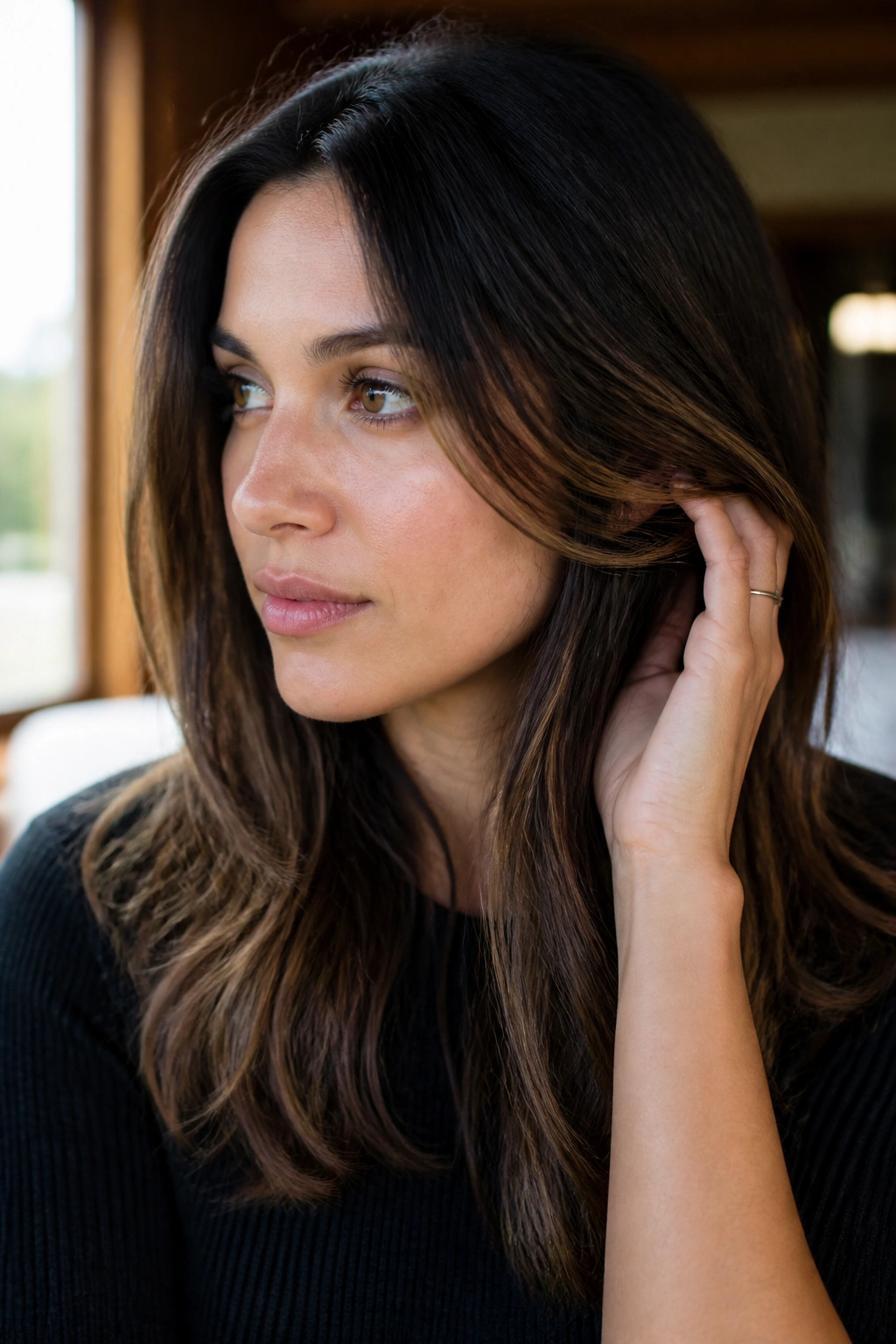
A lot of people assume balayage has to be obvious. Not even close.
A barely-there caramel veil on dark brunette hair is for the person who wants movement, not a color makeover. The lightness lives mostly on the outer layer, and the tones stay close to coffee, toasted sugar, and a touch of warm beige. At a glance, the hair still reads brown. Up close, it has depth.
What makes this one useful is how little it fights your natural color. If you like your hair dark and rich but want it to stop looking one-note in flat light, this is the cleanest fix. The veil of color catches along the surface and around the bends of the hair, so it looks most alive when you tuck one side behind your ear or wear soft bends at the ends.
This also tends to age well between salon visits. Because the contrast is low, new growth doesn’t scream for attention. You still need toner now and then if your brunette base goes red or orange, but the maintenance stays friendly.
One sentence, really: this is a quiet color with a useful job.
6. Sunlit Caramel Around the Hairline and Part
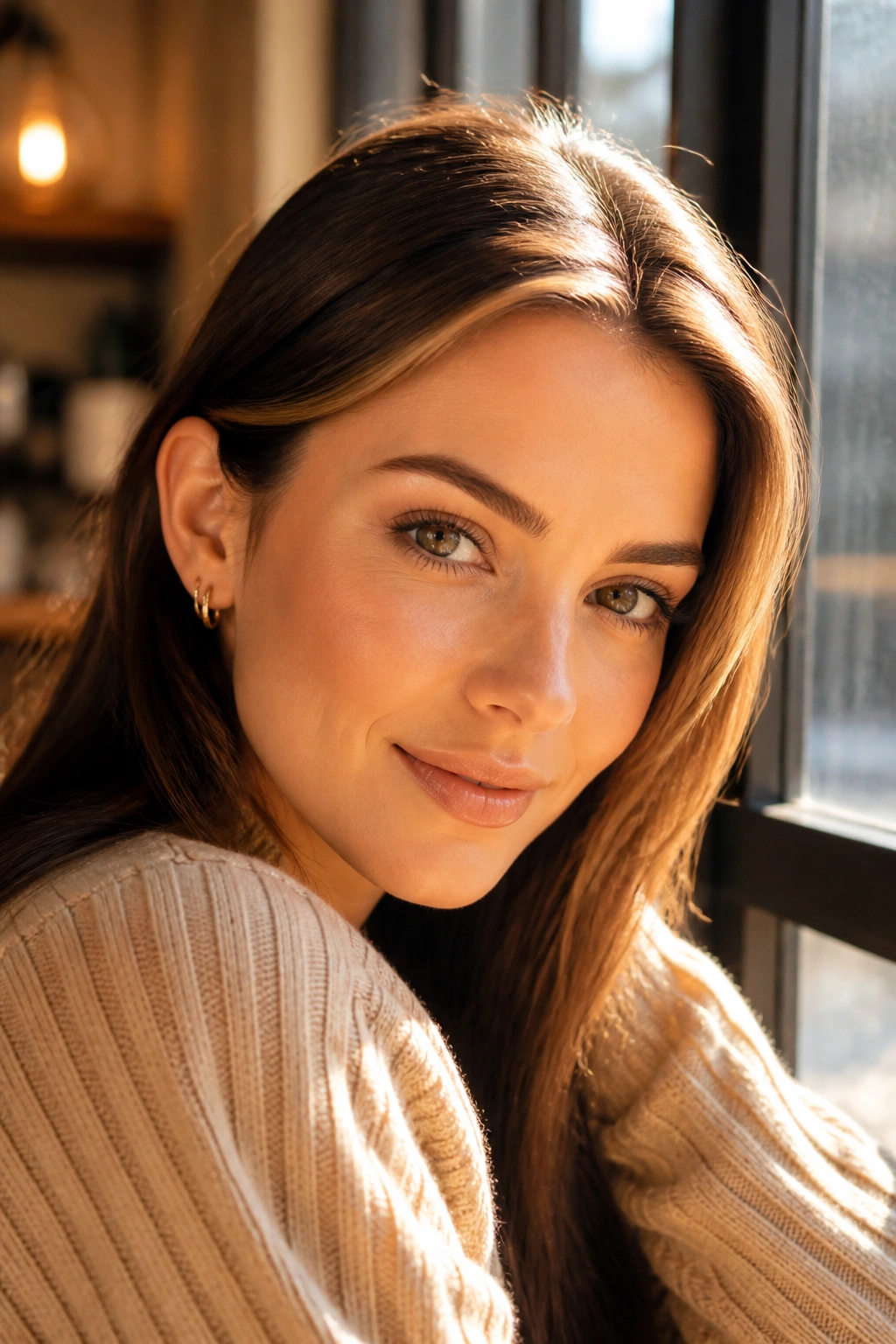
Some color placements do more work than a full head of highlights ever could.
The hairline and part are the first places people notice, which is why caramel placed there changes the whole expression of brown hair. The face gets lifted, the part looks softer, and the color shows even when the rest of the hair is tucked into a coat collar or clipped back.
Unlike all-over balayage, this approach keeps the ends darker and the top section brighter. That gives you a fresher, more intentional shape, especially if you wear your hair in a middle part. It also plays nicely with grown-out color because the brightest pieces live where the eye goes first.
A good version should look airy, not bleached. Ask for thin, feathered ribbons near the part and a few larger sweeps that start just behind the temple. If your base is medium brown, the caramel can be a clean gold-toffee. If your base is darker, a softer beige-caramel usually looks better than anything too pale.
This is a nice option if you want your hair to look lighter without doing a full commitment. The grow-out is kind, the payoff is fast, and the maintenance stays manageable.
7. Caramel Balayage on Curly Brown Hair
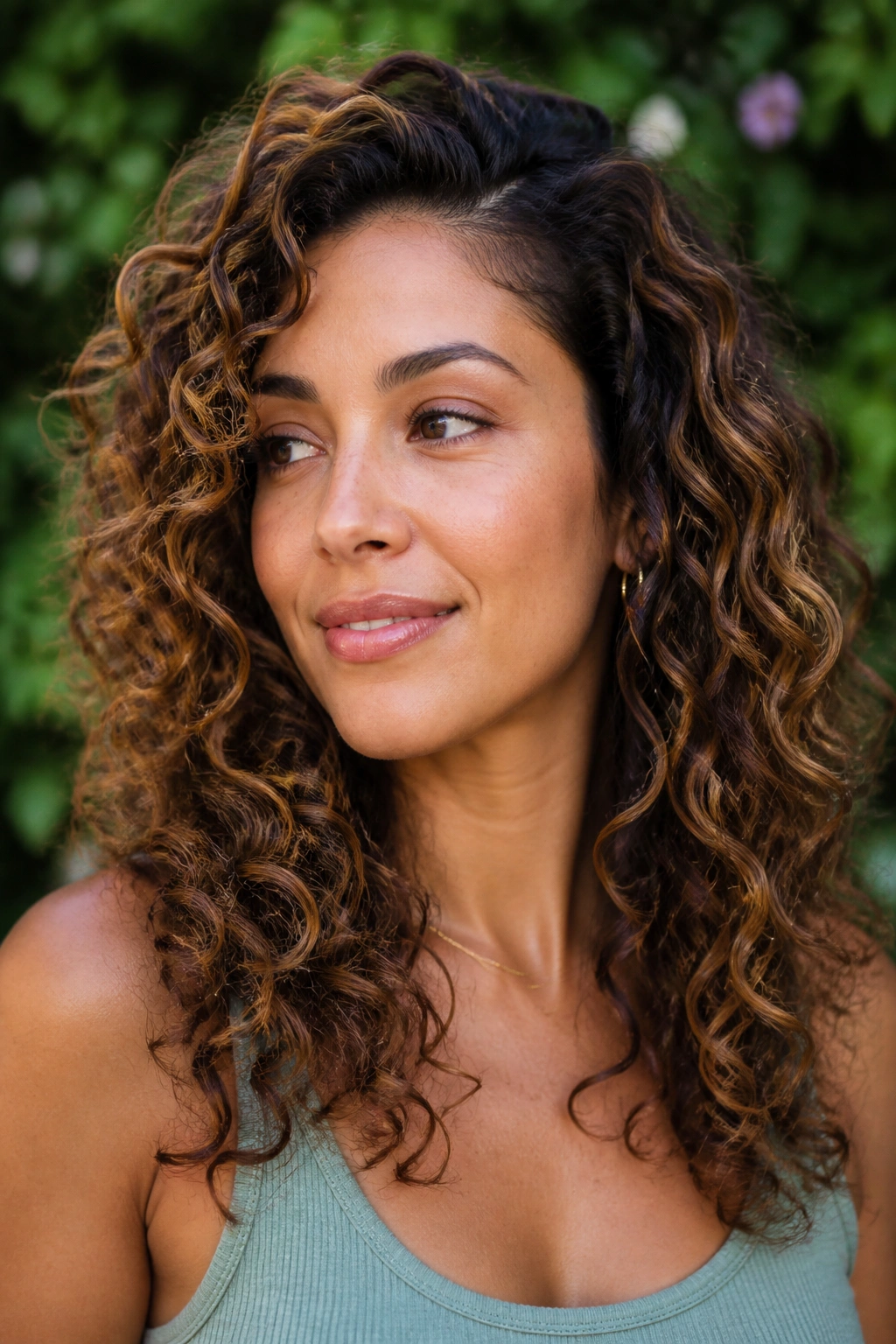
Curly hair needs placement, not just color.
That’s the whole difference here. On curls, caramel balayage works best when the lighter pieces follow the curl pattern and land where the spiral opens up. If the highlights are painted in long straight lines, the hair can look patchy once it dries. If the color follows the bend of the curl, it looks rich, soft, and full of movement.
Why Curls Need Different Placement
Curls compress when dry, so the color that looks subtle on wet hair can show up much stronger once the hair sets. That means the lightening should usually stay a little softer than you think at the bowl, because the curl itself creates the visual lift.
A few things make a big difference:
- Ask for painted highlights that sit on the outer curve of the curl
- Keep the lightest pieces away from the very top if your crown is frizzy
- Use a diffuser or air-dry with curl cream so the pattern stays defined
- Choose caramel tones with a touch of gold, not harsh orange
The best curly caramel balayage doesn’t fight the texture. It enhances it. And that matters, because curls already give you depth and shape on their own. The color should feel like a friend to the curl pattern, not a separate design sitting on top of it.
8. Espresso Brown With Cinnamon-Caramel Ends
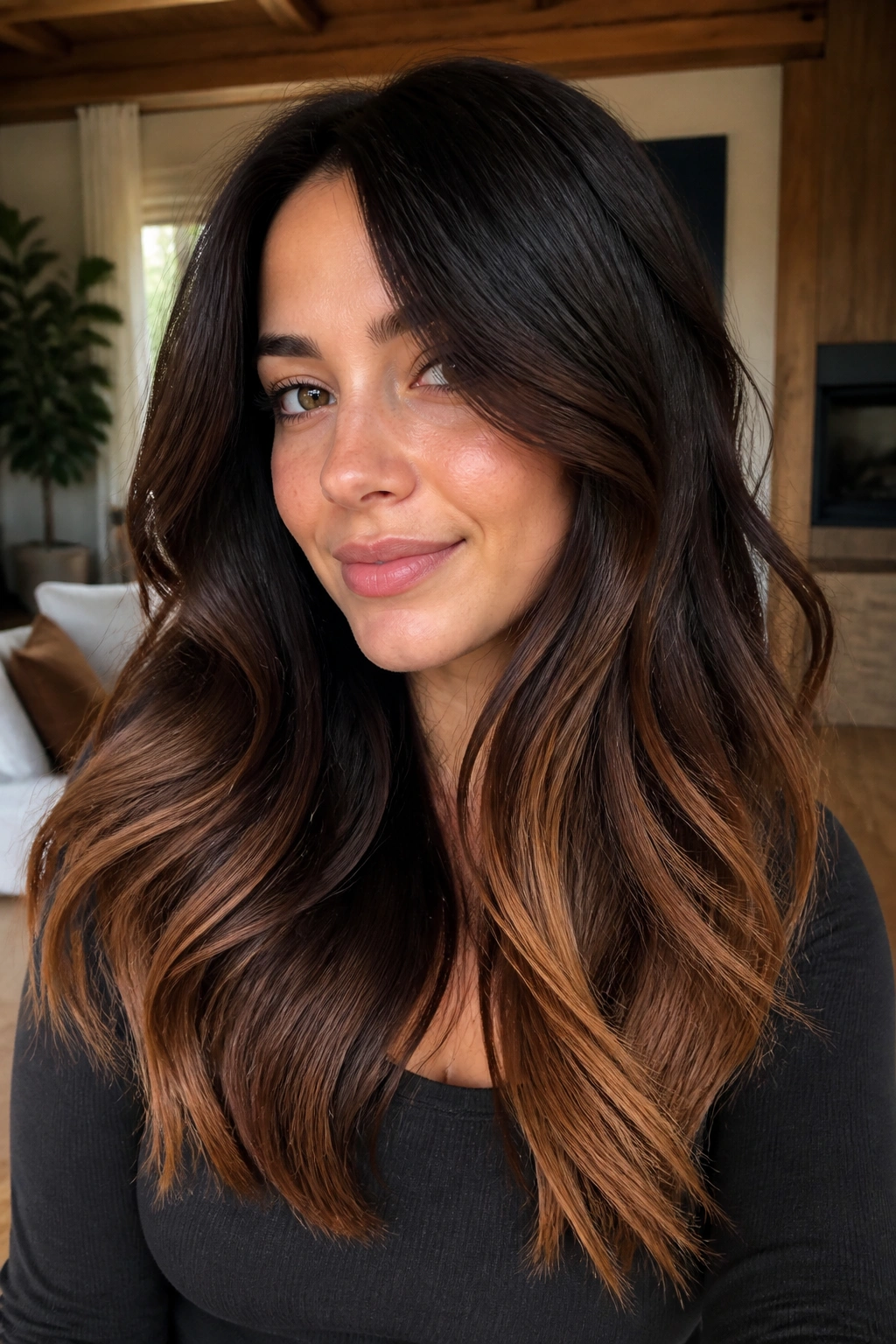
Espresso brown can take cinnamon-caramel beautifully, and that warmer edge makes the hair look richer rather than lighter in a flat way.
The ends are the star here. A cinnamon caramel doesn’t go as pale as blond-leaning balayage, so it keeps the finish grounded and a little spicy, which sounds like an odd word for hair until you see it. On long brown hair, the effect is especially good because the color has room to melt downward instead of ending abruptly.
If the hair is healthy, this look can feel glossy and warm at the same time. If the ends are dry, though, the lighter color will show that immediately. That’s the part to watch. Trim split ends before coloring if you can, or the lighter tips can look rough instead of sun-kissed.
I’d pair this with soft, face-away waves and a shine spray sprayed into the lengths, not the roots. Straight hair can make it look a little stark; a bend through the lower half keeps the cinnamon tones from reading too sharp.
This is one of my favorites for brunettes who want warmth without losing depth.
9. Mid-Length Lob With Sliced Caramel Layers
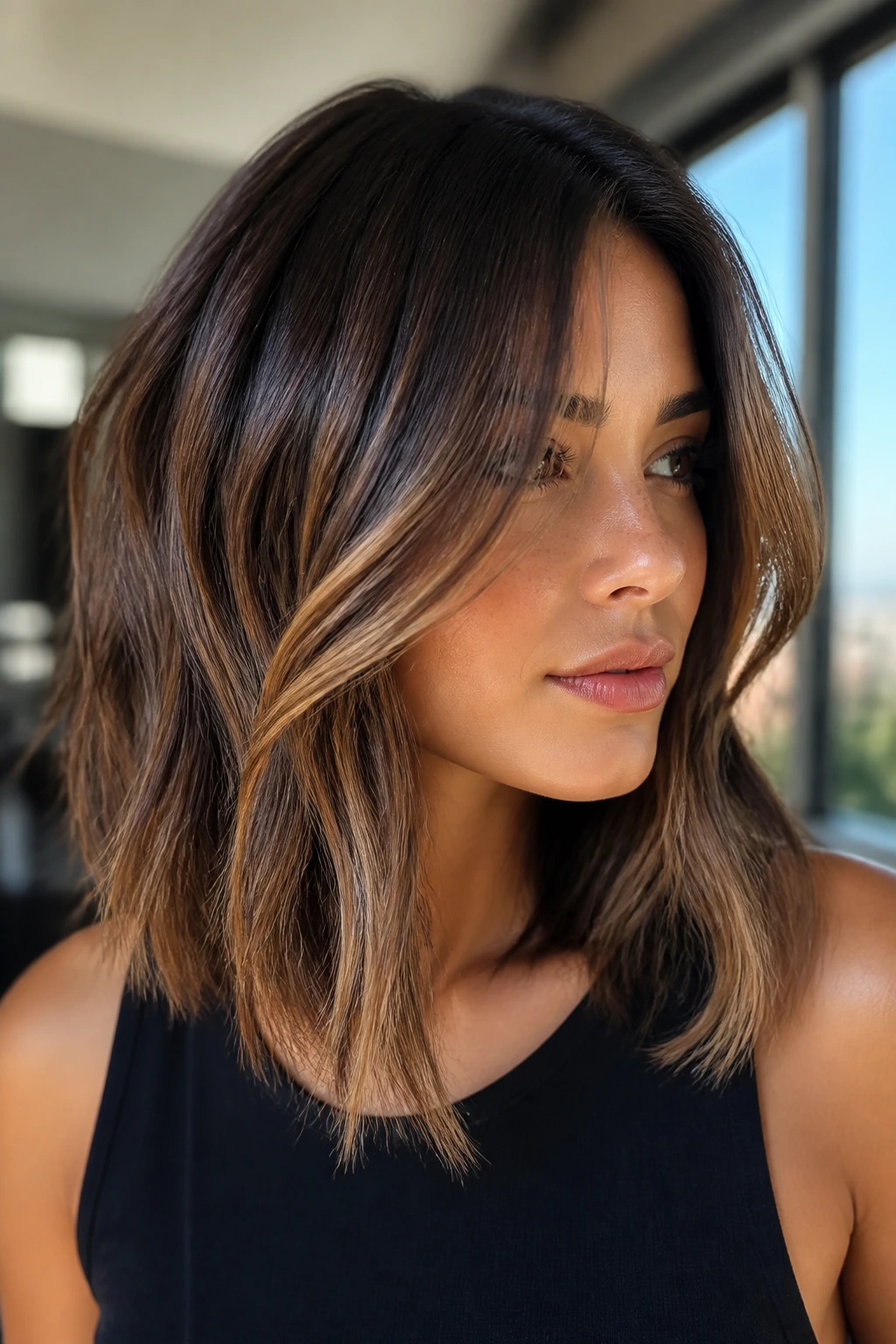
Does a lob need a lot of color to look interesting? Not really.
A mid-length lob already has clean lines, so sliced caramel layers are enough to bring it to life. The color sits inside the cut, especially on the top layers and around the sides, which makes the bob look more expensive and less blocky. If your hair falls just above the shoulders, that placement can change the whole silhouette.
How to Get the Most From It
Ask for lighter pieces that are sliced through the surface, not packed into the whole head. The point is to show movement when you tuck the hair behind one ear or flip the part. A lob doesn’t need a lot of depth to look polished. It needs clean contrast.
The styling matters too. A smooth blow-dry with the ends bent under gives the caramel a sleek look. A flatter iron bend makes the pieces appear sharper and more modern. A round brush can soften the whole thing if you want a little bounce.
If your hair is fine, sliced caramel layers add the illusion of fullness. If your hair is dense, the placement breaks up the bulk. Either way, the cut and color do the work together, which is why this look lands so well on shoulder-grazing lengths.
10. Deep Brown With Warm Walnut and Caramel Blend
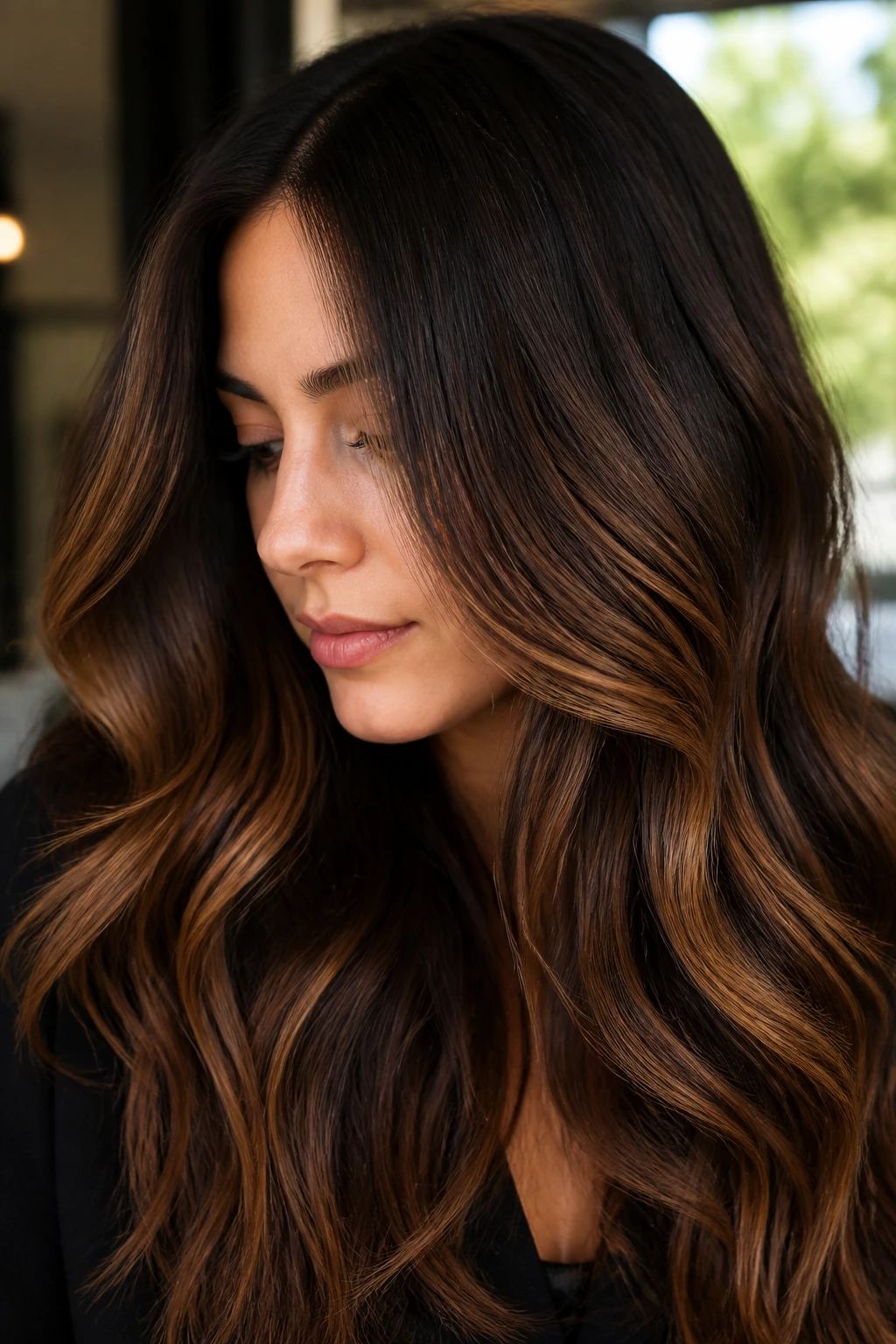
Here’s the thing: not every caramel balayage needs to look sweet.
A walnut-and-caramel blend on deep brown hair feels more earthy, less sugary, and that is the reason it works. The warmer walnut tone bridges the dark base and the lighter caramel pieces, so the transition feels smooth instead of jumpy. You don’t see a dark root and light end. You see one long brown story with a few warm notes in it.
This version suits people who like brown hair with depth and don’t want the lighter pieces to shout from across the room. It’s especially good on long layers and medium-textured hair because the blended tones catch differently in each section. The effect is subtle, but not invisible. That’s a hard balance to get right.
If you style your hair with a center part, this color reads balanced and calm. If you go off-center, the warm pieces around the front become more obvious, which gives the look a little more personality. There’s no need to over-style it either. The color already has enough shape built in.
A soft gloss is worth asking for with this one, because walnut tones can turn dull faster than caramel does.
11. Mushroom Brown Base With Muted Caramel Dusting
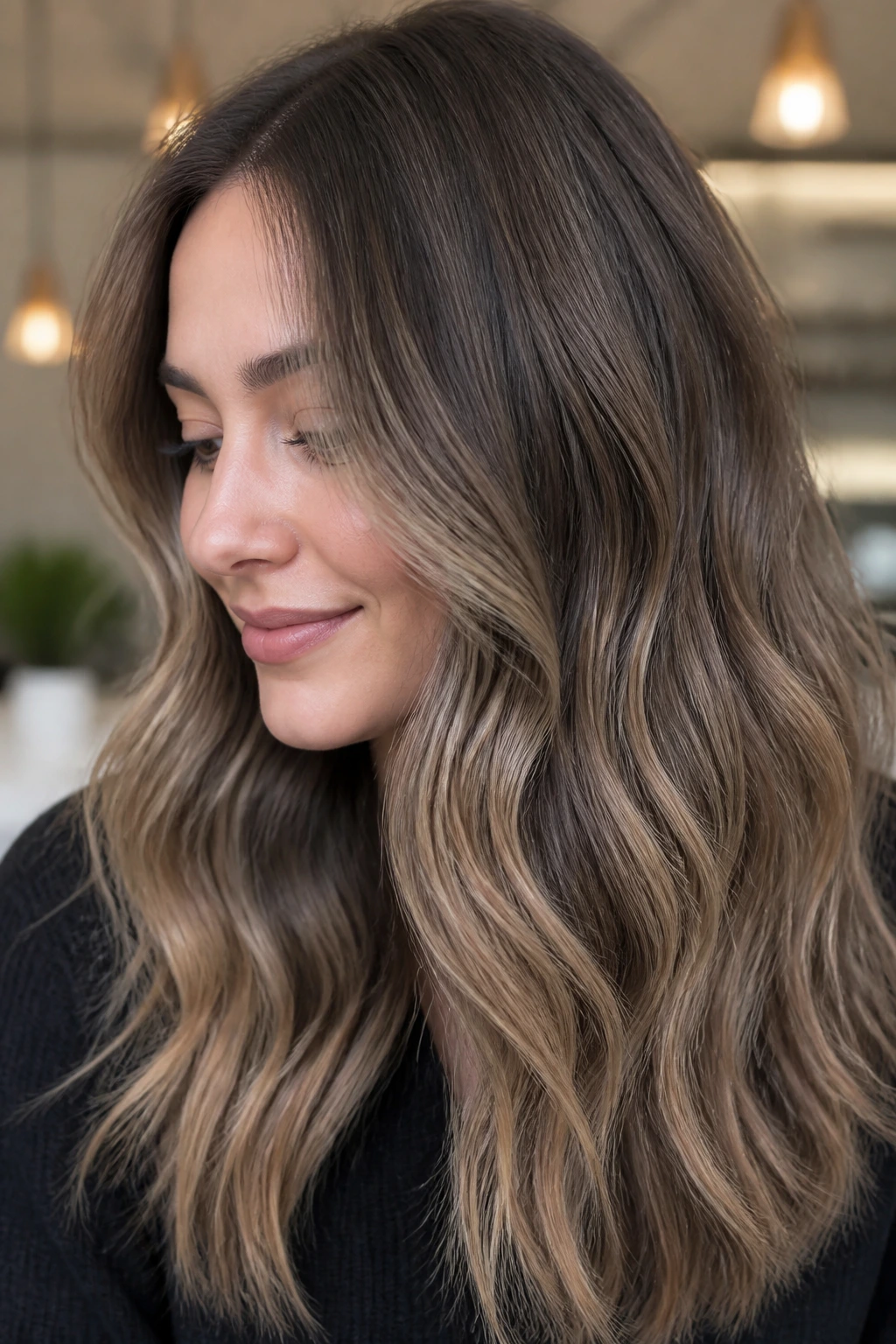
Muted caramel on mushroom brown is one of those combinations that looks expensive because it refuses to be too warm.
The base has that cooler brunette feel, and the caramel sits on top like a soft dusting instead of a bright stripe. If you usually hate gold tones on your hair, this version deserves a look. It keeps the warmth controlled so the finish stays beige-brown rather than honey-blond.
The reason it works is contrast management. Cool brunette bases can get lost if the highlights are too similar in tone, so the caramel needs enough warmth to show, but not so much that it turns orange. That middle zone — somewhere between beige and soft toffee — is where the magic happens.
This is a strong option if your wardrobe leans neutral, black, olive, or cream. The hair doesn’t steal the show. It just makes the whole look feel cleaner. On straight hair, it can read sleek. On waves, it gets that smoky, dimensional finish people usually chase with ash tones.
The only thing I’d warn against is over-toning it cool. If the caramel gets too beige-gray, the hair can look dusty instead of soft. A little warmth keeps it alive.
12. High-Contrast Caramel on Dark Chocolate Hair
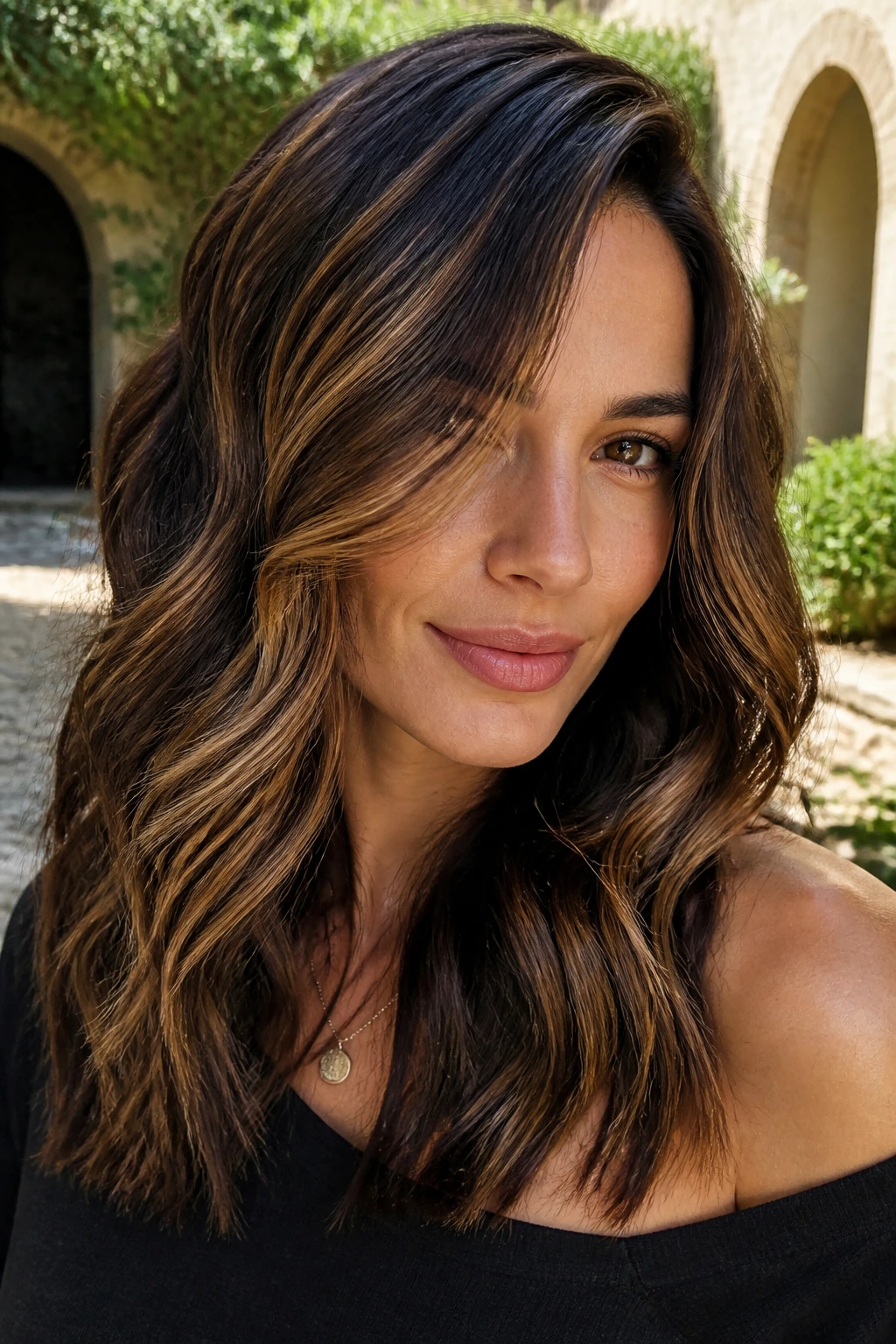
Some brunettes want the color to show from six feet away. Fine. This is their section.
High-contrast caramel on dark chocolate hair creates the sharpest visual pop in the bunch, and the payoff is huge if you like dimension that stands out. The light pieces sit brighter against the dark base, so every wave and bend becomes obvious. It’s a more dramatic brunette balayage, but it still feels softer than classic highlights because the paint is blended into the hair instead of sliced in blocks.
Why It’s a Strong Choice
The contrast gives the hair a thicker look. That sounds odd, but it’s true. Dark sections next to bright caramel create the illusion of density and movement, especially on medium-to-long hair.
- Best for people who want a visible change
- Works beautifully with voluminous waves and blowouts
- Needs thoughtful toner work to keep the caramel warm, not orange
- Grows out with a little more attitude than subtle placements
If your base is very dark, you may need more than one session to get the lighter pieces bright enough without frying the ends. That’s normal. Rushing it is where people get into trouble. The prettiest dark-chocolate balayage is rich at the root and clean at the ends, not orange anywhere in the middle.
13. Brunette Money Piece With Soft Caramel Melt
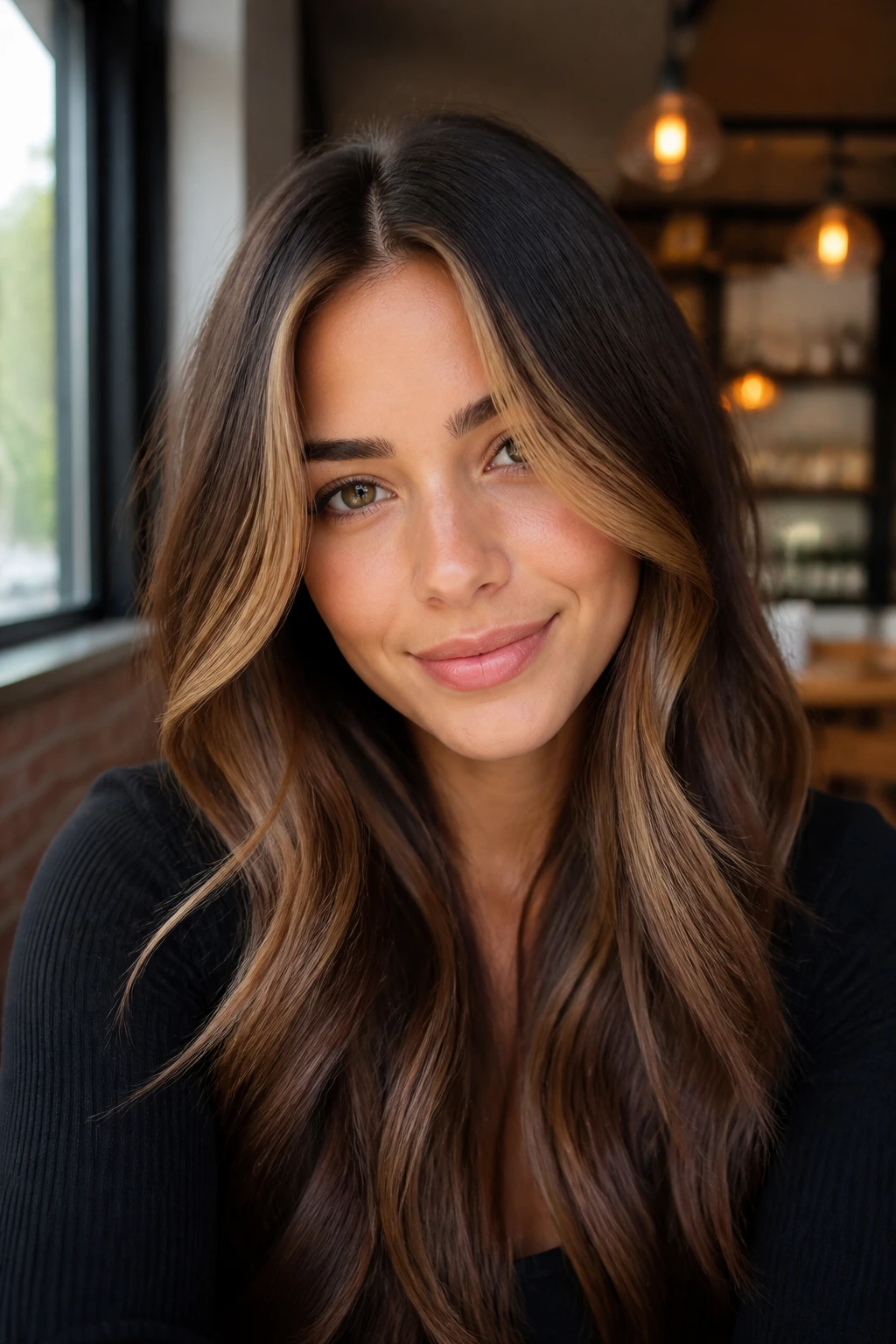
The money piece has become a bit of a standard move, but when it’s done softly, it still earns its place.
A caramel money piece gives brown hair a quick lift around the face, and the melt behind it keeps the front from feeling chopped off from the rest of the color. That smooth transition is what makes this look feel polished rather than trendy-for-the-sake-of-it. You get brightness at the front and a gentle fade into the rest of the brunette length.
What Makes It Different
Unlike a full head of balayage, the money piece gives you a concentrated hit of light. That means less maintenance in the back and more impact in the front. If you wear your hair behind one ear, or clip the front back for work, it still reads nicely.
- Works well with layered cuts or curtain bangs
- Best when the front pieces are lifted only a few levels lighter
- Looks softer if the ends are left deeper than the face frame
- Pairs well with loose curls, which keep the color from looking flat
One tip: keep the front pieces slightly warmer than the rest of the balayage. That subtle difference helps the money piece stand out without looking disconnected from the lengths.
14. Wavy Brown Hair With Ribboned Caramel Lights
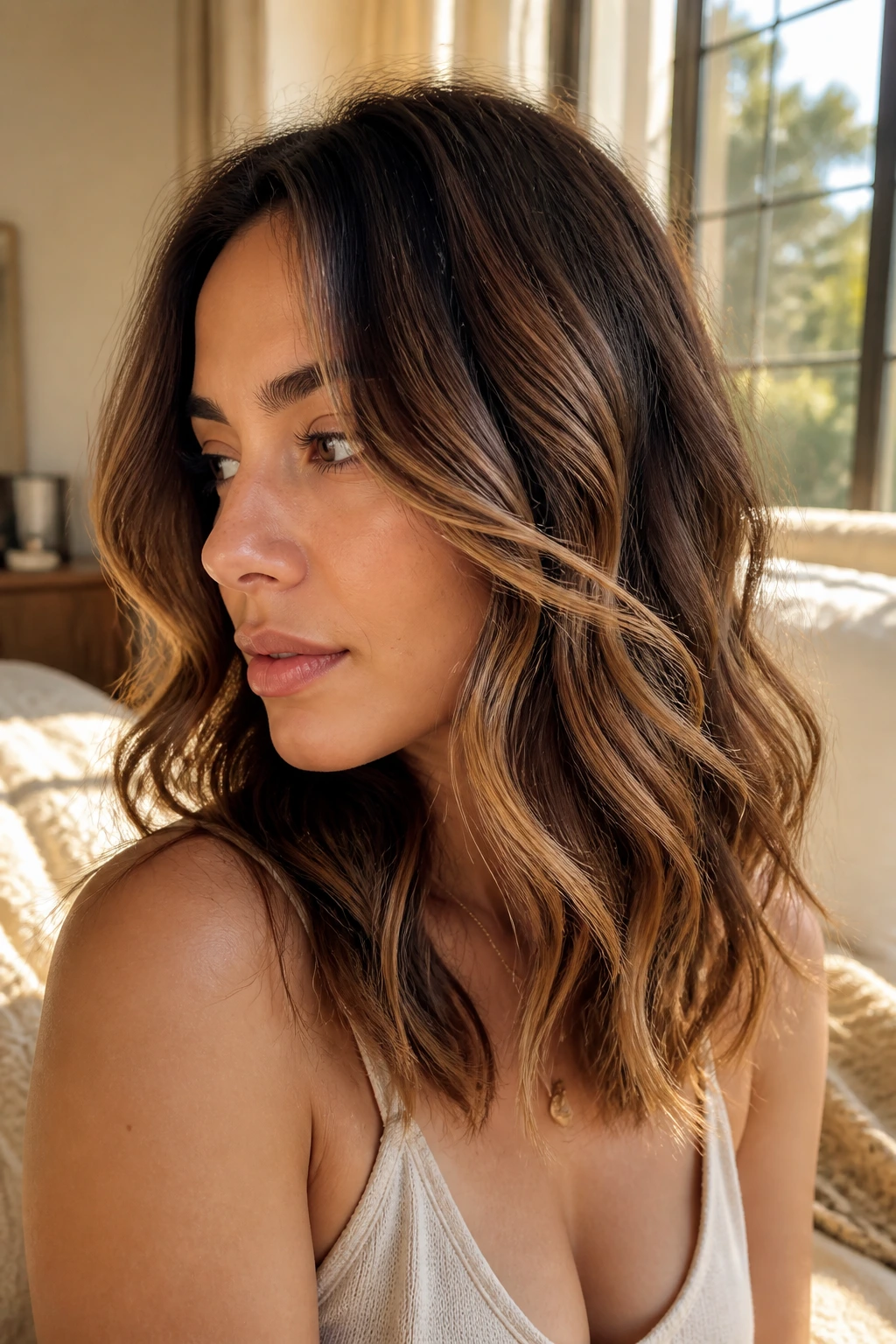
Ribboned caramel lights on waves do one thing extremely well: they make the movement obvious.
The waves catch each ribbon differently, so the hair looks fuller, looser, and more alive as soon as you turn your head. This works best when the highlights are painted in long, curved strokes through the mid-lengths and ends, not placed all over in tiny sections. The ribbon shape matters. It’s what keeps the look from turning busy.
If you usually wear your hair in a soft wave set, this is a strong option. The style and color feed each other. On straighter hair, the ribbons can still work, but they need a little bend from a curling wand or a blow-dry brush to show properly. Otherwise, the color sits there like a nice idea.
I’d choose this version for hair that feels a little one-dimensional after a few months without a cut. The ribbons break up that heaviness fast. And because the pieces are spaced out, the grow-out doesn’t get ugly. It just gets softer.
There’s something satisfying about this one. It doesn’t shout, but it definitely doesn’t disappear.
15. Long Layers With Tawny Caramel Toward the Bottom
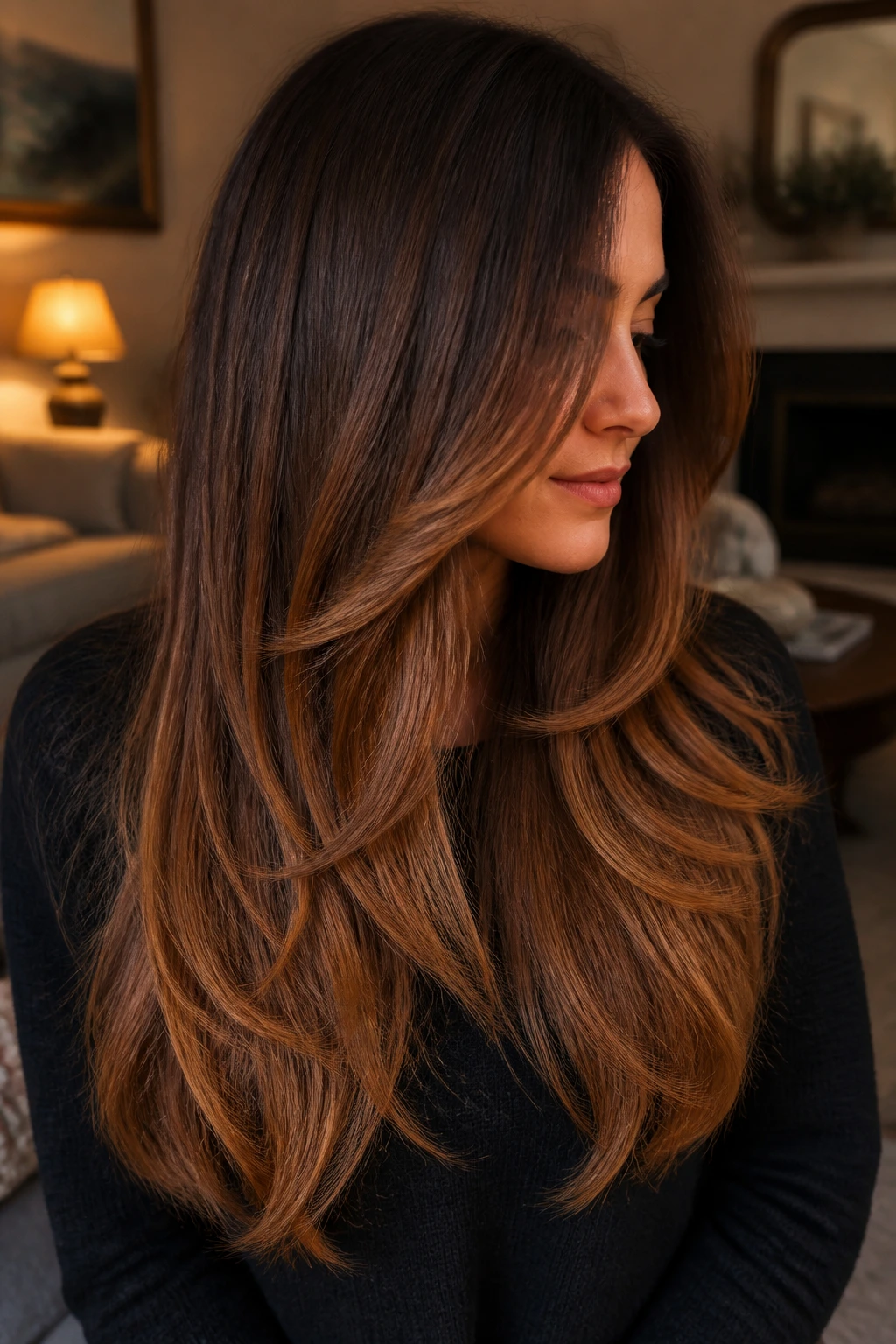
Why put the brightest color low on long layers? Because that’s where the movement lives.
Tawny caramel near the bottom gives long brown hair a soft sweep of warmth without lifting the top too much. The color lands where the layers start to fan out, so every curve and bend gets a little extra glow. If your hair is heavy and you want it to feel lighter, this placement does the job without making the root zone too busy.
How to Use It
Ask for the caramel to start lower than you think, especially if your hair is dense or has a lot of length. The best result usually comes from keeping the upper third rich and brown, then easing into the warmer tones from the mid-lengths down.
A long-layered cut helps this style a lot. The ends separate, the lighter pieces peek through, and the whole thing moves in a more relaxed way. A blunt cut can still wear it, but the effect is softer on layered hair.
This is also a friendly option if you don’t want to touch up color constantly. Since the lightness sits lower, grow-out stays calmer. You can wear the hair in a braid, a loose ponytail, or a big wave set and still see the color shift near the bottom.
16. Caramel Balayage on Straight, Glossy Brown Hair
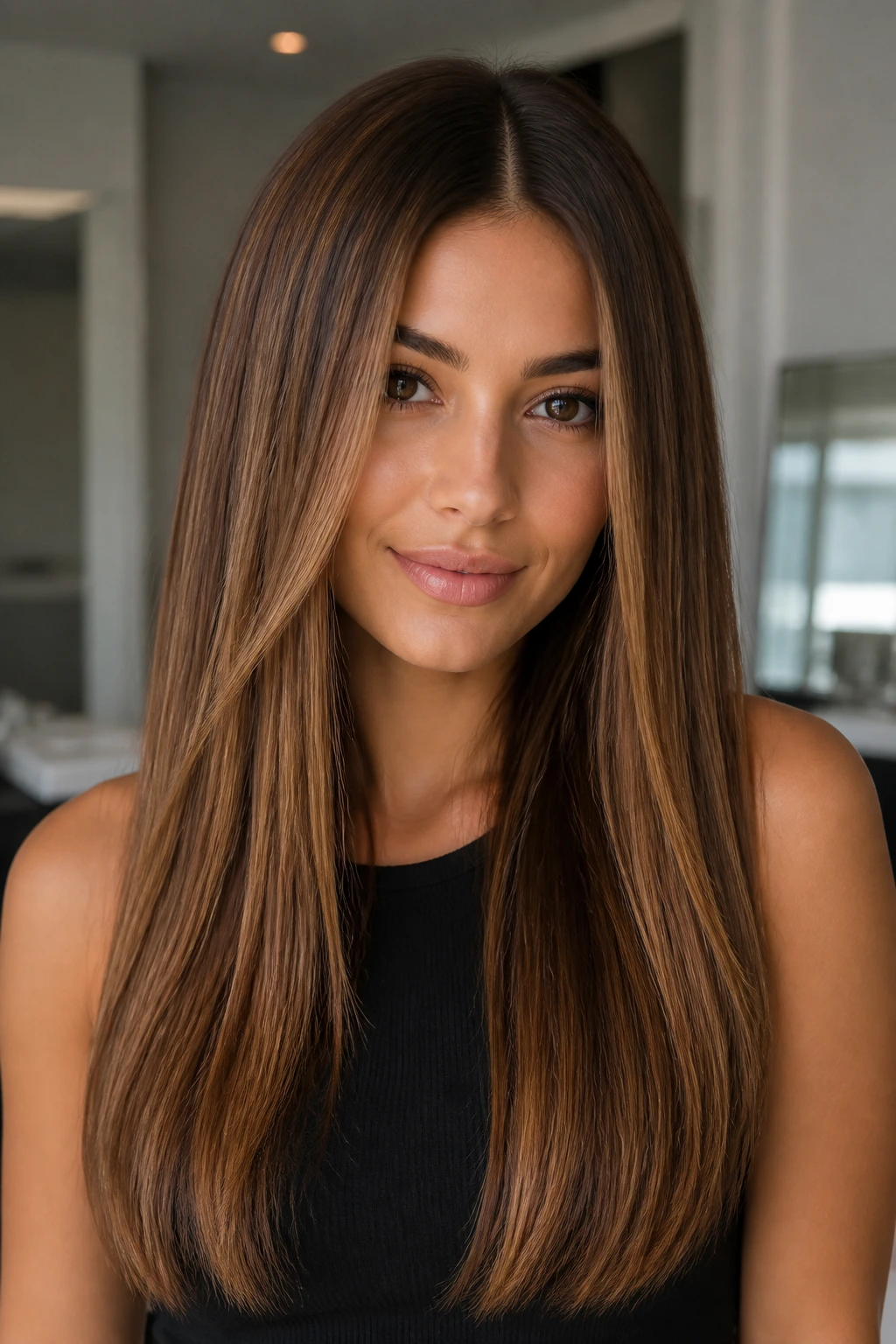
Straight hair changes the rules. The color has to do more of the visual work.
On glossy brown hair, caramel balayage looks sleek when the placement is deliberate and the tones are clean. The shine lets every ribbon show, which means the light pieces need to be placed with a little more restraint. Too many highlights, and the whole thing turns noisy. A few smart panels, and the hair suddenly looks expensive.
What to Watch For
If the hair is pin-straight, the ends and surface are where the color will read most. That means your colorist should think in terms of long, clean strokes that follow the cut. Short, choppy placement can disappear once the hair is flat-ironed.
- Keep the caramel pieces slightly thicker than on wavy hair
- Ask for a gloss finish so the brown base reflects light evenly
- Use a heat protectant every time you style with a flat iron
- Keep the ends trimmed so straight hair doesn’t expose frizz
The finish here is polished, almost architectural. I like it on center-parted hair because the symmetry lets the color show evenly on both sides, but it also looks sharp with a deep side part. Straight hair can be unforgiving, sure, but when the cut is clean, it wears caramel balayage with a lot of confidence.
17. Shoulder-Length Shag With Broken-Up Caramel Pieces
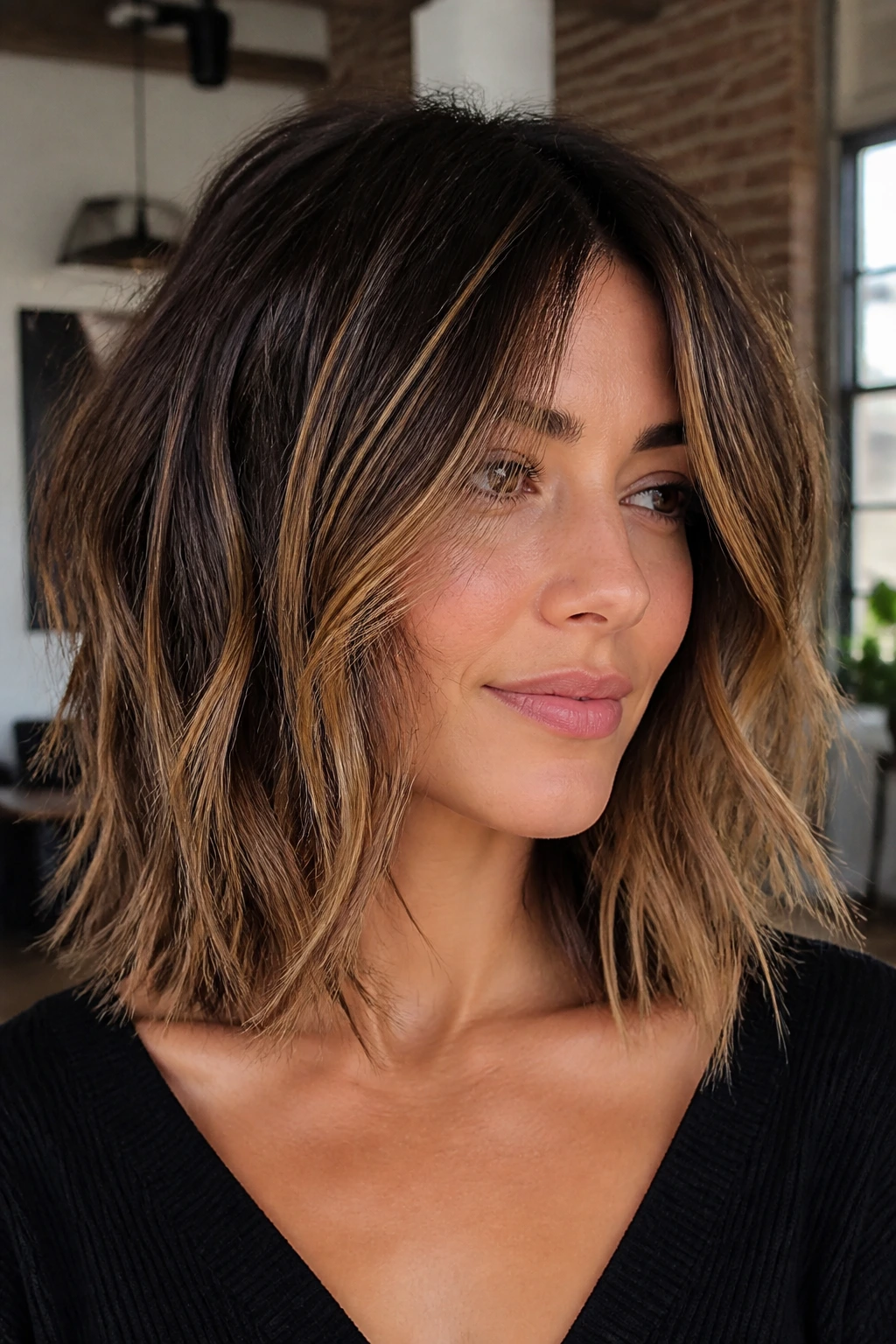
A shag haircut can eat uniform color for breakfast, which is why broken-up caramel pieces make so much sense here.
The shape already has movement, so the balayage should follow that energy instead of trying to smooth it out. Think of the light pieces as little interruptions in the brown, not broad ribbons. That broken-up feel makes the texture look fuller and the layers look sharper.
The fun part is how forgiving this placement can be. A shag does not need perfect symmetry. In fact, a little irregularity is what makes it look good. Caramel pieces can sit heavier around the front, then scatter through the crown and ends, giving the haircut more lift where it tends to go flat.
If you air-dry this cut, the color will still show. That’s a nice bonus. If you blow it out, the layers separate more and the caramel pieces pop a bit harder. Either way, the style stays casual, not precious. That matters. A shag should look like you meant it to be a little undone.
18. Warm Brunette With Golden-Caramel Peekaboo Underlayers
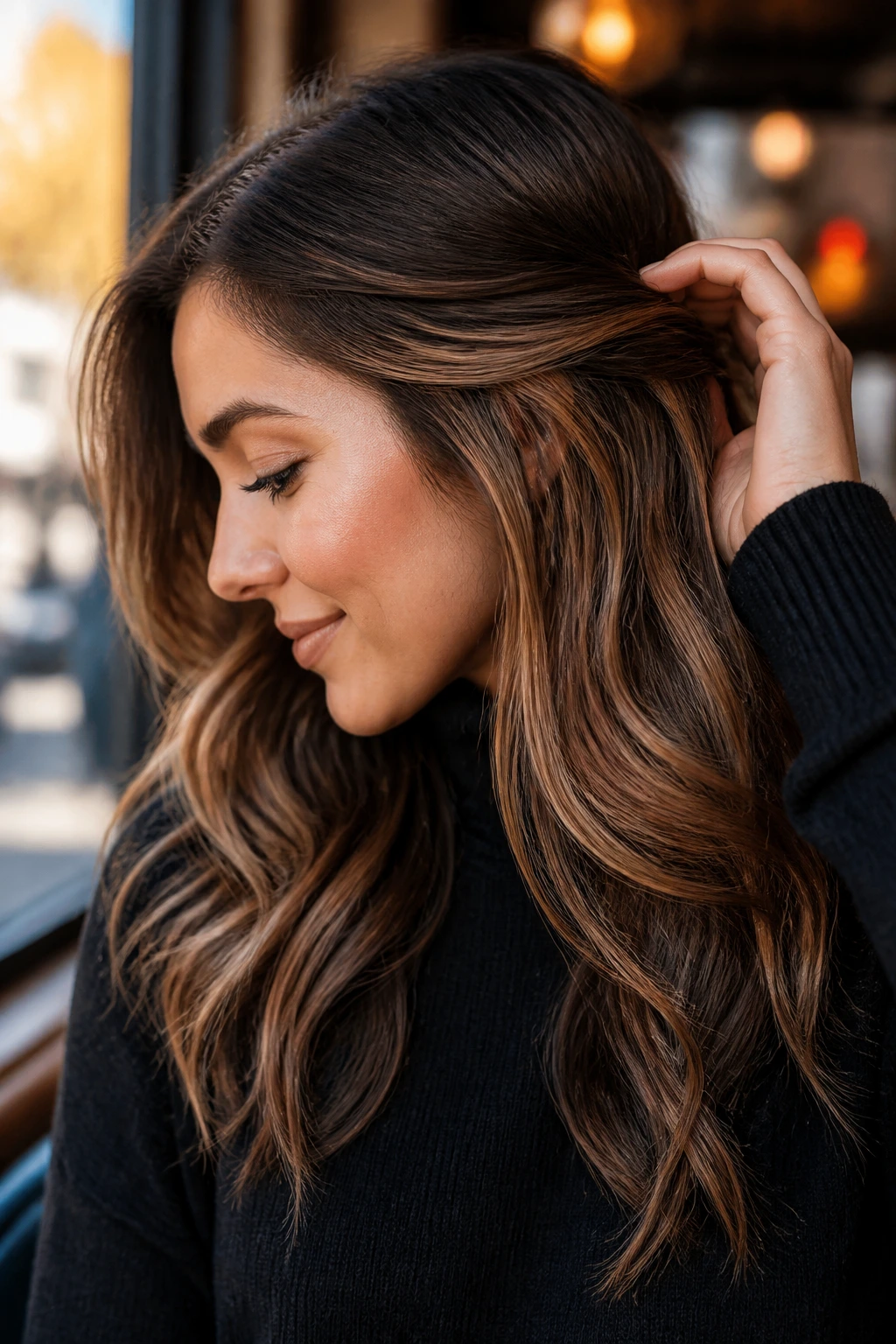
Peekaboo color is for people who want a secret.
Golden-caramel underlayers stay hidden under the top section of brown hair until the hair moves, lifts, or gets tucked behind the ears. Then you catch a flash of warmth underneath, and the whole look feels more playful. It’s a smart choice if you work somewhere conservative or just don’t want the lightness shouting all the time.
Unlike surface balayage, the underlayer placement gives you surprise instead of constant brightness. That makes the grow-out less obvious too, because most of the lighter color lives away from the part line. It’s a neat trick for anyone who wants to keep the top of the hair richer and darker while still adding depth underneath.
This style works especially well with medium-length cuts, lobs, and long layers that swing. The movement reveals the caramel in pieces. If the hair is pinned up, the color shows more. If it’s down and smooth, it stays softer. That flexibility is the whole point.
I’d choose this over full balayage for someone who likes switching between polished and casual looks. It gives you both.
19. Rich Coffee Brown With Soft Beige-Caramel Finish
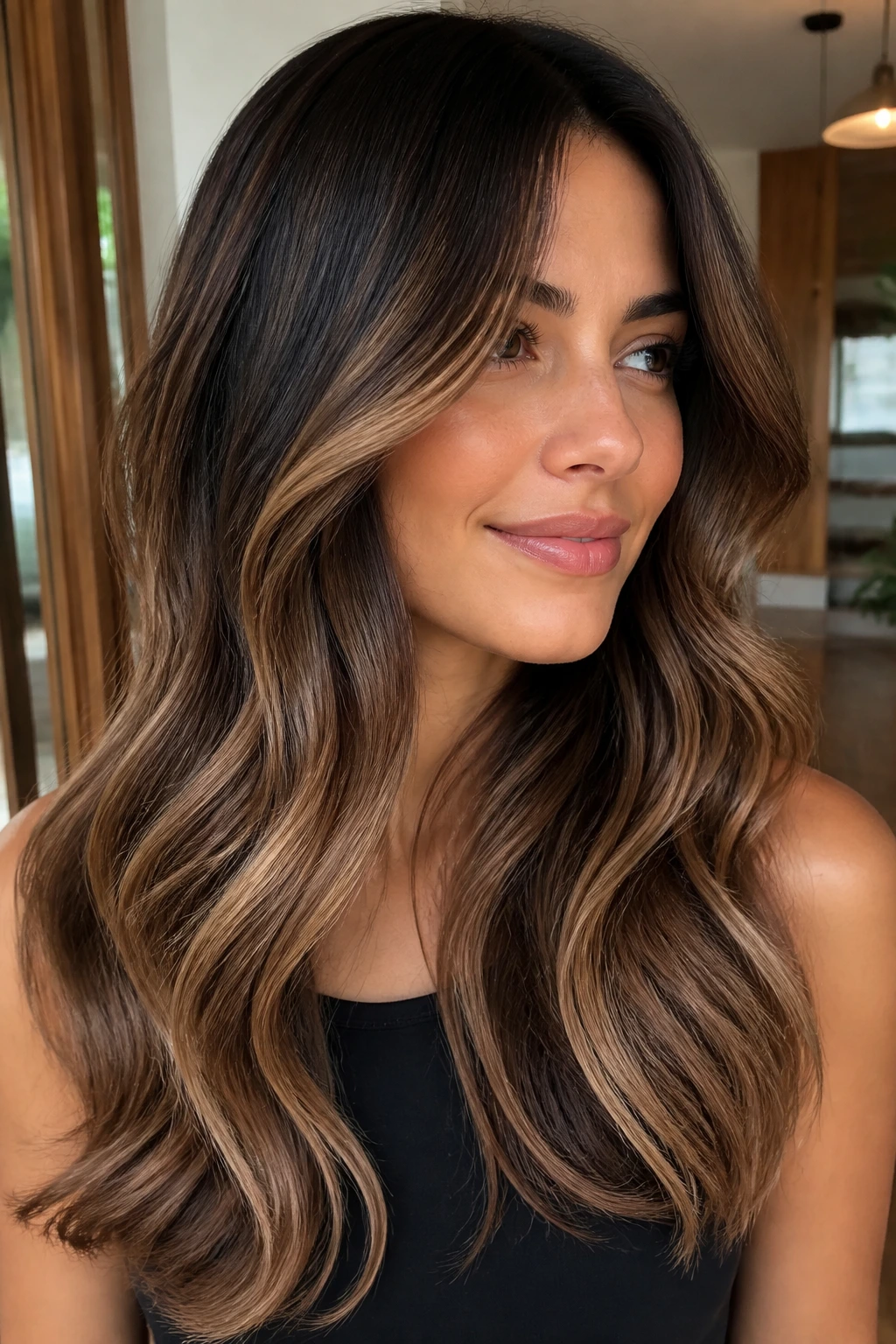
Beige caramel is a nice change of pace when you want warmth without much gold.
On a coffee brown base, the beige-caramel finish looks smooth and creamy rather than sugary. That’s useful if you want dimension but don’t love obvious warm tones near your face. The overall effect is quieter than honey caramel and less red than toffee, which gives it a very wearable feel.
Why It Stands Out
The beige tone softens the contrast, so the lighter pieces blend into the brunette instead of sitting on top of it. That makes the hair look thick and polished, especially on long layers or shoulder-grazing cuts with movement.
A few notes matter here:
- Ask for a beige-based gloss if your hair pulls too golden
- Keep the lighter pieces more concentrated through the mids and ends
- Use a sulfate-free shampoo so the beige tone doesn’t wash out fast
- Finish with a light serum, not a heavy oil, so the hair keeps its swing
This is the kind of caramel balayage that doesn’t need a big styling story. A clean blow-dry, a center part, and a little bend at the ends can be enough. It’s calm, soft, and quietly expensive-looking, which is a better result than loud color for a lot of brunettes.
20. Luxurious Caramel Melt With Shadow Root
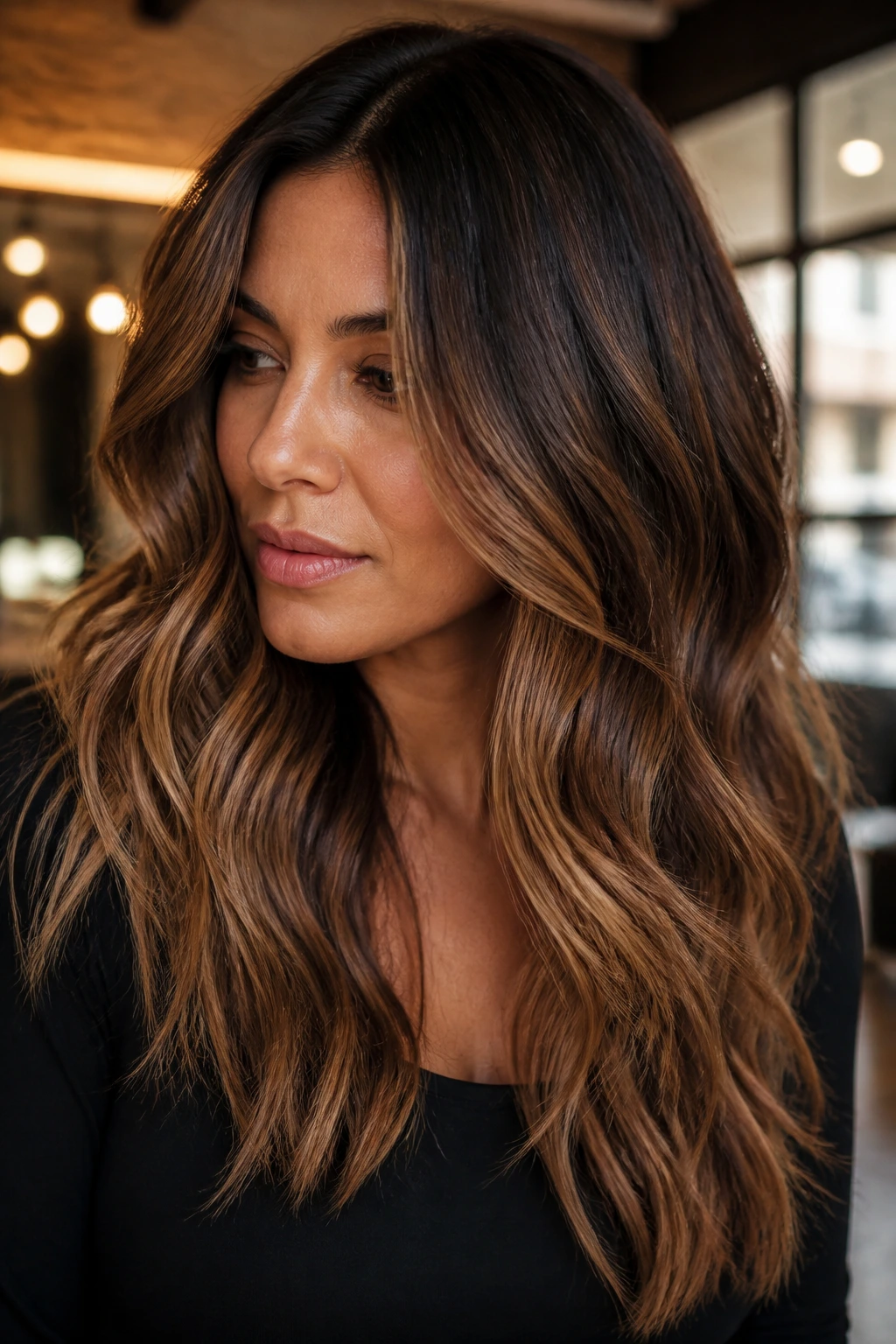
A shadow root is what keeps a bright caramel melt from looking too hard.
The deeper root gives the color somewhere to land. From there, the caramel moves through the mid-lengths and fades into the ends without a harsh line at the scalp. On brown hair, that creates a long, blended stretch of color that feels polished even after a few weeks of grow-out. It’s the most salon-like version on this list, and I mean that in a good way.
What makes it work is the balance between depth and light. If the root is too dark and the ends are too pale, the color looks disconnected. If the root is softened just enough, the whole thing feels expensive and easy to wear. That’s the sweet spot. Brown hair keeps its richness, but the caramel adds movement where you need it most.
This is a strong choice if you want a lower-maintenance brunette with enough brightness to still feel fresh. It suits long hair especially well because the melt has room to stretch. Straight, wavy, or curled, it holds up. The shadow root also makes touch-ups less fussy, which is probably why so many brunettes keep coming back to this kind of placement.
And if you want the most flattering finish of all, ask for the lightest caramel just below the cheekbones. That small detail changes everything.
